Libby Fischer Hellmann's Blog, page 27
February 23, 2015
Writing Lite Tip 47: Most plots follow a 3 or 4 Act structure

I don’t recommend many books on writing, but this one is an exception. Carolyn Wheat’s HOW TO WRITE KILLER FICTION is an excellent analysis, not only of the difference between mystery and thriller, but also of plot structure.
Wheat calls each act an “arc” and lays out the elements of each. It’s a highly worthwhile investment. Over the years, I’ve simplified that structure into three “acts,” and while I generally don’t outline in advance, I do try to work out the final scene of each “act” before I begin. I call them my “tent pole” scenes, and I write toward each. It helps break down a novel into much more manageable sections.
You can see all my Writing Lite tips thus far here on Pinterest.
The post Writing Lite Tip 47: Most plots follow a 3 or 4 Act structure appeared first on .


February 20, 2015
My– um — Visit Inside the Lincoln Park Zoo
 I did something REALLY stupid the other day, and it’s taken me a few days to get up the nerve to admit it.
A good friend of mine works at the Lincoln Park Zoo in Chicago. We decided to have lunch, and he emailed where I should park to meet him. I’ve been to the Zoo many times and know it well. So I drove downtown — all was fine, and I got to Stockton Drive and the Zoo without a problem. My friend indicated the building he worked in was across from the Brauer Cafe (where that little man made lake is) and I should park in the visitor’s parking spot in back.
 That’s where the trouble began. For some reason I thought he meant in back of the Brauer cafe. So I drove up to the cafe, and saw a road, just wide enough for my Camry, winding off the semi-circular driveway in front of the Cafe. (You can kind of see it on the left). I took it. Then I saw a small arcade that was just wide enough for my car to squeeze through. I turned onto it, thinking I’d eventually end up in back of the cafe.
Instead, I ended up in the Zoo proper. On paths where there are never supposed to be any cars. There was no way to get to the back of the cafe, and I quickly realized there was no visitors parking either. 
 So there I was, driving v-e-r-y slowly past the Lion’s House, the elephants’ domain, and the polar bears’ habitat (they were all inside, of course) wondering how the hell I got there and how I was going to get out.
I must have gone half way around the zoo when a man jogged toward me, hands waving.
I braked and rolled down the window.
He ran up to the car. “What are you doing?” He yelled.
“I’m — I’m lost.”
His expression turned puzzled. “But how did you get in here?”
“I don’t know.” I wailed. At that point I was as upset as he.
“You don’t know how you got here?”
I shook my head.
He gazed at me for a while, then shook his head. “I’m the director of operations and I’ve worked here for 30 years. This is the first time I’ve ever seen a car in the Zoo.”
“Can you get me out?” I gulped.
“With pleasure.”
He led me to a gate and then told me to use my ticket to get out.
“What ticket?” .
“The ticket you got when you entered the parking lot.”
“I didn’t go through the parking lot.”
“Then how — oh never mind.”
I tried to flash him a reassuring smile.
“Btw,” he asked. “Who are you having lunch with?”
I didn’t want to tell him — I was afraid my friend would get into trouble, but he asked me again, so I did.
“Oh… he reports to me,” the director said.
Terrific. Just terrific.
He stared at me some more, then told me to wait. He came back a few minutes later with a yellow ticket, and told me to use it when I got to the exit barrier. Which I did.It worked. I was sprung. And all the animals–and humans — are safe.
Aftermath
I did have lunch with my friend and told him the story. He reported back later that afternoon that the Director still couldn’t figure out how I got in there. And, btw, he questioned my mental state. I understood. I would have too.
Oh… while he was getting the yellow ticket, I did manage to snap a couple of quick pictures. You can see some of the zoo paths and buildings in the background.

And so it goes on a cold winter day in Chicago.
The post My– um — Visit Inside the Lincoln Park Zoo appeared first on .
February 19, 2015
Writing Lite Tip 46: Write backstories for major characters
I talk about character backstories and how to write them here. Basically, I believe they’re the best way to get to know your characters and what motivates them.
How passionate or emotional they are. What their style of interacting is. The lengths they’ll go to to achieve their goals.
A backstory will help you create believable, credible characters who act in authentic ways, rather than forcing your characters to behave the way you want them to.
If you really respect your character’s backstory, you may even be surprised by their actions. I have been many times.
You can see all my Writing Lite tips thus far here on Pinterest.
The post Writing Lite Tip 46: Write backstories for major characters appeared first on .
February 18, 2015
The Cuba Files: Tourism in Cuba (Redux)
 Today, more than three million tourists visit Cuba every year –except for Americans, of course, although that’s bound to change. And soon. In fact, tourism is the country’s #1 source of revenue. People are drawn by Cuba’s climate, beaches, attractive prices, and remarkable history.
It wasn’t always this way.
Poor post-revolution relations
After the revolution, relations between the US and Cuba deteriorated. By September, 1961, all the casinos were shuttered, and Cuba was formally a Marxist state. The island was cut off from the rest of the non-communist world, and President Kennedy imposed a trade embargo that included a travel ban by US citizens. By the mid-1960s Cuba’s government had banned all private property on the island and outlawed foreign currency. The country’s tourist industry died. The only non-Cubans to visit (and stay) were Russians.
The Special Period (See The Cuba Files #2) changed all that. The island sank into a severe depression in the early ‘90s when the USSR collapsed. After several years of disastrous food shortages, a failing agriculture system, the absence of almost all petroleum products, and industry stagnation, the government decided it needed to boost tourism. Select European developers were allowed to join Castro and build sumptuous resorts (but no casinos), and the province of Matanzas, about an hour from Havana, became a vacation mecca.
Increasing international visitors
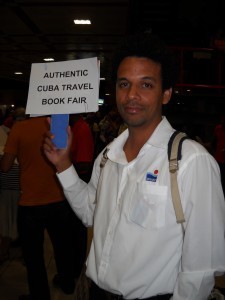 Now travelers from across the globe visit Cuba, arriving at the country’s seven major airports by the tens of thousands. The majority come from Canada, where visitors have increased by 10% a year since 2007. Europeans love Cuba too, with large numbers of people visiting the island from Britain, Spain, Italy, Sweden, France and Germany.
The number of American tourists isn’t known, because, despite a small number of legal “People-to-People” tours, sanctioned by the State Department, most Americans visit the country illegally. There are hints that as many as twenty to thirty thousand Americans visit Cuba every year, but the Cuban government claims more than 60,000 US visit annually.
Two Cubas
However, in the process of building tourism, it became apparent that the Cuban experience is very different for tourists than its natives. In effect there were and continue to be two separate societies.
Until recently European beach resorts were off-limits to Cubans. They were only allowed to work in them, and employees were carefully screened by the government before being hired.
In addition, two currencies developed. Cuban Convertible pesos, aka CUCs. (kooks) were created. One CUC roughly equals a dollar, and that’s what tourists use when they travel within Cuba. But Cuban citizens still use the Cuban peso, which is roughly 25 to the dollar, and therefore much less valuable. Which drives the average Cuban deeper into poverty. At the same time, dollars are not legal in Cuba. (Except in the black market). It was thought these restrictions would help Cuba bring in hard currency, which it desperately needs.
 Another disturbing contrast is the food. At tourist hotels, including the famous Nacionale, you see lavish spreads for every meal, of which many are served buffet style. There are meats, cheeses, fruits, breads, pastries, salads, and more. And yet at a Cuban restaurant, you’re lucky to see more than a couple of menu items. And hardly any beef.
Btw, the cost of internet connections are still outrageous, partly because it’s an island and needs complex infrastructure, but partly because only 118 internet cafes exist across Cuba, and they’re all run by the government. The cost, for Cubans, is about $4.50 an hour. Bear in mind the average monthly salary for Cubans is just $20. I’m told the costs are coming down. I hope so.
Raoul loosens the reins
The policy of restricting hotels and services to tourists came to an end, courtesy of Raoul Castro in spring 2008. Now Cubans are theoretically allowed to stay in their own country’s resorts, but nobody knows exactly how many have done so. Access is said to be very limited, simply because most Cubans are so cash-poor.
Looser restrictions have also created a new “privileged” class of Cuban. Tour guides, taxi drivers, and restaurateurs accept tips which help compensate for meager salaries. Plus, unlike the general populace, they carry cell phones, and get first dibs on the supplies that many visitors bring into the country, including medicines, clothing, baby equipment, toys, and books. Those who aren’t fortunate enough to be part of this group still eke out a living, and there is a thriving prostitution market for both genders, as well as beggars and street people who charge tourists to take a photo with them.
 For me, though, the most important issue for Cuba’s future are the Cuban people themselves. Yes, Raoul Castro loosened restrictions on owning restaurants (paladars), small hotels (called casa particulars), buying and selling property, and small entrepreneurial businesses. But two generations of Cubans have grown up working for the State, where one does only the minimum amount of work and makes sure one’s palm is open to small bribes and perks. The Horatio Alger ethic has all but disappeared, and many Cubans expect the state to take care of them. How are these people going to make it? Already there are reports about how tough it is to turn a communist society back into a capitalist one.
Ironically, the saving grace for Cuba may well come from the decades of deprivation suffered under Fidel. There is an expression in Cuba— to “resolver”— to make do, to invent ingenuous solutions to problems. They say it’s how Cubans keep all the American cars from the Fifties running. And how they have survived the absence of basic services over the years. Wouldn’t it be wonderful if Cuba “resolver-ed” its way back to prosperity?
The post The Cuba Files: Tourism in Cuba (Redux) appeared first on .
February 16, 2015
Everything Happens At Once!
 This year started off with a bang, but every time I think things are slowing down, something else happens. I won’t go into details, because I don’t know too many, but A Bitter Veil has been selected as a semi-finalist in The Book Pipeline Competition. What’s that, you ask? Here’s what they say on their website:
“The 2nd Annual Book Pipeline Competition is searching for playwrights and authors with material well-suited for film or television adaptation. The winning writer will have meetings with Energy Entertainment (Extant), Benderspink (We’re the Millers, A History of Violence), Paradigm, and Lakeshore Entertainment (Million Dollar Baby, American Pastoral) to discuss further development and the potential for production.
Building upon the success of the Script Pipeline writing competitions, the 2nd Annual Book Pipeline Contest aims to continue discovering new talent and delivering unique, compelling stories to the industry–with the specific intent of getting projects on the fast-track to production.”
VEIL is one of twelve semi-finalists, and there were over 500 entries. So that’s pretty cool. Keep your fingers crossed — the winner is announced March 1, which is just around the corner.
Stay tuned…
The post Everything Happens At Once! appeared first on .
February 15, 2015
Writing Lite Tip 45: Make Sure Slang Is Accurate

…Especially if you’re writing about a time or setting that’s unfamiliar. Check regional or foreign slang on the internet; listen to people from that particular place on YouTube, or make some calls to suss out how folks really talk to each other.
If you’re writing historicals, the reference librarian at your local library will be a godsend.
You can see all my Writing Lite tips thus far here on Pinterest.
The post Writing Lite Tip 45: Make Sure Slang Is Accurate appeared first on .
February 12, 2015
Writing Lite Tip 44: Avoid alliteration

I’m being intentionally cute here, because alliteration isn’t. Unless you’re writing broad comedy, there’s no reason to use alliteration in your fiction. It calls attention to itself and takes the reader out of the story.
Too much alliteration can result in a reader gnashing his/her teeth and throwing the book across the room. At least it does for me.
You can see all my Writing Lite tips thus far here on Pinterest.
The post Writing Lite Tip 44: Avoid alliteration appeared first on .
February 10, 2015
News: Second Sunday Crime and PW

Hi, all. As some of you know, since January I have hosting an Authors on the Air radio show which I call “Second Sunday Crime.” It’s going well, and I’m having fun doing it. So I wanted to bring you up to speed on a couple of interviews I just recorded.
The first was a live 4 5 minute show with UK Thriller Author Zoe Sharp, who headlined the Love is Murder Conference this past weekend. You can find the show right here.

 I also did a special half-hour interview with Dave Case and Michael Black, both of whom are cops and crime authors. It was a thoughtful, interesting show which you can find here.
Later in the week I’ll have another REALLY special interview to post. (Gotta leave you in suspense, right?), but I’m pretty sure you’ll like it.
Meanwhile, Publishers Weekly released an interview with me about self-publishing. To say I was honored is an understatement. It isn’t long, so I’ve re-posted it below.
Self-Publishing Changed Everything: PW Talks with Libby Fischer Hellmann
By Oren Smilansky |Feb 09, 2015

Photo: Courtesy of the author.
Libby Fischer Hellmann’s newest mystery, Nobody’s Child, follows a Chicago PI as she investigates a sex trafficking ring. The fourth installment in the author’s Georgia Davis series, the novel received a positive review from PW, with our reviewer praising Hellmann for “ratchet[ing] up the tension with each chapter.” We caught up with the author to talk about her decision to self-publish and lasting commitment to the mystery genre.
After years of traditional publishing, why did you decide to self-publish?
I was a midlist author in the traditional publishing world. After seven novels, my career was stuck. I had an agent and wonderful editors, but the truth is that no one cares about your career as much as you, and if you’re not selling at the top of your game, a publisher isn’t going to expend a lot of time, effort, and money helping an author raise that game. That’s where I was.
At the same time, though, I was lucky. The e-book revolution was just dawning, and my publishers didn’t know what to do with e-rights. So I was able to keep most of the rights to my novels. A year later, I dipped my toe in the water [by self-publishing] two of those books and a collection of short stories, all of which were previously traditionally published. I was still with a traditional publisher as well, so I was truly a hybrid author. Gradually, as I learned more about the business, I started to lean toward self-publishing. Of my 12 novels, I’ve now published three myself, in print, e-book, and audio.
How has self-publishing changed how you work?
Self-publishing has changed everything I do. I am running a small business now, and I am very much aware of the bottom line. Most of my profit goes back into the business with additional marketing and promotion. That, in itself, is an overwhelming task, and it has taken valuable time away from my writing. I hire editors, copy editors, and cover designers. I have a webmistress, a social media manager, and a street team. I also have four foreign translations that require a different type of promotion. All of it impacts my time, and of course, my finances.
Do you find that readers perceive you differently?
I haven’t noticed that at all. I’ve been lucky to significantly expand my readership, and I’m still a little amazed… but delighted to welcome new fans.
I will say, however, that readers in general are more vocal than they used to be (mostly because there are now platforms for their reviews where there weren’t before), and every author gets a few one- or two-star reviews. My friends usually tie me down in a chair to restrain me so I won’t respond.
You’ve written mysteries in a number of subgenres, including cozies, police procedurals. Do you have plans to work outside of the genre?
I doubt it. I never had the desire to write “The Great American Novel.” All I want to be is the best storyteller I can. I think writers should write the kind of stories they want to read.
The post News: Second Sunday Crime and PW appeared first on .
February 4, 2015
The Cuba Files Redux: The Special Period
 With Cuba in the news today, I’m struck by how little Americans really know about the island. Pretty much all the information over the past 60 years has been filtered through the lens of the Cuban-American exile community, who, although they’re dying out, are still bitter and don’t have a kind word to say about Cuba or Fidel Castro.
Btw, just to set the record straight, I’m not here to defend Fidel or what he’s done. He decimated the middle class that had been thriving in the 1950’s. And he turned out to be just as cruel and dictatorial and territorial as Fulgencio Batista, his predecessor. In fact, there are persistent rumors that Castro was responsible for the death of both his revolutionary comrades Camilo Cienfuegos and Che Guevara. It wouldn’t surprise me if the rumors were true.
What does surprise me, though, is how little Americans know about Cuba’s “Special Period” in the 1990’s. It was so dire that I wonder why the exile community didn’t jump on it for propaganda purposes. Or the pretext for another invasion attempt. But apparently, they didn’t, so the Special Period remains the depression nobody knows about.
A little history here: you probably remember the collapse of Berlin wall in 1989. That was followed by the dissolution of the USSR in 1991. What you might not know, however, was the impact on Cuba. In a word, it was catastrophic. Cuba sank into a depression so severe it makes our “Great Recession” look like a walk in the park.
The reason? Cuba had been one of the Soviet Union’s largest trading partners,  and when it collapsed, so did Cuba’s economy. They lost 90% of their petroleum imports, including oil, gasoline, diesel, fertilizers, and insecticides. With no fuel to power cars, buses, and tractors, the Cuban transportation system collapsed. So did their agriculture and farming. There were severe food shortages, and the average Cuban lost twenty pounds. Industry slowed to a crawl, and Cubans had to do without many consumer goods, including medicines. Eventually, even Fidel had to acknowledge the truth, and, in a move worthy of Joseph Goebbels, labeled it the “Special Period.” (I describe much more about the Special Period and its impact in Part Two of Havana Lost.)
 Cuba has clawed its way out of the harshest parts of the Special Period by adopting organic farming methods, using bicycles and horses as the primary mode of transportation, and bartering goods and services. But there is still desperate poverty.
Outside Havana you see fields being plowed by oxen, people driving horse-drawn wagons, and thatched huts huddled together on muddy roads. Even in Havana, you see people on the streets charging a few Cucs (Cuban currency) to have their photos taken with tourists. 
And in Havana neighborhoods like Regla and Lawton, you see abandoned factories, dilapidated buildings, and a total absence of commerce.
The government is trying to boost the economy; over the past two decades they’ve amped up tourism, and it has become the number one industry in Cuba—for everyone except Americans. And recently Raoul, Fidel’s brother, has loosened restrictions on buying and selling cars, property, and small businesses. Unfortunately, those businesses are still heavily taxed, and most of the investment cash for those activities is reportedly coming from Cuban- American relatives.
 It’s hard to admit this, but Cuba’s economy was more stable back in the 1950’s when the Mafia ran Cuba. I’m certainly not advocating for a return to that era, and I’m wary of what’s going to happen when the US finally does reinvest in Cuba, which we all know is coming. (I’m gritting my teeth at the prospect of the first McDonalds opening in Havana). The last thing Cuba needs is another super-power or its trying to exploit whatever resources Cuba still has.
At the same time, though, the Cuban people have been in a time warp. They need investments, infrastructure, telecommunications, and industry. And I think Obama is on the right track. The right kind of investment in a country 90 miles from us might yield more tangible benefits than military action in the Middle East, don’t you think?
The post The Cuba Files Redux: The Special Period appeared first on .
February 2, 2015
Writing Lite Tip 43: Use adjectives sparingly. Adverbs, even more so.

You may already know adverbs are an indication of lazy writing – the right verb can do just as much as an adverb. But think, too, about the adjectives you use. Two are plenty to modify a noun, if they’re the right ones. More than two makes the writing seem shaky, as if you’re not quite sure the reader will “get” it.
Trust yourself to come up with the right adjectives. Remember, you can always supplement them with a well-chosen simile or metaphor. The only exception to this is when you are intentionally trying to establish a rhythm or mood to the prose. Read James Crumley or Raymond Chandler for examples.
You can see all my Writing Lite tips thus far here on Pinterest.
The post Writing Lite Tip 43: Use adjectives sparingly. Adverbs, even more so. appeared first on .