Libby Fischer Hellmann's Blog, page 29
January 8, 2015
Wartime in Britain
Tucked away behind the stairs to the former radio tower at Bletchley Park is a tiny museum with all sorts of artifacts, clothing, books, toys, and supplies that the average British family would have used or needed during the war. I thought you might like to see a small selection of what was there. In some cases, you might want to enlarge the photo to see the details. They’re fascinating.
 Here is an obvious propaganda children’s story book. Love the illustrations!

Another page from the storybook
And here’s a pan of several other Children’s books read during the War Years.
Here are apothecary and household supplies that were necessary during the War Years:

And for the woman of the house:

Finally, from the Gift Shop, assuming you need a new helmet or cap:


The post Wartime in Britain appeared first on .


January 7, 2015
Bletchley Park: The Imitation Game
 It was fortuitous that I visited Bletchley Park at the same time as The Imitation Game is in theaters, because parts of the movie were actually shot there. The production crew meticulously recreated several sets, and even better, left them up after the shoot. I’m not sure if they will be a permanent fixture, but I thought you might want to see them, as well as some of the costumes and props that were used.
 Before we go to them, though, it’s interesting to note that while The Imitation Game may be the best of the lot, it is not the only film made about Bletchley Park. Enigma, which was released in 2001, stars Kate Winslet and Dougray Scott. Curiously, it was funded, in part, by none other than Mick Jagger, who has his very own Enigma machine, which was used in the film. Who knew? You can rent it on Amazon (the film, not the machine).
There’s also a short film, Decoding Alan Turing, on Amazon. As well as two other documentaries, Triumph of the Codebreakers, and Rise of the Enigma. And, of course, the PBS/BBC series The Bletchley Circle, which really isn’t about Bletchley, but is quite good. And there are even more films and TV shows which you can find here.
Now on to The Imitation Game
Costumes and props used for the film

The bar, which was totally reconstructed for the film


One of the offices that was constructed for Turing’s boss (I forget his name)


The library, which was also totally reconstructed… with books….


The Bombe — the fantastic machine/computer that Turing and Welchman designed to crack the Enigma was meticulously recreated as well. Front and back.
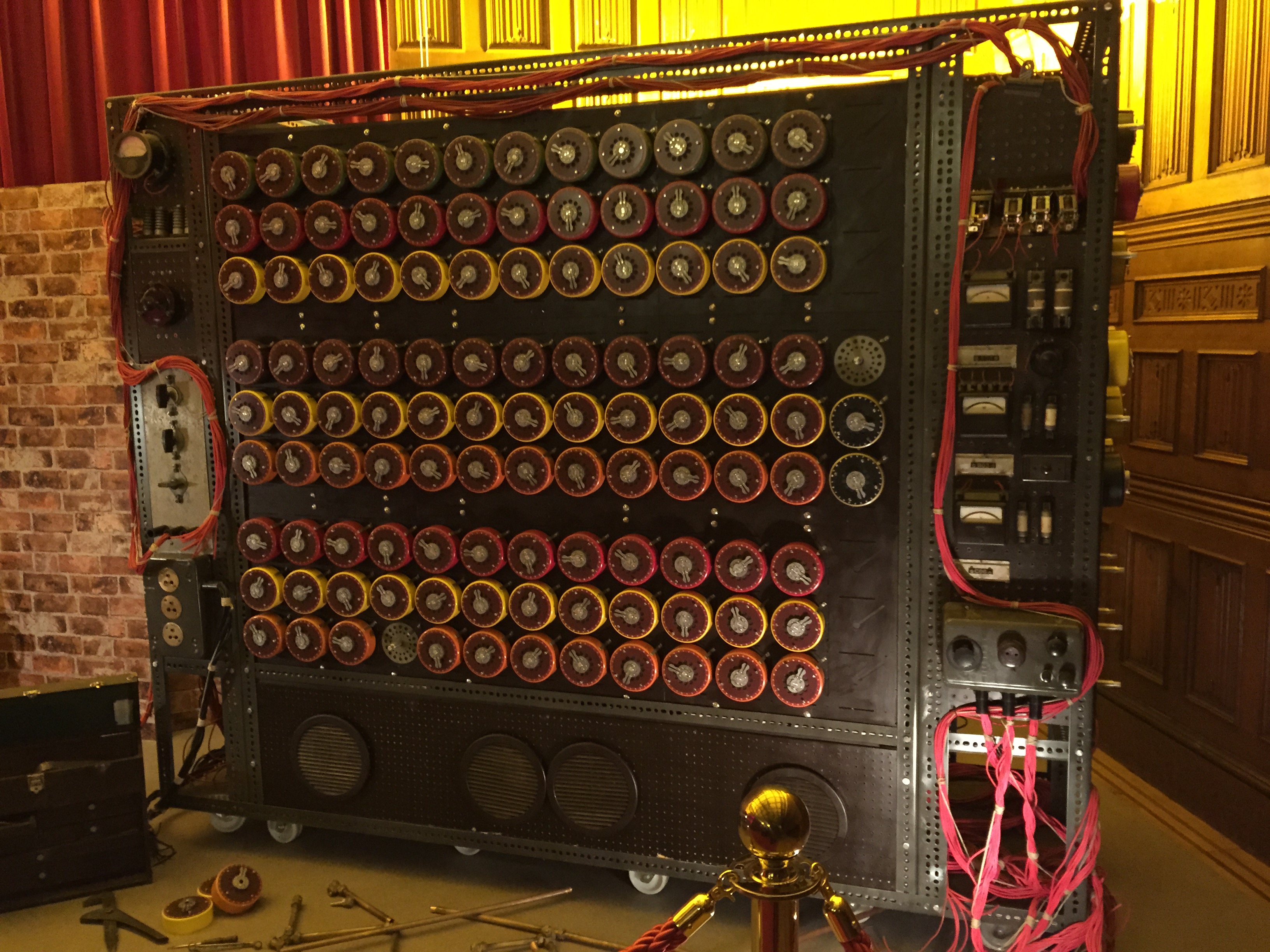
And finally, back to one of the huts, which wasn’t really in the film, but I wanted to pretend…
The post Bletchley Park: The Imitation Game appeared first on .
January 6, 2015
Bletchley Park: Breaking The Enigma

 The sine qua non of the war effort at Bletchley Park was the need to break the German Enigma machine. The Enigma was basically a mechanical cipher machine that was used by every German military (and some civilian) sectors to transmit messages about troop movements, bombings, battle plans, Uboats, and other German war tactics. The Germans were confident it could not be cracked, and they had good reason to be. The Enigma was a complex machine.
Each key on the what looks like a normal typewriter was a trigger for second enciphered letter. So when A German pressed the letter “r”, for example, a different letter—the enciphered letter— would light up, say an “e.” To decipher the message the recipient would depress the “e”, and the “real” letter, the “r” would lights up . Of course, both the sender and recipient had to have the same settings on their Enigmas.
But that’s at its most basic level. The Germans changed “selections” or enciphering keys every 24 hours, which meant that even if the Brits deciphered the code one day, the algorithm (or deciphering key) would be totally different the next. And the system was based on machinery, rotors, and wiring that could scramble the message even more. Essentially, the Enigma could spit out potentially 150 million million different configurations of the ciphers.
Bletchley Park c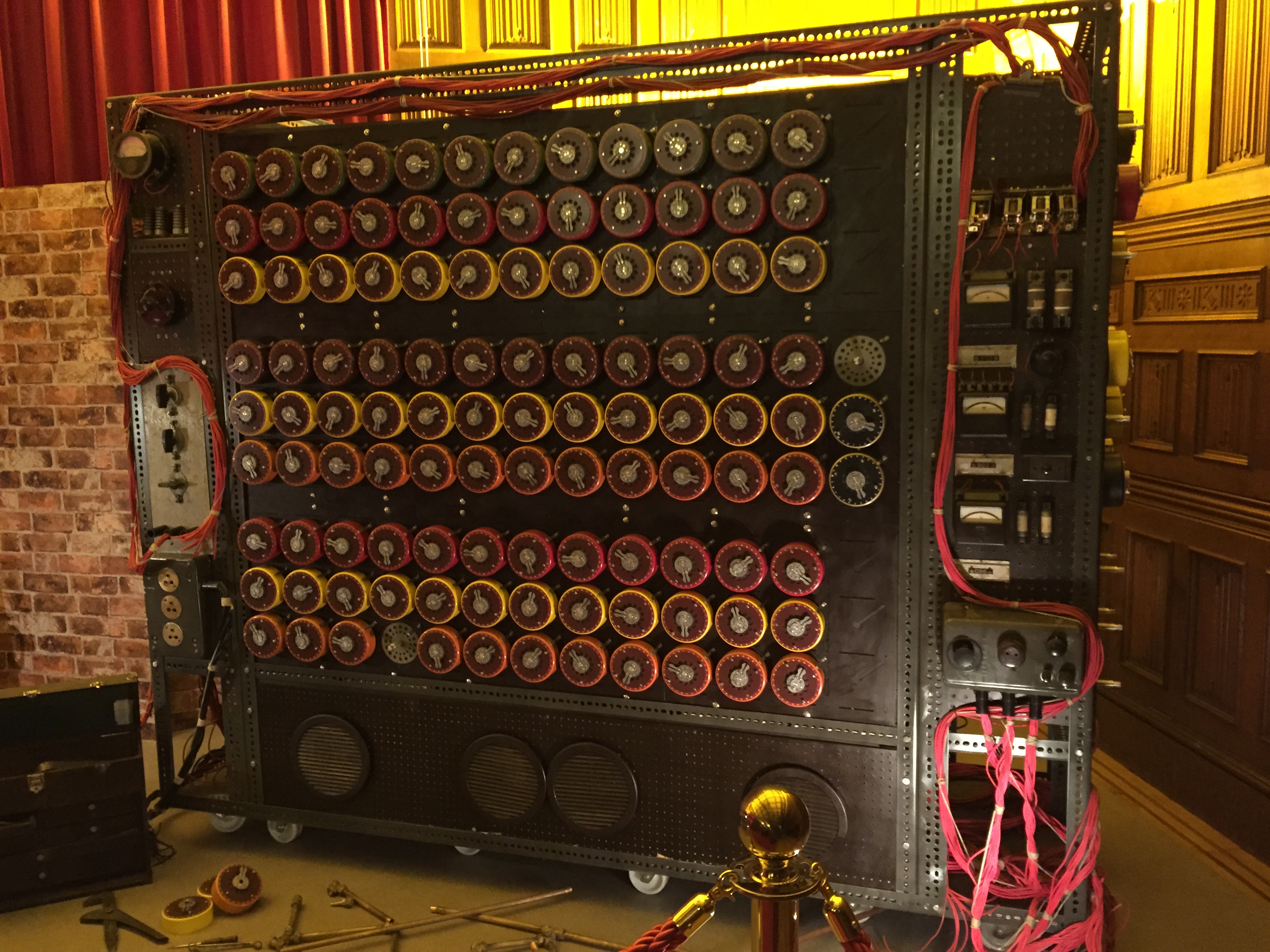 odebreakers, led by Alan Turing and Gordon Welchman, went to work using a variety of different techniques to tackle the problem. All the techniques involved math at a high level and are way over my pay grade, so I won’t even try to explain them. Eventually, though, the codebreakers built what they called “The Bombe,” inspired by the work of Polish engineers years before. In essence, the Bombe was the first computer ever invented, and it allowed the British to crack the Enigma settings.
But it wasn’t perfect, so another machine, called a Checking Machine,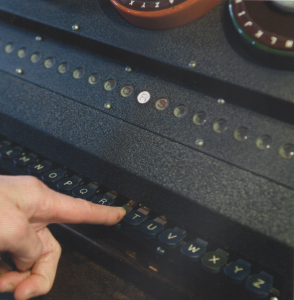 which was basically an ersatz Enigma, was built as well. That provided the “finishing touches” and allowed the British to fully decipher Enigma’s messages.

By 1941, Bletchley Park had begun to decode German messages and that capability soared in the following years. In fact, over 200 Bombes were built, many housed at Bletchley, but some were in other locations as well.
The intelligence received from all these was called Ultra. Winston Churchill told King George that Ultra and the Bombe had shortened the War by at least two years.
What fascinates me is that Ultra was given only to a few top commanders, and they were forbidden to act on it until the Allies were sure the Germans had been deceived into thinking the information came from other sources than the Enigma. Secrecy was so crucial that information was shared on a need to know basis only. Few people knew the whole story of the Bombe, or even which other sections existed besides their own. But it worked, and there were no leaks, something that seems impossible today. In fact, Churchill called Bletchley and Ultra “the geese that laid the golden eggs and never cackled.”
Next time: The Movie
The post Bletchley Park: Breaking The Enigma appeared first on .
January 5, 2015
Bletchley Park: Codebreaking Tradecraft
Those of you who know more than I do about codebreaking (and that’s likely most of you reading this) know this already. But I didn’t, so for myself and others who don’t, there are six basic steps to codebreaking, as practiced in Bletchley Park during the War.
The signage at Bletchley explains: “If you can find out what your enemy is planning, you obviously have a huge advantage. Military commanders know you need to use codes or ciphers so that if messages fall into enemy hands, they make no sense and your plans stay secret.”
The Germans knew its wireless (radio folks, at least back then) messages would be intercepted. But they believed that they had developed a modern cipher machine, called the Enigma, that could NEVER be cracked.
They didn’t count on Alan Turing and his team of codebreakers. But I’m getting ahead of myself.
Here are the basic code-breaking steps:

Interior of one of the Bletchley huts. Smaller rooms flanked both sides of the hallway.
I Intercept Your Enemies’ Radio Signals
Eavesdrop on messages going to and from enemy headquarters and army, navy, and air forces in the field. Hundreds of people, mostly women, listened to radio signals in one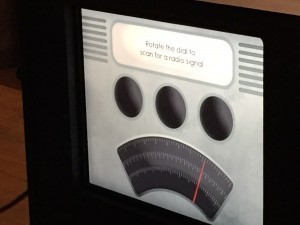 of eleven small “huts” which is where most of the real decoding work was done.
II Figure Out How the Messages Have Been Encrypted
Codebreakers had to examine the messages carefully, using both logic and intuition, together with the machines that were invented, to break the day’s codes and ciphers.
Btw, do you know the difference between codes and ciphers? Codes are words, numbers, or phrases that both the sender and recipient know mean something else. Example: Garden Party means “Start the attack”… or “accountant” means “Come at once. It’s an emergency.” Codes require a codebook to unscramble the message.
Ciphers on the other hand, are mechanical operations where specific letters and numbers are substituted for other letters and numbers, say “q” for “b”, or “8” for 2.” To decode the message you don’t need a book – you simply need directions on how to substitute the proper letters and numbers into the message. Those directions are called algorithms (thanks, Amazon…). As such, ciphers use math as the key to unlock their meaning. And Alan Turing was a superb mathematician.
III Decipher

Hut 3, where much of the decryption took place.
Once the cipher was broken, set teams of people to decipher all the messages received that day.

IV Translate
Many language specialists worked at Bletchley to translate the deciphered messages into English so that military experts could assess how important they were. 
V Cross Reference
In this step, codebreakers had to see if anything in the message they were looking at related to other facts they knew, all to help build a better picture of what the enemy was doing.

VI Send on The Top Secret Intelligence You’ve Uncovered

I help send out the translated messages to those who needed to know.
Codebreakers had to make sure the information got to the right people. Which senior military commanders would it help? W as it something the Prime Minister needed to know? This was done by phone (coded, of course), radio transmissions, and dispatch messengers, who rode these motorcycles.

And just in case you were tempted, reminders were everywhere:

Next time: The Enigma and how it was cracked…
The post Bletchley Park: Codebreaking Tradecraft appeared first on .
January 4, 2015
Bletchley Park: “Setting the Scene” — Part 2
As the war progressed, so did the work at Bletchley, particularly after Alan Turing developed the Ultra. And all in total secrecy. It’s amazing to think that over 10,000 people worked at Bletchley over the war years, but no one knew. The secrecy was inpenetrable — something that would probably be impossible today. And it didn’t end with the end of the war. The people who worked at Bletchley could NEVER talk about what they did — until the 1980s when the information was finally declassified. Work on the restoration of Bletchley Park began in the 1990’s.
Tomorrow, the basics of codebreaking.
The post Bletchley Park: “Setting the Scene” — Part 2 appeared first on .
January 3, 2015
Bletchley Park: Setting the Scene
Most of you you know I’m a former film and video producer as well as a history addict, particularly periods of history that are fraught with conflict. I was lucky enough to visit Bletchley Park in the UK over the holidays, and, of course, I took dozens of photos which I’ll organize and post in the coming days.
To start though, I have a series of very short film clips — almost all of them documentary footage of the war years from the British POV. Because I couldn’t resist “filming the films”(so to speak), I’ll start with those to set the stage for the massive codebreaking effort that was Bletchley Park. The clips are roughly in chronological order. They are all uploaded at You Tube, and you can see them all together here. But if you want to pore over them at a leisurely pace, here are the first few. I’ll follow with more tomorrow. Apologies for the quality — this was as good as I could manage with my iPhone.
The post Bletchley Park: Setting the Scene appeared first on .
December 30, 2014
Writing Lite Tip #39: Join Google+

Google+ isn’t as popular as Facebook, and that may be a good thing. The Writers Communities on Google+ are more manageable and your questions and comments are apt to be answered more readily. I’m in 4-5.
Go for it. 2015 is here!
You can see all my Writing Lite tips thus far here on Pinterest.
The post Writing Lite Tip #39: Join Google+ appeared first on .
December 26, 2014
Writing Lite Tip #38: Follow good writing and publishing blogs

Digital Book World is another good blog, even though their platform is skewed more toward traditional publishing. No matter – DBW has interesting articles and covers some of the same news as The Passive Voice.
Other bloggers I follow are Joe Konrath, Anne Allen, Joanna Penn, and Jane Friedman. You should too!
You can see all my Writing Lite tips thus far here on Pinterest.
The post Writing Lite Tip #38: Follow good writing and publishing blogs appeared first on .
December 22, 2014
Writing Lite Tip #37: One of the best indie writers’ blogs is The Passive Voice.com

For the latest news about self-publishing and other issues dealing with publishing in general, there’s no better blog than The Passive Voice. I read it daily and always learn something new.
You can see all my Writing Lite tips thus far here on Pinterest.
The post Writing Lite Tip #37: One of the best indie writers’ blogs is The Passive Voice.com appeared first on .
December 19, 2014
Serial — Why I Loved It
 Sadly, my favorite Thursday activity is now over. Thanks to my daughter, who told me about “Serial” a month ago, I was able to binge-listen to 8 podcasts, and then followed up every week until yesterday.
The ending? I’m sure there will be unending discussions about Adnan’s guilt or innocence, the tragedy and/or travesty of the crime, and This American Life producer’s Sarah Koenig’s style, but I thought she did a fabulous job wrapping it up. In fact, I think she did a fabulous job on the entire series. Here’s why:
First, the superficial– I love the radio/podcast format. I can listen in my car, while I’m doing errands, cooking, or cleaning. Podcasts are highly portable. In fact, my first job in broadcast news was at KYW All News radio in Philadelphia, so I’m predisposed to audio only formats.
 Now, more substantively: While Serial investigated a real murder, ie true crime, Sarah is a natural story-teller. And “story” is what most of us are drawn to. A radio broadcaster in Chicago, Frank Beaman, used to say that radio was “Theater of the Mind.” And in Serial, it was indeed just that. Without the distractions of visuals, we could all imagine the story unfolding in our own way.
We were introduced to the “characters” (Adnan, Jay, Hae, and the others) up front, but we came to know them more fully as the story unfolded. We discovered they were not cardboard stereotypes, because we were privy to their conversations, behavior, and, in some cases, even their motives. Such robust character development in a true crime story is unusual, notwithstanding Truman Capote.
We were also a part of the narrator’s interior monologue, again, unusual in a true crime story. Sarah was an amateur sleuth, trying to solve a fifteen year old murder. As the audience, we followed along with her as she finds clues and pieces out the truth. From time to time Sarah didn’t (and clearly still doesn’t) know what to think, and as each piece of the puzzle is revealed, we waver along with her. Is Adnan guilty? Did Jay do it? Was there a third person? As a fiction writer, I know that the basis of suspense is to ask questions that are unanswered for as long as possible. Sarah did that often, and it made for riveting suspense.
Finally, I loved her use of source material. Taped interviews both before and after the trial, the pre-trial and trial transcripts, Hae’s diary, and conversations with third party experts lent credibility to the “plot.” A private detective, a former homicide officer, and others helped frame what was important for us, so we could match wits with Sarah and come to our own conclusions.
So, for me, the characters, the suspense, and the third party credibility are the earmarks of a great story, regardless of the outcome. And while there was no “surprise” or “happy” ending—at least thus far—you can bet I’ll be waiting for next season’s “serial.”
Meanwhile, if you’re the type who just wants MORE… check here, here, and even here.
The post Serial — Why I Loved It appeared first on .