Elizabeth Fitzgerald's Blog: Earl Grey Editing, page 36
May 12, 2016
13 Bookish Witches

Today is Friday 13th, a time for black cats, superstition and (of course) witches. I might have a streak of practicality a mile wide, but I have a soft spot for witches in my reading material. Perhaps it’s because they often share that streak of practicality, along with a fierce sense of independence and a healthy dollop of bad-assery. So to celebrate this auspicious date, I thought I’d share a list of my 13 favourite bookish witches:
Minerva McGonagall from Harry Potter. I’m betting the only reason Hogwarts kept running while Dumbledore was off swanning around was because of this formidable witch. The head of Gryffindor might have been strict, but she was always scrupulously fair and practical to the bone. It’s no wonder Hermione kicked butt with McGonngall to look up to.
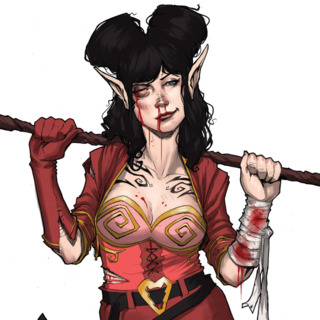 Speaking of kicking butt, Hannah from the Rat Queens definitely makes the list. What she lacks in practicality, she makes up for with sass. This foul-mouthed witch possesses both powerful magic and a killer sense of style. When she’s not out shooting spells and adventuring with her sisters-in-arms, you can find her drinking the town dry or seducing the most handsome man in Palisade.
Seduction is the last thing on Kyoko Mogami‘s mind. So is magic, really. In fact, Skip Beat isn’t speculative fiction and Kyoko’s not technically a witch at all. However, whenever she thinks of how her childhood love used her to further his rock-star career before tossing her aside her rage manifests in the form of cute little demons. She’s also pretty handy with a curse doll.
Blackthorn from Blackthorn & Grim is also technically not a witch. She may not be able to use magic, but she knows her way around healing herbs. She’s also bound by a promise never to turn away those who ask her for help. As a result, she’s found herself investigating some sticky magical situations, utilising that streak of practicality I love and grumping about it all the while.
 Sophie Hatter from Howl’s Moving Castle is not the most organised of witches but she’s not one for putting up with nonsense. Some might call her impulsive, but she sees the best in everyone (except Howl) and always tries to help where she can. She’s also able to talk life into inanimate objects.
I think Sophie would get along well with Agnieszka from Uprooted. Like Sophie, Agnieszka discovers her talent unexpectedly and finds it to be a powerful one. There were many things I loved about Agnieszka: her joy in learning to use her magic, the way she stood up for her own way of doing things and her deep loyalty to those she loves.
That last is a quality also shared by Ashala Wolf from The Tribe. Much like the animal with which she identifies, pack is everything to Ashala and she will do whatever she has to in order to make sure they are safe. Ashala is also a powerful dreamer with the ability to accomplish anything while asleep. Flying? Super strength? No problem! But it comes at a cost when she wakes up.
Vying with Ashala for scrappiest witch on this list is Hitomi from Sunbolt. In fact, these two share a lot in common. Both grew up rough and fight against oppression. Hitomi can create magic wards and speak to birds. She may not be as powerful as Ashala but she makes good use of what she has.
 Another witch who knows something about oppression is Prunella from Sorcerer to the Crown. I was a bit of two minds as to whether to include Prunella on this list. She can be pretty selfish at times and thoughtless in the way she treats other people. At the same time, I admired her resourcefulness and determination on her quest to overturn society’s decree that magic is an inappropriate vocation for women. Zen Cho’s alternate London won’t know what hit it.
Also working against the bigotry of an alternate London is Jewish witch Mrs Esther Gold from A Charm of Magpies. Mrs Gold is no stranger to hard work; even pregnancy hardly slows her up. Her courage and sense of duty make it hard for her to sit on the sidelines when necessary, even though it also presents her with the chance to make good use of her organisational talents and That Look. Also, when was the last time you saw a pregnant witch (that wasn’t having a demon baby)?
Helen Adebayo from “Careful Magic” was my favourite character from the Kaleidoscope anthology. She is both OCD and the only declared Order worker at her school. I admired her quick thinking and the way she isn’t afraid to express her opinion.
There are witches and then there is Witch. Jaenelle Angelline from The Black Jewels Trilogy is the most powerful witch her world has ever seen, the Queen of Darkness. Don’t let that intimidate you, though. She treats everyone–human or otherwise–with the respect they deserve and wears her heart on her sleeve. She also can’t summon her shoes across the room most of the time and is a grump without her morning coffee.
 If Professor McGonagall made this list, it’s because Discworld‘s Granny Weatherwax paved the way. A more formidable witch is hard to find. If Granny Weatherwax appears to be less magically powerful than some others on this list, it’s because she knows there are many different types of power and she knows how to use them. A no-nonsense witch, she prefers to be respected than to be seen as Nice. And she’s certainly respected–even trolls and dwarves will detour around to the other side of the mountain rather than risk disturbing her.
I’m sure there are many other great witches I’ve missed. Who’s your favourite bookish witch?


May 10, 2016
Loose-leaf Links #21

Loose-leaf Links is a feature where I gather together the interesting bits and pieces on sci-fi and fantasy I’ve come across and share them with you over tea.
The tea for this edition is Golden Mao Feng from Adore Tea. It’s a lighter tea than I often drink, perfect for sunshiny afternoons, and likely to appeal to lovers of Darjeeling.
Awards News
The Hugo Awards circus is in full swing at the moment. Two of the finalists have withdrawn and . I’m particularly thrilled to see feminist SFF blog Lady Business step onto the ballot for Best Fanzine, as I’ve been a fan of their work for a while. If you’re voting or just interested in what they do, they have included a list of sample posts on their announcement of the nomination.
Meanwhile, there are plenty of reaction posts. Cora Buhlert offers an excellent round-up both before the finalist withdrawals and after.
While you might be forgiven for thinking the Hugo Awards are the only thing happening on the SFF scene at the moment, there are a few other items of note. The shortlist for the 2016 Arthur C. Clarke Award has been released and looks excellent.
The Locus Awards finalists have also been announced, disappointing many with the complete lack of female nominees in the YA category, despite it being a genre dominated by female writers. It’s also very disappointing to see just one female nominee in the SF category (and that one female being the expected Ann Leckie).
On Equity
LGBTQ publisher Riptide Publishing earned the ire of romance circles for the racist content of one of their books. They have issued an apology and are instating the use of sensitivity readers (though there are some concerns about the rate at which these readers will be paid).
Mary Robinette Kowal chimed in with an excellent post on why sensitivity readers are necessary and some of the consequences of using them.
BookRiot has a list of 100 must-read SFF novels by female authors.
For Writers
Over at Fantasy Cafe, Elizabeth Bonesteel discusses moving beyond writing in gendered stereotypes.
A reminder that submissions for Ticonderoga Publishing’s Ecopunk anthology open next week.
LoveOzYA have a round-up of links on why copyright proposals and parallel importation will hurt the Australian publishing industry. Authors are encouraged to make their own submission to the Productivity Commission or add their name to the LoveOzYA submission.
M. Harold Page has a brilliant 5-point checklist for when you find yourself suffering from writer’s block.
Donna Maree Hanson writes about her foray into print on demand.
For Readers
Amanda Pillar, author of Graced and Captive, has just launched a mini collection of work called Dancing with Demons.
With Nnedi Okorafor’s novella Binti nominated for a Hugo Award, Tor.com have announced they will be releasing two more related novellas.
Jay Kristoff and Amie Kaufman are currently off touring the US, but they have plenty of work waiting for them when they get back with the announcement that they will be writing a new series together.
Unfortunately, all good things must come to an end. SF Signal is shutting down after 13 years of service to the SFF community.


May 8, 2016
Sisters of Icarus by Becca Lusher
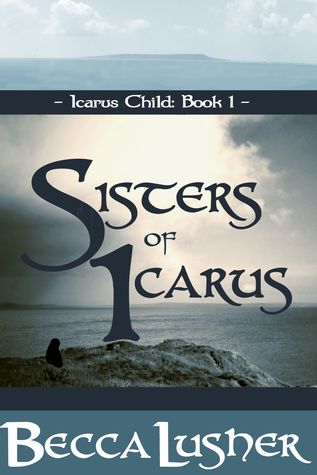
Published: Self-published, September 2015
Format reviewed: E-book (mobi)
Series: Tales of the Aekhartain, Icarus Child #1
Genres: Historical fantasy, romance
Source: Smashwords
Reading Challenges: Once Upon A Time X
Available: Amazon ~ Barnes & Noble ~ Kobo ~ Smashwords
Disclaimer: The author is a friend. I have done my best to give an unbiased review.
Britain 163 BC
On a small island just off the south coast, three sisters are determined to survive against nature’s unmerciful odds, but their brother is mad, everyone thinks they are strange and old voices cry on the wind.
Battling against love, grief, selkies and ghosts, middle sister Raccanta will face many tests of her strength if she intends to keep her sisters safe – and her promises intact. For on the mainland there lives a man who walks the woods and shows Raccanta a world that could tempt her far away.
Except the island keeps what it takes and it has no intentions of letting any of its sisters go.
Sisters of Icarus is a bit of an uneven book and reads almost like two separate stories. The first half concentrates on the relationship between the island and the three sisters living on it. There’s something uncanny about the island, which seems to have a personality of its own. This is especially the case after Raccanta’s brother, Icarus, is killed by his misguided attempt to fly. Voices whisper and shriek on the wind, while the sisters pretend they don’t hear.
This first half of the book is somewhat slow-paced, possibly due to the lack of a concrete antagonist. The island itself is certainly creepy and has its own personality, but its threat was nebulous and somewhat ineffective. In Unbound and Free, the island acted through Dewydd, thus allowing for the threat of physical violence. The targets were also weaker, being one lone woman and a young boy. Although Raccanta and her sisters sometimes work against each other, it is also easier for them to deflect any threat from the island; their survival isn’t threatened in the same way.
I would also like to have seen some reiteration of the island’s history. Although it is covered in Unbound and Free, I feel it would have been a useful way to ground the narrative. I wasn’t clear on where the island’s obsession with women came from and I hope this will be addressed in future volumes.
Cana’s time on the mainland makes up the second half of the book. I felt this was where the book began to hit its stride, settling into a familiar romance narrative. The island is always present between Cana and Fox, but the obstacles here are internal ones and rise from the history and emotional baggage of the characters. Fox was both charming and kind, lighting up the page wherever he was present. There were times when I didn’t know whether to shake him or give him a hug.
The two halves of the story came together at the end, giving just enough resolution to satisfy while being clear that there is still plenty for future volumes to resolve.
Although Sisters of Icarus was slow-paced at times, I found the characters were engaging. I’m looking forward to reading the rest of the series and to seeing how it fits into the wider Aekhartain world.


May 5, 2016
Bout of Books 16 sign up
April put a considerable dent in Mt TBR, but there’s plenty of work still to be done. And the best way to keep up my motivation is a reading challenge, of course!
The Bout of Books read-a-thon is organized by Amanda @ On a Book Bender and Kelly @ Reading the Paranormal. It is a week long read-a-thon that begins 12:01am Monday, May 9th and runs through Sunday, May 15th in whatever time zone you are in. Bout of Books is low-pressure. There are challenges, giveaways, and a grand prize, but all of these are completely optional. For all Bout of Books 16 information and updates, be sure to visit the Bout of Books blog. – From the Bout of Books team
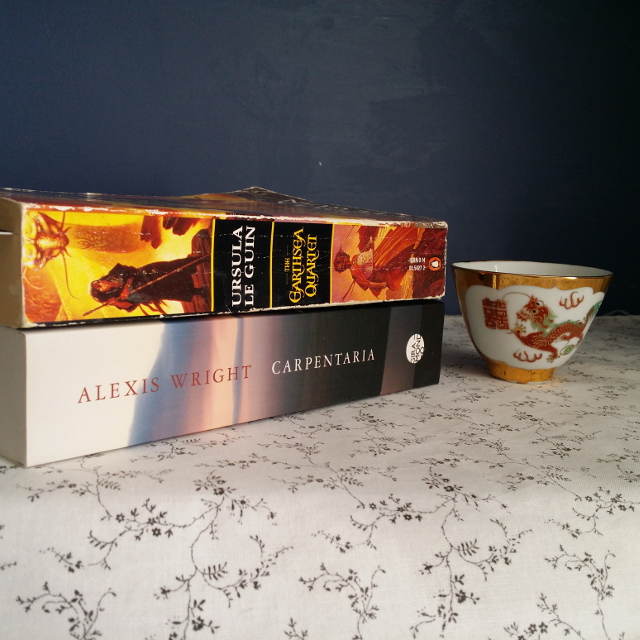
Being a low-pressure challenge, Bout of Books lets me set my own goals. As I have mentioned before, I overcommitted on review books for May. So I’d like to get through a minimum of three books. Carpentaria (pictured above) by Alexis Wright is definitely on the list along with The Crying Child by Becca Lusher and Penric’s Demon by Lois McMaster Bujold. If I manage all of those, I’d like to get back to my reread of Ursula Le Guin’s The Earthsea Quartet.
If you’d like to join in, there’s still time to sign up!
What’s on your TBR pile this week?


May 3, 2016
Mt TBR report: April 2016
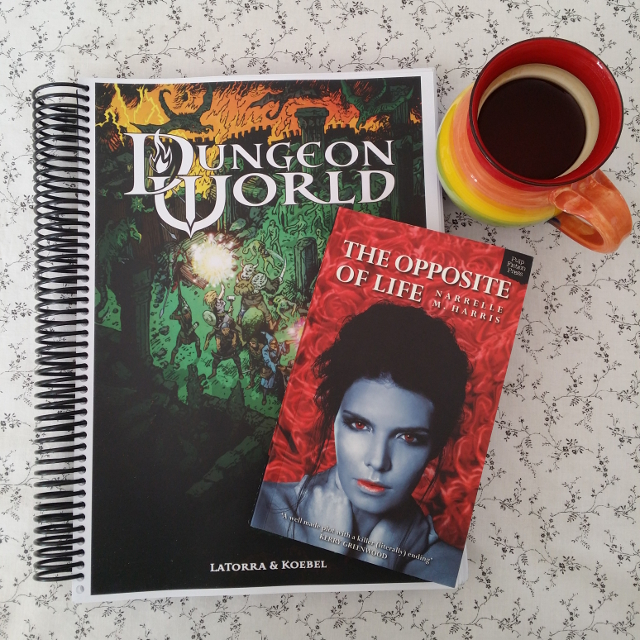
March may have been a terrible month for Mt TBR, but April made up for it. I’m very pleased that I have almost broken even for the year and I’m hoping I can keep this up for the next eight months. Hey, a girl can dream.
I’ve also done better with #ReadMyOwnDamnBooks. My goal for the challenge was to make sure 60% of the books I read this year come from Mt TBR. It was at 40% at the end of March and I’ve managed to claw it back to 52%. I’m not confident I’ll improve much on that in May, especially because I got way too excited with some review books and will be posting two reviews a week for the next month just to keep up.
Books with an asterisk on the list below were part of my #ReadMyOwnDamnBooks effort.
Mt TBR Status
Mt TBR @ 1 January 2016: 244
Mt TBR @ 31 March 2016: 253
Mt TBR @ 30 April 2016: 245
Books Read
31. Marked In Flesh by Anne Bishop *. Fourth book in The Others fantasy series. As with the entire series so far, the book has some excellent ideas and intriguing worldbuilding but is let down in execution. There are a lot of characters and not enough distinguishing their voices, even in close third-person.
32. Bespelled by Dani Kristoff *. A Sydney witch finds herself in a tricky predicament when a malicious spell renders a handsome, high-powered lawyer in love with her. A fun read, though it veered briefly into some dark territory.
33. Sunbolt by Intisar Khanani. Reviewed here.
34. The Ruin of Gabriel Ashleigh by KJ Charles *. After Lord Gabriel Ashleigh gambles away everything he owns, he’s given one last chance to save himself. A prequel to Charles’ Society of Gentlemen historical m/m romance series. This short story absolutely sizzles.
35. A Fashionable Indulgence by KJ Charles *. The first of the Society of Gentlemen series. Harry Vane was brought up as a seditionist, but his heart was never really in it. When his wealthy grandfather plucks him from obscurity, he is delighted to have a chance at living the high life. However, first he must learn how to act as a gentleman… and his tutor has him thinking all manner of ungentlemanly thoughts. As with Rag and Bone, Charles does an excellent job of conveying the desperation of poverty. Harry’s uncomplicated pleasure in life was a delight.
36. A Seditious Affair by KJ Charles *. The second of the Society of Gentlemen series. For the last year, notorious seditionist Silas Mason and Dominic Frey, a gentleman working for the Home Office, have met weekly to conduct an affair without either knowing who the other was. Until one day Dominic conducts a raid on Silas’ bookshop. This book has rather a different atmosphere to the last, with the characters engaging in philisophical debates with as much relish as they engage in BDSM. The tension is kept high, as discovery could mean disaster for both characters.
37. A Confidential Problem by KJ Charles *. A short story that’s really more of a deleted scene. Silas and Cyprian discuss their emotional entanglements while conspiring to solve a sticky situation.
38. A Gentleman’s Position by KJ Charles. Reviewed here.
39. Dungeon World by Sage LaTorra and Adam Koebel *. If you’re interested in playing role-playing games but find Dungeons and Dragons too complicated, this is the perfect system. It is also one of the clearest and most succinct RPG manuals I’ve ever read.
40. The Opposite of Life by Narelle M. Harris *. When bodies start dropping like flies around Melissa Wilson, she decides it is up to her to investigate. She soon discovers Melbourne has an undead underground she never suspected. I felt it did a good job of subverting some typical urban fantasy tropes and I particularly enjoyed the relationship between Melissa and her awkward investigative partner, Gary.
41. Widdershins by Jordan L. Hawk *. The first book of the Whyborne & Griffin series. A private investigator and a languages scholar team up to uncover a cult while struggling with their attraction for each other. Another m/m historical romance with a big dollop of the supernatural that gives it a vibe similar to The Mummy. Which the story plays on. Griffin was charming, but it’s Whyborne’s adorable but heartbreaking awkwardness that did me in. Highly recommended.
42. Sisters of Icarus by Becca Lusher. Review forthcoming.
DNF – Unwrapped Sky by Rjurik Davidson. Epic fantasy. Civil unrest stirs in the city of Caeli-Amur as the minotaurs arrive for the Festival of the Sun. I didn’t find an emotional hook to keep me interested, but I didn’t get very far into it. Perhaps it’s one I shall have to try another time.
DNF – Wolfskin by Juliet Marillier *. A sweeping Viking saga. That it is an early work of Marillier’s is evident in the writing style, though it framed scenes very cleverly. Ultimately, the subject matter just wasn’t for me.
Books Acquired
The Year’s Best Australian Fantasy and Horror 2010 edited by Liz Grzyb and Talie Helene.
Among Galactic Ruins by Anna Hackett
A Confidential Problem by KJ Charles
The Ruin of Gabriel Ashleigh by KJ Charles
A Fashionable Indulgence by KJ Charles
A Gentleman’s Position by KJ Charles
Dungeon World by Sage LaTorra and Adam Koebel
Defying Doomsday by Tsana Dolichva and Holly Kench
Online Reading
Wingborn Ch 4-8 by Becca Lusher. A Regency-style fantasy with giant eagles. Seriously, what more could you want? Mhysra has been training hard as a recruit for the Rift Riders and keeping her activities secret from her parents. When she attends the Midsummer Ball, she discovers something unexpected about her training officer.
The Jewel and Her Lapidary (Excerpt) by Fran Wilde. When the Jewelled Court is betrayed, the last princess must find a way to survive. Some intriguing worldbuilding here. I’ll keeping an eye out for this novella from Tor.com.
First Kill by Jennifer Fallon. A prequel short story for Fallon’s The Lyre Thief about assassain Kiam Miar’s first kill. It’s not necessary to have read the novel first. A touch predictable, but still very enjoyable. Kiam remains one of my favourite characters in this world.
What have you read this month?


May 1, 2016
A Gentleman’s Position by KJ Charles
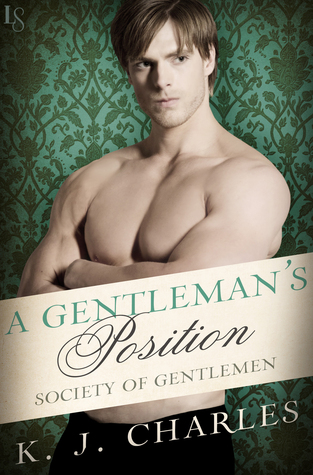
Published: April 2016 by Loveswept
Format reviewed: E-book (mobi)
Series: Society of Gentlemen #3
Genres: Historical romance, LGBTQIA
Source: NetGalley
Available: Publisher (electronic only) Amazon ~ Kobo
Disclaimer: I was provided with a free copy of this book in exchange for an honest review.
This review contains spoilers for previous books.
Among his eccentric though strictly principled group of friends, Lord Richard Vane is the confidant on whom everyone depends for advice, moral rectitude, and discreet assistance. Yet when Richard has a problem, he turns to his valet, a fixer of unparalleled genius—and the object of Richard’s deepest desires. If there is one rule a gentleman must follow, it is never to dally with servants. But when David is close enough to touch, the rules of class collide with the basest sort of animal instinct: overpowering lust.
For David Cyprian, burglary and blackmail are as much in a day’s work as bootblacking—anything for the man he’s devoted to. But the one thing he wants for himself is the one thing Richard refuses to give: his heart. With the tension between them growing to be unbearable, David’s seemingly incorruptible master has left him no choice. Putting his finely honed skills of seduction and manipulation to good use, he will convince Richard to forget all about his well-meaning objections and give in to sweet, sinful temptation.
KJ Charles has hit it out of the park with her new historical romance series Society of Gentlemen. The series wraps up in A Gentleman’s Position and I therefore wouldn’t recommend it as a starting point. By the time this book gets underway, both characters have an important history behind them that has an impact on this story.
This is particularly the case for Richard, who is the lynchpin of the eponymous society for gay men of social standing. The series is set in London in 1819-1820, a time in which homosexuality was still a crime. Each member of the society is aware of the risk they run should their activities be discovered. As the man with the highest social standing and the person who has brought them all together, Richard acts as the moral arbiter of the group. This prevents the group from drawing unwanted attention to themselves and allows Richard to maintain his moral high ground in a society that deems his sexual preferences as perversion. As a consequence, Richard comes across as unreasonably rigid at times and his decrees have hurt friends and family members in previous books. Readers of previous books may have a hard time finding him sympathetic, though I think Charles has done an excellent job of redeeming him.
David is Richard’s valet and fixer. He excels at manipulation and takes care of all Richard’s dirty tasks (both literally and metaphorically), making him a pragmatic foil to Richard’s moralism. David’s ruthlessness could quite easily have made him appear cold, but his devotion to Richard and his excellent people skills give him a likeability. This is reinforced by the scenes with his family.
The whole series has been about power dynamics and A Gentleman’s Position is certainly no exception. Richard is very conscious of how his position might force David to say to agree to a relationship he doesn’t truthfully desire. And even once it is plain that it is something David wants, Richard still can’t agree because he knows that there may come a time when David no longer wants it but becomes trapped there by their difference in station. In this way, although Richard is conscious of his privilege, it continues to blind him into taking away David’s choice and agency.
I liked how the story came to show how even though Richard appears to have everything—wealth, position, a close cabal of friends—David is much more fortunate in a number of ways: through his loving family, his cunning mind, work he loves and is good at, the fact he is at the pinnacle of his profession as the most sought after valet in London. On the surface it appears Richard has all the power, but David quite clearly has his own strength. Richard struggles to see things from perspectives other than his own, whereas this is something at which David excels.
The tension between them is breathtaking and Charles does a fantastic job of portraying their longing for each other. I also very much enjoyed the friendship between David and Silas. Although they have known of each other for some time, they’ve only been acquainted for a short while. Nevertheless, their relationship is warm and sincere, providing a much-needed sanctuary for them both.
Once again, KJ Charles has proved why she’s one of my favourite authors. I would highly recommend the series.


April 28, 2016
Loose-leaf Links #20

Loose-leaf Links is a feature where I gather together the interesting bits and pieces I’ve come across and share them with you over tea. I missed last fortnight’s post, as I was still recovering from Contact. As a consequence, today’s post is super long (and has reconfirmed for me the wisdom of running them fortnightly instead of monthly).
The tea in the picture is a divine Lady Grey blend from a boutique store in the Hunter Valley called Pokolbin Chocolates and Jam Company. The lemon peel gives it a strong, zesty flavour that I adore.
Follow Up
As mentioned, Contact wrapped up at the end of March. It was a blast, but don’t just take my word for it. Kat Clay has shared her highlights (including a few panels I didn’t make it to). Christine Sun, who sat with me on the Dodging Duggan panel, offers her perspective as a newcomer. And Rivqa Rafel tweeted up a storm all weekend, the results of which are now handily collected in Storify format.
Awards News
Contact also saw the presentation of a number of awards. First up were the Aurealis Awards, Australia’s juried awards for speculative fiction. There’s a full list of winners and a PDF of the program booklet over on the website. The organising committee also have a call open for the next round of judges (and they already have an email from me).
The Ditmar Awards were presented a few nights later. They represent the best of Australian speculative fiction as voted by fandom. Andromeda Spaceways Inflight Magazine has a list of the winners.
The Tin Ducks, West Australia’s speculative fiction awards, were presented the same weekend. The state produces amazing work and I don’t envy the task voters had in selecting the winners.
In a slightly more literary vein, the 2016 Stella Prize was awarded to Charlotte Wood for The Natural Way of Things. The Stella Prize recognises the contribution of Australian women to literature.
Looking more globally, the winners of the 2015 Tiptree Award were announced alongside an Honours list and a Long list. The Tiptree Award is given to works of speculative fiction that expand or explore concepts of gender.
The British Science Fiction Association presented their annual awards. A shortlist and a list of winners can be found on their website.
And lastly, the finalists for the 2016 Hugo Awards have been released. Jim C. Hines has some analysis of the nominations.
On Equity
Over on Tor.com, Kate Elliot discusses writing women into epic fantasy without quotas.
Stacey Berg shares 5 SFF books that obliterate the Bechdel test.
Jim C. Hines examines the argument that it is unfair to judge writers of past eras by today’s standards and that we should consider them as men of their times.
There is nothing revolutionary about not reading white men if they’re only replaced by white women.
Zen Cho, author of the excellent Sorcerer to the Crown, examines why she includes her culture in her writing instead of being more Western-centric.
A Chinese Superman? Yes please!
If you’re looking for more Asian SFF, try this list of 150 Asian SFF authors.
Noah Berlatsky discusses why cutting-edge sci-fi is often written by marginalised authors.
Thanks to Tsana of Tsana Reads and Reviews for pointing me to Diversity in Australian Speculative Fiction: A bibliographical exhibition. My wish list just grew longer.
Another way to expand your reading is to check out this literary map. It features a book recommendation for 196 different countries.
Looking for books featuring trans teenagers that don’t focus on transition? Ask your friendly neighbourhood lesbrarian.
Along similar lines, Bina at If You Can Read This offers 5 recommendations for queer horror.
Or you could try this annotated list of asexuals in fiction.
Sarah Hollowell writes about putting fat girls in your SFF YA.
For Writers
The Canberra Speculative Fiction Guild and Conflux 12 are running their annual short story competition. The word count is 4,000, the deadline is 31 July and the theme is red fire monkey. Open to Australian residents only.
Fireside Fiction has Daniel José Older on board as a guest editor and are taking submissions until the end of the month. Flash fiction up to 1,000 words, short stories up to 5,000 words.
Book Smugglers Publishing have announced the editors for their 2016 Speculative Fiction: The Best Online Reviews, Essays and Commentary anthology are Liz Burke and Mahvesh Murad. They are also looking for submissions of non-fiction works related to speculative fiction and published online in 2016. Entries close on 31 December.
Interested in having a Pulitzer Prize finalist read your work? Kelly Link is judging the Fairy Tale Review‘s 2016 Prose contest. Entries can be up to 6,000 words and close on 15 August.
If you keep reassuring yourself that you’ll get around to submitting something, you might be interested in participating on Alison Manning’s research into procrastination.
Self-published author Patty Jansen shares the stats on her yearly earnings.
Hungarian magazine Galaktika have been translating and reprinting stories without permission from the authors. While this breach of copyright is unacceptable, there are also some tricky cultural issues at play here.
Kat Clay invited a few guests to share what they think are the best books about writing genre.
Alis Franklin has just saved me a heap of time by pointing out the global find-and-replace function in Scrivener.
She also offers some thoughts on all the unpaid work expected from writers.
This comes back to the way publishing is structured, specifically that it implicitly assumes that authors will both, a) have day jobs to support themselves financially, and b) have time and resources to devote to performing non-writing activities to promote their books (while also writing their next book and editing their current book).
As part of Women in SF&F Month at Fantasy Café, Charlie Jane Anders argues that Yoda was wrong: anger leads to everything good.
Peter Ball wants you to know there is nothing surprising about a writer being rejected (even J.K. Rowling).
On hearing the news that musician Prince died without a will, Neil Gaiman dug this out of the archives.
For Readers
Twelfth Planet Press have revealed the cover for Defying Doomsday, an anthology of apocalyptic fiction featuring disabled and chronically ill protagonists. The book will be launched on 30 May and is available for pre-orders. Expect a review here closer to the launch date.
Ticonderoga Publishing have announced that they’ll be releasing Crow Shine, a collection of dark fantasy by Alan Baxter. The launch will take place at Conflux 12, where Alan is a Guest of Honour.
The results for the fourth quarter of Ladybusiness’ 2015 short stories survey is now out. They’ll be changing up the format of the survey for 2016 and will be taking recommendations all year.
Nisi Shawl and K. Tempest Bradford are also taking recommendations for the The Year’s Illustrious Feminist Science Fiction and Fantasy 2015.
If you’re a regular reader here, you know I’m a big fan of reading challenges. So how do I find out about these challenges and keep track of them? Try the Book Blogger Community Calendar.
There’s also a master list of book blogging memes.


April 26, 2016
Dewey’s read-a-thon, April 2016
Dewey’s 24-hour Read-a-thon took place on Sunday, Australian time. For those who have somehow managed to miss my incessant posting about it, the event is basically a chance for book geeks across the world to get together and read as much as possible. It is also held in honour of its founder, a book blogger who went by the name Dewey, who passed away several years ago. I participated in my very first read-a-thon in April 2011 and haven’t looked back since.
As usual, things kicked off just as I was winding down.
Dewey’s 24-hour #readathon might have started, but I’m just heading off to bed. Good reading, everyone! See you in 8 hours.

April 24, 2016
Sunbolt by Intisar Khanani
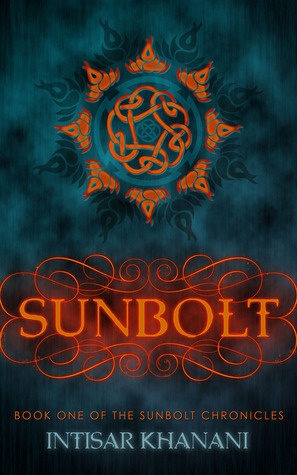
Published: June 2013 by Purple Monkey Press
Format reviewed: E-book (mobi)
Series: The Sunbolt Chronicles #1
Genres: Fantasy, YA
Source: Author
Reading Challenges: Once Upon A Time X
Available: Amazon ~ Book Depository ~ Booktopia ~ Kobo
Disclaimer: I was provided with a free copy of this book in exchange for an honest review.
The winding streets and narrow alleys of Karolene hide many secrets, and Hitomi is one of them. Orphaned at a young age, Hitomi has learned to hide her magical aptitude and who her parents really were. Most of all, she must conceal her role in the Shadow League, an underground movement working to undermine the powerful and corrupt Arch Mage Wilhelm Blackflame.
When the League gets word that Blackflame intends to detain—and execute—a leading political family, Hitomi volunteers to help the family escape. But there are more secrets at play than Hitomi’s, and much worse fates than execution. When Hitomi finds herself captured along with her charges, it will take everything she can summon to escape with her life.
Having been impressed by Khanani’s work in Thorn, I knew I needed to check out some of her other stories. Sunbolt is an original novella and the first in the Sunbolt Chronicles. With the sequel coming out next month, I thought Sunbolt would make a good starting point and wasn’t disappointed.
As with Thorn, Khanani does some interesting things with representations of race. Karolene is an island city with a dark-skinned population. The nations to the north are described as pale-skinned and exotic, a description which neatly inverts some racist stereotypes. The villain also inverts these stereotypes, being the most prominent of a very few white characters.
Hitomi herself is Asian, making her stand out in Karolene. She does everything she can to fit in, but her skin and hair will always mark her out as a stranger. This is a particular problem for someone involved in an underground movement. But, more than that, it also alienates her from the place she considers home.
I very much enjoyed Hitomi as a character. Her selfishness and prejudice was balanced out by fierce loyalty and courage. My one quibble is that even though she grows away from her flaws, the short length of the novella made this progress a little fast for my taste, leaving me feeling the emotional arc of the story wasn’t quite solid.
The story kept me on my toes with all its twists and turns. I particularly appreciated the way in which when things begin to go wrong, they go wrong in a very mundane way and snowballs from there. This made it feel realistic to me and it meant that the stakes for Hitomi grew correspondingly.
All in all, Sunbolt was both fast-paced and thought-provoking. I will definitely be seeking out the sequel, Memories of Ash, when it is released in May.


April 21, 2016
Preparation for Dewey’s Read-a-thon, April 2016
With my Mt To-Be-Read hitting record heights and my #ReadMyOwnDamnBooks figures looking sad, my reading stats could use a boost. Fortunately, my very favourite reading challenge is on this weekend.
Dewey’s read-a-thon runs twice a year–in April and October. It runs for 24 hours, but participation for the full length is optional. Which is a good thing, because this round will be kicking off at 10 PM on Saturday 23 April for the east coast of Australia. As usual, I plan to be going to sleep around then, but will be up early to cram as much reading as possible into my waking hours.
As with last year, I also plan to do some cheering. Cheerleaders help readers stay motivated by leaving comments on Twitter. There is always an incredible shortage of cheerleaders. Last October the read-a-thon saw 2008 participants, which is a lot of people to visit and motivate! I had a blast with it and am looking forward to doing it again.
Of course, a read-a-thon requires books! I find myself reluctant to commit to a particular list this time, but here’s a few things I’m thinking about tackling:
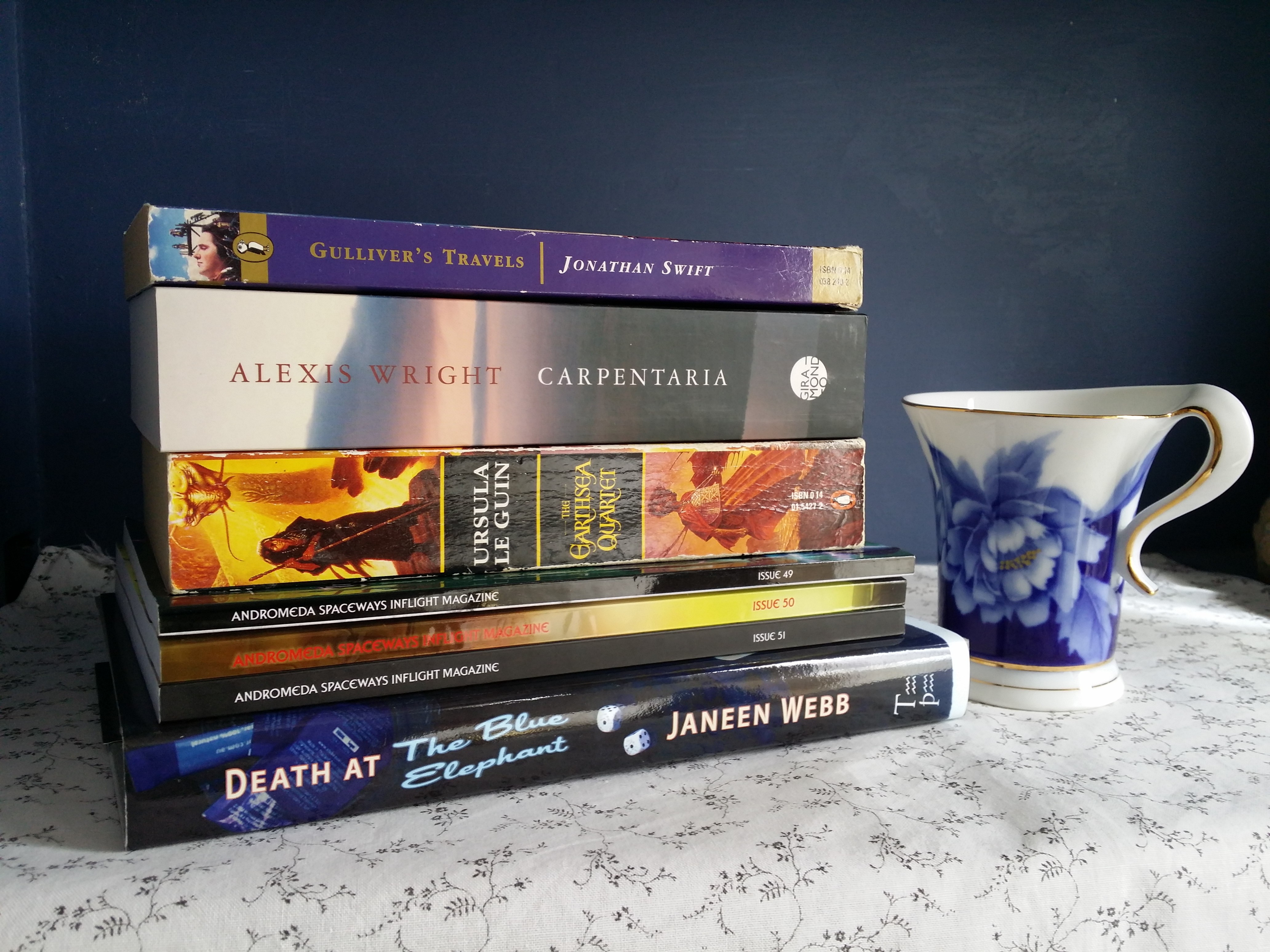
Before you freak out, I’ve previously read The Earthsea Quartet by Ursula LeGuin. It has just been a very long time.
If you need to tame your own Mt TBR or are looking to connect with a great community of book bloggers, it’s not too late to join! You can sign up, follow on Twitter, join the Goodreads group or any combination of the three. The read-a-thon website will be running warm-up posts containing great advice all the way up until the event. If you’ve already signed up, I’d love to hear about what you’ll be reading.