Elizabeth Fitzgerald's Blog: Earl Grey Editing, page 40
January 28, 2016
Loose-leaf Links for January 2016
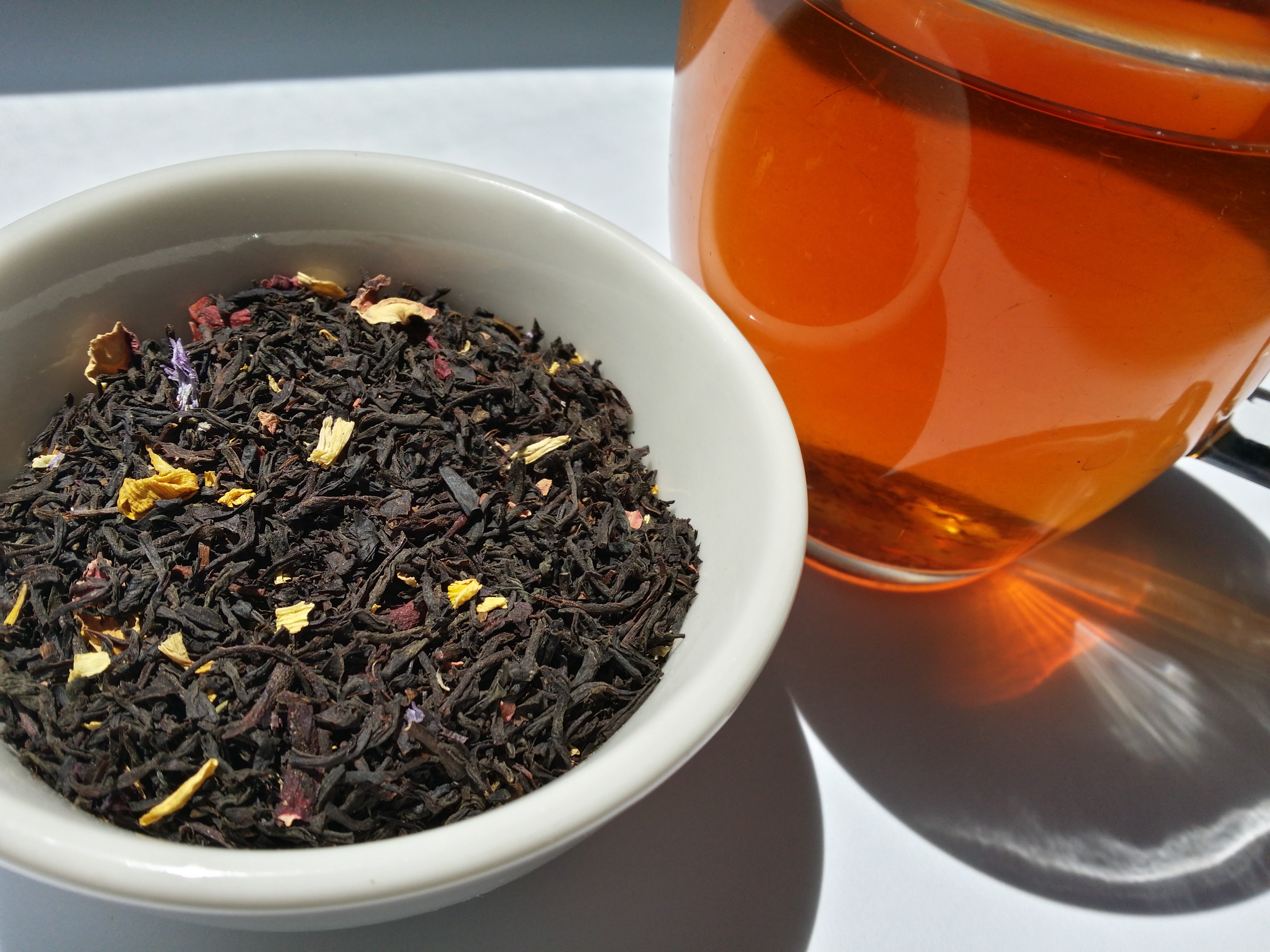
Loose-leaf Links is a feature where I gather together the interesting bits and pieces I’ve come across in the last month (or two, in this case) and share them with you over tea. This summer has seen some crazy temperature swings from roasting hot to freezing cold. Fortunately, this French Earl Grey from Adore Tea is fantastic no matter whether it’s served hot or iced.
Follow Up
As I noted in my review, Ann Leckie’s depiction of gender in Ancillary Justice is rather unusual. This has led to some considerable challenges in translating the work.
With the third book in the Captive Prince series due out next month, C.S. Pacat has just announced she’s not quite done with the world yet. She’ll be releasing three new short stories, but hasn’t yet given a date.
Awards News
Nominations for the 2016 Ditmar Awards close on 31 January. If you’re an Australian fan or are a full or supporting member of the 2016 Natcon, you’d best get your nominations in quickly! You can find details here, a partial eligibility list here, and can make your nominations online here.
While you’re at it, nominations are open for the 2016 Tin Duck Awards. The awards recognise the best of West Australian SFF. Nominations close on 14 February.
The Sir Julius Vogel Award is also open for nominations until the end of February. The award is given for excellence in New Zealand speculative fiction. Best of all, you don’t have to be a New Zealander to nominate a work.
Goodreads have announced the winners of their Best Books of 2015 survey.
The shortlist for the 2016 Philip K. Dick Award has been released. The award is given for the best science fiction paperback to be released in the US in the previous calendar year.
Recommendations for the 2016 James Tiptree Jr. Award are open from now until 1 December. If you’ve read a work of science fiction or fantasy published in 2016 that explores or expands notions of gender, head on over to the website and fill in the recommendation form.
The shortlist for the 2015 Australian Romance Readers Awards has been released. The finalists will be announced on 19 March.
The Arthur C. Clarke Award has released a full list of the books nominated for this year’s award. The award is given for the best British sci-fi published in the previous year. A shortlist will be announced in April.
The 2015 Rainbow Awards were announced at the beginning of December. The Rainbow Awards is an annual contest celebrating outstanding work in LGBT fiction and nonfiction.
If YA literary ships are your thing, the winners of the inaugural Shippy Awards were released just before Christmas. I got caught up with Christmas preparations and wasn’t able to participate, but it looked like fun.
On Diversity
The 2016 black&write! Indigenous Writing Fellowships are currently open for applications. From the website:
The black&write! Indigenous Writing Fellowships are open to all writers (published and unpublished) of Aboriginal and Torres Strait Islander descent currently living in Australia. The Fellowships are open to adult fiction, young adult fiction, short story collection, poetry collection and children’s book manuscripts. Entries must include a Confirmation of Aboriginality Form/ Letter of Confirmation with a common seal from an Aboriginal or Torres Strait Islander incorporated community organisation. There is no entry fee.
Two winners will each receive:
$10,000 prize money
Manuscript development with black&write! and a
Publication opportunity with Hachette Australia
Over on Media Diversified, Kavita Bhanot suggests British publishing decolonise, not diversify. She points out the problems with focussing on numbers and the issues surrounding the term ‘diversity’.
Smart Bitches, Trashy Books host a discussion on slut shaming in romance, then follow up with recommendations for sex-positive books.
Constance Augusta Zaber has an excellent round-up of news and new releases in trans literature over on BookRiot.
For Writers
Marion Zimmer Bradley’s Sword and Sorceress 29 will be open for submission in April, so best get started on polishing up your fantasy stories now! They will be accepting stories up to 9,000 words. Be sure to check the guidelines.
Contact2016, this year’s Australian Natcon, has just launched its short story competition. They’re looking for stories of up to 3,000 words on the theme of close contact.
A report on the impact of the 2014 and 2015 Australian Government budget decisions on the arts has been released and makes for grim reading.
Things may only get worse, with the Government supporting the dismantling of restrictions on parallel book importations, despite fierce opposition from the publishing industry.
Robert Jackson Bennet, author of City of Stairs, offers some advice to aspiring writers seeking to make a living off their writing.
Somewhat relatedly, Peter Ball offers some incisive thoughts on finance advice and writing.
C.S. Pacat, author of Captive Prince, has posted a great article on how to make dialogue dynamic by using the topic pattern. Her master post on writing techniques is also worth checking out.
Kate Elliot, author of Black Wolves, has recently started a weekly blog series on worldbuilding.
Leife Shallcross is running an interesting series of guest posts on research rabbit holes.
And if you’re looking for yet another blog series to follow, Carlie St. George has just started running Trope Anatomy 101 as a regular column over on the Book Smugglers. Her inaugural post looks at why Rey from Star Wars is not a Mary Sue.
Now that 2015 is done and dusted, David McDonald shares his writing stats for the year.
Peter Ball also shares some thoughts on the usefulness of gathering data about his writing.
And if you’re having trouble gaining some perspective on your own writing stats (and if the two posts above don’t help), try checking out the daily word counts of 39 famous authors.
Kameron Hurley, author of Empire Ascendant, speaks out about anxiety and making it as a writer.
And while it’s not winter in the Southern Hemisphere, discussing self-care is always timely.
For Readers
Lois Tilton has resigned from Locus Online over censorship of her reviews.
FableCroft Publishing have announced they will be launching The Rebirth of Rapunzel: A Mythic Biography of the Maiden in the Tower by Kate Forsyth at Natcon in March.
This unique collection will include Kate’s research on the Rapunzel story that underpinned her stunning, award-winning novel, Bitter Greens, as well as several other pieces related to fairy tales and folklore. The book is not your usual reference work, but an wonderful exploration of the subject matter, written in Kate’s clever and engaging style.
If you’re looking for yet more books to boost Mt TBR (ha!), try Barnes & Noble’s 42 SFF books they can’t wait to read in 2016. I certainly added a few to my wish list.
Alma Alexander, author of The Hidden Queen, offers 30 ideas to challenge your reading.
Or you could join Stephanie Gunn and Ju from The Conversationalist in taking a journey through the Twelve Planets publications from Twelfth Planet Press. I’m sorely tempted by this one.
Cait at Paper Fury discusses why it is perfectly acceptable to have an enormous TBR pile. A woman after my own heart.
Finally, Ladybusiness are having their quarterly short fiction survey. If you read any short fiction published between 1 October and 31 December 2015, they would love to hear from you!


January 24, 2016
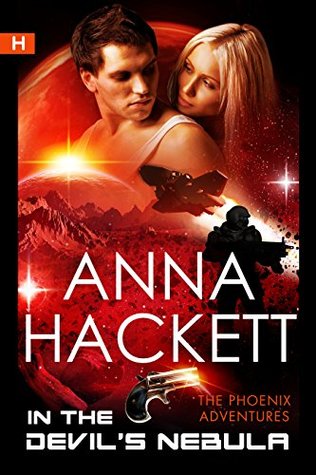
In the Devil’s Nebula by Anna Hackett
Published: Self-published in July 2014
Format reviewed: E-book (mobi)
Series: The Phoenix Adventures #2
Genres: Science fiction, space opera, romance
Source: Author’s website
Reading Challenges: Australian Women Writers Challenge 2016, #ReadMyOwnDamnBooks, The 2016 Sci-fi Experience
Available: Amazon ~ Barnes & Noble ~ Kobo ~ Smashwords
Two years ago, on a deadly mission to the lawless Devil’s Nebula, Commander Zayn Phoenix’s life imploded. Now the former Strike Wing pilot fills his days with dangerous adventures alongside his treasure hunter brothers.
But his nights are another story: haunted by nightmares of one unforgivable act.
Until an assassin lures him into a hunt. A hunt for her freedom from the Assassin’s Guild. A hunt for a derringer used in an ancient and infamous assassination—of old Earth president, Abraham Lincoln.
Zayn is compelled to join the perilous adventure with Ria Dante that will take them straight into the heart of the Devil’s Nebula, but not for money, fame or treasure.
He joins because Ria has the face of the woman he left for dead in the Nebula years before.
When the Book Gannet saw my potential reading list for the 2016 Sci-fi Experience, they suggested I pick up some Anna Hackett to balance out the Big Serious Sci-fi. Since they’ve never steered me wrong, I went over to the author’s website where I picked up In the Devil’s Nebula as part of a free book bundle. I’m glad I did.
In the Devil’s Nebula was fast-paced fun. Actually, I was a bit surprised at just how fast-paced. I went into it expecting it to be mostly focused on the romance but found myself in the middle of an action adventure instead. The plot manages to combine space opera with heist story with romance and even tosses in a little Western just for fun. It’s a lot to jam into such a small space but the style is very cinematic and it hangs together well.
Naturally, the characters come with baggage. Back when Zayn was in the military, he was forced to mercy kill a team mate he was attracted to–a team mate who looks eerily like Ria. Despite this, Zayn isn’t much of a brooder and I liked that about him. He prefers to channel his grief into action, as the pilot for his treasure-hunting brothers. He also has a talent for conducting heists… when a certain someone doesn’t get there before him.
Ria is a member of the Assassins Guild who wants out. Of course, no one retires from the Assassins Guild, so she’s been forced to get a little creative with her retirement plan. But she needs help. I liked Ria’s boldness. She gets the attention of Zayn and his brothers by pre-emptively stealing the treasure they’re hunting. Yet while she’s bold, she’s not generally reckless and is more than capable of physically keeping up with Zayn no matter what sort of trouble they find themselves in. The sexual tension between these two is strong, though some of the early romantic moments could have been held for a beat longer.
However, it was the secondary characters that really stole the show. BEll is the onboard computer for the Phoenix Brothers’ ship. I liked that she had such a distinct personality and spoke in a very sassy, casual way. Then there was Lastite Lala, a teenager with a talent for explosives. Despite her young age and total lack of fear, Lala is capable of looking after herself and does a great job of keeping the protagonists on their toes.
In the Devil’s Nebula made for some light, action-packed reading. I thoroughly enjoyed it and will be snagging the rest of the series for later.


January 21, 2016
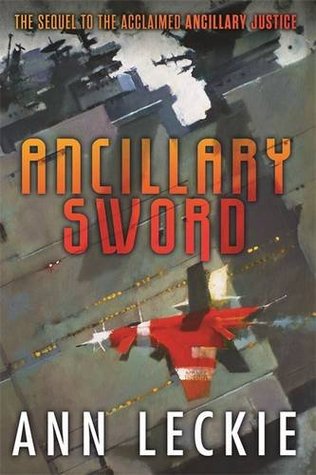
Ancillary Sword by Ann Leckie
Published: October 2014 by Orbit
Format reviewed: Paperback, 356 pages
Series: Imperial Radch #2
Genres: Science fiction
Source: Gift
Reading Challenges: The 2016 Sci-fi Experience, #ReadMyOwnDamnBooks
Available: Publisher (print and electronic) ~ Abbey’s ~ Amazon ~ Barnes & Noble ~ Book Depository ~ Booktopia ~ Dymocks ~ Kobo ~ Smashwords
Disclaimer: This review contains spoilers for previous volumes/books.
Breq is a soldier who used to be a warship. Once a weapon of conquest controlling thousands of minds, now she only has a single body and serves the emperor she swore to destroy.
Given a new ship and a troublesome crew, Breq is ordered to the only place in the galaxy she will agree to go: Athoek station, to protect the family of a lieutenant she once knew – a lieutenant she murdered in cold blood.
This is a book all about tea, so it should surprise no one that I loved it. Okay, perhaps that’s oversimplifying things a little. After all, Ancillary Sword is a complex novel.
It picks up within a few days of where Ancillary Justice left off. Having been promoted to the rank of Fleet Captain by Anaander Mianaai (or one version, at any rate), Breq is sent to Athoek Station to keep that system stable. Although the system has little strategic value, it is a major producer of the tea on which the empire runs.
If that sentence rings some colonial bells for you, it should. The cultivation of tea on Athoek relies in a large part on systemic inequality and oppression, much like it did and continues to do in reality. In Radch the kind of tea one drinks and the quality of the tea service one uses is tied intimately to status. But when you’re the last surviving incarnation of a warship’s AI–one who has seen every waking moment of every crew member, high-born and low–status doesn’t mean much.
Identity was a key theme of Ancillary Justice. Ancillary Sword is a slightly different beast. While it continues to grieve her, Breq is coming to terms with the fact she’s now an individual–albeit one who can connect to her ship in a unique way. The stability of Breq’s identity makes for a more linear story, one that isn’t split over two timelines and is therefore somewhat more comfortable for the reader. However, don’t be fooled into thinking this means you can relax your attention. There are new mysteries afoot and the more linear narrative doesn’t equate to transparent motives from the characters.
Injustice and inequality become the key themes, but interweave with the theme of identity rather than replacing it entirely. One common shortcoming in science fiction is the way any given planet only seems to be home to one race and one culture. Ancillary Sword messes with that by tying it to a colonialist attitude and racism; the high-born characters assume the same thing, conveniently oppressing minority cultures by erasing their existence. However, Breq doggedly acknowledges diversity and in doing so upsets the status quo.
Unsurprisingly, she also acknowledges the other AIs she encounters as entities in their own right and treats them with respect. This makes for an animistic world view that I found fascinating.
There is so much I found interesting in this novel that I could go on for hours. Instead, I will conclude by saying that Ancillary Sword is a story with depth, much like its predecessor. The pacing is perhaps a little slow at first, but, unlike Ancillary Justice, was quick to hook me in and doesn’t suffer from middle-book sag. Overall, it’s a thought-provoking read I highly recommend.


January 17, 2016
Read My Valentine
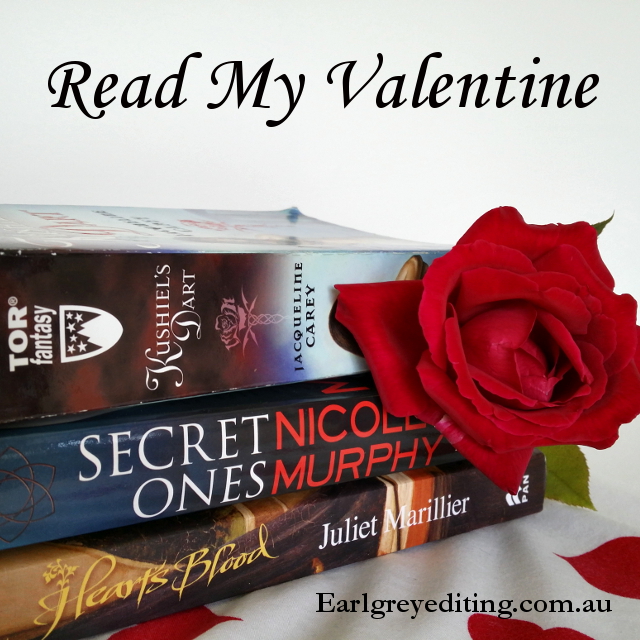
I’ve mentioned many times that I’m a sucker for a reading challenge and I have especially loved the themed challenges Carl has run at Stainless Steel Droppings. There’s Once Upon A Time for fantasy from March until June. There’s Readers Imbibing at Peril for dark fantasy, supernatural and horror over the Halloween period. And there’s The Sci-fi Experience over December and January. These challenges pretty much cover all of my favourite genres except one: romance.
The way to my heart is through my books. For our tenth anniversary, I talked my sweetheart out of buying me a diamond ring and into buying me a Kindle (best decision ever. I don’t know what I’d do without my Kindle!). I’ve got my fingers crossed for books instead of chocolates for Valentine’s Day. So to clear some space on Mt TBR in preparation and to plug the gap in my themed reading challenges, I’ll be spending February reading and reviewing romance novels. I already have some Regency romance and some fantasy romance lined up. I even have a contemporary romance to try out.
If you’re interested in joining in, you can leave a link to your sign-up post below or use #ReadMyValentine for Twitter and Instagram. It’s a low-pressure challenge, so feel free to read as much or as little as you like.


January 14, 2016
Who’s Afraid? by Maria Lewis
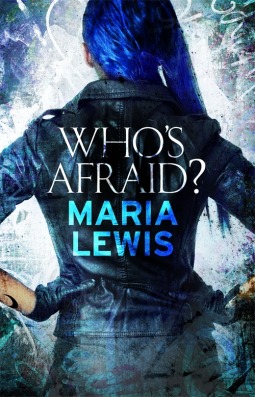
Published: January 2016 by Hachette Australia
Format reviewed: E-book (mobi)
Genres: Urban fantasy, New Adult
Source: NetGalley
Reading Challenges: Australian Women Writers Challenge 2016
Available: Publisher (print and electronic) ~ Abbey’s ~ Amazon ~ Book Depository ~ Booktopia ~ Kobo
Disclaimer: I was provided with a free copy of this book in exchange for an honest review.
This is the story of Tommi, a young Scottish woman living an ordinary life, who stumbles violently into her birthright as the world’s most powerful werewolf. The sudden appearance of a dark, mysterious (and very attractive) guardian further confuses her as her powers begin to develop and she begins to understand that her life can never be the same again. The reader will be swept up in Tommi’s journey as she’s thrown into the middle of a centuries-old battle and a world peopled with expert warriors and vicious enemies – this is the start of a series – and a world – you will fall in love with.
While it’s not without its problems, Who’s Afraid? is some of the best urban fantasy I’ve read in a while. It falls squarely within its genre but nevertheless manages to avoid many of the common pitfalls.
Tommi is a great character. She’s sensible as well as sassy, thus managing to avoid the slide into irritating. Like most people, she makes mistakes and decisions that are not exactly wise. Yet even when she does so, she never entirely abandons common sense and takes precautions when it comes to risky situations. For example, when she goes to visit strangers in a house on the edge of town, she texts her best friend the address in case something happens.
In this way, Tommi reflects the groundedness of the story as a whole. Like most urban fantasy heroines, she has physical attributes that mark her as different–in Tommi’s case, it’s her blue hair. However, this is not because Tommi is a special snowflake who was born that way (being a werewolf is surely enough on that front!), but because she dyes it, making it a conscious style decision for her.
The groundedness also manifests in the romance. The characters don’t make the best impression on each other at first. Even once they get past that, it’s a slower burn than I generally see in urban fantasy. I enjoyed it all the more for that.
The casual diversity also delighted me. A number of minor characters are mentioned as having same-sex spouses and there’s a bit of a mix of races. Tommi herself is half Maori.
Which leads me to one of the reservations I had about the book. Although Tommi is half Maori, she has been brought up in Scotland, away from her Maori heritage. The portrayal of that part of her family is problematic for spoilery reasons. I was disappointed not to see it balanced out with a more positive portrayal of the Maori, particularly because it leaves me feeling like the story is only paying lip-service to diversity rather than truly being inclusive of cultures that are different. I also wasn’t sold on Tommi’s reasoning for seeking out her Maori father, especially since she believes he raped her mother.
It is also worth noting that if sexual assault is a trigger for you, it may be best to steer clear of this book. While I felt the incident was handled with maturity, it combines with Tommi’s age to take this book into New Adult or adult categories rather than YA.
Overall, I very much enjoyed Who’s Afraid? I’ve not seen any strong indications outside of the blurb that this is going to be a series. However, the way has been left open and I am very keen to see more.


January 10, 2016
Bout of Books, Round 15 report
Round 15 of Bout of Books wrapped up yesterday, so it’s time for me to check in with my progress!
In my sign-up post, I mentioned my goal was to read six books. I think if the challenge had been held a week earlier, I would have managed that. Some people don’t manage much reading over the holidays, but I always seem to blast through it. Indeed, by the time the challenge rolled around I’d already managed to read two thirds of the e-books I’d planned on reading for Bout of Books. Returning to work slowed my pace considerably. I was also distracted on the first night of the challenge by a trip to the cinema to see Star Wars: The Force Awakens (totally worth it, though). But even without those excuses, I just lost my reading mojo halfway through the week.
In the end, I only managed to finish two books: Ancillary Sword by Ann Leckie, and In the Devil’s Nebula by Anna Hackett.
The next Bout of Books round takes place in May. I should have adjusted to being back at work by then (if not, something is very wrong!), so I hope to be able to improve on this result.
Did you participate in Bout of Books? If so, how did you go? If not, how have you gone with your reading for the year so far?


January 7, 2016
2016 reading challenges
If you’ve been following me for even a short time, you probably know I’m a sucker for a reading challenge. Many of the ones in which I participate are seasonal or only run for a short time. However, I usually sign up for a couple of year-long challenges, just to keep things interesting.
2015 challenge wrap-ups
Regardless of any other challenges I sign up for, I always have a personal reading goal. For 2015 it was 80 books. I never mentioned that here because I was worried it was too far out of my reach, especially considering I only read 56 books in 2014. Well, I needn’t have worried. As indicated by my stats post earlier this week, I managed 92 books, easily surpassing my personal goal.
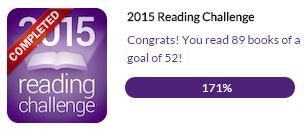 For the annual Goodreads challenge, I committed to 52 books and logged 89.
Last but not least, was the 2015 Australian Women Writers reading challenge. It was the first year I participated, so I signed up for the Miles level. This required me to read 6 books written by Australian women and to review 4 of them. I ended up reading 26 and reviewed 17. Here are my reviews.
2016 challenges
I was a bit conservative with my challenges for 2015. I was still getting used to reviewing ARCs and was looking to reestablish a baseline of what I could do, rather than to really challenge myself. However, now that I have some numbers to work with, I can afford to stretch.
With this in mind, my personal reading goal is 100 books. I’ve accomplished this twice since I started recording my reading stats in 2005, so I know it is possible.
For the annual Goodreads challenge, I’m aiming for 90 books. You’ll notice this is a little less than my personal reading goal; I like to leave a bit of wiggle room for books not registered on Goodreads.
I have signed up for the Australian Women Writers reading challenge again in 2016. My aim this year is to see whether last year’s numbers are repeatable, so I’ll be aiming to read 25 books and review 15.
Lastly, I’m going to have a go at the #ReadMyOwnDamnBooks challenge hosted by Andi at Estella’s Revenge. The title makes the aim of the challenge pretty clear and Andi has left it up to participants to define for themselves the exact goal and rules. Last year, a little under 50% of the books I read came from purchases (some new, some an existing part of Mt TBR), with the other 50% being pretty evenly split between review books and books I had borrowed (both from the library and from friends). I’d like to make the split between purchased books and books from other sources 60/40 in 2016. My hope is this will go some way towards shrinking Mt TBR. Since I haven’t had much luck with strict Mt TBR rules in the past, I’ll be keeping my approach pretty flexible. The one drawback is that this approach doesn’t necessarily prevent me from acquiring new books, so I guess I shall see how effective it ends up being.
Between these and the seasonal challenges, I should be kept pretty busy!
What about you? What reading goals and challenges are you participating in this year?


January 5, 2016
In Heaven and Earth by Amy Rae Durreson
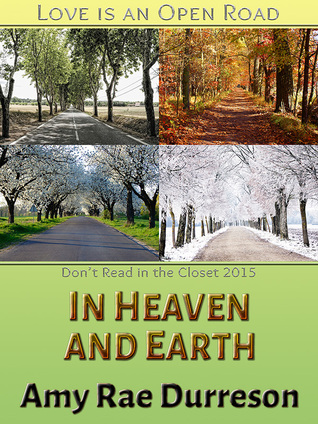
Published: July 2015 by M/M Romance Group @ Goodreads
Format reviewed: E-book (mobi)
Genres: Sci-fi, romance, fantasy
Source: M/M Romance Group @ Goodreads
Reading Challenges: The 2016 Sci-fi Experience
Available: Publisher (electronic)
When the crew of the Medical Explorer Juniper arrive at the space city of Caelestia, they are horrified to find it floating airless in space with thousands of its people dead. The only survivor is a cyborg gardener, Vairya, who has been left amnesiac and terrified, barely able to choke out a few words: “It could happen again.”
As ex-military doctor Reuben Cooper explores the illusory rose garden of Vairya’s memory, where Vairya himself flirts and hides among the flowers, he discovers a terrible threat, not just to the crew of the Juniper but to all humanity.
Can four doctors and a cyborg fight a merciless enemy that can kill with a touch?
I adore Amy Rae Durreson’s work and In Heaven and Earth has done nothing to deter me. This novella has all of Durreson’s trademarks–solid world building and a sturdy plot alongside a sweet romance.
The story gets off to a dynamic start with the crew of the Juniper investigating the aftermath of a planetary apocalypse but slows after the first scene under the weight of world building and back story. Fortunately, Durreson manages to deliver her exposition in a way that makes sense in terms of the situation and still keeps the action moving forward. By Chapter Two, the pace has picked up.
Although In Heaven and Earth is science fiction, Durreson is primarily a fantasy writer and it shows. The science is fairly light and verges on magic in a few places. There is also a couple of charming interludes in Vairya’s mind which he has shaped to resemble a fantasy world. While I had no problems with the fantasy elements (and actually enjoyed them quite a bit), it may not be your cup of tea if you prefer your sci-fi hard.
The plot itself kept me guessing and maintained the tension very nicely. Durreson does a great job of illustrating the desperation of the situation in which Reuben and Vairya find themselves, adding a wonderful bittersweetness to their developing relationship.
I was also charmed by the characters. Reuben has been damaged by past experiences that shook his faith in humanity. His relationship with the rest of the crew of the Juniper is uneasy and this is cleverly brought forth during Reuben’s adventures in Vairya’s mind. Vairya, on the other hand, retains a sweetness and a joy for life, despite being essentially immortal. I particularly enjoyed this subversion of the trope.
I’m so glad I saved this for my holiday reading because it meant that I was able to dive in and not come up for air until the end. If you’re a fan of sci-fi romance, you should definitely check out In Heaven and Earth.


January 3, 2016
Mt TBR Report: December 2015 and Yearly Wrap-up

Happy New Year! I hope 2016 has been treating you well so far. I had a lovely time with family and friends. My only complaint is that I didn’t get enough reading time (but when is that ever the case?).
Before I kick off with all my book-geeky stats, I want to congratulate Liz Barr on winning the 2016 NAFF race. It was a close race and I’m very thankful to everyone who voted for me. Perhaps I will have better luck next year.
Also, Round 15 of the Bout of Books reading challenge kicks off today and will be running for a week. There’s still time to sign up if you’d like to join in.
With that out of the way and with 2015 officially over, it’s time for me to take a good look at my reading stats for the year.
2015 reading stats
2015 was a fantastic year for my reading. I managed 91 books. It’s not the most I’ve ever read in a calendar year, but it comes close and certainly beats the 56 books I managed in 2014. I should add a caveat that this included graphic novels and a few bits and pieces too short to be strictly considered novels.
The majority of what I read was fantasy and romance, as usual. The exact split is a little difficult to determine, due to my predilection for fantasy romance. I was interested to see I read much more science fiction in 2015. I attribute this partly to Amanda Bridgeman’s Aurora series and partly to my participation in The 2016 Sci-fi Experience reading challenge (which will continue until February).
64% of the books I read in 2015 were written by women, down on 69% in 2014. I read 16 books written by authors of unknown, non-binary or multiple genders, which is just one less than the total number of books I read that were authored by men.
34% of the books I read in 2015 were written by Australian authors. This is an improvement on the 23% of 2014.
2015 was the first year I started tracking the diversity of the authors I’ve read. I found this a difficult variable to track because it’s not always obvious from an author’s bio or even with a Google search. I may need to reconsider if this is a useful approach. Nevertheless, I am somewhat disappointed to find that only 22% of the books I read were from authors I consider diverse.
More than half of the books I read in 2015 were e-books. This is a definite change from 2014, where the proportion was closer to a third. I suspect the change is mostly likely attributable to joining NetGalley and becoming a more active reviewer.
38 of the books I read were published in 2015. The average age of the books I read was 1.84 years. The average tenure on Mt TBR was 104 days, so I need to do some work on the oldest stratum. My mean rating (out of 5) was 3.5, which suggests to me I am probably being a bit generous with my ratings.
These numbers probably don’t mean much to anyone else, but I have such fun keeping track of them throughout the year. I’m looking forward to seeing what 2016 brings.
Mt TBR Status
Mt TBR @ 1 January 2015: 202
Mt TBR @ 31 December 2015: 242
One year I’d like to at least break even. Perhaps 2016 will be that year (I hear that laughing).
Despite the overall numbers, December was an excellent month for reading. The holidays allowed me to relax a bit and power through a few books. The flip side is that the holidays also mean an influx of books… and this doesn’t even count the books I’ll be buying with the fortune I was given in gift cards.
Books Read
80. Rat Queens: The Far Reaching Tentacles of N’rygoth by Kurtis Wiebe, Roc Upchurch & Stjepan Sejic. The second volume of Rat Queens. I was a bit disappointed with the change in the art style, though I recognise the necessity. The writing remains as snappy as ever. It was nice to see more background unfold but I would have liked a bit more depth (though I realise I’m almost always going to feel this way about graphic novels). Some full frontal (attractive) male nudity makes a nice change from the female nudity found so much in pop culture.
81. Sorcerer to the Crown by Zen Cho. Magic-infused Regency. This book does such a great job of colouring the language with the perspectives of its characters, which is important in a book that focuses on discrimination in Regency London. A touch predictable in places, but overall wonderfully thought-provoking and well worth reading.
82. Hunter Deceived by Nancy Corrigan. Reviewed here.
83. Ancillary Justice by Ann Leckie. Reviewed here.
84. A Grosvenor Square Christmas by Shana Galen, Vanessa Kelly, Anna Campbell and Katie Noble. An anthology of four linked Regency romances set around an annual Christmas ball. Some fun seasonal reading that showcases the ability of the writers. There was one story I didn’t enjoy quite as much, but all were well written.
85. The Hobbit Chronicles: The Art of War by Daniel Falconer. Reviewed here.
86. Darkness of Light by Stacey Marie Brown. Review forthcoming
87. Steeped by Annelies Zijderveld. A recipe book for tea-infused cooking. A number of the recipes seem rather fiddly or beyond my (basic) skill level, but there were still a few recipes I’m keen to try out.
88. In Heaven and Earth by Amy Rae Durreson. Review forthcoming.
89. Vision in Silver by Anne Bishop. A fantasy novel set on an alternate Earth where humans live at the tolerance of the Others–shapeshifters and Elementals–who control the land. I haven’t been a huge fan of the series so far, but I find myself wondering if I’ve misjudged it. The characterisation remains fairly shallow, but it does wrestle with some pretty heavy issues around self-harm, slavery, discrimination and the environment.
90. The Smuggler and the Warlord by KJ Charles. A short prequel to the series A Charm of Magpies. In fact, it was rather shorter than I expected, being just three pages. It didn’t really add anything to the series but I’ll take whatever I can get of these characters.
91. Feast of Stephen by KJ Charles. Another short story from the series A Charm of Magpies. On the feast of St Stephen, Lord Crane attempts to put a new member of the household at ease by swapping stories. As always, a charming tale, and one that does a great job of hinting at a wealth of backstory while only providing what is necessary.
Books Acquired
Rat Queens: The Far Reaching Tentacles of N’rygoth by Kurtis Wiebe, Roc Upchurch & Stjepan Sejic
In the Devil’s Nebula by Anna Hackett
On a Cyborg Planet by Anna Hackett
Time Thief by Anna Hackett
Vision in Silver by Anne Bishop
Sorcerer to the Crown by Zen Cho
Hunter Forsaken by Nancy Corrigan
Blood of Innocents by Mitchell Hogan
A Grosvenor Square Christmas by Shana Galen, Vanessa Kelly, Anna Campbell and Katie Noble
The Lord and the Mermaid by Bernadette Rowley
Dark Child (Bloodsworn) Episode One by Adina West
Much Ado About Love by Elizabeth Dunk
The Name of the Wind by Patrick Rothfuss
The Wise Man’s Fear by Patrick Rothfuss
The Martian by Andy Weir
Bad Feminist by Roxanne Gay
The Smuggler and the Warlord by KJ Charles
Feast of Stephen by KJ Charles
The Duchess War by Courtney Milan
Online Reading
No online reading for me last month. I’m going to have to do better, since I’m developing quite a backlog!
What have you read this month?


December 22, 2015
My Favourite Reads of 2015
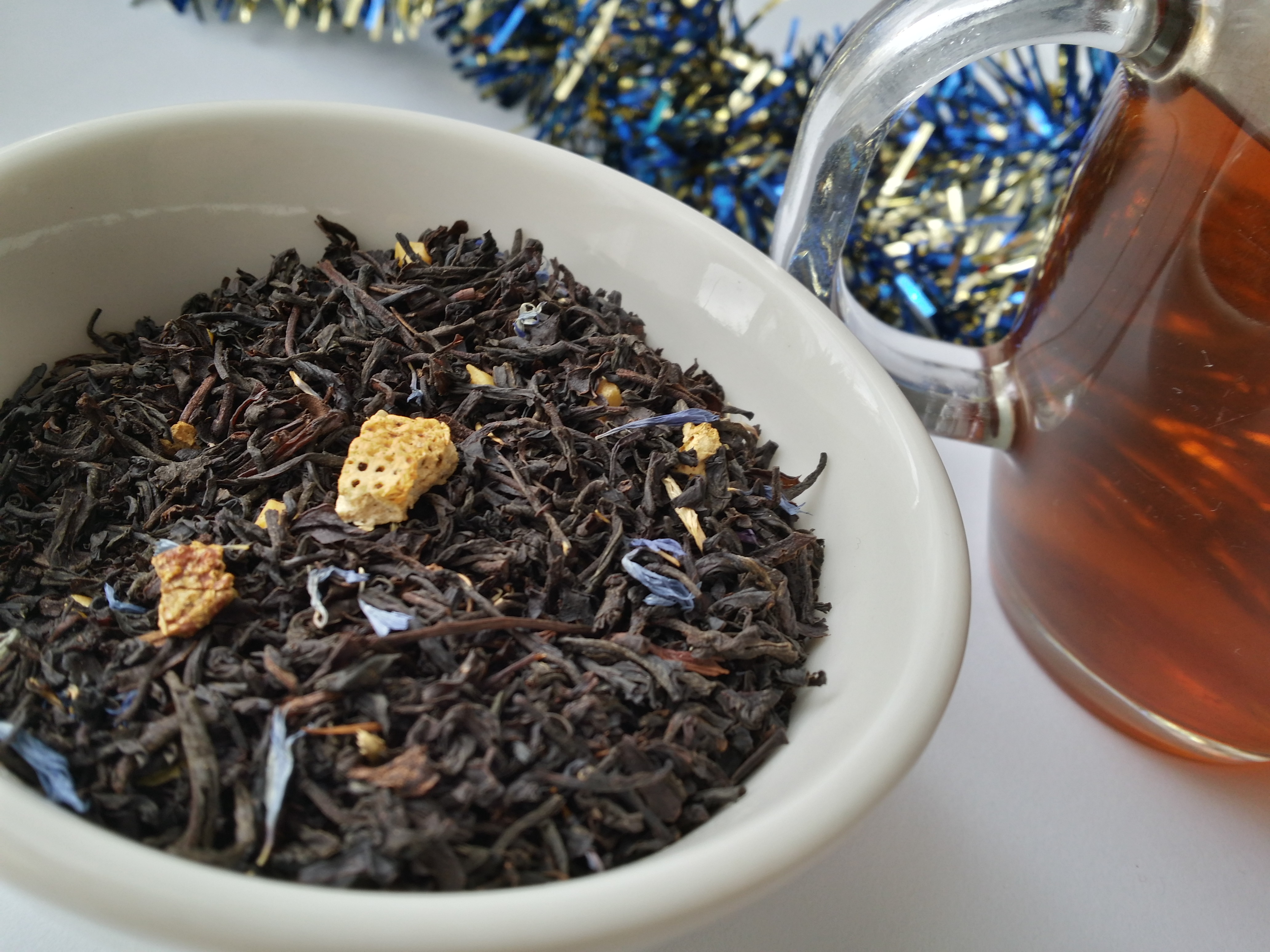
There won’t be a Loose-leaf Links post for December. This month’s schedule is a bit shorter than usual because Earl Grey Editing will be closed from 24 December until 4 January. That makes this my last post of the year. So along with the sight of this tasty Christmas tea blend from The Tea Centre, I thought I would leave you with some of my favourite reads from 2015. These are not books that were necessarily published this year, just read by me this year. In the approximate order I read them:
Saga by Brian K. Vaughan and Fiona Staples. A space opera graphic novel series. A couple from opposite sides of a war go on the run after falling in love and having a baby. A bit on the vulgar side but some very snappy storytelling. Reviewed here.
Unbound and Free by Becca Lusher. A historical fantasy set in Roman Britain. I love all of Becca’s Tales of the Aekhartain but this was her strongest so far. If you’re looking to pick up a copy, it’s currently on sale. Reviewed here.
Graced by Amanda Pillar. Part urban fantasy, part Regency romance. I liked the diversity amongst the cast and was thrilled to hear a prequel can currently be pre-ordered on Amazon. My review of Graced can be read here.
Kaleidoscope edited by Alisa Krasnostein and Julia Rios. An anthology of diverse SFF stories. They weren’t all to my taste, but it was a strong anthology. Reviewed here.
A Charm of Magpies by KJ Charles. Regency m/m romance meets supernatural mystery. This series has been consistently fantastic and such a delight to read. I’m rather sad I don’t have much of it left. My review of the first book, The Magpie Lord can be read here.
Rat Queens by Kurtis Wiebe, Roc Upchurch & Stjepan Sejic. A graphic novel fantasy series about an all-female band of adventurers. Each of the Rat Queens carries her own baggage but they support each other without hesitation or reservation. They also do a great job of kicking ass. My review of the first volume can be read here.
The Tribe by Ambelin Kwaymullina. A post-apocalyptic YA where people with superpowers are rounded up and sent to camps. The Tribe have managed to escape and plan a rebellion from their forest home. As well as being an epic adventure, it has some keen commentary on the state of human rights and inclusion in Australia. Reviewed here.
Uprooted by Naomi Novik. A fairytale that borrows elements from Beauty and the Beast and Pride and Prejudice but still manages to be its own story. I couldn’t put it down. Reviewed here.
The Wyrd by Alis Franklin. Urban fantasy with m/m romance, Norse gods and an Australian setting. It nails geek culture and has a sly sense of humour. What’s not to love? I’m really looking forward to the third book.
The Court of Five Thrones by Pia Foxhall. Erotic m/m fantasy. Contains BDSM elements and a ton of trigger warnings, so approach with caution. However, it is exquisitely written, has a solid plot and the emotional journey of the main characters completely captured me.
Blackthorn & Grim by Juliet Marillier. A historical fantasy series with strong fairytale elements. Like The Court of Five Thrones, it handles themes of trauma in a beautifully mature way. The strong, platonic relationship between the main characters also makes the series a gem. My review of the second book, Tower of Thorns, can be read here.
Captive Prince by C.S. Pacat. More erotic m/m fantasy. Pacat does a brilliant job of balancing the characters’ developing relationship with the intrigue and adventure surrounding them. The cliffhanger at the end of the second book was also a total bastard and I can’t wait for the third book to come out next year. My review of the first book, Captive Prince, can be read here.
Thorn by Intisar Khanini. A gorgeous fairytale retelling of the Goose Girl that deals with family abuse, class divides and the devaluing of women’s voices. It almost broke my heart in places. Reviewed here.
Newsflesh by Mira Grant. A zombie apocalypse trilogy that’s more sci-fi suspense than horror. When it was first recommended to me, I was sceptical as to whether I’d like it. I ended up devouring the last two books in three days.
Ancillary Justice by Ann Leckie. A brilliant sci-fi about an AI seeking revenge. It does amazing things with its writing style and demands that you pay attention. I’m glad I have the next one on Mt TBR already. Reviewed here.
Those are my top picks for this year. What’s on your list? I’d love some holiday reading recommendations!
Before I sign off, a quick reminder to Australian fans that today is the last day you can vote in the NAFF race. As a candidate, I’d really appreciate your support.
Also, if my post on the Bout of Books reading challenge intrigued you, sign-ups are now open!
I hope those of you who are celebrating at this time of the year have a wonderful holiday. May the new year bring you an abundance of tea and books. I look forward to seeing you in 2016.