
Bill Treasurer's Blog, page 33
December 18, 2013
Listen Before You Leap
 Risk-taking is critical to business success. But the starting point for taking smart risks should be inaction, not action.
Come on, you might be thinking, let’s fast‐forward to where the action is! Risk‐taking is James Bond throttling a motorcycle off a cliff and parachuting into a waiting speed‐boat; it’s Indiana Jones cracking his bullwhip at the bad guy; it’s John Rambo demolishing a foreign army all by himself; and it’s Lara Croft karate‐chopping a baldheaded villain.
At first glance, risk‐taking seems to always involve doing something. Risk‐taking is the protester marching, the rebel resisting, the entrepreneur innovating, the explorer discovering, and the writer opinionating. Surely risk‐taking, that glorious act of courageous audacity, hasn’t got anything to do with inaction.
But before one can act, one should decide what’s worth acting upon. If you study the best risk-takers, you’ll notice a period of intense calculation before initiating the risk. Think, for example, of Felix Baumgartner’s gigantically risky jump from 128,000 feet into the stratosphere. Before hurling himself toward the earth at terminal velocity, he methodically goes through an exhaustive checklist. Then, at the edge of the space capsule, he stops, breaths, calculates and, finally, jumps.
The reason silence is so important to risk‐taking is that it helps make your risks more deliberate, intentional, and directed. Silence, extended to the point of mental stillness, has a leveling effect on your perspective, sharpening your powers of discernment. Through silence, you become more attuned to your most deeply held beliefs and values, helping you perceive what risks are most compatible with your inner constitution and thus which are truly worth taking.
Risk‐taking is about purposeful action: matching the best of your intentions with the best of your behaviors. For your risk to be full of purpose, it has to be anchored to an ideal or a cause that you believe to be worthwhile. Silence is the mechanism we use to access our deeper level awareness—our inner gold. tweet that!
When the risks you take emanate from the center of yourself, versus being imposed from the world outside, your conviction is higher and so is your commitment to taking the risk. Let’s face it, taking a risk because someone else tells you to is much less fulfilling than taking it of your own initiative. Silence is how we listen to ourselves.
For this reason, when readying for your risk it is helpful to follow this dictum: Careful reflection should precede purposeful action.
Question: What risks are you considering today? How do you need to stop and listen, before you leap?
photo credit: Travis Gray
 Bill Treasurer is the author of Courage Goes to Work, an international bestselling book that introduces the concept of courage-building. He is also the author of Courageous Leadership: A Program for Using Courage to Transform the Workplace, an off-the-shelf training toolkit that has been taught in eight countries on four continents. Bill is a former member of the U.S. High Diving Team and performed over 1500 dives from heights that scaled to over 100 feet. His newest book, Leaders Open Doors, focuses on how leaders create growth through opportunity. 100% of the book’s royalties are being donated to programs that support children with special needs. Learn more at www.leadersopendoors.com and www.couragebuilding.com.
The post Listen Before You Leap appeared first on Giant Leap Consulting.


December 11, 2013
Ordinary People, Extraordinary Risks
 In the same way you learn leadership from leaders, law from lawyers, and art from artists, you learn most about risk-taking from risk-takers.
Emerson once wrote, “The great distinction between teachers sacred or literary is that one class speaks from within, or from experience, as parties and possessors of the fact; and the other class, from without, as spectators merely.”
We read many stories about real life risk-takers, including those from risk’s outer edges. However, even the extraordinary examples will be put in service to the ordinary risk-taker. Lessons from risk’s extreme edge can be applied well within its inner fold. Common truths are often most magnified through uncommon feats.
Just as courage, composure, and commitment are required of a fighter pilot, so too are they required of the young entrepreneur opening a business, the professor breaking free from the confining prejudices of an academic discipline, and the soldier defying an unjust or immoral order. Courage, composure, and commitment are equally required of the local politician taking a stand on an unpopular issue, the addict reaching out for help (and the jaded cynic reaching back), the young mother leaving the deadly comfort of an abusive relationship, and the volunteer firefighter running into a burning house.
Right Risk happens every day, everywhere. {tweet this}
The promise woven into all Right Risks is our own relevancy. Each of us wants to feel that we have lived a life that matters. We want to make a difference for ourselves, for our families, for our communities, and for our world.
When the choices we make, and the actions we take, are reflections of our higher self, we are ennobled with the knowledge that our life has been worthwhile, at least to ourselves. In the end, the only person we will spend our entire life with is ourselves. We are a lot easier to live with when we are proud of who we are. And we are most proud of ourselves when we take Right Risks.
Consider the following questions:
• In what areas of your life do you tend to take more risks (i.e., physical, intellectual, interpersonal, or emotional)? How might you be able to “borrow” from this area in order to take more risks in the areas of your life where you tend to avoid risk?
• Review the four main criteria for a Right Risk— passion, purpose, principle, and prerogative. Based on these criteria, do you think your risk is a Right Risk, or something else?
• Take out a piece of paper and draw a line down the middle of the page. On the left, list some risks that turned out well. On the right, list the risks that turned out badly. Place check marks next to the risks on either column that met the criteria of having been Right Risks. Of those checked, which, if any, do you regret having taken?
photo credit: moodboardphotography
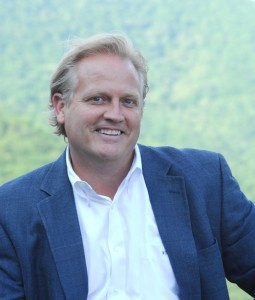 Bill Treasurer is the author of Leaders Open Doors, which focuses on how leaders create growth through opportunity. Bill is also the author of Courage Goes to Work, an international bestselling book that introduces the concept of courage-building. He is also the author of Courageous Leadership: A Program for Using Courage to Transform the Workplace, an off-the-shelf training toolkit that organizations can use to build workplace courage. Bill’s first book, Right Risk, draws on his experiences as a professional high diver. Bill has led courage-building workshops for, among others, NASA, Accenture, CNN, PNC Bank, SPANX, Hugo Boss, Saks Fifth Avenue, and the US Department of Veterans Affairs. To learn more, contact info@giantleapconsulting.com.
The post Ordinary People, Extraordinary Risks appeared first on Giant Leap Consulting.
December 4, 2013
An Example of Right Risk
 In early 1960, Dr. Frances Kelsey was given her first assignment as a new employee with the FDA. After being on the job for only one month, she was asked to evaluate an application for a new drug by the pharmaceutical company Richardson-Merrell. The drug, being marketed under the name Kevadon, was manufactured by a German company, Chemie Grunenthal. Kevadon had already achieved widespread use in 46 countries throughout the world as a sleep aid and as a cure for morning sickness during pregnancy.
Some of the drug’s main benefits, according to the manufacturer, were that it was non-addictive, safe for pregnant women, and lacked unpleasant after-effects. Surely, such a beneficial drug would have no trouble sailing through the FDA application process. Kelsey explains, “They gave it to me because they thought it would be an easy one to start on.”
They were wrong. Years earlier, while researching various cures for malaria, Kelsey learned that drugs could pass through placental barriers between an unborn child and mother. Reviewing the data on Kevadon, Kelsey felt the absorption and excretion data were inadequate. She also felt that the chronic toxicity studies were too short, the data were too anecdotal, and the controls on the manufacturing process had shortcomings. Thus numerous times she rejected the application.
Richardson-Merrell was anxious to get Kevadon approved. Christmas season, the high season for sales of sleeping pills and sedatives, was fast approaching. The Richardson-Merrell representative was frustrated. He put pressure on Kelsey, making frequent phone calls and numerous personal visits. He even went so far as to complain to Kelsey’s bosses that she was being overly stringent and unnecessarily delaying the drug’s approval. Nevertheless, despite tremendous pressure from Richardson-Merrell, and despite the fact that the drug had already achieved world- wide popularity, Kelsey remained anchored to her convictions: in her words “I think I always accepted the fact that one was going to get bullied and pressured.”
Dr. Kelsey’s suspicions about Kevadon proved grimly accurate. First, in December 1960 the British Medical Journal published a letter by a physician who had prescribed the drug to his patients. The doctor had noticed an unusually high number of cases of peripheral neuritis (a painful tingling in the feet and arms) among his patients who had taken the drug for an extended period. At the same time, a disturbing phenomenon started to emerge throughout Europe. Babies were being born with severe deformities, including abnormally short limbs, fin-like arms, and toes growing from the hips. Finally, a German pediatrician, Widukind Lenz, discovered that over 50 percent of the mothers with malformed babies had taken the same drug during their first trimester. The culprit? Kevadon—a drug now known more infamously by its unbranded pharmaceutical name, thalidomide.
Because they often defy the strong wishes of others, Right Risks can make us unpopular in the short run. In the long run, however, Right Risks are often rewarded. As a direct result of Dr. Kelsey’s efforts, a landmark drug law was approved to strengthen the FDA’s control on drug experimentation involving humans. What’s more, on August 7, 1962, President John F. Kennedy personally bestowed the highest civilian honor on Dr. Frances Kelsey—the Distinguished Federal Civilian Service award. Forty years later, she was inducted into the National Women’s Hall of Fame. However, none of these awards can match the gratification Dr. Kelsey felt from knowing that her resistance to immense pressure ultimately prevented thousands and thousands of deformed babies.
 Bill Treasurer is the author of Leaders Open Doors, which focuses on how leaders create growth through opportunity. Bill is also the author of Courage Goes to Work, an international bestselling book that introduces the concept of courage-building. He is also the author of Courageous Leadership: A Program for Using Courage to Transform the Workplace, an off-the-shelf training toolkit that organizations can use to build workplace courage. Bill’s first book, Right Risk, draws on his experiences as a professional high diver. Bill has led courage-building workshops for, among others, NASA, Accenture, CNN, PNC Bank, SPANX, Hugo Boss, Saks Fifth Avenue, and the US Department of Veterans Affairs. To learn more, contact info@giantleapconsulting.com.
Photo Credit: MiguelGandia

The post An Example of Right Risk appeared first on Giant Leap Consulting.
November 27, 2013
Courage Goes to Work

Courageous behavior should always be rewarded.
Reward Courageous Behavior, Not Just Successful Outcomes
It is important to differentiate between a successful outcome and a courageous act. Being courageous, by definition, means to take on challenges despite the potential for failure. Courageous workers do, in fact, fail. But failure is an outcome and courage is a means. Just because someone fails on the back end doesn’t mean he wasn’t courageous on the front end. Rewarding courageous behavior is just as important as rewarding a successful outcome.
Organizations shy away from rewarding behavior and attitude because such things are, due to their subjectivity, notoriously difficult to quantify and measure. How do you quantify, for example, whether someone is “positive” or “friendly” at work? Yet who would argue that such characteristics don’t matter at work?
Outcomes can be suspect. When an organization structures its reward system exclusively on objective behaviors, just because they are measure- able, it often runs the risk of reinforcing the wrong behavior. In such a system, a wretch of an executive, but one who makes big sales, can get away with being a miserable jerk in the office because sales are more quantifiable than jerky behavior.
Just because outcomes are easier to measure doesn’t mean that subjective behaviors shouldn’t be rewarded, too. As a means to greater organizational performance, courageous behavior will increase the likelihood of better outcomes. A successful outcome, though, shouldn’t be required before you confer “courage status” on someone. That would only squelch people’s willingness to try. What defines workers as being courageous is taking action despite being afraid or uncomfortable, not whether they attain a successful outcome.
What are the indicators that a person should be rewarded for her courage? Look for these signs:
• Did the person take action on a problem that others had avoided but that the organization wanted solved?
• Was the action a dramatic departure from the person’s comfort zone?
• Did the action stretch the person’s skills? As a result of being courageou s, is the person prepared to take on bigger challenges for the organization going forward?
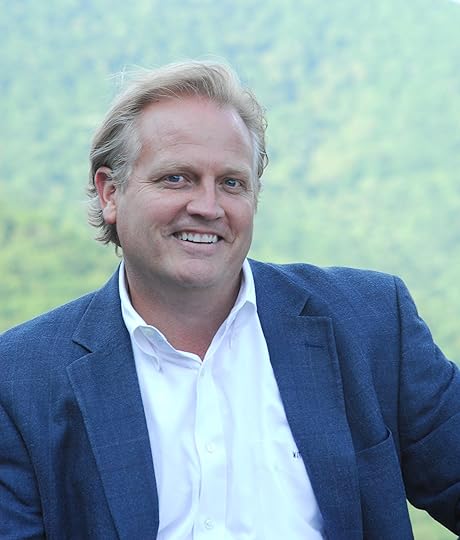
Bill Treasurer is the author of Leaders Open Doors, which focuses on how leaders create growth through opportunity. Bill is also the author of Courage Goes to Work, an international bestselling book that introduces the concept of courage-building. He is also the author of Courageous Leadership: A Program for Using Courage to Transform the Workplace, an off-the-shelf training toolkit that organizations can use to build workplace courage. Bill’s first book, Right Risk, draws on his experiences as a professional high diver. Bill has led courage-building workshops for, among others, NASA, Accenture, CNN, PNC Bank, SPANX, Hugo Boss, Saks Fifth Avenue, and the US Department of Veterans Affairs. To learn more, contact info@giantleapconsulting.com.
Photo Credit: Knezeves
The post Courage Goes to Work appeared first on Giant Leap Consulting.
November 20, 2013
How to Inspire Workplace Creativity
 One challenge most leaders face is how to inspire more workplace creativity. Elevating people to higher standards of performance and inspiring useful ideas requires igniting their imaginations.
Open-door leaders are keen to prevent complacency and lethargy. They know that mental grooves of habit eventually form ruts of routine. When people see things the way they’ve always seen them, everything stays the same, dulling work to the point of drudgery.
Inspiring creativity and imagination often requires disrupting people’s mental routine and catching them off guard.
For example, a large manufacturer of paper plates held a series of marketing meetings. The division’s leader wanted people to remember that they weren’t just selling plates, cups, and napkins. They were working for a brand that was deeply connected to the family experience. To lift people out of the rut of discount thinking, he conducted a brainstorming meeting at a beautiful community park near the corporate headquarters.
The meeting was different because it was set up as a backyard barbeque. There were picnic tables with red-and-white checkered tablecloths, an outdoor grill sizzling with hotdogs and hamburgers, even outdoor games like horseshoes and tetherball. Of course there was something else too: lots of the company’s plates, cups, and napkins. They weren’t just commodities; they were an essential part of the experience.
The division’s open-door leader had helped people shift their thinking away from commodities and toward values and traditions. The employees started seeing that on any summer day, their products were smack-dab in the middle of people’s backyard barbecues, picnics, and family birthday parties.
By choosing to get people outside of their thinking routines, away from the four-walled environment of their workplace, the division leader helped shift people’s thinking for the better. When people started percolating on new marketing and product ideas, the word “discounting” never came up. Instead, they started talking about creative marketing campaigns designed to inspire the feelings of a warm summer afternoon. They talked about partnering with an outdoor grill company. They talked about new “summer flower” design borders for their plates and napkins. They talked about creating an interactive website where customers could swap their favorite picnic recipes.
By shifting people’s thinking and getting them away from the ordinary work environment, the open-door leader opened up a space for people to think in a more inspired way.
What are some ways that your organization typically tries to inspire creative ideas? What about the approach works well? What opportunities for improvement do you see?
First, identify a few one-word examples of unproductive or outdated thinking (e.g., apathetic, fearful). Second, list the healthier and more productive words you’d like reflected in people’s attitudes (e.g., initiative, courageous). Finally, list actions that you could take to shift people from the first column to the second (e.g., jointly set ambitious goals, institute temporary job rotations). And remember to set a deadline for finishing each action!
How can you inspire creativity in your workplace this week?
photo credit: Christopher S. Penn
The post How to Inspire Workplace Creativity appeared first on Giant Leap Consulting.
October 23, 2013
Are You M.A.D.?
 Sometimes the best way for a leader to reveal how passionately they care about an issue is to get very, very angry.
I am not suggesting that a leader should use anger to intimidate people. Quite the contrary. The kind of anger I’m speaking of often enlists people to become as committed and angry as the leader.
Anger – like courage, ambition, and leadership itself – can be negative or positive. The kind of anger I’m speaking of is positive anger, the kind that is so fed up with an intolerable situation that it focuses like a laser on making a positive difference. In spiritual literature, it is often referred to as holy anger, or divine discontent. An angry dissatisfaction with the inadequacies of the present is often what’s needed to bring about the change necessary to create a better future.
To make the best use of your passion as a leader, it follows that you must be Positively M.A.D. (Making A Difference).
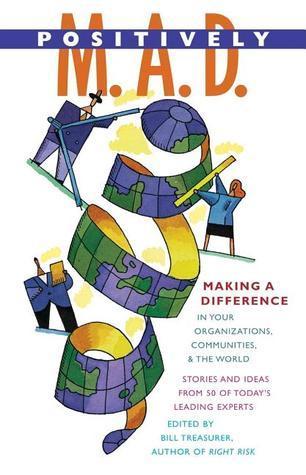
About a decade ago, I had the honor of serving as the editor and co-author of a wonderful book, Positively M.A.D.. The book was inspired by a conversation among a number of diverse authors who realized that anger often gives our writing its potency, and that though our messages are different, we all aim to make a positive difference in the lives of our readers. We agreed that not only are we mad, we are Positively M.A.D.!
The book includes contributions from over 50 leadership luminaries such as Ken Blanchard, Beverly Kaye, John Perkins, Chip Bell, and John Izzo. Serving as the book’s chief editor was a great honor for me.
What makes the book so special is that it is chock-full of stories about real people who, despite the complexities of the world’s problems and political state of affairs, chose to bring about the changes they wished to see in the world. Not by bellyaching, but by putting their anger to work and enlisting others to do the same.
A sampling of the stories include:
A retired CEO who now volunteers at a hospice instead of complaining about the broken healthcare system.
A former substance abuser who now runs a recovery facility in Savannah, Georgia, which has served over 10,000 people for drug and alcohol abuse.
An ordinary citizen who, after learning that his neighbor might lose her home due to unfair property taxes, became an expert on Indiana’s arcane tax laws. Then he met with legislators and public officials. Eventually, largely due to his efforts, Indiana’s tax code was declared unconstitutional.
What I wrote in the book’s introduction a decade ago still holds true today:
“There’s an inverse relationship between initiative and enormity. The bigger and more challenging the issue, the less willing we are to face it head on… The challenges faced by our increasingly frenetic world are enough to make you throw up your hands in resignation… Despite the complexity of the word’s problems and inadequacies, and despite our frustration with the current state of affairs, we can indeed Make A Difference. Regardless of our station in life, each of us is entitled, if not obliged, to etch our initials onto the tree of humanity.”
Oct 26th is Make A Difference Day. As the day approaches, reflect on this important question:
Are you M.A.D.?
 Bill Treasurer served as the chief editor and coauthor of Positively M.A.D. He is also the author of Leaders Open Doors, which focuses on how leaders create growth through opportunity. Bill is also the author of Courage Goes to Work, an international bestselling book that introduces the concept of courage-building. He is also the author of Courageous Leadership: A Program for Using Courage to Transform the Workplace, an off-the-shelf training toolkit that organizations can use to build workplace courage. Bill has led courage-building workshops for, among others, NASA, Accenture, CNN, PNC Bank, SPANX, Hugo Boss, Saks Fifth Avenue, and the US Department of Veterans Affairs. To inquire about having Bill work with your organization, contact info@giantleapconsulting.com.
The post Are You M.A.D.? appeared first on Giant Leap Consulting.
October 16, 2013
Courage Defined
 People often ask me how I define courage. My usual response is that what matters more is how you define courage. What does courage look like to you? Who are some courageous role models in your own life?
When an organization brings me in to build workplace courage, one of the first actions I have them take is to identify some appropriate displays of courage that they’d like to see more people demonstrate more often. Then I have them list inappropriate displays of courage that they’d like to see people stop doing. Figuring out how they want people to behave, relative to being more courageous, is the first step in defining courage.
Eventually I share my own definition of courage, but only after the organization starts to create its own definition. So what’s my basic definition of courage?
COURAGE = Acting on what is right, despite being afraid or uncomfortable,
when facing situations involving uncertainty and opportunity.
Let’s break it down:
Acting on what is right: Courage involves action and morality. Courage without morality can quickly lead to domination or subjugation. So it’s important to add morality to courageous action.
Moving through fear and discomfort: Courage involves fear. In fact, courage is fearful, not fearless. Carrying feelings of fear, but taking action anyway, means purposely embracing discomfort. You’ll find your courage in your discomfort zone.
Embracing uncertainty and pursuing opportunity: Courage involves risk-taking, and risk-taking involves situations with uncertain outcomes. If the courageous action you planned on taking was guaranteed to be successful, it wouldn’t involve risk, and therefore wouldn’t actually take courage. Courage take the risk of pursuing opportunities when outcomes aren’t guaranteed.
Definitions are great. They clarify the standards we need to live up to. But when it comes to courage, what matters more is taking action when you’re afraid. We’re presented with opportunities to act while afraid thousands of times in our lives, such as when you do something for the very first time. As such, here’s a great question to consider:
When was the last time you did something for the first time?
Bill Treasurer is the author of Leaders Open Doors, which focuses on how leaders create growth through opportunity. Bill is also the author of Courage Goes to Work, an international bestselling book that introduces the concept of courage-building. He is also the author of Courageous Leadership: A Program for Using Courage to Transform the Workplace, an off-the-shelf training toolkit that organizations can use to build workplace courage. Bill’s first book, Right Risk, draws on his experiences as a professional high diver. Bill has led courage-building workshops for, among others, NASA, Accenture, CNN, PNC Bank, SPANX, Hugo Boss, Saks Fifth Avenue, and the US Department of Veterans Affairs. To learn more, contact info@giantleapconsulting.com.
Image Credit: Jin Jinto
The post Courage Defined appeared first on Giant Leap Consulting.
October 9, 2013
BYE – The Leadership Metric That Matters
 You hear a lot about the importance of metrics in organizations. When it comes to behavior and performance, as the saying goes, you get what you measure. It’s also said that you can’t manage what you can’t measure.
While it is important for leaders to make “evidence-based” decisions that are based on facts, some organizations go overboard when it comes to metrics.
The popularity of the Balanced Scorecard a few years back, was partly due to its ease-of-use. An ideal Balanced Scorecard, though, should be a one-page, easy to comprehend navigational tool. Many organizations ended up creating binders full of “critical” metrics that were anything but balanced.
When a leader is beholden to a million different metrics, he or she will spend too much time generating reams of data and management reports. And when a leader’s own performance is judged against a million different things, it’s hard to suss out what the leader should focus on most. When all metrics are deemed important, all metrics become trivialized.
There is one metric that matters above all others. It is the metric that shows whether an organization is growing, progressing, and evolving, or whether it’s doing the opposite. It is a simple metric that is easy to grasp and communicate. Ultimately it is the metric that defines whether or not a leader is being successful.
The metric is – drumroll please…
Best Year Ever (BYE)
At the end of each year, a leader needs to assess whether the completed year was the Best Year Ever. If it was, the leader is doing a good job. If it wasn’t, the leader’s new goal is to make sure the next year will be the best year ever.
When you as a leader wave goodbye to the year that was, you should be able to loudly proclaim BYE!
The BYE metric is based on the first rule of leadership: The best days of your organization should always be in front of it. People are most motivated when they are working toward a worthwhile future, not when they are reminiscing about the glory days of the past. When leaders and workers are in perpetual pursuit of better, they keep complacency and overconfidence at bay. Having a really good year is respectable, but having a BYE trumps all!
Now, not every year will be a financial BYE. So when closing out a year, a leader should consider multiple BYE categories, including:
BYE for Overcoming Hardship
BYE for Capitalizing on Opportunities
BYE for Making Smart Mistakes
BYE for Improving the Workplace
BYE for Closing New Business
BYE for Delivering Quality Work
BYE for Upholding Quality and Safety
You get the idea. As a leader, you should sit down with your team and define a small list of BYE’s that matter most. Rather than have a million metrics, focus on the BYE’s that show how you, your organization, and your workforce is progressing forward and upward.
Bill Treasurer is the author of Leaders Open Doors, which focuses on how leaders create growth through opportunity. Bill is also the author of Courage Goes to Work, an international bestselling book that introduces the concept of courage-building. He is also the author of Courageous Leadership: A Program for Using Courage to Transform the Workplace, an off-the-shelf training toolkit that organizations can use to build workplace courage. Bill has led courage-building workshops for, among others, NASA, Accenture, CNN, PNC Bank, SPANX, Hugo Boss, Saks Fifth Avenue, and the US Department of Veterans Affairs. To inquire about having Bill work with your organization, contact info@giantleapconsulting.com.
Image credit: SalFalko
The post BYE – The Leadership Metric That Matters appeared first on Giant Leap Consulting.
October 2, 2013
Interview with 33voices
Bill Treasurer, our Chief Encouragement Officer, was recently honored to be interviewed by 33voices, a global conversation about all things that matter in life and business. Bill had a great time, joining the ranks of the world’s thought leaders, and sharing with the audience of 33voices how leaders can and should open doors for others. He offered 10 powerful insights for improving your business and life.
33voices has made the interview available in multiple formats, and we invite you to listen and watch it now:
Listen to the short clip of the “Power Looks Like Legacy” interview with Moe Abdou.
Check out the full interview with Bill and Moe.
View the fun slideshare with highlights from their interview.
We would like to thank 33voices and Moe Adbou for having Bill join you for this special broadcast.
The post Interview with 33voices appeared first on Giant Leap Consulting.
September 25, 2013
Lead Simple
 I owe you a big apology. For over twenty years I’ve been an active contributor to the complexification of leadership. I’ve been a card-carrying member of the Legion of Leadership Complexifiers – the LLC. Sure, we’re well-intentioned, but too often our leadership quadrant models and esoteric theories have more to do with proving how smart we are than providing simple ideas that you can actually use.
My fellow “experts” and I have inflated the expectations of what it means to be a leader beyond anyone’s reach. We expect you to be bold and calculated, passionate and reasonable, rational and emotional, confident and humble, driven and patient, strategic and tactical, competitive and cooperative, principled and flexible. Of course, it is possible to be all of those things … if you’re God!
After two decades of contributing to the complexification of leadership, I got schooled in leadership by a brief conversation with my five-year old son, Ian. Last year Ian was a pre-schooler at The Asheville Montessori School in Asheville, North Carolina, where we live. Each Monday, his teachers pick one person to be the “Class Leader” for the day. When Ian got his big chance, I asked him what he got to do as class leader.
His answer was simple, funny, and in its own way, profound:
“I got to open doors for people!”
In a matter of fifteen seconds, with seven simple words, Ian clarified what’s most important about leadership. Leaders open doors of opportunity for those they lead. Aspiring and emerging leaders would do well to stay focused on that simple concept.
Following Ian’s words, I formally resigned as a member of the LLC. These days I stay focused on simple leadership ideas that work. Not simple as in easy, but simple as in not complex. Leadership is still hard no matter how simple you make it.
Here’s an example of what simple leadership looks like.
I recently got to meet Charles Bolden, the head of NASA. Administrator Bolden and I were headlining a leadership workshop for senior executives within the government. Keep in mind that Charlie Bolden is a leader in the truest sense of the word. He commanded two space shuttle missions, was a crew member on two others, is a retired Major General in the US Marine Corps, a Vietnam veteran, and a graduate of the US Naval Academy. Charlie Bolden has lived every complex facet of leadership. Yet when he spoke to the government bigwigs, he shared these three simple but important leadership ideas:
Know Your Self: Reflect on what you care about deeply. Know and build upon your strengths. Put yourself in situations where your strengths can make a real and lasting difference.
Know Your Stuff: Do your homework. Put in the elbow grease. Study the facts so that your opinions are informed and your decisions are accurate.
Do the Right Thing: Have courage. Be able to look yourself in the mirror at the end of each day and be proud of how you lived. Be a person of integrity by putting your values in action.
The world needs more leaders and less leadership “experts.” Maybe if we all spent less time drawing attention to the complexities of leadership and more time acting on simple but profound leadership ideas, we’d have more leaders like Charlie Bolden. We’d know better how to “lead simple.”
Bill Treasurer is the author of Leaders Open Doors, which focuses on how leaders create growth through opportunity. Bill is also the author of Courage Goes to Work, an international bestselling book that introduces the concept of courage-building. He is also the author of Courageous Leadership: A Program for Using Courage to Transform the Workplace, an off-the-shelf training toolkit that organizations can use to build workplace courage. Bill’s first book, Right Risk, draws on his experiences as a professional high diver. Bill has led courage-building workshops for, among others, NASA, Accenture, CNN, PNC Bank, SPANX, Hugo Boss, Saks Fifth Avenue, and the US Department of Veterans Affairs. To learn more, contact info@giantleapconsulting.com.
Image Credit: FutUndBeidl
The post Lead Simple appeared first on Giant Leap Consulting.


