Kay Kenyon's Blog, page 5
July 12, 2021
Indie Book Promotion Workshop
Does promoting your book have to be a horrible exercise in self-shilling? No!
Join this zoom meeting with promotion guru Anthea Sharp and come away with real, actionable items that will help you reach the next level in your book-promotion quest.
Book Promotion for Indies. And tips for traditional routes, too!
Sunday, July 25, 10 to noon
 Writing the book is the easy part…At least that’s what they tell you, once your novel is finally out there in the world. Now, whether you’re publishing yourself or are with a publisher, it’s time to face the daunting task of getting the word out about your new book (a task increasingly left up to authors, even in the world of traditional publishing).
There’s a new world out there, and promoting your book should keep up with the times. In this workshop, we’ll cover the many different ways authors can find and connect with their readers, regardless of who holds the publishing reins.
And while there are a million things you can do to promote your book, you don’t have to do ALL of them! Anthea will explore the various promotion options out there, and go over the pros and cons of each. Some of them will feel easy and doable to you, others won’t – and that’s fine. Here’s a quick look at what we’ll cover:
Making sure your product is the best it can be – including cover and book description. Effectively using your direct presence as an author, via your website and newsletter, as well as social media. How to successfully cross-promote with other authors. How to phase in things if you’re a brand new author. Leveraging loss-leaders for visibility. Advertising, including cost-per-click and sales newsletters like BookBub. Tips for making the most of the retailer platforms to get some momentum behind your book. Plus: Plenty of time for Q&A!Sponsored by Write on the River.
REGISTER NOW. Cost of the workshop is $30 for nonmembers and $15 for members. A few scholarships are available for this zoom workshop. We welcome you to join us!
Details HERE.
Anthea Sharp is an experienced and enthusiastic workshop presenter, as well as a USA Today bestselling, award-winning author of fantasy and speculative fiction (not to mention a bestselling romance author under the pen name Anthea Lawson). Originally traditionally published, Anthea jumped the fence in 2011 and began a self-publishing career that’s still going strong ten years on. In addition to indie publishing her novels, she writes and sells short fiction to traditional markets, and most of her book are out in audio via small and traditional publishers. Discover her books at antheasharp.com
#retailerplatforms #websites #marketingforauthors #traditionalpublishing #bookvisibility #indiepublishing #indiebookpromotion


June 19, 2021
Maximum Ice at $.99
NOW through Thursday, June 24
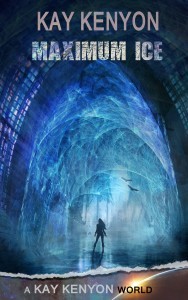
From the view port of your lately-returned spaceship you see: A physics-defying crystal mantle shrouding the Earth. Welcome home.
A finalist for the Philip K. Dick award.
To purchase: books2read.com/maximum“A uniquely powerful tale.” —Booklist
“Full-bodied characters, palpable environs, layered mystery and heady suspense combine like the many facets of “Ice” in this sparkling SF novel.” —Publishers Weekly
The post Maximum Ice at $.99 first appeared on Writing the World, the Official Website of Kay Kenyon.Maximum Ice at $.99
NOW through Thursday, June 24
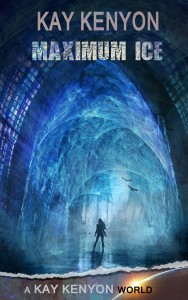
From the view port of your lately-returned spaceship you see: A physics-defying crystal mantle shrouding the Earth. Welcome home.
A finalist for the Philip K. Dick award.
To purchase: books2read.com/maximum“A uniquely powerful tale.” —Booklist
“Full-bodied characters, palpable environs, layered mystery and heady suspense combine like the many facets of “Ice” in this sparkling SF novel.” —Publishers Weekly
June 15, 2021
The Speed of Story
Lately I’ve been giving zoom workshops on a few critical novel-writing subjects. Topics that I think are under-taught and under-optimized by writers. One of these topics is pacing. Here’s are some tips from my pacing workshop, Move Along, Folks.
Pacing is the speed at which you tell your story. How quickly you’re forwarding and deepening the plot. Is it too fast, appearing rushed? Too slow, losing the reader’s interest? Usually, the problem is the latter: set-up paragraphs at the start of scenes, aftermath sequences where we consider what just happened, scenes flailing at character development or background, too many words, saying things twice, plus repeating yourself. And then there are the really tough pacing issues.
Pacing can be hard to judge. It’s part of your style. It’s dictated to some extent by your material and the style of book you’re writing. None of this excuses us from working at pacing, though.
I tend to write longish and cut back in the rewrite. But also when planning and writing, I try to forestall slow pacing using a few diagnostic questions like these:
How proactive is my major character? Will she be able to power the story’s pacing with her action-orientation?What specific qualities and motivations does my protagonist have that make her likely to strive even in the face of strong opposition?Is the central conflict as deep as it can possibly be? We want to give ourselves the fuel for a well-paced story, so that when we step on the gas, the power is there.What steps can the forces of opposition take that sharpen the stakes, thereby forcing the major character to respond?What events accelerate pacing in the middle of the story? Does the story coil around itself, growing stronger, more resonant?Is there enough tension in this scene? How far have I strayed from strong emotion? (Including dialogue scenes.)Do flashbacks divert from the core story line? Could backstory be quickly summarized rather than put on stage?Am I using a “cinematic eye,” falling into long visual descriptions? Can the visuals be cut back, tightened, or do double-duty by establishing tension?How strong is the pacing in your story? If you’re not sure, give each scene a score from 1 to 5. Shore up the weak sequences. Your readers will thank you!
Watch this space for announcements of my webinars: Six Slippery Sins: Writing advice that leads us astray; the Magic of Plotting (alias: Mapping the Labyrinth); and Move Along, Folks (pacing).
The post The Speed of Story first appeared on Writing the World, the Official Website of Kay Kenyon.March 18, 2021
Saturday class on common fiction problems
SIX SLIPPERY SINS: A workshop on common misunderstandings in writing fiction.
There’s still room at my Saturday class on standard writing advice that can derail or water-down our fiction. We’ll take a deeper dive into some fiction maxims and distill what’s helpful, what’s not. 9:30 to 11:00. Details here: https://bit.ly/3tvOI8H (scholarships available!)
This workshop is courtesy of The Rambo Academy for Wayward Writers and is hosted by the ever-entertaining Cat Rambo!
The post Saturday class on common fiction problems first appeared on Writing the World, the Official Website of Kay Kenyon.
March 2, 2021
To Be Brief
I’ve just finished the third draft of my work in progress–(which, since you ask, is a dystopian science fiction novel) and among my goals was homing in on wordiness.
In third drafts, I bear down on sentences and paragraphs. Not only to smooth them out, but with an eye to brevity. I eliminated 11 pages worth of sentences and paragraphs. Because writing better often means shorter. As in these examples:
Passive voice. I believe there are times when passive voice is excellent. Just not very often, since it is like sand in the gas tank. Don’t need it, and it does damage. TRY: A computer search for the word was (and were):
Each branch was talking. vs: Each branch spoke.Entering the hall, she noted that he was not at his usual sentry duty. vs: Entering the hall, she noted his absence from sentry duty.Saying things twice. As in stringing together clauses that repeat the thought. “She was restless, couldn’t sit still or keep her mind on the lecture.” This is first draft stuff. Cut, cut, (I told myself.)
Piling on the similes and metaphors. A sentence, a complete thought, can carry only a limited amount of embellishment. For some odd reason we often string together two or more similes or metaphors to enhance the same thought. On the rewrite, pick one.
Unlikely similes. Would the character really feel the experience was like something else, especially the thing you’ve chosen? “He ducked the barrage of bullets coming at him like a freight train.” He’s really comparing his impending death to something? In close POV, the reader needs to believe that the character would actually be thinking of the simile. (And really, freight train?)
Tucking in information. This is a really annoying habit of mine. “Wounded, he ran to the grand staircase, grabbing the ancient, ornate banister for support.” It implies the wounded guy notices the age and ornateness of the banister. Nope. If the plot requires the reader to know that the banister is elaborate, explain it some time when the character would really notice that feature. And another example: “She turned left into the alley.” What if the reader had in their mind she was on the other side of the street? Then it’s a right turn. The extra stage direction can bump the reader out. And more: “He grabbed the baseball bat, a gift from his beloved uncle, and raced to help his friends.” Thank goodness for his uncle’s gift, but not in this sentence.
Dialogue. On a third draft, read the dialogue lines out loud. Many improvements are probably needed, but here’s an easy one: Don’t have the characters say the other person’s name. “Mirabel, walk with me in the garden?” In real life, we almost never say people’s names in conversation. Unless there are 3+ people talking. But still, limit it.
Dialogue again. Pare it down. Let people sometimes speak in fragments. Release your determination to explain too much to the other person. Dialogue is not a good time to dump information, because we should be focusing on the emotional content, the attitude, the hidden agenda. Sometimes you do reveal things in dialogue, but beware stuffing things in.
Dialogue once more. Cut the stage business out of your dialogue, or keep it very short. Each “side” of dialogue doesn’t need to contain how they are gazing, feeling, siting or turning their head. We’re making the mistake of “seeing our book as a movie.” The more we try to do this, the more futile it is. If you want to show tension, put it in what they say. Remember the old adage: Dialogue is what characters do to each other. Also, (I told myself), don’t routinely stuff in internal thoughts. When you do, keep it short. Sometimes by the time we get to the other character’s response, we’ve forgotten what they’re responding to!
Formality. I wince when I’m editing my work and see how often I slip into formality. I begin sentences with “And,” or use longish words (“utilized”). In dialogue, I might neglect to use contractions. “I could not bear it.” Why do I do this? Don’t know. Unless the situation calls for a stilted tone, use contractions.
There are many books dedicated to the art of editing, particularly editing down. One of my faves is The 10% Solution by Ken Rand.
Happy cutting!
The post To Be Brief first appeared on Writing the World, the Official Website of Kay Kenyon.October 20, 2020
My latest top ten writing tips

If you’ve ever tried to write a novel, this picture may speak to you!
Every few years I post my top 10 writing tips here. Why do I keep changing this list? It might be because my list is influenced by the latest unpublished manuscripts that I’ve critiqued for conferences. Does this imply that writers are making different mistakes than previously? I don’t know. Maybe I’ve just changed my mind!
Kay’s top ten, sure-fire, writing tips:
1. Work harder on an original premise: The Napoleonic wars with air power from dragons; a murdered girl relates her story from heaven; an alien universe that tunnels through our own. Respect your ideas, but deepen them.
2. Heighten the consequences beyond the personal. How does the story problem affect the community, say, or an important institution or the larger world?
3. Write in Scenes. These discreet blocks of drama will help you decide what to bring on stage and warn you away from narrative drift. (ref: The Weekend Novelist, by Robert Ray.)
4. Turning point scenes. Shape your story by sketching out “hinge” scenes that transition the major character into a more capable, committed actor in response to the plot challenges. (ref: Great Stories Don’t Write Themselves and Story Structure by Larry Brooks.)
5. Escalate events and tension in the middle. As the major character and the forces of antagonism become more adept and determined, strive to create rising tension and more difficult opposition throughout the middle fifty percent of the novel.
6. Plan reversals. Readers like to be surprised. They’re trying to figure out what will happen, but they don’t like to succeed! Confound readers’ assumptions. Add to that: plan for at least one game-changing piece of information somewhere in the middle. (Ideal at the midpoint.)
7. Make smart use of backstory. If a past event motivates a protagonist, try to avoid bringing on stage that scene from the past, at least at too much length. Flashbacks slow momentum. Instead, reveal the backstory in tight flashback increments or weave it into narration. Another way to keep backstory in present moment is to disclose it in dialogue.
8. Stop crying. Having the major character cry at a moment of great sadness signals “she’s sad” to the reader in an annoying way. Instead, justify sadness by context and portrayal of unique details of a character’s thoughts or action. Underplaying sorrow often brings the reader to fill in what they are not being “told.” (ref: The Emotional Craft of Fiction by Donald Maass.)
9. Cut the fat. Edit out wandering and (most) low-tension scenes, pace-killing detours, heavy ruminations, ramp-ups to scenes, and over-description.
10. Deepen the climax. Strategic thinking about your climax can save it from being just a bigger obstacle-and-resolution scene to something that challenges your protagonist internally at the most profound level.
The post My latest top ten writing tips first appeared on Writing the World, the Official Website of Kay Kenyon.
August 17, 2020
Four Things a Novel Must Have.
Think of all the things a piece of fiction must have. Who can ever get it all right? For example, we’re told to excel at plot, character, setting, point of view, dialogue, conflict, tension, pacing, and style. If it’s science fiction, add cool science ideas and scope. The list is long and demanding.
The good news is that a novel doesn’t have to have everything right.
Remember Randall Jarrell’s wonderful line: “A novel is a narrative of a certain length with something wrong with it.” So here’s Kay’s Rule of Imperfection: You don’t need to do everything supremely well. Optimize what you can and forgive yourself for the rest.
Because the pursuit of perfection leads to many an unfinished novel.*
So where does this leave us in our writing process, our current novel? For starters, we can look at our strengths and capitalize on them. Don’t try for profound if you’re blind to character. You might write, for example, The Da Vinci Code. If your plot might be described as serviceable, but you’re superb with tone and mood, you might write, for example, Jonathan Strange and Mr Norell. If you have a knack for great characters and also love a high stakes plot, you could have written Adrian J. Walker’s brilliant The End of the World Running Club. If you really get romance and how to fold it into your favorite genre–such as fantasy–you can do no better than to look at how it’s done in A Discovery of Witches by Deborah Harkness.
Still not certain what to concentrate on? OK, I’ll go out on a limb and give you my true, no-holds-barred-real advice. Here are the biggest things I think a novel a should have.
Originality.
Publishers look for an exciting premise. It doesn’t have to be brilliant, but it does have to shine! Don’t short change your writing with a weak or warmed-over concept. Keep digging until you find an intriguing premise. Think Diana Gabaldon, Outlander series; Robert Repino’s Morte (War With No Name.) Not every premise can be as original as: “Dinosaur DNA retrieved from amber.” But don’t settle for plain.
Vivid Environment.
One of the worst mistakes aspiring novelist’s make is a bland setting. This is a real crime in science fiction, of course, but true for every story. For heaven’s sake, take us somewhere interesting–such as the offices of a high-powered law firm or a small town in the 1950s. Even someplace awful: Annihilation by Jeff VanderMeer. Or the post-apocalyptic world of The End of the World Running Club.
Charismatic Lead Character.
We’ve heard this a million times. Make your lead character someone we want to be with. Yes, but how? Give them one or two defining qualities that make them someone who will take action and be worthy of the story problem you’ve created. Internal demons? Perhaps. I prefer something more subtle, like being one-sided or unknowing in some way. Beware too much weakness. The major character needs to have charisma. If you don’t give them a special ability, give them a driving desire. For a lovely balance of strength and psychological denial see Diana in A Discovery of Witches.
Momentum.
Focus your story around a problem. Have enough obstacles to keep your major character challenged and growing in skill and knowledge to create a character arc. Escalate the intensity throughout the middle fifty percent of the novel. Problems arise from conflict, often conflicting agendas Which suggests that you should really nail the forces of opposition. To deepen the conflict sufficiently, make sure something important is at stake. You don’t need meaningless action to tart up scenes, but you do need believable, escalating tension. That’s a high bar. Aim high.
You may not come anywhere near to doing these four things supremely well. But readers may very well love a novel with two of these great strengths. Nail three, and it separates you from the pack. Give readers four and you’re in the realm of great storytelling.
* The caveat goes without saying, but let me say it anyway. This presumes you have studied your craft. Learn what you don’t know. That is, study to fill the gaps in your knowledge about storytelling. My latest favorite on this topic: Great Novels Don’t Write Themselves by Larry Brooks.
August 14, 2020
Two fiction classes comin’ up
I’m giving two live online workshops this fall! I’ve found that webinars are fun and can get us re-engaged with our writing. (To hear about all my online teaching–and other cool stuff–you can join my newsletter.)
PACIFIC NORTHWEST WRITERS CONFERENCE
Six Slippery Sins: Good advice that goes astray
Often what we think we know just isn’t true. “Common knowledge” about fiction can deaden our stories, including time-honored advice like start fast and get to the point in dialogue. We’ll take a fresh look at “vivid” descriptions, and how “showing” sadness can end up distancing a reader by “telling.” For writers at all levels, this class examines the deeper truths suggested by, or obscured by, fiction maxims.
Saturday, September 26 (Time to be announced.)
Click HERE to register for the PNWA Conference, one day or several.
(More class details to be posted soon on the PNWA website.)
WRITE ON THE SOUND CONFERENCE
Move Along, Folks: Pacing the novel
One agent who gets 10,000 pitches a month says that 95% of rejected manuscripts are paced too slowly. We can fix this! This pacing workshop is for beginning and intermediate-level novelists and exposes classic pacing mistakes, large and small. We’ll identify the dramatic underpinnings that give horsepower to a story’s unfolding and their use in structure and scene. We’ll also come away with on-the-page tools that can keep the wind in your story’s sails.
Saturday, October 3, 4:15 – 3:30
Click HERE to register for the Write on the Sound Conference, one day or several.
July 27, 2020
This Sunday: My plotting workshop
Join me this Sunday for a 2-hour workshop on plotting the novel!
Mapping the Labyrinth at the Rambo Academy of Wayward Writers
 On-line class: Sunday, August 2, 2020, 9:30-11:30 AM Pacific Time
How do you develop a novel’s plot? Is it luck, or trial and error, or are there classic approaches to achieve your best story? Learn how to use structural principals to take your character on a transformative journey inspired by great plotting. Become fluent in turning points, those fork-in-the-road hinges that catapult your story in a dramatic rising action. Concept, subplots, conflict–we’ve got ’em covered. Let’s map our way out of the maze and conquer the art of plotting.
More information: https://bit.ly/3fcfCvU
Cost is $99 ($79 for Patreon supporters and former students, which includes classes/workshops at the Cat Rambo Academy for Wayward Writers.) Cat is offering a few scholarships: For information on applying, click here.
To register for this class, to Cat Rambo with the following details:
The email address that you use for Google stuff
The name of the class: “Mapping the Labyrinth” with Kay Kenyon
Whether you would prefer to pay via Paypal, check, or some other means.
You will be invoiced when the class slot is reserved.
I hope to see you on Sunday, August 2nd!