Kay Kenyon's Blog, page 4
May 13, 2022
How to title a novel
At first it was fun. This novel is going so well, the author exudes on page 124. Let’s stop writing and play with titles! Some time later: Book titles are so much harder than I thought. Followed swiftly by: I found it at last! Then, doing a bit of digging, you realize hundreds of authors have thought of the same title. And used it.

When you have to come up with a novel title. In a hurry.
A few months later when it’s absolutely time to decide, the attitude is more likely to be, I don’t want to Talk about it anymore! And if you’re writing a series, it’s like sticking pins in your cheeks.
Since I’ve just titled four books in an upcoming fantasy series, here’s a brief recap of my journey into the bog of titles.
How to Title a Fantasy NovelBrainstorm.Book one was so much fun to write! Giddy with my own brilliance, I would jot down bunches of titles in my notebook just for fun. During that period I wanted something original. I was smitten by unusual titles. Because this was not going to be your average fantasy. This was my fantasy.
In the book they call magic the Deep. So “Her Altered Deep.” I loved that title, but when I asked for feedback I got these teensy frowns and “Wha?” I realized it wasn’t going to work, and I was Deeply resentful. Back to the drawing board. Let’s brainstorm!
Blood Indigo, (lots of “indigo” titles) The Silver Torc (Wha?), The Hand of Power, East of the World, Her Strange Align (What’s an align?), Her Primal Scar (I was on a “her” kick for months), Daughter of Myth. Meh.
Copy others.Then there were the other books in the series. For one of the titles I thought it would be great to do a riff on a famous title. (I know, but I was so far into the bog, I couldn’t see the alligators for what they were.) So: When Worlds Arise (When Worlds Collide); The Left Hand of Power (Outraged reactions to this one. Leave Ursula le Guin the heck alone); The Wall at the End of the World (Walk to the End of the World). No one thought my riffs were clever, and even worse, they were called “derivative.” But that’s the point, I argued. Blank stares.
Be catchy or at least be parallel.Some people said one-word titles are hard hitting: (Uprooted). Or four word titles are always catchy: (A Clash of Kings, A Storm of Swords.) Note the parallelism! Article + Noun + Preposition + Noun.
I was advised by some to use Keywords in the titles. (Searchability on Amazon.) OK, start thinking strategically, I told myself. Searchability is good . . . isn’t it? Use the big power words of fantasy, like Prince, Blood, Crown, Shadow, Empire . . . Except now they’re all starting to sound alike.
Focus on Who or Where.
 Finally, with about 50 titles generated and no end in sight, I was advised by people who know what they’re talking about that titles can either be about Who or Where. For example, Paul Weimer pointed to the fun titles of Zelazny’s Amber series (The Guns of Avalon, The Courts of Chaos.) Then he said: Do both (Who and Where) if you can.
And though I didn’t do it perfectly, that piece of advice settled me down, and with only days until my deadline, I emerged from the bog with the the cool fantasy titles below. I’m particularly proud of the fact that the four titles are very similar in length. I know, it’s a small victory, and I didn’t hit it out of the ballpark. However, I do love Some of these titles. But like a proud mother who never displays favoritism, I’m not going to say which ones.
(No publication date yet. But I can say, coming soon!)
Bk 1: The Girl Who Fell into Myth.
Bk 2: Stranger in the Twisted Realm
Bk 3: Servant of the Lost Power
Bk 4: Warrior with the Brilliant Scar.
The post How to title a novel first appeared on Writing the World, the Official Website of Kay Kenyon.


How to title a novel
At first it was fun. This novel is going so well, the author exudes on page 124. Let’s stop writing and play with titles! Some time later: Book titles are so much harder than I thought. Followed swiftly by: I found it at last! Then, doing a bit of digging, you realize hundreds of authors have thought of the same title. And used it.

When you have to come up with a novel title. In a hurry.
A few months later when it’s absolutely time to decide, the attitude is more likely to be, I don’t want to Talk about it anymore! And if you’re writing a series, it’s like sticking pins in your cheeks.
Since I’ve just titled four books in an upcoming fantasy series, here’s a brief recap of my journey into the bog of titles.
How to Title a Fantasy NovelBrainstorm.Book one was so much fun to write! Giddy with my own brilliance, I would jot down bunches of titles in my notebook just for fun. During that period I wanted something original. I was smitten by unusual titles. Because this was not going to be your average fantasy. This was my fantasy.
In the book they call magic the Deep. So “Her Altered Deep.” I loved that title, but when I asked for feedback I got these teensy frowns and “Wha?” I realized it wasn’t going to work, and I was Deeply resentful. Back to the drawing board. Let’s brainstorm!
Blood Indigo, (lots of “indigo” titles) The Silver Torc (Wha?), The Hand of Power, East of the World, Her Strange Align (What’s an align?), Her Primal Scar (I was on a “her” kick for months), Daughter of Myth. Meh.
Copy others.Then there were the other books in the series. For one of the titles I thought it would be great to do a riff on a famous title. (I know, but I was so far into the bog, I couldn’t see the alligators for what they were.) So: When Worlds Arise (When Worlds Collide); The Left Hand of Power (Outraged reactions to this one. Leave Ursula le Guin the heck alone); The Wall at the End of the World (Walk to the End of the World). No one thought my riffs were clever, and even worse, they were called “derivative.” But that’s the point, I argued. Blank stares.
Be catchy or at least be parallel.Some people said one-word titles are hard hitting: (Uprooted). Or four word titles are always catchy: (A Clash of Kings, A Storm of Swords.) Note the parallelism! Article + Noun + Preposition + Noun.
I was advised by some to use Keywords in the titles. (Searchability on Amazon.) OK, start thinking strategically, I told myself. Searchability is good . . . isn’t it? Use the big power words of fantasy, like Prince, Blood, Crown, Shadow, Empire . . . Except now they’re all starting to sound alike.
Focus on Who or Where.

And though I didn’t do it perfectly, that piece of advice settled me down, and with only days until my deadline, I emerged from the bog with the the cool fantasy titles below. I’m particularly proud of the fact that the four titles are very similar in length. I know, it’s a small victory, and I didn’t hit it out of the ballpark. However, I do love Some of these titles. But like a proud mother who never displays favoritism, I’m not going to say which ones.
(No publication date yet. But I can say, coming soon!)
Bk 1: The Girl Who Fell into Myth.
Bk 2: Stranger in the Twisted Realm
Bk 3: Servant of the Lost Power
Bk 4: Warrior with the Brilliant Scar.
#PaulWeimer #Howtotitleyourbook #Goodfantasytitles #Fantasyseriestitles #uniquetitles #Titlingseries #Noveltitles #booktitlesearchability
December 17, 2021
The four best books I read this year
These were my favorite reads this year. Give them a try! (These books are recently published, but not during 2021.)
 ECHO IN ONYX. This fascinating page-turner from Sharon Shinn is about a royal society where a select few have dopplegangers (exact replicas of themselves) who are integrated into society and accompany and interact with their primary individual in fascinating ways. I was totally immersed in this book. The first book in a trilogy–also available in audio book.
KLARA AND THE SUN. A Booker Prize-winning book by literary author Kazuo Ishiguro. It’s a surprisingly believable view into the mental world of a humanoid-looking AI. The story conveys a sweet and sometimes unbearable poignancy. Ishiguro is a master of irony, where the reader is aware of things that the main character is not. Some may find it a bit slow, but I didn’t.
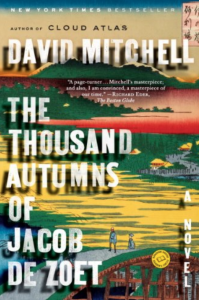
THE THOUSAND AUTUMNS OF JACOB DE ZOET. If you’ve read David Mitchell’s science fiction, you’re already a fan. He’s a total powerhouse literary writer and this one, with small elements of fantasy, is historical fiction set in 18th century Japan. The main character is a Dutch merchant who run afoul of his corrupt employer and harbors a secret love love of a Japanese woman.
GREAT STORIES DON’T WRITE THEMSELVES. From the brilliant teacher Larry Brooks, a clear-sighted, inspiring guide to using major turning points in the novel, using a popular mystery book by Robert Dugoni as an example. His structural approach to the novel is the most helpful advice I’ve ever been given. I recommend all his other books as well!
The post The four best books I read this year first appeared on Writing the World, the Official Website of Kay Kenyon.The four best books I read this year
These were my favorite reads this year. Give them a try! (These books are recently published, but not during 2021.)
[image error]ECHO IN ONYX. This fascinating page-turner from Sharon Shinn is about a royal society where a select few have dopplegangers (exact replicas of themselves) who are integrated into society and accompany and interact with their primary individual in fascinating ways. I was totally immersed in this book. The first book in a trilogy–also available in audio book.
KLARA AND THE SUN. A Booker Prize-winning book by literary author Kazuo Ishiguro. It’s a surprisingly believable view into the mental world of a humanoid-looking AI. The story conveys a sweet and sometimes unbearable poignancy. Ishiguro is a master of irony, where the reader is aware of things that the main character is not. Some may find it a bit slow, but I didn’t.
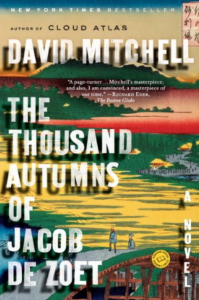
THE THOUSAND AUTUMNS OF JACOB DE ZOET. If you’ve read David Mitchell’s science fiction, you’re already a fan. He’s a total powerhouse literary writer and this one, with small elements of fantasy, is historical fiction set in 18th century Japan. The main character is a Dutch merchant who run afoul of his corrupt employer and harbors a secret love love of a Japanese woman.
GREAT STORIES DON’T WRITE THEMSELVES. From the brilliant teacher Larry Brooks, a clear-sighted, inspiring guide to using major turning points in the novel, using a popular mystery book by Robert Dugoni as an example. His structural approach to the novel is the most helpful advice I’ve ever been given. I recommend all his other books as well!
#historicalfiction #sciencefiction #bestfictionreads #storystructure #novelwriting #bestwritingbooks #AI #fantasy
November 19, 2021
40 free science fiction stories
Just in time for cozy cold weather reads, see these “Tales from the Future” free stories from new and established science fiction writers! Fill up your e-reader with the ones that appeal, and sign up for some cool newsletters, too. Because it’s always fun to find new authors or journeymen writers you haven’t yet discovered. One of mine tucked in there, too.
Ends November 30.
Check them out here.
The post 40 free science fiction stories first appeared on Writing the World, the Official Website of Kay Kenyon.
November 12, 2021
My Top Writing Tips 2021

Photo by Anil Xavier on Unsplash
It’s almost winter, so here once again are my top 10 writing tips. Except different. Every year I post my latest distillation of best fiction strategies. Why do I change my mind from year to year? Because I’m still learning–often from great novels I read–or workshops. Life-long learning is one of the joys of the writing life. You can always tell a more compelling story!
Kay’s top ten, sure-fire, fiction writing tips:
1. Work harder on an original premise: The Napoleonic wars with air power from dragons; a murdered girl relates her story from heaven; forbidden love between a modern witch and a powerful vampire. Respect your ideas, but deepen them.
2. Reinterpret story ideas. Keep an idea file, whether they catch your attention for a few seconds or are abandoned stories. After a few years you’ll have a totally different view of them and the idea might be a launch pad for a new interpretation. Recently I looked through my file and an older idea jumped out at me, begging for a fresh spin. I’ve re-worked the plot and now am on page 275 of a novel I love.
3. Heighten the consequences beyond the personal. How does the story problem affect the community, say, or an important institution or the larger world?
4. Develop a memorable opposition. Problems arise from conflict, often conflicting agendas. Which suggests that you should really nail the forces of opposition. Enrich the antagonist and their helpers with deep motivations and the competency that makes them a worthy adversary to your major character.
5. Escalate events and tension in the middle. Grow the major character and the forces of antagonism so that they force each other to increase their efforts. Let each side become more adept and determined as they up the ante and must escalate actions to succeed. Rising tension can save the middle of the novel from sagging.
6. Create turning point scenes. (Otherwise known as plot points.) Shape your story by sketching out “hinge” scenes that transition the major character into a more capable, committed actor in response to the plot challenges.
7. Plan reversals. Readers like to be surprised. They’re trying to figure out what will happen, but they don’t like to succeed! Confound readers’ assumptions. Add to that: plan for at least one game-changing piece of information somewhere in the middle. (Ideal at the midpoint.)
8. Make smart use of backstory. If a past event motivates a protagonist, try to avoid bringing on stage that scene from the past, at least at too much length. Flashbacks slow momentum. Instead, reveal the backstory in tight flashback increments or weave it into narration. Another way to keep backstory in present moment is to disclose it in dialogue.
9. Cut the fat. Edit out wandering and (most) low-tension scenes, pace-killing detours, heavy ruminations, ramp-ups to scenes, and over-description.
10. Deepen the climax. Strategic thinking about your climax can save it from being just a bigger obstacle-and-resolution scene to something that challenges your protagonist internally at the most profound level.
That’s it for 2021! And if so inclined, let me know what tips you would add to the mix.
The post My Top Writing Tips 2021 first appeared on Writing the World, the Official Website of Kay Kenyon.My Top Writing Tips 2021

Photo by Anil Xavier on Unsplash
It’s almost winter, so here once again are my top 10 writing tips. Except different. Every year I post my latest distillation of best fiction strategies. Why do I change my mind from year to year? Because I’m still learning–often from great novels I read–or workshops. Life-long learning is one of the joys of the writing life. You can always tell a more compelling story!
Kay’s top ten, sure-fire, fiction writing tips:
1. Work harder on an original premise: The Napoleonic wars with air power from dragons; a murdered girl relates her story from heaven; forbidden love between a modern witch and a powerful vampire. Respect your ideas, but deepen them.
2. Reinterpret story ideas. Keep an idea file, whether they catch your attention for a few seconds or are abandoned stories. After a few years you’ll have a totally different view of them and the idea might be a launch pad for a new interpretation. Recently I looked through my file and an older idea jumped out at me, begging for a fresh spin. I’ve re-worked the plot and now am on page 275 of a novel I love.
3. Heighten the consequences beyond the personal. How does the story problem affect the community, say, or an important institution or the larger world?
4. Develop a memorable opposition. Problems arise from conflict, often conflicting agendas. Which suggests that you should really nail the forces of opposition. Enrich the antagonist and their helpers with deep motivations and the competency that makes them a worthy adversary to your major character.
5. Escalate events and tension in the middle. Grow the major character and the forces of antagonism so that they force each other to increase their efforts. Let each side become more adept and determined as they up the ante and must escalate actions to succeed. Rising tension can save the middle of the novel from sagging.
6. Create turning point scenes. (Otherwise known as plot points.) Shape your story by sketching out “hinge” scenes that transition the major character into a more capable, committed actor in response to the plot challenges.
7. Plan reversals. Readers like to be surprised. They’re trying to figure out what will happen, but they don’t like to succeed! Confound readers’ assumptions. Add to that: plan for at least one game-changing piece of information somewhere in the middle. (Ideal at the midpoint.)
8. Make smart use of backstory. If a past event motivates a protagonist, try to avoid bringing on stage that scene from the past, at least at too much length. Flashbacks slow momentum. Instead, reveal the backstory in tight flashback increments or weave it into narration. Another way to keep backstory in present moment is to disclose it in dialogue.
9. Cut the fat. Edit out wandering and (most) low-tension scenes, pace-killing detours, heavy ruminations, ramp-ups to scenes, and over-description.
10. Deepen the climax. Strategic thinking about your climax can save it from being just a bigger obstacle-and-resolution scene to something that challenges your protagonist internally at the most profound level.
That’s it for 2021! And if so inclined, let me know what tips you would add to the mix.
#storypremise #backstoryvsflashbacks #writinglife #storystructure #storyideas #fictionreversals #writingscenes
September 27, 2021
When you don’t feel like writing
Long ago I stopped asking myself on any given day if I felt like writing. Often the answer would be, “Actually, I don’t.” Another question I stopped asking was “Well, WHY don’t you feel like writing?” Not that there aren’t a bunch of pretty good reasons not to write your story, or not today, anyway.
discouragement about how the last story soldresentment of the industry which is so vile and unfair plus randoma shrewd analysis of how your writing sucksembarrassment over the total absence of anything professional to Twitter aboutfury and sorrow that your agent does not answer your emailsyou are on page 85 or page 200, two classic pages that are hard to write. OK, those are just the ones that are tough for me. Getting stuck at typical points in your manuscript is mysterious and irrational. But on those pages or nearby, I way too often get a bout of I don’t feel like writing today.Your friends, sometimes even strangers, can help.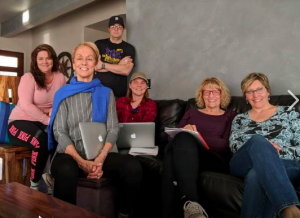 Other people help us get out of ourselves. We can turn our attention to someone else, and when sincerely done, it is such a relief not to be stuck inside our monkey brain.
You can really notice someone in your family and give them your full attention. You can be especially kind to clerks, front office staff, and people who are late or forget to show up. Shine the light somewhere else besides yourself.
But if that seems too gooey . . .
You can complain to a trusted friend. Or even relative strangers. Back when we had in-person conferences, you could often hear fellow writers in the halls or in the bar complaining loudly about writing. Because sometimes it jsut feels so good to let out the worries and even exaggerate them. That only works around other writers, though. Ordinary society doesn’t understand our need to complain. Our need to recognize our industry as being heartless and confering success randomly.
However, if you are at all introverted, seeing people when in these kinds of doldrums is excruciating. Any energy we might have scraped together is instantly bled off. We limp home, reaching for the TV remote so we don’t even have to be with ourselves.
The awful, ironic, unpalatable fix for not feeling like writing Write the next page.
Maybe you don’t have the energy. Maybe you’re not even sure you care. But your energy (usually) is not gone, it’s just buried. As to caring, that’s worth looking closely at. If you truly don’t care, OK. There are easier ways to spend the hours of our lives.
But what if, in your more honest moments, you know you love storytelling. You love the writing when it spins through you like gluons on the way to creating the universe. Saying you don’t care is a way of defending against the emotions of discouragement, self-doubt and anger.
The thing about losing the desire to write is that the feeling will visit you now and then throughout your writing career. You will be sailing along, and then–vast silence–you are becalmed. So, if you want to be a professional writer, you must learn that writing will make things better. You don’t need inspiration to write. Writing creates inspiration. Therefore: butt in chair and just do it. Why does writing lead to feeling like doing it? Because:
Writing will light a fuse. You remember how it feels: How you sometimes shake your head and think: Wow, where did that awesome story bit come from?Getting pages, even if you consider them inferior, will contribute to a respectable forward progress. Not writing can build up a debilitating anxiety that the book is going to be stuck on page 200. Forever.You are conserving what little energy you do have, because you are not frittering away that battery power on cleaning out the basement or on excruciating conversations with friends who will ask you if you are so miserable why don’t you just quit.The muses are a bit snotty and random. You may write drek for several days, and all of a sudden you get a lightning bolt of inspiration. Your hands fly over the keys. Your eyes fill with tears. You say to the Muse: I’m sorry I didn’t believe, I’m sorry I was such an ass, you are a goddess. She roles her eyes. Yeah, whatever. Now get on with it.I’m terribly sorry to be the one to tell you to stop resting and start writing. I know it is unfair, unsatisfying, and you really don’t feel like it. My friend, I know. Recently I got back to writing after a about a year and wrote–and finished!– a very fun and satisfying novel.
This is why I don’t ask myself if I feel like writing. It’s irrelevant. The better question is: Do I still care? Or better yet, sit down to write at your designated time without checking in with yourself. Get a page or two or five.
In a weird and wonderful way, the problem of writing becomes the solution of writing.
The post When you don’t feel like writing first appeared on Writing the World, the Official Website of Kay Kenyon.When you don’t feel like writing
Long ago I stopped asking myself on any given day if I felt like writing. Often the answer would be, “Actually, I don’t.” Another question I stopped asking was “Well, WHY don’t you feel like writing?” Not that there aren’t a bunch of pretty good reasons not to write your story, or not today, anyway.
discouragement about how the last story sold resentment of the industry which is so vile and unfair plus random a shrewd analysis of how your writing sucks embarrassment over the total absence of anything professional to Twitter about fury and sorrow that your agent does not answer your emails you are on page 85 or page 200, two classic pages that are hard to write. OK, those are just the ones that are tough for me. Getting stuck at typical points in your manuscript is mysterious and irrational. But on those pages or nearby, I way too often get a bout of I don’t feel like writing today.Your friends, sometimes even strangers, can help.
You can really notice someone in your family and give them your full attention. You can be especially kind to clerks, front office staff, and people who are late or forget to show up. Shine the light somewhere else besides yourself.
But if that seems too gooey . . .
You can complain to a trusted friend. Or even relative strangers. Back when we had in-person conferences, you could often hear fellow writers in the halls or in the bar complaining loudly about writing. Because sometimes it jsut feels so good to let out the worries and even exaggerate them. That only works around other writers, though. Ordinary society doesn’t understand our need to complain. Our need to recognize our industry as being heartless and confering success randomly.
However, if you are at all introverted, seeing people when in these kinds of doldrums is excruciating. Any energy we might have scraped together is instantly bled off. We limp home, reaching for the TV remote so we don’t even have to be with ourselves.
The awful, ironic, unpalatable fix for not feeling like writing
Maybe you don’t have the energy. Maybe you’re not even sure you care. But your energy (usually) is not gone, it’s just buried. As to caring, that’s worth looking closely at. If you truly don’t care, OK. There are easier ways to spend the hours of our lives.
But what if, in your more honest moments, you know you love storytelling. You love the writing when it spins through you like gluons on the way to creating the universe. Saying you don’t care is a way of defending against the emotions of discouragement, self-doubt and anger.
The thing about losing the desire to write is that the feeling will visit you now and then throughout your writing career. You will be sailing along, and then–vast silence–you are becalmed. So, if you want to be a professional writer, you must learn that writing will make things better. You don’t need inspiration to write. Writing creates inspiration. Therefore: butt in chair and just do it. Why does writing lead to feeling like doing it? Because:
Writing will light a fuse. You remember how it feels: How you sometimes shake your head and think: Wow, where did that awesome story bit come from? Getting pages, even if you consider them inferior, will contribute to a respectable forward progress. Not writing can build up a debilitating anxiety that the book is going to be stuck on page 200. Forever. You are conserving what little energy you do have, because you are not frittering away that battery power on cleaning out the basement or on excruciating conversations with friends who will ask you if you are so miserable why don’t you just quit. The muses are a bit snotty and random. You may write drek for several days, and all of a sudden you get a lightning bolt of inspiration. Your hands fly over the keys. Your eyes fill with tears. You say to the Muse: I’m sorry I didn’t believe, I’m sorry I was such an ass, you are a goddess. She roles her eyes. Yeah, whatever. Now get on with it.I’m terribly sorry to be the one to tell you to stop resting and start writing. I know it is unfair, unsatisfying, and you really don’t feel like it. My friend, I know. Recently I got back to writing after a about a year and wrote–and finished!– a very fun and satisfying novel.
This is why I don’t ask myself if I feel like writing. It’s irrelevant. The better question is: Do I still care? Or better yet, sit down to write at your designated time without checking in with yourself. Get a page or two or five.
In a weird and wonderful way, the problem of writing becomes the solution of writing.
July 12, 2021
Indie Book Promotion Workshop
Does promoting your book have to be a horrible exercise in self-shilling? No!
Join this zoom meeting with promotion guru Anthea Sharp and come away with real, actionable items that will help you reach the next level in your book-promotion quest.
Book Promotion for Indies. And tips for traditional routes, too!
Sunday, July 25, 10 to noon
 Writing the book is the easy part…
At least that’s what they tell you, once your novel is finally out there in the world. Now, whether you’re publishing yourself or are with a publisher, it’s time to face the daunting task of getting the word out about your new book (a task increasingly left up to authors, even in the world of traditional publishing).
There’s a new world out there, and promoting your book should keep up with the times. In this workshop, we’ll cover the many different ways authors can find and connect with their readers, regardless of who holds the publishing reins.
And while there are a million things you can do to promote your book, you don’t have to do ALL of them! Anthea will explore the various promotion options out there, and go over the pros and cons of each. Some of them will feel easy and doable to you, others won’t – and that’s fine. Here’s a quick look at what we’ll cover:
Making sure your product is the best it can be – including cover and book description.Effectively using your direct presence as an author, via your website and newsletter, as well as social media.How to successfully cross-promote with other authors.How to phase in things if you’re a brand new author.Leveraging loss-leaders for visibility.Advertising, including cost-per-click and sales newsletters like BookBub.Tips for making the most of the retailer platforms to get some momentum behind your book.Plus: Plenty of time for Q&A!Sponsored by Write on the River.
REGISTER NOW. Cost of the workshop is $35 for nonmembers and $15 for members. A few scholarships are available for this zoom workshop. We welcome you to join us!
Details HERE.
Anthea Sharp is an experienced and enthusiastic workshop presenter, as well as a USA Today bestselling, award-winning author of fantasy and speculative fiction (not to mention a bestselling romance author under the pen name Anthea Lawson). Originally traditionally published, Anthea jumped the fence in 2011 and began a self-publishing career that’s still going strong ten years on. In addition to indie publishing her novels, she writes and sells short fiction to traditional markets, and most of her book are out in audio via small and traditional publishers. Discover her books at antheasharp.com
The post Indie Book Promotion Workshop first appeared on Writing the World, the Official Website of Kay Kenyon.