Katherine Pathak's Blog, page 7
January 5, 2016
How important is an author’s name for the reader?
This was a question that came up at the lunch table on Christmas Day of all times. I write mystery thrillers for adults. There are twelve books in two series altogether. For both of the series I use the same author name. I believe it’s important to do so, particularly when writers these days spend such a large amount of their time creating a positive ‘author brand’.
What raised the issue over Christmas lunch was that I am currently writing a story for my daughter, which may develop into a novel for the pre teens. My 10 year old is an avid reader and I’m constantly sourcing books and magazines for her. It suddenly struck me that I could write one for her myself, whilst she is so receptive to reading and actually wants me to do it.
So the story began its life. The genre is a departure for me, although a couple of my Imogen and Hugh Croft Mysteries would be catagorised as ‘cosy’ and could certainly be read by teenagers. I ripped through all the Agatha Christie books when I was 11 after all!
But then the question arose of what pen name I would use if I were to publish the children’s book. I’d certainly be reluctant to use the name I already do as the departure from the thriller genre would be too confusing, I think. We decided instead that I would probably use my maiden name. As a married woman, it is occasionally quite useful to possess two identities!
But the debate made us consider how important an author’s name is to their popularity as a writer. Obviously, the big name authors will build a loyal following and their name appearing on the cover will literally sell the book.
In addition to this, we all knew of certain people in our lives who would be reluctant to read a book written by a woman and vice versa. Look at the nineteenth century female writers who were forced to use a male pseudonym in order to be published; like the Brontes or Elizabeth Gaskell.
I initially chose to use my married name so that the people I already knew would easily be able to track down my work. The decision was no more complicated than that! But I know that these days a great deal of research goes into deciding what type of author name sells the best in different book categories. I suspect the decisions made by consumers are largely subconscious.
The majority of my favourite crime writers are female, but I couldn’t really tell you why. I also absolutely loved the books of the late Iain Banks so there is no prejudice involved!
I will be fascinated to discover how my children’s book fares with my new nom de plume. There will be no intention to deceive, simply to distinguish the piece from my adult work. But the experiment will be extremely interesting nonetheless.


December 30, 2015
2015 in review
The WordPress.com stats helper monkeys prepared a 2015 annual report for this blog.
Here’s an excerpt:
A San Francisco cable car holds 60 people. This blog was viewed about 3,600 times in 2015. If it were a cable car, it would take about 60 trips to carry that many people.
Click here to see the complete report.


December 23, 2015
The power of adolescent fiction on the subconscious mind.
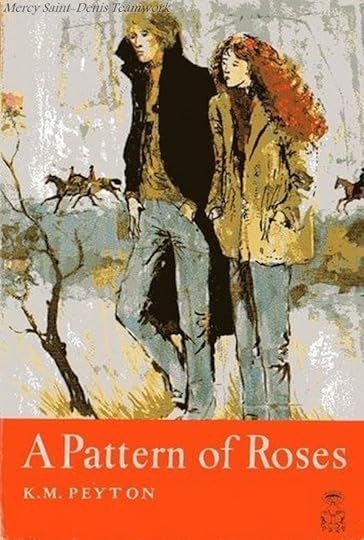
I started writing novels in my late thirties but have been an avid reader all of my life. When I began penning my eighth book, The Ghost of Marchmont Hall, I knew that I wished to recreate the magic that I’d experienced when reading adolescent fiction such as, A Pattern of Roses by K.M Peyton and The Autumn Ghosts by Ruth M Arthur.
Both titles are now long out of print and I must have read them getting on for thirty years ago. But the effect these stories had upon my subconscious mind was clearly profound. Both novels explore a mystery from the past and interweave these events with the present day. The author then skilfully shows how the resolving of the puzzle has impacted upon the main characters.
To a certain extent, all of my twelve novels play with similar themes and style of plotting. There is always a time shift between events past and present in my books. Of that much I was already aware.
But after finally tracking down a copy of The Autumn Ghosts this afternoon, I discovered something which made me gasp. This particular book was without a doubt the most evocative of my youth. I recalled certain elements of it – that the book was split into two parts; one exploring the summer that Millie spent with her grandparents on their country estate and the love affair she formed there, and the other half exploring the experiences of her granddaughter, returning to the same estate several decades later. What I did not recall, was that the place Millie visits is called Karasay.
When I read that, my heart skipped a beat. In my Imogen and Hugh Croft Mystery novels, the fictional Scottish island that Imogen comes from I named Garansay. I had no conscious awareness that the two locations had such similar names. When I was selecting an appropriate name, the idea must have presented itself from deep within the part of my brain which housed those long forgotten adolescent memories.
My intention was certainly not to plagiarise these works. In many respects, my books are quite different. They are adult mysteries and not YA fiction. However, this coincidence has illustrated just how powerful our adolescent reading experiences can be. Books read and re-read in our youth can have a significant impact upon our future creative endeavours and maybe even the way in which we approach our personal lives.
I hope that through my writing I am paying a compliment to those wonderful writers like K.M Peyton and Ruth M Arthur, who had the skill to touch me so deeply with their storytelling. If my books had the power to affect their readers in such a way I would be really very proud.


December 21, 2015
How small publishers and independents should prepare for Christmas
This is a blog that I wrote in the run up to Christmas last year. It’s amazing how many of the observations still hold true, even with the book trade changing so rapidly as it has done in 2015. A very Merry Christmas to all my blog readers this year!!


As I am now a small retailer, having been up and running for over a couple of years, I know that Christmas is a crucial selling time and I need to be fully prepared for it.
First and foremost, I am a writer and an editor. Fine. That declaration is out of the way. But, I design and publish my own books so it is essential that I adopt a pretty good business head too.
The busiest season for ebook downloads tends to fall over the summer months and some independent author/publishers may have felt the sting of lower paperback and hardback sales as a result. Don’t worry. This is a perfectly natural pattern and will only become more pronounced as the ebook market continues to grow, as it inevitably will. This phenomenon is a good thing for independents. We are blissfully free of pen-pushing middle-men and can keep our…
View original post 412 more words


December 14, 2015
The Christmas period means something quite different now for authors and publishers
A reflection on the book market at this busy time of the year. Merry Christmas!

With less than two weeks to go until Christmas, what should an author’s marketing strategy be?
I’m busy with my own festive preparations right now and with completing the Christmas present shopping, but I am also aware that this is one of the busiest times of the year for sales of my books. So, how best to optimize this? As a consumer myself, I am very careful not to pay too much for books. On the High Street, prices for a new release paperback and certainly for hardbacks can be very high. I might seek inspiration from the shelves for gifts but then I tend to purchase online, where I will get a better deal. What this means, is that it’s now pretty much too late to order books as gifts for Christmas, unless I was prepared to pay a lot for postage and even then, it would still be…
View original post 299 more words


December 8, 2015
Writing your Christmas cards is an art
Whilst writing my Christmas cards this week, it suddenly struck me that there aren’t many opportunities these days for corresponding with another person by hand.
I rarely write letters any longer. As a teacher, I recall the days when our reports for students were penned by hand. I was quite disappointed when word processed programmes replaced pen and ink. I’ve always felt there was something infinitely more personal in the hand written comment.
Now, I write my books using Word and only rely upon notebooks for plotting and character profiles. So writing a card feels like something of a novelty.
Like most festive traditions, the Christmas card was first commercially produced in 1843, during the Victorian era. The custom has been flourishing ever since. In fact, I’m quite amazed it hasn’t been replaced by a digital alternative. The purchasing of the stamps, ensuring up to date addresses and depositing the envelopes in a local postbox seems reassuringly antiquated as a process.
My children spend a great deal of time perfecting their handwriting at school. I often wonder why so much attention is devoted to the art educationally. Within a few decades, there will surely be diminishing circumstances in which writing by hand will be required.
Despite busy modern lives, I hope that the Christmas card tradition continues to live on. We may now be in contact with our friends and family on a daily bases through social media but to receive the card, hold it in your hands and run your finger along the indentations created by the script, the effect is far more profound. Long may it continue.


December 3, 2015
How close should writers get to real life?

Watching an interview with journalist Quentin Letts about his new novel ‘The Speaker’s Wife’, I was interested to hear him quite comfortably discuss how the current speaker, John Bercow, and his wife were the inspiration for the characters in the book although he stressed that the piece was purely fiction.
This statement fascinated me. Recently, I had looked into all the legal aspects of novel writing and publishing having now released 12 novels of my own plus several short stories. Quentin Letts made the issue of libel and defamation sound entirely clear cut. If it’s fiction, you can write what you wish. I suppose that as a regular columnist, often highly critical and ascerbic about certain individuals, he should know what he’s talking about.
My understanding of the issue was that it wasn’t so black and white. If you are basing a character in your published work on a particular individual, you need to take care not to mirror their life and experiences too closely. You certainly must be careful about names. If you give a character in your book the name of someone you know, they might reasonably assume you’ve based it on them. A court of law may also agree.
This doesnt mean you can’t use real life to inform your writing, but I would make each protagonist a blend of many characteristics, then they will shine out as believable and real to a reader. If you lift their personality directly from a living person then you’ve produced a satire or a pastiche, which is quite different from fiction.
Writing about true crime, sport or current affairs is another matter entirely and legal advice should be sought before embarking upon these projects.
Social media has led to a trend towards openness of expression in digital print, but libel laws still apply here too. So writers take note. We may seek inspiration from real life, but it is important to remain firmly in the world of the imagination with the stories we create.
No element of this piece should be interpreted as legal advice.


November 30, 2015
What future for formal photography?

With the publishing of Kate Middleton’s photographs of baby Charlotte yesterday in the press, it raises some interesting questions about the future of formal photography.
Kate’s pictures are lovely, capturing moments that only a mum or dad could. So where does this leave the bank of official Royal photographers? A representative of the popular press was interviewed on the radio this morning. He stressed that the growth of amateur photography was a positive trend and should be accepted alongside the work of the professionals.
I found this discussion fascinating as I use both stock prints and my own shots in my publishing work. The growth of Facebook and Instagram has led to an explosion in informal, phone based images. Photography apps also mean that you can edit and professionalise your own shots cheaply and with ease.
I do this myself, partly because of the costs involved but mainly because I enjoy it. For my most recent DCI Dani Bevan novel I used a photograph of my daughter taken from behind, with her leaning against a balustrade overlooking an ornamental garden for the cover. When I had completed the edits and design it was almost unrecognisable from the original. I am a writer and editor by trade, so if I can manipulate a photograph so painlessly then anyone can do it.
So what on earth is the future for photographic studios? I think that in the world of fashion photography and within the glossy magazine culture there is a place for more formal spreads. And fashions change. The informal ‘selfie’ shot is in vogue right now, but it may not always be. There are certain times when I use stock photographs, happily shouldering the cost, because nothing else would do.
But perhaps the evolution of the school photograph is indicative of the future. Gone for our kids are the formal lines and forced smiles. In their place are relaxed groups of children, posed naturally and clearly enjoying themselves. Times have moved on. But do I always purchase these class photos? Actually, I don’t. The mantelpiece is already jammed full.
Also, I kind of think that I could take one just as good myself. And this probably sums up the problems which lie ahead for professional photography.


November 16, 2015
The Joy of Unwrapping.

They say that each new generation is different. I’m certain it’s true. But I still expect my children to be just like me. In many respects they are; from the avid reading and telly watching to the mild suspicion of group sports. There are, however, certain new interests and preoccupations my offspring have latched onto that I can’t quite connect with. The attraction of observing other people unwrap parcels is one of them.
My son gets enormous pleasure from watching these little films uploaded to YouTube of Dads and their children unwrapping Lego. What’s the fascination? I’ve got no idea.
I can understand the pleasure derived from unwrapping or unboxing your own birthday or Christmas presents. In fact, this very weekend, I indulged in one of my favourite of all little pastimes – receiving and opening the package which contains the paperback version of my new book. In the writing and publishing world, nothing quite beats it.
But watching someone else demolishing a pile of pressies, I just don’t understand. So I asked my youngest why he enjoys it so much. He told me it’s because he wants to see what’s inside (yes, I asked for that) and to discover if it will turn out to be a set he already has or something new that he may want in the future. Occasionally, they go on to construct the set and he can compare their building methods with his own.
Okay, so I’m starting to appreciate the purpose of the exercise. The opening of the package builds the suspense, like turning over the early pages of a novel, skimming through the publisher’s info and acknowledgments. The anticipation is being established for the main event, when we begin Chapter 1 itself.
This type of activity is also indicative of the visual nature of young people’s lives these days. The digital world is an aesthetic one; where arresting images and fast-moving videos accompany almost every word that’s written. I would stop short at suggesting it is voyeuristic, because I suspect this view is old fashioned. I find it a bit weird and unsettling because it is new to me. But then so is Skype and Facetime.
There are crucial aspects of young people’s lives that are very different from the way ours were. Although getting a chance to watch people just like us around the world doing the exact same things that we do is perhaps not such a bad thing. It shows that there is so much more that unites humanity than divides us – a very important belief to cling on to at this particularly unstable period of time for many parts of the planet.
So I’m keeping an open mind. There is certainly stuff that my son should not be watching through the world wide web, but the innocent and simple joys of unwrapping a parcel, surely a universal human pleasure, probably isn’t one of them.


November 3, 2015
What they really had for breakfast and other little horrors our children love to reveal…

An article in The Telegraph today reminded me of an embarrassing incident that occurred a couple of weeks ago. The piece was a frighteningly accurate account of the chaotic reality of most people’s early morning routine. It put me in mind of when my mother-in-law visited on a Sunday afternoon recently, innocently enquiringly of my daughter what she’d had for breakfast, to which my first born happily replied, ‘dry roasted peanuts’.
There followed a full five minutes of me trying to explain that this hadn’t been breakfast at all but an ill-judged and totally unsanctioned mid morning snack. It sounded weak, although it was pretty much the truth. Our son is a great one for eating in the morning and will have whatever we care to serve him. Shona, on the other hand, doesn’t have an enormous appetite before 11am. Despite being offered a selection of breakfast options that a five star restaurant would be proud of, she often refuses them all, waiting for a couple of hours before feeling the desire for sustenance of any kind. By which time she might graze the cupboards largely unnoticed.
So I began to consider all those awkward situations where our children, in their eternal innocence, reveal our worst habits and cock-ups to the world. Naturally censorious as the pre teens tend to be; hang-overs and lie-ins appear to rate very highly in the long list of crimes that our offspring feel the need to tell their teachers and friends about, usually first thing on a Monday morning.
Swearing, passing wind or topping up a glass of wine are also on that list, along with large underwear and the existence of/methods employed for the removal of, any kind of body hair. Nobody fully warns you about this hazard when you embark upon parenthood.
No aspect of your life will pass without comment or judgement once the little darlings first become capable of speech. Most of the time, we will find this honesty refreshing and adorable. But just occasionally, when our youngest decides to announce to all present that they’ve not brushed their teeth for a week, or eaten a piece of fruit since June, we gaze at our shoes, wishing the ground would swallow us up, desperate to explain that this is Timmy’s idea of a joke but knowing that there’s really no point.
Now it’s been said, no one is ever going to believe it’s not true…