Katherine Pathak's Blog, page 10
June 10, 2015
The twist in the tale?
 Originally posted on The RetroReview:

The absolute keystone to a great piece of mystery fiction is the surprise twist at the end. Sometimes this ‘about face’ in the plot can take place somewhere in the middle of the narrative and then it can mark a neat shift in the direction of the story.
When I am setting out to write my novels, the ‘shock’ ending is one of the first elements of the plot that I plan. Then the whole novel can work up to this surprise conclusion. As a writer, you must ensure that you have placed enough clues along the way so that it is at least possible for your readers to guess what is going to happen, but you want it to be very difficult for them to do so. You do not want to deny them your deliciously unexpected resolution. You can always lay some alternative plot lines that you can…
View original 411 more words



June 9, 2015
Forget Clarkson, what #TopGear really couldn’t survive without is the theme tune.

It suddenly struck me, as my son was watching episodes of Top Gear that we have recorded from BBC3, that if Clarkson, Hammond and May go on to produce this spin-off car show, it won’t have the proper theme tune.
Now, I firmly believe that Top Gear can carry on perfectly happily without Jeremy. But the music? Forget it.
This realisation forced me to consider the importance of the theme tune to the success of a television programme. I wrote a blog recently about the ITV drama Home Fires. Whilst researching it, I was surprised by the amount of viewers who had commented on the choral score which accompanies the series. The music has been resoundingly popular and really makes the whole piece special.
The tune which book-ends the production shouldn’t make a significant difference to a programme, but somehow it really does. It’s one of the reasons why viewers get so annoyed with the ubiquitous trailers that interrupt the end credits.
So, here are some of my favourite theme tunes, without which, the programme just wouldn’t be the same:
Inspector Morse
I love this detective drama. The writing, acting and direction are superb and yet, without Barrington Pheloung’s score, which even included the piece of ‘Morse code’ at the start, it just wouldn’t have been the same.
Cagney and Lacey
I was too young to watch this gritty New York cop show when it first came out and had to go straight to bed after the theme tune, which is probably why it is so evocative for me! But I’ve watched all the re-runs since and although Tyne Daley and Sharon Gless absolutely owned the series with their terrific performances, it’s still that music which resonates with me.
The Onedin Line
Now, I really am too young for this, but I still know the theme tune and it sends a shiver down my spine whenever I hear it, which is exactly the effect I’m talking about.
Blackadder (Series 2-4)
The less said about series 1 the better, but the theme tune for the rest of the outings somehow fitted Curtis and Elton’s comedy perfectly. I loved the way the theme was modified to fit the historical period of each different series and the musical interpretation for the last series, ‘Blackadder Goes Forth’, was inspired. But who could ever forget that haunting final sequence, when the soldiers go over the top? Showing that sometimes, silence can be the most powerful accompaniment of all…
Perhaps because it was the decade of my television watching youth, the eighties seemed to be jam packed full of memorable themes from the ‘A’ Team and ‘Chips’ through to ‘Dallas’, ‘Dynasty’ and ‘Howard’s Way’. I’m sure there are many more. in several of these cases, the music was far greater than the programme itself! But I stick by my theory, unscientific as it is, that if you take a great theme tune away from a good show, it will seriously struggle to survive.


June 1, 2015
A walking holiday, with a generous helping of #art and #culture
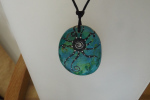
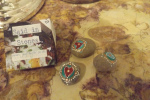

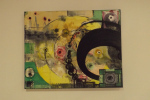




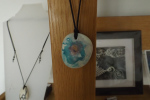
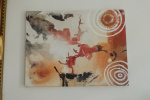
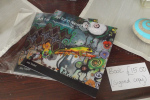
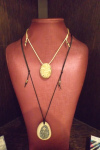

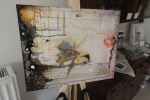
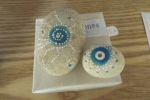
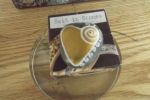
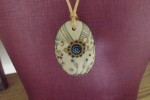
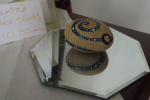
I have just returned from a four day trip to the beautiful Peak District with my sister. Now, the merits of a sibling mini-break, without husbands and kids, is the subject for another blog entirely, so for the moment, I will concentrate on praising our wonderful surroundings.
The Peak District itself was a great discovery for me. I come from a family of keen walkers and our usual destinations are Scotland, Wales or Cornwall. It proved a revelation to discover that there are unspoilt hills and dales just a fraction of the distance away from my home in north Essex. The landscape of Derbyshire is sweeping. The undulating fields are delineated by a criss-cross pattern of ancient dry stone walls. It provides an oasis of calm between the many busy cities which encircle the national park.
Within this oasis lies the little village of Sheldon, just a couple of miles from Bakewell (of the tarts fame). This sleepy hamlet was the base for our stay. Our destination was Sheldon’s retreat, a charming stone cottage providing spacious and modern bed and breakfast accommodation. The place is extremely efficiently run by artist Jay Taylor and her husband Christian, who is a chef.
When we arrived for breakfast on our first morning, we were in for something of a surprise. The large breakfast room displays a selection of Jay’s original fine art which is of the quality that you would usually only find in a big city gallery. The tables themselves were adorned with her intricately painted stones, set off to great advantage by flickering candlelight. You get to enjoy a perfectly cooked breakfast in an atmosphere of calm and beauty. For folk like my sister and me, escaping our busy lives for a few days, it was absolutely ideal.
I have added a gallery of the photographs I took of Jay’s artwork and jewellery, but my amateur shots certainly don’t do her pieces justice! Please go to her website http://www.jaytaylor.co.uk to see her work in its full glory.
We had a fantastic stay at Sheldon’s retreat and I would highly recommend it. For artsy types like us, it was the perfect mix of the great outdoors married with a generous dash of art, culture and stimulating conversation. Just what we like.
Jay Taylor produces a wide range of original artwork and jewellery, so please refer to her own sites to discover more. She is on twitter: @JayTaylorArt
and on Facebook: http://www.facebook.com/jaytaylor.uk
Thanks for a wonderful holiday!
But for now, it’s back to the book…


May 20, 2015
Katherine Pathak #books in order

I realize this looks like an incredibly self-indulgent topic for a blog, but I know that people Google this question and don’t necessarily get the information they are looking for. If I blog it, then the list will be more accessible in searches, so please indulge me!
The Imogen and Hugh Croft Mysteries:
Aoife’s Chariot
The Only Survivor
Lawful Death
The Woman Who Vanished
Memorial For The Dead
The Ghost Of Marchmont Hall
The DCI Dani Bevan Novels:
Against A Dark Sky
On A Dark Sea
A Dark Shadow Falls
Coming soon, Dark As Night
If you have any questions on the order of the books or the nature of the two series, please private message me through my Facebook Author page.
Best Wishes
Katherine x


May 18, 2015
Home Fires won hands down over Jonathan Strange and Mr Norrell in our house

It’s good to have a healthy head-to-head battle between dramas being played out in the peak slot on a Sunday night. With the shows also available on demand, everyone’s a winner. However, the programme makers still want to capture the live audience, claiming that this initial pull of viewers remains crucial to the drama’s ultimate success.
If this is true, then it was ITV’s Home Fires that won the battle in our house. Last night saw the third instalment of this World War Two drama based on the novel ‘Jambusters’ by Julie Summers, which is a history of the Women’s Institute during wartime. With a strong ensemble cast, this series has gripped from the very start. Sensibly, the programme makers have allowed us to get to know the menfolk just as well as the women of Great Paxford, so that when many of them are finally called up to fight we feel genuine concern for their wellbeing. This series is classic Sunday night telly, but it is beautifully and accurately made. I’ve been talking and blogging a lot about the role of empathy in the writing process recently and Home Fires is a perfect example of the concept in action. War is distilled down to its most human level. We feel acutely the pain of the mother, desperate not to see her only son go off to fight – the 1914-18 conflict having cast a long shadow in her family’s consciousness.
BBC 1 offered up quite contrasting fare with Jonathan Strange and Mr Norrell, this series being based on the best-selling novel of the same name by Susanna Clarke. Set during the Napoleonic Wars, this supernatural extravaganza catalogues the battle between two ‘practical magicians’, determined to prove their superiority in the dark arts. The production values of this series are superb and for fans of the gothic it is the perfect mix of sorcery and black humour. However, in our house we aren’t fans of gothic fiction or of dark fantasy. My daughter watched the trailer and immediately dismissed it as too much like ‘Atlantis’ or ‘Merlin’. She is very much a realist when it comes to books and drama!
So it was Home Fires who snatched the victory. It better suits our viewing tastes. But it’s great to have a choice. A strong female cast and a heavy dollop of History will always win me over, but from the responses I have read online, it seems to be that wonderful choral score that has been the run away success of the series so far, with many viewers wanting to know how to get hold of the music. The theme tune is bold and beautiful and is probably going to prove the making of the show.


May 12, 2015
A writer’s greatest tool? Empathy.

There are no formal qualifications required for this marvellous job of being a writer, but a couple of characteristics are pretty much essential. Firstly, and perhaps this goes without saying, a wonderful imagination is needed.
Secondly, a keen interest in the world outside your own front door is required, coupled with a genuine appreciation of what it’s like to walk in another person’s shoes. This means someone from an entirely different race, culture or economic background; empathy, in other words.
I was a History teacher for a number of years and when I was at school myself ’empathy’ was one of the skills that we learnt alongside the facts and dates. We explored what it had felt like to be a Suffragette before WWI, for example, or to live on the Home Front in WWII. This element of the subject has long since been removed from the curriculum, but I actually believe it might be worth bringing it back.
If we can’t understand and have empathy for the situations that others find themselves in, what future can there be for us as a society?
In the modern world, it falls to the novelists, script writers and artists to help us maintain this interest in our fellow human beings. Their job is to make characters come alive for their audience and to be able to recreate human experiences that truly span social divides. This great tradition in literature began most notably in the 19th Century when authors such as Charles Dickens and Elizabeth Gaskell pioneered the ‘industrial novel’, highlighting the plight of those working in the new factories of the industrial revolution. This tradition was carried on in America during the 20th Century with the work of writers like John Steinbeck using the Great Depression as the backdrop to his novels about the hardships which struck the farming families of the mid-west in the late 20s and early 30s.
What these writers possessed, often coming themselves from a background of privilege, was the ability to understand that with just a slightly different twist of fate, it might be them experiencing the poverty and the hardship. This may not seem like such a great leap of empathy to us, but I really think it is probably becoming a rarer trait in the modern world. In fact, I suspect empathy may be a skill which is entering a period of decline.
Therefore, it is of particular importance now that writers don’t forget the importance of this tool. Readers need to be able to connect with our characters, they have to care about what happens to them and be able to picture themselves walking in their shoes. We have a duty to encourage folk to appreciate that there is a world that exists beyond their own experience and it is populated by living, breathing people just like them. And were it not for the bitter and cruel quirks of circumstance, they might just be in the exact same spot – hoping against hope that someone out there felt some empathy for them, too.


May 11, 2015
The downside of #writing success: malicious reviews

I’m going to begin this blog by stating quite categorically that the vast majority of the reading public are lovely. Even if they don’t particularly enjoy your book they will be kind and constructive about it. If someone has taken the time and energy to write a review or add a rating on Amazon or Goodreads it is usually because they have enjoyed what they have read and occasionally have a point to make about some aspect or other.
However, the wider your readership becomes and the more your books sell, you are increasingly likely to come up against a totally different breed of reviewer. I am a reader and a consumer myself and whenever I check out a new title I page down to the customer review section. Even if the novel has tons of four and five star reviews, there are always a good number of ones and twos, their terminology so heaped in vitriol that you imagine this tome must be deeply offensive or flawed in some crucial respect (this percentage goes up as the popularity of the book goes up). Don’t get me wrong, I love the concept of customer reviews, I trust them far more than ‘official’ reviews from newspapers and periodicals – on the whole, the system works.
But every so often, like today for instance, I see a deliberately unpleasant review of one of my nine books that totally misrepresents it and is blatantly unfair. Usually, the person writing adopts a false name and is untraceable, not that I could do much even if they could be traced.
I accept that criticism will come my way as an author. I find constructive criticism really useful when I make corrections and have even re-written entire novels on the basis of a customer’s feedback! I’m also actually getting more used to criticism. I’d have a very short writing career if I didn’t! But sometimes, I do wish there was a come-back or redress for the author. I imagine it is the same for businesses who get malicious reviews online for their services or products. Often, these are posted anonymously and it’s terribly unfair not to be able to challenge them.
All the advice I have read about writing and publishing encourages me to ignore these reviews – rise above it and move on – which I certainly shall. The negativity shouldn’t be allowed to put a writer off penning their next book. You have to keep in mind all those people who have been positive and supportive over the months and years instead. They are the majority of readers, who want to encourage and promote free expression and creativity.
It’s just that sometimes, it would be nice to have a proper right to reply.


May 3, 2015
‘My name is Katherine, with a ‘K’.’

Amidst current speculation about a potential name for the new baby princess, I have been considering a different name related issue entirely.
The press coverage of the birth of William and Kate’s new little girl yesterday was difficult to miss and what struck me most from the media reports, as a fellow Katherine, were the variations used in the spelling of the Duchess of Cambridge’s given name. From what I could work out, Her Royal Highness’s full name is Catherine (with a C), which she shortens to Kate (with a K).
This struck me as unusual. I’ve always assumed that only Katherine (with a K) could adopt the diminutive, Kate. Does it really matter? I hear you cry. Well, it doesn’t really, of course. But I find it interesting. Altering the first letter of your name can provide an entirely different feel to the title by which people will come to know you.
The name Catherine (spelt either way) has been popular in Europe for hundreds of years, reaching the peak of its usage in the 1880s. It is a common name given to heroines of romantic fiction, from Shakespeare to Emily Bronte and means ‘pure’ or ‘innocent’. It is also one of those names which has multiple diminutives and very rarely will you find a Katherine who doesn’t refer to themselves as a Cathy or a Kate. There are also plenty of women’s names which are similar to Catherine, and have evolved from the same root such as Kathleen or Caitlin.
Despite the many derivatives and pet names which stem from Katherine, I still believe it is unusual to change the first letter of the name. If the same was done with the name Christopher, for example, substituting the letter ‘K’ for the ‘Ch’, it would create a quite different impression of the man who possessed it, being much more bold and modern.
When I fell out with a friend in sixth form once, a quite pompous boy who had a rather abrasive personality, his complaint against me was that I continued to stubbornly insist that my name was spelt with a ‘K’. He clearly thought this was an extremely irritating affectation that I had adopted. In fact, it had never crossed my mind to spell it in any other way, that was how it appeared on my birth certificate! This chap and I soon forgot our little fall out, but his jibe was firmly fixed in my memory.
Was ‘K’ actually the more subversive letter, sharp and spiky as opposed to its curvy counterpart?
In reality, Catherine is one of those names where the spelling has historically been interchangeable. Look at Henry VIII’s wives, for example. And perhaps, no one is really interested except us Catherines.
Interchangeable or not, I shall continue to refer to myself as Katherine, with a ‘K’, because it’s part of who I am and a change of first letter would feel like a challenge to my identity, somehow.


April 27, 2015
#Parenting and work. Why we still haven’t got the balance right.

Both my children are now back at school after a nasty bug that meant they were at home for pretty much two whole weeks between them. I work from home so this wasn’t a problem, but it certainly got me thinking. For two full-time working parents this sort of situation is nothing short of a nightmare. But in this modern, digital world, surely we must be able to come up with a decent solution to the dilemmas which face working parents?
Providing flexible working hours and allowing men to take time off to raise children as well as women has gone some way to addressing the issue. However, the impact of the recession since 2008, which has resulted in widespread insecurity about jobs, and the stagnation of pay has meant that many families are reluctant to take advantage of these offers. The bread-winner’s career remains sacrosanct. That’s certainly the way it is in our house and the reason I gave up my part-time teaching job. My husband’s career requires him putting in very long hours during term-time and it became increasingly clear that I would need to be the one who took full responsibility for the childcare. This meant adopting a less rigid approach to work.
What I have discovered, as a result of this shift in my working patterns, is that I’m far more efficient now. My children being off school ill didn’t really put a dent in my schedule. In fact, it meant I was stuck at my desk with nothing else to do but get on with my job. So how might this observation translate into the wider job market?
Firstly, I think we need to debunk the myth that the number of hours you are seen at your desk or in the workplace equals how valuable an employee you are. Women need to rush out of the door bang on five, to pick up the kids from childcare or school. It doesn’t mean that they aren’t putting in another few hours back home later.
In certain professions, working from home just isn’t possible. Teaching and medicine immediately spring to mind. There needs to be one-to-one contact with students and patients. But having said this, the world of education is gradually changing. In a few years from now, it will be possible for students to follow an entire school or university curriculum remotely, needing a tutor’s feedback only through e-mail or Skype. Pre-recorded tutorials and seminars could be produced for a global market. This type of future would clearly benefit those in the poorest parts of the world and enable the primary carers who have an educational background to achieve proper, flexible working.
This example is just one of the many potential possibilities, but I strongly believe that as a society we aren’t giving enough thought to the issue, largely because we all manage to muddle through, just about. Some new and innovative thinking is required in this area. We aren’t utilizing our female workforce effectively by not taking this issue seriously. With a recent boom in the birth rate in Britain, it’s an issue which certainly isn’t going to go away any time soon.


April 22, 2015
#Writers need to maintain a mental scrapbook

I’ve spent a little while working out how to use the visual media site, Pinterest. Now, reading how others operate on the site, I believe that my method of utilizing the images that I pin may be unusual. Like every writer, I try to maintain a sort of mental ‘scrapbook’ of ideas. For example, whilst listening to the radio this morning, I heard a riveting discussion between a middle aged couple. One partner was dead set on moving to the other side of the world, for at least a couple of years and the other didn’t want to go. I immediately lodged this idea in my mind, thinking it would make an interesting dilemma in a novel. It struck me as something to consider developing in the future.
I have begun to use Pinterest in a similar way. Fellow users often enter an interesting description or potted history of the image they’ve pinned. If the story grabs my attention then I’ll add it to one of my boards. This technique provided me some valuable information about the cairns produced during Scottish clan battles in the 16th and 17th centuries, which I referred to in my last book.
The point of this exercise is that you don’t always know what it is you are looking for. Inspiration can emerge from the most unexpected of circumstances. But when something piques your interest and your writers’ antennae starts to flicker into life, you need to capture that snapshot before it slips away from your grasp. So I metaphorically ‘pin it’, adding the scene or conversation to my mental scrapbook. Then, back at the office, I can record the events or dialogue in my notebooks. At some stage in the future, it may find itself into a novel. This is how the process works and I’ve discovered that Pinterest can be a great aid to this. It might not be exactly what the site was designed for but what the heck, it works for me.