Katherine Pathak's Blog, page 6
March 15, 2016
Knowing when it’s time to give up.
 When I wrote my blog yesterday evening I was tired, but quietly confident about the project to narrate my books onto audio. By mid morning today, I was becoming increasingly frustrated.
The process of writing a novel is a mammoth task, but errors can be easily corrected and all corrections are part of the creative process. When recording to digital file, each tiny mistake means that your entire piece needs to be deleted. The truth is that I’m not an expert in the area of audio narration. I am a writer and editor. I can also turn my hand to a certain level of digital marketing, but I’m not an actor or a sound engineer.
By lunchtime, after throwing several items of soft furnishing around the office, I realised it was time to bring in some professional help.
I was required to consider the nature of the help I needed. As an author-publisher, I like to do things myself. But I do appreciate I have limits. My dad, a retired bank manager, handles my finances. If I tried to file my own tax returns without assistance it would be carnage. But in all those areas that don’t involve a working knowledge of maths I feel I might have a fighting chance of having a go. If I took several years out to train in the art of audio production, maybe I could master the art. The truth is I haven’t got several years to devote to the project, and my time would better spent writing my books than in taking on such a huge task.
So the decision is made. I have submitted Against a Dark Sky to the ACX Amazon audiobook programme. For an author share in the royalties I have requested the services of an audio publisher and a professional actor to perform the reading of the book.
Now the frustrations of my failure have subsided, I feel quite excited. I have submitted a script for a selection of actors to read. I will then need to decide which applicant would be best to take the project further. I had the option to choose the gender of the narrator and their regional accent. The Dani Bevan books can now be read by a native Scots speaker, as they always should have been.
The original plan was to transfer my books onto audio so that they were available to a wider range of readers and to utilise every medium available in the book market. Ideally, it would have been nice to complete the task myself, but I feel confident now that I am in the hands of professionals. I shall use my new equipment to record some podcasts and produce proper audio narration for my promotional videos. And I’ve learnt an important lesson from the process. You can’t do everything yourself, so seek professional help when necessary, and stick to what you do best, as this will always be the core of your business.



March 14, 2016
Never again will I suggest that doing voiceovers seems like an easy job.
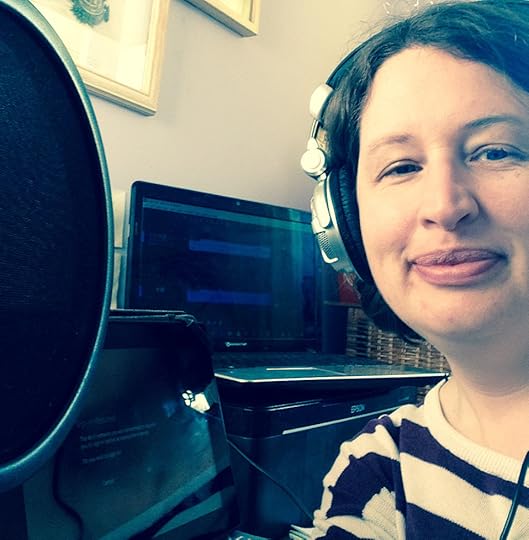
It really isn’t. I can vouch for this, as I spent today recording a couple of chapters of my first DCI Dani Bevan book for audio. The assembly of the equipment was tricky enough. That took me three whole days. Then there was the consideration of the optimum acoustics in the room where my recording will take place. Following this, I had to familiarise myself with the techniques of the voice artist; because this entire process is very much an art form in itself, for which those performing the job before me have trained long and hard.
In my naivety (or arrogance) I jumped into the project with both feet, no doubt imagining, ‘well, how hard could it possibly be’? The answer is pretty damn hard. You need to deliver 10 to 15mins of text with appropriate projection, energy and intonation and without making a single verbal stumble or hesitation. Of course I made many such mistakes, leading me to return to the start several times. It’s frustrating and not to mention physically uncomfortable (any movements or fidgets are picked up by the mic).
As an ex-teacher I am used to public speaking and reading out loud to an audience. I’ve also done some singing in my time too. But in each of these cases, there is room for imperfection. A wrong word can be ignored and brushed over, these small errors becoming part of the natural ebbs and flows of live performance, even viewed as a clever ‘ad-lib’, perhaps. A recorded narration, however, needs to be completely faultless and slavishly follow the script.
For some reason, I’d never really appreciated this fact before. Actors have to get it absolutely spot on during a take and when the cameras and microphones start recording, believe me, you certainly feel the pressure.
I expect as the project goes on I will get better at it. I hope so, otherwise it’s going to take an extremely long time to finish! I’m trying to put as much life into the reading as possible, varying my accents and speech patterns when necessary. I suppose as the author-narrator I have the advantage of knowing the book inside and out. I appreciate every character’s back story and motivation. Perhaps this will make me a better voice artist in the end.
For now, I remain a novice of the art. One who will never again entertain the thought that voiceovers and narration are an easy way to earn a crust. It certainly is not and knowing that many viewers and listeners imagine it is must make the job doubly tough.


March 8, 2016
#Parenting and work. Why we still haven’t got the balance right.
A blog that seems appropriate to share on National Women’s Day.


Both my children are now back at school after a nasty bug that meant they were at home for pretty much two whole weeks between them. I work from home so this wasn’t a problem, but it certainly got me thinking. For two full-time working parents this sort of situation is nothing short of a nightmare. But in this modern, digital world, surely we must be able to come up with a decent solution to the dilemmas which face working parents?
Providing flexible working hours and allowing men to take time off to raise children as well as women has gone some way to addressing the issue. However, the impact of the recession since 2008, which has resulted in widespread insecurity about jobs, and the stagnation of pay has meant that many families are reluctant to take advantage of these offers. The bread-winner’s career remains sacrosanct. That’s certainly the way…
View original post 378 more words


March 5, 2016
The greatest challenge for Brits, is to say ‘I hate it’.
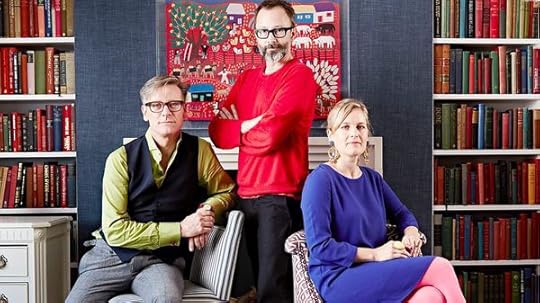
I’m disappointed that this series of The Great Interior Design Challenge has finished its run. The show is a great favourite in our house. We enjoy the variety of the architectural designs the contestants take on and the ingenuity of their end products. But what became glaringly obvious in this second series, was the inability of the homeowners to tell the designers to their face that the plans they had for their own homes were not what they wanted or asked for.
in fact, the ultimate winner of the competition had left a trail of tearful and disappointed clients in her wake. But her ‘daring’ and ‘bold’ designs were hailed as a triumph by the judges. One poor chap was left with a small room painted a dark green that would have depressed the most optimistic of souls. After complaining that he ‘just wouldn’t be able to live with the colour,’ the man gained the huge concession of not having the ceiling painted green too.
You could sense that for many of those giving up rooms in their homes for the competition, the local painter and decorator would be moving in just as soon as the cameras rolled out.
But what fascinated me most, was how difficult the homeowners found it to express their dislike of the proposals set out to them by the designer. The most any of them could say was that ‘they were a little unsure about certain aspects’. These reservations were easily dismissed. Only in the final, did one of the homeowners have the gumption to stop work on her beautiful period flat half way through, declaring forcibly that it wasn’t what she wanted. We were cheering!! Then, of course, that particular designer won. Her bullying disregard for others was oddly viewed as ‘visionary’ and ‘brave’. Well, it was easy to be brave, she didn’t have to live with the end results.
So we learnt a few interesting things from the series. Firstly, and most importantly, we learnt to never employ the services of an interior designer. Most people are perfectly clear about what they want in their own homes. A trip to B&Q would do the job just as well.
Secondly, we’ve learnt that it’s important not to be too British when telling someone that you don’t like what they are proposing. Understating matters clearly isn’t enough. It’s why many of us fall prey to doorstep sellers and cold callers. We don’t want to offend or upset people. Well, forget that. Otherwise you’ll end up living in a dark green box, or with an extremely hefty redecoration bill.


March 2, 2016
Can you have a great mystery novel without ‘blood’ and ‘guts’?
This was my very first blog! Although ‘cozy mysteries’ are now a firmly established genre in crime fiction, I believe this question is still an important one.

I certainly think so, although recently I’ve found it more difficult to find them. The real masters of the genre have never used graphic violence to ‘spice up’ their plots. Agatha Christie, P.D James, Ruth Rendell (writing also as Barbara Vine), Josephine Tey and Susan Hill can create genuine chills through their suspenseful prose, interwoven with just the hint of the worst crimes that mankind (and womankind) are capable of. These great writers avoid stomach churning descriptions of blood and guts but rely instead on very clever storytelling and well observed characterisation. However, now that we expect a certain amount of gore in our T.V dramas and mystery fiction, is it possible to write a top novel in this field without it? Or will we now need to create a whole new genre of fiction for this type of narrative? It’s a large field and I hope there’s room for everyone’s…
View original post 81 more words


February 6, 2016
For all those with a partner who works at the weekend
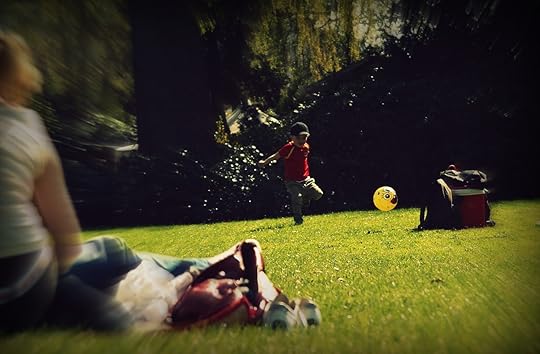
There are plenty of us, although down at the local park on a sunny Saturday morning it might not feel like it’s the case. I see Dads everywhere, giving their wives a lie-in whilst they take the kids out to run off some steam, enjoying precious family time denied them by a busy week at work.
But for those of us who are the primary carer of the children and have a spouse who works one or maybe both days of the weekend, it can be tough. Particularly when the kids are small. My husband works on a Saturday and has done since our daughter was a toddler. I am very fortunate to have my parents living close by and when my son was a baby this help was absolutely essential.
I recall a conversation I had with a fellow mum, who had brought up her three children when her husband, a former colleague of myself and my other half, had worked saturdays. She recounted how difficult the children could be on that day, instinctively knowing you were without backup and cut adrift from the usual structures provided by the working and school week. Their house was often in turmoil – toys and mess everywhere – when her husband finally returned in the evening, exhausted himself.
Having spent so long in the economic recession we have learnt to accept the hardships of our working lives, grateful for employment and emphasising the positives in our jobs over the negatives. But if there was anything I could change about our lives it would be this aspect. Not so much for my benefit anymore but for my husband’s. Weekends are the time when Dads get to interact with their family at a more leisurely rate. With 12 hours lost, the homework and chores tend to dominate instead.
As the children get older, it gets easier. No longer does that Saturday seem to stretch out endlessly ahead of you from the moment when you’re first woken up by a lively offspring at the crack of dawn. There are still issues, however. When both of the children are invited to a party or play date you are immediately unsure of how to get them to the right place at the right time single handed. I call upon my parents for help, but I do wonder how others cope.
The reason that I was prompted to write about the subject on this Saturday morning, is that I was reminded of one of the positive legacies of my solo starts to the weekend. Ever since my daughter was tiny, we have always embarked on some kind of creative project to begin the day. This tradition appears to have embedded itself into the culture of our Saturday, long after the requirement to fill an interminable day has dissipated.
Whether it is completing a Lego set or painting a picture, Saturday a.m. is the time we do it. The habit has been firmly instilled. I think this is a lovely tradition but entirely unintentional!
During every weekend now, I do spare a thought for other families in the same boat. Without a doubt it’s hard, but a necessity and one out of which some unexpectedly pleasant habits can grow.


February 4, 2016
Is there nothing sacred for #writers?

I’ve written nine novels so far, and in the search for new plotlines, I’ve not yet really struggled. I seek inspiration from things that happen in the news, or situations that I’ve seen other people caught up in. In addition to this, I have been known to weave some of my own life experiences into my novels too, although usually much altered and significantly exaggerated.
As I continue to produce more work, I do delve into my own personal history more frequently. Although, I am acutely aware that I must be careful not to upset anyone with my storylines. It wouldn’t do to dredge up too many painful instances from the past.
But to a certain extent, that is what writers do, isn’t it? They use their own observations to create narratives, tweaking it here and there for dramatic effect. At some point, a friend or relative is undoubtedly going…
View original post 351 more words


January 30, 2016
How I used my book titles to create a strong author brand

I write two separate series of detective, mystery novels. When I set out to pen the second series, featuring my new main character; Scottish policewoman DCI Dani Bevan, I wanted all the titles of the books to share a common feature.
This decision wasn’t pre-planned. When I make a choice about my next title it is usually quite early on in the planning process. The title helps me to formulate and develop the storyline. I need to have it in my head as I write. With the Dani Bevan books, I knew that the first instalment was going to be called ‘Against A Dark Sky’ because I wanted to create the image of a mountain set against a dark, stormy background in the reader’s imagination. The plot revolves around a suspicious death which takes place on Ben Lomond, when the weather turns bad without warning during a hiking expedition.
Once…
View original post 304 more words


January 26, 2016
How the blurb is no longer enough
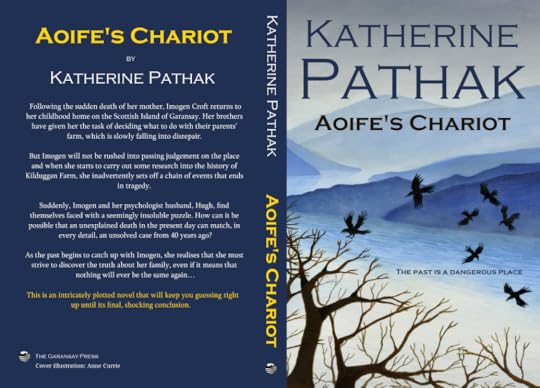
As my children get older and develop their own tastes and interests, it is fascinating to see how the younger generation like to access their entertainment. It is useful to me as a publisher and author to take note of these changes in viewing and reading habits.
What I have garnered is that consumers are no longer satisfied with a brief written description of a book, app or product to base their purchase upon. My son will expect to view a short video before he downloads an app, even if it’s free. The same now goes for books too.
Not only do we need to provide an extract from the novel, so readers can tell if the writing style is acceptable to them, it is also useful to produce a book trailer, which integrates a description of the themes and plot of the novel along with some kind of visual and audio stimulus. I have done this with all twelve of my books. With modern technology it is a fun and fairly straightforward process. But it is necessary for modern media platforms.
We are becoming more choosy about how we spend our money. So readers need as much information as possible to make a decision. The blurb is still crucially important but on its own it may no longer be quite enough.


January 12, 2016
New year, new genre…
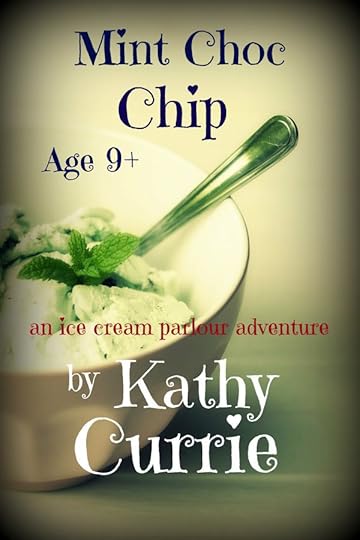
This time last year I had just published the first book in a new series. It was Against A Dark Sky, the first instalment of the Dani Bevan detective Series. There are now five more books and the series has been very successful. But the decision to switch characters, series or genre is not an easy one to make for an author. When we write a book it requires an enormous commitment of time and mental energy.
There is always a concern that you will be neglecting your regular characters and faithful readers by starting on something different. But there is something about the start of a new year that inspires us to embark on fresh ventures. The dawning of 2016 has proved to be no different. I completed the book I was writing for my ten year old daughter this week. It was the first time I’d undertaken a writing project in the children’s fiction genre. But my main aim was to produce a book for Shona, whilst she still wanted me too.
The writing experience was a challenge but it was a bonus to be able to use a more lighthearted tone and be freer with using colourful, expansive descriptions. This is a technique which is more acceptable now in YA than in adult fiction. Other than these aspects, I found the process surprisingly similar to writing one of my adult crime books. Mint Choc Chip is also a mystery story, like my adult novels, so the plotting was a familiar affair. I also endeavoured to weave in some historical references which are a feature of my Imogen and Hugh Croft Mysteries Series.
Ultimately, I’m not sure if I will return to the children’s fiction genre. I have the new DCI Bevan novel plotted and am looking forward to continuing with that. But I’m very glad I’ve stepped outside my comfort zone. Hopefully, my daughter will appreciate it. The process has challenged my writing in a new way. It helps to keep an author’s approach fresh to try something they’ve not done before. As long as it doesn’t distract us from the day job of course!