Katherine Pathak's Blog, page 4
November 30, 2016
Writing your Christmas cards is an art

Whilst writing my Christmas cards this week, it suddenly struck me that there aren’t many opportunities these days for corresponding with another person by hand.
I rarely write letters any longer. As a teacher, I recall the days when our reports for students were penned by hand. I was quite disappointed when word processed programmes replaced pen and ink. I’ve always felt there was something infinitely more personal in the hand written comment.
Now, I write my books using Word and only rely upon notebooks for plotting and character profiles. So writing a card feels like something of a novelty.
Like most festive traditions, the Christmas card was first commercially produced in 1843, during the Victorian era. The custom has been flourishing ever since. In fact, I’m quite amazed it hasn’t been replaced by a digital alternative. The purchasing of the stamps, ensuring up to date addresses and depositing the…
View original post 119 more words



November 21, 2016
Leaving books on the underground? Nice sentiment, bad idea.
 We have commemorated a number of significant and poignant events over the past few weeks, but one anniversary has slipped past un-recorded by the media. On the 18th November 1987, a horrific fire broke out in King’s Cross Underground station, London. Tragically, 31 people were killed and dozens seriously injured. The event led to several crucial changes in the law relating to tube travel.
The fire itself had begun on a wooden escalator leading out of the station and up to the ticket barriers and concourse above. Although smoking had been banned on the London Underground since 1984, it was believed that many commuters still lit up on the escalators in preparation for leaving the station. A discarded butt from one of these cigarettes was thought to have ignited the layers of litter which had built up underneath the escalator, along with the wooden structure itself. The ensuing inferno engulfed the lower levels of the station and was excaberbated by the jets of air created by trains exiting the platforms to escape the blaze.
It was a terrible event and one that those of us around to have heard the details have never forgotten. My Dad commuted on the underground during those years as I was to do a decade later. The King’s Cross fire was one of those tragic events that bring forward progressive safety-legislation. Wooden escalators were banned from stations and anti-smoking rules more rigorously enforced. It also became entirely socially unacceptable to litter on the tube. During my years travelling the Central Line to work, in the decades that followed, the tube felt a much cleaner, safer and more modern place to be.
A new fad, encouraged by actress Emma Watson, who admitted to ‘secretly’ leaving books with messages in them on the underground for people to find, has led many fans to leave books on trains in various parts of the world – from China to America. The trend deeply worries me.
Yes, books are special, more than just sheets of paper with ink printed on them. But in material reality, that’s all they are. In fact, more flammable than an empty crisp packet or chocolate wrapper. Yet to discard one of those on an underground train would be completely unacceptable.
I can see Emma Watson’s point, but I think it’s ill-conceived. Please donate your books to charity shops and libraries, or your local school. But to begin to witness dog-eared paperbacks on benches in stations and on the padded seats of trains will only prove to be a symbol to people that it’s now okay to leave your discarded goods behind you when you leave a public place. It isn’t. We’ve moved beyond that stage as we became more socially responsible and aware of the results of our actions.
Yes, I love books. I’m an author and a publisher. But I love progress and the preservation of human life more. Most commuters now read novels and newspapers through their phones and iPads. This is progress. It means less litter on our public transport system and the wider dissemination of literacy to the masseses. Emma Watson’s idea is sweet, but it’s misguided and out of step with the ways that literacy will be promoted in future.
So if you’re tempted to leave your paperback on the train when you’ve finished it, please don’t. The change in attitude towards litter on the underground was not achieved easily. It took a desperately tragic event to shift popular attitudes. Let’s not allow them to shift back again, over at best, an ill-thought out idea and at worst, a cynical publicity stunt.


October 30, 2016
When a character just won’t let you go.
I’ve been considering this a lot recently. I’ve just completed book 8 in my DCI Dani Bevan series and with each new instalment I have to decide if it will be her last.
So I’m always fascinated when I hear other writers discussing the right time to end a long-running series, particularly a popular one with readers. I was impressed to read recently that despite its incredible success, Sally Wainwright will only pen one further series of Happy Valley. And even then, she won’t be releasing the script for some time, as she wants one of the characters to be older, as it fits with the way she feels the story is going.
Wainwright did much the same with popular ITV drama series Scott and Bailey, which was wound up in its fourth instalment earlier this year. With television production being so risk averse, this is a bold move for a scriptwriter. But Wainwright appears to remain true to the story and to the integrity of her writing.
Watching BBC2’s excellent documentary about the life of novelist Sue Townsend last night on catch-up, highlighted for me a situation that was quite the reverse. It seems that Townsend’s most popular character, Adrian Mole, whose Diary of 1980, gave the writer her first real break, proved reluctant to let his creator go.
After The Diary of Adrian Mole, Aged 13 3/4 came its follow-up, The Growing Pains of Adrian Mole. What I hadn’t realised was that Townsend had written a number of later books exploring Adrian’s life. She commented in interviews that every few years Mole’s voice would begin to speak to her again and she knew he had more to say to the world. This would trigger a new book.
I found this concept intriguing and also recognisable. Sometimes your characters do feel as if they have more to share. A few months after completing a book, you will hear that inner voice nagging at you once again. A new story will inevitably follow.
I wondered how many other authors experienced a similar phenomenon. I make no secret of believing that literary characters take on a life of their own and almost appear to ‘write themselves’ at certain stages of the novel production process.
Sue Townsend’s extraordinary life had many fascinating aspects to interest both writers and readers alike. It turned out that Townsend had witnessed a notorious murder when she was only 8 years old. She claimed this had forced her to ‘turn in on herself’ and escape into a world of fiction. Townsend suggested that many authors had been driven to pursue an active inner life because of a similar trauma in their lives. I wonder if that’s true.
I think the undisputed success of serialised novels indicates that very often for a reader and a writer, a character or set of characters refuses to let us go.
When should we finally say goodbye? There are no easy answers. In Sue Townsend’s case, she clearly never did.


October 23, 2016
Meet the Team
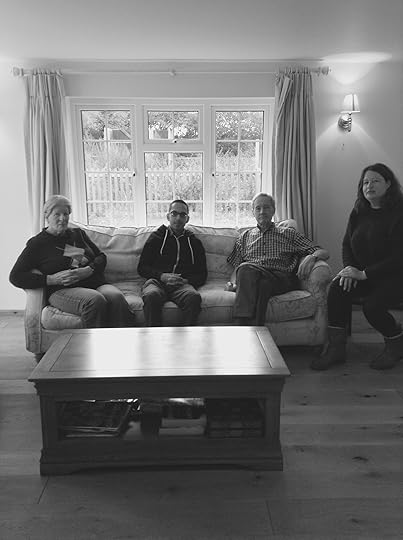
The Garansay Press has been in operation for just over three years now. We have just published our sixteenth book. So, I thought it was about time to properly introduce the team.
I am Katherine Pathak (far right of picture). I’m the author and head of media and marketing. I write the books, the blogs and the majority of the tweets. If you are communicating with any branch of The Garansay Press, you are likely to be interacting with me. My academic and work mini biog:
University of York, Institute of Education, University of London. Purchasing Assistant, Good Book Guide. Teaching History in several London schools. Full-time author.
Robert Currie (second left). Bob is the finance director at The Garansay Press. He is also a member of the editorial team. Now retired, he still finds himself book-keeping for several organisations and start-ups. Bob is our Mr ‘details’. Also my dad. Mini biog:
RBS manager and securities consultant (retired) Company Secretary (various)
Rakesh Pathak (centre of picture) Rakesh is one of our editorial team. A busy man in his other roles, his conscientious copy editing is invaluable in getting the best out of the final product. Mini biog:
University of Oxford, Institute of Education, University of London. Head of History. Author of IB textbook.
Susan Currie (left of picture) is our resident crime fan and aficionado of the genre. Sue is our most efficient copy editor and is expert at making sure my prose style remains tight and plot focussed. Mini biog:
Dean College of Nursing, Edinburgh. RBS (retired)
To find out more about The Garansay Press and our publications please follow us on Twitter @GaransayPress and like our Facebook pages: Facebook.com/GaransayPress Facebook.com/Katherine.Pathak


October 11, 2016
Does second born always mean second place?
 We enjoy a bit of quizzing in our house. Monday evenings are a favourite, with University Challenge on BBC2 followed by Only Connect. It remains unspoken, but my husband and I enjoy some friendly rivalry during these shows, privately noting which one of us has faired the best after each episode.
My husband tends to dominate when it comes to straightforward general knowledge test, University Challenge, whereas I inch ahead with my contributions during lateral thinking and wordy puzzler, Only Connect. Recognising this little battle we take part in each week made me consider the way we approach competition in our household. I don’t believe we are hugely competitive as a family, largely because we aren’t particularly interested in competitive sport. But when it comes to brain games, it’s a different matter.
Which made me consider my own childhood. I am a younger child, the second of two daughters. My older sister was very gifted at Maths and Science from a young age. I was more of a dreamer, happy to be out on my bike than indoors reading a book. So when it came to family board games and quizzing, I simply got used to losing. I would lose at Monopoly, Whist and Scrabble on a regular basis.
I don’t recall it bothering me much. I learnt to enjoy the process of the game rather than the outcome. I suppose as we got older and the age gap becomes less of an issue, I must have started to win more, but I don’t recall it. By then, I wouldn’t much have cared. I’d lost my urge to be competitive.
I can see the same scenario emerging with my own children. My son is nearly three years younger than my daughter and I have witnessed his frustration on many occasions when he struggles to compete at Upwords or Pictionary. There are times when it’s quite heartbreaking to witness your second or third born struggle to achieve the same standard as their sibling – consigned to catch-up simply because of their position on the development scale. But does this natural pecking order have to continue into later life?
Of course not. I would tentatively say now that my sister and I are pretty evenly matched in the general knowledge stakes. Even my son is starting to creep up on his big sister in terms of drawing and word skills. But a certain legacy remains. My husband expects to win. He is an older sibling with a three and a half year gap between him and his younger brother. According to my mother-in-law, he was a terrible loser as a child.
By contrast, I’m still quite happy to lose. If we are playing a family game (usually bowling, at which I’m patchy at best), I’m comfortable to let the kids win, giving them extra goes if necessary. But my husband won’t drop his standard to let the kids get ahead. I think this is good. Children have to learn to lose and not have everything rigged in their favour, otherwise life will come as a terrible shock to them.
But I’m fascinated by the legacy created by a childhood of coming last and whether it is simply inevitable for a younger sibling during a large part of their youth. I think this inevitable inequality is a very good reason for siblings to adopt different interests and specialisms. For my sister it was Maths and tech and for me it has been History and English. This helps reduce comparison. But when it comes down to pure competitive spirit, I believe mine is muted and that this may very well be a younger child syndrome.
Whether this holds us back in life, I’m really not sure. Sometimes slow and steady wins the race. Those sitting back and waiting to catch up with their siblings/peers may well develop other crucial skills in the meantime, such as greater patience and humility. Although, no one likes to keep losing so it’s worth finding an area you can excel at, given time and practice. For now, we will keep on quizzing and soon enough our children will be beating us hands down. So let’s just hope we can take it with good grace.


September 27, 2016
Bookish frustrations: The Book Snob
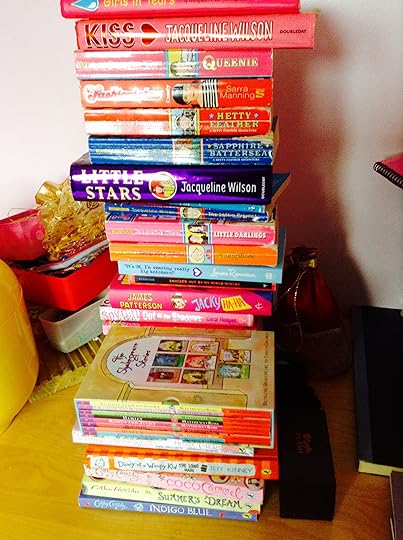 As an author of crime thrillers and psychological mysteries I am no stranger to the book snob. Certainly in the traditional publishing world, there is a great deal of snobbery directed at the relative value of the crime genre. It is undoubtedly popular, but is it proper literature?
Of course, I would say yes. Some of our most talented writers have produced work in this genre, from Stephen King to Susan Hill. And I really think that snobbery around crime is beginning to diminish, although I believe it still lingers in the genre of romance. In fact, if you are looking for modern takes on human relationships and the human psyche, they can be found in abundance in the very best of these books.
After a debate I had on Twitter last evening, when a Mumsnet thread had unleashed a stream of vitriol against Orchard Books’ Rainbow Magic series, I was reminded of the dangers that book snobs can pose to the promotion of literacy. The Rainbow Magic series are fairy stories, fairly generic, very girly but highly popular first independent reads for 6-8 year olds. For a couple of years, my daughter devoured them. So imagine my surprise to find perfectly reputable educational sites calling for this series to become ‘land fill’.
Firstly, I’m uncomfortable with any rallying call for the destruction of books. To me, books are a symbol of freedom of expression and speech. Civilised, open nations, do not censor or destroy books, let alone perfectly harmless and inoffensive ones. The whole notion has unpalatable historical implications. Secondly, I cannot see anything wrong with the Daisy Meadows series. Yes, it’s repetitive, no they won’t be winning any literary prizes, but strangely enough, thousands of children adore the stories and the books have introduced them to a love of reading. Should we really impose our adult constructs of what is proper, worthwhile reading onto our children? Certainly not.
If my son wants to read the instructions to the washing machine I’ll be happy. If he tore his way through the Rainbow Magic series I’d be turning somersaults in the street. When a child develops a love of independent reading, they’ll whip through anything you give them. I know plenty of highly educated, intelligent friends who read all of their Mum/Gran’s Mills and Boon novels as an early reader. I read my Gran’s Georgette Heyers and Jean Plaidy’s. Then we move onto other stuff, it is part and parcel of the great process of becoming a literate adult, every stage has its own joys.
These days, book snobs tend to reside only in the editorial departments of ‘literary’ magazines and on the sofas of the more ‘selective’ book clubs; those who chose their titles by what they think they should be reading rather than what they actually want to.
Let’s not impose this snobbery on our children, because they don’t possess it until we foist it upon them. Kids read what they like, what they enjoy. To take away that freedom is a terrible act. Of course books need to be appropriate for the age range, that goes without saying, but children should be encouraged to read a broad range of books – fiction and non fiction. Just like us adults. Because I read crime and mystery, it doesn’t mean I can’t also read history books or the latest Booker Prize winner. Variety is the spice of life and the key to creating lifelong readers.
Please don’t encourage children to look down their noses at certain types of book, or make them feel inadequate for choosing to read something they enjoy rather than something we feel is more substantial or worthy. You’ll just put them off. Popular doesn’t always mean inferior. The classics are great and have their place, but the language can often be very antiquated and inaccessible to early readers. They’ll get there in their own time. Until then, let’s simply enjoy the wonderful variety of books and quality of authors we’ve got out there, because it’s truly tremendous. And we can only hope that the Book Snob will eventually become a dying breed.


September 21, 2016
Does your book need to fit into a defined genre to succeed?
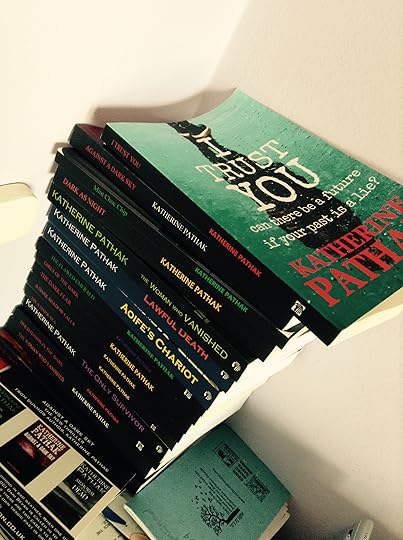 I’m throwing this out as a question, as I’m not sure of the answer yet myself. As all those who’ve published on Amazon or Smashwords or Apple ibooks will tell you, the category in which your book is placed is central to whether or not your target readership will be able to discover it. So, it’s very important to get it right. Having said that, it is possible to switch genres at any time, so it’s worth keeping a close eye on your sales to see if your book is shelved in the correct place.
My novels are mystery thrillers, but like all decent pieces of fiction, there is plenty other stuff going on in them too, like History, psychology, family drama and the odd dash of romance. My first novel, Aoife’s Chariot, does very well in the Scottish fiction section and is regularly in the top 100 kindle bestsellers…
View original post 207 more words


September 14, 2016
Is it really possible to own a concept?
 The news this week that Love Productions have accepted a lucrative offer from Channel 4 and will move The Great British Bake Off away from its home at the BBC has raised a number of questions for us creatives.
Clearly, the production company owns the intellectual property to the format of the show. Yet the announcement that presenters Mel and Sue will not be making the move along with it introduces some thorny issues. How much do the established presenting team bring to the table (pardon the pun) when considering the value of the concept?
We have already been required to make a judgment on this very question in relation to the massively popular car show Top Gear. The format belonged to the BBC, but when Clarkson, May and Hammond left en masse, what worth did the format still have? The latest series without them indicated that viewers remain undecided. I find this an interesting comparison, as there is far more to the concept of Top Gear (in my opinion) than there is to that of the Bake Off.
Can you really own the rights to the concept of a baking competition? Surely not. They’ve been taking place in tents on village greens up and down the country for hundreds of years. There would be nothing stopping the BBC from launching another baking programme along similar lines with the same presenters. As Jeremy Clarkson said after his dismissal from Top Gear last year, he would simply make another car show, there were plenty about.
But is it really as simple as that? The Bake Off is a huge and recognisable brand. From the music to the showstopper finale, the format will be tough to replicate well, even with Mel and Sue on board. If reports are correct, the concept of the technical challenge and the signature dish are worth up to £25m a year for a prospective broadcaster. Their pulling power for audiences and users of social media are perceived as so strong.
But I am fascinated by the idea that a concept can be owned in such a decisive way. As a novelist and indie publisher, I have always understood that ideas cannot be copyrighted. To prove plagiarism in the fiction genre, to steal a plot line or scenario wouldn’t be enough. Another writer would have to have lifted chunks of text word-for-word in order for you to claim a breach of your copyright. Fair or not, this is the way it works in books.
Perhaps in tv terms it is easier to protect your ideas. I don’t know enough about the intellectual property law to be able to say. All I know is that a book without its best characters loses a significant part of its appeal, even if the setting and storyline remain the same. I suspect that the Bake Off that so many of us have adored since its launch in 2010 will suffer a similar fate.


September 11, 2016
Do we dare to disappoint?
Exactly two years ago I was debating this question. Thank goodness I decided to write the Dani Bevan’s!!
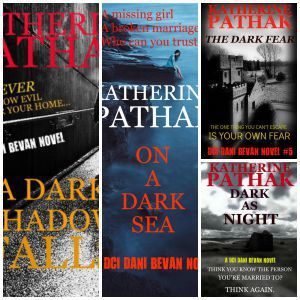
I’ve just finished writing my fourth novel. It is currently in the editing phase and we are about to begin designing the dust jacket. It’s a satisfying and exciting time for a writer. To see the final product take shape and to hear people’s feedback is daunting, but at the same time exhilarating.
My books are part of a series. The same characters appear in all of the stories, although each novel will introduce a few more. I enjoy developing the personalities of my key protagonists and showing how their relationships have changed over time. However, as I was finishing this latest instalment, I decided that for my next project it might be the right moment to depart from the pattern. I felt that a stand alone novel would be challenging for me as a writer and provide an interesting diversion, so I set about plotting this new book and…
View original post 341 more words


August 22, 2016
What should readers expect from a psychological thriller?
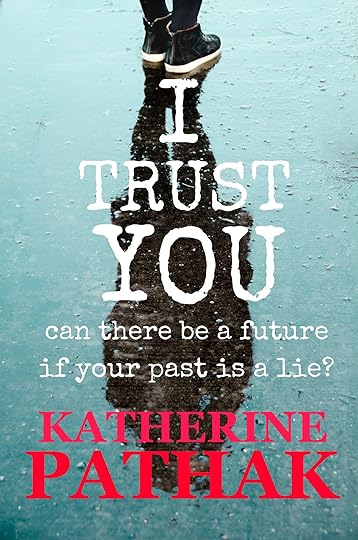
I’ve always been a fan of the psychological thriller genre. These are the titles I am drawn to when scanning through the shelves of bookshops or searching for books on Amazon. My favourite authors include Nicci French and Minette Walters, with current writers like Alex Marwood and Paula Hawkins providing my more recent reads.
So what makes a thriller ‘psychological’ in nature? I write mystery novels and police procedurals, but earlier this year, I added a psychological standalone thriller to my back catalogue. My sense of what placed ‘I Trust You’ apart from my other books was firstly, that the book had a predominantly domestic setting. Like Linwood Barclay’s early novels, the psychological thriller should explore events and scenarios that are immediately recognisable to the reader.
Many psychological thrillers begin with a missing person or a disintegrating relationship. The interplay between the characters is often slowly revealed, the body count and blood and guts left to a minimum. The tension is built instead through gradually unfolded secrets from the past – clues deeply woven into the development of character and situation.
Families are often the focal point of the psychological thriller. This is certainly the case in my latest novel. Dark secrets that span generations or suppressed domestic abuse are the archetypal fodder of the genre. But these seasoned topics are never hackneyed when explored by an author who can observe them from fresh angles and weave their domestic themes into original plot lines. Paradoxically for the crime/thriller genre, children tend to play a disproportionate role in the psychological thriller. Perhaps more than any other topic, as readers, we appear to have a fascination with the psychology of the child.
Psychological thrillers need to be character driven. The action may be sparing, so the lead players must be realistically drawn and their fate something we deeply care about. For me, the very best psychological mysteries reveal incisive observations of human nature. In many ways, Agatha Christie was one of the very best authors in this genre, particularly in her Miss Marple and Hercule Poirot series. What the amateur sleuth lacks in specialist knowledge, they more than make up for through their razor sharp psychological insight into what makes people tick.
Ruth Rendell, writing as Barbara Vine, was another master of the genre. Her characters seemed eerily like real people, leaping off the page and taking form in the imagination. I know that some readers avoid the genre of the psychological thriller because they feel these books are full of doom and gloom; the darker side of human nature always seems to prevail. I have some sympathy for this view. However, the best novels in this genre will certainly introduce the reader to the depths of the human condition, but will ultimately offer hope and resolution.
I believe that readers – and writers – of the mystery genre are first and foremost, interested in people. Psychological thrillers fulfill this remit perhaps most comprehensively, which I suspect is why they remain so popular.