Michael May's Blog, page 50
March 3, 2020
Hellbent for Letterbox | The Paleface (1948)

Pax and I break down this Bob Hope brew co-starring Jane Russell as super spy Calamity Jane. Pax also talks about the 1952 sequel, Son of Paleface, while I reconsider Joan Crawford as a contemporary cowgirl in 1930's Montana Moon.


February 26, 2020
The Mark of Zorro (1940)
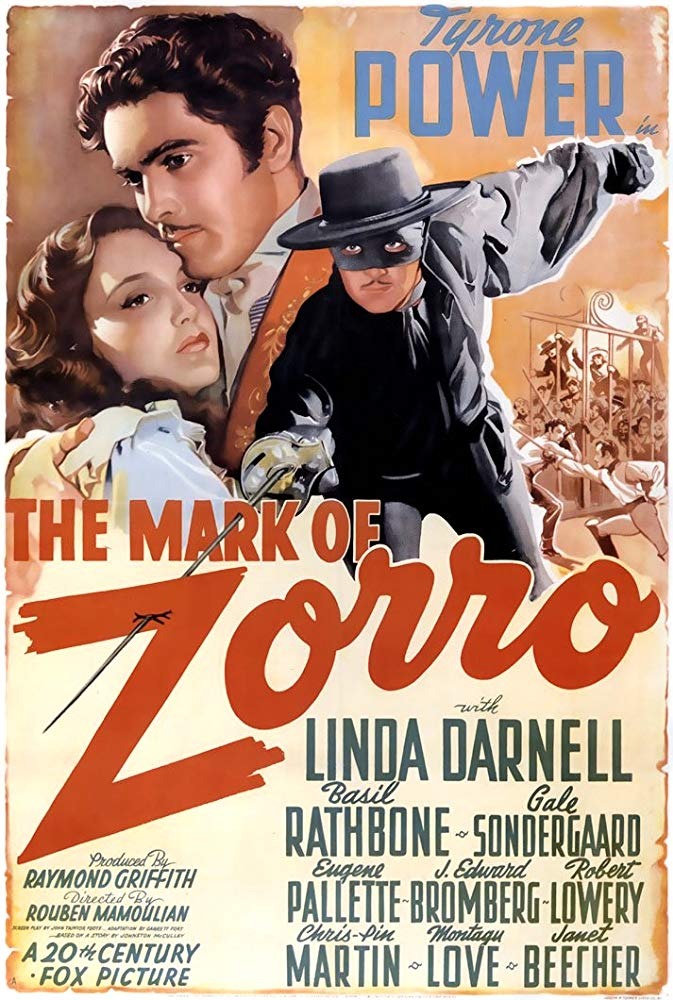
Who's in it?: Tyrone Power (Jesse James, Son of Fury: The Story of Benjamin Blake, The Black Swan), Linda Darnell (Blackbeard the Pirate, Black Spurs) Basil Rathbone (Captain Blood, The Adventures of Robin Hood, Son of Frankenstein, The Adventures of Sherlock Holmes), Eugene Pallette (The Adventures of Robin Hood)
What's it about?: The origin of Zorro
How is it?: Since Johnston McCulley's novel jumps in after Don Diego has already become Zorro, creating an origin story means deviating from the book in big ways.
This version opens in Spain to show Diego's (Power) prowess at swordplay and horsemanship, then has him called back to California by his father. He expects (and dreads) a life of relaxation and comfort instead of the carousing and adventure that he's experienced in Spain. But he quickly learns that his father has been deposed as mayor and replaced with a tyrant whose rule is enforced by a ruthless captain (Rathbone). Diego knows that his parents will be in danger if Diego rebels openly, so he creates the identity of Zorro to put pressure on the new mayor.
It's a cool strategy, actually. While Zorro interferes with the mayor's cash flow, Diego befriends the mayor's wife and plants suggestions that she'd be much happier back in Spain. The plan is to get the mayor to leave voluntarily, but Rathbone's character is a bigger problem than Diego anticipated. He's actually the power behind the mayor and he won't be intimidated so easily.
Adding a romantic complication to the story is the mayor's niece (Darnell).
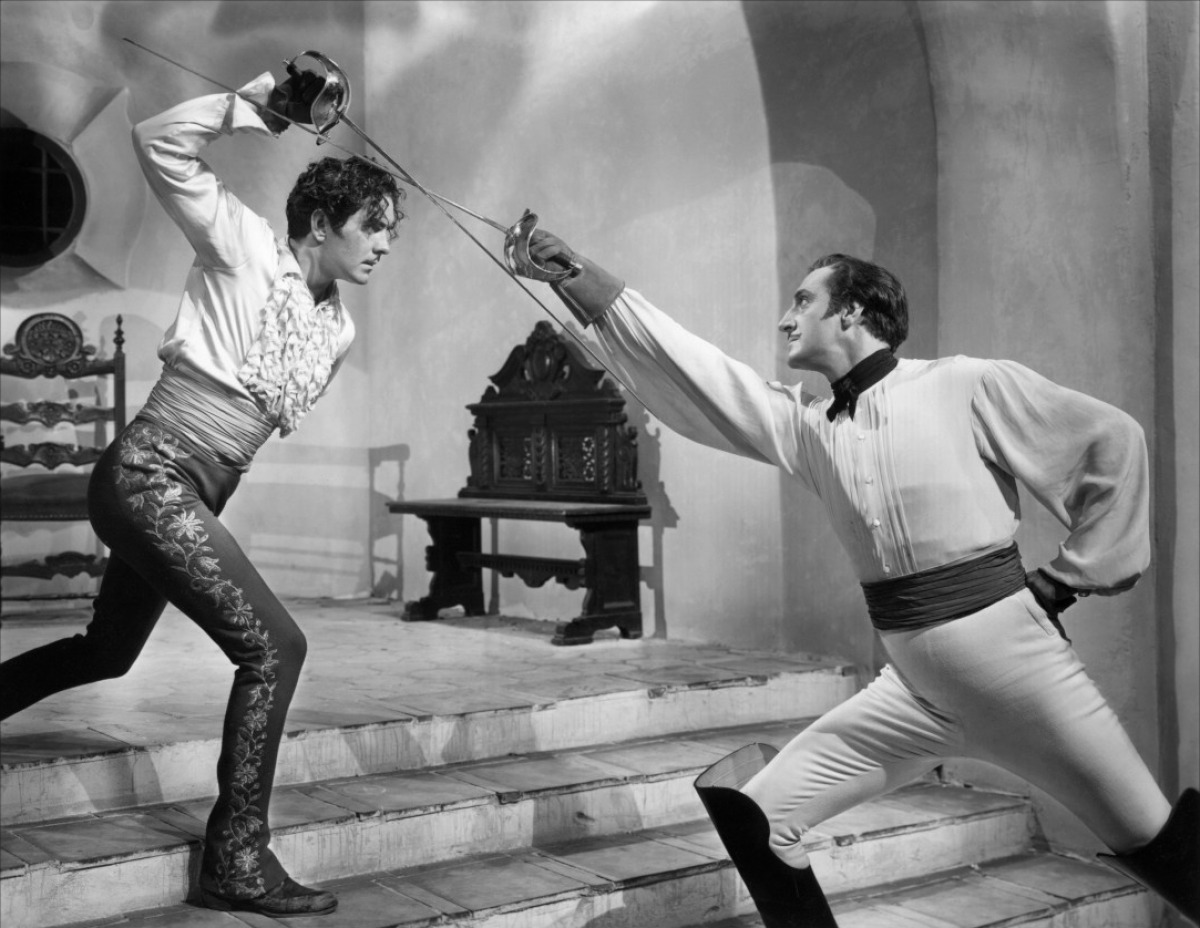
As you may or may not be able to tell from that description, the 1940 Mark of Zorro is very focused on Diego and there's actually very little Zorro in it. When Diego does put on the costume it's exciting, but it kind of reminds me of superhero shows from the '70s where 90% of the show is the secret identity and then you'd get a couple of big scenes with the hero to make it worth watching. Not that the Diego stuff is boring. There's a lot of drama and intrigue and some great character stuff. And the swords fights are extremely good, even when no one in them is wearing black.
There are some nods to Douglas Fairbanks' version that are worth pointing out. Fairbanks' handkerchief tricks are replaced by Power's having a general love for magic and sleight-of-hand, but he actually says, "Have you seen this one?" at least once. And Power's Diego also has Fairbanks' tendency to embed his sword in the ceiling until circumstances demand that he need it again.
Except for those details and a couple of scenes with Diego in costume, though, this is a great swashbuckler, but not a great Zorro film. In other versions, the character of Fray Felipe is a quiet man who nobly endures the oppression of the government, but here he's played with blustery gusto by Eugene Pallette, who's pretty much just redoing his Friar Tuck performance from Adventures of Robin Hood a couple of years before. There's also no deaf and/or mute servant and no Zorro cave under his estate (though there are secret passages in the mayor's house that Diego makes good use of). Really like the movie. Wish it had more Zorro.
Rating: Four out of five rapiers

February 21, 2020
La Forêt (2017)

Who's in it?: A bunch of extremely talented actors whom I didn't know before this.
What's it about?: When a teenage girl goes missing from a small town in France, the investigation uncovers all of the community's secrets. [French language with English subtitles]
How is it?: Wow.
I started watching La Forêt (listed as The Forest on Netflix) just because of its setting. I've always been into stories about small towns and even more so when they're located near huge, dark, old forests.
I'm not as into stories about child abduction or serial killers (I don't necessarily avoid them, but I don't seek them out, either), but it was clear from the first episode that this wasn't just a procedural about the hunt for a particular criminal. As the police and other members of the community start looking for clues, a lot of metaphorical logs get turned over and a lot of metaphorical bugs come pouring out all over everything.
The missing girl is named Jennifer and it quickly comes to light that she had some conflicts with a couple of her friends named Maya and Océane. Those girls are now behaving strangely which especially concerns Maya's mother, a police detective named Virginie who's taken lead on the case. And Virginie becomes even more invested when Maya and Océane also go missing.
The town is full of characters with secrets. Virginie's husband is clearly hiding something as is Océane's father. And one of my favorite characters in the six-episode series is Eve Mendel, a teacher at the girls' school whose past is so mysterious that even she doesn't know what it is. But details from Jennifer's case start triggering memories for Eve.
And then there's the police captain Gaspard Decker, who's new enough in town not to have secrets, but still plenty of drama. He has to decide how much room to give Virginie who isn't objective about the case for obvious reasons. He also has a teenage daughter whom he's concerned about considering all of these disappearances. And is that romantic interest between him and Eve?
All of these relationships and mysteries build to exciting revelations all throughout the series, culminating in a conclusion that ties up all the plot threads while also satisfying emotionally.
Rating: Five out of five priceless pedagogues with perplexing pasts.


February 19, 2020
The Mark of Zorro (1920)

Who's in it?: Douglas Fairbanks (The Three Musketeers, Robin Hood, The Thief of Bagdad, Don Q Son of Zorro, The Black Pirate, The Iron Mask)
What's it about?: When the Spanish governor of California becomes oppressive, a seemingly foppish nobleman puts on a mask to protect the persecuted.
How is it?: I've seen this a few times by now and it's a very faithful adaptation of Johnston McCulley's novel, The Curse of Capistrano, in which Zorro first appeared. There are a couple of big differences though.
The first is Zorro's assistant Bernardo, a character who's barely in the novel. McCulley's version is deaf and mute, but The Mark of Zorro allows him to hear and gives him a lot more to do. He's not a major character, but the sense is that he's a clever and capable helper in Zorro's subterfuge.
Another difference is how Mark of Zorro handles Zorror's secret identity. The novel surprisingly saves the reveal until the very end, so the reader finds out who he is at the same time as everyone else. Mark of Zorro lets viewers in on the deception right away.
That's cool because it means we get to peek at parts of Zorro's life that the book keeps hidden. Like how Zorro comes in and out of his house. Underneath his mansion, he's got a cave with a couple of hidden entrances. There's a shrub covered, horse-sized outer passage, and in the house there's a secret door disguised as a grandfather clock. Everyone knows that Batman was inspired by Zorro, but sometimes we forget how much. It's all based on this Fairbanks movie though, not the novel.
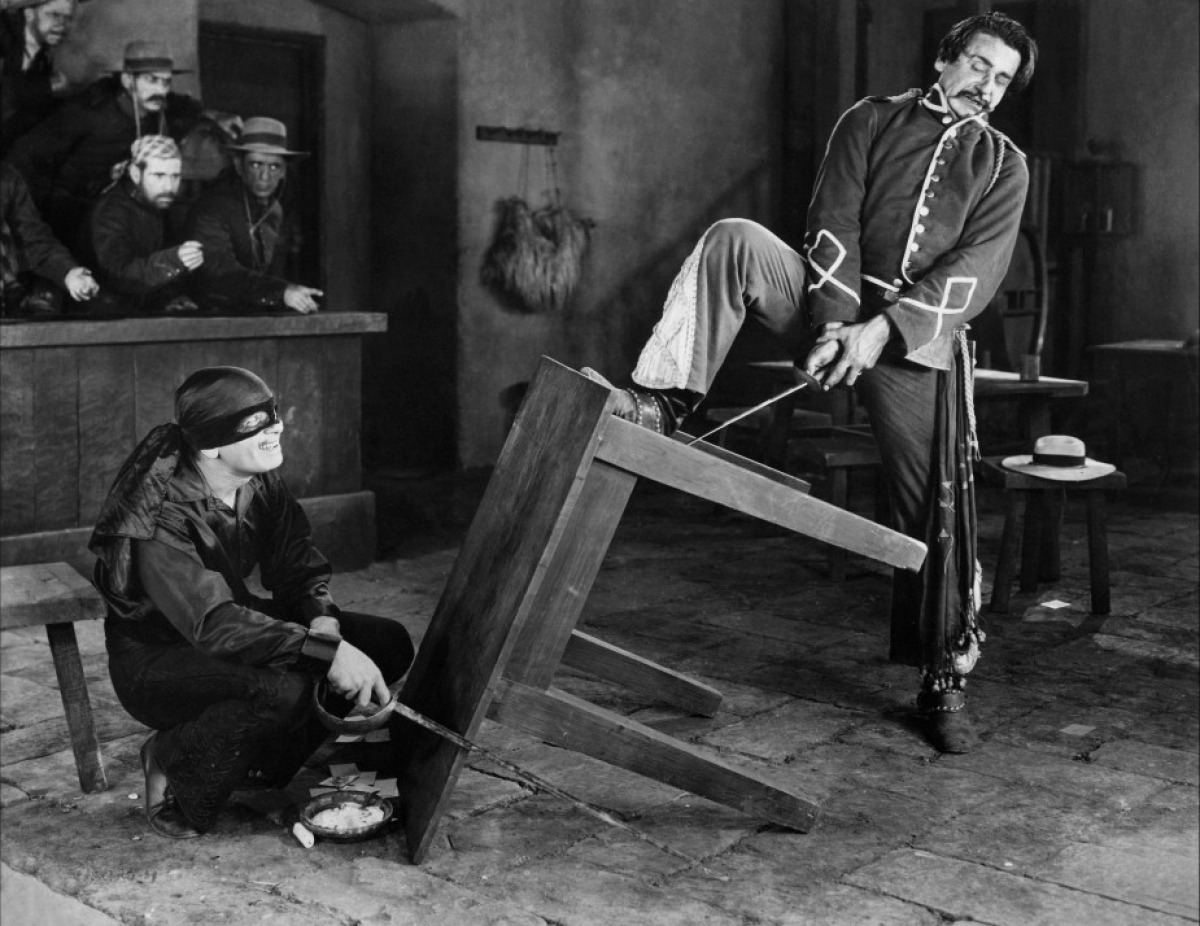
Batman could take some more lessons from Fairbanks' Zorro on playing the idle playboy, though. Fairbanks' performance as Don Diego is brilliant. He always looks exhausted and bored, only perking up when he's irritating someone with an unwanted handkerchief trick. Christopher Reeve rightly gets a lot of praise for creating separate performances when he's playing Superman or Clark Kent, but he wasn't the first to do that. Fairbanks does the same thing as Don Diego and Zorro and I totally see why people are fooled.
That impressive bit of acting is nothing compared to the unbelievable acrobatic work that Fairbanks pulls off in Zorro mode, though. He leaps around and climbs over sets like he's inventing parkour. The final chase between him and the Spanish soldiers is a stunning showcase for Fairbanks athleticism as well as just plain hilarious.
Rating: Five out of five rapiers.

Western Wednesdays
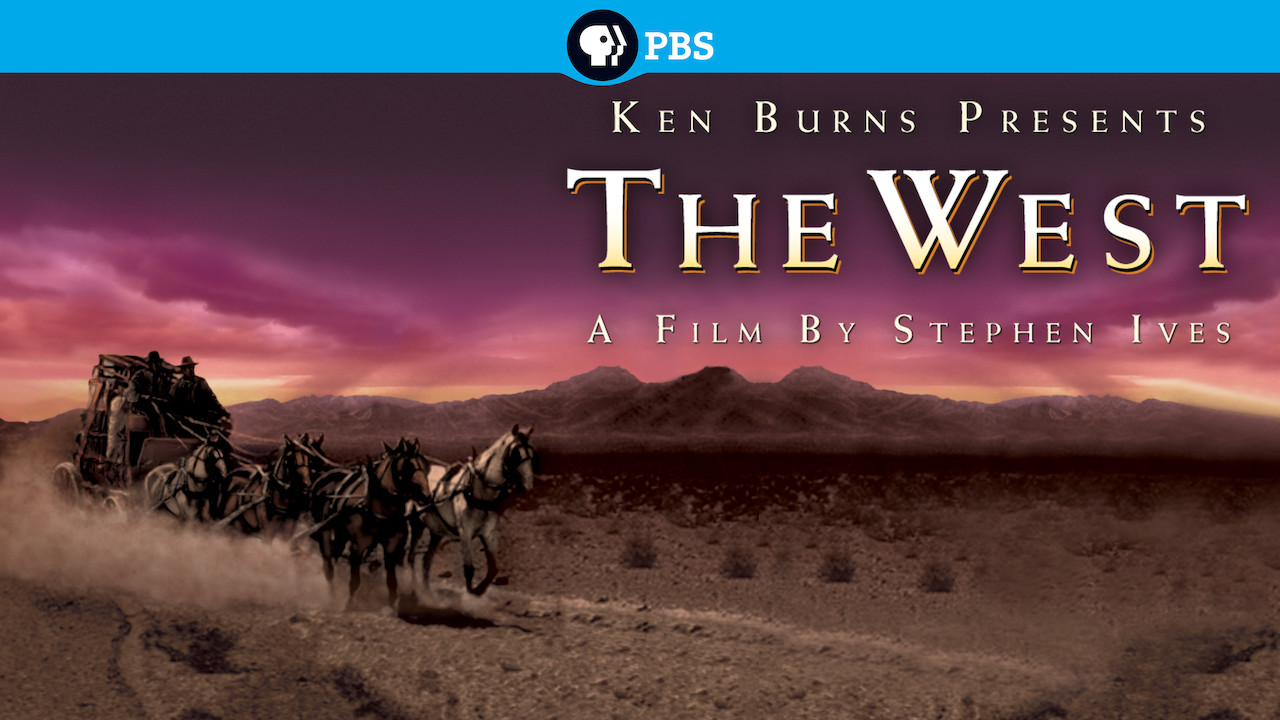
I'm starting a new viewing project that I think I'll keep track of here. It was inspired by Stephen Ives' documentary series The West. I watched the first episode again recently and since the series takes a chronological approach to the history of the American West, I decided that in between episodes I would watch movies that take place during the time periods covered by the previous episode.
So, Episode 1 is titled "The People" and is mostly about the indigenous folk who lived in North America prior to the European invasion. I'm not aware of films that cover that, except perhaps The Daughter of Dawn (1920), which is a silent film with an entirely American Indian cast and features only American Indian characters. I like the movie, but it's not specific about its time period, so while I could use it as a starting point, it could also be a movie that fits later in the timeline.
In talking about European colonizers though, "The People" brings up a couple of periods that have been more definitively adapted by Hollywood. The first is the Spanish takeover of the California coast, in part to secure it against Russian settlers who were coming in from the North. The Spanish expanded from their hold in Mexico to build forts and missions all up and down California. And of course this is the period covered by the Zorro stories. So I'll be starting there. I'm not going to watch every single Zorro movie I can get my hands on, but I'll hit the big ones and that's what Western Wednesday will be about for a while.
The other major European invasion covered in the "The People" is the Lewis and Clark expedition. There aren't as many Lewis and Clark movies as Zorro ones, but I plan to at least watch The Far Horizons (1955) starring Fred MacMurray as Meriwether Lewis, Charlton Heston as William Clark, and Donna Reed as Sacajawea. It'll be a while before I get to that one though. I've got about a dozen Zorro movies to watch first.
After The Far Horizons, I'll watch Episode 2 of The West and see where that leads me next. And that's how this project will go. Please feel free to recommend movies to me and I'll add them to my list. Especially if you know of other Lewis and Clark movies that I should watch.

February 18, 2020
Nerd Lunch | The Final Star Wars Panel

I'd feel more sad about the final Nerd Lunch Star Wars panel if every member on it hadn't become such a valuable part of my life that I don't for a second imagine that this is any kind of parting of the ways.
But it is the last time we'll get together to talk about Star Wars in this format and that's a sad thing. In this episode, we clear away the table with a discussion of our favorite and least favorite contributions of the Disney Star Wars movies, both saga and anthology films, as well as where we expect / hope the series will go from here.

February 17, 2020
Vampyr (1932)
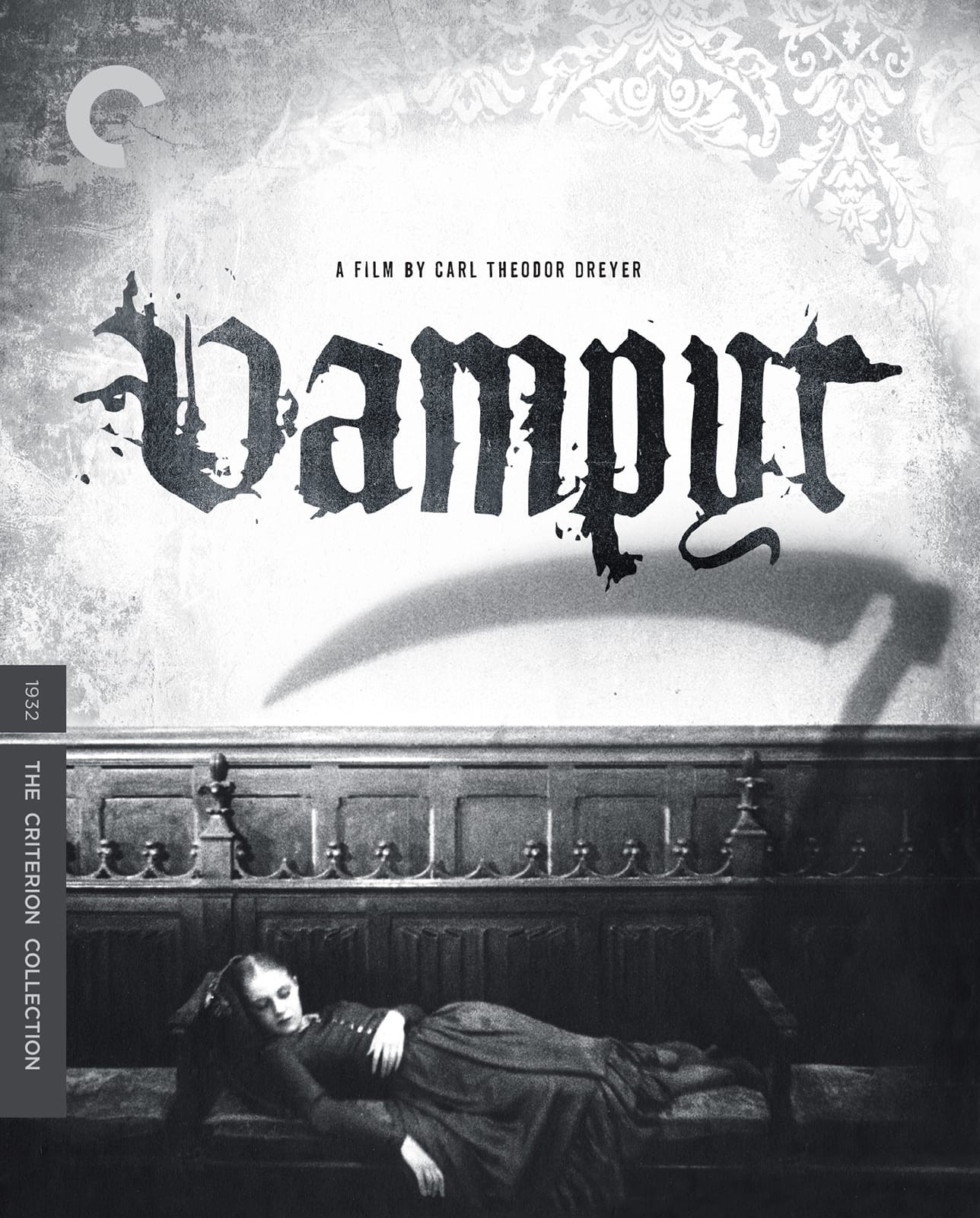
Who's in it?: Mostly amateur actors. The lead actor was also the chief financer of the film, so that's the kind of production this was. Sybille Schmitz (Diary of a Lost Girl) has a small role as one of the vampire's victims.
What's it about?: An amateur monster hunter wanders into a haunted village and is drawn into the battle to save a couple of sisters from a vampire.
How is it?: I've seen the movie three times now and one of those was with Tony Rayns' commentary on the Criterion disc, so I feel like I finally have a pretty good handle on what director Carl Dreyer is trying to do and how well he actually does it.
It's a disconcerting movie the first time. Dreyer's deliberately trying to throw off the audience with his narrative and editing choices. He creates an atmosphere that makes it tough to connect with the film, much less fully understand what's going on. The film says right at the beginning that its main character, Allan Grey, is a guy who wants to believe in the supernatural and goes looking for spooky stuff. Since he's not an objective witness, we in the audience are meant to wonder if what we're seeing is actually happening or if it's all in Grey's head.
For myself, I think the ghosts and vampires have to be real. There are too many scenes that take place when Grey isn't around, although those could be imagined as well if you like the idea that he's making all of this up. Personally, I'm prejudiced against a vampire movie that doesn't actually have any vampires in it, so I prefer to read it as straightforward. Even so, there are parts where Dreyer is too many steps ahead of me and leaving clues that are too subtle for me to pick up even after a couple of viewings. It rewards coming back to, though, and I'm considering buying a copy for myself.
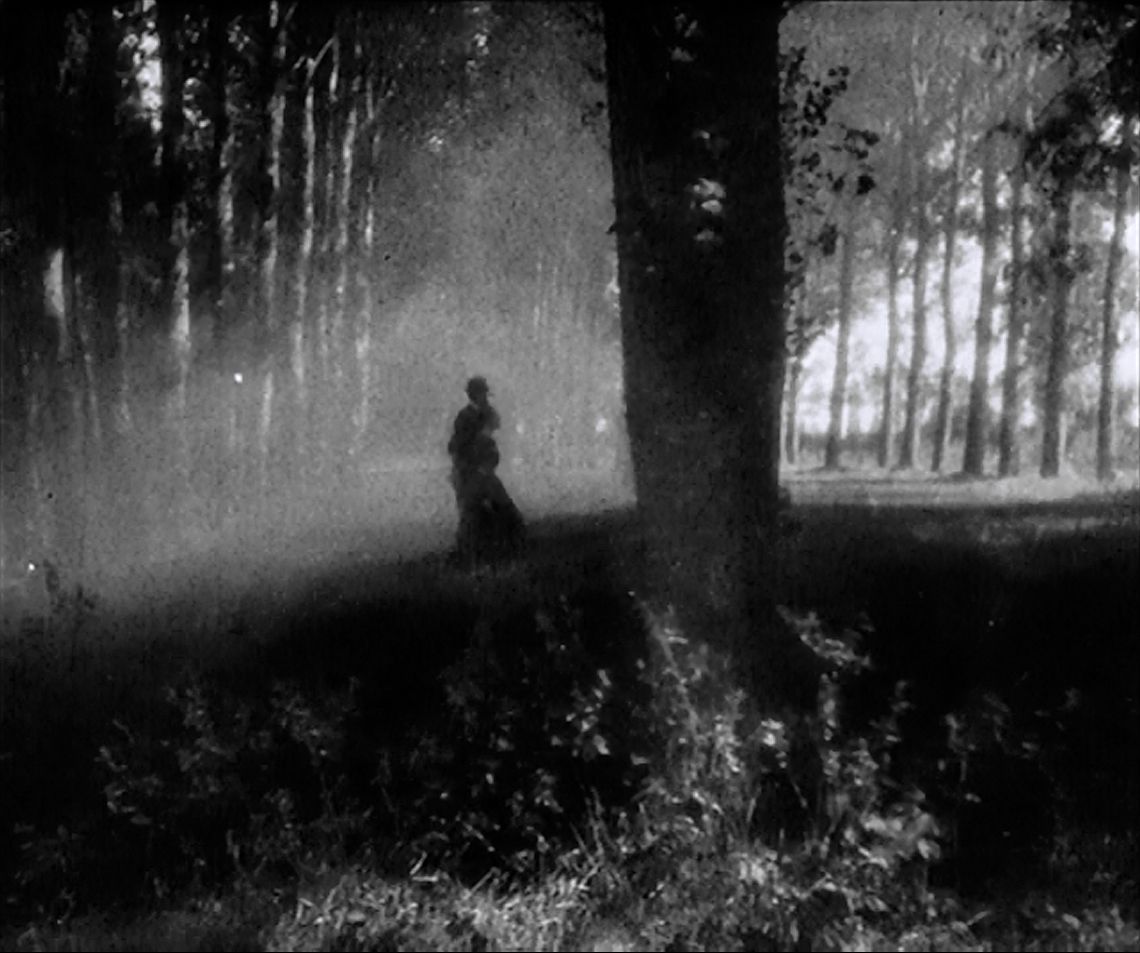
Regardless of your interpretation about the reality of its monsters, Vampyr is really effective at creating a mood and feels ahead of its time. The special effects, especially the use of shadows to depict ghosts, still look unique and feel fresh 90 years later. And I love that the vampire is a woman who looks like William Hartnell's version of Doctor Who. It came out the year after Tod Browning's Dracula, but feels more like low-budget, black-and-white '60s horror like Night Tide, Night of the Living Dead, or especially the also-dreamlike Carnival of Souls. It's innovative and creepy with very little dialogue (its way of managing the very new-at-the-time technology of incorporating sound into films).
Rating: Four out of five Minas (or Gisèles, as the case may be).

February 15, 2020
Thudarr Road | Master of the Stolen Sunsword

Thundarr Road is back, but Thundarr, Ariel, and Ookla have not yet moved on from the Los Angeles area. They're in Beverly Hills, dealing with a wizard named Yando as well as Thundarr's diminished connection to the Sunsword.

FCA Invasion | The Mandalorian

The Nerd Lunch Star Wars panel is back to talk about The Mandalorian, Cara Dune, and the cuteness of The Baby That's the Same Species as Yoda.

February 14, 2020
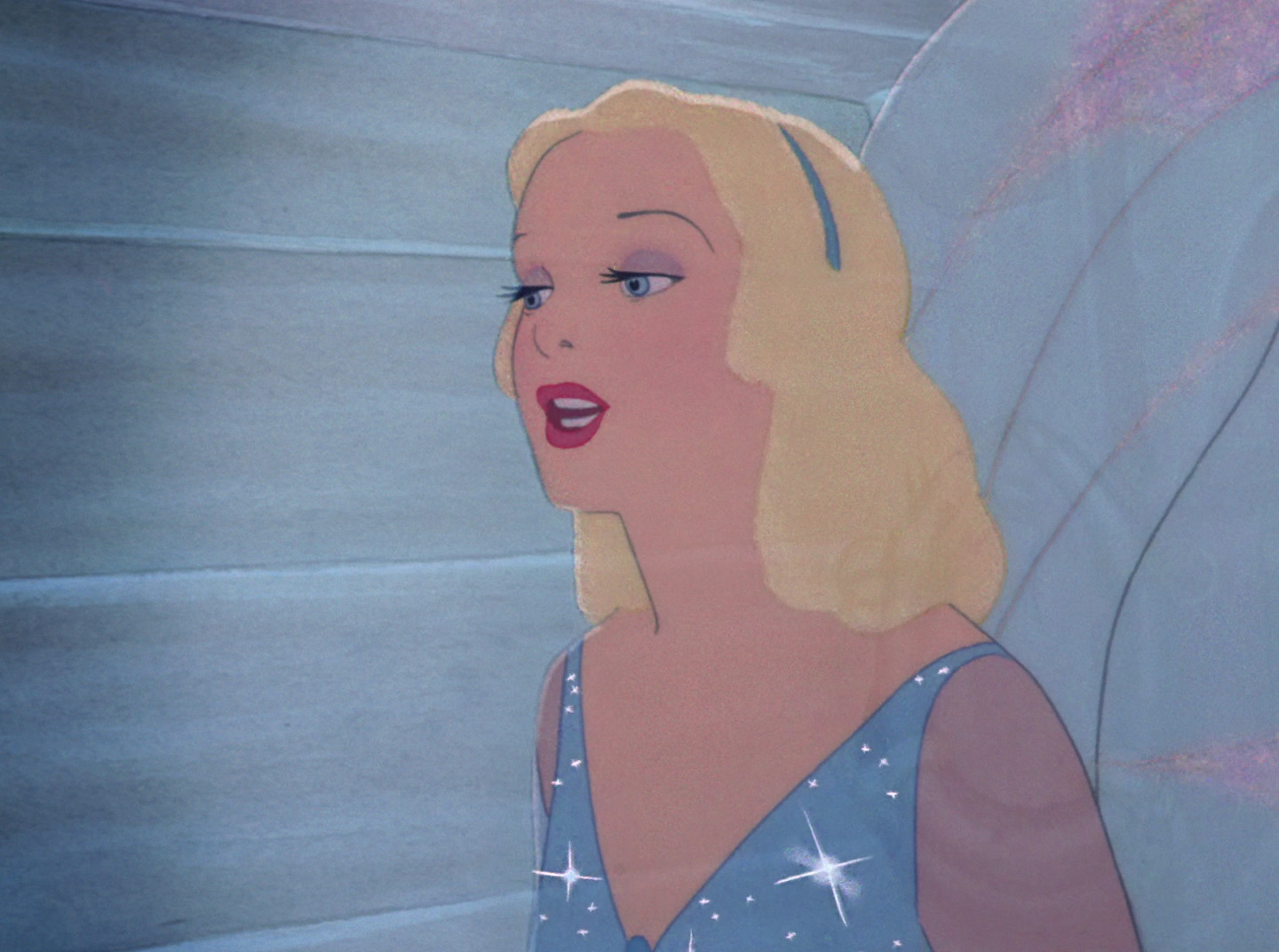
Pinocchio (1940)
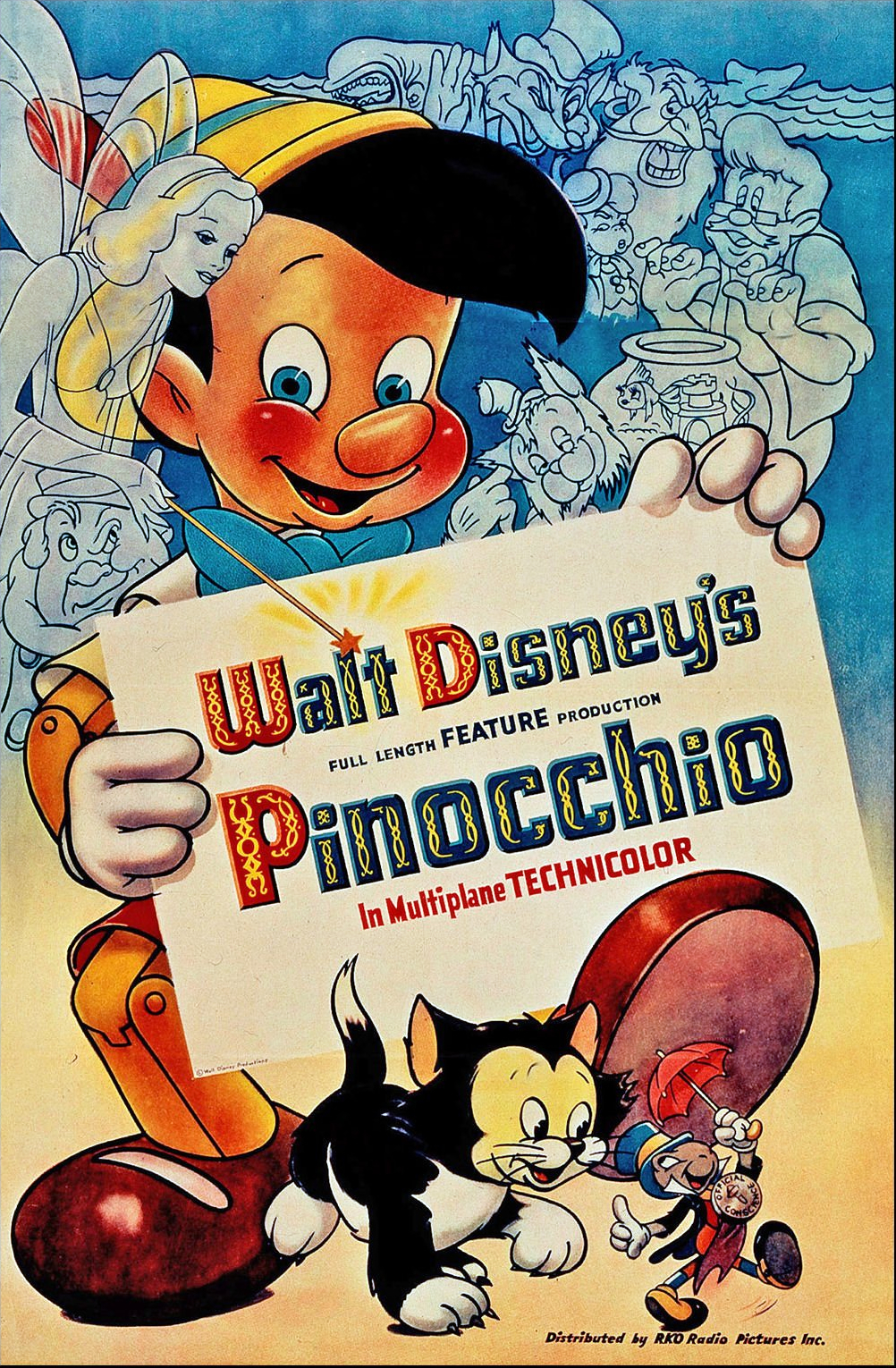
Who's in it?: Mostly voice actors whom I don't know, but Mel Blanc was apparently responsible for the hiccuping of the otherwise silent Gideon the Cat.
What's it about?: A superior adaptation of the classic Carlo Collodi novel.
How is it?: I usually remember Pinocchio as an episodic story about an unlikable kid, but that's every other version ever that's clouding my perception. Disney's adaptation manages a pretty stable throughline to pull the episodes together and makes the title character charmingly naive rather than outright mischievous. And of course he's totally heroic by the end.
And don't even get me started on how awesome the world looks with its casual inclusion of anthropomorphic animals, extremely attractive fairies, and all that amazing wood carving. I want to live there.
Rating: Five out of five Blue Fairies