Michael May's Blog, page 53
January 3, 2020
Movie-Watching in 2019
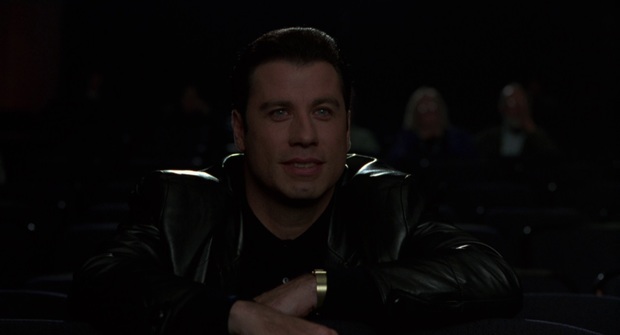
Before getting into all the movies from 2019 that I saw (and missed), here's a look at my movie-watching overall last year according to my activity on Letterboxd.
I watched a total of 480 films for an average of 40 a month or just under 10 a week. The first movie I saw last year was Mary Poppins Returns.The last movie I saw last year was Sweetheart.My most-watched films last year were Snow White and the Seven Dwarfs, Suspiria (1977), and Paul, Apostle of Christ with two viewings each. (I've seen Rise of Skywalker and Little Women at least that many times, but all but one each of those viewings have been in 2020.)Only 44 (or 9.2%) of the movies I saw were actually from 2019.266 of them (or 55.4%) were films I watched for the first time (or at least had never recorded on Letterboxd before).I watched a lot of Disney shorts towards the end of the year, thanks to Disney+, so my most-watched actor was Pinto Colvig, the voice of Goofy and Pluto, with 19 films.Thanks to Glass, the Marvel movies, and a rewatch of Kong: Skull Island, we got on a Samuel L Jackson kick, so he was my most-watched live actor at 14 films.Other actors I watched a lot of were Walt Disney and Clarence Nash (thanks again, Disney shorts), Boris Karloff, Sylvester Stallone, Liam Neeson, and Luke Evans.My most watched directors all did Disney shorts (with Wilfred Jackson leading the pack at 13), but my most watched feature-length directors were Alfonso Cuarón, Justin Lin, and Roger Corman at 4 each. I got on a Cuarón kick early in the year, re-watched the Fast and Furious movies, and checked out some of Corman's Edgar Allan Poe adaptations.Walt Disney was my top producer at 39 films.But oddly, Disney was not the studio whose films I watched the most of. That would be Universal at 41, thanks largely to Universal monster movies. Disney and Warner Brothers were tied for second place with 36 films each.Bram Stoker was my top writer at 13 films thanks to all the Dracula adaptations I watched.Seven Samurai was the movie I saw that's most liked by other Letterboxd users.Show Dogs was the least liked by other Letterboxd users.Pulp Fiction is the most popular movie among Letterboxd users that I saw last year.The most obscure movie I watched was a 1921 silent film called Jesse James as the Outlaw.


January 2, 2020
Reading in 2019

I had a good reading year in 2019. I've been participating in the Goodreads Reading Challenge for the last few years and set myself a goal of 40 books this time. My goal has been steadily increasing each year, but 40 was still under the number of books I actually read in 2018. I thought maybe I'd hit 50 or so again. I read 102.
That's a hard number for me to believe, even counting that a lot of those were graphic novels and short stories and audio books and a couple of novels that I abandoned because I wasn't enjoying them. I have no illusions about doing that number again next year, but I do plan to continuing making reading a priority.
Goodreads provides cool, end-of-the-year stats and estimates that I read 20,017 pages last year. The shortest book was HG Wells' short story "The Flowering of the Strange Orchid," which is only 10 pages long. The longest book was Dante Alighieri's The Divine Comedy. But that's where I see a hole in Goodread's system. I didn't actually finish all 798 pages of The Divine Comedy. I marked it Read, because I didn't intend to come back to it and Goodreads doesn't have a separate category for Did Not Finish. I didn't give up on many books last year, so 102 is still largely stuff that I actually read, but Goodread's estimation that my average book length was 196 pages is undoubtedly off.
The most popular book I read last year was Frankenstein by Mary Shelley with 1.2 million people recording it as well. I suspect that Dracula would be up there too, but I logged the annotated edition that I have, which would have less readers than whatever Goodreads' main entry for Dracula is.
The highest rated book on Goodreads that I logged was The Name of the Wind by Patrick Rothfuss, another book I didn't finish. (And another monster-sized novel, further skewing my page count.) I was listening to it on audio book and didn't like the reader, so I gave that up. I do intend to come back to it in actual book form one of these days. In addition to hearing great things from a couple of trusted sources, Goodread users give it an average of 4.22 stars.
Rather than listing out all 102 books, I'll just mention some of my favorites from various categories: novels, short stories/children's books, and graphic novels:
NOVELS
Frankenstein by Mary Shelley

This was a re-read for an episode of Filthy Horrors. Actually, I listened to Dan Stevens read it on audiobook, which I highly recommend.
As always, Victor Frankenstein is an infuriating, but believable personification of privilege and moral weakness. His Creature is an icon of loneliness and despair born of rejection. Shelley's novel is a beautifully horrible story about the harm that we do others when we push them aside and it is still extremely relevant.
Joyland by Stephen King

I sometimes forget how great King is. He's earned a reputation as a wordy writer, but even his longer books are immersive and compelling. When he's tighter on the story - like he is in the less-than-300-page Joyland, he's magical. King is always strong on grounding horror in relatable characters and situations and that's true in this story of losing a first love, working a memorable summer job at a beach-side amusement park, and finding the serial killer responsible for putting an actual ghost in a haunted house.
Relic by Douglas Preston and Lincoln Child

This was my second time reading Relic, because I'd like to continue the Pendergast books, but it had been long enough since reading the first one that I wanted to re-familiarize myself. It's as propulsively thrilling as I remembered. Cool characters in a cool setting where unexplained, gruesome deaths are occurring. It's a great mystery that turns into a suspenseful horror story.
The Sherlockian by Graham Moore
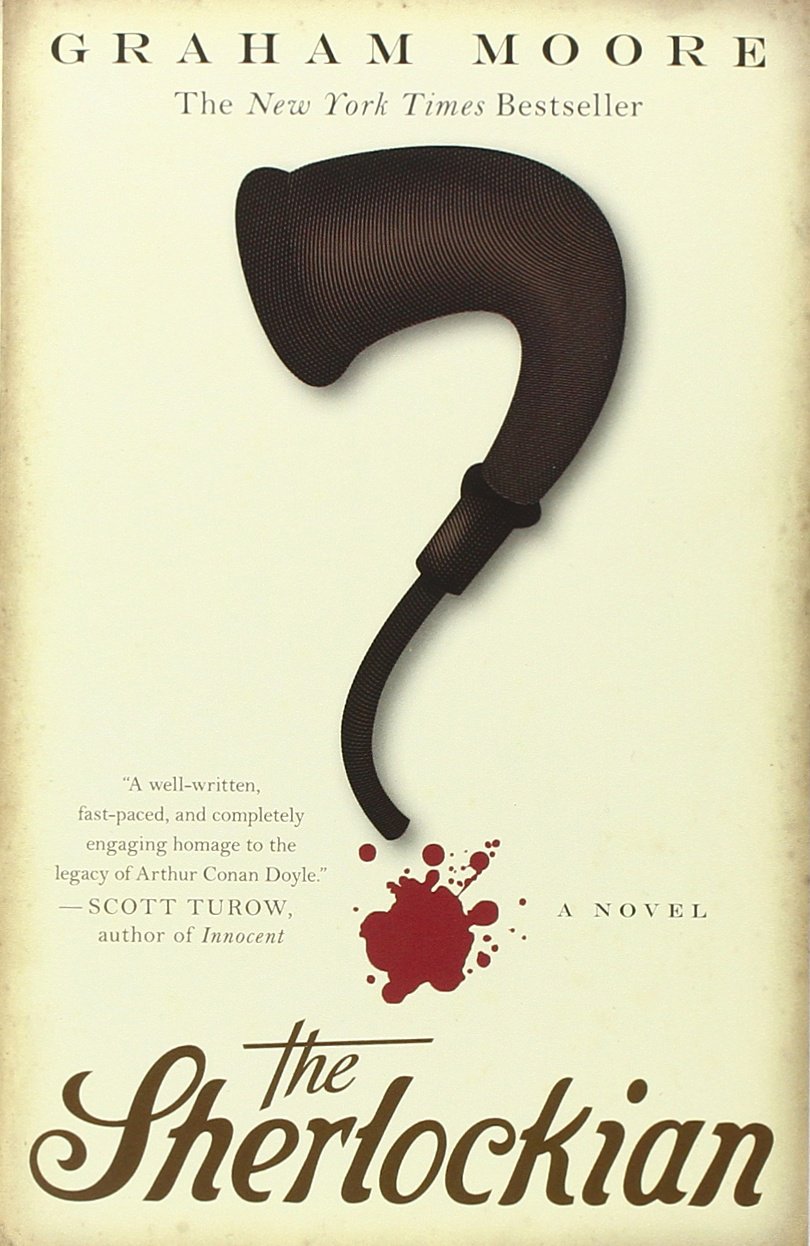
Moore has written a really fun mystery that unfolds in two different time periods. A Sherlock Holmes expert turns up dead in a hotel room after claiming to have found a missing journal of Arthur Conan Doyle. While a fellow expert tries to solve that murder, the novel flashes back to the time of the missing journal when Conan Doyle is trying to solve a different group of murders. And in addition to the two cases is the mystery of how they might be connected.
Moore's prose and characters keep the story moving and both time periods are equally captivating. I felt for the titular Sherlockian investigating the case in the present. He's super smart, but also lonely and I got invested in seeing how/if his relationship would develop with the journalist who asks to tag along on the investigation.
Even more, I loved the characterization of Conan Doyle as a talented writer who's desperate to escape the shadow of his greatest creation, in part by proving that Conan Doyle himself is the actual detective. Partnering him up with his real-life friend Bram Stoker was a genius move and I want a whole series of novels by Moore with Conan Doyle and Stoker solving crimes in Victorian Britain. At the very least, it got me wanting to know more about Stoker who comes across in this novel as a real stand-up guy.
The Sweetness at the Bottom of the Pie by Alan Bradley
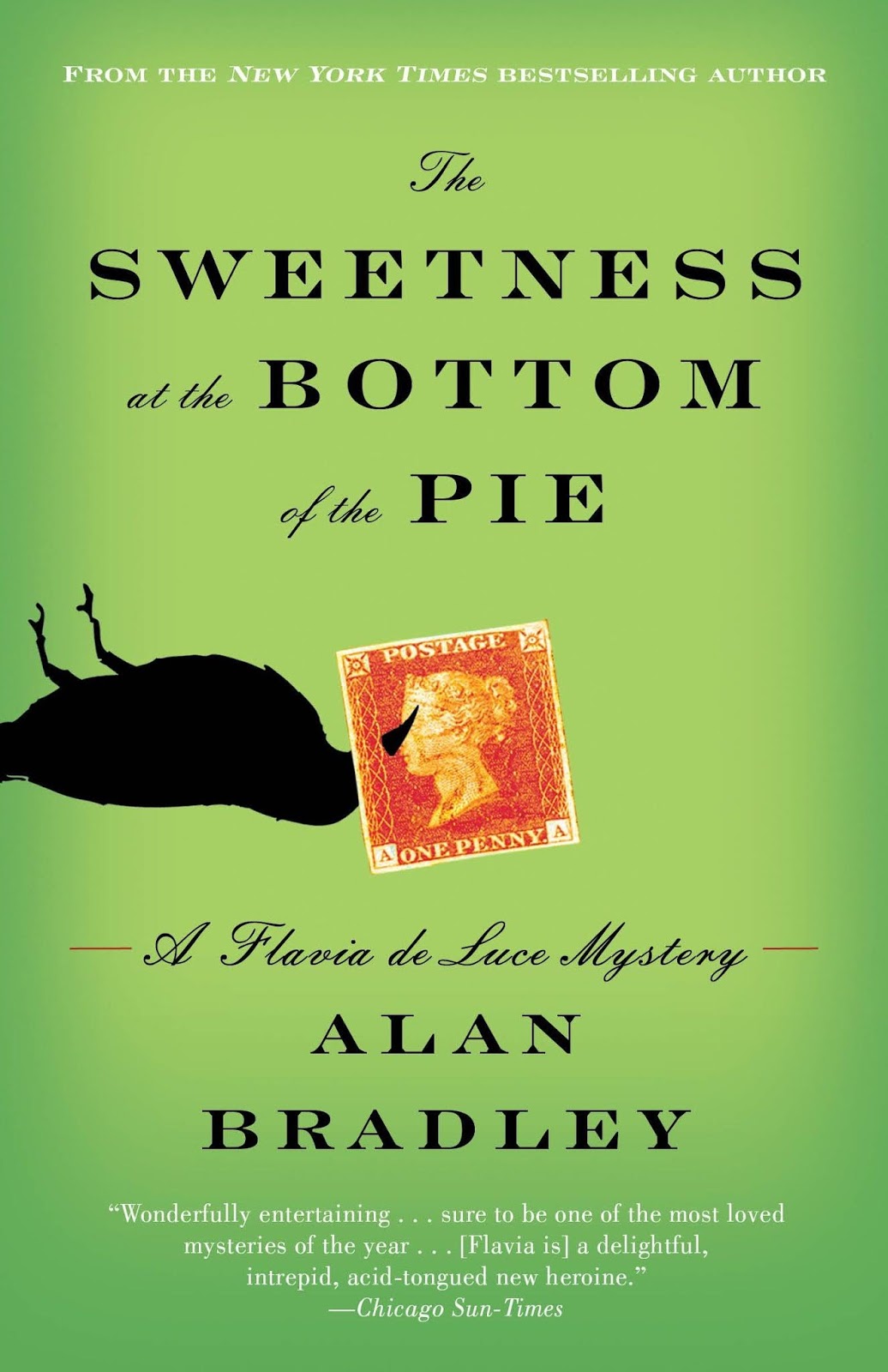
A lovely book about a precocious 11-year-old girl who's growing up in the English countryside in the mid-20th Century and also solves a murder. The first of many, apparently, and I'm not sure why I'm only just now hearing about them. Flavia de Luce is completely charming and the novel never cheats to help her put together clues or bring the villain to justice. I'm eager for more.
Dracula by Bram Stoker

This was another re-read for Filthy Horrors. The first time I read it, however many years ago, I read my annotated edition, which wasn't the best way to dive in. I got lost in the notes. They're enlightening, but they also disrupt the story if you keep reading them as you go. This time, I was just about the story and I enjoyed it even more.
Two highlights: First, it's a feminist work. After reading about Stoker as a fictionalized character in The Sherlockian and then reading Dracula again, I'm fascinated by him. Mina Murray Harker is (by Van Helsing's own admission) the smartest of the hunters, but she's sidelined by the well-meaning men of her group who want to protect her. And as long as that's the case, Dracula succeeds in his schemes. It's not until Mina is brought back into the party that they start to make headway against the Count. This isn't subtext. Stoker underlines it, circles it, and draws big red arrows pointing at it.
My other big take-away this time is how the epistolary (essentially "found footage") approach of the novel forces readers to put pieces together for themselves. It's not hard work and Stoker explains enough that you're never in danger of losing the whole story, but there are all of these little revelatory moments where I went, "Oh, that's what that was about!" I love that.
Dracul by Dacre Stoker and JD Barker

I very much enjoyed this prequel to Dracula co-written by a relative of Bram Stoker, but I did have an issue with its using Stoker's epistolary format. Stoker made great use of it in Dracula, but it's not needed in Dracul and the book isn't convincing about why someone is recording all of this live.
That said, Dracul is super engaging. Bram Stoker and his siblings are characters in the story and great ones. I also loved the question about Bram's real-life childhood illness and the fantastical speculation about what may have cured it. That's a wonderful springboard into mystery and adventure.
Best of all, though, the book is scary with chilling scenes and images that haunted me for a while after I put it down.
SHORT STORIES, CHILDREN'S BOOKS, AND POETRY
Mary, Who Wrote Frankenstein by Linda Bailey and Júlia Sardà

This is a lovely biography of Mary Shelley written for children and with absolutely captivating illustrations. But more than that, it's encouragement for young writers - especially girls - to find and tell the stories within themselves.
"The Mysterious Key and What It Opened" by Louisa May Alcott

Without even thinking about a new Little Women film coming out at Christmas, last year I explored some of Alcott's pulpy genre stuff (the kind of stuff that Jo March is writing at the beginning of Gerwig's movie). "The Mysterious Key and What It Opened" was my favorite. It begins with a shocking mystery that - as the story progresses - looks to have a familiar solution, but then dodges at the end to not only surprise me, but move me emotionally. Between this and the new movie, I'm adding Little Women to my reading list for 2020.
"Stopping by Woods on a Snowy Evening" by Robert Frost; illustrated by Susan Jeffers

I try to read this every winter, usually around Christmas, because it's probably my favorite poem. I especially love the edition with illustrations by Susan Jeffers. She adds a purpose to the narrator's forest visit that isn't exactly necessary to the poem, but is nonetheless lovely.
Christmas: Penhaligon's Scented Treasury of Verse and Prose edited by Sheila Pickles

In her Introduction, Pickles describes the value of this collection of essays and story excerpts as helping her keep Christmas in context. I'd forgotten that as I read, but recalled it as I felt the same effect working on me. It's so easy to let the holiday get out of control and these writings (mostly from the 19th Century) either describe very simple, but joyful holidays or communicate thoughts about Christmas that grounded me in its meaning. This will be an annual reading from now on.
GRAPHIC NOVELS
Lady S, Vol. 1: Here's to Suzie! by Jean Van Hamme and Philippe Aymond

An amazing spy story; gorgeously drawn with exquisite detail. There are twists and turns and jumps in time, but the story never confuses. Most importantly, I love the main character. I'm extremely eager to dive into Volume 2.
Blacksad by Juan Díaz Canales and Juanjo Guarnido

Brilliant, hard-boiled mysteries with anthropomorphic animal characters. The art is expressive, detailed, and beautiful. The mysteries are complex and full of memorable characters.
The first mystery, "Somewhere Within the Shadows," is a fairly standard noir-type murder investigation, but the following two, "Arctic Nation" and "Red Soul," get into serious issues like racism and McCarthy-esque scare tactics. Both were big problems in the '40s setting of the comic, but are also sadly troubles that persist today.
Prez by Mark Russell and Ben Caldwell
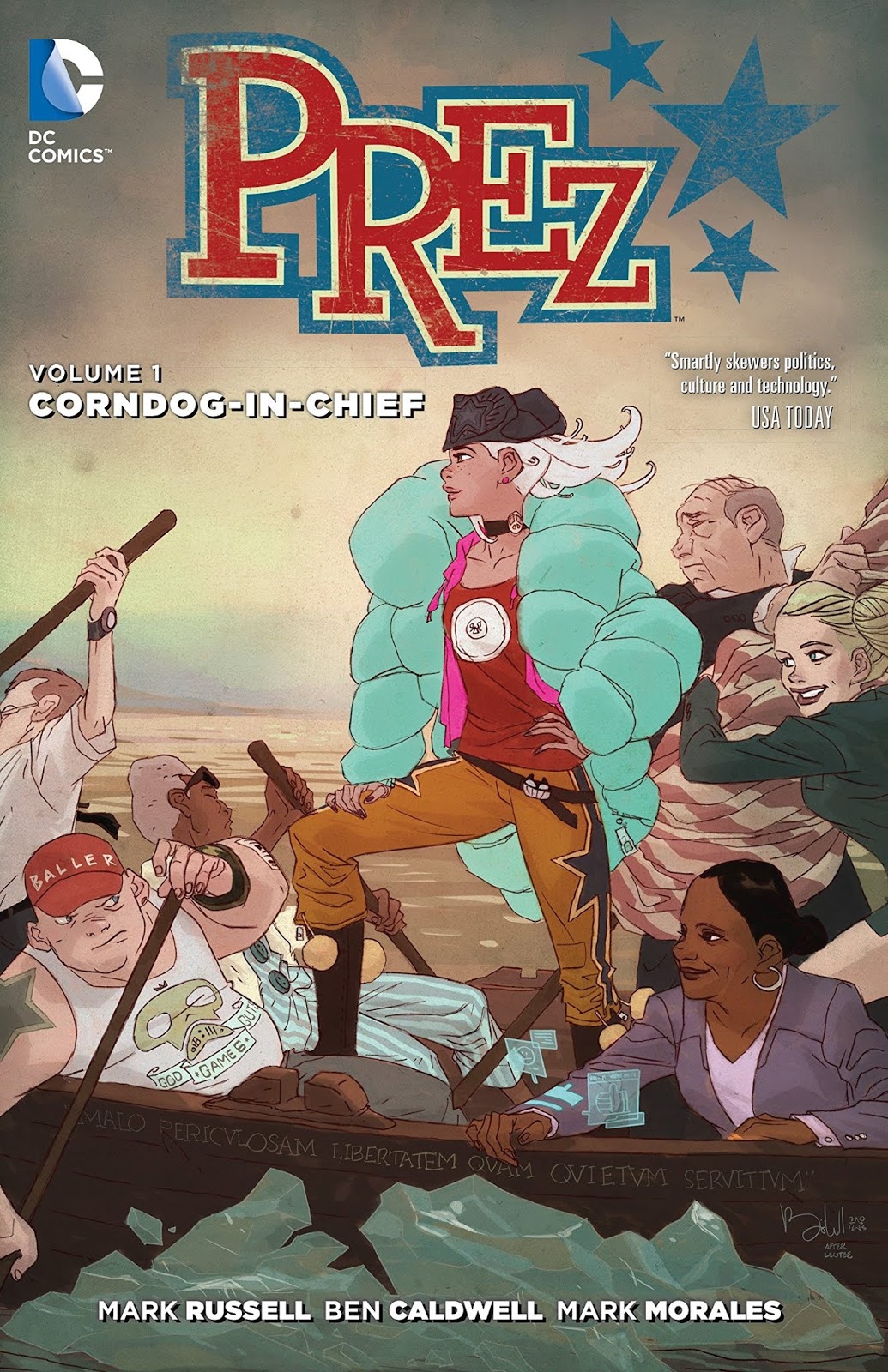
I'm a big fan of Ben Caldwell's art, so that was the initial draw for me. But I also appreciated the idea of using the goofy teen-President concept from old DC comics as a way to comment on current social trends and politics. The result is quite insightful and - super important for satire, but often overlooked by would-be satirists - funny. More than that, I very much relate to the main character Beth Ross and her struggle to find and follow the morally right course of action in a culture that doesn't often reward that. Prez doesn't offer any simple answers to the questions it raises; it's honest about how complicated things have become. But Beth is an inspiration to continue trying to do the right thing even when it doesn't seem practical or even possible.
Sadly, the series was cancelled after this volume. I'd love to read and learn more.
Rachel Rising by Terry Moore

Rachel Rising is possibly my favorite thing I read this year. I've always loved Terry Moore's elegant, black-and-white drawings with their super expressive characters, but I had a hard time getting into the story of his most iconic work, Strangers in Paradise. Rachel Rising has a horror hook that worked better for me: a woman who wakes up in a shallow grave with no memory of how she got there. As she investigates, the story gets into witchcraft, demons, flashbacks to 17th Century New England, and an adorable little girl who also happens to be a serial killer.
Jonah Hex, Vol. 1: Face Full of Violence by Jimmy Palmiotti, Justin Gray, Luke Ross, and Tony DeZuniga

Luke Ross is the artist for five of the six stories collected here and his art looks great. He leans toward realism and I love how his Jonah Hex looks like a horribly disfigured, young Clint Eastwood. Seems appropriate for the character without being distracting.
Jonah Hex' co-creator Tony DeZuniga draws the other issue and his scratchier, grittier style is also very cool. I haven't checked, but I hope he came back for other issues in the series.
What surprised me most about the collection is that each issue is a self-contained adventure. That's a style of comic that we don't see enough of anymore and it's especially welcome when each story is as powerful as these are. They occasionally build off Western tropes, but always with a focus on character and building tension. I finally "get" Jonah Hex and can't wait to read more.
Fables: Book One by Bill Willingham, Mark Buckingham, and Lan Medina

This is a re-read because I want to finally finish the series. I fell behind at some point when these were coming out as single issues, but I love these characters (especially Snow White and Bigby Wolf, but all of them) and using a variety of genres to tell their stories is genius.
The first volume starts with a cool murder mystery, but even more than that, I love the political allegory of the second story, a la Orwell's Animal Farm, which just so happens to take place at the remote farm where the talking animals and other non-human Fables have to live. I didn't realize how much I needed to see a story about Shere Khan hunting Snow White with Reynard the Fox running interference.
Marvel Masterworks: The Amazing Spider-Man by Stan Lee, Steve Ditko, and John Romita

I really dug into classic Spider-Man last year and read several of the Masterworks collections, getting up into the John Romita years with the introduction of Gwen Stacy and Mary Jane Watson. The melodrama can be much, especially during the volatile relationship between Peter Parker and Betty Brant (which could not end quickly enough for me). And I was surprised by how much I disliked Aunt May's presence in Peter's life. The series leaned hard on her frailty and excessive emotional reliance on Peter as a source of his angst and constant worry.
I was also surprised (but enjoyed) that Peter met Gwen and Mary Jane at about the same time. I always imagined that he began and finished his relationship with Gwen before MJ entered the picture. Instead, he meets them both, they're both clearly attracted to him - and vice versa - but Gwen starts to feel more serious about it first. There are hints that MJ is more interested in Peter than just flirting, but she keeps that to herself until it's too late. I loved all that stuff as well as the introductions of so many classic villains and of course J Jonah Jameson being J Jonah Jameson all over everything.
Little Book Of Horror: Dracula by Steve Niles and Richard Sala

Dracula as a children's book. It's a fun, adventurous take. Niles' text is entertaining and funny, while Sala's illustrations are gloriously gothic, sexy, and funny themselves.
All-Action Classics Dracula by Michael Mucci and Ben Caldwell

Possibly my favorite version of the story, including Stoker's. That's maybe going too far, but it reminds me of how I feel about Peter Jackson's Lord of the Rings vs Tolkien's. Michael Mucci and Ben Caldwell keep the story and characters of the original intact while making a few, carefully considered changes to help illuminate some things or keep the story moving.
It loses the puzzle-solving that the epistolary nature of the novel forces on the reader, and that's something I miss, so I'm glad to have the story in both formats. This is the perfect introduction to Dracula for anyone interested in the story, but intimidated by what they've heard about the novel.
Koma by Pierre Wazem and Frederik Peeters

I love this series more the deeper I get into it. I'm pretty sure that I've re-categorized its genre with each volume, too. It felt like horror at first, then fantasy, and with the third volume (as far as I've got, currently) it's science fiction. The tone and setting haven't changed, just the way I've perceived them because of the emerging plot. It's a cool world with an amazing look and a fascinating story that I'm still figuring out as I go.
The Bloody Cardinal by Richard Sala

And finally, Richard Sala is always awesome and The Bloody Cardinal is yet another example of his aesthetic and my tastes creating a ven diagram that's just a circle. It's the story of a series of murders that may or may not be the work of a masked killer who's been presumed dead. Various concerned parties on both sides of the law investigate and the bodies keep piling up. As always with Sala, it's funny, scary, and sexy all at once.

January 1, 2020
Ian Fleming's Seven Deadlier Sins: A Collection of Essays

With a new Bond movie coming this year, it feels appropriate to ring in 2020 with a new book about Ian Fleming and his master spy. And one that I contributed to.
Over the last few years, the Literary 007 website has been collecting essays around what Fleming called the Seven Deadlier Sins. Everyone knows the Seven Deadly Sins of Envy, Gluttony, Greed, Lust, Pride, Sloth, and Wrath. But Fleming wrote that even worse than those were Avarice, Cruelty, Hypocrisy, Malice, Moral Cowardice, Self-Righteousness, and Snobbery. Literary 007 asked writers to consider one of these Deadlier Sins and discuss how it manifested in Fleming's life and especially in the Bond novels. I got to write about self-righteousness and I'm really happy with how that essay turned out.
Now that all seven essays are done, they've been collected into a volume called Ian Fleming's Seven Deadlier Sins: A Collection of Essays . It's available in paperback and electronically. It's a cool book with some meaningful things to say not just about Fleming and Bond, but also about human nature.

December 30, 2019
Sleigh Bell Cinema | While You Were Sleeping (1995)
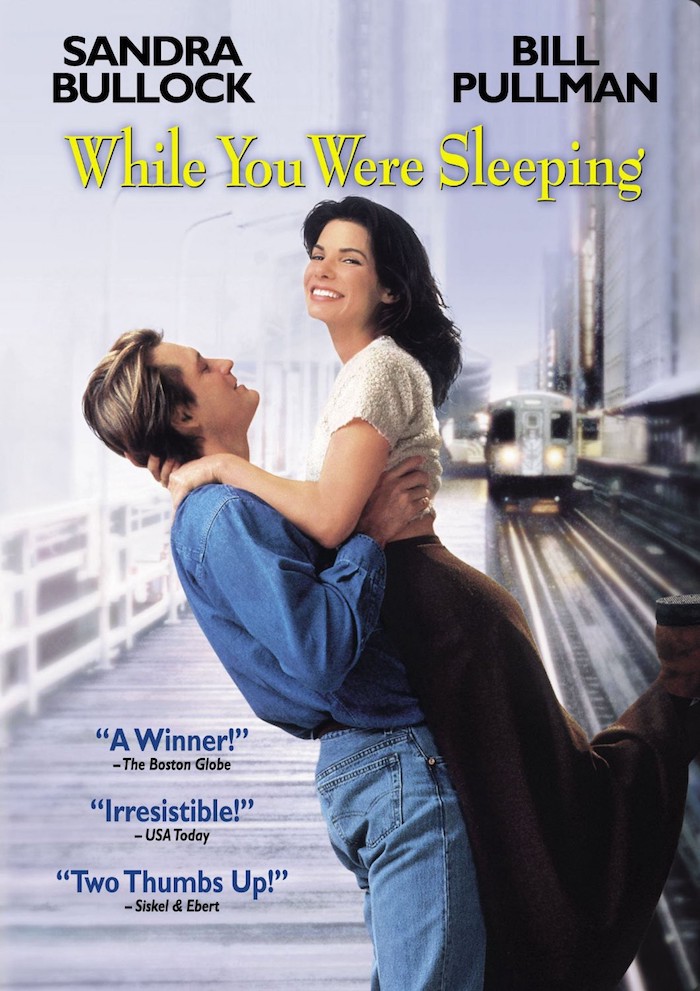
Erik Johnson and I chill out during the week between Christmas and New Year with a favorite movie set during that time. It's Jon Turteltaub's romantic comedy starring Sandra Bullock, Bill Pullman, Peter Gallagher, Peter Boyle, and Jack Warden.

December 25, 2019
Sleigh Bell Cinema | Four Christmases (2008)
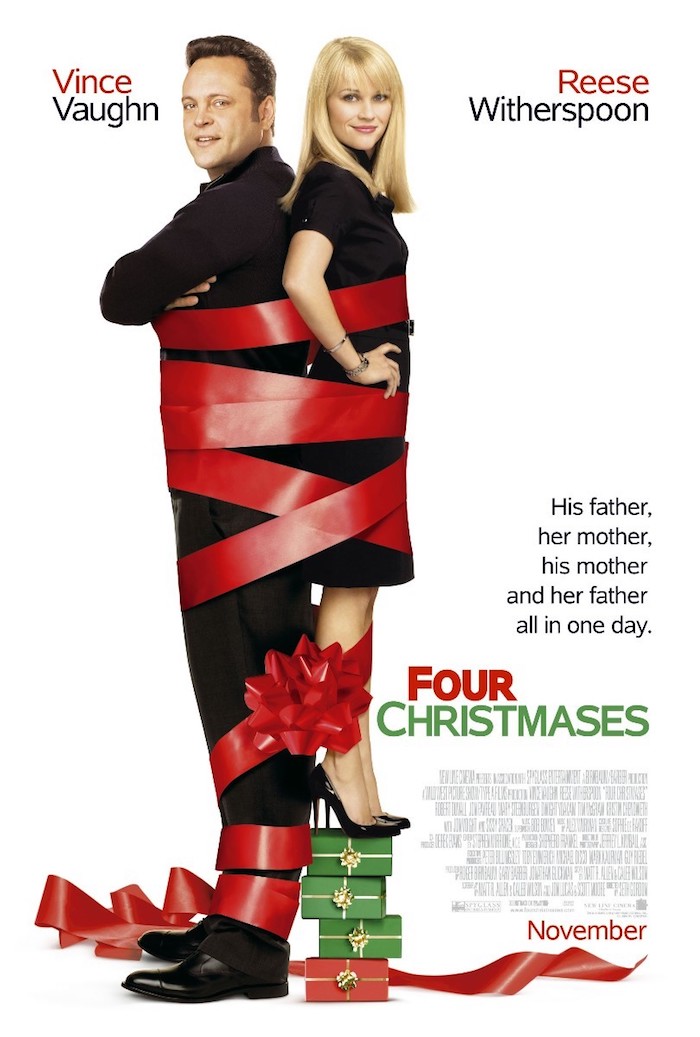
Merry Christmas! However many celebrations you have today, I hope you'll enjoy my son David and I discussing this Seth Gordon comedy starring Reese Witherspoon, Vince Vaughn, Robert Duvall, Jon Favreau, Mary Steenburgen, Kristin Chenoweth, Sissy Spacek, and Jon Voight.

December 24, 2019
“Why, It’s Old Fezziwig!” | Patrick Stewart (1999)
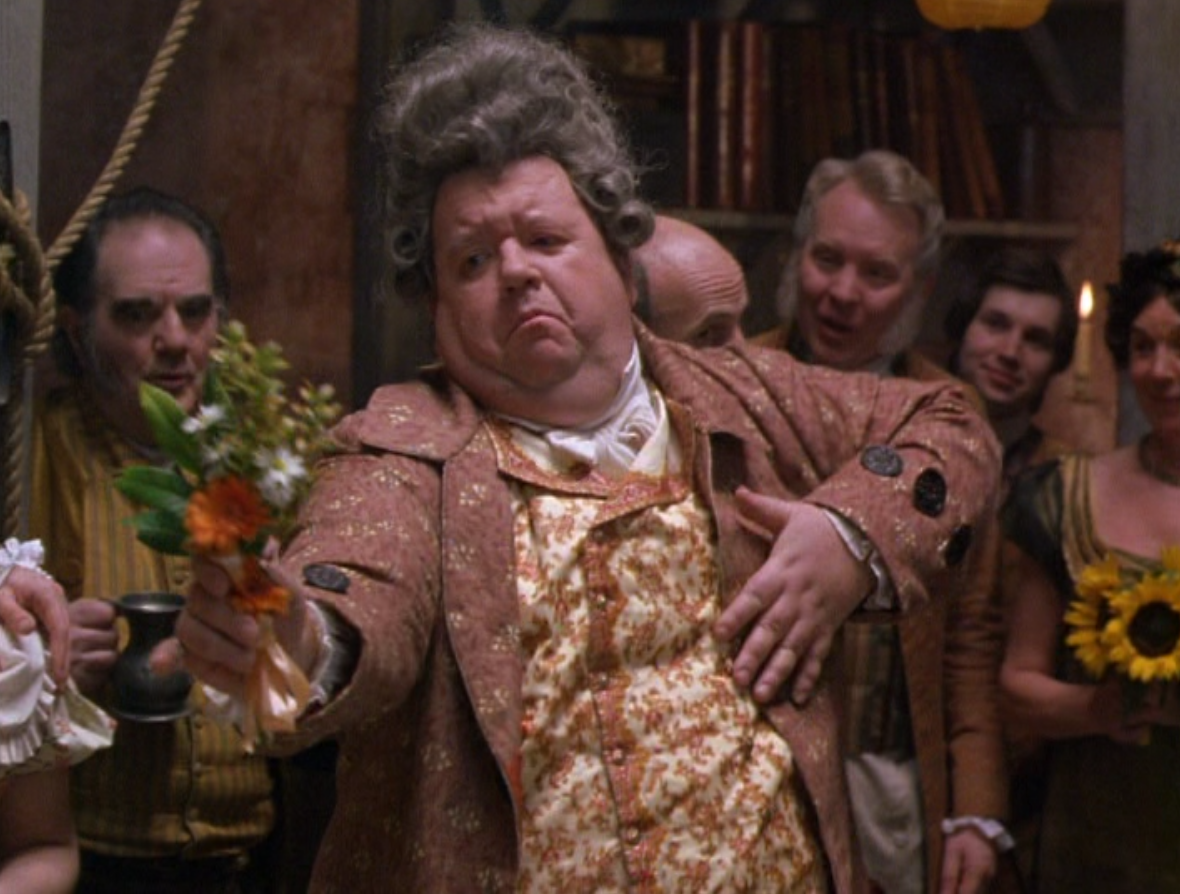
The TNT adaptation plops Scrooge and the Ghost in a narrow, deserted street in front of a building that says "Albert Fezziwig and Company" over the door. I think this is the only version that gives Fezziwig a first name?
Scrooge is quite pleased to see it and leads the way to the front door. He pauses for a moment before opening it, savoring the moment and excitedly anticipating what he's about to revisit.
There are a few other employees in the warehouse, with Fezziwig on a raised platform standing at a tall desk. His wig isn't Welsh, but it's the most elaborate I've seen yet with a high, bouffant shape and ridiculous little curls at his temples. He's also probably the most overweight Fezziwig so far. I recognize actor Ian McNeice from Ace Ventura: When Nature Calls and - more recently - Winston Churchill on a few episodes of Doctor Who.
When he announces closing time to Young Ebenezer and Dick Wilkins, Old Scrooge gasps at the name of his friend. "Why bless me, there he is..." He says the line about Dick's being attached to him, but there's no "poor Dick" and Scrooge clearly remembers the friendship as mutual. He's very pleased to see Dick again.
Fezziwig comes over to Ebenezer's desk to make him and Dick stop working. He pours some kind of powder over the ledger that Ebenezer is frantically trying to finish up. A little research tells me this was probably pounce, used both to dry ink and prepare rough paper for writing. It's a nice detail.
Dick scurries off to put the shutters up as Fezziwig's requested, but Ebenezer quickly completes his task before leaving the desk. He's smiling as he does it though. The ledger was important, but Ebenezer is definitely in the spirit of the evening. When he leaves, Old Scrooge remains at the desk, looking at the open ledger and other papers. He smiles and nods with satisfaction, as appreciative of reliving this work as he is of being here on this night. These were clearly good times for him. His earlier disbelief has left him. He wants to witness this scene. Like Albert Finney's version, this will be the scene that really starts Scrooge on the road to transformation.
We get to go outside and see Dick and Ebenezer putting up the large, removable shutters. And then it's back inside where the furniture has been cleared away and people are bringing out food for the party. "We're ready, ladies!" calls Fezziwig.
Mrs Fezziwig appears on a gallery that must connect the warehouse with the Fezziwigs' home. Or maybe the rest of the family was already at the warehouse, but hidden away upstairs for some reason. Mrs Fezziwig is just as big and ridiculous as her husband with lots of lace and flowers and curls surrounding her head. "Splendid woman, Mrs Fezziwig," the Ghost observes.
Scrooge observes the Fezziwig children coming down the stairs, too. There are the three daughters, and they get names: Marigold, Daisy, and Lily. Neither Scrooge nor the Ghost call it out, but there are young suitors at the foot of the stairs to greet the girls with flowers. There's also a young son, Eli, in an outlandish wig to match his father's.
Eli makes a beeline for Ebenezer and begs him to "do the trick." Ebenezer eagerly complies, pulling a coin from behind Eli's ear. The dancing starts shortly after that and Ebenezer just as enthusiastically joins in that. He dances with girls and he also dances with Dick in a joyously energetic display. There's a fiddler naturally, but also a clarinet and a serpent, another lovely 19th Century detail. They're not on Fezziwig's desk, of course, but up on the gallery where Mrs Fezziwig and her kids were earlier.
Old Scrooge watches all of this with a scowl, but the camera pans down to betray that he's tapping both feet in a private, whimsical, little dance of his own.
With that dance finished, Mrs Fezziwig has Ebenezer persuade Fezziwig into a song. "It wouldn't be Christmas without you performing, Mr Fezziwig!" he laughs. And he laughs even harder when Fezziwig, who clearly wanted persuading, fake-reluctantly agrees. Old Scrooge remembers, "I could always coax him into it."
Fezziwig's song is as silly and dramatic and fun as he is. It's about wanting to marry a woman named Rose (probably Mrs Fezziwig's real name considering how they also named their daughters) even though her relatives are horrid, because he's not marrying them, he's marrying her.
That done, Fezziwig announces another dance: not the "Sir Roger de Coverley," but the "Portsmouth Polka." Ebenezer sits this one out, which means that he's waiting by the door when a beautiful woman enters wearing a bright, yellow dress. It's not the color I expect at a Christmas party, but she stands out in the best possible way. It's the color of sunshine and happiness. Ebenezer walks over to greet her and it's downright sensual the way he unties her cloak for her. From across the room, Old Scrooge also notices her enter and stands up, stunned by the memory of her.
She and Ebenezer kiss as the polka winds down and the band starts a slower tune. Belle and Ebenezer dance and they're easy in each other's company. Lots of loving eye contact. Old Scrooge sits back down and rests his head on one hand at his old desk. "Fezziwig once said to me," he recalls, "'Ebenezer, when happiness shows up, always give it a comfortable seat.'"
"True," says the Ghost. He was on the other side of the room by Belle and Ebenezer when last I noticed him. And Scrooge seems to have forgotten about him as well. He's up on the gallery now, looking down at Scrooge. And though I read Scrooge's Fezziwig quote as being more about Belle than Fezziwig, the Ghost takes the opportunity to undercut Fezziwig's generosity like he does in the book. It's an awkward non sequitur, but it gets the scene back on track with Scrooge defending his old master. And Scrooge does so with gusto and downright anger.
When Scrooge finishes his argument, he looks confused and defeated for a moment. The Ghost asks him what's wrong, but in this version Scrooge isn't thinking about Bob Cratchit at that moment. He's still too tough for that. What's bothering him is his comment about Fezziwig's power to make his employees happy and their work light. As I said before, these were clearly good times for Scrooge. But the realization is deeper (and more selfish) than just wishing he could create the same atmosphere for Cratchit. I believe that Scrooge is wishing he could create the same atmosphere for himself. He's wondering why he let himself lose this happiness. And the thought upsets him enough that he questions for a moment whether he really was happy. "Perhaps things seemed better than they really were," he says.
"All this was a lie then," the Ghost clarifies.
"The world changes," Scrooge counters. "You can't trust anything." Maybe it was real, but it wasn't lasting. And of course he doesn't blame himself yet. "But no," he finally admits. "It was just like this right down to the last mince pie and dance."
The Ghost seems satisfied and rests his head against a post and watches Ebenezer and Belle dance. They're alone in the room now and snow is falling, signaling the transition to the next scene.

December 23, 2019
“Why, It’s Old Fezziwig!” | Michael Caine (1992)
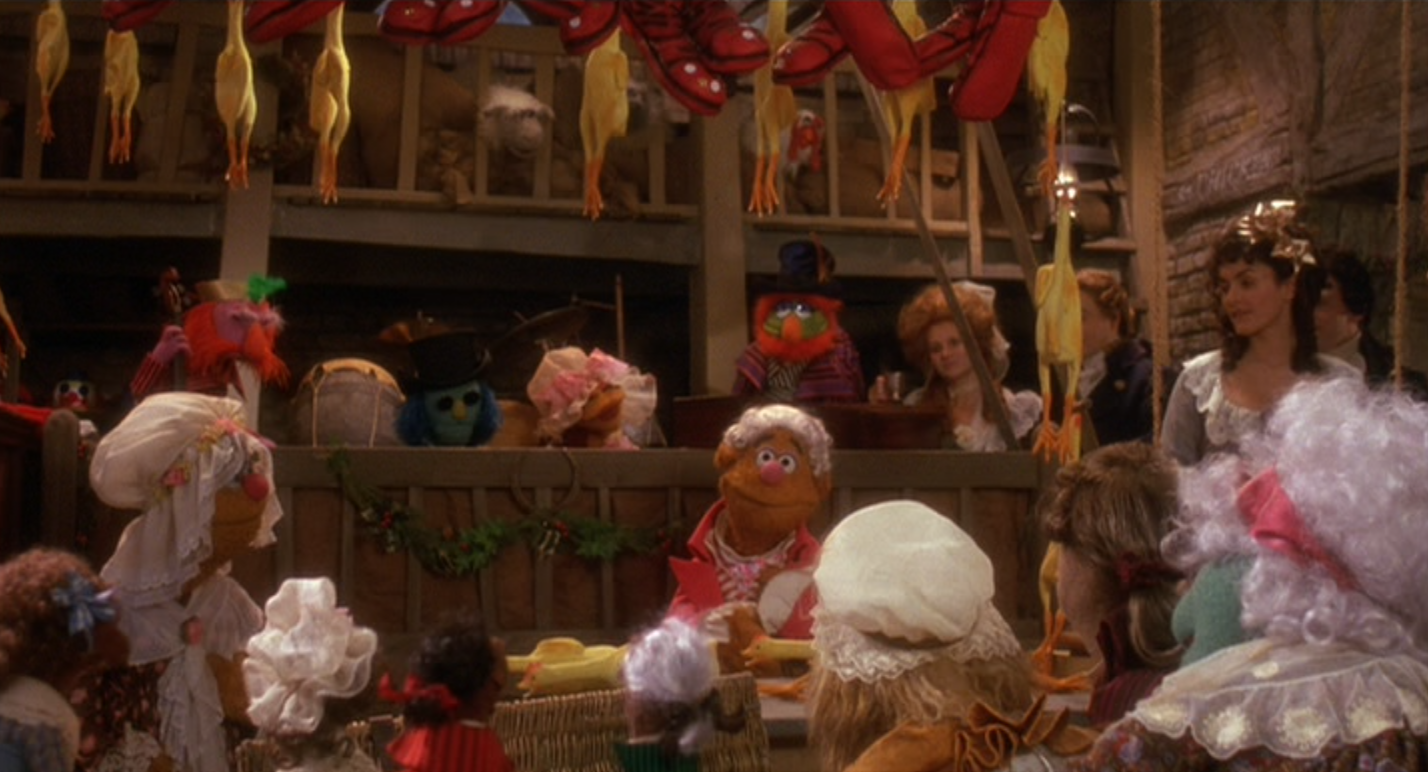
The Muppets Ghost of Christmas Past doesn't like to travel the same way twice. She flew Scrooge from his apartment to the school, but from the school to Fezziwig's they sort of hyper jump and warp into the street. It's a cool effect, but looks a bit odd in the Victorian setting.
The sign on the warehouse says "Fozziwig and Mom, Ltd." As much as I dislike Fozzie's having such a small role in the movie, I can't fault anyone for casting him this way. It's too perfect. And I love that Scrooge identifies the building as Fozziwig's old rubber chicken factory. Because of course it is.
Fozziwig himself comes outside to enjoy the evening and the lamplighters and just Christmas Eve in general. He's not as jovial as I expect, in fact he's downright sentimental. But the effect is the same on Old Scrooge. "As hard and as ruthless as a rose petal," he chuckles, clearly fond of his former boss.
True to his name, Fozziwig is Fozzie in a wig: the white, old-fashioned kind that's become the shorthand for identifying so many versions of this character. As he goes back inside, he announces that it's time for the party to begin, and Old Scrooge gets excited. He's eager to relive this memory.
Fozziwig's announcement was actually meaningless, because the party has already begun. There's no scene of anyone setting up; all the humans and muppets are milling about with drinks and chatting together. But Fozziwig has a few words to say to open the festivities and after some problems getting everyone's attention, he does. Heckled of course by Young Statler and Waldorf as the Young Marley Brothers.
Fozziwig's speech is super short and the music starts right after. Instead of a fiddler, it's Dr Teeth and the Electric Mayhem. They're not on Fozziwig's desk of course, but they are on a raised platform. They start with a slow number until Animal gets bored and starts rocking out, bringing the rest of the band along with him.
At one point, Young Ebenezer appears, extremely well-cast. I don't know if the makeup department did some extra work on Raymond Coulthard's eyebrows, but he looks a lot like a young Michael Caine. At any rate, Ebenezer has been going over the books and has some concerns with how much the party is costing the company.
Fozziwig gently chides him about Christmas and generosity and how Ebenezer needs to enjoy himself. We've seen different Ebenezers have different reactions to the party, but this is the only one who's actually objected to it. As we saw at the school, Scrooge has replaced his empty family life with hard work and dedication to his career. He came from a miserable home where he didn't feel loved, so he gets his sense of value from succeeding at work and accumulating wealth. The Muppet Christmas Carol is especially simple and on-the-nose about this, but that's not a bad thing. I appreciate its spelling out some things for me.
Speaking of simplistic, there's also not much detail about Fozziwig's character in this version. We meet his Mom, but he doesn't appear to be married or have any children. The guests are a hodgepodge - we get to see Rowlf and the Swedish Chef - but puppets causing chaos is a Muppets staple and it doesn't seem like Fozziwig has any special, particular compassion for social outsiders as a group. He's weird, so his friends are all weird, too.
There's no Dick Wilkins in this version and the Ghost never challenges Fozziwig's generosity. The only person who does that is Young Ebenezer himself who never quite follows Fozziwig's advice about having a good time. And yet, Old Scrooge remembers the party fondly and was excited to revisit it. I don't think it's because he met Belle there, because that's also a painful memory. I don't know how many Fozziwig Christmas parties he went to, but it seems like the celebration is what he remembers fondly, even though he was complaining about it. He may have tried to resist, but deep down, these parties affected him. As simple and kind of dumb as he was, Fozziwig affected Scrooge.
As I mentioned, Ebenezer meets Belle in this scene. Later in the festivities, he accidentally bumps a beautiful girl whom Fozziwig is talking to. Fozziwig introduces Ebenezer to her as "the finest young financial mind in the city." I don't know if he's just being hyperbolic there or if Ebenezer really does have that reputation, but I can believe it based on what we've seen of Scrooge so far: his single-minded dedication as a young man and his obvious success as an old one.
Fozziwig introduces Belle as "a friend of the Fozziwig family" and there's an instant connection between her and Ebenezer. The Ghost asks Old Scrooge if he remembers the meeting.
"Yes," he says, deeply emotional about it. "I remember."
"There was of course another Christmas Eve with this young woman. Some years later."
He looks frightened. "Oh, please," he begs, turning back to look at Belle again. "Do not show me that Christmas."
But she does.

Hellbent for Letterbox | Deadwood: The Movie (2019)

Pax and I wrap up Deadwood December with the reunion movie from earlier this year and talk about whether or not it was a fitting conclusion to the legendary TV series.

December 22, 2019
“Why, It’s Old Fezziwig!” | George C Scott (1984)
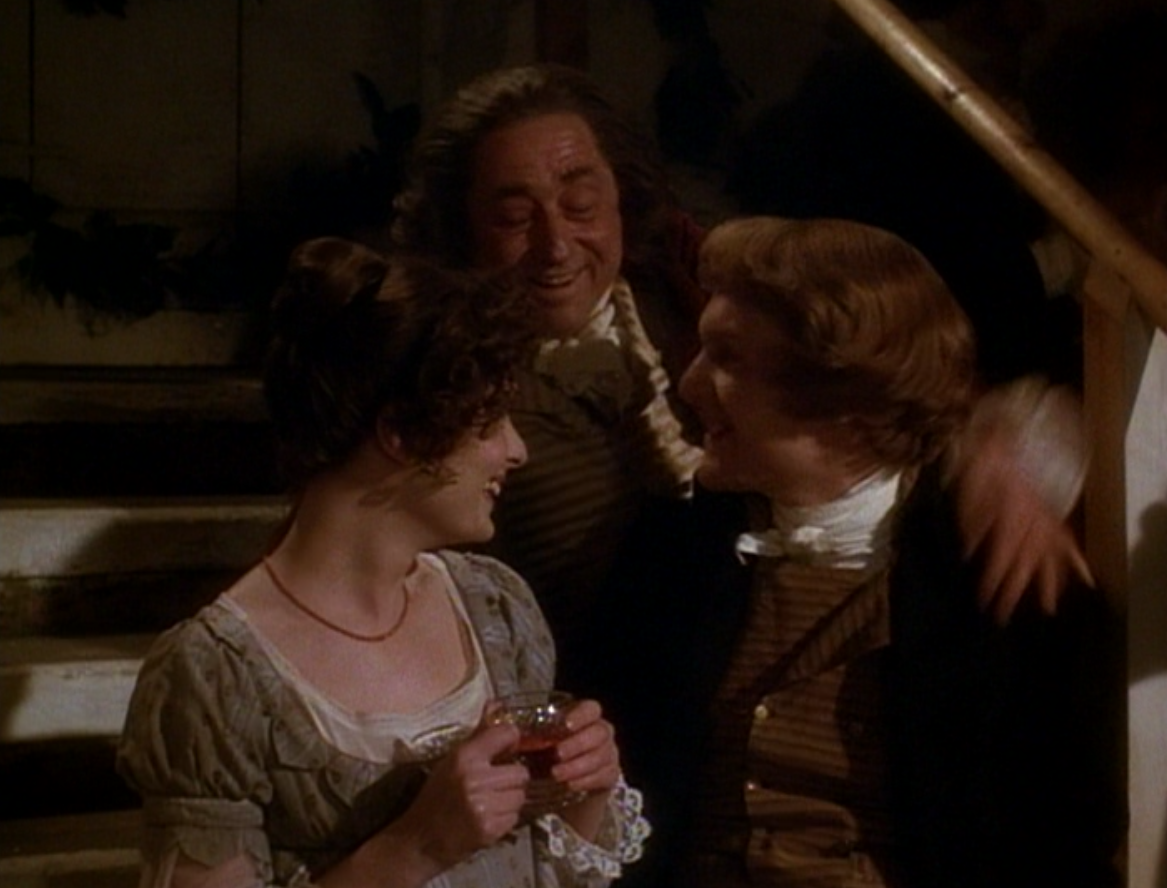
As usual in director Clive Donner's version, the Ghost's snuffing cap is used as a transition between visions. As we leave the school for Fezziwig's warehouse, images play across the cap: people shopping and preparing for Christmas Day and then on Fezziwig and his employees. He's at a raised - but not cartoonishly high - desk at one end of the warehouse floor, writing in a ledger as his employees fold cloth and go about other business. He appears to have his own hair, but it could be a good, brown wig. Not a Welsh wig though. He pleasantly instructs a young woman to have Mr Pooling (I think?) talk to Mr. Scrooge about whatever book she's holding.
As she goes off to obey, Fezziwig gets down from his desk and reveals that he's a delightfully tiny man. He lets everyone know that it's time to stop working, because it's Christmas Eve. He particularly instructs Dick and Ebenezer to set down their pens, presumably because they're extra industrious and need to be personally ordered. Everyone's going to help clear the room, not just Dick and Ebenezer.
As Young Scrooge grabs some cloth to carry it away, Fezziwig playfully orders him to enjoy himself at the party. Ebenezer smiles and says that he'll try. The conversation goes on, but the gist is that Fezziwig wants Ebenezer to get more out of life than just the conducting of business, though Ebenezer is clearly very good at business. Ebenezer seems willing to learn.
The scene cuts to final decorations and the big buffet spread as Mrs Fezziwig enters with her three daughters and their suitors. Old Scrooge laughs as he identifies them. He's clearly enjoying seeing these faces again. And his face softens even more when he sees Belle enter with some rolls that she places on the buffet. His eyes moisten and he looks stunned. "I'd forgotten how beautiful she was." And he's right.
Young Scrooge comes up behind her and asks her to dance. He's not especially animated, but he's not awkward like the Young Scrooge in the Albert Finney version. He's much more comfortable and confident around Belle. This is a Scrooge who has settled in and made a place for himself.
A fiddler climbs up on Fezziwig's desk and begins the first dance. Fezziwig doesn't even join in this one; the focus is all on Ebenezer and Belle having a great time with Ebenezer even stopping to steal a kiss at one point. Eventually they leave the dance and run off to a corner by themselves.
Old Scrooge is smiling at the party and the memories. The Ghost catches him and asks him how long it's been since he danced.
He drops his grin and turns grumpy. "A waste of time, dancing."
"You didn't think so then."
He's quite serious and thoughtful as he says, "There was a reason then."
The scene cuts to Young Scrooge and Belle as they talk in their corner. Belle notes that Scrooge has changed since he came to Fezziwig's. "You were so gloomy."
"I think I should warn you, Miss Belle. I am of a serious bent of mind." He looks overly serious as he says it. Playfully serious.
She says that she finds seriousness admirable, "but it can be overdone."
"I shall take heed of your advice, ma'am, and go through life with a grin on my face." But he's not quite grinning. He doesn't seem to think that he can actually do it. We've seen him capable of enjoying himself at this very party, and that's all due to Belle's presence. She has that effect on him. But to fundamentally change his personality and worldview? That's a tall order.
Old Scrooge also smiles at the scene, but it's a wistful, rueful smile. He knows that he meant it back then just as he knows that he never achieved it.
Back in the corner, Fezziwig accosts Belle and Ebenezer to get them back in the dance for "Sir Roger de Coverley." Then he realizes that he needs to get back himself and "partner my wife before that young scamp goes dancing off with her!" He puts his arm around Young Scrooge and gives him the second piece of advice of the evening. "What a difference it makes, Ebenezer, to travel the rough road of life with the right female to help bear the burden." He's grinning at Belle as he finishes and she's blushing. Ebenezer looks at her, quite seriously.
She wonders if they should join the others and he takes her hand. "My pleasure, Miss Belle." He is absolutely, deeply in love with her. It's a beautiful scene that really captures the essence of falling in love with someone you don't feel you deserve, but who - against all reason - apparently loves you back. They're such a sweet couple. It's heartbreaking to know how they turn out.
But Old Scrooge isn't thinking about that now. As his younger self rejoins the dance with the love of his life, Old Scrooge smiles like a fool, just enjoying the moment.
The scene then shifts to later that night. The warehouse is empty except for Scrooge and the Ghost. "Old Fezziwig," the Ghost says. "A silly man." And indeed he was.
Scrooge defends him anyway. And the Ghost challenges him further. What did he do to deserve the praises of his employees? "Spent a few pounds? Danced like a monkey? Beamed a great smile?"
Scrooge laughs and explains gently. "The happiness he gives..." He corrects himself, "Gave... was quite as great as though it had cost a thousand pounds." He turns thoughtful. "Just... small things."
He doesn't mention that he'd like to have a word with Bob Cratchit just then, but that would just be spelling out something that Scott's performance already does quite nicely. The schoolhouse failed to create empathy in Scrooge, but he's been touched emotionally by this scene. Not just by Belle, but by Fezziwig as well. This was a time when Scrooge was truly happy and hopeful about his future. But things have not turned out the way he hoped back then.
Cut to Ebenezer and Dick in their bunks somewhere in the warehouse. Ebenezer is staring off into space and Dick doesn't even have to ask what Ebenezer is thinking about. He just stares at Young Scrooge until Young Scrooge laughs and says, "Belle."
"Are you in love, Ebenezer?"
"Mmm. The thought had occurred to me."
"She's too good for you." Dick means it, but there's no malice. He clearly likes Belle, too, though he doesn't really consider himself competition for Ebenezer. She may be too good for Ebenezer, but she also loves him and Dick knows it. There's been no mention of Dick's attachment to Scrooge, but we don't need it. This scene shows us that they're good friends.
"One day!" Ebenezer objects. "When I've made my fortune. Then I'll deserve her."
Dick changes the subject. "It was a night never to be forgotten."
"Never..." muses Ebenezer.
"But you did forget," says the Ghost. "Often." And the scene changes once again.

December 21, 2019
“Why, It’s Old Fezziwig!” | Albert Finney (1970)
In the musical Scrooge, the schoolhouse scene ended with the Ghost pointing offscreen and declaring, "There's a Christmas that you really enjoyed!" I love this elderly, grand-dame version of the Ghost of Christmas Past. She's stuffy, proper, and will take none of Scrooge's guff. He enjoyed this next Christmas and there's no arguing about it.
The scene smash cuts to Fezziwig sitting at his desk, scribbling for a couple of seconds until he realizes that it's time to stop. He's played by Laurence Naismith, whom I know best as the chairman of the British diamond syndicate who helps M gave James Bond his orders in Diamonds Are Forever. He's not an actor that I know very well, but he has a kind, familiar face. He's bald except for a ring of his own, white hair. The film doesn't suggest that there's anything old-fashioned about him. He just really likes Christmas.
Old Scrooge and the Ghost appear in the warehouse nearby and Scrooge is thrilled to see his old boss; probably the happiest and most unreserved he's been the entire movie. As he comments on Fezziwig throughout this scene, it's clear that he not only liked Fezziwig, he also respected him. This Fezziwig is certainly jolly, but he doesn't come across as an out-of-touch fool (however endearing) the way that some other versions have suggested. He does have a very tall desk though.
Fezziwig has Dick and Young Scrooge clear away for the party, but the room is already mostly decorated with lush garland hanging from the rafters and chandeliers. Dick and Scrooge just have to clear out some huge sacks of corn. Old Scrooge comments on how good-looking and strong he used to be. "I used to carry sacks around all day," he says. So Fezziwig was exposing his apprentices to all sides of the business; not just the books.
Old Scrooge is also giddy about seeing Dick Wilkins again and there's nothing sad or "poor Dick" about the memory. "Nice young fellow," Scrooges remembers. "Very attached to me, he was." These are all great memories for Scrooge.
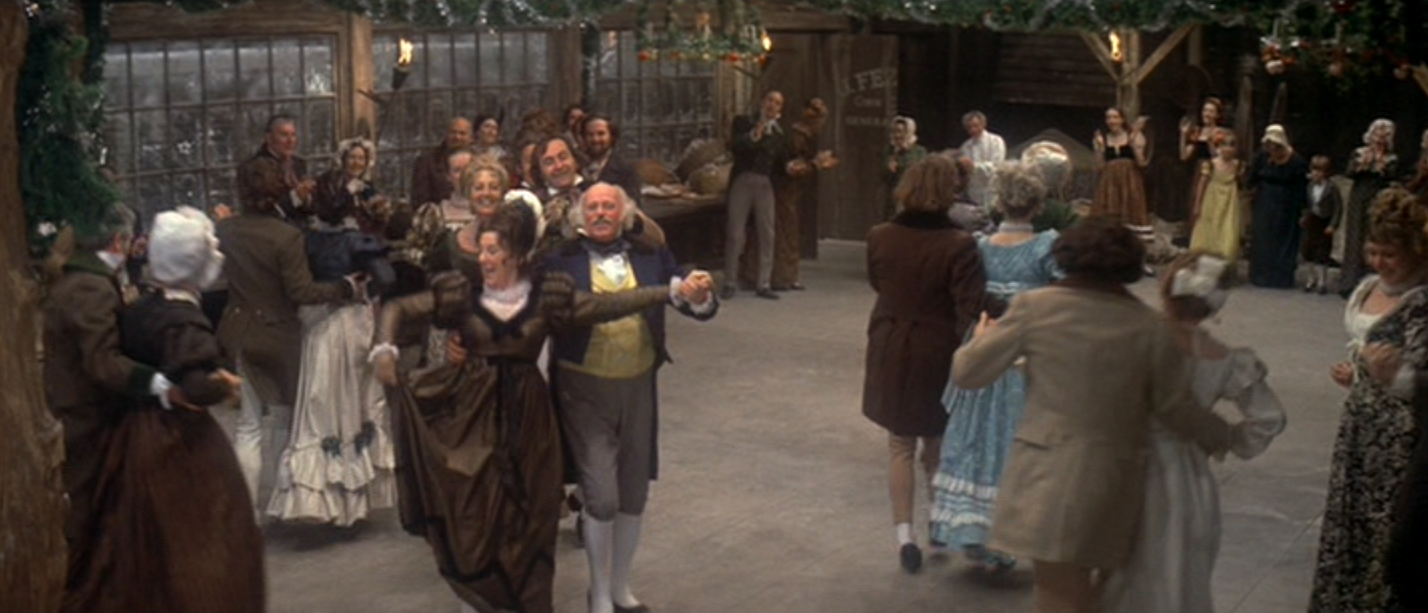
His young self and Dick don't put up any shutters, which is important, because just as they're finishing getting ready, we hear a fiddle and see through the warehouse's large windows that the guests have arrived. The fiddler leads them and they're all dancing and shouting and twirling and carrying bowls and baskets filled with treats for the party.
When Fezziwig ordered the shop closed, he mentioned needing to have it done before Mrs Fezziwig and their daughters arrived with the punch bowl. We don't know who any of the other guests are, but it's not important for this version. The focus isn't on Fezziwig's compassion for all outcasts (as pleasant as that is to see in other version). It's on his effect on Scrooge personally.
The fiddler hops up on Fezziwig's desk and Fezziwig announces that "there will now be happiness and contentment in this room the like of which none of us has ever seen before." He then points to the fiddler and orders, "Begin!" He's proper and commanding, but people follow him out of love, not fear.
As the guests clap, Fezziwig and Wife take the floor and begin the next musical number, "December the 25th."
Of all the days in all the year that I'm familiar with,
There's only one that's really fun:
The crowd answers in unison, "December the 25th!" to which Fezziwig shouts, "Correct!"
He and his wife punctuate the song all throughout with that affirmation.
Ask anyone called Robinson or Brown or Jones or Smith
Their favorite day and they will say:
December the 25
Correct!
I don't know why I love that as much as I do. Maybe it's just that it's so very English. It's a great song though and the dancing that accompanies it is complicated and boisterously exuberant.
During the dance, a particularly beautiful woman with blonde hair and an eye-catching blue dress tries to grab Young Scrooge's hand and pull him into the merrymaking. He politely shakes his head and puts up his hand.
Old Scrooge and the Ghost have moved up to a storage balcony to watch the party. "Why didn't you join the dancing?" she asks.
Scrooge is cranky and unapologetic. "Because I couldn't do it!"
She tut tut tuts him in response.
They continue watching and Fezziwig is having such a good time, flailing about and laughing uproariously at the dance's twists and complications. "What a marvelous man," Old Scrooge observes. And he believes it.
"What's so marvelous?" the Ghost challenges. "He's merely spent a few pounds of your mortal money." She's wonderfully stuffy and condescending the way she says it; I almost believe that she means it rather than being sarcastic.
Scrooge doesn't pick up on her sarcasm either, but defends Fezziwig honestly. "You don't understand!" he scolds. "He has the power to make us happy or unhappy. To make our work a pleasure or a burden. It's nothing to do with money!"
That last declaration slips out of his mouth so naturally that it puts a lump in my throat when I hear it. This is something that Scrooge has believed in the past and must still believe deep down, but he hasn't let himself believe it - much less express it - in a really long time. And even now he doesn't realize that he's said anything remarkable. The visions of the past are having their effect on him though.
This is the moment where Scrooge starts to change. He never quite bought that Marley's ghost was real and he continued being grouchy with the Ghost of Christmas Past. He didn't cry in the schoolhouse scene; he was just grumpy and bitter. But here, without his even realizing it, the lessons he learned from Fezziwig are beginning to peek out from the place where Scrooge has buried them.
The "December the 25th" number dies down as the scene fades to another, slower dance later in the evening. The woman in blue again seeks out Young Scrooge and this time, though he's clearly uncomfortable, he puts his arms around her and dances.
"Isabelle," observes Old Scrooge.
The Ghost tells us that this Belle is actually one of Fezziwig's daughters. I don't know why the film made that change. Maybe to consolidate characters. But the Ghost and Old Scrooge talk about how he was engaged to her and as Young Scrooge and Isabelle dance, I believe that they're in love. He's so clearly awkward and nervous about dancing, but even though his expression is rigid, it's also obvious that he wants to be exactly there where his is, dancing with her and making her happy. And she is happy. Completely pleased that he's making the effort. This can't be an easy relationship for either of them, but they both want it very much.
As Old Scrooge watches, he begins to sing softly to himself:
You, you were new to me.
You, you were Spring.
You, you were true to me.
You, you were everything.
It is 100% legitimately heart-breaking.
After this, the music livens again and the scene fades to another Christmas outside.