Michael May's Blog, page 48
April 17, 2020
The Brontes: Infernal Angria by Craig Hurd-McKenney and Rick Geary
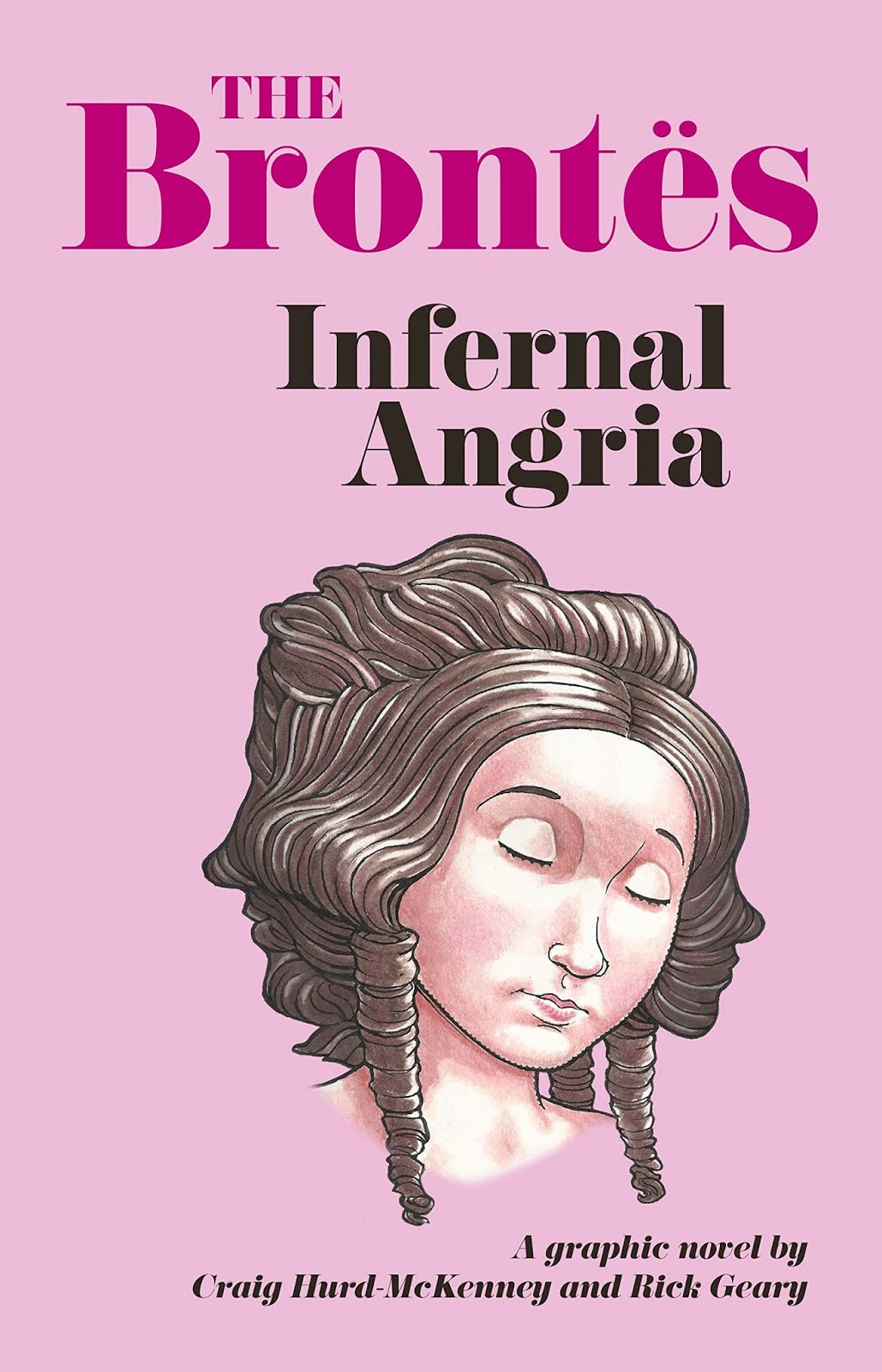
As I mentioned earlier, Isabel Greenberg's Glass Town got me wanting to read Craig Hurd-McKenney and Rick Geary's version of the story, which also explores the Brontë siblings' obsession with the fictional world they created as kids. I read the first part when it was released back in 2004 and was fascinated by it. It was my first exposure to the Brontës childhood creations and I was curious to learn more. It took a while for Hurd-McKenney and Geary to finish the story though (no judgment; graphic novels are monsters to produce), so I'd forgotten all about it until Glass Town reminded me. Thankfully, Infernal Agria was finished a couple of years ago and was all ready for me to dig in.
It's a cool companion to Glass Town. The art style is very different with Geary being perfect for nineteenth century atmosphere and details. It doesn't have the maps or clear geography that Greenberg provides in Glass Town though, so the versions compliment each other. They're doing different things.
Hurd-McKenney and Geary's story also makes Angria/Glass Town a real (though fantastical) place. It's like Wonderland, Narnia, or Oz in that it's separate from the real world, but fairly easy for the kids to access. But like Greenberg's story, Hurd-McKenney and Geary's take focuses on the obsession that the Brontë kids had with the place. Not just Charlotte - who's the focus for Greenberg - but all of them. Infernal Agria argues that this obsession was heightened by tragedies in the Brontë family, and the obsession itself becomes its own kind of tragedy piled onto past ones. It's a bleak take that I didn't enjoy as much as Greenberg's more universal one. I don't always agree with the actions of Greenberg's Charlotte Brontë, but I understand them and see myself in a lot of what she does and thinks. I mostly just feel really bad for Infernal Agria's Brontë kids.
I'm absolutely glad I read it though. I'd love to see the story and world expanded even further and am super curious now about seeing the 2016 biopic, Walk Invisible.


April 16, 2020
Hellbent for Letterbox | Gun Fury (1953)

On the new Hellbent for Letterbox, Pax continues his series of Westerns Starring People Not Necessarily Known for Westerns, with Donna Reed in Gun Fury. Also starring Rock Hudson.
I talk about some of the Zorro adaptations I've been watching and Pax makes progress with his reading of Xavier Dorison and Ralph Meyer's Undertaker comics.


April 15, 2020
The New Adventures of Zorro (1981)
Who's in it?: The voices of Henry Darrow (a prolific character actor in the '70s and '80s who went on to play Zorro again in the short-lived CBS live-action comedy Zorro and Son - which I won't be covering - and also played Zorro's dad in the much longer '90s live-action series), Julio Medina (another busy character actor on TV in the '70s), and Don Diamond (I know him best as Corporal Reyes on Disney's live-action Zorro show in the '50s).
What's it about?: Filmation's animated version, originally ran alongside their Saturday-morning Tarzan and Lone Ranger cartoons on The Tarzan/Lone Ranger/Zorro Adventure Hour.
How is it?: I expected it be similar to Filmation's other adventure cartoons like Tarzan, Lone Ranger, and Star Trek, but Zorro is actually a bit different from those. It's the only one Filmation farmed out to another animation studio, which happened to be in Japan. The anime influences are really apparent, especially in the look and comedy antics of Sergeant Gonzalez (Don Diamond). And while the budget is kept under control with reusable action animation, it's not the same animation that I'm used to seeing in the other Filmation cartoons where Tarzan, Lone Ranger, Captain Kirk, and Flash Gordon all run in exactly the same way. The most noticeable reused animation is in the sword fights, but there are lots of different stock moves that the studio rearranges enough to keep interesting. And they're good, creative moves. Sometimes fights last a little longer than my older, short-attention brain wants them to, but when I was a kid, this is what I showed up for.
New Adventures of Zorro also uses some of the same music from those other Filmation shows (which I love, by the way; it's part of the soundtrack of my childhood), but it's rare. Most of the Zorro soundtrack is made of Spanish guitar and other Latin-inspired music. It's exciting and good.
The mythology is mostly the same as previous versions with one, huge exception that I'll get to in a minute. It's heavily inspired by the Disney show which played up the secret identity and Zorro cave to basically turn Zorro into a Western superhero.
Most versions have a female character that Don Diego is either engaged to or interested in, but Filmation's is remarkably chaste. Diego (Henry Darrow) hangs out with a woman named Maria whom I think is the daughter of the local governor. They may have said for sure and I missed it, but that's what I think I've figured out. At any rate, their relationship seems to be purely Platonic.
Like other versions, Diego lives at home with his father, but his dad isn't as exasperated with Diego's apparent laziness as he is in other versions. There's a certain amount of eye-rolling, but he seems to have mostly accepted Diego's flaws.
And like other versions, Zorro's chief adversary is the captain of the local guard who collects taxes for the greedy, selfish governor. The captain also has a fat sergeant, named Gonzalez. That character is right out of the original Johnston McCulley stories and appears in most adaptations. He was renamed Garcia in the Disney series, but Filmation uses the original name. And they have Don Diamond provide the voice in sort of a promotion from his role as Garcia's sidekick in the Disney show.
The big change to all earlier versions is that Zorro's sidekick is no longer a mute servant, but a bona fide costumed adventurer named Miguel (Julio Medina). Zorro frequently calls him Amigo in battle and I wondered whether that's his official superhero name. I don't think it is; I think Zorro's just not calling him Miguel when they're both in costume. But I wish that Amigo was his superhero name, so bad guys could say, "Oh no! It's Zorro and Amigo!"
It sounds silly, but it's no sillier than Miguel's pastel-colored costume, which looks like it was inspired by Zorro, the Gay Blade . He just needs little dingle-ball tassels hanging off the brim of his hat.
There are only 13 episodes of the series and they're all pretty good. The plots are generally Robin Hood style stories where the governor and Captain Ramon overtax the people, so Zorro and Miguel steal the taxes back. But there are always fun twists like Ramon hiring his own Zorro to defeat the real one, or natural disasters like flash floods and earthquakes complicating everyone's missions. There's also a great recurring character, Lucia, a swashbuckling pirate captain who uses her crew to either help Zorro or oppose him depending on her needs at the time.
Rating: Four out of five Miguels.


April 14, 2020
FCA Invasion | Turning Movies into TV Shows 3
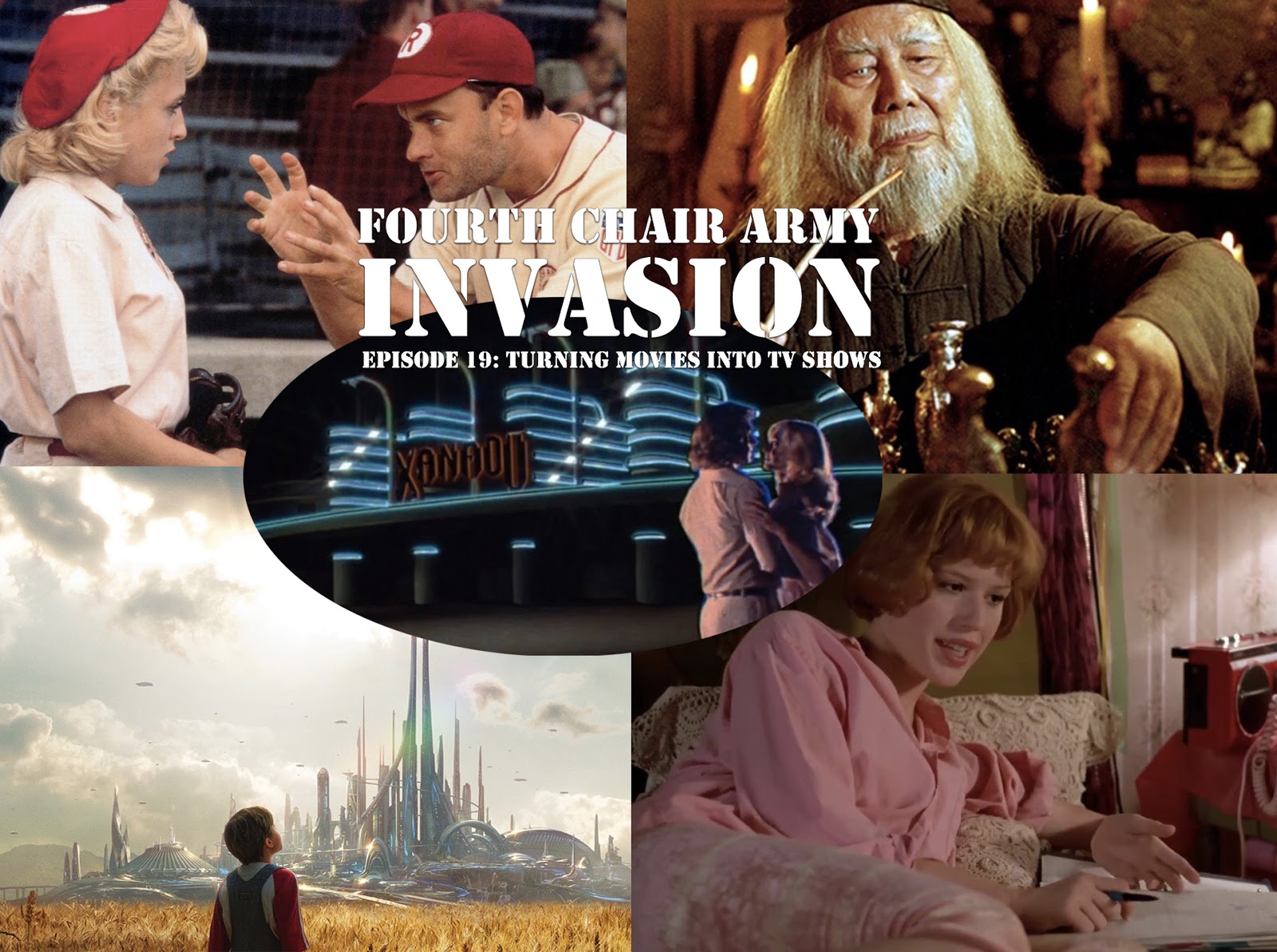
Mike Westfall, Michael DiGiovanni, Annaliese Trammel, and Paxton Holley join me for another round of the classic Nerd Lunch feature: "Turning Movies into TV Shows." After a discussion of what movie-based TV shows have worked (and which haven't), we pitch TV shows based on A League of Their Own, Gremlins, Xanadu, Tomorrowland, and Pretty in Pink.

April 13, 2020
Glass Town: The Imaginary World of the Brontës by Isabel Greenberg

Glass Town is an immersive look at the young lives of the Brontë siblings: Charlotte, Branwell, Emily, and Anne. As children, they created a fictional world together and populated it with their individual, but interacting characters in a shared storytelling exercise. Greenberg chronicles some of those stories while also helping readers get to know the Brontës themselves.
All the kids get some attention, but Greenberg focuses primarily on Charlotte and her growing obsession with the fictional world. It threatens to consume her to the point where she's not only ignoring real-world responsibilities, but is also seeing physical manifestations of her characters and having conversations with them. There's a powerful parallel to the allure of modern world-building video game simulations and the potential for addiction. But it's also a commentary on the act of storytelling itself and the nature of fictional characters who sometimes do surprising things quite outside their creators' control.
Greenberg has an art style that I struggle to describe. There's a naïf quality about it (especially the characters) that I don't always connect with, but she's a master at storytelling and page composition. She also includes great, period details and amazing maps and architectural structures. I felt pulled into the Brontës' world.
I'm eager to dig into their literary work, but before I do that I want to spend more time with them as characters themselves. There's another graphic novel that I read the first part of a few years ago. The Brontes: Infernal Angria by Craig Hurd-McKenney and Rick Geary was originally going to be serialized and the first installment was published in 2004. It was finally finished a couple of years ago and I'm going to revisit it now. I remember being rather confused by it at the time (not being familiar with the Brontës or their Angria/Glass Town concept), but Greenberg has primed me for another go. There's also a 2016 biopic called Walk Invisible: The Brontë Sisters that I'll be taking a look at.

April 8, 2020
Little Women by Louisa May Alcott
After seeing and loving Greta Gerwig's adaptation last year, I was excited to finally read Alcott's novel. It did not disappoint.
I've seen a bunch of other adaptations of it and like all of them to various degrees. The baseline of enjoyment for me on a Little Women adaptation is high and that's thanks to Alcott's characters and the tone created by their relationships. These are people who are by no means perfect, but are completely dedicated to loving and being kind to each other. They sometimes fail, but their response to that failure is always helpful. That applies to how they respond to their own failings as well as how they confront and ultimately forgive the failings of others.
It's deeply profound and inspirational. More so in the novel than in any adaptation I've seen (though Gerwig's gets super close), simply because we get to peek into heads and hear Alcott's commentary about things. There's parenting advice and marriage advice and simple getting-along-with-your-friends advice. But all of it is offered with humility and awareness that the advisor is just as flawed as the advisee. There's not a whiff of self-righteousness in the whole book. If you've seen the Gerwig film and remember the scene where Laura Dern talks to Saoirse Ronan about anger, you'll know what I'm talking about. And what's also amazing is that every bit of this is as applicable today as it was 150 years ago. Being kind and doing good are timeless exercises and Little Women is here to encourage us.
From a plot and character standpoint, I was surprised that I got so invested in Amy. Jo is always presented as the main character, because she's so clearly analogous to Alcott herself, but Amy is a very close second. Gerwig's version probably pointed me in Amy's direction with some new dialogue and by casting Florence Pugh, but I might have got there on my own just with Alcott's book. All four March sisters have character arcs, but Amy's is the one I most connect with for some reason.
Maybe it's because she's the youngest and has the most to learn. When the book opens, Meg and Jo are already aware of their biggest flaws and are working on them. For Meg, it's lack of contentment. As oldest, she's the only one who remembers when the March family was wealthy and she misses it. It doesn't help that she's still friends with people from that crowd, though no one ever suggests that there's anything wrong with that. It just makes it harder for her to appreciate what she does have when all of her friends have so many luxuries. She's trying though. Likewise, Jo's biggest flaw is her anger, but we see her work on controlling it almost from the beginning.
Beth is the quiet one, but even though she doesn't get into a lot of trouble, she struggles with laziness. When she famously goes to visit the family with the sick baby and contracts scarlet fever, she does it selflessly, but it's the result of some intentional discipline that she's been working to implement in her life. It's not super dramatic, though. She's always been a good, thoughtful person who cares about others; she just sometimes needs a nudge to get her away from her dolls and kittens. Curiously, Beth is the character I'm most like, so it's a little surprising that I don't connect with her more. But it's also kind of not.
Amy starts the novel wanting attention from her family and also her friends at school. And one of my own character flaws is that when someone demands my attention, my instinct is to not give it to them. So Amy irritates me in the early part of the book, but she gradually grows out of it to become self-aware and confident. It's a dramatic change and it's easy for me to get behind and cheer for her as she makes it. It's also helpful that her story is most like a Jane Austen novel in that she marries for love, but gets money as well. Only, unlike Austen's most famous heroes, we get to see Amy actually grow and develop the attitude that love is what she's really after.
I have more thoughts, but I'll save them. I'm going to write about some of the movie and TV adaptations, so other things (like Professor Bhaer) will come up as I do that.

April 2, 2020
The Turn of the Screw by Henry James

The first time I read The Turn of the Screw, I didn't get it. I went in expecting a good, but straightforward gothic story where I relate to and root for the governess as she tries to find her place in a spooky, old mansion. But I got quickly frustrated with the unnamed hero of James' story. She makes wild assumptions, jumps to conclusions, and makes everything worse with her horrible lack of communication. I didn't realize that that's exactly the point.
I knew that I had to be missing something though, so I looked at some other criticism of the novella and learned about the theory that the ghosts are all in the governess' head. Whether or not that's what's really going on, it was helpful for at least questioning the reliability of her as a narrator. It introduced me to an essential subtext of the story that I wasn't even looking for on my first reading.
Rather than go back to the book right away, I watched some film adaptations to see how they handled the ambiguity. The most useful of them was Jack Clayton's The Innocents starring Deborah Kerr. Or to be fair: it was Christopher Frayling's commentary on the Criterion edition that most helped me find the balance I wanted between ghost story and psychological thriller. Frayling points out that Clayton worked hard to avoid making a definite statement about the reality of the ghosts. He wanted viewers to be able to have it either way.
That opened up a third way of thinking about the story. Instead of having to decide whether the ghosts are real or all in the governess' mind, it's possible that they're real, but that her psychological condition is also playing a big role. With that in mind, I went back to Henry James and enjoyed his story a lot more.
For the record: I think the ghosts have to be real in the novella. The governess sees and describes them to the housekeeper Mrs Grose, who then confirms that the descriptions match deceased employees of the estate. The Innocents preserves ambiguity by having the governess see a picture of one of the employees before seeing his ghost, but that's not in the book. It could have happened behind-the-scenes, but that's reading more into the text than James puts there.
So as far as I'm concerned, the only explanation is that the ghosts exist. But the governess absolutely makes the situation worse through her actions, caused by her own, distressing hangups about the children. That's a horrifying balance I can get my head around, so with that in mind, I'm going to be watching and re-watching some adaptations again.
My volume of The Turn of the Screw also includes James' short story, "Owen Wingrave." It's more straightforward than Turn of the Screw, but ironically even more ambiguous about whether there's really a ghost. I enjoyed it a lot.

April 1, 2020
Sparrows (1926)
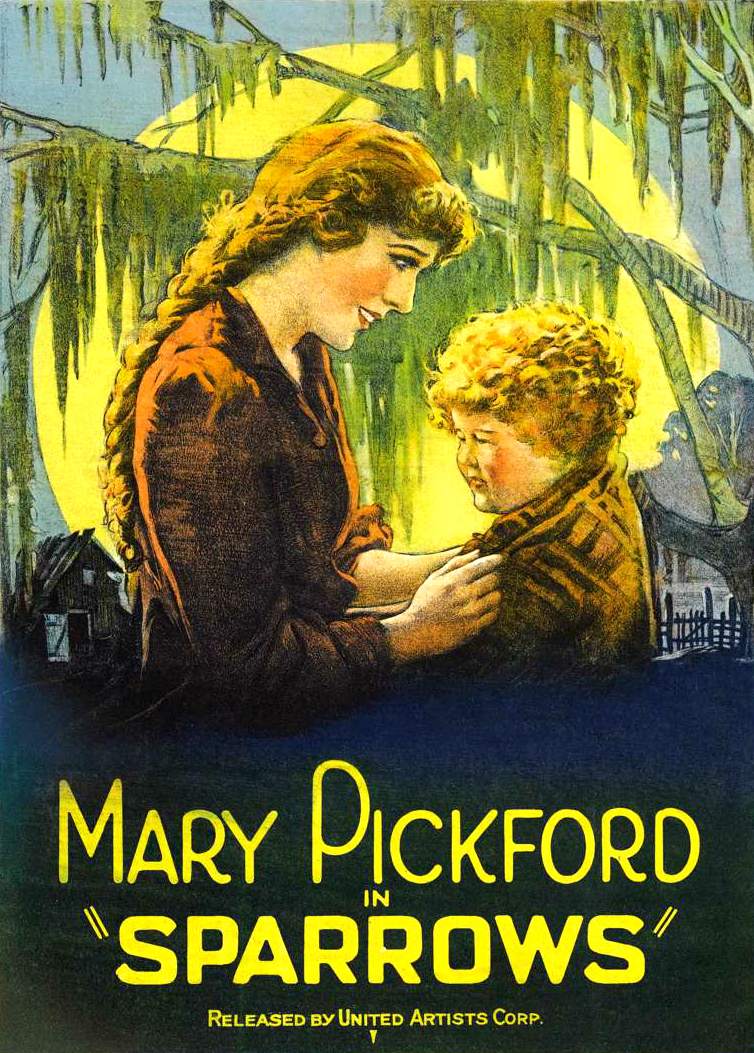
Who's in it?: Mary Pickford (she has cameos in a couple of my silent favorites - Ben-Hur: A Tale of the Christ and The Black Pirate - but the actual Pickford movies I've seen are "What the Daisy Said" and Daddy-Long-Legs)
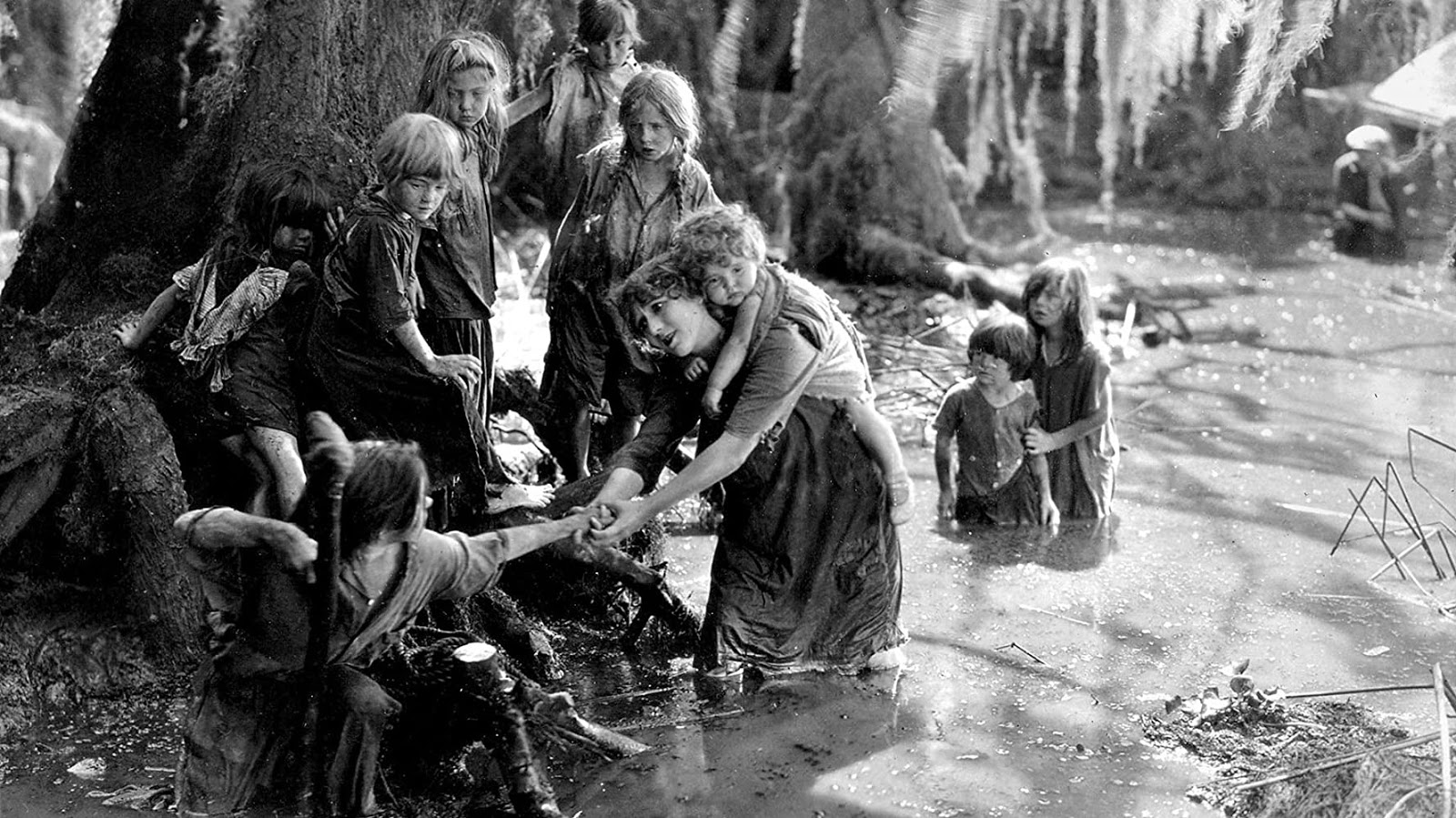
What's it about?: A bunch of kids in slavery to an evil dude in the middle of a swamp are led and cared for by the oldest in their group (Pickford) who attempts to keep them well and hopeful about deliverance.
How is it?: I was interested in the swamp setting and Southern Gothic feel, but wasn't prepared for how harrowing the story is. The danger for the kids is real, both under the abuse of their captor and his family and in the swamp itself once the kids try to escape. And through all of it is Pickford's characteristically charming performance as Molly, the one bright spot in their world.
But even Molly and her service are complicated. She tries to keep the kids' spirits up through faith in the providence of God, but some of the group are beginning to doubt. Molly refers a lot to a quote by Jesus Christ about God's caring for valueless creatures like sparrows: "Are not two sparrows sold for a penny? Yet not one of them will fall to the ground outside your Father’s care. And even the very hairs of your head are all numbered. So don’t be afraid; you are worth more than many sparrows" (Matthew 10:29-31). But if that's true, some of the children wonder, then why hasn't God rescued them?
Christ's statement and the movie both raise a lot of questions about providence and Sparrows doesn't offer any pat answers. It ultimately encourages accompanying faith with action, and you can build a whole other theological discussion around the implications of that. I loved the film.
Metaphysical themes aside, it's also just a gripping survival movie that had me tense in all the right moments.
Rating: Five out of five swamp escapes

March 31, 2020
Hellbent for Letterbox | Adiós, Sabata (1970)
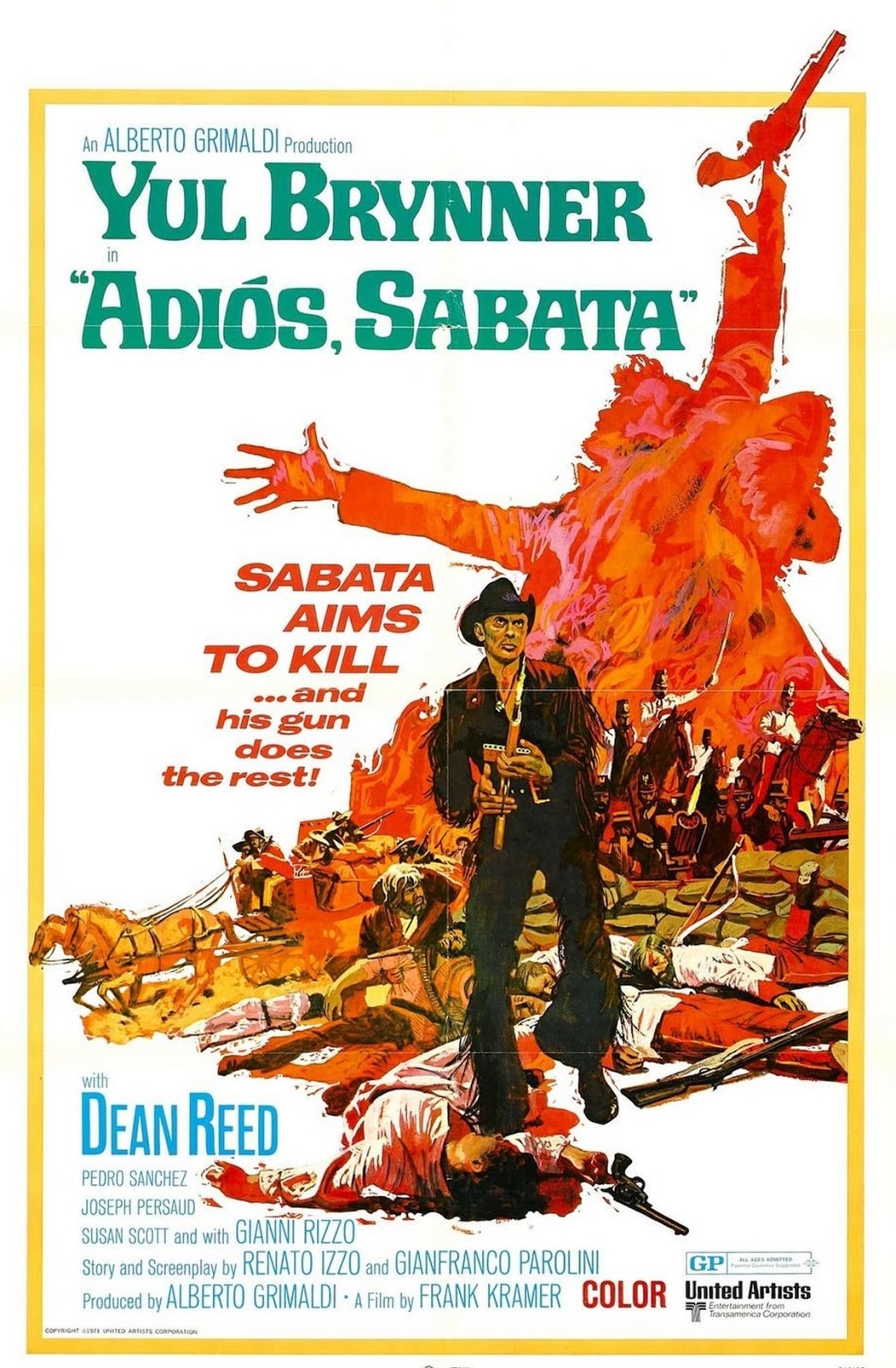
Pax and I check out the sequel to 1969's Sabata (which we covered three years ago; how time does fly). Lee Van Cleef's character is played by Yul Brynner this time, so we talk about that and other changes between the films, and attempt to reconcile the two.
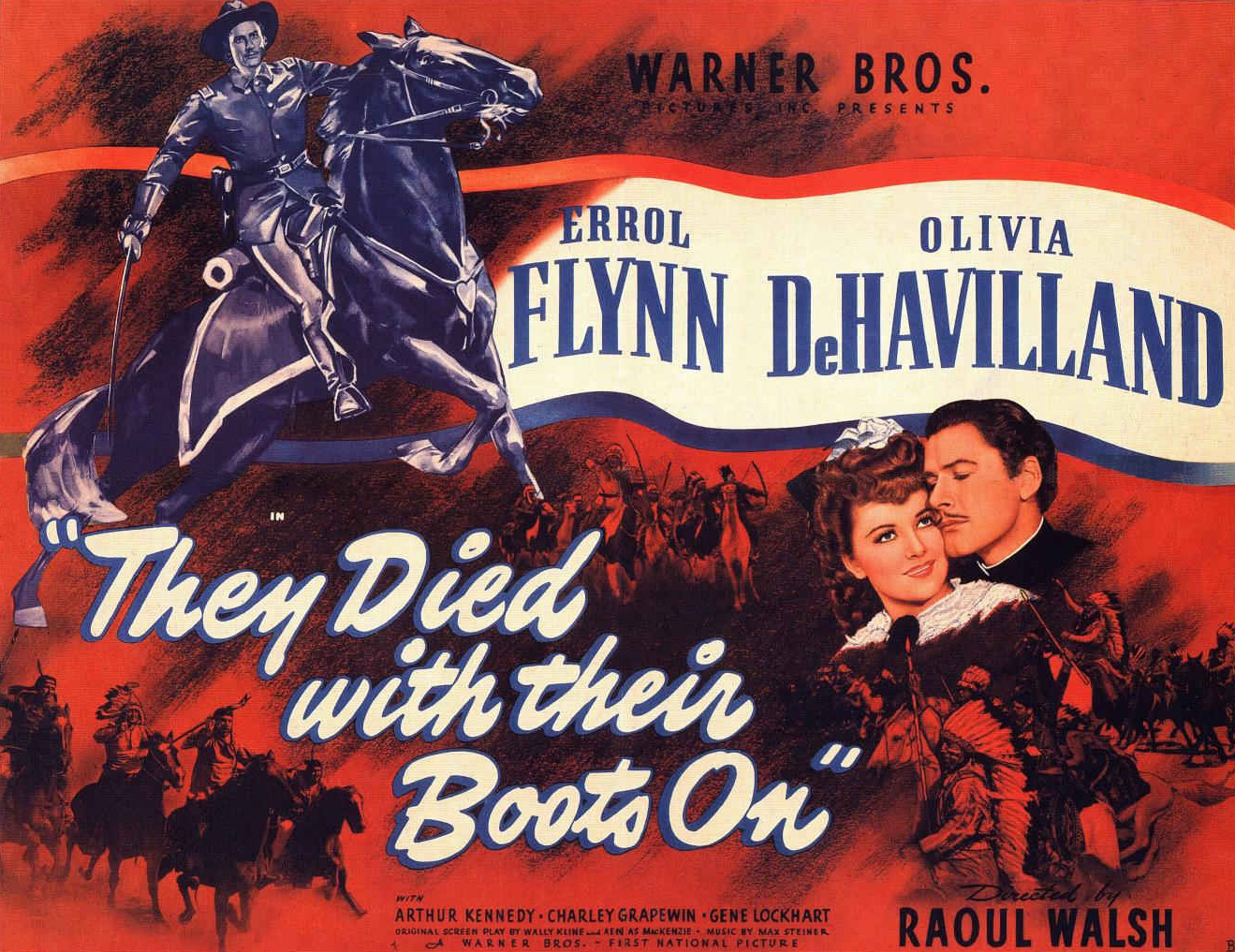
Also, I watch Errol Flynn play General Custer in They Died With Their Boots On.

March 30, 2020
Zorro: The Gay Blade (1981)

Who's in it?: George Hamilton (Love at First Bite), Lauren Hutton (Lassiter, Once Bitten), Donovan Scott (Police Academy), and Ron Leibman (Friends)
What's it about?: A comedy sequel in which the original Zorro has died and his two sons have to carry on the legend. The first tries to do it in a straightforward way, but injures himself, leaving the job to his flamboyantly gay twin.
How is it?: Very silly and often very funny. George Hamilton is always a pleasure and I appreciate that (some stereotypes and the villain's bigotry aside) the gay character is every bit as heroic and awesome as his straight brother. Actually, he's more awesome with his colorful variations of the traditional costume and his preference for the whip over the sword. He uses the whip to carve his full name - not just his initial - onto walls and he also doesn't hurt himself.
Donovan Scott is hilarious as Don Diego's deaf-and-mute servant. He's clearly riffing on Gene Sheldon's character from the Disney TV show, who would communicate with Don Diego through pantomime, but Scott takes the charades game to ridiculous levels.
Ron Leibman plays the evil mayor in need of overthrowing and it's a bit much when he screams all of his lines, but even that leads to some really funny stuff. Brenda Vaccaro (whom I recognize, but I don't where from) is also great as Leibman's wife. I'm surprised how much I enjoyed this.
Rating: Four out of five smooth operators.