Michael May's Blog, page 123
November 9, 2015
The Balance of the Force (or, How I Learned to Stop Worrying and Love Anakin's Journey)

I knew at the beginning of the year that I'd want to write about Star Wars some, but I wasn't sure how to fit it in with all the James Bond I had going on. Then the Nerd Lunch guys invited me to be a recurring panelist on their Star Wars episodes. And then Dan Taylor and I started the Starmageddon podcast. So I've had way more opportunity to think about and discuss Star Wars than I imagined I would just writing a few posts on this blog.
But as we come into the final stretch for The Force Awakens, I want to put together my thoughts so far in one place. It helps me process to write things down and it'll help me talk more coherently in coming podcast episodes if I get this all straightened out. Because finally, at long last, I think it's possible to even get it straightened out. I wasn't able to do it on my own, but thanks to many different people (some friends, some online writers, and some professionals working in the Star Wars universe) I think I've finally figured out what George Lucas was trying to say about Anakin's journey and what it means for Luke. He did this so imperfectly, but I can at least finally see the bones of the story I think he was trying to build.
If you've listened to the Nerd Lunch episodes covering Phantom Menace and Attack of the Clones, you've heard me talk about the revelation that the Jedi aren't the perfect good guys that we expected them to be after the original trilogy. Obi-Wan paints a romantic picture of the Jedi for Luke, but that's the memories of an old man romanticizing the past. And to be fair, Obi-Wan never sees the Jedi for what they are, not even in the prequels. They're arrogant and complacent and sadly, so is he.
The Clone Wars series drives this home in a powerful way, especially in the last couple of seasons, but the evidence is all over the prequels, too. Mace Windu is the prime example of this. I had to get past my preconceived notions of Samuel L Jackson as a righteous, noble character, but once I was able to let that go, I realized that Mace is the personification of hubris. Every line out of his mouth in The Phantom Menace is just wrong.

"The Sith would not have returned without us sensing it."
"We'll discover the identity of your attacker."
"He will not be trained."
Yoda tries to temper it some, but as the spokesperson for the Council, Mace makes the wrong decisions over and over again.
And Qui-Gon totally knows it. That's why he has a history of defying the Council. Which is why he's also the best character in Phantom Menace. And it's why he had to die. In order for Anakin to ultimately fall to the Dark Side, Qui-Gon can't stick around. If Qui-Gon had trained Anakin, there never would have been a Darth Vader. It took Obi-Wan's blind trust in the Council to push Anakin away. All through Phantom Menace, Obi-Wan is critical of Qui-Gon's methods. He's trained with Qui-Gon, but his allegiance is squarely with the Council. Because of that, as Anakin's teacher, he tries to keep Anakin under tight control in hopes that Anakin will also learn to trust the Council. But he's wrong and it leads to tragedy.
The Coucil's complacency and hubris is even more evident in Attack of the Clones. Mace again refuses to believe something that doesn't fit his extremely narrow worldview. He rejects the idea that Count Dooku may be a bad guy, simply because Dooku used to be a Jedi. "It's not in his nature."
Yoda admits that arrogance is "a flaw more and more common among Jedi. Too sure of themselves they are. Even the older, more experienced ones."
Dex has a line where he says, "I should think that you Jedi would have more respect for the difference between knowledge and wisdom." He gets it.

You have the librarian saying, "If an item doesn't appear in our records, it doesn't exist." And Obi-Wan, bless him, totally buys it until he goes to Yoda, where it takes a little kid to see the obvious that Kamino has been deleted from the archive. All of the adult Jedi are too trusting of the system. That's also why the mystery of the clone army's origin is dropped so abruptly. Once Obi-Wan learns that it was commissioned by a Jedi, no one questions it anymore. The Jedi just claim it. Clearly it's theirs.
This is why Anakin has a hard time fitting in. He's too much like Qui-Gon. He's too willing to question everything, which annoys the crap out of all the other Jedi and simply widens the rift. One of my favorite scenes in Attack of the Clones is when Padme questions Anakin about love. She says that she thought love was forbidden for a Jedi.
Anakin's response is that attachment and possession are both forbidden, but that "compassion, which I would define as unconditional love, is central to a Jedi's life. So you might say we're encouraged to love." Lucas isn't generally a great writer, but I love that line. It does so much. It shows Anakin trying to find loopholes in the Jedi system, but it also shows how broken that system really is. Attachment is forbidden?
Look, I get it to a certain extent. It's the whole "fear leads to anger leads to hate" argument. When Yoda first meets Anakin, he's concerned about Anakin's attachment to his mom. That's why the Jedi usually grab Padawans so young, before they can form attachments. But like Pax said in one of the Nerd Lunch episodes, the Jedi have made this a stringent rule that they believe applies to everyone regardless of individual circumstances. There is wisdom in the awareness that attachment can lead to negative things. But to suggest that attachment always leads to negative things and so prohibit it... that's bantha poodoo.
By trying to find loopholes around these unthinking restrictions, Anakin is also trying to fulfill the prophecy about bringing balance to the Force. The Force is a living thing, but the Jedi have turned it into a legalistic system of rules. We had some discussion on Nerd Lunch about what the Jedi expected a balanced Force to look like. We never figured it out though, because I don't think even the Jedi know. (Or if they do, Lucas isn't telling us.) But what I think it means now (and thanks to Starmageddon co-host Ron Ankeny for pointing this out to me) is that Anakin is working on marrying both sides of the Force: Light and Dark.

We're told that the Light and Dark sides represent Good and Evil, but what if it isn't that simple? The Jedi - contrary to how Obi-Wan remembers them in Star Wars - are not wholly Good. And Anakin's slide to the Dark Side is not because he suddenly turns Evil. It's at least in part a sacrifice that he makes out of love for Padme. As they're practiced in the prequels, the Light and Dark sides are better redefined as Reason and Passion. The Jedi have gone full Vulcan, while Palpatine and the Sith are all about the emotions. The thing is though that the emotions and passions in question are always negative as discussed by both sides. The Sith are only interested in fear and anger and hate. And the Jedi have gone too far the other direction in trying to avoid those feelings. What Anakin argues - and he's totally right - is that there's a middle approach. A person can be passionate and feeling without giving in to negative emotions. It's risky and potentially dangerous, but it's also far more rewarding and potentially beneficial than the alternative.
Unfortunately, Anakin goes too far. His love for Padme does open him up to Palpatine's manipulation and the Sith Lord succeeds in widening the chasm between Anakin and the Jedi to an uncrossable level. But it's super important to realize that this absolutely could not have happened had the Jedi not been every bit as tired and ineffective as Palpatine claimed that they were. That - in addition to Anakin's fears about Padme's safety - is what pushes him to assist Palpatine in killing Mace Windu. And that's the step too far for Anakin. After that moment, he realizes that he can't go back and that he has to be all in with Palpatine. That's why he goes to the Jedi Temple and kills everyone, including the younglings. It's not that he's suddenly evil and all into it. As unconvincing as Hayden Christiansen is most of the time, I can see on his face at the temple that he doesn't want to be doing what he's doing. It's crushing his soul.
Palpatine's torture of Anakin doesn't stop there. One of my biggest issues with Revenge of the Sith has always been Padme's "death by sadness," but writer Joseph Tavano explains that that's not what happened at all. Click that link for the full theory, but the short of it is that Padme's death is actually orchestrated by Palpatine. He told Anakin earlier that he didn't know how to bring someone back to life, but that he and Anakin could discover the power together. That's exactly what happens. Anakin should have died after his fight with Obi-Wan, but Palpatine keeps him alive long enough to put him through a painful, horrifying surgery that amplifies Anakin's hate and anger to uncontrollable levels. With all of his considerable power, this ball of rage fights to survive and reaches out with the Force to literally steal life from the person he's most connected to.

That's why Padme's medical droid makes such a big deal out of her being completely healthy. That line has always thrown me, because I knew that Lucas was trying to say something specific with it. I just couldn't figure out what that was. Without the line, we could explain away Padme's death as simply a complicated pregnancy, but Lucas specifically wants us to know that that's not what's going on. Tavano's reading of the scene explains what's really happening. Anakin is killing Padme to stay alive. When Palpatine tells him, "You killed her," he's not lying. Palpatine's not only aware of her death, he intentionally set up the circumstances to bring it about, serving two purposes at once by pushing Anakin completely into the Dark Side and also eliminating Anakin's last tie to the person he was.
The prequels aren't a grand adventure story in the tradition of the original trilogy. They are - by genre - a Tragedy. We see the decline and fall of the Jedi (helped along by Palpatine, but also by the weight of their own complacency) and the utter destruction of Anakin Skywalker who has failed to fulfill the prophecy. He has not brought balance to the Force.
But his son might.
And I would argue that he does. When Luke leaves Dagobah in Empire, Yoda and Obi-Wan's biggest concern is that Luke isn't ready to face Vader. That's often interpreted as concern that Luke will learn the truth about his father, but it's not just about that. From Yoda and Obi-Wan's point of view, there's more at stake than simply Luke's figuring out he's been lied to. They're concerned about his potentially falling to the Dark Side. "Remember your failure in the cave." Facing Vader will bring up all sorts of emotions that Luke hasn't yet been trained to suppress. And will do so in the presence of the person best suited to encourage and exploit those feelings.
Because Luke is sidetracked after facing Vader (gotta rescue Han!), he never returns to learn about all the restrictions against attachment. His feelings have opened him up to the Dark Side, which is why he seems way more powerful at the beginning of Return of the Jedi than his training in Empire would suggest. We also see him doing questionable things in Jedi like Force-choking Gamorreans. He's even wearing Sith robes.

But he never completely gives in. Not completely. I mean, he stumbles several times. He does go after the Emperor with his lightsaber and fully intends to murder the old man. Since Vader stops him, I used to read that as Vader's (probably unintentionally, but who knows?) saving Luke from the Dark Side. As if the Emperor's actual death was really what would magically complete Luke's fall. It doesn't matter whether Luke's attack was successful. What mattered was that he give in to his feelings of anger and hate. And that's exactly what he did in that moment. He gave in to the Dark Side.
But there's another moment shortly after when Luke is blind with rage and about to murder his own father and he pulls back. His love for his dad - his attachment - saves him.
My point is that Luke is all over the place in regards to the Dark and Light sides of the Force. He uses both; never fully falling into either. I don't know if Obi-Wan knew what he meant when he told Luke to "trust your feelings." I'd like to think that he matured and grew more wise in his later years on Tatooine, but he still doesn't seem to get it when he's talking to Luke on Dagobah. The irony though is that Luke has learned to trust his feelings. Because he didn't complete his training with Yoda, he never learned to suppress them. He's a mixture of Reason and Emotion; able to use his feelings to manipulate his power without sliding completely into negativity and darkness. Supporting Ron's reading that I mentioned earlier, Luke has finally brought balance to the Force.
On a recent episode of Starmageddon, Dan and I talked about why Luke hasn't been in the most recent marketing for The Force Awakens. He's not in the final trailer (except for an arm that we assume is his) and he's not on the posters. When asked about that, JJ Abrams' response was, "A-ha! You noticed!" leading to much speculation about what Luke's role in the new movie will be. The rest of this article will be me summing up the theory that Dan and I came up with. There are no spoilers, because neither of us actually know anything, but if you'd prefer to see The Force Awakens completely untainted by speculation, you should quit reading here. You've got all my thoughts on Anakin's journey, the Balance of the Force, and how Luke fulfills that prophecy in the original trilogy.
But if you're curious about some thoughts on what that could mean for the future... read on!

I reject the idea that Luke will become the villain of the next few Star Wars movies. Partly because he's the hero of the original trilogy and it would be cheap to turn him evil, but mostly for all the reasons I mentioned above. He's Balance.
But as Dan said in the Starmageddon episode, Luke could very well be the MacGuffin that both the good guys and bad guys are after in The Force Awakens. If he's the Balance, then there's the opportunity for either side to tip him to their cause. If Luke realizes that, it's completely plausible that he's attempted to remove that opportunity by going into hiding (especially if he's had some scary failures in the last 30 years). So a big part of the plot of The Force Awakens could be about trying to bring Luke - and so the Force itself - back into play. Don't know. Just sayin'. Give the whole Starmageddon episode a listen if you want to hear more.


November 8, 2015
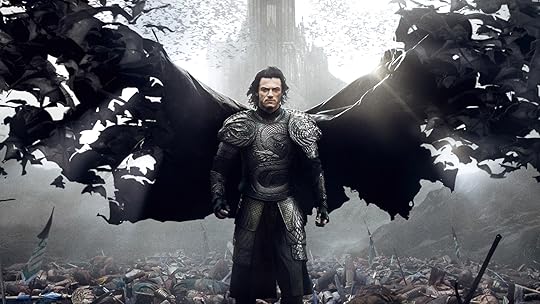
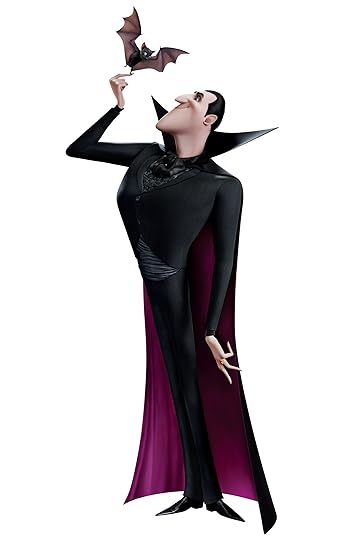
Happy Bram Stoker Day!
He would'a been 168 today.






November 2, 2015
Ranking the Bond Movies through Skyfall

Before SPECTRE comes out this weekend, here's my ranking of all the Bond movies so far (minus the '60s Casino Royal spoof). I'm guessing that some of those rankings will be controversial. For instance, I have Quantum of Solace pretty high and I'm bucking conventional wisdom that Die Another Day is the worst ever. Let's talk it out in the comments if you want.
1. Casino Royale
2. From Russia With Love
3. The Living Daylights
4. On Her Majesty's Secret Service
5. For Your Eyes Only
6. Quantum of Solace
7. Dr No
8. Thunderball
9. The Spy Who Loved Me
10. GoldenEye
11. Skyfall
12. Licence to Kill
13. The Man with Golden Gun
14. The World Is Not Enough
15. Never Say Never Again
16. Goldfinger
17. Live and Let Die
18. A View to a Kill
19. Tomorrrow Never Dies
20. Die Another Day
21. Octopussy
22. Moonraker
23. You Only Live Twice
24. Diamonds Are Forever
Just for fun, here's my list based on the accumulated rankings of the individual parts I've been measuring: women, villains, theme song, cold open, gadgets, henchmen, and title sequence. As usual, there's a complicated, Top Secret algorithm for assigning a total points value to each movie. Here's how they fall when measured that way.
1. Thunderball (77 points)
2. On Her Majesty's Secret Service (72 points)
3. Casino Royale (69 points)
4. Goldfinger (48 points)
5. From Russia With Love (46 points)
6. Never Say Never Again (45 points)
7. The Living Daylights (36 points)
8 and 9. [TIE] The Spy Who Loved Me and Skyfall (35 points)
10. A View to a Kill (33 points)
11. Tomorrrow Never Dies (31 points)
12 and 13. [TIE] The Man with Golden Gun and For Your Eyes Only (24 points)
14. Live and Let Die (22 points)
15. Quantum of Solace (21 points)
16. GoldenEye (20 points)
17. Moonraker (14 points)
18 and 19. [TIE] Dr No and Octopussy (10 points)
20 and 21. [TIE] The World Is Not Enough and Die Another Day (7 points)
22. Diamonds Are Forever (6 points)
23. You Only Live Twice (4 points)
24. Licence to Kill (0 points)
And for completeness' sake, here are the final Top Ten lists of the various categories.
Top 10 Cold Opens
1. GoldenEye
2. Casino Royale
3. The Spy Who Loved Me
4. Moonraker
5. Thunderball
6. On Her Majesty's Secret Service
7. A View to a Kill
8. Goldfinger
9. The Man with the Golden Gun
10. The Living Daylights
Top Ten Theme Songs
1. Skyfall
2. A View to a Kill
3. "Surrender" (end credits of Tomorrow Never Dies)
4. "You Know My Name" (Casino Royale)
5. The Living Daylights
6. "Nobody Does It Better" (The Spy Who Loved Me)
7. On Her Majesty's Secret Service
8. Diamonds Are Forever
9. You Only Live Twice
10. From Russia With Love (instrumental version)
Top Ten Title Sequences
1. Casino Royale
2. Skyfall
3. On Her Majesty's Secret Service
4. Dr No
5. Thunderball
6. Goldfinger
7. GoldenEye
8. From Russia with Love
9. The Spy Who Loved Me
10. Die Another Day
Top Ten Gadgets
1. Lotus Esprit (The Spy Who Loved Me)
2. Aston Martin DB V (Goldfinger and Thunderball)
3. Jet pack (Thunderball)
4. Iceberg boat (A View to a Kill)
5. The Q Boat (The World Is Not Enough)
6. Aston Martin V8 Vantage (The Living Daylights)
7. Glastron CV23HT speed boat (Moonraker)
8. Acrostar Mini Jet (Octopussy)
9. Crocodile submarine (Octopussy)
10. X-Ray Specs (The World Is Not Enough)
Top Ten Henchmen
1. Baron Samedi (Live and Let Die)
2. Fiona Volpe (Thunderball)
3. Grant (From Russia with Love)
4. Nick Nack (The Man with the Golden Gun)
5. Zao (Die Another Day)
6. Gobinda (Octopussy)
7. May Day (A View to a Kill)
8. Jaws (The Spy Who Loved Me and Moonraker)
9. Naomi (The Spy Who Loved Me)
10. Oddjob (Goldfinger)
Top Ten Villains
1. Auric Goldfinger (Goldfinger)
2. Ernst Stavro Blofeld (Never Say Never Again)
3. Ernst Stavro Blofeld (From Russia With Love and Thunderball)
4. Ernst Stavro Blofeld (On Her Majesty's Secret Service)
5. Maximilian Largo (Never Say Never Again)
6. Francisco Scaramanga (The Man with the Golden Gun)
7. Dr. Kananga (Live and Let Die)
8. Le Chiffre (Casino Royale)
9. Raoul Silva (Skyfall)
10. Doctor No (Dr. No)
My Favorite Bond Women
1. Tracy Bond (On Her Majesty's Secret Service)
2. Vesper Lynd (Casino Royale)
3. Melina Havelock (For Your Eyes Only)
4. Camille Montes (Quantum of Solace)
5. Kara Milovy (The Living Daylights)
6. Wai Lin (Tomorrow Never Dies)
7. Paula Caplan (Thunderball)
8. Tatiana Romanova (From Russia With Love)
9. Natalya Simonova (GoldenEye)
10. Fiona Volpe (Thunderball)

October 31, 2015
31 Witches | The Witch of Endor
No, not this one
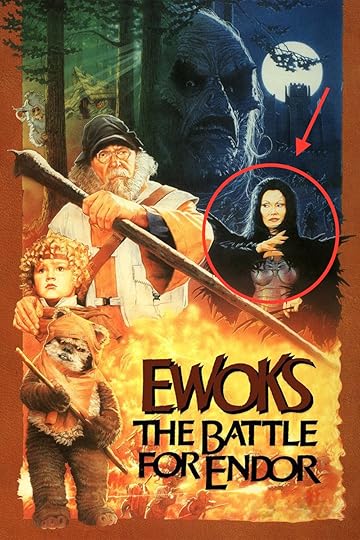
The other one:
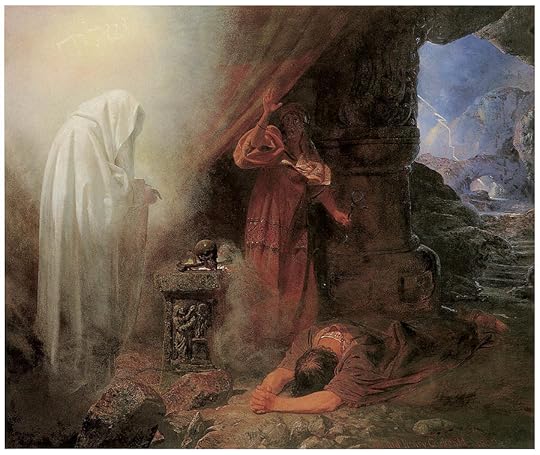
"I saw gods ascending out of the earth." -- 1 Samuel, Chapter 28
Painting by Edward Henry Corbould

The other one:

"I saw gods ascending out of the earth." -- 1 Samuel, Chapter 28
Painting by Edward Henry Corbould
October 30, 2015
31 Witches | Morgan le Fay

"God be praised for these fine words. Be on your way now and rest assured I'll take the first opportunity that comes my way to do you ill." -- Morgan, Lancelot-Grail
Painting by Frederick Sandys.

October 29, 2015
31 Witches | The Three Witches

"By the pricking of my thumbs, something wicked this way comes." -- Second Witch, Macbeth

October 28, 2015
While You Wait (for Superman) Classics: Dr. Occult [Guest Post]
By GW Thomas
 Next year we will be getting Benedict Cumberbatch as Dr. Stephen Strange and people are going to say some stupid things. Like, "Wow! I never knew superheroes were into magic!" Or "Gee, Dr. Strange was the first magician-superhero!" Dr. Strange appeared for the first time in July 1963, (on newsstands in June) making him the same age as me, fifty-two. But not by a long stretch is he the first or the oldest "occult doctor" of comics.
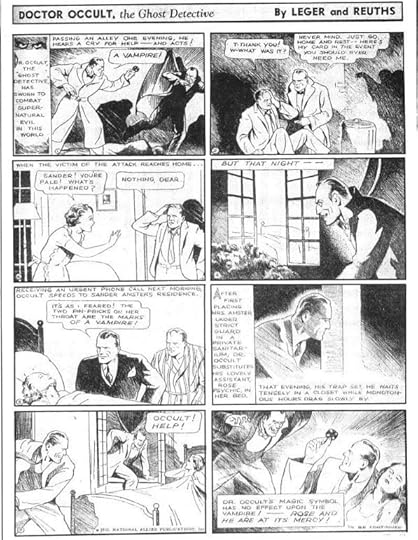
In 1935, while waiting to sell Superman to the comic strip syndicates, Jerry Siegel and Joe Shuster created other comics to sell to the fledgling comic books operated by Major Malcolm Wheeler-Nicholson. One of these included the first comic ghost-breaker, "Dr. Occult, Ghost Detective." The credits for the strip were given to Legar and Reuths, Siegel and Shuster's pseudonyms as they had another strip, Henri Duval, appearing in the same comic under their real names. Dr. Occult appeared for the first time in New Fun Comics #6 (October 1935). The story is the opening act of a tale of a vampire who is terrorizing a young couple called the Amsters. Dr. Occult is accompanied by his faithful sidekick Rose Psychic. The strip was one page long in black-and-white at the back of the issue. Siegel and Shuster's Henri Duval got place of pride at the front of the comic.
 After this brief appearance, Dr. Occult went to the newly formed company, DC, and its continuation of New Fun under the name More Fun Comics. Dr. Richard Occult would be found in the pages until issue #32 (June 1938). But who were the predecessors to Dr. Occult? In fiction, the occult doctor dates back to at least 1872 and J Sheridan Le Fanu's Doctor Martin Hesselius, though Bram Stoker's Dr. Abraham van Helsing (1897) is far better known. The ghost detective genre was richly populated between 1898 and the pulps of the 1930s. The top occult doc in 1935 was Seabury Quinn's Jules de Grandin, appearing in Weird Tales. In the comic strips, Lee Falk created Mandrake the Magician in 1934. While Mandrake's powers are of hypnotism and not actual magic he was the first true superhero and set the bar for all characters who followed. Certainly Siegel and Shuster were aware of Mandrake's popularity in the newspaper comic strips, a market they themselves wanted for Superman.
The tale of the Amsters and the Vampire Master continued in More Fun Comics #7-9 (January to March-April 1936). The Vampire Master hypnotizes Lois Amster, sending her to kill her husband. Fortunately, Dr. Occult and Rose are there to revive her. The heroes go in pursuit of the villain, but are trapped by the undead fiend in his lair. The Vampire Master uses his strange machinery to create a duplicate of Mrs. Amster that stabs him and tries to kill Lois. The vampire presses a button that saves her and the good guys flee as the lab burns down, with the villains succumbing to the flames. No stakes are driven through any hearts here. Superhero type story elements are more prevalent than Victorian castles.
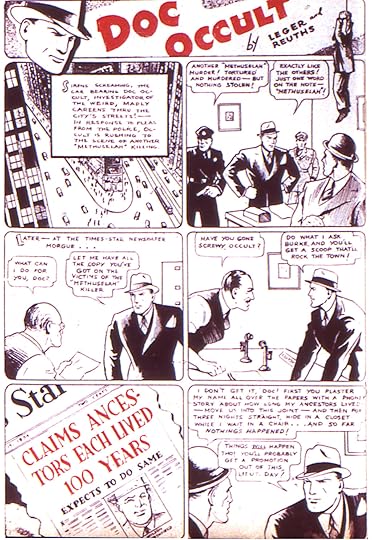 Issue #10-13 (May-September 1936) grew to two pages with plots seeing Dr. Occult and a Lieutenant Day chasing a mad doctor who calls himself Methusaleh. The name is apt, for he can steal the youth from others. In another storyline, Dr. Occult and a young girl are attacked by a werewolf. The monster proves to be a man named Westly, who asks Occult to cure him of his curse. In the process, Occult discovers an entire boarding house full of werewolves.
Wheeler-Nicholson sold out and left comics, so the Dr. Occult character continued in Centaur's The Comics Magazine #1 (dated May 1936) with a name change to Dr. Mystic and the credits restored to "Jerome Siegel and Joe Shuster." In an issue dated May 1936 (though probably later) Dr. Mystic faces off against a new villain, Koth, and with a new feel. The storyline would continue in More Fun Comics #14-17 (October 1936-January 1937) with the villains planning to use a phantom army to take over the world. The look of the strip, with capes and swords, is more Buck Rogers than psychic detectives.
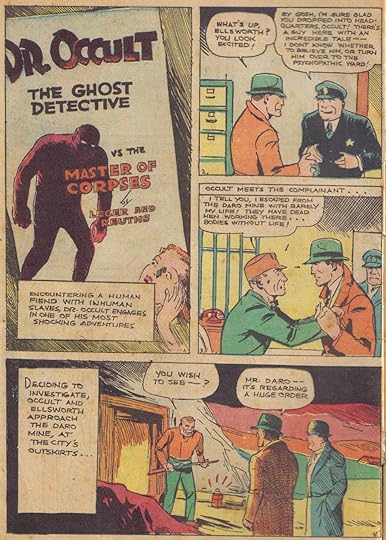 Issue #18 saw the return of the mystery-styled plot with "Ray of Life," where Doctor Occult encounters a dead body in a restaurant. The body - along with others - disappears for a terrible reason. It is with Issue #22-32 (July 1937-June 1938) where we find the final version of the strip in place, now four pages in color. After the "Ray of Life" serial, Dr. Occult would have complete stories in one issue, and these most often at the front of the magazine where the most popular strips appeared. One of these is called "The Henri Duval Murders," a fun poke at their other strip, though not a team-up. What followed were people shrunk to doll size, snake worshippers, spectral killers, a possessed medium, and a corpse controller. Issue #32 (June 1938) was Dr. Occult's final tale for forty-seven years. His next appearance was a guest spot in All-Star Squadron #49 (September 1985) written by Roy Thomas.
Jerry Siegel wasn't quite done with magical characters after Dr. Occult. In January 1940 in More Fun Comics #51 he would create another classic DC character, The Spectre. With the lessons learned from Dr. Occult/Mystic, he blends horror and magic with crime fighting. Gardner F Fox and John Broome would complete the DC supernatural squad with Dr. Fate in More Fun Comics #55 (May 1950) and The Phantom Stranger in 1952. What influence did these DC characters have on future ghost detective comics? The impact is evident by the number of lame imitators in various comics such as Zero in Feature Comics (1940), Dr. Styx in Treasure Comics (1942), and Dr. Drew in Ranger Comics (1949), to name only three. Siegel and Shuster would reinvent the superhero with the release of Action Comics #1 (June 1938), but their contributions to weird characters would live on too, though not until 1963 and Marvel's Doctor Strange and 1967 DC's Deadman would new supernatural detectives be so abundant again.
GW Thomas has appeared in over 400 different books, magazines and ezines including The Writer, Writer's Digest, Black October Magazine and Contact. His website is gwthomas.org. He is editor of Dark Worlds magazine.
 Next year we will be getting Benedict Cumberbatch as Dr. Stephen Strange and people are going to say some stupid things. Like, "Wow! I never knew superheroes were into magic!" Or "Gee, Dr. Strange was the first magician-superhero!" Dr. Strange appeared for the first time in July 1963, (on newsstands in June) making him the same age as me, fifty-two. But not by a long stretch is he the first or the oldest "occult doctor" of comics.
In 1935, while waiting to sell Superman to the comic strip syndicates, Jerry Siegel and Joe Shuster created other comics to sell to the fledgling comic books operated by Major Malcolm Wheeler-Nicholson. One of these included the first comic ghost-breaker, "Dr. Occult, Ghost Detective." The credits for the strip were given to Legar and Reuths, Siegel and Shuster's pseudonyms as they had another strip, Henri Duval, appearing in the same comic under their real names. Dr. Occult appeared for the first time in New Fun Comics #6 (October 1935). The story is the opening act of a tale of a vampire who is terrorizing a young couple called the Amsters. Dr. Occult is accompanied by his faithful sidekick Rose Psychic. The strip was one page long in black-and-white at the back of the issue. Siegel and Shuster's Henri Duval got place of pride at the front of the comic.
 After this brief appearance, Dr. Occult went to the newly formed company, DC, and its continuation of New Fun under the name More Fun Comics. Dr. Richard Occult would be found in the pages until issue #32 (June 1938). But who were the predecessors to Dr. Occult? In fiction, the occult doctor dates back to at least 1872 and J Sheridan Le Fanu's Doctor Martin Hesselius, though Bram Stoker's Dr. Abraham van Helsing (1897) is far better known. The ghost detective genre was richly populated between 1898 and the pulps of the 1930s. The top occult doc in 1935 was Seabury Quinn's Jules de Grandin, appearing in Weird Tales. In the comic strips, Lee Falk created Mandrake the Magician in 1934. While Mandrake's powers are of hypnotism and not actual magic he was the first true superhero and set the bar for all characters who followed. Certainly Siegel and Shuster were aware of Mandrake's popularity in the newspaper comic strips, a market they themselves wanted for Superman.
The tale of the Amsters and the Vampire Master continued in More Fun Comics #7-9 (January to March-April 1936). The Vampire Master hypnotizes Lois Amster, sending her to kill her husband. Fortunately, Dr. Occult and Rose are there to revive her. The heroes go in pursuit of the villain, but are trapped by the undead fiend in his lair. The Vampire Master uses his strange machinery to create a duplicate of Mrs. Amster that stabs him and tries to kill Lois. The vampire presses a button that saves her and the good guys flee as the lab burns down, with the villains succumbing to the flames. No stakes are driven through any hearts here. Superhero type story elements are more prevalent than Victorian castles.
 Issue #10-13 (May-September 1936) grew to two pages with plots seeing Dr. Occult and a Lieutenant Day chasing a mad doctor who calls himself Methusaleh. The name is apt, for he can steal the youth from others. In another storyline, Dr. Occult and a young girl are attacked by a werewolf. The monster proves to be a man named Westly, who asks Occult to cure him of his curse. In the process, Occult discovers an entire boarding house full of werewolves.
Wheeler-Nicholson sold out and left comics, so the Dr. Occult character continued in Centaur's The Comics Magazine #1 (dated May 1936) with a name change to Dr. Mystic and the credits restored to "Jerome Siegel and Joe Shuster." In an issue dated May 1936 (though probably later) Dr. Mystic faces off against a new villain, Koth, and with a new feel. The storyline would continue in More Fun Comics #14-17 (October 1936-January 1937) with the villains planning to use a phantom army to take over the world. The look of the strip, with capes and swords, is more Buck Rogers than psychic detectives.
 Issue #18 saw the return of the mystery-styled plot with "Ray of Life," where Doctor Occult encounters a dead body in a restaurant. The body - along with others - disappears for a terrible reason. It is with Issue #22-32 (July 1937-June 1938) where we find the final version of the strip in place, now four pages in color. After the "Ray of Life" serial, Dr. Occult would have complete stories in one issue, and these most often at the front of the magazine where the most popular strips appeared. One of these is called "The Henri Duval Murders," a fun poke at their other strip, though not a team-up. What followed were people shrunk to doll size, snake worshippers, spectral killers, a possessed medium, and a corpse controller. Issue #32 (June 1938) was Dr. Occult's final tale for forty-seven years. His next appearance was a guest spot in All-Star Squadron #49 (September 1985) written by Roy Thomas.
Jerry Siegel wasn't quite done with magical characters after Dr. Occult. In January 1940 in More Fun Comics #51 he would create another classic DC character, The Spectre. With the lessons learned from Dr. Occult/Mystic, he blends horror and magic with crime fighting. Gardner F Fox and John Broome would complete the DC supernatural squad with Dr. Fate in More Fun Comics #55 (May 1950) and The Phantom Stranger in 1952. What influence did these DC characters have on future ghost detective comics? The impact is evident by the number of lame imitators in various comics such as Zero in Feature Comics (1940), Dr. Styx in Treasure Comics (1942), and Dr. Drew in Ranger Comics (1949), to name only three. Siegel and Shuster would reinvent the superhero with the release of Action Comics #1 (June 1938), but their contributions to weird characters would live on too, though not until 1963 and Marvel's Doctor Strange and 1967 DC's Deadman would new supernatural detectives be so abundant again.
GW Thomas has appeared in over 400 different books, magazines and ezines including The Writer, Writer's Digest, Black October Magazine and Contact. His website is gwthomas.org. He is editor of Dark Worlds magazine.
31 Witches | Baba Yaga

"Come out, babies... Grandmother wants to see you." -- Baba Yaga, "The Baba Yaga" by Mike Mignola

October 27, 2015
31 Witches (Bonus) | The Sea Hag

"Fool! Did you think you could trust the Sea Hag?" -- The Sea Hag, Popeye
[Suggested by that terror of the seven seas, Paxton Holley.]

31 Witches | The Old Woman in the Bread House

"Nibble, nibble, little mouse. Who is nibbling at my house?" -- The Old Woman, "Hansel and Gretel"
Illustration by Gustaf Tenggren.