E.J. Divitt's Blog, page 10
May 28, 2014
The 10% Rule
I've read that 70% of lottery jackpot winners have spent all of the money in five years. Five years. Can you imagine someone winning a $300 million lottery price and being broke in five years? It seems to be all too easy if 7 out of 10 people do it.
Whenever I come into some extra money, I have a 10% rule. 10% of it can be spent on what ever I want. No questions asked; no justifications. That 10% is pure fun money.
The remaining 90% though, has to be spent in a more practical manner. I've never won the lottery but I believe the same principle, if applied, would keep that 70% of people from being broke.
This rule lets me have some fun when I get unexpected money while still maintaining a control over my financial future. In most cases, the extra money would go on the mortgage or into the car fund but maybe we will decide to refinish the floors or fix something instead.
The point is to look at the windfall with an eye to the future and not just blowing all of the money.
Whether you come into $300 or $300 million, you should first stop and think before spending a dime of it. Alternately, you could take that 10% and have some fun and then settle down and take stock before going any further. Do not spend more than the 10% without having a plan!
Keep in mind, the government generally gets its share. Plan to give the tax man 40%; plan on 10% for yourself. You now have 50% of the money gone; just like that.
If you have any debts, pay those first. Next, set up a nice retirement account for yourself. Preferably something that you absolutely can not take the money out of the account early.
If you take the yearly payments, do not borrow against future payments. Spend it only as you get it.
You probably will immediately think about buying a house and a car. You may want to just buy the biggest house or most expensive car. Check if that is really what you want though. Does your family of four need a 10 bedroom house? Probably not. You will most likely be better off buying a nice 4 bedroom house in a nice neighborhood.
Do not start giving money to anyone until you have set up your financial plan. If you win the lottery, you will immediately get calls from people you barely remember saying they need money. It is tempting to help them out and it would be a great thing to do for those in need but you need to get your own financial house in order first. There will be plenty of time to give money to charity.
Also, don't be surprised if people lie to you about needing the money because they think you now have plenty to share.
Whenever I come into some extra money, I have a 10% rule. 10% of it can be spent on what ever I want. No questions asked; no justifications. That 10% is pure fun money.
The remaining 90% though, has to be spent in a more practical manner. I've never won the lottery but I believe the same principle, if applied, would keep that 70% of people from being broke.
This rule lets me have some fun when I get unexpected money while still maintaining a control over my financial future. In most cases, the extra money would go on the mortgage or into the car fund but maybe we will decide to refinish the floors or fix something instead.
The point is to look at the windfall with an eye to the future and not just blowing all of the money.
Whether you come into $300 or $300 million, you should first stop and think before spending a dime of it. Alternately, you could take that 10% and have some fun and then settle down and take stock before going any further. Do not spend more than the 10% without having a plan!
Keep in mind, the government generally gets its share. Plan to give the tax man 40%; plan on 10% for yourself. You now have 50% of the money gone; just like that.
If you have any debts, pay those first. Next, set up a nice retirement account for yourself. Preferably something that you absolutely can not take the money out of the account early.
If you take the yearly payments, do not borrow against future payments. Spend it only as you get it.
You probably will immediately think about buying a house and a car. You may want to just buy the biggest house or most expensive car. Check if that is really what you want though. Does your family of four need a 10 bedroom house? Probably not. You will most likely be better off buying a nice 4 bedroom house in a nice neighborhood.
Do not start giving money to anyone until you have set up your financial plan. If you win the lottery, you will immediately get calls from people you barely remember saying they need money. It is tempting to help them out and it would be a great thing to do for those in need but you need to get your own financial house in order first. There will be plenty of time to give money to charity.
Also, don't be surprised if people lie to you about needing the money because they think you now have plenty to share.


May 25, 2014
Do You Turn Into Another Person Behind The Wheel?
We live in a mobile society. We have cars, trains, motorcycles, buses. It is rare to go a day without seeing something drive by. For a lot of people, it is rare to go a day without driving something.
Driving is so much a part of our adult lives that it is often taken for granted. Yet how many times have you clenched your teeth or yelled out a swear word or yes, given some one the finger because of how they drove?
Driving etiquette is as important as any other kind of etiquette.
The obvious: Avoid road rage. Take several deep breathes; count to 10. Do what you need to do to calm down. What ever it takes just do not engage with other operators. I do not know of a single good thing that has come from confronting another driver.
You could try telling yourself that none of this will matter in five years. Some people find that calming. If not, try to find what does let you get past it and let it go. Maybe it is good music. For me, I shake my head at them and have an imaginary conversation where I say things like, "Pick a lane, sweetie."
Follow the rules of the road. Do not take sudden u-turns in front of people with no warning. Use your turn signal. Drive on your side of the road. Obey stop signs and yields.
The less obvious: Be considerate of those around you. If you are on the main road with the right away but a lot of people are trying to merge in, follow the one of them, one of us rule. Let one car go ahead of you. This helps move the traffic along and demonstrates courtesy to both the drivers trying to merge and the ones stuck behind you. Yes, you have the right away but you also have the chance to be courteous.
If everyone demonstrated courtesy, we would have less traffic jams and more time out of our vehicles. It's worth a try.
Driving is so much a part of our adult lives that it is often taken for granted. Yet how many times have you clenched your teeth or yelled out a swear word or yes, given some one the finger because of how they drove?
Driving etiquette is as important as any other kind of etiquette.
The obvious: Avoid road rage. Take several deep breathes; count to 10. Do what you need to do to calm down. What ever it takes just do not engage with other operators. I do not know of a single good thing that has come from confronting another driver.
You could try telling yourself that none of this will matter in five years. Some people find that calming. If not, try to find what does let you get past it and let it go. Maybe it is good music. For me, I shake my head at them and have an imaginary conversation where I say things like, "Pick a lane, sweetie."
Follow the rules of the road. Do not take sudden u-turns in front of people with no warning. Use your turn signal. Drive on your side of the road. Obey stop signs and yields.
The less obvious: Be considerate of those around you. If you are on the main road with the right away but a lot of people are trying to merge in, follow the one of them, one of us rule. Let one car go ahead of you. This helps move the traffic along and demonstrates courtesy to both the drivers trying to merge and the ones stuck behind you. Yes, you have the right away but you also have the chance to be courteous.
If everyone demonstrated courtesy, we would have less traffic jams and more time out of our vehicles. It's worth a try.
May 20, 2014
Buy Some Art
Buy some art. I don't mean spend all of your money on Picasso paintings. I mean have something around you that is beautiful or thought provoking or makes you cry or scares you. You get to decide what is beautiful; what makes you think.
Get it from flea markets or yard sales. Pick up sculptures or paintings at art schools. Find things on Ebay or at Target. If you don't have the money, spend the time. Only pick things that speak to you.
Do not try to pick based on what you think would look nice on the wall or table. Do not pick what is sophisticated or grown up. Hang a Star Trek collage on your wall or a Monet. As long as it speaks to you.
If you are artistic, make it yourself.
It is not about the cost of the item. I'm not talking about making an investment in your financial future. I am talking about making an investment in your soul.
Your soul needs beauty. It needs something that provokes a reaction. It needs to feel something. Art is the best way to do that.
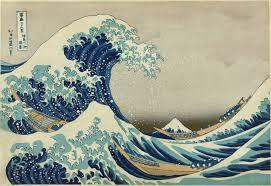 It can be one incredible piece that grabs you every time you see it or it can be a series of pieces. It can be something that sparks a story or a memory in your mind.
The Great Wave of Kanagawa by Hokusai is one of my favorites. I have a tribute painted by an artist I know upstairs right now.
I have a print of a Chinese landscape painting. I spent $5 on it at a yard sale and $20 to get it matted and framed. It hung on my bedroom door for years. My husband's favorite painting is an oil that we bought already framed for $8 at a yard sale.
Do not let money stop you from finding what speaks to you. If you have the money, spend it or don't but if you do not have much money, do not let that stop you from finding something that touches your heart and soul.
Get it from flea markets or yard sales. Pick up sculptures or paintings at art schools. Find things on Ebay or at Target. If you don't have the money, spend the time. Only pick things that speak to you.
Do not try to pick based on what you think would look nice on the wall or table. Do not pick what is sophisticated or grown up. Hang a Star Trek collage on your wall or a Monet. As long as it speaks to you.
If you are artistic, make it yourself.
It is not about the cost of the item. I'm not talking about making an investment in your financial future. I am talking about making an investment in your soul.
Your soul needs beauty. It needs something that provokes a reaction. It needs to feel something. Art is the best way to do that.
It can be one incredible piece that grabs you every time you see it or it can be a series of pieces. It can be something that sparks a story or a memory in your mind.The Great Wave of Kanagawa by Hokusai is one of my favorites. I have a tribute painted by an artist I know upstairs right now.
I have a print of a Chinese landscape painting. I spent $5 on it at a yard sale and $20 to get it matted and framed. It hung on my bedroom door for years. My husband's favorite painting is an oil that we bought already framed for $8 at a yard sale.
Do not let money stop you from finding what speaks to you. If you have the money, spend it or don't but if you do not have much money, do not let that stop you from finding something that touches your heart and soul.
May 18, 2014
20 Easy Ways To Annoy Other People
1. Interrupt someone when they are speaking.
2. Be late for an engagement without calling.
3. Ignore someone.
4. Talk loudly on your phone in a public place.
5.Cut someone off in traffic.
6. Play your music loudly when your neighbors are trying to sleep.
7. Chew with your mouth open.
8. Correct other people in public.
9. Park across multiple parking spaces.
10. Throw trash in some one's yard or out of your car window.
11. Stand in some one's personal space.
12. Blow cigarette smoke into some one's face.
13. Break your promises.
14. Leave a mess.
15. Take up multiple seats on the bus or train.
16. Talk during the movie.
17. Let your children run through the store screaming.
18. Be a poor sport if you lose.
19. Use the phrase, "Don't you know who I am?".
20. Cause a scene.
2. Be late for an engagement without calling.
3. Ignore someone.
4. Talk loudly on your phone in a public place.
5.Cut someone off in traffic.
6. Play your music loudly when your neighbors are trying to sleep.
7. Chew with your mouth open.
8. Correct other people in public.
9. Park across multiple parking spaces.
10. Throw trash in some one's yard or out of your car window.
11. Stand in some one's personal space.
12. Blow cigarette smoke into some one's face.
13. Break your promises.
14. Leave a mess.
15. Take up multiple seats on the bus or train.
16. Talk during the movie.
17. Let your children run through the store screaming.
18. Be a poor sport if you lose.
19. Use the phrase, "Don't you know who I am?".
20. Cause a scene.
May 13, 2014
Your Home Insurance vs Acts Of God
There seems to be this ongoing myth that "acts of God" are not covered by your home insurance policy. This is not true. Acts of God are not automatically excluded from your policy.
Your home insurance policy either has a set list of things it will cover (also known as Basic or Broad coverage) or else it says it will cover everything that is not excluded (also known as Special.)
Basic Coverage:
Fire, Lightning, Explosion, Smoke, Wind/Hail, Riot/Civil Commotion, Aircraft, Vehicles, Vandalism/Malicious Mischief, Sprinkler Leakage and sometimes Sinkhole collapse and Volcanic Action (depending where you live).
Broad Coverage:
All of the above plus
Falling Objects (such as a tree falling on your house), Weight of Ice and Snow, Water Damage except flood or ground water.
Special Coverage:
Covers everything that is not specifically excluded. Typically exclusions include flood/ground water, wear and tear, pest and vermin infestation, acts of war, earthquake and ground movement, nuclear war, government seizure.
In other words, you have coverage for fire, whether of the wildfire or household variety. You have coverage for wind, hail, hurricanes and tornadoes unless you live in an area that has a lot of them in which case check with your insurance agent to make sure it is not excluded.
You probably have coverage for lightening, for burst pipes, for vandalism, for theft, for a tree falling on your house. The average home policy has coverage if a vehicle or an aircraft hits it; although it may exclude a vehicle owned by you.
You almost certainly do Not have coverage for earthquake, flood and ground water, pest and vermin infestation (such as termites or mice) or anything that can be chocked up to plain old age or wear and tear.
When something happens, I suggest you contact your insurance agent to make sure you know if it is or is not covered. It is generally a few minutes on the phone that costs you nothing. Do not be afraid to call and ask if something is covered before you assume that it is just an act of God.
While you are at it, you may want to check if your home policy provides debris removal and ordinance & law coverage. Debris removal is what pays to remove the rubble that was your house after a covered loss. It is not automatically fully covered. Ordinance & Law coverage is what pays the extra costs if the town comes along and forces you to build differently because of some law or ordinance that came into affect since you built your home. Your policy is based on the cost to rebuild your house just as it was without regard to any changes you may be forced to make or extra costs to remove what was there. These are two important coverages. Do not wait until after a loss to find out that you do not have these very important coverages.
Your home insurance policy either has a set list of things it will cover (also known as Basic or Broad coverage) or else it says it will cover everything that is not excluded (also known as Special.)
Basic Coverage:
Fire, Lightning, Explosion, Smoke, Wind/Hail, Riot/Civil Commotion, Aircraft, Vehicles, Vandalism/Malicious Mischief, Sprinkler Leakage and sometimes Sinkhole collapse and Volcanic Action (depending where you live).
Broad Coverage:
All of the above plus
Falling Objects (such as a tree falling on your house), Weight of Ice and Snow, Water Damage except flood or ground water.
Special Coverage:
Covers everything that is not specifically excluded. Typically exclusions include flood/ground water, wear and tear, pest and vermin infestation, acts of war, earthquake and ground movement, nuclear war, government seizure.
In other words, you have coverage for fire, whether of the wildfire or household variety. You have coverage for wind, hail, hurricanes and tornadoes unless you live in an area that has a lot of them in which case check with your insurance agent to make sure it is not excluded.
You probably have coverage for lightening, for burst pipes, for vandalism, for theft, for a tree falling on your house. The average home policy has coverage if a vehicle or an aircraft hits it; although it may exclude a vehicle owned by you.
You almost certainly do Not have coverage for earthquake, flood and ground water, pest and vermin infestation (such as termites or mice) or anything that can be chocked up to plain old age or wear and tear.
When something happens, I suggest you contact your insurance agent to make sure you know if it is or is not covered. It is generally a few minutes on the phone that costs you nothing. Do not be afraid to call and ask if something is covered before you assume that it is just an act of God.
While you are at it, you may want to check if your home policy provides debris removal and ordinance & law coverage. Debris removal is what pays to remove the rubble that was your house after a covered loss. It is not automatically fully covered. Ordinance & Law coverage is what pays the extra costs if the town comes along and forces you to build differently because of some law or ordinance that came into affect since you built your home. Your policy is based on the cost to rebuild your house just as it was without regard to any changes you may be forced to make or extra costs to remove what was there. These are two important coverages. Do not wait until after a loss to find out that you do not have these very important coverages.
May 10, 2014
Mother's Day
Today is Mother's Day. Here are a few things to keep in mind for the holiday.
If you are close enough, you should make every effort to see your mother today. That edict includes step mothers and foster mothers as well. It is not just biology that makes a parent.
If you are not close enough to see her, make sure you call to say Happy Mother's Day. For those farther away, send a card and/or a present. Hopefully, you have already sent it at this point. If not, get it out to her tomorrow but make sure you call her today.
Try not to put one mother ahead of another. Your mother should not always get first pick of plans nor should your spouse or partner's. Alternate years if you need to, so that your mother gets first preference even years and theirs, odd years.
If you have small children, do not forget the mother of your children. It is your responsibility to make sure she gets a proper Mother's Day until the children are old enough to do it themselves.
Try not to always put your mother ahead of the mother of your children as well. Try the alternating years with alternating days. Your wife gets Mother's Day one year while your mother gets taken out on Saturday instead and the next year you alternate. This may not be necessary but make sure you know how the mother of your children feels about always taking along on your mother's day before you decide.
Really the proper etiquette for today is gratitude. Find the good in your relationship--even if you have a strained one--and try to make sure you recognize your mother on Mother's Day. If nothing else, they make greeting cards for all relationships. You may have spend a little time finding the right one but you will find it. Hopefully you have a wonderful relationship with your mother and this is all just frosting but if not, at least be cordial. As always, etiquette asks for civility if you can not be friendly.
If you are close enough, you should make every effort to see your mother today. That edict includes step mothers and foster mothers as well. It is not just biology that makes a parent.
If you are not close enough to see her, make sure you call to say Happy Mother's Day. For those farther away, send a card and/or a present. Hopefully, you have already sent it at this point. If not, get it out to her tomorrow but make sure you call her today.
Try not to put one mother ahead of another. Your mother should not always get first pick of plans nor should your spouse or partner's. Alternate years if you need to, so that your mother gets first preference even years and theirs, odd years.
If you have small children, do not forget the mother of your children. It is your responsibility to make sure she gets a proper Mother's Day until the children are old enough to do it themselves.
Try not to always put your mother ahead of the mother of your children as well. Try the alternating years with alternating days. Your wife gets Mother's Day one year while your mother gets taken out on Saturday instead and the next year you alternate. This may not be necessary but make sure you know how the mother of your children feels about always taking along on your mother's day before you decide.
Really the proper etiquette for today is gratitude. Find the good in your relationship--even if you have a strained one--and try to make sure you recognize your mother on Mother's Day. If nothing else, they make greeting cards for all relationships. You may have spend a little time finding the right one but you will find it. Hopefully you have a wonderful relationship with your mother and this is all just frosting but if not, at least be cordial. As always, etiquette asks for civility if you can not be friendly.
May 7, 2014
When Is It Time To Try Something New?
My husband would very much like me to quit my day job and work on following my passion instead. I am much too practical to drop a steady paying job--even if it sometimes drives me crazy--for something that is unlikely to provide any immediate income. In fact, doing this would cut our household income about 40%.
The problem is, with my full time job, my almost hour each way commute and maintaining a house, yard and exercise, I don't have a lot of energy left--mental or physical--to dedicate to trying to turn my writing hobby into a career. I think it would be fair at this point to call me more of a dabbler.
I won't do my current employer the disservice of complaining. That is not the point anyways. The point is that my husband wants me to take a giant leap of faith and hope the money follows and I've never been one for blind leaps. I am the practical type. The kind of person who looks for the stairs or the parachute before making that jump. But am I doing myself a disservice?
He is absolutely right that my job absorbs most of my time and energy right now; that I have been known to come home horribly stressed out. Does it necessarily follow though, that the lack of that job would mean I would get more done and success would follow? I might end up sitting around for hours getting nothing done through sheer inertia. Ever heard the saying, "If you want something done, ask a busy person?" Ever found yourself spending hours doing nothing knowing full well you have things to do?
So when is it time to try something new? When it makes sense financially? When I have more time? When I am mentally prepared? If we only used those benchmarks, a lot of things would never get tried; never get done. A lot of babies would never be born.
When it comes down to it, I am just not prepared to make that leap at this time. I have started towards my goal. I have some books out and several more waiting for some serious editing. I have taken some baby steps.
I need to take some adult sized ones.
However, I am just not ready to take that giant leap. Maybe I'm wrong to wait, to try to do it in pieces, but that is who I am. I'm a practical dreamer. I just hope I am not being so practical that I forget the dreamer part.
The problem is, with my full time job, my almost hour each way commute and maintaining a house, yard and exercise, I don't have a lot of energy left--mental or physical--to dedicate to trying to turn my writing hobby into a career. I think it would be fair at this point to call me more of a dabbler.
I won't do my current employer the disservice of complaining. That is not the point anyways. The point is that my husband wants me to take a giant leap of faith and hope the money follows and I've never been one for blind leaps. I am the practical type. The kind of person who looks for the stairs or the parachute before making that jump. But am I doing myself a disservice?
He is absolutely right that my job absorbs most of my time and energy right now; that I have been known to come home horribly stressed out. Does it necessarily follow though, that the lack of that job would mean I would get more done and success would follow? I might end up sitting around for hours getting nothing done through sheer inertia. Ever heard the saying, "If you want something done, ask a busy person?" Ever found yourself spending hours doing nothing knowing full well you have things to do?
So when is it time to try something new? When it makes sense financially? When I have more time? When I am mentally prepared? If we only used those benchmarks, a lot of things would never get tried; never get done. A lot of babies would never be born.
When it comes down to it, I am just not prepared to make that leap at this time. I have started towards my goal. I have some books out and several more waiting for some serious editing. I have taken some baby steps.
I need to take some adult sized ones.
However, I am just not ready to take that giant leap. Maybe I'm wrong to wait, to try to do it in pieces, but that is who I am. I'm a practical dreamer. I just hope I am not being so practical that I forget the dreamer part.
May 3, 2014
Book Borrowing Etiquette
I love to read. I regularly borrow books from the library and occasionally from friends. I sometimes lend out books as well. Unfortunately loaning out books can be a dangerous thing to do. Dangerous to the book and to the friendship. If someone borrows your book and returns it in poor condition or does not return it at all, this can damage the friendship.
So if you are a book borrower, whether it be from the library, from a friend or from a coworker, here are some things to keep in mind.
Treat the book better than if it was yours. I have on a couple of occasions hated a book so much that I threw it across the room. This was only when the book was my own property and it was not in an area to actually hit anything. I would never throw a library book or a borrowed one.
You should never write in a book that you have not yourself purchased or been given as a gift. This includes underlining things or taking notes in the margins. Do not dog ear the pages. I often get library books home and find the tips of pages tucked under. This is damaging to the book and distracting to the next reader. Try taking notes or using those little sticky note tabs or even just sticking a piece of paper in to mark the page.
Do not eat or drink around a book that is not yours. It is easy to drip even if you are careful. How many times have you looked down and realized you have dripped food on your shirt or pants? Drips happen. Keep them away from other people's books.
Do not read a borrowed book in the tub. I am a big fan of taking a paperback into the tub and soaking while I read. I would never do this with someone else's book. Water splashes and on rare occasions, books have been known to fall into people's tubs.
Do not re-lend the book. A loan to you is not a blank check to do as you please. By all means, recommend the book to someone but do not offer to loan that which is not yours.
Be careful of how you transport or carry a borrowed book. It is easy to cram it into a purse that already holds too much and not think about potential damage.
Most importantly, return the book in a timely fashion. A loan is not an indefinite thing. You should read the book promptly and return it promptly. This is the number one complaint of the book lenders that I know. I personally loaned a book to someone last summer and have yet to see it this spring. Do not be that person.
And the final etiquette rule, if you do damage a book you have borrowed, you need to purchase a replacement. You should do this immediately and without having to be asked. When you borrowed it, you accepted the responsibility for that book. If you are not willing to replace it, then think twice about borrowing it. Etiquette is not a forgiving thing and your friend may not be either if you ruin their book and expect them to pay for it.
So if you are a book borrower, whether it be from the library, from a friend or from a coworker, here are some things to keep in mind.
Treat the book better than if it was yours. I have on a couple of occasions hated a book so much that I threw it across the room. This was only when the book was my own property and it was not in an area to actually hit anything. I would never throw a library book or a borrowed one.
You should never write in a book that you have not yourself purchased or been given as a gift. This includes underlining things or taking notes in the margins. Do not dog ear the pages. I often get library books home and find the tips of pages tucked under. This is damaging to the book and distracting to the next reader. Try taking notes or using those little sticky note tabs or even just sticking a piece of paper in to mark the page.
Do not eat or drink around a book that is not yours. It is easy to drip even if you are careful. How many times have you looked down and realized you have dripped food on your shirt or pants? Drips happen. Keep them away from other people's books.
Do not read a borrowed book in the tub. I am a big fan of taking a paperback into the tub and soaking while I read. I would never do this with someone else's book. Water splashes and on rare occasions, books have been known to fall into people's tubs.
Do not re-lend the book. A loan to you is not a blank check to do as you please. By all means, recommend the book to someone but do not offer to loan that which is not yours.
Be careful of how you transport or carry a borrowed book. It is easy to cram it into a purse that already holds too much and not think about potential damage.
Most importantly, return the book in a timely fashion. A loan is not an indefinite thing. You should read the book promptly and return it promptly. This is the number one complaint of the book lenders that I know. I personally loaned a book to someone last summer and have yet to see it this spring. Do not be that person.
And the final etiquette rule, if you do damage a book you have borrowed, you need to purchase a replacement. You should do this immediately and without having to be asked. When you borrowed it, you accepted the responsibility for that book. If you are not willing to replace it, then think twice about borrowing it. Etiquette is not a forgiving thing and your friend may not be either if you ruin their book and expect them to pay for it.
April 26, 2014
Keeping Your Word
One of the standards of the social contract is giving your word. If you say you will do something or be some where, the only polite response is to keep your word.
If something unexpected happens, you call and let them know that you are delayed or unavoidably detained.
Otherwise, if you said you will be there for dinner at 7, then you should be there for dinner at 7.
If you said you would bake those cookies or get someone at the airport, then that is what you should do.
Keep your word. Never make a promise you do not intend to keep.
If you must break your word, you should offer apologies and if possible, an alternative.
You may think that being polite means you always have to agree to things even if you have no intention of following through. That politeness leads to broken promises. That is not accurate. This is where vagueness comes in. The appropriate polite response is to give a vague answer if you can not or will not commit to specifics.
"We should get together sometime" is not the same as "Let's do dinner on Tuesday." One is a polite response that leaves you open to check your schedule or keep your distance. The other is a specific commitment.
Make sure you are not creating hard feelings by making promises you have no intention of following through on. Be polite and be a person of your word. It is possible to be both.
If something unexpected happens, you call and let them know that you are delayed or unavoidably detained.
Otherwise, if you said you will be there for dinner at 7, then you should be there for dinner at 7.
If you said you would bake those cookies or get someone at the airport, then that is what you should do.
Keep your word. Never make a promise you do not intend to keep.
If you must break your word, you should offer apologies and if possible, an alternative.
You may think that being polite means you always have to agree to things even if you have no intention of following through. That politeness leads to broken promises. That is not accurate. This is where vagueness comes in. The appropriate polite response is to give a vague answer if you can not or will not commit to specifics.
"We should get together sometime" is not the same as "Let's do dinner on Tuesday." One is a polite response that leaves you open to check your schedule or keep your distance. The other is a specific commitment.
Make sure you are not creating hard feelings by making promises you have no intention of following through on. Be polite and be a person of your word. It is possible to be both.
April 22, 2014
Regrets
Our pasts shape us. They shape us by what we have done, what we have not done and how we feel about it. Regret is one such feeling.
Do you look back at your life and regret? Do you regret things you did, such as hurting someone? Or things you did not do, such as going to the prom or learning to ski?
What we regret can define us.
Don't spend your future looking back and regretting your past.
Think about your regrets. Is it too late to change them? If you regret the things you did not do, then can you do them now? Can you take those piano lessons or that trip?
If you regret the hurt you have caused, can you make up for it? You could track down the person and apologize. Maybe you stole some money. Can you return it now?
If you can not make it up to the person you hurt, maybe you can do something else. You say you stole money as a child from someone who could not afford to lose it? Maybe you could give time or money to a charity now. If you can not pay your debt to some one directly, there are ways to make the world a better place. Pay it forward if you can not pay it back.
Maybe all you need to do to get past the regret is to forgive yourself. Think about what you did. Really look at it. Do not make excuses. Do not try to justify it. Examine it. Accept it. Do what you can to change it or make up for it. Then forgive yourself.
It may take you a few tries to get it right but letting go of regret can be like removing a heavy coat after a long winter. Enjoy the spring.
Do you look back at your life and regret? Do you regret things you did, such as hurting someone? Or things you did not do, such as going to the prom or learning to ski?
What we regret can define us.
Don't spend your future looking back and regretting your past.
Think about your regrets. Is it too late to change them? If you regret the things you did not do, then can you do them now? Can you take those piano lessons or that trip?
If you regret the hurt you have caused, can you make up for it? You could track down the person and apologize. Maybe you stole some money. Can you return it now?
If you can not make it up to the person you hurt, maybe you can do something else. You say you stole money as a child from someone who could not afford to lose it? Maybe you could give time or money to a charity now. If you can not pay your debt to some one directly, there are ways to make the world a better place. Pay it forward if you can not pay it back.
Maybe all you need to do to get past the regret is to forgive yourself. Think about what you did. Really look at it. Do not make excuses. Do not try to justify it. Examine it. Accept it. Do what you can to change it or make up for it. Then forgive yourself.
It may take you a few tries to get it right but letting go of regret can be like removing a heavy coat after a long winter. Enjoy the spring.