Cian Beirdd's Blog, page 9
January 26, 2014
Story Promo: De Excidio Gildae
If you liked the ideas in “Age of Arthur”, here’s a chance to read a story set in that universe. I have been publishing my shorts on Smashwords.com and they allow me to make coupons on occasion. So, go to https://www.smashwords.com/books/view/388335 which should be the site for “De Excidio Gildae”, type in the code VR95P and download a free copy. ENJOY!



January 23, 2014
Role of the Hero in Society: Enemies
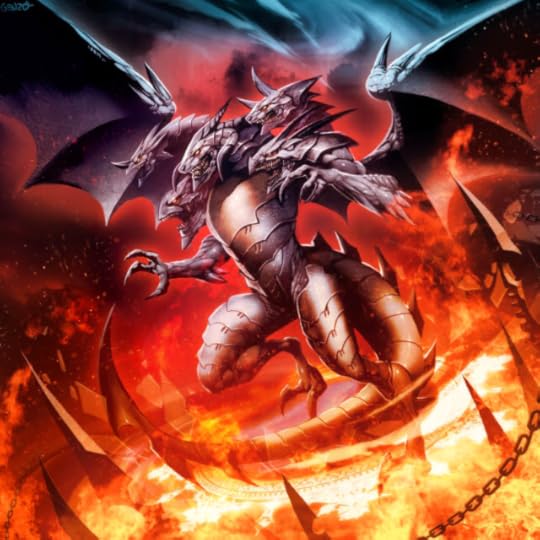
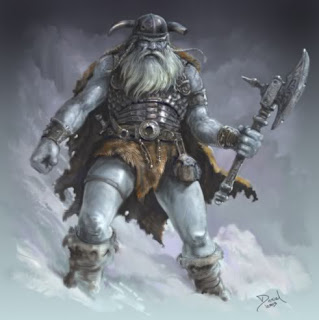 Just as the hero is consistently representative of the dominant culture group, so too his enemies tend to have the same characteristics. In the ancient past they were a rationalization of the conquered peoples. The giants among the Norse, the Amazons among the Greeks, and the various little people of the British Isles were all the representations of the conquered in common memory. Tiamat among the Mesopotamians and the Titans of Greek myth were symbols of the religions they had overthrown. In all these cases, creating hero myths was a means of simplifying conquests into a simple equation of good and evil for future generations.
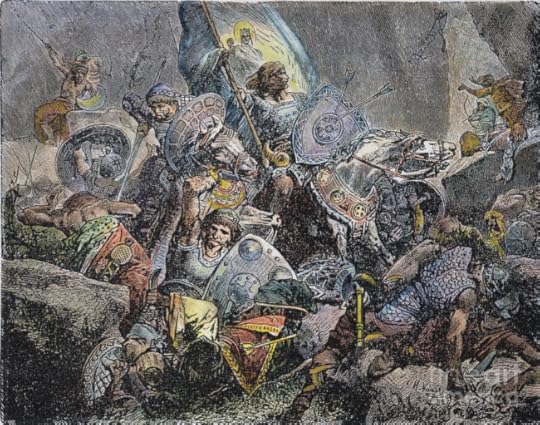
 At the dawn of the historical period the role of the hero was adjusted from a means of assuaging guilt into a tool for the development of nationalism. As such, characters such as William Wallace, Yoshitsune, and Roland now fought real people that the culture group already viewed as enemies. So, King Arthur may have fought only Britons in his lifetime, but with the rise of this new form of hero he became a British symbol in their fight against the English. After 1136, the English adopted him as their hero and used him to demonstrate their superiority over all of Britain and the continent.
 The newspaper became a powerful instrument in the development of nationalism with the widespread development of reading in the nineteenth century; Bismarck would employ it to unite all of Germany. But it wasn’t long before the hero had transformed again. Here in the United States that change came at the conclusion of the Civil War. At the time, the nation’s pop culture revolved around three types of heroes – Indian fighters, outlaw gunfighters and the lawmen who fought them (and were often not much more legal than the outlaws). These weren’t, in either case, figures of national importance or even individuals whose exploits were being used to foster a sense of nationalism. They were instead indications of American’s state of mind. Years of brainwashing had convinced our forefathers that the Indians were savages and so all activities surrounding them were clouded with that viewpoint. Indian fighters represented our ability to tame America. Likewise with the lawmen, whose purview was U.S. settlements.
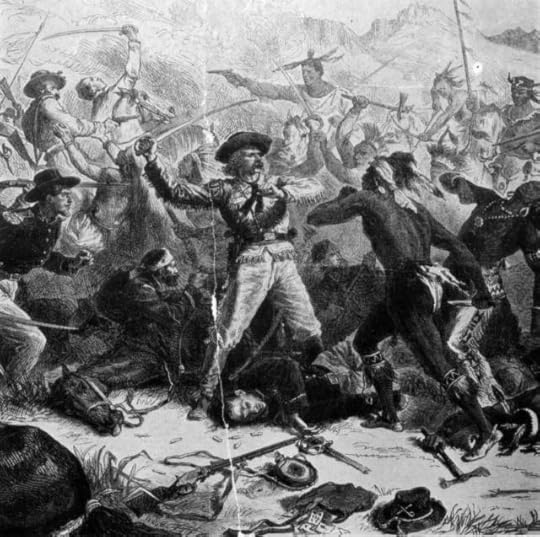 And it was easy to associate many outlaws with a continuing rebellion against the north because several individuals, the James brothers among them, had fought for the south during the war. Outlaws could be seen as a rebellion against the civilizing of the west as well in their attacks on the railroads, banks, and stagecoaches that embodied that expanding civilization.
But these types of heroes could only survive in a specific environment, and that environment disappeared with improvements in train travel and law enforcement. And of course the people who had helped to “tame” the west got old.
In a way, the very tools that destroyed the environment became the new concerns. The blatant use of power demonstrated by Rockefeller, Carnegie, and Morgan made the American public aware and fearful of the economically powerful. The very machines that had made life easier were also seen for the first time as taking jobs – and their potential was limitless. The highly intelligent people who were making these technological improvements had abilities beyond the imaginations of most people. Concerns about where their inventions might lead were terrifying; the horrors of World War I (mustard gas, tanks, first major use of a practical machine gun) were a perfect justification for those fears. And they took personified form in the Lex Luthors, the Jokers, and the Brainiacs of the newly forming comic book universe. But what they are at their core is undeniable; our fears being beaten by our heroes.
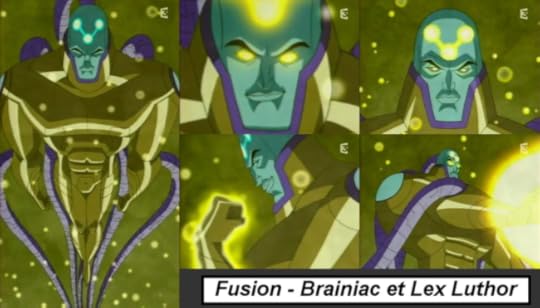 The intelligent invent things like microelectronics and the Internet right along with bombs and smaller weapons, their contributions vary with the environment. Machines are limited in morality and abilities by their creators. And although the wealthy are capable of great evils in our world, they are not all evil.
Personally, I would love to see a villain representing the real evils in our society; those controlling the progression of recycling and the use of environmentally-friendly fuels. Or the people who pay for our politicians. Someone not necessarily smart or evil, just self-centered and wealthy.
But, I don’t see that happening as long as we need our bad guys to wear all black and twirl their mustaches for us. How about you?
http://wegotthiscovered.com/movies/covereds-top-50-comic-booksuperhero-movies/
http://www.brokenfrontier.com/batman-the-real-deal/


January 16, 2014
The Role of the Hero in Society; Attributes
 As an historian, I understand that one of the best ways of understanding nearly any aspect of a society is to understand where it comes from. Take superheroes, for instance. Throughout the world they all have some basic features. Now I don’t propose to go all Joseph Campbell, but I do think there is a point to be made here.
One thing that seems to go unnoticed about superheroes is that they have superhuman abilities for their culture. So for instance Achilles was cut across his Achille’s Tendon and died because the concept of total invulnerability was beyond them. And Achilles was only so protected because his mother had dipped him in the river Styx. Even gods were not beyond wounds. Diomedes managed to defeat Aphrodite and Ares in two separate fights, injuring them both. Hercules put on a cloak with poison in it, and his mortal half died. You see the Greeks could not imagine titanium or the concept that anything living was not also capable of being injured.
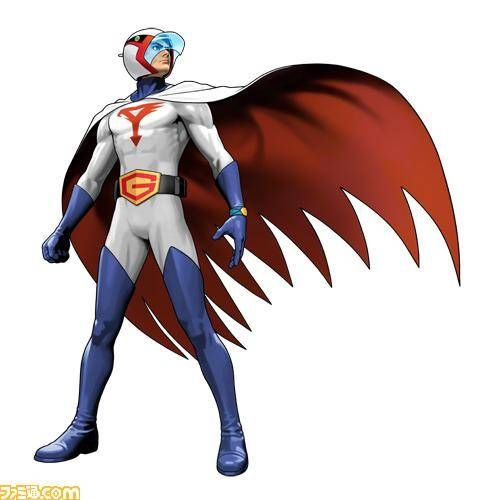 Second item; throughout the world heroes neutralize and/or trick the bad guys. King Arthur decapitates Urien, his most difficult personal combat. Thor kills, as does Yoshitsune and Tametamo in Japan, Roland in France, Sigurd among the Norse, and Arjun in India. In more recent myth, our own frontiersmen, gunfighters, and lawmen killed Indians, outlaws, and lawmen.
It’s only in the last century or so that our heroes have attempted incarceration and have tried to save the lives of villains when possible. Despite Batman’s harsh views of the world, he keeps sending the same people back the Arkham. That, too, is a function of the culture we live in. As our concepts of life and the psychology behind antisocial behavior have evolved so has what we consider proper penalties.
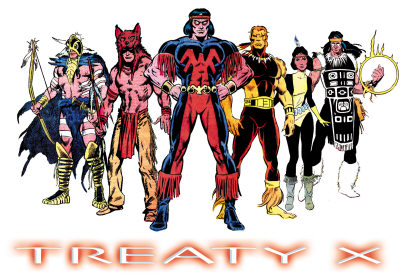
Finally, our superheroes represent those people in a society most able to patronize the stories. This means a culture controlled by Japanese will have heroes who are ethnically Japanese, Hebrews had Hebrew heroes, Aborigine had Aborigine heroes. The Greeks traveled the Mediterranean, but their superheroes were almost exclusively Greek (exceptions like Hector and Orion come to mind but they were clearly lesser heroes). The same goes with every culture; superheroes have traditionally been a means for one culture to prove to itself it is superior to all others. It comes as no surprise the same thing is happening with our own superheroes. The most important ones in both major comic universes, Star Wars, and Middle Earth are white and mostly male (even Mace Windu was not in the original script).
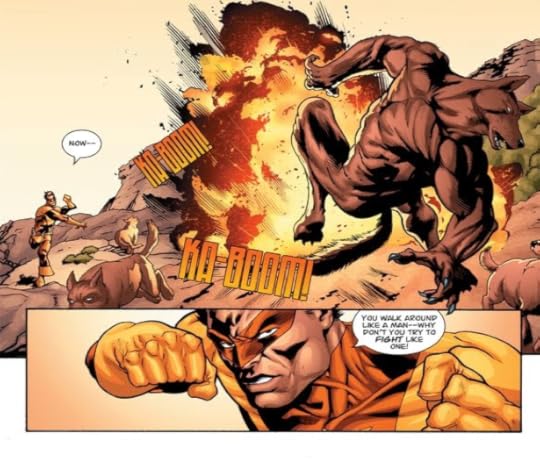 I recently read an article naming the X-Men as a forward-thinking comic because it had clearly been made with a minority in mind (first link below). They were initially intended to represent nerds and other outcasts in high school. They have evolved from that point. The clear delineation of Xavier and Magneto’s philosophies strongly resemble the approaches of Martin Luther King, Jr. and Malcolm X, respectively. The point was also made that the scene where Iceman reveals his mutant abilities to his parents in X-Men 2 looked exactly like a “coming out”.
The article went on to (rightly) complain that whites as a culture group were using the comic to make their own case about being discriminated against. Why? Because the majority of the mutants are white. The very fact that the comic, and most other comics, are composed primarily of white heroes negates that statement. On the contrary, it clearly shows that the white culture group is the dominant socio-economic group in the United States.
Should we have more ethnic diversity in our superheroes? Of course. Will we? Only when the dominant culture group (White, Black, Hispanic, Asian) no longer feels that it needs to use superheroes to demonstrate its superiority. That may be years, decades, or even centuries in the making. It takes less effort to enforce equality in the workplace than it does to fabricate new and different heroes for a culture.
http://www.ign.com/articles/2011/08/04/race-in-comics-spider-mans-impact
http://journeyintoawesome.wordpress.com/category/race-in-comics/


January 12, 2014
Story Promo: ”Kediak of the Biainili”
If you liked the ideas in “Age of Obsidian”, her’s a chance to read a story set in that universe. I have been publishing my shorts on Smashwords.com and they allow me to make coupons on occasion. So, go to https://www.smashwords.com/books/view/385697, which should be the site for “Kediak of the Biainili”, type in the code SS34D and download a free copy. ENJOY!


January 9, 2014
Cap vs. Supes
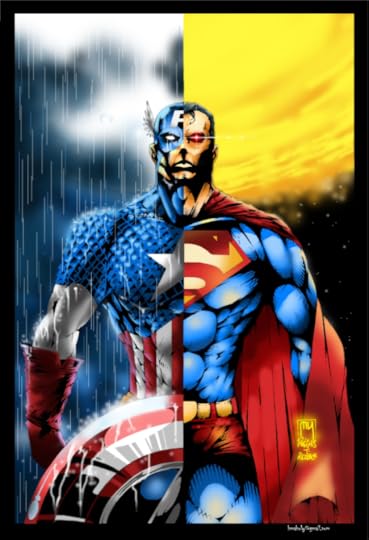 With Batman rejuvenated, Superman on track, and a Legion of Superheroes on the cinematic horizon I thought the time was right for a simple comparison of the ideal American heroes from the two major American pantheons – Captain America and Superman. Who is the best example of an American hero?
Best to get the obvious out of the way first; Cap was born in the U.S., while Superman’s parents hailed from a different planet. Of course, the U.S. is made up of all sorts of ethnic groups and cultures, so someone who looks like a WASP isn’t exactly out of place in this country. Superman is a migrant just like millions of others.
Alright, so the important stuff. Both heroes were born during the Depression Era and have maintained that era’s ideals; neither one has a negative quality. Though they are both capable of excelling at any sport, they are not womanizers nor are they interested in money over ethics. They don’t lie, they don’t badmouth, they don’t complain. They do what they can to help others and don’t think twice about sacrificing themselves.
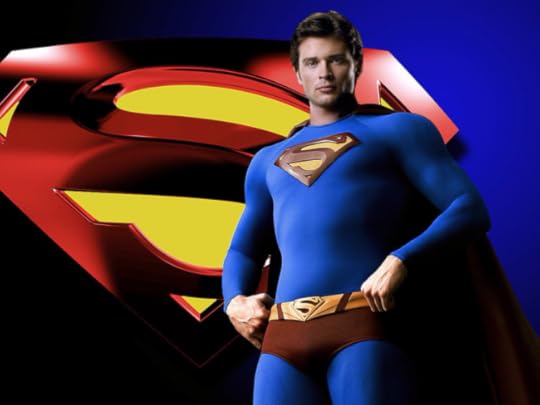 Really their only significant differences lie in three major areas. The first two, the nature and origins of their superpowers, are closely related. Superman was born with the abilities of superhuman strength, speed, vision, and durability. He can also fly, shoot lasers from his eyes, and exhale gale winds. All this is due to his genetic code being adjusted to the harsher conditions of Krypton’s sun. Captain America was born a wimp. He spent his childhood and much of his youth struggling through his limitations before being given a serum that made him physically the equal to a multiple Olympic champion.
While you have to commend a hero who has the integrity to remain a boy scout while coming to understand he is an alien who possesses the abilities of a classical god, that doesn’t necessarily make him the ideal American. Captain America, with his background, abilities, and all-too-human limitations is. We can relate to him because he started out like us. We can respect that he has to use his wits to defeat evil because he doesn’t always have the brute power to. Yankee ingenuity is the most laudable of American traits.
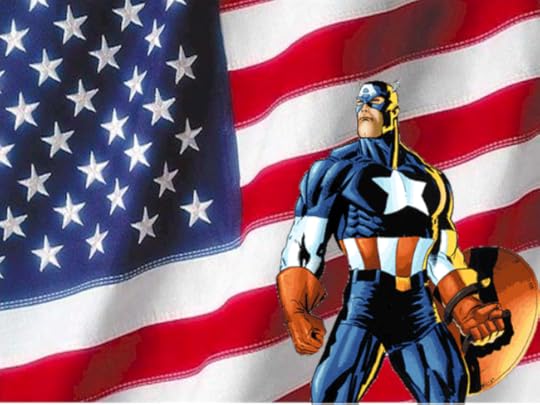 The third quality is their independence. Captain America is a superior tactician and an excellent leader who accepts the chain of command fully. Whether it is our fear of the powerful or a reassurance in his respect for established authority, that is a comforting aspect of the character. Superman shows respect for leaders and always tries to find the best solutions, but he accepts orders from no one unconditionally. That independent streak is a strongly American quality.
Personally, I find that the underdog who accepts being an underling is the more American hero, but who can argue that Superman is a powerful icon of our society?
http://sidekickcomplex.com/2013/09/18/superman-and-captain-america/


December 19, 2013
An Unexpected Delight
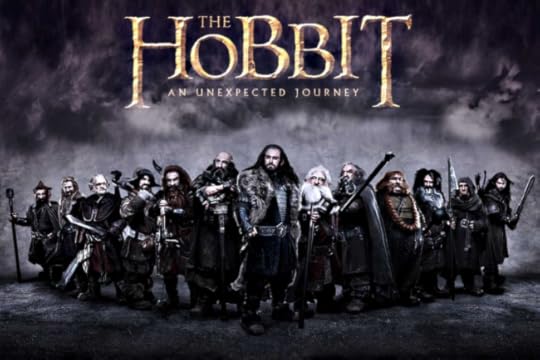 When Tolkien wrote The Lord of the Rings, he took all of the most interesting materials from Norse, Germanic, and Celtic mythology and created a conglomerate world of it; that’s pretty well known. And when it came to the story itself he added in all the elements that would keep readers’ attention – magic, elves, dwarves, disgusting monsters, pirates, ghosts, and the like. But at the center of his universe were four friends – harmless, skill-less friends. They were sent off to war as conscripts, they worked together and apart for a common good, they were honored above all for their accomplishments. In real life, they were Tolkien and his three comrades from school. Only he came home.
The Hobbit was a prequel, a device to set up the mythology of Middle Earth and to introduce the reader to some of the characters. There were some alterations from the book, but as an introduction to Middle Earth both movies have performed admirably. Like Lord of the Rings, the characters are vibrant, the themes are all present and the visual medium is used to enhance every aspect of the story. When a man like Orwell innovated camera angles, he was never able to do it with the subtlety Jackson has managed.
And like The Hobbit, Tolkien’s ancestors may well have taken part in some of the wars and skirmishes that led up to World War I. For anyone who had been paying attention, the prequels to “The Great War” would have made any sane man shiver. In the movies, one is given the clear sense that the wizards know what is coming and are similarly worried.
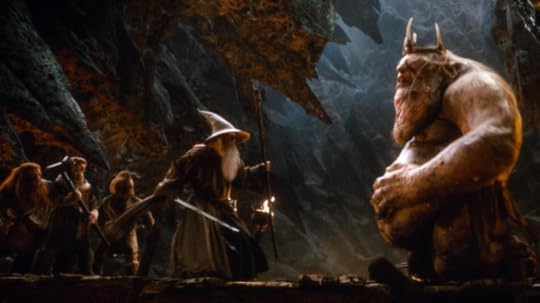
Then there are the improvements on the book. Radegast is hilarious, and his character scenes rocked. The interplay between Gandalf and Galadriel could have never been attempted in written form. Nor could it have been used to make the many dwarves so interesting. (The introductory song in Bilbo’s home comes to mind, and the fight scene as they escape the elves).
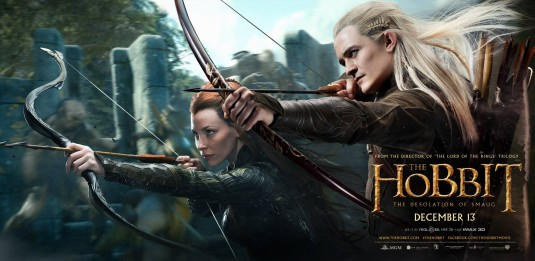 I suppose I should mention the odd addition of Tauriel to the storyline; she isn’t a part of the original book. From what I have gathered so far she is a useful tool on several fronts. She helps to develop Kili’s character. She makes Legolas more interesting. Potentially, she can be the bridge that allows him to make friends with Gimli in The Lord of the Rings trilogy. Personally, I like the addition.
As I like the expansion in the human village scene. The book is vague on what happens, and the eventual killer of the dragon is simply named without any background whatsoever. Not satisfying at all. With the elf woman, the lingering injury of Kili, and the human intrigues we are allowed a much better feel for him, giving the entire story a more rounded appearance.
 I am generally of the opinion that if you want to give a book, comic, or show your own interpretation you should do what David Twohy did with Riddick and make your own. Then again, reinterpretations usually mean undermining or altogether forgetting about the original themes. The first X-Men series did that, and I hated it. The Hobbit does neither, it enhances a story that was already there, always paying respects to the original master. Peter Jackson can keep making trilogies for as long as he wants as far as I am concerned.
http://herocomplex.latimes.com/movies/hobbit-trailer-brings-back-the-magic-and-not-just-for-fans/
http://ohnotheydidnt.livejournal.com/75497093.html?page=195


December 12, 2013
The Role of Comics; Mythology’s Integrity
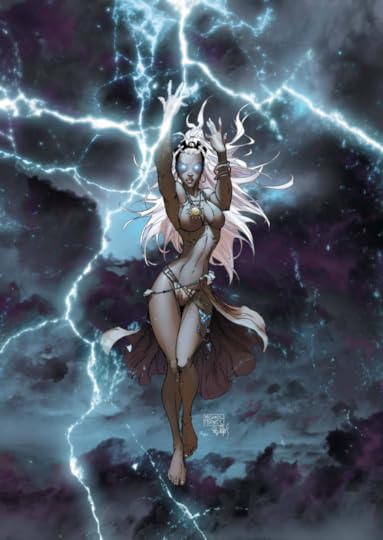 The other day I had this (otherwise) perfectly sane person ask me why I was so interested in comics. It wasn’t the first time I’ve been posed the question. Normally I take on my most pompous posture and say something about being a kid at heart. Once in a while I even say something provacative about a group of people wearing spandex. But the fact is a mythology creates a foundation for society’s basic thinking and that is why I study it. Perfect examples, Pandora and Eve. The former released all of the world’s evils because she let her curiosity blind her. The latter was gullible enough to allow herself to eat the Fruit of Knowledge, ending paradise. For the bulk of our civilization’s existence our myths have been the underlying rationale for treating women like second-class citizens. It’s only been in comparatively recent years that both myths have been rethought, that the equal gullibility of their male counterparts has been examined. That has been a reaction to our changing perceptions; we have as a society accepted the fact that women should have equality which means that our myths have needed to change to accommodate that.
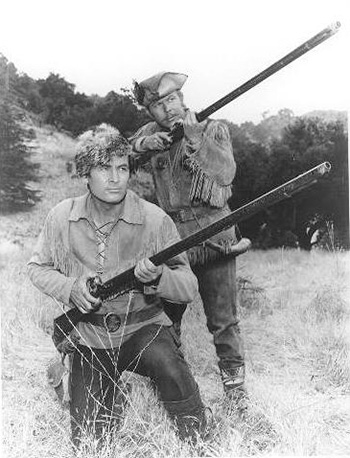 America has its own distinctive mythology in addition to that which it inherited, and this too has been a reaction to our own perceptions. George Washington, Andrew Jackson, Daniel Boone, and U.S. Grant were all icons of how we saw and in certain contexts continue to see ourselves. We are rebels, fighters for justice, and rough people who can stand up to hard odds and win. At the end of the nineteenth century our active mythology became based around Indian fighters, gunfighters, and lawmen. We had the same perceptions of ourselves, but the vehicles of that perception changed.
During the Depression, our mythology was forced to change again in the light of our own helplessneness. Two characters in particular seemed to transcend their medium quickly – Batman and Superman. Superman has always been the favorite; the perfect American specimen. He has godlike powers and is never anything but a perfect boyscout. In a time when a man might not be able to feed his family, Superman could do anything. When the easiest way to survive was to bein the mafia or find some way to cheat the system, Superman was a boyscout.
And Batman? In a way he is the alter ego of Superman. He has intellect to make up for his lesser physical skills, but the difference is really in his approach. He never takes the easy way, but he doesn’t bother trying to be the golden boy either. He gets in and does what he thinks needs to be done. He takes occasional direction from the police but he is very much his own man. They have survived because we hold to those ideals, and because the characters have not changed.
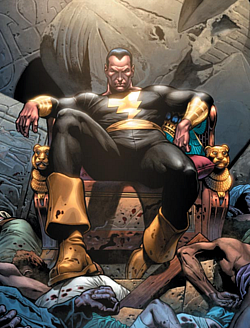 In the seventies, anti-heroes emerged – Wolverine, Black Adam, Blade, representatives of the culture. In the eighties, the X-Men arrived. They are the nerds, the geeks, the people who don’t fit in and are rejected by society. Two different sects are present in the stories, those led by Xavier and the mutants who follow Magneto. They are the group that struggles to fit in and those that want to eliminate all the normal people. That is where the drama and action come from. But one theme permeates all the X-Men comics, that the two leaders respect and admire each other. That Magneto is so willing to let Xavier die in the original trilogy of movies is one of several reasons I’ve never liked them. That they have individuals attacking them (Stryker, a lone Congressman, etc.) and not society as a whole is another. They have taken away from what makes the X-Men so special. In doing so, they have diminished the significance of the X-Men as a social statement and as the iconic comic heroes for an entire culture group in the country.
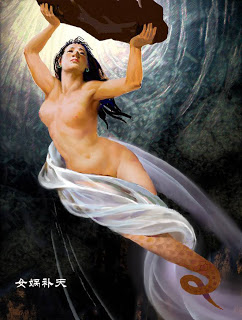 Our mythology represents our self-image, and as such it defines us. Over the last century, comics have developed from luck, a change in the country’s views, a change in technology. Comic heroes have also developed because the writers saw the need for them, saw the need for a hero to fit a group, a philosophy, a situation. The comic universes are our modern mythology. As such they must be respected and safeguarded even as they develop with the needs of our culture.
https://m.youtube.com/watch?v=NSA8bIDJ094&desktop_uri=%2Fwatch%3Fv%3DNSA8bIDJ094
http://voices.yahoo.com/comic-books-american-mythology-163250.html?cat=38


December 5, 2013
Thor 2
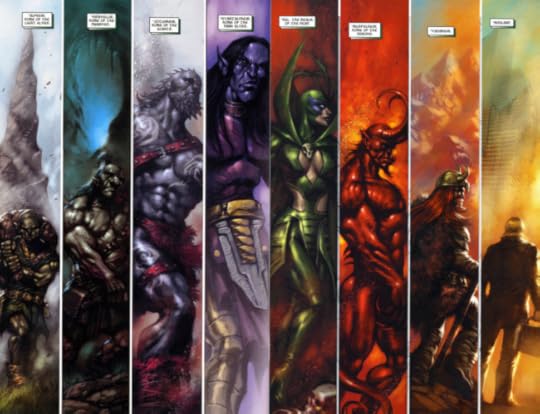 I watched the latest Marvel movie from two perspectives. First, I enjoy the Marvel universe and I have been able to appreciate how the Avengers movies have done such a good job of maintaining their integrity to the comics. Second, I am a student of the world’s mythologies and I hoped that the new characters and different species to be introduced in this movie would continue to match up with the Norse stories.
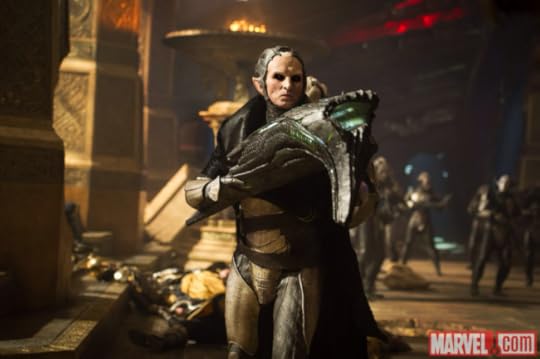 The Dark Elves, likely Dwarves according to mythology scholars, are rarely and then vaguely mentioned in the myths; making them ripe for interpretation. The comics have done this, and they are Thor’s enemies there. However, they don’t have the same level of insanity in the literature; the villain of the latest movie wanted to destroy the Asgard as well as all the inhabited worlds because his species had been reduced to a small number in a war and he wanted revenge. The movie did not provide enough background to rationalize thinking like that, nor did it give the villain enough significant dialogue to provide some explanation. The plot device that allowed a Dark Elf to become virtually unstoppable until it killed them was also not thought out very well. It is not in mythology, it is not explained, it’s an invention for the movie.
The general relationship to mythology was even less well done. The Thor of myth is a giant-killer, who goes to the land of the Frost and Fire Giants on campaigns. He often goes alone, but occasionally with comrades. He does not interact at all with Loki, who is chiefly Odin’s concern. I knew from the start that such dynamics would not play well in a movie, and was not surprised by the adjustments made for the first one. Loki was used as a facilitator, the Frost Giants became aggressors. It then became necessary for them to be sealed off from the other planets in order to give the audience some closure.
However, I also recognized that the writers had painted themselves into a corner there; the Frost Giants had no leader, and without Loki to cause trouble the Fire Giants had no means of posing a threat either. Their solution was disappointing. They took an undeveloped species from the comics and stretched their history back before time itself.
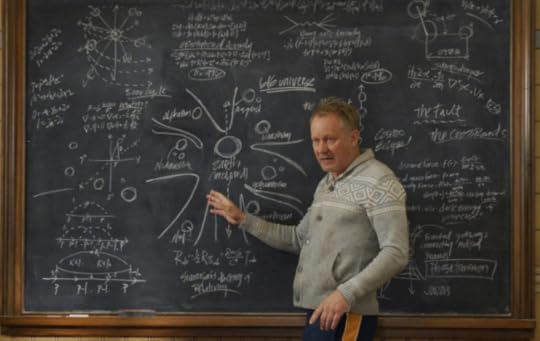
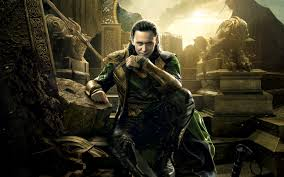 I liked the movie for a lot of reasons. I enjoyed the chance to see more of Asheim. I could appreciate the coninuing development of Thor as a character in his abilities of deception and self-sacrifice. Loki’s fascinating personality was on display here as well. I found the Earth asides with the quirky assistant and the half-insane former mentor to be great fun. I even found myself happy that Loki had survived (despite the new and unexplained enhancement of his illusion power). But Marvel needs to remember to stick to the comics as closely as possible in order to maintain its audience. They must respect the mythology as well. The Norse stories have developed over thousands of years. They are product of our communal human psyche. They work, they touch us on an emotional level that all the FX in the world cannot match. Best not to interfere with that relationship.
http://kenlevine.blogspot.com/2013/12/thor-2-my-review-if-i-had-hammer.html
http://io9.com/s-h-i-e-l-d-shows-how-thor-2-will-crossover-onto-the-t-1466694526


November 28, 2013
Comics: Strength and Athleticism
 So as usual, Marvel is fairly specific with the strength of it characters and DC is not. I estimated for them, and have listed below most of the more significant. In addition, I’ve given them all athletic ratings (agility, efficiency of movement, physical intelligence) from 1-10. They go as follows:
1 Invalid/Obese
2 Average
3 High School Level Athlete
5 Professional Level Athlete
7 Olympian
8 Multiple Olympic Gold Medalist
10 Vampire
If you are wondering, yes there is a plan to some of these more unusual entries.
Hulk 900,000 3
Darkseid 650,000 2
She-Hulk 620,000 9
Hercules 600,000 3
Superman 600,000 2
Black Adam 550,000 3
Thor 500,000 8
Supergirl 400,000 2
Wonder Woman 400,000 8
Colossus 200,000 3
Ultron 200,000 9
Namor 180,000 9
Ghost Rider 50,000 2
Beast 20,000 9
Apocalypse 10,000 1
Ironman 10,000 2
Loki 10,000 8
Bane 6,000 3
Rogue 6,000 3
Blade 4,400 10
Sabertooth 4,000 5
Aquaman 3,500 3
Wolverine 2,700 5
Miracle Man 2,000 9
Captain America 1,400 8
Spider Man 1,200 9
Black Cat 900 7
Moon Knight 800 3
U.S. Agent 800 8
Hawkman 600 3
Star Lord 600 3
Batman 500 5
Green Goblin 500 7
The Blob 500 3
Wasp 500 4
Aaron Stack 400 2
Black Panther 300 7
Green Arrow 300 4
Ant-Man 200 2
Cyclops 200 3
Daredevil 200 9
Green Lantern 200 3
Nick Fury 200 3
Ra’s al Ghul 200 2
Robin 200 4
Solo 200 3
Blazing Skull 150 2
Quake 150 4
Sinestro 150 2
Talia al Ghul 120 3
Batgirl 100 4
Brainiac 100 1
Cypher 100 2
Dr. Strange 100 2
Emma Frost 100 2
Empath 100 2
Gideon 100 2
Invisible Woman 100 3
Jean Grey 100 2
Joker 100 2
Lex Luthor 100 1
Lightspeed 100 2
Mister Fantastic 100 1
Mystique 100 6
Professor X 100 1
Raven 100 2
Red Skull 100 4
Storm 100 4
Tarot 100 2
The Leader 100 1
Mxyzptlk 50 1


November 21, 2013
Star Wars: Live Action
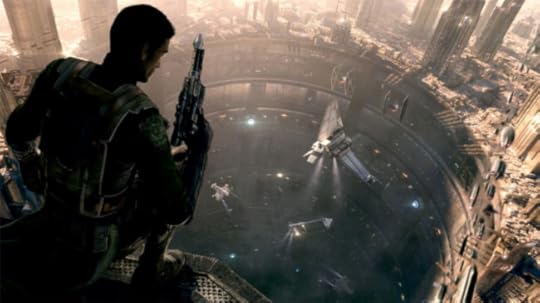 As a recent article has so well stated, two major impediments to the production of a Star Wars Live Action show were dissolved with the purchase of Star Wars by Disney. First, the money. Without having to pay fees to Lucasfilms for every episode the estimated cost of five million is greatly reduced. And second, energy. At nearly seventy, the beloved creator of the universe no longer wants to be directly involved with something like that. This is great news for any fan (of course), and with that in mind I have a few ideas for where I would love to see the series go:
Storylines:
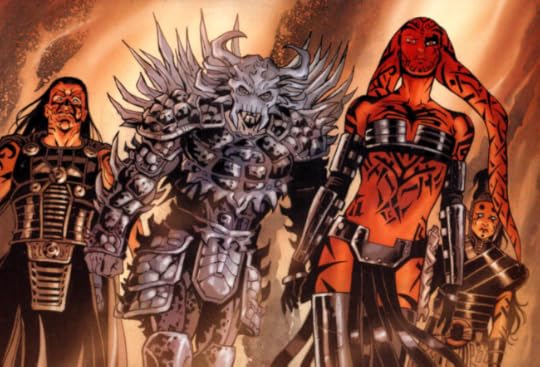
-The Fall of Darth Krayt: There are a few items which happen between episodes three and four that aren’t realized until after episode six. The transformation of Jedi Knight A’Sharad Hett into Darth Krayt is one of them. Among fans of the comics his name is easily recognizable. In 137 ABY he destroys the Republic, nearly wipes out the Jedi, and takes over the Fel Empire.
-Some progress toward Coruscant’s history: They might use Coruscanti Ogres, some fortuitous archeology, or some less obvious technique, but it would be nice that if the series is going to focus on Coruscant’s underworld we might see a little more about the past that’s buried there.
Neat things to see:
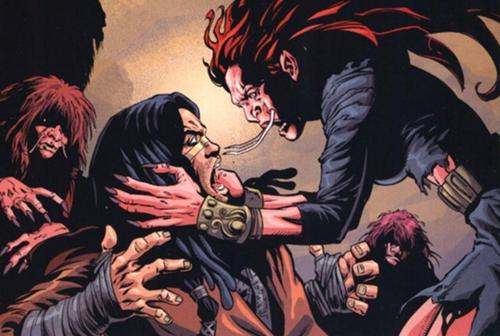
-Anzati; a species of life-force vampires, these guys can live nearly forever as long as they feed.
-A young Han; seriously, how can they not put him in somewhere?
-The Falcon without Han; if you have read the novel it was a legend before the Corellian got ahold of it
-Boba Fett; we meet him in ‘A New Hope’ as the best bounty hunter in the galaxy, and see him as a kid mourning the death of his father. Showing us bits and pieces of his early hunts would be fun!
-Several Jedi in the underworld; a couple Jedi are known from the novels and comics to have survived in the underworld for years
-Han and Chewbacca meeting for the first time; Han freeing his life-debt buddy and dozens of other giant powerful friends
-Wookiee enslavement; not to see slaves but to see exactly how you enslave creatures so large and so intelligent on their home planet
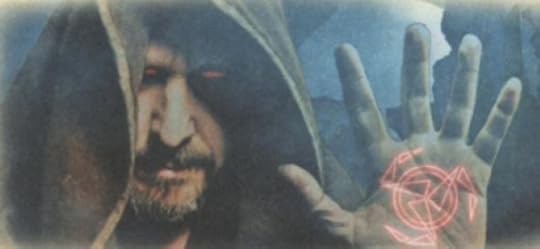 -Prophets of the Dark Side; these were a sect the Emperor recruited and used to his own ends and I would like to see them
-Luke and a Krayt Dragon; just so we can see him before he was a whiney teenager or a Jedi Knight
-Missions of Yoda and Obi-Wan Kenobi; not an entire mission, it would just be fun if they showed up collaterally to a plot or two somewhere
http://www.avclub.com/article/today-in-emstar-warsem-rumors-abc-starts-that-emst-90765
http://io9.com/s-h-i-e-l-d-s-success-revives-talk-of-a-live-action-st-1434620573
http://popwatch.ew.com/2013/11/08/star-wars-episode-vii/