Cian Beirdd's Blog, page 10
November 15, 2013
Spider-Man vs. Amazing Spider-Man
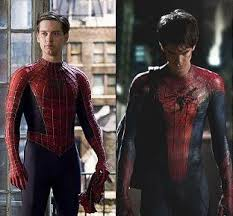 With the creation of a second run of Spider-Man movies, I find myself in the unique position of liking two different versions of the same character. I thought it might be fun to make a comparison between the two just to see which was better.
Start with the writing itself. The older version, with Sam Raimi at the helm, featured a script written by Stan Lee himself as well as Steve Ditko, the pair that originally created Spider-Man. No surprise then that the origin story featured a dual development of hero and antagonist. Nor should the elegance with which the two cross paths before they realize they are enemies; Lee and Ditko had decades to ponder it. The second movie was just as artful; the bad guy is the one who lectures Parker on the responsibility of a person to his abilities. He guides the hero to better academics, is proud of his strength in saving the city from the monster he’s become, and himself takes responsibility for what he has created. The third movie features a love triangle that serves to bond hero and villain (a delightful twist) a naive rival taken advantage of, and an impossible to defeat enemy who seems to be more mature and ‘good’ than Spider-Man at times.
The new version, with writers James Vanderbilt, Alvin Sargent, and Steve Kloves, lacked that grace. Using a formula Peter’s father had worked on as a catalyst it’s obvious from the start what is happening. Not that the directness did anything to detract from the story, it just wasn’t as artistic, nor was there any symmetry in the development of hero and villain. One can hope for an improvement in the next installment.
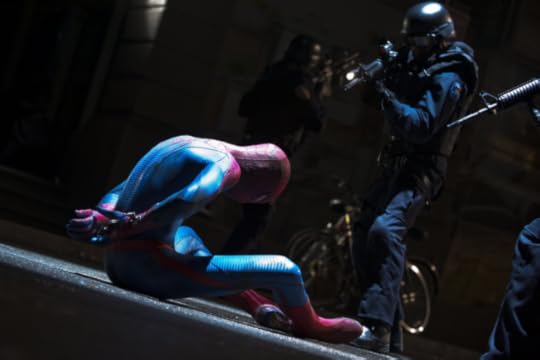 The directors; Sam Raimi and Marc Webb. I have been enjoying Raimi’s work even before he hit the mainstream with Army of Darkness and The Quick and the Dead. One can never be too certain where the Writer/Director/Actor borders begin and end, but the scenes involving the people of New York showing a love and respect for their hero, all the more touching as the first movie was made a year after 9/11. The scene where the poor kid tries to figure out how to use his powers, to make a web especially, were entirely unexpected and wonderful.
Marc Webb had no such scene. For him, it was all about building the drama, and I think by not having a comic aside he lost something in that regard.
The actors, Tobey Maguire in Raimi’s version and Andrew Garfield in Marc Webb’s. Maguire made a perfect geek, a loveable loser. But when it came to his movements, he was no athlete. Spider-Man is supposed to be superior to almost every other character in the Marvel universe in his athletic grace; Maguire looked like a geek who had spent a lot of time in the weight room.
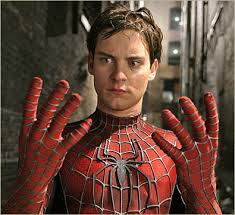 Garfield? Wow! He pulls off nerd just fine, even if he isn’t quite so loveable. The difference for me was his athletic prowess. He made you believe he could be the masked hero. And the scene where he captured the man who had killed his uncle was vintage Spider-Man in his movements and sense of humor. Stan Lee and Steve Ditko could not have written the scene better than he pulled it off.
Finally, the supporting casts. In the original trilogy, each movie had high quality and high end actors. The two Osbournes and the Sandman were played by especially good actors. In the new version, Gwen Stacy is the standout. Not that the villain, Gwen’s father, Flash, and some of the other actors weren’t good, they just weren’t as memorable.
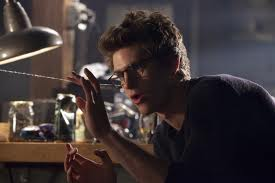 Overall I have to say that it is Garfield’s contribution to the character that keeps my interest. I happily await his next series of stunts and verbal hijinx.
http://www.comicbookmovie.com/fansites/JoshWildingNewsAndReviews/news/?a=63086
http://www.sparknotes.com/mindhut/2012/07/09/face-off-spider-man-vs-the-amazing-spider-man



November 7, 2013
Ender’s Game
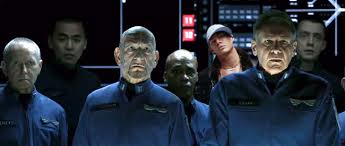 On Saturday I watched a movie with a novel plot; aliens were driven off by the “genius” of one man fifty years ago, and the planet has been preparing for a second invasion ever since.
The movie didn’t stop there, as I am guessing the book didn’t. It had plenty of commentary to make on the human species. It started with privacy. Not one character questioned their lack of it, and I found it terrifying that the adults never thought twice about it. Fifty years of convincing the population of an imminent threat that forces us to take such extreme measures? Unbelievable. And this “Big Brother” attitude was a factor not only in the children’s audio-visual monitoring but in their accommodations as well. Children were asked to bunk with children of the opposite sex without any expression of sexuality; to be asked to submerge one’s sexual identity through adolescence seems like its own kind of cruelty.
Another thing, and again I found it haunting, was the cold reasoning behind why the children were being trained in a military setting. The best and the brightest were to be sent to a faraway planet where they would fight, and as it turned out destroy, an entire species. Can any of us imagine the emotional impact that would have on a child? And yet, again, no one questioned it. The rationale was that a young mind is more adaptive to new technology and therefore has to lead – even with the evidence of their success against previous invasion with adults standing against that argument.
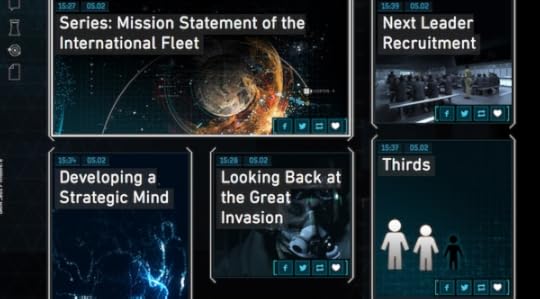 Our thinking on the aliens in the movie was also telling. We learn that they cannot speak, so we assume they cannot communicate? How idiotic! They attacked our planet once and never looked in our direction again. But fifty years later our species is entirely convinced that a second attack is still imminent. The fact that they never attempted to retake their launching platform planet is conveniently forgotten. They are an insect species, with a queen. It makes more sense to believe they could have made a second invasion within years had they wanted. That Orson Scott Card has our species conveniently unable to take what we know about them to understand their species better struck me as true; that instead we assign them hostile intentions (projecting our own motivations onto them?) was the strongest statement of the movie.
There were some positives about our race to be found in the movie. For one the educational system was designed for outstanding students; it was adaptive to an extreme and I saw several examples where the teachers were every bit as adaptive as the system. An underlying fact is that the world has united politically and in their weapons development. These things speak highly of our potential for peace. It is unfortunate that we are only capable of this when we are convinced that our survival depends on it. I find myself curious as to how Mr. Card foresees the human race responding to the cessation of that threat.
Now I am no expert on special effects, but neither did those here blow me away. Nor was the acting outstanding. This was science fiction, and I got the best I could have hoped for out of it. No amazing looking monsters, no rosey future, no universe a person could create thousands of unique species and stories for, it was just real. I hope I see more media like it. All good science fiction is a commentary on humanity in one form or another and this movie represented.
http://www.avclub.com/articles/enders-game,104933/
http://www.christianitytoday.com/ct/2013/november-web-only/enders-game.html
http://www.grantland.com/story/_/id/9909314/ender-game-controversial-author-very-personal-history


October 31, 2013
Oracle, or Cassandra
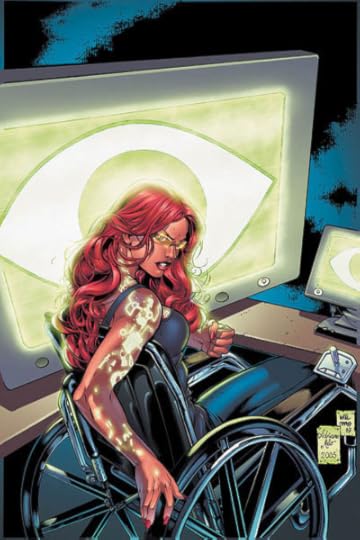 My previous article on the superiority of Marvel women got me wondering, are there any other human women of superior intelligence in the DC universe besides Oracle, and are there any whatsoever in Marvel? After scrolling through dozens of intelligence lists I did find a limited number of intelligent women in both universes, though again the numbers favored Marvel.
Before I go any further, I should explain how intelligence is explained in Marvel and implied in DC. In short, above average means an I.Q. over 115, brilliant is 130 to 160, genius is over 160, and any comparison to Mr. Fantastic, Lex Luthor, or Batman means an I.Q. over 190.
DC has Oracle who is in the highest echelon, and Dr. Light who is called a genius. There’s also Talia al Ghul and Selena Kyle (Catwoman) who fall into the Above Average category. Other women are considered intelligent – Supergirl, Powergirl, and Brainiac 8, but again they aren’t human.
Marvel has an equivalent to Oracle in Valeria Richards, who is said to have intelligence approaching her father Reed Richards. The Wasp is labeled a genius. Storm, Moira McTaggart, and Emma Frost are brilliant. A plethora of characters are labeled Above Average – Sage, Storm, Jean Grey, Jennifer Walters, Pepper Potts, Betsy Ross, Spider-Woman, Vindicator, Mystique, Ms. Marvel, Black Widow, Cassandra Lang, Moonstar, and Maria Hill.
By order of sheer numbers, it seems that Marvel again stands as the more progressive universe. Its women are definitely not equal to the men in intelligence, but they are far superior to DC.
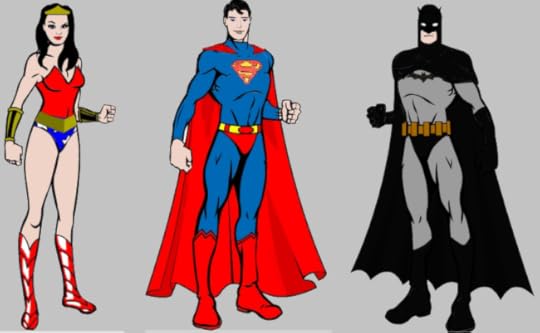 This distinction goes back to the World War II period. In 1942, a psychologist created the character of Wonder Woman, and she quickly became as significant to DC comics as Superman and Batman. In the same stretch The Human Torch, Namor, and Captain America were Marvel’s big characters. But after the war, comic heroes declined and both DC and Marvel were forced to get into other entertainments — horror, westerns, etc. In the 1960s interest was returning, so Marvel invented a new line of characters to match the changing times. This began with the Fantastic Four, which featured a tremendously powerful woman who was the emotional center of the group and performed the function of being a good if safe role model. Its success led to other characters that dealt with the social climate; teen angst was central to X-Men and Spiderman, women’s rights would be given another nod with the power assigned to Jean Grey. Wolverine and The Punisher were a response to the general social climate.
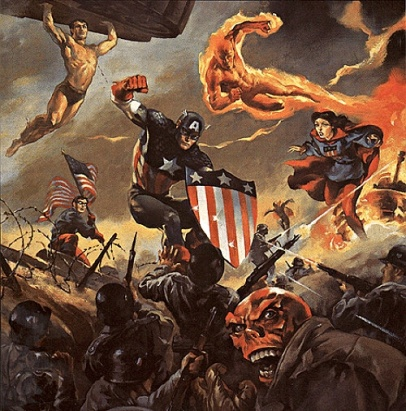
By contrast, DC simply revamped their core characters and built around them. As they kept the characters, they kept their baggage. It has generally made them seem older (Batman is consistently placed in the Depression Era, Wonder Woman fights Nazis). But more importantly, because of their past, the core characters carry a legacy of a universe that’s more male centered. They have influenced the rest of the universe so much that it, too, is still in a pre-Women’s Liberation mindset.
One side bar; as Batgirl, Barbara Gordon was never considered anything more than a little above average intellectually. When she became a quadripeligic, the writers had the choice of either eliminating her as a viable character (a decision that might have been catastrophic for their fan base) or reinventing her as Oracle the information broker. Her intelligence, as the sole equal to the smartest men in the DC universe, is a simple by-product of their decision.