Cian Beirdd's Blog, page 4
January 28, 2015
Look at Me!
 I am pleased to announce that I am not as bad a writer as I had supposed. ��“Kodak and the Children of Nelvaa” is a part of my��The Collected Stories of Kediak. ��Who knows, the non-sic-Fi stories in there might be just as good.


January 22, 2015
Life
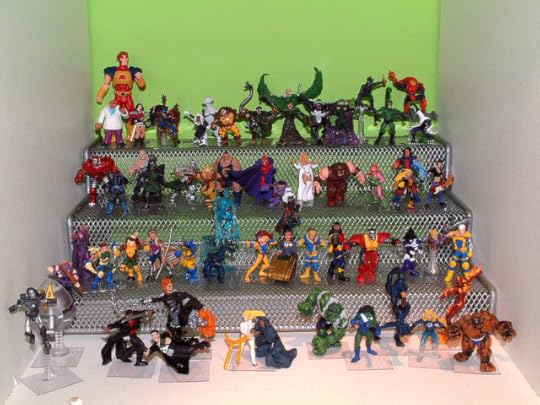 I have a miniatures collection. It consists of Star Wars Force wielders like Sith, Jedi, and the occasional independent. I also have Marvel and DC comics figures; no minions just the heroes and villains themselves. I plan to get some of the Tolkiens, too – dragons, wizards, and stuff like that. If they make miniatures for Dune, or Matrix, even Dark Angel, Buffy, or Highlander, I’ll probably grab them as well. After all I’m a writer of fiction, and though my problem with any writing is the occasional run-on sentence, my biggest flaw in creating stories is describing characters. I need them as a reminder that it’s more interesting to know what they look like.
My little universe is filled with concepts and characters no one has tried to build a book around. Of course I have to keep to archetypes, there are only so many different personalities and roles a character can play, but the world I write about is new, unexpected, and hopefully thought-provoking. When I think of all the people who created the great science fiction I envy their successes and hope to emulate their brilliance. Those tiny figurines are always in my room for that. DC invented comics, Stan Lee gave them depth, Tolkien created the first universe of extraordinary beings, with Lucas perfecting the work and Herbert, the Wachowskis, Cameron, and Widen have added their own neat tidbits.
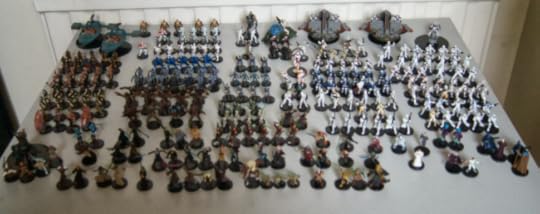 When I write, I need to be alone. Beethoven can be good for the concentration, or a medley of fun songs can help with a few ideas or to get me in a fun mood. No people though – nobody I have to pay attention to while I’m trying to sync up characters, plot, and entertainment. Well, people are good. They can be comforting and nurturing; like little voices in my head pushing me on to something deeper or more intricate. Miniatures are good for that. They are my silent friends.
I also like them. Each character has a story, and many have a plethora of tales about them. To hold one in your hands is to somehow feel like you are a part of that story, and a part of the universe they are from. I won’t ever be an actor in any movies about them, nor will I likely meet their creators. In this small, insignificant way though I can be a part of them all.
When I sit in my study working, I have miniatures. They are at my desk, on my bookshelves, all around really. They watch me, without commenting. They allow me to look over them, without shying away. They represent something greater than themselves, without putting on airs, even though they are only made of plastic. They comfort me, they nurture me. To someone without a knowledge of the universes they come from, though, they are nothing more than little toys.
I suppose that just makes me a little kid coming up with excuses to have dolls in his room.


January 16, 2015
Isaac Asimov
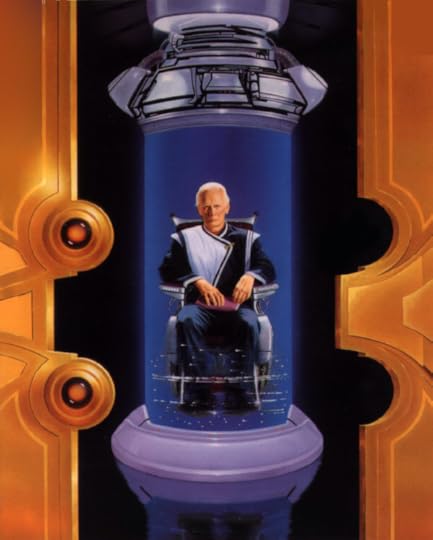 So, the “Grandmaster of Science Fiction”. I’ve read his stuff. His descriptions of technology are generally lacking (though the positronic brain idea is pretty cool) and his character development seems nonexistent. I recently read The Foundation, which focuses on one character alone, and realized I knew nothing about Mr. Hari Seldon apart from the facts that he was uncertain about his ideas but very intent on exploring them fully. He had a wife, an adopted son, his entire family, and yet nothing was more than touched on. Honestly, if I wanted either I would have better luck with any of the Star Wars writers, and though good none of them have been given the same accolades Isaac Asimov.
Yet Asimov is the most impressive Sci Fi writer for a reason. Actually, several. The big reason for me is that he managed to create a realistic view of our future, one where the explorers went out, experimented, improved, and developed better technology to live on different worlds while those who stayed behind stagnated. In his series dealing with the most immediate future there is always a conflict between the Earthlings and the “Spacers”.
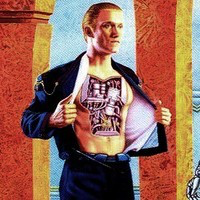 Second were two intriguing and even at the time unusual notions. One was the idea that robots might be nothing but a benefit to humans. It is easy to ride the bandwagon and go the other way. Since we first started developing machines with basic reasoning skills there has been science fiction about the machines taking over and killing us – the Terminator and Battlestar Galactica franchises have only been the most successful at the concept. Asimov believed that robots were both inevitable and would help us, and in fact his robots are often more beneficial to mankind than the humans in his stories. With his original three laws concept (Robots cannot hurt humans, robots must obey humans as long as it does not involve harming humans, and robots must protect themselves unless doing so might harm humans) he made the idea of robots rebelling and exterminating us seem a little ridiculous.
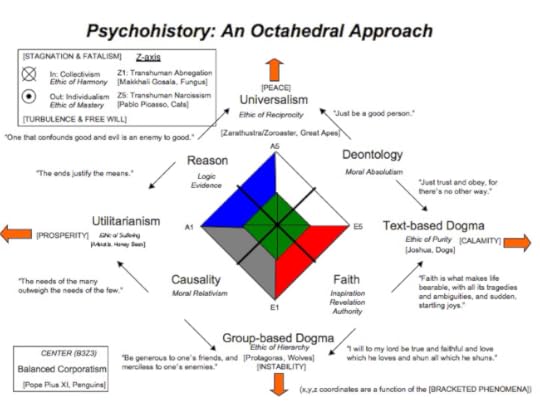 The second idea is bizarre, fascinating, and possibly even feasible. It is the idea that the future on a large scale can be predicted. Asimov called his theoretical science “psychohistory”, but it boils down to a very scientific approach. Knowing where a group began, how it developed, and its current direction, psychohistory theorizes that it can guess the group’s future accurately. More than that, it might be able to guide the direction. So, for instance, the creator of psychohistory realizes that the human empire he is a part of can’t be saved but begins a plan that will greatly reduce the time of chaos between it and the next galactic government.
Asimov was not a great writer, he does not portray scenes, characters, or even technology in a way that gives the reader a picture. What Asimov did have was a great deal of knowledge (Having written a critical edition of Shakespeare and the Bible as well as work in the hard sciences) and a fertile imagination. He put it to great effect in building and showing us his personal literary universe. May another Asimov emerge again one day.


January 8, 2015
Sequels, Prequels, and all that Rut
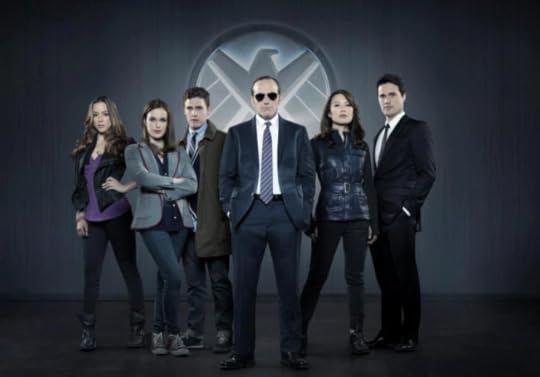 I admit to being a little behind, but I just watched Agents of Shield last night. I was already impressed with the interwoven plots of the Avengers movies, but this, timed with the aftermath of The Winter Soldier, was amazing. I can’t wait to see what they do next, and I am getting more and more excited about what they might try with their resources, Lucas’ mind, and … Star Wars – I shudder to think.
Which got me to thinking. When Lucas first threw Star Wars onto the silver screen (he later renamed it) the concept of a sequel was not a popular one. Every once in a while a wildly popular movie had invited a sequel, but they had almost always been dismal. Because of that, scripts just weren’t written with a sequel in mind and as a result, the sequels that did get made were either repeats of the original plot or pathetic attempts to go somewhere new. Instead, studios relied on their bankable stars. Cary Grant, Jimmy Stewart, Paul Newman, and a handful of big names made movie after movie. They always had the same basic character traits (it seemed) but they were put opposite different co-stars and in different settings. That was the way Hollywood made money. And it worked. Though you can’t really identify any of the old stars with one particular movie (well maybe, but they don’t spring).
 Lucas changed that. By writing a story and dividing it into three acts he had a ready-made sequel before his first one hit the theaters. Consistency was there, the plots were in no way forced. The original Star Wars trilogy amazed from episodes 4-6. After him, sequels were sometimes planned in advance, but more often room was made for them when writing a first movie. Sure, one shot wonders were still made with a follow-up sequel later. Indiana Jones can be watched 1-2-3 as easily as 3-2-1, but can you imagine the Matrix trilogy working like that? Or how about the new trend in Young Adult movies – Harry Potter/Divergent/Hunger Games/Maze Runner?
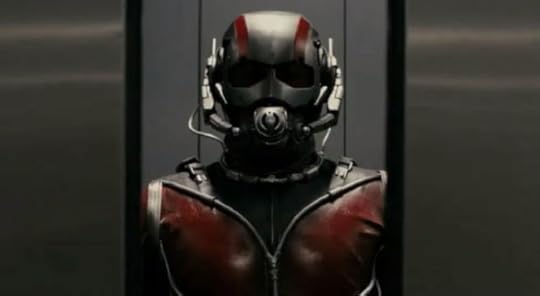 Then we get to the latest improvement in the cinematic experience; a series of four franchises all working in concert with the Avengers movies. They are adding in one T.V. series and at least one new franchise (Ant-Man) that I know of, and who can be certain of how Guardians of the Galaxy will fit into all this in the future. What Disney has done over the last few years has been something I would have thought to be an impossible task of contracting egos, manipulating scripts, and avoiding problems. Yet they have in producing at least two worthwhile movies each year for awhile now. Considering where we were for the nearly hundred years before Lucas, what movies have accomplished in the last forty years is amazing, and in the last ten absolutely miraculous. I hope the Star Wars Franchise again leads the way beginning in December of 2015.


December 18, 2014
So What Would You Choose?
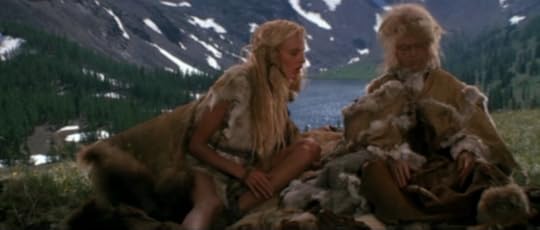 I have ranted about comics, science fiction, fantasy, and even the occasional historical fiction (Don’t get me started on King Arthur!) during my blogging career. But tonight I would like to pose a simple question. What historical period would you like to see stories about? I realize that’s kind of a blanket statement, after all we already have over 40,000 years of history, and 10,000 of that has been with “civilization”. So, to help a little I’ll throw out a few options.
-The Heike Wars in Japan (1100s): The Minamoto and Taira clans fought for control of the shogunate, the ultimate power. Battles were highly ceremonial and opponents were matched by pedigree and accomplishments. Minamoto Tametamo was the great hero of the period, he was the best warrior and invented the act of seppuku, or ritual suicide.
-The invasion of the first patriarchal clans into Europe (8,000-10,000 B.C.E.): A clash of cultures when the settled and stable matriarchal groups were confronted with starving tribes migrating from the desolate steppes of the period.
-Greek trading (8th century B.C.E.) Greek adventurers traveled the Mediterranean in fragile crafts in search of trading options. They would have run into feral tribes, hazards at sea, and always unknown customs along with exotic goods. The same idea might also work with their predecessors the Phoenicians.
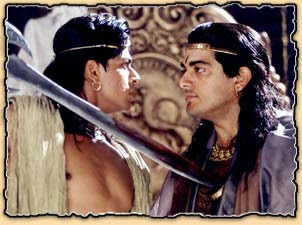
q-Native American migrations (10,000 B.C.E.): Hunters following the game animals crossed the Bering Strait at this time, coming upon a new land. What would be very neat would be to add in the Native American element, that the Americas had been peopled before but that they chose to take the form of animals in order to peacefully give way. They would continue to act as spirit guides.
-Charlemagne (800): Three hundred years after the fall of Rome, Charles the Great rebuilt the Western Empire, forcing Christianity on the northern pagans, holding the Muslims back at the Pyrenees, and establishing his own group of heroes in legend focusing around Roland. What a story.
-Assassin’s Guild (1200): There was among the medieval Muslims an assassin’s guild so feared and deadly that they were renowned throughout the Muslim world.
-Minoan Civilization (2500 B.C.E.): The Minotaur, the tribute of seven male and seven female youths, and Theseus is all just a convenient myth to explain how the Myceneans overthrew their culture. It might be nice to see what really happened.
-Toltecs (?) Not much is known about this group, though recent years have revealed some interesting theories – like descent from Africans. An original settlement of or contact with them might be a good spot for a story.
-Rise of the Nazi Party, or Biography of Hitler: I know these are two of the most hated subjects in the world, but there is definitely a story there, and a lesson to be learned if we can stomach some of the actions both were responsible for.
Cast a vote, or throw out an idea of your own.


December 11, 2014
Influences: Frank Herbert
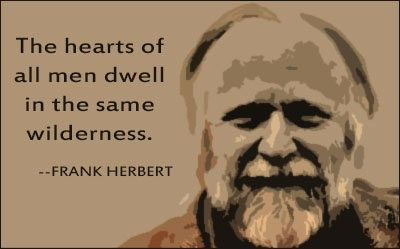 I think everyone who recognizes Frank Herbert will know Dune and its universe, which was synonymous with him. Six books, and a saga left unfinished that was and continues to be fleshed out by his son. But Frank wrote a great deal about Dune, but he wrote many other books. I’m reading The Green Brain, he also four books about life forms on a planet settled by humans (Destination: Void), and dozens of other stories about Native Americans, genetic tampering, and the power of nature in general. I’ve never been much for Herbert’s writing style, but his respect for the living earth and his understanding of ecosystems is a little overwhelming.
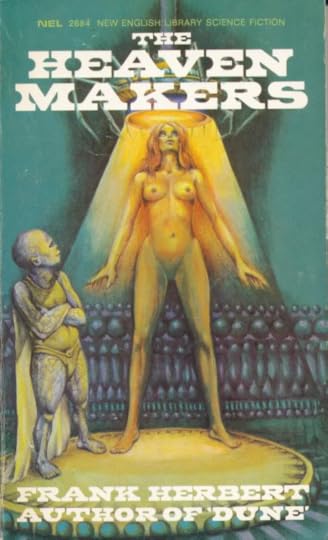 What impresses me about Herbert is simple. Arthur C. Clarke was a brilliant man who came up with ingenious ideas about star travel, time, and God. Asimov gave us stories about robots and a new technology to foretell the future. A dozen other Sci Fi writers have created their own niches in the genre, but Herbert did it by focusing on a respect for nature. Every story touched on some aspect of it. Of course to read Dune is to be familiar with every aspect of the subject – but he went into so much greater depth in his other works. Maybe not as brilliant as the two grandmasters of science fiction, probably not as interesting in his plots. His characters have depth, more so than Clarke’s, but they are not much fun to read about. What he did have was a singular vision of the future and the present and he used his imagination and his knowledge in novels to spread that vision to science fictions readers througout the world.
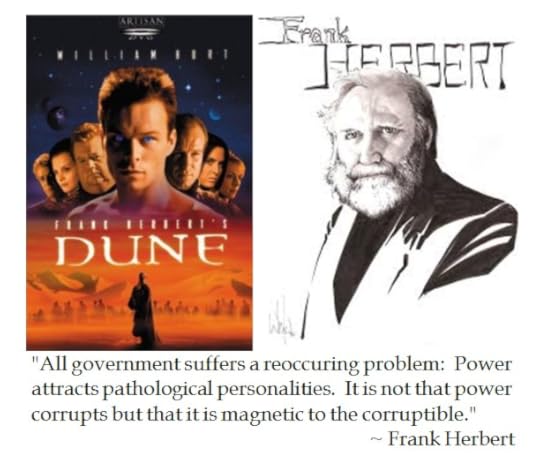 I have made a point of reading all of the Dune novels so far, and collecting all the other stories he published. The technology is generally not that interesting (apart from their form of space travel) and even the theme of the destined hero is not done as well as it might be. What attracts me are his insights on all aspects of a planet’s natural workings and his thoughts on genetics, politics, and even religion. When I read other science fiction writers I am reading intelligent men who found subjects that an audience might find appealing. When I read Herbert, it is a man who had an overwhelming passion and would not have cared if his following had never exceeded dozens. Integrity like that I can get behind, the writing doesn’t have to be as good, the plots and characters don’t need to be as strong. Reading Herbert is worth it.


December 4, 2014
Interstellar
 Fantasy has had so many outlets over the last few decades with Star Wars, Narnia, and Tolkien and with comics from Marvel, DC, and several independent stories like Conan, R.I.P.D. and Watchmen.
Science Fiction has had a harder time. It’s difficult to make up an entire universe for a time well in the future and then make storylines that fit it. Star Trek has been successful, as had Stargate. Even in these cases, though, there have been small cheats necessary to get there. Star Trek’s “Treknology” is infamous for being only loosely based on science. Stargate is based in our timeline, with a single piece of totally unexplained technology to start with and a minimum of technology introduced to the early series. They generally added on as they needed to, same goes with “Atlantis”. Foreign cultures were either of inferior technology or almost nothing was shown of their superior toys. It was only with “Universe” that something more detailed was really shown.
It’s not that science fiction has a lack of creative persons. Arthur C. Clarke thought of the idea of satellite communications. Isaac Asimov spent an entire career writing about friendly robots. Roddenberry may not have created an entirely new and feasible technology but he had the idea that not only different cultures but different species could get along in a common and mutually beneficial federation.
Still though, every once in a while a new story comes along that is science-based and manages to knock your socks off. In 1968, one of the great moviemakers of the time, Stanley Kubrick, and one of the great science fiction writers of all time, Clarke, got together to make 2001: A Space Odyssey, one of the most moving and difficult movies ever filmed. Before that, Orson Welles used radio to manufacture an alien invasion that sent the entire world into a panic. The story of that famous Time Machine has stayed with our society through the decades, being told and retold several times and in many different ways.
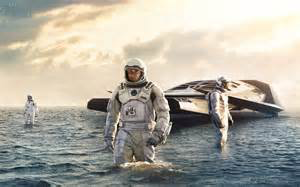 I watched Interstellar already impressed with Nolan’s body of work (see a few weeks ago), and his storytelling just as good if not better than I saw in the Batman movies and Inception. In those movies the characters have a vitality and depth that goes beyond being interesting, you understand everything about them.
What made it beautiful science fiction is another key feature of Nolan’s movies, his use of fractured time. In the past he has jumped backwards and forwards in time, using flashbacks to tell a continuous story. In this story there are only minimal flashbacks, but he uses some beautiful science fiction to accomplish much the same thing. A black hole, a time-space room. It’s rare that a new story comes out, more rare when it comes out fully formed. Imagine an idea like Battlestar Galactica first appearing as it did in its second version. Now try to think of a genius like Arthur C. Clarke adding in the science. That’s what Interstellar is, a fully developed and beautifully articulated idea that was accomplished the first time around.


November 20, 2014
10,000 B.C.
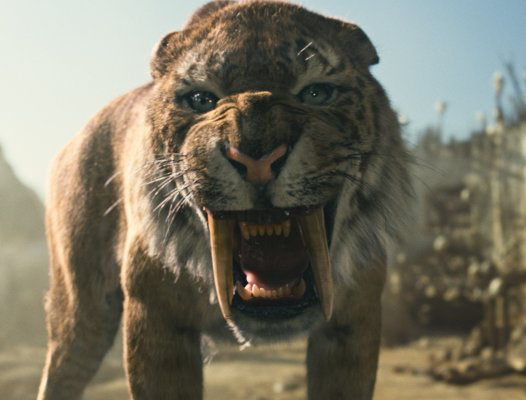 I suppose this blog will make me a ranter, but I watched the movie named above in silence. It occurred to me, if the Ice Age was a time when mankind’s very existence was in question how could there be massive cities built by large cities of them? Then I recalled, the earliest settlement is supposed to be Jericho and it is dated to 8,000 B.C.E. The great monuments of Egypt are traditionally dated to the third millennium before the Common Era. Even the most liberal scholars has never hazarded a guess much before 8,000. And of course the creme de la creme were the mammoths that did not survive until 10,000 B.C.E.
It irritated me, I’ll admit, that someone took the time to build a plot and used so many items that were obviously impossible. But 10,000 B.C. is hardly the first movie made that is placed in the ice age. Conan lived in what is called the Hyborean Age which ended in roughly 10,000 B.C.E. according to his creator Robert Howard. To name off just a few things about the three movies under that title that come to me as I write there is: The issue of large cities existing in a period when there were none. Kingdoms did not develop until roughly 5,000 B.C.E., and then only in areas that could support a dense population like Mesopotamia, yet they figure prominently in all the stories. So do horses and swords, both of which were not made use of till 4,000 B.C.E. Well, not swords. We might call them large daggers really. They were made of a copper and tin composite and were even shorter than the weapons in Troy because metallurgy had not developed that far just yet.
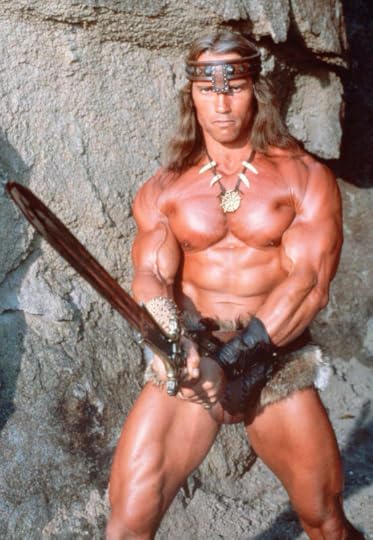 Do the inaccuracies detract from the stories? I suppose not. However, I think they are an opportunity lost. Howard once said that he had intentionally placed his hero in a period outside of history so that he could do what he wanted in his world without the need to conform with what was happening in real cultures and kingdoms. Our understanding of our past has exceeded his writing now, however, and working in that sort of a fantastical prehistory is no longer possible.
What did 10,000 B.C.E. look like? As I said at the beginning of this blog, it was an era when the very existence of our species was in question. Clans of our species, no more than 20 or 25 individuals, roamed the Earth, finding caves to shelter themselves while they scavenged the area for food and moving on when they had exhausted the local flora and fauna. There were a few permanent settlements, but these were the rare places that had valuables which could be traded for food or that themselves had food or some valuable goods in plenty – obsidian deposits and lakes heavily populated with fish. Life was hard; the northern hemisphere was covered in glaciers while the southern was in a permanent drought and only a narrow band of land seems to have held a healthy balance between the two.
Warfare is absent in the record, there is absolutely no record of battles, raiding, or even an exchange of yelling between two groups. They were humans, so tempers inevitably flared and actions were without a doubt taken that could not be taken back, but there was peace on a large scale. From what we know in the archealogical record, clans gathered at local high points during the solstices and equinoxes for trading of goods and ideas, and probably also of people who wanted to be with different people for any of a number of reasons.
There is nothing of a saga in that setting, I know, no great evils to overcome or monsters to defeat. Still, there must be stories in a world like that. A fight against hunger perhaps, the testosterone of killing a saber tooth tiger with nothing more than spears in 20,000 B.C.E. Perhaps something could be made of their religion, one that featured an odd worship of their prey, a fertility statuette, and red clay.


November 13, 2014
Will the Real King Arthur Stand Up? Please!
I think I grew up with King Arthur. I knew all about Lancelot, Tristan, Gawain, Kay, and all the other knights of the Round Table before I was out of Middle School and I had a list of every one I had come across. I even managed to order them by their fighting skills.
Then I got to high school and I realized there was much more to him than that. There was an historical context in post-Roman Britain 410 to 600. That led to a great deal of reading about the source materials, their flaws, their dates of production, and a whole lot of insecurity about the topic. The fact is that there is so much we can never know about Arthur, his men, his battles, his location, the dates of his career. We won’t ever know what he looked like, the details of his last years; such is a perfect opening for a fiction writer.
Which is why I don’t get Arthurian movies at all. In King Arthur he and his men are Sarmations? But that tribe hadn’t been active for centuries by 410. In his opening dialogue Arthur speaks about a contemporary named Pelagius; but Pelagius had been excommunicated and outlawed from all Roman regions before 400.
Then there are the more subjective flaws. Arthur allies with Picts (of the Highlands) while fighting against the Saxons who have landed on the southern coast. This in the fifth century, when all government had fallen apart and traveling the length of the island would have been a feat in and of itself. Rome was dead before Arthur was active, he could never have been its servant. Oh, and he might have had the money for metal body armor, but not one of his men would have, leather armor, wooden shields with leather or metal plating, and iron swords were the armaments of the day.
Tristan is made out to be a falconer. Warriors didn’t do that, knights of the later Middle Ages did. Besides, Tristan was a figure of myth who was added to the Arthurian cycle later and all we know he did was slay a dragon.
Numbers are an issue, too. The economy of fifth century Europe had fallen apart, and farming was ragged. There was no means of supporting a large group of warriors, and farmers would not be asked to fight in a standing army until the modern era. That the Battle of Badon could have happened in any way as it is portrayed is laughable.
First Knight is no better with its shiny knights and high morality. A post-Roman king who didn’t kill a man who looked at his wife would have lost the respect of his warriors. If Arthur hadn’t conquered a kingdom with a weak ruler or no male heirs someone else would have. That covers my issues with Lancelot and Guinevere.
Tristan and Isolde? I can’t help but smile. Originally the story involved a dragon, a knight who took credit for Tristan’s (Drust’s) kill, and the maiden who healed him and fell in love. That movie is an awkward combination of the romance as first seen through Thomas of Britain and a post-Roman Britain that could never have existed.
Can’t we just have a movie involving Arthur where everything we know to be true is kept to and the poetry is in the plot, the characterization, or even the politics of the period? It would be so refreshing for a change.
https://www.essaytown.com/paper/guinevere-depicted-king-arthur-2004-historicity-23642
http://www.academon.com/essay/king-arthur-and-the-historicity-of-guinevere-68038/


November 10, 2014
Christopher Nolan and Joss Whedon
 I think it’s kind of neat that two individuals who did not make a name for themselves in comics have been centrally responsible for the rise of comic book movies in film of late and think a little background on both writers might go a long way toward showing us where both DC and Marvel will be going over the next few years.
Christopher Nolan first made a name for himself with Memento, a psychological thriller in which the main character has no short-term memory. Nolan did a beautiful job of demonstrating his confusion by mixing up the order of the movie. He followed that up with the Batman trilogy in which he probably delivered the deepest, most real portrayal of one of the most interesting comic book characters. In there somewhere he made Inception, a movie about dreams that puts Dreamscape to shame. And now he has come up with Interstellar, something that promises to have a depth of humanity that is rarely managed in the popular media as it explores several central issues about being human.
Nolan’s characters aren’t generally funny but they are engaging. It is rare that one finds a writer or director who can make anything without using some comedy to break up the more dramatic scenes. Yet he manages, and he does it well. In writing Man of Steel he again worked the same wonder. It frightens me when I realize that Batman vs. Superman will not have the benefit of his input (at least officially), especially when I consider that the introduction of so many heroes to the DC film universe all at once is a massive undertaking and will in many ways be more difficult than the four films in which he did participate.
Joss Whedon first came to the public’s eye with Buffy the movie, which was campy but fun. Through the series of Buffy, Angel, Firefly, and Dollhouse he managed to write stories in the best tradition of Science Fiction/Fantasy while touching on themes like Feminism, the ills of capitalism, the immorality of government, and teenage angst. His material never got boring, though. Whedon wrote characters with their own languages who were different and developing. Most important, he could make the audience laugh. When Buffy stops in the middle of a fight to make some harsh comment about fashion or the irony of the situation you can relate to it. When you see Malcolm Reynolds sitting on a rock, naked but with a genuine smile on his lips, your jaw drops but you get it. When he did Avengers I was delighted, that he is taking an active part in the Marvel universe is reassuring. For as long as he is involved it will be taken care of.
That’s not to say that DC will not be worth watching over the next few years. I have hope for the movies and I am enjoying their current run of t.v. shows. It’s just that they are more uncertain is all.
Take Our Poll