Cian Beirdd's Blog, page 5
October 23, 2014
Most Interesting Science Fiction Characters 5
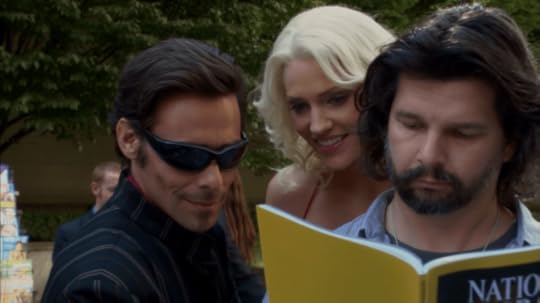 1 Balthazar’s Angel: Is she in Balthazar’s head? Is she part of his programming or a symptom of psychological disorder. Is she real? Why can’t anyone else see her? This breathtaking blonde was generous, cruel, absolutely devoted to the one god, and had a perfect vision along with the will to follow it through. Her character, her state of being, even what side she was on, was maintained perfectly from the very first episode to theconclusion of Battlestar Galactica.
2 Data: An android living in a human world. One would think that the subject had been covered after decades of writing and t.v. materials on the subject. But our introduction to Data, attempting to whistle, proved that assumption wrong. Through seven seasons and four movies, Data never stopped showing us what is was like to look at the galaxy through the eyes of an artificial life form. Interviews from the cast and crew have revealed he was responsible for large portions of many episodes and one can truly believe it. When Data died, the movies were over.
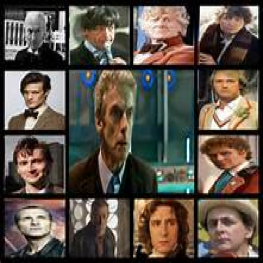 3 Dr. Who: The storyline is unique in all of t.v.; a man who travels through time and space, exploring worlds, stopping threats, and correcting the time stream. That inevitably makes the lead interesting. But the lead changes every few years and each actor has brought his own unique characteristics; who can forget Tom Baker’s scarf and jellie babies? The ridiculous smile of Christopher Eccleston? The always running David Tennant? The characters themselves have been interesting. They are all fun, energetic, and brilliant (except of course for Hartnell, but he was a good introduction to the character). And there is that crazy way they all seem to take the obvious or the smart remark and come up with something brilliant and life-saving.
4 Prot: The lasting image of this “alien” is him grabbing a banana and eating it, unpealed, as a psychologist studies him for some pathology. He threw out one far-fetched explanation after another. It’s almost like he doesn’t want to be believed. So when we find out he is linked to some poor devil who had suffered an emotional trauma we have every reason to believe he is just a man who has lost his grip. That is, until he disappears on a sunray.
5 Dr. Balthazar: Brilliant, arrogant, a survivor, the president, a religious leader, responsible for the near-annihilation of his race, a sex addict, immoral, unethical – did I mention he was smart and cocky? Whether he was having sex with an angel only he could see, having a dual conversation with only one response to each person’s statements, accidentally doing something to help the human race even as he was working only to save his own life, Balthazar was fascinating to watch week after week. To have made his character so intriguing amidst such a spectrum of actors was even more impressive.
6 Paul Atreides: Fated to end an empire and cost millions of lives, watching the struggle between his visions of the future, the political needs of the moment, and his desire to be free of responsibility made for an incredibly rich character. He walked through life knowing how and where each tragedy in his life would take place because he had chosen those events over others in order to ensure the best possible future for his race. His son would completely cut himself off from humanity with his enigmatic “Golden Path, but Paul allowed himself to feel everything.
http://sciencefiction.com/2012/03/08/womens-history-month-top-10-female-science-fiction-characters/



October 16, 2014
Most Interesting Characters in Science Fiction 4
 7 Robert Neville: Imagine surviving an apocalypse because you are the only person who is immune to a plague that changes the human genome into something feral. Now imagine watching your wife, child, and even your dog dying because of it. Try to see yourself working in the middle of an infected city trying to find a cure for your race even as the victims stalk you, knowing that they have killed everything you loved and your only mission in life must be to save them. Will Smith made me want to cry as the movie slowly revealed the depth of his pain. For me, his character represents the best our species has to offer.
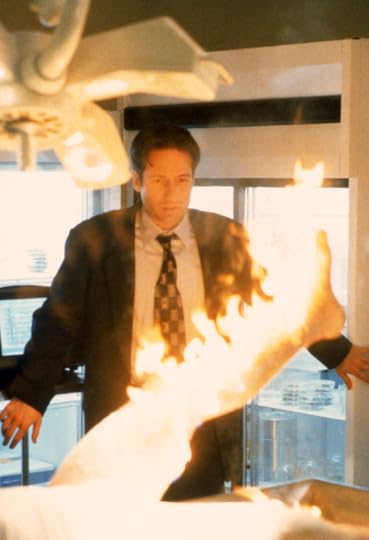
8 Fox Mulder: Handsome, highly intelligent, and so engrossed in chasing aliens and conspiracy theories that he doesn’t notice how every woman around him is falling at his feet. Yeah, there was some jealousy in watching the X-Files star, but listening to how his mind worked week after week was great, and noticing that he always seemed to be watching porn made him just human enough that I could keep that jealousy in check.
9 Riddick: In some way the movies are dumb; Riddick somehow has superhuman abilities, two monster movies, bad guys who worship death as an induction into their armies, an elemental race that is clearly human, and weak plotlines. However, Riddick makes them interesting. He’s a bad guy who never kills except in self-defense or revenge. He’s not a good guy, he doesn’t join causes, but he manages to generate loyalty in others and he is a survivor.
10 Neo: Sure, the superpowers are neat. The ability to change reality both inside and out of the matrix was fun to watch. And the theme, of a chosen one finding his destiny, was nice even if it has been overused. What intrigued me about the character, though, was his personal development. He began as an isolated individual who had no concerns in life apart from money and the mysterious Morpheus. As his powers revealed themselves he found love. His abilities continued to develop even as he lost – first his vision and then the love of his life. He went back into the matrix that final time knowing he probably wouldn’t come out but absolutely certain of what he needed to do.
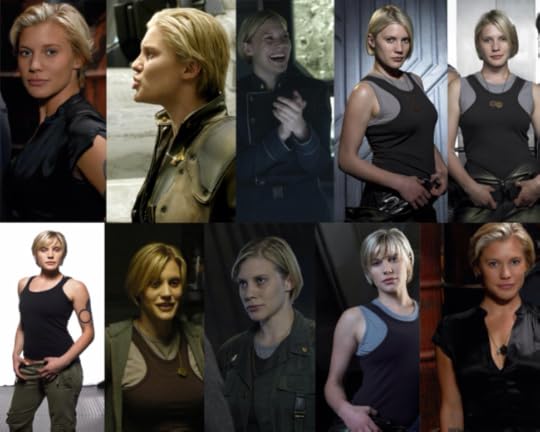 11 Starbuck: In the original Battlestar Galactica series, Starbuck was a simple character, a hot pilot who liked women. As a woman, the new Starbuck started off as much the same type of character. As the show progressed, though, the chip showed up on her shoulder only to be pushed off. The anger became confusion as her past was explored, and that turned into fear as her destiny became more clear. Of all the characters on the show I wound up empathizing more for the “best pilot I’ve ever seen” than anyone else. To know that she alone had survived the destruction of her entire race in a previous life must have been such an awful burden.
12 Odo: This detective from Deep Space Nine may seem like an unlikely choice, but when you imagine what could have been done with the part and how the actor carried it you realize how intriguing he made it. He is not a trickster or a criminal, he is a cop. When he realizes the nature and philosophy of his people he doesn’t join them, he remains independent and loyal to the people he knows, to the same people that on some level he despises. Odo was a complex character that I enjoyed watching from week to week as the old curmudgeon found some intriguing observation of mankind or pushed his own species to the edge of their good will.


October 10, 2014
Most Interesting Characters in Science Fiction 3
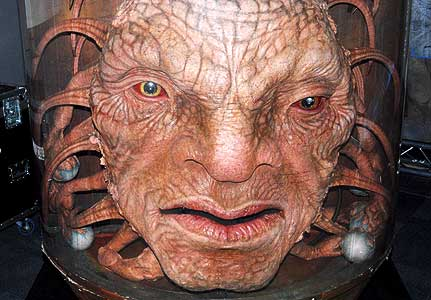 13 Jack Harkness: The immortal Jack, polysexual, fun-loving, lover of the Dr. Sure he started off as a time agent, but how many times did he save the world? He ran Torchwood, all the while flirting with any sentient male, female, human, insect, fish, or plant he came across. And to see how he dies, well, was heartbreaking and satisfying at the same time.
14 Leto Atreides: A “pre-born”, he had the ability to foresee the future and guide humanity. As the son of the Universe’s emperor, he additionally had the burden of rule to worry about. What intrigued me about Leto was his vision as well as his humanity. He had the weight of billions of people to concern himself with and the only way to do so was turn himself into a sandworm, forever foreswearing children and any real contact even as he embraced a near-immortality.
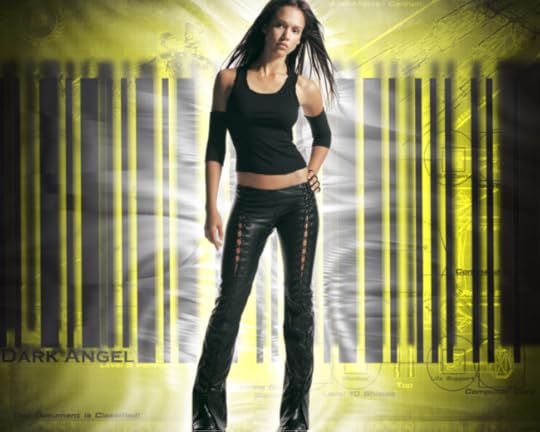 15 Max Guevara: Dark Angel ended after two seasons, not because of some neat ideas about the future (America as a third-world culture, the theft of Episode 8) but because, in my opinion, the lovely Jessica Alba couldn’t pull off the transition from bad-ass loner to a mother figure for her mutant brethren. Still, the idea of a human with strands of DNA from all over the animal kingdom who is designed as a killing machine but won’t touch guns is a very intriguing idea. Oh, and Eliza Dushku was the first pick for the lead. Very interesting character.
16 Caesar: The product of drug-testing for the defeat of Alzheimer’s, he was at once the father of his people, their leader, and by the very drug that made him intelligent, the destroyer of mankind as the dominant species on the planet. Caesar was raised by humans and so respected them, and yet he was superior to them intellectually as well as physically. I am very curious where the character will be taken.
17 Malcolm Reynolds: The lead character of another failed series, Firefly, Reynolds was a trusting, honorable, devious, no ego character with an inflexible moral streak that liked to think of himself as a rogue. His crew knew better, occasionally protecting him from his own limitations. Two things I loved about him, he had his off brand of English and of course that scene where he was sitting alone and naked in the middle of nowhere with a smile on his face. Yup, the villain had stolen his ride and taken his clothes but he had gotten her.
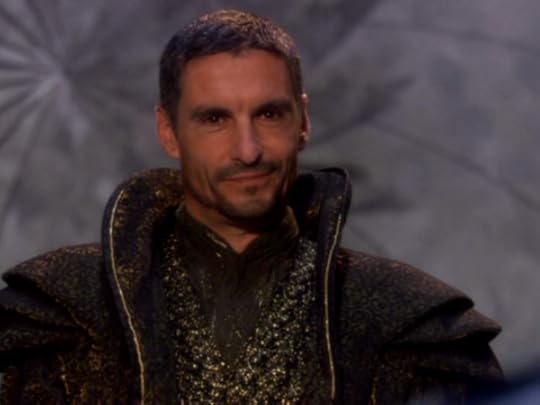 18 Ba’al: Stargate was characterized by totally over-the-top villains, which made this guy stand out. Elegant, aristocratic, but at times even diplomatic and subtle in his machinations. It was fun to see him die time after time, though he was hardly symbolic of the baddies that he was the last of.
19 Ellen BSG: She starts off as the worst humanity has to offer – a sexually starved drunk who lies, steals, and schemes for the easier life of her and her husband Saul. Then we find out she is one of the final five Cylons. She becomes the voice of reason among the five, a bridge from the other seven Cylons, and a balance to her husband. I never saw that coming, and the depth it added to her character was amazing.


October 2, 2014
Most Interesting Characters in Science Fiction 2
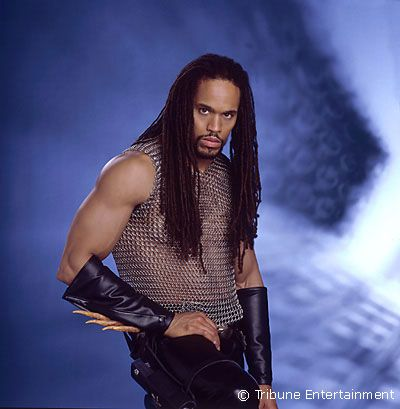 20 Tyr Anasazi: Left for dead as a child, this gray character from Andromeda always had two or more plans for every occasion. What made him so intriguing was that his objectives were always so straightforward and he made no secrets about them. He wanted to prove himself so that he could reproduce, take control of his own clan, kill all his enemies, and eventually have hundreds of grandchildren. It was a delight watching him scheme on the flagship. I only wish he could have been given an equally worthy death.
21 Zoe Graystone: The most brilliant character on the failed Caprica series, she spent the entire series dead, living in a virtual reality. She mastered the ins and outs of virtual reality, remaining sane even as her counterpart completely lost her mind and devolved into the Cylon mind. Neat stuff!
22 Spock: The original Vulcan – coolly logical, very strong, split between two cultures and embarrassed by his human half. When I was growing up I always wanted to have his strength, his great intelligence, and his amazing control over his emotions. Now that I am older I see him as my first exposure to an intellectually superior race and his character as a Sci Fi version of a mixed race person. Definitely a character of multiple levels.
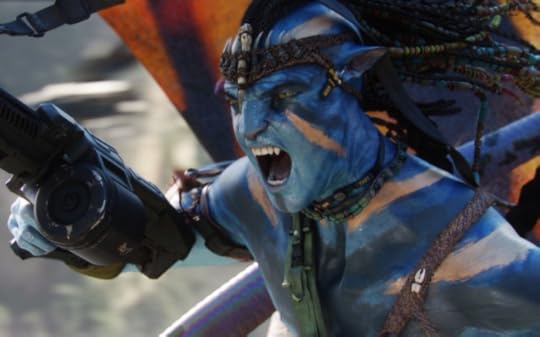 23 Jake Sully: The character itself was pretty dry, an ex-soldier who has lost the use of his legs. The position he was put into was great though, being shown how black and white the situation was, seeing that his species were clearly in the wrong, that was great. His exploration of a foreign culture, one so clearly like the Native American, made not only the character three-dimensional but made the movie as exceptional as it was.
24 Dr. Daniel Jackson: He started off as the geeky, talks too much member of Stargate SG-1 who had somehow wound up with a beauty. Daniel’s anger over his wife’s abduction, his willingness to sacrifice himself, coming back to help his friends after his death and his resurrection all represented great development. In the first episode, Jack O’Neill is constantly cutting him off, by the last he is the group’s spokesman. Just one question, when did he get into lifting weights and shooting P-90s?
25 General Jack O’Neill: Playful, handsome, athletic, the perfect rebel against the man disguised in the uniform of a U.S. Air Force officer. Quips and bad jokes were his specialty. Still, watching the character develop from suicidal man overwhelmed with guilt at his son’s death to the clown/second-in-command of Stargate command was a neat ride.
26 Vala Mal Doran: Kooky, sexy, happy-go-lucky, guilty at her former godhood, loud and obnoxious, in need of love, a liar who desperately wants to be trusted. Vala came on in the last two seasons of Stargate and she filled up the scenes. She was so much of a pain and so loveable playing the part. While the surviving characters all seemed to be fully developed by that time, she was the only unpredictable one and I am sorry we did not get to see her evolve.
27 Six: She starts off as simply a tall blonde Cylon who was instrumental in the near-annihilation of the human race. But even there she is interesting, because the accidental act of killing a baby in a city she has already doomed brings her to tears. Six becomes an apologetic leader trying to make up for her crimes and find a way to come together with the humans, along the way she manages to bridge the gap between the natural and artificial species.


September 25, 2014
Most Interesting Characters in Science Fiction
Science fiction in the visual media has really come into its own in the last twenty-five years, but it has had a long history of some very interesting characters – many of whom have been wonderfully explored but a few of whom we were left wanting more of. Below is a list of the last eight in my personal favorites. One note, I’ve tried to keep Sci Fi, Fantasy, or comics separate, so anyone with Force powers or magic is out, as are anyone living in a universe of monsters or immortals who can’t die unless they lose their heads.
28 Korben Dallas: A former special forces man who has retired to become an unsuccessful and unlucky taxi cab driver until the fifth element shows up in his cab. She brings him into trouble after trouble but instead of reacting he just gets through it. This is a character only Bruce Willis could have played.
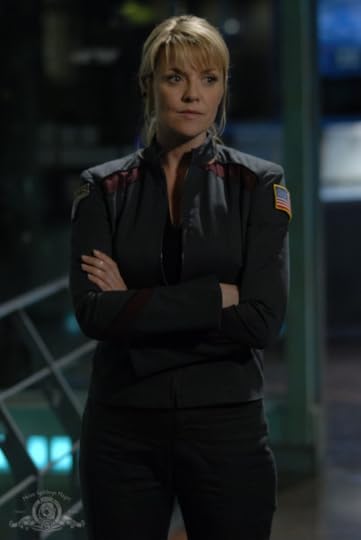
29 Samantha Carter: A great break from the stereotype, this blonde had big blue eyes, a lovely physique, and a warm personality. She was also the resident expert in anything involving science in the entire Stargate universe, could handle a gun better than most and took out more than her share of baddies in hand-to-hand. I only wish she could have held down a boyfriend, the other title characters found someone during the course of the show and she was certainly worthy.
30 James T. Kirk: From a time when the title character had to be in nearly every scene, Kirk could fill one up. Kirk could beat a legendary Vulcan at chess consistently and could singlehandedly outwit any foe he came across. He was invincible in the oldest tradition of a hero, and Sci Fi fans loved that about him.
31 Teyla (Atlantis): A beautiful, sweet, honest woman who could take out any of her team members with her Filipino Sticks, she was a wonderful complement to the military approach of Shepherd and his lieutenant and later Ronin, and a natural buffer between them and Rodney McKay. It was interesting that all four of them came to her for wisdom.
32 Teal’c (SG-1): A more perfect straight man could never have been invented. Working with the rarely serious O’Neill and company, Teal’c knew nothing about Earth culture or language. That fit in perfectly with O’Neill, who often left the Chulak warrior wondering what had just been said. Then there was his own sense of humor. Does anyone remember the joke about the warriors of Anubis, Set, and Osiris?
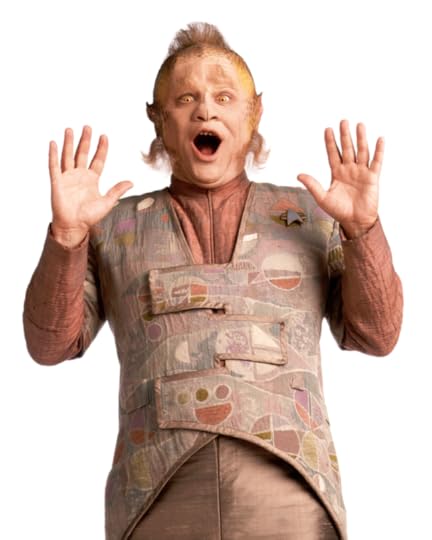
33 Neelix (Voyager): Always energetic, this alien from the Delta quadrant seemed to be able to cook with nothing and knew every species on sight. He was also the most annoying, self-absorbed, helpful, know-it-all in the entire Star Trek universe. How could you not love him?
34 Jason Bourne (Bourne movies): A uniquely skilled killing machine, brainwashed and then trained as an assassin by the U.S. Government, but now with a restored memory he is living off the grid and being hunted by the criminals and shade organizations of the world. He is honest and avoids killing when he can. Can we ask for a more intriguing dichotomy?
35 John Shepherd (Atlantis): Handsome, playful, doesn’t mind getting his butt handed to him in combat practice oh, and is a member of Mensa (to Rodney McKay’s eternal frustration). What isn’t to like about this regular from Stargate Atlantis?


September 18, 2014
Realism
It is often overlooked now, but one of the many crazy things that George Lucas insisted on in Star Wars was that his sets have a dirty, lived-in feel to them. He didn’t think that space would be any more neat than life on this planet was and he thought that imagining it to be so was simply another reason to find his movie difficult to believe in.
Of course other movie-makers got what he was doing and employed the philosophy almost immediately. Grime is a regular element of all science fiction and fantasy work now. It’s also present in the other genres as well – dramas, comedies, westerns, etc. It has made films more believable along with several other advances in cinematography.
Historical fiction, however, should have an additional bit of realism in the look. Yes, even the 1980s with their social smoking was much dirtier than today, but the further back in time you go the less sanitary life was and the more diet, diseases, skin irritations, and war injuries effected the look of the individual.
The consumption of water has drastically changed the way our skin ages. Look at pictures from the nineteenth century and compare them to people of similar ages today. They looked old, faster. Our more careful intake of sugars and fatty foods has allowed people to remain more slim than we were decades ago while our more complete diet has allowed the typical human to grow taller over the last few centuries. If Arthur was six feet tall he was a giant in his age.
 Lesser strains of smallpox circled the Old World at regular cycles, and these would have regularly left scars on peasants and warriors alike. Several other communicative diseases would have left their marks as well.
Cleanliness was not as well developed as has become in the last century, so that skin blemishes and skin diseases were probably much more common than they are today. During the early medieval period it was believed that the oils a body produced were holy things not to be washed away very often so that a person generally lived with their sweat for weeks at a time.
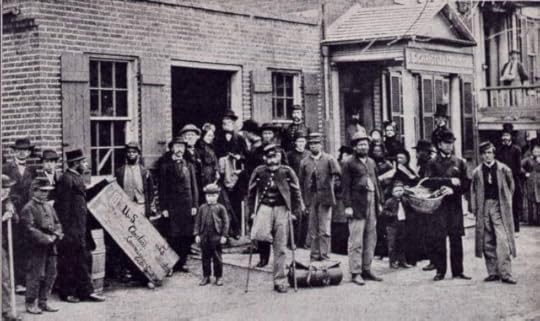
War was also different. After the Civil War, it was common to see amputees who had lost their limbs when a cannon ball blew it away or an infection had forced a surgeon to cut off the entire limb. Such may have been common in the ancient world. A person hit with an arrow might have lived with it for the rest of his life. A veteran might have dealt with cumulative concussions (such as the modern football player has). All these elements of the historical world could be added to any performance of the past.
 Of course there would be some drawbacks. Colin Farrell’s Alexander spent his life drinking and fighting. Legend has it he was never injured in battle until he came to India, but it’s unrealistic to believe that he didn’t come down with some disease – social or viral – during his travels from Egypt to India. Likely by his early thirties he had scars from one or more of them as well. His skin must have looked dried up from all the dehydration as well.
Alexander lived in a time of relative stability, with the Persian Empire still vital and him able to simply make use of an already existing bureaucracy. King Arthur, recently played by Clive Owen, would have lived in a time nearly without science, without the exchange of ideas and knowledge. He would have been lucky to reach thirty, he would have felt like an old man by then. He probably came down with one or more diseases in his early youth and had the scars of his survival for the rest of his life. As a veteran of battles and raids he was likely scarred all over his body. If he never lost a limb he was lucky but certainly he lost fingers and toes.
Perhaps that’s one element of historical fiction that we aren’t ready for, after all.
http://www.filmreference.com/encyclopedia/Independent-Film-Road-Movies/Realism.html
http://tonymckibbin.com/course-notes/film-realism


September 11, 2014
Wonder Woman: Feminist Hero?
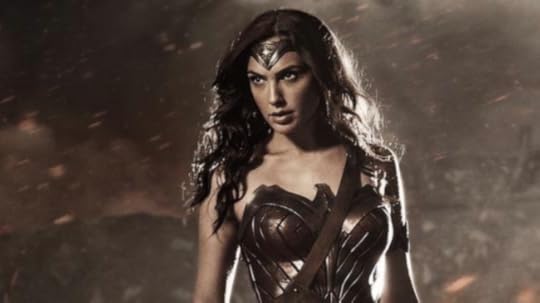 A few months ago, with the announcement that Gal Gadot would play Wonder Woman in the upcoming DC movie, discussion became very intense about the actress’ physique and her ability to play such a key figure in the universe. This will be the first real showing of the character (apart from an abortive t.v. show and a short) since the 1970s, so I have what I would consider a more important question: Is she going to be portrayed as a feminist hero or as a typical male hero with breasts and long hair?
For the uninitiated there might not be a clear differentiation, or worse you might think I’m referring to some man-hating ogre. Nothing could be further from the truth. Wonder Woman comes from an island where women are not allowed because they are not trusted and I suppose you could build on that theme if that was the direction you wanted to go. But I was thinking a little more practical and much more likeable.
Superman and Batman are patriarchal heroes in the traditional sense. Both are intelligent, but they are also strong and combatively proficient. Just like the mythical heroes of the Greeks, Norse, Russians, Sumerians, Chinese, and Japanese they are successful because of their fighting.
Does a female hero have to be heroic by the same means? If so, then Gal Gadot will be given a short backstory involving Themiskyra and she will spend the rest of the movie bickering/bantering and/or fighting alongside Superman and Batman.
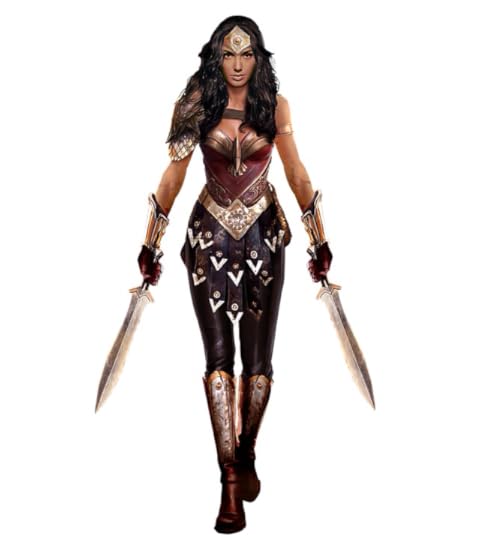 For me, it would not be very pro-woman role, and for the general public it would be a missed opportunity to make the character more interesting. For me, good heroines have always been more complex than their counterparts. The reintroduction of Wonder Woman would be an excellent opportunity to bring that out.
Several weeks ago I suggested several characters that made for good examples – Julia Roberts in Consipiracy Theory, Athena and Cassandra from Greek myth, and Willow in Buffy. I’d like now to go over some of their less traditional but very productive qualities.
-Adrenalin: They are not governed by it and do not employ it unless they are put into a situation that requires it.
-Non-Confrontational: That’s not to say that Willow hasn’t stood up to vampires or Athena didn’t back Poseidon down for Athens, it’s just that when there is a perfectly workable way of doing something that doesn’t involve combat they take that route first. And really, why take a risk in a fight when there is no need? She’s Wonder Woman, she has nothing to prove.
-Supportive: As a goddess, Athena could easily do many of the things her heroes did. Instead she helped them to accomplish them without her. Cassandra leaves the actions to her brothers and Willow leaves the glory to Buffy.
-Ego: What ego?
I admit that a little butt-kicking would be fun to see out of Wonder Woman, but simply adding another butt-kicker to a collection of butt-kickers won’t be nearly as interesting as making Wonder Woman a combination of all the above qualities. I hope they make the effort in building her character.
http://www.cinemablend.com/new/Wonder-Woman-Movie-What-We-Know-So-Far-42732.html
http://www.buzzfeed.com/perpetua/wonder-woman-should-be-awesome#3bv4ut9


September 4, 2014
Lovecraft and Heroic Mythology
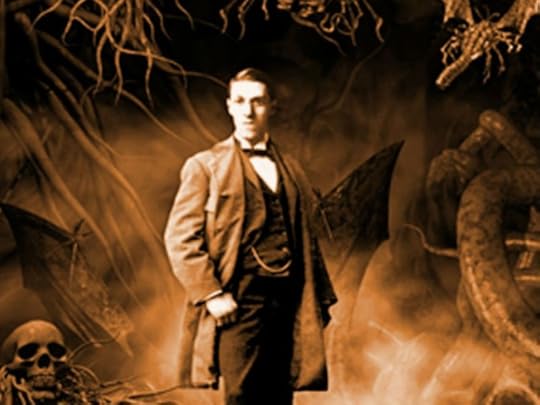 I’ve noticed two intriguing trends over the last few years. First is the superhero tale. Of course the big story there is Marvel, every summer since the first Ironman movies the studio has dominated the cinema scene. Star Wars and DC comics are coming on, however, with episode 7 in 2015 and the promise of spin-offs coming soon thereafter and the Batman movies followed by Man of Steel and its sequel due out next summer. There are also mythological and fantasy heroes – the Titans, Immortals, Conan, Hercules, and so forth.
 Second is the tendency toward Lovecraft’s views of the universe in dramas. Lovecraft, if you are unfamiliar with the name, was perhaps the father of modern horror. His stories stories revolved around another world filled with supernatural beings and ancient gods that were older than anything man had ever seen. It’s a neat universe to work from, and since he never really defined the extent of the universe, the nature of all its denizens, or even a backstory it has been used consistently since he developed his “Lovecraft Circle”, a group of writers who used each other’s ideas and borrowed heavily from Lovecraft. Robert Howard was probably the most famous of the group and he based his Conan stories on Lovecraft’s ideas. Many of the sword and sorcery novels take their cues from a similar starting point. As mentioned above horror writers have based many of their ideas off of his premises, Stephen King among many others.
 More recently, however, Lovecraft’s ideas have went beyond strictly horror into more mainstream shows such as Charmed, Buffy, Angel, Supernatural, and various vampire shows and movies. It’s also been done more elegantly and interestingly than ever before.
Both Lovecraft’s Otherworld and Heroic Mythology seem to be very popular at the moment, they have a variety of applications, and have attracted some great actors. But wouldn’t it be great to combine the two concepts? To get the best of heroes – Superman, Captain America, and so forth – and combine them with the wonderful horror of Lovecraft’s otherworld.
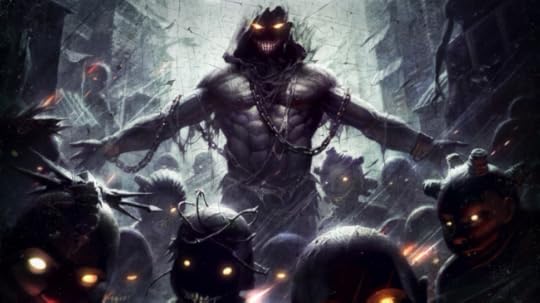 The Japanese have their own otherworld, filled with all nature of monsters and godlike creatures. It isn’t quite what Lovecraft saw, but it is remarkably dark and similar to his vision. The Japanese also have their own heroes from their legends and mythology. Take for instance Yamato. Born into the imperial house, his stories involved the supernatural as well as battles with human villains. He also had a sidekick, a giant monk named Benkei who is famous in his own right.
And the Japanese have a medium that lends itself to both the heroic and the otherworld – anime. With anime, the stories could be cheaply made and the creativity involved in showing it would never be limited by money. I personally would love to see a series or group of movies that explored anything like what Lovecraft dreamed up all those decades ago.


August 28, 2014
Medichlorians
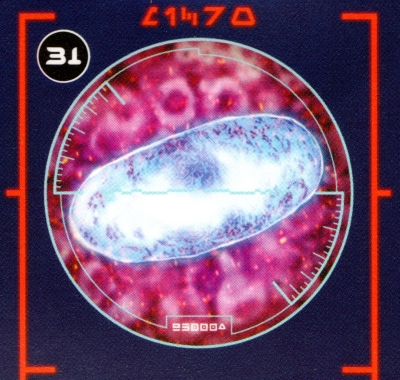 Medichlorians. They are the key to the Star Wars universe. Roughly 3,000 and you can be trained as a Jedi, Sith, or in any of a number of other Force groups. Over 20,000 and you are a chosen one.
As I have directly said and inferred on a number of occasions, the Bogan/Ashla of the Force and all of the powers derived from it are an exaggeration of martial arts developments. But not medichlorians. Strictly speaking, it is not an element in the blood that makes a great karateka, it is a combination of raw intelligence, athleticism, wisdom, and persistence that can come in many different formulas. Theoretically speaking, we are all capable of becoming exceptional martial artists.
It might be argued that martial abilities run in a family, just like Medichlorians. That might be true, but so does intelligence, athleticism, and wisdom. And honestly, any household that has a high level martial artist is going to have some obvious and daily advantages over every other family. They will see it, it will be explained to them from early childhood, it will be a part of their identity.
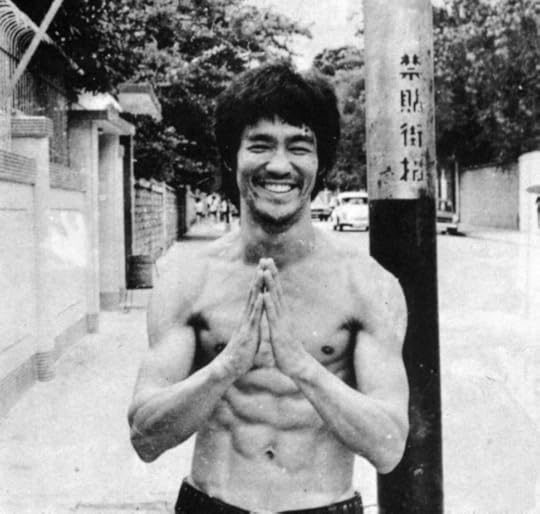 Bruce Lee might also be mentioned as a person simply destined to be exceptional, i.e. possessing great numbers of medichlorians. After all he is considered the greatest fighter of the twentieth century and mastered styles in less time than it takes most people to learn a dance, and had died at only 33 in a field of study where a person is normally not considered a master until they are in their 50s.
But on the other hand the man was brilliant – creating his own martial arts style, writing scripts, creating the concepts behind ‘Kung Fu’ the series, and of course learning new karate styles in the time in takes most people to learn a new dance. He was also a physical specimen; in an era when muscle definition was nothing like it is today he was always in perfect condition. Most important was his wisdom. As a young man he developed the idea of the modest Kung Fu master traveling in the Old West, only fighting when he needed to and healing wherever he could. In his movies and unique to the period, his characters never initiated conflict and always resisted it. His ‘Circle of Iron’ is perhaps the most matured martial arts movie to ever be written.
In the real world, what’s in your blood has nothing to do with your ability to learn and employ martial arts. I suppose that’s one flaw I see with the Star Wars universe. But I understand why it is so. Medichlorians are a dramatic device, a piece of alien technology that focuses importance on the hero, Luke in the original trilogy but also Anakin, Nomi Sunrider, Revan and a host of other characters in the EU stories.
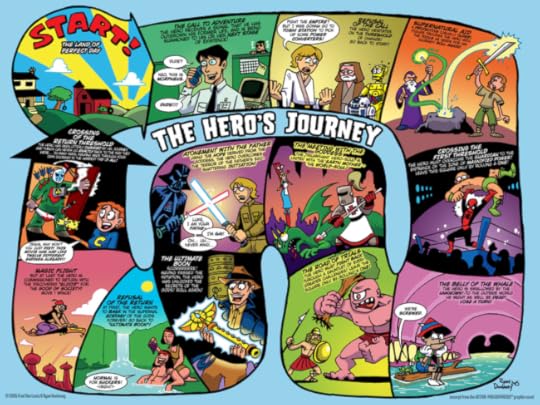 You see, at the core of Lucas’ story is the hero seeking his path/destiny in the Joseph Campbell tradition. But you can hardly claim that an untrained and untested boy (the classic hero according to Campbell) is destined to save the world or the galaxy without something specific going for him. In mythology, that something is descent from a god. In Star Wars there are no gods, so the fatherless Anakin has the medichlorians to act as his marker for greatness.
Medichlorians a flaw in the Star Wars universe or another element of George Lucas’ brilliance?
http://www.starwars.com/news/so-what-the-heck-are-midi-chlorians
http://www.ign.com/blogs/thghost/2011/08/23/midi-chlorians-clever-or-bullshit


August 21, 2014
Orson Scott Card
 Walt Disney was rascist, and yet he created one of the most beloved children’s franchises in the world. J.F.K. was a notorious adulterer who led our nation through the Cuban Missile Crisis. Babe Ruth was a drunk and a womanizer whose contributions to baseball are felt to this day. None of these things were public knowledge in their lifetimes.
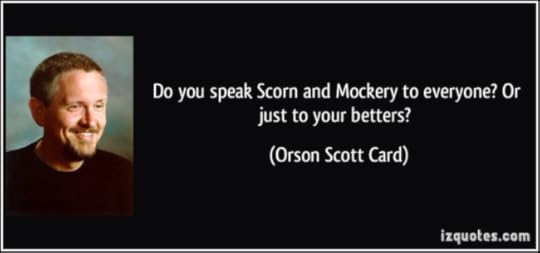
Today, unfortunately, we do know everything about our public figures. When Tiger Woods was caught cheating public sentiment was so strong that he lost several endorsements contracts as a result. Bill Clinton most likely cheated on his wife, while in office, got caught, and damaged the presidency while trying to remain in office. And then there’s Orson Scott Card, whose stand on homosexuality is embarrassing and backward-looking, without any background information on the genetics behind it. Tiger had been an icon for minorities, and being so dominant in a sport that is traditionally almost exclusively white made his participation even more important. Clinton’s efforts in foreign affairs were so effective that we are still reaping the benefits of his efforts in China.
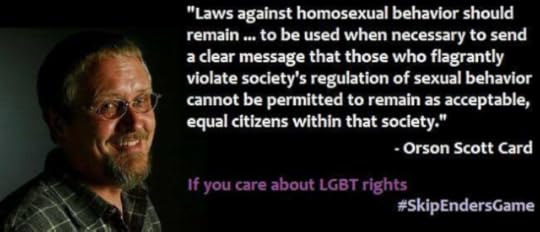 I watched Card’s Ender’s Game some time ago. I was impressed with his concepts of education, leadership, morality, and ethics there. Since then his various novels have all been highly recommended to me and I intend to follow through with them. His ability to make social, political, and ethical statements through his characters on the screen was stunning. I look forward to collecting everything he has written in science fiction so I can follow how he continues to develop those themes and statements. If he has as much to say about education in the books as I saw in the movie I think that every educator on the planet could learn a great deal from him. The same goes for leadership and generals and ethics and politicians.
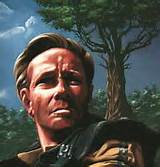 If I ever met Orson Scott Card in person I’m not certain how I would react. Would I shake his hand, jaw slack, and stumble over some statement of awe about his farsighted vision of the future, or would I be tempted to denounce him as a man with his moral blinders on? I don’t honestly know. I do know that when he puts pen to paper in his stories he makes social statements that are in the best traditions of science fiction. Orson Scott Card is a novelist, like Disney was an entertainer, Kennedy a leader, and Ruth a baseball player. Yes, he is a flawed human being. Yes, those flaws stem from an absolute reading of the Bible that lacks any knowledge about its history and context. But I do not believe that all he has created should be condemned because of this. Like a savant, his gifts should be appreciated even if his inadequacies cannot be overlooked.