M.J. Blehart's Blog, page 57
July 20, 2020
What Do You Expect from Yourself?
Being mindful of what you expect from yourself will help you find positivity and balance.

It is really easy to get caught up in trying to live up to what you think others expect of you.
Let’s face it – at the beginning of our lives, that’s what occupies much of our time. Lots of people have expectations of us. This included our parents, grandparents, other family members, teachers, friends, and so forth. Well-meaning or otherwise, most kids are frequently working to meet the expectations of others.
As you get older and reach college or start work full-time, this begins to shift. Now there are more adult expectations. Expectations of teachers and parents, still, but now you add roommates, coworkers, lovers, and others. The expectations have changed but are still there.
When you are constantly working to please numerous others, in one form or another, it’s easy to neglect yourself. In many instances, the things you did for yourself as a child likely got labeled as selfish.
Let’s be honest – some of the things you wanted as a kid likely WERE selfish. I know a lot of kids, and even the best of them can demand selfishly from time to time. Unfortunately, the line between selfish and self-actualization in kids is super blurry.
As such, some parents and guardians over-compensate and allow far, far too much leeway. Self-actualization is often selfish in this regard. Then, on the other side, some label it all as selfish and really mess these kids up, too.
Because critical thinking is not well-taught, learning for yourself the difference between what you expect from yourself and selfishness is hard to reconcile.
Where IS the line between selfishness and self-actualization?
Because this gets complex, and people do not entirely understand how to use critical thought, you get entitled, self-righteous, unreasonable reactionaries instead of functional, reasonable adults.
Hence you see people stake a lot more trust into opinion and hearsay than science and reason. Their ability to think critically lacks – and that’s the end result.
So where is the line when it comes to kids? Frankly, that’s not easy to define. What is easy to define is selfishness.
Selfishness is taking for yourself without any thought of anyone else. That’s the simple version when it comes to explaining it to children. As adults, however, this frequently goes further.
Not only are you not thinking about anyone else – you do not care if you cause them harm, take more than your fair share and leave them with less, or otherwise unnecessarily deny them something tangible or intangible.
This is why getting a massage is a matter of self-care and not selfish. That is unless getting a massage meant that your family went without food, shelter, your affections, or some other necessity.
Self-actualization is about seeing and acknowledging what you need from yourself. This is not just about basic necessities, this is about what you recognize as being necessary to live as you desire to live.
That helps you to decide who to call friend, what jobs to take or not, places to go, and other matters that will be most right for you.
When you know what to expect from yourself and work with that, you are self-actualizing. It only becomes selfish if your actions intentionally cause harm or take without thinking about anyone else’s wellbeing.
How can you tell if you are being selfish? Do you give what you would desire from other people?
Expect from yourself what you want from others
Nobody lives in a vacuum. We share this planet, all 7+ billion of us. Every single person has their own unique perception of reality.
Still, there are Universal truisms. The golden rule – do unto others as you would have done unto you – is pretty straightforward. Don’t be a dick.
Do you like it when people take unconscionably and leave nothing or very little behind? I’m pretty sure the answer is no. Hence, you would not do that to others, right?
This is where it’s important to expect from yourself as you would expect from other people. However, rather than the simple everyday aspects of life – this gets turned into a much more complex notion.
People set bars to be surpassed. How you measure success is not the same as how I measure it. What I consider good enough you might consider unfinished. Along this line, I might believe a certain movie is incredible and you could believe it’s the worst garbage ever filmed.
When it comes to internalized matters the level of judgment often is ludicrously high. You expect from yourself ten times what you expect from anyone and everyone else. The bar is so high that it’s nigh on impossible to reach.
Would you want someone else to set a bar impossibly high for you to reach? No? Then why would you do that to yourself?
Expect the best from yourself – and strive to make it happen. But don’t make it so unattainable that you will never reach it without extreme measures.
You do not deserve to suffer
A lot of people I know believe that they have to pay a certain price to achieve. It varies, depending on the perceived size of the object of achievement in question.
As such, they accept pain, suffering, difficulty, and numerous other unpleasantness. They are convinced that suffering in some form or other is necessary to achieve.
I have often said that nothing worth having is ever easy. The effort that goes into achieving a goal makes the goal – when reached – far sweeter. However, that doesn’t mean you have to suffer every step of the way.
Expect from yourself your best effort. Use mindfulness to be aware and conscious of your thoughts, feelings, and the intent of your actions. When faced with difficulties, don’t just jump to the negative. Try and shift the perception of difficulty into a worthy challenge.
Shit will happen that will cause suffering. When you expect from yourself unrealistic effort, take a step back, and be kinder and more compassionate with yourself. Kindness, compassion, and empathy are not just for other people in the world – they apply to what you expect from yourself, too.
Suffering is often unnecessarily self-inflicted.
Being mindful of what you expect from yourself will help you find positivity and balance. Day-to-day, that will help you get wherever you desire to go and be who you desire to be.
What you expect from yourself needn’t be hard
But it does require thought, feeling, and action.
Knowing that what you expect from yourself shouldn’t be far removed from what you expect from other people, you can be kinder and more compassionate towards yourself. When you don’t have undue expectations from yourself and work to relieve unnecessary suffering that ultimately empowers you.
When you feel empowered, your mindfulness increases, you become more aware overall, and that can spread to people around you. It can create a feedback loop of awareness and positivity.
As such, you can build more positive feelings and discover more reasons to feel positivity and gratitude. That can be the impetus to improve numerous aspects of your life for the better, help overcome the overwhelming negativity of the current situation, and generate yet more positivity and gratitude.
That can then spread to change the world for the better.
An attitude of gratitude is an attitude of immense positivity that can generate even more good energies – and that, like you, is always worthwhile.
This is the three-hundred and thirty-seventh entry of my Positivity series. It is my hope these weekly messages might help spread positive energies for everyone. Feel free to share, re-blog, and spread the positivity.
Please visit here to explore all of my published works – both fiction and non-fiction.
Please take a moment to sign up for my newsletter. Fill in the info and click the submit button below and receive a free eBook.
Please enable JavaScript in your browser to complete this form.Name *FirstLastEmail *MessageSubmit
The post What Do You Expect from Yourself? appeared first on The Ramblings of the Titanium Don.


July 15, 2020
Flow Like Water
To flow like water keeps you better able to handle any changes along your life’s path.
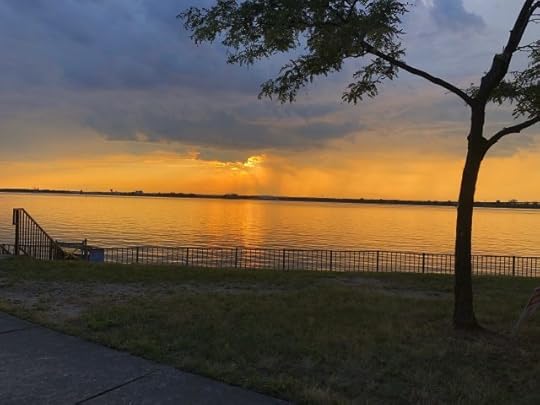
Frequently, your path in life is spoken of as a road. But much more realistically it’s a river.
The flow of a river can be made of many twists and turns. Obstacles like rocks, garbage, and trees can get in the way of the flow. Dams and other stoppages can be created.
What’s more, the path of a river can be changed and diverted.
Most paths people choose in life are more akin to rivers than roads. Whether you travel them by choice and mindfulness or not – they still flow.
While this analogy is useful to understanding the philosophy of Pathwalking and choosing a life path, there is a far greater depth to it.
However you move through life, whatever you do, flowing through like water is an excellent mindset to create for the best outcomes and experiences of the process.
What does that even mean?
Movement is life
While there are times of stillness both chosen and otherwise throughout your life, movement is a constant.
As my fingers dance across the keys of my keyboard, the movement is part of my creation. Whenever I leave my desk to stretch, refill my water, take some steps, or go to the bathroom – there is movement.
These are simple matters. In general, getting from one place to another – spiritually, mentally, emotionally, or physically – involves movement.
Certain movements are simple and take little to no effort. Others require more intention and can happen in a variety of ways. How you perceive the way you move is as important as the motion itself.
This tends to be best visualized in athletics. The most skilled gymnasts and dancers, for example, move as if they have no bones in their bodies and flow from position to position. They appear to use little or no effort as they flow through the actions they are participating in.
I have used the analogy for fencing more than one. The best fencers seem to gracefully flow from defense to attack to defense to counter-attack with grace and ease. New fencers – as they learn how to move and use the sword – tend to be stiff, locked-up, and prone to unnecessary soreness as such.
Water will flow unless you stop it. You can flow similarly – unless stopped. This applies to both the tangible and intangible.
When you flow like water you are equally able to adapt to obstacles, twists, turns, and other matters you encounter along the way.
Life is never simple
No matter how much you practice mindfulness, work on building/finding/creating positivity, apply consciousness to create reality, and work to steer your life – the unexpected can and will occur.
Did you expect a global pandemic this year? With very few exceptions the answer is no. Life has thrown all of us a pretty massive curveball.
What’s more, this curveball is fraught with uncertainty, confusion, and fear. The world has been forever changed by this. The end result of that change remains a mystery thus far.
If the government would stop being selfish and stupid in the name of Trump’s attempts to get re-elected, the United States might get this under control. Thus far that’s not looking too realistic. But I digress.
The point here is that, in all likelihood, that which you may have been plotting and planning for your life experience got derailed.
This is where the ability to think of flowing like water comes in handy. Because like a river someone tossed a huge boulder into, you have to divert your course around it. In time, it will get worn away or swept downstream – but odds are it will need to be dealt with more by flowing around it.
Visualizing your mindset/headspace/psyche and intent as being able to flow like water makes it easier to react to change. Flow through, past, and around it as needs be.
Choose to flow like water
Why make that choice? Because being rigid and unbending leads to breaking.
When you are unable to shift, flow, and change because you are too rigid – in time you will break.
Even the tallest skyscrapers in the word do not just stand against the winds. They lean, they shift, they bend so as not to be broken.
Human beings are the same. How many people, when they fall, stiffen up? Try to catch yourself on a stiff arm and the odds of you breaking a bone are pretty high. Roll with the fall, be loose and flexible, and though you might still get bruised – chances are you won’t break anything.
Water only breaks when it becomes rigid – as ice. Otherwise, it is easily set in motion, redirected, and capable of flow.
You, your headspace/mindset/psyche – and your approach to life, the Universe, and everything – can be rigid and breakable or flow like water and adaptable. This is why to flow like water keeps you better able to handle any changes along your life’s path.
No matter how much you plan, life is unpredictable. Things will happen that you neither expect nor desire. What you do when that occurs – be rigid and risk breaking or flow like water and make your way through – will ultimately impact your experience.
Do you stay on a path unyielding and risk being broken – or flow like water to adapt to change?
This is the four-hundred and forty-seventh journey into my Pathwalking philosophy. These weekly essays are ideas for – and my personal experiences with – mindfulness and walking along the path of life to consciously create reality. I share this journey as part of my desire to make a difference in this world along the way. I further desire to empower myself and my readers with conscious reality creation.
Thank you for joining me. Feel free to re-blog and share this.
The first year of Pathwalking, including expanded ideas, is availablehere. My additional writing, both fiction and non-fiction, are available here.
Please take a moment to subscribe to my mailing list. Fill in the info and click the submit button below and receive your free eBook. Thank you!
Please enable JavaScript in your browser to complete this form.Name *FirstLastEmail *MessageSubmit
The post Flow Like Water appeared first on The Ramblings of the Titanium Don.
July 13, 2020
Choosing to Be Still
I don’t like being idle and still – but it is a healthy choice from time to time.
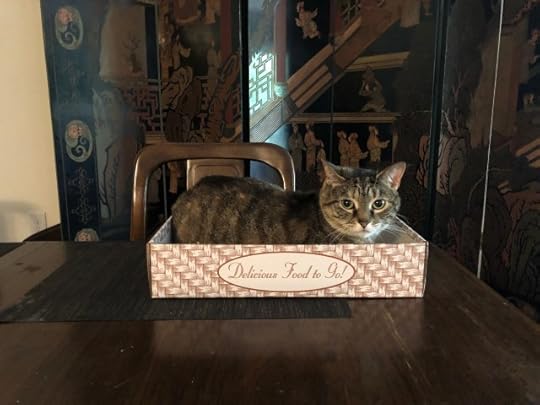 Cats are frequent practitioners of stillness.
Just about every day of the week I have something to do. Work here, writing there, deadlines, projects, cleaning, and so on.
For a long time now, I have taken a great deal of pride in my ability to do more than one thing at a time. Multitasking has been a skill I’ve bragged about in cover letters and resumes for most of my adult life
Because I have been indoctrinated in the societal notion of a Monday-Friday workweek and a two-day weekend, I tend to plan different activities for my weekend days. I still have things to do, many of which are fun.
And then the pandemic hit. Suddenly, leaving the house for more than a walk around the neighborhood or a drive without a destination became rare. The weekend medieval events ceased. Staying in touch with friends became virtual.
Even though I had been working from home, for the most part, my weekend still had activities. And then they didn’t.
Now I encounter a day, sometimes two, where I have no plan. Nothing to do. Sometimes this is advantageous and feels like a good and useful thing. But other times it is infuriating and feels unproductive and wasteful. Shouldn’t I be doing something?
Even my daily stillness – mediation – is premeditated. I choose a time and place, set my timer, and mediate. Any other time of being still, however, feels wrong.
But I know that good can come from choosing to be still.
Unbalanced forces at work
Modern life is go go go. No slowing, no stopping. Global communication. Social media. Instant gratification.
The machines and technology designed to bring us together have separated us in new and scary ways. Want zombies? Well, we’ve got zombies. How many people are so glued to their screens that the real world holds little to no interest for them now?
Because information is in a constant flow, and everything is “streaming” or otherwise available with little to no delay, connectivity is constant. As Newton’s First Law of Motion states:
“An object at rest stays at rest and an object in motion stays in motion with the same speed and in the same direction unless acted upon by an unbalanced force.”
So, once you connect it’s a law of nature that you stay connected. That is, “unless acted upon by an unbalanced force.”
What is an unbalanced force in this instance? All kinds of things count. Loss of WiFi, bad cellular signal, a crashed OS, a broken server, or anything else of that nature.
But I actually think it is far closer to home than that.
Human beings are, by their nature, an unbalanced force. We have our habits, beliefs, tendencies, and routines. Yet we are still fairly unpredictable and also vulnerable to unpredictable things.
Car accidents, lost jobs, failed relationships – all of these can unbalance the human psyche. Amid constant go go go something forces you to stop.
For example, I had a plan. There were notions and ideas afoot for where I was taking my life. Then I got hit by a car crossing a street. My whole plan got shifted entirely to recovery for the next year. That was unpredictable as all hell.
For a time, I had no choice but to be still.
Sometimes the nothing of being still is something
All too often I don’t stop. I suspect you might find this familiar, too.
My mind certainly never stops. I am always thinking. There are ideas, notions, considerations, stories, good and bad thoughts in constant motion in there. About the only time I can regulate this at all, aside from sleep, is with meditation.
My practice is imperfect, of course. Thoughts still come in, and sometimes I don’t follow them and stay focused on my breath. But often they divert me, get my attention, and I have to shunt them away and refocus on my breathing.
Nobody can “go” all the time. Rest is not just a matter of sleep. Sometimes it’s a day lazing around the house in your pajamas.
I struggle with days where I have nothing to do. But then, I play a game, do some reading, veg out in front of the TV mindlessly watching The Simpsons or Food Network or such. And as much as it can be dull and uneventful – it is something.
I am still. There are no demands on my time, no things to do, and an opportunity, as such, to get my house in order. Being still can help you to disconnect from the constant connectivity. That can be far healthier than you may realize.
Without rest, and without taking breaks, the body will break down. The mind will, too. So the nothing of being still is something because it is a period of rest that too many people won’t take.
Do you know someone with accrued vacation time that they simply will not use? Too busy, too important? It’s an all-too-common issue because the idea of working for a living has been equated to working for living. These ideas are not the same.
Hence, being still opens you.
Mindfulness from stillness
When you practice mindfulness, you open yourself to being conscious and aware of your thoughts, feelings, and actions in the present.
When you are aware of your mind, you can see where thoughts and feelings may be running away from you. Why? Because, more than likely, your subconscious has been working overtime.
Your subconscious is like a sponge. It will absorb and absorb until you wring it out. Mindfulness has that effect.
Being mindful will show you when you need to take a break. It will open you to the positivity of finding stillness. That will allow you to reconnect with yourself.
When all is said and done, much of the go go go of today’s connectivity actually disconnects us from ourselves. When you do not recognize this – and choose to be still from time to time – you risk breaking down. That can be mental, emotional, physical, or all of the above.
I know that I don’t like being idle and still – but it is a healthy choice from time to time. Being still allows me to take a break, redirect misleading thoughts, feelings, and actions. It offers an opportunity to see more and better choices to get through whatever the unpredictable world throws my way.
Being still isn’t hard – but mindfulness for positivity can make more of it
Knowing that taking the time to be still can be beneficial – rather than lament it or disregard it – you can use it to your advantage. When you take a break and make use of stillness to be more mindful, it opens you to a far wider range of potential and possibilities that ultimately empowers you.
When you feel empowered, your mindfulness increases, you become more aware overall, and that can spread to people around you. It can create a feedback loop of awareness and positivity.
As such, you can build more positive feelings and discover more reasons to feel positivity and gratitude. That can be the impetus to improve numerous aspects of your life for the better, help overcome the overwhelming negativity of the current situation, and generate yet more positivity and gratitude.
That can then spread to change the world for the better.
An attitude of gratitude is an attitude of immense positivity that can generate even more good energies – and that, like you, is always worthwhile.
This is the three-hundred and thirty-sixth entry of my Positivity series. It is my hope these weekly messages might help spread positive energies for everyone. Feel free to share, re-blog, and spread the positivity.
Please visit here to explore all of my published works – both fiction and non-fiction.
Please take a moment to sign up for my newsletter. Fill in the info and click the submit button below and receive a free eBook.
Please enable JavaScript in your browser to complete this form.Name *FirstLastEmail *EmailSubmit
The post Choosing to Be Still appeared first on The Ramblings of the Titanium Don.
July 8, 2020
Is No Path Still a Path?
Choosing no path to travel is still a path – but it tends to be unsatisfactory.
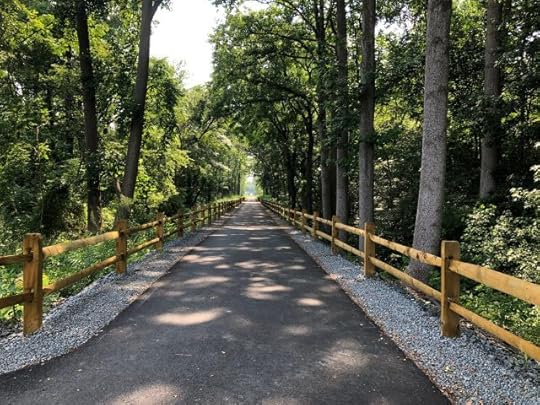
I have been writing about the philosophy of Pathwalking for over eight-and-a-half years now.
In short, Pathwalking is choosing what paths you desire to take in your life. This is a matter of conscious reality creation via mindfulness to find and/or create the things you desire for your life.
This is not a quick fix nor instant gratification philosophy. It takes patience, time, and work. Practicing mindfulness makes you conscious of your thoughts, feelings, and actions. That awareness, in the here and now, helps you choose for yourself actively rather than passively to do things.
It is easy to fall into patterns and habits from day to day. There is an expectation on the part of our culture and society to follow a non-specific path of sleep-wake-work-rest-sleep-wake-work-rest-repeat. The monotony of this pattern broken only by a two-day weekend and time you take on vacation.
This is an easy pattern to follow. Yet it is not for everyone.
Since the “majority” of people appear to follow this, however – is it still a path? Since it tends to be passive and not actively chosen, does that make it a path or no path?
The answer is, unsurprisingly, simple, but complicated at the same time.
The passive path
The vast majority of people I know work in an office setting of one sort or another. They very much follow the sleep-wake-work-rest-sleep-wake-work-rest-repeat pattern.
In some cases, they have made a choice. This is a job they like, it is a pattern they follow because it makes them content or even happy. They are on a path they have chosen, know where it is likely to take them, and for the most part, they are satisfied.
But for all of them, I also know a lot of people who follow the pattern because they feel they must. The place where they work pays the bills – but is by no means what they ultimately would choose for themselves. Still, along the way the job has some opportunity for advancement, promotions, pay raises and offers occasional satisfaction.
This is one example of a passive path. It has come their way, and they are making some choice in following it. Yet if they could, they would choose something different and likely unconventional. This is the lawyer who would rather be a novelist, the project manager who would prefer to be a chef, and the like.
It is still a path, but not as actively followed as much as passively.
Then there is the extreme version of this. Some people haven’t the foggiest idea of what path they would choose for themselves. For various reasons, they have reached a point where the pattern alone drives them. They exist but don’t really live most of the time. They trudge through their job, make just enough money to pay the necessities (and pay-off debts they have accrued along the way).
Those living passively frequently only make choices involving what to wear, what to eat, and how to divert themselves.
Mental health and faux productivity
Let’s address the elephant in the room, shall we? Life is change and change is scary. Currently, in the face of a global pandemic, important social issues, and surreal politics, uncertainty is the norm. Even the present holds a great deal more uncertainty for people than normal.
What is normal? I’m asking this rhetorically because the answer is utterly subjective. However, there remains a stigma about mental health that tends to not get addressed. How you are feeling, more often than not, will be swept under the rug and disregarded for faux productivity.
What do I mean by that? Every time I have held a standard 9-5 type of job, during the 8-hour workday, there was an expected level of productivity. However, realistically, during the 8 hours at work, there was anywhere from 2-4 hours of actual productivity.
Ergo, for 4-6 hours there was faux productivity. Projects I could do in 10 minutes took an hour, for example. The longest possible route from my desk to the bathroom was my frequent choice. Various meetings I might have had to attend for an hour held 10 minutes of useful info and 50 minutes of bullshit.
I am pretty sure this is familiar to many of you. Yet some people DO work for 8+ hours a day at their job. But for every one of them, I know there are a dozen who take part in faux productivity.
Hours doing nothing of any importance is mentally taxing. But if you don’t produce your faux productivity, you get in trouble.
I suspect many of the office workers who had a chance to work from home were FAR more productive during working hours – but also saw how much faux productivity they tend to put out.
No path is still a path
Because everyone DOES make choices every day, even a path that is not consciously chosen IS still a path.
For some, they have not decided just what they want to do with their life. For others, they have succumbed to the belief that what they desire isn’t possible for them. In some instances, people have accepted a false narrative about why that which they would choose won’t work.
I believe that everyone is capable of conscious reality creation. What’s more, I am pretty sure everyone HAS performed this at one time or another.
For example, you really wanted that promotion at work. You envisioned what it would be like to hold the title, make the extra money. In your mind, you saw how cool it would be to succeed at that – and felt in your bones the satisfaction that came of it. Then it happened.
Conversely, you were really concerned that the job you held would collapse. Even doing your best, you feared the job would be lost. There was no indication that this was the case, but you still worried about it happening, envisioned your firing, and felt it at your core how awful it would be. Then it happened.
Conscious reality creation is a neutral matter. Hence why it can be good or bad. But when you put your focus on something, even something you DO NOT WANT, consciousness creates reality.
Thus, not choosing a path IS a path – but it tends to be unsatisfactory. Whatever reason holds a person back, passively walking a given path still gets you from point ‘a’ to point ‘b.’ Unfortunately, the journey between the points is likely to be displeasing.
It is never too late to choose
A final, super-important note. It is NEVER too late to actively choose a path for yourself. You are never too old, too poor, too broken, nor any other reason to decide on a new course for your life. Yes, it might be really hard to do, it may take a serious leap of faith, and there might be a lot of risk involved. That doesn’t mean it is not there.
Even the safest choices can be overridden by extenuating circumstances. COVID-19 in the United States is getting more and more out of control, and that is going to have a permanent impact on our society. While to some degree you have no control over this – you can choose to social distance, wear a mask in public, and take other precautions to lessen the chances of contracting the virus.
You – your soul, your being, the consciousness and subconsciousness that is YOU – get one lifetime to experience everything in this form. Nobody is meant to simply exist – we are meant to live. That means something different for me than it does for you – but deciding on paths to take is a modicum of control you can exert that will impact how you experience life.
Choosing no path may still be a path. I don’t know about you, but I would rather have more options to choose from than less. Hence, I am walking the paths that I am today. That is part of the choices I have made and continue to make along the way. This is something that, even when it gets rough and complicated, still provides much satisfaction.
What paths do you choose – or not?
This is the four-hundred and forty-sixth journey into my Pathwalking philosophy. These weekly essays are ideas for – and my personal experiences with – mindfulness and walking along the path of life to consciously create reality. I share this journey as part of my desire to make a difference in this world along the way. I further desire to empower myself and my readers with conscious reality creation.
Thank you for joining me. Feel free to re-blog and share this.
The first year of Pathwalking, including expanded ideas, is available here. My additional writing, both fiction and non-fiction, are available here.
Please take a moment to subscribe to my mailing list. Fill in the info and click the submit button below and receive your free eBook. Thank you!
Please enable JavaScript in your browser to complete this form.Name *FirstLastEmail *PhoneSubmit
The post Is No Path Still a Path? appeared first on The Ramblings of the Titanium Don.
July 6, 2020
Can You Swallow A Bitter Pill or Two?
Accepting certain difficult and unpleasant truths of current reality will open you to finding and/or creating positivity to help move past all of this. There is a bitter pill or two to swallow here.
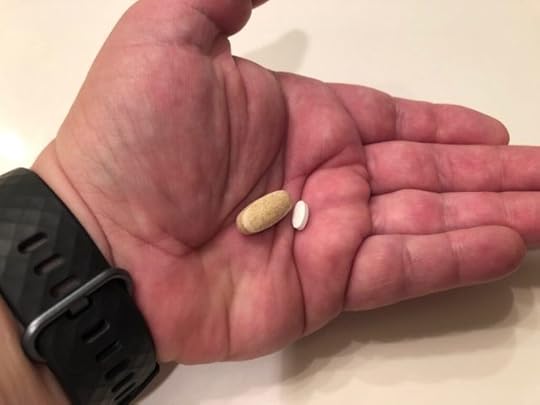
I don’t know about you – but I don’t want to watch the world burn.
Some terrible things are happening right now. The big picture issues include the politicizing of COVID-19 and the top of our government being utterly unwilling to take a stand to fix that problem. That same leadership working to widen all divides just to remain in power. Protests of systemic racism and the continued violent response of too many members of the police. The murder of black people by those same police forces because of the color of their skin. LGBTQA+ rights being stripped by the aforementioned government. The ongoing attack on equality and choice for women.
That’s national stuff. Most people are facing far more personal matters. Many jobs have been lost due to COVID-19, too many people are unwilling to practice proper social distancing or mask-wearing, and too many people are risking their lives to keep an utterly fragile and false economy up-and-running.
The physical and psychological impact of this is taking a toll on everyone, and that’s manifesting in some unpleasant ways. Tempers are short, patience is thin, and overreacting to this, that, or the other thing is becoming increasingly common.
It is all too easy to feel hopeless, sad, frightened, uncertain, terrified, angry, lost, and lots of other negative emotions. Sometimes in phases, other times in combinations, and even all-together along the way. The lack of respect for mental health as illness, remaining stigmas about it, and the lack of affordability of healthcare in the USA add a layer of complexity to an already unfortunate reality.
What can you do?
A bitter pill – there is no quick fix
Please understand, I don’t want to make this worse – but this society is obsessed with instant gratification, ever-increasing speeds, and quick fixes. However, there is no quick fix for any issues mentioned above.
The system has been in place for a long time now. Dismantling and changing it won’t happen overnight. Even a drastic shift in leadership won’t be able to instantly transform everything. Though the number of reasonable people outnumbers the unreasonable, they are still many.
Minds cannot be changed if they don’t desire to change. So all the racists, bigots, misogynists, homophobes, White Supremacists, and other haters will stick to their guns until they either die off or have an epiphany that makes them see a new way. Once they dig in, without some sort of “ah-hah” moment they won’t budge.
One reason they are so vocal and open currently is because they feel empowered and supported by Trump. He’s making it increasingly clear his followers are the only ones who matter – which is ironic since, really, they only matter to his ego. He couldn’t care less about them any more than he does about “liberals,” the press, or his other perceived enemies.
Just as much as those overarching issues will not be changed instantly, personal issues won’t either. If you are in conflict with people you care about, fighting depression, afraid, or otherwise dealing with stuff – it will take time.
That’s a bitter pill to swallow. But realistically, change of this sort takes time because beliefs and habits built over the span of decades aren’t instantly fixable. It will take less time than the decades before to make changes – but won’t be instantaneous.
Another bitter pill – there is no going back
In Paulo Coelho’s The Alchemist, the protagonist is crossing the desert in the pursuit of his “personal legend.” During the crossing, a tribal war begins. The caravan he is in is in danger.
When he asks a guide about turning back, he is told,
“’Once you get into the desert, there’s no going back,’ said the camel driver. ‘And, when you can’t go back, you have to worry only about the best way of moving forward.’”
I share this because it’s very relevant to our present reality. COVID-19 is the desert. We are in the middle of it, and we cannot turn back. All we can do is figure out the best way of moving forward.
For a lot of people, this represents tremendous uncertainty. And that is terrifying. It’s not just the usual constant motion and change of the future – it’s really clouded. The questions tend to only be followed with more questions and no clear answers.
When will it be over? How long will the first wave last? How long do we need to take precautions like social distancing and wearing masks? When will group activities resume? How will life return to some semblance of what it looked like before? What about lost jobs?
These are just some of the almost impossible to answer questions. But one thing is certain – there is no going back.
This is another bitter pill to swallow. But once you do, it allows you to make new choices and focus on how you will move forward.
Practicing mindfulness
When you can’t do much for anyone else and the crap they are going through – and when you cannot change anyone else’s mind or way – the best thing you can do is practice mindfulness.
Being mindful makes you conscious of the now by being aware of your thoughts, feelings, and actions. That awareness then lets you make choices and decisions for how you handle whatever is thrown your way.
While it is as simple as that, mindfulness doesn’t fully address old, deep-rooted beliefs. But it is a window into your mindset/headspace/psyche, which you can use to take control over the direction in which your life is going.
Mindfulness is an aspect of self-care. It is recognition of the only thing over which you can exert any true control: yourself.
When you are more in control over your self, you position yourself to do more for others. You can’t change anyone who has no desire to change – but you can still by an ally to the oppressed and marginalized. You can be a beacon in the dark against the forces of unreason.
With mindfulness, you can choose positivity. Even small amounts of positive things are a spoonful of sugar to make a bitter pill easier to swallow. Cliché? Yes, it is. But that makes it no less true.
We live in uncertain and fearful times. Finding and/or creating positivity can be extra challenging, but it can also open us all to a better world on the other side of this desert. That, as far as I am concerned, makes swallowing those bitter pills worthwhile.
Finding and/or creating positivity isn’t hard – but it does require thought, feeling, and action
Knowing that there is a bitter pill or two to swallow in the face of present times, recognizing that can help you move forward. When you go ahead and recognize these truths, you can then practice mindfulness to adjust where you see the world going and be a beacon of hope in the uncertainty and darkness. That ultimately empowers you.
When you feel empowered, your mindfulness increases, you become more aware overall, and that can spread to people around you. It can create a feedback loop of awareness and positivity.
As such, you can build more positive feelings and discover more reasons to feel positivity and gratitude. That can be the impetus to improve numerous aspects of your life for the better, help overcome the overwhelming negativity of the current situation, and generate yet more positivity and gratitude.
That can then spread to change the world for the better.
An attitude of gratitude is an attitude of immense positivity that can generate even more good energies – and that, like you, is always worthwhile.
This is the three-hundred and thirty-fifth entry of my Positivity series. It is my hope these weekly messages might help spread positive energies for everyone. Feel free to share, re-blog, and spread the positivity.
Please visit here to explore all of my published works – both fiction and non-fiction.
Please take a moment to sign up for my newsletter. Fill in the info and click the submit button below and receive a free eBook.
Please enable JavaScript in your browser to complete this form.Name *FirstLastEmail *MessageSubmit
The post Can You Swallow A Bitter Pill or Two? appeared first on The Ramblings of the Titanium Don.
July 1, 2020
Your Perspective Can Change Unexpectedly
That can alter how you perceive life, the Universe, and everything.

I have never in my life lived in the same place for more than 10 years.
The same general area? Sure, more-or-less. But the same home? Never. Thinking back, in fact, I am pretty sure 9 years is the longest I ever lived in a single house.
My wife lived in the same house for some 30 years or so. She has vivid, fond memories of her family home. Frequently, when she dreams, she returns to that home in her mind.
Growing up, I recall 4 bedrooms I called my own. Even they changed for various reasons.
For a long time, I have had a little bit of jealousy over that nostalgia. Having lived a semi-nomadic life over the years, and not having that long-time childhood home in my memory felt like I was missing something.
Even as an adult, this continues to be how I live. A part of me has felt a sadness that I lack the roots and memories an almost life-long home has given to my wife and other friends.
Viewing experience from another angle
Today, I gained an alternative perspective to this notion I had never considered.
Some six months ago a very elderly couple moved into the apartment below ours. I haven’t a clue how old they are. Based on the full-time caregivers that also live there, and how they do not go anywhere without them, I am guessing they are probably in their 80s or so.
As I was sitting on my deck to meditate this afternoon, they were below on their deck. The caretakers -and I believe a daughter – were holding a conversation with them.
While I could only hear a muttering voice from the elderly woman, I heard the daughter more than once say, “You want to go home? But you are home. This is home.”
It broke my heart to think about having lived somewhere for a long time – only to be unable to still live there.
But that opened my eyes to a different perspective. This is not something that I am likely to encounter – because I haven’t a single home in my memory.
My wife always refers to that childhood home as home. She still has a longing for it. I do not share such a longing because I haven’t the same reference of experience.
While I have felt some jealousy and sadness that I do not have the long-time home of memory – now I can see that it could be, in fact, advantageous.
Reality is based on your perspective
There are many things that we accept as “reality.” The sky is blue; the grass is green; there are invisible borders between cities, states, counties, nations; a red light means stop; and so on.
Yet even in that acceptance of reality, there are going to be variations. How you perceive the color red may not be the same as how I perceive it. Those invisible borders might be of more importance and meaning to you than they are to me.
As Albert Einstein said,
“Reality is merely an illusion, albeit a very persistent one.”
The aspects of reality we all share differ. The collective consciousness may offer a certain perspective, but that doesn’t mean it’s the one and only perspective there is.
This is why how you perceive life, the Universe, and everything can change unexpectedly. When a truth you hold to be self-evident suddenly becomes less truthful – or outright untrue – your perspective can be shifted.
Hence why the path you may have desired to walk in your 20s is likely not the path of your 40s. If it is, odds are, aspects of it are not what they were before.
Change is the only constant
Just because you know something doesn’t mean it won’t change.
Back to Einstein. According to his Theory of Special Relativity, a normal object can’t travel at or beyond the speed of light.
However, I believe that it IS possible – we just do not understand how, yet. There are notions of science fiction that could prove to have truth to them (there are some present theories on creating “warp drives,” for instance). Hell, we broke the sound barrier – why not the light barrier?
Greater minds than mine will work this out eventually, I suspect.
Nonetheless, change happens. What you think is true today may not be tomorrow.
Another example: before Copernicus, people believed the Earth was the center of the solar system. When it was proven that it was not, the collective consciousness was changed.
Speaking of Star Trek, the communicators of the original series and datapads of Next Generation were really cool high-tech gear, right? Nowadays, they exist for real – and even better than their sci-fi original notions.
Big or small, change will happen. It is the only true constant in the Universe. Hence why your individual perspective of the Universe can be easily and unexpectedly changed with relative ease and suddenness.
What do you do with a perspective change?
When you are faced with change, there are multiple ways to handle it. But overall, in my experience, it breaks down to these choices:
Go with it. Change happens, roll with it.Resist it. Hold onto what WAS and fight the change.Fight it. When it is not a good change, stand up for an alternative.Alter it. Change can be changed.Redirect it. Take ahold of the change and do what you can to ride it or shift it.Ignore it. I mean, sure, you can do this – but depending on what it is, you will probably wind up fighting or resisting it down the line.
I know there are other options. Each change is different – material or immaterial, big or small, the impact and effects of change are wildly variable.
Whatever change is happening, you have a choice for what to do. When you practice mindfulness and work with conscious reality creation, you gain the ability through being conscious and present to better work with change. Mindfulness is how you get any control of it at all.
Remember that you are empowered to make your life how you desire it to be.
Perspective can change unexpectedly, and that can alter how you perceive life, the Universe, and everything. But when you practice mindfulness, you gain awareness in the now of your thoughts, feelings, and actions. With that, you can gain some control over how your reality is changed.
How do you handle unexpected changes in your perspective?
This is the four-hundred and forty-fifth journey into my Pathwalking philosophy. These weekly essays are ideas for – and my personal experiences with – mindfulness and walking along the path of life to consciously create reality. I share this journey as part of my desire to make a difference in this world along the way. I further desire to empower myself and my readers with conscious reality creation.
Thank you for joining me. Feel free to re-blog and share this.
The first year of Pathwalking, including expanded ideas, is availablehere. My additional writing, both fiction and non-fiction, are available here.
Please take a moment to subscribe to my mailing list. Fill in the info and click the submit button below and receive your free eBook. Thank you!
Please enable JavaScript in your browser to complete this form.Name *FirstLastEmail *WebsiteSubmit
The post Your Perspective Can Change Unexpectedly appeared first on The Ramblings of the Titanium Don.
June 29, 2020
How Do You Like to Be Treated?
Do you treat people in the same manner you desire to be treated?
 Photo by Kamil Feczko on Unsplash
This is an important question, because recently it feels like people are not answering it by their actions.
Do you want to be potentially murdered simply due to the color of your skin? Do you want to make a loved-one fatally sick because you were exposed to a virus? Are you fond of people yelling at you, insulting you, or calling you names? Does it make you feel good when you are treated inhumanely, disrespectfully, or as lesser than other people?
I’m pretty certain the answer to all of the above questions – by 99% of people – would be NO.
So how come the above are open for debate?
Black Lives Matter is NOT a terrorist organization
The protests happening across the country are in response to systemic racism and unchecked police brutality. That numerous deaths at the hands of police occur based solely on suspicion due to skin color is simply unacceptable.
What’s more, look at how the police forces have reacted. Armed white people marching in the streets? No problem, they march. Unarmed black and other people of color marching in the streets? They get tear-gassed, shot by rubber bullets, beaten, and arrested.
Would you want to be treated like that? I’m absolutely certain the answer is NO.
Take that into consideration if you question the protests or believe the lies about them Trump and his people like to spread.
There is a serious problem in the USA, and it cannot continue to be ignored. Ignoring it is how we have reached this point in history – and change is necessary. Living under threat because your skin is black is not something anyone should endure. That is why Black Lives Matter.
Wearing a mask is common courtesy
I find my masks to be uncomfortable. It’s not pleasant to wear them, and I have tried several different shapes, sizes, and styles.
However – it’s a small price to pay to protect the people I love. It further encourages me, if I do not wish to wear it, to not go anywhere that it would be necessary.
Do I need a mask to walk around outside in my neighborhood? Not really, because I make a point of staying more than 6 feet from anyone I encounter. At a public park or trail with more people around? Yes, I wear my mask. And indoors there is no way I WON’T wear it.
The science says that wearing a mask hugely reduces the potential for transmission of COVID-19, as well as many other viruses. But since the government can’t be bothered to offer adequate testing, nor sufficient contact tracing, I could be an asymptomatic carrier. Like it or not, you could be, too.
Wearing a mask severely lessens the potential for passing the virus if you have it. That’s courtesy. How do you feel – even without a pandemic – when someone sneezes or coughs on you? An adult who doesn’t cover their mouth and nose? Totally rude, right? Not wearing a mask during a pandemic is EXACTLY as rude.
The resistance to the minor inconvenience of wearing a mask is a question of courtesy. Not wearing a mask in public – ESPECIALLY indoors – is rude and discourteous to everyone.
Do you like being sneezed on, coughed on, or spit on? I presume NO. Well, not wearing a mask is the equivalent of you doing exactly that.
Do you like to be treated disrespectfully?
I’m going to go with NO. Yet we are watching numerous people being extremely disrespectful in the name of their own entitlement.
Do you want to eat at a restaurant, go to a bar, get your haircut? If you were a server, bartender, or barber, would you want customers to be nice to you or rude? Do you prefer people to respect you and what you do or disrespect you?
COVID-19 is not gone. Not by a longshot. Yet the drive to reopen the economy, and the insistence of many to not take precautions, mask-up, or social distance is already having an impact. Where much of the world is looking at a downward trend in numbers – the opposite is true of the United States.
The rampant disregard and disrespect in too many people are encouraged by our so-called leadership. The President refuses to set a good example and wear a mask, or to discourage people from gathering in too-large groups indoors without any precautions.
With that extreme arrogance and entitlement as our example, is it any wonder things are so bloody chaotic right now?
What, if anything, can YOU do about this?
Treat people who you want to be treated
It begins with you and me. You get to decide, each and every day, how you treat people you encounter in the world. Kindness and empathy or rudeness and scorn? Loving or loathing? You get to decide in every instance.
It is super easy to get upset, annoyed, and hateful. But meeting a lack of kindness and empathy without kindness or empathy doesn’t help anyone.
Believe it or not, like attracts like. The Law of Attraction is a law of nature just like the Law of Gravity. Disbelief in gravity doesn’t mean you fall off the face of the planet.
Giving bad gets you bad. Which means that giving good gets you good.
And let’s be honest here – even if it didn’t, why wouldn’t you give good? Do you want to receive bad? Of course not. So you need to think about treating people how you desire to be treated.
This is the thing that most amazes me about what is going on in the world today. The level is hostility, maltreatment, anger, and negativity between people is surreal. When did it become more acceptable to be rude than to be kind?
Hence why you and I get to make a choice. When you decide to be kind and empathetic you put more kindness and empathy out into the world.
I prefer to be treated kindly and empathetically. Don’t you?
 Photo by engin akyurt on Unsplash
Think before you…
Write, speak, post, comment, or whatever you put out there. Ask yourself if this is something you’d desire to receive before you share it with the world. Question if it’s adding to the good and being giving or adding to the bad and taking?
Every little bit counts. All of your actions count. Treating people how you desire to be treated matters a lot.
Please take that into account in everything you do. In that way, you and I can act to improve the world one interaction at a time.
Finding and/or creating positivity isn’t hard – but it does require thought, feeling, and action
Knowing how you prefer to be treated by people you encounter in life, you can emulate that in how you treat people. When you choose to treat people as you would be treated, it can help everyone see that there is no need to ignore kindness and empathy, and it further improves matters. That ultimately empowers you.
When you feel empowered, your mindfulness increases, you become more aware overall, and that can spread to people around you. It can create a feedback loop of awareness and positivity.
As such, you can build more positive feelings and discover more reasons to feel positivity and gratitude. That can be the impetus to improve numerous aspects of your life for the better, help overcome the overwhelming negativity of the current situation, and generate yet more positivity and gratitude.
That can then spread to change the world for the better.
An attitude of gratitude is an attitude of immense positivity that can generate even more good energies – and that, like you, is always worthwhile.
This is the three-hundred and thirty-fourth entry of my Positivity series. It is my hope these weekly messages might help spread positive energies for everyone. Feel free to share, re-blog, and spread the positivity.
Please visit here to explore all of my published works – both fiction and non-fiction.
Please take a moment to sign up for my newsletter. Fill in the info and click the submit button below and receive a free eBook.
Please enable JavaScript in your browser to complete this form.Name *FirstLastEmail *MessageSubmit
The post How Do You Like to Be Treated? appeared first on The Ramblings of the Titanium Don.
June 24, 2020
Choosing to Decide Your Own Path Is Not Wrong
Even in the current world situation, you both can and should decide on your life choices.
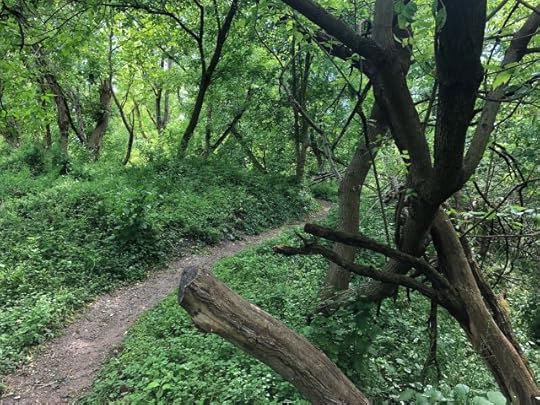
Every single day of your life you are faced with choices.
The vast majority are pretty minor. When to get out of bed; what, where, and when to eat; what to wear; who to talk to; and so on. Small choices without which you would likely do nothing but turn into an unkempt lump barely recognizable as a human being.
Frequently, when it comes to the topic of choices, the focus and attention turn to larger matters. Who to date, what to do for a living, where to call home, when to spend large amounts of money on things like cars and houses, and so forth. Having to decide about things that could be life-altering garner the most attention because of their long-term impact.
It is extremely easy, whatever size choices you are making, to lose sight of the path you desire to be on. The pressure to decide on things faces up against overwhelming information about world problems, expectations of friends and family, and the expectations you have of yourself.
Each of these can impact you, but you ultimately get to decide how that impact will be felt and what it will do to a path you would wish to choose to take.
Facing overwhelming information and world problems
Spend any amount of time online and you will be swamped. The news is inescapable. The ongoing global pandemic too many people think is over; the protests over relentless police brutality and systemic racism; ongoing struggles for LGBTQA equal rights; a broken political system struggling to survive a criminal administration and their party of entitled supporters. That doesn’t even touch on world affairs, like burning rainforests and COVID-19 in other countries.
These are not matters to be ignored. However, neither can they overwhelm you and take up all your time. Why? Because to be perfectly blunt – there is little to nothing you can do about them.
Everything you CAN do has the slightest bit of selfishness to it. Except it’s not selfish at all.
You can vote, attend the protests, give money to charities that help people, wear a damned mask in public, and avoid joining crowds in restaurants and other indoor spaces to protect the workers and yourself. If testing becomes more widely available get a COVID-19 test.
The main issue with this, of course, is that the only real control that you have over anything is in regards to you. Your life, your thoughts, feelings, actions, etc. Recognizing this can help you practice mindfulness, which will give you the control to not allow all this overwhelming information to embed itself into your psyche.
When it still does, you can more easily root it out via mindfulness practices.
Be mindful and aware of the world and all that is going on – but don’t lose yourself, or your path, in the process.
Having to decide against the expectations of friends and family
I love my mom. She has always been there for me, and she was a real cheerleader for everything I did throughout my schooling.
She was a single parent in the 1980s when that was not the norm. Of course, my mom wanted to see great things for me and the life I would choose. In me, she saw a lot of potential.
However, even before I started actively Pathwalking and working with conscious reality creation, I tended to be independent and choose my own way.
My mom wanted to see me be someone wealthy and influential. As she once said to my wife (not long after she and I had gotten engaged) “he could have been a doctor or a lawyer.” (Yes, I have a legit Jewish mother).
She was sort-of being funny. But she was also serious.
Once I traveled halfway across the country to attend college, my mom ceased to really understand me or my motivations. She held onto her expectations of me and my life – and was disappointed when I didn’t pursue medicine, or law, or get married and start to raise a family of my own in my 20s or 30s.
This was not the path for me. I chose to decide for myself. I have no doubt had I desired to be a doctor or lawyer, I could have gone that way. But that’s not who I am.
Over the years, I have faced the expectations of others. From time to time, of course, I’ve met or exceeded them. I’ve also chosen to decide on something else that was more in line with my desires and paths.
Perhaps, at times, I have been selfish in this. But then you have to ask – who’s life is it, anyway?
Making the expectations of yourself more realistic
There are standards society expects of you. Let’s face it, in the United States, the main path in life is to go to college or trade school, get a job, start a family, work into your 60s or 70s, retire, move somewhere warm or travel or do whatever. This has been the One True Way for what seems like forever – but realistically, I think it’s been maybe 75 years or so (post-WWII).
This model, just FYI, is becoming increasingly unfeasible. The lifetime job is fading out, the middle class on which this model is based is being shredded, and too many people holding onto this idea are unwilling to move forward to the next.
Why am I bringing this up? Because this tends to root itself into your subconscious mind. You develop beliefs about how life should be – then set a bar for achievement and success. That bar, generally, tends to be a thing you will get to “someday” or “in time,” and neglects all the things that can and likely will happen from now to then.
You have created expectations for yourself that may be unrealistic. Or, though realistic, they put undue pressure upon you for achievement and success.
For example – your goal is to earn a million dollars. Not a bad goal. Now, why? What will having a million dollars do for you? How will it make your life more amazing?
What if, instead, your goal is to have ten percent more money than you need each month? If you need $3000 a month to cover all your expenses, your goal is to earn $3300 a month. Over a year you have earned $3600 above and beyond what you need.
This isn’t about lowering your expectations – just making them more realistic.
You can and should decide on your life choices
The only person living your life is you. As such, you know best what is right for you and your life. If you are dissatisfied, and if the pandemic has exposed places where your life can be changed for the better, when besides now should you start to work on that?
Today is the only real time there is. Tomorrow is never assured. For example, COVID-19 has killed 120,000 people and counting in the USA so far. That’s 120,000+ people who have no tomorrow anymore.
Harsh? Yes, it is. But that’s the reality of this moment.
Because there is a finite amount of time for you to live in this world, choosing to decide your own path Is not wrong. It is for you to live your life as only you know how to do it.
BUT – let me make this last plea. Be kind. Be empathetic. Treat other people how you desire to be treated. Think before you speak or post online, consider if what you add to the conversation is of value – or selfish and harmful.
When you decide to choose your path, please choose one that gives to rather than takes from the world.
Every beacon of hope in the world becomes brighter when that number is multiplied. Don’t fall for the false narratives and artificial lack and scarcity of the world. You are empowered to use mindfulness to find and/or create an incredible, abundant path for your life.
What will you decide on for your path today?
This is the four-hundred and forty-fourth journey into my Pathwalking philosophy. These weekly essays are ideas for – and my personal experiences with – mindfulness and walking along the path of life to consciously create reality. I share this journey as part of my desire to make a difference in this world along the way. I further desire to empower myself and my readers with conscious reality creation.
Thank you for joining me. Feel free to re-blog and share this.
The first year of Pathwalking, including expanded ideas, is availablehere. My additional writing, both fiction and non-fiction, are available here.
Please take a moment to subscribe to my mailing list. Fill in the info and click the submit button below and receive your free eBook. Thank you!
Please enable JavaScript in your browser to complete this form.Name *FirstLastEmail *MessageSubmit
The post Choosing to Decide Your Own Path Is Not Wrong appeared first on The Ramblings of the Titanium Don.
June 22, 2020
Choose Your Battles Wisely
That means you can’t choose not to battle all the time, either.
It was pointed out to me recently that it’s a very male thing to make everything about combat.
I suspect that’s true. Let’s face it, wars have always been started by men. I cannot, for the life of me, think of any war that was started by a woman (maybe Cleopatra? Admittedly, I have not researched this claim). I am well aware that women have participated in combat and been leaders in battle – but I do not believe they have started a war.
Howsoever you approach it, there is a tendency to discuss matters of public or private discourse as battles, fights, combat, wars, and whatnot.
I am not, nor have I ever been, a soldier. While I have done a lot of study into warfare, strategy, and tactics (largely for battle scenes I’ve been writing), apart from leading many fencers in pretend-lethal melee combat – I am not a military man.
Perhaps it is due to my indoctrination into the expected societal norm that I also follow a combat analogy in how to approach discourse. I think this could be an excellent future topic to look into further. But for now, I digress.
When you are faced with a situation, whether broad, semi-personal or explicitly personal, you get to choose how to handle it. Ignore it or accept it, flee from it, or stand against (fight) it. The most important matter when it comes to such is how you will be capable of looking at yourself in the mirror, or in your mind’s eye afterward.
Your choices are to accept/ignore, to flee, or to fight
Even when two people agree on something, how they reached that point of agreement is likely not the same. Sure, it’s potentially quite similar, but it’s not the same.
They have each had unique life experiences, education, environments, influences, beliefs, and various other happenings that have colored them and who they are. When they can agree, that means that their current and present circumstances have aligned to bring to them to the same conclusion.
Because of those variations in education, experiences, environments, et al, it should come as no surprise when they disagree. Or even when they agree, but not totally.
Disagreements take any number of forms. From simple variations of opinion to fact versus fiction – two people believe different things. When you encounter this, you have a choice of reactions.
Accept/ignore
You get to decide if the argument/discussion is worth having. Is it a big enough deal to take farther? Or is it a minor disagreement that need not be pursued? You get to determine if you will simply agree to disagree or move on and let it go.
Flee
This is not worth it. You can do nothing in the face of the opposition, or they have you so dead-to-rights that you have no point to counter them on. Maybe the conflict is in danger of turning physical. Whatever the case may be, you determine getting out of it, and running away is your best course of action.
This used to better serve human beings when fear was more tangible and kept you from getting eaten by predators.
Fight
You choose your battle. The point to be made is too important to ignore, to disregard, or to run from. This is where you make your stand, preferably verbally, physically if it comes down to it.
But this is why the choice is yours. What’s more, this is why you need to choose in the first place.
When you choose you empower yourself
Straight to the point, choosing how to handle a disagreement, a battle, is empowering. It means you have taken a position, from which you can make an informed decision.
Yet that doesn’t make it easy. It also doesn’t make it entirely clear.
Recently, I was faced with two situations where something happened to me that I was faced with a choice. People I care about caused me to feel hurt and angry. I felt they were being selfish, insensitive, and certainly not for the first time.
Would entering into battle with them be worth it? Was there anything to be gained from picking the fight, pointing out the issue, and standing my ground?
The answer was no. The battle, in this instance, would just be a cause of needless hurt, and I would walk away feeling just as irked as I entered into the fray. So, I determined to choose not to have a battle over this.
Why? Because it was a matter of my own piece of mind. Sure, I could have let them know how their actions made me feel. To what end? It would not change that it happened, nor would it gain me anything but to stir trouble and create more negativity and distress.
I made the choice not to hold these battles today.
Decide if any positive will come of it
Why are the protestors out in the streets, standing up against police brutality and emphasizing the need to recognize that Black Lives Matter? Why does the LGBTQA community boycott Chic-fil-A over their continued donations to organizations standing against their rights?
Because keeping the focus on these issues can bring about positive change. It may take time, and it may be difficult and frustrating, but good will come of it.
These are battles worth having. Standing up in the face of systemic racism, homophobia, transphobia, and like matters makes all of these causes stronger. This is how the conversation begins to defund and alter how policing is done, as well as to protect the rights of the marginalized.
When you face a more personal battle, say in a disagreement with friends and family, the same question is relevant. Will positive come from having the battle? Or will it be pointless? Will it only expand upon the negativity?
Real positivity recognizes the existence and necessity of negativity. They are yin and yang. But when you are disagreeing, arguing, or fighting over something with a clear good or bad outcome to it, the choice serves you and everyone better when that outcome will be positive.
We all face situations where we will have to choose whether to enter combat or no. Use mindfulness to be aware of what you are thinking, as well as how and what you are feeling before you decide on the action to take.
That is your power. Use it well.
Choosing positivity isn’t hard – but it does require thought, feeling, and action
Knowing that you are capable of choosing how you think, feel, and act, you can decide when to choose to have the discussion, agree or ignore the situation, or run away. When you choose to enter into the fight, doing so with a goal of a positive outcome greatly influences your decision in what you can do, as well as when and how to do it. That ultimately empowers you.
When you feel empowered, your mindfulness increases, you become more aware overall, and that can spread to people around you. It can create a feedback loop of awareness and positivity.
As such, you can build more positive feelings and discover more reasons to feel positivity and gratitude. That can be the impetus to improve numerous aspects of your life for the better, help overcome the overwhelming negativity of the current situation, and generate yet more positivity and gratitude.
That can then spread to change the world for the better.
An attitude of gratitude is an attitude of immense positivity that can generate even more good energies – and that, like you, is always worthwhile.
This is the three-hundred and thirty-third entry of my Positivity series. It is my hope these weekly messages might help spread positive energies for everyone. Feel free to share, re-blog, and spread the positivity.
Please visit here to explore all of my published works – both fiction and non-fiction.
Please take a moment to sign up for my newsletter. Fill in the info and click the submit button below and receive a free eBook.
Please enable JavaScript in your browser to complete this form.Name *FirstLastEmail *NameSubmit
The post Choose Your Battles Wisely appeared first on The Ramblings of the Titanium Don.
June 17, 2020
Self-Care, Choices, Decisions, and Selfishness
In the battle of acting with kindness and empathy versus hostility and ridicule – choosing a side matters.
Every single day you face new choices and decisions. In these uncertain times, when tomorrow is more unknown than ever before, the line between self-care and selfishness is particularly blurry.
We are in the middle of a pandemic. On top of that, we are seeing necessary social upheaval in the face of longtime systemic racism.
Want more? There are truly bizarre politics being practiced, and there are ongoing struggles for equality for marginalized groups – whether they are black, immigrant, female, LGBTQA, or what-have-you.
Everywhere you turn the struggle is real. Whether it’s against big business, ludicrous government, police brutality, white privilege, or whatever – change is afoot.
We have reached a point where passivity is no longer acceptable. This is no longer about the haves and the have-nots – it really has come down to the kind and the unkind – or – the empathetic and the unfeeling – or – the caring and despising.
Care about other people? Then you wear a mask in public to protect others, recognize that Black Lives Matter is about exposing and ending systemic racism – and treat people how you would desire to be treated.
That’s really what this all comes down to. Look at how unkind, unempathetic, and generally divisive Trump, McConnell, and most of the Republican leadership is. There is NO EXCUSE for caging immigrants, giving the rich tax cuts while denying the general public affordable health care and debt relief, let alone militarizing police forces to keep whole groups of people down. No kindness, no empathy, unfeeling, and spiteful. That’s what they offer.
This is where we are at. It is for this reason that silence in the face of all of this is complacency.
Now is the time for reason
When you get down to name-calling and insults instead of reasoned arguments and discussion, you make it clear that you stand where you stand. If you only care about getting a haircut or served at your favorite restaurant – but not about the health and wellbeing of the people you come in contact with – do you think that’s good? Is it kind?
It’s probably fair to say that it’s not good or kind. It is, to be blunt, the definition of selfish.
No, masks will not necessarily protect you from getting COVID-19. But, more importantly, if you already have it – or are just a carrier for it – masks lessen the possibility of you giving it to another.
Think about the people you care about. Want to lose one of them due to carelessness on another’s part? That’s what this is about.
Along the same line, the people protesting are doing so because the chances of you being murdered by the police if you are black are astronomically, unfairly higher than if you are white. Armed white protesters were allowed to protest unmolested – unarmed black protesters are tear-gassed and shot with rubber bullets.
That’s not right.
Nothing anyone wants changed is unreasonable. In fact, the changes being demanded are specifically about reason. So, too, are stay-at-home orders, mask-wearing, and social distancing precautions.
Every single day you face new choices and decisions. You also get to choose to take a stand – or to remain complicit when kindness, empathy, and reason are desperately needed in abundance.
Choices, Self-Care, Decisions, and Selfishness
You can always choose to not participate, not engage, and watch from the sidelines. However, there may be consequences from that decision. You may find a lot of guilt, shame, and remorse if things turn uglier and you know you could have made a difference.
If you are reasonable, kind, and empathetic, I can virtually guarantee you will experience this down the line.
This is not the same as those who believe in the selfish lies and unkind action and inaction in the leadership. Someday, they might regret their choices – but today they think they are righteous. I would probably be a lot more amenable to hearing them out if they could offer me a reasonable argument and fact rather than speculation, opinion, and – frequently – school-yard name-calling.
I am not suggesting you join a protest, quit your job to “stick it to the man,” or anything irrational. What I am suggesting is that you be an ally, speak up in support of reason, kindness, and empathy, and be mindful of the power of the fear being wielded against you.
The enemy of fear is reason. Especially when the fear is immaterial.
Racism is based on fear, as is white privilege, homophobia, misogyny, and so on.
What is that fear? That there is lack and scarcity rather than abundance, and that the “other” will take your share and leave nothing behind for you. It is an amazing lie that has been employed through the ages to prop up a select few while keeping down the masses. Centuries of practice, different economies and governments, and the cycle repeats.
What does this have to do with self-care?
Everything. Why? Because self-care is too-often equated with selfishness.
Do you know what self-care really is? It’s not manicures, pedicures, massages, or anything extravagant or luxurious. No. Self-care is practicing mindfulness. It’s being aware of your mindset/headspace/psyche via your thoughts, feelings, and actions. Self-care is recognizing when you need rest, a change of scenery, a recharge, or anything else to maintain your health and wellbeing.
We have accepted the lie that self-care is selfishness – to the point where we have a mental-health crisis, depression and anxiety at never-before-seen levels, and a systemic de-emphasis on seeking care for it. Quick-fix? That’s the answer – take this pill.
Note – I am NOT knocking the power of antidepressants and the like. Hey, I am on an antidepressant – and know full-well without it I am barely functional in the face of my emotions. But I also actively seek information to better my mental health and practice mindfulness and meditation.
The negative information being broadcast to you is not at a trickle or a gentle stream – it’s a flood. The damn is broken, and you stand in the valley unprotected. Your subconscious will be inundated by it all – and without some self-care and mindfulness, you will be challenged even more.
To be the best ally and support for those fighting for justice, health, equality, and peace-of-mind – you have to be whole. That means you need self-care to achieve that.
It is not selfish to live your life while also being an ally, either. So long as what you seek doesn’t harm others, take without thought of another’s wellbeing, or destroys people, places, and/or things – it is not selfish of you.
When you maintain your wellbeing via self-care, you create more to give to others, too.
We are stronger together
The entitled few and the fear they wield are themselves afraid of one thing: when the oppressed work together. It may take time, and there may be pain – but inevitably change WILL happen. It always does.
You cannot go back to how things were – you can only move forward from here.
This, too, is why complacency in the face of this upheaval is not healthy. Working together is the best way to shift the collective consciousness and bring about more kindness and empathy while rejecting the hostility and derision.
When you care for yourself you better empower yourself to care for others, too. That’s the point and necessity of self-care. Just like a car without gas will go nowhere, a you without self-care is just as motionless.
In uncertain times like these, the lines between self-care and selfishness are even less clear than ever before. But your choices and decisions – if kind, caring, and empathetic – inform you of where you stand.
The world needs you to be the best you that you can be.
Then you can be an ally to justice, kindness, empathy, and change for the better. If you care – and if you have read this far I presume that you do – then show what you stand for. Join the caring givers in spreading kindness and empathy to overcome the cruelty and scorn of the selfish takers.
Can you see why it’s necessary now more than ever to take a stand and let go of complacency?
This is the four-hundred and forty-third journey into my Pathwalking philosophy. These weekly essays are ideas for – and my personal experiences with – mindfulness and walking along the path of life to consciously create reality. I share this journey as part of my desire to make a difference in this world along the way. I further desire to empower myself and my readers with conscious reality creation.
Thank you for joining me. Feel free to re-blog and share this.
The first year of Pathwalking, including expanded ideas, is availablehere. My additional writing, both fiction and non-fiction, are available here.
Please take a moment to subscribe to my mailing list. Fill in the info and click the submit button below and receive your free eBook. Thank you!
Please enable JavaScript in your browser to complete this form.Name *FirstLastEmail *EmailSubmit
The post Self-Care, Choices, Decisions, and Selfishness appeared first on The Ramblings of the Titanium Don.