Amy Rae Durreson's Blog, page 11
January 10, 2014
Reawakening: Meet the characters (Dit, Jancis, Ellia and Barrett)

And here’s the third introduction to some of the Reawakening supporting cast. This is the last post which features members of Sethan Lattimar’s caravan, so I’m going to pause to talk about these guys for a moment. One of the decisions you have to make when writing a fantasy world is about that world’s attitudes to same-sex relationships. In Reawakening, just as in the real world, it varies between countries. In the north-west, where the story begins, same-sex relationships are legal but not always tolerated. Sethan is a bookseller by trade, but he also puts together caravans of independent traders, all of whom are QUILTBAG or allies and have had trouble being accepted in other trade groups. That policy also extends to his hiring of caravan guards. So, if anyone was thinking, “Hey, Amy, why is almost everyone gay?” that’s why 
Here, in the silliest of these missing scenes, you’re going to meet caravan guard Dit, his colleagues Jancis and Ellia, and spice merchant Barrett, all of whom regularly travel with Sethan.
Dit (and accomplices)
Dittan Quickblade had always wanted to see the famous patterned rooftops of Rashamel from above. When he had formed that ambition, however, he had thinking of looking down from one of the guard towers in the higher town, preferably in the company of someone extremely good-looking. His fantasy had never involved the flagpoles that were set into the eaves of the grander townhouses.
Yet, here he was, dangling from a steadily bending flagpole, three storeys above the cobbled street, and bollocks-naked . It wasn’t even a nicely grubby street, which might have offered some straw or a heap of nightsoil to break his fall. This street was as smart, clean and rich as the house he’d been in only a few moments before.
At least it offered a good view of the roofs of the lower town, with their tiles made from the three types of clay that underlay the region and provided Rashamel with unique economic opportunities that would amply reward a discerning investor (the window he had just exited belonged to the treasurer of the potteries guild, and Dit could feign interest in anything for a man with such a promising smile). From a purely aesthetic standpoint, the roofs were indeed very pretty from above, covered with patterns of stars and crosses and interlocking circles.
Unfortunately, at this moment, as he slid further and further down the creaking flagpole, Dit was more worried about the not-so-pretty pattern his withering balls would make when they met the cobbles below. Frantically, he tried to swing his legs up and hook them around the flagpole.
Below him, someone let out a snort of laughter. Dit craned his neck enough to look down and found, to his relief and chagrin, that his friends had arrived.
“You’re late,” Jancis said calmly, only the twitching corners of her mouth giving away her amusement. “We almost left town without you.”
Ellia, however, was laughing openly, her hand over her mouth to muffle the giggles. The sun was only just up, and the girls were both far too well-mannered to wake up the good citizens of Rashamel, even for the chance to laugh at him.
“Are you just going to stand there and mock me?” he hissed.
They exchanged grins and Jancis said, “Sounds like fun.”
“Did you notice you were missing something?” Ellia asked, still snickering.
“My trousers? Yes, strangely enough, I did notice.”
“No, not just that,” she said, shaking her head slowly. “Your dignity. What happened?”
Dit would have winced, if his position hadn’t been so precarious. “His wife came home.”
“Oh, Dit,” Ellia said, her face falling. “Not again.”
“It’s not like they ever tell me that they’re married!”
“Do you ask?” Jancis wondered aloud.
“Get me down!” Dit wailed, because sometimes throwing himself on their mercy got things done a little quicker.
Jancis shook her head at him, but stepped away, saying, “Don’t go anywhere.”
Dit refrained from commenting on that, but he did say to Ellia, “The world is full of good and lovely men. Why isn’t there one for me?”
“There is,” she assured him. “You just have terrible taste.”
“He had nice eyes,” Dit said wistfully.
“You could try looking beyond their eyes,” she suggested. “More than five minutes’ conversation might be wise.”
“Who has time?” Dit said airily and then bit back a yelp as the flagpole creaked and bent a little more. “If this snaps, will you break my fall?”
“I could try,” she said dubiously. Fair enough. She was all lean muscle, but she only came up to his shoulder. The fact that she was willing, however, lifted his spirits. Good friends made life worth living.
Then Jancis returned, and not alone. She was perched on the driving seat of a covered wagon, one that barely fit along this road. Dit knew that wagon and he was torn between relief and chagrin. That was Barrett’s cart (and what was Barrett doing in Rashamel, of all places?). Barrett was a decent sort, and wouldn’t mock him too much, but Dit always had the faint feeling that he was a disappointment to the man.
The flagpole’s next creak was distinctly splintery, and Dit forgot his embarrassment to squeak dismay.
“Hang on,” Ellia said encouragingly and dashed back to help Barrett coax the horses up the lane. The wagon rumbled closer, wheels clunking against the cobbles, and Dit tried to will his palms to stay dry long enough to keep his grip.
“Well met, Dit,” Barrett said gravely from below him. “You ready to leave Rashamel?”
“Yes!” Dit hissed.
“When you’re ready, then.”
Dit looked down to see the wagon below him. Jancis and Ellia had pulled back the covers, and there was a good heap of empty sacks piled below him. Closing his eyes, he let go of the flagpole, curling up as he fell.
He hit the sacks hard enough to knock the breath out of him, and the flagpole went twanging back up. Jancis pulled the covers back over the wagon in one move, and Dit was left in the shade, wheezing for breath and surrounded by the scent of wood and spices.
Above them, he heard a window creak open and a furious female voice demanded, “What is going on down there?”
“I’m so sorry, madam,” Jancis said. “We took a wrong turning.”
Dit tuned her out. If she was doing the talking, it would all be smoothed over easily enough. At least one of them had an honest face. Sitting up with a wince, he reached out to pull a few sacks around his goose-pimpled legs. There had been quite a breeze up there, and it was only spring.
Barrett ducked into the back, smiling at him. His face was more kind than it was handsome, but Dit liked it. You always knew you could rely on Barrett.
“Thanks,” he said.
Barrett shook his head slightly. “Are you all right?”
“I think my balls have retreated all the way to my lungs,” Dit said sadly.
Barrett looked faintly flustered at that. “Ah, I’d offer to rub them better, but I suspect that’s the sort of thing that got you into trouble in the first place.”
Dit sighed. “Not that I’d ever admit it to the girls, but you may be right.”
“Oh, have your fun,” Barrett said and reached behind a pile of sacks to pull out a roll of clothes. “Get those on. Did you leave anything valuable in there?”
“No. Contrary to popular belief, I do learn from experience.”
“You might want a little less experience and a little more learning in future.”
Dit grinned at him, as slyly as he could manage with his teeth chattering. “You offering to teach me?”
Barrett threw the clothes at his head, blushing a little. “Get dressed, Dit, if you want a free ride to Hirah.”
Dit did as he was told. “Why are we going to Hirah?”
“Sethan Lattimar’s putting a caravan together.”
Now, that was interesting. He’d happily turn down better pay to work with Sethan again. “Where to?”
“Tiallat.”
“Think he’s hiring guards?”
“On that run? Definitely.”
Dit nodded. Tiallat was an increasingly unpleasant place to visit, and Sethan was canny enough not to ride into a nest of fanatics without plenty of armed support. “You heading straight out?”
“I’ve got a shipment to pick up, and the girls have offered to retrieve your belongings from the inn. I’d be glad to have the three of you for company on the road.”
“We’ll protect you from wolves and lusty brigands,” Dit said, with a wink.
Ellia, leaning in from the front seat, grimaced at him, and then called out, “He’s fine. He’s flirting.”
“Of course he is,” Barrett commented. “He’s conscious.”
“Hey!” Dit protested, but he didn’t really mind. He had his friends around him, and the promise of an interesting job ahead. He’d take that over the patterned rooftops of Rashamel any day.
Find out more about Reawakening


January 8, 2014
Reawakening: meet the characters (Ia)
Over the next few days, I’ll be posting more of these little missing scenes, which introduce some of the supporting cast of Reawakening, just before the start of the book. Today, meet Ianthe Battlewitch, who is finding retirement increasingly dull…
Ia
There were few sounds in the world quite as piercing as the shriek of an excited teenage girl, Ia thought sourly, glowering at the nearest airheaded idiot. You’d think that they would get hoarse after a while, but she’d been at this job for a week and they just seemed to be getting louder.
“Lord Marcheen? At your dance? Oh, Tilia!” one of them squealed now. Ia hadn’t bothered learning their names. She knew Tilia, her employer’s daughter, but had renamed all of Tilia’s friends with what she considered to be more fitting monikers. The one currently squeaking was hollow-cheeked and always wore too many feathery ornaments in her hair. Ia thought of her as the dandelion.
“Oh, I’m so lucky,” Tilia said, in a monotone, rolling her eyes. “How can I sufficiently express my glee and rapture? Oh, joy of joys.” That was the real sting of this job. Tilia, unlike her friends, was as bright and sharp as any of the swords her father sold throughout the river cities. She had been educated at the finest schools, polished until she gleamed, and yet her father insisted on wasting all that cool intellect. Instead of putting her to work in his company, he was parading the girl in front of any eligible noblemen he thought might offer for her hand. A title was useful in business, Ia thought, but a clever daughter should be valued more.
“Tilia?” the dandelion said, barely bothering to lower her voice. “Is Ianthe going to come to your dance?”
“Yes,” Ia said flatly. “I am.”
“She is my bodyguard,” Tilia pointed out, and turned her glinting smile on Ia. “Although I’m sure we could order you a new outfit. Something a little less drab.”
“Drab is functional.”
“I’m sure you could be functional in purple,” Tilia said. “Or yellow, perhaps. What do you think, Lionne? I think Ia would look dashing in yellow.”
“If you insist on color,” Ia said, grinning nastily enough that the dandelion blanched, “make it red. It hides the blood better.”
Tilia went off in a whoop of laughter, and Ia shot a crooked grin at her. The dandelion looked between them, her eyes wide and worried. “That’s not funny!”
The job paid well, Ia thought, but that alone would not have kept her here. She’d come to Reth Stela because so many roads met here, and it was a good place to listen for gossip or strange stories from the outlands. That, and the fact she liked her charge, made it tolerable, for a cushy retirement job. All the same, there was part of her that missed the road.
A knock on the door saved them from having to explain the joke to the dandelion. A footman came in with a platter full of sealed letters, offering them to Tilia with a bow. She grimaced faintly, but took them. “Oh, how lovely. More replies to our invitations.” She flicked through them quickly, and then paused. “This one’s for you.” She passed it to Ia, and then split the rest of the pile in half. “Lionne, help me answer these, will you?”
Ia opened her own letter, recognizing Sethan’s flowing and ornate handwriting. It was short enough that she could skim it and watch the door at the same time.
Are you bored yet, dearest? If so, how about one last trip across the Alagard? I’ve got seven traders already committed to the trip and am waiting to hear from a score more. Get here in time for the spring hiring fair and I’ll let you pick your own guard company, best of captains.
LATER, once her bags were packed and her resignation tendered, she took the time to slip directions to the nearest Myrtiline cloister under Tilia’s pillow. The sword sisterhood would challenge the girl, if she chose to take that path. Everyone deserved to have a choice.
Whistling, Ia strode out into the bustling streets of Reth Stela, her steps light. Retirement could wait.
Reawakening at Dreamspinner Press (where you can now read the opening chapter!)


January 6, 2014
Reawakening: meet the characters (Sethan and Cayl)
With less than a fortnight to go until the release of Reawakening, I thought it might be fun to introduce some of the supporting cast. Over the next few days, I’ll be sharing some missing scenes which show what they were up to just before Tarn met them. Depending on the characters and the situation, some of these will be fairly silly and others more ominous. If you’re very spoiler-wary, you might want to tread carefully. They don’t give away any of the main plot, but they do reveal bits of backstory and character motivation.
To begin, let me take you to the trade city of Hirah, and introduce you to lawman Cayl and Sethan, a caravan master…
Sethan and Cayl
It was raining outside, with a soft, steady thrum against the closed shutters. The fire was a warm glow of embers, and the lamp beside the bed flickered and jumped a little at each gust of wind that slipped inside. Cayl wasn’t cold though, not with Sethan stretched out beside him, his long body lax and easy against the heaped pillows, and his side pressed against Cayl. Idly, Cayl ran his hand down Sethan’s bare chest, savoring every familiar spot.
“That’s nice,” Sethan murmured, without opening his eyes. “Don’t stop.”
“And what are you going to do while I cater to your every whim?”
“What, is my company not enough for you now?” But he cracked one eye open and lifted his hand enough to tug at Cayl’s shoulder. “You’re too far away.”
Cayl leaned down obligingly and kissed him, fitting his mouth against Sethan’s easily. Fifteen years, and this still made his heart lift. When the kiss ended, he slid down the pillows a little, gathering Sethan close as he rolled over. Cayl pulled the blankets up, well aware whose side of the bed they would all be on by morning, and slung his arm across Sethan’s back. Sethan took a slow breath and rested his head against Cayl’s shoulder.
It felt like time to sleep and Cayl considered leaving the discussion for the morning. He’d thought that last night, though, and the night before. Once day came, there was Sethan’s business to run and his own day-to-day responsibilities to the crown, and this open-ended promise they’d made the Prince of Shara last year seemed less vital. Yet, week by week, the world grew more unsettled.
“I was thinking…” he began cautiously.
“If you’re going to tie me up, I insist on the red silk this time.”
Cayl blinked, entirely distracted by that idea. It was a very pretty thing to imagine: the red twists of silk, Sethan’s long hair cascading over them both as he writhed against…
Sethan took advantage of his distraction to squirm around a little and get his hands on Cayl’s ass, groping him lazily. “Or I could tie you up again. That’s always frightfully good fun.”
Cayl grabbed Sethan’s arms, pulling them up, and rolled them both over, trapping Sethan beneath him. He took another kiss, because there was no point resisting when he was this close, but then said, before he got distracted again, “I was thinking about what we agreed at the council.”
“Politics?” Sethan protested, his lip curling in distaste. “Now?”
“You’d rather I’d wait for a time when you’re already in a bad mood? Besides, you love it.”
Sethan didn’t argue with that, though he still looked a little disgruntled. “You had better not be thinking of his highness right now.”
“Why?” Cayl asked, grinning. “You jealous?”
“Certainly not. Jealousy is so vulgar. Especially since the good prince is married and losing his hair.”
“So are you,” Cayl pointed out, trying not to grin too broadly. It was always a little gratifying to see Sethan get possessive. “Married, that is, not balding.”
“I should hope not,” his husband muttered. “It just galls me that he got you first.”
“You get me last,” Cayl reminded him, dropping a kiss on the end of his nose. “Now, stop distracting me. I was thinking that it’s been a while since we took a caravan across the desert to Tiallat.”
Sethan’s face went tight with consideration. “I like that thought. His highness still can’t get any spies into Tiallat, can he?”
“The Savattin seem to have a knack for finding them,” Cayl said, feeling his shoulders tense. He’d once served with one of the men the Savattin had recently caught and stoned to death. “But we’re well-known there. They won’t look at us and see anything other than traders.”
“It’s a risky run, lover,” Sethan said. “We’d want to keep it small. Only people we know and trust to keep calm in a crisis.”
“Triple the guards we’d usually take,” Cayl suggested. Many of the traders who joined their caravan were good friends, and he wasn’t going to take them into danger without some certainty that he could get them out again.
“Hmm,” Sethan said, his eyes going distant. “Do you think Ia would come out of retirement for this?”
“Just like old times,” Cayl commented, as Sethan tried to squirm out from under him. “Where are you going?”
“To write to Ia, obviously. Barrett’s in Rashamel, isn’t he? That’s not far away, and he’s always a steady head on a risky run. The twins might be interested as well, and if we get them, Jirell and the boys will follow.”
Cayl suddenly remembered why he hadn’t started this conversation earlier. With a sigh, he wrestled Sethan back down against the pillows. “The letters can wait until dawn.”
“You were the one who insisted on distracting me,” Sethan pointed out. “You’re so inconsistent, darling.”
“Hush, you,” Cayl said and kissed him quiet to make sure. When he finally drew back, Sethan gave him a slow, lazy smile.
“Planning to show me why I shouldn’t be jealous?”
“I thought jealousy was vulgar,” Cayl said, but kissed him again.
The letters didn’t get written until morning.
Find out more about Reawakening


December 30, 2013
Songs of Joy (Carmina lætitiæ, for the Latin geeks)
And so, as this festive season draws to an end, I finally get round to talking about Gaudete. It wasn’t even my first choice for a Christmas story this year. I’d planned to write something about steam trains, which would need me to head out into the local countryside to walk the route of my imaginary railway line. Unfortunately, when it wasn’t raining, work was manic, and I ran out of time to go walking. I shrugged and gave up on the idea of writing something Christmassy this year. It wasn’t until mid-July, as I wandered around Lichfield Cathedral, that it occurred to me that I could write a different Christmas story, and that I actually had all of the pieces I needed to write about music and cathedrals and tradition, including an idea.
That idea had its roots in last year’s Christmas shopping spree. I have a habit of looking around a place and trying to think of a story to go with it. I also do all my Christmas shopping in one outing to the nearest Christmas market, usually with my mum to keep me company. Mum likes to talk to people, and as she shares her life story with stallholder after stallholder, I tend to people-watch and play with stories in my head. Last year we went to Winchester, where the Christmas market is tucked into the Cathedral Close.

It’s always busy, with a nice mixture of Christmas food and drink, gifts and a little local craft market. Mum and I took the time to go for a tour of the cathedral as well, and even got to visit the library and see some of the manuscripts that are preserved there, most notably the Winchester Bible.

By the time we left Winchester I had a vague idea of a character, a stallholder at the market who was connected to someone who belonged to the cathedral. I also knew that these two had known each other as children, and that the other boy had been a chorister. I didn’t have any more than that, so I tucked it away as an idea to come back to in the indefinite future.
Sometime in April, I caught a wonderful BBC documentary about the choristers of Salisbury Cathedral. It’s called Angelic Voices, and gets repeated occasionally, so UK folks may be able to catch it (I recommend it). It caught at my imagination again, watching these young children sing such complex and beautiful music with such self-possession, and I found myself wondering what happens to these kids next. How do you go through life having done something so extraordinary at such a young age? Of course, being a writer, I also wondered how it could all go wrong.
For a glimpse at the life of a Salisbury chorister, watch this. It’s a long clip, aimed at parents of potential choristers, and if you skip to 5:21 you can watch some of the Darkness into Light carol ceremony which was the inspiration for the service that Callum goes to with his gran.
By the time I finally got home from my trip in July, I had all the ingredients I needed. What I didn’t have was time. I’m usually a slow writer, but I had until August 1st to finish and submit the story. At 8pm on July 31st, I had less than half of the story written. What I had I liked, though, and I didn’t have to go to work the next day, so I settled in for an all-nighter. 600 words an hour should see me through, I thought, and better to try and fail than not to try at all.
Just after midnight, I got the contract offer for Reawakening. I started my first fantasy novel when I was twelve, and had been dreaming for almost twenty years of getting that acceptance. It’s not every day a childhood dream come true, and for half an hour, I was so overwhelmed with joy that I couldn’t even think in coherent sentences.
And then I took a deep breath and sat down to finish Gaudete. The damn thing was finished on one great caffeine-fuelled rush of glee and disbelief, and I wrote the last word as the sun was coming up over the hills. At the time, I thought it was too sentimental and obscure to succeed, but I submitted it later that day anyway. It’s my good luck piece, I guess, because it made it out into the world against the odds.
There could only be one title for it, of course, from one of my favourite carols. Gaudete means “rejoice!” It’s the imperative form, and plural with it. Everyone, take joy in the world, the carol commands. So, to finish, here’s a upbeat take on it (there’s a kid on the end of the front row, with an enormous smile, who looks like I imagine Jonah at that age)
If anyone’s got any questions about the book, characters or inspirations, please ask! I’m more than happy to answer them.


December 26, 2013
Happy Boxing Day (have a last little gift from me)
I hope everyone is having a wonderful week and is enjoying time with their loved ones. Christmas is only just getting started here. After a nice quiet day with my parents and grandma yesterday, we’re off to see the other grandparents today and then my sister and her boys are coming down at the weekend for noise and chaos and revenge (my sister was a very loud child. She’s regretting that now we all get to buy presents for her toddler ^_^).
Today is Boxing Day, and in my family we have a tradition of saving one last gift to open on Boxing Day, just before making the turkey sandwiches for lunch and going for a long muddy walk across the nearest bit of heath. Tree presents meant there was always something still under the tree on Christmas night, so the excitement didn’t fizzle. They were only for the people who were in the house and had to be small and inexpensive, with an unwritten rule that the quirkier they were the better. This is the time for silly socks, novelty tea bags and things to keep us kids amused through the rest of the school holidays.
So in the spirit of Boxing Day, have a tree present from me. I know that many of you aren’t keen on reading online when you could read onscreen, so I’ve been working to revise Emyr’s Smile, the little Lodestar of Ys side-story I wrote back in August. You can now download it in ebook format (for free!) from Smashwords. Enjoy!
I’ve still got a few more things to say about Gaudete this week, but after that expect to start hearing about dragons. The Keeper of the Hoard of Tarn Amel is stirring in his long sleep ^_^


December 24, 2013
Merry Christmas, all
I hope you are all having a wonderful winter holiday and enjoying the rewards of the season. Here is one of my favourite Christmas poems, written by Thomas Hardy and first published in The Times on Christmas Eve 1915.
The Oxen
Christmas Eve, and twelve of the clock.
“Now they are all on their knees,”
An elder said as we sat in a flock
By the embers in hearthside ease.
We pictured the meek mild creatures where
They dwelt in their strawy pen,
Nor did it occur to one of us there
To doubt they were kneeling then.
So fair a fancy few would weave
In these years! Yet, I feel,
If someone said on Christmas Eve,
“Come; see the oxen kneel
“In the lonely barton by yonder coomb
Our childhood used to know,”
I should go with him in the gloom,
Hoping it might be so.


December 21, 2013
Reawakening Cover Reveal, nominations for Ys, and winter sunshine over the North Downs (this post is multitasking and IMAGE-HEAVY)
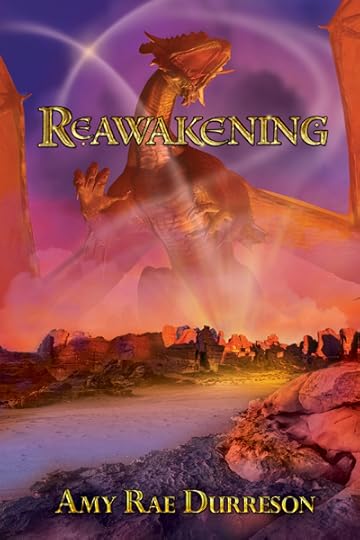
So, it’s been a busy December, and I’ve not been very good at blogging about it all. Firstly, I can finally reveal the gorgeous cover art and release date for Reawakening, my first full-length fantasy novel, which will be released by Dreamspinner on 17th January. It’s the story of a dragon who falls in love with a desert (and then, of course, things get really complicated, with bonus undead).
It’s also been a good month for some older stories. I’ll be blogging more about Gaudete, Christmas markets and cathedrals later this weekend (it would have been the straw that broke the camel’s back on this post, and deserves some attention of its own, methinks). I’ve been really delighted to see people enjoying it. I expected it too be far too British and quirky to get much attention. Thank you, everyone
As well, a few earlier pieces have been treated kindly in the Goodreads M/M Romance Group’s Member’s Choice Awards nominations. Lodestar and two of the anthologies I’ve been in have been nominated for various categories. The poll is still open, if any of you haven’t voted yet. There’s some stonking good books been nominated, in every category, and I’m flattered to be included.


Download The Lodestar of Ys for free


Urgh. That’s so much promo and boasting that I feel slightly nauseous. To clear everyone’s palate, here’s some prettiness to make up for it. No matter what’s happening with my writing, one of the things I’m always grateful for is that I live in such a lovely part of the country. I’ve worked in London and done my share of commuting, but I would hate to live in a city. In term time, my classroom looks out over a misty valley, and in the holidays, I take to the hills. This is what I did yesterday: the North Downs Way, between Guildford and Dorking. It’s about fifteen miles, if you include the walks to and from the stations at each end, so it was a bit of a push on a short day, but so very worth it. The sun was low but bright, the woods were bare of all but firs and holly and the last brown traces of autumn, and the hills faded into a blue and misty distance.

The walk begins along the bank of the River Wey (which is Isaac’s river in Mistletoe Lock), as it slips through Guildford. Look carefully and you will spot the keep of Guildford Castle through the trees. This was the view of the weir from my breakfast stop.

Looking back towards town from further along the river. My grandmother, who is in her eighties, remembers skating on these meadows as a child, although we haven’t had that hard a winter in my lifetime.

Looking across the river. That hill there is the only serious challenge of this walk, St Martha’s Hill.

Mist over the water at the bottom of Ferry Lane. The shallows here were first a ford. The now long-gone ferry and bridge came along when the river was made into a navigation in the industrial age. It’s deep and wide enough to carry barges for another five miles upstream.

Although you can’t see it clearly because of the fallen leaves, the exposed ground here is sandy. It’s called greensand, and is the underlying stone of most of the local area, a sort of sandstone that erodes into sandy paths. Here, the colour gives the city of Guildford it’s name: gild-ford, the golden ford.
Across the river is the long climb through Chantries Wood and up St Martha’s Hill. This is a slow climb through dark woods which then turns into a steep climb up sandy paths. It’s very pretty, but slow-going, until you finally glimpse your destination through the trees.

This is St Martha-on-the-hill, a church that is still only accessible by foot. It sits 175m above sea level (573 feet for imperial users), about 140m above the river.

And this is what makes the climb worth doing. The view from the top.


Heading down the other side. Once you’ve made it to St Martha’s, you’re on the escarpment of the Downs for the rest of the walk. No more hills to climb!

Looking along Albury Down. These are chalk hills now, which means far slimier mud to negotiate.

Looking back towards St Martha’s.

A hunter in the sky.

Looking south, just before noon.

Through the woods, over a coating of beech leaves.

Looking east, with the sun behind me.

And south, from the same spot.
By then, of course, I was racing the sun. I’d known from the time I left St Martha’s that I wouldn’t make it all the way to Dorking station before dark. The sky was clear, though, and I knew that the last two miles, through Denbies vineyard, were along a clear, tarmacked track with no turnings until it reached the road to the station. The aim now was to get through the deer gate and into the vineyard by dusk.

And here I am, with the deer gate at my back. This last stretch was surprisingly lovely, with the rush over and the wind rising in the trees as I wandered through the gloaming.

Ten minutes later, I turned down towards my final destination. The little white building there is part of the Denbies complex, and I had enough light left to turn that way, stop in their shop for a bottle of (excellent) English wine, and walk safely the rest of the way into town.


December 1, 2013
Christmas Starts Today…
It’s December (seriously, where did the year go?) which means that suddenly my mind is turning towards all things festive. Nanowrimo is done, as of lunchtime yesterday, and today my Christmas release is out. This one is part of the Dreamspinner Advent Calendar package, but you can buy it individually as well. It’s just a little novella about a cathedral, a Christmas market, and a reunion between two old friends. I’m looking forward to reading all the seasonal stories this month.
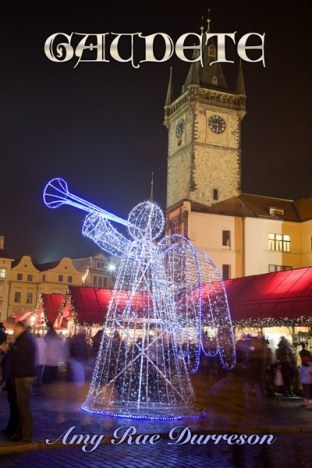
Every Christmas, child chorister Jonah Lennox used to meet Callum Noakes at Aylminster cathedral when Callum’s mother came to sell roasted chestnuts at the market. After years of friendship, an argument separates them, apparently forever. Putting away the memories of his lost friend, Jonah left the cathedral and moved on with his life.
When Jonah returns to the cathedral after ten years away, the market in the cathedral brings back memories—and Callum, who has made a life for himself as a woodturner. Upon meeting again, attraction pulls them together, and the holiday may inspire their old friendship to mature into new romance.
You can read the first chapter here (just click on the excerpt link)
I’ll be posting more about carols, choristers and Christmas markets as the month goes on. I’m sorry, December 1st seems a bit early to go properly Christingly. That said, I am one of those Christmas people (heh heh heh). I just try to keep it under control until mid-December. If there’s anything seasonal you’d like to read about, do let me know ^_^


November 23, 2013
Strange Meeting (free story)
The lovely M/M Romance Group over on Goodreads have started up some threads for writing prompts in the few weeks. I’ve been dipping in, and one of the prompts caught my eye today. The challenge was to write a story to suit the title ‘Come Upon These Greener Pastures.’ I like writing in the pastoral mode, so my brain promptly went into overdrive. Despite already having the prompt title, I feel like this story really ought to be called ‘Strange Meeting’ because the allusion fits, so it can be a story with two titles. There’s lots of deliberate references to the poetry of the era in this. Reposting it here, so I can archive it with all the other stuff
WW1 setting, with some explicit scenes.
Come Upon These Greener Pastures: Strange Meeting
Midway through the afternoon, the train stopped.
It was late June, and the sun sloped lazily through the compartment window. It made it hard for the officer to focus on his newspaper, the print dancing before his eyes. After a moment, when it was clear that they weren’t about to move again, he folded it up and looked around the compartment to see if anyone else was concerned about their lack of progress.
There were two other men in here with him, and had been since the start of the journey, as far as he could remember. Opposite him sat a brother officer, his back straight and face stiff, perusing a small leather-backed book. In the other corner, by the door into the corridor, was a young private, fair-haired and freckled. He was fidgeting in his seat, as if he couldn’t bear to sit still, and the officer hid a smile behind his hand. Some of these boys straight out from Blighty looked like they’d been sewn into their uniforms against their will and wanted nothing more to shrug off their boots, unbutton their collars and start chewing easily on a stem of grass.
This private was the type who’d look better in his shirtsleeves than in a suit, the officer thought idly. He could just imagine how the private’s skin was brown below his uniform. He would be muscled and confident, likely the type who would stand on the back of a cart and shovel the hay all day without complaint, laughing when he lost his hat and the sun kissed more freckles across his cheeks. He’d tip water over his head to cool his face, laughing at his friends’ mockery, and it would soak his loose shirt and trickle down his strong chest. The drips would trace their way across his tanned throat and down, making him shiver as they brushed his nipple—
The officer shook himself, embarrassed. He prized himself on his honor, and it was not the done thing to think like that about the common soldiers. Bad enough that he had that poisonous tendency himself. It wouldn’t do to go corrupting the men.
He brought his gaze back to his side of the compartment, and saw the other officer had closed his book and was looking at him. “Should one of us contact the guard and see what the delay is?”
“It’s only been a few minutes,” the officer said.
“Nonetheless, we all have places to be. Time is of the essence.”
“Yes,” the officer said uneasily. “Going far?”
“To the end of the line, of course. You?”
The officer thought about it. He wasn’t at all sure where his ultimate destination was, or which station he should alight at. God knew that last shell had shaken his brain up a bit, but it was embarrassing to forget something this simple. He could look at his ticket, he supposed, if he rummaged through his pockets to find it. He didn’t fancy admitting weakness in front of the other officer, though, so he just stood up. “I’ll go looking for the guard.”
The private cleared his throat. “I don’t think there is a guard, sir. Not seen him go by in all these hours we’ve been on this train.” He had a pleasant voice, country rich.
“Of course there’s a guard,” the other officer snapped. “Don’t be ridiculous.”
“He isn’t wrong,” the officer said, and stared out into the corridor. He’d seen a few other soldiers passing by their compartment as the train wheezed its way steadily along the track, but no one in any railway uniform that he knew. “I’ll walk up the train and see what I can find out.”
“Much appreciated,” the other officer said, picking up his book again.
The private was fidgeting again, staring at the officer. He had blue eyes, wide and a little protuberant, and sandy brows that were currently arched in surprise. “Don’t, sir!”
“Why the devil not?” the other officer demanded, putting his book down again.
“I’ve been watching the chaps go by, sir, and I couldn’t help but notice that they’ve only been going one way, and ain’t none of them come back.”
“Obviously they’re moving up to alight at a short platform. What nonsense is this?”
“Saving we haven’t stopped at a station yet, sir.”
“We haven’t, have we?” the officer said, startled. “You’re right. It’s been hours since we left London.”
“Manchester,” the other officer corrected sharply, even as the private said, “Dover.”
For a moment, they all stared at each other. Then the other officer picked up his book, and said sharply, “Clearly you are both the victims of nervous shock. I hope the doctors can see to you, but I will not partake of this nonsense any longer.”
The officer stared across the compartment at the private, biting his lip. “Shouldn’t we investigate?”
“Can if you like, sir, but I don’t much like this train. Thought I might just get off here.”
“Here?”
“Looks like nice country.”
The officer hadn’t glanced out the window as the train pulled along, but now he walked over to roll up the blind and look out. The glass was a little grubby, but he could still see the fields beyond, stretching out in a long green curve to where a river ran, willows hanging low over the dancing water. Beyond the river, the hills rose in slow soft rolls, their curves so comfortable he almost felt he could reach out and press his palm against them.
“I’d like to get these boots off and soak these feet of mine in that stream,” the private said, close beside his ear. He stretched out his arm to pull the window down, his shoulder brushing the officer’s. This close, he smelt like sweat and dirt and something sweet and elusive that could have been sunshine. Every hair on the officer’s arm stood on end when their hands brushed, and he took a quick breath.
Then, as the fresh air curled in on a warm wind, he breathed deeper. The air itself tasted sweet with flowers, and the meadow outside seemed to be singing, birdsong rising in a bright cascade, insects humming, the wind rustling through the grass. It smelt like summer should, not like blood and gangrene and the sweet-pepper stink of gas. Strange, how in the despairing hours when he had imagined England so fiercely it hurt, he had never remembered exactly how she smelt.
“You staying or coming with me?” the private asked. “Sir.”
There was no real decision to be made. With a quiet relief, he reached out the window and opened the door.
“You’re not seriously going through with this?” the other officer snapped behind them. “We have places to be. It’s desertion.”
The officer ignored him and scrambled out of the train. It was a longer drop than he’d expected, without a station platform to catch him, and he went skidding down the bank when he did land, the ballast slipping away beneath his feet. He caught his balance at the bottom of the slope, throwing his arms out to steady himself. A moment later the private cannoned into him with a gust of laughter, throwing sturdy arms around the officer’s waist to catch himself.
Before the officer could force himself to protest, the private had pulled off him and was pelting across the meadow towards the river, laughing brightly. The officer followed more slowly, following a rabbit track through the long grass. The seed heads brushed softly against his hands, and the thronging flowers left smudges of pollen on his khaki trousers, little smears of bold yellow. A butterfly fluttered past him, alighting for a moment in his path, and he stopped , staring at it.
It was small, its wings a soft blue. Chalkhill Blue, he remembered, out of the distances of childhood, when he had roamed the South Downs with the inept enthusiasm of a junior naturalist. He had planned to be a famous explorer then, discovering new species in yet unexplored jungles.
The butterfly flittered away and he continued towards the river, smiling a little at the memory.
When he arrived there, the private was already in the water, his boots and jackets discarded and his trousers rolled up to his knees. He grinned and laughed as the officer approached. “Come on! Water’s lovely.”
“Looks cold to me,” the officer replied, but bent down to remove his own boots.
“Warm as a baby’s bottle,” the private called, his grin so wide it was obvious he was lying.
It was freezing, but the bottom was lined with fat pebbles, pleasant underfoot. Despite the cold, it felt good flowing over his feet, after weeks reluctantly pulling on the same increasingly fetid boots. His sore and blistered toes stung for a moment, but then it was such a relief.
“See, lovely, I told you.”
The officer reached down and splashed him, smiling more freely than he had for months. That, inevitably, led to more, and they went ducking and diving across the river, scooping up great shining armfuls of water, as sunlight shimmered through the trees, until they were both soaked and laughing so hard they could barely keep their feet. When the officer’s foot slipped on a weed-slick rock, he sat down hard, up to his waist in water, and still couldn’t stop laughing.
The private hauled him to his feet, his hand firm and strong, grinning all the while. “Say you’ve lost!”
“Never,” the officer managed through his laughter and pulled the private down with him, and they went rolling through the knee-deep water, half-wrestling and half just tangled in each other. They were both drenched by the time they sat up, too weak to fight anymore, and the private choked out between his chuckles, “Hey, I’m shivering. Let’s get out to the sun.”
They gathered up their discarded clothes and crossed the river. On the other bank the trees grew densely, alders dipping low over their swampy roots, but there was a clear path through, and soon they were climbing up the sun-washed hillside. Once they were high enough to see over the trees to the valley below, they stopped. The private stripped down to his buttoned shorts without a hint of self-consciousness and then went about spreading his wet clothes across the hillside to dry. The officer imitated him, blushing a little and trying not to stare. The private looked everything he had imagined and more, with a farmer’s tan and freckled shoulders, and enough hair on his chest and running down his belly that the officer wanted to touch it to see if it was as soft as it looked.
He looked away quickly and sat down, hoping that his reaction wasn’t too obvious. From here he could see the whole valley, with the downs rising on the other side and rolling away beyond in endless blue curves, soft against the sky. There were a few clouds, fat and white, but the sky around them was blue and the sun was a warm caress against his skin. Lying back, he settled against short grass and eyed the flowers growing by his head, a cluster of yellow tormentil and sturdy little scarlet pimpernels.
“Sheep country,” the private commented sleepily, and a moment later his hand landed on the officer’s belly, splaying out lazily.
He should have pushed the hand off, but instead the officer sighed contentedly and covered it with his own. “Doesn’t smell like sheep.”
The private chuckled, his fingers closing warmly around the officer’s.
For a while they lay like that, easy and comfortable. Then, just as the officer’s eyes were beginning to drift shut, the private sat up, leaning over him. “Reckon anyone else is going to leave that train?”
“It’s just you and me,” the officer murmured.
“More fools them,” the private said and leaned down to kiss him.
The officer opened his mouth to the kiss, sliding his hand up to tangle in sun-gold hair. It was a good kiss, warm and slow and he sighed into it, his whole body going soft and languid as their tongues tangled.
They were only roused by the sound of the train’s whistle.
The private sat up, staring down the hillside. Below them, the train was still sitting on the track, but there was new steam rising from its engine, as if it was about to move.
“If you run, you could still catch it,” the officer said.
“I could, at that. I mean, my old dad’s working the farm on his own without me. My brother’s no help. Too eager to join up himself, even though I’ve warned him against it, and so dad’s got to get the harvest in himself and his back’s bad these days. It’s not right to leave him to do it alone.”
“Go, then,” the officer said, his heart clenching sadly. He had no one waiting for him.
But the private did not move. “Thing is, I don’t reckon I’d ever get home, even if I did get back on that train. It’s not that sort of journey, is it?”
“I’m almost certain it isn’t.”
“I said Dover, didn’t I, but I don’t actually remember it. Just seems a place where it’s natural to start a trip. And you said London—”
“I used to catch the train home from school every term.”
“—and that other chap, likely he catches trains from Manchester now and then. Don’t think any of us really remembered getting on that train. Honest to god, sir, last thing I do remember is the mine going up at Wicked Corner. Just the bang and the blast and the fire in the air, and then I’m sat on that train, with not a scratch on me, and now I’ve not even got the blisters on my feet or the ache in my gut or even an itch from the bloody fleas. So no, sir, I don’t think that train would take me home.”
The officer closed his eyes and remembered the strange watery hue of the light, the silence shuddering in his ears after the shell landed, and looking up to see the green-grey gas come over the edge of the trench like water, turning every breath to fire as he groped, too late, for his mask, guttering, choking, drowning.
“And if it’s not home to the farm, I don’t want to go, sir. I’d rather stay here. Looks like good country, this.”
“In groves we live,” the officer said slowly, recollecting his Virgil, “and lie on mossy beds, by crystal streams, that murmur through the meadows.”
“About right, that. Sounds good. Better than Ypres, at any rate, eh, sir?”
The officer looked up at him, bright country boy that he was, and wanted more. “Don’t call me sir. I don’t think this is the kind of country where they have officers.”
“What’s your name then?”
He was about to offer his surname, as he would have done at school or to a stranger. Then, reconsidering, he said, “I’m George.”
His hand was seized firmly. “Going to slay a dragon or two?”
“I’m tired of dragons,” George said.
“Don’t blame you. Can’t say I fancy meeting a giant right now, even if I’ve got the name for it. Which is to say, I’m Jack.”
“Jack,” George said slowly, tasting the name on his tongue. “Delighted to make your acquaintance.”
Jack laughed and leaned forward to kiss him, a quick chaste brush. “So posh and old-fashioned. You’re not much older than me, Georgie boy.”
“And how old are you?” George demanded, leaning forward to follow the kiss.
“Nineteen, this May gone.”
“Older than you look,” George murmured and tucked his hand around Jack’s nape, pulling him in for a kiss. “I’ve got three years on you.”
“Oh, you’re an old man then,” Jack said and slid his hand down to stroke George through his shorts. “This feels young and eager enough.”
George groaned, pushing up into the touch, shock quickly dissolving into desire.
The train whistle sounded again, making them both jump. They both turned their heads, their cheeks pressing together, and Jack’s hand fell to rest on George’s bare thigh. They watched silently as the train pulled out, chugging down the center of the valley as swiftly as a snake, the light gleaming on its blank windows. When it vanished around the curve of the valley, George took a slow breath.
“And so here we are,” he said.
“So we are,” Jack agreed and nudged the buttons on George’s shorts open. “Take these off.”
“Out here?!” George protested, faintly scandalized, but then Jack’s hand closed warmly around his stiff cock and he groaned.
“No one to see us.” Jack pulled George’s shorts the rest of the way off and then discarded his own, kneeling over George with a sunny smile. “If this is a country without officers, I reckon it’s also a country where chaps like you and me can love each other.”
He was beautiful, George thought hazily, and not just because his hand felt so good. Jack was all sturdy muscle and golden curls. His cock was as broad and solid as the rest of him, standing out from his body, stiff and flushed. He had never dared imagine that he’d be free to look at another man like this, let alone by sunlight, spread across sweet-smelling grass. Tentatively, he reached out to touch Jack’s cock, running his finger across the soft skin and savoring the hardness below.
“More,” Jack begged, his own hand trembling a little.
George took a proper grip, copying Jack’s rhythm, and suddenly they were moving together, thrusting against each other to the same rough beat, hard in each others’ hands, panting together as Jack lunged forward clumsily to kiss him, their mouths wet and clumsy as they strained against each other. George could feel every blade of grass crushed against his back, every brush of the wind against his bare and curling toes, every place where his skin touched Jack’s, his whole body aflame, this time with pleasure.
When that pleasure suddenly gathered, spearing out of his balls to rush over him, he cried out into Jack’s mouth, his hand tightening. It was so good it blinded him, and for a moment he couldn’t see the sun or the green hills or Jack’s flushed and lovely face. He could hear Jack, though, the sudden sharpening of his gasps, and he felt it when Jack’s slick hand slipped away from George’s cock to work at his own, his hand moving over George’s, wet and warm.
When Jack spilled over him, George groaned again and managed to throw an arm up to lock around Jack’s waist, holding him close.
For a while, they lay like that, shaking against each other. Eventually, though, George’s vision cleared and the lax weight of Jack’s body on his became a bit too much. He rolled Jack off him and sat up to look down at him.
Jack grinned up at him, his cheeks flushed, his lips red from kisses, and his hair tousled. “Told you this was a good country.”
“No argument here,” George said and reached over to snag one of his puttees to wipe them clean. He wasn’t planning on wearing them again, but they would do very well for this purpose.
“You know what it makes me think of?” Jack asked, his voice slow and contented. “When I was very young, my mother had this old book of fairy tales. I was never much for reading, but it had all these pictures in, all soft colors and blue hills. Jack the Giant Killer’s country, that was the one I liked. All hills and trees and no towns. I wanted to live there.”
“Fairyland.”
“Something like that. I asked my ma, right, where that country was, seeing as I knew there were no giants and dragons around about our village, and she told me it wasn’t a place you could get to anymore. Back in the day, she said, the land of fairy tales and our country overlapped in places, and you could just walk from one to another by accident. I reckon that’s where we are. You can’t get there by walking these days, but it makes sense there’s a train. The trains get everywhere nowadays.”
“I was thinking of the Ancient Greeks,” George said.
“Ooh,” Jack said, waggling his eyebrows. “We all know about them.”
George shook his head, amused. “And we’ll have some more of the Greek vice, when you’re ready, but that wasn’t what I was thinking. They said that the underworld was full of fields of asphodel, and you got there by ferry. Perhaps today it’s a train.”
“What’s asphodel when it’s at home?”
“They’re meadow flowers, in Greece. White flowers.”
“Oh, in Greece,” Jack said knowingly and sat up a little, propping himself up on his elbows. “Well, I see rampion and pimpernels, and there’s poppies down in the valley. Reckon there would be daffadowndillies up here in the spring. That’s proper English meadow flowers, you see. None of this Greek nonsense.”
George laughed and stole another kiss.
After a while, they gathered up their clothes and got dressed again. Then, looking out over the valley, they argued amicably over whether they should go back down to the river or not.
“Do you think,” George asked, as the thought occurred to him, “that we’re really the only ones here?”
Jack shrugged. “Nah. I reckon there’s always a few people who are willing to get off the train. Not many, but some.”
“Perhaps we should find them.”
“One day,” Jack said easily, and reached for his hand. “There’s no rush, is there?”
And so they went on up the hill, hands linked, following the path across the flowery meadow until it rose towards the peak of the downs, and the blue, blue sky beyond.
~*~
Back to Nanowrimo now. I’m only 6000 words behind, after all….


November 10, 2013
Sunday Snippet (Iskandir)
I’m currently feeling very triumphant because for the first time all month I am caught up with my Nanowrimo wordcount! *waves the pompoms of glory* I’m amy_raenbow over there and always happy to have new writing buddies if anyone want to say hi. This year’s project is the sequel to Reawakening, which is my upcoming novel.
It’s been a busy few weeks, because I’ve been busy with edits to Reawakening as well as coming up with a map and glossary to go with it, which was fun (for me, if not for the folk who suddenly got confronted with a glossary that got just a little out of hand). I’ve also signed a contract for a Valentines short story set in 1920 In all the excitement, however, my desk got a little out of hand (this is on the 30th of October, in the space between editing and Nanoing).

Mini Tarn the dragon isn’t sure if I’ve abandoned him or just given him a new hoard to guard.
It’s not quite that bad right now, but we’re only ten days into November and it’s steadily building layers.
In the meantime, have a tiny peep at what I’ve been writing. No smooches this week, I’m afraid, because I’m not far enough into the book. Here’s Iskandir reminiscing about the people he loved.
They had never seen stone buildings before they rode north to answer the great summons, nor spoken with men who lived more than a mile from the edge of the steppes. Neither of them had been able to read or write their names—there had been nothing to write on in the steppes and they had tally sticks for counting their herds. They had not been ready to meet dragons. No wonder Hal had kept calling them barbarians.
Zohrab hadn’t cared much whether Hal liked him, though. He’d seen being part of a dragon’s hoard as a necessary nuisance. He had laughed for a long time when he realised why Iskandir was so flustered by the dragon. Once he had stopped guffawing, though, after Iskandir had punched him a few times, he had helped come up with excuses for Iskandir to wander into the infirmary as often as possible.
When that didn’t work, he’d also been the one to stroll in cheerfully, and announce, “My brother wants to fuck you, dragon. How about it?”
At the time, Iskandir had wanted to kill him, but remembering it now made him smile. It had worked, after all. Hal had kissed him for the first time not an hour later, after they’d hounded Zohrab out of the infirmary. It had been—
His foot slipped from under him, and he staggered for balance, jerked out of the memory. Looking down, he grimaced. He had stepped on a dead rat.
He kicked it into the gutter and then frowned, taking a closer look. There were four more lying there, their greasy fur matted and a pink froth drying around their mouths. He didn’t like the creatures, which had come creeping into the city as it declined under the Shadow’s rule. He wasn’t going to weep for their demise, but something about that little heap made him shudder. Poison, no doubt, but it looked like a particularly cruel one.
How’s your November going?