
Alex Roddie's Blog, page 10
March 13, 2014
The Solomon Gordon papers, 1787 - 1789

"Who is Saussure? I hear his name everywhere about town this morning. Can it be that I am to have civilised company in this execrable valley at last?"
"... For now that I have seen it, I confess that my thoughts are elevated from this abyss of sin in which we all wallow and up to the immaculate heavens of Mont Blanc."
I am currently working on Book II of my Alpine Dawn project, a series of novels that aims to examine the origins of mountaineering - with my own unique fictional slant on events, of course. Book I, The Atholl Expedition , has been well received and is currently selling far better than my first novel ever did.
However, Atholl is only the very first step.
In Book I we see a glimpse of Scotland in the days before the mountaineers arrived, but everywhere there are echoes and hints of a wider context and larger storyline. By the year 1847 mountaineering was already a venerable and established pastime in the Alps, but it had not yet spread to Great Britain. I am interested in the interplay between Alpine mountaineers and activities on our own British mountains. I chose the 1840s because that decade stood at a turning point between the quieter world of the "old Alps" and the Golden Age in which all of the major Alpine peaks were climbed.
In the second volume the reader will get a slightly wider view in preparation for events that take place in the Alps in Book III.
The Solomon Gordon papers
Solomon Gordon is a character I have invented to provide critical backstory for my plot, both motivating actions in the present day of the book and influencing events far in the future - arguably right up to the 1897 of The Only Genuine Jones . He was born in 1760 and in the years between 1787 and 1789 was involved in a scandal known as the Swiss affair.
I am currently in the process of creating a set of fictional documents known to my characters as "the Solomon Gordon papers." Since they have been lost since the 1820s, the precise contents of these papers are not known, but it is in the best interests of certain parties that they remain hidden.
Albert Smith, explorer and showman, desperately wants to read these papers and his efforts to locate them form an important storyline in Alpine Dawn II. Solomon Gordon is an ancestor of James Forbes and the frail glaciologist will return in my third novel - but he does not necessarily want the contents of the Solomon Gordon papers to become public.
Pegremont
Why does Smith want to find the Solomon Gordon papers so desperately? What secret can they possibly contain? The answer is another mystery that goes by the name of "Pegremont."

Smith doesn't know much about the Pegremont apart from myths and rumours he has managed to gather during his voyages through the Alps since the late 1830s. Legend has it that the Pegremont is a mountain of ice that can be found on no contemporary map and can be seen from no accessible summit. Most intriguingly of all, everything Smith has painstakingly discovered so far points towards one remarkable idea: that is is possible to navigate a course beneath the surface.
It is believed that Saussure's expedition of 1789, accompanied by Solomon Gordon, may have reconnoitered the Pegremont. However, no notes on the expedition were ever published, Gordon himself died shortly afterwards, and within a matter of weeks the storming of the Bastille and subsequent events in France resulted in the loss of Saussure's entire fortune and estate. The Swiss affair (hushed up very efficiently by Lord Haddo) caused massive damage to several of the most powerful families in the British aristocracy.
The mystery has captivated both Smith and Forbes. Both are determined to find out the truth - and, if possible, to rediscover this lost mountain of ice that proved so catastrophic for so many people in the late 18th century.
That's just about all I'm willing to divulge at this point, but hopefully it's whetted your appetite for Book II! I'd better get back to writing these mysterious Solomon Gordon papers...


March 9, 2014
The Summits of Modern Man by Peter Hansen: Book Review

The Summits of Modern Man: Mountaineering After the Enlightenment by Peter H. Hansen
I actually started reading this remarkable book some months ago. It's a bit of a monster, so to make it more manageable I broke it down into chunks. This book is a marathon, not a sprint - and I mean that in the best possible way.
"Summits" is concerned with the history of mountaineering. Until recently I thought this was a subject I knew well, but this book has quite simply transformed my understanding of the topic.
Mountaineering and Modernity
When compared with more accessible popular books on the history of mountaineering, "Summits" approaches things from an unusual angle. Rather than merely telling us what happened, it asks the vital question of "why?" This question is perhaps the one most neglected by scholars of mountain history, and although numerous excellent volumes have been produced over the last two centuries the question of "why?" is often given only the most cursory attention.
The key assertion of "Summits" is that mountaineering is a direct product of modernity and the Enlightenment. Other key themes are explored at length, including the quest for sovereignty (both collective and individual) which has often led men and women to the summits of mountains, but Hansen attributes the growth of mountaineering to modernity itself - and to the fundamental change in thinking that had to take place before mountaineering could take off.
It's widely understood that mountaineering has passed through several distinct phases, from the early Enlightenment through to the Romantic era and the so-called Alpine Golden Age in which personal conquest, sporting achievement, and muscular Christianity eclipsed the earlier quest for truth. However, Hansen's detailed analysis penetrates these ideas and goes far deeper. Like all history, the truth is more complex than the convenient labels we like to assign, and Hansen illustrates how wider context and sociopolitical factors influenced the development of mountaineering far more than I had previously believed. At the core of it all is the notion that the changing nature of human thought led to the rise of mountaineering and its development over the centuries.
Not a light read
"Summits" is a gold mine and it took me a long time to digest its treasures. The language is academic and frequently dry. This is not a book that I could stomach reading in a single sitting; I'd describe it as a committing read, something to be used to obtain valuable knowledge rather than for entertainment.
In my book spotlight when I first started reading this title I mentioned that it wasn't ideal for the beginner or for the casual reader. I think there's a good chance they would be overwhelmed by it. Other books give a far better general overview on the history of mountaineering, and are frequently written in a friendlier and more accessible way. I'd say that to make the most of this book, the reader should have a good basic knowledge of not only the history of mountaineering, but modern history in general (and, specifically, the concepts of Enlightenment, modernity, industrialisation, and Romanticism).
This is by no means a criticism of "Summits": it's an academic work, and it has nothing to be ashamed of. However, it requires concentration and background knowledge to appreciate fully. Instead of light reading in the evening I found myself most able to tackle this book when fully awake, at my desk, and with a computer to hand for taking notes.
Despite its slightly intimidating nature, this book is one of the most worthwhile I have ever read on the subject and I'm very glad I persevered with it. For me, the true gift of this book is in forcing me to look beyond the obvious when studying mountaineering history, and to consider the wider political, economic, and cultural context - and to really look inside the head of the mountaineer. Mountaineering didn't evolve independently from these things and has always been very much a product of this time. "The Summits of Modern Man" has illustrated that fact for me in far greater depth than any other book on the subject I've read before.
"The Summits of Modern Man: Mountaineering after the Enlightenment" is published by Harvard University Press. You can buy a copy from Amazon here.
Full disclosure: I received a review copy of this book from the publisher. However, like all my reviews, it is written independently and without bias.
February 27, 2014
Winter climbing conditions - how much information is too much?

British winter climbing is in a strange place at the moment. We like to get away to the hills as an escape from "real life," and yet the world of climbing frequently mirrors the world around us even if we like to pretend that it doesn't.
Look around you. We live in an age of ubiquitous information, of instant answers, of a vast mass of knowledge that can be tapped or ignored at will. A modern climber is a creature of the modern era, and it would be strange to expect otherwise.
I'm generalising to an extent here, but in the past climbing was a more adventurous activity: uncertain, unpredictable, and more of an act of exploration than it is today. The sense of adventure remains strong, but the sport has changed beyond all recognition and modern climbers, particularly winter climbers, crave one thing above everything else: information.
The Information Age
 O.G. JonesThe advance of the information age in climbing has been a long and slow one, arguably beginning in the 1890s when O.G. Jones wrote his first guidebooks to popular climbing areas of the UK. His motivations for doing this were to help climbers avoid wasting their time and to prevent fatal accidents ... noble goals, and yet he was widely criticised. The established climbing community resisted all attempts to democratize the sport.
The shape of things to come was set. Throughout the next century guidebook after guidebook was produced, covering more and more of the UK in greater and greater detail. As new routes were climbed the blank pages were filled in and even the climbing grades themselves became more precise, leaving less to discover yourself.
The information age is a two-pronged fork. On the one hand we have information about the climbs themselves: guidebooks, hut logs, club journals, eventually followed by online forums and route databases. On the other hand we have information about climbing conditions (mainly the concern of winter climbers, but also relevant to trad climbers as well).
The first category is well-developed in the year 2014. Guidebooks are bewilderingly comprehensive and virtually every climb in the UK is documented to within an inch of its life. The amount of information available online is similarly verbose, allowing climbers every possible opportunity to research their routes of choice before even seeing the crag or mountain. It can be argued that this wealth of information has encouraged the phenomenon of "honeypotting" (in which popular routes get mobbed by crowds while others lie neglected), but that's not really the issue I'd like to talk about in this blog.
It's the second category - the conditions information - that really interests me.
Tweeting from the Crag
Conditions are everything in winter climbing. Depending on conditions, an ice climb may be a glittering pillar of pure ice ... or a dank chimney dripping with water. Perhaps it's to be expected that winter climbers have an insatiable appetite for conditions data.
Since I started mountaineering in 2006 there has been a revolution in how climbers find out about the quality of the white stuff coating their chosen hill. Forums existed in 2006, of course - and word of mouth has always been with us - but new technology has enabled high-quality information to spread far more quickly and in greater volume.
The Scottish Avalanche Information Service provides perhaps the best online information about conditions. Updated daily during the season, at a glance you can get a good idea about snow conditions in most of the main climbing areas. It requires experience to use effectively but is one of the best tools available today. MWIS is another vital tool that provides weather forecasts tailored to the most popular mountain areas.
Blogs have really taken off and now it seems that every guide, instructor, and enthusiast has a blog (this is by no means a criticism; I love reading mountain blogs!) UKClimbing.com now has a winter conditions page detailing which routes have recently been climbed, and perhaps most significantly of all, climbers on Twitter utilise the #scotwinter hashtag to tweet live updates on snow conditions directly from the crag. Twitter is buzzing with climbers and when I'm stuck down south with no chance of getting to the mountains it can be a real boost reading about adventures almost as they happen. It all helps to build up an accurate picture of what's happening on the hill.
Good information can make the difference between a day like this...

... and one like this!

Information Overload?
All this information is hugely empowering. Once, mountaineers might have driven hundreds of miles to a mountain, perhaps using up their only holiday opportunity all winter - and with no idea of what they might find when they got there. In the days before guidebooks they might not even have known about any climbable routes, and they certainly wouldn't have had any idea about critical factors such as avalanche risk, snow quality, or cornices.
Of course, that's the very definition of "adventure" and I'm quite sure that such circumstances have produced fine outings on many occasions.
However, the chance of mishap is high and the margin for error slim. At best, the climbers risk disappointment if the mountain is stripped of snow and none of the routes are in condition. At worst, they risk death from avalanche.
Nowadays the climber has options. He or she can look up routes in a guidebook to judge their own skills in relation to the mountain. The climber can research a wealth of data online, from accurate weather forecasts to avalanche observations, from recent pictures of the mountain to tweets posted the day before from the same route. When used wisely and tempered with experience, the risk of disappointment or accident is reduced - and, arguably, the chance of having a memorable and safe adventure is increased.
We climb in an era when information is readily available, but some of us still look back to simpler times and yearn for the uncertainty and adventure of days before we had such powerful tools. As a sport, climbing is inherently adventurous - but we live in times when technology and information threaten that sense of adventure.
The Next Phase: Real-Time Updates
The BMC has recently launched a new service enabling winter climbers to view live temperature data directly from Cwm Idwal, a popular ice climbing location in the Snowdonia National Park. The pilot service is very well-presented and climber-friendly. A little knowledge will allow potential visitors to judge whether or not the ice routes are likely to be in condition.
It's an interesting development and, when I read about it today, I asked myself if I would use such a tool. I sometimes enjoy the freedom of climbing without guidebooks, but I would never venture into the mountains without appraising myself of the avalanche and weather forecasts. I remain a 21st century climber despite my occasional fondness for tweed and nailed boots.
I must admit that I would use these sensor readings, even if part of me recoils from the clinical stripping-away of uncertainty and adventure.
It's a dilemma, isn't it? In the year 2014 it is seen as irresponsible to climb in winter without having checked weather and avalanche data. In the year 2024 will it be considered irresponsible without having checked your real-time temperature readouts on your Google Glasses (or whatever gadget we're all using in the future?)
The information age of climbing progresses, times change, and the boundary between adventure and common sense continues to move - but it moves ever in the favour of greater safety, more information, less uncertainty.
 Just me and the snow - but for how much longer?I don't really know what point I'm trying to make with this piece. Part of me looks back at the brave, foolish early years of climbing and yearns for the days when the mountains were empty and unknown and to climb was to be a genuine explorer. Part of me knows that change is inevitable and the sport of climbing is as subject to technological shifts as everything else. Part of me realises that if extra information can avoid disappointment or danger then it's almost certainly worth it.
But I wonder about a future where every mountain throngs with climbers, where we all wear Google Glasses which can calculate every axe placement and give live readouts on the probability of a slope avalanching. Is that the future we want for our most wonderful sport? The machines are already taking over in the fields of navigation and communication in the mountains; will they start replacing our common sense and experience as well?
I really don't have an answer for this. I don't see it as the thin end of the wedge, but rather a point in a long, long process. We can't resist the future but, for the moment at least, we have some choice over the extent to which technology intrudes into our adventures in the mountains.
What do you think? Do you welcome the introduction of real-time temperature sensors in climbing venues, or do you think we have enough information on conditions as it is? Sound off below!
February 25, 2014
The Atholl Expedition Goodreads giveaway
.goodreadsGiveawayWidget { color: #555; font-family: georgia, serif; font-weight: normal; text-align: left; font-size: 14px; font-style: normal; background: white; } .goodreadsGiveawayWidget img { padding: 0 !important; margin: 0 !important; } .goodreadsGiveawayWidget a { padding: 0 !important; margin: 0; color: #660; text-decoration: none; } .goodreadsGiveawayWidget a:visted { color: #660; text-decoration: none; } .goodreadsGiveawayWidget a:hover { color: #660; text-decoration: underline !important; } .goodreadsGiveawayWidget p { margin: 0 0 .5em !important; padding: 0; } .goodreadsGiveawayWidgetEnterLink { display: block; width: 150px; margin: 10px auto 0 !important; padding: 0px 5px !important; text-align: center; line-height: 1.8em; color: #222; font-size: 14px; font-weight: bold; border: 1px solid #6A6454; border-radius: 5px; font-family:arial,verdana,helvetica,sans-serif; background-image:url(https://www.goodreads.com/images/layo... background-repeat: repeat-x; background-color:#BBB596; outline: 0; white-space: nowrap; } .goodreadsGiveawayWidgetEnterLink:hover { background-image:url(https://www.goodreads.com/images/layo... color: black; text-decoration: none; cursor: pointer; }
Goodreads Book Giveaway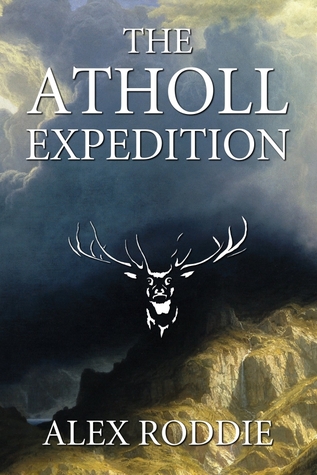 The Atholl Expedition by Alex Roddie Giveaway ends March 25, 2014.
See the giveaway details at Goodreads. Enter to win
My Twitter competition to win a copy of The Atholl Expedition proved to be extremely popular, so I'm offering readers a second opportunity to win a signed copy of my new book. The giveaway is being run on Goodreads, the social network for readers, and to enter all you need to do is log in and enter the giveaway here.
The competition is running until March the 25th and is open to UK entrants only. Good luck!
Goodreads Book Giveaway
The Atholl Expedition by Alex Roddie Giveaway ends March 25, 2014. See the giveaway details at Goodreads. Enter to win
My Twitter competition to win a copy of The Atholl Expedition proved to be extremely popular, so I'm offering readers a second opportunity to win a signed copy of my new book. The giveaway is being run on Goodreads, the social network for readers, and to enter all you need to do is log in and enter the giveaway here.
The competition is running until March the 25th and is open to UK entrants only. Good luck!
February 21, 2014
Avalanche

Avalanche.
What does the word mean to you? Before I moved to Glencoe in the autumn of 2008, avalanches were not something I spared more than passing thought for. Like other aspirant mountaineers I studied "avalanche awareness," but had not had many opportunities to practice my fledgling skills and had no idea what an avalanche might be like in real life.
Avalanches are not remote or intangible. They aren't things that happen only to other people. No; as I was to discover during my time in Glencoe, avalanches are here and now - catastrophic, explosive forces of nature that stalk the mountains, sometimes dormant but never entirely out of mind.
"Checking SAIS" is a ritual all mountaineers perform before venturing into the hills. If there's too much red on the charts perhaps you will change your plans, or perhaps you'll shrug your shoulders, assume you'll be lucky, and head out anyway. "Besides, it's only Scotland" - I have heard those words in the Boots Bar at the Clachaig before.
These hills may not be the Alps, but devastating, gigantic avalanches can and will occur. As Exhibit A I give you the recent avalanche in Coire na Tulaich, Glencoe, as recorded by the Scottish Avalanche Information Service yesterday.
I'd like to share a few anecdotes from my time in Glencoe to illustrate how personal avalanches can become.
A close escape on Aonach Dubh

I'd dug a test pit. I thought I was safe.
My climb that day took me up B Buttress on the West Face of Aonach Dubh. The state of the snow on the broad lower front of the buttress had given me the shivers a few times as I climbed higher, but considering the fact that I was on a ridge between two gullies I didn't consider myself to be at risk. I soon discovered that was a naive point of view.

Deep, unconsolidated snow on the Middle Ledge forced me to turn back, and as I retraced my steps down the front of the buttress I was swept off my feet by a small avalanche that sent me tumbling about 40-50 feet down the slope. Fortunately the only damage was a lost mobile phone.
To this day I can't quite account for the origin of the slide, as the front of the lower buttress was generally broken heathery ground without much accumulated snow. The only explanation that makes sense to me is that I was hit by a slide that came out of one of the gullies and crested the top of the buttress. Either way, it left me shaken and I made haste back down to the road.
A Minute's Silence in the Boots Bar

Heavy snowfall swamped the mountains of Glencoe. The snowgates were down; the forecast was bad and getting worse; SAIS said the slopes were loaded and liable to avalanche. Most climbers in Glencoe that day were safely in the haven of the Clachaig, warming themselves by the log fire and sharing a glass or three of ale with their companions.
I was pulling pints that night and I remember the moment when the bar phone rang. Jack, the bar manager, took the call. He looked shocked as he hung up the phone and walked into the Boots Bar.
"I'm afraid I've just been told that four climbers have been killed on Buachaille Etive Mor in an avalanche. Would you all join me in a minute's silence in honour of this tragic loss."
Nobody broke the silence. Every single person in that room was either a mountaineer or someone who was close to a mountaineer. Suddenly the true horror of such an event was brought into focus, and I will never forget the looks of shock and dismay on the faces of the guests that evening. It was one of the worst avalanche-related disasters in living memory - for Glencoe, at least - although tragically it would not be the last; several other people have died on Buachaille Etive Mor since that date.
The Great Avalanche of March 2010

Another year, another spell of cold weather and deep snow! The West Face of Aonach Dubh, pictured above, suddenly avalanched overnight in March 2010. The crown wall (where the slab of snow detached) can be seen running across the top of the slope and in fact spanned the entire wall. The avalanche was huge in size and, if anyone had been climbing on the wall at the time, they would certainly have perished.
I went up into Coire Bheith a few days later to examine the devastation for myself.

The entire topography of the corrie had been subtly altered. Huge tongues of debris snaked across the mountainside, filling up watercourses, smoothing over the terrain, hiding entire gorges. Trees had been smashed to pieces and strewn in all directions.

Standing on the debris floes in the corrie floor was quite a profound experience for me. Looking up at the West Face high above, I could imagine a thousand tonnes of snow sweeping over the cliffs to smash and destroy everything far beneath. The compacted masses of snow took several months to melt and, as late as May, huge blocks of weathered ice could be seen in the caverns behind waterfalls only a few hundred yards from the road.
So there you have it: avalanches can happen to anyone, and will happen to the unprepared or ignorant.
February 20, 2014
#TheAthollExpedition Twitter competition - we have a winner!

A week ago, I started a Twitter competition to give my readers the chance of winning a signed copy of my new novel, The Atholl Expedition . The competition has been even more successful than I had hoped, with 234 retweets in total (across two original tweets) and an estimated reach of over 40,000 users.
I'm happy to announce that the winner of the competition, selected at random, is @AngieHoneybun who will receive her winning copy shortly.
Thank you to everyone who entered. From my point of view the experiment has been a success. It has earned me over 200 new followers and massive exposure for the book. In fact, it has rather run away with itself and I have no idea how to stop people continuing to tweet and retweet the competition, even though I publically closed entries earlier today!
In other news, I received a fantastic new review for The Atholl Expedition today from Nick Bramhall on his excellent outdoor blog, The Mountain's Silhouette. You can read Nick's very thorough and insightful review here.
February 15, 2014
George Mallory on Ben Nevis ... in 1906!

George Mallory is arguably Britain's most famous mountaineer. Known for his early attempts on Everest in the 1920s (and his subsequent disappearance on the mountain in 1924), Mallory's name has become something of a symbol: a transitional figure between the old school of Victorian climbers and the new age of the 20th century.
 Recently some extraordinary evidence has come to light proving that George Mallory actually visited Ben Nevis, the highest mountain in Britain, in the year 1906. Only 20 years old at the time, he was a member of the "Winchester Ice Club" which was apparently
ignorant of any previous climbing history on the north face.
Recently some extraordinary evidence has come to light proving that George Mallory actually visited Ben Nevis, the highest mountain in Britain, in the year 1906. Only 20 years old at the time, he was a member of the "Winchester Ice Club" which was apparently
ignorant of any previous climbing history on the north face.
This is big news because it rewrites the history of Scottish winter climbing. Mallory and his companions didn't know any of the proper names for features on the mountain, for example calling Ledge Route the "Zmutt Ridge" (after a ridge on the Matterhorn). They attempted Tower Ridge, climbed Observatory Gully, and in an extraordinary tour de force made the second recorded ascent of NE Buttress. Readers of The Only Genuine Jones will recognise this difficult winter route which offered an escape for Jones and Elspeth after their epic on the Orion Face.
BBC Out of Doors broadcast a brilliant radio programme on this fascinating subject this morning, including contributions from Mallory biographer Peter Gillman and featuring a climb on Ben Nevis. It's available on catchup for a week from today and you can listen to it here.
February 13, 2014
Win a signed copy of #TheAthollExpedition on Twitter

I have a few copies of The Atholl Expedition going spare and thought I would run a competition to give one away to a worthy reader! The competition will run for seven days, at the end of which a winner will be picked at random. Here are the rules:
Reweet the competition message which can be found here.Follow me on Twitter here.At the end of the competition week I shall select a random winner and DM them to ask for postage details.Quite a few people have entered already so get retweeting for a chance to win! You only need to enter once - tweeting it multiple times won't give you a higher likelihood of winning.
For those of you who aren't on Twitter, don't despair. I am planning a Goodreads giveaway in the near future as well.
February 9, 2014
Featured in the Scottish Sunday Mail today


Exciting news! Today an article was published in the Scottish Sunday Mail about the Abraham brothers, pioneers of British rock climbing who were active in the 1890s and early 1900s. They were friends with O.G.Jones and Ashley Abraham plays a small role in The Only Genuine Jones.
As one of the only living authorities on the practical use of 19th century mountaineering equipment and techniques, I was consulted by the reporter who worked on the piece. We spoke about the unique challenges of climbing in tweeds and nailed boots, the reduced margin for error, and the greater sense of freedom that comes from putting aside modern safety equipment.
I'm really pleased with how the feature has turned out. I think the reporter has portrayed me well, I get a picture (plus one of my nailed boots appears too!) and both of my novels are mentioned.
This is great publicity for me and rather well timed! You can read the article in the scanned images above or in today's issue of the Scottish Sunday Mail.
February 8, 2014
Planning for success - five years of Glencoe Mountaineer
.jpg)
Sometimes authors ask me how I managed to snag a relatively large and extremely loyal readership for my books so quickly. Most indies coast along for their first year or two unless they get lucky; "maybe you were lucky?" I get asked, or "it must be fairy dust." This is of course still the beginning of my journey and in the grand scheme of things my audience isn't that huge yet, but there can be no doubt that I have got off to a very good start.
The truth is that I put in years of preparation and am just beginning to reap the rewards of work I did a long time ago.
In February 2009 I established a little blog called Glencoe Mountaineer. Its beginnings were humble, but over the years it became established as one of the best winter mountaineering blogs around. Today it's run by my brother James (who took over in 2011 after I moved away from Scotland) and his amazing Scottish landscape photos have become nationally famous.
This blog built up a loyal readership, partly thanks to the Facebook community which has over 1500 fans. Glencoe Mountaineer is, of course, a worthwhile thing in its own right and a very personal account of our adventures, but it was also planned right from the start as a way of building up an audience of readers. Even in 2008 I knew that one day I would need a resource like this.
So I may not be making a fortune from my books, but I am incredibly fortunate to have hundreds of readers who know me, know my writing, and will enthusiastically spread the word when I release a new book. It's no accident that the target audience for the blog and the target audience for my fiction is identical.
The last five years have been incredibly rewarding. Glencoe Mountaineer remains a tangible record of all the amazing adventures James and I have had in the Scottish hills, and in reading through the old blog posts astute readers will be able to see glimpses into the origins of my books. The post "A Summer's Evening at the Clachaig Inn" went almost verbatim into The Only Genuine Jones.
As I'm sure you're beginning to see, I owe a great deal not only to that blog, but also to my time in Glencoe. My years spent living in the mountains gave me everything I have today.
If you're in indie author thinking about releasing your first book, it may not be practical to plan years in ahead like I did, but the most important piece of advice I can give you is this: get to know your audience, and make sure they have the opportunity to get to know you!
Here is the blog post I published today on Glencoe Mountaineer, including six of the best moments in the blog's history.
Alex Roddie's Blog

- Alex Roddie's profile
- 27 followers
Alex Roddie isn't a Goodreads Author
(yet),
but they
do have a blog,
so here are some recent posts imported from
their feed.

