
Kathy Collard Miller's Blog, page 12
October 29, 2021
Does Forgiving Require Forgetting?

You’ll be glad to know the answer is NO! Forgiving doesn’t mean forgetting. It’s better for us if we can get to the point of forgetting–that’s true. But by definition, forgiving doesn’t require forgetting. How can we know that’s true biblically?
Would it help to mention the Apostle Paul? It usually does.
In Second Corinthians 11:23-28, Paul catalogues–remembers, rehearses, reminds his readers–of a long list of his sufferings from people and circumstances—all of which were allowed by God. Beatings, stoning, shipwrecks, hunger, danger, and stress from his concern for his spiritual flock. He is “rehearsing” his past, but only as a means of establishing his point, as led by the Holy Spirit.
But he doesn’t keep his focus there. He doesn’t continue to dwell upon his pain. He’s not using other people’s sins as fuel for any resentment. His list of hurts gives him a frame of reference from which to glorify God, but it doesn’t “captivate” him (2 Corinthians 10:5) and that’s why he’s not bitter about it. He sees the purpose in what happened to him and considers his difficulties insignificant in comparison to giving glory to God.
Author Warren Wiersbe gives us a valuable insight when he says, “Please keep in mind that in Bible terminology, ‘to forget’ does not mean to ‘fail to remember.’ Apart from senility, hypnosis, or a brain malfunction, no mature person can forget what has happened in the past. We may wish that we could erase certain bad memories, but we cannot. ‘To forget’ in the Bible means ‘no longer to be influenced by or affected by’. (Be Joyful, Victor Books 1974, page 98).
We can remember the past without allowing it to hold us hostage. TWEET THAT!!!!!Wiersbe continues by clarifying that forgetting the past “simply means that we break the power of the past by living for the future. We cannot change the past, but we can change the meaning of the past. There were things in Paul’s past that could have been weights to hold him back (I Timothy 1:12-17), but they became inspirations to speed him a head. The events did not change, but his understanding of them changed.” (Be Joyful, page 98).
Many of us aspire to forget the harmful things of the past. We think that will set us free. But that isn’t what Paul encourages us to do. In fact, there is value in remembering the past, even if it’s painful. If we remember our own past mistakes yet allow God‘s forgiveness to take away the sting, we will be less tempted to allow pride to influence us today. Being forgiven nurtures humility. Such humility will also help us respond in a godly fashion to being hurt by others.
Remembering our own past need for forgiveness also leads to compassion for others. TWEET THAT!!!Whenever I start to be critical of a young mom trying to control her misbehaving children in the grocery store, the Holy Spirit taps my shoulder gently and says, “Look who’s talking. Remember where you came from?”
That gentle reminder allows me to reflect on the difficulties of being a young mom, rather than thinking every mother should react perfectly. Compassion replaces my critical spirit. If it were possible for me to forget my past sins, I wouldn’t be able to have that compassion.
Additionally, remembering past hurt, whether by self or others, will equip us to help and comfort others who have been similarly hurt. Second Corinthians 1:3-4 tells us the same thing. “Blessed be the God and Father of our Lord Jesus Christ, the Father of mercies and God of all comfort, who comforts us in all our affliction, so that we may be able to comfort those who are in any affliction, with the comfort with which we ourselves are comforted by God.” (ESV)
What we learn and remember from our past can be used to strengthen and uplift fellow strugglers.As you and I testify to God’s power and deliverance regarding the healing of all our past wounds, or how he pulled us out of bitterness, or how he gives us joy though we’ve been misunderstood, He will receive the glory. If we could somehow forget what happened, He could not be given the praise for His work in our lives.
So remember the past, but allow God‘s grace to remove the sting.Don’t misunderstand. Not fretting the past doesn’t mean we don’t allow ourselves to feel pain. We should deal with our emotions in a real and honest way. Whether we are grieving over a loss or dealing with anger towards someone who gossiped about us, burying those emotions will only cause them to resurface another time in an inappropriate way.
Giving ourselves permission to feel our feelings is an important part of the healing process. As we are honest before the Lord and surrender all our feelings to him, we will be strengthened to resist bitterness.
I’d love to hear from you! Does forgiving require forgetting?

October 25, 2021
Ephesians 1 and It’s Encouragement for You
For several posts, I’ve been focusing on our inheritance in Christ. We’ve looked at the opposite—finding our worth and value in our activities, accomplishments, people’s accolades, and earthly values. We’ve also contrasted the stories of Esau and Lydia. Esau valued soup over his inheritance and Lydia accepted the gift of her value in Christ without qualms. Here are links for the previous posts:
Part 1. I shared how having mononucleosis reminded me to value my inheritance in Christ, not my efforts.
Part 2. We looked at Esau’s choice to value food over his birthright, his spiritual inheritance.
Part 3. In this part we looked at how Lydia eagerly accepted her value in Christ when she received Christ as her Lord and Savior.
For all of us who know the goodness of God through salvation, nothing compares to the joy of knowing Christ’s love expressed in His death and resurrection. Unlike Esau (from post 2), we realize that personal success and accomplishments give a temporary peace and joy, but they just don’t last. Only a growing relationship with God through our inheritance in Christ brings permanent assurance, joy, power and godly living. The more we focus on our identity in Christ, the more we appreciate what God has done for us. Whether we are rich or poor, successful or just getting by, full of energy or feeling lethargic, the solid foundation in our lives is knowing our inheritance as a Christian will never diminish in value and actually is who I am. Who you are! Lydia’s learned that.
Our spiritual birthright secures for us countless treasures including these gems: I have peace in the midst of a troubled world. (John 14:27)I am justified through faith. (Romans 5:1)I am an ambassador for Christ. (2 Corinthians 5:20)I have every spiritual blessing in Christ. (Ephesians 1:3)I am holy and blameless in God’s sight. (Ephesians 1:4)I am adopted as His child. (Ephesians 1:5)I am forgiven for all my sins. (Ephesians 1:7)God has prepared in advance the good things He wants me to do for His glory. (Ephesians 2:10) If you want to find the most concise listing of our inheritance in Christ, go to Ephesians 1. Here’s what you’ll find there describing our importance to God: we are saints, granted grace & peace, blessed, have every spiritual blessing in the heavenly places, chosen, holy, blameless, loved, predestined, adopted, redeemed, forgiven, made salvation known to us, sealed with Holy Spirit, guaranteed inheritance, prayed for, wise, know God, enlightened heart, given hope, powerful, and a part in the Body of Christ.Which of those wonderful blessings is most important to you?
Each aspect of our inheritance helps us to see ourselves the way God sees us as His chosen princesses, daughters of the King. As heirs in His heavenly kingdom, we are entitled to everything we need for living as royalty.
My writer friend, Donna Goodrich, who now enjoys the totality of her inheritance in heaven, communicated so effectively through this little story she gave me permission to use.
The bedspread was ugly. I had bought it in desperation at a garage sale for five dollars. “Yuck,” I said, each time I made the bed. I grimaced as I spread the cover.Then one day I was leafing through my sister’s department store catalog. There was the same bedspread with a well-known designer name for eighty-five dollars. Suddenly the bedspread took on a new beauty once I discovered how much it cost.At one time I didn’t think much of myself. I felt ugly. “Yuck,” I said each time I looked in the mirror. Then one day I heard the story of salvation, how Christ had given his life on Calvary. Just for me. And suddenly my life took on a new beauty, once I discovered how much it cost.–Donna GoodrichI love Donna’s story because it sums up the incredible blessing of knowing our value in Christ. Not because of anything we can do, earn, or achieve, but because Jesus declares us His for forever at the moment we acknowledge Him as our Savior and Lord. What a glorious truth to depend upon.
If you’ve never made that decision to acknowledge you need a Savior because you are a sinner, you can receive Jesus as your Savior and Lord. Simply ask Him to forgive you and believe He died on the cross for you. Read the Bible, seek out a Bible believing church, pray, and ask God to bring alongside Christians who can encourage you in your walk with Christ. On that journey you will grow stronger in knowing the incredible inheritance God has given you because of Jesus, not because of any earthly accomplishment, accolades, activities, or earthly values. God loves you! Seek Him!October 20, 2021
How Lydia Claimed Her Spiritual Inheritance
Part 3
In a series of posts, we’ve been looking at how we can value our inheritance in Christ above the temporary accolades, accomplishments, activities and earthly values that tear down our confidence in God’s unconditional love for us. You can read the previous posts here:
Post #1 I began sharing how mononucleosis reminded me to find my value in Christ.
Post #2 In this post, I featured Esau’s disregard for the value of his birthright–his spiritual inheritance.
In contrast, Lydia is a woman described in Acts 16 who was willing to acknowledge her need of a spiritual inheritance. Like my last post, let’s use our sanctified imagination to think of Lydia’s story of salvation. Perhaps it happened like this.
Lydia arrived at the river side and greeted the other women. They were a varied lot from different backgrounds, but their desire to seek God was their common bond. Because Philippi didn’t have the required ten men to establish a synagogue, the women met on the Sabbath day for prayer by the river, a common location for worship. As each of the women seated herself on her favorite rock, Lydia thoughtfully reflected on her journey toward God. She was a Gentile who recognized Jehovah as the true God. Yet there was still something unsettled in her soul. Lydia was the most successful of the women there and yet her success did not satisfy her. She thought it would.
(Remember, we’re imagining what might have happened). Lydia could remember telling her sister many years before, “Just wait until my business really takes off, then I’ll be successful and happy. I’m going to be just like Sonya. Remember her?”
Her sister nodded, remembering their mother’s successful friend who was a seller of purple cloth. She had a head for business and a strong personality. She was respected and clever, never letting anyone trick her out of anything.
“But Lydia,” her sister replied, “Sonia never seemed happy to me. Do you really want to be like her?”
“I’m going to have the rich part and also be happy. Just you wait.”
Yet now Lydia had more money than Sonia ever had and she still wasn’t happy. It bothered her that her little sister had been so insightful. She just didn’t think it would turn out like this. Yet she could see God’s hand. Her lack of satisfaction with her success had driven her to seek Jehovah. But she still felt she was missing something and that bothered her.
As the women began their silent prayers, they were suddenly interrupted by three men who approached their small group. At first, Lydia’s heart leapt with joy. Maybe they could establish a synagogue soon. But then she realized there weren’t enough of them. Oh well, at least it’s a start.
The men introduced themselves as Paul, Luke, and Silas. Paul, who seemed to be the leader, addressed the women, asking them questions about the area and the beliefs of the local Jews. After some conversation, Paul explained that they represented a new group of the Jews called “The Way.”
At first when this funny looking man began talking about someone named Jesus, calling Him the Messiah, Lydia felt suspicious.
If the Messiah has actually come, why haven’t we heard about it? Her business sense warned her these men might be looking for money. She knew she should be cautious, but as the men spoke of this man as “the Son of God” who had performed miracles, and how he died and then was raised again from the dead, she felt her heart pounding with anticipation.
Now, don’t get carried away, Lydia, her sensible mind warned. But the more she heard, the more she saw the significance. She was hungry for more and could tell the other women were also. For once she was hearing of a proposition that was too good to be true but was indeed true. And she realized in that moment that if asked, she would away all of her wealth in order to have this amazing gift of abundant and eternal life, along with knowing God’s unconditional love.
Before she knew it, she confessed out loud, “You have persuaded me. I do believe this man, Jesus, is the Son of God and died for my sins on the cross. What must I do to be saved?”
Within minutes, Lydia and several of the women entered the river and Paul baptized them. Lydia’s heart was overflowing with joy and gratitude. No longer did she feel that dissatisfaction and emptiness. She didn’t care whether she was rich or poor. She belonged to God, and Paul explained that she was now a new creature in Christ. She wanted to know more.
“Come to my house and stay,” she urged them.
“But there are three of us. Do you have room?” Paul inquired.
She laughed. “Oh, yes, my house is very large. The servants will be glad to get your rooms ready. It’s the least I can do for the spiritual life and peace you have showed me. I know for sure that all I’ve accomplished is nothing compared to the joy of knowing God through His Son Jesus. And besides, I want my children and servants to hear about this Jesus.”
So the group gathered their belongings and walked to Lydia’s house.
In the next post, we’ll examine more closely what it means to live in the joy of our inheritance in Christ. And I’ll close with a story that will bless your socks off.
October 15, 2021
What Defines You? Is it Your Inheritance in Christ?
Part 2 on our inheritance in Christ. Click here for: Part 1.
In my last post, I began sharing how God used mononucleosis to pull me back again to understand that I am defined by my inheritance in Christ, not my accomplishments, the accolades I receive, my busyness, or earthly values. Those all fail in some way at some time. The best way I can believe God loves me is by rehearsing who God says I am in His eyes!
Of course, I don’t always remember this. I often still regard certain other things as the source of my value and significance. For example, I’ve always considered myself in good shape. But yesterday I went to a workout class. Yikes! I realized that what I was already doing for my exercises wasn’t benefitting me as much as I thought. I felt intimidated by the other women my age who attended the class regularly and were stronger than me. I was motivated to expand my efforts. But I also was keenly aware of not thinking poorly of myself as if I was less important.
For once, my value in Christ wasn’t diminished. Praise the Lord. TWEET THAT!!!!!Over and over again God has to remind me that I must learn to place more importance on whose I am than in what I do. My activity and accomplishments may change, but my inheritance in Christ will never be diminished. Nothing—absolutely nothing—is more significant than the fact that I am a child of God.
What ultimately defines me—and us—is our inheritance in Christ because it:Never changesNever disappointsNever dissolvesOur inheritance in Christ is:ImmutableSecurePowerfulSteadfastAlways available.Which of those is most important to you?
I’m thinking of two examples from the Bible that contrast those who value their inheritance in Christ and those who don’t.
Esau is a man who didn’t value his spiritual birthright. Lydia (who I will examine in my next blog post, Part 3) was someone who could clearly see that being in Christ could give someone his or her identity.
Let’s look first at Esau. His story is told in Genesis 25:29-34. Let’s examine what happened with our imaginations. Maybe it happened like this…
It may have been a dusty kind of day when Esau arrived home famished and exhausted. A dirty sweat from walking caked his skin, his stomach growled ferociously, and he couldn’t wait to eat. Everything sounded good, even his own cooking.
As he entered the tent, a fabulous aroma greeted his nostrils. Wonderful! Jacob is making that delicious stew of his again. What perfect timing. My stomach is turning flip-flops in anticipation of the great meal I’m going to have.
“Jacob,” Esau called out. “I’m absolutely starving. Give me some of your wonderful stew. I’m so weak, I can hardly take another step until I have something to eat.”
Jacob began ladling out the stew into a bowl, then paused. An idea bounced into his mind and he knew it was a winner.
“OK Esau,” he replied, “but first you have to sell me your right as the first born.”
Esau stopped in his tracks, not because he was exhausted, which he was, but because he was stunned by Jacob’s demand.
My birthright. What brought that on? he wondered. Esau paused for a moment and the exhaustion seeped deeper into his bones. I’ve got to eat or else or I’ll die. What good is my inheritance if I am dead?
“All right, Jacob,” Esau said as he collapsed onto a rug. “You can have my birthright. Now give me that food, I tell you.”
“No,” Jacob countered, “you have to swear to it.”
“Whatever!” Esau mumbled. “I swear that by you giving me this food, I’ve sold you my inheritance as the first born. It’s yours, OK? Just give me the soup or else I’m going to die.”
Seconds later as Esau scooped the delicious stew into his mouth, he thought it was the best food he ever tasted. It wasn’t until sometime later that the loss of his birthright brought a bad taste into his mouth when he didn’t receive the blessing he desired from his father.
Esau’s temporary hunger had become more important to him than a spiritual birthright that would bless his life forever.He regretted his snap decision the rest of his days and hated Jacob for what happened.
At times, you and I believe the temporary accolades, accomplishments, activities, and earthly values are more important than trusting God to define who we are and also provide the permanent satisfaction that can only come from Him.In my next blog post, we will look at Lydia as a contrast to Esau.
October 10, 2021
The Surprising Things Mononucleosis Taught Me
 Well, really, I should say, “How God used mononucleosis in my life for good.” Here’s what happened.
I remember the summer I felt constantly tired. I couldn’t figure out why I didn’t have any energy. Because I had a deadline for a book, I forced myself to continue writing every day. Eventually, however, I became so drained that I made a doctor’s appointment. Through a blood test, he diagnosed me with mononucleosis.
When I inquired how long it might last, my doctor said it was different for each person. I hoped my body could fight it quickly. That book still needed to be finished and I had many wonderful speaking engagements scheduled for the Fall. I just couldn’t imagine not making my deadline or fulfilling my speaking commitments. And the thought of being inactive was very threatening. I thought, “I love what I do too much. It’s who I am. How will I feel about myself if I can’t accomplish my commitments?”
Plus, I couldn’t imagine the Lord not wanting me to keep the speaking engagements He’d given me. Being dependable is very important to me. If I cancel an event, won’t that mean I am undependable? Can I allow people to think that way about me? Certainly that wouldn’t glorify God.
All these thoughts and confused feelings swirled in my mind and heart as I contemplated the repercussions of my illness. TWEET THAT!!!!!In the midst of my speculations, I realized I had little choice. I had no energy! Absolutely no energy. I could hardly move without feeling completely exhausted. Unanswered emails grew in my inbox. My manuscript languished. My family wanted attention I couldn’t give. Empty feelings of uselessness pecked away at my self-image. I can’t do anything. I can’t accomplish anything. What good am I?
As one week and then several weeks passed and I didn’t feel any better, I began to understand this was going to be a long struggle. Lord, you know how much I enjoy getting things done. I hate to say it, but I base a lot of my self-image and identity on all that. Can I handle this?
I knew that if this had happened years earlier, I would have drowned in feelings of uselessness. But over many years, God had already been teaching me that my identity was not based in “doing,” but “being” a child of His.
Now would I pass the test? How would I deal with this season of inactivity?
As I spent most of my time sleeping or reading, the earthly idea would bother me that I was insignificant without accomplishments. But deep down I continued reminding myself that my value was in God’s unconditional love for me. I recognized in a fresh way that all my work and ministry was not the most important thing about me. God didn’t need me to be doing things. What He valued was my fellowship with Him. He wanted me to surrender another, deeper layer of knowing my true identity was “in Christ,” not in activity or accomplishments.
My weeks in bed—and then a gradual strengthening over a course of nine months—taught me a lot. I learned again, as I must over and over, that I could count all my work, ministry, and accomplishments “a loss compared to the surpassing greatness of knowing Christ Jesus my Lord,” just as the apostle Paul said:
“Indeed, I count everything as loss because of the surpassing worth of knowing Christ Jesus my Lord. For his sake I have suffered the loss of all things and count them as rubbish, in order that I may gain Christ and be found in him, not having a righteousness of my own that comes from the law, but that which comes through faith in Christ, the righteousness from God that depends on faith—that I may know him and the power of his resurrection, and may share his sufferings, becoming like him in his death, that by any means possible I may attain the resurrection from the dead.” (Philippians 3:8-11 ESV) Paul’s use of the word “count” has the sense of “evaluate or assess.”
Paul evaluated everything he had before Christ and everything he gained through knowing Christ, and he could say without a doubt that the present knowledge of Christ was far superior.
In fact, he considered everything from “B.C.” (Before Christ) rubbish! That strong word is the same as “excrement, food thrown away which is useless and actually contaminating and harmful.”
I think it’s significant that Paul’s words in Philippians were penned thirty years after his Damascus road experience. We’re not talking about new convert excitement here.
Paul remembers what his earthly perspective involved, and yet through thirty years of “evaluation” he confirmed that Christ offers the best. TWEET THAT!!!I look back on my season of “being still and knowing God” and consider it a precious experience of deepening my intimacy with Him through silence and inactivity. I am encouraged to know that the important thing in life is to focus not on my accomplishments, but on my inheritance in Christ as a princess of the King.
(This is part 1 in a series of 4 posts on the topic of the amazing gift from God which is our inheritance in Christ.)
God taught me a lot through mononucleosis. What has He used in your life to show you your worth and value in Christ? I’d love to hear and so would my readers.October 2, 2021
Book Giveaway: “The Ten Best Decisions a Single Mom Can Make” by PeggySue Wells and Pam Farrel
I’m so excited to feature this book for my October’s book drawing. Although I’ve never been a single mom, I sure felt like one for years, even though I was married. It’s no fun. So I want to encourage those who feel like or  are single moms. And this book is fabulous by two excellent writers who write vulnerably and with biblically practical instruction and encouragement. Even if you’re not a single mom, you know someone who is and can pass the book along if you win it.
Read below for instructions on how to enter the drawing.
Here’s a sample of the encouragement PeggySue and Pam’s book offers. Meet Today’s Solo Momby PeggySue Wells and Pam Farrel
Who is today’s single mom? Let me introduce you.One in four homes is single mom led50 percent of U.S. kids will live in a single parent home before age 183/4 of single moms have full-time careersless than half receive government assistancemost single moms who receive government assistance, do so only until they can support their family on their ownless than half receive child supportfor those who receive child support, the average is less than $6000 yearly40 percent of single moms are over 40 years old100 percent wish the cleaning fairy showed up weekly to leave everything sparkling and something delish simmering in the oven85 percent do not attend churchmost feel alone, isolated, and judgedYet, single moms are not alone: nationally 15 million solo moms are raising 22 million children.
Good DecisionsThe tricky part about trauma is how our body reacts. In a natural occurring sequence, trauma causes the thinking part of our brain – the cerebrum located in the front of our head – to go offline. In an emergency, the flight, fight, or freeze mechanism takes over, while the thinking part of our brain is disconnected. That flight, fight, or freeze part of the brain, the amygdala, is adjacent to the memory-making department which is why a smell, sound, or taste can trigger an unwanted ricochet back to the trauma we prefer to not recall.
Single parents have the same concerns as other parents. We long to nurture above average, healthy children who graduate with an ideal education, marry someone highly suitable and live abundant and contributing lives. Perhaps include us in that invitation-only Grammy Award club when the most adorable baby in the whole world arrives and calls us “grammy.” And we wonder how to shop auto insurance, complete taxes, and provide braces for our child.
All parents need the ability and skills to make wise, discerning decisions. Single moms often feel too overwhelmed to focus and be decisive when they most need to. Decision-making is critical in the best of circumstances, and the process can be daunting for a solo parent.
Hope and HelpSevered relationships frequently are the catalyst for a continuing list of other traumas including loss of identity, relocation, change in finances, new job, legal issues, unexpected cruelty, and broken hearts for mom and her child. For some, this upheaval can take place over a year or two before a new normal settles in. For others, particularly when there is emotional or mental complications, the turmoil is perpetual, keeping life and the thinking part of the brain off balance, and the amygdala’s fight, flight, or freeze protective mechanism on constant alert.
Recognizing the transition single moms experience as well as their need to make excellent parenting decisions, co-authors Pam Farrel (Men are Like Waffles, Women are Like Spaghetti) and PeggySue Wells (The Slave Across the Street) offer support and encouragement in The Ten Best Decisions A Single Mom Can Make and the companion, resource-rich website, SingleMomCircle.com.
Thank you PeggySue and Here’s more about their book:
Every single mom shares the same concerns. Are they making the right decisions?
In their hope-filled book, The 10 Best Decisions a Single Mom Can Make, bestselling author Pam Farrel, and Peggy Sue Wells, author of 30 books and single parent of seven children, walk single women through steps to become healthy emotionally, spiritually, and physically to successfully parent.
In this loving, judgement-free guide, readers learn how to:
be decisivecreate a nurturing homebe proactivedate wiselyembrace your happily-ever-afterparent with courage, confidence, and clarityGet The 10 Best Decisions a Single Mom Can Make
Ready to enter the drawing? All you need to do is make a comment on the blog post page (www.KathyCollardMiller.com)The drawing will close Saturday evening, October 9, 2021. Only USA addresses can win.

PeggySue Wells
History buff and lover of tropical islands, PeggySue Wells parasails, skydives, scuba dives, and has taken (but not passed) pilot training. The solo mom of seven, she is the bestselling author of 30 books and the founder of SingleMomCircle.com.
Pam Farrel, with her husband, Bill, are international speakers, and authors of over 50 books including best-selling Men are like Waffles, Women are like Spaghetti. They are relationship specialists and seek to help people become “Love-Wise” Pam has experience as a Pastor’s wife and Women’s Ministry Director. Pam is a cheerleader, challenger and coach that believes that “The one who gets wisdom loves life.” (Proverbs 19:8) Her new creative Bible studies are Amazon bestsellers: Discovering Hope in the Psalms ; Discovering Joy in Philippians and Discovering Jesus in the Old Testament. When the Farrels are not traveling for speaking, you will find them on their live aboard boat or enjoying their 3 sons, 3 daughters in law and 5 grands. www.Love-Wise.com
Connect with PeggySue Wells at peggysuewells@gmail.com
Connect with Pam Farrel at Love-Wise

Pam Farrel
September 22, 2021
What Are You Depending Upon? Is Jesus Involved?
It’s so easy to think we are including Jesus when we might not be.
Those thoughts brought back memories of years ago when we were caring for Larry’s elderly mother who had dementia. Audrey was 90 at the time. So I found this post from years ago and thought it might be meaningful to ask myself-and you–is Jesus involved in what you are depending upon?
One Christmas, our then-three-year-old grandson, Raffi, was fascinated by Audrey’s walker. He loved to push it around. Audrey became very anxious. She called out to him, “Don’t take away my walker. I need it. Don’t hurt it. I’m dependent upon it. I’m just an old woman, so don’t hurt it.”Initially, I was miffed (another denial-word for anger) that Audrey would think we wouldn’t provide well for her. Why couldn’t she trust that we would make sure Raf wouldn’t hurt it? Why couldn’t she believe that we would make sure she had what she needed, even if Raf should hurt it?
It was sad to think that Audrey felt she was on her own; that she had to be fearful and make sure that something/someone didn’t damage what she needed. She never asked us to keep an eye on the walker and help to keep it safe. She had to call after Raf and try to control something she had little control over since she didn’t have the strength to retrieve it herself. We, on the other hand, could do something about it and we did. We decided that Raf couldn’t play with it because it brought her too much anxiety.
I can see so many spiritual applications. We each have our “walker” that we believe we need. Whether it’s security, peace, a relationship, a plan, a desire, a reputation…pick which “walker” you believe you need for your safety. It becomes our idol and we fearfully and anxiously try to provide it for ourselves.
We can’t trust that God will provide or protect that which we need. We must provide and protect it ourselves. We believe we’re on our own and we call out to the offending party who is trying to remove what we need, “Don’t take away my walker. I need it. Don’t hurt it. I’m dependent upon it. I’m just a helpless Christian, so don’t hurt it.”
All the time, the Lord is thankfully not miffed but He is standing by with godly sorrow saying, “I’ll take care of this. I’ll take care of you. I promise that I will provide everything you need. Trust me!” (Philippians 4:19).
An application for me is how I was able to have more compassion for Audrey as I recognized what was going on. I could have thought of her as just being selfish and not wanting Raf to have fun. Of course, as Raf’s grandma, I wanted him to have fun! I wanted to be irritated with her for preventing his fun. But then I realized she was fearful and unable to trust anyone for what she needed. Her dementia made it impossible.
You and I can’t blame dementia for not trusting God. We can do something about our fear and anxiety. We can turn to God and trust that He’ll provide everything He knows we truly need. And He is so wise! He knows more than we do what is best for us.
Once I started recognizing fear as the motivation behind ungodly reactions in me and others, it really made a difference. It’s amazing to realize how much fear is at the bottom of things. Asking myself, “What am I really afraid of right now that I’m responding with anger or meanness or….?” And I can give grace to others when I see that fear is driving them. Their reaction may not be about me but about their own strong or weak level of trust in God.
What is your “walker”? What are you fearful someone will take away? Who are you reacting to in an ungodly manner because it feels like they hold your “idol” (what you demand) in their power?I hope we’ll trust God more for His protection and provision. We are powerful in the Lord. We can do all things through Christ who gives us strength. And we can be assured that God knows everything we truly need and wants to provide for us.
September 9, 2021
Practicing God’s Presence–Martha and Mary Styles

Life is a challenge. We long for peace and knowing God is helping us and is with us. But we’re so easily distracted by responsibilities, problems, and people. Sometimes we think we’ll only be at peace when we’re in a “quiet time” or some other spiritual activity. It may seem those spiritual times are the only way to sense God’s presence. Or those moments are when God is most pleased with us—when we’re doing something “super spiritual.”
But the truth is God promises to be with us every moment regardless of whether we sense him and regardless of what we’re doing. We can “practice the presence of God” whether we’re diapering our baby or driving for the carpool or leading a high-stress corporate meeting. God is with us, and everything we do in obedience to him is serving him. Not just the seemingly “spiritual” activities.
TWEET THAT!!!! We can “practice the presence of God” whether we’re diapering our baby or driving for the carpool or leading a high-stress corporate meeting. God is with us, and everything we do in obedience to him is serving him.Yet we can still judge ourselves inadequate in the “spiritual” department if we compare ourselves to others. Some women just seem to have a natural bent toward being aware of God’s presence and easily choose to have a set-apart spiritual time. Others of us struggle. We’re too hyper. We have too much to do. We can’t concentrate. There always seems to be so many obstacles.
The sisters, Martha and Mary, who are close friends to Jesus, can relate. They seem to have opposite personalities and preferences. We can learn from them about how to incorporate spirituality with service and every aspect of life.
Martha and MaryThe Tale of the Two Sisters regarding practicing the presence of God is found in Luke 10:38-42 I thought it would be interesting to see how the Amplified Bible version tells the story.
Now while they were on their way, Jesus entered a village [called Bethany], and a woman named Martha welcomed Him into her home. She had a sister named Mary, who seated herself at the Lord’s feet and was continually listening to His teaching. But Martha was very busy and distracted with all of her serving responsibilities; and she approached Him and said, “Lord, is it of no concern to You that my sister has left me to do the serving alone? Tell her to help me and do her part.” But the Lord replied to her, “Martha, Martha, you are worried and bothered and anxious about so many things; but only one thing is necessary, for Mary has chosen the good part [that which is to her advantage], which will not be taken away from her.” (AMP)
It’s obvious the two sisters have different personalities. Although there are many different methods of describing personality/temperament types, I think the simplest is this one.
Expressive: highly values fun, is talkative, and loves a lot of time with people.Driver: highly values control, likes to “tell” people what to do rather than ask questions, and believes his/her decisions are always right.Amiable: highly values peace at any cost, is an effective mediator, is quiet, and sees the positive in everyone and everything.Analytical: highly values perfection, is detail oriented and a great organizer but second-guesses decisions.If we don’t understand God created different personalities for his purposes, we can easily:
judge ourselves less than or the opposite, superior.be discontent with our own personality, because another personality seems more attractive or useful.intensely hate our personality’s weaknesses and think “God made junk.”judge another personality as inferior.We must remember each of these temperaments have strengths and weaknesses. God intended the strengths to be used to serve him and the weaknesses to cause us to need him. We might not always appreciate God’s design, but he knew exactly his purposes in creating you.
There can be all sorts of blocks to good communication, and sometimes women have even more difficulty than men. Men, generally speaking, prefer to state the facts and not get emotionally involved. But women crave relationship, and if a friend seems to indicate the relationship is not important by not communicating, she can take offense and avoid or reject contact. Plus, each temperament communicates in a different way. Martha and Mary are definitely struggling in their relationship, and the stress of hosting Jesus, whom they want to please, creates more tension.
If true, he may have been suggesting her expectations are too high, and she is trying to perform for him instead of receiving his unconditional love. Of course, we are going to serve Jesus out of love for him, but maybe her motives included believing if she didn’t perform he wouldn’t love her. Or maybe she wants to look like a good hostess before others. Those impure motives are what feed anger, discontent, and contentiousness. Obviously, her priorities are out of kilter.
We can do the same thing if we believe service always equals or communicates love. Whether for God or for others, we must know what the other person values. Jesus values her presence more than lots to eat.
In their culture, women were only servants. They weren’t supposed to be with the men at all. But Jesus upset the cultural norms over and over again, valuing women just as much as men.
How we hear God’s voice in our hearts can indicate a lot. Maybe we were scolded more than praised. Maybe we grew up thinking we didn’t deserve any praise, and we only expected to be reprimanded and not acknowledged for our efforts. Maybe currently we’re in a hurtful or damaging relationship.You might want to “try out” different tones as you speak Jesus’ words aloud. What emotion does a soft and encouraging tone create within you? Also, try to say Jesus’ words with different words to communicate several possible meanings. Jesus is saying, Oh, sweetie, please don’t worry about making a lot. We’ll be full after one of your delicious dishes. I’d rather you chose being at my feet like your sis has. Come and join us now. I love you even if we starve in your house.
Jesus is not only a good teacher—he is an effective mentor. Stories abound in the Gospels about how he delegates responsibilities to others as a means of training and coaching them. He invites disciples and followers to stretch beyond their own skills or confidence so they depend upon his confidence and his power in them. After all, Jesus who is God incarnate and therefore has every bit of God’s nature in fullness could have provided miraculously every single time he includes others to help him. In fact, he didn’t need Martha or Mary to provide anything. He could call a five course meal into existence in a second. Maybe Mary believed that more than Martha.Even now, he is delegating to us when he opens doors we don’t feel we have enough faith to open, or are qualified or knowledgeable enough to handle. There can be any number of blocks and obstacles whispering lies and saying the Holy Spirit can’t be strong enough in us to overcome. We can instead trust if he assigns us a task or responsibility, he empowers us to fulfill his desire. He’s not ignorant of our inadequacies and weaknesses. Instead, he has every confidence his power in us is sufficient.
How have you seen God be sufficient in your life through his indwelling power?(This post is an excerpt from my women’s Bible study, Choices of the Heart: Daughters of the King Bible Study Series. At the close of each of the ten lessons in the Bible, I include a “Letter from God.” This is not a revelation of God. It is only ideas that I thought applied to the lesson from God’s perspective.)
My precious Princess and Daughter:I know your life is hectic. My Son faced the human obsession of busyness when he lived on earth. I didn’t originally design life to be full of unfulfilled expectations and hurried running around. The garden of Eden’s atmosphere was peaceful beyond belief.
But now, you face this problem, my Daughter. Whether through other people’s demands or the ones you put on yourself, life seems like a treadmill run at high speed. Maybe even a rollercoaster.I want to assure you your activity doesn’t make you look better in my eyes. I love you without question and accept you as my own, regardless of your accomplishments—or lack of them. Yes, I do have specific things for you to accomplish, but they do not make me love you more. I already love you as much as I possibly can.
Whatever the pace of your life, turn to me at any time. I am available every single moment. Call out to me and ask for my help, comfort, wisdom, or anything you need. You don’t need to have a formal quiet time to know I’m with you. I am with you constantly, and I promise never to forsake you or leave you.
Succeed in my Spirit’s power, but take time first to confirm I’ve called you to an opportunity. Fulfill my plans with a pure heart of wanting my glory. Your choices must come from your heart.
Lovingly,
Your heavenly Father, the King
September 2, 2021
Book Drawing: “Praying Through Every Emotion”: by Linda Evans Shepherd
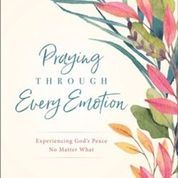
I’m so excited to offer another book drawing and this time focus on a book of prayers with a collection of accompanying Scripture. This book will empower you to pray according to God’s will as you experience different emotions. In fact, author Linda Evans Shepherd includes prayers on 74 different emotions, including anger, compassion, grief, offended, regret, shocked, troubled, worshipful, and a variety of others. I would venture to say every emotion is included.
I want to alert you to this wonderful book and make a copy available in a book drawing. Be sure to read through to the end to learn how you can enter the drawing.For right now, here is a sample from Praying Through Every Emotion and I know it will bless you. Every topic has a prayer on one side of the page and a short list of verses that apply to the topic. So in effect, you can express yourself through the prayer and also meditate on applicable verses. That’s perfect!Strifeby Linda Evans ShepherdDear Lord,Here we go again. Did You hear what he said? Did You see what she did? I’d like to give them a piece of my mind.
But wait. You would have me choose peace of mind instead.I’m taking a deep breath and stepping back from the fight because You have called me to make peace my top priority. Instead of instructing me to butt heads, You instruct me to stand down.
As I do, You will help me to initiate peace and encourage those You put in my life.
Your Word warns me to have nothing to do with foolish talk or arguments, which can lead to trouble. So I will work to bypass trouble by serving others with kindness, even if I have to suffer for doing good.
So help me to be gentle when You call me to explain those things that people don’t want to hear, for You may change their hearts so that they turn to the truth.
I can have more peace when I stop my complaining and arguing and avoid quarrels. Any fool can start a fight, but only a person of wisdom can avoid a conflict. TWEET THAT!!!!The best remedy You have given me for avoiding strife, quarrels, and hurt feelings is to love. As I love others with your love, Your love will cover every wrong.
In the name of Jesus, amen.
Here are the accompanying verses for meditation:So then, make it your top priority to live a life of peace with harmony in your relationships, eagerly seeking to strengthen and encourage one another. Romans 14:19 TPT
Let me say it again. Have nothing to do with foolish talk and those who want to argue. It can only lead to trouble. A servant owned by God must not make trouble. He must be kind to everyone He must be able to teach. He must be willing to suffer when hurt for doing good. Be gentle when you try to teach those who are against what you say. God may change their hearts so they will turn to the truth. 2 Timothy 2;23-25 NLV
Do everything without complaining or arguing. Philippians 2:14 GW TWEET THAT!
Avoiding a quarrel is honorable. After all, any stubborn fool can start a fight. Proverbs 20:3 GW
Hate starts quarrels, but love covers every wrong. Proverbs 10:12 GW
Thank you, Linda, for sharing these inspiring thoughts from your book.Here’s a short description. Praying Through Every Emotion: Experiencing God’s Peace No Matter What is topically arranged so you can go directly to your particular need. It offers transforming Scripture and prayer to help you change your perspective, heal your emotional wounds, and find yourself unburdened from cares and concerns. Your emotions are a gift from God, and He uses them to help you grow, both closer to Him and more fully into the person He created you to be. Use this book to help you grow, both closer to Him and more fully into the person He created you to be.
The drawing will end on Tuesday evening, September 7, 2021. To enter the drawing, make a comment on this blog post (USA addresses only can apply). Linda Evans Shepherd is an award-winning author, a successful speaker, and a media personality. The president of Right to the Heart and Arise Esther Ministries, she has written more than 35 books, including When You Don’t Know What to Pray and Praying God’s Promises. Linda is also the publisher of Leading Hearts Magazine (www.LeadingHearts.com) and Arise Daily (www.AriseDaily.com). She is the voice behind the Arise Esther Movement (www.AriseEsther.com). Linda is an internationally recognized speaker and has spoken in almost every state in the United States and in several countries around the world. She is a wife and mom of two children: one on earth and the other in heaven. She lives in Colorado.
Connect with her at: www.GotToPray.com; Twitter: @LindaShepherd; Facebook: LindaEvansShepherdAuthor. Sign up for a free download of additional emotion prayers at: www.EmotionPrayers.com
August 22, 2021
“God’s Intriguing Questions” Receives Second Award
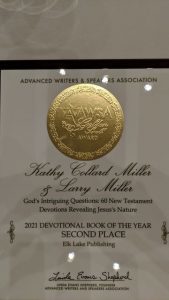 Revealing Jesus’s Nature” has received a second award!
It had already been a finalist for a Selah Award and now recently, it was awarded second place in the devotional category for the Golden Scroll Awards from AWSA, the Advanced Writers and Speakers Association.
This has been so encouraging to me to have it recognized. Yes, even writers called by God can begin to wonder if their work is making any difference. I feel like God just gave me a little pat of encouragement. Thank you for rejoicing with me.
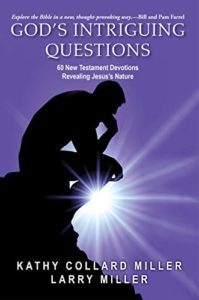
Here’s one of the devotionals from God’s Intriguing Questions: 60 New Testament Devotions Revealing Jesus’s Nature. (And can I be so bold to ask that if you read it and like it, would you write a review on whatever source you bought it? Reviews really make a difference!)
Our (yes, it’s co-authored with my husband, Larry) is a book exploring the questions God (and Jesus, who is God), asked in the Bible. It’s a fascinating theme since God knows everything! Why did Jesus ask questions? The answer is primarily two-fold: He wants to help us explore our hearts and He reveals Himself through the questions He asks.
Because Larry and I wrote it together, our desire is that couples can use it for their devotional time. And yet, it’s intended to be used by anyone and everyone, even teenagers.
 Do you want to go away as well?
John 6:67
Do you want to go away as well?
John 6:67Without background information, we could easily think Jesus is expressing insecurity. He seems to need reassurance his disciples will remain with him and not reject him. But since he knows everything, he knows Judas will indeed betray him and Peter will deny him so his question is not one of needing assurance. His question is intended to help his disciples examine their own hearts—as usual.
A fascinating fact is how John includes Jesus’s comment identifying their small group as “the twelve” for the first time. Just envision this group on a mission like those portrayed in The Lord of the Rings. “The Twelve” are becoming more solidified yet there’s always the possibility of people stealing the ring for their sinful purposes. In John 6:67, in essence, Jesus is asking, “What seeds of doubt are you watering and fertilizing? Is there anything whispering in your heart why you should go away?”
Peter, brave Peter, speaks for the group (at least he thinks) and declares, “Lord, to whom shall we go? You have the words of eternal life, and we have believed, and have come to know, that you are the Holy One of God” (John 6:68-69).
We would love to be a fly on the wall hearing his tone. Is his voice communicating concern for Jesus because he doesn’t want Jesus to think of himself going away? Or in awe, realizing he is indeed speaking the truth and no one else has ever given him what Jesus has? Or is he trying to be convincing to the others in case a man is doubting? We can’t know his tone or motive, but we know intense Peter always speaks with great passion and bravado.
Peter calls Jesus the “Holy One” and one commentator points out how the identity refers to God’s transcendence.
Transcendence is the idea of beyond the normal or physical. Synonyms are superiority, supremacy, predominance, and preeminence. TWEET THAT!!!!!Peter is declaring and testifying Jesus is above and beyond, transcending everything. And in this specific situation, Jesus’s transcendence anchors his security. Human rejection doesn’t diminish his union with his transcendent Father and his place in the Trinity. He is God and nothing will change that, especially the beliefs of people he has created.
Of course, the word “holy” is used a lot in the Bible, but the title, “Holy One” is used far less than we might expect. The title refers to transcendence because holiness, the absence of sin, applies to God alone. Curiously, the title is used by a demon (Mark 1:24 and Luke 4:34) who verbally accuses Jesus yet Jesus confidently rebukes him and casts him out. No lack of security there.
We can grow in Christian strength because Jesus is secure. His security is “above” and “beyond” with an eternal perspective and in total control. We don’t need to feel insecure if we are committed to our “above and beyond” God, who knows what is going on, controls what is going on, and originally created the whole plan.
How would you contrast the difference between Jesus’s security and human insecurity?Right now, what situation is creating insecurity in you? How will meditating on Jesus’s transcendent security help you?Supreme Lord, I praise your transcendency which secures your total control. Thank you for strengthening me to base my security upon your transcendent nature.Interested in checking out God’s Intriguing Questions? It is available in Kindle, Audio, and Print. Click HERE!


