
Man Martin's Blog, page 205
March 11, 2012
March 11 Presidential Losers: Thomas Dewey
Thomas Dewey, 1944
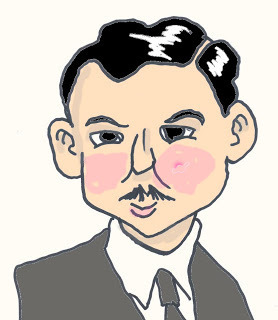 By 1944, Republicans must've been sick and tired of Roosevelt. Unfortunately for Thomas Dewey, nobody else was, and the result was another landslide for FDR. Paris had been liberated and Japan had been pushed out of the Phillipines, so the Axis powers were pretty much on the ropes; peace seemed to be around the corner, and Hollywood was anticipating decades of movies in which all the villains would all have German accents. We had made staunch allies with the Soviet Union and there was no reason to expect any trouble out of them. Dewey ran on the same tired accusations of Roosevelt's "wasteful" government spending, although in truth, Roosevelt was responsible for many money-saving efficiencies. For example, they hadn't needed to reprint the White House Stationary for twelve years. Another campaign issue was Roosevelt's supposed "declining health," which FDR laughed off with his typical wit and verve. He died four months after the election.
Some people looked no deeper than Dewey's appearance: a prominent socialite once called him, "The little man on the wedding cake," but former president Herbert Hoover also noticed Dewey's intellect, saying "No one can grow a moustache like that without having it affect his mind." His defeat by Roosevelt, however, was only a stepping stone for Thomas Dewey. He would go on to be defeated by Harry Truman.
Result
Franklin Roosevelt: 432Thomas Dewey: 99

 By 1944, Republicans must've been sick and tired of Roosevelt. Unfortunately for Thomas Dewey, nobody else was, and the result was another landslide for FDR. Paris had been liberated and Japan had been pushed out of the Phillipines, so the Axis powers were pretty much on the ropes; peace seemed to be around the corner, and Hollywood was anticipating decades of movies in which all the villains would all have German accents. We had made staunch allies with the Soviet Union and there was no reason to expect any trouble out of them. Dewey ran on the same tired accusations of Roosevelt's "wasteful" government spending, although in truth, Roosevelt was responsible for many money-saving efficiencies. For example, they hadn't needed to reprint the White House Stationary for twelve years. Another campaign issue was Roosevelt's supposed "declining health," which FDR laughed off with his typical wit and verve. He died four months after the election.
Some people looked no deeper than Dewey's appearance: a prominent socialite once called him, "The little man on the wedding cake," but former president Herbert Hoover also noticed Dewey's intellect, saying "No one can grow a moustache like that without having it affect his mind." His defeat by Roosevelt, however, was only a stepping stone for Thomas Dewey. He would go on to be defeated by Harry Truman.
Result
Franklin Roosevelt: 432Thomas Dewey: 99


March 10, 2012
March 10 Presidential Losers: Wendell Wilkie
Wendell Wilkie, 1940
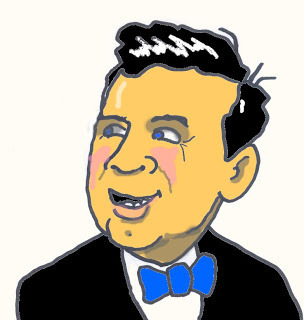 See Footnote 3 Wendell's campaign slogan was "Win with Wilkie," but it wasn't fooling anybody. You know when a kid's named Wendell Wilkie, he's going to grow up one day to be a presidential loser. The Wilkie race was a rout, but not quite to the extent Alf Landon had been. Republican strategists could confidently extrapolate that if they kept picking up votes as they had in the last two elections, they could defeat Roosevelt by 1952 or '56 at the latest. This appeared to be about the same time frame when the New Deal would finally solve the Great Depression. After two Democratic terms, unemployment was still over 14%. It seemed FDR would create programs and shovel out dough, but unemployment would inch down only a little. Then he'd create more programs and shovel more dough, but unemployment still only inched down a little. No one could figure out why this wasn't working. (Fortunately, for some reason or other, in 1942, unemployment suddenly dropped to 4.7%.)
Republicans charged Roosevelt wanted to get us into a European war, but nothing could be further from the truth. Roosevelt sent Joe Kennedy to suss out the situation in Europe, and Kennedy came back with an upbeat, optimistic assessment: "Democracy is finished in Europe, and it may be finished here," so as far as anybody knew, things were hunky-dory. 1
In any case, Roosevelt won the election handily, and Wilkie became his unlikely supporter during World War II, serving as Roosevelt's personal representative to Britain, the Middle East, the Soviet Union, and China. 2
Result
Franklin Roosevelt: 449Wendell Wilkie: 82
1. Some people accused Joe Kennedy himself of being an anti-semite, but his remarks have been taken out of context. A comment like, "[some] individual Jews are all right... but as a race they stink. They spoil everything they touch" might be taken any number of ways.
2.Wilkie is rumored to have an affair with Chiang Kai-Shek's wife, Soong May-Ling. Not that this has anything to do with being a presidential loser, except to say, "Way to go, Wendell!"
3. For some reason, my caricature of Wendell Wilkie looks like a cross between Alfred E Newman and Ronald Reagan. I cannot account for this. Wilkie looked nothing like Reagan.

 See Footnote 3 Wendell's campaign slogan was "Win with Wilkie," but it wasn't fooling anybody. You know when a kid's named Wendell Wilkie, he's going to grow up one day to be a presidential loser. The Wilkie race was a rout, but not quite to the extent Alf Landon had been. Republican strategists could confidently extrapolate that if they kept picking up votes as they had in the last two elections, they could defeat Roosevelt by 1952 or '56 at the latest. This appeared to be about the same time frame when the New Deal would finally solve the Great Depression. After two Democratic terms, unemployment was still over 14%. It seemed FDR would create programs and shovel out dough, but unemployment would inch down only a little. Then he'd create more programs and shovel more dough, but unemployment still only inched down a little. No one could figure out why this wasn't working. (Fortunately, for some reason or other, in 1942, unemployment suddenly dropped to 4.7%.)
Republicans charged Roosevelt wanted to get us into a European war, but nothing could be further from the truth. Roosevelt sent Joe Kennedy to suss out the situation in Europe, and Kennedy came back with an upbeat, optimistic assessment: "Democracy is finished in Europe, and it may be finished here," so as far as anybody knew, things were hunky-dory. 1
In any case, Roosevelt won the election handily, and Wilkie became his unlikely supporter during World War II, serving as Roosevelt's personal representative to Britain, the Middle East, the Soviet Union, and China. 2
Result
Franklin Roosevelt: 449Wendell Wilkie: 82
1. Some people accused Joe Kennedy himself of being an anti-semite, but his remarks have been taken out of context. A comment like, "[some] individual Jews are all right... but as a race they stink. They spoil everything they touch" might be taken any number of ways.
2.Wilkie is rumored to have an affair with Chiang Kai-Shek's wife, Soong May-Ling. Not that this has anything to do with being a presidential loser, except to say, "Way to go, Wendell!"
3. For some reason, my caricature of Wendell Wilkie looks like a cross between Alfred E Newman and Ronald Reagan. I cannot account for this. Wilkie looked nothing like Reagan.
March 9, 2012
March 9 Presidential Losers, Alf Landon
Alf Landon, 1936
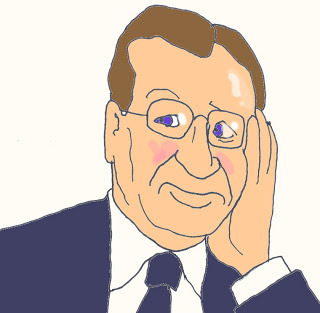 The word "landslide" does not even begin to cover the scale of Landon's defeat. "Blowout," "massacre," "tidal wave," none of these are adequate. Imagine, perhaps, the planets Jupiter, Neptune, and Saturn all landing on top of Landon shortly after alligators, crocodiles, and other animals of a similar temperament have chewed, eaten, and digested Landon's body, and then been eaten themselves by another set of alligators and crocodiles, meanwhile a tidal wave comes in and carries the whole mess a way, and Landon gets a flat tire. Something like that. Landon did so little campaigning on his own behalf, that columnist Westbrook Pegler wondered if they shouldn't file a missing persons report. The Republican party, in a sudden burst of altruism, sent checks for $5 to 400 black pastors urging them to vote for the party of Lincoln, but to no avail. Landon lost in 46 of 48 states, including Kansas, where he was governor.
The reason, of course, was the magnificent success of the New Deal. In just four short years, Roosevelt had taken America from a devastating Depression with 24% unemployment rate to a booming, robust economy with a 20% unemployment rate. FDR had switched course on a campaign promise to reduce "unneccessary government agencies," proliferating them to such an extent, if must've provoked worry that a mere 26 letters in the alphabet would be insufficient to identify them all. One very popular program was a sort of annuity plan by which benefits would be paid to retirees from payroll taxes on those still working. In the private sector, this is known as a Ponzi Scheme; Roosevelt called it Social Security. Roosevelt also took the controversial move of placing former bootlegger and Wall Street operator Joe Kennedy in charge of the brand-spanking new Security Exchange Commision. Kennedy, however, was a great success at the post, knowing all the sneaky and underhanded tricks first hand, and reformed everything, so we haven't had a speck of trouble from Wall Street ever since.
Result
Franklin Roosevelt: 523Alf Landon: 8

 The word "landslide" does not even begin to cover the scale of Landon's defeat. "Blowout," "massacre," "tidal wave," none of these are adequate. Imagine, perhaps, the planets Jupiter, Neptune, and Saturn all landing on top of Landon shortly after alligators, crocodiles, and other animals of a similar temperament have chewed, eaten, and digested Landon's body, and then been eaten themselves by another set of alligators and crocodiles, meanwhile a tidal wave comes in and carries the whole mess a way, and Landon gets a flat tire. Something like that. Landon did so little campaigning on his own behalf, that columnist Westbrook Pegler wondered if they shouldn't file a missing persons report. The Republican party, in a sudden burst of altruism, sent checks for $5 to 400 black pastors urging them to vote for the party of Lincoln, but to no avail. Landon lost in 46 of 48 states, including Kansas, where he was governor.
The reason, of course, was the magnificent success of the New Deal. In just four short years, Roosevelt had taken America from a devastating Depression with 24% unemployment rate to a booming, robust economy with a 20% unemployment rate. FDR had switched course on a campaign promise to reduce "unneccessary government agencies," proliferating them to such an extent, if must've provoked worry that a mere 26 letters in the alphabet would be insufficient to identify them all. One very popular program was a sort of annuity plan by which benefits would be paid to retirees from payroll taxes on those still working. In the private sector, this is known as a Ponzi Scheme; Roosevelt called it Social Security. Roosevelt also took the controversial move of placing former bootlegger and Wall Street operator Joe Kennedy in charge of the brand-spanking new Security Exchange Commision. Kennedy, however, was a great success at the post, knowing all the sneaky and underhanded tricks first hand, and reformed everything, so we haven't had a speck of trouble from Wall Street ever since.
Result
Franklin Roosevelt: 523Alf Landon: 8
March 8, 2012
March 8 Presidential Losers: Herbert Hoover
Herbert Hoover, 1932
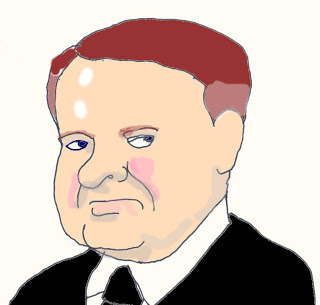 The stock market crashed one year into Hoover's administration, and by 1932, unemployment had reached nearly 25%. FDR went on the attack, calling the Hoover administration, "the greatest spending administration in peacetime history." Garner, FDR's running mate, said Hoover was "leading the country down the path of socialism." FDR vowed to "abolish useless offices" and "eliminate unnecessary functions of Government," stating that "Government—Federal and State and local—costs too much." (I know, I know, it's goofy-crazy-weird, but that's what they said.) FDR didn't propose any very specific remedies except that he wouldn't be Hoover, and evidently for the electorate, that was enough. On the campaign trail Hoover ran the gauntlet of public scorn. (Just look at him. Can't you tell how sad he looks?) His railway car was pelted with rotten eggs and garbage, and one would-be assassin was apprehended carrying several sticks of dynamite. (He wasn't taking chances with any measly gun.) Roosevelt and Hoover had once been fast friends, but they became enemies even faster. After his election, Roosevelt exacted petty vengeance on his predecessor, dropping from the White House birthday card list, and changing the name of Hoover Dam to Boulder Dam. Post-politics, Hoover turned to his first love, fishing, saying, "All men are equal before fish." Another thing he said was, "Every time we make ends meet, somebody moves the ends."
Result
Franklin Roosevelt: 472Herbert Hoover: 59
 The stock market crashed one year into Hoover's administration, and by 1932, unemployment had reached nearly 25%. FDR went on the attack, calling the Hoover administration, "the greatest spending administration in peacetime history." Garner, FDR's running mate, said Hoover was "leading the country down the path of socialism." FDR vowed to "abolish useless offices" and "eliminate unnecessary functions of Government," stating that "Government—Federal and State and local—costs too much." (I know, I know, it's goofy-crazy-weird, but that's what they said.) FDR didn't propose any very specific remedies except that he wouldn't be Hoover, and evidently for the electorate, that was enough. On the campaign trail Hoover ran the gauntlet of public scorn. (Just look at him. Can't you tell how sad he looks?) His railway car was pelted with rotten eggs and garbage, and one would-be assassin was apprehended carrying several sticks of dynamite. (He wasn't taking chances with any measly gun.) Roosevelt and Hoover had once been fast friends, but they became enemies even faster. After his election, Roosevelt exacted petty vengeance on his predecessor, dropping from the White House birthday card list, and changing the name of Hoover Dam to Boulder Dam. Post-politics, Hoover turned to his first love, fishing, saying, "All men are equal before fish." Another thing he said was, "Every time we make ends meet, somebody moves the ends."
Result
Franklin Roosevelt: 472Herbert Hoover: 59
March 7, 2012
March 7 Presidential Losers Al Smith
Al Smith, 1928
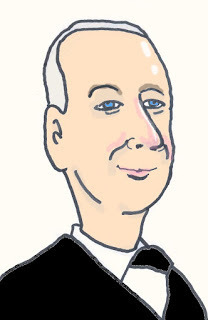 I don't care who knows it, I just love Al Smith. Just look at him. As soon as you see him, you just know he's going to have a name like Al Smith. Poor Al really never had a chance in the election of '28. America had been just had two consecutive Republican administrations, and it seemed the more you voted Republican, the fatter and happier you got, and so Hoover was pretty much a shoo-in. No one could imagine what could possibly go wrong. (Did I mention the year was 1928?) Al's other problem was that he was a lamb to the slaughter Catholic which definitely meant that if elected, he'd be taking orders directly from the Pope. And you know what that would mean. Democrats tried to counter the anti-Catholic bigotry by claiming Hoover had once danced with a black woman. (Hoover denied this and no one gave the story much credence; try to imagine Herbert Hoover dancing with anyone.) Another strike against Al Smith was that he opposed Prohibition, which had been in force only eight years but was already a marvelous success no matter how you looked at it. Prohibition enjoyed support across a wide political spectrum from women's political groups, Protestant fundamentalists, and Italian Americans, especially in the Chicago area. Smith never had a prayer.1
Result
Herbert Hoover: 444Al Smith: 87
1. The story goes that after the election, Smith sent a one-word telegram to Pope Pius: "Unpack."

 I don't care who knows it, I just love Al Smith. Just look at him. As soon as you see him, you just know he's going to have a name like Al Smith. Poor Al really never had a chance in the election of '28. America had been just had two consecutive Republican administrations, and it seemed the more you voted Republican, the fatter and happier you got, and so Hoover was pretty much a shoo-in. No one could imagine what could possibly go wrong. (Did I mention the year was 1928?) Al's other problem was that he was a lamb to the slaughter Catholic which definitely meant that if elected, he'd be taking orders directly from the Pope. And you know what that would mean. Democrats tried to counter the anti-Catholic bigotry by claiming Hoover had once danced with a black woman. (Hoover denied this and no one gave the story much credence; try to imagine Herbert Hoover dancing with anyone.) Another strike against Al Smith was that he opposed Prohibition, which had been in force only eight years but was already a marvelous success no matter how you looked at it. Prohibition enjoyed support across a wide political spectrum from women's political groups, Protestant fundamentalists, and Italian Americans, especially in the Chicago area. Smith never had a prayer.1
Result
Herbert Hoover: 444Al Smith: 87
1. The story goes that after the election, Smith sent a one-word telegram to Pope Pius: "Unpack."
March 6, 2012
March 6 Presidential Losers: John Davis and Robert La Follette
John Davis and Robert La Follette, 1924
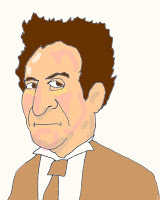 Robert La Follette
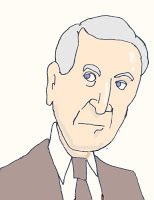 John Davis
Harding, having died in office, the reins of the presidency fell to Calvin "Mr Personality" Coolidge. His campaign slogan, "Keep cool with Coolidge," helped convey the president's breezy, informal social style. Coolidge (Republican) ran on a platform of limited government, low taxes, and low regulation. His Democratic opponent, John Davis ran on a platform of low regulation, low taxes, and limited government. You can see what a dogfight this was shaping up to be. Davis seems to have had all the electric personal magnetism of Coolidge but without a cool nickname like "Silent Cal." After losing the election, Davis continued an illustrious legal career, arguing two cases before the Supreme Court, once in defense of a Steel Mill and once upholding the doctrine of "separate but equal." 1 La Follette entered the race in case any voters out there supported labor unions, higher taxes on the wealthy, and restraints on Big Business. Evidently there weren't. (Parenthetically, what is it about these leftie candidates? They're either chrome-domes like Eugene Debs or their hair looks like they just stuck their tongue in a light socket like La Follette.) La Follette's enemies accused him of being unstable. At a speech before a gathering of newspaper and magazine editors, La Follette had gone on a long and rambling tirade, repeating himself and frequently abusing - of all things, advertisers. Attacking advertisers in front of a bunch of editors is as disastrous as coming out against basset hounds at a veterinarians' convention. La Follette had also vociferously opposed the Great War, opining that the sinking of the Lusitania had been justified. (Like a lot of great orators, La Follette had no idea when to keep his mouth shut.) Anyway, the election was a landslide; the voters evidently deciding since there were two Republicans in the race, to vote for the one who called himself Republican. Davis took the anti-Republican south, La Follette took his home state of sunny Wisconsin, and Coolidge took the rest.
Result:
Calvin Coolidge: 382John Davis: 136Robert La Follette: 13
1. And keep in mind, this guy was the Democrat.

 Robert La Follette
  John Davis
 Harding, having died in office, the reins of the presidency fell to Calvin "Mr Personality" Coolidge. His campaign slogan, "Keep cool with Coolidge," helped convey the president's breezy, informal social style. Coolidge (Republican) ran on a platform of limited government, low taxes, and low regulation. His Democratic opponent, John Davis ran on a platform of low regulation, low taxes, and limited government. You can see what a dogfight this was shaping up to be. Davis seems to have had all the electric personal magnetism of Coolidge but without a cool nickname like "Silent Cal." After losing the election, Davis continued an illustrious legal career, arguing two cases before the Supreme Court, once in defense of a Steel Mill and once upholding the doctrine of "separate but equal." 1 La Follette entered the race in case any voters out there supported labor unions, higher taxes on the wealthy, and restraints on Big Business. Evidently there weren't. (Parenthetically, what is it about these leftie candidates? They're either chrome-domes like Eugene Debs or their hair looks like they just stuck their tongue in a light socket like La Follette.) La Follette's enemies accused him of being unstable. At a speech before a gathering of newspaper and magazine editors, La Follette had gone on a long and rambling tirade, repeating himself and frequently abusing - of all things, advertisers. Attacking advertisers in front of a bunch of editors is as disastrous as coming out against basset hounds at a veterinarians' convention. La Follette had also vociferously opposed the Great War, opining that the sinking of the Lusitania had been justified. (Like a lot of great orators, La Follette had no idea when to keep his mouth shut.) Anyway, the election was a landslide; the voters evidently deciding since there were two Republicans in the race, to vote for the one who called himself Republican. Davis took the anti-Republican south, La Follette took his home state of sunny Wisconsin, and Coolidge took the rest.
Result:
Calvin Coolidge: 382John Davis: 136Robert La Follette: 13
1. And keep in mind, this guy was the Democrat.
March 5, 2012
March 5, Presidential Losers: James Cox
James Cox, 1920
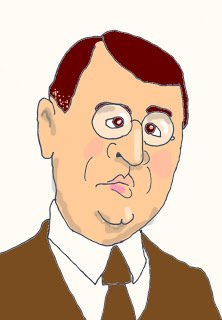 The two presumptive front-runners, Teddy Roosevelt and Woodrow Wilson, both suffered collapses of health, and the race was between relative unknowns Warren Harding and James Cox. Somehow I'd heard that a decisive factor in the 1920 election was women's sufferage, and that the vote had gone to Warren Harding because of his tremendous sex appeal. I've looked at Harding's picture, and all I can say is, Whoa! Maybe you had to see him with his shirt off. He was studlier-looking than Cox, I'll give him that, but that's not saying much. After the Great War, people were pretty much sick of Democrats, and responded to Harding's call for a return to "normalcy." (No one called for a return to normalcy of English usage.) The election was less about Harding vs Cox, than a referendum on Wilson. Wilson blamed German-Americans and Irish-Americans for rejection of the League of Nations, saying, "anyone who carries a hyphen with him, carries a dagger that he is ready to plunge into the vitals of this Republic whenever he gets ready." (Thank goodness we don't have any hyphenated Americans these days.) These remarks did little to win the love of German- and Irish-Americans, and moreover word was beginning to get out that the last years of the Wilson administration, the executive branch had effectively been under the control of the first lady. No one seems to have asked Cox where he stood on the issue of a major cover-up a president's physical disability. Cox's running mate was Franklin Roosevelt. Democrats took the high road during the campaign, insinuating that Harding had "negro blood," but voters ignored this pertinent issue. They were tired of warfare and international relations and ready to get down to the real business of American government: kickbacks, influence-peddling, and graft.
Result
Warren Harding: 404James Cox: 127
 The two presumptive front-runners, Teddy Roosevelt and Woodrow Wilson, both suffered collapses of health, and the race was between relative unknowns Warren Harding and James Cox. Somehow I'd heard that a decisive factor in the 1920 election was women's sufferage, and that the vote had gone to Warren Harding because of his tremendous sex appeal. I've looked at Harding's picture, and all I can say is, Whoa! Maybe you had to see him with his shirt off. He was studlier-looking than Cox, I'll give him that, but that's not saying much. After the Great War, people were pretty much sick of Democrats, and responded to Harding's call for a return to "normalcy." (No one called for a return to normalcy of English usage.) The election was less about Harding vs Cox, than a referendum on Wilson. Wilson blamed German-Americans and Irish-Americans for rejection of the League of Nations, saying, "anyone who carries a hyphen with him, carries a dagger that he is ready to plunge into the vitals of this Republic whenever he gets ready." (Thank goodness we don't have any hyphenated Americans these days.) These remarks did little to win the love of German- and Irish-Americans, and moreover word was beginning to get out that the last years of the Wilson administration, the executive branch had effectively been under the control of the first lady. No one seems to have asked Cox where he stood on the issue of a major cover-up a president's physical disability. Cox's running mate was Franklin Roosevelt. Democrats took the high road during the campaign, insinuating that Harding had "negro blood," but voters ignored this pertinent issue. They were tired of warfare and international relations and ready to get down to the real business of American government: kickbacks, influence-peddling, and graft.
Result
Warren Harding: 404James Cox: 127
March 4, 2012
March 4, Presidential Losers, Charles Evans Hughes
Charles Evans Hughes, 1916
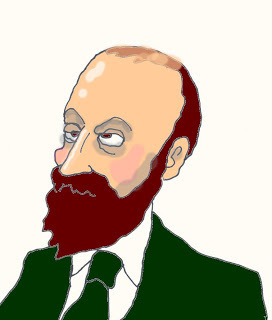 A close-fought race against incumbent Woodrow Wilson, who was helped mightily by the slogan, "He kept us out of the war." A more accurate slogan would've added, "... up to now," or "Past performance does not guarantee future results," but presidential campaigns aren't won on accuracy. Charles Evans Hughes, who'd been a Supreme Court Justice never got us in a war, either, but somehow the Republicans never thought to bring this up. The Progressive Pary (aka Bull Moose) tried nominating Teddy Roosevelt again, but he wasn't having it, so they folded up their tents and went home. The word "pinko" was not in popular use in those days, but if it had been, Hughes would have employed it against Wilson. Wilson had all sorts of crackpot notions, such as limiting the work day to eight hours. (What a goof!) The election was a squeaker, and the fatal mistake came when Hughes, who was on a campaign swing through California, happened to stay in the same hotel as Governor Hiram Johnson and neglected to pay him a visit. A minor oversight, perhaps, but imagine the political ramifications if, say, Newt Gingrich accidentally unfriended Donald Trump on Facebook. Hiram Johnson, miffed, offered Hughes only lukewarm support, and previously-Republican California went to Wilson; if the thirteen electoral votes had gone to Hughes the outcome would have been different. Hughes' loss had far-reaching political impact: he was the last presidential candidate with significant facial hair. The last president to have so much as a moustache - although it was a dandy - had been Taft. From that day to this, however, American presidents have been fuzz-less.1
Result
Woodrow Wilson: 277
William Howard Hughes: 254
1. Wilson came to an unhappy end, sad to say. After campaigning on a promise to keep us out of the war, he got us into it after all. Afterwards, he came up with a typical Wilsonian crackpot notion of a cooperative international body that would mediate conflicts and search for peaceful solutions. (I repeat: what a goof!) He tried selling this idea to the American people with the implied promise, "Well, at least I can keep you out of the next war," but the American people gave him the collective raspberry. In 1919 he suffered a stroke, which left him paralyzed on one side of his body and mentally impaired. His wife hid this as much as possible from the Vice President, the cabinet, the American people, at one time staging a fake "interview," with Louis Seibold. In the text of the interview, Seibold ribbed Wilson about having a slight limp, to which Wilson's printed reply showed surprising good humor, considering in reality he was confined to a wheelchair and unable to speak. Seibold won a Pulitzer Prize.

 A close-fought race against incumbent Woodrow Wilson, who was helped mightily by the slogan, "He kept us out of the war." A more accurate slogan would've added, "... up to now," or "Past performance does not guarantee future results," but presidential campaigns aren't won on accuracy. Charles Evans Hughes, who'd been a Supreme Court Justice never got us in a war, either, but somehow the Republicans never thought to bring this up. The Progressive Pary (aka Bull Moose) tried nominating Teddy Roosevelt again, but he wasn't having it, so they folded up their tents and went home. The word "pinko" was not in popular use in those days, but if it had been, Hughes would have employed it against Wilson. Wilson had all sorts of crackpot notions, such as limiting the work day to eight hours. (What a goof!) The election was a squeaker, and the fatal mistake came when Hughes, who was on a campaign swing through California, happened to stay in the same hotel as Governor Hiram Johnson and neglected to pay him a visit. A minor oversight, perhaps, but imagine the political ramifications if, say, Newt Gingrich accidentally unfriended Donald Trump on Facebook. Hiram Johnson, miffed, offered Hughes only lukewarm support, and previously-Republican California went to Wilson; if the thirteen electoral votes had gone to Hughes the outcome would have been different. Hughes' loss had far-reaching political impact: he was the last presidential candidate with significant facial hair. The last president to have so much as a moustache - although it was a dandy - had been Taft. From that day to this, however, American presidents have been fuzz-less.1
Result
Woodrow Wilson: 277
William Howard Hughes: 254
1. Wilson came to an unhappy end, sad to say. After campaigning on a promise to keep us out of the war, he got us into it after all. Afterwards, he came up with a typical Wilsonian crackpot notion of a cooperative international body that would mediate conflicts and search for peaceful solutions. (I repeat: what a goof!) He tried selling this idea to the American people with the implied promise, "Well, at least I can keep you out of the next war," but the American people gave him the collective raspberry. In 1919 he suffered a stroke, which left him paralyzed on one side of his body and mentally impaired. His wife hid this as much as possible from the Vice President, the cabinet, the American people, at one time staging a fake "interview," with Louis Seibold. In the text of the interview, Seibold ribbed Wilson about having a slight limp, to which Wilson's printed reply showed surprising good humor, considering in reality he was confined to a wheelchair and unable to speak. Seibold won a Pulitzer Prize.
March 3, 2012
March 3 Presidential Losers; Teddy Roosevelt, Howard Taft, and Eugene Debs
Teddy Roosevelt, William Howard Taft, Eugene Debs, 1912
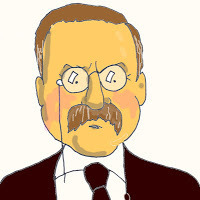 Teddy Roosevelt
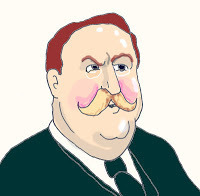 William Howard Taft
The race began to get really interesting when Teddy Roosevelt decided to enter the fray as a Bull Moose Candidate. His mission was to defeat his own former VP, William Howard Taft, who'd proven to be a big disappointment in the White House. 1 The gist of it was that he felt Taft was far too conservative and hadn't followed the more liberal and progressive agenda he'd laid out. (Liberal? Progressive? Weren't these guys were Republicans?)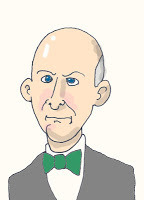 Eugene DebsThen, just for grins, the Socialist Party nominated Eugene Debs. (Many people have never heard the name Eugene Debs before, but study his picture closely and tell me what else you could name him.) Debs ran into tough going because Socialism wasn't a very popular concept in those days, and he had to explain that he wasn't a Wobbly trying to overthrow capitalism, although some of those admittedly were in the party, and he wasn't one of these airie-fairie Fabian Socialists like George Bernard Shaw, although those were fine folks, too, and nor was he a "Gas-and-Water-Socialist" whatever the hell that was, but, well... and by the time he'd gotten that far, his listener had gone off to get a sandwich. In spite of this, the Socialists got a whopping 6% of the popular vote. During a rally in New York, Debs' running mate Emil Seidel bragged that only four years ago people were throwing rotten vegetables and eggs at them, and now they weren't. 2 This was the high point for Debs, though. Wilson sent him to prison for treason for his opposition to World War I. Debs ran for president again, but being in a penitentiary in Atlanta somewhat hampered his campaign, and he made a negligible showing. He served four years of a ten-year prison sentence before Harding commuted his sentence so he could be home in time for Christmas and then die. Highlights of the '12 campaign included Taft's running mate dropping dead on the campaign trail, and John Flammang Schrank's assassination attempt at Teddy Roosevelt. The bullet was stopped by a fifty-page speech in his pocket. 3
Result
Woodrow Wilson: 435Teddy Roosevelt: 88William Howard Taft: 8Eugene Debs: 0
1. How big was he?
2. Eggs were too expensive.3. 50 pages! Did Schrank want to kill him or just shut him up?

 Teddy Roosevelt
  William Howard Taft
 The race began to get really interesting when Teddy Roosevelt decided to enter the fray as a Bull Moose Candidate. His mission was to defeat his own former VP, William Howard Taft, who'd proven to be a big disappointment in the White House. 1 The gist of it was that he felt Taft was far too conservative and hadn't followed the more liberal and progressive agenda he'd laid out. (Liberal? Progressive? Weren't these guys were Republicans?)
 Eugene DebsThen, just for grins, the Socialist Party nominated Eugene Debs. (Many people have never heard the name Eugene Debs before, but study his picture closely and tell me what else you could name him.) Debs ran into tough going because Socialism wasn't a very popular concept in those days, and he had to explain that he wasn't a Wobbly trying to overthrow capitalism, although some of those admittedly were in the party, and he wasn't one of these airie-fairie Fabian Socialists like George Bernard Shaw, although those were fine folks, too, and nor was he a "Gas-and-Water-Socialist" whatever the hell that was, but, well... and by the time he'd gotten that far, his listener had gone off to get a sandwich. In spite of this, the Socialists got a whopping 6% of the popular vote. During a rally in New York, Debs' running mate Emil Seidel bragged that only four years ago people were throwing rotten vegetables and eggs at them, and now they weren't. 2 This was the high point for Debs, though. Wilson sent him to prison for treason for his opposition to World War I. Debs ran for president again, but being in a penitentiary in Atlanta somewhat hampered his campaign, and he made a negligible showing. He served four years of a ten-year prison sentence before Harding commuted his sentence so he could be home in time for Christmas and then die. Highlights of the '12 campaign included Taft's running mate dropping dead on the campaign trail, and John Flammang Schrank's assassination attempt at Teddy Roosevelt. The bullet was stopped by a fifty-page speech in his pocket. 3
Result
Woodrow Wilson: 435Teddy Roosevelt: 88William Howard Taft: 8Eugene Debs: 0
1. How big was he?
2. Eggs were too expensive.3. 50 pages! Did Schrank want to kill him or just shut him up?
March 2, 2012
March 2 Presidential Losers: William Jennings Bryan
William Jennings Bryan, 1908
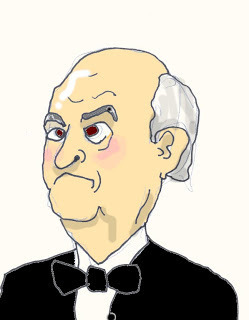 If you're sick of seeing Bryan's name, think how the voters must've felt. The Republican slogan was "Vote for Taft now, you can vote for Bryan anytime." Bryan, older now, and not such a pretty boy, but every bit as much a crankcase, lost bigger than ever, but then in William Howard Taft, he faced much bigger opposition.1 It seemed even Bryan was capable of learning a lesson because he never ran again, but he remained a force in the Democratic party espousing the causes of enfranchisement, economic justice, and (yawn) bimetallism, a voice until the day he died for the common man.2 He was instrumental in getting Woodrow Wilson elected, and indirectly, therefore, bringing us Prohibition.3 Bryan had one last hoorah in '25 at the famous Scopes "Monkey" Trial in Tennessee where he won a sterling victory against the causes of science and truth. His opponent and former friend, Clarence Darrow, defended John Scopes for teaching evolution to high school students on the irrelevant basis that evolution is a fact. Bryan argued from the unimpeachable position that evolution was against the law. (Why can't these dang secular humanists understand this?) Among other moral objections to Darwin's so-called "theory" was that it taught we weren't even descended from good American monkeys but from old-world monkeys.
Result
William Howard Taft: 321William Jennings Bryan: 1621. Ah-ha-ha-ha.
2. The commoner, the better, as far as Bryan was concerned.
3, Thanks, Bryan!

 If you're sick of seeing Bryan's name, think how the voters must've felt. The Republican slogan was "Vote for Taft now, you can vote for Bryan anytime." Bryan, older now, and not such a pretty boy, but every bit as much a crankcase, lost bigger than ever, but then in William Howard Taft, he faced much bigger opposition.1 It seemed even Bryan was capable of learning a lesson because he never ran again, but he remained a force in the Democratic party espousing the causes of enfranchisement, economic justice, and (yawn) bimetallism, a voice until the day he died for the common man.2 He was instrumental in getting Woodrow Wilson elected, and indirectly, therefore, bringing us Prohibition.3 Bryan had one last hoorah in '25 at the famous Scopes "Monkey" Trial in Tennessee where he won a sterling victory against the causes of science and truth. His opponent and former friend, Clarence Darrow, defended John Scopes for teaching evolution to high school students on the irrelevant basis that evolution is a fact. Bryan argued from the unimpeachable position that evolution was against the law. (Why can't these dang secular humanists understand this?) Among other moral objections to Darwin's so-called "theory" was that it taught we weren't even descended from good American monkeys but from old-world monkeys.
Result
William Howard Taft: 321William Jennings Bryan: 1621. Ah-ha-ha-ha.
2. The commoner, the better, as far as Bryan was concerned.
3, Thanks, Bryan!


