Harmony Evans's Blog, page 15
November 16, 2025
Samsung’s MovingStyle could be a hit, but price is the issue
Part of the fun aspect about visiting Samsung’s offices in Suwon, South Korea (aside from seeing South Korea, that is); is that you get an early look at products Samsung has planned for the coming year or get to see products that haven’t reached places such as the UK yet.
The MovingStyle is one such product. A TV that comes with a detachable handle and stand, allowing you to move it around the room.
Samsung is the type of company that’s constantly thinking about ways of transforming the TV experience. It is, after all, the company that kicked off the trend of ‘lifestyle’ TVs with the Frame and Serif.
It has sold the most TVs each for almost twenty years, and innovation like the MovingStyle is what a number of TV brands are looking at to appeal to a wider audience.
But much like the Sero, it all comes down to the price and I’m not sure Samsung has nailed it enough to be an appealing TV for people to buy.
Advertisement
You like to move it?When I saw the MovingStyle in Korea, I thought it was a clever concept but the obvious red flag that came to mind was – who’s going to buy this TV?
I’ve seen similar concepts from TCL back in 2023 during an event at Milan Fashion Week, so the MovingStyle is not a concept that’s new. Along with transparent screens, the idea of a screen you can take with you seems to be a constant preoccupation of TV brands.
The problem is, you have a screen you can take with you. It’s called a smartphone.
Someone who used to work in the TV industry (but no longer does), told me that Koreans are fascinated by new technology, early adopters who will buy the latest thing – potentially even if they might not need it.
Granted, we in the West are probably quite similar, but I’ve always found it a little odd that TVs such as the MovingStyle are almost market-tested in Asia before coming to the West. More often than there’s a disconnect. Something that strikes a chord in Asia won’t necessarily travel well to Europe and the Americas.
Take Samsung’s Sero. An interesting concept, a TV on a stand that could work both in portrait and landscape view (like the MovingStyle); it’d have been perfect for the Insta and TikTok generation – except the cost was exorbitant (over £1000) and they could the same thing with a smartphone.
Advertisement
A TV lacks the intimacy and connection of a phone. You wouldn’t use a TV to send messages, you wouldn’t use it to call people. While we’re all glued to a smartphones in some way, a TV is whole different proposition, and trying to act as pathway between those two worlds is a tricky road to world.
I’d love the MovingStyle to work, and maybe it could, but I can guess what the reaction will be.
It’s too expensiveBreak it down, and £1199 for a 27-inch screen screams super-expensive. I remember seeing a Loewe HD (HD!) TV for around the same price and wondering who would buy it?
A bit like a footballer making a tough tackle on an opposition player, you’re giving the referee a choice to make, and a similar thing is happening with the MovingStyle with the price. The cost of it will instantly make people say yes or no – I think the latter is more likely – and you often wonder why TV brands price their products so high rather than aim towards a more affordable middle-ground.
Wouldn’t £599 be more attractive? Wouldn’t it make more sense for a product to build an audience first instead of scaring them off? The Sero was something of a hit in Asia before coming elsewhere before it eventually ran out of steam and was forgotten. I don’t see Samsung ever considering a Sero 2 – although that could be what the MovingStyle is in a different form.
As I’ve written before, the TV market does need a shake-up. It needs innovation, it needs different ideas, and it needs to appeal to the audience that’s there in different ways than before.
Advertisement
But it also needs to do so at a price that entices people. If it were me, take a hit in the short run and hope it builds goodwill for the future. Then again I don’t work in Samsung’s marketing department so what do I know.


November 15, 2025
Vinted is exploring a share sale that could value the company at ~€8B; Vinted says it expects 2025 revenue to cross €1B+, up from €813M in 2024 (Financial Times)
Big Technology Podcast:
Inside The AI Bubble: Debt, Depreciation, and Losses — With Gil Luria
The Big Technology Podcast takes you behind the scenes in the tech world featuring interviews with plugged-in insiders and outside agitators.
Subscribe to Big Technology Podcast.
Hard Fork:
Data Centers in Space + A.I. Policy on the Right + A Gemini History Mystery
The future is already here. Each week, journalists Kevin Roose and Casey Newton explore and make sense of the latest in the rapidly changing world of tech.
Subscribe to Hard Fork.

Decoder with Nilay Patel:
The company at the heart of the AI bubble
A show from the Verge about big ideas – and other problems.
Subscribe to Decoder with Nilay Patel.

Lenny’s Podcast:
“Dumbest idea I’ve heard” to $100M ARR: Inside the rise of Gamma | Grant Lee (CEO)
Interviews with world-class product leaders and growth experts to uncover actionable advice to help you build, launch, and grow your own product.
Subscribe to Lenny’s Podcast.

Great Chat:
Turns out, there’s still a line (don’t mock the pope)
A podcast mostly about tech. Brought to you weekly by Angela Du, Sally Shin, Mac Bohannon, Helen Min, and Ashley Mayer.
Subscribe to Great Chat.

Uncapped with Jack Altman:
Kyle Vogt from The Bot Company
Conversations with people I admire about things I’m genuinely interested in.
Subscribe to Uncapped with Jack Altman.
51 US tech IPOs raised $16.8B in 2025, driven by AI and crypto, above the past three-year average but far below 2021’s 127 IPOs raising $74.4B (Valida Pau/The Information)
Big Technology Podcast:
Inside The AI Bubble: Debt, Depreciation, and Losses — With Gil Luria
The Big Technology Podcast takes you behind the scenes in the tech world featuring interviews with plugged-in insiders and outside agitators.
Subscribe to Big Technology Podcast.
Hard Fork:
Data Centers in Space + A.I. Policy on the Right + A Gemini History Mystery
The future is already here. Each week, journalists Kevin Roose and Casey Newton explore and make sense of the latest in the rapidly changing world of tech.
Subscribe to Hard Fork.
Decoder with Nilay Patel:
The company at the heart of the AI bubble
A show from the Verge about big ideas – and other problems.
Subscribe to Decoder with Nilay Patel.
Lenny’s Podcast:
“Dumbest idea I’ve heard” to $100M ARR: Inside the rise of Gamma | Grant Lee (CEO)
Interviews with world-class product leaders and growth experts to uncover actionable advice to help you build, launch, and grow your own product.
Subscribe to Lenny’s Podcast.
Great Chat:
Turns out, there’s still a line (don’t mock the pope)
A podcast mostly about tech. Brought to you weekly by Angela Du, Sally Shin, Mac Bohannon, Helen Min, and Ashley Mayer.
Subscribe to Great Chat.
Uncapped with Jack Altman:
Kyle Vogt from The Bot Company
Conversations with people I admire about things I’m genuinely interested in.
Subscribe to Uncapped with Jack Altman.
A cat’s killing by a Waymo robotaxi sparked outrage in San Francisco, as some questioned why deaths caused by human drivers don’t get the same level of concern (Heather Knight/New York Times)
Big Technology Podcast:
Inside The AI Bubble: Debt, Depreciation, and Losses — With Gil Luria
The Big Technology Podcast takes you behind the scenes in the tech world featuring interviews with plugged-in insiders and outside agitators.
Subscribe to Big Technology Podcast.
Hard Fork:
Data Centers in Space + A.I. Policy on the Right + A Gemini History Mystery
The future is already here. Each week, journalists Kevin Roose and Casey Newton explore and make sense of the latest in the rapidly changing world of tech.
Subscribe to Hard Fork.
Decoder with Nilay Patel:
The company at the heart of the AI bubble
A show from the Verge about big ideas – and other problems.
Subscribe to Decoder with Nilay Patel.
Lenny’s Podcast:
“Dumbest idea I’ve heard” to $100M ARR: Inside the rise of Gamma | Grant Lee (CEO)
Interviews with world-class product leaders and growth experts to uncover actionable advice to help you build, launch, and grow your own product.
Subscribe to Lenny’s Podcast.
Great Chat:
Turns out, there’s still a line (don’t mock the pope)
A podcast mostly about tech. Brought to you weekly by Angela Du, Sally Shin, Mac Bohannon, Helen Min, and Ashley Mayer.
Subscribe to Great Chat.
Uncapped with Jack Altman:
Kyle Vogt from The Bot Company
Conversations with people I admire about things I’m genuinely interested in.
Subscribe to Uncapped with Jack Altman.
Why Your Airplane Ticket is So Expensive

I’ve been traveling for close to twenty years. In that time, the airline industry has changed a lot. The use of points and miles has become widespread, round-the-world tickets have gone the way of the dodo, airlines have consolidated, and there has been an explosion of budget airlines.
Over the last few years, the cost of airline tickets has steadily risen. They get more and more expensive while their prices often seem illogical.
Since ticket pricing is an arcane and misunderstood subject, I want to take some time to explain why your airplane ticket costs what it does.
A Look at the Airline IndustryTicket prices have increased over the decade for a number of reasons. For starters, the industry has consolidated a lot over the last few decades. Thanks to bankruptcies and mergers, there are now only three major alliance airlines (American, Delta, and United) in the United States. And, with the recent bankruptcy of Spirit and the merger of Alaska and Hawaiian, there’s even less competition outside the Big 3.
In Canada, there are only two major airlines – WestJet and Air Canada.
In Europe, Air France–KLM, British Airways IAG, and Lufthansa control the bulk of the market. (Though, thankfully, in Europe, there are lots of budget airlines to choose from.)
As airlines have partnered up, merged, or gone bankrupt, there is little incentive to provide low fares to win your business. After all, when only one or two airlines are flying a route, airlines know you don’t have much choice. Less competition means higher prices.
Secondly, the price of airline fuel has increased tremendously. Back in 2017, jet fuel cost $1.37 per gallon. In 2024, it is $6.49 per gallon! Airlines have simply passed that fivefold increase on to the consumer.
Thirdly, airline taxes and security fees have increased a lot, adding to the cost of your ticket. Ever fly into London? Half the ticket price is made up of fees and taxes!
Finally, demand fell following the 2008 recession, and to compensate, airlines reduced both the number of routes they offered and the frequency of their flights. Fuller planes mean more passenger revenue and fewer costs for the airline.
That trend greatly accelerated during COVID. When COVID shut down global travel, airlines mothballed a lot of their older planes and fired a lot of their staff. When travel restrictions were lifted and more people started flying again, they didn’t have enough planes or staff to return to a pre-COVID schedule. This decrease in the supply of flights, coupled with the surge in demand for trave,l meant that airlines had little incentive to lower prices.
According to Rick Seaney of Farecompare.com, “Before 2008, things were in favor of the passengers. After the 2009 crisis, the scale of justice tipped towards the airlines.”
Taken together, a consolidated airline industry that is facing more costs is simply less likely to generally offer lower fares.
How Airlines Determine PricingPrices go up and down for many reasons. There are four major factors that drive prices are competition, supply, demand, and oil prices.
Together, those four things affect something called “the load factor.” Airlines want to fill their planes and maximize profits, and they do this by calculating a plane’s load factor. Essentially, this is the percentage of seats sold on a flight. They want this number to be as high as possible.
To get the highest possible load factor, airlines will constantly change prices based on the four categories above in order to get people to buy tickets.
Airlines use dynamic pricing models and artificial intelligence (AI) to figure out the maximum value they can get for each seat. Have you ever wondered why airlines seem to callously raise their prices after a big event spikes demand? They aren’t. The AI is. All it sees is sky-high demand and adjusts accordingly to its programming. More demand = higher prices.
These advanced computer systems constantly compare booking trends to past sales history, major events, concerts, sporting events, weather, and competitor behavior. They can look at consumer searching and booking behavior and process lots and lots of data and change prices on the fly (no pun intended) in hopes of getting the best price possible.
All of this is why one day a flight may cost $100, then $400 the next, and then back to $100 the day after that. As people buy seats on a flight, airlines raise prices, and when demand falls (at a certain price point), they lower prices until fewer and fewer seats are available, then they will raise prices again. It’s a delicate balance designed to ensure maximum revenue. It’s why prices are cheapest for 5 AM flights, more expensive over the holidays, and through the roof during peak season or if there’s a major sports event in town.
After all, you can’t add more seats to a plane, so all they can do to raise revenue is charge higher fares!
It’s also why prices might change in seconds. It’s not because they are tracking your cookies, it’s because the AI is responding to real-time changes in seats. Think about it. How many booking companies are out there? Lots! All of them are reserving seats. Millions of people fly each day and, with limited routes, it’s easier to fill planes, so the AI doesn’t need to discount fares as much as it had to in the past.
On a US domestic flight, there might be 10–15 different price points. If the load factor is low and demand is low, an airline will increase the availability of cheap fares. If the load factor is high and demand is high, the airline will raise prices.
As Rick said, the airline is advantaged now.
But it’s not impossible to find a cheap ticket. There are many, many ways to find cheap airfare. To avoid being the person who paid the most for their ticket, the main thing to do is to be flexible.
Airlines are constantly changing prices to increase revenue, hoping to get people into the highest price buckets possible. “About three months before, airlines start to manage those bottom price points,” Rick says. That means airlines begin to look at historical trends and current seat sales to figure out whether they will release those really rock-bottom fares or keep prices high.
If you’re booking inside a month, you’re playing into the airline’s hands. When your dates are no longer flexible, you’ll pay whatever they charge.
To find out how to navigate this system and get a cheap flight, check out these articles I wrote:
The days of cheap airfares are long over. They aren’t coming back, and the prices you see now are the new normal for airline tickets. They are simply going to cost a lot more, especially if you don’t find the sweet spot when prices are their lowest.
But by understanding how tickets are priced, you can avoid being the person who pays the most.
How to Travel the World on $75 a Day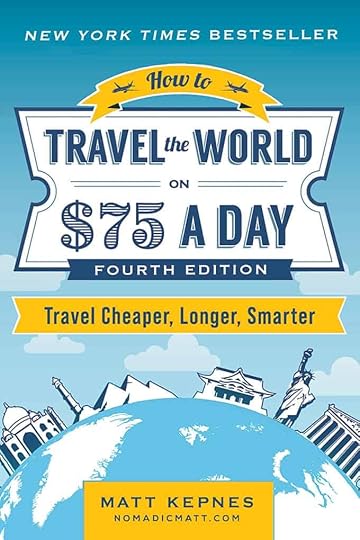
My New York Times best-selling book to travel will teach you how to master the art of travel so that you’ll get off save money, always find deals, and have a deeper travel experience. It’s your A to Z planning guide that the BBC called the “bible for budget travelers.”
Click here to learn more and start reading it today!
Book Your Trip: Logistical Tips and TricksBook Your Flight
Find a cheap flight by using Skyscanner. It’s my favorite search engine because it searches websites and airlines around the globe so you always know no stone is being left unturned.
Book Your Accommodation
You can book your hostel with Hostelworld. If you want to stay somewhere other than a hostel, use Booking.com as it consistently returns the cheapest rates for guesthouses and hotels.
Don’t Forget Travel Insurance
Travel insurance will protect you against illness, injury, theft, and cancellations. It’s comprehensive protection in case anything goes wrong. I never go on a trip without it as I’ve had to use it many times in the past. My favorite companies that offer the best service and value are:
Want to Travel for Free?
Travel credit cards allow you to earn points that can be redeemed for free flights and accommodation — all without any extra spending. Check out my guide to picking the right card and my current favorites to get started and see the latest best deals.
Need a Rental Car?
Discover Cars is a budget-friendly international car rental website. No matter where you’re headed, they’ll be able to find the best — and cheapest — rental for your trip!
Need Help Finding Activities for Your Trip?
Get Your Guide is a huge online marketplace where you can find cool walking tours, fun excursions, skip-the-line tickets, private guides, and more.
Ready to Book Your Trip?
Check out my resource page for the best companies to use when you travel. I list all the ones I use when I travel. They are the best in class and you can’t go wrong using them on your trip.
Some experts question Anthropic’s claims of cyberattack breakthroughs using its tools, noting that white-hat hackers report modest gains from AI-aided hacking (Dan Goodin/Ars Technica)
Big Technology Podcast:
Inside The AI Bubble: Debt, Depreciation, and Losses — With Gil Luria
The Big Technology Podcast takes you behind the scenes in the tech world featuring interviews with plugged-in insiders and outside agitators.
Subscribe to Big Technology Podcast.
Hard Fork:
Data Centers in Space + A.I. Policy on the Right + A Gemini History Mystery
The future is already here. Each week, journalists Kevin Roose and Casey Newton explore and make sense of the latest in the rapidly changing world of tech.
Subscribe to Hard Fork.
Decoder with Nilay Patel:
The company at the heart of the AI bubble
A show from the Verge about big ideas – and other problems.
Subscribe to Decoder with Nilay Patel.
Lenny’s Podcast:
“Dumbest idea I’ve heard” to $100M ARR: Inside the rise of Gamma | Grant Lee (CEO)
Interviews with world-class product leaders and growth experts to uncover actionable advice to help you build, launch, and grow your own product.
Subscribe to Lenny’s Podcast.
Great Chat:
Turns out, there’s still a line (don’t mock the pope)
A podcast mostly about tech. Brought to you weekly by Angela Du, Sally Shin, Mac Bohannon, Helen Min, and Ashley Mayer.
Subscribe to Great Chat.
Uncapped with Jack Altman:
Kyle Vogt from The Bot Company
Conversations with people I admire about things I’m genuinely interested in.
Subscribe to Uncapped with Jack Altman.
gathering industry storm ahead of potential budget changes
The looming delivery of the November 2025 budget has sparked a storm of speculation about the potential impact of a tax increase on Britain’s economy and gambling infrastructure.
With any potential changes to taxation in a nation, there comes a sharp intake of breath from those who might lose out, and a rising chorus from campaigners to ensure their particular stance benefits from any alteration to the current rates applied to the industry.
Gambling is a massive industry in the UK, and betting runs deep in societal norms around watching or following sports. The industry’s Gross Gambling Yield (GGY), according to the Gambling Commission, is £15.1 billion ($19.84 billion).
As part of a recent article, International Coinbase found that the industry employs 58,000 people, according to the Office for National Statistics/CV Maker’s most recent use of Office for National Statistics data.
On one side of the argument are the established entertainment brands that have been adapting to the online gambling boom and the accessibility changes from physical brick-and-mortar stores to the era of mobile devices.
On the other side of the table are political and regulatory bodies seeking changes to gambling tax rates and additional measures that could yield societal benefits and enforce new regulations.
The discussion, along with a raft of campaign actions from groups such as the British Horseracing Authority (BHA), has continued to drive the narrative ahead of the UK Chancellor’s 2025 budget.
What is at stake for gambling in the UK as UK gambling tax reform looms?As we reported, Ministers from the Treasury Select Committee interviewed a panel comprising medical specialists, former owners of gambling brands, and current regulatory figures.
One of those figures, the current CEO of the Betting and Gaming Council, Grainne Hurst, was questioned on key topics by Dame Meg Hillier MP, chair of the session, and the committee members, including Members of Parliament (MPs) Yuan Yang and John Grady.
Hurst said this can include financial pitfalls, mental health concerns, and ripple effect issues for friends and family who are impacted by the darker side of gambling.
The CEO of the BGC addressed the effect of the industry and the brands, citing that a “small minority” was touched by the perils of gambling harm and addiction.
This stance was questioned by Yang and Grady, with both on the same page that negative connotations can come with gambling, and the industry should pay a higher rate of tax to fund safeguards for gamblers at risk.
“Our CEO, Grainne Hurst, was clear throughout the session that the industry recognises gambling can cause harm and has a role to play in mitigating it. The BGC’s priority remains raising standards, promoting safer gambling, and protecting consumers.” – BGC statement to ReadWrite
“A proper tax on online slots and predatory practices would raise money while also combating problem gambling,” said Yang.
Grady followed suit, saying, “The industry must be regulated and taxed to ensure that individuals are protected and that the online gambling industry pays its fair share.”
The UK Chancellor, Rachael Reeves, also publicly stated the “fair share” message in response to questions from ITV about the upcoming budget.
The BGC says takes social harm seriously
‘I do think there’s a case for gambling firms to pay more,’ said the chancellor when asked if she would consider increasing the taxes gambling firms pay
‘They should pay their fair share of taxes, and we’ll make sure that that happens’ pic.twitter.com/iNPyki9EVN
— ITVPolitics (@ITVNewsPolitics) September 29, 2025
In the wake of the committee meeting, a BGC spokesperson told ReadWrite: “The BGC takes the issue of gambling related harm incredibly seriously.
“Our CEO, Grainne Hurst, was clear throughout the session that the industry recognises gambling can cause harm and has a role to play in mitigating it. The BGC’s priority remains raising standards, promoting safer gambling, and protecting consumers.”
Hurst has now released a statement via the BGC site, looking at the illegal gambling market, saying, “If you want safer gambling, driving punters to the black market isn’t the answer.”
The CEO continued, “I appeared before MPs alongside those calling for a massive tax hike on betting and gaming. The contrast between our positions could not have been more stark.”
That position from the BGC chief shows the widening divide between government policymakers and industry leaders who believe illegal routes will become stronger in the wake of change.
Hurst also refers to those across the table in this conversation as “opponents,” who are arguing for “punitive tax rises of up to 50% on online gaming. They claim it will curb gambling-related harm and raise billions for the Treasury. In reality, it risks achieving the exact opposite.”
Analysis by economic consultants EY warns that higher taxes could put 40,000 jobs at risk, divert £8.4 billion in stakes to the black market and wipe £3.1 billion from the sector’s contribution to the UK economy.https://t.co/nNFbMUckVb pic.twitter.com/SKlLK3Am7v
— Betting and Gaming Council (@BetGameCouncil) November 13, 2025
Hurst cited that the BGC’s stance would be up to 40,000 jobs lost, £3.1 billion ($4.1 billion) wiped from the economy, and as much as £8.4 billion ($11.1 billion) in stakes diverted to the black market if the rumours of a 50% tax increase are made real.
The CEO also mentioned that statistically, “1.5 million Brits stake around £4.3 billion a year with illegal operators.”
Rob Wood, Chief Financial Officer and Deputy CEO of Entain Group, speaking on BGC’s platform, was also cautious about the impact illegal markets could have in a retaliatory or reflexive response to taxation.
“The Netherlands raised its gambling tax to 35% this year. The result? A surge in illegal operators, now accounting for 50% of the market, and falling tax revenue. Once the black market gets a foothold, it’s hard to dislodge. We shouldn’t repeat that mistake,” he said.
As we reported, the Dutch gambling regulator Kansspelautoriteit (Ksa) was vocal around the illegal gambling sector seeing a rise in players as a result of new mechanisms introduced to halt problem gambling.
Conflicting stance from the UK Gambling CommissionIn a conflicting report published by the Gambling Commission (GC), the body references a study concluded on November 6, 2025, that explored the impact of the illegal market.
Whilst the four-part approach was exploratory, the GC admitted that their in-depth delve into consumer awareness, drivers and motivations, engagement and trends, and the disruption of illegal online gambling yielded inconclusive figures and results.
Saying, “Reliable data is limited, and assumptions are often required to fill gaps — meaning that confidence in any single estimate is inherently constrained.”
Limited data on any topic means the results are difficult to define, especially with the limited data, as this restrains bodies like the GC from painting a complete picture of the estimated impact of the illegal betting scene in Britain.
The GC’s work also showed that there was no change in the metrics for visits to 1,000 unique illegal sites monitored.
“Our data shows that, by July 2025, estimated visits to illegal gambling websites had returned to broadly similar levels as in July 2024 — in other words, no overall increase was observed.”
Dr Carsten Jung, Interim Associate Director for Economic Policy and AI at the Institute for Public Policy Research (IPPR), was also interviewed by the Treasury Select Committee.
When asked by Yang about why the IPPR believed that gambling in the UK was “under-taxed,” at a rate of 22% Dr Jung responded.
“Gambling is a social harm,” he said. Raising taxation on remote gambling to 50%, increasing the gambling betting duty from 15% to 25%, and taxing other forms of gambling would raise £3.2 billion ($4.2 billion).
“This wouldn’t be a punitive taxation; it would recognize the social harms that gambling exerts on society,” concluded Dr Jung.
Hurst is firm in her position, saying that the British gambling sector is “world-class precisely because it combines entertainment with high standards of consumer protection. We should be proud of that success, not jeopardise it through fantasy economics and punitive taxes.”
A new future for British gambling economics might become a stark reality if the UK Chancellor decides to increase the tax rate. If that does come to pass, shareholders will be bracing for a little less in their pockets as a result of redefined quarterly results, and the UK gambler might be affected by the trickle-down effects.
Regulators, operators, and the average gambler will have to hold their breath just a little longer to find out if the Chancellor doubles down on betting tax levies in her budget in late November.
Featured image: Adobe Firefly
The current AI strategies of China and the US are complementary, as unlike the US, China isn’t “AGI-pilled” yet, focusing on embodied AI and open source models (Dean W. Ball/Hyperdimensional)
Big Technology Podcast:
Inside The AI Bubble: Debt, Depreciation, and Losses — With Gil Luria
The Big Technology Podcast takes you behind the scenes in the tech world featuring interviews with plugged-in insiders and outside agitators.
Subscribe to Big Technology Podcast.
Hard Fork:
Data Centers in Space + A.I. Policy on the Right + A Gemini History Mystery
The future is already here. Each week, journalists Kevin Roose and Casey Newton explore and make sense of the latest in the rapidly changing world of tech.
Subscribe to Hard Fork.
Decoder with Nilay Patel:
The company at the heart of the AI bubble
A show from the Verge about big ideas – and other problems.
Subscribe to Decoder with Nilay Patel.
Lenny’s Podcast:
“Dumbest idea I’ve heard” to $100M ARR: Inside the rise of Gamma | Grant Lee (CEO)
Interviews with world-class product leaders and growth experts to uncover actionable advice to help you build, launch, and grow your own product.
Subscribe to Lenny’s Podcast.
Great Chat:
Turns out, there’s still a line (don’t mock the pope)
A podcast mostly about tech. Brought to you weekly by Angela Du, Sally Shin, Mac Bohannon, Helen Min, and Ashley Mayer.
Subscribe to Great Chat.
Uncapped with Jack Altman:
Kyle Vogt from The Bot Company
Conversations with people I admire about things I’m genuinely interested in.
Subscribe to Uncapped with Jack Altman.
SpoiledChild A22 Biotin Hair + Scalp Serum Beauty Editor Review
Beauty & Health Editor
Hannah Frye is the Beauty & Health Editor at mindbodygreen. She has a B.S. in journalism and a minor in women’s, gender, and queer studies from California Polytechnic State University, San Luis Obispo. Hannah has written across lifestyle sections including beauty, women’s health, mental health, sustainability, social media trends, and more. She previously worked for Almost 30, a top-rated health and wellness podcast. In her current role, Hannah reports on the latest beauty trends and innovations, women’s health research, brain health news, and plenty more.
Apple will now require app developers to disclose and obtain users’ permission before sharing personal data with third-party AI providers and companies (Sarah Perez/TechCrunch)
Big Technology Podcast:
Inside The AI Bubble: Debt, Depreciation, and Losses — With Gil Luria
The Big Technology Podcast takes you behind the scenes in the tech world featuring interviews with plugged-in insiders and outside agitators.
Subscribe to Big Technology Podcast.
Hard Fork:
Data Centers in Space + A.I. Policy on the Right + A Gemini History Mystery
The future is already here. Each week, journalists Kevin Roose and Casey Newton explore and make sense of the latest in the rapidly changing world of tech.
Subscribe to Hard Fork.
Decoder with Nilay Patel:
The company at the heart of the AI bubble
A show from the Verge about big ideas – and other problems.
Subscribe to Decoder with Nilay Patel.
Lenny’s Podcast:
“Dumbest idea I’ve heard” to $100M ARR: Inside the rise of Gamma | Grant Lee (CEO)
Interviews with world-class product leaders and growth experts to uncover actionable advice to help you build, launch, and grow your own product.
Subscribe to Lenny’s Podcast.
Great Chat:
Turns out, there’s still a line (don’t mock the pope)
A podcast mostly about tech. Brought to you weekly by Angela Du, Sally Shin, Mac Bohannon, Helen Min, and Ashley Mayer.
Subscribe to Great Chat.
Uncapped with Jack Altman:
Kyle Vogt from The Bot Company
Conversations with people I admire about things I’m genuinely interested in.
Subscribe to Uncapped with Jack Altman.