
Jerome R. Corsi's Blog, page 32
October 5, 2025
‘MOVE FAST’: Trump says talks with Hamas ‘very successful, and proceeding rapidly’ as deadline passes
 President Donald Trump walks out with Steve Witkoff after taking part in bilateral meetings at the United Nations Headquarters in New York City, Tuesday, Sept. 23, 2025. (Official White House photo by Daniel Torok)
As President Donald Trump’s 6 p.m. Sunday deadline for Hamas to accept a peace deal to release all hostages arrived, the commander in chief said “talks have been very successful, and proceeding rapidly.”
“There have been very positive discussions with Hamas, and Countries from all over the World (Arab, Muslim, and everyone else) this weekend, to release the Hostages, end the War in Gaza but, more importantly, finally have long sought PEACE in the Middle East,” Trump posted on X at 5:56 p.m. Eastern Time.
“These talks have been very successful, and proceeding rapidly,” he continued.
“The technical teams will again meet Monday, in Egypt, to work through and clarify the final details. I am told that the first phase should be completed this week, and I am asking everyone to MOVE FAST. I will continue to monitor this Centuries old ‘conflict.’
“TIME IS OF THE ESSENCE OR, MASSIVE BLOODSHED WILL FOLLOW – SOMETHING THAT NOBODY WANTS TO SEE!”
Trump confident he’ll resolve the Israeli-Palestinian war this time:
“I think it’s going to happen very quickly. Great meetings with Hamas.” pic.twitter.com/EnKQhLb24t
— SilencedSirs
(@SilentlySirs) October 5, 2025

On Friday, Trump issued an ultimatum to Hamas, warning the Islamic terrorists must accept his ceasefire framework by Sunday at 6 p.m. or completely lose the deal.
“If this LAST CHANCE agreement is not reached, all HELL, like no one has ever seen before, will break out against Hamas,” Trump wrote.
WATCH:
!function(r,u,m,b,l,e){r._Rumble=b,r[b]||(r[b]=function(){(r[b]._=r[b]._||[]).push(arguments);if(r[b]._.length==1){l=u.createElement(m),e=u.getElementsByTagName(m)[0],l.async=1,l.src="https://rumble.com/embedJS/ukxsg"..., document, "script", "Rumble");
Rumble("play", {"video":"v6xnjay","div":"rumble_v6xnjay"});
On Saturday, Trump posted on Truth Social a Gaza map with representation of “withdrawal lines” to which Israel has agreed, nearly two years since the current conflict began.
“After negotiations, Israel has agreed to the initial withdrawal line, which we have shown to, and shared with, Hamas,” the president wrote.
“When Hamas confirms, the Ceasefire will be IMMEDIATELY effective, the Hostages and Prisoner Exchange will begin, and we will create the conditions for the next phase of withdrawal, which will bring us close to the end of this 3,000 YEAR CATASTROPHE. Thank you for your attention to this matter and, STAY TUNED!”
Follow Joe on X @JoeKovacsNews
‘Special day’: Trump provides update on Israeli hostages, peace plan
/*! This file is auto-generated */!function(d,l){"use strict";l.querySelector&&d.addEventListener&&"undefined"!=typeof URL&&(d.wp=d.wp||{},d.wp.receiveEmbedMessage||(d.wp.receiveEmbedMessage=function(e){var t=e.data;if((t||t.secret||t.message||t.value)&&!/[^a-zA-Z0-9]/.test(t.secret)){for(var s,r,n,a=l.querySelectorAll('iframe[data-secret="'+t.secret+'"]'),o=l.querySelectorAll('blockquote[data-secret="'+t.secret+'"]'),c=new RegExp("^https?:$","i"),i=0;i<o.length;i++)o[i].style.display="none";for(i=0;i<a.length;i++)s=a[i],e.source===s.contentWindow&&(s.removeAttribute("style"),"height"===t.message?(1e3<(r=parseInt(t.value,10))?r=1e3:~~r<200&&(r=200),s.height=r):"link"===t.message&&(r=new URL(s.getAttribute("src")),n=new URL(t.value),c.test(n.protocol))&&n.host===r.host&&l.activeElement===s&&(d.top.location.href=t.value))}},d.addEventListener("message",d.wp.receiveEmbedMessage,!1),l.addEventListener("DOMContentLoaded",function(){for(var e,t,s=l.querySelectorAll("iframe.wp-embedded-content"),r=0;r<s.length;r++)(t=(e=s[r]).getAttribute("data-secret"))||(t=Math.random().toString(36).substring(2,12),e.src+="#?secret="+t,e.setAttribute("data-secret",t)),e.contentWindow.postMessage({message:"ready",secret:t},"*")},!1)))}(window,document);
Ceasefire near: Trump announces ‘initial withdrawal lines’ to which Israel has agreed
/*! This file is auto-generated */!function(d,l){"use strict";l.querySelector&&d.addEventListener&&"undefined"!=typeof URL&&(d.wp=d.wp||{},d.wp.receiveEmbedMessage||(d.wp.receiveEmbedMessage=function(e){var t=e.data;if((t||t.secret||t.message||t.value)&&!/[^a-zA-Z0-9]/.test(t.secret)){for(var s,r,n,a=l.querySelectorAll('iframe[data-secret="'+t.secret+'"]'),o=l.querySelectorAll('blockquote[data-secret="'+t.secret+'"]'),c=new RegExp("^https?:$","i"),i=0;i<o.length;i++)o[i].style.display="none";for(i=0;i<a.length;i++)s=a[i],e.source===s.contentWindow&&(s.removeAttribute("style"),"height"===t.message?(1e3<(r=parseInt(t.value,10))?r=1e3:~~r<200&&(r=200),s.height=r):"link"===t.message&&(r=new URL(s.getAttribute("src")),n=new URL(t.value),c.test(n.protocol))&&n.host===r.host&&l.activeElement===s&&(d.top.location.href=t.value))}},d.addEventListener("message",d.wp.receiveEmbedMessage,!1),l.addEventListener("DOMContentLoaded",function(){for(var e,t,s=l.querySelectorAll("iframe.wp-embedded-content"),r=0;r<s.length;r++)(t=(e=s[r]).getAttribute("data-secret"))||(t=Math.random().toString(36).substring(2,12),e.src+="#?secret="+t,e.setAttribute("data-secret",t)),e.contentWindow.postMessage({message:"ready",secret:t},"*")},!1)))}(window,document);


Former NFL quarterback and current Fox broadcaster hospitalized, then arrested after stabbing


Police charged former New York Jets quarterback Mark Sanchez on Saturday following a violent confrontation with a 69-year-old food-delivery driver outside a downtown Indianapolis pub.
Police said Fox Sports analyst Mark Sanchez, 38, confronted a 69-year-old delivery driver near Loughmiller’s Pub & Eatery just after midnight and demanded he move his car, according to the New York Post. When the driver’s attempt to deescalate failed, he reportedly sprayed Sanchez with pepper spray and, after seeing it had no effect, stabbed him in the chest.
The Indianapolis Metropolitan Police Department initially reported officers responded to a stabbing incident around 12:30 a.m. Saturday in which one man suffered injuries consistent with stab wounds. Police said the altercation involved two adult men, with one sustaining lacerations and the other receiving stab wounds.
NEW: Former NFL QB Mark Sanchez arrested after being stabbed in Indianapolis, was stabbed by a food delivery worker who is claiming self-defense, according to FOX59/CBS4.
Sanchez was arrested at the hospital, where he remains.
According to FOX59, the food delivery worker was… pic.twitter.com/5cZ7TocIjW
— Collin Rugg (@CollinRugg) October 4, 2025
While both men received medical treatment, the man with stab wounds remains hospitalized in stable condition. Investigators reviewed surveillance footage and plan to present the case to the Marion County Prosecutor’s Office for a charging decision.
Officers later confirmed, following further investigation and consultation with prosecutors, they arrested Sanchez on charges of battery with injury, unlawful entry of a motor vehicle, and public intoxication. Police said he remains hospitalized and has not been booked, noting the prosecutor’s office will decide on formal charges.
Sanchez currently works as a Fox Sports analyst and was in town to call Sunday’s Colts-Raiders game at Lucas Oil Stadium. Fox confirmed his hospitalization and issued a statement thanking medical staff. It also asks that the public to respect his and his family’s privacy.
“We are deeply grateful to the medical team for their exceptional care and support,” Fox Sports said. “Our thoughts and prayers are with Mark, and we ask that everyone please respect his and his family’s privacy during this time.”
Sanchez joined Fox Sports in 2021 as a game analyst after a 10-year NFL career and now also covers the United Football League. He led the New York Jets to back-to-back AFC Championship appearances and still holds multiple franchise playoff records.
Drafted fifth overall in 2009, Sanchez was named to the NFL All-Rookie Team and became the first quarterback to win his first three starts and two playoff games. After injuries and later stints with the Eagles, Cowboys, and Washington, he retired in 2019 and began his broadcasting career at ABC before moving to FOX.
Content created by The Daily Caller News Foundation is available without charge to any eligible news publisher that can provide a large audience. For licensing opportunities of our original content, please contact licensing@dailycallernewsfoundation.org.
America’s maritime revival: Sailing into some headwinds
 The aircraft carrier USS Ronald Reagan and the guided missile cruiser USS Antietam steam in formation with Australian and Japanese ships during a trilateral security exercise in the Philippine Sea, July 21, 2020. (U.S. Navy photo by Mass Communication Specialist 2nd Class Codie L. Soule)
Good news for America’s national security: a much-needed comeback of our maritime industry is underway. But like a hidden undertow, trouble lurks below the surface.
A remarkable amount of effort has been expended so far. It started with the executive order aimed at restoring America’s maritime dominance that President Trump signed in April. Next, Congress introduced the SHIPS for America Act. Then there was the billions of dollars in investments that the South Korean shipbuilding company Hanwha earmarked for Philadelphia’s naval yard — with indications of more coming from other allies.
Investors need to see sustained support and a favorable business environment for this national maritime revival to progress. Like the recent announcement by CMA-CGM to reflag and maintain a portion of its fleet in America (a process that began in July) – though there are also cautionary tales like South Korea, after a positive August summit meeting with the U.S., seemingly cooling on a $150 billion investment plan in American shipbuilding.
Yet the fundamentals of expanding shipbuilding capacity are sound. Global demand for new commercial ships will grow and likely exceed current build capacity. This is an opportunity for allied shipbuilders in Japan and South Korea to grow market share, and it’s a chance for America to revive this strategically important industry.
Still, all is not shipshape. It’s been almost a year since the last national elections, and yet key leaders necessary to lead and deliver on the President’s maritime revival mandate are still not in place: the Navy’s shipbuilding head, the Assistant Secretary of the Navy for Research, Development and Acquisition (RDA), and the Maritime Administrator who is key in managing funds to American shippers, shipyards, and ports. They will be critical in the next phase of this revival – the needed action to follow the plans and the investment.
So far, there are several promising developments to consider – ones we need to ensure don’t evaporate.
For one, Greek shippers are big players in the global liquified natural gas (LNG) shipping trade and can get huge amounts of American energy to Europe and Asia. Should Greek shippers follow suit with CMA-CGM, a deal could further attract investment in port and ship repair capacities to sustain much expanded trade in American energy. This will be critical in getting allies off of Russian petroleum, as well as secure access to energy for our key allies in Asia.
But time waits for no one, and the danger of a war this decade with China over the fate of Taiwan shows no signs of abating. As such, ensuring the nation and our allies have adequate access to resources means having the ships to move cargo that serves our collective sovereign markets. The scale of the need is massive, with over 1,000 ships of various class required to mitigate the danger of Chinese economic blackmail of America.
The solution to this immediate threat is working in league with our robust network of allies. One way to do this is to use a proven approach: form a Maritime Group like the G7 focused on securing our shared maritime interests.
Top of the agenda would be entering into agreements among the group to assure access to needed shipping and ports in crisis and conflict. Such as opening ports like Elefsina for expanded energy trade and warship repairs in Greece to mitigate potential interference by Chinese entities at their nearby port at Piraeus.
Fortunately, we have a ready ally in Greece as well as others to actualize America’s maritime revival. But non-action is not an option, America’s maritime vulnerabilities are a danger which likewise imperils our allies and like-minded free-market nations. It’s high time to right the ship.
Brent Sadler is a Senior Research Fellow for Naval Warfare and Advanced Technology at The Heritage Foundation’s Allison Center for National Security.
This article was originally published by RealClearDefense and made available via RealClearWire.Why shipbuilding matters to the U.S.-Korea alliance

 The USNS John Ericsson and the USS Ronald Reagan sail in formation with the Japanese destroyer JS Ikazuchi during a replenishment in the Philippine Sea, Aug. 16, 2020. (U.S. Navy photo by Petty Officer 3rd Class Jason Tarleton)
The U.S.–ROK alliance has long rested on the credibility of American extended deterrence and South Korea’s own growing military capabilities. However, the alliance now faces a strategic challenge: the erosion of the U.S. naval industrial base. The U.S. Navy, once unrivaled, struggles to meet force structure goals due to shipbuilding delays, cost overruns, and limited capacity across its yards. This industrial shortfall risks undermining not only U.S. global maritime power but also the effectiveness of deterrence in the Indo-Pacific, where China’s naval expansion continues at a breakneck pace. It is in this context that the MASGA— “Make America Shipbuilding Great Again”—initiative, which envisions leveraging South Korea’s advanced shipbuilding sector to revitalize U.S. naval capacity, becomes a vital agenda for both Washington and Seoul.
The United States cannot ignore the gap between strategic demand and industrial supply. The U.S. Navy’s own force structure assessments call for over 350 ships, yet it has hovered around 290, with aging vessels facing delayed replacement. China, by contrast, has surpassed the United States in total battle force ships, with estimates suggesting a fleet of over 400 by the early 2030s. Even if U.S. technological superiority remains an advantage, quantity exerts its own quality in naval strategy, especially in potential flashpoints such as the Taiwan Strait or the South China Sea. The bottleneck is not strategic imagination but industrial production. American yards lack the capacity to scale up rapidly. This makes external partnerships not a luxury but a necessity.
South Korea offers precisely what the U.S. needs: world-class shipbuilding capacity, efficiency, and reliability. South Korean firms such as Hanwha Ocean and HD Hyundai are global leaders in both commercial and naval shipbuilding, with advanced technologies in propulsion, stealth design, and integrated logistics support. Seoul has demonstrated that it can produce complex platforms like KDX destroyers, Aegis-equipped vessels, and KSS-III submarines at competitive cost and within compressed timelines. By integrating Korean shipyards into the U.S. supply chain under the MASGA concept, the U.S. could alleviate pressure on its overstretched industrial base and accelerate the delivery of critical hulls.
Critics may argue that outsourcing naval production undermines the sovereignty of U.S. defense industries. Yet such concerns overlook the fact that alliance resilience is increasingly measured by industrial interoperability as much as by operational interoperability. Just as the F-35 program involves multiple partners in production, maintenance, and component supply, MASGA could institutionalize an allied shipbuilding framework that distributes burdens while reinforcing common interests. For Washington, this would not dilute but rather multiply industrial capacity, while keeping strategic design and command firmly in American hands. For Seoul, it would represent a leap forward in defense-industrial integration with its principal ally, cementing South Korea not just as a buyer of U.S. systems but as a co-producer of global security.
There are also broader alliance benefits. First, MASGA would enhance deterrence credibility by ensuring that the U.S. Navy has the hull numbers and maintenance depth required to operate forward in the Indo-Pacific. A fleet that is seen as unable to meet commitments invites miscalculation; one that can regenerate strength through allied shipbuilding signals staying power. Second, it would bind the U.S. and South Korea in a deeper web of strategic interdependence. The alliance has already expanded beyond the Korean Peninsula into global issues such as Ukraine, cyber defense, and space security. Industrial cooperation on shipbuilding would extend this trend, anchoring the alliance in a tangible infrastructure of shared production.
Third, MASGA fits squarely into Washington’s own rhetoric on burden-sharing. Rather than viewing allied contributions narrowly in terms of troop deployments or host-nation support, MASGA redefines burden-sharing in industrial and technological terms. South Korea, through its competitive shipbuilding sector, would be providing a capability that the U.S. urgently needs, while benefiting from access to advanced U.S. naval technologies and design standards. This is not charity but a mutually reinforcing partnership.
Of course, challenges remain. Legal frameworks such as the Jones Act, concerns about technology transfer, and potential opposition from U.S. labor unions could complicate implementation. Seoul, for its part, would need to ensure that its participation in MASGA does not trigger pushback from Beijing, which already views ROK–U.S. military cooperation with suspicion. But these hurdles are not insurmountable. They call for political leadership, careful framing, and institutional design—treating MASGA not as an outsourcing scheme but as an allied capacity-building initiative central to alliance security.
The Indo-Pacific security environment is entering a decisive decade. China’s naval rise, North Korea’s advancing nuclear capabilities, and Russia’s disruptive behavior in the maritime domain all point to a future where sea power will be even more critical. The U.S.–ROK alliance must adapt not only in operational terms but also in industrial foundations. MASGA offers a practical pathway: by linking South Korea’s proven shipbuilding strengths to America’s strategic requirements, it strengthens deterrence, reinforces alliance credibility, and ensures that the maritime balance does not tilt irreversibly. For both Washington and Seoul, this is not about shipbuilding alone; it is about securing the alliance’s future in an era of intensifying great-power competition.
Jihoon Yu is a research fellow and the director of external cooperation at the Korea Institute for Defense Analyses. Jihoon was the member of Task Force for South Korea’s light aircraft carrier project and Jangbogo-III submarine project. He is the main author of the ROK Navy’s Navy Vision 2045. His area of expertise includes the ROK-US alliance, the ROK-Europe security cooperation, inter-Korean relations, national security, maritime security, and maritime strategy. He earned his MA in National Security Affairs from the US Naval Postgraduate School and PhD in Political Science from Syracuse University.
This article was originally published by RealClearDefense and made available via RealClearWire.ESG: The high price of good intentions
 President Donald J. Trump participates in a bilateral meeting with the President of the European Commission Ursula von der Leyen at the Trump Turnberry golf course in Turnberry, Scotland, Friday, July 27, 2025. (Official White House photo by Daniel Torok)
This fall, the European Union’s (EU) government in Brussels is set to finalize a sweeping ESG “due diligence” directive that will attempt to reshape global business in Brussels’s image.
The controversial law, several years in the making, has faced stiff resistance from companies and policymakers both within and outside the EU because the directive forces large companies—including non-EU multinationals—to meticulously audit their human rights, emissions, and environmental footprints across entire value chains.
Faced with energy and defense realities in the wake of Russia’s attack on Ukraine, it has become a flashpoint for competing priorities within the EU: the Green Deal’s draconian climate action on one hand, and economic competitiveness on the other. Can a continent truly champion industrial competitiveness while imposing costly and burdensome climate rules that shift focus from manufacturing and innovation to an expanding compliance bureaucracy? Who truly benefits, and does this path risk sacrificing Europe’s industrial vitality on the altar of regulatory and climate idealism?
A lot has changed since Europe formally introduced the law – the Corporate Sustainability Due Diligence Directive, or “CS3D” – on 23 February, 2022. Exactly one day after the legislative proposal was docketed for public comment, Russia launched its ground invasion of Ukraine, setting off a series of diplomatic, military, and energy crises in Europe.
Before Russia’s invasion of Ukraine, Europe enjoyed plentiful natural gas supplied by a mostly reliable but not adversarial partner in Russia. This abundance allowed policymakers in Brussels to pursue ambitious green policies, positioning the continent at the forefront of global efforts to demonize fossil fuels and accelerate the transition to renewable energy.
The crown jewel of this era was CS3D, meticulously shaped from the 2018 OECD Due Diligence Guidance for Responsible Business Conduct. The European Commission’s intent was clear: CS3D would compel domestic and multinational businesses not only to comply with strict climate and human rights standards, but also to serve as global ambassadors of compliance-driven green commerce.
The promise of CS3D was always predicated on the notion that Europe, and multinational businesses, could afford to bear the cost of being the world’s climate conscience. And it is costly. For most businesses, the CS3D represents a seismic financial shift. Compliance means overhauling reporting systems, hiring armies of consultants, and enduring relentless audits. The Danish Presidency of the Council of the European Union’s own analysis estimates that a single company could spend up to EU 2.3 million annually in compliance. Other estimates suggest affected firms could see costs shoot up by 10 to 30 percent.
Oil and gas companies, already under the microscope for their emissions, face additional headaches: they must monitor and report on every supplier’s methane output, overhaul procurement protocols, and invest millions in new software and third-party verification. All companies must also provide a net zero transition plan annually updated to demonstrate fulfillment of emissions reduction targets or lack thereof. Failing to comply is no trivial matter—penalties can reach 5% of global net turnover, and civil liability for damages is now firmly on the table.
Operationally, firms will devote resources to ongoing risk assessment, staff training, and documentation stretching from the boardroom to the field. These are not one-off expenses: the directive requires annual updates, investment disclosures, and persistent scrutiny of supply chains and emissions reduction targets. The bureaucratic load is compounded by the need to chase down compliance across both upstream suppliers and downstream customers, often in countries with no direct link to EU regulation.
Thus, CS3D, by its very design, incentivizes a shift away from material production—the factories, smelters, refineries, and manufacturers that form the backbone of the European economy—toward a white-collar managerial economy, redirecting capital from the business of “building things” to the business of auditing, accounting, and legal compliance. It is a costly model that prioritizes greenhouse gas accountants over engineers and tradespeople at a time when EU leaders say the continent faces a potential war with Russia.
A path towards further deindustrialization is directly at odds with the EU’s “competitiveness” imperative. After Russia’s invasion disrupted gas supplies and exacerbated a cost-of-living crisis throughout the bloc, the European Commission requested an assessment from Mario Draghi, former European Central Bank President, of how to address Europe’s failing competitiveness. Draghi’s September 2024 report put into words what many other world leaders already knew: “the energy landscape has changed irreversibly with the Russian invasion of Ukraine […] fossil fuels will continue to play a central role.” But due to Europe’s decarbonization targets, “EU industries that use energy intensively face higher investment costs than their competitors,” Draghi wrote.
Draghi’s diagnosis of Europe’s self-inflicted stasis gave leaders in Brussels air cover to dethrone climate change as the EU’s top policymaking priority, focusing instead on competitiveness and self-defense. But despite recent rhetoric, Europe continues to forge ahead with its most onerous climate regulations, even as allied trading partners warn of impacts on Europe’s energy supply.
State-owned LNG supplier Qatar Energy, which supplies between 12 and 14% of the EU’s natural gas supply, said in December 2024 that the country would cease doing business with Europe rather than comply with CS3D’s extraterritorial demands. American supermajor ExxonMobil said the directive would “challenge” the US-EU energy deal, comments echoed by US Secretary Chris Wright. Notably, the US currently supplies 45% of the EU’s gas needs.
A second pivotal moment was the election of Donald Trump in November 2024. With the United States adopting a more skeptical and nationalistic stance on climate agreements, European regulators suddenly faced the real prospect of trade friction, energy supplier resistance, and diminished cooperation. CS3D is at the center of these tensions, an archaic holdover from Europe’s pre-war, transatlantic consensus.
In response, talk of “simplifying” CS3D and delaying its implementation until 2028 has gained momentum. Indeed, this fall, Brussels will roll out a “simplified” version of CS3D. The hard truth is that the best version of CS3D is no CS3D at all; but absent scrapping the directive altogether, Brussels must calculate how much of the law it can salvage without risking energy and trade partnerships.
If Brussels is playing a game of chicken, it’s a dangerous game. Reduced gas flows from the US and Qatar would intensify already crippling energy costs across the region, driving further cost-of-living increases in both household spending and industrial operating costs. As Russia continues to encroach on NATO’s eastern border, Europe could not pick a worse time to deprioritize industrial competitiveness seemingly to save face with the green lobby. European leaders know this – this fall, they have a chance to show it.
Tammy Nemeth Ph.D . is a UK-based energy and ESG analyst, leading ESG2Insight, which provides research on Energy, Security, Geopolitics, and ESG issues.
This article was originally published by RealClearPolicy and made available via RealClearWire.Is all politics really local in California’s redistricting test?
 The U.S. Capitol in Washington, D.C.
California is about to test whether two timeworn political maxims still ring true in 2025.
The first is the tried-and-true “All politics is local,” a phrase dating as far back as 1932 and most closely associated to former House Speaker Tip O’Neill. The second, known as “Fenno’s paradox,” goes something like this: People generally disapprove of Congress as a whole but often support – even have great affinity for – their own member of Congress.
If all politics really is local even in the big state of California, and most voters want to keep the congressmen or women they already have, then the GOP could prevail in its effort to defeat Proposition 50, California Gov. Newsom’s mid-decade gerrymandering drive aimed at eliminating four to six GOP congressional seats.
Newsom and other Democratic proponents readily admit the push for redistricting is an effort to “fight fire with fire” and counter President Trump, after Texas state legislators adopted a congressional district map created to make it easier for Republicans to win five more seats in the U.S. House. The Texas mid-decade redistricting is an unabashed effort to insulate the House Republicans from losing majority control and prevent Trump from being impeached in 2027.
There are two significant differences between the Texas and California gerrymandering efforts. California’s constitution, unlike the Texas constitution, prohibits mid-decade redistricting. And in California, voters in 2008 approved transferring the power to redraw congressional lines from the Democratic-controlled state legislature to an independent “citizens” commission.
Newsom himself has argued that what Texas is doing is wrong but has justified his action as a way to counter the Texas redistricting move, even as he admits that it’s a power grab that overturns California’s voter-approved independent redistricting process.
In an off-year election special election with likely low turnout, multiple recent polls show Newsom’s side with a slight advantage. The “yes on Prop 50” side also has a nearly two-to-one fundraising advantage, with both sides burning through tens of millions of dollars at a furious pace.
Charlie Munger Jr. has donated $30 million of his own funds to the Protect Voters First, an anti-Prop 50 group aimed at messaging for independents and ambivalent Democrats. Stop Sacramento’s Power Grab, run by former California GOP Chair Jessica Millan Patterson, with former House Speaker Kevin McCarthy’s support, has raised just more than $7 million.
The Democrats’ primary Yes on 50 has raked in more than twice as much, with billionaire far-left donor George Soros contributing $10 million in late September. The House Majority PAC, the group backing Democratic candidates for Congress, donated $7.6 million, with the California Teachers Association pouring in $3 million more and the state’s nurses’ union adding another $2.5 million.
There are only 35 days before voting closes to determine the fate of Newsom’s new gerrymandered congressional district maps. With mail-in ballots in the special election already being sent to voters, Newsom’s pro-redistricting forces are dominating the television and digital ad wars with a national message: Oppose Trump and counter his Texas redistricting efforts by backing the measure.
For Newsom, the political gamble has a potential payoff windfall and relatively no downsides. If the White House hopeful pulls off a win and denies House Republicans seats in Congress, Newsom can claim a major partisan victory even before the 2028 Democratic presidential primary begins. If he loses, many Democrats will give him credit for trying, and for bringing the fight to Trump.
Newsom’s side has enlisted far-left national Democratic figures, such as New York Rep. Alexandria Ocasio-Cortez and Massachusetts Sen. Elizabeth Warren, to appear in ads to rev up the Democratic base and drive up turn-out.
Republicans in recent days have responded by going hyper-local – focusing on county-based initiatives while micro-targeting voters they need to turn out in order to win.
They have former Gov. Arnold Schwarzenegger, the only Republican to win statewide office in California since 2006, on their side. The former Hollywood icon and world-famous body builder led the fight for the independent redistricting commission in 2011.
In recent weeks, Schwarzenegger has called Newsom’s proposal “insane” and argued that it dismantles the democratic principles embodied in the outside redistricting body he pushed to create. Just how effective an aging former Hollywood superstar and centrist Republican can be for the effort remains to be seen.
Jessica Millan Patterson, who previously chaired the California Republican Party and now leads Stop Sacramento’s Power Grab, argues her side wins on substance. California voters in 2008 and in 2010 overwhelming voted in favor of taking the job of drawing congressional districts away from politicians and handing it to an independent redistricting commission, she said.
“Californians have been very clear – they don’t want politicians making backroom deals with D.C. lobbyists to draw maps where they get to choose their constituents, pick winners and losers,” Millan Patterson tells RealClearPolitics. “The people that lose in all of it are Californians. They know it’s better when people have this power.”
Millan Patterson also says polling data shows that 84% of Californians are well aware of the issues at stake, which she believes benefits the opposition.
“That’s huge for us,” she argues. “So, we’re focused on who we can we persuade. It’s a very different narrative than the Democratic narrative. They want to make this a partisan issue, and it’s simply not a partisan issue. This is about good government.”
On Tuesday, the Yes on 50 proponents experienced a procedural setback. California Secretary of State Shirley Weber announced that the mail-in ballot already sent to millions of California voters included a labeling error in its Voter Information Guide. The proposed new Congressional District 27 was mistakenly labeled District 22.
Weber pledged to send out correction postcards to all registered voters who received the mislabeled ballots, adding even more costs to the estimated $300 million the special election is costing California taxpayers.
“Will Secretary Weber disclose the price tag of this correction, or will we have to wait for that information to leak like the original cost,” Stop Sacramento’s Power Grab said in a statement late Tuesday. “Prop 50 is a rushed, reckless power grab that blew through safeguards and opened the door to critical errors. Now the integrity of California’s voting process is in questions, sacrificed for the sake of political gain.”
Thirty-seven out of 58 of the state’s county sheriffs, including those from Orange, Riverside, and San Bernardino counties, this week announced they would oppose Prop 50, Newsom’s ballot proposal to get rid of a citizen-led redistricting commission to draw the lines to best benefit Democratic incumbents and challengers. In addition, numerous GOP-controlled city councils across the state are locking arms to pass resolutions opposing Newsom’s gerrymandering plan.
“As elected county sheriffs, we know that our system of government depends on public trust,” the sheriffs wrote in a joint statement. “That trust is built through transparency, fairness, and adherences to the rule of law. Conversely, trust is undermined when public officials take actions designed to enhance their own power at the expense of the people’s will.”
“This is why we oppose Proposition 50, the ballot initiative proposing to dismantle the work of the voters’ Independent Redistricting Commission,” they explained.
Lodi, a city of about 70,000 in the middle of California’s agricultural Central Valley, last month was one of the first of several city councils to formally approve a resolution opposing Proposition 50. If the ballot initiative passes Nov. 4, the redrawn congressional maps would carve the city of Lodi into three districts.
The city currently sits entirely within Congressional District 9, but the proposed redrawing would split the city, which Democratic Rep. Josh Harder, who currently represents Lodi, is on the record opposing.
“I absolutely believe Lodi should be kept whole,” Harder told ABC10, though he deferred to all California voters on whether the new maps should be adopted or not.
Los Angeles’ 15-member city council, which has jurisdiction over the second largest city in the country, 501 square miles of land, recently voted on a resolution backing Proposition 50.
Garry South, a longtime California Democratic political consultant, said the GOP’s message is too complicated a sell while Newsom’s is simple: Oppose Trump at all costs.
“Prop. 50 will pass easily,” he predicted in an interview with RCP. “Voting to preserve something voters passed 15 years ago that few remember, and even fewer have any understanding of how the citizens redistricting process works, or care.”
Only a tiny percentage of California voters are aware of the current congressional district lines, which don’t have an impact on their daily lives, South added.
“The proponents’ arguments are clear and direct: Screw Trump and Texas too,” he said. “It was never a question of which one of these pitches would succeed in California. The fact that the money hasn’t come in on the no side tells you they know it too.”
The new maps target several swing or GOP-leaning seats in Orange County, redrawing them to ensure they are majority Democratic. Some of the new district lines appear to slice and dice some cities, including Newport Beach.
Several cities in Orange County, traditionally a conservative stronghold, have passed their own city council resolutions opposing the statewide redistricting efforts. Last month, city council members in Newport Beach, Orange, and Westminster all adopted separate resolutions opposing the November special election. Irvine’s city council, however, voted down a similar proposal along party lines.
Will O’Neil, the Orange County Republican Party chairman, aims to have Orange County voters run up the “no” on the Prop 50 score to offset bluer regions across the state. Already, he and his team have helped persuade 130 local elected officials to publicly oppose Prop 50, he said.
The Orange County GOP and its volunteers also were the first county to venture out to knock on doors for multiple weekends. O’Neill also said he’s planning to enlist 110,000 volunteers to write notes on postcards to send throughout the county.
“Everyone has a lane in this [fight], and ours is trying to turn out Republicans, and so our messaging is geared entirely to Republicans,” he said.
“There’s a lot of pretty solid opposition to Prop 50 in Orange County,” O’Neill added. “I think a lot of the opposition effort has been moved to the county parties, and so we’re doing everything we can to step up.”
This article was originally published by RealClearPolitics and made available via RealClearWire.America’s semiconductor crossroads: Pennsylvania’s role in securing minerals for the A.I. age

AI data centers are colossal buildings, often spanning more than one million square feet. Microsoft and OpenAI’s joint facility in Wisconsin will cover 1.2 million square feet; Meta’s Louisiana project exceeds four million square feet; and Google has two projects underway at 1.4 and two million square feet. But what truly matters is what is inside these concrete walls. Networks of advanced supercomputers fill the newly constructed space, supported by intricate cooling systems, backup power generation, gigantic batteries, and other essential infrastructure. At the core of all these systems are semiconductors.
Few realize that the Lehigh Valley was the original “Silicon Valley.” Western Electric’s Allentown manufacturing plant produced the first mass-manufactured transistors in 1951, paving the way for modern semiconductors – the foundation on which microchips are built. Though Bell Laboratories invented the first transistor in 1947 in New Jersey, it partnered with Western Electric to scale production. The Lehigh Valley’s access to markets, railways, waterways, world-class universities, and manufacturing expertise positioned it as a leader in this emerging field.
Transistors soon evolved into modern semiconductors, driving microchip innovation in the decades that followed. Pennsylvania and the Lehigh Valley remained central to this development and still retain some production capacity today. However, domestic westward expansion – fueled by inexpensive land, a favorable business climate, military spending, and engineering-focused institutions such as Stanford and UC Berkeley – shifted the industry’s epicenter to California, establishing the Silicon Valley we know today.
By 1970, the United States accounted for 48% of global semiconductor production, with Silicon Valley dominating worldwide research, design, and manufacturing. U.S. market share peaked in the early 1980s at about 55%. But in the late 1970s, the Japanese government recognized the industry’s importance and invested $300 million ($1.8B today) to launch a public-private partnership with its six leading computer companies. This marked the beginning of a dramatic global shift.
By 1989, Japan controlled 51% of the global semiconductor market, while the U.S. share dropped to 35%. Rather than competing head-on, American companies increasingly outsourced manufacturing to East Asia, seeking lower labor costs and looser regulations, while keeping research and development onshore. As Japan’s dominance waned, Taiwan, South Korea, and later China cut further into U.S. production. Through the 1990s and early 2000s, this trend accelerated. Today, the United States accounts for only about 10% of global fabrication capacity. Meanwhile, Japan, China, Taiwan, and South Korea together produce more than 75% of the world’s semiconductors. Most concerning is China’s rapid rise – from just 7% of global production in 2005 to a projected 25% by 2025.
China’s ramp-up in semiconductor manufacturing should come as no surprise. The most common semiconductor materials are silicon, germanium, gallium arsenide, and indium phosphide. In 2023, China produced 6.6 million tons of silicon. The next largest producer, Russia, produced just 620,000 tons, followed by Brazil at 390,000 tons. The United States did not even rank in the top 10. China also accounts for more than 60% of the world’s germanium, more than 80% of the world’s gallium, and more than 70% of the world’s indium. No other country comes close to China’s dominance in producing these critical minerals – the necessary inputs for modern semiconductor and microchip manufacturing.
One data center project requires hundreds of thousands of advanced microchips to achieve the massive computing power necessary for AI operation. Only a small fraction of all microchips are AI-capable, making this a major pinch point that could threaten future investment. Can global semiconductor and microchip supply keep up with this massive demand? More specifically, is the United States especially vulnerable given its lack of critical mineral mining and refining?
Not long ago, the U.S. learned this vulnerability the hard way. Between 2020 and 2022, auto production stalled – not due to shortages of steel, rubber, or labor, but because of a lack of semiconductors, microchips, and related imports. Today, demand is growing even faster: Sen. David McCormick recently announced $90 billion in AI investments in Pennsylvania, driving unprecedented demand for the minerals embedded in supercomputers, servers, and storage systems.
Bringing new mines and processing facilities online is time-consuming and costly, challenges the Trump administration has committed to solving through long-term investment. To confront this vulnerability, the president has issued executive orders on “Unleashing American Energy” and “Immediate Measures to Increase American Mineral Production,” building on his September 2020 order on supply chain awareness and resilience. These directives are reinforced by $1 billion in new grants just announced by the U.S. Department of Energy.
Collectively, these programs join other U.S. government actions to strengthen national security, energy independence, and industrial competitiveness. For Pennsylvania, these programs offer grants, matching funds, and other support, appealing to a state with significant advantages and an industry community already demonstrating excellence in the field.
Pennsylvania can be the keystone in America’s push for a secure critical minerals supply chain, leveraging its abundant, underutilized resources and established industrial infrastructure. Coupled with its historic role in the birth of the modern microchip, the Commonwealth is poised for a classic “voyage and return” story. Its industrial legacy and leadership in coal provide workforce and technology expertise to support project development. Feedstock potential exists in acid mine drainage and coal waste, making Pennsylvania a compelling proving ground. Successful demonstration projects could simultaneously remediate damaged land. For example, researchers at the University of Pittsburgh published a study finding 40% of the total lithium used in the U.S. could come from Marcellus Shale drilling wastewater. However, because the bulk of global lithium refining capacity exists overseas, primarily in China, our underlying national challenge remains.
But are the federal government’s efforts enough? Even if we access raw critical minerals, they must still be refined into usable forms. Again, China dominates. The People’s Republic of China currently refines 83% of the world’s copper, 73% of its lithium, 97% of cobalt, 98% of graphite, and 96% of rare earths (including essential inputs for semiconductors). A 2025 International Energy Agency report noted: “In December 2024, China restricted the export of gallium, germanium, and antimony—key minerals for semiconductor production—to the United States. This was followed by further announcements in early 2025, including restrictions on tungsten, tellurium, bismuth, indium, molybdenum, and seven heavy rare earth elements.”
What is urgently needed is a Manhattan Project-style initiative to expand mineral mining and refining capacity in the United States and among trusted allies – creating secure supply chains and distribution networks for semiconductor and microchip production.
Everything humans touch is grown from the earth or mined from it. While the information generated by AI companies is intangible, the machines behind it are not. Every component must be mined, refined, and manufactured to perform these modern tasks. If we fail to secure supply chains and distribution networks for critical minerals, we risk filling million-square-foot warehouses with nothing but empty space.
This article was originally published by RealClearPennsylvania and made available via RealClearWire.How to broker a gerrymandering ceasefire

The United States is in the middle of another round of the redistricting wars.
This latest battle began in late August. The Texas legislature approved maps that will likely result in five additional Republicans being elected to Congress. In response, the California legislature passed a plan that would likely result in five Republicans being replaced with Democrats. The California plan is subject to voter approval in November.
Those appear to be just the opening salvos in the mid-decade redistricting fight, as other states look to jump into the fray.
It is time for a ceasefire.
But how?
Many redistricting reform advocates have focused on changing who draws the maps. They have called for redistricting commissions to take that responsibility away from state legislatures.
Commissions are not a panacea, however. They are often unaccountable, with members usually serving temporarily and not subject to being fired, recalled, or defeated for reelection. They can also be manipulated by partisan groups that infiltrate hearings pretending to be ordinary citizens.
Nor do commissions guarantee states protection from lawsuits. For example, a group of citizens successfully sued the Michigan Independent Citizens Redistricting Commission for racial gerrymandering in 2023.
More important than the “who” of redistricting is the “what.” What are the standards being used to draw districts?
On the heels of the last midterm election, I co-authored a comprehensive report on limiting gerrymandering for North Carolina, but its criteria can be applied to any state.
Those criteria can be divided into two broad categories. The first is that districts should be tied to local communities. Statewide considerations, such as creating maps with the “correct” partisan balance, should not subsume local interests. To that end, states must be required to minimize splitting counties, municipalities, and voting precincts. Districts should also be as compact as possible, consistent with keeping political communities whole. Many states follow those criteria in word but bend them to partisan considerations in practice.
Second, the use of partisan data, such as voter registration numbers and election results, should be banned. Partisan data is helpful only for those seeking to reach some predetermined goal regarding the partisan distribution of legislative seats or to ensure that certain districts elect candidates from a favored party. While gerrymandering has been with us for centuries, the advent of computer mapping programs and the data fed into them made gerrymandering the precision weapon it is today.
Additionally, maps should be drawn openly on computers that the public can view in person and online, and mid-decade redistricting should be banned absent a court order.
Redistricting reform should also be implemented nationwide. That can be done in two ways. The first is through an act of Congress, putting conditions on how states draw congressional districts.
One weakness of that approach is that the Elections Clause of the Constitution permits Congress to alter the rules only for electing U.S. representatives, so redistricting for state legislative districts would be unaffected.
Another approach would be an interstate compact. The compact would have a trigger clause to go into effect only if states representing a majority of congressional districts join and those districts are roughly evenly split between Democrats and Republicans.
Either approach would involve federal courts as an enforcement mechanism. While the United States Supreme Court pointed out in Rucho v. Common Cause that “federal courts are neither equipped nor authorized to apportion political power as a matter of fairness,” they would have an appropriate role in ruling on violations of federal law or liability for breaking interstate compacts. That court presence would force states to adhere to redistricting standards, including those they are already supposed to be following.
However we arrive at a truce in the redistricting wars, we should seek it before the 2028 presidential election. The president’s party usually suffers in midterm elections. The last pre-redistricting midterm election in 2010, during Barack Obama’s first term, led to Republican dominance of the redistricting process.
We have little idea of how that pendulum might swing before 2028. That uncertainty should incentivize both sides to reach an agreement out of fear that the other side could dominate redistricting in 2031 without such a deal.
It won’t be easy to convince partisan politicians to put down their map-drawing arms, but it is worth the effort to get the high-tech redistricting wars behind us.
This article was originally published by RealClearPolitics and made available via RealClearWire.Civics revolution: Conservatives are reviving traditional education with a modern twist
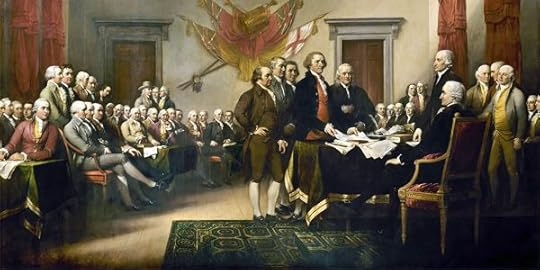
The classroom subject of “civics” evokes antiquated images of Cold War-era conformity, but Andrew Hart describes a recent teacher workshop on civics with a schoolboy’s exuberance: “It was really refreshing. I was, like, wow.”
The weeklong seminar at the Museum of the American Revolution in Philadelphia delved into the writings of Aristotle and Cicero, the Founding Fathers, Abraham Lincoln, Frederick Douglass, and civil rights titans W.E.B. Du Bois, Martin Luther King Jr., and Malcolm X.
“We spent the first full day just talking about philosophy,” said Hart, who teaches history and government at a Florida private school. “It was almost like a graduate course with a professor who is an expert.”
The Jack Miller Center, a leading civics education provider, organized the seminar, part of a cottage industry that is reviving the tradition of studying the rights and duties of American citizenship, updated for modern sensibilities. After decades of neglect in the wake of the 1960s social upheavals and emphasis on STEM competency, civics is making a comeback. Universities are opening multimillion-dollar civics schools, some with deans and doctoral programs, and more than half the states now have civics requirements or competency tests in K-12. The boom reached a crescendo this summer with 45 states considering 198 bills related to K–12 civic education.
But reintroducing the subject in today’s hyper-partisan climate is not simply about making students learn the ABCs of government and practicing the art of rhetoric. Civics now comes with a warning label – “the most bitterly contested subject in education today,” according to The Atlantic – placing it squarely in the crosshairs of the culture wars.
The tension around civics reflects the national disagreement about the meaning of the United States in the 21st century: Is America a land of opportunity and freedom for all? Or is it designed to award unearned privilege to a select few, and second-class status to everyone else? The answer determines how middle schoolers and high schoolers are taught about the Declaration of Independence, the Constitution, the Gettysburg Address, Dr. King’s “I Have a Dream” speech, and other key texts of the American experience.
Ideological disagreements over the nation’s identity have led to bitter clashes over curricula, reading assignments, and library books in local school boards and state legislatures.
Since the federal government has limited say over what K-12 schools teach – and Congress punted in 2022 on a once-in-a-generation opportunity to expand K-12 civics with $1 billion in annual funding – states and local school districts are developing their own civics pilot projects, standards, and tests. Nonprofits of all political stripes stand at the ready to supply curricula, study guides, and professional support for teachers.
Progressive groups have redoubled their ongoing efforts, developing educational materials that recast the nation’s history as a counternarrative of righteous resistance against colonialism, capitalism, white supremacy, and the patriarchy. Such projects include Southern Poverty Law Center’s Learning for Justice and Teaching Tolerance, Zinn Education Project, National Black Lives Matter at School, and the 1619 Project Curriculum. Ethnic studies courses, which are required for high school graduation in some states and school districts, explicitly draw on Critical Race Theory and queer advocacy to emphasize intersectionality, oppression, power, privilege, and “whiteness” as the foundational values of Western Civilization
In opposing this trend, some conservatives are moving away from the reflexive, flag-waving patriotism of the past. It “teaches that the founders are awesome and Lincoln perfects it. And then you needed Martin Luther King to finish things off,” the New York Times columnist Ross Douthat told Chris Rufo, a senior fellow at the Manhattan Institute, on a recent podcast.
“I feel like certain versions of that conservative patriotic education don’t feel as deep and rich as America deserves,” Douthat said.
The Philadelphia-based Jack Miller Center and other civics advocates have settled on a synthesis of both perspectives, avoiding the extremes of cynicism and nostalgia that reduce the nation’s history to tropes and caricatures. The center’s eponymous founder committed his fortune from the office supply business to “solving the national crisis of uninformed citizenship by teaching America’s founding principles and history.” The center aims to de-escalate the subject by bypassing interpretive textbooks and online learning aids and going directly to the original documents – the Federalist Papers, presidential speeches and letters, U.S. Supreme Court decisions, and much more.
Its K-12 teacher workshops include the types of readings and writers that were largely ignored in the stodgy civics instruction a generation ago: first lady Abigail Adams, abolitionist William Lloyd Garrison, the Slavery Provisions of the U.S. Constitution, pro-slavery advocate John Calhoun, poets Walt Whitman and Langston Hughes, Nikole Hannah-Jones (the architect of the NYT’s 1619 Project), and Amanda Gorman, the African American poet who recited her verse, “This Hill We Climb,” at President Biden’s 2021 inauguration.
This viewpoint diversity reflects the Jack Miller Center’s philosophy that American identity is forged out of disagreement, and that understanding the nation’s history and development requires familiarity with the historical and literary documents written by the leading voices in those controversies, said Lucas Morel, professor of politics at Washington & Lee College in Virginia. He leads Jack Miller Center teacher seminars and serves on the organization’s board of directors.
“The founding in itself and the early American period – these were products of debate and discussion,” Morel said. “And we have found over time that the teachers find these programs so engaging precisely because the Jack Miller Center does not say, ‘These are the eight things you have to believe about the Declaration of Independence, and you have to write lesson plans that have these answers.’”
The Jack Miller Center’s influence comes from leveraging its 1,300-plus affiliated academicians, who have participated in its workshops, to train middle- and high-school teachers in the civics canon. At the 13 civics schools at public universities, nine deans or directors are center fellows, and one in three civics faculty is an alumnus of its professor training and networking programs. More than 130 of these scholars, or about 10% of the professors who have participated in center programs, have taught some 3,000 K-12 teachers in summer institutes during the past decade, and these numbers are expected to grow. By the end of this year, the Jack Miller Center will have trained about 4,000 K-12 educators in this growing network.
In a typical multi-day Jack Miller Center seminar, each K-12 teacher is expected to read and discuss a curated anthology, spanning several hundred pages of primary sources. Curriculum development sessions help teachers apply the material in the classroom.
Last year, the center announced the Civics Foundations Graduate Consortium, a network of universities offering graduate-level education for K-12 civics teachers focusing on history and government rather than more typical subjects like pedagogy, child development, and administration. The consortium launched with four institutions, including the University of Chicago Graham School, and by 2028 plans to expand to 22 universities. One of the consortium’s courses, “The Settling of America: Immigration and Ethnicity, 1924 – Present,” is inescapably topical, as the transition from the Biden to the Trump administrations has brought a shift from a policy of mass immigration to mass deportations.
With a fundraising total of $5.5 million last year, the center is part of a national civics movement of philosophically aligned educators, administrators, and funders. Its two dozen employees focus on just one aspect of civics – knowledge – largely leaving civics advocacy, civics skills, and civic responsibility to others.
Some advocates say that the civics network should borrow the template perfected by leftist academics. They reoriented research with the creation of university centers and departments dedicated to women’s, critical race, and gender/queer studies during the past half-century.
“Education is a long game. You train the professors who do the research and educate a generation of teachers,” explained pioneer Paul Carrese, the center’s senior fellow for Civic Thought and Leadership, who had served as founding director of the School of Civic and Economic Thought and Leadership at Arizona State University. “Things happen glacially, but gradually you can turn the battleship.”
Despite the center’s aspirations for nonpartisanship, its leaders are not value-neutral. They describe the center’s work as patriotic and committed to the “sacred obligation” of preserving America’s founding principles. The organization has received in excess of $1 million from a number of conservative funders, such as the Charles Koch Foundation, Ed Uihlein Family Foundation, Paula and John Lillard, Sarah Scaife Foundation, Lynde and Harry Bradley Foundation, and the Thomas W. Smith Foundation.
To some degree, as a response to the overreach of the Great Awokening of the past decade, civics is gaining traction. Currently, 28 states have civics assessments, and 14 of them are a version of the national citizenship test, according to iCivics, an advocacy group founded in 2009 by the late Supreme Court Justice Sandra Day O’Connor. In the past few years, 28 states have adopted over 40 policies, such as civics course requirements, civic accomplishment recognitions, funding for professional learning, and state civics commissions, according to a forthcoming article co-authored by Carrese in the journal of the National Association of State Boards of Education. The U.S. Chamber of Commerce Foundation has even created a National Civics Bee.
The tone of civics literature is replete with gloomy assessments of deficiencies in student knowledge of basic civics, a mood that recalls the panic of the Why Johnny Can’t Read era, with a 2021 civics report warning that “the world’s oldest constitutional democracy [is] in grave danger.” Carrese echoed these sentiments in a Jack Miller Center publication last year.
Civics seemed to be on the cusp of a major breakthrough during the Biden administration that would have transformed the field from a provincial outpost in K-12 education. In 2021, a $1.1 million bipartisan report endorsed by iCivics, “Educating for American Democracy,” laid out a roadmap for civics and history education, backed by 300-plus education experts across the political spectrum. It appeared that the elusive consensus had finally materialized. The report was a full-throated endorsement of civics updated for the 21st century that would expand the American story to include “the histories of women, Indigenous Americans, immigrant communities, sexual minorities, and those who are differently abled.”
The simultaneous introduction in Congress of the Civics Secures Democracy Act would have designated $1 billion a year for civics programs over five years. Had it been enacted into law, the legislation would have increased federal spending on K-12 civics from 46 cents per student to $18 per student, according to an analysis by iCivics.
The promise died when the Biden administration’s Department of Education issued an unrelated proposal for two grant programs in U.S. history and civics. It cited as historical authorities the controversial 1619 Project – a series of magazine articles later published as a book claiming that the nation’s founding ideals were a “lie” to justify the creation of a “slavocracy” – and the “antiracist” polemics of Ibram X. Kendi, who famously wrote that “the only remedy to past discrimination [against blacks] is present discrimination [against whites].”
The DOE proposal was full of woke jargon about systemic racism, “identity safe” classrooms, and the moral imperative to “validate” marginalized identities – reflecting the views of progressive historians who criticize the approach to civics that’s based on founding principles and classic texts.
They stress that America’s founding excluded and trampled on Indian, black, female, and queer voices, a subjugation that is perpetuated by civics educators largely focusing on founding documents authored by white males, most of them Christian and all of them Eurocentric.
The academic left demands the “centering” of marginalized voices in history education to compensate minority groups for historical exclusion. Civics advocates acknowledge the particulars but reject the general charge.
“That exclusion is real and inescapable,” said Drew Kurlowski, a political scientist at Coastal Carolina University who leads Jack Miller Center workshops for K-12 teachers. “The founders built a system that claims universal principles like liberty and equality and natural rights, and they denied them in practice to a large, if not the majority, of the population.”
Still, Kurlowski said that there is a proper order to things, and students should start at the beginning, with the documents in the historical record.
“You have to say, ‘What did the Founders propose?’ before you can say, ‘What did they ignore, what did they get wrong, and how have other people responded,’” Kurlowski said. “We do a disservice when we go straight to the critiquing without first comprehending the argument.”
Tom Kelly, the center’s chief program officer, agreed that the Declaration of Independence, the Federalist Papers, and other key documents “should not be treated as having come from Mount Olympus.”
“The founders were not gods, but human beings, and they made mistakes as all human beings do,” he said.
But the progressive critique is based on false assumptions, Kelly said.
“The larger point seems to suggest that the problem we face today is that students understand the perspective of the founders too well, and what they don’t have are means and tools by which to critique their point of view or their accomplishments,” Kelly said. “The fact is: No, students do not understand the perspective and arguments that created our political institutions.”
This article was originally published by RealClearInvestigations and made available via RealClearWire.Mississippi used money designated to fight infections for DEI instead

Topline: Mississippi has received $2.5 million from the federal government since 2021 to reduce HIV infections by 75% before the end of 2025, but the state will fail to meet its goal “barring a major reversal,” according to a recent report from State Auditor Shad White.
Questionable spending decisions were likely a factor. White found that three nonprofits that received $853,575 from the federal money have conducted only 35 HIV tests since 2021. Instead, the nonprofits spent money on a “diva brunch,” a “Queer-ceañera” pride event and more.
Key facts: The Mississippi Health Department told White their approach to fighting HIV was based on “justice-oriented” and “whole-health foundational” principles.
On that note, the state sent $378,000 to Love Inside for Everyone “to focus on LGBTQIA+ persons” with HIV. The nonprofit used some of the funds on monthly “themed brunches,” including the diva brunch. Mississippi also spent $4,000 on “event space rental” for the brunches — which were held at Metro 2.0, a nightclub owned by Love Inside for Everyone’s executive director.
Another nonprofit, the Immigrant Alliance for Justice and Equity, received almost $335,000 “to ensure the [HIV plan] is informed by Mississippians who are immigrants.” The Alliance did not administer even one HIV test, but it did spend $327 on beer and $725 on gift cards.
The Alliance also spent $18,000 to host a “Queer-ceañera” — a pun on “Quinceañera,” the traditional Hispanic celebration for a girl’s 15th birthday — described as a “Latinx pride month event that highlights LGBTQ Latinx and Indigenous community members.” The cost included $3,400 for employee travel expenses, $750 for a DJ and $1,000 for photography.
The nonprofit Love Me Unlimited 4 Life also did not administer a single HIV test, despite receiving almost $141,000 to “provide rapid HIV testing” for “Black Transgender and Gender Non-Conforming Mississippians.”
The entire $141,000 was used for salary costs, though Love Me Unlimited never submitted timesheets to the Health Department. When the State Auditor tried to find the timesheets, the nonprofit claimed its office had closed down and its executive director was “out on sick leave until further notice.”
There were five other nonprofits with a similar focus on DEI and events that received federal funds through the HIV program.
Mississippi has the 7th-highest HIV infection rate among U.S. states. The rates have not decreased since the Health Department’s program began, according to the audit.
Background: State Health Officer Daniel Edney was the fourth-highest paid public employee in Mississippi in 2024 with a $280,500 salary, according to data obtained by Open the Books. Three other Health Department employees earned more than $200,000, and an additional 52 people made six figures.
Search all federal, state and local salaries and vendor spending with the world’s largest government spending database at OpenTheBooks.com .
Supporting quote: The Health Department said in a statement that it “takes the findings of State Auditor Shad White seriously and recognizes that there were issues in the oversight of certain grants related to HIV/AIDS prevention. We agree that the lapses identified are unacceptable and not reflective of our agency’s standards or mission.”
Summary: There is not yet a vaccine to prevent or treat HIV, but it doesn’t take a medical expert to realize that brunches and parties are not a suitable replacement.
The #WasteOfTheDay is brought to you by the forensic auditors at OpenTheBooks.com
This article was originally published by RealClearInvestigations and made available via RealClearWire.Jerome R. Corsi's Blog

- Jerome R. Corsi's profile
- 74 followers

