Rebecca Roland's Blog, page 7
August 5, 2014
Guest Post From The Contributors of Fae
I have some lovely guests on the blog today. I'd like to welcome several of the contributors to the anthology Fae, recently put out by World Weaver Press. Without further ado….
Laura VanArendonk Baugh author of “And Only the Eyes of Children”
Outside of your own writing, who is your favourite fairy character? (ie: Tinkerbell, Puck, etc.)
Ooh, a fun question! I’m not sure I can say she’s my favorite, because I don’t think I likeher, but I’m fascinated by Jim Butcher’s take on Queen Mab in The Dresden Files. And of course I’m not alone in thinking of Disney’s Maleficent in Sleeping Beauty as an iconic and delightfully scary fairy.
What is your favourite type of fairy, and why?
If I may go back to the Japanese youkai, Eastern fae, there are a lot of fun creatures from which to choose, and most are so very different from our own fairies. (An enormous disembodied foot which falls through your ceiling in the middle of the night and demands to be washed? A friendly household spirit made entirely of cast-off kitchen utensils?) But one of the most popular, and a personal favorite as well, is the kitsune, a shape-shifting fox.
In western lore, the Other is usually easy to identify. But kitsunecan take the form of a human, or even of a particular human you know well. And they may be benevolent or quite malicious, while they appear to be like us. So many possibilities!
Kristina Wojtaszek author of “Solomon’s Friend”
Outside of your own writing, who is your favorite fairy character? (ie: Tinkerbell, Puck, etc.)
Tom Thumb, if he can be counted as such, is my favorite fairy character. Who doesn't love a little sprite-sized superhero who defeats giants and never waivers in his bravery? He rivals Peter Pan with his forever youth, and he's even got an in with King Arthur and owes his very existence to Merlin-- doesn't get much cooler than that!
Do you believe in fairies?
In some ways, it's hard not to. I'm a woman of science, eternally fascinated by biology and the natural world, and any scientist knows that every fact you uncover leads to a hundred more questions. I can't imagine a time when we know everything there is to know about the natural world, let alone other dimensions or other universes. Could there be another life form a dimension away that has tapped into our world and made an invisible presence we haven't yet discovered, but that people have noticed now and again from odd appearances throughout the centuries? Could there be a species of insect left undiscovered in a remote patch of rainforest with unheard of intelligence, or some other striking resemblance to mankind? I'm not one to say anything's impossible.
Kari Castor author of “The Price”
Outside of your own writing, who is your favourite fairy character? (ie: Tinkerbell, Puck, etc.) What is it about them that makes them special?
I've always had a particular soft spot for Ariel from Shakespeare's The Tempest. I actually auditioned for a role in The Tempest using Ariel's "All hail, great master! grave sir, hail!" entrance (reworked to be a monologue) during my freshman year of college. (I did get cast, but as a general ensemble member, not as Ariel.)
I suppose I like Ariel because he is both so human and so inhuman. He's clearly a powerful creature, yet he's bound to the service of human Prospero, and he chafes against the confinement. He's capricious, tempestuous (ha!), at one moment recounting with glee how he burned the king's ship and terrified the sailors and at the next bemoaning the further work he is being commanded to do.Largely unlike the fairies of legend, Ariel's motivations are eminently clear -- he wants to earn his freedom from Prospero. And I've always felt that it is through the scenes with Ariel (along with Caliban) that we see the darker side of Prospero most clearly: his manipulativeness, his thoughtless cruelty, how the power he wields has perhaps corrupted him.
And yet Ariel is one of the primary driving forces behind the action in the play. We're told that Prospero is a powerful magician, but it seems that often the magic we see or hear about is really Ariel's, not Prospero's.
Do you believe in fairies?
No, I don't believe in literal fairies. I do believe, though, that it's important to keep an open mind and a sense of wonder about the world, and I think one way we do that in the modern world is by telling ourselves stories about magic and magical creatures.
***
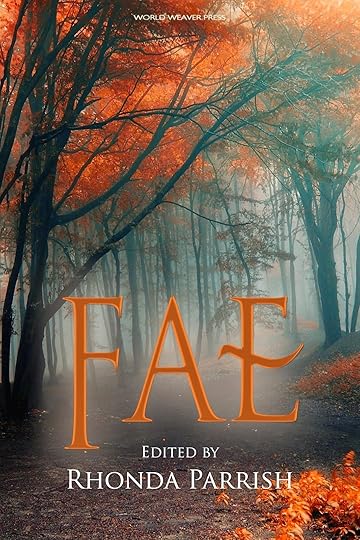 Meet Robin Goodfellow as you've never seen him before, watch damsels in distress rescue themselves, get swept away with the selkies and enjoy tales of hobs, green men, pixies and phookas. One thing is for certain, these are not your grandmother’s fairy tales. Fairies have been both mischievous and malignant creatures throughout history. They’ve dwelt in forests, collected teeth or crafted shoes. FAE is full of stories that honor that rich history while exploring new and interesting takes on the fair folk from castles to computer technologies to modern midwifing, the Old World to Indianapolis. FAE bridges traditional and modern styles, from the familiar feeling of a good old-fashioned fairy tale to urban fantasy and horror with a fae twist. This anthology covers a vast swath of the fairy story spectrum, making the old new and exploring lush settings with beautiful prose and complex characters.
With an introduction by Sara Cleto and Brittany Warman, and new stories from Sidney Blaylock Jr., Amanda Block, Kari Castor, Beth Cato, Liz Colter, Rhonda Eikamp, Lor Graham, Alexis A. Hunter, L.S. Johnson, Jon Arthur Kitson, Adria Laycraft, Lauren Liebowitz, Christine Morgan, Shannon Phillips, Sara Puls, Laura VanArendonk Baugh, and Kristina Wojtaszek.
FAE is available in trade paperback and ebook via Amazon.com, Barnesandnoble.com, Kobo.com, and other online retailers, and for wholesale through Ingram. You can also find Fae on Goodreads.
Anthologist Rhonda Parrish is driven by a desire to do All The Things. She has been the publisher and editor-in-chief of Niteblade Magazine for over five years now (which is like 25 years in internet time) and is the editor of the benefit anthology, Metastasis. In addition, Rhonda is a writer whose work has been included or is forthcoming in dozens of publications including Tesseracts 17: Speculating Canada from Coast to Coast and Imaginarium: The Best Canadian Speculative Writing. Her website, updated weekly, is at rhondaparrish.com.
World Weaver Press is a publisher of fantasy, paranormal, and science fiction, dedicated to producing quality works. We believe in great storytelling.
Laura VanArendonk Baugh author of “And Only the Eyes of Children”
Outside of your own writing, who is your favourite fairy character? (ie: Tinkerbell, Puck, etc.)
Ooh, a fun question! I’m not sure I can say she’s my favorite, because I don’t think I likeher, but I’m fascinated by Jim Butcher’s take on Queen Mab in The Dresden Files. And of course I’m not alone in thinking of Disney’s Maleficent in Sleeping Beauty as an iconic and delightfully scary fairy.
What is your favourite type of fairy, and why?
If I may go back to the Japanese youkai, Eastern fae, there are a lot of fun creatures from which to choose, and most are so very different from our own fairies. (An enormous disembodied foot which falls through your ceiling in the middle of the night and demands to be washed? A friendly household spirit made entirely of cast-off kitchen utensils?) But one of the most popular, and a personal favorite as well, is the kitsune, a shape-shifting fox.
In western lore, the Other is usually easy to identify. But kitsunecan take the form of a human, or even of a particular human you know well. And they may be benevolent or quite malicious, while they appear to be like us. So many possibilities!
Kristina Wojtaszek author of “Solomon’s Friend”
Outside of your own writing, who is your favorite fairy character? (ie: Tinkerbell, Puck, etc.)
Tom Thumb, if he can be counted as such, is my favorite fairy character. Who doesn't love a little sprite-sized superhero who defeats giants and never waivers in his bravery? He rivals Peter Pan with his forever youth, and he's even got an in with King Arthur and owes his very existence to Merlin-- doesn't get much cooler than that!
Do you believe in fairies?
In some ways, it's hard not to. I'm a woman of science, eternally fascinated by biology and the natural world, and any scientist knows that every fact you uncover leads to a hundred more questions. I can't imagine a time when we know everything there is to know about the natural world, let alone other dimensions or other universes. Could there be another life form a dimension away that has tapped into our world and made an invisible presence we haven't yet discovered, but that people have noticed now and again from odd appearances throughout the centuries? Could there be a species of insect left undiscovered in a remote patch of rainforest with unheard of intelligence, or some other striking resemblance to mankind? I'm not one to say anything's impossible.
Kari Castor author of “The Price”
Outside of your own writing, who is your favourite fairy character? (ie: Tinkerbell, Puck, etc.) What is it about them that makes them special?
I've always had a particular soft spot for Ariel from Shakespeare's The Tempest. I actually auditioned for a role in The Tempest using Ariel's "All hail, great master! grave sir, hail!" entrance (reworked to be a monologue) during my freshman year of college. (I did get cast, but as a general ensemble member, not as Ariel.)
I suppose I like Ariel because he is both so human and so inhuman. He's clearly a powerful creature, yet he's bound to the service of human Prospero, and he chafes against the confinement. He's capricious, tempestuous (ha!), at one moment recounting with glee how he burned the king's ship and terrified the sailors and at the next bemoaning the further work he is being commanded to do.Largely unlike the fairies of legend, Ariel's motivations are eminently clear -- he wants to earn his freedom from Prospero. And I've always felt that it is through the scenes with Ariel (along with Caliban) that we see the darker side of Prospero most clearly: his manipulativeness, his thoughtless cruelty, how the power he wields has perhaps corrupted him.
And yet Ariel is one of the primary driving forces behind the action in the play. We're told that Prospero is a powerful magician, but it seems that often the magic we see or hear about is really Ariel's, not Prospero's.
Do you believe in fairies?
No, I don't believe in literal fairies. I do believe, though, that it's important to keep an open mind and a sense of wonder about the world, and I think one way we do that in the modern world is by telling ourselves stories about magic and magical creatures.
***
 Meet Robin Goodfellow as you've never seen him before, watch damsels in distress rescue themselves, get swept away with the selkies and enjoy tales of hobs, green men, pixies and phookas. One thing is for certain, these are not your grandmother’s fairy tales. Fairies have been both mischievous and malignant creatures throughout history. They’ve dwelt in forests, collected teeth or crafted shoes. FAE is full of stories that honor that rich history while exploring new and interesting takes on the fair folk from castles to computer technologies to modern midwifing, the Old World to Indianapolis. FAE bridges traditional and modern styles, from the familiar feeling of a good old-fashioned fairy tale to urban fantasy and horror with a fae twist. This anthology covers a vast swath of the fairy story spectrum, making the old new and exploring lush settings with beautiful prose and complex characters.
With an introduction by Sara Cleto and Brittany Warman, and new stories from Sidney Blaylock Jr., Amanda Block, Kari Castor, Beth Cato, Liz Colter, Rhonda Eikamp, Lor Graham, Alexis A. Hunter, L.S. Johnson, Jon Arthur Kitson, Adria Laycraft, Lauren Liebowitz, Christine Morgan, Shannon Phillips, Sara Puls, Laura VanArendonk Baugh, and Kristina Wojtaszek.
FAE is available in trade paperback and ebook via Amazon.com, Barnesandnoble.com, Kobo.com, and other online retailers, and for wholesale through Ingram. You can also find Fae on Goodreads.
Anthologist Rhonda Parrish is driven by a desire to do All The Things. She has been the publisher and editor-in-chief of Niteblade Magazine for over five years now (which is like 25 years in internet time) and is the editor of the benefit anthology, Metastasis. In addition, Rhonda is a writer whose work has been included or is forthcoming in dozens of publications including Tesseracts 17: Speculating Canada from Coast to Coast and Imaginarium: The Best Canadian Speculative Writing. Her website, updated weekly, is at rhondaparrish.com.
World Weaver Press is a publisher of fantasy, paranormal, and science fiction, dedicated to producing quality works. We believe in great storytelling.


August 4, 2014
Seven Ways Running is Like Writing
At the beginning of July, I joined the gym. I was woefully out of shape, so much so that thirty minutes of walking on the treadmill felt like an accomplishment. But after a couple of weeks, I couldn't get my heart rate up as high as I wanted it. So I sort of glanced around at the other people on the treadmills near me, all of us going nowhere fast (or in my case, slowish), and I started to lumber along in an ugly, slow jog. But hey, my heart rate went up to where I wanted it. This lasted about a minute, followed by walking to recover. Lather, rinse, repeat.
"Well," I thought to myself afterwards. "I might have to keep running in order to keep reaching my target heart rate. Maybe I should train for something so I'm not aimlessly running here and there with no end goal. Hey, look, there's a 5K in October. I think I can do that without dying."
Lo and behold, the running had begun.
That led me to a program called Couch to 5K, a training program designed to get even the most avid couch potato in shape to run 3.1 miles in nine weeks. I downloaded it to my phone, and I started this past week. Somehow I'm going to be ready to run about three miles in the month before my fortieth birthday. I feel a little insane. I've never run a race before.
But then again, at one point I'd never written a novel before either. Which brings me to the tie-in. There's nothing to do while running other than think (unless you obsessively watch the clock, waiting for the moment when DEAR GOD IN HEAVEN, YOU MAY WALK NOW AND CATCH YOUR BREATH BEFORE YOU PASS OUT. HEY, THE DEFIBRILLATOR IS THAT WAY, TRY TO GO IN THAT DIRECTION WHILE GASPING TO OTHERS THAT YOU NEED HELP. Ahem. As I was saying, there are several ways in which running and writing are the same.
1. Both activities produce a lot of sweat and get my heart rate up. There might be some whimpering involved, too.
2. When I first start a running/writing session for the day, I tend to wonder why I want to torture myself so much. Am I really that much of a masochist? I must be.
3. About halfway through the running/writing session, I think, "This is the most brilliant idea I've had in a long time. This is why I do this on a regular basis!" It's either endorphins talking, or the headiness from being on the verge of passing out.
4. When I'm done, I feel accomplished and immediately want to reward myself with chocolate or a huge order of fries. You know, something to completely outdo all the good I just did.
5. Sometimes I accidentally hurt myself while running. This is no surprise, given how much of a klutz I am. But sometimes I hurt myself while writing. Sometimes I act out a fight scene with the furniture in my house. Sometimes the furniture wins.
6. I enjoy telling people I'm a writer/runner. But then I immediately panic that they're going to read my stuff/watch me shuffle down the street, and then they'll know that I should never quit my day job.
7. Prepping for a race is like writing a novel. You plan, you execute the plan, you put weeks or months of work into it. Then the Big Day comes and you wave your arms and tell people you did it, you finished, and all you get for your trouble is a breakfast burrito and a pat on the back. On second thought, breakfast burritos are pretty awesome.
The nice thing about running is that I've brought my resting heart rate down. This is quite useful for the days when the writing raises my blood pressure.
"Well," I thought to myself afterwards. "I might have to keep running in order to keep reaching my target heart rate. Maybe I should train for something so I'm not aimlessly running here and there with no end goal. Hey, look, there's a 5K in October. I think I can do that without dying."
Lo and behold, the running had begun.
That led me to a program called Couch to 5K, a training program designed to get even the most avid couch potato in shape to run 3.1 miles in nine weeks. I downloaded it to my phone, and I started this past week. Somehow I'm going to be ready to run about three miles in the month before my fortieth birthday. I feel a little insane. I've never run a race before.
But then again, at one point I'd never written a novel before either. Which brings me to the tie-in. There's nothing to do while running other than think (unless you obsessively watch the clock, waiting for the moment when DEAR GOD IN HEAVEN, YOU MAY WALK NOW AND CATCH YOUR BREATH BEFORE YOU PASS OUT. HEY, THE DEFIBRILLATOR IS THAT WAY, TRY TO GO IN THAT DIRECTION WHILE GASPING TO OTHERS THAT YOU NEED HELP. Ahem. As I was saying, there are several ways in which running and writing are the same.
1. Both activities produce a lot of sweat and get my heart rate up. There might be some whimpering involved, too.
2. When I first start a running/writing session for the day, I tend to wonder why I want to torture myself so much. Am I really that much of a masochist? I must be.
3. About halfway through the running/writing session, I think, "This is the most brilliant idea I've had in a long time. This is why I do this on a regular basis!" It's either endorphins talking, or the headiness from being on the verge of passing out.
4. When I'm done, I feel accomplished and immediately want to reward myself with chocolate or a huge order of fries. You know, something to completely outdo all the good I just did.
5. Sometimes I accidentally hurt myself while running. This is no surprise, given how much of a klutz I am. But sometimes I hurt myself while writing. Sometimes I act out a fight scene with the furniture in my house. Sometimes the furniture wins.
6. I enjoy telling people I'm a writer/runner. But then I immediately panic that they're going to read my stuff/watch me shuffle down the street, and then they'll know that I should never quit my day job.
7. Prepping for a race is like writing a novel. You plan, you execute the plan, you put weeks or months of work into it. Then the Big Day comes and you wave your arms and tell people you did it, you finished, and all you get for your trouble is a breakfast burrito and a pat on the back. On second thought, breakfast burritos are pretty awesome.
The nice thing about running is that I've brought my resting heart rate down. This is quite useful for the days when the writing raises my blood pressure.
July 27, 2014
Time Off Means Things Are Back on Track
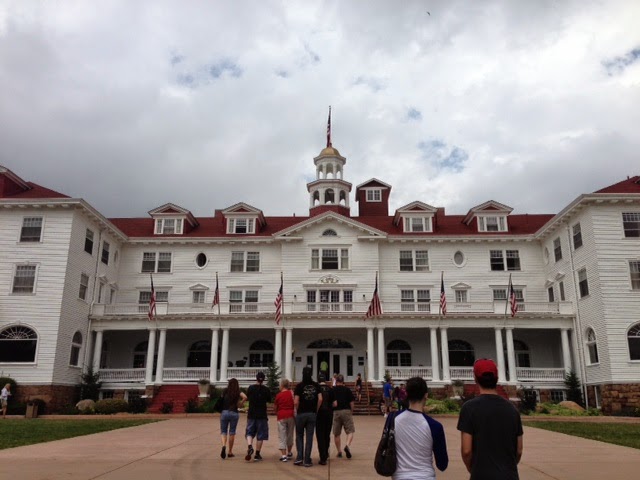 The Stanley Hotel, where stressed writers makes deals with the devil.I haven't posted an update in a while. Life has been a little nuts, and I felt like I was floundering for a while and unable to organize my thoughts. I was in a funk, and I was trying to start a new project, but it wasn't going well. See, the last novel I wrote just flowed. I finished it in a little over a month. It was the easiest time writing I'd ever had. But this time, it was hard. I couldn't get the beginning quite right. The tone and voice were off. It was way too serious, and even though this is, at heart, a dark story, I wanted a lighter beginning. I wanted something mundane to balance out the darkness to come. And so I finally latched onto it, and I got to 20,000 words this week. Hurrah!
I've also been taking a class called Writing From the Heart. It's pushed me to delve into the things I hate, fear, love. Really, anything that makes me feel deeply. I've been wanting to take a course like this for some time. I feel like I hold back way too often when I write, and if I could just push through, I could create some really amazing stuff. This week I came up with an idea that excited me, and also scared the poop out of me. Horror story, here I come!
And as if that wasn't enough, I've begun final preparations for publishing the sequel to The Graveyard Girl. I'm looking forward to getting this story into the world. With all of this going on, is it any wonder that I had a hard time focusing? I guess not.
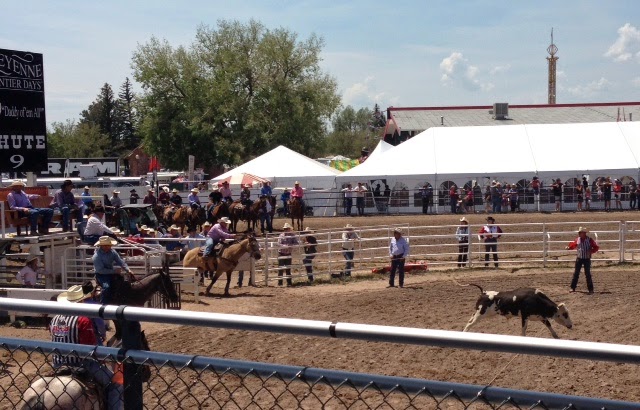 Run, little steer!Sometimes the best thing to do when you're stuck is to take a break. So I went out of town with the family this weekend for Frontier Days in Cheyenne, Wyoming. It's a huge rodeo, or as they like to call it, "The Daddy of Them All." Being from Texas, I enjoy a good rodeo, and Frontier Days didn't let me down. I watched bull riding, bronc riding, roping. There were horses and steer, and cowboys and cowgirls everywhere. The one odd thing was, there was also a drone at the rodeo. It hovered over the field like a giant mosquito. I'm not sure what exactly it was doing, but it was creepy.
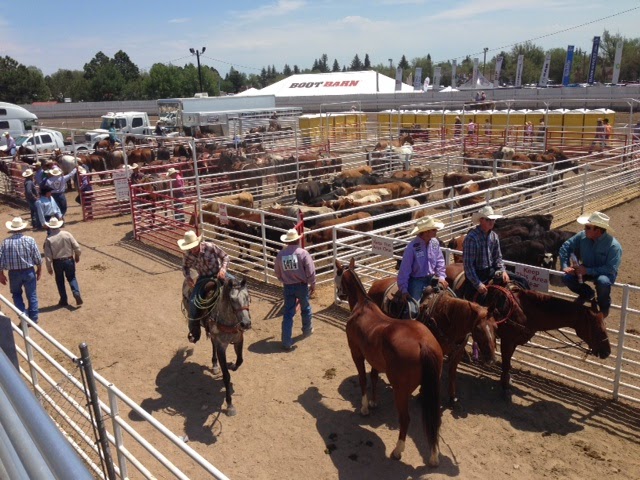 Cowboys prepare for competitionSo this week I will slowly get back into the usual frantic pace. It's back to writing my latest novel, working on another to prep it for publication, and finishing up my class. It's back to work, and laundry, and errands, and preparing the kiddo for school. But I feel energized by my break and ready to tackle it all like a cowgirl bulldogging a steer.
June 23, 2014
A Visit to Tinkertown
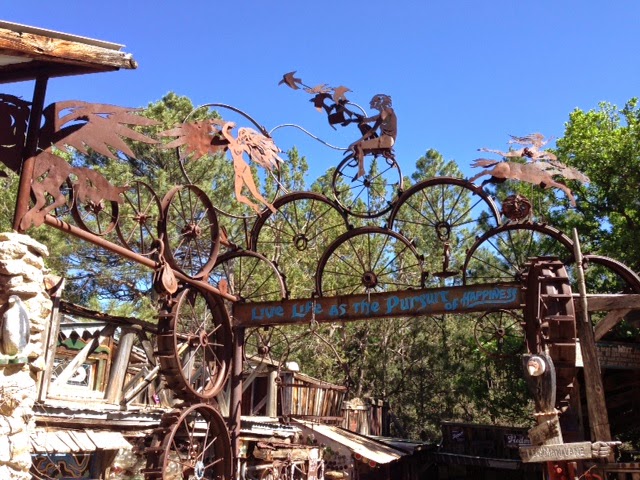 The outside was fascinating in and of itselfI've talked before about Artist's Dates, and this past week I had the chance to go to a new and quirky place with my son on what amounted to a combined Artist Date and nice afternoon with him.
We visited Tinkertown in Sandia Crest, which is located on the eastern side of the Sandia Mountains, about 20 minutes outside Albuquerque. It's a museum filled with carvings by Ross Ward, collectibles from all over the world, and even a boat that's travelled around the world. The museum is surrounded by pine trees, and when we got out of the car, I could smell horses along with the forest's scent. Sure enough, there was a small paddock nearby where a couple of horses watched over us.
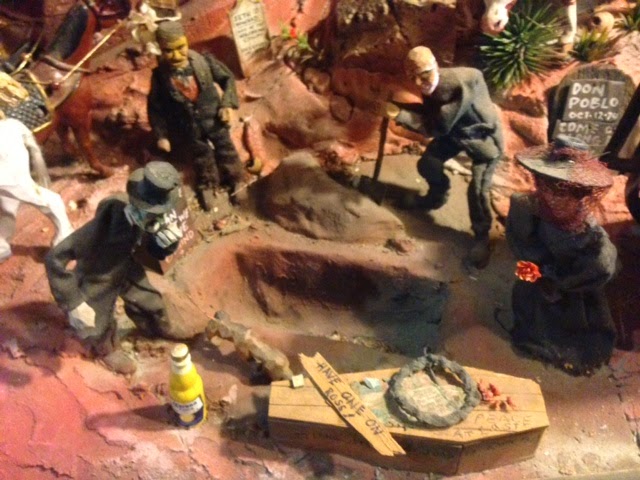 A wee little burial
There is a lot to see in every single bit of space in the museum. It's made of a couple dozen rooms linked by some crazy wooden walkways that were pretty steep in some areas, with old license plates and horseshoes embedded here and there and glass bottles in the walls.
There was an Old West village in miniature, and an entire circus in miniature. In the glass case called Boot Hill, you could watch God and the devil battle it out over one man's soul while skeletons danced at the top of a hill overlooking a tiny cemetery.
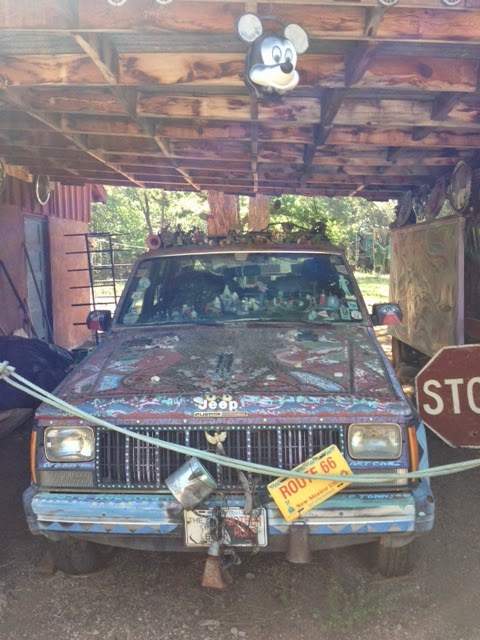 The art car
One of the things that touched me most, though, was when we stumbled across an art car. Ross Ward was diagnosed with Alzheimer's, and eventually he got to the point where he figured he shouldn't drive his car anymore, but he didn't know what to do with it. A friend suggested he turn it into a piece of art. And so he did. He wasn't tempted to drive it anymore since it was a piece of art and no longer just his car. I found it an interesting and insightful solution into the problem of giving up one's car when the time as appropriate.
I find it remarkable that one person's passion grew so much and became popular enough to draw in thousands of visitors every year.
June 9, 2014
Remembering Art Class
I came across something the other day that gave me quite a shock. I found an old pencil drawing I had done sometime around the age of twenty. I'd bought a sketchpad and a book on drawing and had spent some time doodling and playing, much of it at the table in the back of our house (given some of the subject matter in the sketchpad, like an aluminum Jon boat and a duck) where I could look out the window and draw whatever I spotted.
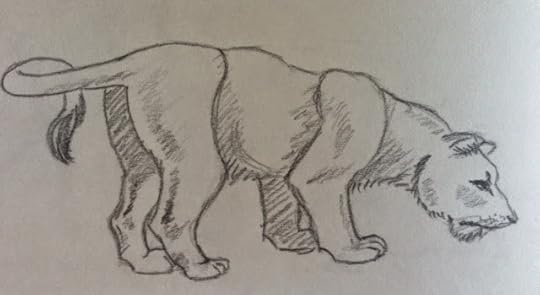 One of my many masterpieces
It's no Michelangelo, and yet the first thing I thought when I saw it for the first time after many years was, "Hunh, that's not bad." But it did bring back memories, mostly of the elective art class I took in high school, and the teacher, Ms. Tarrant.
The high school I graduated from required two art classes. I'd already taken one at my old school, and the one I took at my new school was rather bland. But, the elective was exciting. We were the kids who really dug art, and Ms. Tarrant was about the nicest teacher you could ever imagine. I still remember how she always wore her red hair in the same bouffant every day. And one time she called in a substitute teacher because she lived near the zoo, and one of the lions had escaped and was somewhere in her neighborhood and she didn't want to leave the house. I couldn't really blame her for that one.
Anyway, she let us listen to whatever music we wanted, which usually ended up being The Ramones or heavy metal. She would tolerate a rather generous portion of time listening to it before she let us know she couldn't take it any more, and then she'd put on her own tape. She always put on Neil Diamond. When I hear Neil Diamond, I always go back to that room and the smell of paint and charcoal.
We worked with all sorts of media in that class. One time I made about ten or a dozen airbrushed prints using the same star-like shape over and over, just experimenting with colors and how I laid out the pattern. I entered the best piece and a couple of other pieces in an art show and, just for the heck of it, assigned prices to them in case anybody wanted to buy one. To my surprise, I sold that airbrush piece. Apparently a little girl saw it and loved it and wanted to put it up in her bedroom because she loved stars. I imagined my piece framed and hanging up in a room somewhere, maybe surrounded by teddy bears or unicorns, or lots of books. That was the best feeling, that I had made something I liked and that somebody else liked, too.
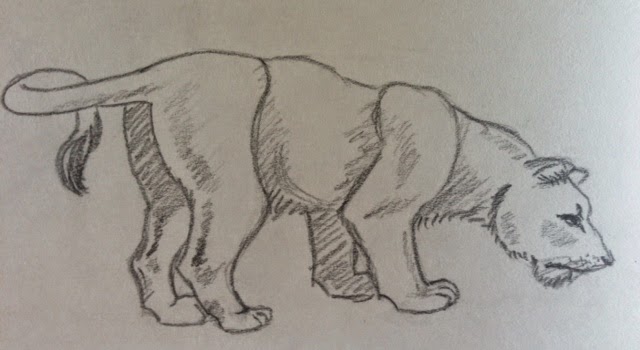 One of my many masterpieces
It's no Michelangelo, and yet the first thing I thought when I saw it for the first time after many years was, "Hunh, that's not bad." But it did bring back memories, mostly of the elective art class I took in high school, and the teacher, Ms. Tarrant.
The high school I graduated from required two art classes. I'd already taken one at my old school, and the one I took at my new school was rather bland. But, the elective was exciting. We were the kids who really dug art, and Ms. Tarrant was about the nicest teacher you could ever imagine. I still remember how she always wore her red hair in the same bouffant every day. And one time she called in a substitute teacher because she lived near the zoo, and one of the lions had escaped and was somewhere in her neighborhood and she didn't want to leave the house. I couldn't really blame her for that one.
Anyway, she let us listen to whatever music we wanted, which usually ended up being The Ramones or heavy metal. She would tolerate a rather generous portion of time listening to it before she let us know she couldn't take it any more, and then she'd put on her own tape. She always put on Neil Diamond. When I hear Neil Diamond, I always go back to that room and the smell of paint and charcoal.
We worked with all sorts of media in that class. One time I made about ten or a dozen airbrushed prints using the same star-like shape over and over, just experimenting with colors and how I laid out the pattern. I entered the best piece and a couple of other pieces in an art show and, just for the heck of it, assigned prices to them in case anybody wanted to buy one. To my surprise, I sold that airbrush piece. Apparently a little girl saw it and loved it and wanted to put it up in her bedroom because she loved stars. I imagined my piece framed and hanging up in a room somewhere, maybe surrounded by teddy bears or unicorns, or lots of books. That was the best feeling, that I had made something I liked and that somebody else liked, too.
May 26, 2014
My Experience With Indie Publishing (Post 2)
If you missed my first post on indie publishing, you can find it here. This time around, I'll be talking about picking a cover, getting reviews, marketing, and writing the next book.
Initially I had grandiose ideas about creating my own cover. There are plenty of sites out there with stock photos, and people swear by Gimp for fiddling with images, font, etc. I know some people who have designed their own covers and do a fantastic job at it, Maya Lassiter being one. So I looked at stock images and started thinking about what I wanted the cover of The Graveyard Girl to look like. And I was overwhelmed with the choices. Choice paralysis is a real thing, and it was inhibiting my going forward with the cover.
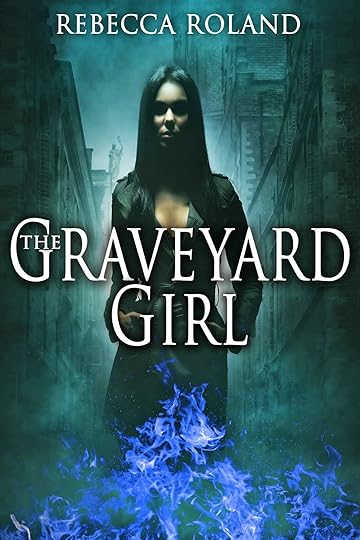 Contrary to popular belief, this is not a self portrait.
I had already signed up with Smashwords, so I went to their list of cover designers and started looking through them. I had a few questions in mind as I searched. Who had made plenty of fantasy and/or young adult covers? Who fit into my budget? Who had a professional looking site? Did they have plenty of examples of covers so I could get a feel for what they were capable of? I settled onVila Design because (1) she'd done a lot of covers, (2), they looked good, (3) many were in the genre I wrote in, and (4) she fit my budget. She gave me about eight to ten images to consider, some of which were really good but I never would have thought to include in my search. She seemed like a mind reader when it came to presenting me with the final two cover choices (or maybe she's made a billion covers so she knows what to expect), and she was fast. My choice paralysis was gone, and I had a shiny new cover.
Reviews are important. They let people know that someone has read your book, and they give readers a better idea about whether or not they might enjoy a particular book. Honest reviews help make a book more noticeable. It's a good idea to ask people for honest reviews via social media, or by asking at the book's end, or by asking for reviews from those who do a bunch of them. There are plenty of people out there who love to read and want to be among the first to get their hands on a good book. One helpful site I found is The Indie Book Reviewers List. It can take a long time to wade through all of the reviewers out there, so it's something I end up doing in bits and pieces when I have time. Word of mouth is one of the most important ways of selling a book, and if you find some good folks willing to review yours and spread the news, then that will help your book start to build momentum.
Once you've got your book out and you've spread the word, the best thing you can do to market it is to write the next book. People enjoy binge watching TV, and they enjoy binge reading their favorite author and/or series. The more books you have out, the more you'll sell, and the happier you'll make your readers. When I decided to self-publish The Graveyard Girl, I waited until I had a rough draft of the second book in the series and had the third novel roughly outlined. Right now I'm working on edits for the second book and tentatively hope to have it out by September, and I hope to have the third one out about four to six months after that.
I'm constantly learning as I go along, and I'm constantly tweaking my plans. As I cross items off my to-do list, others sneak on. But for someone who is a control freak (like me), self-publishing is a great venue. I rely on others to help, but ultimately, I get to say when the book comes out, where, and what it looks like. I was scared when I began this process, but that quickly turned into absolute happiness as I realized just how much fun the process was.
Initially I had grandiose ideas about creating my own cover. There are plenty of sites out there with stock photos, and people swear by Gimp for fiddling with images, font, etc. I know some people who have designed their own covers and do a fantastic job at it, Maya Lassiter being one. So I looked at stock images and started thinking about what I wanted the cover of The Graveyard Girl to look like. And I was overwhelmed with the choices. Choice paralysis is a real thing, and it was inhibiting my going forward with the cover.
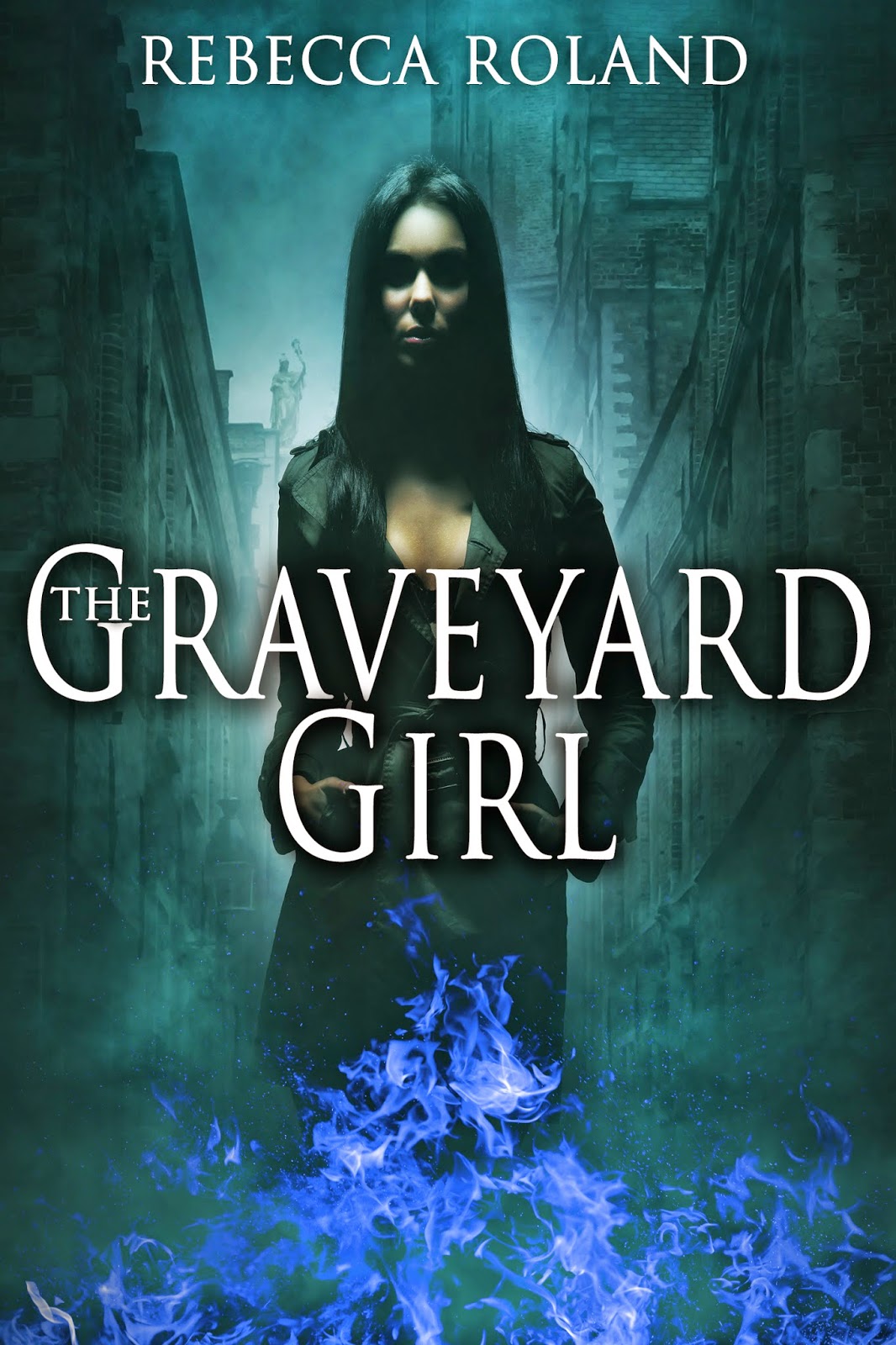 Contrary to popular belief, this is not a self portrait.
I had already signed up with Smashwords, so I went to their list of cover designers and started looking through them. I had a few questions in mind as I searched. Who had made plenty of fantasy and/or young adult covers? Who fit into my budget? Who had a professional looking site? Did they have plenty of examples of covers so I could get a feel for what they were capable of? I settled onVila Design because (1) she'd done a lot of covers, (2), they looked good, (3) many were in the genre I wrote in, and (4) she fit my budget. She gave me about eight to ten images to consider, some of which were really good but I never would have thought to include in my search. She seemed like a mind reader when it came to presenting me with the final two cover choices (or maybe she's made a billion covers so she knows what to expect), and she was fast. My choice paralysis was gone, and I had a shiny new cover.
Reviews are important. They let people know that someone has read your book, and they give readers a better idea about whether or not they might enjoy a particular book. Honest reviews help make a book more noticeable. It's a good idea to ask people for honest reviews via social media, or by asking at the book's end, or by asking for reviews from those who do a bunch of them. There are plenty of people out there who love to read and want to be among the first to get their hands on a good book. One helpful site I found is The Indie Book Reviewers List. It can take a long time to wade through all of the reviewers out there, so it's something I end up doing in bits and pieces when I have time. Word of mouth is one of the most important ways of selling a book, and if you find some good folks willing to review yours and spread the news, then that will help your book start to build momentum.
Once you've got your book out and you've spread the word, the best thing you can do to market it is to write the next book. People enjoy binge watching TV, and they enjoy binge reading their favorite author and/or series. The more books you have out, the more you'll sell, and the happier you'll make your readers. When I decided to self-publish The Graveyard Girl, I waited until I had a rough draft of the second book in the series and had the third novel roughly outlined. Right now I'm working on edits for the second book and tentatively hope to have it out by September, and I hope to have the third one out about four to six months after that.
I'm constantly learning as I go along, and I'm constantly tweaking my plans. As I cross items off my to-do list, others sneak on. But for someone who is a control freak (like me), self-publishing is a great venue. I rely on others to help, but ultimately, I get to say when the book comes out, where, and what it looks like. I was scared when I began this process, but that quickly turned into absolute happiness as I realized just how much fun the process was.
May 21, 2014
FAE Anthology Cover Reveal!
My publisher, World Weaver Press, is putting out a beautiful anthology, Fae, on July 22nd. The cover art is stunning, and the list of contributors is filled with some great authors. The synopsis:
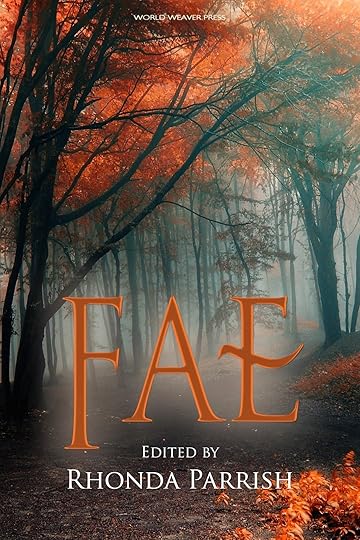 Meet Robin Goodfellow as you’ve never seen him before, watch damsels in distress rescue themselves,
Fae
is full of stories that honor that rich history while exploring new and interesting takes on the fair folk from castles to computer technologies and modern midwifing, the Old World to Indianapolis.
Fae
covers a vast swath of the fairy story spectrum, making the old new and exploring lush settings with beautiful prose and complex characters. Enjoy the familiar feeling of a good old-fashioned fairy tale alongside urban fantasy and horror with a fae twist.
Meet Robin Goodfellow as you’ve never seen him before, watch damsels in distress rescue themselves,
Fae
is full of stories that honor that rich history while exploring new and interesting takes on the fair folk from castles to computer technologies and modern midwifing, the Old World to Indianapolis.
Fae
covers a vast swath of the fairy story spectrum, making the old new and exploring lush settings with beautiful prose and complex characters. Enjoy the familiar feeling of a good old-fashioned fairy tale alongside urban fantasy and horror with a fae twist.
get swept away with the selkies and enjoy tales of hobs, green men, pixies and phookas. One thing is for certain, these are not your grandmother’s fairy tales. Fairies have been both mischievous and malignant creatures throughout history. They’ve dwelt in forests, collected teeth or crafted shoes.
With an introduction by Sara Cleto and Brittany Warman, and new stories from Sidney Blaylock Jr., Amanda Block, Kari Castor, Beth Cato, Liz Colter, Rhonda Eikamp, Lor Graham, Alexis A. Hunter, L.S. Johnson, Jon Arthur Kitson, Adria Laycraft, Lauren Liebowitz, Christine Morgan, Shannon Phillips, Sara Puls, Laura VanArendonk Baugh, and Kristina Wojtaszek.
There's a giveaway on Goodreads with six copies available. Enter to win, or spread the word!
 Meet Robin Goodfellow as you’ve never seen him before, watch damsels in distress rescue themselves,
Fae
is full of stories that honor that rich history while exploring new and interesting takes on the fair folk from castles to computer technologies and modern midwifing, the Old World to Indianapolis.
Fae
covers a vast swath of the fairy story spectrum, making the old new and exploring lush settings with beautiful prose and complex characters. Enjoy the familiar feeling of a good old-fashioned fairy tale alongside urban fantasy and horror with a fae twist.
Meet Robin Goodfellow as you’ve never seen him before, watch damsels in distress rescue themselves,
Fae
is full of stories that honor that rich history while exploring new and interesting takes on the fair folk from castles to computer technologies and modern midwifing, the Old World to Indianapolis.
Fae
covers a vast swath of the fairy story spectrum, making the old new and exploring lush settings with beautiful prose and complex characters. Enjoy the familiar feeling of a good old-fashioned fairy tale alongside urban fantasy and horror with a fae twist.get swept away with the selkies and enjoy tales of hobs, green men, pixies and phookas. One thing is for certain, these are not your grandmother’s fairy tales. Fairies have been both mischievous and malignant creatures throughout history. They’ve dwelt in forests, collected teeth or crafted shoes.
With an introduction by Sara Cleto and Brittany Warman, and new stories from Sidney Blaylock Jr., Amanda Block, Kari Castor, Beth Cato, Liz Colter, Rhonda Eikamp, Lor Graham, Alexis A. Hunter, L.S. Johnson, Jon Arthur Kitson, Adria Laycraft, Lauren Liebowitz, Christine Morgan, Shannon Phillips, Sara Puls, Laura VanArendonk Baugh, and Kristina Wojtaszek.
There's a giveaway on Goodreads with six copies available. Enter to win, or spread the word!
May 19, 2014
My Experience With Indie Publishing (Post 1)
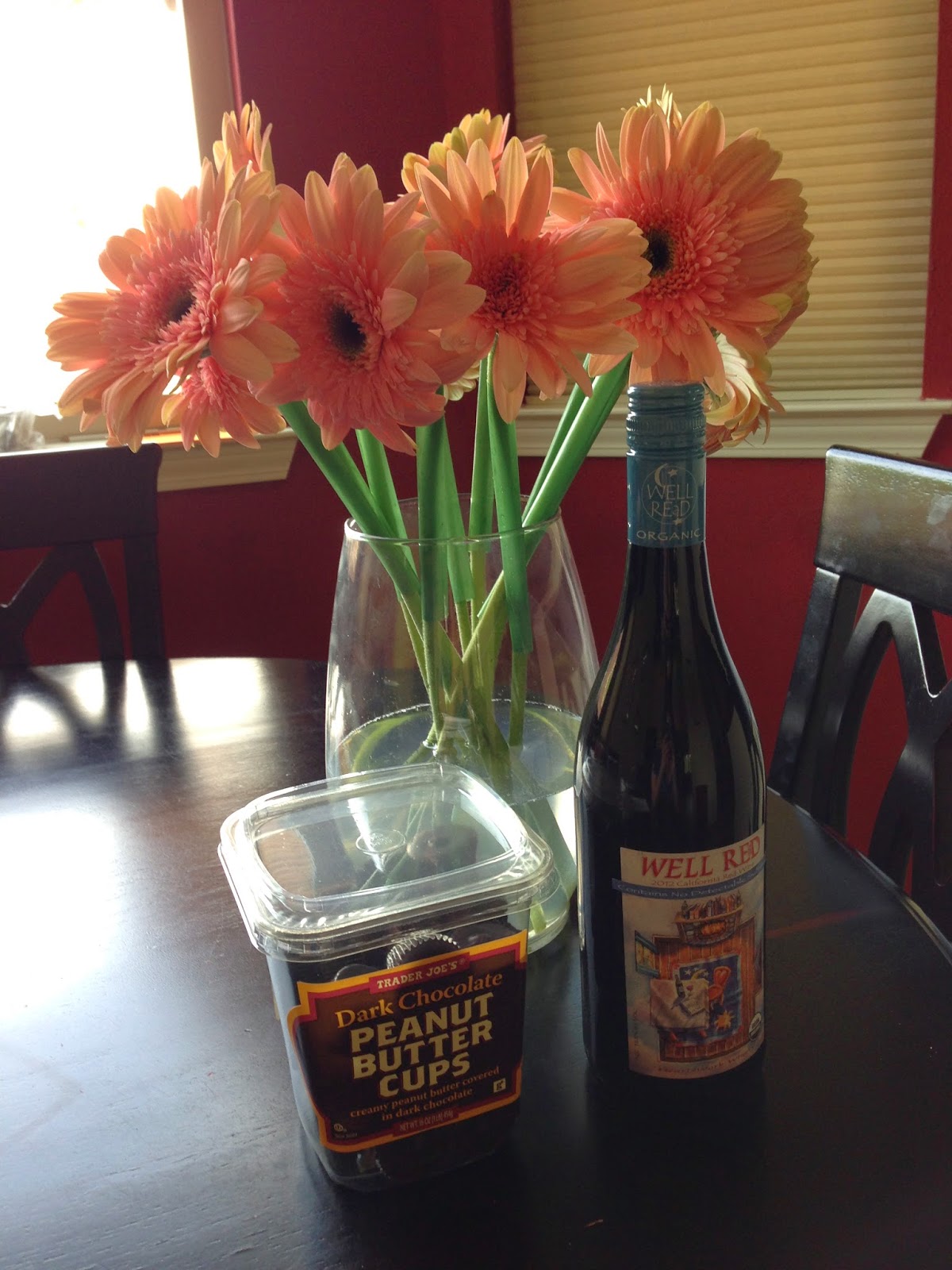 I celebrated my book's appearance on Amazon in style.Things are winding down after a frantic few weeks. On May 1st, I released the first book in a series. It was my first foray into indie publishing, and it was as exciting and terrifying as releasing a book through a publisher, perhaps even more so because ultimately, the buck stops here, so I thought I'd share my experience.
First of all, I had this idea that I would have a 'release day' in which the book went live across all electronic platforms. Excuse me while I go laugh hysterically in the corner for a second. Ahem. So. I'm sure it can be done, but I have no idea how. Amazon took a few hours to have the book ready to sell. Barnes and Noble and Kobo had it ready in about a day. The iTunes store required an act of Congress, a small blood sacrifice, and about two weeks of time to have the book ready. In the future, if I want a 'release day,' I'll simply plan on a day about a month after I start publishing the book. But since I'm fairly lazy, I'll probably just do it the same way I did it this time--one venue per day.
One of the first things I did when I decided to self publish was read a couple of books on indie publishing. I read Indie And Small Press Book Marketing by William Hertling. It includes a convenient checklist for the time leading up to publication, during, and after. I made my own checklist based off his, and it helped immensely. Instead of flailing and wondering what to do when, I could just make my way down the list, feeling self-satisfied as I checked things off. I also read Your First 1000 Copies by Tim Grahl. He focused most of his advice on making and using an email reader list, which is something I haven't gotten around to doing yet. And I read numerous blogs, trying to absorb every person's experience and decide what I wanted mine to be like, including Jeff Carlson's guest spot on SF Signal and these tips from M. Darusha Wehm.
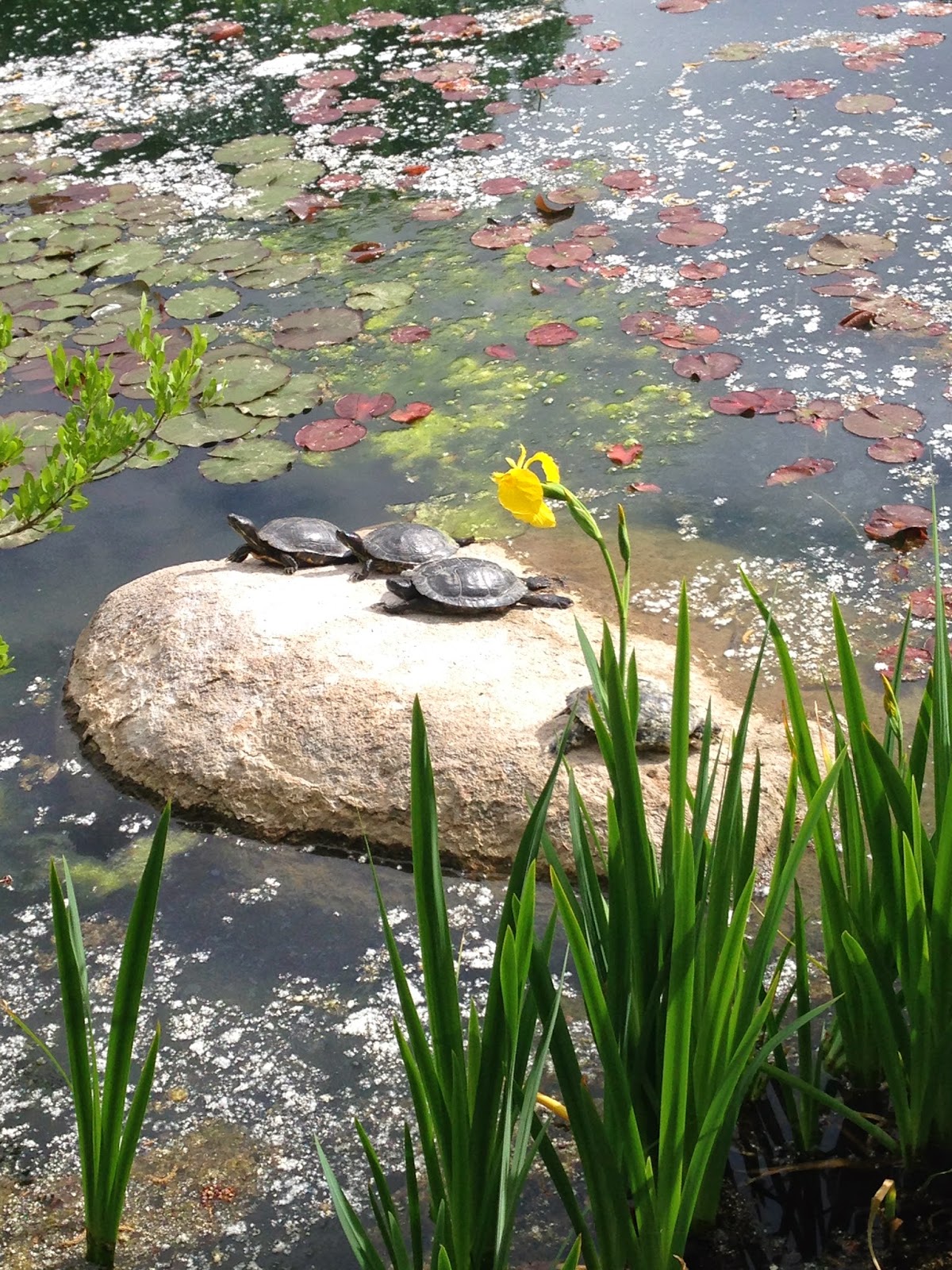 I'm lazier than turtles sunning on a rock.The next thing I did was make the book as polished as possible. After making changes based on reader feedback, I read it over. Then I let it rest and read it through again. Only when I was satisfied I'd done all I could on a macro and micro level did I bring in a professional freelance editor to look it over. I used E-Quality Press. Not only did they do a fantastic job, but the editor got what I was trying to do. He formatted the files for me in addition to editing (more on that in a bit), and when it came time to format the file for the print copy, he asked if I wanted the story to begin on page 13. I was amused that he had gotten to know me well enough in a short period of time (and through email, too) to even know to ask that.
A lot of authors format their files themselves. Initially I thought I'd go that direction, but when it came time, I simply had no desire to learn how to convert my Word document into the proper format (Do you see a pattern? Seriously, I'm the laziest person around. I'm worse than Garfield the cat). It was worth letting somebody else do that work while I panicked over other things, like the book's cover, which I will discuss in another post along with reviews and miscellaneous other items.
Until then, if you have any links or books or anything at all that you'd like to share when it comes to indie publishing, feel free to comment.
May 5, 2014
Everything. Everyone. Everywhere. Ends.
The tile of this blog post is the tagline used for the final season of Six Feet Under. Fair warning, spoilers for the show are about to happen, so if you haven't seen it and you want to, stop reading.
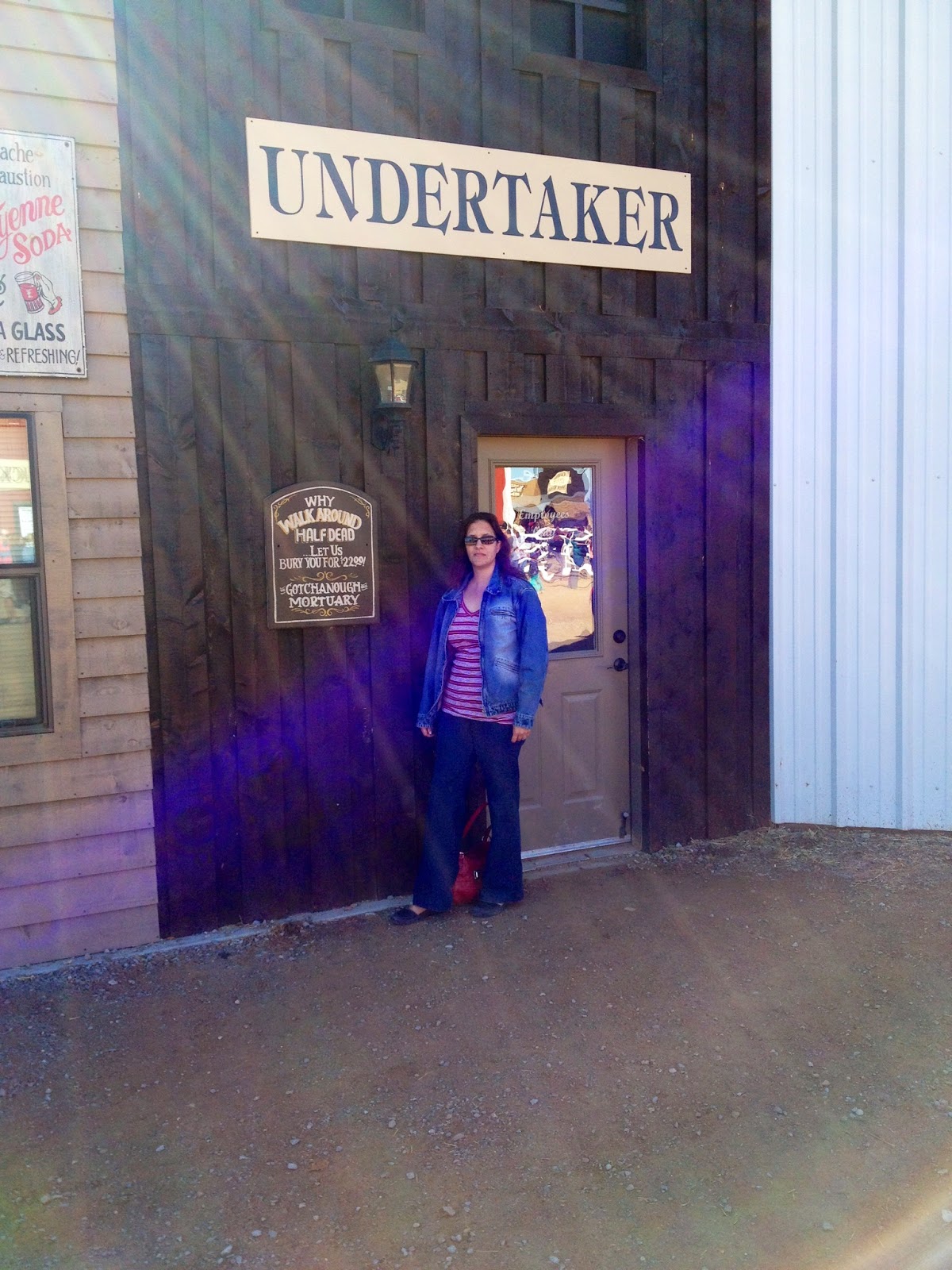
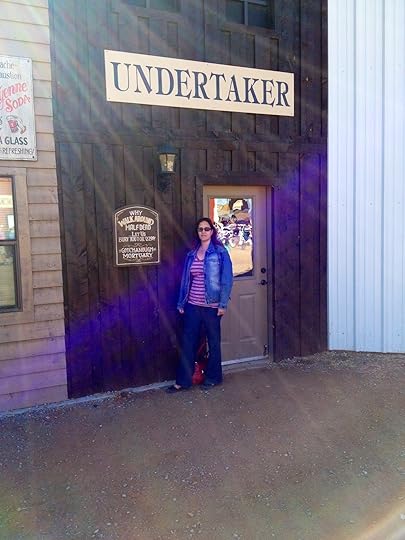 My HS economics teacher suggested I be a mortician. Seriously.I've said it before, the finale for this series was the best finale to any show I've ever seen. Nothing has come close to topping it, not even my beloved Breaking Bad, good as that finale was. I've been trying to figure out why that last episode did so much for me, and I think I finally figured it out.
The show was about death. It was about funeral homes and how the little businesses stacked up against the big, corporate ones. It was about family. But mostly, it was about death. Every episode opened with somebody dying. There were old people dying of, well, old age, people dying in accidents, kids dying, spouses dying, parents dying. It was right there, in your face.
At some point in the last century or so, it became rather taboo to talk about death. I've seen people avoid the topic, or refuse to attend funerals. They might do the equivalent of sticking their fingers in their ears and saying, "Lalalalalala, can't hear you!" Not so long ago, people talked about death more openly. When somebody died, they were laid out in their home for the viewing. In Victorian times, people died young, and often. There was no avoiding the topic. But now we go to funeral homes to view the deceased. People live longer, and so they might put off thinking about the inevitable. It's a topic that makes a lot of people uncomfortable.
Shows like Six Feet Under are bringing death to the forefront, though, and perhaps encouraging people to think a little more about their deaths. So what is it about that show's ending that made such an impression on me? Well, almost every other series finale ends with the main characters still going about their lives in some way. But in Six Feet Under, we get to see snippets of how the rest of their lives played out, and how they died. Every single character's death is shown, all while Sia's "Breathe Me" played in the background. Incidentally, if you haven't heard this song, it's great. But there was no question about what happened to any of the characters. We saw them all die. It was such an intimate moment, and moving, and terribly sad, and completely satisfying. Holy cow, I'm sort of tearing up writing this. Yes, the ending was that good.
I'm not saying that every show needs to do this. But for this series, it was perfect. Everything. Everyone. Everywhere. Ended.
 My HS economics teacher suggested I be a mortician. Seriously.I've said it before, the finale for this series was the best finale to any show I've ever seen. Nothing has come close to topping it, not even my beloved Breaking Bad, good as that finale was. I've been trying to figure out why that last episode did so much for me, and I think I finally figured it out.
The show was about death. It was about funeral homes and how the little businesses stacked up against the big, corporate ones. It was about family. But mostly, it was about death. Every episode opened with somebody dying. There were old people dying of, well, old age, people dying in accidents, kids dying, spouses dying, parents dying. It was right there, in your face.
At some point in the last century or so, it became rather taboo to talk about death. I've seen people avoid the topic, or refuse to attend funerals. They might do the equivalent of sticking their fingers in their ears and saying, "Lalalalalala, can't hear you!" Not so long ago, people talked about death more openly. When somebody died, they were laid out in their home for the viewing. In Victorian times, people died young, and often. There was no avoiding the topic. But now we go to funeral homes to view the deceased. People live longer, and so they might put off thinking about the inevitable. It's a topic that makes a lot of people uncomfortable.
Shows like Six Feet Under are bringing death to the forefront, though, and perhaps encouraging people to think a little more about their deaths. So what is it about that show's ending that made such an impression on me? Well, almost every other series finale ends with the main characters still going about their lives in some way. But in Six Feet Under, we get to see snippets of how the rest of their lives played out, and how they died. Every single character's death is shown, all while Sia's "Breathe Me" played in the background. Incidentally, if you haven't heard this song, it's great. But there was no question about what happened to any of the characters. We saw them all die. It was such an intimate moment, and moving, and terribly sad, and completely satisfying. Holy cow, I'm sort of tearing up writing this. Yes, the ending was that good.
I'm not saying that every show needs to do this. But for this series, it was perfect. Everything. Everyone. Everywhere. Ended.
May 1, 2014
It All Leads Up To This
An article came out recently about three books bound in human flesh at Harvard. Since then, it's been shown that one of them is actually made of sheepskin, but that still leaves a couple of books allegedly made out of people. (And now I have an image in my mind of Charlton Heston falling to his knees and saying, "It's people! The dictionary is made of people!") I got excited when this article came out, not because I'm hoping to bind a tome in human flesh, but because the book of magic in The Graveyard Girl is made of the flesh of Rose's necromantic ancestors.
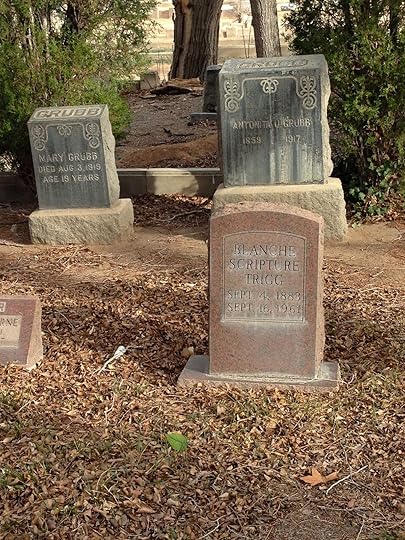 So I got to thinking about the various options available to people--and their bodies--once they die. Most people opt for a burial or cremation, and most people who go the casket route end up embalmed. In the U.S., embalming wasn't a popular choice until the Civil War when soldiers had to be shipped a long way to return home after they died. A man named Thomas Holmes is credited for creating modern day embalming, and it became a booming business. Interestingly enough, before he died, Holmes requested that he not be embalmed.
A lot of people are choosing green burials as an alternative. Simply put, no embalming fluid is used, and the body is contained in something biodegradable. There are special cemeteries that allow green burials, and having seen a number of dead bodies preserved with formaldehyde, I'm inclined to prefer green burials myself. I rather like the thought of a tree or some flowers growing over me.
But if cemeteries and urns sound too mundane, you can always turn your ashes into a diamond. Shiny!
As for Rose, her words of wisdom and her blood will end up in the book of magic to be passed on to another generation of necromancers because that's the way it's done in her family.
 So I got to thinking about the various options available to people--and their bodies--once they die. Most people opt for a burial or cremation, and most people who go the casket route end up embalmed. In the U.S., embalming wasn't a popular choice until the Civil War when soldiers had to be shipped a long way to return home after they died. A man named Thomas Holmes is credited for creating modern day embalming, and it became a booming business. Interestingly enough, before he died, Holmes requested that he not be embalmed.
A lot of people are choosing green burials as an alternative. Simply put, no embalming fluid is used, and the body is contained in something biodegradable. There are special cemeteries that allow green burials, and having seen a number of dead bodies preserved with formaldehyde, I'm inclined to prefer green burials myself. I rather like the thought of a tree or some flowers growing over me.
But if cemeteries and urns sound too mundane, you can always turn your ashes into a diamond. Shiny!
As for Rose, her words of wisdom and her blood will end up in the book of magic to be passed on to another generation of necromancers because that's the way it's done in her family.