Rebecca Roland's Blog, page 2
November 30, 2020
Serenity Now!
This year has been a big challenge for everybody. Like a lot of other people, I found myself dealing with some huge stressors. I've had to deal with the pandemic, with the election, with the death of George Floyd and all that it exposed, with fires, with worrying about jobs and child care and schooling. At one point, my skin was itching and patching over, and I felt like I was going to literally turn into a fire breathing dragon. While I love dragons, the process of turning into one is not so great. The last time my skin reacted like this was when my mother died, so yes, there's been a LOT of stress this year.
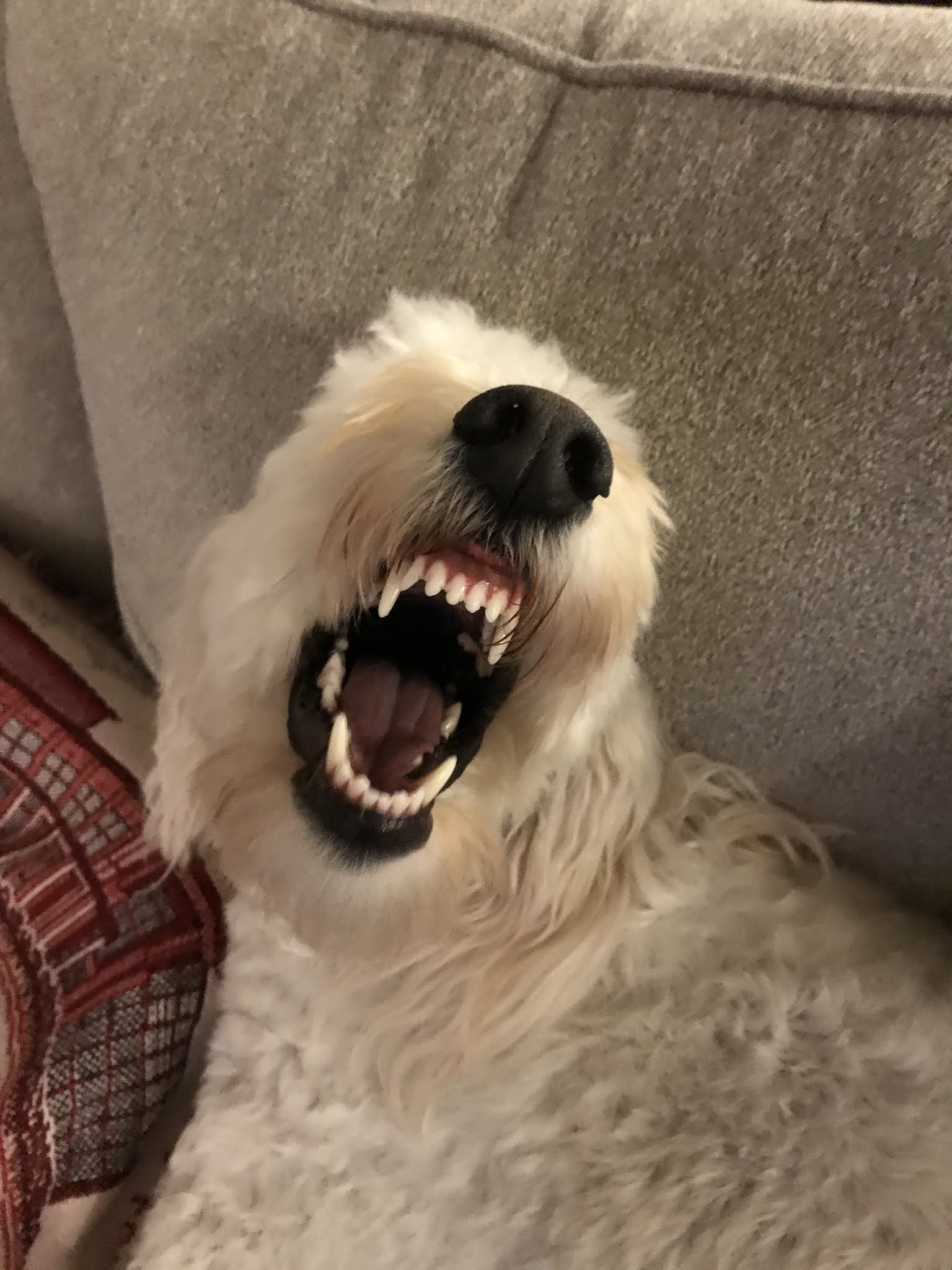 Not how it should feelWithout having kendo to turn to in order to help mitigate my stress, I have relied on running, and I recently tried one other activity that I've tried in the past and miserably failed at--meditation.
I had a lot of preconceived ideas about meditation going in. It should make me feel calm and peaceful, and I shouldn't have any thoughts at all. My mind should be a tranquil blank. Right? Riiiiight. In the past--and a few weeks ago when I picked it up again--every time I have started meditating, I have become a huge ball of rage, and it scared me. Where was the peace and calm? Why was I turning into the biggest jerk ever? What was wrong with me???
Reader, nothing was wrong with me. Apparently, when you start examining your emotions instead of walling them off, you find... some interesting things.
So, this time around I picked up a book called Meditation Now by Elizabeth Reninger. I've only made it through the first part of the book, but it's a pretty good, low-key introduction to meditation. There's no pressure to do it "right," just to get started, at least in the initial part of the book. I also recently listened to the audio book Think Like a Monk by Jay Shetty. It was a pretty good listen, and it helped me think about, well, thinking, in a different way. What really stood out to me was the difference he showed between what he called the "monk mind" and the "monkey mind." Your monk mind is your friend. Your monkey mind is about as useful at keeping you out of trouble as an actual monkey.
Both of these books were helpful for getting me past the initial ragey, stabby feeling that meditation had always brought on. Right at the best possible moment, a friend recommended an app called "Waking Up" by Sam Harris. I've tried a meditation app before ("Headspace," which has many positive reviews, but also made me feel... yep, you guessed it, raaaaaage). At this point, I'm nearly done with the introductory lessons, and I've meditated every day for a little over a month. I'm happy to say, meditation no longer leaves me feeling like Godzilla on steroids. Maybe it's because there's not as much focus on what I think--or rather, thought--meditation should be, and more on just letting go of my preconceived ideas and trusting in the learning process. That's something I learned in kendo--what I'm doing might not make sense, but it will. Eventually. Trust the process.
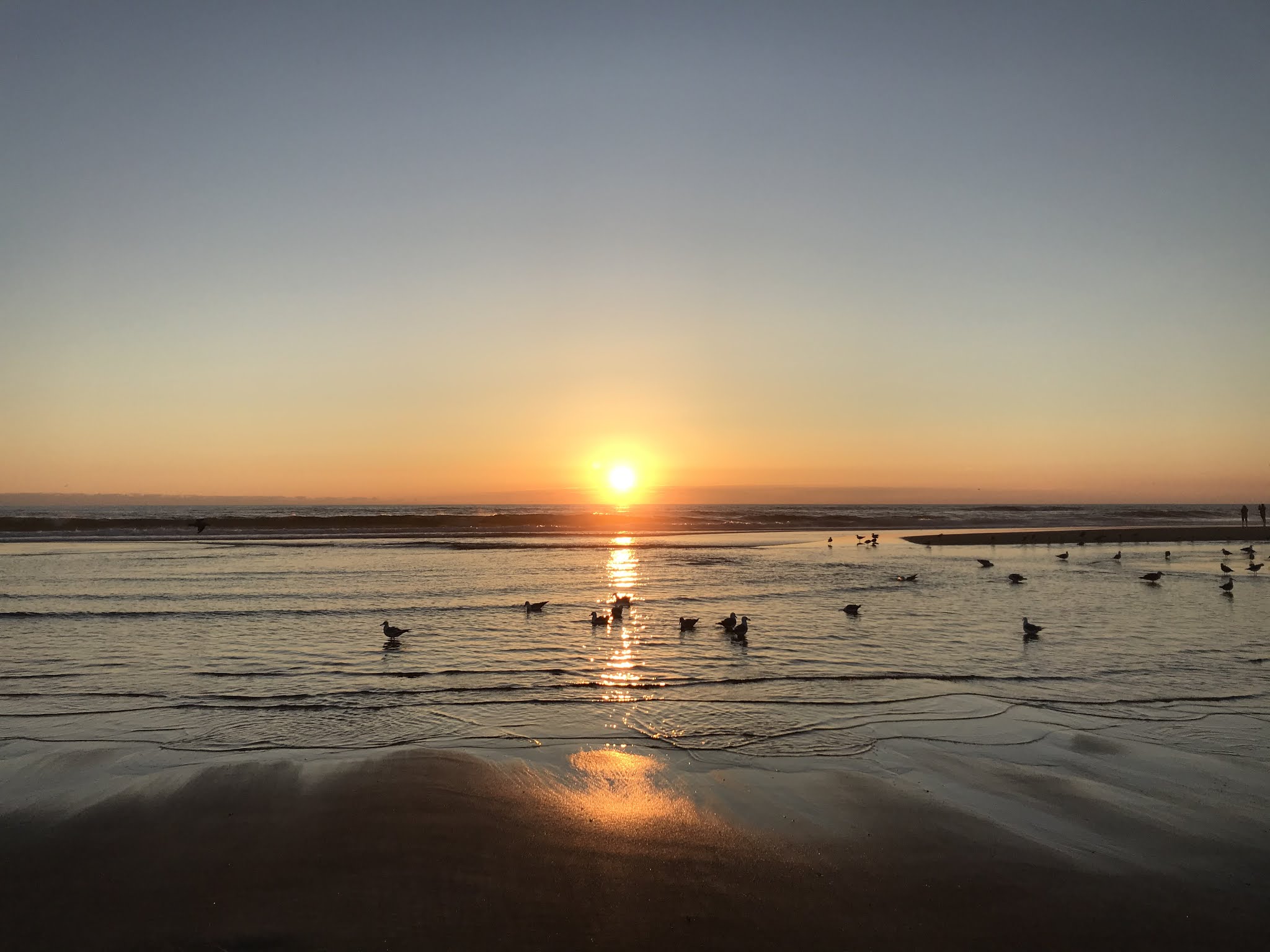 How it should feelSo I'm finally starting to get past those preconceived notions of what I should feel like when meditating. I've begun learning about paying attention to the right things, to getting out of my head, to labeling my emotions and my emotional state, and I've been learning humility. None of these things are what I thought meditation should be like, but they have all brought me a sense of acceptance and calm. I feel like I'm just starting to grasp the things I should be getting out of the practice, and it will take a lifetime to figure out anything, but so far, I've had far fewer knee jerk reactions to what's going on in my life, and I dwell far less on the negative. It's... rather amazing, actually.
I'm not sure what took me so long to get to even this point, where I feel like I've taken the first step on a journey walking to the moon. Regardless, I'm here, and I'm happy to be here, and happy to be learning something new. I hope sharing my experience and these resources help somebody.


November 23, 2020
The Accidental Martial Artist
A few years ago I had this idea for a novel with a main character who is a former swordswoman. When I started planning the novel I imagined it would have a couple of fight scenes. Problem was, I had never done anything more than swing a light saber around a few times with friends. So I thought, "Hey, here's a chance to learn how to sword fight and call it research!" I considered different styles; the European broadsword wasn't the right feel, not for a swordswoman who was part of a cadre of other swordswomen. Then I considered fencing, but again, the European style didn't have the right feel for what I wanted, although fencing was closer. And then I remembered kendo, which was something I'd first heard of about years earlier.
I had just moved to the Portland, OR area. I searched for kendo in Portland and found a club. They offered a beginner's class three times a year, and a new class would be starting soon. So I signed up, thinking I could take the beginner's class and have enough experience to convincingly write a couple of fight scenes. I had no desire at the time to go any further because I never thought of myself as someone who would enjoy martial arts, and I assumed that all I needed to understand were some basic mechanics and sensations so I could describe the fights realistically. Little did I know...
I was pretty content with my life when I started kendo, but I soon realized that it filled something that I didn't even realize had been missing. It was more than just sword fighting, or a sport, or exercise. It was a way of thinking, of analyzing myself and the world around me, of challenging myself, of coping with anxiety. I started reading books on martial arts and articles on kendo and watching videos of shiai, or matches. What I thought would be a temporary activity became something that boosted my confidence and changed my way of thinking. And that, in turn, changed how I thought of my main character, a lot. I realized I had her, well, not all wrong, but incomplete. Shallow. There were many more depths to her than I had realized. So I scrubbed what little I'd written and went back to the drawing board. And I continued in kendo.
My involvement in kendo ended up helping me create a detailed backstory for my main character, which led to a lot I could draw upon in the present while writing from her point of view. I picked up quite a few books on martial arts to learn more about kendo, and they gave me more insight into my main character as well. Some of the most helpful ones include The Unfettered Mind by Takuan Soho, translated by William Scott Wilson; The Zen Way to the Martial Arts by Taisen Deshimaru; and Zen in the Martial Arts by Joe Hyams. The Unfettered Mind, in particular, has a lot of wisdom tucked into a small volume. And perhaps you can see that there's a pattern to these books, namely, that they all have to do with the mind, and not with raw strength or fighting skill. That was the first lesson I had to learn, and I have to keep learning it over and over. My original fight scenes? Gone. But what I have now? It's much better, in my humble opinion.
September 11, 2020
Dusting Off the Blog
It's been about four years since I last blogged. There are a lot of reasons for the silence. My family and I moved to the Pacific Northwest. I went back to school to earn my Doctorate. My mom died. And there were a lot of other things filling up my time and taking my attention. But over the past few months, dealing with this pandemic, I've been readjusting my time. I've been on social media way too much. I feel much better when I'm not on it, but at the same time, I like seeing pictures of people's pets and kids and knowing that they're all doing all right, or maybe feeling the same sense of frustration and despair, or finding joy despite all we're going through. I guess, for me, starting this up again is my version of whistling in the dark.
Before, this blog was about a little bit of everything, from writing to running to whatever I thought people might find interesting. I'm going to continue in that vein, but most likely I'll focus on writing and the books I've read. I've learned a lot over the past four years, but there's still much to go, and it helps to put it all down. But for this particular entry, I'm going to do a book review. Or rather, a review of a series I just finished.
I read through The Extraordinary Adventures of the Athena Club, a series by Theodora Goss, that follows several intrepid young women who all have one thing in common--they're all monsters, in a way. You may recognize some of the names of the members of the Athena Club--there's Mary Jekyll, Diana Hyde, Beatrice Rappaccini, Catherine Moreau, Justine Frankenstein, Lucinda Van Helsing, and Alice/Lydia Raymond. They're joined by Sherlock Holmes and Dr. Watson in their adventures, as well as others along the way. The series combines some of the early fantastic works of fiction to create an atmosphere that is simultaneously delightful, lightly romantic, poignant, spooky, and mysterious. The Athena Club is like Scooby Doo meets Nancy Drew. It was pure, wonderful escapism for coping with the current Covid-19 pandemic, but it was deeper than that as it commented on feminism, science, eugenics, and what it means to be family.
The second book in the series is the largest, by far, and a bit intimidating to pick up. But it was the one I flew through the quickest. There are some slow moments in the overall series, but nothing that made me want to put the books down permanently, and the characters were all so compelling that I could probably spend a good amount of time just "watching" them do the mundane tasks of their day. That is, when they're not going on adventures.
It's good to be blogging again. I let my website go because I hadn't published anything new in a long while. But I have a short story coming out later this year, and I'm working furiously on a new novel that will be part of a duology. More on that later! For now, I hope you find a good book to sink into that will let you forget about the really world for a little while.
June 20, 2016
Two Literary Greats Talk Writing, Terror, and Rats
The crowd was filled with all types, and with people from all over. A guy down the row from me was wearing a white shirt covered with blood stains. Surprisingly, there weren't many people in costume or spooky attire. But everyone seemed filled with anticipation for the moment the two authors came out on stage.
I found it amusing that both men had East Coast accents. Jersey vs Maine was entertaining. Apparently they've known each other for decades, and it showed in their easy exchanges. They spoke for an hour, although it felt like they were up there for fifteen minutes. The crowd let out a groan of disappointment when King announced they'd have to wrap it up soon.
King started by admitting he had put off reading the Song of Ice and Fire books for a long time. But one day he ended up with excruciating pain from sciatica and was laid up for a while, so he told himself, "I'll try one of these fucking George Martin books," and as he put it, it blew him away.
Both authors write some pretty dark stuff. I've read the Song of Ice and Fire series, and I watched the show until the episode with the Red Wedding. It was hard enough to read it, so I certainly didn't want to see it. Instead, I sat in the other room while my husband watched, and I cringed at the sounds. King has also disturbed me and made me feel uncomfortable. He digs into the darkest recesses of human nature and holds those dark things to the light for the reader to examine. I didn't write this particular bit down, so I'm not sure who said it, but I think Martin was prompting King to say that if you can't do terror in a story, go for horror. If you can't do horror, go for the gross out. Both have certainly made their way up and down that scale many times.
And this brings about how both of them had stories about rats early on in their careers. Or, as Martin put it, "Rats have been good to us." And then Martin asked the big question: "How do you write so many books so fast?" This won a big laugh from the audience. King said that when he's working on a project, he writes six pages a day, and he writes for three to four hours. He tries to make those pages as polished as he can. It takes him roughly two months to finish a project at this pace.
Toward the beginning of their talk, they both plugged their own work, and King plugged his son's work. I found it amusing that even though they were big name authors, they still felt the need to do the shameless plug. And although Martin laughed about King's productivity, I don't think he was entirely joking. I think there's some... if not outright jealousy, then wistfulness there. They've won awards and they sell tons of books, but I get the feeling that not-so-deep-down, they're just as neurotic and uncertain as any other writer. It's comforting, actually.
June 6, 2016
Guest Post with Jeff Provine
* * *
 Alternate History (or “alternative history” for the grammatically strict) is a burgeoning genre. It is by no means anything new—people have been asking “what if things had gone a little differently?” since the days of Job wondering why he had been cursed. Two thousand years ago, the Roman scholar Livy discussed the ancient Alexander the Great, pondering what might have been if the great conqueror had marched west against the Roman Republic instead of storming the Persian Empire. In accordance with Roman pride, Livy of course suggested that they would defeated him.
Whether it’s called alternate history, alternative history, or the scholarly studies of counterfactual history, all of it begins with a “what if?” The most common what ifs stem from big events, such as what if the South had won the American Civil War or what if Nazi Germany had won World War II? A lot of alternate history immediately jumps into the fallout from such a change, not worrying about the details. Depending on the story, the details of how exactly the change occurred might not be as important as describing the changed world where, say, the western trenches of World War I stretch from the Appalachians to the Rockies or struggles against censorship in an America patrolled by the SS.
When crafting an alternate history, however, it is important to determine the “POD” that acts as the change to the timeline. POD stands for “Point of Divergence” or “Point of Departure,” depending on taste. I personally enjoy “departure” as it illustrates the hypothetical journey that you are about to take as you map a new timeline.
Like a butterfly being killed in the age of the dinosaurs or a drop of water trickling down the hand of a paleobotanist, when one little thing changes, the whole course of events change. Knowing how that first change happens is key to determining what the world will become, so do your research all about the people, places, and events circling around what you plan to change.
With the classic “what if the South won the Civil War?” example, there are numerous different takes on what exactly caused the South to win. One of the most popular is Confederate General Robert E. Lee winning the Battle of Gettysburg. Some writers and alternate historians get even more detailed, talking about the artillery barrage just before Pickett’s Charge or Union General Meade’s individual reaction. Once the change happens, the writer can follow through with its impact on 1863: Meade retreats, Lee seizes the railhead at Harrisburg to cut Washington, D.C., off from the rest of the country, and the draft riots in New York City intensify (these happened the week after Gettysburg, which shows that not all Northerners were eager to keep the war going). The anti-war sentiment spreads until the North demands an end to the war.
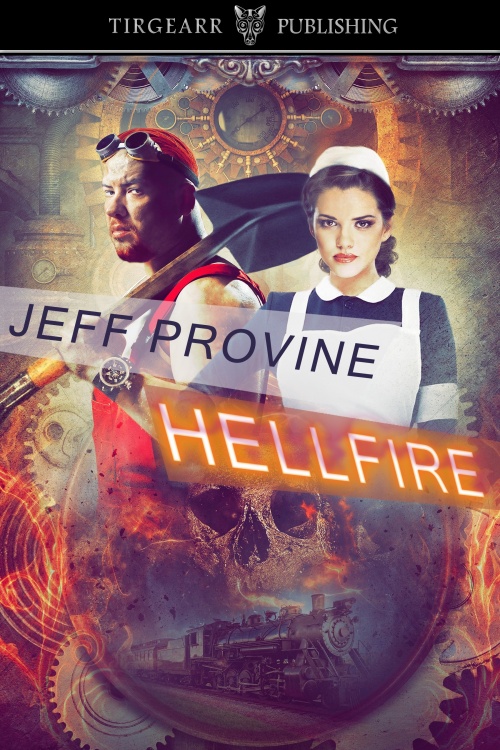
In my latest alternate history Hellfire (releasing June 8 from Tirgearr Publishing), there are arguably two PODs. The background steampunk world begins when Isaac Newton discovers a crystalline catalyst that makes fires burn hotter than they should for the fuel present. Newton, called “last of the magicians” by John Maynard Keynes, wrote more than a million words about chemistry, and rumors say that a lot more of his work was burned in an accidental fire. Circa 1700 during Newton’s lifetime, such a discovery might be little more than a parlor trick or a curiosity, like much of Robert Boyle’s work with gasses. As the industrial revolution begins, though, “free” heat from a fire is world-changing.
With ultra-efficient fires thanks to the catalyst, steam engines become much more powerful with less coal or wood needed to boil water. Factories can churn out more goods more cheaply. Further, without needing to haul fuel around, transportation booms as locomotives and steamboats conquer distance with ease. A powerful furnace not needing so much fuel could heat up ambient air to fill a balloon, giving rise to airships in the sky. Since the catalyst is such a powerful technology, it of course is a carefully guarded industrial secret, manufactured in one location by a cult-like workforce so dedicated that many people whisper some of them never leave the factory.
There are plenty more superstitions about the catalyst. It gives the fire it burns in a foul odor, reeking of rot and sulfur. Many people won’t even have it in the house. Some say that amid the roar of the flames, they can hear voices that whisper evil ideas. Those who spend a good deal of time near fires using catalyst go mad, often violently. Over the course of generations, this “Stoker’s Madness” is accepted as a part of life, a trade for having trains, factories, and airships. New mental institutions are put up near industrial centers.
Following the Law of Conservation of Energy, the extra heat has to come from somewhere. People say the catalyst acts as a wormhole, opening gates into hell itself, leaching the heat of the Lake of Fire while it lets slip the words of the damned.
With all this as background for the setting, the more obvious POD in Hellfire is the state of Gloriana. In 1806, Aaron Burr, of the famous Hamilton-Burr Duel, bought a huge parcel of land known as the Bastrop Tract in what is today northern Louisiana. In our own timeline, he was arrested for treason with suspicion of conspiracy toward sparking a war with Spain, and the colony fell apart.
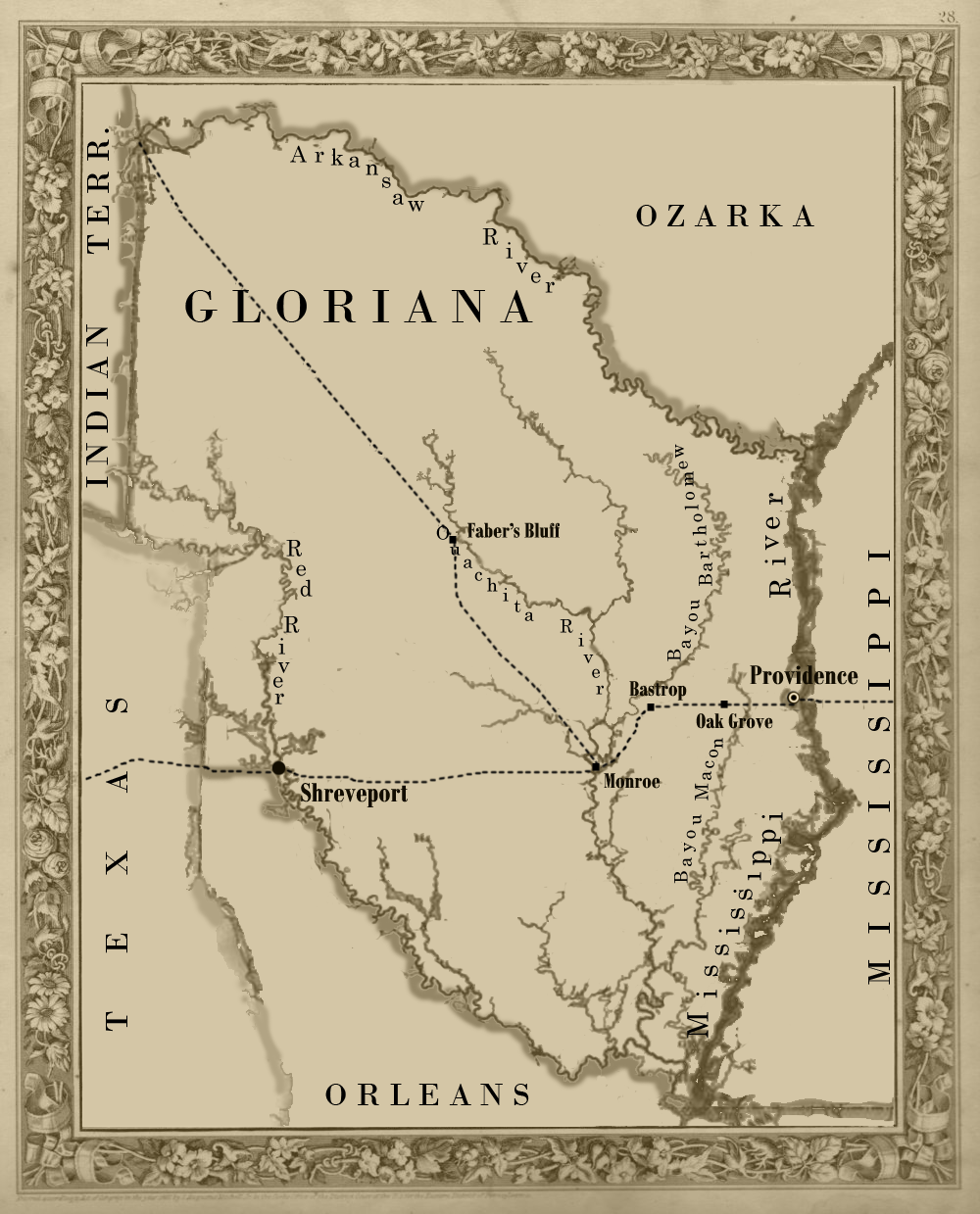 For Hellfire, however, Burr successfully defended himself before Congress with such vigor that he not only won attention for his colony but embarrassed Thomas Jefferson and his supporters for legal shenanigans, causing James Madison to lose the 1808 election. There is then no war of 1812, and instead American-British relations improve as Burr spends a great deal of money importing Newton’s Catalyst to establish a city of industry at Lake Providence on the western banks of the Mississippi. The settlement grows into a territory and finally Gloriana, a powerhouse in the western South. Yet progress comes at a cost: people work endless hours pursuing wealth, and stagnant putrid clouds from the many catalyst-driven fires linger over the city.
Hellfire opens in 1856 with Newton’s Catalyst practically commonplace around Gloriana. Then something more than whispers begins to break through, as seen in this excerpt from chapter 1:
* * *
Even with the gushing hot wind from the furnace, Nate shivered. He lifted his boot from the pedal and let the doors swing shut again.
“Everything all right?” Jones called.
Nate shook his head slowly. “No. I don’t know what it is, but it’s not right. There’s something in the fire.”
“Can you dump it with the ashpan?”
Nate kept shaking his head. “I don’t think so.”
A jarring bang rang from the firebox doors. Nate jumped back and held up his shovel like a weapon.
The doors rattled again, and then the one on the right shifted open just a crack. A fresh sound of wailing poured into the cab. Something not quite black and not quite gray slithered out like a headless snake.
“What is that?” Jones screamed.
Nate swung at it with the shovel, whacking it with the dull side. A roar like the wind out of a cave came from the firebox.
Jones screamed louder, “What was that?”
The tendril grew longer and pushed back the firebox door. Steadily, fighting the weight of the heavy door, the thing climbed out of the firebox. The tendril was like a tail reaching from a shoulder. Its five other legs were segmented like a spider’s, but its body was fat and grotesque like nothing Nate had ever seen. It had eyes, shining, black eyes that blinked all over its bulbous body.
It cleared the door and fell to the metal plate floor of the cab. Sounds came off it: gurgling, whining, and guttural spitting. Nate stood frozen, watching the horror as it squirmed.
Jones jumped forward and stomped it with his boot.
The thing squealed and wrapped its legs around Jones’s boot, somehow bending them backward by twisting its own knees out of socket. Jones gave a horrified shriek. He stomped again and again, but the thing didn’t seem to get hurt.
Nate shot forward with his shovel. “Hold still!”
Jones froze with his leg in midair. The thing held tight around his boot.
Nate whacked it with his shovel again. It gave another unholy rumbling scream. Several of its legs came loose and wagged in the air.
Nate lifted his shovel and stabbed downward with the blade, running it just underneath Jones’s sole. It caught the thing on its belly or back, Nate didn’t know if he could call it either of those, and the force was enough to shove it off.
The thing fell to the floor again and writhed.
“Throw it back in!” Jones shouted. He had pushed himself against the side of the cab as far as he could.
Nate whacked it again with his shovel and then scooped it up. Its legs wriggled, but they didn’t seem able to grab hold of the blade. He stomped on the pedal to open the firebox.
The heat and wailing of the flames leaped out at him. Nate fought past and shoved the thing back inside. He stomped the release and sealed the doors again with a clang.
* * *
Hellfire is available on Kindle US, Kindle UK, Smashwords, Apple, Kobo, and Nook. Check out more alternate timelines from Jeff at his blog, This Day in Alternate History.
May 23, 2016
Splurges
 My primary indulgence is Starbucks. Specifically, Americanos. I don't particularly care to get a plain old cup of coffee when I go in there, and I don't want to get one of their liquid deserts. Tasty as a white chocolate mocha can be, I don't want that much sugar in my body. So Americano it is, with some half-and-half and some Splenda. Conveniently, there's a Starbucks right near my work, so I can pop in whenever I have a moment, or on my way to work.
When I want to indulge in a quick, tasty desert, I head for the bakery at Whole Foods. I love their chantilly lace cake, their key lime pie, their chocolate cake, their cheesecakes, and their chocolate salted caramels. I've, er, tried just about every desert in that place. And the one near my house just opened a bar. Imagine, if you will, a slice of their pizza, a slice of cake, and a glass of red wine. Oh, heaven.
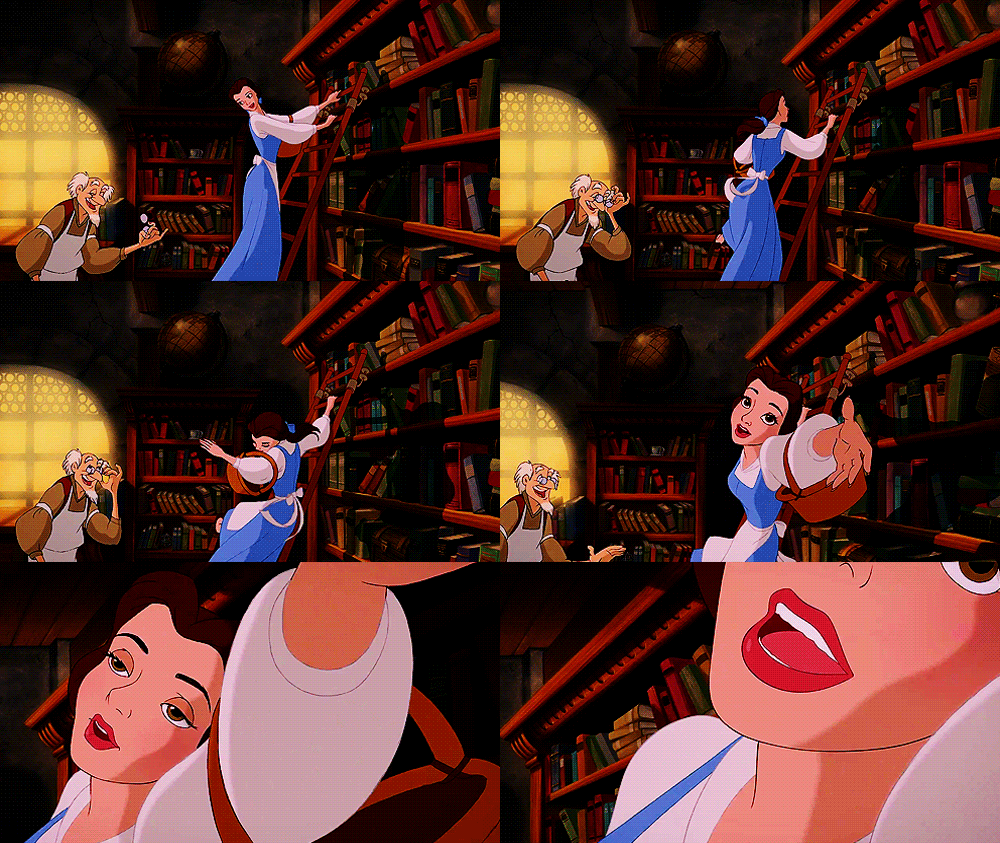 Me every time I walk in a bookstore.And I splurge on books, too, of course. I will drop money on a bunch of books like I'm toting around Bill Gates's wallet. I'll wonder if spending $50 at the grocery store is necessary, but I won't question spending that much at the bookstore.
May 16, 2016
Tackling the To-Be-Read Pile
1. Spark: The Revolutionary New Science of Exercise and the Brain by John J. Ratey. Doctors are prescribing exercise and physical therapy more often these days to help with a variety of issues. As a physical therapist, I definitely agree that movement can help with a host of ailments and problems. I'm eager to see what this book talks about and if it covers any new ground.
2. A Head Full of Ghosts by Paul Tremblay. I love a good, suspenseful, scary book, and this one promises to fulfill on many levels. It just won a Stoker Award, which has bumped this book higher on my list.
3. The third is actually an unknown number of books. I'm researching for a new novel, and much of that research has to do with day-to-day life in ancient Greece. I'm trying to figure out if I can afford a trip to Greece as part of that research. If anybody has a spare five thousand dollars or so lying around, let me know... At any rate, I'm starting with mostly children's books on the subject because (1) they're usually well written without extraneous and boring details, and (2) illustrations! I'm a visual learner, so that helps a lot.
If you'd like a look at my extensive TBR pile, or if you want to see what I'm reading, friend me on Goodreads.
April 18, 2016
Fifty Years of Women Running the Boston Marathon
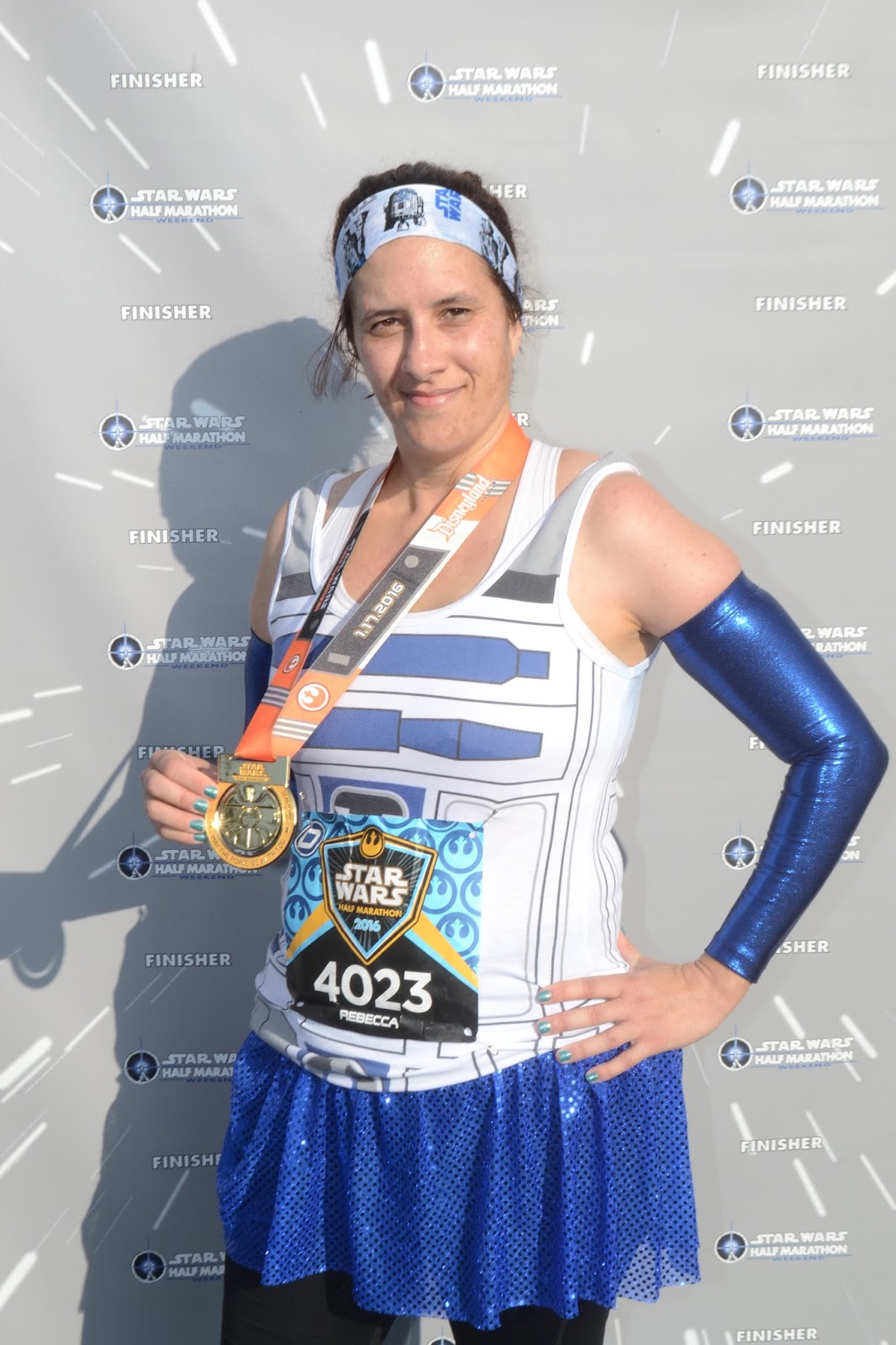 Physiologically capableRunning is such a basic part of human nature. Running means escaping danger, chasing food, rushing to help someone in need, or that you're having fun. Most little kids love to run. They chase each other, have impromptu races, or run just to enjoy the speed or the feeling of the wind against their skin and in their hair, or simply because it feels good to move. I have a good run when I invoke those childhood sensations, when I think, "Hey, this is fun!" I can't imagine being told, "You're not meant to do this thing that brings you joy."
This past weekend I ran a 5K. It was my first race in inclement weather. It was cold and windy, and it started sprinkling right before we started. When the clouds parted later that day, there was snow on the mountains. Despite the wind and the stinging rain, I had a great time. Despite the fact that I was still getting over being sick, I improved upon my pace. There's something wonderfully primitive about running in a large group. It's like being part of a pack. There's a sense of safety, of camaraderie, of friendly competition. We ran through some fields near the Rio Grande River. I spotted geese and ducks in a field that was being flooded, and a couple of horses. I got to run through a neighborhood I'd never been in before. I finished the race and had a delicious slice of cinnamon swirl raisin bread and chocolate milk as I trekked back to my car. It was great.
I cannot imagine being told 'no' to something like that. I'm glad that the running world, and the world in general, has changed its attitude toward women. I'm glad that Bobbi Gibb had the guts to sneak into a race. The world needs people who refuse to take 'no' for an answer.
April 12, 2016
I'm a Spelling Bee Failure
 Thank goodness for editorsAnd what's up with fuchsia??? Somebody screwed up the three letters in the middle there. I always want to put the 's' in front of the 'ch.' A quick jaunt over to the dictionary tells me that the word comes from modern Latin and was named in honor of a German botanist by the name of Leonhard Fuchs. Okay, I have a dirty mind, but tell me you can't say that name aloud and not giggle. Now every time your kid pulls that crayon out of the box, you're going to laugh because your mind is as entrenched in the gutter as mine.
And one other thing I always screw up isn't necessarily spelling, but... hyphens throw me for a loop. I either leave them out when they need to be there, or I stick them where they have no business existing. I worked with an excellent editor for my urban fantasy trilogy The Necromancer's Inheritance, and he dinged me on hyphens. A lot. I am hyphen challenged. That should probably actually be hyphen-challenged. But I have no idea because I am horrible at knowing when to use them. I mean, the word hyphenated does not have a hyphen. But the word non-hyphenated does. It's amazing people can communicate in English at all.
April 4, 2016
It's the Little Things
-- Queen Latifah
***
Queen Latifah, she's wise.
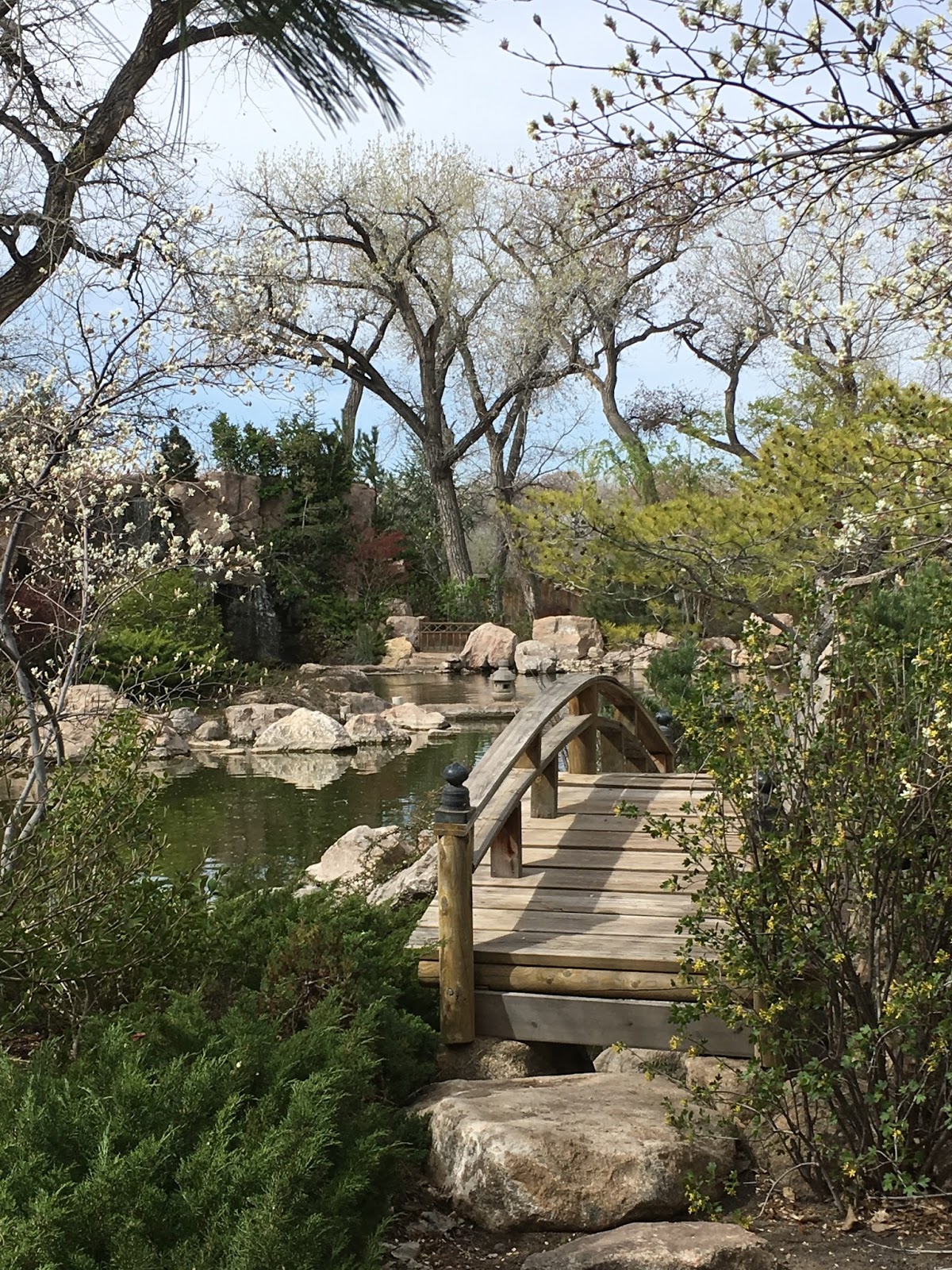 One of my happy placesI've blogged before about keeping a tiny journal where you write a sentence or two a day. I tend to keep it focused on the positive, although some days I just need to put down the awful things that happened. I've been writing in it for over a year, and now I get to look back at last year's posts as I add new ones. I've gotten better at noticing the little things that make my day brighter, and I often think, "This is what I'll put in my journal tonight." And while it's great to take big trips (I sure wouldn't turn down some time on a yacht in the Mediterranean), those things are few and far between. I think it's important to find happiness whenever you can. So I wanted to share some of the little things that make me happy. Indulge me as I make a list:
Coffee in the morning when there's no rush to go anywhere
Gardening/getting my hands in dirt
A good run
My son's laughter and his smile (that's really the best thing in the world)
Reading a good book
Planning a vacation
When I come up with a really good line while writing (I feel so smart! It makes up for the other times when I bang my head against the desk because I can't find the right words.)
Being outside
A nice sunset
Reaching traffic lights at just the right moment
Browsing through a bookstore
Focusing on the little things that make me happy keep the nasty inner voices away. Sometimes I'm wracked with doubt as a writer or a parent or even as a human being trying to navigate the world. Sometimes I'm depressed. That's when the voices are the worst. But writing down the good things, thinking about the good things, reliving them all serve to keep those voices silent. I encourage you to go make a list of the little things that make you happy, especially if you're having a rough day.
***
"It has long been an axiom of mine that the little things are infinitely the most important."
-- Arthur Conan Doyle