Rebecca Roland's Blog, page 10
November 4, 2013
Special Guest Post with Author J. Kathleen Cheney
 I recently had the pleasure of reading J. Kathleen Cheney's debut novel, The Golden City, which comes out tomorrow! Not only is the cover gorgeous, but so is the story. I had a hard time putting this book down. Please read on to find out more about Cheney and her lovely novel.
 I love your book's setting. Portugal in 1902 is definitely unique! What led you to choose this time and place? Did you come up with the setting first and other details next, or did you come up with a story or characters first, followed by the setting?
The story came first, then the setting. I actually started out putting this story in Venice, but as I went along, I decided I wanted something different. After studying the coastlines of Europe, I decided that Portugal's best suited my story's needs…so my place setting changed there.
As for the time setting, I was looking for a time period that would have submersibles, yet not so advanced as to have 'modern' police procedures. So that gave me a rough idea, and I finally settled on 1902 because…well, nothing big happened that year to interfere with my story.
Do you speak any Portuguese, and if so, how fluent are you, and when and where did you learn?
Once I started researching Portugal, I quickly discovered that a lot of the resources I needed had never been translated into English, so I started learning Portuguese. I needed to study European Portuguese, not Brazilian, which had fewer resources, but I finally found a Pimsleur audio course and an Oxford audio course. Unfortunately, you don't learn spelling or declension from audio courses, so my Portuguese is pretty rough. (I still get mais and mas mixed up, for example.)
As far as reading Portuguese goes, I do pretty well. I'm aided in this by the fact that I'm from the border (El Paso) and have spoken Spanish most of my life and there are a lot of cognates between the two languages.
SpeakingPortuguese is a totally different matter. My background with Spanish actually makes this harder for me because many Portuguese words look like Spanish words and my brain automatically opts for the Spanish pronunciation. So I lack confidence when speaking Portuguese because I don't want to butcher the language (whereas with Spanish, I'm very comfortable screwing it up.) All in all, I did fairly well when I was in Portugal last year, but only because the Portuguese are rather tolerant.
The most alarming aspect of this whole process was discovering that I wasn't pronouncing some of my character's names correctly (because I err toward Spanish). For example, that o on the end of Duilio's name is pronounced oo, as in zoo. And Oriana's surname? One of the vowels is subvocalized, so it's more like Par-AYDSH than Par-AY-desh. (I don't know why, but I only found that out when I visited Portugal and heard that name pronounced there.) Things like that have continually surprised me.
I like how you combined alternate history, romance, fantasy, and a murder mystery into one novel. How did you come to combine all of these elements into one novel?
I read pretty broadly, and am just as likely to pick up a Mystery or Romance as I am a Fantasy novel. So I think for me the elements just come together organically--a little bit of this, a little bit of that. I don't know that I ever intended to write Alternate History, but when I think back, I've actually done quite a bit of Historical Fantasy. The moment you add magic to a historical setting, it forces a deviation from History and becomes Alternate History.
Oriana is a mermaid unlike any I've encountered before. Where did you draw your inspiration for her and her people?
When I considered my mermaids--particularly when there's the possibility of one having a relationship with a human--I decided to think of them as having been the same species at one time. Either the humans started off like the mermaids and lost their gills and webbing, or the mermaids started off human and somehow gained the gills. Either way, I decided to think of the sereia in terms of evolution. To live in the sea and land they would need both gills and lungs. Their webbing could serve the same purpose as a seal's vibrissae. Air bladders would keep them oriented in the water. Their hands and feet would be large and flat to improve their swimming (think Michael Phelps and his size 14 feet.)
But the scales never worked for me. The skin is one organ, so I decided that they would have skin, it would simply looklike scales. And rather than green, I thought their coloring should be protective. The ocean is full of predators--mainly sharks--so you'd want to be able to pass as a big predatory fish, like a tuna. (Yes, you could look like a dolphin or a sea snake, but since I'd started off with fish characteristics, I stuck with fish.)
Male merfolk have never figured much in traditional stories. I figured that they had to be there, just not a common as the females, so in my world, the male sereia are sheltered. As the females are dominant in their world, they'd have a culture quite different than the human nations that surround them. (This will come into play more in Book 3, but it's part of Oriana's character, so it's important for me to think about it now.)
***
J. Kathleen Cheney is nothing if not versatile in her story telling, but weaving through her work is a common thread, that of the improbable heroine. From worlds set in humanity’s distant post-apocalyptic future to alternate worlds of today or of the near past, Kathleen’s heroines include a siren who with help from a gentleman of the city must stop a regicidal plot, the neglected daughter of an absent king coming to terms with her shapeshifting ancestors, a blind teenager who dreams of others’ deaths and who uses her gift of touch to find their killers, and the widow of a trainer who with a most unusual horse must save her farm and way of life. All use their unusual gifts and talents to overcome obstacles and find their place in the world.
In 2005 Kathleen decided to pursue writing as a full-time endeavor and has since enjoyed seeing her stories published in Shimmer, The Sword Review, and Baen’s Universe. Her novella “Iron Shoes” was a 2011 Nebula nominee. Kathleen twice attended the summer Writer’s Workshop at the Center for the Study of Science Fiction under the tutelage of James Gunn. She lists C. J. Cherryh, Arthur Conan Doyle, and Georgette Heyer among the writers who influenced her most–as well as Ansen Dibell, whose ghostly fingerprints can be seen all over her work.
Born and raised in El Paso, Texas, Kathleen’s parents actually were rocket scientists (they worked at White Sands Missile Range), which made for interesting dinner-time conversations. After graduating with degrees in English and Marketing she worked as a menswear buyer for retail department store chains before changing careers to become a teacher, where she taught mathematics ranging from 7th Grade Arithmetic up to Calculus. Kathleen also served a brief stint as a Gifted and Talented Specialist. She coached the Academic Team and the Robotics Team and was the Chess Club sponsor.When not writing, Kathleen likes to don a mask and get sweaty fencing, both foil and saber. Quieter hobbies include putting on her Wellingtons and getting her hands dirty in the garden. She also enjoys traveling and taking care of her dogs. Two large, hairy, dogs.


October 28, 2013
A Few of My Favorite Spooky Things
I'm gearing up for Halloween, and so I'm thinking about scary movies, books, and costumes. I love being scared. As a kid, my mother let me read and watch quite a few things that I'm surprised she allowed (not that I'm complaining, mind you). I read Stephen King, Dean Koontz, and R.L. Stine and Bunnicula.
As a kid, I ate up R.L. Stine, and I loved Bunnicula. Those books offered just the right amount of fear. But I also read Stephen King at a young age. One of my first King books was The Shining. It scared the poop out of me, and I loved every minute of it. Here was this story about a kid (reading it at that age, I focused on Danny's story rather than Jack's) who was stuck on a mountain with a crazy parent and the devil. Talk about a rough childhood! The sequel, Doctor Sleep, is sitting on my Nook, waiting to be read.
There's an animated movie that, on the outside, looks like it should be a little kids' movie, but in reality, it's actually quite terrifying, and that movie is Watership Down. When I was young, my family had what my dad liked to call a 'fishing camp.' It amounted to a mobile home sitting on a narrow piece of land that backed up to a wide arroyo on one side (this arroyo was large enough for barges and their loads to easily travel). On the other side of the road was a wildlife refuge. Quite a few people owned property there, but it still felt like a desolate place. Add to that the fact that we didn't have a phone, and it felt quite isolated.
So one weekend, while my parents are outside grilling or doing yard work, or something along those lines, I stayed inside to watch a cartoon on TV. That cartoon happened to be Watership Down. Now, I had a pet bunny as a kid. I was (and am) partial to bunnies. Not too many minutes into the movie, one of the rabbits has a disturbing vision. There's blood. Lots of it. And the rest of the movie isn't all that light and fluffy. So I sat there, mesmerized and more than a little horrified, watching what my mother thought was a nice cartoon. Scary as that movie was, it didn't deter me from reading the book years later.
Then there were the horror movies of the 80's that shaped my twisted psyche view on movies and facing fear: A Nightmare on Elm Street, Halloween, Amityville, The Exorcist, The Omen, Friday the 13th. Even horror movies before I was born shaped my life just a wee bit. My mother's name was Rosemary, and so during her visits to the obstetrician when she was pregnant with me, he liked to ask her, "So how's Rosemary's baby?"
What are some of the books and movies that have sent pleasant chills down your spine?
As a kid, I ate up R.L. Stine, and I loved Bunnicula. Those books offered just the right amount of fear. But I also read Stephen King at a young age. One of my first King books was The Shining. It scared the poop out of me, and I loved every minute of it. Here was this story about a kid (reading it at that age, I focused on Danny's story rather than Jack's) who was stuck on a mountain with a crazy parent and the devil. Talk about a rough childhood! The sequel, Doctor Sleep, is sitting on my Nook, waiting to be read.
There's an animated movie that, on the outside, looks like it should be a little kids' movie, but in reality, it's actually quite terrifying, and that movie is Watership Down. When I was young, my family had what my dad liked to call a 'fishing camp.' It amounted to a mobile home sitting on a narrow piece of land that backed up to a wide arroyo on one side (this arroyo was large enough for barges and their loads to easily travel). On the other side of the road was a wildlife refuge. Quite a few people owned property there, but it still felt like a desolate place. Add to that the fact that we didn't have a phone, and it felt quite isolated.
So one weekend, while my parents are outside grilling or doing yard work, or something along those lines, I stayed inside to watch a cartoon on TV. That cartoon happened to be Watership Down. Now, I had a pet bunny as a kid. I was (and am) partial to bunnies. Not too many minutes into the movie, one of the rabbits has a disturbing vision. There's blood. Lots of it. And the rest of the movie isn't all that light and fluffy. So I sat there, mesmerized and more than a little horrified, watching what my mother thought was a nice cartoon. Scary as that movie was, it didn't deter me from reading the book years later.
Then there were the horror movies of the 80's that shaped my twisted psyche view on movies and facing fear: A Nightmare on Elm Street, Halloween, Amityville, The Exorcist, The Omen, Friday the 13th. Even horror movies before I was born shaped my life just a wee bit. My mother's name was Rosemary, and so during her visits to the obstetrician when she was pregnant with me, he liked to ask her, "So how's Rosemary's baby?"
What are some of the books and movies that have sent pleasant chills down your spine?
October 21, 2013
Writing is a Marathon
NaNoWriMo is fast approaching, which means thousands upon thousands of people are gearing up for a frenzied month of writing, myself included. Last year, I wrote 50K words of short stories (and a novella/novelette). This year, I've just wrapped up novel revisions and am looking to put more short stories out there. I'm also interested in writing a science fiction novella, so about half of my words for the month will be devoted to that.
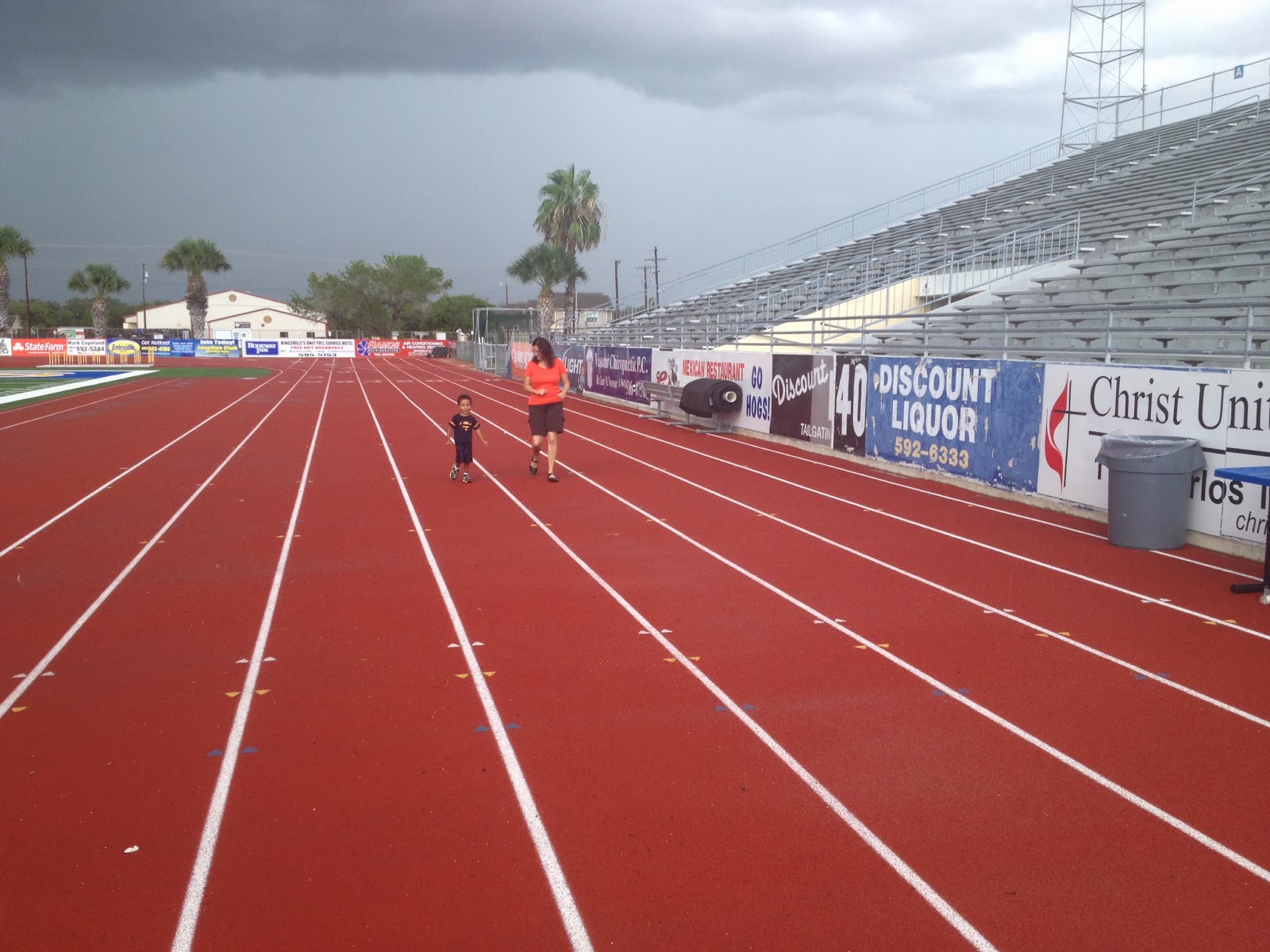 Me & the kid make a mad dash for it.Prepping for NaNo also has me thinking about writing in general. When I near the end of a writing project, I tend to go faster. I can almost see those two most wonderful words, THE END, and I'm in a hurry to get there. Most of the time, however, I plod steadily along. I tend to measure my goals in weeks and months, rather than in daily increments, simply because each day varies so much from the one before it that I can't consistently measure progress that way. But sometimes, I get caught up in these pushes, and I think, "I must hurry and finish this story and see it published and move on to the next one and then the next because there's no time, and oh my gosh, I'm running out of time, and there's still so much to write, and...." And on and on my neurotic inner voice runs on the little hamster wheel.
So I think NaNo is a good time to remind myself that this whole writing thing is a marathon and not a sprint. True, it's fun to dash madly sometimes, but mostly you've got to keep plodding on, putting one word down at a time until you've got that entire story on paper. Then, once you've reached the finish line, you do what those marathon runners do and load up on carbs. I've already got my eye on a chocolate donut.
October 14, 2013
Look at All The Pretty Balloons!
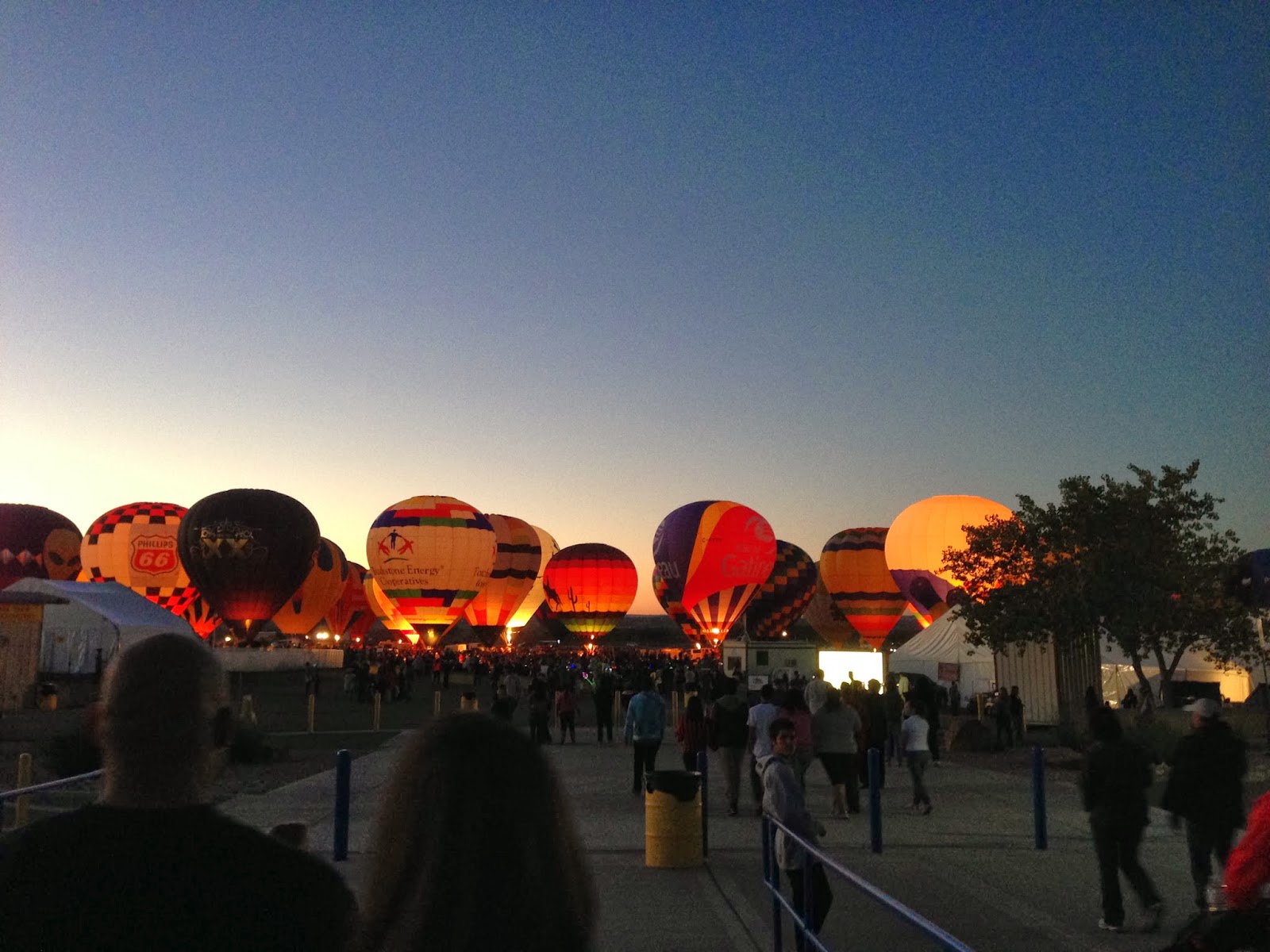 Pretty balloons!I went to the International Balloon Fiesta this week. I've been several times before, and this year I actually went twice, once at night to watch the Balloon Glow, and then the very next morning I was on the field again to watch the balloons take off. For the Balloon Glow, the balloons inflate and remain tethered to the ground. Then the announcer counts down, and they all fire their burners at once. It's like being surrounded by giant fireflies. It's cold, and people are drinking coffee and hot chocolate and beer to stay warm, and they're walking around wrapped up in blankets. Then, once the balloons have deflated, there's a fireworks show.
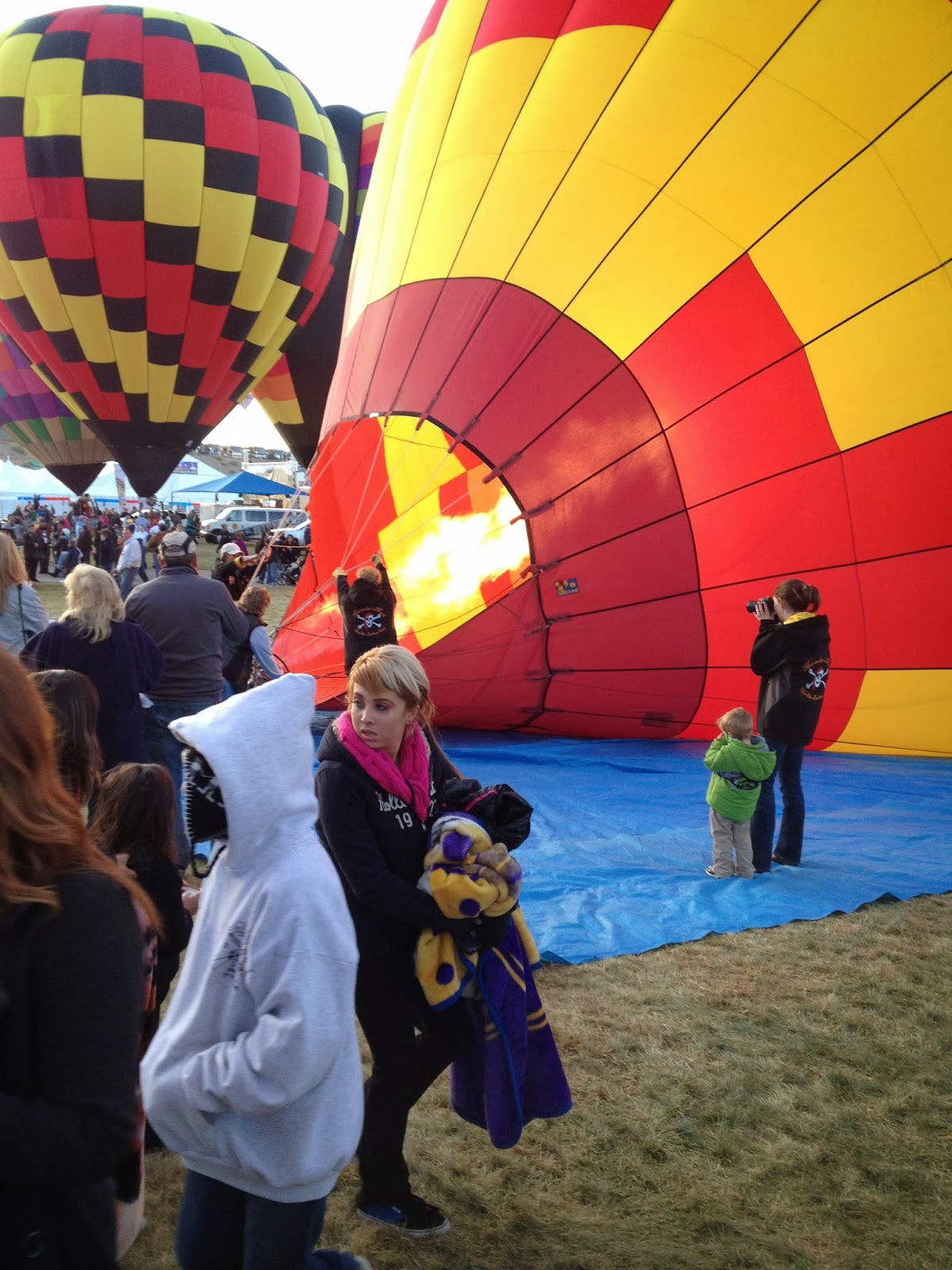 It's toasty near the burners.
I've written about the Balloon Fiesta before. I've gone countless times, and it never gets old. I love being on the field, surrounded by colorful balloons, and watching them take off until there are hundreds in the air. Yes, hundreds. They're like huge, rainbow colored dandelions blown into the wind. It makes me feel like a kid every single time.
I had the chance to go up in a balloon years ago. One moment the basket is on the ground, and the next, you're airborne, only you're never really sure when that moment comes. You just suddenly realize that you're drifting up. There's only the hiss of the burners and whatever conversation you have with your fellow passengers and the pilot. During that ride, we drifted over the Rio Grande, and the pilot dropped us down far enough that our basket touched the river. It was a peaceful, elegant way to fly. The only thing is, the landing's a wee bit rough....
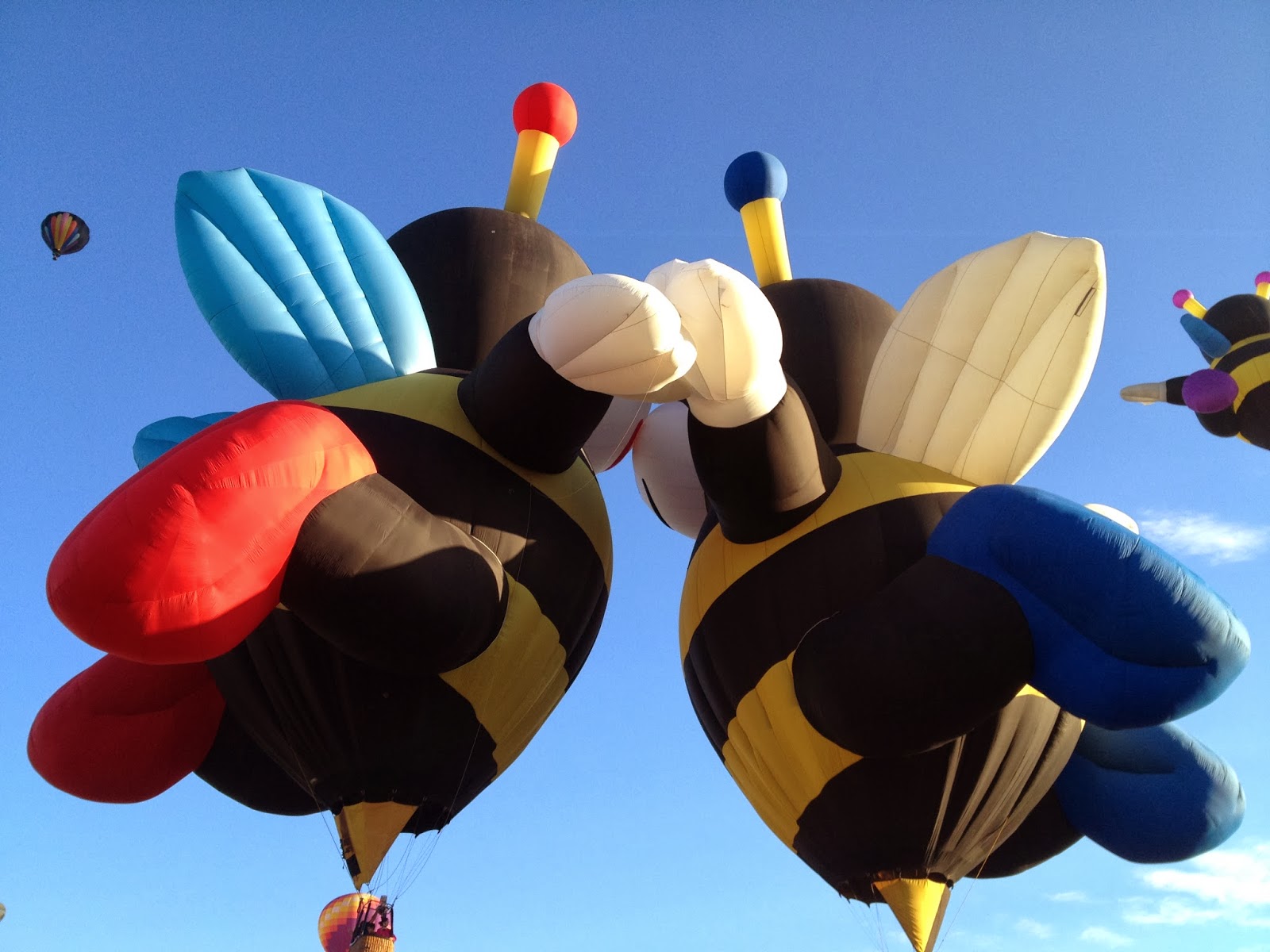 Muah!
Muah!It's truly a magical experience. I'm not sure who had the biggest grin this year, myself or my son. I'm sleep deprived from the late night and (painfully) early morning, but it's all worth it, and I can't wait until next year.
October 7, 2013
Some Questions to Ask Yourself During Revisions
I didn't get around to writing a post last week because (1) I was sick and spent all of my energy thinking about how wonderful antibiotics and chicken noodle soup are, and (2) I was sad that Breaking Bad ended. Aside from taking off a few days to recuperate from the germ invasion in my respiratory system, I've been revising my current novel furiously.
I find it much easier to revise a short story than a novel. There's one main plot line, one major turning point for the main character, and so it's easy to hold it all in my head and get edits done within a week or less. When it comes to a novel, however, I spend quite some time writing it in the first place. Then I set it aside to gain some distance so I can look at it more objectively, and then it takes a chunk of time to go through revisions. With all that time passing (and given the swiss-cheese nature of my memory), I have to be really organized during revisions.
During my first pass-through, my main concern is whether or not each scene is pulling its weight. does it advance the story and contribute to world building or characterization or some other detail? So I have a series of questions for each scene to make sure it belongs and is earning its paycheck.
What does the point of view (POV) character want? The more specific I can answer that question, the stronger the scene will be. So if my answer is that the POV character wants to be rich, that's not such a great answer. But if I can say that the POV character has always dreamed of buying a winning lottery ticket and has a few dollars to spare to head down to the local Gas-n-Grab for Power Ball tickets, than that sounds a little more intriguing.
My next question is, who or what stands in the POV character's way, and what do they want? Don't be afraid to make things super difficult for your POV character. Throw something (or someone) powerful in her way. Maybe a couple of robbers are in the Gas-n-Grab and she finds herself in the middle of a robbery with her hard-earned extra bucks stolen. No lotto ticket tonight.
Then I usually go through a few check points. What is the setting/world building details? What's the time frame? What surprises are there for the reader, and is a surprise necessary for this scene? What is the turn in the POV character's situation? And what is the ending hook that will keep the reader going?
If you find it difficult to answer these questions, then maybe the scene needs some work. Maybe the POV character doesn't have a strong goal, or maybe there isn't anything standing in her way. Maybe the setting needs some beefing up, or maybe the scene ends with a fizzle rather than a bang.
I find it much easier to revise a short story than a novel. There's one main plot line, one major turning point for the main character, and so it's easy to hold it all in my head and get edits done within a week or less. When it comes to a novel, however, I spend quite some time writing it in the first place. Then I set it aside to gain some distance so I can look at it more objectively, and then it takes a chunk of time to go through revisions. With all that time passing (and given the swiss-cheese nature of my memory), I have to be really organized during revisions.
During my first pass-through, my main concern is whether or not each scene is pulling its weight. does it advance the story and contribute to world building or characterization or some other detail? So I have a series of questions for each scene to make sure it belongs and is earning its paycheck.
What does the point of view (POV) character want? The more specific I can answer that question, the stronger the scene will be. So if my answer is that the POV character wants to be rich, that's not such a great answer. But if I can say that the POV character has always dreamed of buying a winning lottery ticket and has a few dollars to spare to head down to the local Gas-n-Grab for Power Ball tickets, than that sounds a little more intriguing.
My next question is, who or what stands in the POV character's way, and what do they want? Don't be afraid to make things super difficult for your POV character. Throw something (or someone) powerful in her way. Maybe a couple of robbers are in the Gas-n-Grab and she finds herself in the middle of a robbery with her hard-earned extra bucks stolen. No lotto ticket tonight.
Then I usually go through a few check points. What is the setting/world building details? What's the time frame? What surprises are there for the reader, and is a surprise necessary for this scene? What is the turn in the POV character's situation? And what is the ending hook that will keep the reader going?
If you find it difficult to answer these questions, then maybe the scene needs some work. Maybe the POV character doesn't have a strong goal, or maybe there isn't anything standing in her way. Maybe the setting needs some beefing up, or maybe the scene ends with a fizzle rather than a bang.
September 23, 2013
A Week of Links
I am in the throes of novel revisions, and so most of my writing brain has been taken up with that. As such, I don't have much left to even come up with a blog post, so here are a few links you might find interesting.
This week is Banned Books Week. I wrote a blog post about it last year. I had just read Sherman Alexie's The Absolutely True Diary of a Part-Time Indian, and I loved it. If you haven't read it, then do yourself a favor and add it to the books on your night stand.
Carrie Vaughn, author of a series of books about a werewolf named Kitty, posted her thoughts on writing a series. She's a fan of Lois McMaster Bujold as well, and made numerous references to the Vorkosigan series in her post.
I can't write a post without referencing Breaking Bad. If you're all caught up with the series and anticipating the last show, you might be interested in this review of this past Sunday's episode, "The Granite State."
This article warns of the dangers of pushing yourself too hard in Cross Fit, but what it comes down to is, you've got to listen to your body regardless of what you're training for. We all have that little voice in our heads that sometimes pipes up and says, "Hey, this isn't right," or, "This doesn't feel good at all."
So have a good week, go read a banned book (maybe one in a series), catch up on Breaking Bad, and enjoy that workout.
This week is Banned Books Week. I wrote a blog post about it last year. I had just read Sherman Alexie's The Absolutely True Diary of a Part-Time Indian, and I loved it. If you haven't read it, then do yourself a favor and add it to the books on your night stand.
Carrie Vaughn, author of a series of books about a werewolf named Kitty, posted her thoughts on writing a series. She's a fan of Lois McMaster Bujold as well, and made numerous references to the Vorkosigan series in her post.
I can't write a post without referencing Breaking Bad. If you're all caught up with the series and anticipating the last show, you might be interested in this review of this past Sunday's episode, "The Granite State."
This article warns of the dangers of pushing yourself too hard in Cross Fit, but what it comes down to is, you've got to listen to your body regardless of what you're training for. We all have that little voice in our heads that sometimes pipes up and says, "Hey, this isn't right," or, "This doesn't feel good at all."
So have a good week, go read a banned book (maybe one in a series), catch up on Breaking Bad, and enjoy that workout.
September 16, 2013
More (Obsessive) Thoughts on Breaking Bad
With only two episodes left, Breaking Bad is on my brain in a big way. Beginning with the first of the last eight episodes, they have ratcheted up the tension Every. Single. Time. It's at the point where I think I might need to wear diapers next Sunday, and for sure the Sunday after that. Fair warning, spoilerific spoilerage ahead. Turn back now if you don't want to know what's going on in the show!!!
Still here? Fantastic! So... forget what I predicted here. In the last episode, Walter cleared his family of involvement in his meth kingdom. They are out of the picture and out of his life, and he's out of theirs.
He took his barrel of money and left Albuquerque in the last episode, but we know he comes back for the ricin pill. Why would he do such a thing?
I think he decides to rescue Jesse. He also owes Todd and his family big time revenge for killing Hank. Now, Walt can't just waltz into Todd's family's place with a gun and shoot 'em up. He'd never be able to take them all out, and he'd just end up dying before he could execute part two of his plan, rescuing Jesse. No, he's got to drop them all at once. He's going to give them the ricin.
So what happens after he frees Jesse? Jesse knows, now, how Walt let Jane die. I think Walt is ultimately going to commit suicide-by-Jesse in freeing his partner.
Only two more episodes, and this wild ride will be over. Who do you think the ricin pill is for? How do you think it will all end?
And just in case you've missed it, here's Jimmy Fallon's parody of Breaking Bad:
Still here? Fantastic! So... forget what I predicted here. In the last episode, Walter cleared his family of involvement in his meth kingdom. They are out of the picture and out of his life, and he's out of theirs.
He took his barrel of money and left Albuquerque in the last episode, but we know he comes back for the ricin pill. Why would he do such a thing?
I think he decides to rescue Jesse. He also owes Todd and his family big time revenge for killing Hank. Now, Walt can't just waltz into Todd's family's place with a gun and shoot 'em up. He'd never be able to take them all out, and he'd just end up dying before he could execute part two of his plan, rescuing Jesse. No, he's got to drop them all at once. He's going to give them the ricin.
So what happens after he frees Jesse? Jesse knows, now, how Walt let Jane die. I think Walt is ultimately going to commit suicide-by-Jesse in freeing his partner.
Only two more episodes, and this wild ride will be over. Who do you think the ricin pill is for? How do you think it will all end?
And just in case you've missed it, here's Jimmy Fallon's parody of Breaking Bad:
September 9, 2013
World Con 2013 Report
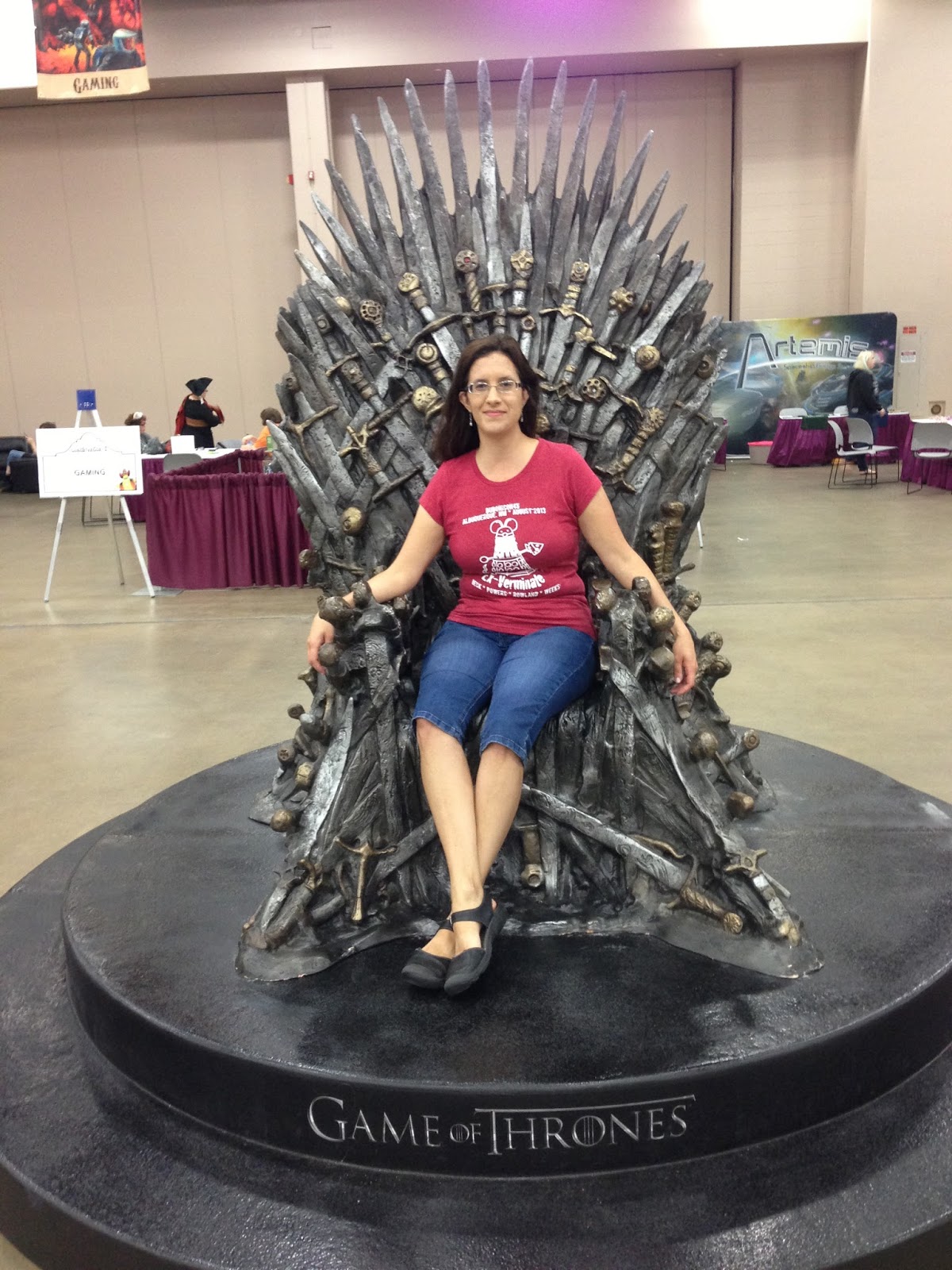 I could get used to being QueenI went to two cons in as many weeks over the past month, which felt an awful lot like I was being a greedy goose. I spent several days at Lone Star Con in San Antonio, the site of this year's World Science Fiction convention. I met up with old friends as well as making new friends and meeting people I had only known via the Internet. I went to panels, a reading, I ate, I workshopped some stories, I partied, and I gave a podcast interview for the first time ever. My introverted self did well, holding on for the post-con trip to the beach where I unwound from the con's frantic days and nights.
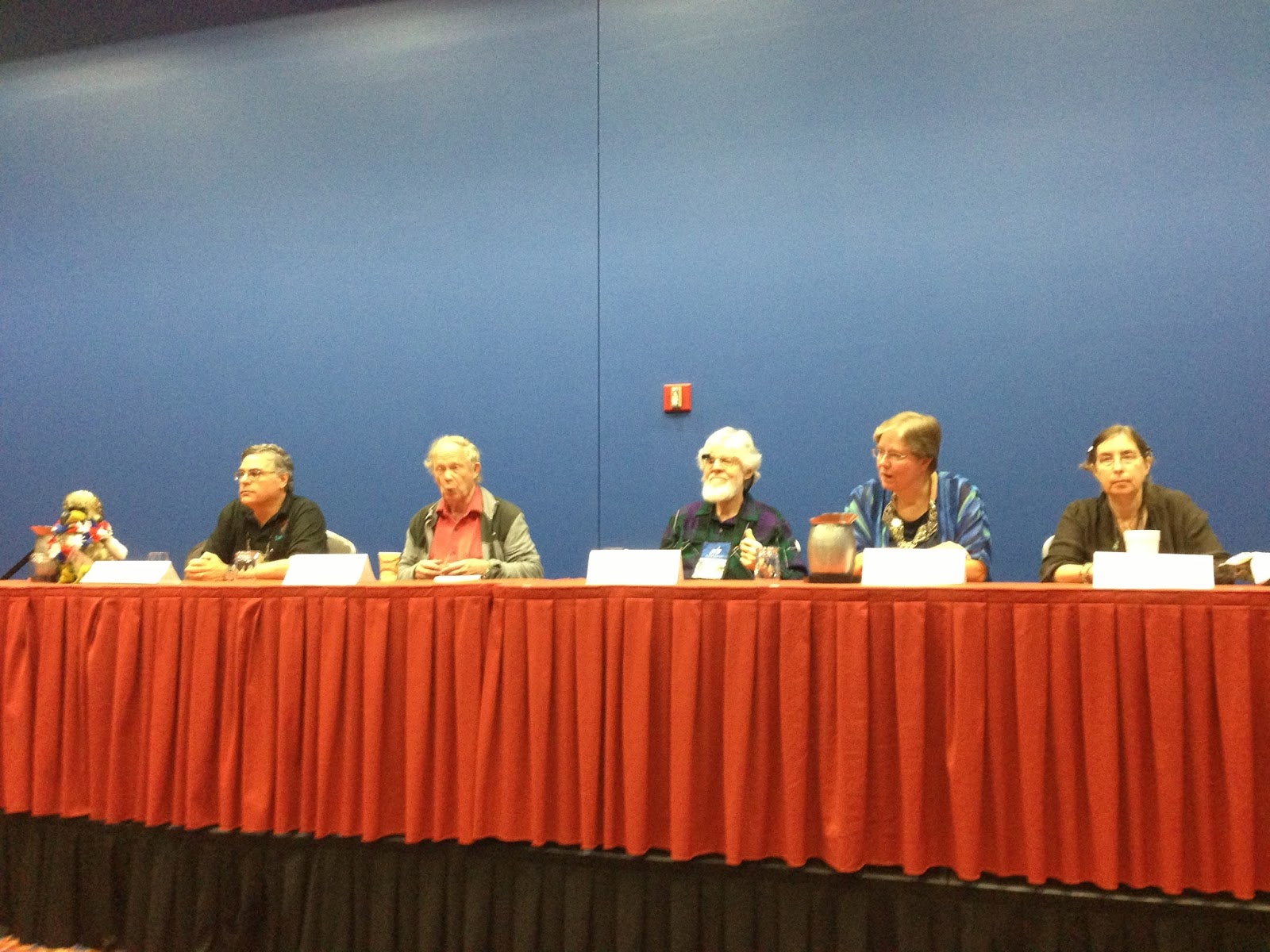 Reproductive technology panelThe first panel I attended was on reproductive technology, medical ethics, and the law. That's a topic that could entail an entire convention, so fitting pertinent information into an hour felt much like trying to cram all the books and legos I bought (that's right, legos... for my son, of course, and not for me) into the suitcase at the end of the convention. Lois McMaster Bujold brought up several good points. With every new technological advance, new questions are raised. Every little advance means one more decision for the primary caregiver(s) to make. What it comes down to (for Bujold) is, how do we choose for someone who cannot choose for themselves?
I also went to a panel on the future of small presses. Since I'm published through a small press, I thought it would be in my best interest to hear what others had to say. Much of it was along the lines of my own thoughts, and it seemed that all the panelists thought small presses would be around for the long haul, for a variety of reasons.
On a whim, I went to a panel on making shadow puppets, given by professional puppeteer Mary Robinette Kowal. She gave a darling performance and then instructed us on making our own shadow puppets. By the end of the hour, I felt like a little kid again, and I was glad I stopped in and had the chance to play.
I went to a reading given by Vylar Kaftan. She read two of her short stories, one of which just came out in the Glitter and Mayhem anthology. The stories rocked, and I found myself thinking, "I wish I could write like that."
I also gave an interview, which will appear on the SF Signal Podcast. I'll be sure to let you all know when it airs so you can hear how scratchy my voice had become by that point.
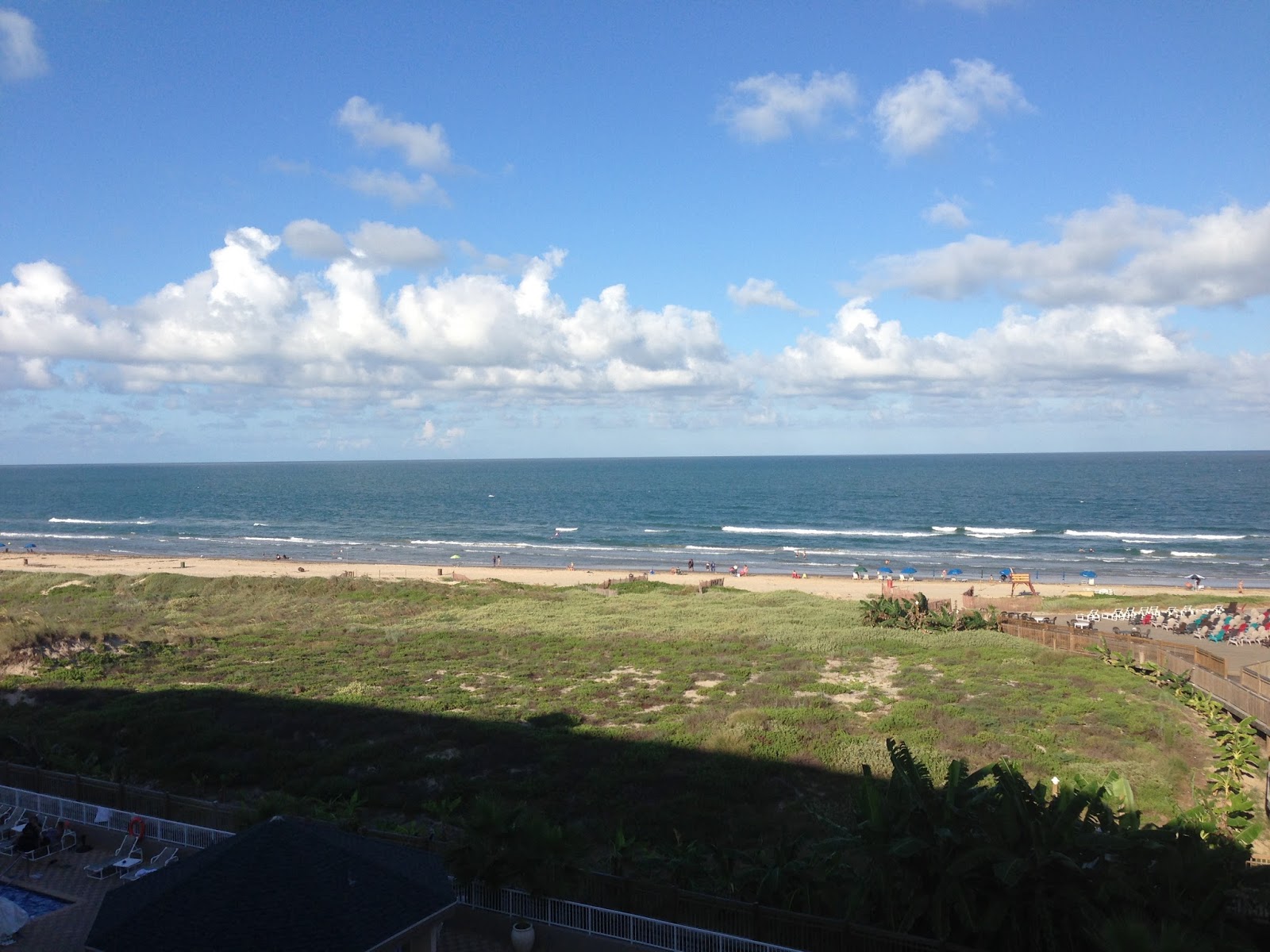 South Padre Island, perfect for unwindingPerhaps the awesomest thing about the con, however, was hanging out with other writers. I get such a buzz when I'm around all those creative people. I come away feeling like I want to do all the things, like, right now. I'm glad I had time to get away for a couple of days before coming back home so I could simply breathe and remind myself that I don't have to do it all at this very moment.
August 31, 2013
Generation One: Children of Mars
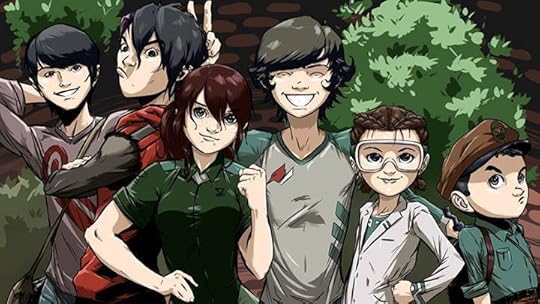
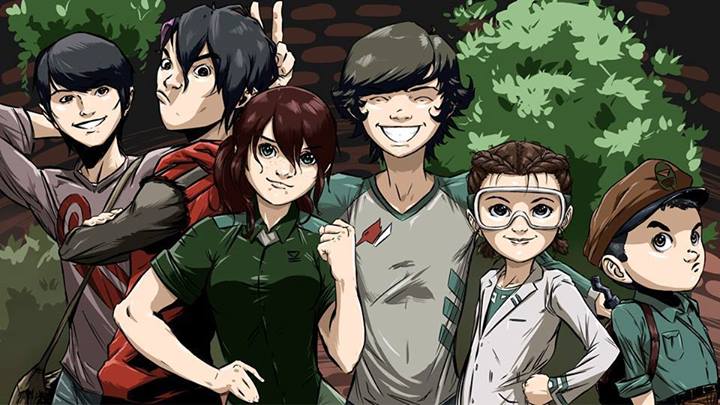
My writing buddy Steven R. Stewart, along with a talented group of folks, is putting together a comic book about the first generation of children born on Mars. I have to admit, tears formed in my eyes when I watched the trailer. This looks like an awesome, super cool project. They have only four days to go to reach their stretch goal for funding. But allow me to have Steven describe it in his own words....
As I write this, I’m sitting by a window that overlooks my grassy lawn—a carpet of organic solar panels that turn sunlight into sugar—and the busy residential street beyond. A steady flow of traffic—human beings in wheeled metal boxes—comes and goes a little too fast for my liking. I have kids, and they play in this lawn, near this busy street. I love my little girls; I don’t want them to break, to go out like a candle, to stop being.
It is night, the moon is out, and I think to myself how crazy all this is. That’s a real place, that ball of white up there in the sky, a place I could plant my feet, draw in the dust with the toe of my boot. It’s not hypothetical. It’s not an idea. It’s really there.
Near the moon, a faint pink dot hangs in the starry sky. It’s a real place too, a red planet, our next door neighbor. It’s so small, so easy to miss, and we could go there.
One day, if we can muster the courage, we will go there. We will live there. As NASA director Mike Griffin said, “One day…there will be more humans living off Earth than on it.” I agree, and I think that’s the way it should be. Earth is just a dot, “a mote of dust suspended in a sunbeam,” all too easy for some cosmic cataclysm to swat out of the sky. If we want to continue surviving in this absurd, beautiful universe, we have to strap on our pioneer hats and get to work.
So here I am, a 29 year-old fiction writer with two kids and a wife, and zero background in science, mathematics or engineering. How can I help bring this bold future into being? How can I pitch in, or at the very least, cheer on the men and women who can? How can I cheer my loudest?
Generation One: Children of Mars is my attempt to do just that—to create a smart, accessible piece of entertainment that will hopefully encourage young people to look up at that pink dot in the sky and think big about humanity’s future in space. It’s a comic book about kids growing up on Mars and discovering what that means, and what it costs. You can learn more by watching our project video here.
My team and I launched the Kickstarter on August 6th, and so far, the public response has been overwhelming. People are hungry for this kind of story, far hungrier than I had realized. They want the same bold future I want, and that gives me hope. Because once we believe it’s possible, it will be.
We’ve been lucky enough to secure the endorsement of Dr. Robert Zubrin, author of “The Case for Mars” and President of The Mars Society. He had this to say about the project:
“Someday Mars will have its own Laura Ingalls Wilder to tell the tale of growing up on the new frontier. But with ‘Generation One: Children of Mars,’ we can experience some of that story now. It’s going to be great.”
There’s only a handful of days left in the Kickstarter. Join us. Come alongside us as we tell this story; be a part of our journey. It’s the same journey humanity has been on since the beginning: a quest to spread out and survive, to understand and grow, to become more than what we are.
Let’s add to the discussion—and have some fun in the process. We’re human after all.
As I write this, I’m sitting by a window that overlooks my grassy lawn—a carpet of organic solar panels that turn sunlight into sugar—and the busy residential street beyond. A steady flow of traffic—human beings in wheeled metal boxes—comes and goes a little too fast for my liking. I have kids, and they play in this lawn, near this busy street. I love my little girls; I don’t want them to break, to go out like a candle, to stop being.
It is night, the moon is out, and I think to myself how crazy all this is. That’s a real place, that ball of white up there in the sky, a place I could plant my feet, draw in the dust with the toe of my boot. It’s not hypothetical. It’s not an idea. It’s really there.
Near the moon, a faint pink dot hangs in the starry sky. It’s a real place too, a red planet, our next door neighbor. It’s so small, so easy to miss, and we could go there.
One day, if we can muster the courage, we will go there. We will live there. As NASA director Mike Griffin said, “One day…there will be more humans living off Earth than on it.” I agree, and I think that’s the way it should be. Earth is just a dot, “a mote of dust suspended in a sunbeam,” all too easy for some cosmic cataclysm to swat out of the sky. If we want to continue surviving in this absurd, beautiful universe, we have to strap on our pioneer hats and get to work.
So here I am, a 29 year-old fiction writer with two kids and a wife, and zero background in science, mathematics or engineering. How can I help bring this bold future into being? How can I pitch in, or at the very least, cheer on the men and women who can? How can I cheer my loudest?
Generation One: Children of Mars is my attempt to do just that—to create a smart, accessible piece of entertainment that will hopefully encourage young people to look up at that pink dot in the sky and think big about humanity’s future in space. It’s a comic book about kids growing up on Mars and discovering what that means, and what it costs. You can learn more by watching our project video here.
My team and I launched the Kickstarter on August 6th, and so far, the public response has been overwhelming. People are hungry for this kind of story, far hungrier than I had realized. They want the same bold future I want, and that gives me hope. Because once we believe it’s possible, it will be.
We’ve been lucky enough to secure the endorsement of Dr. Robert Zubrin, author of “The Case for Mars” and President of The Mars Society. He had this to say about the project:
“Someday Mars will have its own Laura Ingalls Wilder to tell the tale of growing up on the new frontier. But with ‘Generation One: Children of Mars,’ we can experience some of that story now. It’s going to be great.”
There’s only a handful of days left in the Kickstarter. Join us. Come alongside us as we tell this story; be a part of our journey. It’s the same journey humanity has been on since the beginning: a quest to spread out and survive, to understand and grow, to become more than what we are.
Let’s add to the discussion—and have some fun in the process. We’re human after all.
August 26, 2013
Bubonicon 2013
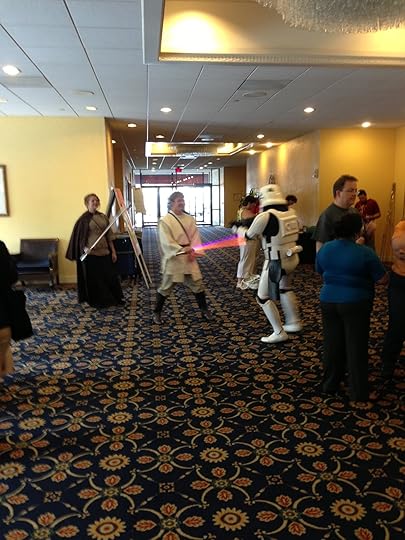
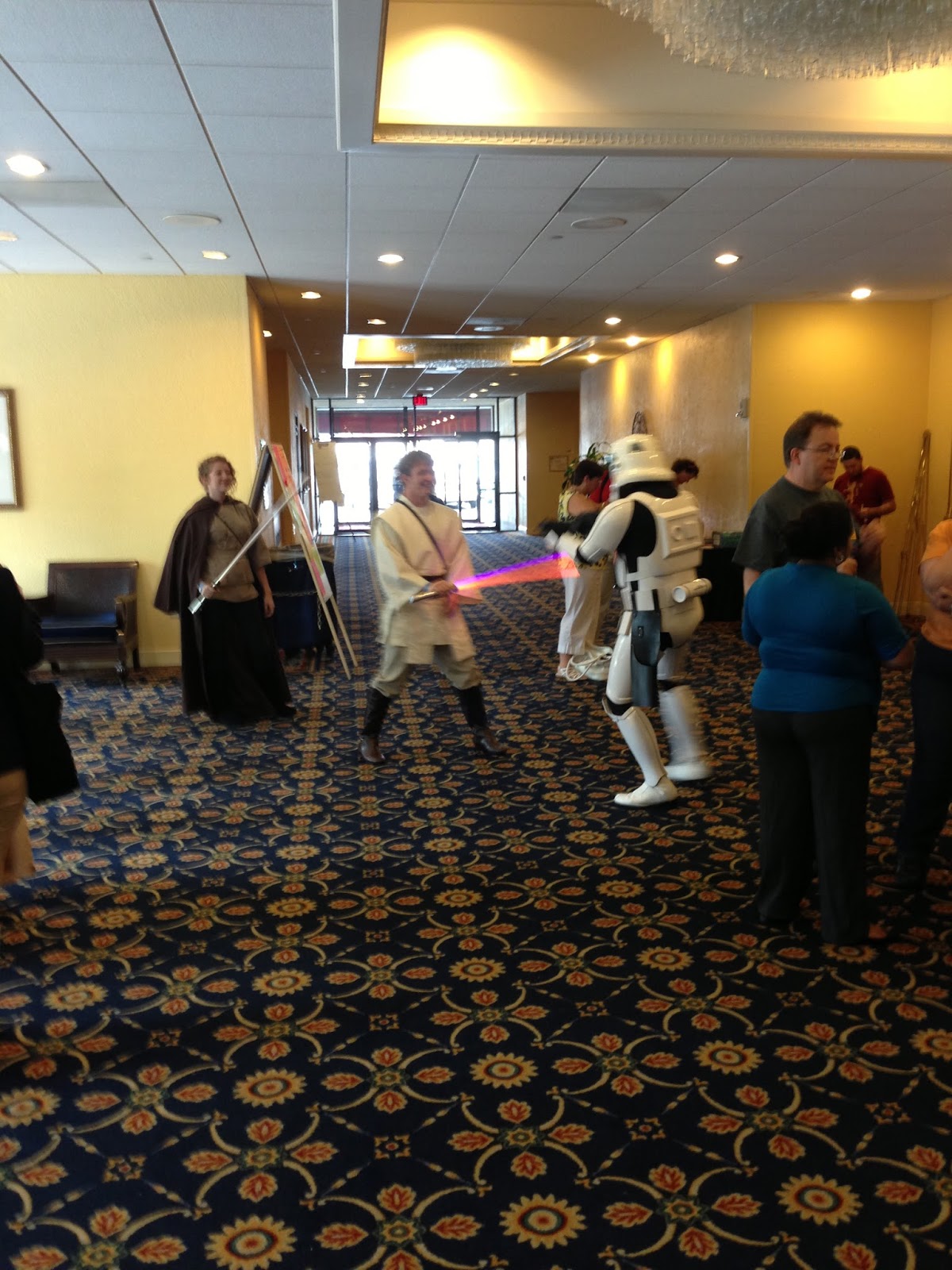
It seems like Bubonicon just happened a few weeks ago, and yet here it is again, already. Each year I meet a few more people, the art work and costumes exceed the previous year, and I have a little more fun each time.
 I attended some great panels. The first promised a cage fight between fantasy and science fiction. Alas, there were no fists flying or blood shed, but there was a lively discussion on the definitions of fantasy and science fiction. One of the panelists said the difference between the two mostly lies in marketing. Roughly, if a publisher puts dragons and swords on the cover, it's fantasy; if the cover has spaceships, it's science fiction.
Joel Shepherd brought up an interesting idea, namely, that his prose is more lyrical and abstract when he writes fantasy, and it's more specific when he writes science fiction. He went on to say that fantasy is 'a made up past,' and science fiction is 'a made up future.'
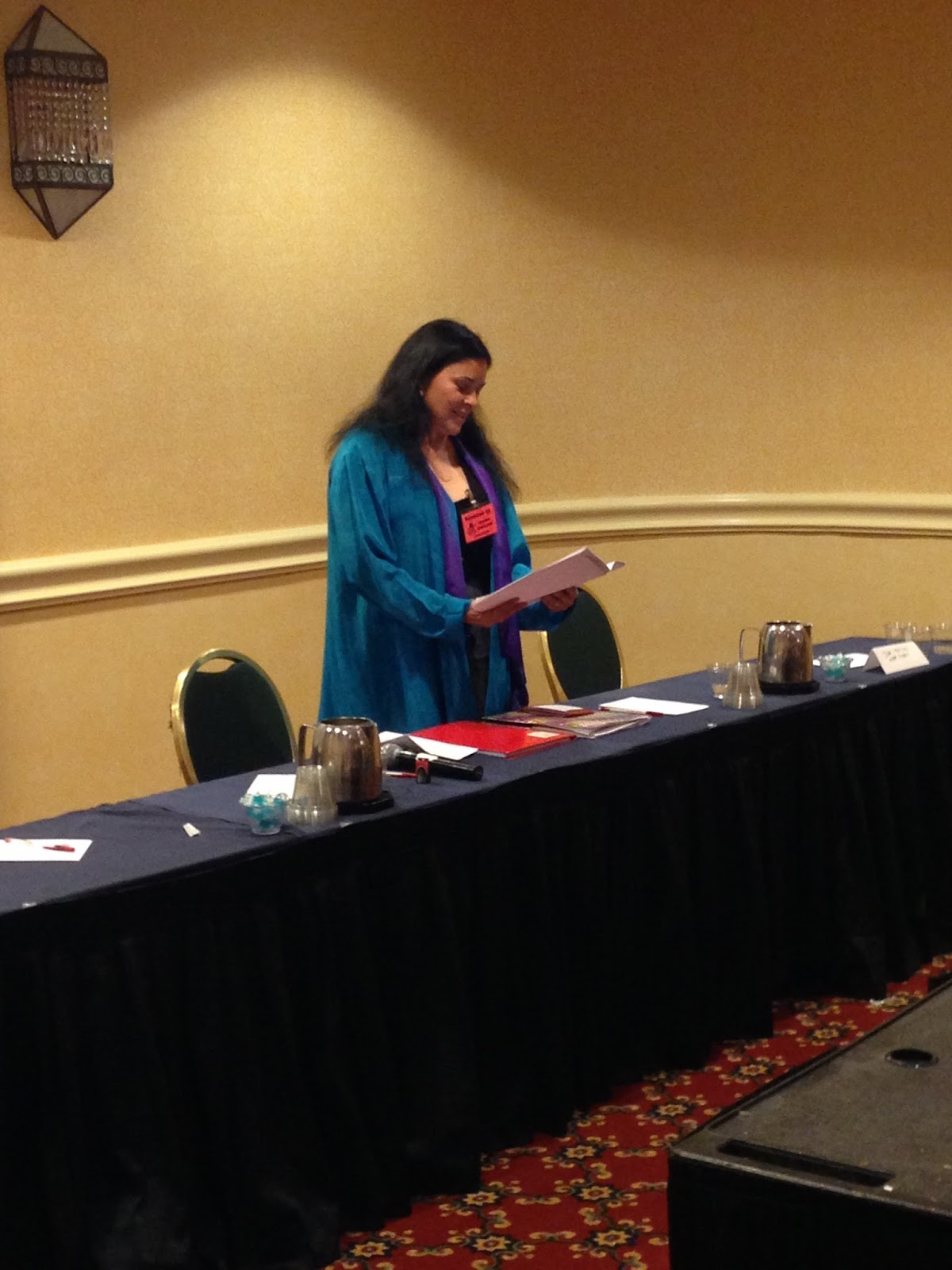
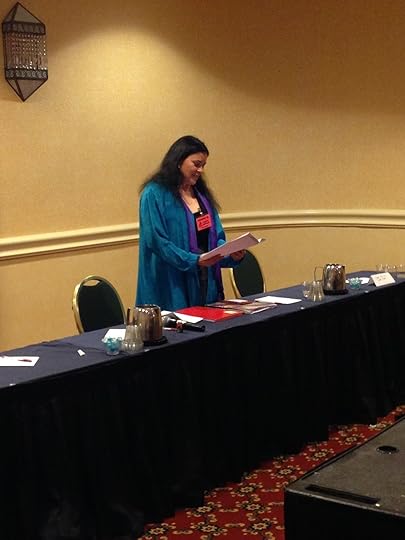 Diana GabaldonI then attended a talk given by Diana Gabaldon on how (and how not) to write sex scenes. As you might suspect, there was quite a bit of laughter throughout the hour, not only because of the subject, but because Gabaldon is an entertaining speaker. And by the way, hearing her read Jaime's dialogue is worth more than gold. Also, hearing her read the myriad names for a man's private parts is highly entertaining.
She began with a summary of the things needed to write good sex scenes ("This is for those in a hurry.") Sex scenes are about emotion, and lust does not count as an emotion. A good sex scene is a dialogue scene with physical cues/specific body language. For Gabaldon, dialogue is the most flexible and powerful tool a writer can use. She also spoke about "the rule of three." If you use at least three of the five sense, it makes a scene feel three dimensional.
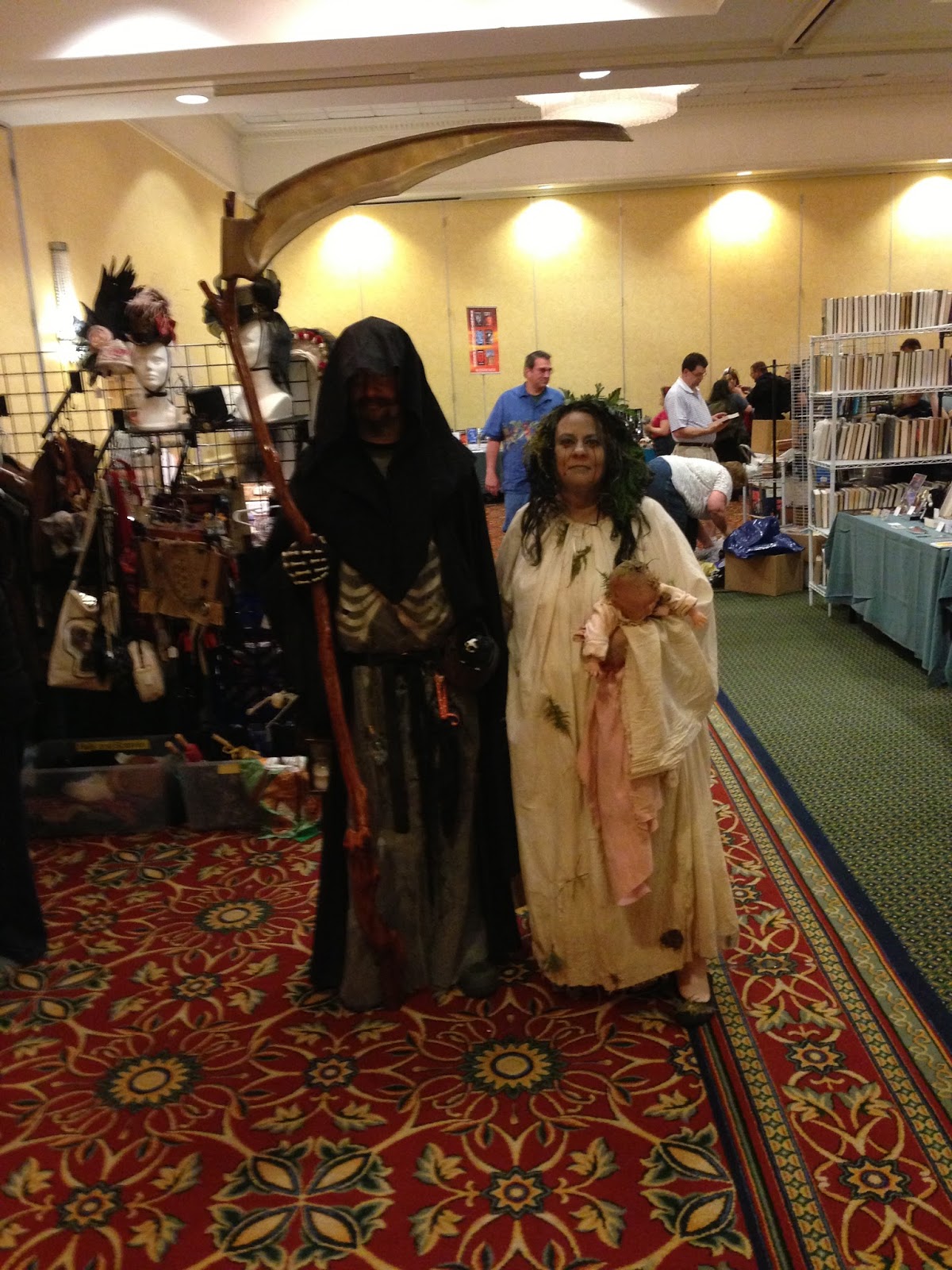
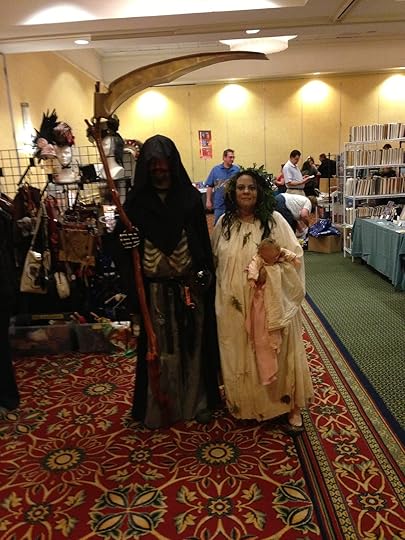 Death & La LloronaThere was also a panel on serial killers and assassins in fiction, which reminded me of an article I read a while back on a neuroscientist who discovered his family had a history of murder. One of his ancestors was Lizzy Borden. Yes, that Lizzie Borden. You know, she took an axe and gave her mother forty whacks.... Anyhow, after reading that, I wondered how many of us walked around like little ticking time bombs, socially functioning only because we had decent childhoods. How much is nature, and how much is nurture? Which is stronger and overrides the other?
As always, Bubonicon left me with a sore belly from laughing, it left me more knowledgable than before, and it left me highly satisfied. The first year I went, there were six hundred and some attendees. This year, the woman checking me in at registration said there were nearing a thousand. This little con is growing fast, and they do a great job of running it. I can hardly wait until next year!
 I attended some great panels. The first promised a cage fight between fantasy and science fiction. Alas, there were no fists flying or blood shed, but there was a lively discussion on the definitions of fantasy and science fiction. One of the panelists said the difference between the two mostly lies in marketing. Roughly, if a publisher puts dragons and swords on the cover, it's fantasy; if the cover has spaceships, it's science fiction.
Joel Shepherd brought up an interesting idea, namely, that his prose is more lyrical and abstract when he writes fantasy, and it's more specific when he writes science fiction. He went on to say that fantasy is 'a made up past,' and science fiction is 'a made up future.'
 Diana GabaldonI then attended a talk given by Diana Gabaldon on how (and how not) to write sex scenes. As you might suspect, there was quite a bit of laughter throughout the hour, not only because of the subject, but because Gabaldon is an entertaining speaker. And by the way, hearing her read Jaime's dialogue is worth more than gold. Also, hearing her read the myriad names for a man's private parts is highly entertaining.
She began with a summary of the things needed to write good sex scenes ("This is for those in a hurry.") Sex scenes are about emotion, and lust does not count as an emotion. A good sex scene is a dialogue scene with physical cues/specific body language. For Gabaldon, dialogue is the most flexible and powerful tool a writer can use. She also spoke about "the rule of three." If you use at least three of the five sense, it makes a scene feel three dimensional.
 Death & La LloronaThere was also a panel on serial killers and assassins in fiction, which reminded me of an article I read a while back on a neuroscientist who discovered his family had a history of murder. One of his ancestors was Lizzy Borden. Yes, that Lizzie Borden. You know, she took an axe and gave her mother forty whacks.... Anyhow, after reading that, I wondered how many of us walked around like little ticking time bombs, socially functioning only because we had decent childhoods. How much is nature, and how much is nurture? Which is stronger and overrides the other?
As always, Bubonicon left me with a sore belly from laughing, it left me more knowledgable than before, and it left me highly satisfied. The first year I went, there were six hundred and some attendees. This year, the woman checking me in at registration said there were nearing a thousand. This little con is growing fast, and they do a great job of running it. I can hardly wait until next year!