Russell Atkinson's Blog, page 89
August 25, 2016
The Killing in the Cafe by Simon Brett
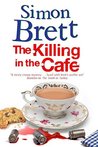 The Killing in the Cafe by Simon Brett
My rating: 3 of 5 stars
This classic cozy mystery is number 17 in the Fethering series. I imagine it is representative of the entire series, although I haven’t read any others, so this review might be a generic one for the others. You don’t get to #17 without a successful formula, and this does indeed seem formulaic.
A dead body turns up in a cute, touristy, retro cake shop in Sussex where the waitresses wear classic black and white maid costumes right out of an Agatha Christie novel. Then it disappears. The body shows up again a few weeks later floating in the sea and the police are finally involved, although their appearance is brief. Since the body is tied with rope, suicide seems unlikely, but the Sussex police apparently don’t bother doing murder investigations. Have no fear, Jude and Carole are on the case.
The cake shop is about to be sold but a pretentious codger in the form of a retired Commodore insists on forming a committee to turn it into a community restaurant run by volunteers. Most of the book is spent showing what an arrogant twit the commodore is, revealing the transparent bigotry and dishonesty of his social climbing wife, and the ludicrous competition for committee leadership by a local bureaucrat-type who heads every other committee in town.
Meanwhile, Jude and Carole (mostly Jude) have no trouble getting everyone connected with the body to reveal all even though not one ever contacted the police. Even the murderer eventually confesses to them without qualms. It seems that telling everything, no matter how personal or embarrassing or even incriminating, to a pair of busybodies is the most natural thing in quaint English villages.
Brett has fun poking fun at human nature and takes us along for the short, mildly amusing ride. This won’t satisfy hard core mystery fans, but you could find worse ways to kill a couple of evenings.


August 23, 2016
Hear me speak – Agent to Author
Thursday 8/25 (day after tomorrow) 6:00 PM I will be making a presentation at the Mountain View Public Library about how I got into writing crime novels. The corny title: Agent to Author. Although the link is a registration form with details, no registration is necessary. It’s open to everyone and free.
https://ca.evanced.info/mountainview/lib/eventsignup.asp?ID=15092
August 19, 2016
Anagram on the News – Penis edition
Penis crushes pole vaulter’s Olympic dream = Super-massive manhood; peter clips cruelly
http://i.imgur.com/SOnDtsL.mp4
http://www.anagramtimes.com/2016/08/penis-crushes-pole-vaulters-olympic.html
August 18, 2016
Crashed: A Junior Bender Mystery by Timothy Hallinan
 Crashed by Timothy Hallinan
My rating: 5 of 5 stars
The back cover describes Junior Bender as a crook with a heart of gold (which is more or less accurate), so right off the bat you know plausibility has gone out the window. I’ve known more than my share of crooks when I was in the FBI and gold hearts aren’t in the picture. So what? I knew this was fiction when I picked it up. There was no Dewey Decimal number on the spine. The sign at the end of aisle said Adult Fiction (to distinguish it from the library’s children’s and young adult sections, not like an Adult Film, which, as it happens, is part of the plot here). So Junior, whose specialty is burglary for hire, gets forcibly cajoled into helping a mobstress make a porn film using a screwed-up, addicted former child star, which for implausible reasons he’s supposed to be able to control.
The author is a master of witty hyperbole: the valley has an entire planet’s worth of bars, the house’s front door is so massive you need a ladder just to say hi, a drinker’s face the color of rare roast beef, and that’s just the first couple of pages. I began to worry that’s all the book was going to be: a plot-free collection of amusing over-the-top descriptions like what Carl Hiaasen writes. That’s whipped cream, delicious at first, but not enough to make a real meal out of. Or a novel. I was quickly disabused of that notion. We eventually meet Thistle, the crashed starlet, and Junior is torn between doing his duty to the mobstress (thus keeping his arms and legs attached to the rest of his body) and saving poor Thistle from herself.
I’ll spare you the spoilers. It was obvious as soon as the film-making came along that the author knew his stuff there. The jargon, the personnel, all of it rang true and was fascinating. The crime stuff, not so much, at least not the ringing true part, but it was entertaining. I wanted to dislike the author, perhaps because he’s one of those show-biz people, perhaps because he portrayed law enforcement (or one bad cop anyway) in a bad light, or perhaps because he’s a very successful mystery writer whereas I’m a barely-in-the-black self-published mystery writer, but I found this hard to do because I was enjoying the book too much. The dude can write. He can even write grammatically while keeping the profanity, porn stuff, and gore to an acceptable minimum.
If plausibility went out the window on the back cover, by the end it’s on a NASA spacecraft exiting the Kuiper Belt (see, I can do hyperbole, too), but you won’t care. You’ll be rooting for Junior and Thistle too hard. Five stars may be pushing it, but this is one of the best mysteries I’ve read in a long time.
August 15, 2016
Black Olives Matter

Black Olives Matter
August 12, 2016
Gmail fail
I don’t know exactly when it happened, but gmail changed their inbox script in a very irritating way. I think it was at least six months ago, maybe a year. I have my gmail inbox set as my home page. This used to work well. I could be working on other things (such as my writing) and open other tabs, like wikipedia, Google search, etc. and that Inbox tab would always show me when I got a new email. The icon for the tab would show the number of unread emails in my inbox and that number would change as I worked on other things. Similarly, if I didn’t have any other tabs open, just my inbox, the new emails would show up in my inbox in bold type as soon as they were received at the server.
Then the change. Now gmail does not push the email to my inbox unless I am active on that page. If I am busy with some native application and the gmail window (or the entire browser) is not being used, the new email is not pushed to the screen. The tab doesn’t show any unread emails that have not yet been downloaded. I have to click on the gmail page with my mouse to get the new emails to come. In effect, I have to ask if I have any new emails. This is really irritating. I want to know when I have a new email without asking. I don’t get an overwhelming number as I used to when I was working full time. I can deal with them as they arrive, usually, and generally want to do so.
In addition to the fact that I am not notified of new emails on a timely basis, there is another problem, one that is at least as irritating. Suppose I have read all my emails and archived or deleted all of them except for the reminder one from my calendar that says to feed the cat. I leave that in my inbox because I haven’t yet fed the cat and want to keep the reminder where I will see it. In reality, I don’t have such a reminder because my cat is quite capable of letting me know when he needs to be fed, but stay with me here. It’s just an example. So I’m busy for a while with native applications but leave the inbox visible in my browser. Finally I feed the cat. When I return to my computer the screen shows only one email – the reminder to feed the cat. Now that I don’t need it, I click the box for that email and then the trash can icon to delete it. No problem, right?
Wrong! I have just deleted a brand new unread email. Why? Because gmail has not been pushing new emails to my inbox, it is sitting on the server waiting for me to ask for it. It seems that gmail somehow registers the fact that I clicked on my screen and sends me the new email before it registers the fact that I clicked on the first box. Then it understands the fact I clicked the first box and then the delete icon and deletes the first email, which is the one it just sent and which I haven’t read. It is deleted without ever having appeared on the screen. The only clue to me that this has happened is that I look at my screen and the reminder to feed the cat is still there. If I’m not paying that much attention I may think my click just didn’t register somehow and delete it “again.” I could miss that new email altogether, not even realizing there was one. Now that I’m aware of the issue I know to check my trash folder when this happens, but it shouldn’t happen at all. Other times it’s not that dire, but I click on an earlier email showing on the screen to read it and instead it feeds me a new one I didn’t know about. It’s not exactly a disaster, but it is unnecessarily irritating.
Obviously this new method lightens the load on gmail’s servers, since it only has to process my new email when I ask for it, instead of constantly, but that rather defeats the whole purpose of instant communication, which is what email is all about. I don’t text, but it’s the same thing. How would you feel if your phone only showed you texts if you went to a texting inbox instead of pushing them to your phone when sent? This is a major fail, in my opinion.
August 5, 2016
The Maze Runner by James Dashner
 The Maze Runner by James Dashner
My rating: 3 of 5 stars
Let’s start with the most important: this is book 1 in a series. This book has no ending. Do not start unless you’re prepared to keep on in the series. The copy I pulled off the library shelf gives no warning of this. Nothing on the CD box cover or back says anything about it being book 1 or part of a series. I was very upset when I got to the end with nothing resolved. Until then I was wondering whether to give it four stars or five in my review. Now I can barely squeeze out three. There’s nothing wrong with a series, but in my opinion, every book in a series should be a complete story in itself. No reader should be left hanging at the end of a book.
That said, the book is well-written and suspenseful. The main character, Thomas, is a teenage boy who finds himself thrust into a strange place called The Glade populated with other teenage boys. He, like the others, has no memory of his prior life. The Gladers have a strange jargon and seemingly only one mission: to solve the Maze. Every day runners go out into an enormous maze whose walls change daily, looking for a way out. Others stay in the Glade growing crops, cleaning, cooking, and so forth. Weekly supplies arrive via a mysterious elevator. A new boy arrives once a month the same way. The maze fills with fearsome and deadly creatures called grievers at night, and sometimes during the day. Soon after Thomas arrives things begin to change. He survives a night in the maze. A teenage girl, the only girl ever, arrives via the elevator only a day or two after Thomas. I’ll leave the rest to your imagination, although the story arc is pretty predictable (other than the fact it doesn’t resolve).
Our library has a Young Adult (YA) section, and even a separate sci-fi subsection within it. I never take anything marked YA. Yet I think this book must have been written for that demographic. All the characters are teens. There is sexual tension between Thomas and the girl, but no actual sex. All the cursing has been bowdlerized into Glade jargon. Now that I know it’s a series, I have no doubt it was conceived as a formulaic copy of The Hunger Games trilogy, only for boys. Teenagers fighting for survival against mysterious forces of evil. So it’s mislabeled both in failing to alert you that it’s a series and also that it’s aimed at the teen reader. Hmmph.
The jargon is well-conceived and works well. Shucking, shanks, “good that.” It seems natural without sounding obscene or crude. However, the level of death, gore, violence, and torture seems extreme for the teen market. Even for an adult audience it seems gratuitously excessive to me. I’m not interested in reading more of it and won’t be finishing the series, nor, as I gather from some editions, watch the movie which I assume is in the works.
I listened to the CD version. The reader is excellent. He has a nice voice, can act, and does several accents credibly. The story is quite engaging and will keep you reading or listening, but just be prepared for the story to suddenly stop (or be prepared to find the next in the series.)
August 4, 2016

August 2, 2016
Red Platoon by Clinton Romesha
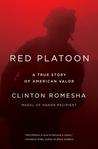 Red Platoon: A True Story of American Valor by Clinton Romesha
My rating: 5 of 5 stars
This pulse-pounding first-hand account of heavy combat in Afghanistan by a Medal of Honor winner kept me on the edge of my seat the whole way through. The army base, called Keating, was a nightmare ready to happen from the moment it was built, and that nightmare came true. Sitting in a hollow surrounded by steep mountains on all sides and with no viable supply lines, it was impossible to defend. This fact was realized fairly quickly and the base was in the process of being shut down and evacuated when hundreds of Taliban attacked from all sides with a fierce, well-coordinated, and well-armed attack from the high ground. The violence, death, gore, and emotional trauma that Red Platoon and the other occupants in Keating went through is described in grisly, riveting detail. This is not fiction and is not for the faint of heart. Those who love combat stories will eat it up; if that’s not your thing, you might want to think twice before starting this one.
This kind of tale can be divisive, separating those who think everyone who wears our uniform is a hero keeping us all safe from those who thinks the army is full of dropouts or losers or those bloodthirsty gung-ho maniacs who just like to kill. As I see it, they can both be right in part, even when describing the same soldiers. The author makes clear his platoon was not a bunch of choir boys nor did they all join to defend their country. Some joined to escape death in a gang or because they were meth addicts with no chance at a real job. There were some who were lazy and some who were cowards or just plain stupid. None wanted to be at a screwed up base like Keating. But when the attack came, most stepped up and did what soldiers do in every war – they fought with every ounce of courage they had for their comrades and their own survival. Many showed remarkable resilience, bravery, and ingenuity.
The minute-by-minute account was heartening in this way, but frightening and disheartening at the same time. Why in the world were we there? Why are we still there? I’ve read another first-hand account of a soldier’s time in that god-forsaken country that makes the same point. The whole nation-building thing is a joke. I fully supported going in right after 9-11, but it was time to get out long ago. No one but the corrupt Afghan government and American defense contractors wants us there. Our continued presence just serves to help Al-Qaeda or the Taliban recruit more USA-haters and results in deaths and maimed veterans.
The writing is at times eloquent, even elegant. It is always engrossing. It tells the unvarnished story from the eyes of one soldier, although a lot of research was done to incorporate the experience of others who were present on the ground, in the air, or in remote command positions. Despite the generally fine writing, there were moments of eye-stabbing grammar and spelling errors that disrupted the flow. “Me and Jones went…” “feeling went throughout myself…” “areal support.” I wanted to yell at the ghostwriter, “pick a lane: the left side of the IQ bell curve or the right, or better yet, aim for the big hump in the middle.” I assume that Kevin Fedarko, whom Romesha acknowledges at the end for the writing, was trying to impart some of the voice of Romesha in the telling. While the writing was uneven, it was compelling. I found it hard to put down. My thanks go to all the men, survivors or not, who endured that assault at Keating, and for matter, all our men and women who wear the uniform.
July 29, 2016
The Three-Body Problem by Cixin Liu
 The Three-Body Problem by Liu Cixin
My rating: 2 of 5 stars
Covering decades of Chinese history, this sci-fi novel follows theoretical physicists and other scientists and intellectuals through the Cultural Revolution and Red Guards era to the present day. We are told of a mysterious astronomical facility on a hill and eventually learn it is (or was by the time we learn of it) a SETI facility, one that made contact with an extra-terrestrial civilization. The suspense comes from wondering what comes next.
The history of how intellectuals and scientists were treated in the past and present, told by a Chinese insider/intellectual, was fascinating to me. The story line itself, not so much. Some English speakers may have trouble with the many Chinese names, but there is a list of characters at the beginning to help out with that. The premise is a good one and I enjoyed the first three-quarters of the book, but it went downhill fast at the end. Both the style and the plot stunk, to be frank. The “science” will drive you to eye-rolling or teeth-gnashing at that point. Sure, it’s fiction, but there’s a limit as to how ridiculous it can be even in a novel. There really isn’t even an ending. Now, as I log onto Goodreads, I find that it is the first book in a trilogy. Nothing on the front or back cover or the review I read indicates that (although the inside cover in small print does). If I had known that I wouldn’t have picked it up.
I can give it an “OK” rating for the entertainment value of the first part, but I can’t really recommend it.