Russell Atkinson's Blog, page 124
June 13, 2014
More groaners
A dyslexic man walks into a bra…
She was only a whiskey maker, but he loved her still.
No matter how much you push the envelope, it’ll still be stationery.
Atheism is a non-prophet organization.
and finally…
Two guys sitting in a kayak were chilly, so they lit a fire in the craft. Unsurprisingly, it sank, proving once again that you can’t have your kayak and heat it too.
groan


June 6, 2014
Proofreader needed

image credit: whatwouldjackdo.net
June 5, 2014
The Two Gentlemen of Verona by William Shakespeare
It would be presumptuous of me to review a play by The Bard that has withstood the test of time, so I will just mention a few points that may help a reader trying to decide which Shakespearean drama to tackle. This one would be a good candidate.
I was tired of the formulaic”mysteries” (which are seldom mysterious) that populate the best-seller or recommended reading lists these days, so I picked up my copy of the complete works of Shakespeare to find something different. Actually, I picked up my wife’s copy, which was a mistake. I started reading this play and realized that I needed the footnotes to get all the wordplay, so I switched to mine. My copy, a different edition, explains all the puns and allusions. You have to read something like this to appreciate what a genius Shakespeare was. The play is billed as a drama, but the repartee between the characters, especially the sassy servants backtalking to their masters, makes this one equally legitimate as a comedy.
To be sure, there are things in it that are unacceptable to modern audiences. He uses the terms Jew, Hebrew, and Ethiope as vicious insults, for example. Still, that’s merely reflective of the absolute certainty of the age that white British or at least European Christians, and by that I mean males, were clearly superior to all other races and all infidels. Kind of like the Taliban does today, which makes them caught up to 16th Century moral and ethical values, I suppose. Oops! I don’t do politics. Disregard that last remark. Another example would be how quickly love strikes — and how quickly it flees.
Another fun fact is the author’s continuity problems. For example, when one of the main characters arrives in Milan he is greeted by his host with, “Welcome to Padua.” That would make a good trivia question or crossword clue: “When Proteus arrives in Milan, his host welcomes him to what city? 5 letters.” Milan? Wrong! In fact he does it a second time, referring to Milan as Verona.
It really helps if you understand Elizabethan English well enough to follow all the wordplay, but even if you don’t, you can still enjoy the slightly farcical play we would today call a dramedy. Boy, that guy can write!
May 31, 2014
Groaners
I know a guy who’s addicted to brake fluid. He says he can stop anytime.
How does Moses make his tea? Hebrews it.
I stayed up all night to see where the sun went. Then it dawned on me.
This girl said she recognized me from the vegetarian club, but I’d never met herbivore.
I’m reading a book about anti-gravity. I can’t put it down.
The lab report said I had type A blood, but it was a type O.
PMS jokes aren’t funny. Period.
I didn’t like my beard at first. Then it grew on me.
When you get a bladder infection, urine trouble.
What does a clock do when it’s hungry? It goes back four seconds.
May 25, 2014
Review of Junkyard Planet by Adam Minter
 Junkyard Planet: Travels in the Billion-Dollar Trash Trade by Adam Minter
My rating: 4 of 5 stars
There is something viscerally appealing to me about the scrap business. It combines admirable aspects of two seemingly diametrically opposed political bedfellows: the environmentalists and the self-made anti-regulation millionaire entrepreneurs. This delicious irony is part of what makes this book fun to read. The author also writes very well, sprinkling what could be all dry industrial stuff with light, amusing anecdotes.
I found it fascinating to read the details of how scrap is processed and recycled or reused, both here in the U.S. and overseas. There are whole factories, even towns, extremely specialized in all sorts of scrap, often whimsically named, like Honey (mixed brass), SNF (Shredded non-ferrous – i.e. everything that isn’t steel that comes out of the car-munching machines), Christmas tree light cords, lithographic plates, radiator ends. China is the main location for most such places, but they appear all over the world. The author does a good job of showing how these less-developed countries are cleaning up America by paying for our scrap. China is the reason we no longer have streams clogged with abandoned cars. The reuse and recycling means less mining, less clear-cutting of forests, and less oil drilling to fulfill the global needs for more metals and plastics and wood.
He also punctures the arrogant balloon of those who decry the “dumping” of our scrap on China and other poor countries where working conditions are so poor. The Chinese don’t even understand the term. They see our scrap as a bounty that would otherwise go to waste, much as you or I might view a wealthy neighbor who bought a new car every year and never bothered to trade in the old perfectly functional one, just abandoning it on the street with the keys in it. As bad as the working conditions and environmental controls (or lack thereof) are in China, India and other places documented in the book, the people who work there consider the jobs vastly superior to the subsistence farming or begging they would otherwise be doing. A factory job is a good job there, and no more unhealthy than their alternatives.
The one big gaping hole in the book, in my opinion, is the author’s omission of any mention of scrap dealers’ role as fences. The author is the son of a junkyard owner and clearly a big booster of the industry as a whole, lauding its role in the greater environmental scheme of things. But here in the Bay Area on any given day maybe one-third of all freeway metering lights are non-functional due to copper thieves, who can only profit by having a scrap dealer willing to turn a blind eye. When I was in the FBI we busted several scrap dealers who weren’t just feigning ignorance of the stolen nature of the products they took in. They were actively and knowingly fencing computer parts stolen directly from warehouses, directing the thieves what to steal next, or certifying as destroyed circuit boards that they actually sold to third-party dealers, who then competed with the mainframe manufacturer who was paying to have the old boards destroyed. The author portrays the scrap dealer as a victim of all kinds of crooks — employees who steal, customers who walk in with aluminum cans filled with rocks, and so on. Perhaps true, but those same dealers are at the same time paying thieves to steal copper wiring or computer parts. It’s a dirty business in all senses of the word.
It will take some patience to read the entire book, because it does become rather repetitive. The author reintroduces the same characters several times, and hammers on his main points more often than necessary. By the fifth time you’ve read that the scrap worker is better off doing that job than on the farm where he came from, you want to say, “Yeah, yeah, I got the point the first four times.” Still, there are gems that pop up throughout the book, so stick with it to the end. The car shredding machine history and the coin tower are good examples. The one stylistic cavil I have is the author’s constant use of “-sized” as a universal modifier. On one page you are likely to read of things that are “sports-arena sized”, “toddler-sized”, and “suitcase-sized.” Still this peccadillo did not diminish my enjoyment of the book. The main takeaway is that we Americans are incredibly wasteful, and the scrap businessmen at all levels are incredibly resourceful in finding ways to reuse or recycle that waste to the benefit of everyone.
View all my reviews
May 23, 2014
Review of Gypped by Carol Higgins Clark
 Gypped by Carol Higgins Clark
My rating: 2 of 5 stars
I had never read anything by Mary or Carol Higgins Clark, but I had vaguely heard of Regan Reilly mysteries so I grabbed this audiobook in the library. I’ll steer clear of Carol books from now on, but might still give Mary a shot someday. It didn’t begin “Once upon a time…” or end “…lived happily ever after” but it might as well have. It’s somewhere between a Disney fairy tale and a Nancy Drew book – aimed at pre-tweens with vocabulary and sophistication to suit. It’s full of cute little old ladies and cartoony villains. The reader, who didn’t help matters by overacting, had to read very slow to stretch it to five disks. It wasn’t offensive, or what I would call awful, but I was relieved when I found the last disk popping out of my car player.
View all my reviews
May 21, 2014
The Englishman
The Englishman
St George he was for England,
And before he killed the dragon
He drank a pint of English ale
Out of an English flagon.
For though he fast right readily
In hair-shirt or in mail,
It isn’t safe to give him cakes
Unless you give him ale.St George he was for England,
And right gallantly set free
The lady left for dragon’s meat
And tied up to a tree;
But since he stood for England
And knew what England means,
Unless you give him bacon
You mustn’t give him beans.St George he is for England,
And shall wear the shield he wore
When we go out in armour
With battle-cross before.
But though he is jolly company
And very pleased to dine,
It isn’t safe to give him nuts
Unless you give him wine.
by G. K. Chesterton
May 16, 2014
Taking responsibility
I don’t editorialize in this blog much because I am not very political. I’m registered to vote, but as “no preference” for the party. This post isn’t left, right, red or blue, but I do have some commentary on a trend in public life I find disturbing: the idea of leaders “taking responsibility” when something goes wrong.
It sounds so obvious that a leader should take responsibility for his or her organization that it is almost blasphemy for a leader to deny responsibility. The reality is, though, that in the case of almost all large organizations the leader is NOT responsible for whatever went wrong at lower levels, especially intentional wrongdoing. We have seen politicians, protesters, newscasters and others call for someone’s resignation or firing over something that happened several levels below them and which they knew nothing about. Sometimes it even occurred before that person was the leader, but it only came to light later, during his tenure. Of course the CEO, cabinet secretary, etc. is responsible for running an agency in the general sense, but not in the sense of being blamed for everything that goes wrong. Every large organization has things going wrong every day regardless of who is at the top.
The most recent example is Gen. Shinseki at the Veterans Administration (VA). It’s happened with Hillary Clinton over the Benghazi attack and Gov. Christie over the George Washington Bridge snarl, to name leaders on both sides of the political divide. Opponents of such leaders will always believe it was the fault of the leader – either through intentional malfeasance, negligence or incompetence. Facts will not dissuade them. Similarly for supporters of the leaders, who are unlikely to accept evidence of incompetence or bad conduct. In many cases in politics or business those attacking the leader don’t actually think the leader did anything wrong, but they see an opportunity to bring down a competitor, so the outcry begins or is ramped up. If the facts clearly show the leader knew nothing of the problem, the critics will say he or she should have known. Get real. In an organization of tens of thousands, or even hundreds of thousands, the CEO or cabinet secretary is supposed know everything that every employee does, including the things the employee is taking pains to conceal? Hardly.
I’m not talking about personal peccadillos. Of course the philanderer, drunk driver, or shoplifter is responsible – i.e. blameworthy – for that (although it may or may not be relevant to the person’s job performance, as many European heads of state and their mistresses have shown). I’m talking about cases like the VA, where lower level people concealed major problems from superiors by destroying records about long wait times, a practice that went on long before Shinseki took over. In the case of the VA most of the blame probably belongs to Congress for failing to fund it adequately. They’d rather spend the money on weapons systems that the military doesn’t want or need (because the corporations and unions lobby for them and donate money to their campaigns) than on the veterans who fought for us. Yet Congress will no doubt rake Shinseki or the current administration over the coals for this and demand they “take responsibility.” Similar things happened with car companies and defects that were concealed from the brass. What good would it do to remove a leader in those kinds of situations? For a leader to take responsibility in the best sense, what we want is for the leader – someone in position to rectify a problem and with knowledge of the organization – to get to work fixing it. If you bring in a new leader, that leader will change personnel around, probably putting in people who don’t know the people now below them, and it will take longer to find the problem than it will if you use the skills and knowledge of the current leader(s) to investigate and cause the proper heads to roll, or policies to change.
The news media is largely to blame because they ask every leader “Will you take responsibility?” For once I’d like to hear a politician answer that with a resounding “No, but I’ll fire the ones who are responsible!”
May 14, 2014
Review of The Alligator Man by James Sheehan
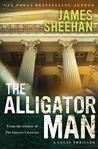 The Alligator Man by James Sheehan
My rating: 3 of 5 stars
I enjoyed this book. If you’re a fan of legal thrillers, you probably will too. The main characters are likeable and the overall feel is warm and comfortable. The protagonist is a criminal defense lawyer called upon to defend a poor, downtrodden friend accused of murdering the Alligator Man, a nasty, filthy rich drug dealer turned industrialist who looted his company. White hats, black hats, subtlety is not the author’s strong point. Our hero is resentful of his father, who is now dying and whom he has not seen in years, but of course they reconcile (that happens very early, so it’s not a spoiler). It’s all pretty standard fare, and that’s where it falls short.
The hype on the book is that it is a legal thriller by an experienced trial lawyer. It is anything but thrilling. Every plot twist that was supposed to be a surprise was telegraphed hundreds of pages in advance. I can honestly say there was not a single surprise for me in the entire book. The trial itself comes at the end, and it’s the most plain vanilla description of a trial I’ve ever seen in a novel, which, in a way, was also its strong point. It was totally realistic. I do enjoy authenticity and this author knows what a real trial is like. As a lawyer and former FBI agent I can tell you that it was as routine and mundane as a murder trial gets, despite the author’s constant hyperbolic characterizations of every move as brilliant or deviously clever. On the whole, though, it was a pleasant read devoid of the gore and sadism that so often permeate the genre.
View all my reviews
May 8, 2014
Grow houses tax depleted police force
So reads the headline in today’s newspaper. It led me to wonder how foreigners ever learn English. All six words are – or at least can be – verbs. In case you are having trouble parsing that sentence, “grow houses” (the subject) are houses used to grow marijuana, and the verb is “tax” while “depleted” is an adjective. I think you can manage “police force” on your own.