Intisar Khanani's Blog, page 4
March 13, 2017
30 Free YA Fantasy Reads on #Instafreebie!
Today I’ve got thirty free YA Fantasy reads to share with you, all available through #Instafreebie. If you haven’t read Sunbolt yet, it will only be available on Instafreebie for another month or so. Nab it now, before you forget! (I mean, a street thief with an illegal magical talent, monsters of both the human and non-human variety, and oodles of deception and betrayal–what more could you want?) Check it out and more here.

Image description: At the top, a purple sky with with a scattering of stars and two round celestial bodies, similar to planets or moons. Center, a free-standing stone arch through which can be seen a blue sky and clouds. Clouds on either side of the arch are white clouds on the purple background. In the bottom third of the banner, the purple background brightens to yellow, with clouds across the horizon. At the very bottom, a verdant green land is visible, though hard to make out clearly. At the top, center, there is the following white text, “30 Free YA Fantasy Novels.” At the bottom, a short link is provided to the giveaway in white text, which you can click on here.


March 10, 2017
Avoidance is Awesome (Except When It’s Not)
I was flipping through an old journal the other morning, looking for notes on a story idea that I’m interested in playing with again, and I found an entry from almost two years prior to the publication of Memories of Ash. Turns out, I was struggling with writing and insecurities at the time.
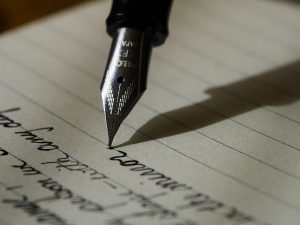
If anyone here thinks I (a) write with a fountain pen or (b) could possibly write so neatly, you are going to be very, very disappointed in me.
It’s a bit strange to look back and read it from now, when I’ve overcome those particular challenges and they no longer seem half so intimidating or insurmountable. But the entry below is also part of why I no longer give release dates before a book is actually done. I don’t know what hurdles I’ll face, I don’t know when I might lose the joy of writing and I’ll need to slow down and have fun with it again. I write my best stories when I love what I’m doing, so that ends up taking priority for me. Which works out pretty nicely, even if it means I can’t make promises until I’ve essentially already fulfilled them. Ha!
Dated: 9/30/2014
Avoidance is absolutely awesome except that it must, of necessity, be stressful.
I have not written pages–have not worked on MoA–because I am deeply troubled that I don’t have what I need in it, that I won’t be able to do it–that it is Too Much Work. And so I do not work at all.
Next time, I think I will steer clear of series. (smiley face) Seriously, though.
In the meantime, I must start thinking story again, start writing. It is just another draft, another step in the journey toward making / shaping it into the story it is. Not to be avoided, just to be engaged in.
No deadlines, no forced stops. Just a fun story to enjoy and play with and let breathe.
~~~
Ask any author who is in the middle of writing a series, and a big chunk of them will probably swear they’re never going to write another series. Ask us again once it’s done, and we may be more amenable…
Finding this entry really helped me to refocus on the idea of letting stories breathe, giving them space to play.
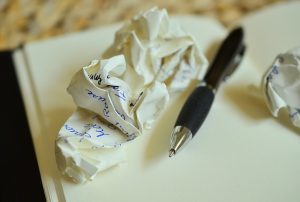
An accurate depiction of the state of the rest of my plot.
About a week ago, one of my characters in the third Sunbolt book, which I’m drafting, did something completely unexpected with huge ramifications and absolutely no warning. I spent over two months plotting this book, and this one action has blown the last third of my plot to smithereens. Unfortunately for me, the plot is actually better for this particular action. I’ve been struggling with figuring out how to bring the last third of the book together again, and the idea of letting the story breathe from here, playing with what could happen, regardless of what I thought was going to happen, is so very vital.
So for now, Hitomi is kicking her heels in an underground room somewhere out in the desert, and I’m playing with new possibilities with paper and pen. And giving thanks that, two years ago, I took the time to write out what I was struggling with.
Image Descriptions:
1 – Top center, the silver nib of a fountain pen comes down to rest on the center of a lined notebook / diary page. Bottom left corner shows very neat cursive writing on the page. To the right of the pen is a shadow thrown by the pen’s body.
2 – An open book in the background, pages blank. Laid diagonally across the right side of the book is a black ballpoint pen. To the left of it is a crunched up ball of paper with a little bit of handwriting visible on it.
March 6, 2017
Magical March e-Book Giveaway via the Fellowship of Fantasy

Here Be Magic … and a little giveaway I wanted to share with you!
Enchanted lands, magical creatures, fairies and witches and … space wizards? You bet! We’ve got all that and more for our Fellowship of Fantasy March ebook giveaway. Sixteen authors are offering sixteen adventures, along with a little something extra to make your month magical. Keep reading to learn more and get a closer look at a few books in the bundle. Or, check out all the books on the full promo page here.
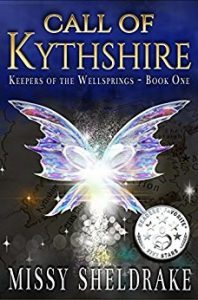
Call of Kythshire
by Missy Sheldrake
Inspired by books like the Harry Potter Series, the Chronicles of Narnia, and the works of Brian Froud and Jim Henson, Sheldrake hopes to capture the imaginations of readers of all ages with her Keepers of the Wellsprings series.
Azaeli Hammerfel has grown up in the guild hall of His Majesty’s Elite in the peaceful kingdom of Cerion, training hard and dreaming of the day she will finally become a squire and ride out with her parents, both knights, on the King’s Quest. Her dream comes true when she earns the right in her sixteenth year, but her name is left off the quest declaration and her parents and their guild ride off without her.
When tragedy befalls the Elite on their quest, Azi must band with her best friend Rian, a Mage Apprentice, to discover the source of a mysterious curse. They’re joined by an unlikely companion: a colorful fairy named Flit. The fairy claims she is from Kythshire, a mysterious and legendary land of Fae, closed off from the outside and cloaked in secrets.
Together, the group seeks to unravel a Sorcerous plot which threatens both the existence of Kythshire, and the peace the kingdom of Cerion holds dear.
Call of Kythshire is a tale of love and friendship, the value of family, and the fight between light and dark. It is a journey of failure and redemption. It is a clean read, free of sex and gratuitous violence, with a strong female lead.
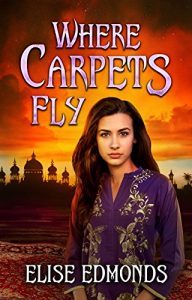
Where Carpets Fly
by Elise Edmonds
Elina Faramar finally leaves her family’s flying carpet shop when her father reluctantly agrees she can take magic lessons in nearby Kamikan. Urban life promises adventure, and new friend Kara shows her the sights.
However, Elina soon sees a darker side of life: a foreigner arrested at the circus, forbidden schoolhouse rooms with odd comings and goings, and unsociable pupil Simeon’s shady deals at the docks. Everything seems connected to the volatile neighbouring country of Pallexon, but no one will tell her why.
When Elina and Simeon develop a magical mind link, he seems close to confiding in her. But an unexpected voyage takes Elina and Kara away from answers and towards unknown danger in Pallexon.
Alone in a strange country, with no identity papers, the situation rapidly turns into a nightmare when Kara is mistaken for a spy. With her own freedom at stake, Elina must rely on her wits and magic to save her friend and unravel the secrets of Pallexon.
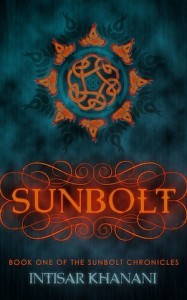
Sunbolt
by Intisar Khanani
The winding streets and narrow alleys of Karolene hide many secrets, and Hitomi is one of them. Orphaned at a young age, Hitomi has learned to hide her magical aptitude and who her parents really were. Most of all, she must conceal her role in the Shadow League, an underground movement working to undermine the powerful and corrupt Arch Mage Wilhelm Blackflame.
When the League gets word that Blackflame intends to detain—and execute—a leading political family, Hitomi volunteers to help the family escape. But there are more secrets at play than Hitomi’s, and much worse fates than execution. When Hitomi finds herself captured along with her charges, it will take everything she can summon to escape with her life.
Have a look at the entire collection of ebooks, and enter below to win them all–as well as a custom wand similar to the ones pictured here–for your very own.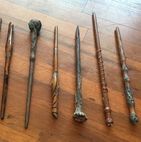
Giveaway runs from March 2-17. The winner will be notified by email on March 18. [FoF reserves the right to substitute the custom wand with something of equal value for anyone outside the US or Canada.]
March 2, 2017
Learning to Broaden One’s World: The Writing of “Lady of Dreams” – A Guest Post by W.R. Gingell
A warm welcome to my dear author friend W.R. Gingell! I asked Gingell to my blog today to talk about her study of language, and then culture, that led her to create the lovely KDrama-inspired steampunk-ish fantasy romance that is her latest project. I had the opportunity to read this as it was written via Wattpad, and quite enjoyed myself, tropes and all. I also knew that Gingell was engaged in studying Korean, and wanted to find out more about how this story came to be. So here it is, for you and for me!
I’ve always been interested in languages. Part of that interest is my fascination with the English language: I love words, and I love how the same five or six words can be twisted, turned, and slanted to give so many different layers of meanings depending upon how they’re ordered.
So I always knew I was going to learn a foreign language: I wanted to see how they fitted and slotted together to make clever little meanings all of their own. Over time, I learned little bits and pieces of French, Latin, Spanish, Japanese, Russian, Greek, and Italian. And then there was that phase where I was learning German surreptitiously from my sister’s school-of-the-air German classes because you basically shout everything, and seriously, what is cooler than that?
Six months ago, I started learning Korean. I began learning it because I stumbled into KDrama (don’t seem to be able to find my way out, help!) and loved the story-telling and characters I found there. And, the more I heard of the language, the more entranced I became: the structure was so different from English, while odd little things were exactly the same. Verbs were at the end of sentences. Most sentences were back to front. And there were actually differing levels of speech depending upon differing levels of respect to be shown to the listener.
As for the written language—well! Don’t get me started on how flamin’ cool it is that one of their Kings just decided one day that he wanted Korea to have its own written language instead of Chinese, and just made it up. Seriously. I love that.
Via the Korean language, I became interested in Korean culture. In fact, one of the most fascinating things to me about learning Korean is the Korean culture of family. The whole society is family-oriented. Girls call close male friends and boyfriends ‘Oppa’—which is the same word used by females of their older brothers. A close, older female friend can be called ‘Unni’, a word also used to refer to their older sister. Boys will call older female friends ‘Nuna’ and older male friends ‘Hyung’—also used to refer to older sisters and brothers. This society family concept, as much as the language itself, I find intriguing.
More interestingly, this societal family concept plays a huge part in the Korean idea of respect. In Australia, we show respect to those who have earned our respect– including, but not restricted to, our parents. In Korea, the idea of respect is integral to their way of life, as much in the family as in society. Elders are respected (and spoken to with honorifics that attach to verbs); and in the same way, anyone in a higher position than one’s own at work is also spoken to in honorifics.
To an Australian, this can sound outrageous. I remember how I felt in school when I learned that there were two different forms of ‘you’ in German, depending on how respectful we were being. ‘What? Rubbish! I want to use the same terms with everyone! We’re all equal!’ And yet, in the hierarchical, family structure of Korean society, it’s carried so much further. More, I understand and appreciate it.
Why? Because as much as young Koreans are taught to speak and behave with respect toward their elders and workplace superiors, so their elders and workplace superiors seem to be taught to look after their dongsangs. Elders and superiors most often pay for meals and other amusements. And if they scold and discipline, they also look out for their younger family members and workers.
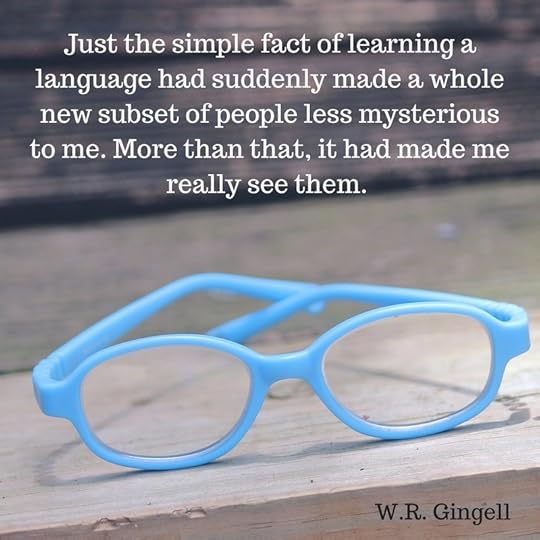
On an even more personal level, I’d been learning Korean for about a month when I began to notice something odd. The world somehow seemed…well, bigger. Or at least more varied. Just the simple fact of learning a language had suddenly made a whole new subset of people less mysterious to me. More than that, it had made me really see them. Not just as a background, or as a foreign and unfathomable element in my community, but as actual people. My local community has a huge influx of Korean and Chinese visitors and seasonal workers, but somehow I’d never really seen them properly before. They’re polite and quiet, you see, and they prefer to use the self-serve registers rather than go to manned registers.
It wasn’t until I began planning my own trip to South Korea with my Korean teacher, and began to comprehend the scope of the immersion I was about to subject myself to, that I began to understand. For a person still learning the language, the self-serve registers are less frightening than facing a slow-to-understand and possibly impatient cashier. We don’t mean to be impatient, but it never occurs to us that someone who can’t speak the language well enough to be immediately understood isn’t a nuisance: they’re a person who has overcome amazing barriers and forged their way into a new, alien world. It brought a new layer to my customer service; and, more importantly, a new layer to the way in which I see the world.
Since I’m a writer, this study of the Korean language and Korean culture naturally affected my writing. First and foremost, it affected my storytelling in terms of the way I tell my stories. Second, it affected the kind of characters I was interested in portraying. In short, I began to have an idea that wouldn’t go away. That idea was to turn into the first draft of Lady of Dreams, a Korean-based alt-world fantasy romance where I used Korean forms of address, random Korean cultural mores, and more than a few KDrama tropes (seriously, if you’re a KDrama aficionado, you can play Spot-the-trope. I went to town with it).
Lady of Dreams has now grown up into a fully finished book. The things I learned while writing it have stuck with me—storytelling things as much as the Korean words I was using throughout—and Lady of Dreams is up for nomination for a Kindle Scout Publishing contract. (You can read a sample from the first chapter and nominate Lady of Dreams HERE: if a contract is offered, everyone who nominated Lady of Dreams will get an advance copy!)
About Lady of Dreams
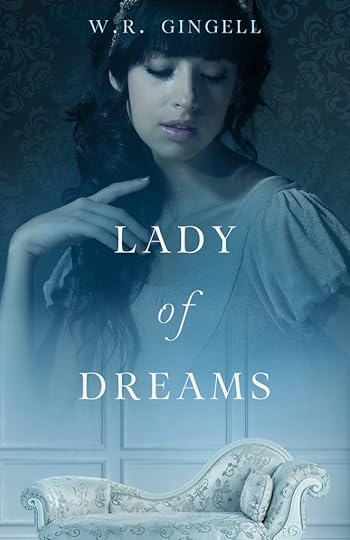
Confined to her couch, Clovis Sohn spends her days and nights dreaming, drifting further away from the outside world with each passing day. But Clovis’s dreams are also real, giving her a glimpse into the lives of those around her…
When a moment of unthinking sympathy twines Clovis’s dreams with the bored, playful composer Yong-hwa, she must decide whether to keep dreaming in the comfort of her chaise lounge, or to awaken into a reality that is by no means so sure or familiar as her dreams.
Check out the Kindle Scout Campaign!
About the Author
W.R. Gingell is a Tasmanian author who lives in a house with a green door. She loves to rewrite fairytales with a twist or two–and a murder or three–and original fantasy where dragons, enchantresses, and other magical creatures abound. Occasionally she will also dip her toes into the waters of SciFi.
W.R. spends her time reading, drinking an inordinate amount of tea, and slouching in front of the fire to write. Like Peter Pan, she never really grew up, and is still occasionally to be found climbing trees.
Find her on Twitter | Facebook | Blog/Website | GoodReads
February 27, 2017
Disability in Fiction: Wrapping Up and Looking Forward
This marks the final post in the Disability in Fiction blog series–and what a fabulous two months it’s been! From finding new reads (and people to follow), to gaining needed perspective, to grasping the impact of ableism and the power of art, the authors of these blog posts have brought so much forward to be considered. (For those just finding this post, there are links to the full series at the bottom.)
As I wrap up this series, I find myself looking at the world around me, and my local context here in the US, and seeing the impact of ableism, discrimination, and/or simple lack of empathy. For example, with the impending removal of coverage and protections provided by the Affordable Care Act, so many disabled individuals will lose health coverage with potentially devastating consequences–and yet our politicians are suggesting that “health savings accounts” will somehow close the gaps. No, and no again. This is not okay.
Although I’m not an activist by default, this is a time for activism. In truth, it’s always a time for activism no matter where or when you live. It’s just that there are times when injustices and inequalities and discrimination are more clear, and times when they seem less apparent, though they are no less virulent.
So, as we all go forward with our days, I challenge us all to think about those things we can do. And then do them.
The daily news can be overwhelming–it feels as if there are five dozen fires that need to be fought, and how does one person do it all? The answer is that one person doesn’t.
This past fall Tanehesi Coates spoke at Xavier here in Cincinnati. During the Q&A, he touched on this issue very briefly. When asked about activism, he said he was not an activist. He was a writer, and that was what he did best, so that was what he focused his energy and time on. His writing became his activism. He left the rest of what must be done to everyone else.

If each person individually finds what it is they can do best, and focuses on that, all of those five dozen fires will have a team of folks coming together to work on them. That doesn’t mean we wear blinders, or don’t support other causes–sign the petitions! Make the phone calls you can make! (Or send the e-mails.) But above all, look at what you are most able to do, and then bring those skills to bear on the issue of your choice. Don’t allow yourself to be paralyzed by seemingly overwhelming problems. Find what it is you do best, and do it.
If you love to organize, connect with an organization that needs your help setting up the next rally or petition drive. If you have strong ties with faith communities, join an interfaith coalition working to address issues. Are you intimately tied to a marginalized community? Perhaps you can volunteer as a diversity or accessibility coordinator at a civil rights organization (or wherever!). You get the idea: focus on your skills, pick one thing, do it well.
If you don’t have a huge amount of time, that’s still okay. Perhaps all you can do is join the e-mail lists of two or three organizations working on a spectrum of issues, and when they send you action alerts to sign petitions or make phone calls, that’s what you do. It’s so important to keep ourselves informed and to take even these seemingly small steps. They all make a difference.
And, whenever you notice a community being excluded–whether intentionally or by accident–now is the time to speak up about it. We cannot afford for the lives of disabled individuals to be erased, forgotten by the media and literally destroyed by legislation. We cannot afford for the lives of immigrants to be made hell by legislation and “crack downs” that make no one safer and merely increase fear and instability. We cannot afford for a LGBTQ+ communities to lose their rights, to be bullied and harassed and barred from basic necessities (like bathrooms). We cannot afford any of these things, and so many other things I can’t begin to list here.
So let us stand together. Let us look for our strengths, focus our work on those things we are best able to do, and support each other as we move forward. Because we cannot afford to slip backward any further.
Thank you all, so much, for being a part of this series–as a contributor, as a reader, as a person who cares.
Disability in Fiction Blog Post Series
Disability in Fiction – Series Kick-Off Post
Top Ten SFF / YA Reads with Disabled Characters – Tsana Dolichva
Reading While Disabled via The Disability Visibility Project – Part 1 – Alice Wong
Reading While Disabled via the DVP – Part 2 – Alice Wong
Why Representation in YA Matters – Elsa Henry
Art as Activism – Anarcha Quinn
Ableism in Fiction – Erin Hawley
Disability in Fiction – Wrap Up and Looking Ahead (that’s this one!)
February 23, 2017
Making Stories out of Stories – Guest Post by Laura VanArendonk Baugh
In celebration of her latest book release, The Songweaver’s Vow, Laura is joining us today for a guest post on retellings. We all know I’m a sucker for retellings (and you probably are too if you’re anything like me!), so this should be fun. Here’s Laura!
I never really sat down to be a folkloric writer. It just sort of…happened.
To be fair, I write an awful lot of material which has nothing to do with folklore or mythology. But especially in my speculative fiction, I find myself often returning to creatures, people, or themes from ancient stories, and finding how they interact with our worldviews today. And many of my author friends write original stories but find inspiration or references in fairy tales, legends, myths.
I think there’s a reason some old stories have stayed with us for so long. There’s a reason tropes exist, and why we keep going back to stories about sacrifice and redemption and overcoming astronomical odds. We need them, and they’re true.
And, let’s be honest, they’re also just a lot of fun.
I give educational talks about folklore and mythology, and frequently when I am asked to explain something outlandish in Norse myth, I lightheartedly answer, “Eight months of winter and mead! They had to find some crazy stories to tell!”
There’s more to it than that, of course. Loki’s infamous shapeshift into a female horse who later gives birth, making Loki both a mother and a father to his various offspring, had a great deal of contemporary cultural subtext beyond today’s skeptical raised eyebrow or prurient giggle. But ultimately, stories have to be entertaining or satisfying on some level, as well as true.
For The Songweaver’s Vow, I had a great deal of fun putting two very different mythologies together to see where they intersected and how one might view the other. Our protagonist Euthalia was raised on classic stories of Greek myth, but she finds herself sacrificed into the Norse godsrealm of Asgard, living among the Norse pantheon, and everything is different. The entire thing is a bit meta – Euthalia’s character is a product of myth, herself – but it’s a lot of fun.
Folklore is a living thing, both to be preserved and studied for what it tells us about who we were and to be enjoyed by who we are.
The Songweaver’s Vow released February 21, and my hope is that readers will find new perspectives on stories they thought they already knew as well as a powerful connection to Euthalia’s journey and challenge.
And also, I hope it’s just a lot of fun!


Euthalia is rejected as a bride, traded to Viking raiders, and sacrificed to a strange god.
After that, things get interesting.
When Euthalia’s father trades her to Viking raiders, her best hope is to be made a wife instead of a slave. She gets her wish — sort of — when she is sacrificed as a bride to a god.
Her inhuman husband seems kind, but he visits only in the dark of night and will not allow her to look upon him. By day Euthalia becomes known as a storyteller, spinning ancient Greek tales to entertain Asgard’s gods and monsters.
When one of her stories precipitates a god’s murder and horrific retribution, Euthalia discovers there is a monster in her bed as well. Alone in a hostile Asgard, Euthalia must ally with a spiteful goddess to sway Odin himself before bloody tragedy opens Ragnarok, the prophesied end of the world.
Find it on Amazon.
About the Author
 Laura VanArendonk Baugh overcame the dubious challenge of having been born without teeth or developed motor skills to become an award-winning writer of speculative fiction, mystery, and non-fiction. Her works have earned numerous accolades, including 3-star ratings (the highest possible) on Tangent’s “Recommended Reading” list. Laura speaks professionally on a variety of topics throughout the year, including writing, fan costuming, and her day job as a professional animal trainer and behavior consultant.
Find her at www.LauraVanArendonkBaugh.com.
February 21, 2017
Cover Reveal for Brave New Girls: Stories of Girls who Science and Scheme
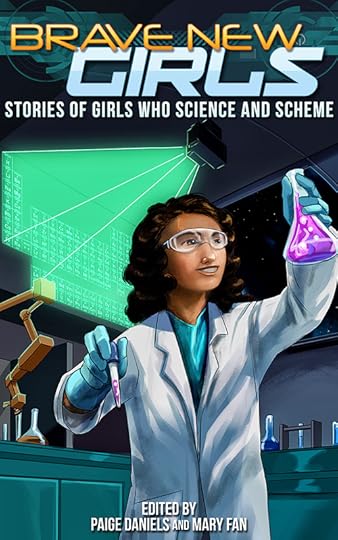
Today, I’m revealing the cover and story line-up for BRAVE NEW GIRLS: STORIES OF GIRLS WHO SCIENCE AND SCHEME, coming August 2017! This YA sci-fi anthology (edited by sci-fi authors Paige Daniels and Mary Fan) features stories about girls in STEM (Science, Technology, Engineering, and Math)… Girls who engineer, tinker, hack, and more, using their smarts to save the day. It’s got space operas, sci-fi mysteries, steampunk, cyberpunk, all kinds of punk! Proceeds from sales of the anthology will be donated to the Society of Women Engineers scholarship fund.
And without further ado, here’s the cover!
Stories in the anthology (in alphabetical order by title):
The 17th Quadrennial Intergalactic Neo-Cultural Expo and Science Fair by Jeanne Kramer-Smyth
The Adventure of the Brass Lamp by Margaret Curelas
Arch Nemesis by Jamie Krakover
The Babysitting Job: A Robot Repair Girl Adventure by Josh Pritchett
The Case of the Missing Sherlock by Mary Fan
Chasing the Copper Dragon by Karissa Laurel
Circus in the Sky by Lisa Toohey
Dangerous Territory by Holly Schofield
The Experimental Bug – First Test by Jelani-Akin Parham
Hack by Evangeline Jennings
In a Whole New Light by Michelle Leonard
The Last Android by Paige Daniels
Let Androids Eat Cake by Meg Merriet
The Maker’s Handbook by George Ebey
The Non-Existence of Gravity by Steph Bennion
Nova by Stephen Landry
Our Very Respected and Always Benevolent Leader by Kay Dominguez
Scilla’s Monster by Elisha Betts
Skyris by A.A. Jankiewicz
Sweet Emotion by Bryna Butler
The Swiss Cheese Model by Eric Bakutis
The Verne Shot by Brandon Draga
SIGN UP FOR THE RELEASE DAY MAILING LIST: http://eepurl.com/bgBmvD
VISIT THE BRAVE NEW GIRLS WEBSITE: http://bravenewgirls.weebly.com/
Brave New Girls: Stories of Girls Who Science and Scheme is the second volume of the Brave New Girls anthology series. The first, Brave New Girls: Tales of Girls and Gadgets was released in June 2015 and has so far raised thousands of dollars for the Society of Women Engineers Scholarship fund. Find it on Amazon.
ABOUT THE EDITORS
Paige Daniels is the pen name of Tina Closser. By day she works as an Electrical Engineer and Mom mushing her kids from gymnastics and violin practice. After the kids go to bed, she rocks out with her headphones turned to eleven and cranks out books. She is an uber science geek. If she wasn’t married to the most terrific guy in the world, she would be a groupie for Adam Baldwin. Her books include Non-Compliance: The Sector, Non-Compliance: The Transition, and Non-Compliance: Equilibrium.
Mary Fan is a hopeless dreamer, whose mind insists on spinning tales of “what if.” As a music major in college, she told those stories through compositions. Now, she tells them through books—a habit she began as soon as she could pick up a pencil. And what stories she has! Currently, she has three series in progress and likes to think that she has even more in her bag. Her books include the Jane Colt trilogy, the Firedragon novellas, and the Fated Stars novellas.
February 20, 2017
Ableism in Fiction – A Guest Post by Erin Hawley | Disability in Fiction
Today we have our final guest post for the Disability in Fiction blog series, with a wrap up post planned for next week. This post, by Erin Hawley of The Geeky Gimp, discusses the issue of ableism in fiction, and the cumulative impact of these continuous micro-aggressions.
Growing up as an avid reader, I never came across any disabled authors or characters in literature. Before the internet, I only had access to my small-town school library. Seeking out books with disabled characters never crossed my mind; disability was something that I had and not part of my proclaimed identity as it is now. For most of my childhood, abled was the norm, even though I’ve been disabled my whole life. I was the only visibly disabled person in my social circle, and I wasn’t aware of invisible disabilities as a concept.
There isn’t much disability representation now in mainstream media. I only remember those “very special” episodes of Sesame Street or Saved By The Bell where disability was included to teach the abled characters a lesson. That trope is prevalent in literature, too. Look at Me Before You, the book-turned-movie that uses disability as tragedy, where the abled characters’ feelings are the focus.
Now I actively search out disabled authors, discovering them through friend recommendations and various book lists online. But even within books by disabled writers, I have trouble finding authors of color represented – the popular books out there lean heavily toward white cis male, which is the default crip in media. But disabled people of color, queer crips, and other multiply-marginalized crips are decentered in the pop-literary sphere, so we must center ourselves. That doesn’t mean we stop fighting to go mainstream, that just means we carve out our space and elevate each other’s voices without pandering to a system that devalues and dehumanizes us.
When asked to write this blog post, I struggled to come up with specific examples of ableism in fiction, even though I encounter it all the time. Much of this boils down to my terrible memory, but the pervasive nature of ableism makes everything seem like a wash. Ableism is something you encounter and digest every day, which you process and hurt from – but it’s also something you learn to live with. You can only remember specific ableist acts until a new one takes its place, but the culmination of that pain sits with you indefinitely.

In fiction, ableism seeps in through “scary” portrayals of mental illness, like all the books on haunted asylums. It comes in through all the assisted suicide stories that teach readers a lesson on appreciating life to its fullest.
Or, like in science fiction and fantasy, ableism exists when disability is erased entirely by magical powers or eugenics. One example I remember from last year is The Last Words of Will Wolfkin by Steven Knight. Someone recommended the book to me because the protagonist is disabled; except the protagonist’s disability is cured in the first chapter, “allowing” that character to go on their fantastical adventure as an abled boy. It portrayed disability as sad, lonely, and unwanted – a trope that not only directly affects the way society views disabled people, but mirrors how society views us.
We need to keep talking about ableism in fiction, both as a theme and as a barrier for crip authors. Support disabled writers if you can by purchasing their books or sharing their work on social media. As a community, valid representation matters, and avoiding the single narrative is crucial. Our voices are diverse, and the literature we read or listen to must reflect that; we grow as a society and learn from each other by sharing our stories. Let’s make disability the norm.
About the Author
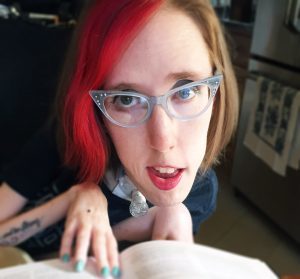 Erin Hawley is a disabled, latina writer and bibliophile from New Jersey. She writes The Geeky Gimp, a blog on the intersection of disability and nerdy media. You can follow her on Twitter @geekygimp.
February 13, 2017
Art as Activism – A Guest Post by Anarcha Quinn | Disability in Fiction
I warm welcome to Anarcha Quinn today as she shares with us a post on the power of art in the current day context here in the US–although I believe that you will find this post easily translates to anywhere in the world. It’s a vitally important post, and I’m so glad to be able to share it with you today. Image descriptions are at the end.
For many of us, the places and the spaces we inhabit have changed monumentally since election night. Where we fit. Where we sit in society. How our fellow human beings care for us or don’t — all of that has been shuffled. Reshuffled. Even shaken down to the core.
This is only gotten more so after January 20, when the results of that election came to fruition. For me, as a 30-year-old woman with a disability, this was acutely the case. While many of my friends expressed solidarity with the Americans among us of different racial backgrounds, religious persuasions, sexual orientations, ages and financial situations, there was a screaming emptiness. It was caused by the one demographic I didn’t see mentioned in those words of solidarity. In those words that acknowledged the worth and value of those lives, and their right to be lived. The disability community. Over and over again, I saw that our lives were not even spoken about. The lives we would lose due to a loss and health insurance; the homes and cozy spaces we would lose to a lack of benefits; the lack of respect and attention that would only grow worse under someone who openly mocked us.
It’s not just that our lives didn’t seem to matter. It was as if our lives didn’t exist at all. And, I suppose they don’t. To most people without disabilities, my life — or a life with any disability — isn’t worth living. That life is less. Pitiable. I hear and see this reflected back to me in TV shows, books, movies and yes, the eyes of those who watch me roll by. So of course. Where a life is seen as undesirable it isn’t going to be acknowledged that it exists, is it? It’s not going to be cherished or treasured. Defended by others.
You can’t defend or value something you don’t acknowledge, can you? If you don’t see its point—its purpose—that life, that person would ever be considered “one of you” will it?
It won’t. And it wasn’t. At least, not outside of the handful of disability online groups I am a part of. And for a few days it was unbearable. I kept looking at my newsfeeds and saying to myself, “What about my life, dammit! What about our lives? Do they even deserve mentioning?” I found myself parking my wheelchair in front of my front door at night, for fear someone might come and get me. Might drag off my worthless, unmentionable life and leave no word behind.
Worse than that, I began to question the value of something I hold slightly more dear to me than my own life: my art. Where was the place for that? Where was the need? When my life wasn’t even being acknowledged by the people and places that had nurtured me for most of my 30 years on this planet, was there any reason to write? Was there any reason to tell a story?
For a few agonizing and colorless days, days with yet more proof that my disabled life wasn’t worth getting excited or scared over, it seemed there was no reason. No space for any book I might write, poem I might pen, or article I might compile. But a few more days passed, and something happened. I embraced the damning silence in my predominantly able-bodied world.
The moment I did so, something broke open in me. Flooded me with an empty space. A place for a reminder. A memory.
As an English major in college, I read many books. Predominately literature, from men, women, people of color and many more. But, despite the array of subject matters, perspectives, and styles, one thing remained the core of each book: the power of that book to give acknowledgment, presence—value—to the person writing. To that demographic, and how, once then began to happen, those lives mattered. Whatever those lives were—the life of a Chinese bride going through foot binding, the African American slave, the number-obsessed awkward girl next door—they began to be recognized. Valued, because there was something being said about them. And the person who lived it, was taking the time to chronicle that life, that event, that suffering. In their own words.
And by doing so, that person has now made a way of making real and necessary their existence, the existence of their oppression.
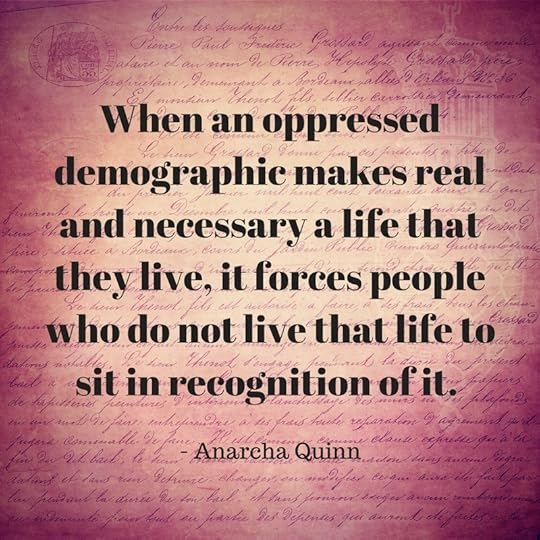
And when an oppressed demographic makes real and necessary a life that they live, it forces people who do not live that life to sit in recognition of it. Which can begin to give that uncommon, other life value, right? Give it space and a place to exist, which forces our fellow humans who do not walk in our shoes, roll on our wheels to make space for us.
And, as simple as it might sound, that’s when I realized what to do with all the silence. All the unconsciousness around my life, and the lives lived in my community then needed to be heard. Experienced. And that would be to continue making my art from my perspective. And to encourage others to do the same. I could make sure that there was nothing about us without us. Not by speaking for all of my community (I can only speak for myself) but creating space for us to show up. To be counted. Recognized. And to encourage allies to do the same. Not to take from us our words, but to give us a chance to master them.
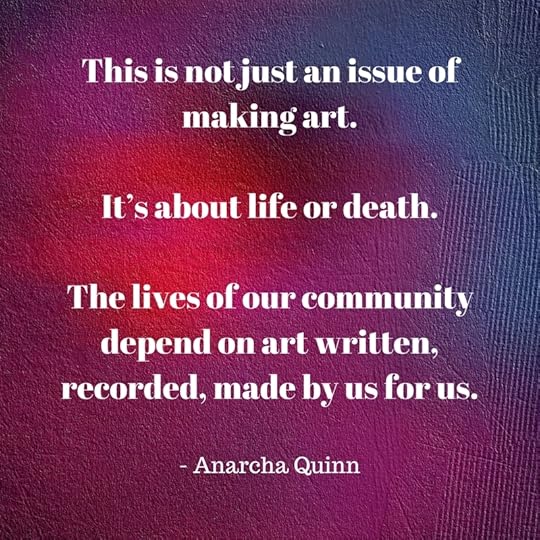
Because for me this is not just an issue of making art. It’s about life or death. The lives of our community depend on art written, recorded, made by us for us. Like many other oppressed demographics, art is not just a pretty little pastime; it is a vigorous, vicious and multifaceted tool of resistance, recognition and activism.
In times of ignorance and fear, art has not simply entertained. It has illuminated. It has challenged. When all else can choose to be silent, art can speak a language that goes beyond words. Beyond form and execution, and into the deep walls of the spirit. The deep fissures of the psyche, and force us to look at our brothers and sisters as something other than the “other.”
Art, despite many modern cultures and belief systems classifying it as a “hobby” or an “act of leisure” has been humanity’s salvation. Our darkest ages and hours, our moments of brutal subjugation and suffering have been healed and lifted through art. By creating mirrors, antidotes, salves and social and political movements, art is the ally of the activist. Not just the mystic.
So, I’ve made a decision, and I hope my fellow brothers and sisters with disabilities will make a similar one: while others question the value of our lives, show them. While others question the “need” for making art, make it. While others question the worth, answer your calling. Come forward for your cause.
Don’t fight the silence. When people without disabilities leave you without mention, recognition, or acknowledgment, acknowledge it. Eat it whole, and then write. Draw. Paint. Sing and sign into it. Make it yours.
Take up space. Don’t apologize.
You’re not just an artist. You’re an activist.
Act like it.
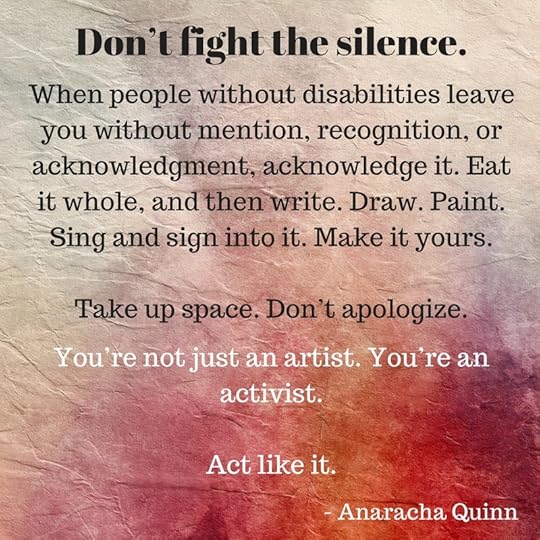
Image descriptions:
A rectangular banner with a background image of a shelf of slim, colorful paperback books, spines out. Over this, a gray rectangle with a black outline. In the center of the rectangle, the text “Disability in Fiction” in larger text, followed by “A blog series hosted by BooksByIntisar” below in smaller text.
A square graphic with a background image reminiscent of a diary entry in an old-time journal, written in cursive. Over this, in black text, the quote, “When an oppressed demographic makes real and necessary a life that they live, it forces people who do not live that life to sit in recognition of it.” Attribution in smaller text below the main quote to Anarcha Quinn.
A square graphic with blue, red, and pink coloration in the background giving the appearance of a painting. Over this, in white text, the quote, “This is not just an issue of making art. / It’s about life or death. / The lives of our community depend on art written, recorded, made by us for us.” Attribution in smaller text below the main quote to Anarcha Quinn.
A square graphic with a textured, paper-like background, with water colors toward the bottom in shade of orange, yellow and mauve. In black text, the quote, “Don’t fight the silence. When people without disabilities leave you without mention, recognition, or acknowledgment, acknowledge it. Eat it whole, and then write. Draw. Paint. Sing and sign into it. Make it yours. / Take up space. Don’t apologize.” In white text, below this, “You’re not just an artist. You’re an activist. / Act like it.” Attribution in smaller text at the bottom to Anarcha Quinn.
February 9, 2017
Defying Doomsday Read-Along: Discussion Part 4 and WRAP! (Stories 9-12)
It’s the end of the road!
Today features our last set of stories. It’s been a super fun few weeks, and I’ve been so glad to share this book with you and hear your thoughts! If you’re new to the read-along, you can check out the starting post here, or just jump on to read the stories we’re finishing up with this week. You can answer the questions in the comments, or answer on your own blog and share a link below.
Below are our last set of discussion questions. As usual, I’ve given a one line reminder of sorts for each story before the question. And again, while some of these questions are more reflective and thoughtful, I also wanted some to be just plain fun. Here we go!
Discussion Questions: Stories 13-15
1. In “Spider-silk, Strong as Steel,” we give nightmares to all those with arachnophobia (i.e. Emm goes scavenging). What creature would you most fear facing in an apocalypse?
2. “No Shit” features Jane and Sam as they road trip through Australia, trying to find other survivors of the recent, deadly plague. Toward the end, Sam remarks on how wonderful it is that everyone they meet appears to be trying to preserve something important, from dairy cows to frozen, fertilized embryos. What one thing would you prioritize preserving?
3. In “I Will Remember You,” Megan is one of only a few “heirs” expected to survive the alien extermination. Megan receives angry messages from some of her friends when they realize that the spots on their hands indicate the number of days they’ll survive. How realistic do you think this response was?
Write a Review!
Take a moment to write a short review of Defying Doomsday (or a longer one, if you prefer), and cross-post it to Amazon, Goodreads, or wherever else you’d like. Share it here too! While it might not seem like it, reviews make a huge difference on a few counts: (1) they help other readers identify if the book will be a good match for them, (2) they can help spread the word about the book through social networks, and (3) stores like Amazon promote a book more the more reviews it has (it fires up algorithms to show the book in things like the “Customers also bought” sections). Really, anytime you read a book you love, especially an indie or small press book, even a review of a few words can make a huge difference!
Intisar’s Answers
1. Cockroaches. I feel kinda sick just thinking about it, but I attribute it all to a horrific short story I read as a … pre-teen? I don’t think I was yet a teenager. It centered on this group of adventurers who rappelled down into this abandoned mine that turned out to be infested with, you guessed it, cockroaches. They didn’t make it out alive. I nearly died and still won’t touch horror stories with a ten foot pole.
2. Seed stock and farming / gardening manuals! I’ve done a bit of vegetable gardening, just enough to realize how much I don’t know. Also, maintaining an agrarian society (or what’s left of it) seems important for furthering our ability to do other things too. Hunting and gathering takes a lot of time and energy, taken away from, say, figuring out how to preserve and use other knowledge. And starving to death would not be on my agenda.
3. This reaction was far too familiar and realistic for my own comfort. I’ve seen people lash out with anger toward friends or family when someone “does better” than them for whatever reason–even if it was outside of the person’s control. The idea that someone else might survive when you won’t can turn you into a mean and dangerous person. While I don’t agree with Barbara Colforth’s approach to dealing with the more vocal, angry people later in the story (imprisonment would have worked just as well!), I think their response was right on point for how anger and jealousy work.
Intisar’s Review
I actually wrote a short review for this anthology the first time I read it, so I’m just going to share it here again. Why not? I definitely still stand by it! Here it is:
This book, folks. This book. Just the premise is fantastic: every story features a character with a disability / chronic illness facing the apocalypse. The execution, though? Almost flawless. There were maybe two stories I didn’t really love, and that was probably a matter of taste. The issues, the characters, the details of the apocalypse–so varied, so well done, and so thought-provoking. There was diversity in ability, in race, gender, culture, and each story just sucks you in with all its intricacy and beauty. I don’t really have anything else to say. Read this. You won’t regret it.
Thank you all for an awesome read-along. I’ve really enjoyed it, and hope you did too!