Intisar Khanani's Blog, page 5
February 6, 2017
Why Representation In YA Matters – A Guest Post by Elsa Henry | Disability in Fiction
Today’s post is on about writing and reading, it’s about the vital role representation plays for our youth. If you never see yourself in the books you read, or in the stories around you, whatever their medium, it becomes a struggle to see yourself in the world in a positive and whole way. I know I’ve struggled with this myself, and I am so honored today to share this post by Elsa Henry on growing up with just such a lack of representation, and the vital role writers today face in filling that void.
I remember the first time someone handed me books about kids like me. I was probably in the 2nd or 3rd grade, and the options were… slim. I could either read a book about a boy who lost his sight playing with fireworks, and got a guide dog (which I did not have), or I could read about Helen Keller.
Helen Keller was certainly a closer fit, but I didn’t connect with her, because at the end of the day, I was not deaf blind enough.
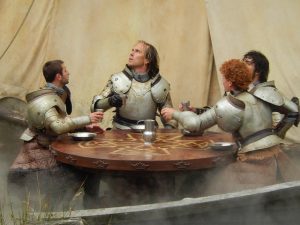
Imagine a book in which knights had more diversity going from them than just the color of their hair…
The reason why representation in YA matters so much, so much that me, a non-YA writer is talking to you about it, is because kids are looking for someone that matches their self image. There wasn’t a half blind, half deaf girl who stepped through a wardrobe door for me to look up to, there wasn’t a girl like me who lifted a sword and pledged her life to the Goddess. There wasn’t someone like me, and so I drifted away from disability narratives.
Because they weren’t like me.
The narrative I was given, not just in fiction, but in reality, was that I wasn’t like the other disabled people because I wasn’t that bad off. I wasn’t like them. But the truth is, I’m just like them and I never got the chance to identify it until I was old enough that the narratives that were lacking didn’t just turn me away from disability lit, but actively enraged me. It made me angry because I wanted to see people who weren’t helpless – or at least, who weren’t expected to be helpless. I wanted to see people who weren’t called savage (like Helen Keller was) but who were seen as whole from the beginning. None of those kids were fighting the things the other able bodied kids were – as an adult I see that these were attempts to show that disabled struggles are different, but I remember what it felt like as a child, and it wasn’t good.
The key to making kids with disabilities feel seen is to give them a variety of representation.
Break down the disability binary, look past the media representations that are rote and overused, and consider who isn’t being seen in YA fiction. Want to have a blind kid? Go look at Kody Keplinger’s Run and see what it’s like to write a legally blind teen. Want a wheelchair user? Write a wheelchair user who is a part time user, or write a character who uses a motorized scooter because they’re fully paralyzed from the neck down. Write teens who ride motorized scooters to the prom, who have full prom dates, not pity dates. Deaf protagonist? Fabulous! Remember that deafness isn’t binary either, and that there’s more to being deaf than not hearing. Autistic rep? Look no further than Corinne Duyvis’ On the Edge of Gone.
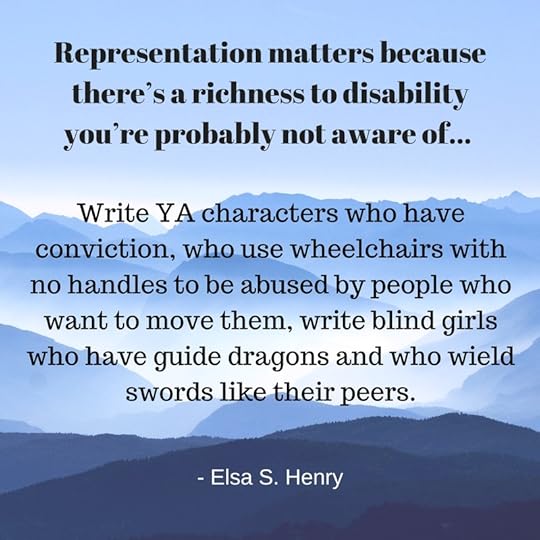
Representation matters because there’s a richness to disability you’re probably not aware of.
Look past the Daredevils and the Augustus Waters’. Look past the romanticisation of being sick, of being disabled. Look past the uncomfortable medical wheelchairs you’ve seen in hospitals, and the tragedy narratives.
Instead, write characters who are more than the diagnoses you’ve given them. Write YA characters who have conviction, who use wheelchairs with no handles to be abused by people who want to move them, write blind girls who have guide dragons and who wield swords like their peers.
We have to take disability out of the expected and into the extraordinary. Don’t get me wrong, I don’t want you to write inspiration porn. But if an able bodied girl can be Katniss Everdeen, if she can be more than just a girl living in District Twelve, what’s to stop disabled protagonists from doing the same?
The answer, dear reader, is nothing. Nothing is stopping you from writing the disabled characters that I would have read when I was a girl.
I don’t want other disabled kids to have to wait to find role models, to find heroines. I want there to be a Kamala Khan who uses a white cane. I want there to be an Alanna who uses a cane.
As an adult I strive to be a role model for young blind girls, because I never knew I had any ahead of me. I want to envision a future where there’s not a single book about a blind girl or a deaf girl, but a future where there are multiple genres to choose from, multiple plots, many paths. I seek a world where there’s an embarrassment of riches for the blind girls to come after me.
Who knows how much sooner I would have become the woman I am today if I hadn’t had to fight to find my stories, my heroes? Who knows who I could have become if I’d seen someone like me?
I’ll tell you who I would have been.
I’d have been prouder of myself a lot sooner.
About The Author
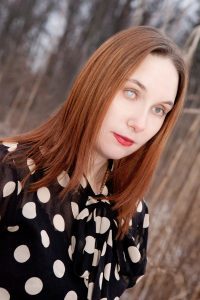 Elsa Sjunneson-Henry is a .5 blind, .5 deaf, .5 Scandinavian science fiction and horror writer. She lives in New Jersey with her husband, cats, and hound dog, and is frequently found on numerous websites talking about disability and feminism. Her fiction work has been included in the Upside Down anthology, and on Fireside Fiction where she is now an assistant editor.
Find Elsa on Twitter at @snarkbat.


February 2, 2017
Defying Doomsday Read-Along: Discussion Part 3 (Stories 9-12)
We’re Back With Part 3!
After a fun halfway-point activity last week, we’re back for the next set of stories. If you’re new to the read-along, you can check out the starting post here. In a nutshell, we read about four stories a week, with questions posting on Thursdays. Feel free to jump in and join the read-along at any point. You can answer the questions in the comments, or answer on your own blog and share a link below. You can also tweet as you read using #readDefyingDoomsday.
For next week, we’ll be reading the final stories in the anthology, 13-15 (“Spider-Silk, Strong As Steel” through “I Will Remember You”).
Below are this week’s discussion questions. As usual, I’ve given a one line reminder of sorts for each story before the question. And again, while some of these questions are more reflective and thoughtful, I also wanted some to be just plain fun. Here we go!
Discussion Questions: Stories 9-12
1. “Five Thousand Squares,” is a story about two women who have developed their own contingency plan in case of disaster, given government insistence that disaster planning is no longer necessary. How seriously do you think short-sighted political decisions will influence your own future (wherever you live)? What sort of apocalypse can you envision?
2. “Portobello Blind” features a blind young woman who learns to get along just fine as the only survivor on her father’s island research station. Toward the end of the story, Anna sets up a research project to give herself purpose. How important is having a purpose to you? What kind of project would you set up if you were on the island?
3. In “Tea Party,” Tally goes shopping with the Count, and must consider shifting roles when they bring Mary back to the ward with them. At one point, Tally says, “I spent a lot of time having trouble being responsible for me … But it turns out it’s easier being responsible for other people.” Do you agree?
4. “Giant,” chronicles the meeting of a young woman born on a space station and her father, plus aliens. Both this and the last two stories touch on a theme of the resilience and competence of disabled individuals who are often seen as incapable of independence by others. What are your thoughts on this?
Intisar’s Answers
1. I feel like we’re in a new era of short-sighted political decision-making that’s all about corporate profit and political survival. And it’s coming right when we most need to be focusing on, say, the environment and rational approaches to debunking the Clash of Civilizations theory (because, seriously, it’s about as small-minded as going to war over choosing different forms of governance a la the Cold War… folks, as long as we’re all looking out for human rights, can we be okay with people thinking a little differently from each other? Or must we insist on and work toward a future where we’re all fighting each other just because we love self-fulfilling prophecies so much?) Gah!
2. Purpose is really important to me, but I would probably choose a different project from Anna. Something around growing food, because the weather will change eventually. Also, I’d test out different natural substances to use as bait, since eventually I’d run out of moldy bread for the fish. So yeah, I think I’d be a lot more obsessed with a diverse food (and water) supply than Anna. I wonder what that says about me?
3. Having young children, I totally agree with this. I do a fantastic job being responsible for them (if I say so myself), but still can’t manage to exercise regularly, am adept at accidentally skip meals, and regularly don’t get enough sleep. My kids are active, well-rested, and generally well-fed (except when they’re being picky). I should maybe follow their example before they start following mine….
4. I’m not surprised that this theme has surfaced so regularly among the stories in this anthology–social norming and rampant stereotypes tells us that people who aren’t capable of everything (able-bodied, mentally healthy) “normal” people are need help. Sometimes, the best help we can give is to back off, listen, and be grateful for a seat at the table (as Mary is, quite literally). Not that Mary doesn’t offer help and it isn’t appreciated, but she also doesn’t attempt to take charge or condescend to Tally and the others, who have clearly been doing better than she has. So I loved that this came through in such different ways in this trio of stories.
Next week is our last discussion post! Woohoo! This has been super fun, and I really appreciate everyone’s participation. I know January has been a tough month for many of us, and I’ve been really glad to have this to brighten up my week. I hope it’s been good for you too!
January 30, 2017
Reading While Disabled: Kid/YA Lit Faves (Part 2) | Disability in Fiction
We’re back with Part 2 of Reading While Disabled. Today, Alice Wong has asked the same group of five disabled readers to share the books they read growing up that had disabled characters (if any) and the impact of that, as well as books they’d recommend now. The conversation wraps up with a discussion of the We Need Diverse Books movement and the importance of representation. If you missed Part 1, you can find it here. And now I’ll hand it over to Alice….
I detested my high school years. I scarfed down my lunch in the hallways and avoided the massive crowds in the cafeteria. My so-called friends were seated at these long horizontal tables with built-in seats so I rarely had a chance to sit with them since wheelchair users could only sit at the ends.
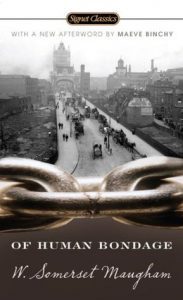 During lunch and study hall I escaped to the school’s library. No one ever asked me for my hall pass–I think they were scared to ask the scowly girl in the wheelchair. Wandering through each stack, smelling the musty yellowing pages, and touching the crinkles from plastic book covers was an adventure because you had no idea what you might find. One time my eye caught the title Of Human Bondage by W. Somerset Maugham. Unfortunately, it wasn’t the bondage I had in mind but I ended up reading it anyway. These kinds of happy accidents enriched my imagination and understanding of the world.
I wondered if my other disabled people had similar experiences while growing up. Here is an interview with some of my disabled friends about their childhood favorites and the importance of disability representation in literature: Keah Brown, Sandy Ho, Hamza Jaka, Meriah Nichols, and Vilissa Thompson. This is the second of a 2-part guest blog post. Some of these responses have been edited for clarity and space.
Were there any books you grew up with that had disabled characters and storylines?
Meriah Nichols: No. I wish there had been.
Vilissa Thompson: I did not read any books that had Black disabled characters, but I did gravitate towards storylines that did have strong Black characters, especially female ones. One of the reasons I loved the Baby-Sitters Club series so much was due to Jessi, who was the only Black baby-sitter in Stoneybrook. Though Jessi wasn’t disabled, her presence in the series was important to me. She was the sensible one, a very talented dancer, incredibly smart, and had a quiet leader spirit when she had to step into that role. Her first appearance in BSC discussed the racism her & her family dealt with when they moved to Stoneybrook; a heavy topic for a children’s book series to tackle. Reading about Jessi not allowing ignorance to shape her & her view of herself as a Black girl was important to me as I grew up to be that age (Jessi and the other characters were 11-14 years old). Reading about Jessi standing firm against prejudice was profound, and her having friends that respected and stood up for her was important for my younger self to read.
 Keah Brown: No, and that breaks my heart to say I didn’t grow up with any sort of disabled representation.
Hamza Jaka: I think that Spider-Girl and Oracle helped form the crux of my identity. They showed me that disabled people could do lots of things, and live lives worth living. Harry Potter gave me some connection. Really, when I found a disabled character, it was just like a burst of joy. When I found a well-written disabled character, it was a time for reflection. I also really like the character Amy in John Dies at the End, but noticed a line that bothered me. David says that John never mentioned she had one arm, as a way to show John’s character. Amy’s a great character and it’s not often the women with disabilities who are romantic interests.
Sandy Ho: I’m trying to think of disabled characters and storylines…This is something that made me sad for my younger self that I didn’t come across any.
Is it important that there are books for kids and young adults that feature disabled characters and by disabled writers? Does it matter?
Meriah Nichols: Yes, I think it matters a lot. It would have helped me a lot to feel less alone with my hearing and my mind, not to mention help me with my abuse.
Vilissa Thompson: Authentic disability representation in books and having disabled writers are instrumental to ensuring that our stories are told in ways that are empowering, accurate, and not inspirational. This is one of the reasons why I’m working on a children’s book about my own life – I know firsthand the effects of not having disabled characters in books to read growing up. I want to do my part in ensuring that the next generation of disabled kids and teens do not experience that lack of visibility in literature. Disabled characters allow disabled children to see their stories and know that they’re not alone, and non-disabled children learn that being disabled isn’t “weird” and that nothing is “wrong” with us.
Keah Brown: I always say that representation matters because it saves lives. I think that everybody deserves to see themselves and to be seen as they are completely and they deserve to know that who they are and what they are is valuable and a story important enough to be told.
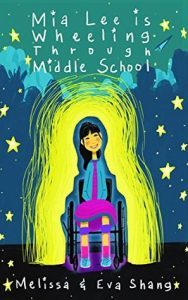 Hamza Jaka: It absolutely matters. It can provide people with a sense of purpose. Seeing yourself as a character in a story helps you understand yourself and your perceptions…Melissa Shang’s book Mia Lee is Wheeling Through Middle School is one example.
Sandy Ho: Yes! Because kids utilize stories not just as a way to learn from, and enjoy story time but to form their own ideas of the world, and about people. When disabled characters and disabled writers are not a part of this formation of their ideas about others – it makes it seem like we are a taboo topic. Kids need to know that there is nothing shameful, frightening, or secretive about living as a disabled person. There are stories and narratives that can involve disability outside of a doctor’s office, a hospital, or that one learning opportunity in elementary school involving “being nice to those special needs kids.”
With movements such as We Need Diverse Books™ highlighting the need for the publishing industry to improve, what are your hopes for better disability representation in children’s literature/YA lit?
Meriah Nichols: I so hope we can have more stories that are real stories, not just little props in which we can talk about disabled people. Our lives lived with our disabilities are just as rich and varied as those without disabilities, and I’d like to see more character representation that includes disability as there are that include race. And the intersections. For example, the character of Geordi in Star Trek: The Next Generation – he’s a blind engineer – episodes portray him sometimes from the angle of his being blind, and other times, just the aspect of his being an engineer. I’d like to see much more of that in literature and in storytelling.
Vilissa Thompson: I hope that movements like WNDB motivates disabled people to write the stories that have not been told. We need to change the depiction of disability in literature (which is typically written by non-disabled people with inspirational, ill-informed understanding of our lives) and reshape it in such a way that having discussions about representation will be in the past. This is our experience, and we must do what’s necessary to write about it in the manner it needs to be – our community need these characters and for those of us to write them.
Keah Brown: My hope is that we get to a place where we can show the diverse nature of disability in literature and young adult literature I think both need the representation. I’m tired of pity stories and heartbreak and a complete lack of romance for disabled characters.
Hamza Jaka: I hope to see more disabled characters, and not as macguffins or specially equipped to solve one particular problem. Most importantly, I want to see more queer, disabled, and POC characters, especially disabled people of color, queer disabled people of color, and queer disabled people. I’d also prefer that the characters not be stereotypes or used to elevate other characters because they are disabled.
Sandy Ho: I hope that there will be more presence of disability seamlessly incorporated into literature and YA lit. It doesn’t mean that I want more disabled-centric plots tomorrow (although that would be awesome), but that the publishing industry must expand its ideas and role of being a gatekeeper of our mainstream culture, and recognize all of the narratives that make up our ideas of who we are, and what we hope for our society as a whole.
A huge thank you to all of the contributors, and to Alice Wong for bringing these perspectives together for us. I am so grateful to have had the opportunity to read and reflect on these responses.
How much of an effort do you, my readers, make to read stories representing a more diverse world? Has the We Need Diverse Books movement influenced your reading habits at all?
About
Keah Brown. I am a journalist and essayist who loves pop culture. My work can be found at http://keahbrown.weebly.com/ Twitter: @Keah_Maria
Sandy Ho. I’m a disabled woman who is queer, and Asian-American. Twitter: @IntersectedCrip
Hamza Jaka. Pakistani-American disabled man, also major nerd and comic book fan. Twitter: @HamzaAJaka
Meriah Nichols is teacher and artist who lives in a yurt off the grid. She is deaf, has 3 kids (one with Down syndrome) and a lot of chickens. She writes about travel, disability, and getting dishes done on her blog, www.meriahnichols.com. She likes her tea Earl Grey and hot. Twitter: @meriahnichols
Vilissa Thompson, Social Worker & Disability Rights Consultant, Writer, & Advocate. I’m the Founder of Ramp Your Voice! http://rampyourvoice.com Twitter: @VilissaThompson
Alice Wong, Founder of the Disability Visibility Project™, a community partnership with StoryCorps and an online community dedicated to creating, sharing, and amplifying disability stories and culture. Twitter: @SFdirewolf
January 28, 2017
Distant Realms YA Giveaway: Win Five Awesome 2017 Releases
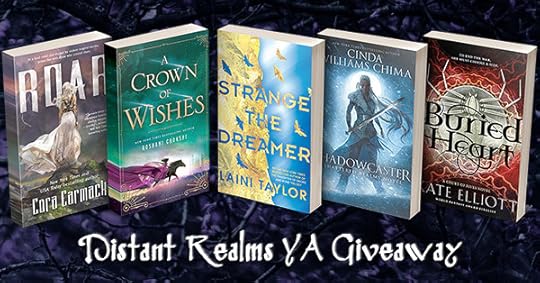
Today I bring you … the Distant Realms YA Giveaway: 2017 New Releases!
Escape into magical worlds beyond our own with this spectacular YA high fantasy giveaway! This book pack features these exciting upcoming books (all on pre-order): Cora Carmack’s Roar, Cinda Williams Chima’s Shadowcaster, Roshani Chokshi’s A Crown of Wishes, Kate Elliott’s Buried Heart, and Laini Taylor’s Strange the Dreamer. Open worldwide! I’m one of five fantasy authors sponsoring this giveaway, so be sure to hop over and check it out!
And that’s all! Catch you Monday for the next Disability in Fiction blog series post. 
January 26, 2017
Surviving The Apocalypse – Quizzes and Fun at the Halfway Point | Defying Doomsday Read-Along
We’re halfway through Defying Doomsday! I figured it’s time to assess how much we’ve learned, and just how long we might survive in an apocalypse! (I also figured it might be nice to have a fun post that grants us all some catch up time.)
If you’re just popping by for fun, feel free to join in just for today if you’d like (or going forward!). We’re happy to have you! To find out more about the read-along, click here.
How Long Would You Survive?
Some of these apocalypse options are pretty rough: hungry things in the rain that eat you alive, meteors on a collision course with earth… (Are they options? Can we change our choice of disaster scenarios? Cause I’m totally voting for the killer bunnies if I can. I mean, they can’t do doorknobs. And they may still be afraid of dogs. This seems like a good thing.) So… take this quiz on how long you would survive for in an apocalypse, and let us know what your life span looks like!
What Job Would You Have?
We’ve talked about what our special skills are that we could trade with at a post-apocalyptic market. But now we’ve got to take off our rose-tinted glasses and find out what Buzzfeed thinks we’re really suited for. (Buzzfeed is definitely the expert here.) What will you do once disaster strikes?
And What Will You Pack?
Talking about the apocalypse isn’t all fun and games, you know. Serious preparation is required. Take a look at this Bug Out Bag guide and build your own BOB list (it doesn’t take long–click on the button at the bottom of the page). Do you have what you need to survive? Are you at all tempted to do this?
Intisar’s Answers
Looks like I’ve got a month to live as a hermit (woohoo! Bet you didn’t think “hermit” was a job description!) with those books I decided to take along with me. NO REGRETS. As for a Bug Out Bag, I think I might put together a small bag with copies of all my most important paperwork, etc. A USB back-up of my writing. You know, important things. Most of the things I thought I’d include in a BOB are already in my house (except for water purification tablets), so I think I’ll just wing it. Unless, you know, the CDC tells me I need to get my game on. I’m listening to the CDC.
There’s that banner! (Just in case you were missing it.) Thank you all for such a fun read-along. Looking forward to the next set of stories next week!
January 23, 2017
Reading While Disabled: Kid/YA Lit Faves (Part 1) | Disability in Fiction
A warm welcome to Alice Wong for this awesome two-part guest post on reading while disabled. Alice heads up the Disability Visibility Project, and today she’s brought together the voices of five disabled readers to talk about the books they’ve read, and what those stories–and reading–means to them.
And now I’ll hand it over to Alice…
Books were my best friends growing up. In grade school I would sit in the corner of the gymnasium in my wheelchair and read while trying to avoid being hit by an errant basketball. This was the 1980s and physical education wasn’t adaptive or inclusive which was fine by me. It gave me more time to read.
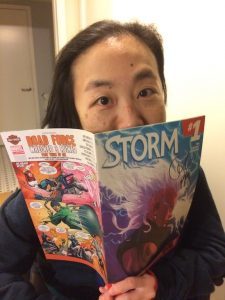
Alice Wong reading Storm
The libraries at school and in my community (shout-out to the Nora Branch of The Indianapolis Public Library!) were refuges–places I felt safe, free, and unencumbered. I owe a lot to the writers during my childhood when I felt lonely and trapped in a non-normative body and people’s narrow expectations of who and what I could become. Like a lot of other misfits, nerds, weirdos, and bookworms, books were key to my liberation. I interviewed a few of my disabled friends about their childhood favorites and the importance of disability representation in literature: Keah Brown, Sandy Ho, Hamza Jaka, Meriah Nichols, and Vilissa Thompson. This is first of a 2-part guest blog post. Some of these responses have been edited for clarity and space.
What are some books you grew up reading and loving as a kid?
Meriah Nichols
Meriah Nichols: I loved the Lord of the Rings series, the Chronicles of Narnia, all of Madeline L’Engle’s books (but especially the Wrinkle in Time series). Nancy Drew was also a favorite, then Sherlock Holmes. All of the work of the Brontë sisters. I loved anything with mystical magic, rich language and a sense of more – more than me, more than my reality, etc.
Vilissa Thompson: I loved the classic Baby-Sitters Club series by Ann M. Martin. Reading BSC was the “thing” to do as an 80s baby/90s kid. I enjoyed the differences between the girls in the series, and their unique friendships with one another.
Keah Brown
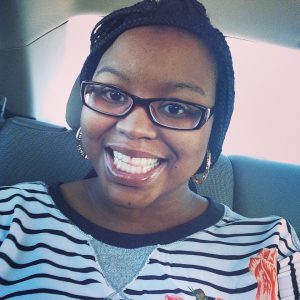
Keah Brown: Growing up I loved the spunk and spontaneity of the Junie B. Jones books. I loved The Scholastic book fair growing up because I saved all of my allowance money to buy books at the fair. Dear Mr. Henshaw by Beverly Cleary made me want to be a writer. That book in particular hold a special place in my heart. I also read a lot of books that were definitely too old for me to be reading like a lot of romances and crime dramas.
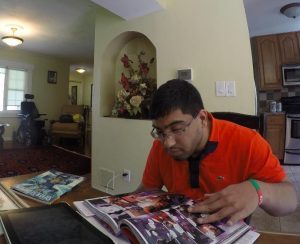
Hamza Jaka: Of course, Harry Potter. I always felt a connection to Lupin and Mad-Eye Moody, so I was thrilled when Rowling revealed that they were in fact disabled according to her canon. I always wondered how disability was integrated into Hogwarts though. Did wheelchair users use winguardium leviosa to get around? Or did learning disabled or blind folks have spells that read things out to them, did they get extended time on tests? Other favorite books include The Lost Years of Merlin, the Star Wars expanded universe for its characterizations of great characters, the Animorphs series. Also, as far as comics go, Spider-Girl was definitely my favorite, a diverse cast, multiple disabled characters, and genuine conflict, but happy endings. Oracle and her Birds of Prey as well.
Sandy Ho
Sandy Ho: Matilda by Roald Dahl (because I identified so resolutely with Matilda’s position of being the strange one in her family, and the way she used books to gain power, and seek empathy from characters elsewhere) / The Hobbit – JRR Tolkien (fantasy! The way different species and fantasy humans were described in the book had a lasting impact one me) / Ender’s Game – Orson Scott Card (sci-fi because I was a Trekkie growing-up, and to have that world of space play out in my mind through the page was something I relished being able to do.) / Harriet the Spy – Louise Fitzhugh (because she was another female kid character I looked up to, and she had brains to who solve mysteries!) / All of the Judy Blume Ramona series books, and also the Fudge series books…because Judy Blume.
As a physically disabled kid my entire life, books and libraries were a refuge for me. What was your relationship with reading as a kid?
Meriah Nichols: I was a deaf kid who was sexually abused and constantly moving. I had TBI and PTSD and was just considered “difficult” (and sent away from home a lot). Reading was my life, my escape, my being whole. When my own life was too unbearable (which was often), I’d go to my comfort-land within stories.
Vilissa Thompson with her latest read, Hidden Figures
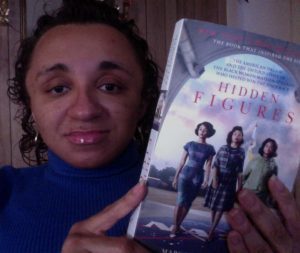
Vilissa Thompson: Reading, and then writing, were the activities I loved to do as a kid. When I read a book, it’s so easy for me to get lost in the story that’s unfolding. It feels as if time stops. Even at 31, I still get excited when I hold a book that I cannot wait to dive into. I love the adventures books take me on, and the feeling I have when the last word is read.
Keah Brown: I absolutely loved reading as a kid and I do now as well. Books were my first best friends, my place to escape from the confines of my body and thoughts and into worlds and lives of characters that I grew to love and know well.
Hamza Jaka at home with some awesome reads 
January 21, 2017
Massive YA / NA Science Fiction and Fantasy Giveaway!
Today I want to share a truly massive giveaway I’m taking part in… you can win 20 Young Adult / New Adult SFF books (13 of which are print copies, including Sunbolt) PLUS a $100 Amazon gift card! This giveaway is open internationally, as all good things should be….
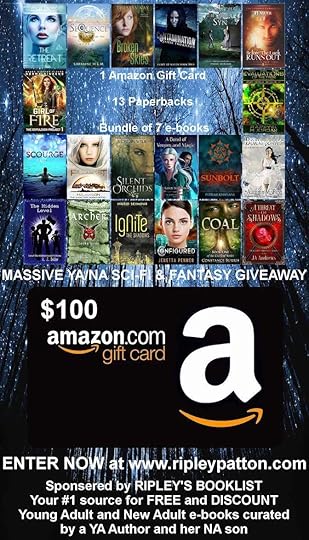
Enter here: a Rafflecopter giveaway
I hope one of you lucky ducks wins!
January 19, 2017
Defying Doomsday Read-Along: Discussion Part 2 (Stories 5-8)
We’re Back for Part 2!
Yay for the second discussion post for the Defying Doomsday Read-Along! So glad you guys are reading along with me–I am really enjoying this! If you’re new to the party, you can check out the starting post here. In a nutshell, we read about four stories a week, with questions posting on Thursdays. Feel free to jump in and join the read-along at any point. You can answer the questions in the comments, or answer on your own blog and share a link below. You can also tweet as you read using #readDefyingDoomsday.
For next week, we’ll be reading stories 9-12 (“Five Thousand Squares” through “Giant”).
Below are this week’s discussion questions. (Yay!) Like last week, I’ve given a one line reminder of sorts for each story before the question. And again, while some of these questions are more reflective and thoughtful, I also wanted some to be just plain fun. Here we go!
Discussion Questions: Stories 5-8
1. “In the Sky With Diamonds,” opens with Megan in her capsule, attempting to distract the aliens from pursuing and destroying her sister’s ship. What do you think of Megan’s argument that humans both destroy the sacred and contain it within them?
2. “Two Somebodies Go Hunting” is the story of Lexi and Jeff setting off to hunt a kangaroo through the desert-like outback. How do you think Lexi and Jeff’s relationship may be different going forward?
3. In “Given Sufficient Desperation,” Vera categorizes items for the alien occupiers. How long do you think you would last in such a job?
4. “Selected Afterimages of the Fading,” told in second-person point of view, follows Caleb, a researcher with muscle dysmorphia working to combat the fading. Beyond yourself and your family, what would you pay the most attention to if you were a super perceiver?
Intisar’s Answers
1. I really wish the aliens had engaged Megan a little bit more on this concept, mostly because I find it rings true for me on a deeper level. I do think there’s something beautiful and ‘sacred’ in each of us, and yet as a species we wage destruction on each other and everything around us as if the end of the world can’t come fast enough for us. (Whichever end of the world we end up getting….) I nearly burst out laughing at the line, “We made error.” That sounded like a totally human apology of sorts.
2. I’m really hoping they’ll grow closer to each other. Lexi had a lot of anger and resentment bottled up, and I think that made her harder on Jeff to begin with. I didn’t really like her that much at the outset, and I love how the alternate perspectives and the events that unfolded both helped me come to appreciate her and where she was coming with. It’s unsurprising that children will grow up fast and hard in the aftermath of an apocalypse, or that they’d know the names of the bacteria to fear, or that their injuries and needs may go untreated / undiagnosed. But these children are resilient, and I think they’ll hold together with even greater love after this.
3. I don’t think I’d last very long. It sounds like a recipe for insanity to me. That said, I’d have a hard time joining the militants as well, so I’m not sure what I’d do. Given sufficient desperation, I’d probably end up a lot like Vera….
4. First off, this story was really thought-provoking for me because I’d never heard of muscle dysmorphia before. Although I usually hate reading second person point-of-view, I actually thought it worked brilliantly because the whole point was that you can’t see yourself as you are. So yay on both counts! As for what I’d pay attention to… that’s a hard call. I think I’d take long walks in the forests and natural lands, to try to preserve ecosystems. Our farms aren’t going to do too well if everything else disappears, and neither are we. That said, I’m also worrying about things most people don’t usually see, things that are usually hidden, like plumbing and electrical wiring and bats. (Yeah, I totally put bats on that list.) So, I don’t know. I’d probably be the manic super-perceiver running around staring at everything and sticking my head into cracks to preserve the things in between.
I hope you all are enjoying the read! I’m looking forward to reading your thoughts.
January 16, 2017
What Is Your Life’s Blueprint? – Reflections on MLK Jr’s Speech
As we pause to reflect on the awesome legacy of Martin Luther King Jr, and the work that remains to us, I find myself going back to one of the reverend’s less well-known speeches. Most of us have read or watched or even studied his “I Have A Dream” speech, and it is fantastic and inspirational, and rhetorically brilliant. But I find Mr. King’s speech, given to an assembly of junior high school students six months before his assassination, the one that helps me most in looking forward and thinking about where I want to go, and how.
In this speech, Mr. King asks his audience, and all of us the simple question, “What Is Your Life’s Blueprint?” He asks us to reflect on our plan for our lives, and gives us some pointers to begin building our blueprint. And even though I’m closer to forty than to fourteen, I think these pointers are just as valid and valuable as they are to a young person setting out to build their adult life.
Mr. King makes two simple but important points to begin with. He says:
“Number one in your life’s blueprint, should be a deep belief in your own dignity, your worth and your own somebodiness…”
“Secondly, in your life’s blueprint you must have as the basic principle the determination to achieve excellence in your various fields of endeavor.“
(He expands on both points, and I highly recommend you watch the video or read the full (short) transcript linked up below!)

This year is going to be a difficult one. So much of the work that has been achieved in the previous decades seems to be coming unraveled. There’s nothing new about this. It’s the story of history, even if we seem to have somehow hit the fast forward button on things. What’s new is that it’s happening to us this time, and not our parents, our grandparents, or seven-times-over ancestor. And that means it falls to us stand up, to speak out, and to work for ourselves, for those around us, for all of humanity. It’s our responsibility, and each of us must shoulder it.
But here’s what I love about Mr. King’s speech: he asks us to find what we will do with our lives, and then set out to excel in it, with full faith in ourselves. Not all of us can take to the streets in protest, however much we may wish we could. Not all of us can speak coherently and thoughtfully on TV, pushing viewers to question their prejudices and rethink their stances. But we all have something that is our calling, if you will. Something that is what we have chosen to do with our lives. And those skills, those abilities, can uphold us, can be used to make us allies to communities that are coming under fire.

For me, that calling is writing. And while I’ve made various resolutions regarding what I want to do with my writing this year, I’m also committing to write the stories I have in me that most need to be told right now. I am committing to use my skills as a storyteller and wordsmith to speak truth to power, to build empathy and compassion, to help us find the humanity in each other and treat each other with dignity. To recognize the value and “somebodiness” of every single person around us. And to do my best by my writing–to endeavor for excellence, for the sake of the stories I have to tell, and the readers who will pick them up.
So here is my challenge to you: Take the next days and weeks to think about your own blueprint. Find those things you are doing or are a part of you–not just your day job (whether that’s in an office or a classroom), but your skills and strengths. And then think about how you will use them going forward, and make that commitment to excellence, whatever it may look like to you.
And now I leave you with this footage of Mr. King delivering his speech. If you prefer, you can also read a somewhat pared down transcript here. (I couldn’t find a full transcript to link up.)
Be well, be strong, be true.
January 14, 2017
The Power of Art, and The “We The People” Kickstarter
Art has power.
One of the most amazing things about being a writer is hearing from readers who found something in my stories that aided them in some way–whether Thorn became the book that kept them company as they sat with family in a hospital room, or if Sunbolt has become their comfort read. Knowing that my books have the possibility of positively affecting someone’s life is huge to me, it’s an awesome, amazing thing, and reminds me that art can do things and go places and hold a power that few other things can.
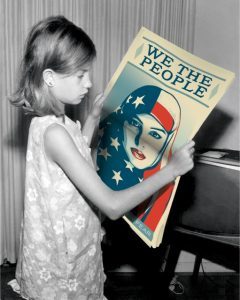
When I saw the art for the “We The People” Kickstarter campaign, it almost made me cry in public. This art is beautiful and powerful, and it comes at a time when narratives of exclusion and hate are gaining strength in the mainstream. I am both American and Muslim, and increasingly over the last few years, but most especially this last year, I’ve felt the rising tide of intolerance toward my identity as both. Our mainstream narratives continue to edge toward a self-fulfilling prophecy of the clash of civilizations, where history is selectively picked over and purportedly shown to prove that “Islam” and “the West” will always be at odds, and so we will always be natural enemies (and I must somehow be at odds with myself). Utter rubbish, but that’s not the point of this post, so I’ll stop there.
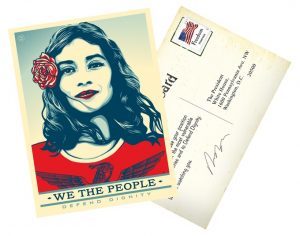
These images, by Shepard Fairey and two other amazing artists, are beautiful and evocative, and they lay claim to the diversity and beauty of America, in conscious and clear opposition to the hateful narratives we are struggling to keep from becoming the norm. Through this Kickstarter, they’ll run in the Washington Post on inauguration day, be handed out as posters from the backs of vans for people to carry and share, sent as postcards from each supporter to the White House, and made available to all supporters as an instant download to print and use that day. You can also get signed copies from the artists, if you want one for your wall…
Even if you can’t fund this project (I know money can be tight), hop over, watch the video, and let yourself enjoy the images. And consider sharing about it on Facebook, Twitter, or wherever it is you hang out online. Because art is power, and so is sharing it.