Intisar Khanani's Blog, page 3
May 25, 2017
Writing Beneath A Glass Ceiling: A Guest Post by SFF Author Anela Deen
Today I’m happy to welcome Speculative Fiction author (and friend!) Anela Deen to the blog. You may remember Anela’s name from my review of her fantasy novel A Ransom of Flames, which I quite enjoyed. Today, Anela joins us to reflect on her experiences–and the experiences of women generally–when writing or working in a field dominated by men. Be sure to scroll all the way down to nab a free copy of Deviation, the Sci-Fi short at the heart of this post!
Every author will tell you critique groups are essential to the writing process. We need other writers to go over those passionate scribbles and point out the spots that need work. I tend to use online groups because you get a variety of readers and people seem to lean more towards honesty if they aren’t sitting face-to-face with each other. I’ve found them to be full of well-meaning writers looking to support, encourage, and improve each other’s art…that is until I asked for feedback on a Sci-Fi story I wrote.
No Girls Allowed
Let me back up a bit here before I tell you what happened. Last month the Twittersphere lit up with the hashtag #ThingsOnlyWomenWritersHear. Women tweeted about the gender assumptions they face when it comes to their writing. What stood out to me, having experienced it myself, is the condescension and oftentimes outright belligerence doled out to women who dare to publish in genres viewed as “belonging to men”. Like Science-Fiction.

This is not a new issue, of course. It dates all the way back to when Mary Shelley published Frankenstein anonymously in 1818. Although it gained great popularity even then, when critics discovered it was written by a woman they pumped out scathing reviews and dismissed the work entirely (Thankfully those toads were unsuccessful in shunning it from literary history). But this isn’t to say that women don’t continue to suffer under the same misogynistic yoke today. It just gets slapped with a new kind label to disqualify it from the genre.
Hard vs. Soft Science-Fiction
“Hard” Sci-Fi is a classification ascribed to books that are based more on physics and technology as we understand it. Think, Andy Weir’s The Martian. “Soft” Sci-Fi refers to books set in the future but which revolve around more social or psychological aspects rather than the technological. Some examples are The Hunger Games or Divergent. You might be thinking, “Okay, so this makes sense. What’s the problem with that?”
Well, here’s the sticking point:
There’s a patriarchal overlay on the whole issue since this “soft” classification is mainly pushed on books written by women. Think of the word “soft” itself. It denotes “weak” or “feminized” in this context whereas “hard” denotes “virile” or “masculine” (That’s a lot of quotations marks, but stay with me.) And exactly why are we using “soft” here at all for books about futuristic societies? I mean, have you read The Handmaid’s Tale? There’s nothing soft about it! The purpose, as so often is the case with labels, is to devalue novels written by women in this genre. It’s saying, “Here are the real Sci-Fi books, and here are the fake ones.”
A Hierarchy of Merit
This becomes especially clear when you take into account literary awards for Science-Fiction. Books written by women have been disqualified based on this distinction. In 2013 judges of the Arthur C. Clarke award threw out many books written by women because they were viewed as “Fantasy”, as in, “not requiring the realism of science”—exactly the type of Sci-Fi dominated by women writers.
In another example, the Sad Puppies group that haunted the Hugo Awards in 2015, angered because they felt the Hugos were being used as an “affirmative action” award, published this statement to explain their actions:
“…only those works embodying the highest principles of Robert A. Heinlein shall be permitted. Girls who read Twilight and books like it shall be expelled from the genre.”
I could put in more quotes from them but really, their entire manifesto is hair-raising.
Back to what happened at the critique group…
So, I’d submitted my Sci-Fi story to my group. It features a main character in her early thirties of South Asian descent, a wily and dry humored woman who doesn’t sit passively by when there’s trouble. The women of the group loved her, but the guys (not all of them, of course) didn’t. They hammered on about cutting any part where the MC had an introspective thought—the parts the women critiquers called out as their favorite. They jabbed fingers saying the story should focus on the science and mechanics of the situation, the technological aspects rather than the relationships between the characters. What took me aback was how angry they seemed about it and I suddenly had the impression that they felt I was trespassing in a territory where I didn’t belong. In fact, they kept saying the story was more Fantasy than Science-Fiction, popping a red flag that harkened back to those exclusionary categories occupying the genre.
“It’s a good story and well-written,” one said. “But you’re just making it up.”
Well…yeah, what with this being fiction and all.
The crux of the matter is women and men write differently. Their narratives reach for different themes within the same genre and depict issues from their own unique perspective to examine our society, our world, and our universe. The question is why are the fantasies of men viewed as legitimately belonging to the Science Fiction genre but those of women are not? When women’s writing is dismissed and disqualified, when their voices are marginalized in this venue or any other, we all lose.
Virginia Woolf once wrote, “Literature is impoverished beyond our counting by the doors that have been shut upon women.”
It’s up to all of us, readers and writers alike, to insist on change. Silence is the instrument of oppression; speech, its mortal enemy. Make yourself heard.
About the Author
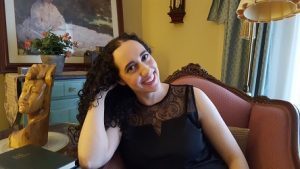 A child of two cultures, this hapa haole Hawaiian girl is currently landlocked in the Midwest. After exploring the world for a chunk of years, she hunkered down in Minnesota and now fills her days with family, fiction, and the occasional snowstorm. With a house full of lovable toddlers, a three-legged cat, and one handsome Dutchman, she prowls the keyboard late at night while the minions sleep. Coffee? Nah, she prefers tea with copious amounts of sarcasm.
Anela’s current projects include the conclusion to her Sci-Fi novella series, Insurrection, and a new YA/NA Fantasy series, Sundered Kingdoms. The publication of the first novel, Dark Frost, is planned for 2018.
Find her on Amidtheimaginary.WordPress.com, Twitter, Facebook
And… if you’re interested in the Sci-Fi story at the heart of this post…
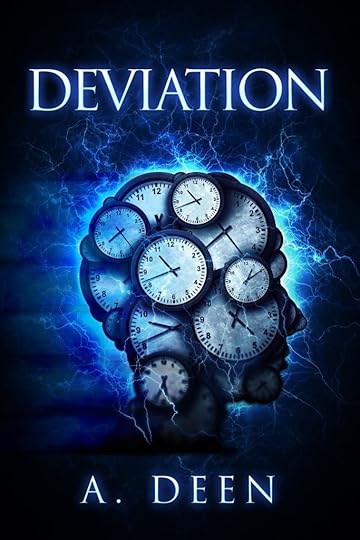
Indra knows adjusting to life in a new town can take time but after a month she still hasn’t settled in. The gaps in her memory and her husband’s tendency to run mysterious errands at night don’t help matters. When she believes he is being unfaithful she follows him, never expecting to find an unimaginable confrontation and a stranger who knows her better than she knows herself.
Nab it FREE here:


May 22, 2017
Fantasy Book Bundle Giveaway!
When it rains, it pours! Here’s another fantastic bundle of free fantasy reads (including Sunbolt, of course!). This giveaway is through BookFunnel, so many of the books do require you to sign up for the author’s mailing list to receive it. If you’re already subscribed (hint hint), you’re gold!
Check out the books here: https://books.bookfunnel.com/fantasyreads
May 18, 2017
A Heritage of Seeking Refuge
These last few months have really brought home to me a few things about my family. We are privileged, so, so privileged and I feel both grateful and slightly guilty for that reality. We also have a recent memory of being refugees. I am grateful for this as well, even as it changes my lived experience in ways I am still coming to understand.
Both my grandparents on either side of my family were forced to flee India during the Partition between India and Pakistan, as both countries threw off the yoke of colonization (Bangladesh was there too, as East Pakistan at the time). There were refugees of all backgrounds fleeing in pretty much every direction, and the point of this post is not to point out atrocities committed by one side while glossing over the other, nor to suggest that only one group of people were victims. The point is simply that these are the stories of my family.
Fleeing in the Night
My father’s family knew trouble was brewing, but it wasn’t until there were mobs in the street and the houses of Muslims were being burned that they picked up what they could and fled in the middle of the night. A few blocks from home, my grandmother realized she’d left my father asleep in his crib. She was faced with the terrifying decision of leaving him to die or sending back her oldest sons to fetch him and potentially losing them too. She sent her two eldest sons back together, so that they could help each other. They crossed the rooftops to the house, climbing through an open window to snatch my still-sleeping father, and escaped just in time.
Because they left with just what they could grab, my father’s family struggled with poverty through his youth. He remembers his mother selling bottles of achar–spiced, pickled vegetables–to make a living. He remembers coming home hungry and being offered a bowl of water with a few boiled carrot slices in it, to tide him over until dinner was ready–when there was no other dinner.
It wasn’t until his eldest brothers were old enough to work and start their own businesses that the fortune of his family began to recover. By the time my father’s mother passed away, all of her children had achieved financial security and found success in their lives–running a variety of businesses, pursuing degrees in higher education, supporting local and international charitable work. Not that everyone had a steady path–there are always ups and downs–but looking at my father’s family now, you might never guess at their experience as refugees.
Planning Ahead
My mother’s father was a wealthy businessman and saw what was coming. He also saw, at a certain point, that the average civilian could either flee or be caught up in a blood bath which they would not have the power to stop or protect their family from. He booked a ship to sail to the nearest port, and provided transportation for anyone from their village who wished to get to it, as well as free passage on it to Karachi, Pakistan. He and his family did not take the ship themselves–and there was a terrifying moment in their rail journey when my grandfather was taken off the train for questioning and his family thought he’d been left behind. Thankfully, he hadn’t been. At the last moment, the authorities allowed him to board at the back of the train, and it took him some time to work his way through the over-crowded cars back to his family.
In Karachi, he helped set up funds to build new houses, support widows and orphans, and establish schools. Because of his planning, dozens of families were able to leave before the violence reached their town, and they didn’t lose everything as my father’s family did. My mother’s father didn’t just look out for his family, he worked hard to assure the safety and future of his community.
Amazing People Are Out There
Then there are the stories passed down of what happened to other families who also fled. There was the Muslim family who saw other houses being burned, ran to their Hindu neighbor’s house, gave them the key to their house, and continued on with the aid of that family. Nearly ten years later, the Muslim family contacted their old Hindu neighbors to thank them for smuggling them out of the town. “Oh, we still have the key to your house, and all your things are safe. Let us know what you would like us to do,” the neighbor told them.
Another Muslim family was fleeing their town when they were separated from their two young daughters. They were unable to find them, and eventually were forced to go on without them. After the violence ended, the parents began the search for their daughters, not really expecting to find anything other than a story of their death. Instead, they learned that their Hindu neighbors had found and taken in the girls, raising them with their own children and assuring they knew their heritage until their parents could be found again.
Learning Compassion and Resilience
In hearing these stories as I grew up, I internalized a number of lessons. I learned resilience from understanding the resilience of my own family, the struggles they faced and survived, and the challenges they faced before I was born. My family has been through a great deal, and because of that I am where I am now–something I am grateful for, and something I do not want to take for granted. Struggle will come again, and again. Knowing my family’s history reminds me that no matter who you are, there will be ups and downs, losses and gains.
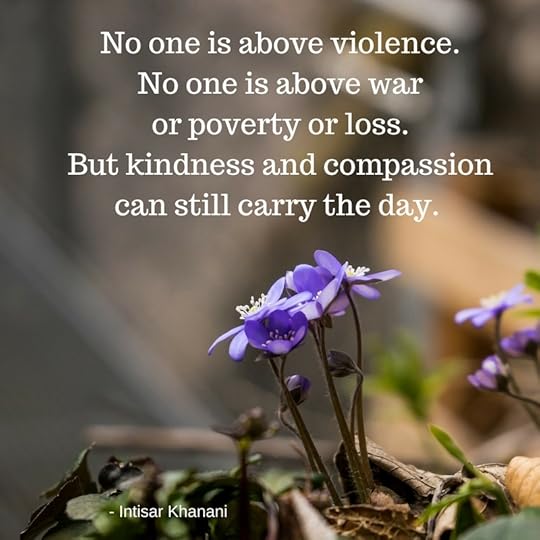
These stories also taught me a very important lesson: no one is above violence. No one is above war or poverty or loss. But kindness and compassion can still carry the day. Many, many people died during Partition. Many people survived intense and terrible traumas that scarred them, often permanently. But so many people also helped each other, helped those who might have been considered “other” because they remembered and cherished the humanity of those around them. They helped their own communities, they helped communities they knew would come under attack as secret or open allies, they planned, and over everything, they were kind.
Those people are my heroes. They are the people I hope to be, and strive to be, and try to remember, even when I have no names for them. These stories are generations old now, but they are still powerful, as are the stories of refugees and their allies today, the world over. And, just as was true in that time, today’s refugees need allies and supporters. They need those who are in a place of relative safety to remember their humanity, and fight for them and their right to live.
I know that we cannot each of us fight every battle we see that needs fighting in the world. We can only choose those struggles that we are most able to help in, and do what we can. But if we each do that, imagine what the world would be like. Imagine the lives saved, the hope and possibility for future generations. Imagine that world, and remember the everyday heroes whose actions make all the difference in the lives of those whom they touch, and do what you can.
May 15, 2017
18 Awesome & Free YA Reads

Today I’ve got 18 free reads from all across YA, including a good bit of fantasy! This giveaway is hosted on BookFunnel (kind of like Instafreebie, but with the added benefit that if you have your e-reader handy, you can do a direct download to it instead of messing with conversion through your e-mail.) And like Instafreebie… most of these books will ask you to opt-in to the author’s newsletter in return for the free read. Mine is just a monthly mailer, as I’m not a fan of clutter in the inbox.
You can nab my own street-thief-with-a-secret story Sunbolt through this giveaway, currently $2.99 on Amazon and elsewhere.
May 11, 2017
Sunbolt Goodreads Giveaway!
I’m giving away three signed copies of Sunbolt on Goodreads! Street thieves, magic, and monsters (both human and not) — what’s not to enjoy?
Already read it? These will make great gifts as well! This giveaway is US only–but I will do a worldwide one later this summer.
The Blurb:
The winding streets and narrow alleys of Karolene hide many secrets, and Hitomi is one of them. Orphaned at a young age, Hitomi has learned to hide her magical aptitude and who her parents really were. Most of all, she must conceal her role in the Shadow League, an underground movement working to undermine the powerful and corrupt Arch Mage Wilhelm Blackflame.
When the League gets word that Blackflame intends to detain—and execute—a leading political family, Hitomi volunteers to help the family escape. But there are more secrets at play than Hitomi’s, and much worse fates than execution. When Hitomi finds herself captured along with her charges, it will take everything she can summon to escape with her life.
Enter here:
.goodreadsGiveawayWidget { color: #555; font-family: georgia, serif; font-weight: normal; text-align: left; font-size: 14px;
font-style: normal; background: white; }
.goodreadsGiveawayWidget p { margin: 0 0 .5em !important; padding: 0; }
.goodreadsGiveawayWidgetEnterLink {
display: inline-block;
color: #181818;
background-color: #F6F6EE;
border: 1px solid #9D8A78;
border-radius: 3px;
font-family: "Helvetica Neue", Helvetica, Arial, sans-serif;
font-weight: bold;
text-decoration: none;
outline: none;
font-size: 13px;
padding: 8px 12px;
}
.goodreadsGiveawayWidgetEnterLink:hover {
color: #181818;
background-color: #F7F2ED;
border: 1px solid #AFAFAF;
text-decoration: none;
}
Goodreads Book Giveaway
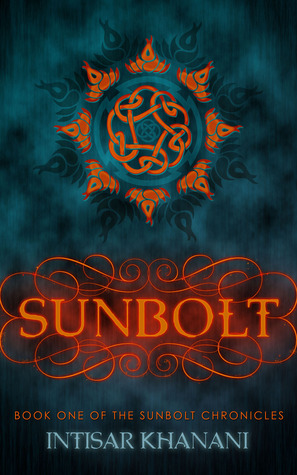
Sunbolt
by Intisar Khanani
Giveaway ends May 19, 2017.
See the giveaway details
at Goodreads.
April 28, 2017
The Bird Whisperer Speaks: Or, How to Help Baby Birds
The other day, a friend messaged me to say she heard I’d saved a robin. “No, no,” I responded (more or less). “It was a crow, and a very long time ago.” Well, her son had been chatting with my daughter and he’d been adamant it was a robin, but no doubt that was a mix up.
It took me a moment, and then I went, “Oh yeah, there was a robin!”
About three minutes later, I went, “There was also that blue jay, once, in Washington DC.”
And, oh my goodness, I am only now remembering the baby pigeon we raised on our balcony! We actually set poor old Poopo (pronounced poop-o, as named by my mother) free, and he flew back to us after getting beaten up by the other pigeons. It was pretty brutal. We nursed him back to health, and the second time he flew away, he seemed to do fine.
So on this fine spring morning, I’ve decided to make it my business to address you, not as an author, but as an amateur bird whisperer, with a few fine points on what to do if you happen to find a young bird stranded on the ground. Because it happens this time of year. And you could be the one to save that little creature’s life. And that, my friend, is a wonderful thing.
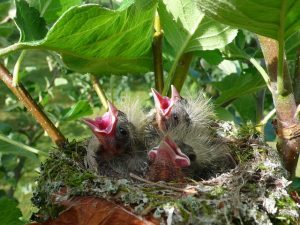
If that baby bird is still kinda ugly instead of wearing its big-bird feathers, it’s a nestling.
First, if you happen across a really young bird, with pink skin or not that many feathers, you’ve found a nestling. Your first priority is to try to return it to its nest–so look around for that. Maybe the nest itself fell out of a tree and you can put baby and nest back up on a branch? Failing the ability to return it to its nest, make it a new nest. Seriously. Even a shoebox will do, add in some natural materials from around where you found the baby bird, and try to put that bird and new nest back up in that tree (nail it in as high as you can get). Mother (and often even father) birds almost never abandon babies, and, unless they’re vultures, they have a pretty bad sense of smell. They’re not going to “smell” you on their babies, and they’re going to be very grateful if you return their babies rather than run away with them.
But maybe that bird is older. This has pretty much always been my experience. It’s got some flight feathers and can flap around pretty enthusiastically, but it can’t quite fly yet. These birds are called fledglings, and they’re experts at falling out of their nests (cuz they’re trying to fly), so putting them back in isn’t a good idea.
You don’t usually want to approach or interact with a fledgling unless they’re in a dangerous place. For example: the robin I “saved” was in the middle of a four lane road; the blue jay was on the sidewalk of a busy street; and the pigeon was being stalked by a cat and we couldn’t reach the lowest branches of the only tree in the vicinity. Oh, and the crow broke his leg in his fall and had to have it amputated just above the knee due to infection. We nicknamed him Kamal and he was old enough to survive on our balcony–and our neighbor’s when I traveled–with regular feedings and his parents and family hanging out and talking to him from other balconies (literally) until he could fly away again. Crows are actually really amazing birds.

When you see a fledgling on the ground and it seems healthy and in a safe place, remember The Beatles and… Let it Be. (I totally went there.)
Here’s what you want to do if the fledgling isn’t in immediate danger: leave it alone. Its parents are probably watching it, and they’ll coach it through the next day or even week or two. It’ll learn to forage, hide, and so forth as it gets ready to fly. Keep pets and children away, and just let the fledgling be.
Here’s what to do if the fledgling appears to be in a dangerous situation: gently catch it and move it to its own tree or a nearby shrub. Getting it back into its nest isn’t going to make much difference because it can fly right out again. You just want to get it somewhere it can hang out and chat with its parents and not be immediately run over / scared into the road / eaten.
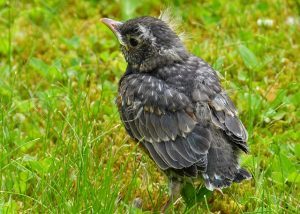
Here I give you a perfectly happy robin fledgling. Yay!
To catch a fledgling, you want to crouch alongside it slowly and put one hand some distance in front and to one side of it. This is your distraction technique. Make sure it is focused on your hand (wiggle your fingers slowly), and then gently reach up to it from behind with your other hand and scoop it up.
Don’t handle the fledgling excessively if you can help it (i.e. don’t show it off to a crowd of admirers), because you’ll just be stressing it out. Go ahead and set it in the nearest shrub / tree you can find that’s not dangerous, and go along your way. And that’s it! You’ve saved a life and kept a family intact. Now, if you weren’t wearing gloves, go wash your hands really, really well…
But what if there’s something terribly wrong, like what happened to Kamal the crow? Then you do need to act fast. If you’re certain the mother bird is dead, or the parents haven’t shown for many hours, or if the baby is visibly hurt / sick / being hunted, then you need to place it in a safe container (a shoe box with air holes or even a paper bag), with some dry cloths, and call a wildlife rehab center right away. These hours can be critical. Google can also be your friend in terms of how to keep the baby warm and dry (nestlings especially need help staying warm) and what kind of food you might want to offer it. Since the possibilities are so varied, I’m not going to try to coach you through what to do here–just encourage you to get the bird in a safe container and get help. You can do it!
Below are some links if you want to learn more about helping out baby birds. And that’s all I have for you! So tell me, have you ever found a nestling or fledgling before? What did you end up doing?
Resources:
Baby Birds Out of the Nest (Washington Dept. of Fish and Wildlife)
When Rescuing A Baby Bird Is Not The Compassionate Thing To Do (Guest Post on Healthy Pets)
There are tons more resources out there as well, if you need them.
April 6, 2017
Clean Indie Reads Spring Giveaway!
30 Days – 44 Authors – 6 GenresThere’s a little bit of something here for everyone, and all are PG-13 or less (aka YA appropriate). And every single on is free! What are you waiting for?!?
Happy reading!
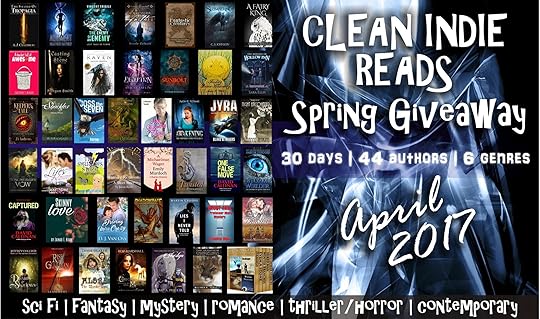
Find it here: Clean Indie Reads Spring Giveaway
March 30, 2017
Review: On The Edge of Gone by Corinne Duyvis
I’ve been sitting on writing this review for a couple of weeks, though I’m not quite sure why. It’s been a busy two weeks, but writing a review doesn’t usually take so long that I couldn’t fit it in somewhere quite easily. I suppose the truth is that I both loved On The Edge of Gone, and found myself wishing it would hurry up a little–mostly because it wasn’t the story I was expecting. That said, some of those surprises were truly awesome, and I still highly recommend this read. First, though, let’s start with the basics.
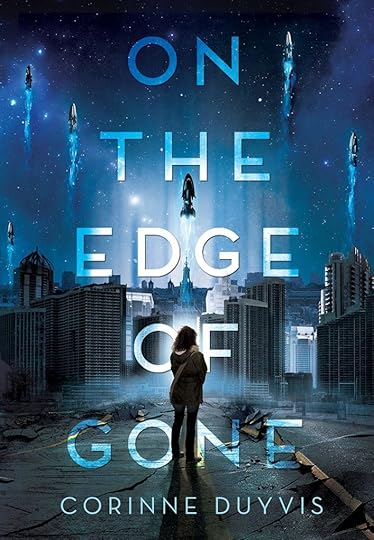

Yep, I’ve definitely got some cover love going on over here.
The Blurb
January 29, 2035.
That’s the day the comet is scheduled to hit—the big one. Denise and her mother and sister, Iris, have been assigned to a temporary shelter near their hometown of Amsterdam to wait out the blast, but Iris is nowhere to be found, and at the rate Denise’s drug-addicted mother is going, they’ll never reach the shelter in time.
Then a last-minute encounter leads them to something better than a temporary shelter: a generation ship that’s scheduled to leave Earth behind and colonize new worlds after the comet hits. But each passenger must have a practical skill to contribute. Denise is autistic and fears that she’ll never be allowed to stay. Can she obtain a spot before the ship takes flight? What about her mother and sister?
When the future of the human race is at stake, whose lives matter most?
My Rating: 4.5 stars
My Review
The blurb gives you the essence of the story: this is a survival story that essentially begins as the comet hits and continues for the next two weeks. The big question is whether Denise and her family will make it on the last generation ship left in Amsterdam (and possibly the world). That remains the question for the book–so if you’re looking for interstellar travel or space pirates or anything of the sort, a quick expectations adjustment will give you a much more enjoyable read. This isn’t an action-packed tale, this is something between a gritty story of survival and an absolutely amazing character study.
Denise is strong, focused, and capable, and just the sort of person I want to be with if NASA tells us tomorrow that there’s a comet headed straight for the earth. She’s also female (obv), biracial, and autistic. Her identity plays into her life in simple and real ways. She has developed coping mechanisms to manage the things that are difficult, and they work brilliantly until they don’t. Frankly, Denise copes so much better than her mother, who cannot find her way to giving up her drug addiction.
In fact, this book has all my heart for an incredible, seamless read that it is brilliantly diverse. Denise’s sister is a trans woman, the couple she meets who are trying to help the emergency shelters are Muslims of Moroccan heritage. Our potential love interest happens to be Jewish. There are people of different faiths, gender orientations, races and ethnicities, and it is completely natural because it is completely real. It isn’t trying too hard, it’s just precisely what the world looks like. And, just as in the real world, each person’s identity naturally effects their lives over the course of the story.
I suppose what was frustrating for me in this read was waiting for “something to happen” rather than letting myself stay in the moment with all the small twists and turns. This is very much a story of ground gained and then lost again. Progress is not about the progress of action, per se, as the progress and development of our characters.
Overall, a deep and insightful read. Highly recommended.
About the Author
 A lifelong Amsterdammer, Corinne Duyvis spends her days writing sci-fi and fantasy novels and getting her geek on whenever possible. She’s the critically acclaimed author of Guardians of the Galaxy: Collect Them All (Marvel, 2017), as well as young adult novels Otherbound (2014, ABRAMS Books), which Kirkus called “original and compelling; a stunning debut,” and On the Edge of Gone (2016, ABRAMS Books), which Publishers Weekly called “a riveting apocalyptic thriller with substantial depth,” and which was declared a Kirkus Best Book of 2016.
Find Corinne at her Twitter or Tumblr. She is a co-founder and editor of Disability in Kidlit.
March 27, 2017
Nab These Sci-Fi and Fantasy Reads on #InstaFreebie!

Here’s a whole new set of Speculative Fiction reads to top off your e-reader, including my own Sunbolt (If you haven’t nabbed it yet!). This promo includes “scintillating tales of far-off planets, wars, abductions, sword & sorcery, and children’s to name just a few!” So go find some fun reads!
This may be my last promo with Instafreebie, so if you haven’t gotten Sunbolt for free, this is your chance! A street thief with a magical secret, an underground resistance, monsters both human and not–what are you waiting for?
Click here–> http://jlhendricksauthor.com/2017/03/12/exciting-scifi-fantasy-instafreebie/
Happy reading!
March 21, 2017
BookSweeps Totally Epic Epic Fantasy Giveaway!
Today, I have a fun surprise that I’d like to share with you.
I’ve teamed up with more than 50 fantastic Epic Fantasy authors to give away a huge collection of novels to 2 lucky winners, PLUS a Kindle Fire to the Grand Prize winner! My contribution is Sunbolt, but if you’ve already got your copy, there are still at least 50 more awesome reads to enjoy (plus, then you can gift your new digital copy of Sunbolt to a bookworm in your life–WIN!).
Enter the giveaway by clicking here: bit.ly/epic-fantasy
Good luck, and enjoy!