Adam Morgan's Blog, page 3
May 19, 2015
The Unsolvable Ripper: New Books by Alex Grecian and Stephen Hunter
 Originally published at Bookpage.
More than 100 years have passed since the Autumn of the Knife, when the serial killer known as Jack the Ripper terrorized the streets of London. Amy Carol Reeves, author of the YA Ripper trilogy, says, “writers and readers are drawn to this story because it’s a case that will never be solved,” leaving plenty of space for imagination. Such is the case with two new Ripper-themed books by celebrated historical crime novelists Stephen Hunter and Alex Grecian, out today, May 19, 2015.
Both, of course, begin with blood. Stephen Hunter’s brisk, gory epistolary novel, I, RIPPER, combines the memoirs of an ambitious j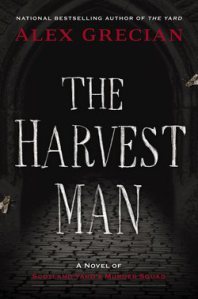 ournalist with the Ripper’s secret diary. The journalist, an Irishman who goes by “Jeb” to protect his identity, warns readers straight away:
“Make peace now with descriptions of a horrific nature or pass elsewhere. If you persevere, I promise you shall know all that is to be known about Jack. Who he was, how he selected, operated, and escaped. . . . Finally, I shall illuminate the most mysterious element of the entire affair, that of motive.”
Hunter’s version of Jack the Ripper is a cold, verbose intellectual. Beginning with the first canonical Ripper murder of Mary Ann Nichols in 1888, it’s a well-researched retelling of history full of surprising revelations. Hunter’s 19th-century London is full of striking and authentic period details—including racism, class warfare and the treatment of Jews in Victorian England—but women are relegated to the alcoholic prostitutes at the other end of a knife. “I needed to puncture her more,” the Ripper says. “Why? God in heaven knows.”
In Alex Grecian’s fourth Scotland Yard Murder Club book, THE HARVEST MAN, the Ripper returns to London after last wreaking havoc in The Devil’s Workshop. But in this installment, Jack plays second fiddle to a villain even more horrifying: the Harvest Man, who wears a medieval plague mask and slices the faces off his victims, continuously mistaking them for his parents.
“He stared intently at the mother and father, tried to gauge the shapes of their skulls beneath the masks they wore. . . . Those were features they couldn’t hope to hide from him. He had chosen the right people this time, his own parents, spotted among the teeming masses. He was nearly sure of it.”
The Murder Club regulars are back: Detective Inspector Walter Day, his old partner Sergeant Nevil Hammersmith, the forensic pathologist Dr. Bernard Kingsley and even their favorite criminal informant, Blackleg. More pulpy and hardboiled than I, RIPPER, Grecian’s newest trades Hunter’s intricate prose for snappy dialogue in another gripping Victorian team-up. Where Hunter excels at a carefully constructed, suspense-driven plot with clear ties to history, Grecian supplies a strong cast of beloved characters and great one-liners. Although, for the record, Hunter packs a few jokes in, too (“‘Can I say ‘belly?’’’ I asked. ‘It seems rather graphic.’”).
Unfortunately, female characters in both books are largely either victims or hero’s wives. “A surface reading of the case shows only Jack the Ripper, the all-male Scotland Yard investigators, and the female victims,” says Reeves. “But we have so many cases of extraordinary women like Aphra Behn who are under-recognized in history.” Regardless, both I, RIPPER and THE HARVEST MAN are frightening, well paced, effortless reads.
FICTION: MYSTERY, THRILLER
I, Ripper by Stephen Hunter (Simon & Schuster)
The Harvest Man by Alex Grecian (G.P. Putnam’s Sons)



May 5, 2015
Where to Visit “Uru: Ages Beyond Myst” in Real Life
Previously, I’ve tried to find the closest real-life approximations to the ages of MYST and the islands of RIVEN. Continuing that trend, here are your best options for visiting the first ages of URU: AGES BEYOND MYST (later known as Myst Online), the 6 worlds available when the game went live in 2003: the Cleft, Gahreesen, Eder Gira, Eder Kemo, Kadish Tolesa, and Teledahn.
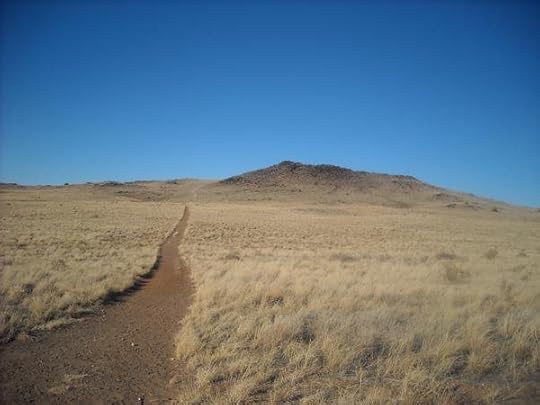
The Cleft: Black Volcano, New Mexico
There may not be a fissure, or an airstream trailer, or an entrance to D’ni at this long-inactive volcano near Albuquerque, but it sure does feel like Atrus’s first home.

Gahreesen: Wulingyuan, China
These towering karst formations in Hunan Province are laced with rivers and waterfalls, just like the age of the Maintainers.

Eder Gira: Havasu Falls, Arizona
There’s even a rock shelter behind the falls. Thankfully, you don’t have to kick any fish traps around to access it.

Eder Kemo: Ik Kil Cenote, Yucatán, Mexico
One of many cenotes near Chichen Itza, Ik Kil is open for swimming (no linking books, though).

Kadish Tolesa: Giant Forest, Sequoia National Park, California
Visit Sequoia National Park for that same dwarfed-by-trees sensation you get in Kadish, minus the constant threat of walking off a cliff or getting stuck in a pyramid.

Teledahn: Kew Gardens, London, United Kingdom
Sadly, there are no real-life mushrooms as enormous as Teledahn’s, but the mushroom sculptures at London’s Kew Gardens are a decent facsimile.
…
Next time, I’ll tackle the URU expansion packs and its other added ages.


May 1, 2015
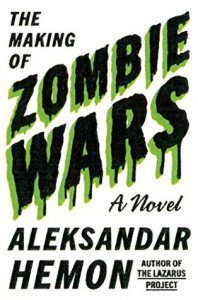
From Sarajevo to Chicago: “The Making of Zombie Wars” by Aleksandar Hemon
 Originally published at Bookpage.
Bosnian-born author Aleksandar Hemon’s fiction has always been a sobering, sometimes bleak look at the lives of immigrants and exiles in Chicago who are not unlike the writer himself (see The Lazarus Project and Love and Obstacles). But in a dramatic change of pace and tone, his new novel, The Making of Zombie Wars, is an eccentric comedy, albeit one with the same level of subtlety and resonance we’re accustomed to from Hemon, a MacArthur “genius grant” winner.
An aspiring writer from an affluent Chicago suburb who never finishes anything he starts, Joshua Levin has never had to suffer much. His life is “a warm blanket,” in contrast to the lives of the immigrants he teaches as an ESL instructor, and his creative endeavors have been as futile and disheartening as the Cubs at nearby Wrigley Field. That is, until Joshua comes up with an idea for a script called Zombie Wars that could be his big break, and the sad but beautiful Bosnian woman in his class, Ana, starts to seduce him.
When he looked up, Ana was shutting the door, foreclosing all retreat routes. She stood in front of him, taking deep breaths.
“My heart hits very much,” she said.
“Beats.”
“My heart beats, Teacher Josh.”
“Joshua,” Joshua whispered, but only because all the wind was gone from his windpipe.
“Joshua,” she repeated. “You want to touch it?” She took his hand and put it on her left breast.
Of course, Ana is married, and Joshua just moved in with his girlfriend. As Ana turns his life upside down, Joshua finally has some real-life drama to funnel into his writing. Excerpts from Joshua’s script draw parallels between a zombie apocalypse and the culture-cannibalizing effects of war and exile, be it in Hemon’s native Bosnia or in Iraq, which U.S. forces have only just begun to invade when the novel opens in 2003.
As the story oscillates between hysterical and heartbreaking, Hemon once again renders the city of Chicago authentically, forgoing the whitewashed suburbs of John Hughes movies and invoking the city’s social and cultural realities as faithfully as Alex Kotlowitz. The wit and intelligence of The Making of Zombie Wars should please Hemon fans and entice new readers.
FICTION: LITERARY FICTION
The Making of Zombie Wars by Aleksandar Hemon (FSG Originals)


April 22, 2015
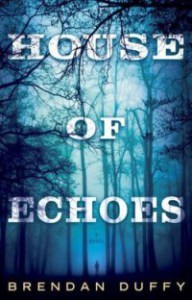
Twin Peaks in Upstate NY: “House of Echoes” by Brendan Duffy
 Originally published in Bookpage.
Brendan Duffy’s fantastic debut novel is gloomy, small-town Gothic horror in the vein of “Twin Peaks,” Alan Wake and The Shining.
After a few rough years in Manhattan, a “semi-famous” author named Ben Tierney relocates his wife and sons to a remote village in the Adirondack Mountains. He hopes that renovating a sprawling, neglected estate called the Crofts and turning it into an inn will provide his family with a new sense of purpose. But isolated on a forested cliff overlooking town, it doesn’t take long for things to get thoroughly weird.
Deer carcasses appear on the Tierneys’ property, the remains ripped apart and barely recognizable. Strange artifacts turn up in the estate’s cavernous cellar, maps and letters and ancient books. Townspeople stare and whisper about “the winter families” whenever Ben ventures down into the valley. And one night, while Ben’s wife is cooking dinner, an explosive sound vibrates through the house. Ben finds a back door swinging open and shut in the wind, the lock smeared with tree sap.
“He turned on the exterior lights and looked out the glass. Placed in the center of the stoop like the morning’s newspaper was a severed deer’s head, staring at him with black, blood-flecked eyes.”
Most disturbing of all, Ben’s older son Charlie is convinced that someone, or something, is watching them from the woods. As a neo-Gothic horror novel, House of Echoes succeeds because it contains no familiar creatures. There are no ghosts here, despite some surface similarities to Chris Bohjalian’s The Night Strangers. There are no witches or werewolves. Duffy knows that true horror has neither name nor face. Grounded by emotional realism and nuanced characters, House of Echoes is intense, addictive and genuinely creepy.
FICTION: MYSTERY & SUSPENSE
House of Echoes by Brendan Duffy (Ballantine)


April 20, 2015
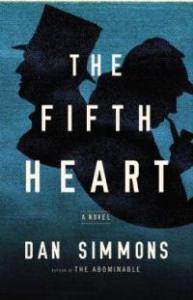
Sherlock in the White City: “The Fifth Heart” by Dan Simmons
 Originally published in The Denver Post.
In the spring of 1893, five years before he would publish “The Turn of the Screw,” Henry James decides to celebrate his 50th birthday in Paris by drowning himself in the river Seine. But as his foot hovers over the water, James notices a figure watching him in the dark: the World’s First and Foremost Consulting Detective, Sherlock Holmes.
Until recently, Holmes had been under the impression that his partner, Dr. Watson, was the author of his exploits appearing in The Strand, and that Sir Arthur Conan Doyle was merely his literary agent. However, Holmes has noticed continuity errors in his life, and through his powers of deduction, come to a disturbing realization.
“I am, the evidence has proven to me most conclusively, a literary construct. Some ink-stained scribbler’s creation.”
Regardless, Holmes’ appetite for unsolved mysteries has led him to the real-life suicide in 1885 of American socialite Clover Adams, the inspiration for Henry James’ early novel, “The Portrait of a Lady.”
Holmes believes Clover was murdered. Every year on the anniversary of her death, Clover’s late husband Henry Adams (grandson of former president John Quincy Adams) receives an anonymous calling card in the mail embossed with five hearts, one of which has been scratched out: like the novel’s title, it’s an allusion to the Five of Hearts, a group of influential Washingtonians who regularly gathered for tea in Clover’s parlor.
This isn’t the first time Dan Simmons, who lives in Boulder, has infused his Hugo award-winning fiction with history. “The Terror” (2007) reimagined the lost Arctic expedition of John Franklin as an encounter with mythical horror, while “Drood” (2009) explored the final years of Charles Dickens’ life through the eyes of Wilkie Collins.
This time, Simmons has essentially written a literary buddy comedy, and the result is his funniest and breeziest novel to date, despite its heft. The reluctant, cantankerous Henry James is a perfect foil for Holmes. At first, James balks at the prospect of a transcontinental goose chase: “There is no power, means, force, blackmail, inducement, or other method of persuasion — in this lifetime or in any other possible variation of this life — that you could use to persuade me to travel with you tomorrow,” he quips. And Simmons’ Holmes is full of such delightful non sequiturs as “I see the physiognomy of men, not their added facial-hair accoutrements. I am, for instance, somewhat of an expert on ears.”
As they travel from Paris to Washington, and finally to the same World’s Fair in Chicago that Erik Larson brought to life in “The Devil in the White City,” the odd couple encounters Teddy Roosevelt, Henry Cabot Lodge and Mark Twain in the search for truth.
Even with a body of work as impressive as Simmons has accrued in the past 30 years, “The Fifth Heart” is one of his most engrossing and addictive books to date.
FICTION: MYSTERY
The Fifth Heart by Dan Simmons (Little, Brown)


December 23, 2014
My Nominations for the 2014 NBCC Leonard Award
Last year, the National Book Critics Circle introduced a new award for first books, the John Leonard Award, as determined by members of the NBCC. The book may be fiction, nonfiction, poetry, or any other genre, so long as it’s the author’s debut. The inaugural award went to Anthony Marra for A Constellation of Vital Phenomena.
Members may nominate up to five books for the award, and if I had to guess, this year’s prize will probably go to heavy favorites like Everything I Never Told You by Celeste Ng or Wolf in White Van by John Darnielle, two absolutely brilliant, deserving pieces of work.
But I’d like to use the nominations to highlight some not-so-heavy favorites, mostly books from smaller presses that I believe deserve wider attention and exposure. And while I read some great nonfiction (The Sixth Extinction) and poetry this year, none of them were debuts, so all five of my nominations are fiction.
 Nobody Is Ever Missing by Catherine Lacey
FSG Originals
A Manhattanite abruptly abandons her life and her husband for a one-way ticket to New Zealand, where she drifts among the cars and homes of strangers and the island’s vast wilderness. A beautiful and funny book that isn’t afraid to take stylistic risks.
There’s nothing better about living in a farm than living in a city. You can’t just go sit in a pretty landscape and bet on it changing you into a better person.
 Nigerians in Space by Deji Bryce Olukotun
Unnamed Press
I also picked Olukotun’s novel as one of my favorite works of speculative fiction in 2014. In mid-90’s Houston, Dr. Wale Olufunmi is tasked with stealing a piece of the moon from the United States and returning it to Nigeria.
It’s time for a great mind of Nigeria to return home. You’re the mind we need, Doctor. The marsh can’t pretend that it isn’t fed by the river. You’re a part of Nigeria, too.
 The Black Hour by Lori Rader-Day
Seventh Street Books
I reviewed Rader-Day’s debut thriller for Bookpage. A Chicago sociology professor is gunned down by a student she’s never met. Months later, she returns to campus and solves the mystery of who tried to kill her and why. I challenge you not to devour this book in one breathless sitting.
I don’t know what they all thought—that I baited a troubled kid, drove him insane with sex or quid pro quo grading practices, and then suffered the only outcome that made any sense? Got what I deserved? Asked for it?
 Fourth of July Creek by Smith Henderson
Ecco
Montana, 1979. A social worker investigates the living conditions of a troubled boy, the son of a dangerous End Times survivalist/preacher. But the social worker has family issues of his own, and is soon caught up in an FBI manhunt for the boy’s father. Henderson’s density and tone approach Cormac McCarthy’s mastery of voice.
Chromed long-haulers glinted like showgirls among logging trucks caked in oatmealy mud, white exhaust thrashing flamelike in the wind from their silvery stacks.
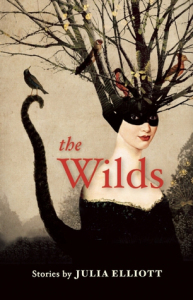 The Wilds by Julia Elliott
Tin House Books
Elliott teaches at the University of South Carolina, and her debut collection of strange, dark, genre-defying short stories brings to mind the great SF/F master Jeffrey Ford. Science fiction, fantasy, horror, weird fiction…take your pick, and you’ll find something to love in The Wilds. Not recommended on a full stomach, however.
Every year spring came to Whitmire, South Carolina, with its riot of flowers and bees, promising a larger world. For a while, summer would live up to this promise. But soon the dog days would descend and trap you in a bubble of gaseous heat. Amnesia would set in, wiping out all dreams of escape until autumn pricked you out of your stupor.


December 18, 2014
Best Speculative Fiction of 2014
If there’s an (unintentional) theme for the best speculative fiction I read this year, it’s Africa. Two South Africans, Lauren Beukes and Sarah Lotz, each had a bestselling novel hit the shelves, and two Nigerian-American authors, Nnedi Okorafor and Deji Bryce Olukotun, expanded the horizons of literary science fiction. Meanwhile, two speculative novels were nominated for major literary awards: the Man Booker Prize for David Mitchell, and the National Book Award for Emily St. John Mandel.
So, in no particular order, I give you my top ten speculative novels of 2014. And except for Michel Faber, you can follow all of the authors on Twitter.
(I’ve also added my three biggest “duds” of the year at the end of the post, the books that were the most promising, but ultimately, the most disappointing).
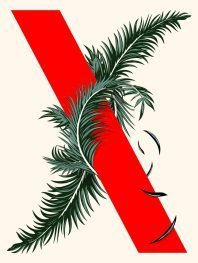 Area X: The Southern Reach Trilogy by Jeff VanderMeer
VanderMeer’s groundbreaking trilogy (Annihilation, Authority, and Acceptance, now available in a gorgeous omnibus volume) was the touchstone of my reading life in 2014. In three vastly different, wildly imaginative books, VanderMeer explores the alien-ness of the natural world and the slippery essence of what it means to be human. For my series of posts on what writers can learn from each volume in the trilogy, head here, here, and here.
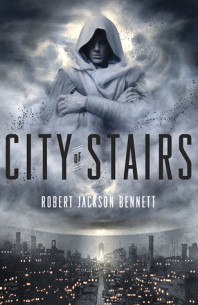 City of Stairs by Robert Jackson Bennett
I love fictional cities with detailed histories, and Bulikov has joined Gotham, New Crobuzon, Nessus, and Ae’gura as one of my all-time favorites. Once the site of countless architectural miracles powered by the Continental Divinities, the capital city is now ruined under the occupation of the Saypuri, a warring nation-state responsible for the death of the Divinities. When the world’s foremost scholar on the (forbidden) history of Bulikov is murdered, a young Saypuri intelligence officer named Shara finds herself at the center of a mythical crisis. Worldbuilding at its finest.
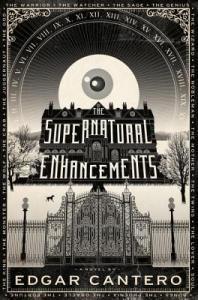 The Supernatural Enhancements by Edgar Cantero
If Neil Gaiman designed a MYST age, it would probably resemble the labyrinthine mansion in Cantero’s rollicking epistolary, neo-gothic novel. When a European man known only as “A.” inherits a long-lost relative’s estate in the Virginia countryside, he discovers that the previous two owners committed suicide in the exact same way, decades apart. There’s also a mysterious gathering of distinguished gentlemen at the house every winter solstice, a litany of secret passageways, coded letters, and hidden knowledge. Puzzles abound, both physical and narrative, and the mute teenage girl named Niamh–the Watson to A.’s Sherlock–steals the show.
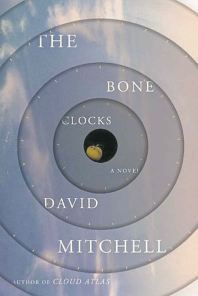 The Bone Clocks by David Mitchell
The author of Cloud Atlas is back with another dizzying novel that bends genres while spanning centuries and continents. Teenage runaway Holly Sykes finds herself in the middle of two warring groups of immortals and the battle for human souls. Sounds trippy, I know, but Mitchell’s story is well-grounded in emotion and place-based detail.
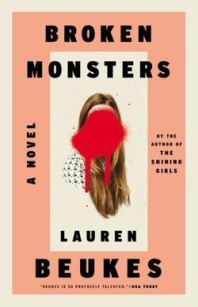 Broken Monsters by Lauren Beukes
On a cool November night in Detroit, Detective Gabriella Versado comes across the strangest crime scene of her career: a dead 11-year-old boy whose lower half has been replaced by that of a deer. Their bodies have been fused together into a macabre human-animal hybrid straight out of “True Detective” or NBC’s “Hannibal,” and Versado believes the killer will strike again. Head over to Bookpage for my full review of Beukes’ masterwork. Basically, what if True Detective got even weirder and moved to Detroit?
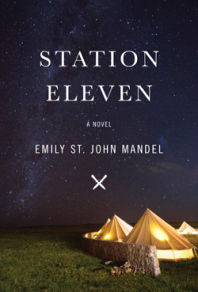
Station Eleven by Emily St. John Mandel
Post-apocalyptic literature has caught a lot of flack recently for being a bit of a dead horse, but St. John Mandel’s National Book Award-nominated novel is a beautiful, fresh take on the genre. After 99% of humanity is wiped out by a superflu, a small Shakespearean theatre company called the Traveling Symphony tours the remnants of civilization. The prose is quiet, sharp, and often achieves the textural density of poetry.
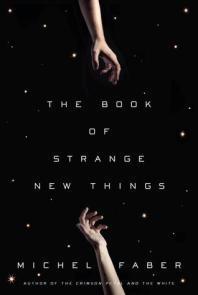
The Book of Strange New Things by Michel Faber
In Mary Dora Russell’s The Sparrow, one of my favorite novels of all time, the first expedition to an alien planet is lead by Jesuit missionaries. Faber’s latest book is about one such interstellar missionary, a man named Peter, brought to the planet of Oasis by a massive corporation in hopes of appeasing the natives, who are clamoring for someone to explain the “book of strange new things” (i.e., the book we call Bible). Meanwhile, back on Earth, Peter’s wife may not survive a series of natural and social disasters brought about by climate change. As in all of his previous work (particularly Under the Skin), Faber proves there is no line separating “literary” from “genre” fiction. The Book of Strange New Things isn’t just one of the best pieces of speculative fiction, but one of the best pieces of fiction, period, published in 2014.
 Nigerians in Space by Deji Bryce Olukotun
With a title like “Nigerians in Space”, do you really need any other reasons to read this thing? Fine. In mid-90’s Houston, Dr. Wale Olufunmi is tasked with stealing a piece of the moon from the United States and returning it to Nigeria. In addition to being a slick, weird little SF/espionage thriller, the novel also gives you an authentic taste of life in both Nigeria and South Africa, from the 90’s to the present-day.
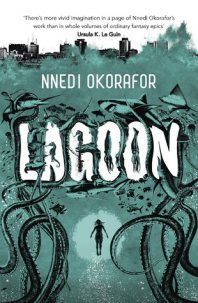 Lagoon by Nnedi Okorafor
Aliens in Nigeria. Need I say more? An unknown object crashes into the ocean just off the coast of Lagos. Okorafor expertly combines science fiction with magical realism and Nigerian mythology in the story that follows, particularly the lives of three strangers on the beach that day: a solider, a celebrity rapper, and a marine biologist.
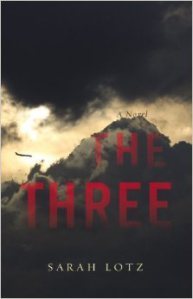 The Three by Sarah Lotz
Four planes crash for unknown reasons on the same day, “Black Thursday,” in Japan, South Africa, Florida, and off the coast of Portugal. The only survivors are three children, all on different flights. And they seem a bit…different when they return home. A bit…not themselves. A bit horrifying.
I couldn’t put this one down, and I can’t wait for the sequel. Here’s my take on what fiction writers can learn from it.
Duds of 2014:
California by Edan Lepucki. Instead of a sudden apocalypse, the world is suffering a slow, gradual collapse in Lepucki’s glacial debut novel, the vaguely titled CALIFORNIA (is it a travel guide? a state history?). It’s ambitious, intriguing, but all-too-frequently maddening in its dedication to interpersonal minutiae and marital bickering.
The Martian by Andy Weir. What a concept! An astronaut is stranded alone on the red planet, and forced to use his smarts as a botanist/mechanical engineer to survive. Sounds thrilling, if only the novel was as concerned with character and story as it is with math and logistics. Ridley Scott and Matt Damon are adapting it for the big screen, and judging solely from the cast listing, they realized the story needed some more fleshing out.
Half a King by Joe Abercrombie. Joe Abercrombie’s new Shattered Sea fantasy series has been lauded as “A Game of Thrones for Young Adults.” Narratively, the setup is wonderful, the prose is clean and accessible, and the remarkable twists toward the end are pretty shocking. But the greater world and the greater story behind Yarvi’s adventure is only grazed tangentially, and don’t really impact the present-day story. The worldbuilding is extremely shallow for a fantasy series: the cities have no distinctive sense of place, the geography’s history is only occasionally hinted at, and the mythology is mostly implied. So while the characters jump off the page, the world they occupy is–at least in book one–a fairly generic series of unremarkable set dressings.


September 16, 2014
What Writers Can Learn from ACCEPTANCE by Jeff VanderMeer
 ACCEPTANCE is not the book you expect. If you enjoyed the first two volumes in VanderMeer’s groundbreaking trilogy as much as I did (and boy, did I), you’ve probably spent some time thinking about the final chapter, perhaps even making a mental list of revelations and developments you expect it to deliver, à la the series finales of TV shows shrouded in mystery, like Lost or Twin Peaks.
Throw away that list. Forget all those expectations. Don’t worry: reading ACCEPTANCE after the first two Southern Reach books is akin to the grand finale of a fireworks show, but instead of bigger fireworks, you get the coda to Beethoven’s Fifth.
As mankind stumbles into the twenty-first century and beyond, we are destined for more frequent encounters with the unknown, thanks to the march of science. Whether it’s the planet-hunting Kepler telescope, CERN’s Large Hadron Collider, or new forms of life we didn’t think were possible, our understanding of existence (nature, the universe, etc.) is expanding at an unprecedented rate that will only continue to increase.
But how much are we really capable of understanding? What is the ceiling of the scientific method? Of nature’s ingenuity? How trapped are we in our own minds and bodies, in our ignorance of the self and the Other?
What else is out there? And what else is already here?
That’s what ACCEPTANCE is about: the limitations of human perception in a universe full of unknowables. After the breathless adventure in the wilds of ANNIHILATION and the claustrophobic chills of AUTHORITY, the third and final volume in the Southern Reach trilogy is a New Weird epic, a speculative tour de force that defies classification. Seamlessly spanning multiple decades and points of view, VanderMeer wrings the last secrets out of Area X in a series of shockingly beautiful twists and turns.
It is not hyperbolic to say that ACCEPTANCE is the worthy culmination of one of the seminal reading experiences of my life. It is a story and a way of looking at the wonders and horrors of nature and being alive that will stay with me for a very long time.
So. Though I lack the wisdom and scholarship to analyze ACCEPTANCE to the degree it deserves, here are a few aspects of the novel that writers can learn from. I will also have a brief piece on the entire trilogy published in the next issue of the Dalkey Archive’s Review of Contemporary Fiction. Be forewarned that there are potential spoilers below if you haven’t finished the trilogy.
Stay Concrete, Except for When You Shouldn’t
Writing students are often urged to stay “concrete” and “low on the ladder of abstraction” in their prose, particularly when it comes to the visual detail responsible for establishing scene, setting, and tone. For the most part, this is good advice, and VanderMeer’s lush descriptions of marshes and salt flats and birds–taken from real-life hikes on the Gulf Coast–demonstrate the power of immersive, hyper-specific details, as opposed to the vague everycities and everywoods found in lesser fare.
But should everything in your fiction be so concrete? Particularly if you’re writing speculative fiction, which dabbles in the unknown and the never-before-seen?
There is a method of stargazing called averted vision, used to spot celestial objects too faint for direct eyesight. The literary technique VanderMeer uses when his characters encounter the unknowable is similar. Take this passage from ACCEPTANCE, where Ghost Bird watches something massive approach:
The hillside come alive and sliding down to the ruined lighthouse, at a steady pace like a lava flow. This intrusion. These darknesses that re-formed into a mighty shape against the darkness of the night sky, lightened by the reflections of clouds and the greater shadow of the tree line and the forests.
Note that VanderMeer chooses not to provide an all-encompassing, concrete description–not here and not in the pages that follow–and that the…being…is all the more real and interesting because of its slippery nature. Of course, the slippery nature of perception is one of the trilogy’s primary themes, and a common thread in speculative fiction, but it’s also the conceptual bedrock underlying good fiction of all stripes, as illuminated by Robert Boswell in The Half-Known World: On Writing Fiction.
Challenge Your First Thoughts and Instincts
All of VanderMeer’s work is surprising in one way or another, but perhaps none more so than ACCEPTANCE. There are several episodes in particular that are so mind-blowing, I won’t even mention them here.
John Truby’s The Anatomy of Story, along with many other how-to guides, extols the importance of surprising readers and audiences in ways that feel inevitable. I’m not Jeff VanderMeer, so I can’t say this for certain, but I doubt all the twists and turns of ACCEPTANCE’s plot were included in the first outline he used to start writing, if he even uses such things.
There is value in conceptualizing the structure of a story before you start writing, in building a road map or a blueprint, no matter how skeletal, to help you find a way through 100,000 words. But there is also value in challenging the first ideas your mind jumps to. Having read so many stories, you likely know what the “typical” or “industry standard” is for the next narrative step. You know it’s time for a good guy to be revealed as a villain, or for romantic tension to blossom, etc.
But sometimes you should ignore those first, instinctual narrative ideas. Look for new roads to take. Make an outline, sure, but give yourself the freedom to improvise while you’re writing, to play jazz, to take the story somewhere completely different than you thought possible. That’s how you surprise readers: by surprising yourself.
Get Off Your Ass
VanderMeer couldn’t have written this trilogy from the comfort of his own home. Well…maybe the physical, literal writing, but not everything else. Not without taking long hikes in the Florida wilderness and working some really weird day-jobs.
Sure, the discipline to sit at your desk and write for hundreds of hours is pivotal, and probably the aspect of writing that I struggle with the most. But you know what else is pivotal? Going for walks in the woods, talking to bizarre people who hang out in bowling alleys, exploring that random small town a few miles down the road you’ve heard so many weird stories about, reading newspapers and watching science documentaries, or working a few soul-crushing jobs that you’re definitely way too smart for.
To write something interesting, you need to collect and filter interesting material from outside your comfort zone. To borrow one of VanderMeer’s terms, messy real-life experiences provide the “mulch” your fiction needs to blossom.
———
I can’t believe the Southern Reach trilogy is over. Word is we’ll see a short story set in the same fictional universe one day, so that’s promising. Did I want more “resolution” at the end of the day? Of course I did. But the books are about that wanting, that desire to know. It’s what makes us human and what ultimately fails us.
UPDATE: Another bit of writerly advice from VanderMeer himself, in response:



August 13, 2014
Book Review: CALIFORNIA by Edan Lepucki
 Instead of a sudden apocalypse, the world is suffering a slow, gradual collapse in Lepucki’s debut novel, the vaguely titled CALIFORNIA (is it a travel guide? a state history? at least the cover is beautifully disorienting).
It’s ambitious, intriguing, and frequently maddening. It’s THE WALKING DEAD by way of Emily Gould, sans zombies.
In the not-too-distant future, thanks to a variety of off-screen eco (-logic and -nomic) disasters, Los Angeles has decayed into a state of lawless chaos. “I can’t stand how awful everything is here,” says Cal, a young academic. His wife, Frida, agrees:
Because she understood, Frida didn’t ask him to elaborate. He could have meant L.A.’s chewed-up streets or its shuttered stores and its sagging houses. All those dead lawns. Or maybe he meant the closed movie theaters and restaurants, and the parks growing wild in their abandonment. Or its people starving on the sidewalks, covered in piss and crying out.
Desperate, Cal and Frida flee Los Angeles for the California wilderness, where they settle in an abandoned shack. They survive off the land, thanks to Cal’s resourcefulness and Frida’s culinary knowledge.
Cal thinks they can remain post-apocalyptic pioneers forever, but Frida wants to continue exploring, to find other homesteaders like themselves who survived society’s collapse. It’s just one of about 800 things Cal and Frida disagree on, and if you keep score at home, Cal is right 799 times, but more on that later.
Turns out, they aren’t alone in the wilderness. A few miles east, giant metallic spikes made of found objects rise out of the earth. Are they a sign of new civilization? Or a warning to keep away?
A far as high-concept premises go, it’s a great hook. Lepucki knows how to ask interesting questions. She’s good at compelling us to explore the world she’s built. Unfortunately, CALIFORNIA only devotes about 10% of its pages to adventure and exploration, preferring to delay, digress, and withhold detailed world-building information.
Another 30% consists of wildly tangential flashbacks to Cal and Frida’s lives before the collapse of civilization, while the final 60%–the bulk of the book–is a series of spoken and unspoken arguments between Cal and Frida, ranging from the mundane (turkey basters) to the existential (“Should we bring a child into a world like this?”).
While the latter kinds of questions are certainly ripe for narrative exploration, far too often CALIFORNIA dwells on the former, with Cal and Frida’s positions almost always falling into clichéd gender roles, i.e., the rational male and the emotional female.
Conflict is vital to fiction. So why does the dichotomy between Cal and Frida’s perspectives feel stretched so thin over these 400 pages?
Perhaps it’s an issue of expectation. Given the book’s premise, one wouldn’t expect a slow-paced examination of the difficulties of marriage that uses the apocalypse as a backdrop without adding anything new or unexpected to the genre.


July 9, 2014
Wild Piedmont: A Naturalist’s Guide to the Heart of North Carolina

I’m happy to announce The History Press, the UK’s largest publisher of specialist history and natural history, will publish my next book in the summer of 2015, entitled Wild Piedmont: A Naturalist’s Guide to the Heart of North Carolina.
When I moved back to North Carolina from Chicago last fall, one of the things I looked forward to most was writing about the most beautiful state on earth again (no offense, Illinois). North Carolina has no glistening metropolis to rival Chicago’s cultural and architectural prestige, but it does have the greatest concentration of natural wonders east of the Continental Divide.
I’ll be traveling to each of the 25 sites listed below later this year to conduct research and take photographs for the book. I’ll be tweeting and instagramming the experience as well, if you’d like to follow along.
After a broad introduction to the region’s natural history and character, each chapter will focus on one of the Piedmont’s celebrated wild spaces by detailing their geological and ecological profiles, seasonal changes, trails, plants and animals, as well as interviews with local experts and full-color photos.
Instead of a directional guide to the region’s trails, Wild Piedmont will be like taking a guided tour with a naturalist. The goal is to help readers of all ages and levels of experience find and understand North Carolina’s great wild spaces.
What’s the Piedmont?
Stretching from the Blue Ridge Escarpment in the West to the fall line in the East, the Piedmont region makes up the “middle third” of North Carolina, a hilly plateau between the mountains and the coastal plain.
The NC Piedmont is probably best-known as the epicenter of New South urbanization, including Charlotte, the Piedmont Triad (Greensboro, Winston-Salem, and High Point), and the Research Triangle (Raleigh, Durham, and Chapel Hill), but it’s also home to 11 state parks, 3 state recreational areas, 3 state natural areas, a national wildlife refuge, and a national forest.
However, Wild Piedmont will not be a simple, turn-by-turn hiking guide to the region’s trails. It will aim to enrich the reader’s knowledge of the area’s wild places, natural history, and beauty by exploring the narratives embedded in nature at all 25 sites listed below, with each chapter reading like a feature article in a magazine.
State Parks
1. Crowders Mountain
2. Eno River
3. Hanging Rock
4. Haw River
5. Lake Norman
6. Mayo River
7. Medoc Mountain
8. Morrow Mountain
9. Pilot Mountain
10. Raven Rock
11. William B. Umstead
State Natural and Recreation Areas
12. Falls Lake
13. Jordan Lake
14. Kerr Lake
15. Hemlock Bluffs
16. Lower Haw River
17. Occoneechee Mountain
Other Wild Places
18. Pee Dee National Wildlife Refuge
19. Uwharrie National Forest
20. Yadkin River State Trail
21. Mountains-to-Sea Trail
City Escapes
22. Charlotte
23. Greensboro and Winston-Salem
24. Durham and Chapel Hill
25. Raleigh
More details to come!