Adam Morgan's Blog, page 2
September 23, 2015
Best Chicago Novels by Neighborhood
 Inspired by the New York Public Library, I recently curated a list of Chicago’s Best Novels by Neighborhood over at Gapers Block. The article generated a lot of comments and responses on social media, as readers sought to add their own favorite novels set in their neighborhoods.
Last weekend, I spoke to WGN Radio 720 AM’s “Outside the Loop” about the article, the response, and Chicago’s vibrant literary community. Head over to WGN Radio for the audio (my segment begins around the 25:35 mark).
Speaking of Chicago authors, I also reviewed new books from Joe Meno (Marvel and a Wonder) and Wesley Chu (Time Salvager) over at Gapers Block.



September 22, 2015
American Fallout: “Not on Fire, But Burning” by Greg Hrbek
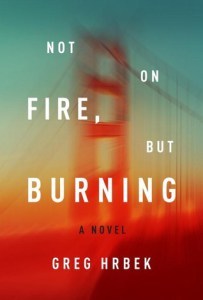 Originally published in Bookpage.
As we mark the 70th anniversary of Hiroshima and Nagasaki, Greg Hrbek‘s fascinating, inventive second novel imagines how America would change if someone dropped an atomic bomb on San Francisco, and, in the absence of any real evidence, the U.S. government held Islamic terrorists accountable.
In a heart-stopping opening scene, college sophomore Skyler Wakefield is babysitting a 5-year-old boy when she looks out the window to see “a star falling in bright daylight” hit the Golden Gate Bridge before a shockwave tears through the house. Skyler survives just long enough to carry the toddler to a hospital, but succumbs to radiation poisoning a few hours later after a tearful phone call with her parents. Eight years later, we meet Skyler’s 12-year-old brother, Dorian, who’s been suspended from school for writing an obscenity on the wall of a mosque bathroom. In the wake of the attack, Dorian lives in a drastically different America. Nuclear fallout has quickened climate change, borders have been redrawn into provinces and territories, and the U.S. government has corralled thousands of Muslims onto old Native American reservations. However, Dorian’s mother and father have no memory of his older sister, Skyler. Dorian was only 4 when she died in the attack, but he has recurring, detailed, seemingly clairvoyant dreams about her. Meanwhile, an elderly veteran across the street, William Banfelder, adopts an orphaned Muslim boy named Karim from the Dakota Territory with a dangerous secret.
It’s a high-concept premise that could easily veer into cliché, but Hrbek delivers a captivating story filled with nuance. Every chapter brings a surprise, and Hrbek has real knack for stunning, unforgettable images and turns of phrase. Not on Fire, But Burning boldly questions America’s moral standing since 9/11, and brings to life the horrific consequences of ignorance, fear and hate.
FICTION: SUSPENSE, SCIENCE FICTION, DYSTOPIA
Not on Fire, But Burning by Greg Hrbek (Melville House)


September 1, 2015
Appalachian Noir: ABOVE THE WATERFALL by Ron Rash
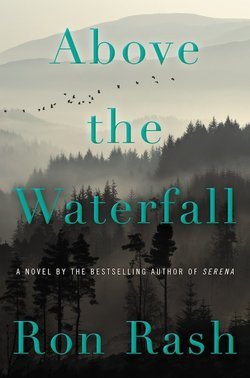 Originally published in Bookpage.
Ron Rash may not have invented the “Appalachian Noir” genre, but he’s certainly perfected it over the past 15 years with modern classics like Serena and The World Made Straight. His new novel, Above the Waterfall, is another contemporary take on the Southern Gothic tradition, featuring a slow-burn mystery that’s light on plot but thick with atmosphere, lyrical prose and a visceral sense of place.
The story alternates between a sheriff and a park ranger in the Blue Ridge Mountains of North Carolina, whose lives become entwined by a series of escalating incidents involving family inheritances, land disputes and meth labs. The sheriff, Les, a hard-edged widower who craves solitude, is only three weeks away from retiring when a routine house call sets him down a path toward some of the hardest decisions he’s ever had to make. Meanwhile, the park ranger, Becky, tries to lose herself in nature to escape two devastating incidents from her past.
When someone poisons the local river on property owned by an affluent fishing resort, all the evidence points to a stubborn old homesteader named Gerald Blackwater, the closest thing Becky has to a father. Les, whose feelings for Becky are clouded by his guilt over the death of his wife, is forced to either arrest Gerald or find out if more dangerous men are involved.
Above the Waterfall harks back to Rash’s first novel, One Foot in Eden, another small-town story told from multiple perspectives, but this time there is no immediate noirish hook. Instead, Rash has crafted the finest prose of his career, whether it’s the brusque, whittled down voice of the sheriff, or the park ranger’s lush poet-speak, which allows Rash to invent words like heatsoak, streamswift, andsunspill. Don’t expect a grim, hardboiled mystery with a high body count. Above the Waterfall is another quiet, haunting ode to the natural beauty of the mountains.


August 26, 2015
North Carolina’s Wild Piedmont Book Tour

Next month, I’ll be back in the Old North State to do a mini book tour for North Carolina’s Wild Piedmont: A Natural History. If you’ll be in the Charlotte or Triangle areas in late September, I’d love to see you at any of the following bookstores.
Park Road Books, Charlotte
Sept 28, 7pm-8pm
I’ll be signing copies at a table right by the front door.
Quail Ridge Books & Music, Raleigh
Sept 29, 2pm
Just stopping by the store to sign copies.
Flyleaf Books, Chapel Hill
Sept 30, 2pm
Just stopping by the store to sign copies.
Bull’s Head Bookshop at UNC, Chapel Hill
Oct 1, 3:30pm-4:15pm
Crowd willing, I’ll be talking about the book, reading an excerpt, and signing copies at the UNC campus bookstore.


August 17, 2015
Happy Pub Day to North Carolina’s Wild Piedmont: A Natural History

My new book, NORTH CAROLINA’S WILD PIEDMONT: A NATURAL HISTORY, hits bookshelves today, thanks to The History Press and Arcadia. Each chapter tells the story of one of the Piedmont’s celebrated wild spaces, including their geology, ecology, environmental threats, seasonal changes, plants and animals, as well as interviews with local experts and full-color photos.
Sites include: Crowder’s Mountain State Park, Eno River State Park, Hanging Rock State Park, Haw River State Park, Lake Norman State Park, Mayo River State Park, Medoc Mountain State Park, Morrow Mountain State Park, Pilot Mountain State Park, Raven Rock State Park, South Mountains State Park, William B. Umstead State Park, Falls Lake State Natural Recreation Area, Jordan Lake State Natural Recreation Area, Hemlock Bluffs Nature Preserve, Occoneechee Mountain State Natural Area, Pee Dee National Wildlife Refuge, Uwharrie National Forest, and quick wilderness escapes in the Charlotte, Greensboro, Winston-Salem, Raleigh, Durham, and Chapel Hill areas.
Here’s a round-up of everywhere you can purchase the book.
Online Retailers
Amazon
Barnes and Noble
Powell’s
Arcadia Publishing
Indie Bound
Local Bookstores in North Carolina
Park Road Books, Charlotte
Quail Ridge Books, Raleigh
Malaprop’s Bookstore, Asheville
Flyleaf Books, Chapel Hill
Main Street Books, Davidson
Scuppernong Books, Greensboro
City Lights Bookstore, Sylva


July 7, 2015
Motel Murder Mystery: LITTLE PRETTY THINGS by Lori Rader-Day
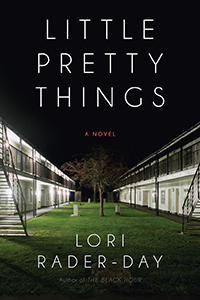 Originally published in Bookpage.
We usually celebrate our college alma maters with a sense of pride, while doing our best to forget high school altogether. But in Lori Rader-Day’s stunning second novel LITTLE PRETTY THINGS, a murder at a creepy roadside motel forces an unlikely heroine to revisit her painful high school years.
Somewhere in the cornfields between Chicago and Indianapolis, Juliet Townsend is trapped in a meaningless job as a maid at the seedy Mid-Night Inn in the small town of Midway, Indiana, “named for the fact that it wasn’t one place or another.” In high school, Juliet lived in the shadow of her best friend and track team rival, the beautiful and mysterious Madeleine Bell. Ten years later, Juliet’s still in town, living with her mother and scrubbing toilets after Madeleine left her behind for a glamorous life in Chicago.
Or so Juliet thinks, until the night Madeleine checks into the Mid-Night Inn. She’s still stunning, and sporting a giant diamond ring that Juliet—a kleptomaniac with a penchant for small, shiny objects—would love to get her hands on. But Madeleine isn’t there to gloat: She’s running from something and desperate to talk to Juliet. Overcome with jealousy, Juliet blows her off, and the next morning finds Madeleine’s corpse hanging from the motel balcony. When local police name her the most likely suspect, Juliet embarks on a mission to find the real killer by excavating her and Madeleine’s past as track stars at Midway High, when Madeleine mysteriously pulled out of a pivotal race and cost Juliet a scholarship.
Once again, Chicago author Rader-Day (The Black Hour) delivers a breathless psychological thriller with a killer first line, an irresistible mystery and lean chapters soaked with suspense. Comparisons to Tana French (A Secret Place) and Paula Hawkins (The Girl on the Train) have become all too common in the mystery genre, but with two consistently great novels now under her belt, Rader-Day has proved their equal in crafting taut, literary mysteries with fascinating heroines.
NOTE: See also my interview with Lori over at Gapers Block.
FICTION: MYSTERY, THRILLER
Little Pretty Things by Lori Rader-Day (Seventh Street Books)


July 1, 2015
2015’s Best Books of the Year, So Far
Today we officially reach the halfway point of 2015. Obviously, I tend to read speculative fiction more than anything else, so with that in mind, here are my 10 best books of 2015 so far, in chronological order.
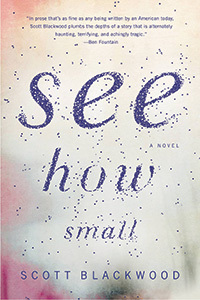 See How Small by Scott Blackwood (January)
From my review in Bookpage:
Scott Blackwood’s latest addition to the Texas literary canon, See How Small, is a brilliant, heartbreaking meditation on grief, parenthood and time. Like his first novel, We Agreed to Meet Just Here, See How Small is grounded by piercing details and a palpable sense of place. Comparisons to The Lovely Bones are inevitable, but Blackwood’s layered work is vastly more adult in scope, tone and execution, and has more in common with Terrence Malick’s The Tree of Life (minus the dinosaurs). This novel is surreal, emotional and nuanced.
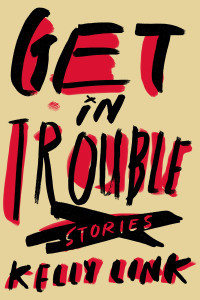 Get in Trouble by Kelly Link (February)
This short story collection from Kelly Link is her best to date. She infuses small-town Southern Gothic tales with concepts from fantasy, science fiction, and weird fiction, not unlike Julia Elliot does in The Wilds or Jeffrey Ford in The Drowned Life. The opening story set in the mountains of North Carolina was my personal favorite, but there isn’t a bad apple in the basket.
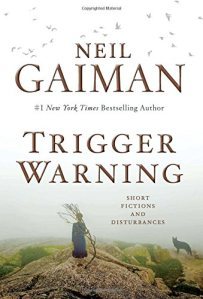 Trigger Warning by Neil Gaiman (February)
As a college student, American Gods was my favorite work by Mr. Gaiman, but as I’ve grown older its his short fiction that I’m drawn to most. On the heels of Smoke and Mirrors and Fragile Things comes his third collection, a diverse assortment of creepiness and imagination that further establishes Gaiman as one of our very best and most consistent storytellers.
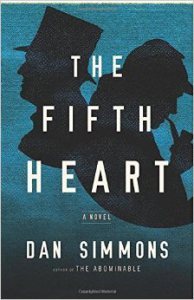 The Fifth Heart by Dan Simmons (February)
From my review in the Denver Post:
In the spring of 1893, five years before he would publish “The Turn of the Screw,” Henry James decides to celebrate his 50th birthday in Paris by drowning himself in the river Seine. But as his foot hovers over the water, James notices a figure watching him in the dark: the World’s First and Foremost Consulting Detective, Sherlock Holmes.
Simmons has essentially written a literary buddy comedy, and the result is his funniest and breeziest novel to date, despite its heft. Even with a body of work as impressive as Simmons has accrued in the past 30 years, The Fifth Heart is one of his most engrossing and addictive books to date.
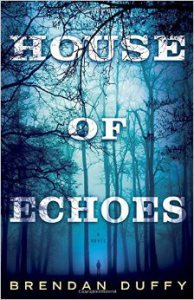 House of Echoes by Brendan Duffy (March)
From my review in Bookpage:
Brendan Duffy’s fantastic debut novel is gloomy, small-town Gothic horror in the vein of “Twin Peaks,” Alan Wake and The Shining. House of Echoes succeeds because it contains no familiar creatures. There are no ghosts here, despite some surface similarities to Chris Bohjalian’s The Night Strangers. There are no witches or werewolves. Duffy knows that true horror has neither name nor face. Grounded by emotional realism and nuanced characters, House of Echoes is intense, addictive and genuinely creepy.
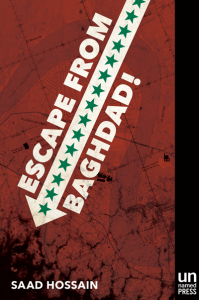 Escape from Baghdad! by Saad Hossain (April)
In my forthcoming interview with the author in Bookslut, I called Escape from Baghdad! “an engrossing cross between Zero Dark Thirty and Raiders of the Lost Ark that takes a sobering look at America’s troubled legacy in Iraq.” It’s a hilarious homage to classic pulp adventure novels that mixes science fiction, fantasy, and mythology.
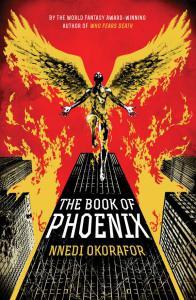 The Book of Phoenix by Nnedi Okorafor (May)
Okorafor’s new novel is a prequel to Who Fears Death, which won the World Fantasy Award in 2011. Instead of post-apocalyptic Africa, this story takes place in a ruined New York apartment block where a genetic experiment has left her heroine, Phoenix, with an adult mind and body at the age of 2. There’s really nothing else out there quite like Okorafor’s blend of “magical futurism”, and The Book of Phoenix is a blast.
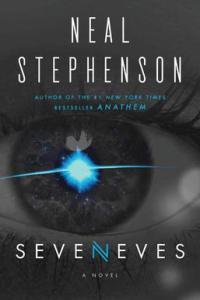
Seveneves by Neal Stephenson (May)
It’s long, dense, and crammed with a thousand ideas, but what else would you expect from the author of Anathem and The Baroque Cycle? Admittedly, I haven’t read all of Stephenson’s work, but this novel is my favorite so far. Just take a look at the first paragraph:
The moon blew up without warning and for no apparent reason. It was waxing, only one day short of full. The time was 05:03:12 UTC. Later it would be designated A+0.0.0, or simply Zero.
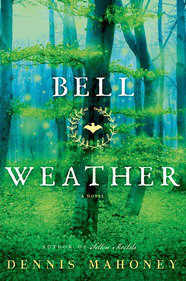
Bell Weather by Dennis Mahoney (May)
From my review in Bookpage:
Dennis Mahoney (Fellow Mortals) reimagines the colonial era of the 1700s, when European empires fought over the Americas. Except in his story, the Old World is Heraldia and the New World is Floria. While the geography and historical milieu are familiar, the main departure from reality is in the details of the natural world.
Mahoney’s prose is lyrical and well honed, and his characters are engaging, but it’s the magical realism of the wilderness that makes this world so memorable and fascinating.
Little Pretty Things by Lori Rader-Day (July)
I’m cheating, because this book doesn’t come out until next week, July 7. But I READ it in June. I’ll have a review in Bookpage soon, but here’s my interview with the author over at Gapers Block.
Set in the farthest reaches of Chicagoland — a fictional small town called Midway in the cornfields of northwestern Indiana — Little Pretty Things centers on a bizarre murder at a roadside motel, when a maid named Juliet Townsend discovers the body of her best friend from high school. It’s creepy, clever, and full of surprises, the kind of book you stay up all night to read in one sitting.


June 23, 2015
Magical Spins on the Past: New Books by Dennis Mahoney and Natasha Pulley
 Originally published in Bookpage.
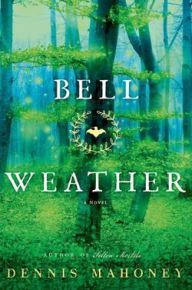
No matter how strange or outlandish, most fantasy novels take place in a world similar to our own with a few meaningful changes. Sometimes the changes are drastic, as in Dennis Mahoney’s (Fellow Mortals) second novel Bell Weather. And sometimes they’re relatively slight, like Natasha Pulley’s debut The Watchmaker of Filigree Street.
In Bell Weather, Dennis Mahoney reimagines the colonial era of the 1700s, when European empires fought over the Americas. Except in his story, the Old World is Heraldia and the New World is Floria. While the geography and historical milieu are familiar, the main departure from reality is in the 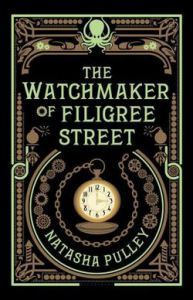 details of the natural world.
The rustic town of Root in the colonies of Floria is home to a variety of miraculous flora, fauna and (as the book’s title implies) meteorological phenomena. Ember gourds burst into flame after ripening, winterbears hibernate in summer and stalker weeds roam the forest looking for defenseless plants. Cathedrals and mansions are built from pale lunarite rock, seasons change in a matter of hours, and sudden “colorwashes” transform the landscape.
In the New World colonies, tavern owner Tom Orange rescues a mysterious woman from drowning. Her name is Molly Bell, daughter of one of the most powerful men in Floria. As a group of bandits known as the Maimers terrorize the countryside, stealing whatever part of their victims’ bodies they deem most valuable, Tom must help Molly escape the inevitable fallout from her past.
Mahoney’s prose is lyrical and well honed, and his characters are engaging, but it’s the magical realism of the wilderness that makes this world so memorable and fascinating.
The Watchmaker of Filigree Street, on the other hand, takes place in a very recognizable Victorian-era London—with a few steampunk and supernatural flourishes. In 1883, a bookish Whitehall telegraph cleric named Thaniel Steepleton comes home to find someone has broken into his flat. Instead of stealing valuables, they’ve left him a mysterious gold pocket watch that winds up saving his life after a bomb is planted by Irish terrorists at Scotland Yard. Thaniel’s search for the watch’s creator leads him to one of the most interesting fictional characters in recent memory, Keita Mori.
Mori is a Japanese watchmaker who is part inventor, part mystic—he combines the deductive brilliance of Sherlock Holmes with the clairvoyance of Dr. Manhattan. Thanks to his ability to see potential futures, Mori has altered the course of history several times. Among his many inventions is a sentient, clockwork octopus, which is quite possibly the highlight of the novel. Together with Oxford scientist Grace Carrow, Thaniel tries to solve the mystery of the terrorist bombings. Could they be one of Mori’s attempts to alter the future?
Natasha Pulley’s debut is a clever detective story, a thrilling steampunk adventure and a poignant examination of the consequences of class warfare and English, Irish and Japanese nationalism in the 19th century.
FICTION: FANTASY, HISTORICAL
Bell Weather by Dennis Mahoney (Henry Holt)
The Watchmaker of Filigree Street by Natasha Pulley (Bloomsbury)


June 18, 2015
An Interview with Sarah Lotz, author of DAY FOUR
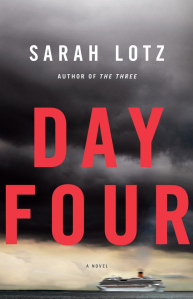 SF/F author Sarah Lotz was kind enough to chat with me at length about DAY FOUR, her sequel to last year’s spectacular THE THREE, over at the Hugo award-winning SF Signal.
Here’s a link to the interview.
We talked about both books, writing under the duress of PTSD, and a forthcoming third book in the series that will provide an origin story for its supernatural entities.


May 26, 2015
A Dry Future: THE WATER KNIFE by Paolo Bacigalupi
 Originally published at Bookpage.
No book will ever make you thirstier than The Water Knife, Paolo Bacigalupi’s (The Windup Girl) action-packed return to hard science fiction, in which the American Southwest is ravaged by drought.
In the not-too-distant future, climate change has turned the Colorado River Basin into a dust bowl. California, Nevada and Arizona wage hot and cold war over aquifers, dams and water rights. The wealthiest 1 percent live in lush, self-sustaining “arcologies” (architecture + ecology), while the cities and suburbs of old are riddled with crime and desperation.
California has the upper hand thanks to foreign water corporations, and Arizona is a militarized backwater. But the most powerful woman in Las Vegas—Catherine Case—has a secret weapon named Angel Velasquez. He’s one of her “water knives,” soldiers trained to secure fresh water resources by any means necessary.
“Angel wondered what the river looked like back when it still ran free and fast…Children down in the Cartel States grew up and died thinking that the Colorado River was as much a myth as the chupacabra that Angel’s old abuela had told him about. Hell, most of Utah and Colorado weren’t allowed to touch the water…”
Angel is sent to investigate a potentially game-changing source of water in the most unlikely of places: Phoenix. There, his fate becomes entwined with those of a determined journalist and a teenage refugee from Texas. Together, they follow the trail of a near-mythical artifact that could shift the balance of power in the war for water.
Bacigalupi’s nightmarish vision of a dystopian America ruined by greed, bureaucracy and environmental disaster is both horrifying and prescient. It takes a few chapters to gather momentum and orient the reader, but once the story finds its stride, the pages turn themselves. The Water Knife is a thoughtful, frightening, all-too-likely vision of the future.
FICTION: SCIENCE FICTION, THRILLER
The Water Knife by Paolo Bacigalupi (Knopf)