
Matador Network's Blog, page 1349
May 8, 2018
Dating a girl from AZ
Girls from Arizona are as varied as the local cactus flowers, but if you invest a bit of care, you’ll learn that whether we originally hail from San Diego or Nogales, Freedonia or Sedona, there are indeed a few things we chicas come to have in common. There are certain behaviors we just won’t put up with — and there are a few secret ways to warm our already warm desert hearts.
1. Thou shall not bitch about the heat.
Dude, we know. We’re sweaty. We are visibly leaking perspiration from every possible sweat site. Our minimal makeup is melting off our faces. Our clothes are sticking to the seat and eau de sunscreen permeates all. Our deodorant wore off a long, long time ago. We get it. Zip it.
2. Thou shall hold the door open for women AND everyone else.
It isn’t gentlemanly, it’s simply kind. And it’s the right thing to do.
3. Thou shall ask the server to keep the chips and salsa flowing.
And this should happen without us having to say “yes please” when s/he asks if we want more. Chips and salsa should magically appear before us like pots of gold do for leprechauns.
4. Thou shall walk on the outside of the sidewalk.
This one is contentious, but OG Arizona rules say it’s traditional for the man to take the outside when walking aside a lady on a sidewalk. Lore has it that it’s so no high-rise dwellers dump their dirty wash water on her head; alternatively, it’s said that it’s so she doesn’t get splashed by muddy horse and carriage overspray on a rare rainy day. Those of us of a certain age notice the genteel etiquette, however outdated.
5. Thou shalt remove thy hat at an eating establishment.
Another old-fashioned grace we do indeed take note of.
6. Thou shall cool off the car before inviting us in.
Not unlike heated seats in winter, a less-than-135-degree vehicle interior is a surefire way to make us smile on the way to the air-conditioned movie theater in the air-conditioned mall.
7. Thou shall enjoy all things outdoors.
Or at least not complain when we want to take you rock climbing, horseback riding, mountain biking, off-roading, or just take a hike to show you a secret waterfall. And thou shall make love to us under the stars while on a camping adventure.
8. Thou shall swoon over all the animals.
All the animals are friends to all the Arizona girls; it’s symbiotic somehow.
9. Thou shall wear appropriate clothes for the setting.
Unless you’re an actual ranch hand (which, face it, is hot!), you need not don a cowboy hat or tuck your bright Western snap shirt into your too-tight Wrangler jeans.
10. Thou shall cook us carne asada tacos.
And garnish them with cabbage, not lettuce.
11. Thou shall be a proficient dancer, starting with but not limited to two-step.
On that note, thou shall appreciate old-school country music and detest contemporary popular country western drivel.
12. Thou shall remove the snakes from our house or garage or yard, upon request.
And thou shall let us do it ourselves, if we prefer to, without kicking up a fuss. 

More like this: 10 superpowers only Arizonans have
The post 12 commandments for dating a girl from Arizona appeared first on Matador Network.


UberWINE arrives in California
If you and your friends ever wanted to take a full-day wine tour, but can’t seem to agree on a designated driver, Uber is here to solve all your transportation problems. UberWINE is the ride-hailing app’s latest offering in California’s San Luis Obispo wine region, and it makes getting to and from the tasting party a whole lot easier.
Booking UberWINE is similar to the process of booking any other Uber ride. Get on the app and request WINE or WINEXL. You’ll be paired with a driver who will stick with you throughout your tour, chauffeuring you and your group from one winery to the next throughout San Luis Obispo’s wine country.
The app has even partnered with five local wineries to offer $10 off a bottle at each stop, meaning your planning is completely taken care of. All you have to do is round up your friends with the tempting offer of an afternoon of tasting wines and cruising around the Santa Ynez Valley, far away from the tourist-laden Napa Valley and its sky-high prices. A four-stop SLO wine country itinerary could look like this:
Start your adventure over a bottle of Cabernet Sauvignon at Villa San Juliette Winery. This is the northernmost and furthest from the city of San Luis Obispo, so starting here ensures that you don’t get too sauced at the other spots and never make it up there.
Take your UberWINE south to Peachy Canyon Winery Tasting Room, on the outskirts of the town of Templeton. Here, have your server pop open a bottle of the perfectly blended 2015 Westside.
A few minutes away is Castoro Cellars. Relax over a bottle of 2015 Grenache.
Conclude your tour with the refreshing 2016 Pinot Grigio at Donati Family Vineyard. Don’t forget to grab a couple bottles for the hotel room, of course.
All four wineries offer the UberWINE discount, available by asking your server for the special Uber discount code. Once you have it, plug it into the “promotions” area of the app, then show the server the confirmation that appears on your phone. The service is also available from Santa Barbara, for those further south. Happy sipping!
More like this: The top 5 wine destinations to visit in the US besides Napa
The post Uber is now doing wine tours and planning a wine road trip just got way easier appeared first on Matador Network.

Antarctic-centric map
We’re used to the highly-skewed, Euro-centric Mercator Projection map of the world, so this alternative, hemisphere-bending map is sure to give you a blood rush to the brain. Redditor Fiery West submitted to the site a map of the world from an Antarctic point of view, and it’s blowing everyone’s minds.
Instead of the primary focus being on North America, Europe, and Asia, this map gives the spotlight to Australia, South America, and of course Antarctica itself right in the center. The southern tip of South America actually appears to be reaching out to Antarctica. Also standing out is how connected the world’s oceans are to each other — in this map, they nearly appear to be one.
Australia also holds a visibly strong position in relation to Antarctica, but in the map’s most notable demonstration of angle presentations, you can actually get a good feel for how big Africa really is. At 11.73 million mi², the world’s second largest continent is significantly bigger than both North America (9.54 million mi²) and South America (6.888 million mi²).
Traditional world maps often present a sort of “flat earth” outlook on the world, allowing the viewer to look at each continent in detail, all at the same time. (Except, of course, for poor New Zealand, who frequently seems to have fallen off the edge). Some maps show Earth from the top down with the North Pole standing as the focal point. But this is the first map we’ve seen of the inverse, and if any country appears closer to getting the boot this time, it’s Iceland.
More like this: New Zealand is mysteriously disappearing off world maps
The post This map shows the world from an Antarctic point of view appeared first on Matador Network.

May 7, 2018
Minimalists make the best travelers
Two years ago, I flew into Seattle and rented a studio apartment, bringing nothing with me beyond a small roller bag, a small duffel, and my standard daypack. To some travelers, even this small amount of belongings may seem excessive, and if you were backpacking through Southeast Asia, I would tend to agree — but for a long-term move, this was a huge step for me in the direction of becoming a minimalist. Six months later, when my contract was up, I left town by train hauling the same bags without any added luggage. Any clothes that had been damaged were replaced. Completed books were swapped for unread ones. There were no major additional possessions after six months of domestic life.
This shift in lifestyle translated to a change in the way I traveled — ditching the excess luggage in favor of the bare essentials. In doing so, I’ve found that minimalism allows for a more efficient and enjoyable experience on the road. The more you let go of the baggage (both figuratively and literally) the more you realize how unimportant and cumbersome it is to carry it with you, and the more you’ll make room for fulfilling experiences. So if you can forgo the neck pillow, unpractical shoes, and endless technology, here are just a few reasons why a minimalist lifestyle makes one a better traveler.
1. It’s cheaper.
This manifests in a variety of ways, from only having one carry-on bag on your flight to not risking it being lost by the airlines and paying for replacement clothes. Not to the mention the savings of simply not buying the luggage and filling it with extravagant items in the first place.
2. It saves you energy.
If you’re a solo traveler, you know all too well the pain of having to haul all your bags into the lavatory when nature calls. Cutting down on your possessions means less to worry about losing, and less attention to spread out (e.g. concerned about leaving a camera in a hotel room or watching your bags in the bar). There’s just less to carry, both physically and mentally.
3. You have more chances to be a spontaneous traveler.
Have you ever had a last-minute offer to do something crazy in another country but had your possessions hold you back? Obviously, you may not want to go out on a small boat if you’re carrying a laptop or jump on a motorbike with 40 kg on your shoulders. My parents turned down visiting Ueno Park during cherry blossom season in Japan because they couldn’t find an empty locker for their bags, whereas I have no doubt they would have gone had they been unencumbered.
4. Your essential needs are met.
This is the essence of minimalism, and it has even more meaning when you’re traveling with all your belongings. When a minimalist packs for a few months abroad, she’s not going to be panicked over forgetting something because, frankly, there isn’t that much she needs. If you need some clothes and aren’t concerned with being fashionable every day, you can get away with one set for wearing, another for washing.
5. You can focus on the experience, not souvenirs.
Rolf Potts dove deep on the topic of bringing home mementos in his latest book Souvenirs, highlighting the intrinsic value of bringing home a piece of your trip. Keeping mementos of your travels is a tradition dating back thousands of years. As much as we might like to believe we’ve culturally evolved from the Ancient Greeks, buying a scale model of the Parthenon today isn’t so different from the knick-knacks sold in the old days.
If you’re a frequent traveler, it doesn’t take long before even just one small souvenir from each destination equates to a lot of clutter in your bag or at home. Not only that, but taking the time to find the kind of token you prefer can be a somewhat arduous task when you have a limited time abroad — every place on earth makes shot glasses and miniature models of attractions, but what if you only buy souvenirs with bunnies on them? Though finding and purchasing (haggling over) a souvenir can be an experience in and of itself, for some travelers, it can ultimately be a burden.
More like this: 5 ways to master minimalist packing
The post Why minimalists make the best travelers appeared first on Matador Network.

Everest base camp pop-up dining
The era of foodie culture has officially reached new heights: the world’s highest mountain. Later this month there will be a first-rate meal served at Everest Base Camp for ten trail-hungry diners. This trek will add another notch to the belt of touristy activities available on the mountain (you can also glamp on Mount Everest, if a regular tent is too rugged for you). Trekkers will dine on a seven-course, chef-prepared feast after hiking to base camp and foraging for ingredients along the way.
The trip is being led by four high-class chefs who hope to set a Guinness World Record for highest pop-up restaurant, dubbed “Triyagyoni.” The experience starts long before the luxurious meal itself. The chefs will accompany a group of ten diners on an adventure from Lukla, Nepal to Everest Base Camp beginning at the end of May.
The trip is all-inclusive, with the hosts providing accommodations and flights. The trek involves about six hours of hiking per day for eight days, which to experienced backpackers may not sound like a lot but remember, you’re heading up to 11,600 feet. The air is incredibly thin and the weather can be unpredictable. We’re guessing that by the time you get there, you’ll be ready for an all-out feast.
Indian chef Sanjay Thakur is among the masterminds behind the project. “The biggest challenge of course will be the altitude, which will affect everything,” he told Fine Dining Lovers. “Flavour [perception] will be decreased, so we will be designing a menu of extraordinary dishes accordingly, where spices will have the upper hand.”
If you’re game, get your ticket quick as the excursion heads out soon and plans for a packed house. Tickets cost $5600; get yours by emailing triyogyoni2018@gmail.com.
H/L Fine Dining Lovers
More like this: Glamping on Mount Everest is a thing now, so you don’t even have to hike
The post This epic pop-up restaurant at Everest Base Camp will change how you view fine dining appeared first on Matador Network.

Australia investing in Great Barrier
The Great Barrier Reef is being bleached to death. The change in water temperature and the increased ocean pollution have pushed the corals to eject the algaes (their main food source) that live on them, leaving them white and incredibly vulnerable to diseases. The “bleaching” of the coral is directly linked to climate change and poor management of waste. In other words, we humans are largely responsible for this tragedy, so it’s only fair that we fix the damage we have caused.
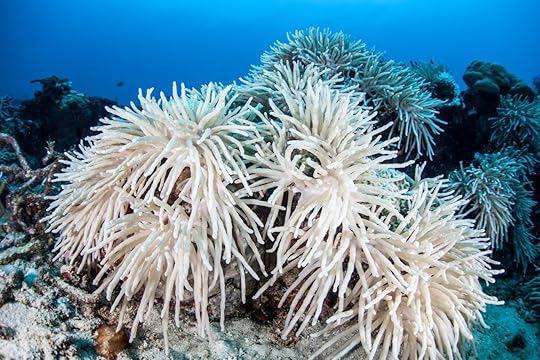
Bleached coral
Photo: Ethan Daniels/Shutterstock
That’s what the Australian government seems to be attempting by investing $376 million in this natural wonder.
According to the Great Barrier Reef Foundation, the Australian government wants to protect the $4.81 billion a year that the reef provides to the Queensland and Australian economies, as well as the 64,000 jobs that depend on it by giving the Great Barrier Reef some of the care it badly needs.
The Australian government will partner with the Great Barrier Reef Foundation by giving it $334 million:
$151 million will be devoted to improve water quality and reduce the pollution into the reef by changing agricultural practices (reducing the use of fertilizers, for example).
$44 million will go towards fighting the crown-of-thorns starfish. Outbreaks of this coral-eating species are extremely harmful to the already-vulnerable coral.
$75 million will be invested in scientific research for reef restoration (coral that is bleached is not dead coral, so it can survive, given the help it need), reef resilience and adaptation.
$34 million will go towards community engagement such as “as Indigenous traditional knowledge for sea country management, coastal clean-up days and awareness raising activities.”
$30 million will improve the monitoring and reporting of the health of the reef.
The rest of the money ($66 million) will go to The Great Barrier Reef Marine Park Authority and the Department of the Environment and Energy to “expand environmental management and compliance operations on the reef.”
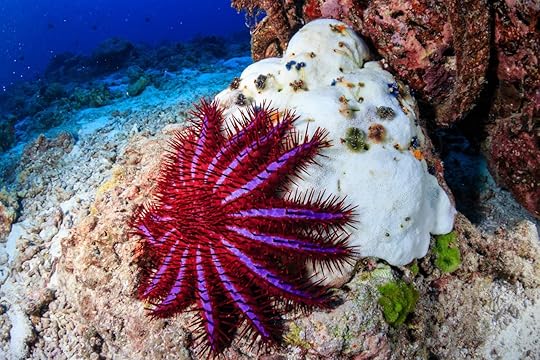
Crown-of-thorns starfish feeding on bleached coral
Photo: Richard Whitcombe/Shutterstock
Although an investment towards protecting the Great Barrier Reef against farming runoffs and crown-of-thorns starfish is more than welcome, there is no money devoted to the main reason the reef is dying: global warming. The government of Australia isn’t acknowledging that the death of huge swaths of corals (half of the reef has died since 2016) is the immediate results of a warmer ocean, which in its turn is due to exceedingly high greenhouse gas emissions.
Despite the irrefutable links between greenhouse gas emissions and increased water temperature that scientists have put forward, there is no mention of using the government’s investment to curb the use of fossil fuels for more sustainable alternatives.
Failing to save the Great Barrier Reef would lead to the death of the whole ecosystem and, eventually, the death of marine life on which we rely for more than 50% of the oxygen we breathe.
H/T: Inhabitat
More like this: 44 surreal scenes from Australia's Great Barrier Reef
The post Australia is investing over $375 million in saving the Great Barrier Reef appeared first on Matador Network.

Mainers don't say
Maine-isms are very much a thing; we basically have our own take on the English language, which among other identifiers helps us tell immediately who’s from here and who’s from Boston. We’re quick with a response to “Chuppta?” and love a good bed lunch (midnight snack). Likewise, there are also loads of thing you’ll never hear a Mainer say. Here are just a few of them.
1. Their “R’s”.
2. “I love driving Route 1 in the summer!”
3. “What time does L.L.Bean open and close?”
4. “Nah, I don’t need snow tires on the family car this winter.”
5. “No dear, I ain’t gonna buy anything from Uncle Henry’s.”
6. “I’ll show you where I pick my fiddleheads.”
7. “Hey Y’all!”
8. “Oh, I’ll only spend a couple minutes thrifting for treasures at the Transfer Station…”
9. “I’ve never been to a Sea Dogs game.”
10. “Your wood pile looks better than my wood pile.”
11. “I’ll give you my Ma’s baked bean recipe.”
12. “Finding parking in Portland is so easy.”
13. “I’ve never read a Stephen King novel.”
14. “My summer home is in Kennebunkport.”
15. “DON’T DRIVE AH’ BUB.”
16. “I’m vacationing in Lewiston next week.”
17. “Buying seafood at Shaw’s is wicked cheap.”
18. “Are you going to finish that coffee brandy?”
19. “Canadian lobster tastes better than Maine lobster.”
20. “Acadia National Park is overrated.”
21. “I’ve never partied in Orono.”
22. “No, can’t fix that.”
23. “I don’t need to buy milk, bread, and eggs before a Nor’easter.”
24. “What does Moose Tracks ice cream taste like?”
25. “When I retire I want to move to Massachusetts.”
More like this: 9 ways to humiliate yourself in Maine
The post 25 things you’ll never hear a Mainer say appeared first on Matador Network.

Volcanoes about to erupt
Active volcanoes are beautiful to look at, but they’re also incredibly dangerous. The current eruption of Kilauea in Hawaii and its dreadful consequences are proof that even when active volcanoes seem to be under control, there’s actually no curbing their devastating power once they erupt at full force. Here are 7 active volcanoes that are due for a large eruption at any moment, so take notes and plan your travels around them.
1. & 2. Katla and Hekla (the Angry Sisters), Iceland
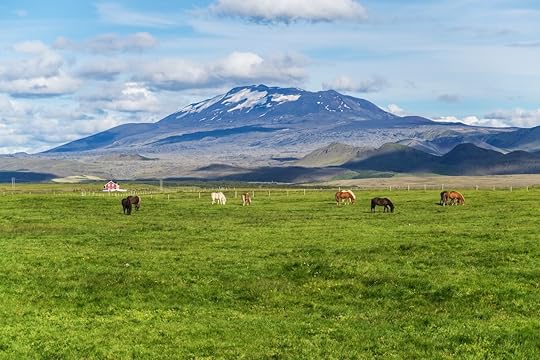
Hekla volcano
Photo: Tomaz Kunst/Shutterstock
Iceland is not nicknamed “the land of fire and ice” for nothing. The country has a total number of 522 volcanoes, with about 30 active volcanic systems that experts are keeping their eyes on.
Everyone remembers the seriously impressive eruption of Eyjafjallajökull in April 2010 that got all air travel in Western Europe on hold for a week, but fewer have heard of the 2011 Grímsvötn eruption or the eruption of Bárðarbunga in 2015.
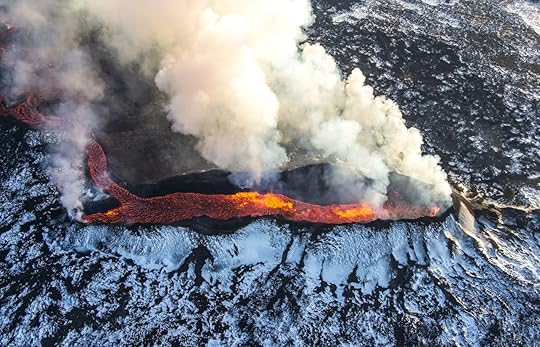
Eruption of Bárðarbunga
Photo: Nathan Mortimer/Shutterstock
Currently, it’s Hekla and Katla, the Angry Sisters, that Icelanders are worried about.
Hekla erupts about every ten years, but nothing’s happened since 2000, so it’s overdue for an eruption. In February 2017, Iceland Magazine explained that the volcano’s magma chambers were quickly filling up and that measurements showed growing pressures building up.
Katkla, a subglacial volcano located very close to Hekla in the southern part of the country, is Iceland’s largest and most dangerous volcano and it has not erupted in a hundred years, so a big one’s in the cards. Some seismic activity got everyone worried about a possible eruption last summer, but things have subsided since then.
3. Le Piton de la Fournaise, Reunion Island
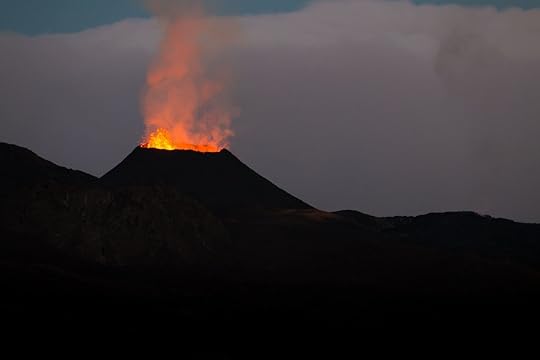
Photo: Travfi/Shutterstock
Le Piton de la Fournaise, located on the French Island of La Réunion in the Indian Ocean, is, like Kilauea, one of the world’s most active volcanoes — it’s been erupting about every 8 months since 1640.
An eruption took place early this April and, just a few days ago, on April 28th, it started spewing lava again. It’s difficult for experts to determine the strength of an eruption before it happens, so, although the population has been spared from evacuation, alerts are always taken very seriously.
Like with Kilauea, locals and visitors can hike around the volcano when the site is safe, but when an eruption alert is launched, all the hiking trails are closed. Just in 2003, a hiker died when he fell in one of the volcano’s fissures.
If you personally want to keep on eye on the volcanic activity of the Piton de la Fournaise, check out the six webcams set up around it here.
4. Santa Maria, Guatemala
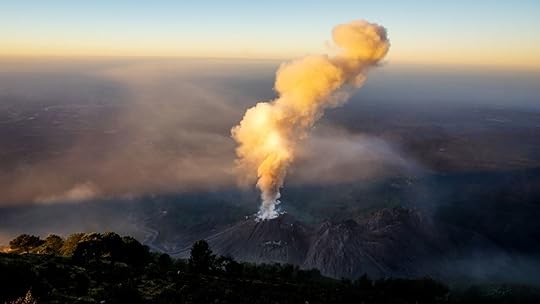
Photo: chrisontour84/Shutterstock
Santiaguito is the most active lava dome in the Santa Maria volcano in Guatemala; it’s been erupting almost every hour since 1922 and “magma and gas are steadily rising from deep within the system,” explained Stephanie Grocke, a National Geographic Explorer and volcanologist.
Santa Maria’s first ever eruption took place in 1902 and was the second-largest volcanic eruption in the 20th century. The Santiaguito vent is the product of the 1902 eruption.
Santiaguito usually produces small ash plumes and lava flow; however, “At times, larger explosions occur, producing ash plumes that rise less than 3 kilometers above the vent,” Grocke said to National Geographic.
According to the Smithsonian Institution Global Volcanism Program, in February and March 2018, explosions were reported at Santiaguito and it produced ash plumes as high as 700 meters. Volcanic material descended the flank of the lava dome.
Although Santiaguito is erupting extremely regularly, it’s no indication that the next eruption won’t be a very serious one.
Santa Maria is awfully close to the city of Quetzaltenango (13 km), so if a large eruption were to happen, the population (about 140,000 people) would be in danger.
5. Stromboli, Italy
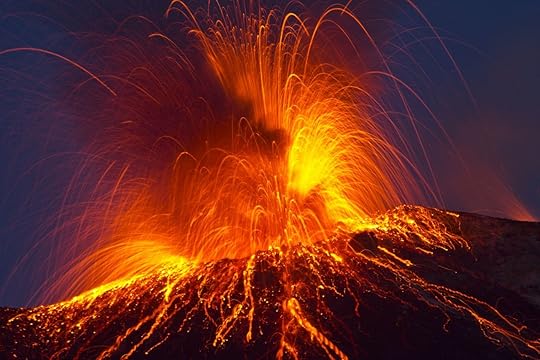
Photo: Rainer Albiez/Shutterstock
Stromboli is one of the eight Aeolian islands in the Tyrrhenian Sea — the sea between continental Italy, Sardinia, and Corsica. The island is actually the volcano, as it starts below sea level.
Stromboli is one of the most active volcanoes in the world. It’s been continuously erupting for 2,000 years. Although Stromboli’s eruptions are more explosive than effusive, lava has flown out of the volcano several times in the past 17 years.
There are a few hundred people living in the two villages on Stromboli: Stromboli and Ginostra. As you can see on the picture below, the residents are incredibly close to the volcanic cone, so Stromboli’s activity needs to be monitored very closely.
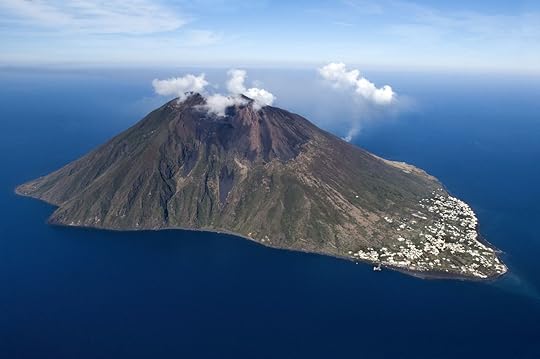
Photo: luigi nifosi/Shutterstock
According to the Smithsonian Institution Global Volcanism Program, on April 24th, 2018, an explosive sequence happened, ejecting large amounts of ash, incandescent material, and large blocks 250 meters in the air. There was also a small lava fountain.
6. Sakurajima, Japan
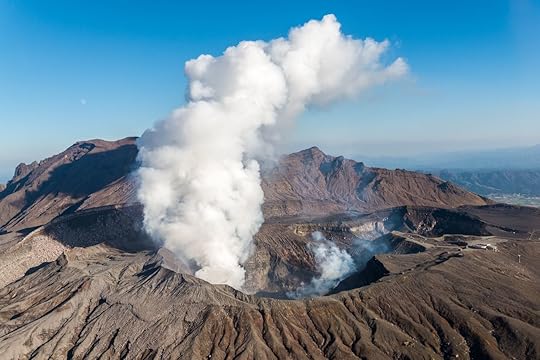
Photo: gnoparus/Shutterstock
Sakurajima is located on the island of Kyushu in Japan. Sakurajima has been erupting constantly since 708 A.D.
The city of Kagoshima (over 600,000 inhabitants) is located only 12 km away from the volcano. Large explosive eruptions can easily send ashes on the city. The volcano is closely monitored in case the area needs to be evacuated.
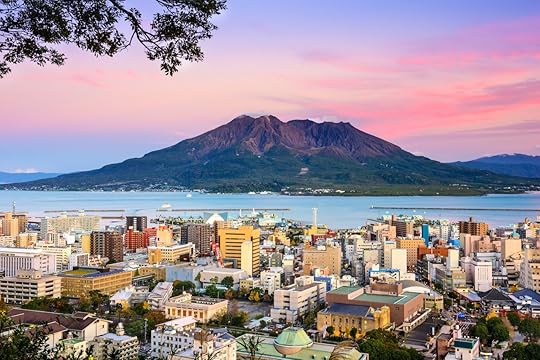
Photo: Sean Pavone/Shutterstock
The Japan Meteorological Agency reported that between April 20th and May 1st, 2018, there were 9 events and 30 explosions at the Aira caldera of the Sakurajima volcano. Rock fragments and particles were “ejected 1.3 km from the crater, and ash plumes rose as high as 3.3 km above the crater rim”. The Alert Level is at 3 (on a 5-level scale).
7. Reventador, Ecuador
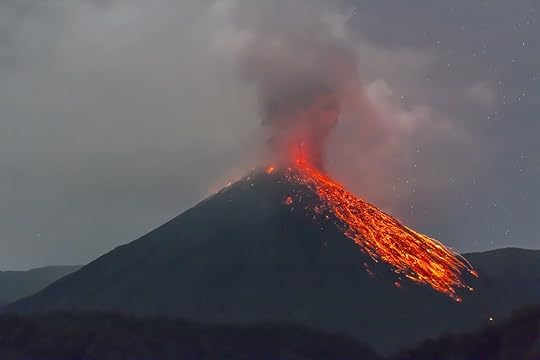
Photo: Dr Morley Read/Shutterstock
Reventador is Spanish for “troublemaker”, so you know that you should really be wary of this volcano.
Located in the Ecuadorian Andes, Reventador erupted without warning in 2002 and, according to Global News, “its pyroclastic flow of gas and matter wiped out a nearby valley and damaged pipelines.” This eruption was the largest in the history of the volcano.
Between April 24th and May 1st, 2018, seismic activity with explosions, earthquakes, tremors, and emissions was reported happening at Reventador. “Steam, gas, and ash plumes sometimes rose higher than 1 km above the crater rim. Incandescent blocks also rolled as far as 800 meters down the flanks, and a small pyroclastic flow traveled down its flank.”
More like this: 6 active volcanoes you can actually go and see up close
The post 7 volcanoes that are going to erupt at any moment appeared first on Matador Network.

Kyoto's pug cafe
Urban Japan is famous for its quirky attractions — maid cafes, capsule hotels, vending machine underwear, just to name a few. There’s also a huge trend of animal cafes, where customers can interact with creatures like kittens, bunnies, owls, and now, our favorite of all of them: pugs.
Pug Cafe Living Room, just outside of Kyoto, Japan, is a dog lover’s dream. Visitors come for both the human snacks and doggie snuggles. With 12 pugs, each wearing their own namesake jersey, you’re in for a pugging as soon as you sit down, and you’ll have to pay up in pets.
Originally the cafe began with just four precious pugs, but they’ve since tripled in size and popularity. There’s often a line outside the door and reservations are encouraged, but not required. Be sure to check the calendar for their open days and specials.
There are a couple options to choose from for your visit. The “Regular Menu,” which costs ¥1200 yen (~US$11) for new visitors and ¥1000 yen (~US$10) for members, includes one drink, one human snack, one dog snack, and one hour of visitation. If that’s just not enough pug time, you can add on 30-minute segments for ¥500 without a drink, or ¥1000 yen with drink.
On special days, for ¥3000 yen, your time and drinks are unlimited (until there’s a full house, then they’ll give you the boot at 2 hours). The Living Room is open from 1 PM to 6 PM and only accepts cash, but they welcome all cuddles.
How to get there
Kyoto’s Pug Cafe Living Room is located a little way out of town in Kyoto Prefecture Kyoto Ward. The address is Nishikyo-ku, Kawatacho, 151 Selene Katsura 1F. Taxis can take you right there for around $20 each way.
What to consider
The pugs are friendly and food crazy — they swarm newcomers upon entry.
Last entry is at 5 PM. Be sure to check the calendar to make sure they’re open the day you want to go.
If you give them some social love by posting on Instagram and social media, they’ll give you extra doggie treats — totally worth it.
Get there early and expect a wait; everybody is looking for some pug love.
More like this: You can now visit an entire museum dedicated to weiner dogs
The post You can play with these adorable pugs at this Kyoto cafe appeared first on Matador Network.

What we can learn from Alaska
Ask any Alaskan, and they’ll tell you that compared to our counterparts in the Lower 48, our priorities are a little different. We’re willing to put up with months of darkness and an insane cost of living in exchange for a lifestyle — one that we’re fiercely proud of, one we wouldn’t trade for the world. Sure it may mean sacrifices, but ultimately it helps us keep the important things in life in perspective.
In fact, the rest of the US could learn a thing or two from the way of life in Alaska; here are just a few.
1. Working to live beats living to work.
Alaskans clock in long hours to get food on the table, but we resist getting caught up in any drudgery. “Work hard, play hard” and “work to live” are the prevailing attitudes here, meaning we don’t allow our jobs encroach on our lifestyle. We know there’s plenty to life outside of work, and we won’t sacrifice our friendships, hobbies, or outdoor pursuits to the corporate grind.
2. Things taste better when you know where they come from.
Our experiences fishing, hunting, and gathering create an intimate understanding of where our food comes from and how it’s sourced. Hunting and fishing may be on the decline for those in the Lower 48, but for Alaskans, harvesting our own food fosters an appreciation and reverence for the way nature’s bounty sustains us year after year.
3. It pays to be handy.
When something breaks down, we don’t always have the luxury of hauling it off to get serviced or replacing it instantly. Rather than throw our hands in the air, we get resourceful. Alaskans reign at DIY repairs and can fix just about anything with some creativity and a little duct tape.
4. Nature is the best medicine.
Few things make one’s troubles feel less significant than a retreat into the unbridled wilderness. Lucky for us, the state has plenty — so when we’re down, hiking, camping, or a wild escape can provide a sobering burst of relief.
5. Community is everything.
The hallmark of life in Alaska’s small towns is their powerful sense of community. Through the winters, our friend groups become the surrogate family we turn to for help and good company. Even when you’re sick of neighbors being in your business, there’s comfort in belonging to a tight-knit community and knowing your chosen family has got your back.
6. A heightened appreciation for the change of seasons.
Dramatic seasonal shifts define life up north, and there’s little you can do but embrace them. Summer is for fishing and camping; fall for canning and preserving; winter is for getting cozy and those cold-weather sports. The seasons pass quickly, but we know that each one has its own opportunity and its place in the yearly cycle.
7. Brand names ≠ status.
Alaskans don’t measure status through brand-name clothing, and we’re more laissez-faire about fashion than most. We don’t judge each other based on appearance or style — and we forgo fast fashion for pieces that are practical, comfortable, and long-lasting.
8. How to master the side-hustle.
The high cost of living, boom and bust economy, and sparse job opportunities require us to get creative, so Alaskans are masters of the side-hustle. When income streams dwindle we don’t fret — we turn to investment properties, selling our creative wares, or odd jobs for a little extra economic padding.
9. The importance of conservation.
While many states have seen wildlife populations decline over the last century, Alaskans understand that conservation is paramount. We manage our fisheries, our wilderness, and our wildlife carefully so we can enjoy them for years to come.
10. Take a step back and slow down.
Everything moves a little bit slower in Alaska — even in the city, there’s a distinctively leisurely pace of life. Rather than spending our lives rushing around, we’re not afraid to take a step back, savor our surroundings, and keep family, community, and the good things in life at the center of it all.
More like this: 10 calamities only Alaskans have to deal with
The post 10 things the rest of the US can learn from Alaska appeared first on Matador Network.

Matador Network's Blog

- Matador Network's profile
- 6 followers

