
Matador Network's Blog, page 1345
May 14, 2018
Make bus travel less miserable
Traveling by bus is often the most affordable way to get around a foreign country, but it can also be one of the most grueling. Price or a lack of viable alternatives may be the only reasons you’re even considering this mode of travel. But, regardless of why you’re taking the low road (or the long road), it doesn’t have to be a journey of exasperating proportions. With a little planning, common sense, and luck, your bus experience may just become the highlight of your trip. Or, at the very least, a great story to impress your friends. Here how to make your bus journey a little less bumpy.
1. Ask yourself if taking the bus is a sensible choice.
If you only have a week in-country and the bus is going to be 18 hours each way, it probably doesn’t make sense to choose this mode of transportation. If time isn’t a concern, the bus is a great way to see the countryside you’d miss 30,000 feet up in the air. Other things worth considering are cost, weather, and road safety. If the bus saves you $20 but takes you over mountain roads that you’ve heard from fellow travelers are sketchy, you may want to reconsider. Weather is always a safety factor as well, particularly in winter or rainy seasons. Before making the final decision to travel by bus, know where you’re going, what hazards lie ahead, and always proceed with caution.
2. Buy tickets ahead of time (when you can).
As a general rule, you can buy advance tickets in most western countries. In Asia, however, the idea of buying tickets early is often impossible. The best thing to do in order to ensure you get the right tickets at the right price is to talk to someone at your hotel to see what they recommend. Also, Google the route ahead of time and learn as much as you can about the company, the road conditions, and the departure schedule. Reading reviews is key — advice from other travelers may be the only honest opinion you’re going to find.
Knowing what route or company you’re looking for can help out a lot once you get to the terminal. Be cautious of anyone who approaches you at the terminal with advice or “unofficial” tickets. If you can’t get tickets from your hotel or hostel, always buy from an operator’s booth from someone in uniform.
3. Scope out the terminal.
Use the time waiting for your bus to observe the terminal and get a feel for the ebb and flow of traffic, as well as how buses load and unload. This is especially helpful in chaotic bus stations. Also, use the bathroom while you can. Some buses don’t have them and plenty of others have some that don’t work. Long-haul buses in many countries are decommissioned school buses from western countries that the bus company has modified to fit their needs, and certainly don’t offer much in the way of amenities.
4. Keep your bags safe.
Chaotic bus stations can overwhelm even the most seasoned travelers. Keep all absolutely vital and expensive gear (passports, phone, etc) on you at all times. If you must load your bags, stay with your gear long enough to ensure it gets on the bus. Try and load yours first so they’re near the back of the storage container. This makes it less likely your stuff will wander off during planned or unplanned stops.
5. Stretch your legs whenever you can.
Buses will stop numerous times on long trips. If you can get off without the danger of losing your seat, do so. It’s a great chance to use the bathroom or grab some food or water. Just don’t be the annoying traveler that takes a half hour to order a sandwich and holds everyone else up.
6. Keep your eyes open.
Tourists on buses are juicy targets for pickpockets and other travel villains. Once on board, many travelers let their guard down and take their eyes off the prize. Always keep your most important documents and electronics on your person, and don’t assume that your stuff is safe under or above your seat. Know where your bag is at all times and consider using a bungee cord to connect the bag to yourself or to the seat. That way, you’ll feel if someone starts poking around.
7. Trust your gut.
If you don’t like the condition of the bus, the road, the weather, or even the driver, don’t get in. there’s almost always an alternative. As is the case with most elements of international travel, particularly when by yourself, intuition plays a big role. Learn to trust your gut.
8. When in doubt, do what everyone else is doing.
Not sure when to board? Watch others. Unsure of bus etiquette? Observe what other passengers are doing. Don’t know how long the bus break will last? Keep an eye on someone else from your group. Every country has its own unique, unwritten bus culture rules, so if it’s your first time, just follow everyone else’s example.
9. Don’t forget to have fun.
In many cases, bus trips can be the best way to get to know a country. You see a lot more of the landscape and you meet interesting folks. Strike up a conversation and you’ll get first-hand information on where you’re going. 

More like this: 13 nightmarish bus stories to keep you riding planes and trains
The post 9 hacks to make bus travel less miserable appeared first on Matador Network.


Scariest bridges you can walk on
While thrill-seeking is often associated with skydiving or bungee jumping, some of the scariest experiences can be had just by putting one foot in front of the other. From a stroll high up in the trees to a bridge made from only vines, here are nine of the world’s most perilous and spine-tingling footbridges.
1. Taman Negara Canopy Walk, Malaysia
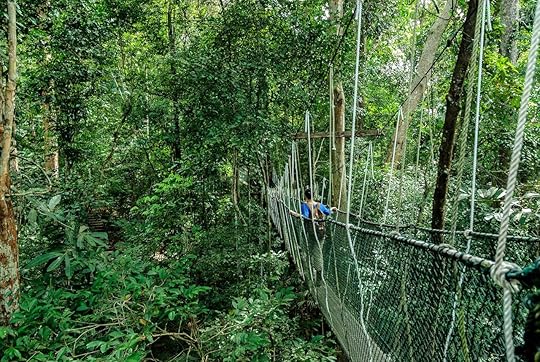
Photo: ahau1969/Shutterstock
What started out as a way for biologists to get a tree-top view of their canopy-dwelling animal and plant subjects, has now become one of the best ways to experience the flora and fauna of the oldest rainforest in the world: Taman Negara. The Taman Negara Canopy Walk is a narrow, wooden path that leads you 530 meters (1738 feet) through dense greenery — the forest floor a heady 40 meters (130 feet) below — allowing intimate access to the megadiversity of Malaysia, which, in this rainforest, includes giant squirrels and a third of the world’s total bird species.
2. Capilano Suspension Bridge, Canada
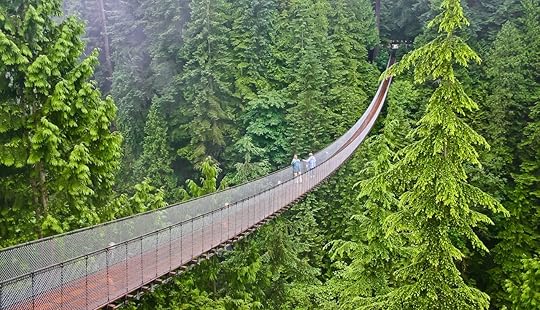
Photo: Yingna Cai/Shutterstock
Head to British Columbia to walk on the Capilano Suspension Bridge, a footbridge 70 meters (930 feet) above the Capilano River. When it was originally built in 1889, the bridge was made from little more than ropes and wood. Today, it’s one of the area’s top tourist attractions. In 1974, it was even the site of a well-known research experiment exploring the connection between fear-induced adrenaline and sexual attraction. If the rushing waters below freak you out, keep in mind that the bridge has the capacity to hold the weight of 96 full grown elephants.
3. Hanging Bridge of Ghasa, Nepal
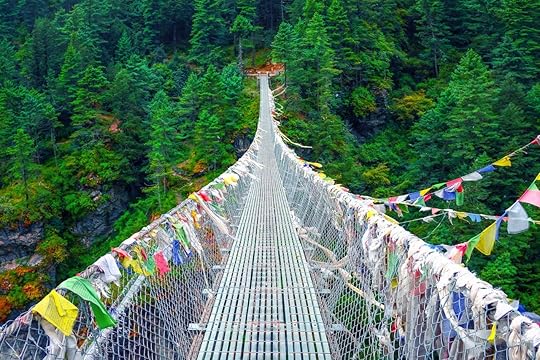
Photo: Vixit/Shutterstock
Stretching almost 370 meters (1,200 feet) across the Gandaki River, this bridge in Nepal was built to relieve congestion on main roads caused by animal traffic. The bridge leads to Ghasa, a small Himalayan village found along the Annapurna circuit, a circular route that traverses the Annapurna range over 12-20 days. While a relatively new road has made some portions of this trek accessible by bus (and a bit dusty), you can avoid vehicles by taking the eastern route from Kalopani to Ghasa and cross that cool bridge.
4. Kakum Canopy Walk, Ghana
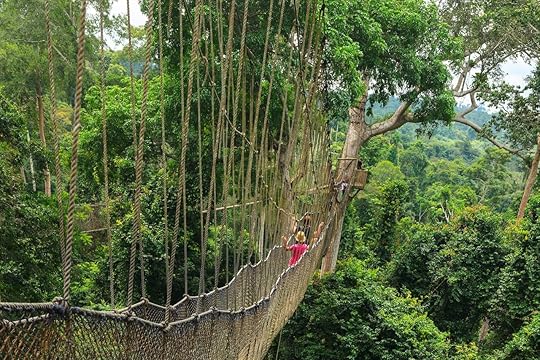
Photo: Linda Hughes Photography/Shutterstock
Two Canadians helped design this elevated walkway to encourage ecotourism at Ghana’s Kakum National Park. Hold your breath as you sway from tree to tree, suspended 30 meters (100 feet) in the air. The path appears more rickety than it is, with metal wires reinforcing the traditional rope and wood structure and a mesh net to prevent anyone falling onto the forest floor.
5. Keshwa Chaca, Peru
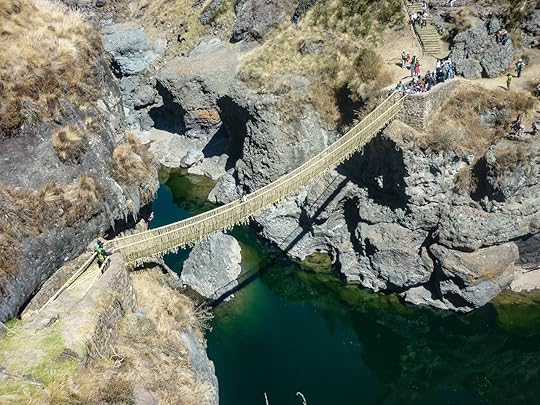
Photo: Marktucan/Shutterstock
For over 500 years, woven grass bridges have been a part of the Inca trail system, and their annual rebuilding has been a longstanding community tradition. Keshwa Chaca is the last remaining one in existence, spanning 35 meters (118 feet) between sheer cliffs cut by the Apurimac River, 18 meters (60 feet) below. Don’t let appearances stop you from taking the first step, the bridge is kept in great condition by the people of nearby Quehue.
6. Carrick-a-Rede Rope Bridge, Northern Ireland

Photo: Lautz/Shutterstock
This perilously-situated bridge connects mainland Northern Ireland to the small fishing island of Carrick-a-Rede. Walk the same path tread by centuries of salmon fishermen — the builders responsible for the first iteration of the rope and wood bridge over 350 years ago — as you dangle 30 meters (100 feet) above the choppy Atlantic Ocean. The weather tends to be fickle in this area and it’s not uncommon for a change of conditions to require visitors to the island to be taken off by boat, so check the forecast before you go.
7. Tsingy de Bemaraha National Park, Madagascar
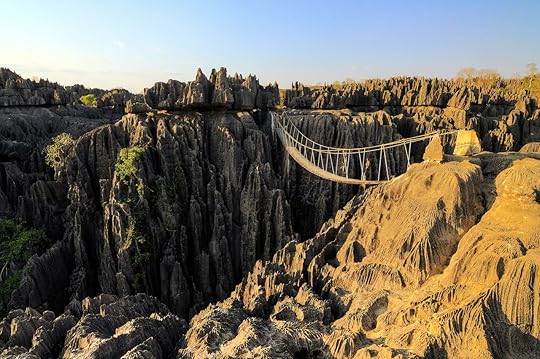
Photo: Dennis van de Water/Shutterstock
Designated a UNESCO World Heritage site, Tsingy de Bemaraha National Park is made up of hundreds of limestone ‘needles’, creating a dramatic slate landscape of peaks and crags. Take at least half a day to explore the area of Big Tsingy, where you will scramble over rocks and through caves while clipped into a harness system for safety. Throughout the trek, wood and rope bridges strung between limestone outcrops will make your heart pump as they lead you over the razor-sharp rocks below. Don’t be surprised if one of the area’s many lemurs joins you on the crossing.
8. Trift Bridge, Switzerland
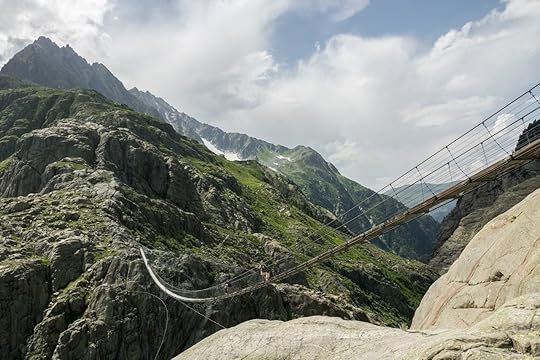
Photo: Michael Stipek/Shutterstock
When melting glacial waters flooded the footpath to the Swiss Alpine Club’s Trift Hut, Switzerland decided to string a 170 meter (560 feet) suspension bridge across the new-found body of water. The Trift Bridge, originally designed with Nepal’s time-tested three rope structures in mind, carries you 100 meters (330 feet) above the ground. After proving its popularity with visitors, it was rebuilt with heightened safety guidelines in 2009 and is now one of the most well-known and dramatic ways to access the Alps by foot.
9. Iya Valley Vine Bridges, Japan
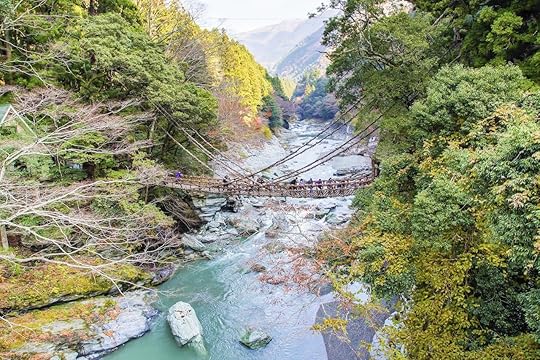
Photo: CK Ma/Shutterstock
These impressive footbridges are found deep within the notoriously difficult terrain of Japan’s smallest main island, Shikoku. The bridges are painstakingly made up of hearty vines woven together, with widely spaced wooden slats acting as footholders. Their mythical origin story places the bridges’ creation in the hands of the founder of Shingon Buddhism, while others say the vine bridges were made for quick-cutting in the case of enemy pursuit. Don’t be alarmed though: the quick-cutting days are over, with the bridges now securely (and permanently) fastened to land.
More like this: 30 of the world's most beautiful bridges
The post The 9 scariest bridges in the world you can walk on — if you dare appeared first on Matador Network.

Adorable and dangerous animals
Some animals can be defined by their cuteness, while others are known for the fear they inspire. But, there is also a third, more confusing category of adorable animals that are more than ready to mess you up, given the opportunity; we call this group of creatures “Dangerously Cute”. While touching wildlife is generally frowned upon, for these animals, doing so could be deadly. Here are seven of the world’s most surprisingly vicious creatures, and where to (safely) see them in the wild.
1. Kangaroo

Photo: No Border-Braydon Howie/Shutterstock
Kangaroos look like dogs that learned to walk upright, with the added bonus of having cute little babies peeking over their pouches. They are undoubtedly adorable, but it’s our natural desire to pet them (or have selfies taken with them) that contributes to their danger to us — we get too close and then they kick and scratch the crap out of us. Still, no trip to Australia is complete without spotting a kangaroo, and they are fortunately very common to see. If you want to guarantee an attack-free, sustainable sighting, head to The Kangaroo Sanctuary in the Northern Territory’s Alice Springs, which rehabilitates orphaned joeys, and provides a home to those that can’t return to the wild.
2. Platypus

Photo: John Carnemolla/Shutterstock
Duck bill, beaver tail, otter feet: super cute. Venomous velociraptor ankles? Not as cute. The males of this strange, Australian egg-laying mammal are armed with a venomous spur that delivers excruciating, incapacitating pain, but it’s not fatal to humans (except perhaps babies and young children). Fear not, as they are incredibly difficult to locate even when looking in the right spots. If you want to try, head down under to Warrawee Forest Reserve in Latrobe, Tasmania, the self-proclaimed “platypus capital of the world,” and keep your distance.
3. Golden Poison Dart Frog

Photo: Aleksey Stemmer/Shutterstock
The name gives away the toxicity of this striking amphibian. Its skin is what makes it so attractive — it has rich, golden hues, sometimes more green or orange, but always densely packed with batrachotoxins. These toxins keep nerves from transmitting impulses, which could be survivable if this little guy wasn’t packing enough heat to bring down two bull elephants. You can find them on the Pacific coast of Colombia, but if you know what’s good for you, don’t touch them.
4. Hippopotamus
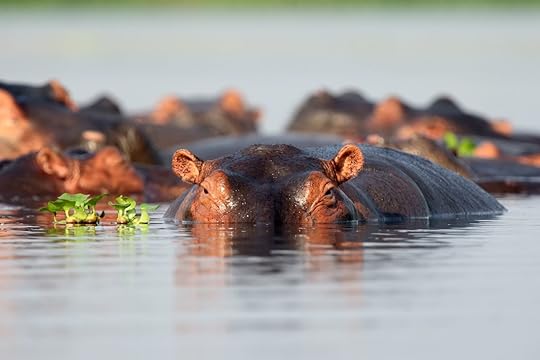
Photo: Karel Bartik/Shutterstock
Pretty much everything about hippos contributes to them being the deadliest animal in Africa (besides mosquitoes). Despite this, they are also without a doubt one of the cutest creatures to walk this earth, hence their viral popularity in zoos stateside, so you don’t want to pass up a chance to see them. National parks in Africa provide prime opportunities to spot these deadly cuties, with Serengeti National Park in Tanzania and Kruger National Park in South Africa being two excellent choices. Just remember they’re a lot faster than they look.
5. Slow Loris

Photo: hkhtt hj/Shutterstock
The heart-melting appearance of this primate has launched it into the spotlight as a highly and illegally-trafficked animal. A particularly problematic component of their being traded is the cruel cutting of their teeth, which is meant to protect people from their toxic bite. Viewing slow lorises in the wild is not only the most humane way to appreciate them, but doing so promotes ethical tourism, moving the market away from trafficking. Their range includes much of Southeast Asia, but considering they are nocturnal, endangered, and terrified of humans (for good reason), your best bet is Love Wildlife rescue center Chonburi, Thailand.
6. Bear

Photo: Sergey Uryadnikov/Shutterstock
As children, we are gifted cuddly facsimiles of bears while being simultaneously warned against getting near the living version, which makes us form a relationship with them that is at odds with itself. Should we snuggle with them? Shoot them on sight? Buy toilet paper from them? None of these are the answer, but fortunately there are standard operating procedures should a bear encounter occur. Armed with this (and the knowledge that bear attacks are extremely rare), you can go looking for them in some of the greatest national parks in the United States, including Denali National Park in Alaska, Glacier National Park in Montana, Yellowstone National Park in Wyoming, and Yosemite National Park in California. Be sure to bring your bear spray.
7. Cone snail

Photo: Len4ik/Shutterstock
What the cone snail lacks in traditional aww-factor, it makes up for in having pretty shells. And what it lacks in stature it makes up for in having a highly-venomous harpoon, which can penetrate wetsuits. People love to collect their intricately-beautiful shells almost as much as they dislike being stung by a sea-dwelling invertebrate, so it’s up to you to decide whether or not it’s good that over 800 different species of cone snail exist. If you are inclined to seek them out, head to warm, tropical waters, like the barrier reef along Belize’s Caribbean coast.
More like this: Where to see all the internet's favorite animals in real life
The post 7 adorable animals that are actually super dangerous appeared first on Matador Network.

How to confuse an Alaskan
Generally speaking, Alaskans are a clued-in bunch. We’re situationally aware, we’re mindful of things many never realize need minding and our critical thinking and creative problem-solving skills are well employed. Basically, we’re not easily put out of sorts. There are occasions, however, where we’re taken aback and must take a moment to mentally regroup. Here some quips and bits on how visitors, the newly relocated, and outsiders, can perplex and confuse an Alaskan.
1. Ask, “Have you ever seen the Aurora?”
This inquiry makes us wonder where you were during earth science classes and whether or not you went to a school that taught planetary relevant things like the difference between aurora borealis and aurora australis.
Two questions that elicit an Alaskan-worthy, conversationally-engaging response to aurora-related queries are: “When was the last time you saw the Northern Lights?” and “Where were you when you saw them?”
2. Ask, “Do you know how to drive?”
Don’t be surprised if we retort with a bemused yet slightly insulted undertone, “Drive what, specifically?”
Driving, to the vast majority of Alaskans, is what water is to a fish. And asking an Alaskan — any Alaskan of age — if they know how to drive is always the wrong angle. The better approach is to ask what we drive and where to. The Alaskan you’re talking to will gush and his/her response will be infinitely more interesting.
3. Not pulling over to let people pass when vehicles pile up behind your extra large, slow going ride.
Why is this not the norm everywhere? Why is this not the platinum standard of universal road etiquette? Why is this not a question on drivers license exams the world over?
Our collective Alaskan minds cannot fathom the poor driving ethics and incomprehensible degree of inconsideration for those stuck behind — with little opportunity to pass — wheeled monstrosities whose drivers are woefully unaware of the rules of Alaskan roads. Nothing baffles the Alaskan psyche more than being forced to drive behind the slowest vehicle on the road because the driver of said vehicle doesn’t have the foresight to pull off at the nearest turnout.
4. Talk about moving out of state as though it were a good thing.
For university? Heck yes! By all means go expand your horizons, experience another part of the world and practice adulting. For life? We have to ask, “Have you gone mad?” Why would anyone want to leave Alaska? No, really — how is that even a thing?
The unabashed truth is: everyone who does this ends up regretting it. All Alaskans know this yet, a small portion of our population goes down this path anyway. We just don’t get it.
5. Use a dustpan to shovel snow.
There’s a reason people invented tools and called them “snow shovels.” Unless you’re a toddler out helping mum or dad, nobody bends over that far to scoop a light powdered sugar dusting of snow off their front walkway while it’s actually still snowing. Nobody.
6. Drive on dry roads with chains.
In this case, “dry roads” means no snow cover to act as a barrier between your vehicle’s chains and the asphalt. For the record, snowfall doesn’t automatically warrant the use of chains on motorized vehicles — particularly not if you’re driving on flat city roads far away from any mountains, rural areas, or steep terrain.
That “thump thump thump” those chains make banging on the bare pavement? It’s the sound of dollars going down the drain from damage. Damage to the vehicle and damage to the road. Please take the 15 or so minutes to educate yourself on the appropriate response in situations like this. Your car, your tax dollars, and your confounded Alaskan pals will all thank you.
7. Shut down an entire city for extreme weather when the “extreme” is two inches of snow (or less).
Here’s looking at you Atlanta, D.C., London, Rome, Tokyo, and myriad others — you know who you are. Please, just stop the madness. It’s not a legitimate snowpocalypse until snow reaches above the front door.
8. Have no idea how to get yourself and your vehicle unstuck from said two inches of snow.
This is not rocket science, it’s critical thinking and problem-solving. It’s also less than two inches of snow. Sitting in your vehicle, pressing the accelerator and spinning your tires faster is not going to help your cause in the least. Also, how in the blazes does anyone get stuck in less than two inches of snow? We truly don’t understand.
9. Expect us to believe salt on the roads is a good thing.
It ruins cars and cars are expensive and already difficult enough to keep in decent condition for the long haul. It’s also not that fantastic for the environment by polluting waterways and adversely affecting flora and fauna. It also puts a serious wrinkle in one’s wintertime fashion (ie. crusty white stains on that pair of expensive Uggs from Santa).
For all the technological advancements available and the global push for eco-friendly alternatives, most places still use rock salt as their go-to — we just don’t understand.
10. Panic shopping.
Why do you not already have a six week supply at home? What happened to your deep freeze and your cache of canned goods and sundries? Do you not shop at Costco or Sam’s Club? Whatever happened to the “have enough in store to last 3-10 days for yourself and a neighbor in case of a disaster” mentality?
Alaskans are schooled from birth on the importance of having and maintaining a cache robust enough to last through at least one, if not two nuclear winters. Our unofficial Alaskan motto is, “always be prepared for everything, all the time.” Panic buying in a crazed frenzy bemuses us and we can’t wrap our minds around the phenomena when we hear about it on the news. Our first thought when experience the panic shop frenzy firsthand is, “Woah! I just walked into a Hollywood film set by mistake.”
11. Talk about freeways, toll roads, and the interstate.
We don’t have any of those and we’ll likely stare at you blankly when or if you mention them. We do have highways and a haul road that gets us from Alaska through Canada and back into the lower 48. The closest thing we have to a toll road is the 2.5 mile/4m stretch of tunnel that gets us from Portage to Whittier. A roadway which also happens to be North America’s longest highway tunnel has a single lane and only operates one way at a time. At 13 to 300 dollars each way depending on vehicle type, it’s also the most expensive 2.5 miles most will ever drive.
12. Talk to us like public transportation is normal.
We come from a state dependent on personal or chartered vehicles to get where we need to go. Talking to us about trains, subways, monorails and vast city bus networks is pointless. All we do is wonder, “Why would anyone want to live in a place like that? I’d rather drive myself.”
More like this: How to humiliate yourself in Alaska
The post How to confuse an Alaskan appeared first on Matador Network.

Humiliate yourself in New Mexico
We get it. You’re new here, or you’re just visiting from out of state. You probably don’t know how we do things around here in good old New Mexico. So if you happen to make any of these mistakes and humiliate yourself, don’t worry, we won’t judge you (too hard).
1. Order the hottest level of chile if you’re an out-of-towner.
We know you’re probably trying to show off, but you’re only hurting yourself. You’ll be begging for some milk in about five minutes.
2. Mispronounce Spanish words.
It’s Cerrillos, not Cer-ILL-os. Pojoaque, not Po-JA-q. Tortillas, not Tor-till-as. It’s basic Spanish, not rocket science.
3. Use your indicator.
The turn indicator is a foreign concept for New Mexicans, so if we see you using it, we’ve got you pegged as a straight-edged, road-safety-conscious nerd.
4. Go to Chipotle or Taco Bell to eat.
Seriously? Just, seriously? There is actual, genuine, delicious New Mexican food all around you, why would you go for the knock-off generic brand? (Side note: the only time Taco Bell is acceptable is when you’re drunk, you need something Mexican, and everything else is closed.)
5. Make a comment about how high Santa Fe is.
Yeah, it’s over a mile high, you’re out of breath, whatever. Give it a day, you’ll be fine.
6. Assume that everyone speaks Spanish or is of Hispanic descent.
Stereotyping. Not cool.
7. Wear tons of turquoise jewelry with cowboy clothing.
No one here actually dresses like that. Ever.
8. Say that the only things you know about New Mexico are from Breaking Bad.
Don’t believe everything you see on TV. We don’t have blue meth and Pollos Hermanos is not a chain.
9. Dress for rain.
No one in New Mexico owns a single piece of clothing for rain. We know that when it does rain it’ll stop in five minutes, so what’s the point of dragging around a pair of galoshes or a raincoat all day?
10. Ask us about aliens and Roswell.
Psh, get out of here with your conspiracy theories. And like we would actually tell you if we had close encounters.
11. Assume that New Mexico is the same as Arizona or Texas.
Dude, really?
12. Ask if New Mexico is a part of Mexico.
No, no, no, no, no. For the last time, New Mexico is SEPARATE from Mexico. We are a state, not a country. You lose any and all credibility when you ask this, even as a joke. Sorry, we take back what we said about not judging you.
More like this: 37 signs you’ve become culturally New Mexican
The post How to humiliate yourself in New Mexico appeared first on Matador Network.

May 11, 2018
Tourists kidnapped in Virunga
Two British tourists and a third person — the driver of the convoy the group was a part of — were kidnapped on May 11th inside Virunga National Park in the Democratic Republic of the Congo. The Telegraph reported that a guard at the park was killed in the attack. The convoy was ambushed as they passed through the Nyiragongo territory, which is located north of the city of Goma. It is not yet known whether the kidnappings and violence are an isolated incident or part of a larger movement, and authorities have not released information on who the perpetrators might be.
Virunga National Park covers a vast area of approximately 3,000 square miles. The park sits on DRC’s border with Uganda and Rwanda and is the largest park in the country. It is one of Africa’s most prominent conservation areas and was the subject of a recent Netflix documentary produced by Leonardo DiCaprio, which chronicled the efforts of wildlife activists to save a group of mountain gorillas who resided in the park. Virunga National Park is home to an estimated 25% of the planet’s mountain gorilla population and, as such, has become increasingly popular among travelers.
There had not been any reports of violence against tourists prior to this incident, but The Telegraph noted that five guards and their driver were reportedly killed by the Mai-Mai Militia last month in a secluded area of the park. According to Condé Nast Traveler, 175 park rangers have been killed within the park in the past twenty years.
H/T: Condé Nast Traveler
More like this: The thrill of looking for and finding gorillas in Virunga National Park
The post Two tourists have been kidnapped inside Virunga National Park appeared first on Matador Network.

All-you-can-fly around Norway
If you have any open time in your calendar between July 1st and August 31st, here’s an idea you may want to consider: a two-week jaunt across Norway to check out the fjords, bask under the glow of the Northern Lights in the Arctic Circle, and make your way through Oslo’s vibrant city center.
Norwegian airline Widerøe is offering the Explore Norway Ticket, i.e. an all-you-can-fly ticket that allows you to check out as much of the country as you can inside of a two-week span.
The airline has divided the country up into three zones, based around the southern, central, and northern parts of the country (Check out the map here to see all the destinations covered by this deal and where the zones start and end). Your fare to travel within only one zone costs $435, two zones is $512, and an unlimited ticket to check out the entire country costs just $589. This cost covers airfare into the country from a handful of nearby international airports (Aberdeen, Billund, Copenhagen, Gothenburg, Hamburg, London and Munich). Those coming from further away, such as the United States or Canada, need to get themselves to Europe.
The ticket is about as open-ended as possible. After your first flight, you’re free to make changes to the itinerary on short notice and can fly into or out of any of the Norwegian airports the airline operates from, as long as you don’t fly out of the same city more than four times. Technically, you could spend the entire two weeks jet-setting and taking in the country from 30,000 feet up — but we don’t recommend that, as the country is much more beautiful once you get your boots on the ground.
For those unsure of what to check out, the airline has even put together sample itineraries based on interest, including one for music and culture, another for fishing, one for checking out the country’s legendary fjords and coastlines, among others.
H/T: Lonely Planet News
More like this This airline will let you take your kiddoes to Scandinavia for free
The post This airline will let you travel unlimitedly around Norway for the price of a single ticket appeared first on Matador Network.

Coolest passports around world
A passport can say a lot about a person. It tells strangers where you’re from and how easy or difficult it is for you to travel the world, but its color is also an indicator of what your status in that country is. If your passport is bent and the front is covered in stickers, you’re likely well-traveled. If it’s filled with stamps and shiny visas, you’re sure to be a hard-core nomad. If your passport has water damage and all the visa pages are curled up, you’re probably in need of a new one, ASAP. But what does the design of your passport reveal about the culture of your homeland? Here are the 7 coolest passports from around the world and the stories behind them.
1. The Canadian passport
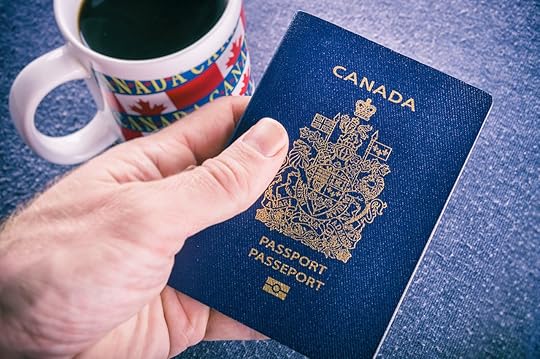
Photo: Marc Bruxelle/Shutterstock
At first glance, the Canadian passport looks rather ordinary. It’s got an unusually-soft and pliable cover that is navy blue with the Royal Coat of Arms of Canada gold gilded on its front. The good stuff is to be found inside. Just like with any other passport, to avoid forgery, each visa page on the Canadian passport has a unique design that features important historical figures and buildings, significant symbols, natural wonders, etc. But, unlike run-of-the-mill passports, the Canadian one becomes incredibly colorful and artsy when one shines a black light on it.

Photo: Architecturedesign.net
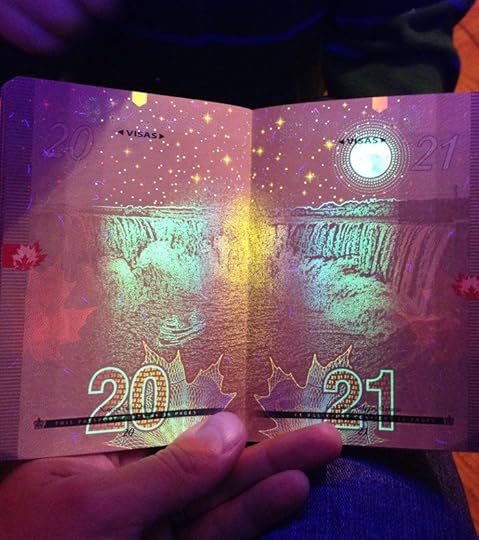
Photo: Architecturedesign.net
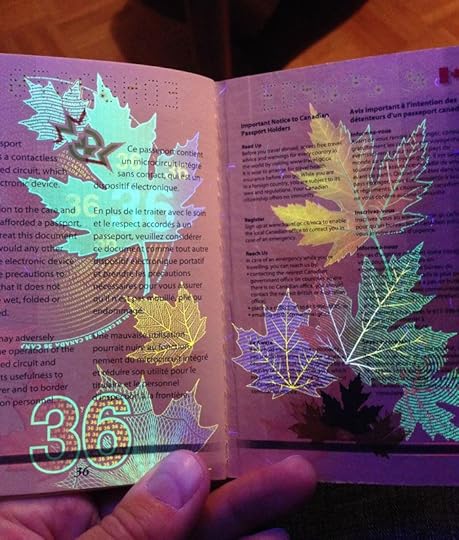
Photo: Architecturedesign.net
Canada is not the only nation with counterfeiting-prevention holographic UV-light art; Norway, China, Hungary and Germany (among others) also have this beautiful feature on their new passport.

A example of a visa page on the Norwegian passport
Photo: Neue Design Studio
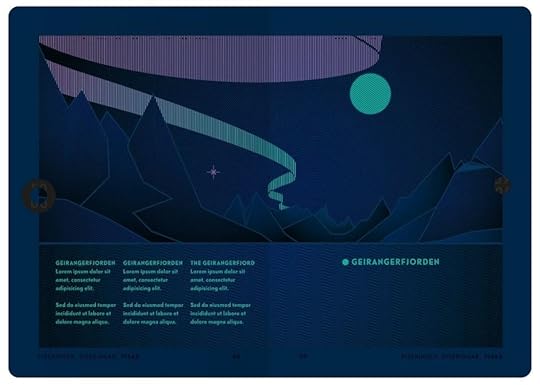
A example of a visa page on the Norwegian passport
Photo: Neue Design Studio
2. The Gabonese passport
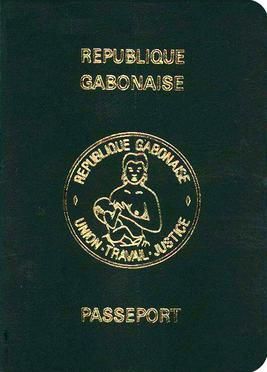
Photo: Wikimedia
Before the older version of the Gabonese passport is phased out by the much-less exciting (but still fun) biometric one, let’s acknowledge how cool the initial design was. Black and debossed with a round, golden image of a woman breastfeeding her child, the old Gabonese passport is the only passport featuring this very natural act — and nipples. The new Gabonese passport is green with the country’s coat of arms on it, i.e. two panthers holding a shield.
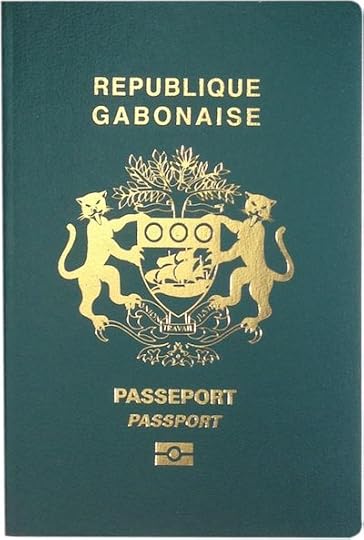
Photo: Wikola
Both the old and new versions feature the motto “Union, Travail, Justice” (“Unity, Work, Justice”) in French. Gabon is a former French colony and retains strong ties with France.
Note that the new Gabonese passport is very similar to other African passports. A coat of arms displaying animals holding a shield is also found on the passports of the following countries:
Zimbabwe (kudus)
Uganda (a crested crane and an Ugandan Kob)
Swaziland (lion and elephant)
Somalia (leopards)
Sierra Leone (lions)
São Tomé and Príncipe (a falcon and a parrot)
Namibia (oryx antelopes)
Malawi (a lion and a leopard)
Mauritius (a dodo bird and a sambar deer)
Lesotho (Lesotho ponies)
Kenya (lions)
Gambia (lions)
Congo (elephants)
Chad (a goat and a lion)
Botswana (zebras).
3. The Japanese passport
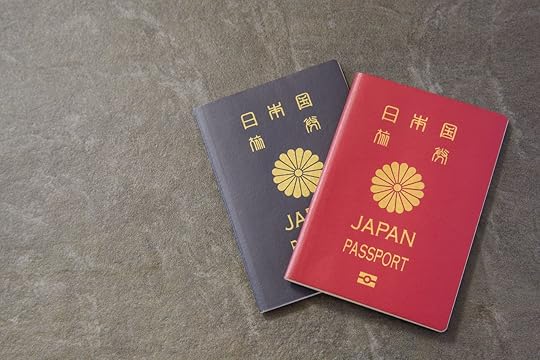
The Japanese passport cover can be either red (10-year validity) or blue (5-year validity).
Photo: Yobab/Shutterstock
The Japanese passport is minimalistic. There is no complicated coats of arms to analyze because the only decorative aspect featured on the front cover is a shiny, golden flower. And no, it’s a not the famous cherry blossom. It’s actually a chrysanthemum, a flower that is the symbol of autumn in Japan, but also of the country itself. According to The Japan Times, the Japanese monarchy is referred to as the “Chrysanthemum Throne” and the chrysanthemum is also depicted on the ¥50 coin.
Although the outside of the Japanese passport will remain as is, the security features and the visa pages will be soon be updated. Instead of the current cherry blossom design found on the immigration stamp pages, there will be twenty-four views of Mount Fuji, each on a double page. The Mount Fuji depictions that will be used are those of 18th-century Japanese artist Katsushika Hokusai. According to Condé Nast Traveler, the changes will be implemented before the 2020 Olympic Games that will take place in Tokyo.
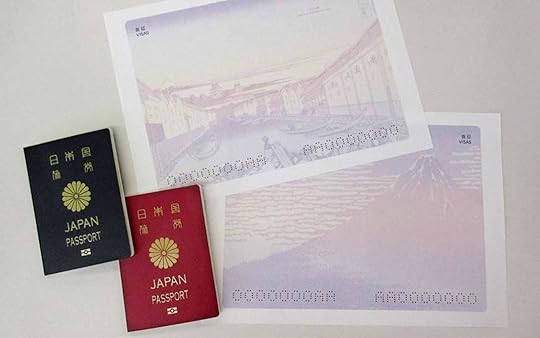
Photo: Japan Foreign Ministry
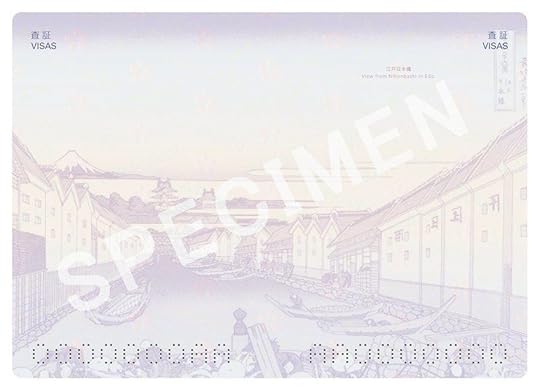
Photo: Japan Foreign Ministry
4. The Swiss passport

Photo: Yevgen Romanenko/Shutterstock
The Swiss passport is truly representative of the Swiss culture. The cover is very thick , so it gives an impression of luxury. The front is bright red with a white cross in the top right corner, mirroring the flag almost perfectly. The red cover with a white cross design is not new; it’s been used in different forms since 1959. The rest of the front cover has crosses embossed. To sum it up, it’s sleek and definitely an eye-catcher when walking around a foreign airport.
But it does not stop here. The inside is also incredibly cool. Each visa page has the white Swiss cross in its center and is very colorful.
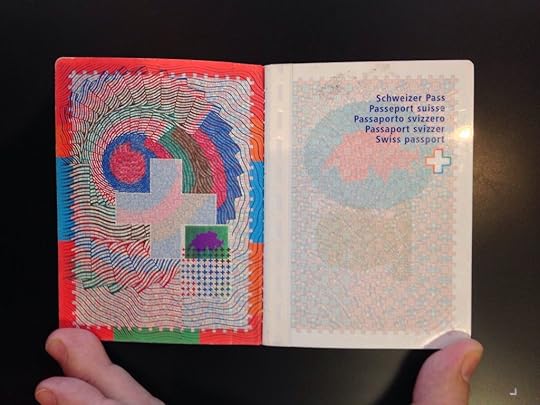
Photo: ILikePleatedMiniSkirts
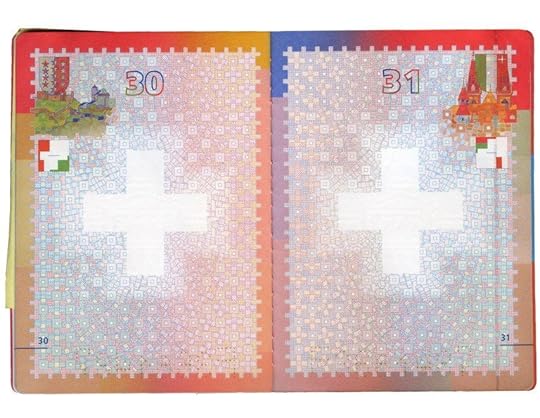
Photo: Dezeen
5. The Finnish passport
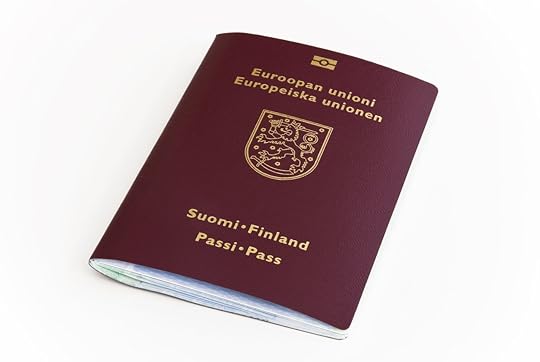
Photo: Nils Z/Shutterstock
Although the Norwegian passport is often hailed as the fanciest in the world, the Finnish passport has nothing to envy its Scandinavian neighbor’s travel document. Granted its cover is slightly boring (burgundy red with the Finnish coat of arms embossed in gold right in the center of the front cover), the inside is super fun. A reindeer in the bottom right corner of every visa page starts running as you flip through the pages. See for yourself in the video below:
On January 2017, to celebrate the 100th anniversary of Finland, a new passport design was introduced and it’s unfortunately not as creative. The cool reindeer on the visa pages has been replaced by winter scenes. But there’s some good news. The Finland 100 jubilee logo is embossed on the back cover and the visa pages will feature UV prints of northern lights and snowflakes. You lose some, you win some.
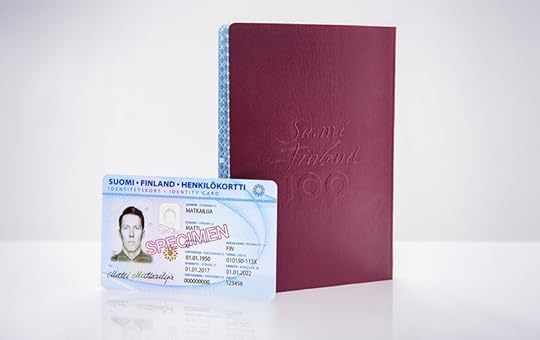
Photo: SuomiFinland100
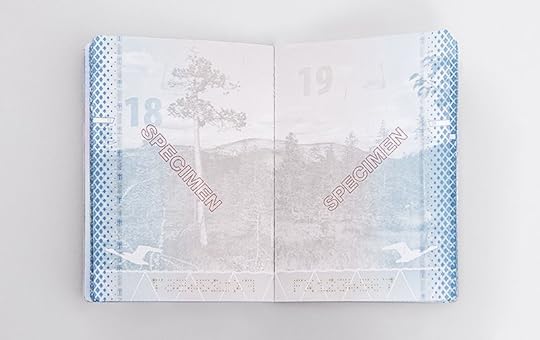
Photo: SuomiFinland100
Note that the Slovenian passport also works as a flipbook:
6. Lebanon

The old and the new version of the Lebanese passport.
Photo: Graphicshoplb
Biometric Lebanese passports were issued in 2016 to replace the very outdated hand-written version that the country used until then (it was high-time to have a more secure travel document). This new passport was designed by GraphicShop and, in an interview with bananapook, they explained some of the design choices they made.
The Lebanese passport is blue to symbolize the Mediterranean Sea and has one cedar tree embossed on its front cover and another one gold gilded in the top right corner. Cedar trees are found all over the country, as well as on the Lebanese flag, and there are mentioned in the national anthem, so it’s only natural to find the cedar so prominently featured on the country’s passport.
Inside, the passport showcases 22 Lebanese landmarks, each on the width of a double visa page. Also on each double page is a sun that starts from the east on the first visa page and that ends at the west on the last one, so the passport works as a flipbook. Under UV light, each visa page shines and, instead of the sun’s, you can see the moon’s movements in reverse as you flip through the pages.

Photo: Graphicshoplb
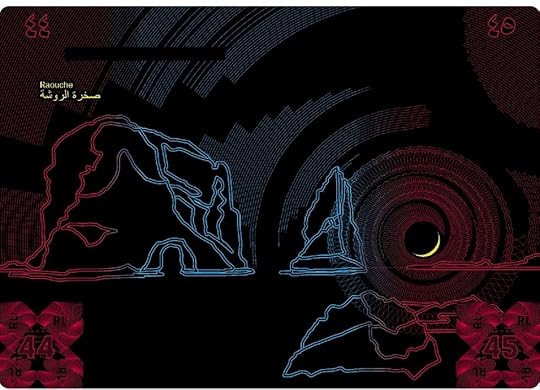
Photo: Graphicshoplb
7. Egypt

Photo: Mohamed Nyal/Shutterstock
The Egyptian passport is rather strict-looking. It has the Eagle of Saladin (the Egyptian coat of arms) gold gilded on its front cover, but there’s no other decorative elements. Inside, it’s just as mundane. The 52 pages all feature the same image of King Tutankhamun.
But there are a couple of fun things to be said about the country’s passport nonetheless. First, the shade of green of the cover is very unusual. Second, the travel document is read from right to left, so what we usually call the “back cover” is the front cover and vice-versa. This feature is not unique to Egypt, it is found in some, but not all, Arabic-speaking country (Arabic is written and read from left to right) such as:
Afghanistan
Algeria
Bahrain
Djibouti
Iran
Iraq
Libya
Morocco
Qatar
Saudi Arabia
Sudan
Tunisia
Yemen
This is also the case for the Israeli passport, but not for the Japanese passport.
Note that if you want the Egyptian passport to pop a little more and have some cool ideas, you can submit your design with the hashtag #NewEgyptianPassport on Twitter.
More like this: The 7 coolest currencies in the world and the stories behind them
The post The 7 coolest passports around the world and the stories behind their designs appeared first on Matador Network.

Chile's Atacama desert
Chile’s Atacama desert is unlike anywhere else on the planet. It’s simultaneously eerie and seemingly void — as many deserts are — but also vibrant and full of life, as flamingos, foxes, llamas, and more call it home. If the sight of volcanoes, lagoons, valleys, and dunes don’t take your breath away, the elevation certainly will — much of the region sits between 8,000 and 14,000 feet. It does feel like stepping onto another planet, which makes it entirely worth the trek to get there.
1
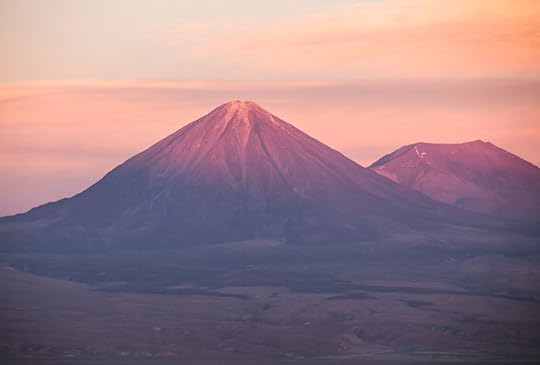
Last light on Licancabur Volcano
Licancabur rises a whopping 19,423 feet, and this is one of the more popular spots to view the stunning stratovolcano. As sunset approached, clouds began drifting towards the mountains, and after the alpenglow faded, the skies turned an electric shade of pink.
2
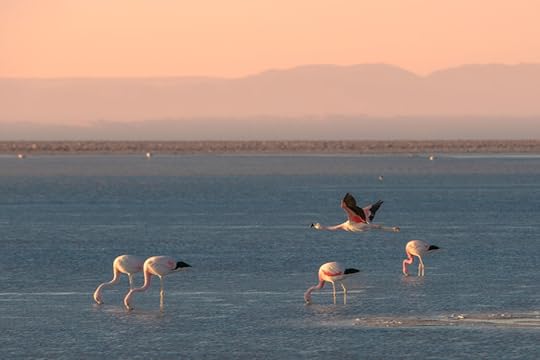
Flamingos at Chaxa Lagoon
This salty body of water is home to not one but three different kinds of flamingos (Andean, James, and Chilean), and with the mountains in the background, it’s an incredible place to catch sunset.
3
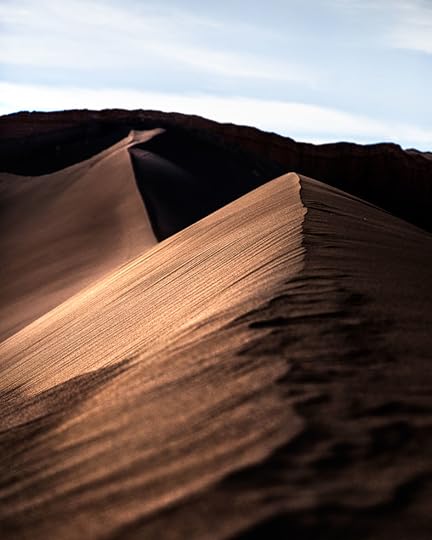
Sand dunes at Valle de la Luna
They aren’t known for their prominence, but the bronze hue of the dunes at Valle de la Luna is kind of mesmerizing. The sand glitters under the late afternoon sun, and a short hike up the dunes offers visitors a massive view of the surrounding area, which borders both salt flats and alien-esque rock formations.
Intermission
Pop Culture
You can now visit an entire museum dedicated to weiner dogs
Katie Scott Aiton
Apr 5, 2018
Language Learning
10 untranslatable Italian phrases we need in English
Giorgio Velardita Nardini
Mar 15, 2018
Sponsored
18 gorgeous images of Virginia we can’t stop looking at
Jacqueline Kehoe
Apr 25, 2018
4
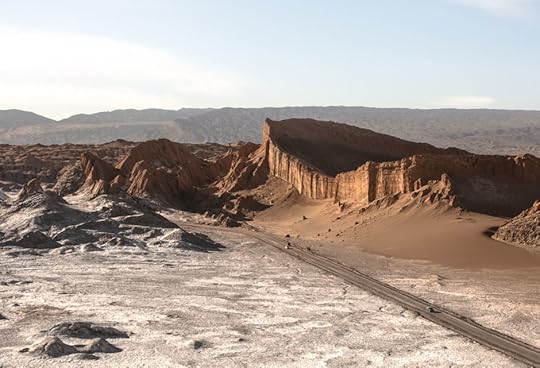
Landing at Valle de la Luna
The aptly named Valley of the Moon is a place I wish I had a few more days to explore, because there is something new around every bend. NASA has tested the KREX-2 Rover in some areas here, as the extreme dryness and heat creates “one of the most important environments on Earth for researchers who need to approximate the conditions of Mars.”

5
A world within a world
At first glance this looks like it could be a sweeping aerial shot, like Mars from above, but I actually snapped this zoomed in with a long lens. Though tourists are permitted to wander all over sand dunes in many other parts of the world, most of the dunes here were roped off, to preserve the landscape - and rightly so.
6
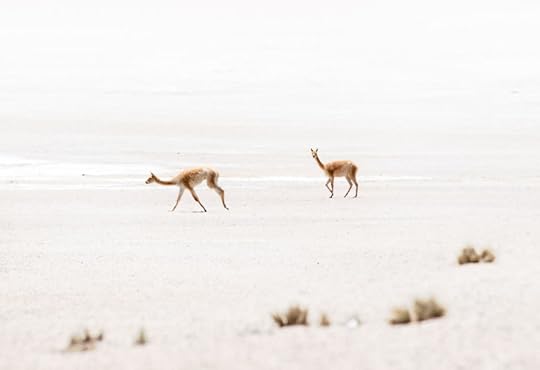
Vicuñas on the move
Despite the harsh conditions of the Atacama desert, there is a surprising amount of wildlife in the area. Vicuñas, llamas, and guanacos are among the camelids in the region, and watching them dip their heads as they lope around the landscape is just as beautiful as it is strange.
7
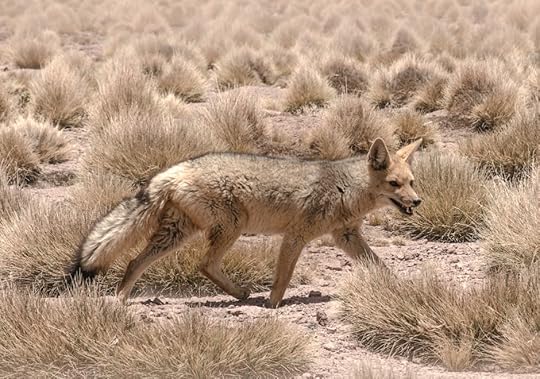
Blending in with the brush
I saw brown, tan, and the occasional splash of green as I scanned the landscape around me, and then I caught a flash of movement next to the road. It was too small to be a puma, but could it be… an Andean fox? After pulling over and killing the engine, the critter trotted back into view, and I couldn’t believe my eyes. With a camouflage like this, it’s no wonder this canid goes largely undetected by humans - and the rodents it preys on.
8
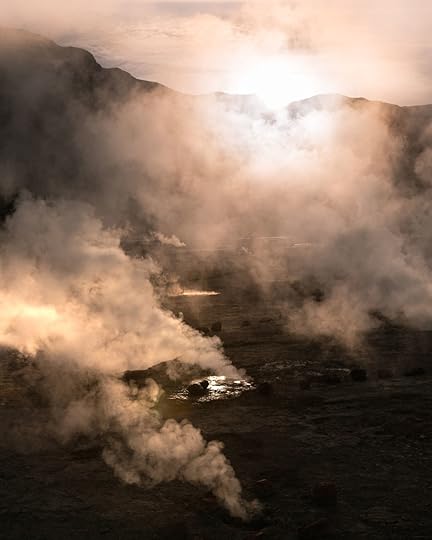
Sunrise steam at the El Tatio geysers
It was so cold I needed gloves and a puffy jacket, and seeing as I was more than 14,000 feet above sea level, I’ll be honest: I wasn’t feeling so hot. However, getting to the El Tatio geysers at 6 AM to catch the first rays of sun poking through the steam was well worth the trek. This is the largest geyser field in the southern hemisphere, and there were so many around me, I had no idea where to point my camera.

9
The simple things
There’s something about the smell of the dry, desert earth that I find intoxicating, and though the temperature dropped just as fast as the sun, it was a struggle for me to leave this vista and head back to the car, let alone pack up and leave this amazing place.
More like this: 10 spots that will make you want to head to Chile's Atacama Desert
The post 9 incredible photos of Chile’s otherworldly Atacama Desert appeared first on Matador Network.

Horror stories from customs
No international trip can happen without a visit with borders and customs officers, there to scrutinize each and every person who wishes to enter their country. Although their purpose is to suss out who is trying to break the law from among the masses, plenty of non-criminal travelers have customs horror stories. From making ill-timed jokes to looking like the wanted murderer of a celebrity, there’s no shortage of nerve-wracking stories to share about border control. Here are eight of them.
1. Being evasive is a big no-no.
Pretty much every tourist visa includes the requirement to have proof of planned departure, but this can be a mere footnote in researching travel to another country. Erika M. learned this the hard way when she took a Greyhound bus from the US into Canada. “They asked me very detailed questions about my stay and I think I went wrong when I didn’t state a specific day to return. That’s when they went to the back, came out, and started swabbing all my luggage and going through everything. We waited two whole hours while they searched everything! It wouldn’t have been so distressing if they didn’t take as long as they did, and if I wasn’t the only one being checked: I was not the popular kid on the bus after that.” Learn from Erika’s mishap and, “always have a return date when traveling out of the country.”
2. Looking like a murderer could be problematic.
Usually looking like someone famous is a good thing, but in Joel R.’s case, being mistaken for fashion designer Gianni Versace’s fugitive murderer landed him in Washington Dulles’ airport prison for hours on end. “I was wearing the same Club Monaco sweater in my passport as Andrew Cunanan was wearing in the photo they chose [to give the media]. After three hours in the dark room, [during which] they called my parents and my employer, they actually told me why I had been detained. It was bizarro.”
3. Joke at your own risk.
It’s advisable to skip jokes when crossing the border, as it can make your scrutinizer think you’re attempting to distract from something nefarious. That said, border and customs officers sometimes have a sense of humor. Just ask Mary D., who was heading into the UK to study abroad, and couldn’t help herself. “A very gruff customs guy was giving people a hard time, and when it was my turn, he eyed me up and down and asked what the purpose of my trip was. I said, “to study British theatre… and to find my own personal Mr. Darcy.” He stared at me for a very long moment (it was my first time out of the country, much less traveling by myself and I felt like I was about to cry as he was staring at me) and then threw his head back in this loud, deep-bellied laughter and waved me through.”
4. Don’t act like a drug mule.
Taking a day trip into a neighboring country sounds like a grand old time, but quick back-and-forth crossings are a telltale sign of a trafficker. Jami M. wanted to take advantage of having a rental car for the day to check out Niagara Falls on the Canadian side, but a short itinerary combined with the antics of a former renter got her on border control’s bad side. “US Customs had us park in a line and get out while some machine examined our cars. Suddenly, these border agents are quite literally ripping my rental car apart. Headrests: off. My suitcase I’d been living out of for 5 months for work: stuff strewn ALL OVER THE GROUND. Engine: examined. So they start grilling me about why I would rent a car, go across the border about 20 minutes later, and return within 1.5 hours. Which, to be fair, probably should raise some red flags. Except, perhaps, when just on one side of said border is the most gorgeous waterfall in North America. They ended up letting me go after two hours or so. They suspected some previous renter had smoked pot in the car, which is what the detector found trace elements of.” Another good lesson not to hotbox a car that isn’t yours.
5. A horror story for the socially anxious.
Every so often, it’s the border agent who feels like making jokes, which sounds like it would be a relief, but because it’s so out of the ordinary, you have to wonder what they’re really up to. When Kristina F. was heading home to the US from Canada during the holidays, she found herself at the desk of a humorous border agent whose requests she couldn’t deny. “The US customs agent at the Calgary airport asked what kind of instrument I was carrying and I said it was a ukulele. He requested I play him a song right there. So I played ‘Somewhere Over the Rainbow’ and I’m pretty sure everyone was staring at us. It was goofy and surreal. He loved it, but I was bright red the entire time.”
6. Sexist comments are never okay.
Speaking of being put in an awkward situation by someone wielding authority, it’s unfortunately common for male customs and border agents to use their position to intimidate women. For Kara C., she felt put between a rock and a hard place when put on the receiving end of sexist remarks. “A French Canadian customs agent said to me, ‘How do you know French? Did you have a French boyfriend for one night?’ Sexist comments from middle-aged men is generally frustrating but when it’s from someone you literally can’t talk back to it’s extra shitty.” Mackenzie O. had a similar experience when leaving Argentina via Miami. A routine search of her bag revealed a condom, and the customs agent felt it was appropriate (even though it was the opposite) to make comments about it. “He kept asking if I was ‘getting busy,’ and why was my boyfriend staying in Argentina when I was coming back alone? I missed my connection, and I had to wait 8 hours for the next flight back to San Francisco.”
7. When the border agents don’t speak your language.
For traveler Jeff S., a translator was brought in to question his travel partner, Marvin, in a language he didn’t speak. “We were flying from Belize to Alaska, and when we arrived at the layover in Dallas, I see Marvin (who is Belizean) being escorted down a hallway and whisked out of sight. So I waited and waited. Finally, after about 30 minutes he came walking back, laughing. Evidently, he was flagged because of a conscious lack of luggage (one tiny bag). They brought him down a hallway and sat him in a room. After 10 minutes two officers came in and started peppering him with questions in Spanish. Nervously, Marvin responded, “Would it be possible for you to speak to me in English? I’m from Belize. We speak English. My Spanish is not very good.” Embarrassed, they pretty much just opened the door and let him on his way.” You would think for one of the major transit hubs in and out of Belize, border patrol would know their English colonies from their Spanish ones.
More like this: 6 thoughts every traveler has at the border
The post 8 horror stories from people going through customs appeared first on Matador Network.

Matador Network's Blog

- Matador Network's profile
- 6 followers


