Eric C. Sheninger's Blog, page 28
February 2, 2020
Edtech Tools for SPED, Math, and Reading
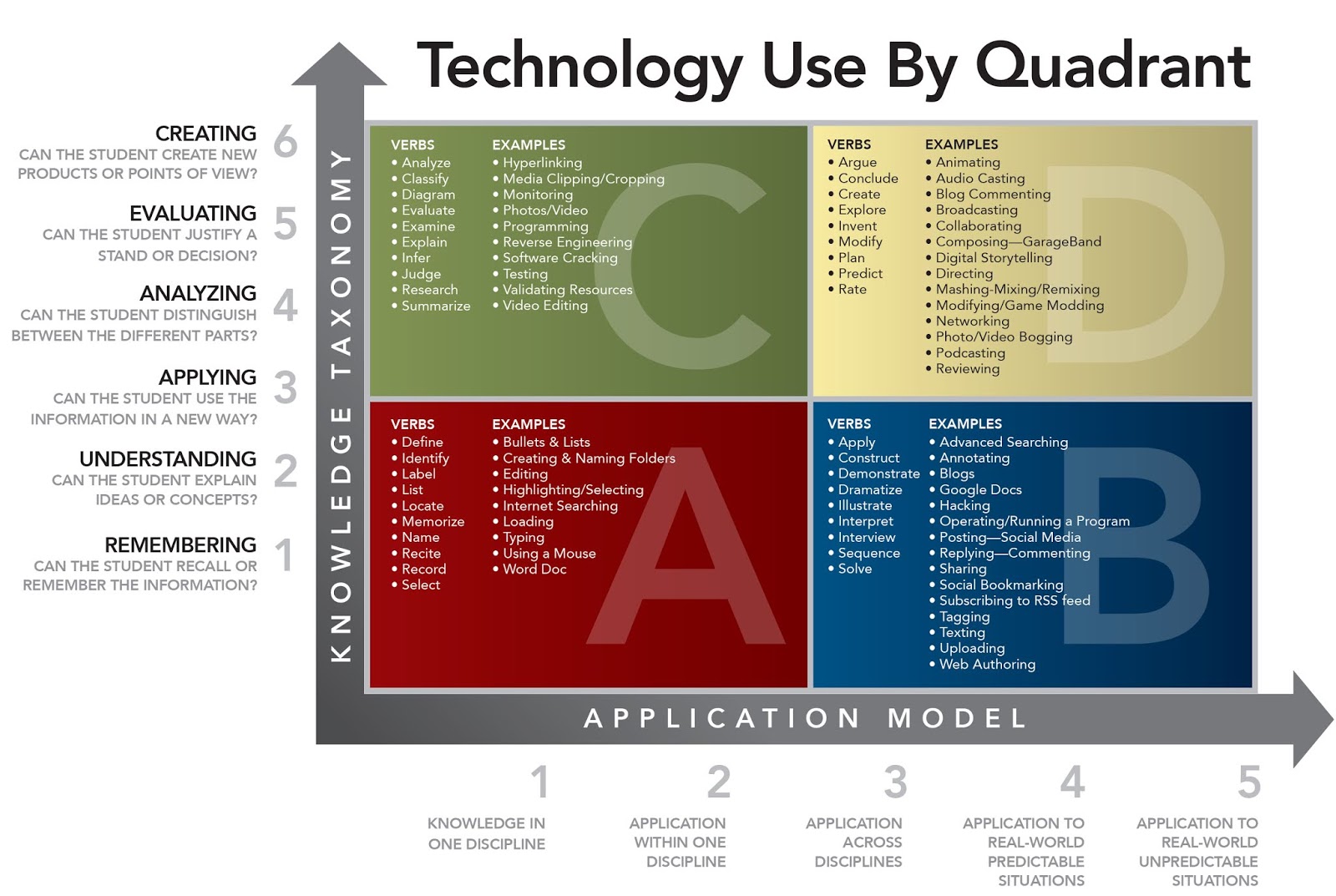
Over the past two years, I have been blessed to partner with District 205 in Elmhurst, IL. I still vividly remember having lunch with Dave Moyer, the superintendent, where he explained in detail the vision that had been set for the district, centered around the six C's (collaboration, communication, critical thinking, creativity, character, citizenship). It was at this time that the decision was made for me to assist. The overall goal and focus of the partnership have been to help them get the most out of the devices that were rolled out a few years ago across the entire K-12 district as part of a 1:1 implementation. My role, like in many other similar districts across the country, has been to assist the teachers and administrators with digital pedagogy leading to purposeful use and efficacy using the framework below.

One of the best parts about job-embedded, on-going work with school districts is facilitating a variety of professional learning opportunities. They have utilized me as a keynoter, coach (leadership and teaching), and workshop presenter. Recently the district asked me to be a part of their professional development day, which consisted of seven different learning strands specific to the needs and interests of their teachers. During a planning call prior, I was asked to work with special education, math, and reading teachers in particular. To be honest, these groups are not in my traditional wheelhouse, but I saw it as a learning opportunity to branch out and expand my level of knowledge.
Prior to the day, I spent a great deal of time planning my slide deck and associated digital handouts. The overreaching goal for each session was to support instructional strategies aligned to rigor & relevance and the 6 C's with a focus on the purposeful use of technology. What resulted was a great resource that I plan to share below on specific edtech tools that can assist special education (SPED), math, and reading teachers.
With the SPED sessions, everything was tied into support and planning for the six approaches to co-teaching embraced by the district. I realized early on that I consistently see all of these in action regularly through my coaching work in schools across the country. I went deeper into the models from a pedagogical standpoint to help them better plan for instruction. This was then followed with strategies and tools for embedding tech that would assist with both differentiation of instruction and co-planning (virtually). Both the math and reading sessions focused on how edtech could be used during independent work, formative assessment, and pedagogically-sound blended learning.
Below you will see the specific tools I provided during each session. Some aren't new, but others might be.
Co-Teaching
Pear Deck (formative and targeted assessment)*Nearpod (formative and targeted assessment)*Padlet (cooperative learning, closure, checks for understanding)Linoit (cooperative learning, closure, checks for understanding, annotation)Flipgrid (video creation for closure, checks for understanding, blended learning)Newsela (assign current event articles by Lexile and quizzes)Freckle (differentiation, stations)*Edpuzzle (upload videos and insert questions)*GoSoapBox (confusion indicator, quizzes, discussion forum, polls)Formative (formative assessment, differentiation)*Gimkit (formative assessment, closure)QuizWhizzer (formative assessment, closure)Seesaw (demonstrate and share learning)
* Denotes importing and syncing with Google Classroom, Canvas, Schoology
Co-Planning
Voxer – (push to talk app that works like a Walkie-Talkie; share synchronous and asynchronous voice, test, and video messages in a threaded conversation)Google DriveSlack (workflow tool with instant messaging)Padlet (collaborative board with text, video, audio, drawing, and screen sharing)Linoit (collaborative Post-It note space)
Math
Prodigy (K-5 games)Xtra math (free program that helps elementary students master addition, subtraction, multiplication, and division facts.IXL (paid personalized learning tool)Educreations (create mini-lessons for students to watch/refer to and then practice concepts)Khan Academy (videos for supplemental support and practice)Knowledgehook (formative assessment tool for grades 3 – 9)Patrick JMT (short instructional videos for middle and high school)Hooda Math (K-12 math games)CK-12 (adaptive practice problem sets; also check out their PLIX series)Freckle (differentiation, stations)Flipgrid (have students solve problems on whiteboards and then explain how they solved them using video)Math Pickle (puzzles and games organized by grade level)
Reading
IXL (paid personalized learning tool)Epic (access to 35,000 of the best children's books for elementary)CommonLit (free reading passages with formative assessments for grades 3-12)ReadWorks (K-12 articles and assessments)Read Theory (online reading activities by reading level with associated quizzes)Smithsonian Tween Tribune (articles and quizzes for K-12)Rewordify (simplify difficult to read English text, monitor students' reading and learning progress)ReadWriteThink (a wide array of free student interactives)PBS (games for elementary students)Starfall (K-2 reading games and activities)Flipgrid (have students record themselves reading passages and excerpts in order to assess)Newsela (current event articles by Lexile with pre-made assessments)
So, what would you add to what I have curated? Please feel free to share your suggestions in the comments section below. As I facilitate future workshops, I will add more tools to this list that align with other content areas.
One of the best parts about job-embedded, on-going work with school districts is facilitating a variety of professional learning opportunities. They have utilized me as a keynoter, coach (leadership and teaching), and workshop presenter. Recently the district asked me to be a part of their professional development day, which consisted of seven different learning strands specific to the needs and interests of their teachers. During a planning call prior, I was asked to work with special education, math, and reading teachers in particular. To be honest, these groups are not in my traditional wheelhouse, but I saw it as a learning opportunity to branch out and expand my level of knowledge.
Prior to the day, I spent a great deal of time planning my slide deck and associated digital handouts. The overreaching goal for each session was to support instructional strategies aligned to rigor & relevance and the 6 C's with a focus on the purposeful use of technology. What resulted was a great resource that I plan to share below on specific edtech tools that can assist special education (SPED), math, and reading teachers.
With the SPED sessions, everything was tied into support and planning for the six approaches to co-teaching embraced by the district. I realized early on that I consistently see all of these in action regularly through my coaching work in schools across the country. I went deeper into the models from a pedagogical standpoint to help them better plan for instruction. This was then followed with strategies and tools for embedding tech that would assist with both differentiation of instruction and co-planning (virtually). Both the math and reading sessions focused on how edtech could be used during independent work, formative assessment, and pedagogically-sound blended learning.
Below you will see the specific tools I provided during each session. Some aren't new, but others might be.
Co-Teaching
Pear Deck (formative and targeted assessment)*Nearpod (formative and targeted assessment)*Padlet (cooperative learning, closure, checks for understanding)Linoit (cooperative learning, closure, checks for understanding, annotation)Flipgrid (video creation for closure, checks for understanding, blended learning)Newsela (assign current event articles by Lexile and quizzes)Freckle (differentiation, stations)*Edpuzzle (upload videos and insert questions)*GoSoapBox (confusion indicator, quizzes, discussion forum, polls)Formative (formative assessment, differentiation)*Gimkit (formative assessment, closure)QuizWhizzer (formative assessment, closure)Seesaw (demonstrate and share learning)
* Denotes importing and syncing with Google Classroom, Canvas, Schoology
Co-Planning
Voxer – (push to talk app that works like a Walkie-Talkie; share synchronous and asynchronous voice, test, and video messages in a threaded conversation)Google DriveSlack (workflow tool with instant messaging)Padlet (collaborative board with text, video, audio, drawing, and screen sharing)Linoit (collaborative Post-It note space)
Math
Prodigy (K-5 games)Xtra math (free program that helps elementary students master addition, subtraction, multiplication, and division facts.IXL (paid personalized learning tool)Educreations (create mini-lessons for students to watch/refer to and then practice concepts)Khan Academy (videos for supplemental support and practice)Knowledgehook (formative assessment tool for grades 3 – 9)Patrick JMT (short instructional videos for middle and high school)Hooda Math (K-12 math games)CK-12 (adaptive practice problem sets; also check out their PLIX series)Freckle (differentiation, stations)Flipgrid (have students solve problems on whiteboards and then explain how they solved them using video)Math Pickle (puzzles and games organized by grade level)
Reading
IXL (paid personalized learning tool)Epic (access to 35,000 of the best children's books for elementary)CommonLit (free reading passages with formative assessments for grades 3-12)ReadWorks (K-12 articles and assessments)Read Theory (online reading activities by reading level with associated quizzes)Smithsonian Tween Tribune (articles and quizzes for K-12)Rewordify (simplify difficult to read English text, monitor students' reading and learning progress)ReadWriteThink (a wide array of free student interactives)PBS (games for elementary students)Starfall (K-2 reading games and activities)Flipgrid (have students record themselves reading passages and excerpts in order to assess)Newsela (current event articles by Lexile with pre-made assessments)
So, what would you add to what I have curated? Please feel free to share your suggestions in the comments section below. As I facilitate future workshops, I will add more tools to this list that align with other content areas.


January 26, 2020
Personalized Learning: The Why, How, and What
Education is at a crossroads. The Fourth Industrial Revolution is chugging ahead with the 5th on the horizon. New technologies have radically changed the world that all of us live and work in across the globe. In many cases, this has been a good thing, but not always. The fact of the matter is that change isn’t coming; it is banging on the door every day. The mantra of “that’s the way we’ve always done it” is beginning to fade more and more. As times change, many schools and districts are grabbling with what to focus on in an effort to keep up with societal demands, a changing workforce, new areas of study, disruptive technologies, and learners who crave more relevant experiences. As a result, many educational entities have embraced a shift to a more personalized approach to learning.
While this is admirable, what I have experienced firsthand is a lack of a uniform vision and plan or collective understanding as to what it means to personalize learning. It is definitely not about putting all kids on a device at the same time with no discourse under the guise that a tool can create a truly personal experience. Heck, it doesn’t even have to involve technology, but virtually every educator sees it as necessary. The goal of this post is to help schools, districts, and educators develop a clear understanding of what personalized learning really is in order to implement it effectively at scale.
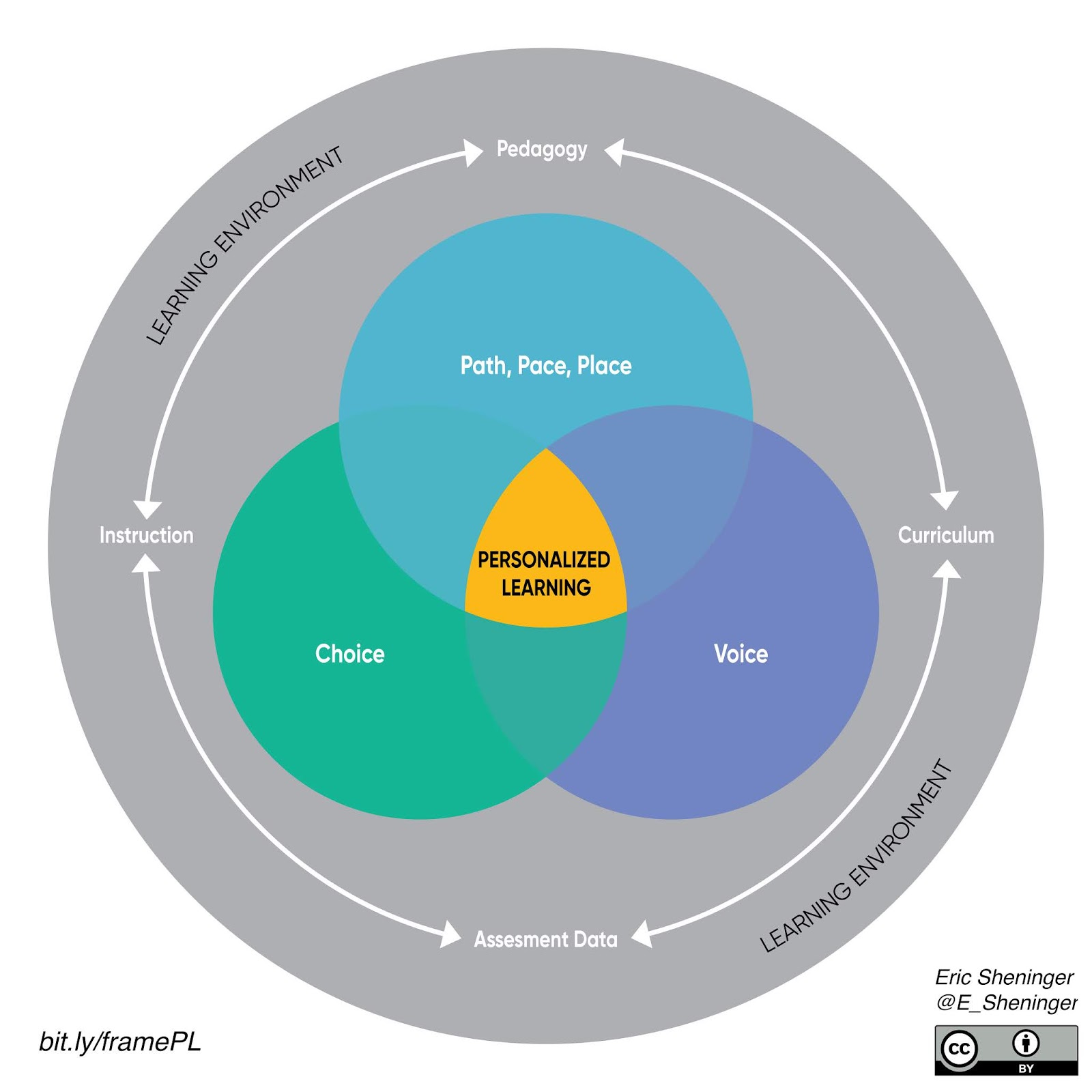
Personalization represents a shift in focus from the “what” (content, curriculum, tests, programs, technology) to the “who” to create a more personal learning experience for all kids. At the forefront is developing and sustaining a culture that imparts purpose, meaning, relevance, ownership, and various paths that cater to both the strengths and weaknesses of all students. It is critical to come to a consensus as to what this then means in the context of teaching, learning, and leadership. Common vision, language, and expectations matter if the goal is to move beyond just a buzzword or isolated pockets of excellence. Below is an image I created to help schools and districts with all of the above.

Learning Environment
The learning environment makes or breaks personalized learning. It is impacted by school culture and leadership decisions at both the administrator and teacher levels, such as policies, procedures, schedules, and facilities that treat all learners as unique individuals. This could include both where kids learn and when. Technology can, in many cases, be a central component, but as I stated above, it doesn’t have to be. Some specific examples of learning environments that cater to a more personalized approach include:
Flexible classrooms and spacesInnovative schedulesNo bellsVirtual coursesWork-study and internship programsAcademies and small learning communitiesOutdoor classrooms and spacesField tripsBring Your Own Device (BYOD) and 1:1Augmented and virtual realityThe key takeaway here is that personalized learning is much more than what just happens in a classroom or the use of a tool. The right culture has to be in place to create a learning environment conducive to unleashing the genius and talents of all kids, which means focusing on equity and social-emotional learning (SEL) when needed.
Curriculum
Content knowledge is still essential across the board. What kids are (and will be) learning matters regardless of assertions by some pundits that claim otherwise. In some cases, the curriculum can be customized for learners to create a more personal experience. A more practical approach is to be more diligent as to the specific strategies that help learners master it in ways beyond just traditional means. No matter the path taken, a rigorous and challenging curriculum is pivotal to successfully implementing and scaling personalized learning. It also must be created in a way for students to master standards and concepts in a more personal fashion.
Instruction
Instruction involves the “what” in terms of what students need to know and is what the teacher does. Strategies can include delivery of content, modeling, explanation, and review. It centers around teacher actions as opposed to teacher learning. The key takeaway here is to take a critical lens to the instructional strategies that are being implemented to ensure they impart a sense of relevance and allow all learners the opportunity to be authentically engaged in the lesson.
Pedagogy
Whereas instruction is what the teacher does, pedagogy is the “how” and empowers learning on behalf of the students. It is essentially the science and art of teaching. It requires that teachers understand how kids learn and have the autonomy to design, implement, and assess activities that meet the needs of all students. Effective pedagogies involve a range of techniques such as cooperative learning, guided and independent practice, differentiation, scaffolded questions and performance tasks, innovative assessment, and feedback. No matter the strategy selected, the goal is to develop higher-order thinking and metacognition through dialogue and relevant application. Blended learning is one of the most popular pedagogical techniques to personalize learning.
Assessment Data
Assessment determines whether learning occurred, what learning occurred, and if the learning relates to stated targets, standards, and objectives. Well-designed assessment sets clear expectations, establishes a reasonable workload (one that does not push students into rote reproductive approaches to study), provides opportunities for students to self-monitor, and provides educators with valuable data. Most schools and districts are good at collecting data through benchmark assessments and adaptive learning tools. Where the challenges and inconsistencies arise is how it is analyzed and then used effectively to personalize learning. The following are some great starting points to better use data:
Grouping and re-groupingTargeted instructionDifferentiationTiered tasksRe-assessThe critical aspect here is to collect good data and then use it in ways to help students learn and grow no matter where they are.
Voice
Honoring the voices of kids and allowing them to have a say during the learning process is a central tenet of student agency. There are many definitions, some of which are broad in the sense that they address how students can be empowered to use their voices to improve the learning environment, as described earlier in this post. An article by the American Progress Institute defines it as authentic student input or leadership in instruction, school structures, or education policies that can promote meaningful change in education systems, practice, and/or policy by empowering students as change agents, often working in partnership with adult educators.
In the classroom, it can be facilitated by posing questions or problems to solve and then allowing students to use digital tools to respond through text, video, audio, drawings, images, and gifs. In many cases, voice can be amplified through the cover of anonymity, which is critical for introverts and shy students. They can also be provided with opportunities to share opinions on classroom design, assessments, and feedback. All in all, it is any act that empowers all kids to make their voices heard to help shape their learning experience. HERE is a great example that aligns with all of the above.
Choice
Choice might be one of the most uncomplicated components to integrate daily. This could come in the form of kids selecting the right tool for the right task to demonstrate conceptual mastery, choosing where to sit in a classroom with flexible seating, or deciding how much time to spend watching a flipped lesson. It could also manifest itself in blended learning models such as choice boards and playlists. As principal, I allowed my students to choose to swap out a face-to-face class we offered in the building for a virtual course as well as to be a part of one of our three learning academies.
Path, Pace, Place
If all kids are doing the same thing the same way at the same time, individual needs are not being met. Just throwing technology into the mix isn’t a pedagogical solution. I will say this again. Putting all kids on a device to use an adaptive learning tool and calling it personalized learning is a bunch of bologna. The three “P”s provide added flexibility to emphasize a more personal approach to learning by allowing kids to follow their own path at their own pace while being afforded the optimal place to learn.
Path could come in the form of customized curriculum, asynchronous virtual courses, selecting the order in a playlist, or independent study. It allows students to progress towards standards based on their mastery levels, interests, and goals. In my former school, students were able to determine their individual paths to learn something new through our Independent Open Courseware Study (IOCS) program. Pace is as simple as allowing kids to work through activities where they have to self-manage their time in order to achieve mastery. In many cases, a timeframe is established in the classroom as students work through activities in a variety of blended learning models. Some kids need more time while others less. Place refers to where kids learn and can include flexible seating, hallways, outdoors, home, or virtual spaces.
Like many things in education, organizations and people tend to make concepts more complicated than they really are. Or they craft a vision and definition that solely meets their needs or goals. Personalized learning is about meeting the individual needs of all learners in utilizing digital and non-digital strategies. I hope that the image provided above will add some clarity to the conversation. It should be noted that a great deal more context and examples can be added to all of the elements described above.
If you would like a high-resolution version of the image in this post email me (esheninger@gmail.com) or provide your email in the comments section below.
While this is admirable, what I have experienced firsthand is a lack of a uniform vision and plan or collective understanding as to what it means to personalize learning. It is definitely not about putting all kids on a device at the same time with no discourse under the guise that a tool can create a truly personal experience. Heck, it doesn’t even have to involve technology, but virtually every educator sees it as necessary. The goal of this post is to help schools, districts, and educators develop a clear understanding of what personalized learning really is in order to implement it effectively at scale.
Personalization represents a shift in focus from the “what” (content, curriculum, tests, programs, technology) to the “who” to create a more personal learning experience for all kids. At the forefront is developing and sustaining a culture that imparts purpose, meaning, relevance, ownership, and various paths that cater to both the strengths and weaknesses of all students. It is critical to come to a consensus as to what this then means in the context of teaching, learning, and leadership. Common vision, language, and expectations matter if the goal is to move beyond just a buzzword or isolated pockets of excellence. Below is an image I created to help schools and districts with all of the above.
Learning Environment
The learning environment makes or breaks personalized learning. It is impacted by school culture and leadership decisions at both the administrator and teacher levels, such as policies, procedures, schedules, and facilities that treat all learners as unique individuals. This could include both where kids learn and when. Technology can, in many cases, be a central component, but as I stated above, it doesn’t have to be. Some specific examples of learning environments that cater to a more personalized approach include:
Flexible classrooms and spacesInnovative schedulesNo bellsVirtual coursesWork-study and internship programsAcademies and small learning communitiesOutdoor classrooms and spacesField tripsBring Your Own Device (BYOD) and 1:1Augmented and virtual realityThe key takeaway here is that personalized learning is much more than what just happens in a classroom or the use of a tool. The right culture has to be in place to create a learning environment conducive to unleashing the genius and talents of all kids, which means focusing on equity and social-emotional learning (SEL) when needed.
Curriculum
Content knowledge is still essential across the board. What kids are (and will be) learning matters regardless of assertions by some pundits that claim otherwise. In some cases, the curriculum can be customized for learners to create a more personal experience. A more practical approach is to be more diligent as to the specific strategies that help learners master it in ways beyond just traditional means. No matter the path taken, a rigorous and challenging curriculum is pivotal to successfully implementing and scaling personalized learning. It also must be created in a way for students to master standards and concepts in a more personal fashion.
Instruction
Instruction involves the “what” in terms of what students need to know and is what the teacher does. Strategies can include delivery of content, modeling, explanation, and review. It centers around teacher actions as opposed to teacher learning. The key takeaway here is to take a critical lens to the instructional strategies that are being implemented to ensure they impart a sense of relevance and allow all learners the opportunity to be authentically engaged in the lesson.
Pedagogy
Whereas instruction is what the teacher does, pedagogy is the “how” and empowers learning on behalf of the students. It is essentially the science and art of teaching. It requires that teachers understand how kids learn and have the autonomy to design, implement, and assess activities that meet the needs of all students. Effective pedagogies involve a range of techniques such as cooperative learning, guided and independent practice, differentiation, scaffolded questions and performance tasks, innovative assessment, and feedback. No matter the strategy selected, the goal is to develop higher-order thinking and metacognition through dialogue and relevant application. Blended learning is one of the most popular pedagogical techniques to personalize learning.
Assessment Data
Assessment determines whether learning occurred, what learning occurred, and if the learning relates to stated targets, standards, and objectives. Well-designed assessment sets clear expectations, establishes a reasonable workload (one that does not push students into rote reproductive approaches to study), provides opportunities for students to self-monitor, and provides educators with valuable data. Most schools and districts are good at collecting data through benchmark assessments and adaptive learning tools. Where the challenges and inconsistencies arise is how it is analyzed and then used effectively to personalize learning. The following are some great starting points to better use data:
Grouping and re-groupingTargeted instructionDifferentiationTiered tasksRe-assessThe critical aspect here is to collect good data and then use it in ways to help students learn and grow no matter where they are.
Voice
Honoring the voices of kids and allowing them to have a say during the learning process is a central tenet of student agency. There are many definitions, some of which are broad in the sense that they address how students can be empowered to use their voices to improve the learning environment, as described earlier in this post. An article by the American Progress Institute defines it as authentic student input or leadership in instruction, school structures, or education policies that can promote meaningful change in education systems, practice, and/or policy by empowering students as change agents, often working in partnership with adult educators.
In the classroom, it can be facilitated by posing questions or problems to solve and then allowing students to use digital tools to respond through text, video, audio, drawings, images, and gifs. In many cases, voice can be amplified through the cover of anonymity, which is critical for introverts and shy students. They can also be provided with opportunities to share opinions on classroom design, assessments, and feedback. All in all, it is any act that empowers all kids to make their voices heard to help shape their learning experience. HERE is a great example that aligns with all of the above.
Choice
Choice might be one of the most uncomplicated components to integrate daily. This could come in the form of kids selecting the right tool for the right task to demonstrate conceptual mastery, choosing where to sit in a classroom with flexible seating, or deciding how much time to spend watching a flipped lesson. It could also manifest itself in blended learning models such as choice boards and playlists. As principal, I allowed my students to choose to swap out a face-to-face class we offered in the building for a virtual course as well as to be a part of one of our three learning academies.
Path, Pace, Place
If all kids are doing the same thing the same way at the same time, individual needs are not being met. Just throwing technology into the mix isn’t a pedagogical solution. I will say this again. Putting all kids on a device to use an adaptive learning tool and calling it personalized learning is a bunch of bologna. The three “P”s provide added flexibility to emphasize a more personal approach to learning by allowing kids to follow their own path at their own pace while being afforded the optimal place to learn.
Path could come in the form of customized curriculum, asynchronous virtual courses, selecting the order in a playlist, or independent study. It allows students to progress towards standards based on their mastery levels, interests, and goals. In my former school, students were able to determine their individual paths to learn something new through our Independent Open Courseware Study (IOCS) program. Pace is as simple as allowing kids to work through activities where they have to self-manage their time in order to achieve mastery. In many cases, a timeframe is established in the classroom as students work through activities in a variety of blended learning models. Some kids need more time while others less. Place refers to where kids learn and can include flexible seating, hallways, outdoors, home, or virtual spaces.
Like many things in education, organizations and people tend to make concepts more complicated than they really are. Or they craft a vision and definition that solely meets their needs or goals. Personalized learning is about meeting the individual needs of all learners in utilizing digital and non-digital strategies. I hope that the image provided above will add some clarity to the conversation. It should be noted that a great deal more context and examples can be added to all of the elements described above.
If you would like a high-resolution version of the image in this post email me (esheninger@gmail.com) or provide your email in the comments section below.
January 19, 2020
Overcoming Fear of Change
"I have accepted fear as a part of life - specifically the fear of change... I have gone ahead despite the pounding in the heart that says: turn back." - Erica Jong
We are in the midst of disruptive times. Some might say that this has always been the case, and that is true. What's different now is how fast things are changing, and this is especially the case when it comes to technology. The onset of a new decade brings great anticipation of new ideas and innovations that can improve our quality of life and what we do professionally. Exponential change is now a constant whether we like it or not. It compels us to think about how we do what we do and the impact of our work.
Change is hard. Actually, it is really hard, especially at the system level. For a variety of reasons, people fear change. More often than not, this has to do with anxiety related to failure, being comfortable where we are at, or succumbing to TTWWADI (That's the way we've always done it). Gustavo Razzetti identifies in more general terms what we are all afraid of:
Fear of the uncertainFear of failureFear of being ridiculedFear of losing controlFear of inadequacyFear of extra workFear of being happy
It is natural to be afraid of going down a different path or implementing something new. If anyone tells you differently, then he or she doesn't know anything about real change. What matters is the choice you make when fear begins to influence your actions (or lack thereof). I always refer back to a powerful quote by Zig Ziglar. When facing fear, will you forget everything and run or face everything and rise?
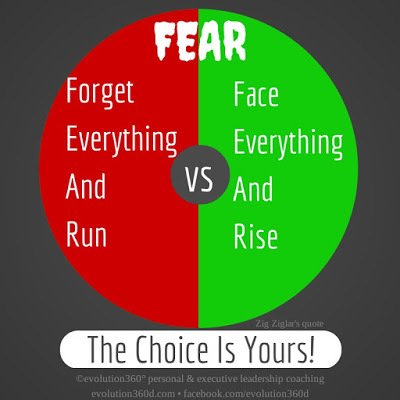
Ziglar is right when he says the choice is yours. If we let our fears influence what we do leading to inaction, then it is near impossible to get better. It can also lead to resistance. In many cases, this spells doom for culture as whatever we are resisting remains in existence to a certain extent. Instead of resisting change because we are afraid, it's time to embrace a different mindset. Lucia Giovannini outlines seven practical ways to do this:
We are in the midst of disruptive times. Some might say that this has always been the case, and that is true. What's different now is how fast things are changing, and this is especially the case when it comes to technology. The onset of a new decade brings great anticipation of new ideas and innovations that can improve our quality of life and what we do professionally. Exponential change is now a constant whether we like it or not. It compels us to think about how we do what we do and the impact of our work.
Change is hard. Actually, it is really hard, especially at the system level. For a variety of reasons, people fear change. More often than not, this has to do with anxiety related to failure, being comfortable where we are at, or succumbing to TTWWADI (That's the way we've always done it). Gustavo Razzetti identifies in more general terms what we are all afraid of:
Fear of the uncertainFear of failureFear of being ridiculedFear of losing controlFear of inadequacyFear of extra workFear of being happy
It is natural to be afraid of going down a different path or implementing something new. If anyone tells you differently, then he or she doesn't know anything about real change. What matters is the choice you make when fear begins to influence your actions (or lack thereof). I always refer back to a powerful quote by Zig Ziglar. When facing fear, will you forget everything and run or face everything and rise?
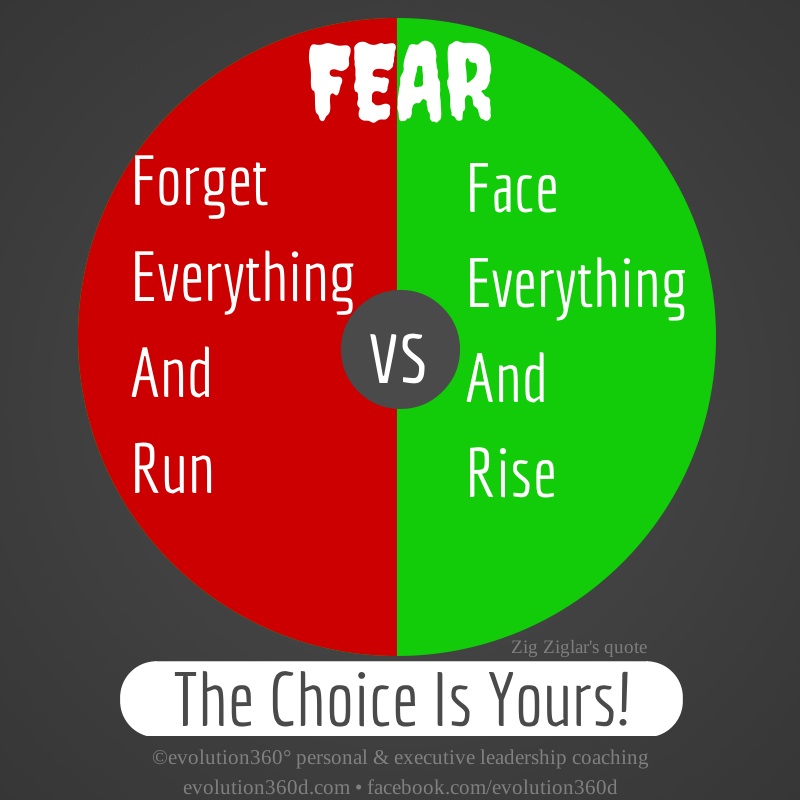
Ziglar is right when he says the choice is yours. If we let our fears influence what we do leading to inaction, then it is near impossible to get better. It can also lead to resistance. In many cases, this spells doom for culture as whatever we are resisting remains in existence to a certain extent. Instead of resisting change because we are afraid, it's time to embrace a different mindset. Lucia Giovannini outlines seven practical ways to do this:
If we really want to live a life that reflects the best of our possibilities, then we have to be open to change and to welcome it as a natural part of our evolution. Here are 7 steps you can use to overcome fear of change:
Life is change and change means life. ...Accept the situation, but don't resign yourself to it! ...See failure as something positive. ...Celebrate every little success. ...Be responsible. ...Be patient. ...Step outside your comfort zone.In the words of Ralph Waldo Emerson, "Do the thing you fear and the death of fear is certain." Change in the context of continual improvement is a good thing. Don't let your fear inhibit both personal and collective progress.
January 12, 2020
Removing the Stigma of Observations
As a teacher, I always dreaded observations early in my career. It wasn’t because I didn’t find them valuable or was torn apart. On the contrary, I found them to be an excellent opportunity to see how I was doing. The science supervisor at the time was extremely diligent in his narrative and always provided both commendations and at least one area where I could improve. My issue was that nerves always took over as I wanted to perform my best. Each observation was fair, and I still had the opportunity to offer my perspective on any areas where I didn’t agree with what my supervisor saw or thought.
When I became a principal, I worked extremely hard to make sure the observation process for my teachers was not only fair but also valuable. Many of my staff routinely commented on how diligent I was in the write-up of each report to capture all aspects of the lesson while offering tangible strategies for improvement. Herein lies the goal of any observation of a teacher or administrator, and that is feedback for growth. Unfortunately, this is not how it is either viewed by some teachers or implemented by administrators.
Many educators downright disregard the entire process as being valuable. I have either read or been challenged by some teachers on social media that they don’t want administrators in their classrooms. If this is the case, then there are probably two issues at play. Either a teacher is not being open to feedback and getting better, or an administrator is not creating a meaningful experience that leads to growth. No matter the reason for animosity, a need for shared ownership to improve the process might be needed.
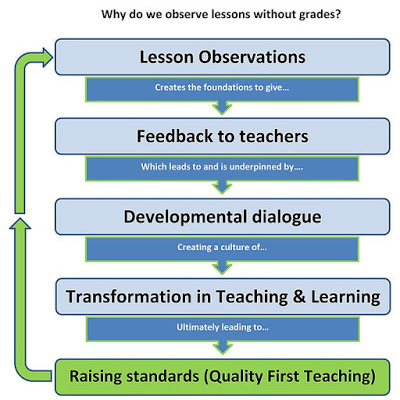 Image credit
Instructional leadership should always be a top priority for any administrator regardless of his or her position. The key is to focus on continually growing in this area while building relationships with teachers in the process. Below are some strategies that can be used by administrators to remove the stigma of observations.
Stay the entire lesson.Never make it an “I gotcha” moment.Allow the teacher to align artifacts that show the entire picture. These can be detailed lesson plans, assessments, performance tasks, student work, use of data to improve instruction, modifications for ELL/SPED learners, portfolios, or professional learning opportunities.Align research and pedagogical evidence to recommendations for growth and improvement (see point above).Schedule the post-conference in a timely manner (1-2 days is preferable).During the post-conference, make sure it is a dialogue, not a monologue. Since observations are subjective, it is crucial to be open to changes after engaging in a conversation and looking at the evidence.Ask the right questions to spur reflection.Ensure that some of the feedback can be implemented right away. For areas that need more time, make sure the proper supports in the form of time and professional learning opportunities are made available.Provide opportunities for self-reflection after the post-conference.Integrate observations as one component of a comprehensive evaluation that consists of portfolios and student feedback.Reduce teacher anxiety by routinely visiting classrooms through a non-evaluative walk-through process. This will also make students more comfortable and when a formal observation does take place both groups will be used to seeing the administrator in the classroom and the lesson can more easily go as planned.Now the strategies above place the burden of responsibility on the back of the administrator to do his or her part to remove the stigma of observations. However, it is equally essential for the teacher to play his or her role. That means being open to feedback, extending an open invite to admin and peers to visit their classroom, eliciting student feedback as a means to grow, and working to implement recommendations that are noted in the final observation report. Only together can teachers and administrators get the process right.

Means of evaluation are a reality in almost every type of job. Education is no different. Observations are the primary component of an annual performance review in schools. Instead of outright discounting or conducting them in ineffective and meaningless ways, let’s work to improve the process. In the end, all, including our learners, will benefit.
When I became a principal, I worked extremely hard to make sure the observation process for my teachers was not only fair but also valuable. Many of my staff routinely commented on how diligent I was in the write-up of each report to capture all aspects of the lesson while offering tangible strategies for improvement. Herein lies the goal of any observation of a teacher or administrator, and that is feedback for growth. Unfortunately, this is not how it is either viewed by some teachers or implemented by administrators.
Many educators downright disregard the entire process as being valuable. I have either read or been challenged by some teachers on social media that they don’t want administrators in their classrooms. If this is the case, then there are probably two issues at play. Either a teacher is not being open to feedback and getting better, or an administrator is not creating a meaningful experience that leads to growth. No matter the reason for animosity, a need for shared ownership to improve the process might be needed.
 Image credit
Instructional leadership should always be a top priority for any administrator regardless of his or her position. The key is to focus on continually growing in this area while building relationships with teachers in the process. Below are some strategies that can be used by administrators to remove the stigma of observations.
Stay the entire lesson.Never make it an “I gotcha” moment.Allow the teacher to align artifacts that show the entire picture. These can be detailed lesson plans, assessments, performance tasks, student work, use of data to improve instruction, modifications for ELL/SPED learners, portfolios, or professional learning opportunities.Align research and pedagogical evidence to recommendations for growth and improvement (see point above).Schedule the post-conference in a timely manner (1-2 days is preferable).During the post-conference, make sure it is a dialogue, not a monologue. Since observations are subjective, it is crucial to be open to changes after engaging in a conversation and looking at the evidence.Ask the right questions to spur reflection.Ensure that some of the feedback can be implemented right away. For areas that need more time, make sure the proper supports in the form of time and professional learning opportunities are made available.Provide opportunities for self-reflection after the post-conference.Integrate observations as one component of a comprehensive evaluation that consists of portfolios and student feedback.Reduce teacher anxiety by routinely visiting classrooms through a non-evaluative walk-through process. This will also make students more comfortable and when a formal observation does take place both groups will be used to seeing the administrator in the classroom and the lesson can more easily go as planned.Now the strategies above place the burden of responsibility on the back of the administrator to do his or her part to remove the stigma of observations. However, it is equally essential for the teacher to play his or her role. That means being open to feedback, extending an open invite to admin and peers to visit their classroom, eliciting student feedback as a means to grow, and working to implement recommendations that are noted in the final observation report. Only together can teachers and administrators get the process right.

Means of evaluation are a reality in almost every type of job. Education is no different. Observations are the primary component of an annual performance review in schools. Instead of outright discounting or conducting them in ineffective and meaningless ways, let’s work to improve the process. In the end, all, including our learners, will benefit.
January 5, 2020
What Could Be
With the beginning of each new year, it seems like everyone on the planet is either talking about or embarking on some type of resolution. I will be the first one to say that this used to be me each and every year. In almost every case, I tried to commit to something health-related like getting to the gym more or eating better. However, as time has passed, I have reflected on this annual tradition and deemed it to be quite silly in the greater scheme of things. Why should it take the passing of each new year to commit to change on both a professional and personal level? As such, I have not made nor pursued any resolution in many years.
An article by Mary Ellen Tribby in the Huffington Post sums up quite nicely why New Year’s resolutions don’t work:
 Image credit
Growth is an ongoing and never-ending journey. It shouldn’t be aforethought at the beginning of the year, but something that all of us focuses on continuously. Consider what holds you back from setting new goals and reaching them throughout the year. The next logical step is to shift your thinking. By embracing a growth mindset, pursuing something new becomes business as usual as opposed to unusual.
Pursue your passions.
Take calculated risks.
Move outside your comfort zone.
Face your fears head-on.
Focus on the “what ifs” instead of the “yeah buts.”
By focusing on the above, a new mantra of what could be will result. Forget waiting until the year changes to develop a resolution that might not stick and run the risk of pondering what could have been. Instead, invest in yourself consistently by believing in yourself to live in the now. By doing so, you will be more prone to reap the rewards of what could be.
An article by Mary Ellen Tribby in the Huffington Post sums up quite nicely why New Year’s resolutions don’t work:
As a matter of fact according to a study by The University of Scranton’s Journal of Clinical Psychology, only 39% of people in their twenties achieve their resolution goals each year.If you don’t ever try something new, then you will never know what could have been.
And the number keeps decreasing with age. By the time you are in your fifties only 14% of people achieve their resolution goals each year. So why is this? Well there are a few reasons:
We bite off big chunks that aren’t realistic. Essentially we go from doing nothing to saying we will do everything.We make commitments based on other people’s expectations. We worry too much of what other people are thinking instead of asking ourselves, what will make “me” happy?We don’t have the right mindset. We have not made that internal shift.Waiting for the new year to embark on an improvement, goal, or innovative idea could very well translate into missed opportunities.
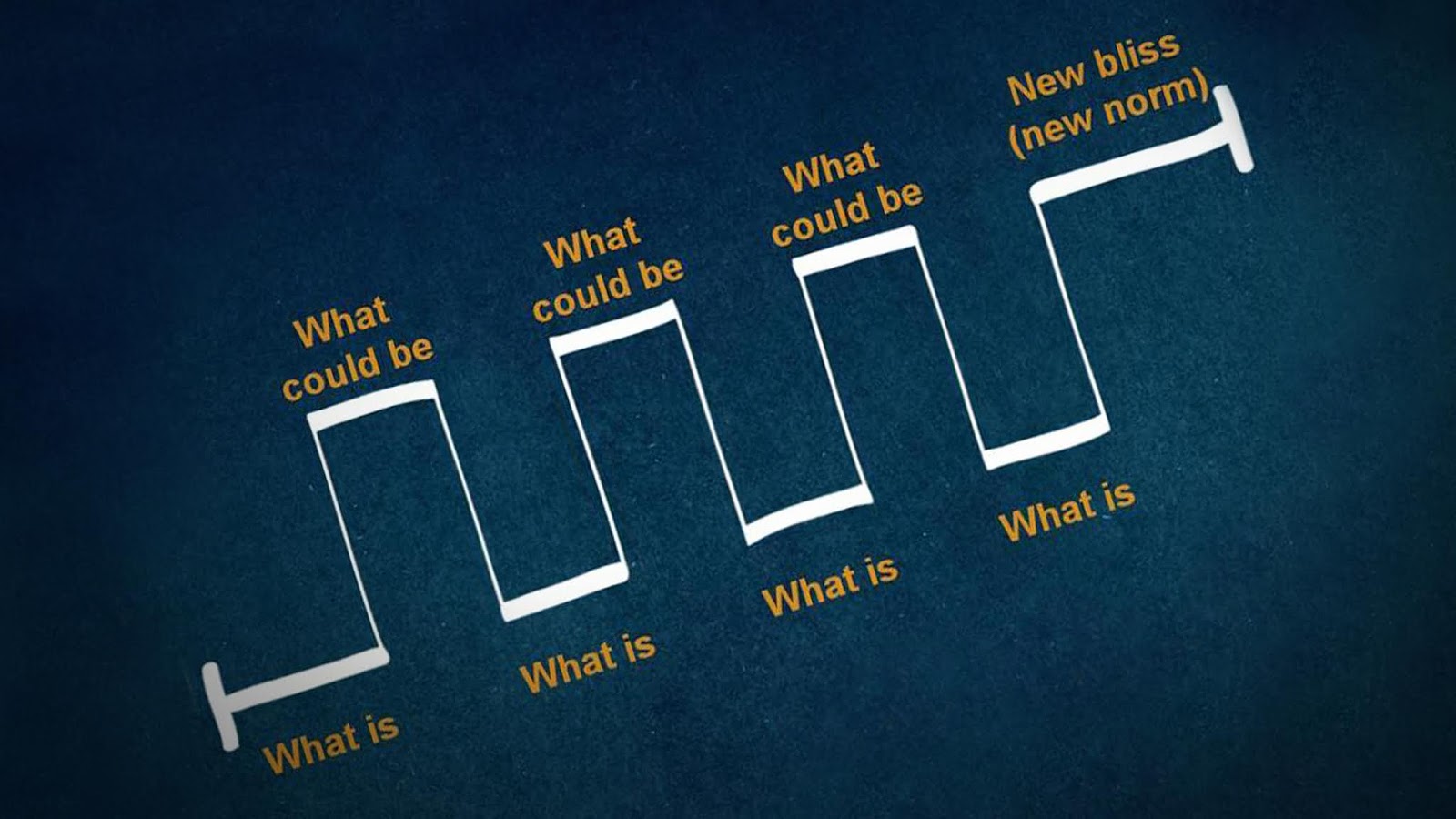 Image credit
Growth is an ongoing and never-ending journey. It shouldn’t be aforethought at the beginning of the year, but something that all of us focuses on continuously. Consider what holds you back from setting new goals and reaching them throughout the year. The next logical step is to shift your thinking. By embracing a growth mindset, pursuing something new becomes business as usual as opposed to unusual.
Pursue your passions.
Take calculated risks.
Move outside your comfort zone.
Face your fears head-on.
Focus on the “what ifs” instead of the “yeah buts.”
By focusing on the above, a new mantra of what could be will result. Forget waiting until the year changes to develop a resolution that might not stick and run the risk of pondering what could have been. Instead, invest in yourself consistently by believing in yourself to live in the now. By doing so, you will be more prone to reap the rewards of what could be.
December 29, 2019
Top Posts of 2019
Well, another year of writing has passed, and it was a big one as 2019 marked ten years since I began my blogging journey. To still be churning out posts on a weekly basis is quite the accomplishment for a guy who never wrote nor intended to write for a public audience. For me, the push I needed came from Ken Royal, who, after hearing what we were doing at New Milford High School and then visiting, stated unequivocally that I had to share our story. Well, after begrudgingly agreeing to pen some guest posts for him, I built up my confidence and launched my blog in March of 2019. After that, the rest is history.
Blogging has certainly changed over the past ten years. Back in the day, a typical post would garner numerous comments. They would also serve as a catalyst for vibrant Twitter conversations. Another change has come in the form of developing unique topics or spins on what is already out in cyberspace. For me, in particular, I have experienced a great deal of difficulty trying to determine what I want to write about in that I want each piece to either add to existing conversations or be an entirely new take. Often ideas pop into my head when I am sleeping, and I immediately wake up to type them into a note file I have on my iPhone. However, the best ideas for blog posts I get come from coaching in schools. Here I get to experience firsthand how many of the ideas that are talked about on social media and at conferences are successfully implemented into practice.

Without further ado, here are my top posts of 2019.
The Pedagogy of Blended Learning
Blended instruction is what the teacher does with technology. Blended learning is where students use tech to have control over path, place, and pace. There should always a focus first and foremost on ensuring that sound pedagogical design serves as a foundation. In this post, I pull on extensive observations and work with schools to identify instructional strategies, essential elements, most successful models, and effective technology solutions that work to create pedagogically sound blended learning experiences.
The Problem with Zeros
To say that this post generated some buzz on Twitter would be quite the understatement. Punishing learners with zeros destroys both morale and a love of learning by digging a hole that many cannot recover from (nor do they have any aspirations to do so). They also create a mirage in terms of what was actually learned. If a grade does not reflect learning, then what’s the point? We owe it to our students to pave a better path forward.
The Future of Work
Change is not only on our doorstep, but it is about to kick the darn door in. The future of work requires new skills, and it is up to K-12 education to lead the charge in this area. Skills are not enough, in my opinion. Yes, we want learners to have the requisite skills to meet the needs and demands inherent in the 4th Industrial Revolution. More importantly, it is our duty and the role of education to ensure that they are competent. Empowering our learners to think critically and solve real-world problems is paramount.
The Two Most Important Questions to Ask to Determine if Learning is Taking Place
Keep it simple stupid. Are kids thinking? How are kids applying their thinking in relevant ways? This post explores how the Rigor Relevance Framework can be used as a practical way to determine the answers to both of these questions by looking at the level of questioning and the tasks that kids are engaged in.
Digital Leadership: Leading Change from Where You Are
Leading change is about identifying intended outcomes, applying an innovative lens, and arriving at outcomes in better, more effective ways no matter your position or title. The Pillars of Digital Leadership represents a framework for all educators to initiate and sustain innovative change that aligns with the core work that already serves as the foundation for every school or district learning culture. The premise is to do what we already do better by working smarter, not harder.
Here's to an amazing 2020 everyone. Thanks for all that you do for kids.
Blogging has certainly changed over the past ten years. Back in the day, a typical post would garner numerous comments. They would also serve as a catalyst for vibrant Twitter conversations. Another change has come in the form of developing unique topics or spins on what is already out in cyberspace. For me, in particular, I have experienced a great deal of difficulty trying to determine what I want to write about in that I want each piece to either add to existing conversations or be an entirely new take. Often ideas pop into my head when I am sleeping, and I immediately wake up to type them into a note file I have on my iPhone. However, the best ideas for blog posts I get come from coaching in schools. Here I get to experience firsthand how many of the ideas that are talked about on social media and at conferences are successfully implemented into practice.

Without further ado, here are my top posts of 2019.
The Pedagogy of Blended Learning
Blended instruction is what the teacher does with technology. Blended learning is where students use tech to have control over path, place, and pace. There should always a focus first and foremost on ensuring that sound pedagogical design serves as a foundation. In this post, I pull on extensive observations and work with schools to identify instructional strategies, essential elements, most successful models, and effective technology solutions that work to create pedagogically sound blended learning experiences.
The Problem with Zeros
To say that this post generated some buzz on Twitter would be quite the understatement. Punishing learners with zeros destroys both morale and a love of learning by digging a hole that many cannot recover from (nor do they have any aspirations to do so). They also create a mirage in terms of what was actually learned. If a grade does not reflect learning, then what’s the point? We owe it to our students to pave a better path forward.
The Future of Work
Change is not only on our doorstep, but it is about to kick the darn door in. The future of work requires new skills, and it is up to K-12 education to lead the charge in this area. Skills are not enough, in my opinion. Yes, we want learners to have the requisite skills to meet the needs and demands inherent in the 4th Industrial Revolution. More importantly, it is our duty and the role of education to ensure that they are competent. Empowering our learners to think critically and solve real-world problems is paramount.
The Two Most Important Questions to Ask to Determine if Learning is Taking Place
Keep it simple stupid. Are kids thinking? How are kids applying their thinking in relevant ways? This post explores how the Rigor Relevance Framework can be used as a practical way to determine the answers to both of these questions by looking at the level of questioning and the tasks that kids are engaged in.
Digital Leadership: Leading Change from Where You Are
Leading change is about identifying intended outcomes, applying an innovative lens, and arriving at outcomes in better, more effective ways no matter your position or title. The Pillars of Digital Leadership represents a framework for all educators to initiate and sustain innovative change that aligns with the core work that already serves as the foundation for every school or district learning culture. The premise is to do what we already do better by working smarter, not harder.
Here's to an amazing 2020 everyone. Thanks for all that you do for kids.
December 22, 2019
Mitigating #EdTech Issues in the Classroom
With all the promise that educational technology holds, several pitfalls are always on the minds of educators. The top two issues that commonly come up in my talks with educators are the technology (Internet, hardware, devices, apps) not working or off-task behavior on the part of students. While there are some serious challenges that can derail any lesson, there are some strategic ways to mitigate them ground in instructional design. Here are some of the most commonly implemented strategies, which I will describe in more detail in this post.
Classroom ManagementPedagogically sound lessonsMonitoringAccountability for learningFeedbackAssessmentClassroom Management
It is tough to argue the fact that many learners will quickly go off and remain off task if a classroom is not managed effectively. The key above all else is to build positive relationships with kids. One great way to do this is to co-construct rules with them as well as ramifications if they are not followed or broken. Addressing issues immediately as they arise, re-directing adverse behaviors, and utilizing positive reinforcement at opportune times all aid in creating a classroom conducive to learning.
Pedagogically Sound Lessons
If you are a reader of this blog, then you know that this is one area that I focus on extensively with my writing. Instructional design is one of the best deterrents to off-task behavior. If a student, or adult for that matter, is bored, then we better accept what might happen. It is critical to get kids so immersed in their learning that they don’t think about surfing the web aimlessly, texting their friends, or accessing social media. Sound pedagogy consists of effective instructional strategies that involve all learners, a focus on higher-order thinking skills, scaffolding techniques, construction of new knowledge, and relevant application of thinking. Mitigating edtech related issues rests on authentically engaging as many learners as possible.
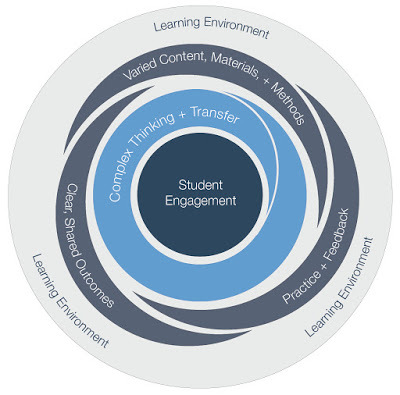
Image credit
Monitoring
If kids are given a task to complete on a device, whether independently, in cooperative groups, or as a part of many different blended learning models, sitting or standing in the same place in the front of the room might lead to unintended consequences. During situations like this is when I commonly observe kids focused on anything but the learning at hand. It is vital to move about the room to not only look at what is on a learner’s screen but to also be in a position to either re-direct any off-task behavior or provide needed guidance.
Accountability for learning
When I say accountability, I am not talking about grades. I can go on and on about the fact that many grading practices are outdated, ineffective, and do not adequately reflect what a student has learned. What I am referring to are specific strategies that keep kids focused on the task at hand while ensuring that his or her part in the learning process is completed. Some ways to accomplish this include assigning equitable roles to each individual student in a cooperative group, handing in an assignment, developing performance tasks where a product is created, or using digital tools in a way where every student can report out using his/her real name.
Feedback
Continuous feedback is essential on so many levels. It helps to justify a grade, establishes criteria for improvement, provides motivation for the next assessment, reinforces good work, and serves a catalyst for reflection. Blended learning strategies lend themselves to providing continuous feedback during class time, which in turn helps to keep kids on task. Keep in mind that it doesn’t have to be just a teacher to teacher pathway. Creating opportunities for learners to give each other peer feedback is just as valuable.
Assessment
I would be remised if I didn’t include this strategy. Assessment determines whether learning occurred, what learning occurred, and if the learning relates to stated targets, standards, and objectives. For many learners knowing that they will ultimately be assessed based on the activities and tasks they have engaged in increases attentive behavior. A variety of strategies beyond traditional tests can be used, such as performance-based activities, portfolios, and rubrics.
The reality is that no matter how well you implement the above strategies, the chances are that a few students might still go off task. I am a realist. It is extremely challenging, no matter how great the lesson is, to engage each and every learner. What I do know is that the strategies listed above will help to mitigate common issues that arise when technology is utilized in the classroom. So, what did I miss? Please share any other successful strategies that you have successfully implemented.
Classroom ManagementPedagogically sound lessonsMonitoringAccountability for learningFeedbackAssessmentClassroom Management
It is tough to argue the fact that many learners will quickly go off and remain off task if a classroom is not managed effectively. The key above all else is to build positive relationships with kids. One great way to do this is to co-construct rules with them as well as ramifications if they are not followed or broken. Addressing issues immediately as they arise, re-directing adverse behaviors, and utilizing positive reinforcement at opportune times all aid in creating a classroom conducive to learning.
Pedagogically Sound Lessons
If you are a reader of this blog, then you know that this is one area that I focus on extensively with my writing. Instructional design is one of the best deterrents to off-task behavior. If a student, or adult for that matter, is bored, then we better accept what might happen. It is critical to get kids so immersed in their learning that they don’t think about surfing the web aimlessly, texting their friends, or accessing social media. Sound pedagogy consists of effective instructional strategies that involve all learners, a focus on higher-order thinking skills, scaffolding techniques, construction of new knowledge, and relevant application of thinking. Mitigating edtech related issues rests on authentically engaging as many learners as possible.
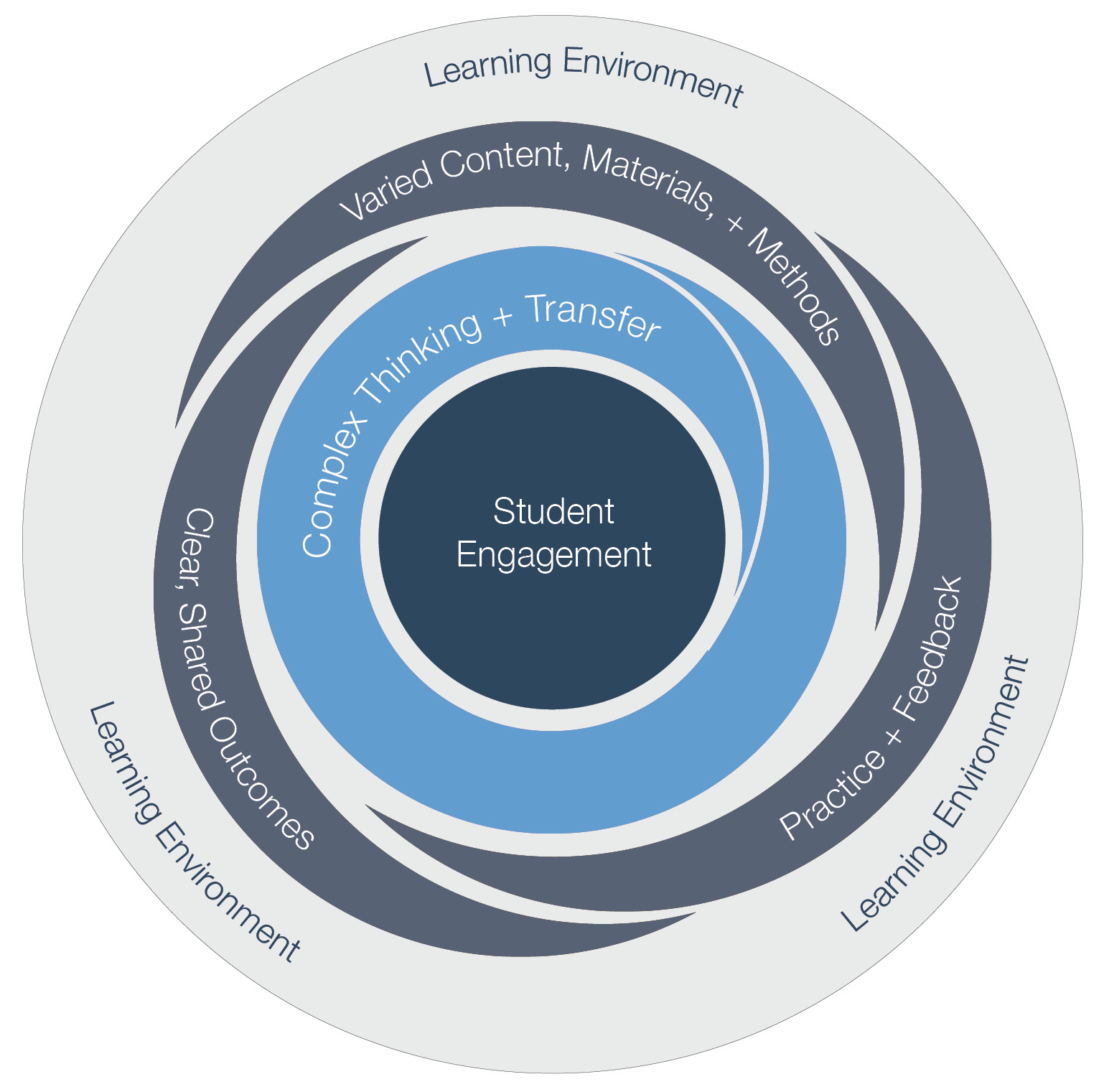
Image credit
Monitoring
If kids are given a task to complete on a device, whether independently, in cooperative groups, or as a part of many different blended learning models, sitting or standing in the same place in the front of the room might lead to unintended consequences. During situations like this is when I commonly observe kids focused on anything but the learning at hand. It is vital to move about the room to not only look at what is on a learner’s screen but to also be in a position to either re-direct any off-task behavior or provide needed guidance.
Accountability for learning
When I say accountability, I am not talking about grades. I can go on and on about the fact that many grading practices are outdated, ineffective, and do not adequately reflect what a student has learned. What I am referring to are specific strategies that keep kids focused on the task at hand while ensuring that his or her part in the learning process is completed. Some ways to accomplish this include assigning equitable roles to each individual student in a cooperative group, handing in an assignment, developing performance tasks where a product is created, or using digital tools in a way where every student can report out using his/her real name.
Feedback
Continuous feedback is essential on so many levels. It helps to justify a grade, establishes criteria for improvement, provides motivation for the next assessment, reinforces good work, and serves a catalyst for reflection. Blended learning strategies lend themselves to providing continuous feedback during class time, which in turn helps to keep kids on task. Keep in mind that it doesn’t have to be just a teacher to teacher pathway. Creating opportunities for learners to give each other peer feedback is just as valuable.
Assessment
I would be remised if I didn’t include this strategy. Assessment determines whether learning occurred, what learning occurred, and if the learning relates to stated targets, standards, and objectives. For many learners knowing that they will ultimately be assessed based on the activities and tasks they have engaged in increases attentive behavior. A variety of strategies beyond traditional tests can be used, such as performance-based activities, portfolios, and rubrics.
The reality is that no matter how well you implement the above strategies, the chances are that a few students might still go off task. I am a realist. It is extremely challenging, no matter how great the lesson is, to engage each and every learner. What I do know is that the strategies listed above will help to mitigate common issues that arise when technology is utilized in the classroom. So, what did I miss? Please share any other successful strategies that you have successfully implemented.
December 15, 2019
Model What You Preach: Pedagogy at the Heart of Professional Learning
When I began speaking ten years ago, almost all of my keynotes and presentations consisted of me just speaking at the audience. I was still a high school principal and not a trained speaker and presenter. Thus, I basically just shared what my teachers and students were doing at New Milford High School (NJ) and the evidence that showed how our implementations of innovative ideas were improving student outcomes as well as teaching, learning, and leadership practices. Basically, I felt very comfortable delivering a lecture and talking at people for up to an hour and sometimes more. I even received validation and praise, which only led to me becoming even more comfortable with both my preparation and delivery.
My style remained unchanged for a few years until I began to receive excellent feedback, some of which was critical, that pushed me to rethink how I planned and organized my presentations. Part of this shift came when I started to facilitate workshops that consisted of anywhere from a half-day to multiple days. The bottom line is that I had to go back to my teacher roots and view the adults as learners in a classroom. If the expectation is for teachers and administrators to leave a learning experience with practical, ready to use strategies, then anyone who is leading the professional learning should incorporate a mix of modeling, hands-on activities, and performance tasks (i.e., developing assessments, creating an action plan, learning how to use edtech tools, etc.) in settings that emulate a classroom or school.
Now, I still enjoy the opportunity to keynote. Over the years, I have tried really hard to combine varying emotions, and evidence-based practices all weaved into a coherent story that leaves attendees with tangible action steps. However, this type of presentation doesn’t really emulate what we want to see take place in classrooms or online spaces. Its primary purpose is to articulate why we need to either rethink our practice or embrace new ideas. So, what am I trying to get at? The “why” gets people fired up, but the “how” actually empowers educators to transform their practice. The latter is where anyone who talks the talk relishes the opportunity to walk the walk in the form facilitating professional learning that is not only reflective of what educators in the trenches face.
It all comes down to the importance and power of modeling. When you think about the most impactful presentations and workshops, what they typically have in common is a facilitator who models to a certain extent the pedagogy, instructional strategies, and conditions that a teacher or administrator will experience. I try really hard to do this. For example, in virtually every workshop on digital pedagogy, I outline the following strategies that are tried and true:
Anticipatory setDo-NowReview of prior learningChecking for understandingGuided and independent practiceMonitoringApplication of learningAssessmentFeedbackClosureWith all of the above items, I either model the practice or show a specific example from one of my former teachers or one of the many classrooms I work in as a coach. In other cases, I give the participants time to discuss and then use a digital tool to respond. With longer presentations and workshops, opportunities are provided to create lessons, activities, action plans, and assessments, or learn how to use specific technology resources. Learning happens with the right combination of content, instruction, time to apply to practice what has been learned, feedback, and reflection.
Recently I was facilitating a session that was set up as a cooperative learning activity using the jigsaw method, which is described below.
Pedagogy should be at the heart of all professional learning, in my opinion. It is hard for some people to change if they don’t experience firsthand what the change looks and feels like. It is hard to accomplish the goal of transforming practice with just a keynote or breakout session. If you lead the learning regardless of your position, take the time to model what you believe in or preach. In the end, if we can’t do this, then maybe we shouldn’t be leading the learning after all.
My style remained unchanged for a few years until I began to receive excellent feedback, some of which was critical, that pushed me to rethink how I planned and organized my presentations. Part of this shift came when I started to facilitate workshops that consisted of anywhere from a half-day to multiple days. The bottom line is that I had to go back to my teacher roots and view the adults as learners in a classroom. If the expectation is for teachers and administrators to leave a learning experience with practical, ready to use strategies, then anyone who is leading the professional learning should incorporate a mix of modeling, hands-on activities, and performance tasks (i.e., developing assessments, creating an action plan, learning how to use edtech tools, etc.) in settings that emulate a classroom or school.

Now, I still enjoy the opportunity to keynote. Over the years, I have tried really hard to combine varying emotions, and evidence-based practices all weaved into a coherent story that leaves attendees with tangible action steps. However, this type of presentation doesn’t really emulate what we want to see take place in classrooms or online spaces. Its primary purpose is to articulate why we need to either rethink our practice or embrace new ideas. So, what am I trying to get at? The “why” gets people fired up, but the “how” actually empowers educators to transform their practice. The latter is where anyone who talks the talk relishes the opportunity to walk the walk in the form facilitating professional learning that is not only reflective of what educators in the trenches face.
It all comes down to the importance and power of modeling. When you think about the most impactful presentations and workshops, what they typically have in common is a facilitator who models to a certain extent the pedagogy, instructional strategies, and conditions that a teacher or administrator will experience. I try really hard to do this. For example, in virtually every workshop on digital pedagogy, I outline the following strategies that are tried and true:
Anticipatory setDo-NowReview of prior learningChecking for understandingGuided and independent practiceMonitoringApplication of learningAssessmentFeedbackClosureWith all of the above items, I either model the practice or show a specific example from one of my former teachers or one of the many classrooms I work in as a coach. In other cases, I give the participants time to discuss and then use a digital tool to respond. With longer presentations and workshops, opportunities are provided to create lessons, activities, action plans, and assessments, or learn how to use specific technology resources. Learning happens with the right combination of content, instruction, time to apply to practice what has been learned, feedback, and reflection.
Recently I was facilitating a session that was set up as a cooperative learning activity using the jigsaw method, which is described below.
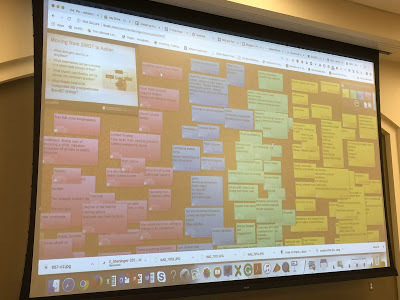
The jigsaw technique is a method of organizing classroom activity that makes students dependent on each other to succeed. It breaks everyone into groups and breaks assignments into pieces that the group assembles to complete the (jigsaw) puzzle. Just as in a jigsaw puzzle, each piece — each learner’s part — is essential for the completion and full understanding of the final product.The participants were broken up into four different groups, where each had a specific task to complete. Roles were assigned within each group, a timeframe for completion was established, and accountability structures were put in place. For the latter, I used the tool Lino where each group was assigned a different colored digital Post-It in order to report on their responses to a specific question. The combination of sound pedagogy with the purposeful use of technology replicated what the teachers and students alike could experience in the classroom. Below you can see what the participants created.
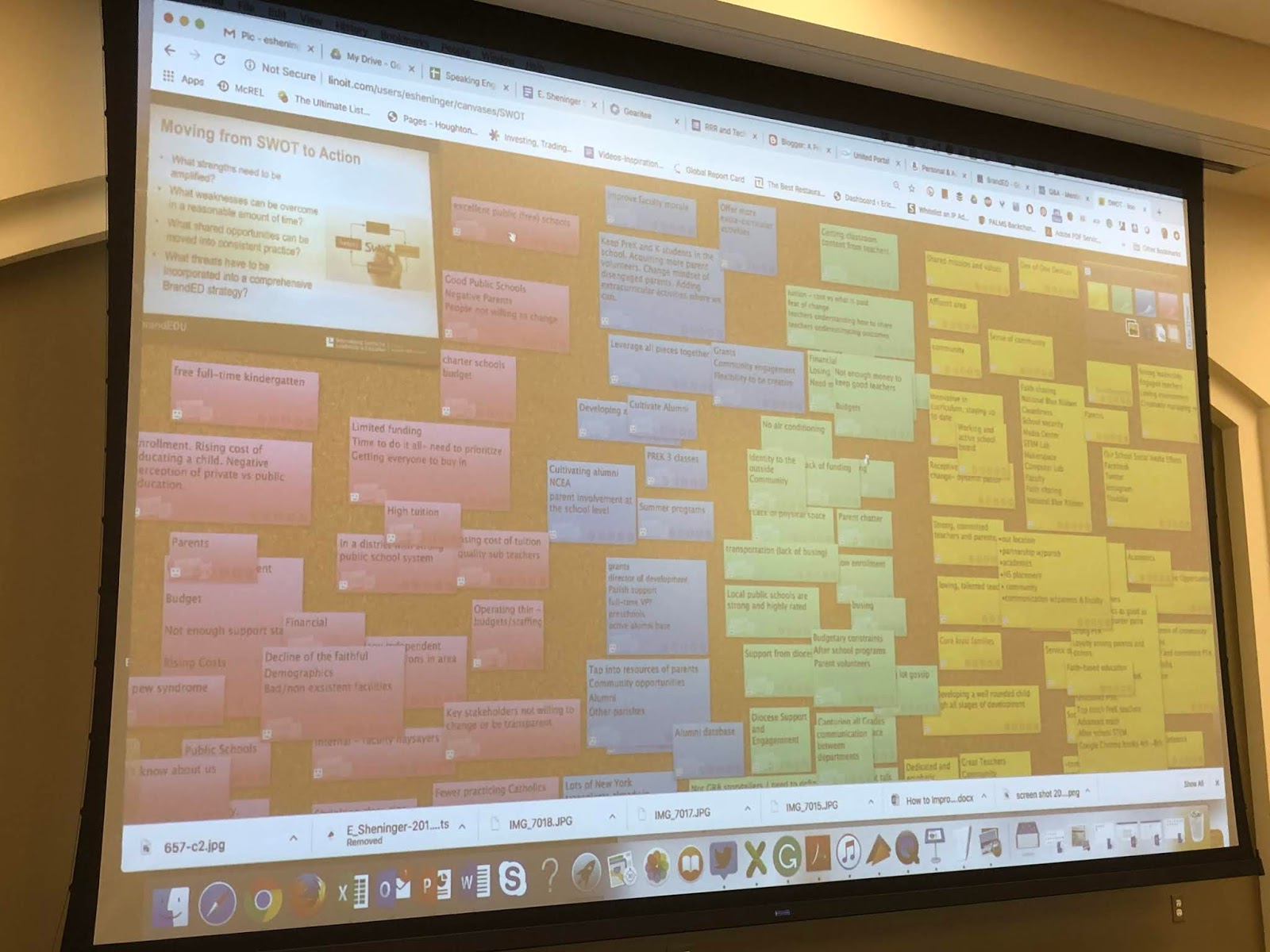
Pedagogy should be at the heart of all professional learning, in my opinion. It is hard for some people to change if they don’t experience firsthand what the change looks and feels like. It is hard to accomplish the goal of transforming practice with just a keynote or breakout session. If you lead the learning regardless of your position, take the time to model what you believe in or preach. In the end, if we can’t do this, then maybe we shouldn’t be leading the learning after all.
December 8, 2019
A Good Plan Requires Great Execution
When we think about change, more often than not, a plan is developed, implemented, and evaluated with the goal being improvement. The journey to improve is a process that requires various strategies that are aligned to a specific focus as outlined in a mission statement or vision document that describes the why. Most schools, districts, and organizations have both. The details on how to achieve both the mission and vision come to fruition in the form of desired goals and outcomes supported by specific measures and targets. The final piece to a good plan is the results. No matter how good a plan for change and improvement is, the proof is in the pudding. Here is where execution comes into play.

For the updated edition of Digital Leadership, I created the image above, which outlines the critical elements of a sound strategic plan. In a previous post, I focused on the essential questions as a means to ensure efficacy when time and resources are needed to get the change or improvement process going. While these are undoubtedly important, it is incumbent upon all involved to always think about how the plan will unfold in relation to mission, vision, goals, desired outcomes, and results.
Mission and Vision
These two planning elements are often used interchangeably or mistaken for one another. Schools, districts, and organizations summarize their goals and objectives under the guise of each of these. Both of these serve different purposes but are often confused with each other. While a mission statement describes what the institution wants to do now, a vision statement outlines what they want to be in the future. Consider this from Glenn Smith:
Desired Outcomes and Goals
The plan is all about meeting the unique and diverse needs of learners today, first and foremost. As society continues to change, so should our strategies that align with the vision and help make the mission a reality. Each desired outcome and goal provide a building block to help transform your school or district in a way that best prepares learners now and in the future. The University of Kansas outlines three types of objectives that can be referenced to develop outcomes and goals:
Process - These provide the groundwork or implementation necessary to achieve everything specified in the plan.Behavioral - These look at changing the behaviors of people (what they are doing and saying) and the products (or results) of their behaviors.Community-level outcomes - These are often the product or result of behavior change in many people. They are focused on change at the school or district level instead of on an individual level.
The concept of a Return on Instruction (ROI) and the innovative change process can significantly assist in the development of desired outcomes and goals. Once established, following the SMART (specific, measurable, achievable, relevant, timed) protocol will go a long way to ensuring success.
Measures and Targets
The only way to determine if outcomes and goals have been achieved is through the development of specific criteria by which to measure and analyze progress. After these are in place, accountability structures have to be aligned to each. If not, then the chances of success in terms of scalable improvement diminish. How you hold yourself or others in the case of schools and districts accountable for meeting determined measures and targets are not for me or other outsiders to dictate. However, executing any plan in a way that leads to efficacy requires this commitment.
Results
Success doesn’t come by way of just words, but instead through actions that lead to tangible results. While talk gets the mission, vision, goals, desired outcomes, measures, and targets in place, it’s the qualitative and quantitative evidence that will determine if the plan is a success or not. Great execution of a plan might never achieve the exact results you had hoped for. The key, however, is to determine if they can clearly show in some way that the mission and vision have become a reality.
As the plan is constructed and the time nears for execution consider the following to stay on track:
Clear expectations and communication are vital.Consensus is important.Benchmarks help pave the way.Accountability is the glue that holds everything together.Results either articulate success or provide an opportunity to reflect and start anew.
Planning for change takes time. Executing a plan takes even more time. In both cases, patience, diligence, and commitment will be necessary. A good plan becomes great when it is executed in a manner that leads to evidence that the mission and vision are more than just words, but reality.
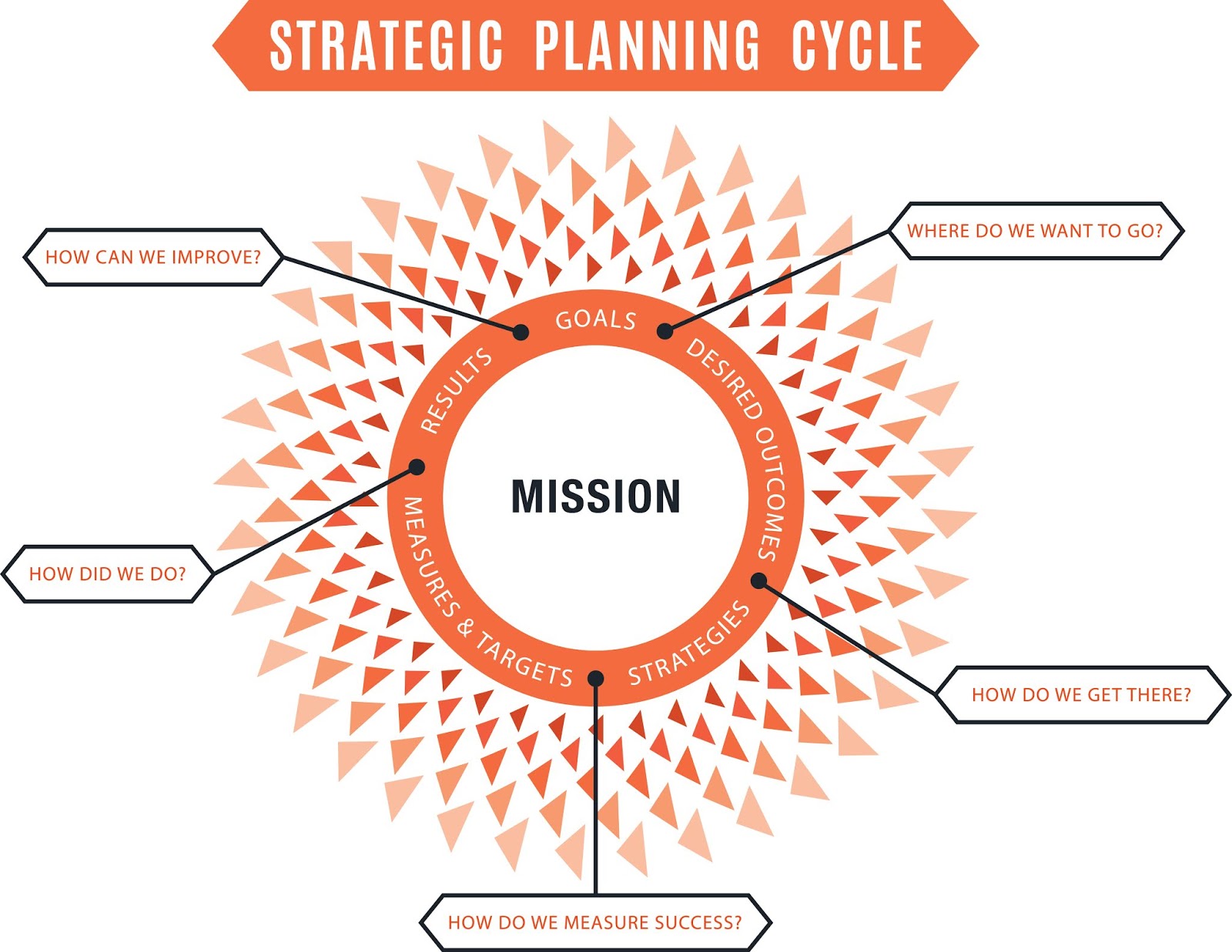
For the updated edition of Digital Leadership, I created the image above, which outlines the critical elements of a sound strategic plan. In a previous post, I focused on the essential questions as a means to ensure efficacy when time and resources are needed to get the change or improvement process going. While these are undoubtedly important, it is incumbent upon all involved to always think about how the plan will unfold in relation to mission, vision, goals, desired outcomes, and results.
Mission and Vision
These two planning elements are often used interchangeably or mistaken for one another. Schools, districts, and organizations summarize their goals and objectives under the guise of each of these. Both of these serve different purposes but are often confused with each other. While a mission statement describes what the institution wants to do now, a vision statement outlines what they want to be in the future. Consider this from Glenn Smith:
Mission answers the question, “Why do we exist?” Vision answers the question, “What will the future look like as we fulfill our mission? What will be different?” While mission is about today, vision is about the future, what we will become.The mission statement outlines the motivation for helping all learners succeed with their education. It provides a basis for how the resulting strategic plan will be developed and implemented. The mission provides the starting point of the journey while the vision adds clarity as to how to arrive at the preferred destination. Both are pretty much pointless without action.
Desired Outcomes and Goals
The plan is all about meeting the unique and diverse needs of learners today, first and foremost. As society continues to change, so should our strategies that align with the vision and help make the mission a reality. Each desired outcome and goal provide a building block to help transform your school or district in a way that best prepares learners now and in the future. The University of Kansas outlines three types of objectives that can be referenced to develop outcomes and goals:
Process - These provide the groundwork or implementation necessary to achieve everything specified in the plan.Behavioral - These look at changing the behaviors of people (what they are doing and saying) and the products (or results) of their behaviors.Community-level outcomes - These are often the product or result of behavior change in many people. They are focused on change at the school or district level instead of on an individual level.
The concept of a Return on Instruction (ROI) and the innovative change process can significantly assist in the development of desired outcomes and goals. Once established, following the SMART (specific, measurable, achievable, relevant, timed) protocol will go a long way to ensuring success.
Measures and Targets
The only way to determine if outcomes and goals have been achieved is through the development of specific criteria by which to measure and analyze progress. After these are in place, accountability structures have to be aligned to each. If not, then the chances of success in terms of scalable improvement diminish. How you hold yourself or others in the case of schools and districts accountable for meeting determined measures and targets are not for me or other outsiders to dictate. However, executing any plan in a way that leads to efficacy requires this commitment.
Results
Success doesn’t come by way of just words, but instead through actions that lead to tangible results. While talk gets the mission, vision, goals, desired outcomes, measures, and targets in place, it’s the qualitative and quantitative evidence that will determine if the plan is a success or not. Great execution of a plan might never achieve the exact results you had hoped for. The key, however, is to determine if they can clearly show in some way that the mission and vision have become a reality.
As the plan is constructed and the time nears for execution consider the following to stay on track:
Clear expectations and communication are vital.Consensus is important.Benchmarks help pave the way.Accountability is the glue that holds everything together.Results either articulate success or provide an opportunity to reflect and start anew.
Planning for change takes time. Executing a plan takes even more time. In both cases, patience, diligence, and commitment will be necessary. A good plan becomes great when it is executed in a manner that leads to evidence that the mission and vision are more than just words, but reality.
December 1, 2019
Vet What You Buy
Teaching is tough. It might very well be one of the most challenging jobs on the planet when you consider the time that is put in both in and out of school. I, for one, would spend hours planning and grading in the evening, at night, and on weekends. The workload might have been exhausting, but I never second-guessed my career choice. As the years have passed, it seems like expectations and workload of teachers keeps increasing. What has resulted is a pursuit of ways to work smarter, not harder, while still improving outcomes for all learners. In the schools I have the honor of coaching in, I see more and more evidence of co-planning and sharing of resources both within the school and across the district as a means to lessen the load. I also see plenty of investments in materials from Teachers Pay Teachers. Herein lies the point of this post.
Let me be extremely clear. I am all for teachers selling lesson plans, assessments, support materials, and other resources to their peers. Pay for those who dedicate their lives to other people’s kids is totally inadequate not only in the United States but in other countries as well. I also feel that if the purchasing of quality resources can help lessen the burden of a teacher, then go for it. If something an educator created is pedagogically-sound, then, by all means, let’s get it in the hands of as many teachers as possible while making some cash in the process. Now here comes the rub. It is incumbent upon both teachers and administrators to ensure that what is being purchased and used with kids is actually good.
 Image Credit
Now I am not saying there aren’t sound resources available on the site. However, I do question a great deal of what I see being used in classrooms across the country. Quite frankly, it’s not very good. Here is where educators have to be critical observers and consumers when something is purchased to support or enhance the curriculum in the classroom. Below you will see one of many examples that fall into the category of a resource that is not pedagogically sound. The assumption was that it was a rubric. You be the judge as to whether or not this is a quality resource that clearly conveys to the student or teacher what was learned.


When you think about a rubric, there have to be clear indicators as to what the student was able to demonstrate on their way to master a concept or standard. Let’s take a minute to process what a rubric really is and the role that it plays in assessment:
I have said my piece and will now provide a practical course forward. The burden of responsibility doesn’t just fall on teachers and administrators where purchased resources are used in class, but even more so on the creator and seller. Buyers need to vet what they purchase to make sure it is a quality resource. Creators need to be cognizant of what they put up for sale. In both cases, the litmus test should be whether or not the resource type (and there are tons of options) aligns with good pedagogy, what the research says about effective teaching and learning, and sound instructional design.
My post doesn’t just refer to just sites like Teachers Pay Teachers, but also a wide range of materials from a variety of sources. To assist with the vetting process, I suggest you take a look at the Digital Instructional Materials: Acquisitions Policies for States site from SETDA. Here you will find so many resources that can be used to make the best decision and help ensure that you get your bang for your buck.
In the end, it is incumbent upon all educators to vet what they plan to buy (or use if it is a free resource), as we owe this to our learners.
Let me be extremely clear. I am all for teachers selling lesson plans, assessments, support materials, and other resources to their peers. Pay for those who dedicate their lives to other people’s kids is totally inadequate not only in the United States but in other countries as well. I also feel that if the purchasing of quality resources can help lessen the burden of a teacher, then go for it. If something an educator created is pedagogically-sound, then, by all means, let’s get it in the hands of as many teachers as possible while making some cash in the process. Now here comes the rub. It is incumbent upon both teachers and administrators to ensure that what is being purchased and used with kids is actually good.
 Image Credit
Now I am not saying there aren’t sound resources available on the site. However, I do question a great deal of what I see being used in classrooms across the country. Quite frankly, it’s not very good. Here is where educators have to be critical observers and consumers when something is purchased to support or enhance the curriculum in the classroom. Below you will see one of many examples that fall into the category of a resource that is not pedagogically sound. The assumption was that it was a rubric. You be the judge as to whether or not this is a quality resource that clearly conveys to the student or teacher what was learned.


When you think about a rubric, there have to be clear indicators as to what the student was able to demonstrate on their way to master a concept or standard. Let’s take a minute to process what a rubric really is and the role that it plays in assessment:
Rubrics are explicit schemes for classifying products or behaviors into categories that vary along a continuum. They can be used to classify virtually any product or behavior, such as essays, research reports, portfolios, works of art, recitals, oral presentations, performances, and group activities. Judgments can be self-assessments by students, or judgments can be made by others, such as faculty, other students, or field-work supervisors. Rubrics can be used to provide formative feedback to students, to grade students, and/or to assess programs.There are no such categories in the example above, just the arbitrary awarding of points with no succinct rhyme or reasons. For example, what are the success criteria that justify the score? How does the number for each item or total score reflect what a student has really learned? Where is the connection to the standard(s) or concept? To put it bluntly, this is not a rubric, should not be advertised as such, and does not represent a pedagogically-sound way to assess students. Hence, the question must be raised as to why it was not only purchased but also used in numerous classrooms. In addition to “rubrics,” I also see a lot of worksheets. Again, I don’t have a problem with this. The issue arises when all, or the majority of the questions, are multiple-choice and fill-in-the-blank at the lowest level of Bloom’s Taxonomy (i.e., recall, knowledge).
I have said my piece and will now provide a practical course forward. The burden of responsibility doesn’t just fall on teachers and administrators where purchased resources are used in class, but even more so on the creator and seller. Buyers need to vet what they purchase to make sure it is a quality resource. Creators need to be cognizant of what they put up for sale. In both cases, the litmus test should be whether or not the resource type (and there are tons of options) aligns with good pedagogy, what the research says about effective teaching and learning, and sound instructional design.
My post doesn’t just refer to just sites like Teachers Pay Teachers, but also a wide range of materials from a variety of sources. To assist with the vetting process, I suggest you take a look at the Digital Instructional Materials: Acquisitions Policies for States site from SETDA. Here you will find so many resources that can be used to make the best decision and help ensure that you get your bang for your buck.
In the end, it is incumbent upon all educators to vet what they plan to buy (or use if it is a free resource), as we owe this to our learners.