Eric C. Sheninger's Blog, page 32
April 28, 2019
Digital Leadership: Leading Change from Where You Are | #DigiLead
A great deal has changed over the past few years not just in society, but also in education. Many of these changes are a result of the exponential advances in technology and the role these tools play in shaping both our personal and professional lives. As a result, innovative practices emerged in many shapes and sizes. To answer the call of disruption, new thinking had to emerge. Back in 2009, I began calling for an evolved construct of leadership that would better serve schools in meeting the diverse needs of learners and stakeholders alike. Below is my thinking on the topic that has resulted in the following iteration:
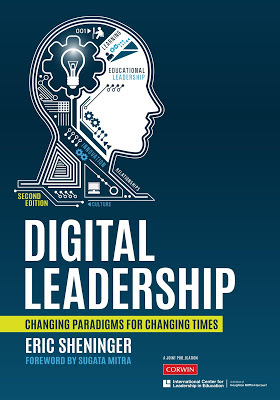 Order your copy HERE.
The time has come for a new edition of Digital Leadership. I can’t begin to explain how excited I am about the finished product as I have woven in what I have learned in the field helping schools apply the concepts to bring about evidence-based results. Practical and realistic, this version compels all educators to lead from where they are as actions - not title, position, or power – are the key to sustainable changes that lead to actual improvements validated by both qualitative and quantitative measures. Below are some specific highlights embedded in the new edition:
A focus on efficacy: In the real-world of education results matter as well as how we arrive at them. Naturally then, this updated edition has research-based, evidence-driven, and learner-focused ideas and strategies that are innovative in nature that lead to observable improvements. The last chapter of the book weaves all the concepts together while emphasizing the importance of efficacy in any change initiative. Practical and realistic: Ideas are great, but they have to consider the realities and challenges that schools and educators face across the world. They also need to align with the core work that educators engage in daily. The key with this update throughout is for readers to either grasp new ideas and strategies to readily implement or look to improve what they might already be doing. Evergreen: Many technology books are D.O.A (dead on arrival) once published. The reason being is that technology changes so fast and tools come and go regularly. To account for this fact, I removed the majority of references to specific tools except for some of the most prolific ones such as Twitter, Facebook, Instagram, etc. The point here is simple. Tools and products will change. However, the means to implement them to transform teaching, learning, and leadership will remain relatively stable. This edition is written in a way to withstand the test of time. Re-organized chapters and updated content: You will see not only new chapters but also revised headings and subheadings that are more reflective of the innovative practices that can be scaled in education. I also re-organized some of the chapters by moving the ones focused on learning to the beginning of the book. Based on the feedback I received on the first edition, I also beefed up content related to pedagogy. All in all, the new version has approximately 50% new content. Built-in study guide: Each Chapter ends with 4-5 discussion and reflective questions that are meant to move readers more readily to actions. Be sure to share your reflections, questions, ideas, and successes by engaging on social media using #digilead.Fewer tools, more on leadership dispositions: As mentioned previously, tools will continue to change. That’s why you will see more of a focus on the dispositions of classroom, school, and district leaders that are necessary to initiate and sustain change. Anyone and everyone can be a digital leader: It is important to understand that everyone has the capacity to lead from where they are. Some of the most impactful leaders I have worked with, or for, have been teachers. The new edition speaks to all educators and empowers them to leverage their specific role to usher in needed change regardless of title. Updated and expanded research base – It is tough to deny how important this is. Research and evidence in support of ideas and strategies go a long way in building cultures of excellence that are defined by results. What I hope has resulted is a scholarly piece of work that supports a practical and realistic pursuit of innovative change.Forward by Sugata Mitra: He is a luminary as far as I am concerned, and his research validates many of the ideas presented in chapters 5 and 6, which focus squarely on learning. His “Hole in the Wall” experiments, begun in 1999, revealed that groups of children could learn almost anything by themselves given Internet access and the ability to work collaboratively. Imagine the possibilities when this learning is facilitated by amazing educators, something the new edition fleshes out.Pick and choose structure: Even though there is a sequential order to the book, it is written in a way that each chapter can serve as a standalone resource. I wrote it this way so that readers can pick the most pressing, important concepts that they want to focus on to bring about needed change now. Full color – I will be the first one to admit that this is not that important, but it does add a nice touch. If you have the first edition, you will see a substantial increase in the number of images throughout the book. My hope is that these add much greater context to the ideas and strategies presented. Digital resources – To add more substance and stay within a broad wordcount range, I scrapped the appendix from the previous edition. At the end of the book, you will now see a section that has links to an array of digital resources such as downloadables, sample rubrics, standards alignment, and supporting frameworks. Since I control all of these links each will remain current.If you enjoyed the first edition, I think you will like the updated version even better. I took to heart feedback I received over the years from readers as well as reflected deeply on my own writing to develop a resource for all, no matter where one is at with their educational career, whether it be in or outside of a school. Thank you for all that you do to support students, teachers, administrators, and other educational stakeholders around the world. My hope is that this new edition can serve as a resource to help you continue to meet and exceed the goals you set.
Join the movement on social media using #digilead .
As times change, so must the practice of leaders to establish a culture of learning that is relevant, research-based, and rooted in relationships. Digital leadership is all about people and how their collective actions aligned with new thinking, ideas, and tools can help to build cultures primed for success. It represents a strategic mindset and set of behaviors that leverage resources to create a meaningful, transparent, and engaging school culture to prepare learners now and well into the future.Over time I realized that the digital aspect was a supporting element and amplifier of what leaders in classrooms, schools, organizations, and districts do every day. Sure, there are some unique behaviors and characteristics, but for the most part, it is about identifying intended outcomes, applying an innovative lens, and arriving at them in better, more effective ways. What resulted was the formation of the Pillars of Digital Leadership, a framework for all educators to initiate and sustain innovative change that aligns to the core work that already serves as the foundation for every school or district learning culture. The premise is to do what we already do better by working smarter, not harder.
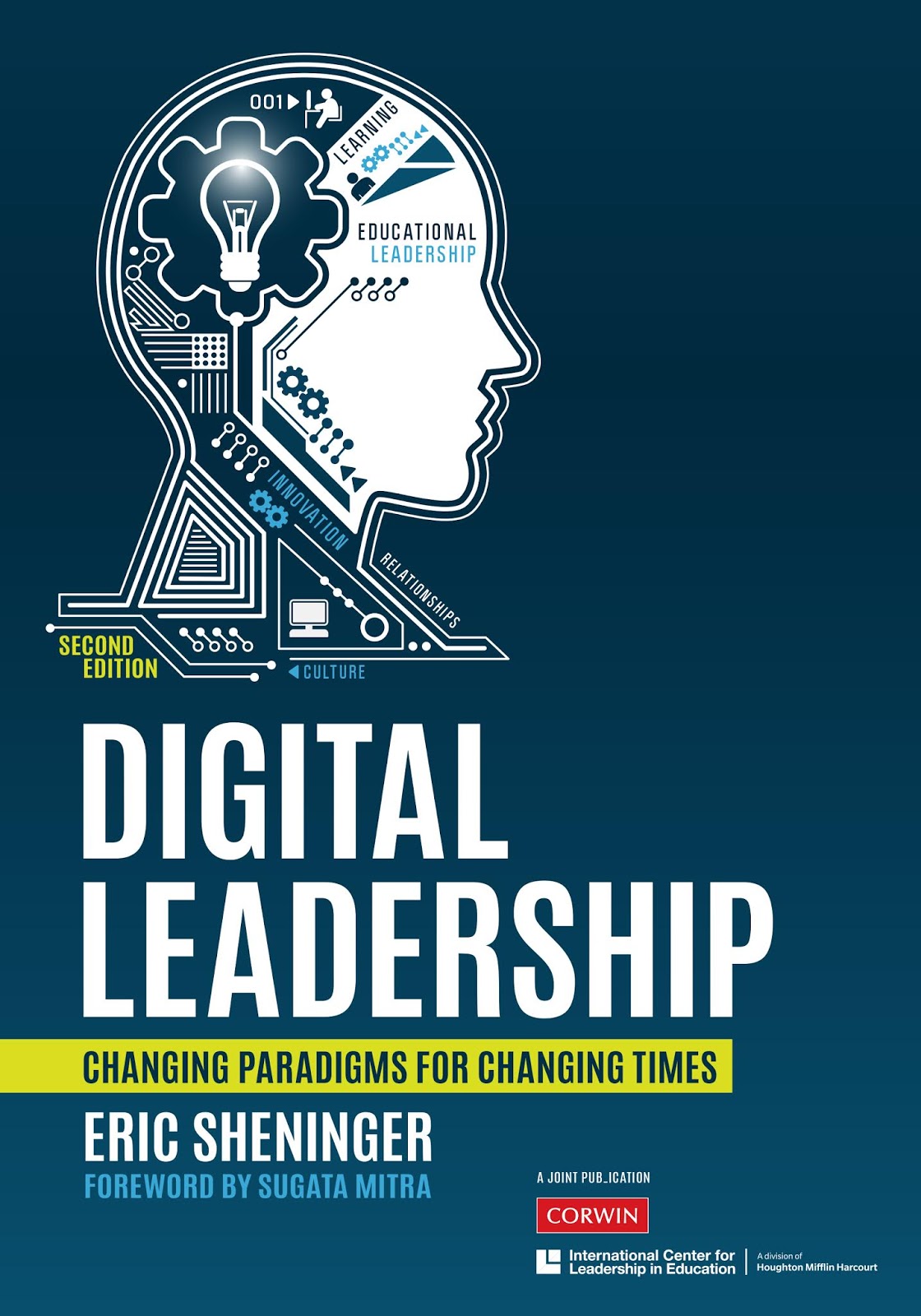 Order your copy HERE.
The time has come for a new edition of Digital Leadership. I can’t begin to explain how excited I am about the finished product as I have woven in what I have learned in the field helping schools apply the concepts to bring about evidence-based results. Practical and realistic, this version compels all educators to lead from where they are as actions - not title, position, or power – are the key to sustainable changes that lead to actual improvements validated by both qualitative and quantitative measures. Below are some specific highlights embedded in the new edition:
A focus on efficacy: In the real-world of education results matter as well as how we arrive at them. Naturally then, this updated edition has research-based, evidence-driven, and learner-focused ideas and strategies that are innovative in nature that lead to observable improvements. The last chapter of the book weaves all the concepts together while emphasizing the importance of efficacy in any change initiative. Practical and realistic: Ideas are great, but they have to consider the realities and challenges that schools and educators face across the world. They also need to align with the core work that educators engage in daily. The key with this update throughout is for readers to either grasp new ideas and strategies to readily implement or look to improve what they might already be doing. Evergreen: Many technology books are D.O.A (dead on arrival) once published. The reason being is that technology changes so fast and tools come and go regularly. To account for this fact, I removed the majority of references to specific tools except for some of the most prolific ones such as Twitter, Facebook, Instagram, etc. The point here is simple. Tools and products will change. However, the means to implement them to transform teaching, learning, and leadership will remain relatively stable. This edition is written in a way to withstand the test of time. Re-organized chapters and updated content: You will see not only new chapters but also revised headings and subheadings that are more reflective of the innovative practices that can be scaled in education. I also re-organized some of the chapters by moving the ones focused on learning to the beginning of the book. Based on the feedback I received on the first edition, I also beefed up content related to pedagogy. All in all, the new version has approximately 50% new content. Built-in study guide: Each Chapter ends with 4-5 discussion and reflective questions that are meant to move readers more readily to actions. Be sure to share your reflections, questions, ideas, and successes by engaging on social media using #digilead.Fewer tools, more on leadership dispositions: As mentioned previously, tools will continue to change. That’s why you will see more of a focus on the dispositions of classroom, school, and district leaders that are necessary to initiate and sustain change. Anyone and everyone can be a digital leader: It is important to understand that everyone has the capacity to lead from where they are. Some of the most impactful leaders I have worked with, or for, have been teachers. The new edition speaks to all educators and empowers them to leverage their specific role to usher in needed change regardless of title. Updated and expanded research base – It is tough to deny how important this is. Research and evidence in support of ideas and strategies go a long way in building cultures of excellence that are defined by results. What I hope has resulted is a scholarly piece of work that supports a practical and realistic pursuit of innovative change.Forward by Sugata Mitra: He is a luminary as far as I am concerned, and his research validates many of the ideas presented in chapters 5 and 6, which focus squarely on learning. His “Hole in the Wall” experiments, begun in 1999, revealed that groups of children could learn almost anything by themselves given Internet access and the ability to work collaboratively. Imagine the possibilities when this learning is facilitated by amazing educators, something the new edition fleshes out.Pick and choose structure: Even though there is a sequential order to the book, it is written in a way that each chapter can serve as a standalone resource. I wrote it this way so that readers can pick the most pressing, important concepts that they want to focus on to bring about needed change now. Full color – I will be the first one to admit that this is not that important, but it does add a nice touch. If you have the first edition, you will see a substantial increase in the number of images throughout the book. My hope is that these add much greater context to the ideas and strategies presented. Digital resources – To add more substance and stay within a broad wordcount range, I scrapped the appendix from the previous edition. At the end of the book, you will now see a section that has links to an array of digital resources such as downloadables, sample rubrics, standards alignment, and supporting frameworks. Since I control all of these links each will remain current.If you enjoyed the first edition, I think you will like the updated version even better. I took to heart feedback I received over the years from readers as well as reflected deeply on my own writing to develop a resource for all, no matter where one is at with their educational career, whether it be in or outside of a school. Thank you for all that you do to support students, teachers, administrators, and other educational stakeholders around the world. My hope is that this new edition can serve as a resource to help you continue to meet and exceed the goals you set.
Join the movement on social media using #digilead .


April 21, 2019
The Point of a Lesson
I am not a huge fan of collecting lesson plans and have not been for years. It is my opinion that you can learn a great deal more by collecting and looking at assessments. Regardless of where you stand on the whole lesson plan debate, the intent is what really matters. For all of us who have taught or have been in a leadership position that supports teachers, I think we all agree that the point of any lesson is to help students learn. Yes, there are standards and curriculum to cover as well as essential concepts. There are activities, projects, and assessments along the way. In some cases, innovative techniques such as a more personal or blended approach might be the preferred pedagogical pathway. No matter what constitutes a lesson, the goal remains the same – learning.
 Image credit
If the intended outcome is clear to us, it goes without saying that the same must be said for our learners. This begs a fundamental question that should always be considered – do students understand the point of the lesson? If not, then it is challenging to meet any goals that are set. It all begins with a clear articulation of the learning outcomes. For many of us, this comes in the form of objectives. I know when I went through my coursework and teaching certification process this was emphasized in any lesson plan. As I entered the classroom what I was taught carried over and objectives were not only included in every lesson plan, I developed, but I also listed them on the board for all the kids to see. Herein lies another point. I am not saying that objectives should always be posted for all to see. However, it is crucial that kids understand what is to be learned on any particular day.
I have reflected a great deal on the objective aspect of the lesson and in my coaching with schools on pedagogy have advised them to move away from this traditional component of lesson design and implementation. Objectives, if we really think about it, are more often what the adult wants to achieve in terms of alignment to standards and concepts as well as scope and sequence. Just look at how they are written and see if you feel the same way. Learning targets on the other hand frame the lesson from the students' point of view and are written using “I can” or “I will” statements. They help learners to grasp the lesson's purpose such as why it is crucial to learn this chunk of information or concept, on this day, and in this way. Quality learning targets as part of an effective lesson help kids answer these three questions:
Why did we learn this and what will I be able to do when I've finished this lesson?What idea, topic, or subject is important for me to learn and understand so that I can do this?How will I show that I can do this, and how well will I have to do it to demonstrate that I have learned something new?
Developing learning targets does not go far enough though. Learners need to understand the point of a lesson just as much as a teacher or administrator. Imparting relevance through a specific context and application will go a long way in achieving this. However, everything must be tied together from the learner’s point of view. This is why closure and reflection at the end of the lesson are crucial. Either one or both of these elements can be tied to the use of a KWL chart. Chech out this updated version below.
 Image credit
From a pedagogical standpoint, it is vital to build these in each and every day to bring the learning process full circle. Bottom line – everyone should have a good sense as to the point of a lesson.
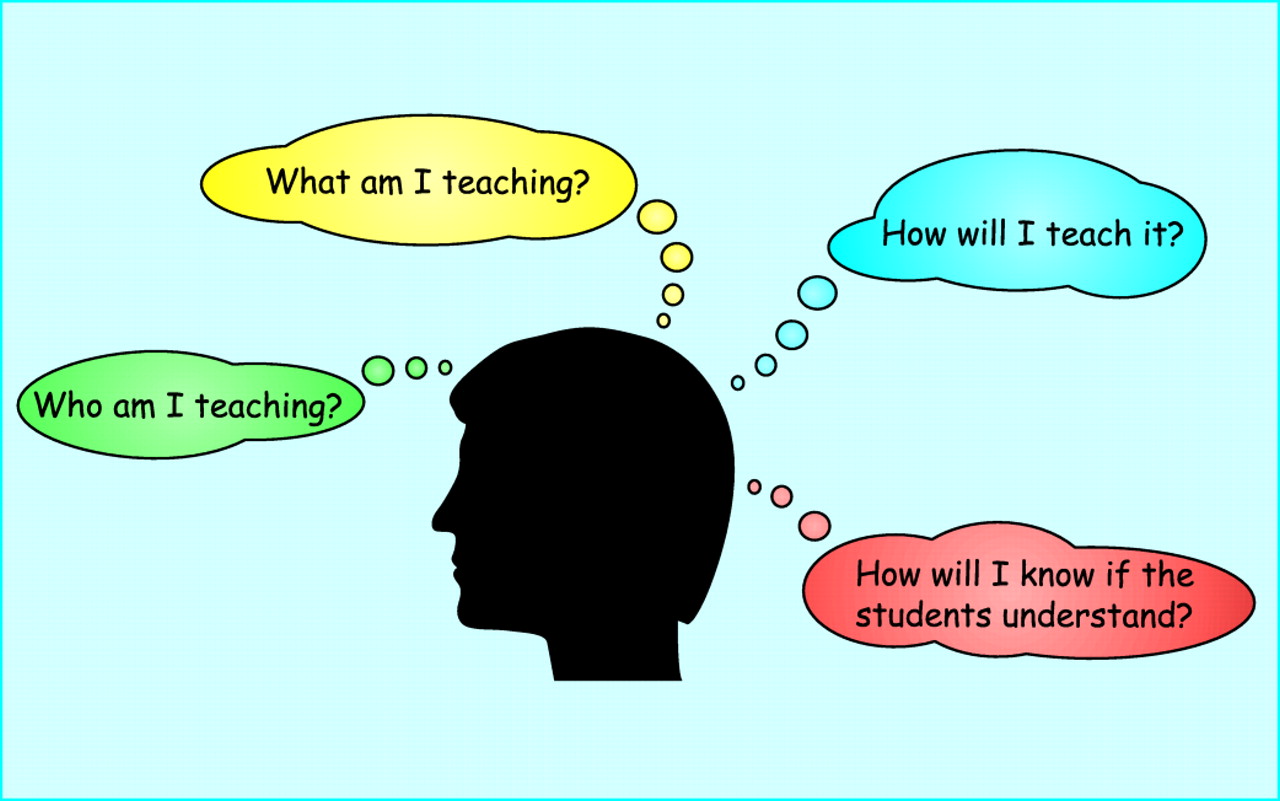 Image credit
If the intended outcome is clear to us, it goes without saying that the same must be said for our learners. This begs a fundamental question that should always be considered – do students understand the point of the lesson? If not, then it is challenging to meet any goals that are set. It all begins with a clear articulation of the learning outcomes. For many of us, this comes in the form of objectives. I know when I went through my coursework and teaching certification process this was emphasized in any lesson plan. As I entered the classroom what I was taught carried over and objectives were not only included in every lesson plan, I developed, but I also listed them on the board for all the kids to see. Herein lies another point. I am not saying that objectives should always be posted for all to see. However, it is crucial that kids understand what is to be learned on any particular day.
I have reflected a great deal on the objective aspect of the lesson and in my coaching with schools on pedagogy have advised them to move away from this traditional component of lesson design and implementation. Objectives, if we really think about it, are more often what the adult wants to achieve in terms of alignment to standards and concepts as well as scope and sequence. Just look at how they are written and see if you feel the same way. Learning targets on the other hand frame the lesson from the students' point of view and are written using “I can” or “I will” statements. They help learners to grasp the lesson's purpose such as why it is crucial to learn this chunk of information or concept, on this day, and in this way. Quality learning targets as part of an effective lesson help kids answer these three questions:
Why did we learn this and what will I be able to do when I've finished this lesson?What idea, topic, or subject is important for me to learn and understand so that I can do this?How will I show that I can do this, and how well will I have to do it to demonstrate that I have learned something new?
Developing learning targets does not go far enough though. Learners need to understand the point of a lesson just as much as a teacher or administrator. Imparting relevance through a specific context and application will go a long way in achieving this. However, everything must be tied together from the learner’s point of view. This is why closure and reflection at the end of the lesson are crucial. Either one or both of these elements can be tied to the use of a KWL chart. Chech out this updated version below.
 Image credit
From a pedagogical standpoint, it is vital to build these in each and every day to bring the learning process full circle. Bottom line – everyone should have a good sense as to the point of a lesson.
April 14, 2019
Tap Into Your Full Potential
"Your beliefs become your thoughts. Your thoughts become your words. Your words become your actions. Your actions become your habits. Your habits become your values. Your values become your destiny." - Mahatma Gandhi
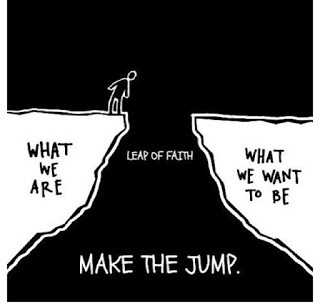
There are many elements to change. However, one of the most powerful is that of self-efficacy. Almost everyone can identify goals they want to accomplish, accomplishments to achieve, or personal and professional aspects they would like to change. Here is where self-efficacy comes in. It plays a significant role in how goals, tasks, and challenges are approached and ultimately achieved. To improve one's self; we must first determine where our practice currently lies. The next step is deciding where we eventually want to be. Success in this endeavor requires self-efficacy combined with a leap of faith.
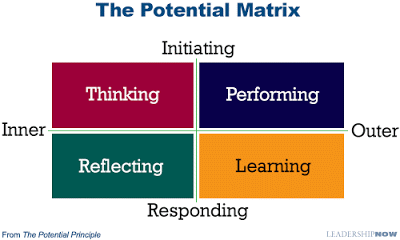
For self-efficacy to play a role in the change process, we must always be open to growth and improvement. Without these, there is nothing for us to hold ourselves accountable for. This is why it is so important that we are our own most prominent critic and make reflection a daily part of our routine. No matter who you are and what you do, there is always the opportunity to get better. The question is, will you pursue it? Enter the Potential Matrix created by Mark Sanborn. It is not about achieving perfection as that is not a reality in the professional world. Sorry to burst anyone’s bubble, but nobody is perfect. It is about how we can become better to evolve into the best iteration of ourselves. Here is a great description from Thinking Space.
If we want to help those we either serve or work with unlock their potential, then we must do so ourselves first. Think about where you are and then where you eventually want to be. Apply the same lens to your classroom, school, organization, or district. Then take the leap of faith; trusting in your innate abilities to improve in ways you never thought were possible. Will everything always work out the way you want it to? Heck no! Just remember that each journey, no matter the result, provides an invaluable learning experience.
There is no better time than now to tap into your full potential.
There are many elements to change. However, one of the most powerful is that of self-efficacy. Almost everyone can identify goals they want to accomplish, accomplishments to achieve, or personal and professional aspects they would like to change. Here is where self-efficacy comes in. It plays a significant role in how goals, tasks, and challenges are approached and ultimately achieved. To improve one's self; we must first determine where our practice currently lies. The next step is deciding where we eventually want to be. Success in this endeavor requires self-efficacy combined with a leap of faith.

For self-efficacy to play a role in the change process, we must always be open to growth and improvement. Without these, there is nothing for us to hold ourselves accountable for. This is why it is so important that we are our own most prominent critic and make reflection a daily part of our routine. No matter who you are and what you do, there is always the opportunity to get better. The question is, will you pursue it? Enter the Potential Matrix created by Mark Sanborn. It is not about achieving perfection as that is not a reality in the professional world. Sorry to burst anyone’s bubble, but nobody is perfect. It is about how we can become better to evolve into the best iteration of ourselves. Here is a great description from Thinking Space.
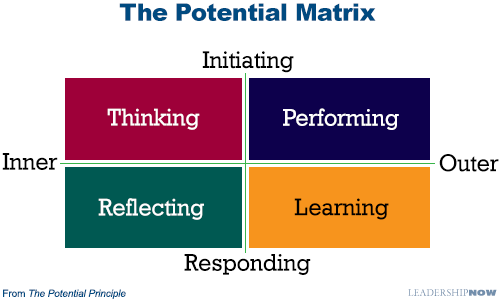
As we look at the matrix, we probably identify one quadrant which we prefer: perhaps you’re naturally an activist, in which case, ‘performing’ is probably your favored way of operating. If you only ever concentrate on performing, you may not be taking the time to reflect and see how you could operate even more efficiently. If you spend all your time reflecting and planning but never take action to learn new skills and try them out, nothing will change. To see more improvement and to release more potential, we need to step outside of that comfortable quadrant and explore the other areas too.
You will see that improvement happens not only outwardly as we learn new skills and perform but also inwardly as we think and reflect. It’s about active experiences which we initiate and passive experiences to which we respond.Our potential is often inhibited by a fixed mindset or an unwillingness to grow. We often perceive our talents and ideas as not being all that great. I know this is how I viewed these for a long time, which inhibited my growth as both a principal and then as a speaker/author. However, looking at where we put the most and least amount of time in the quadrants of the Potential Matrix, we can begin to unleash potential that we never thought was possible. It is ok to not have a clear idea on any given day as to where we want to be. This is my daily reality. The key is never to be satisfied where you are.
If we want to help those we either serve or work with unlock their potential, then we must do so ourselves first. Think about where you are and then where you eventually want to be. Apply the same lens to your classroom, school, organization, or district. Then take the leap of faith; trusting in your innate abilities to improve in ways you never thought were possible. Will everything always work out the way you want it to? Heck no! Just remember that each journey, no matter the result, provides an invaluable learning experience.
There is no better time than now to tap into your full potential.
April 7, 2019
5 Ways to Create Relevant Cultures of Learning
Education can seem like a balancing act between what we as adults feel is essential and what interests our learners. The struggle is real as the former is sometimes emphasized as a result of a school or district’s focus. Make no mistake about it – capturing the attention of students has become harder and harder because of the access that many of them have to knowledge, games, and each other through technology. As difficult as it might be, schools must rise to the occasion. To authentically engage kids today, a central purpose has to be instilled through a combination of a relevant context and application. Without it, learning many concepts as well as the bigger picture doesn’t make sense to students. The benefits speak for themselves, which compels all of us to ensure that this becomes a mainstay in pedagogy as well as learning environments.
Success lies in a shared ownership approach to design relevant cultures of learning. It is important to note that this task does not just fall squarely on the shoulders of teachers. However, their role in the process is critical. Below are three questions that kids should be able to answer if learning is relevant:
What they learnedWhy they learned itHow they will use what they learned outside of school
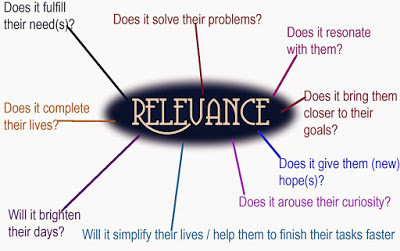 Image credit: Erik Francis
To dig a little deeper Robin Roberson discusses two fundamental ways to provide relevance to students aligned to research. These include utility value and relatedness.
Theme-Based Schools
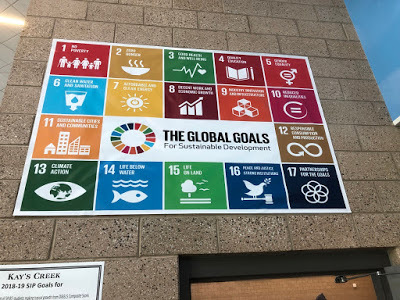
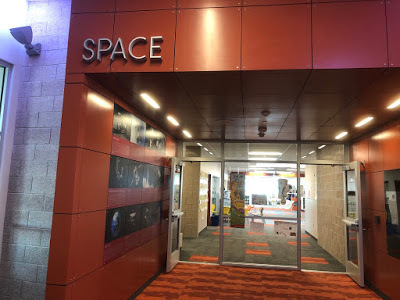
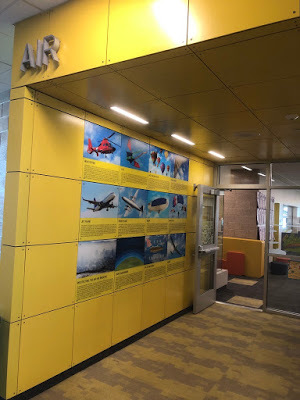
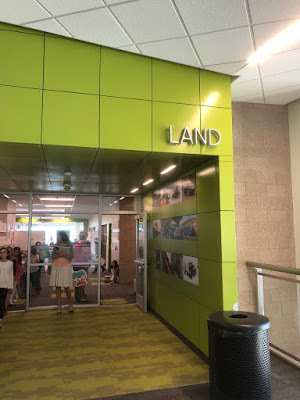
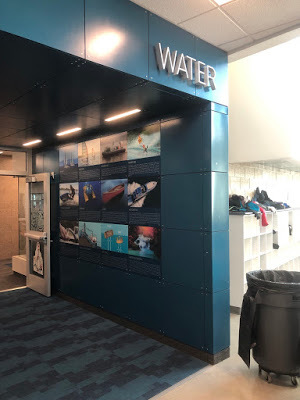
Schools that have embraced this ideal have a central purpose that is embedded across grade levels and throughout the entire curriculum. The theme serves as a conduit to connect various content areas and concepts to impart a greater sense of relevance whether it be in the classroom, hallways, or cafeteria. Recently I observed a great example of this during a coaching visit with Kay’s Creek Elementary School in Farmington, UT. Their theme focused on global goals for sustainable development. As you will see below, not only were the goals clearly visible, but each wing of the building highlighted the main components of the environment. Video displays and interactive activities were also found in each of the main entrances to further engage learners in the theme.
Academies
Academy programs represent a bold new direction for education, one that considers student interests, national need, and global demand for highly qualified graduates capable of competing at the most challenging levels. They provide a defined framework for studies in well-defined, career-focused areas directly connected to university majors and workforce need. These programs cultivate emerging professionals who exhibit the knowledge, skill, character, and work ethic necessary for success in the global marketplace. To provide more learning opportunities for our students, the Academies @ New Milford High School were launched during my tenure as principal. Think of it as a school within a school.
The entire program was designed using existing high school courses as well as adding new ones to complement the three Academies—STEM (Science, Technology, Engineering, and Math), Arts & Letters, and Global Leadership—without costing the district precious financial resources. Any learner, regardless of GPA or learning disability, could be a part of these. Students graduated with a mini-major specific to their interests. To help build the program, junior academies were created at the middle school to spark interest and function as a feeder pipeline. To learn more about our specific academies click HERE.
A Unifying Focus
I was torn as to whether or not I should include this in the theme-based or a standalone category. Obviously, I chose the latter. A unifying focus bridges curriculum, instruction, and assessment to a school’s vision and mission. While every school has a mascot and logo, it is rare to see how these are connected to the elements outlined in the previous sentence. Wells Elementary School in Texas is a great example of how a unifying focus becomes a reality. When the school opened the kids and staff selected the “Explorers” as their mascot and from there on out the goal has been to create an innovative culture where kids actively explore learning through blended pedagogical pathways, outdoors, and in flexible spaces. The focus is strengthened by the school’s commitment to social media to consistently share and reinforce how everything they are doing centers on the whole child and high levels of student agency. To see what I am talking about check out #ExploreWells.
Specialized Programs
Many districts and schools are providing supplements or enhancements to the curriculum to impart more relevance amongst learners. These can range from traditional electives or more innovative options that align to student interests and current trends in the workforce. Some schools are taking it a step further to upgrade to learning environments while providing even more opportunities to engage students authentically. Be sure to check out what Mt. OIive High School in New Jersey has done in this area.
Makerspaces
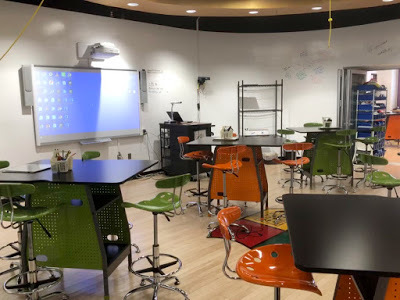
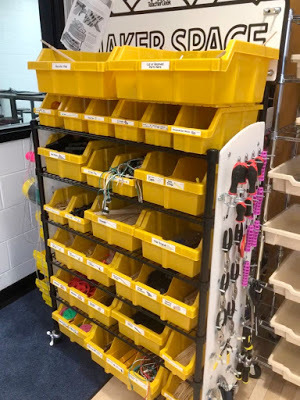
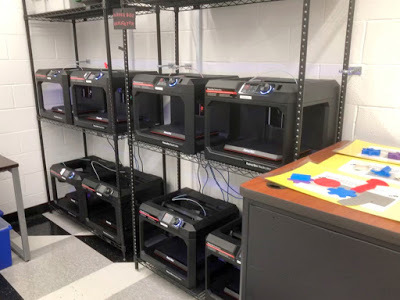
There isn’t much I have to say here as I have written on the topic extensively over the years. Makerspaces function as an oasis for learners who will never do well on a standardized test or succeed in a traditional classroom environment as that is not how they learn. These spaces foster open-ended exploration, tinkering, making, and creating to learn. Many at-risk kids thrive here as they can learn with their hands while coming up with innovative solutions to problems that align with the real world. Below are some pictures of makerspaces at New Milford High School and Mt. Olive Middle School in New Jersey.

I am sure there are many other great ideas out there that have positively impacted kids across the world. Creating relevant cultures of learning is the responsibility of all who serve kids, not just teachers in the classroom. This includes administrators, boards of education, parents, legislators, and other pertinent stakeholders. If the goal is to improve an array of outcomes and genuinely prepare kids for the workforce now and in the future, a relevant culture is a necessity.
Ormrod, J.E. (2006). Educational psychology: Developing learners (5th ed.). Upper Saddle River, N.J.: Pearson Education, Inc.
Ryan, R.M., & Deci, E.L. (2000). Self-determination theory and the facilitation of intrinsic motivation, social development, and well-being. American Psychologist, 55, 68-78.
Success lies in a shared ownership approach to design relevant cultures of learning. It is important to note that this task does not just fall squarely on the shoulders of teachers. However, their role in the process is critical. Below are three questions that kids should be able to answer if learning is relevant:
What they learnedWhy they learned itHow they will use what they learned outside of school
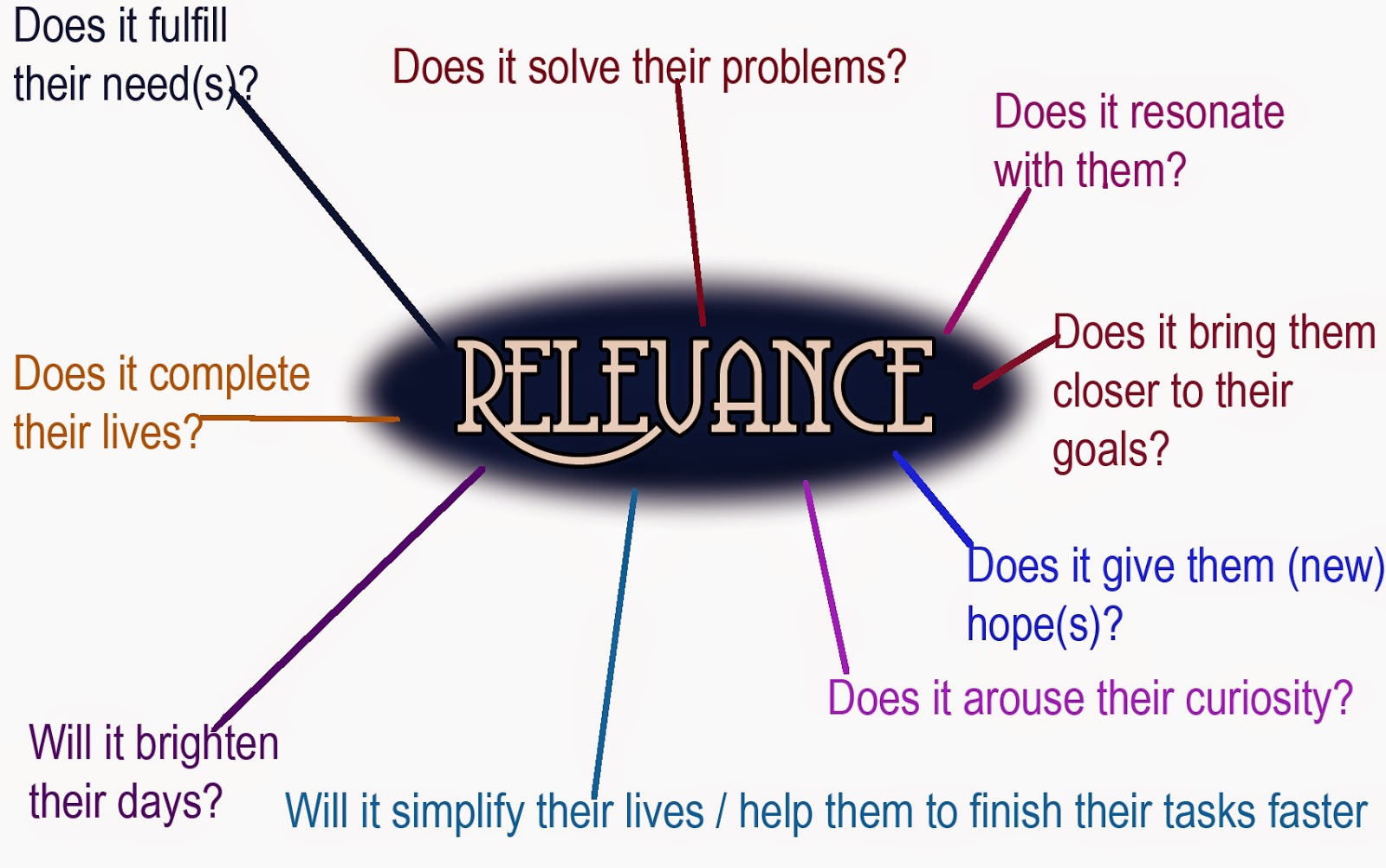 Image credit: Erik Francis
To dig a little deeper Robin Roberson discusses two fundamental ways to provide relevance to students aligned to research. These include utility value and relatedness.
Utility value answers the question “Yeah, but what am I gonna use this for?” Utility value is purely academic and emphasizes the importance that content has for the students’ future goals — both short-term and long-term goals (Ormrod, 2006).
Relatedness, on the other hand, answers the question “What’s this have to do with me?” Relatedness is an inherent need students have to feel close to the significant people in their lives, including teachers (Ryan & Deci, 2000). Relatedness is seen by many as having nonacademic and academic sides. The nonacademic side of relatedness emphasizes the relationship the instructor has with students. Integral to this side of relatedness is the understanding that students need to feel close to their teachers and are more likely to listen to, learn from, and perhaps identify with the ones they like (Ryan & Deci, 2000).What happens in the classroom through the relationship-building expertise of teachers needs to be supported and enhanced across the entire school or district. Herein lies the vital role leaders play in designing relevant cultures of learning. A systemwide focus on meaning and purpose across all grade levels and content areas goes a long way to supporting a consistent interest in learning. There is no right way to accomplish this as you will see from the examples below.
Theme-Based Schools
Schools that have embraced this ideal have a central purpose that is embedded across grade levels and throughout the entire curriculum. The theme serves as a conduit to connect various content areas and concepts to impart a greater sense of relevance whether it be in the classroom, hallways, or cafeteria. Recently I observed a great example of this during a coaching visit with Kay’s Creek Elementary School in Farmington, UT. Their theme focused on global goals for sustainable development. As you will see below, not only were the goals clearly visible, but each wing of the building highlighted the main components of the environment. Video displays and interactive activities were also found in each of the main entrances to further engage learners in the theme.
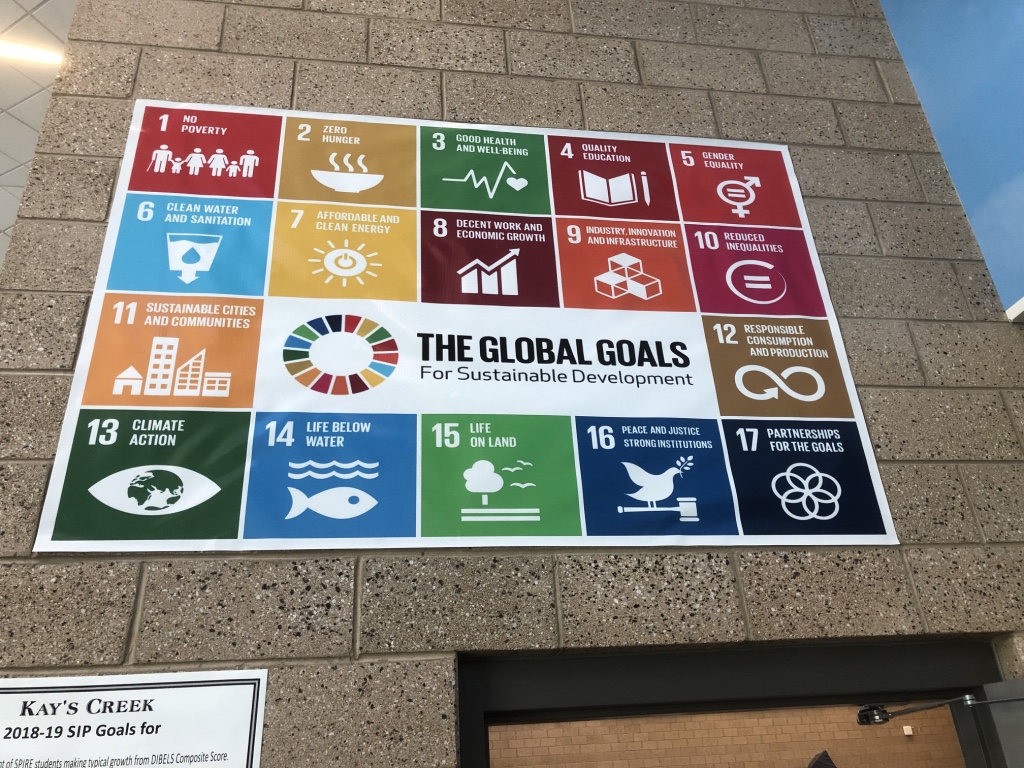
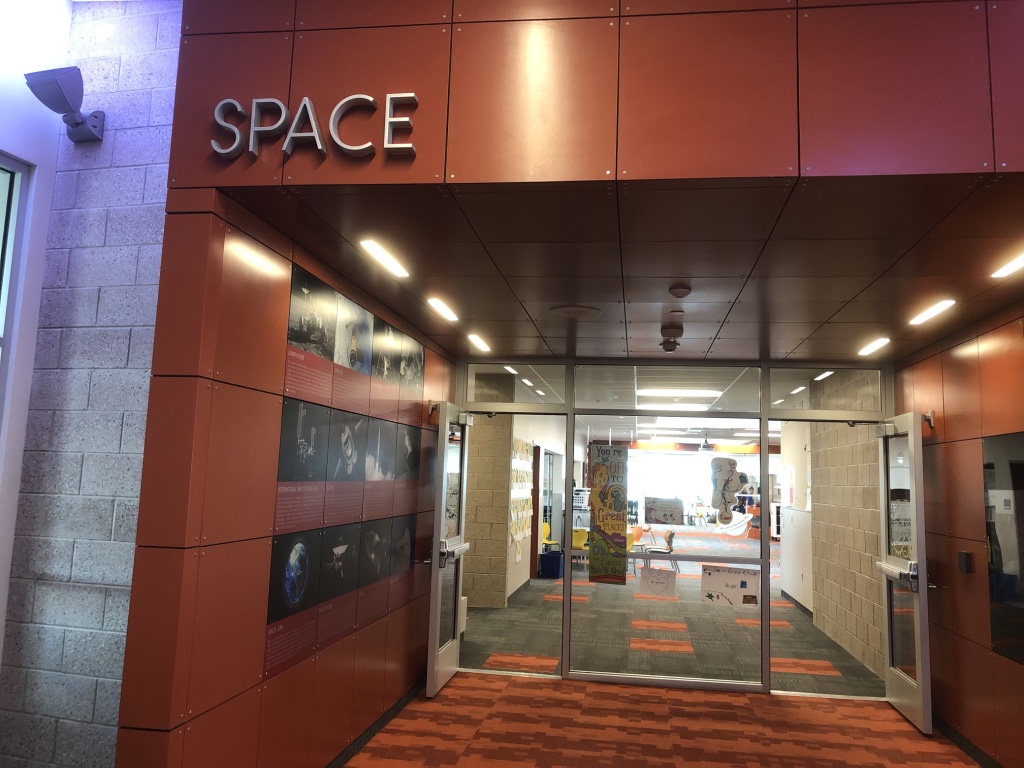


Academies
Academy programs represent a bold new direction for education, one that considers student interests, national need, and global demand for highly qualified graduates capable of competing at the most challenging levels. They provide a defined framework for studies in well-defined, career-focused areas directly connected to university majors and workforce need. These programs cultivate emerging professionals who exhibit the knowledge, skill, character, and work ethic necessary for success in the global marketplace. To provide more learning opportunities for our students, the Academies @ New Milford High School were launched during my tenure as principal. Think of it as a school within a school.
The entire program was designed using existing high school courses as well as adding new ones to complement the three Academies—STEM (Science, Technology, Engineering, and Math), Arts & Letters, and Global Leadership—without costing the district precious financial resources. Any learner, regardless of GPA or learning disability, could be a part of these. Students graduated with a mini-major specific to their interests. To help build the program, junior academies were created at the middle school to spark interest and function as a feeder pipeline. To learn more about our specific academies click HERE.
A Unifying Focus
I was torn as to whether or not I should include this in the theme-based or a standalone category. Obviously, I chose the latter. A unifying focus bridges curriculum, instruction, and assessment to a school’s vision and mission. While every school has a mascot and logo, it is rare to see how these are connected to the elements outlined in the previous sentence. Wells Elementary School in Texas is a great example of how a unifying focus becomes a reality. When the school opened the kids and staff selected the “Explorers” as their mascot and from there on out the goal has been to create an innovative culture where kids actively explore learning through blended pedagogical pathways, outdoors, and in flexible spaces. The focus is strengthened by the school’s commitment to social media to consistently share and reinforce how everything they are doing centers on the whole child and high levels of student agency. To see what I am talking about check out #ExploreWells.
Specialized Programs
Many districts and schools are providing supplements or enhancements to the curriculum to impart more relevance amongst learners. These can range from traditional electives or more innovative options that align to student interests and current trends in the workforce. Some schools are taking it a step further to upgrade to learning environments while providing even more opportunities to engage students authentically. Be sure to check out what Mt. OIive High School in New Jersey has done in this area.
Makerspaces
There isn’t much I have to say here as I have written on the topic extensively over the years. Makerspaces function as an oasis for learners who will never do well on a standardized test or succeed in a traditional classroom environment as that is not how they learn. These spaces foster open-ended exploration, tinkering, making, and creating to learn. Many at-risk kids thrive here as they can learn with their hands while coming up with innovative solutions to problems that align with the real world. Below are some pictures of makerspaces at New Milford High School and Mt. Olive Middle School in New Jersey.
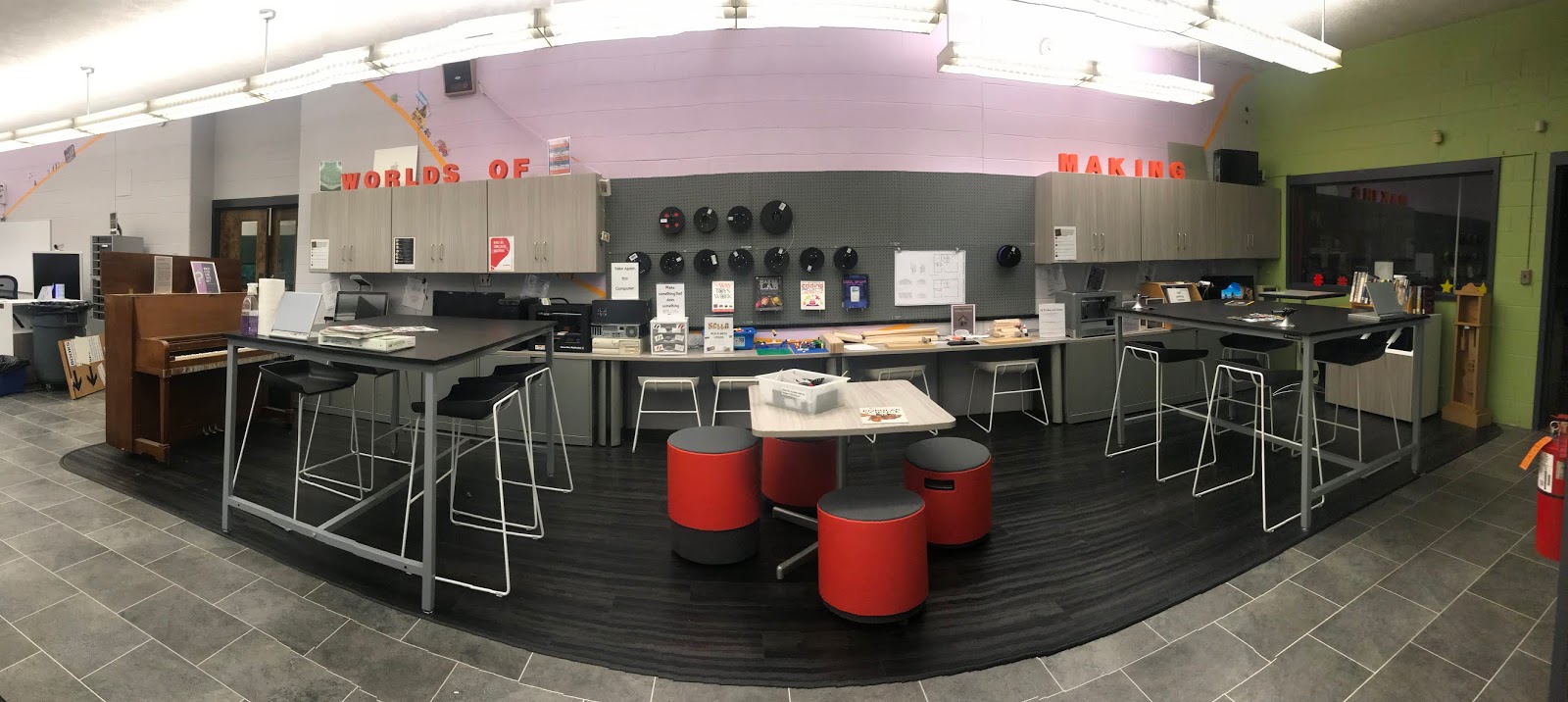
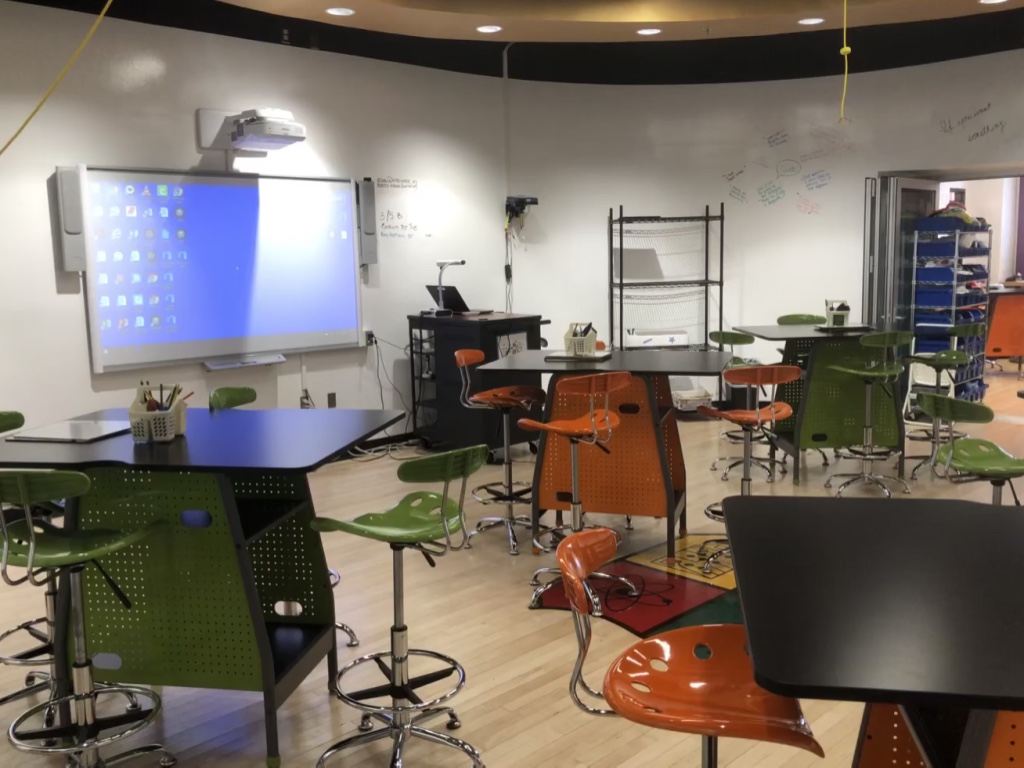
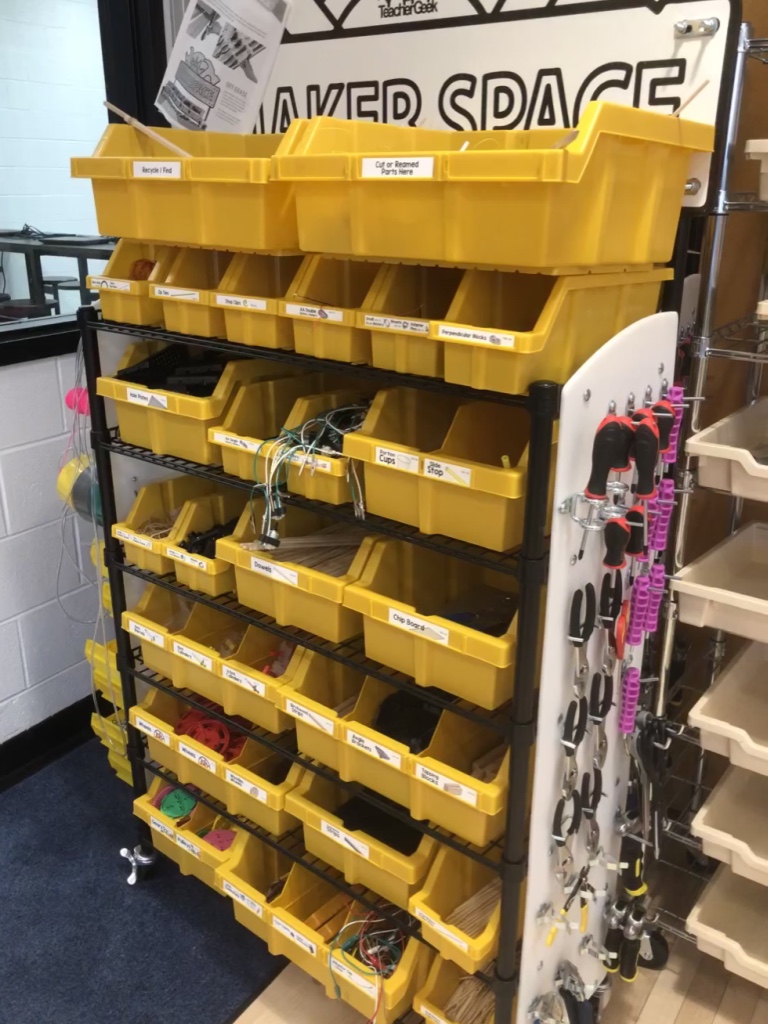
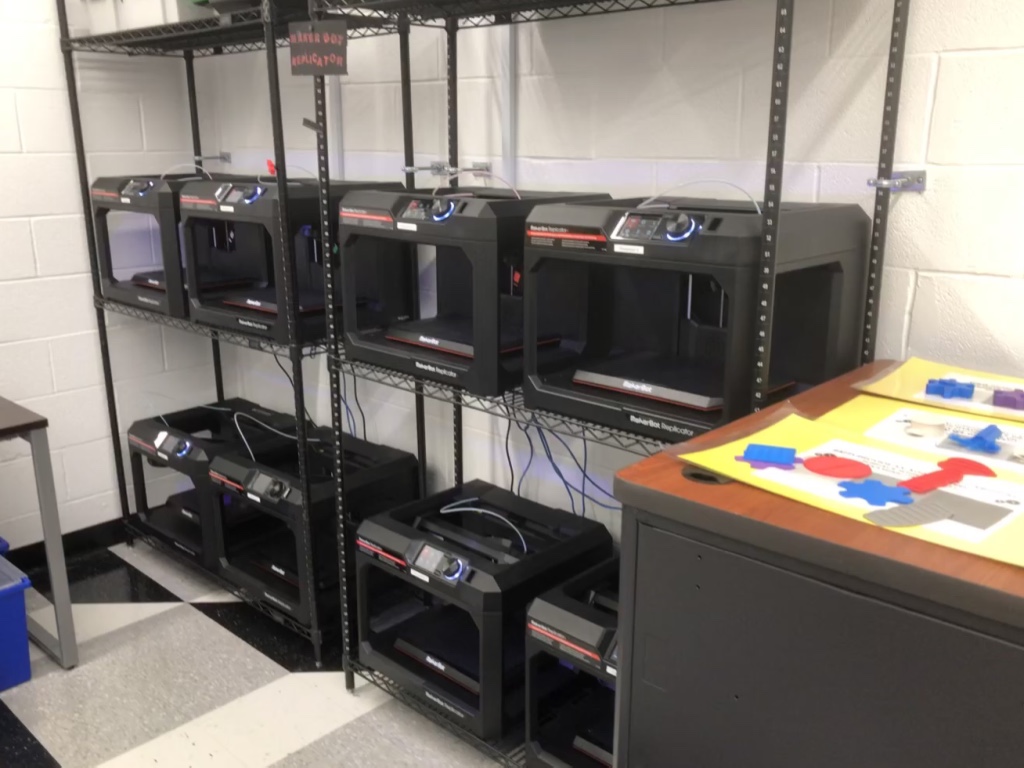
I am sure there are many other great ideas out there that have positively impacted kids across the world. Creating relevant cultures of learning is the responsibility of all who serve kids, not just teachers in the classroom. This includes administrators, boards of education, parents, legislators, and other pertinent stakeholders. If the goal is to improve an array of outcomes and genuinely prepare kids for the workforce now and in the future, a relevant culture is a necessity.
Ormrod, J.E. (2006). Educational psychology: Developing learners (5th ed.). Upper Saddle River, N.J.: Pearson Education, Inc.
Ryan, R.M., & Deci, E.L. (2000). Self-determination theory and the facilitation of intrinsic motivation, social development, and well-being. American Psychologist, 55, 68-78.
March 31, 2019
Feedback Should Be a Dialogue, Not a Monologue
Feedback can bring people together in the pursuit of a shared goal. Criticism, on the other hand, can drive people apart. In many situations going with the former is the better course of action. Below is a piece I pulled from an article titled Using Neuroscience to Make Feedback Work and Feel Better that explains why it matters so much:
 Image credit
Nobody likes to be just talked at regardless of the age group of the person being spoken to. Even though there are most certainly cases that necessitate this, context matters. Lately, I have been thinking about how we give feedback to our learners, colleagues, and those who we supervise. Maybe give is the wrong word to use here. The prevailing notion is that one person speaks while the other(s) listens intently and reflects on the advice given. Herein lies one of the greatest misconceptions with an effective feedback loop. In many cases, feedback is seen as something that is given to another person. It becomes even more complicated when it is viewed as something that must be delivered.
When there is a focus on delivery, we run the risk of focusing more on what is said as opposed to a process that fosters reflection and ultimately questions from the receiver. Often, we settle on what the feedback is in terms of what people have done well, or not, through our own lens. So much time is then given to mapping out what the feedback is that we want to share with the other person that it becomes more about us than the person or people we are trying to help. When done this way it can be construed as criticism as opposed to a catalyst for growth.
If the purpose is to help others grow, then a mentality of delivering the message or advice has to be rethought. Feedback should be a dialogue, not a monologue. A conversational approach can lead to high value and actual changes to practice. Below are some specific reasons why the conversation is such an integral part of the feedback loop:
The receiver sees that it is more about him/her than the giver.Imparts a greater sense of trust on behalf of the receiver resulting in a more powerful relationship with the giver.Creates the space for open reflection based on what was shared.Opens the door for discussion on action steps to be taken.Provides the receiver with an opportunity to present his/her own perspective on the feedback given. This can result in the sharing of evidence or more context that the giver might not have been aware of when initially providing the feedback.A conversational approach can motivate people to seek out feedback. Research suggests that asking for it can help organizations tilt culture toward continuous improvement.
Delivering feedback in the form of a monologue is an outdated process that can be improved whether you are working with kids or adults. Instead of preparing how you are going to “deliver” the message think about creating the conditions where the receiver will value the recommendations. A conversation that incorporates the art of listening will go a long way to creating a culture where feedback is not only acted upon but asked for regularly.
Feedback isn’t just a ritual of the modern workplace. It’s the means by which organisms, across a variety of life-forms and time periods, have adapted to survive. To University of Sheffield cognitive scientist Tom Stafford, feedback is the essence of intelligence. “Thanks to feedback we can become more than simple programs with simple reflexes, and develop more complex responses to the environment,” he writes. “Feedback allows animals like us to follow a purpose.” It’s no coincidence the words organism and organization share a Latin root. Just as feedback enables the former to flourish, so it does for the latter.The feedback process matters.
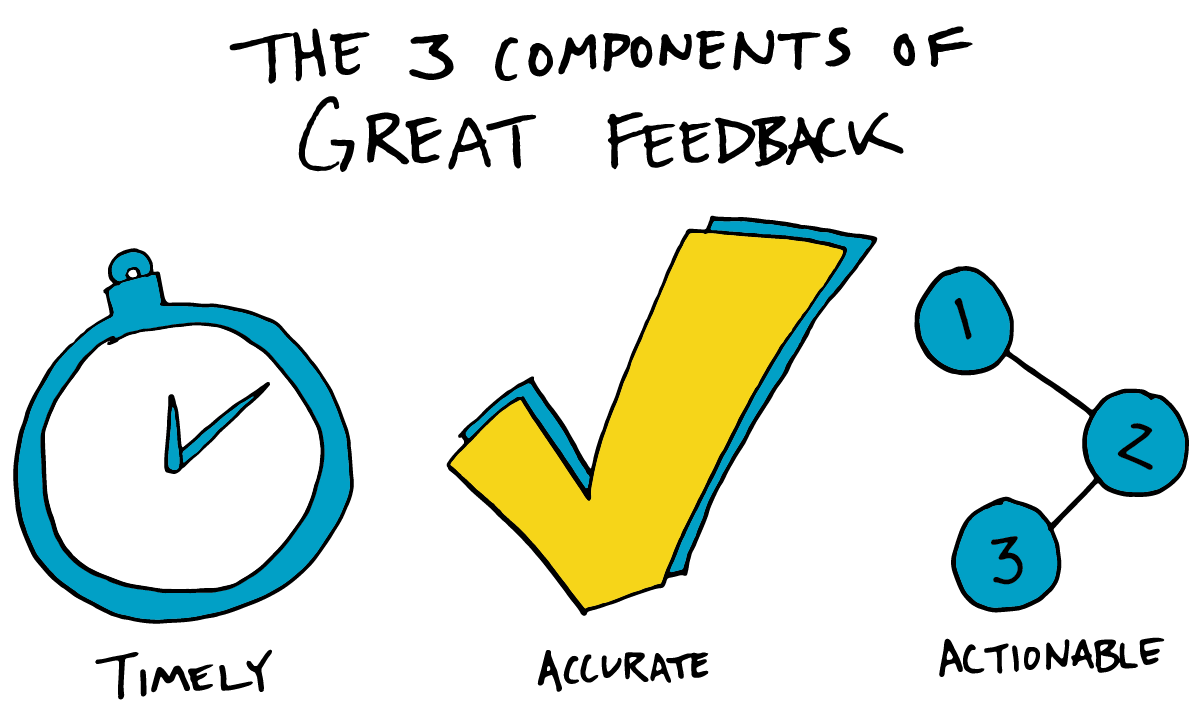 Image credit
Nobody likes to be just talked at regardless of the age group of the person being spoken to. Even though there are most certainly cases that necessitate this, context matters. Lately, I have been thinking about how we give feedback to our learners, colleagues, and those who we supervise. Maybe give is the wrong word to use here. The prevailing notion is that one person speaks while the other(s) listens intently and reflects on the advice given. Herein lies one of the greatest misconceptions with an effective feedback loop. In many cases, feedback is seen as something that is given to another person. It becomes even more complicated when it is viewed as something that must be delivered.
When there is a focus on delivery, we run the risk of focusing more on what is said as opposed to a process that fosters reflection and ultimately questions from the receiver. Often, we settle on what the feedback is in terms of what people have done well, or not, through our own lens. So much time is then given to mapping out what the feedback is that we want to share with the other person that it becomes more about us than the person or people we are trying to help. When done this way it can be construed as criticism as opposed to a catalyst for growth.
If the purpose is to help others grow, then a mentality of delivering the message or advice has to be rethought. Feedback should be a dialogue, not a monologue. A conversational approach can lead to high value and actual changes to practice. Below are some specific reasons why the conversation is such an integral part of the feedback loop:
The receiver sees that it is more about him/her than the giver.Imparts a greater sense of trust on behalf of the receiver resulting in a more powerful relationship with the giver.Creates the space for open reflection based on what was shared.Opens the door for discussion on action steps to be taken.Provides the receiver with an opportunity to present his/her own perspective on the feedback given. This can result in the sharing of evidence or more context that the giver might not have been aware of when initially providing the feedback.A conversational approach can motivate people to seek out feedback. Research suggests that asking for it can help organizations tilt culture toward continuous improvement.
Delivering feedback in the form of a monologue is an outdated process that can be improved whether you are working with kids or adults. Instead of preparing how you are going to “deliver” the message think about creating the conditions where the receiver will value the recommendations. A conversation that incorporates the art of listening will go a long way to creating a culture where feedback is not only acted upon but asked for regularly.
March 24, 2019
To Follow is to Lead
“If you think you’re leading, and no one is following you, then you’re only taking a walk.” - Afghan Proverb
If we follow someone that person is a leader then right? We are all meant to believe that the role of a leader is to empower others to follow to create and sustain successful systems. In many ways, I am not here to challenge this notion. This notion has been ingrained in our minds since the beginning of time. I am sure we all remember the age-old saying “follow the leader.” What is important to consider is why do we choose to follow others and how does that impact our own ability to get others to follow us when there is a shared belief in a cause, vision, or mission?
Throughout time the most impactful leaders across an array of organizations and roles have compelled others to change through a variety of actions. Leadership is about action, not title, position, or power. However, the type of actions we take can determine the willingness of others to follow and help support change. These actions can be broken down into two main categories: directive or empowering. There is a considerable difference here with the former eliciting more of a forced behavior while the latter compels people to embrace the role of follower. The role of leaders is not to tell others what to do, but to take them where they need to be.
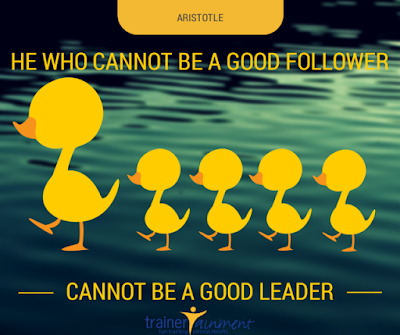
It is important to note that at one point or another every leader was once a follower. Very few, if any, people were just anointed into a leadership position without first being motivated and inspired by someone else. Gwen Moran provides a fascinating take on this point in an article titled 5 Ways Being a Good Follower Makes You a Better Leader:
The most important lesson here is that it was a lone nut as the first follower who transformed the shirtless dancing guy into a leader. Never underestimate the power of following.
If we follow someone that person is a leader then right? We are all meant to believe that the role of a leader is to empower others to follow to create and sustain successful systems. In many ways, I am not here to challenge this notion. This notion has been ingrained in our minds since the beginning of time. I am sure we all remember the age-old saying “follow the leader.” What is important to consider is why do we choose to follow others and how does that impact our own ability to get others to follow us when there is a shared belief in a cause, vision, or mission?
Throughout time the most impactful leaders across an array of organizations and roles have compelled others to change through a variety of actions. Leadership is about action, not title, position, or power. However, the type of actions we take can determine the willingness of others to follow and help support change. These actions can be broken down into two main categories: directive or empowering. There is a considerable difference here with the former eliciting more of a forced behavior while the latter compels people to embrace the role of follower. The role of leaders is not to tell others what to do, but to take them where they need to be.

It is important to note that at one point or another every leader was once a follower. Very few, if any, people were just anointed into a leadership position without first being motivated and inspired by someone else. Gwen Moran provides a fascinating take on this point in an article titled 5 Ways Being a Good Follower Makes You a Better Leader:
Followers can “make or break” the leader influencing if and how goals are accomplished. Good followers support and aid the leader when he or she is doing the right thing and stand up to the leader–having the courage to let the leader know when he or she is doing something wrong or headed in the wrong direction. Being a good follower doesn’t make you a “sheep,” The truth is that most of us are in followership roles in our regular lives.She goes on to discuss how being a follower provides the opportunity to develop specific skills that will make someone a better leader including awareness, diplomacy, courage, collaboration, and critical thinking. Outcomes are dispositions and competencies are some of the many qualities that are found in the best leaders of any organization. As I continue to reflect on this topic, I am reminded of one of the most impactful videos I have ever seen that illustrates how important the art of following Take a few minutes and watch “Leadership Lessons from Dancing Guy” below.
The most important lesson here is that it was a lone nut as the first follower who transformed the shirtless dancing guy into a leader. Never underestimate the power of following.
March 17, 2019
The Pedagogy of Blended Learning
Blended instruction is what the teacher does with technology. Blended learning is where students use tech to have control over path, place, and pace. - Eric Sheninger
I remember back in 2012 when we began to implement blended learning strategies at my former high school. At the time the flipped approach was all the rage and best suited for the resources we had and the age group of our kids. The goal was to make the learning experience more personal for our students while better meeting their individual needs in the process. In our case, this meant better using time during the school day to transfer the balance of power from instruction (teacher-centered) to learning (student-centered). A great deal has changed since 2012 when it comes to blended learning. As technology has evolved so have many of the opportunities inherent in this strategy.
 Image credit: http://www.staloysiusla.org
As I work with more and more schools on blended learning, there is always a focus first and foremost on ensuring that sound pedagogical design serves as a foundation. Herein lies the impetus of the work at Wells Elementary school the past two years. For the purposes of this post, I am going to highlight strategies, elements, models, and supports (tools). Please note that this list is by no means exhaustive or indicative of a be-all or end-all approach. Since my items are (or should) be common knowledge, there won’t be much elaboration. Hyperlinks will be used in the cases where I feel additional context and information is beneficial.
Strategies
Below I identify some strategies that are widely accepted when it comes to sound pedagogy. As you either create or evaluate blended activities are these included in some form or another? If not, think about where there is an opportunity for growth.
Small-group instruction while the rest of the class is engaged in other activitiesChecking for understandingDifferentiation Assessment (formative and summative)Feedback
Elements
The real power of pedagogically-sound blended activities is to empower kids to take more ownership over their learning while making the experience more personal in school. Many of these elements require increasing student agency, incorporating flexible learning spaces, and creating tasks that involve the purposeful use of technology to collaborate, communicate, and create. You will also notice that some are interchangeable. For example, many quality blended activities allow students a certain level of choice over their learning path. Keep in mind that one element might support or enhance another.
PathPacePlaceChoiceVoiceAdvocacy
Models
There are many mainstream models out there that can be used to blend effectively. HERE are a list and description of 12 that are very popular. In theory, these sound great but implementing them into practice is an entirely different animal. Below are some of the most popular models I see being actively utilized with a high level of efficacy in schools.
Station rotationChoice boardsPlaylistsFlipped classroomBelow are some images to provide more insight as to what each of these looks like in practice.
 Station Rotation
 Choice Board w/ individual learning targets
 Playlist
 Flipped classroom
Solutions
There is no shortage of tools available that can be used as part of the models listed above when a sound pedagogical foundation is in place. The key is not to get caught up in the blended instruction piece and move towards blended learning. Popular tools that I have seen effectively utilized by kids include Go Formative, Flipgrid, Edpuzzle, and PlayPosit. These are all fantastic options that can be aligned with the strategies listed above. If you are looking to spread your wings, check out this list crowdsourced by Tom Murray. When it comes to differentiation and summative assessment I recommend the integration of adaptive learning tools. Yes, there is a cost to these. However, learners can be pushed based on ability level and the data gleaned can be used during small group to provide targeted instruction.
It is important to remember that technology only has to be a small component of an effective blended learning activity when considering the strategies, elements, and models listed above. Autonomy is emphasized to better democratize the experience where learners explore and demonstrate high levels of understanding related to concepts and constructing new knowledge. As for the technology part, when it is all said and done it’s what the kids do with tech to learn in ways that they couldn’t without it. Blended makes this a reality.
I remember back in 2012 when we began to implement blended learning strategies at my former high school. At the time the flipped approach was all the rage and best suited for the resources we had and the age group of our kids. The goal was to make the learning experience more personal for our students while better meeting their individual needs in the process. In our case, this meant better using time during the school day to transfer the balance of power from instruction (teacher-centered) to learning (student-centered). A great deal has changed since 2012 when it comes to blended learning. As technology has evolved so have many of the opportunities inherent in this strategy.
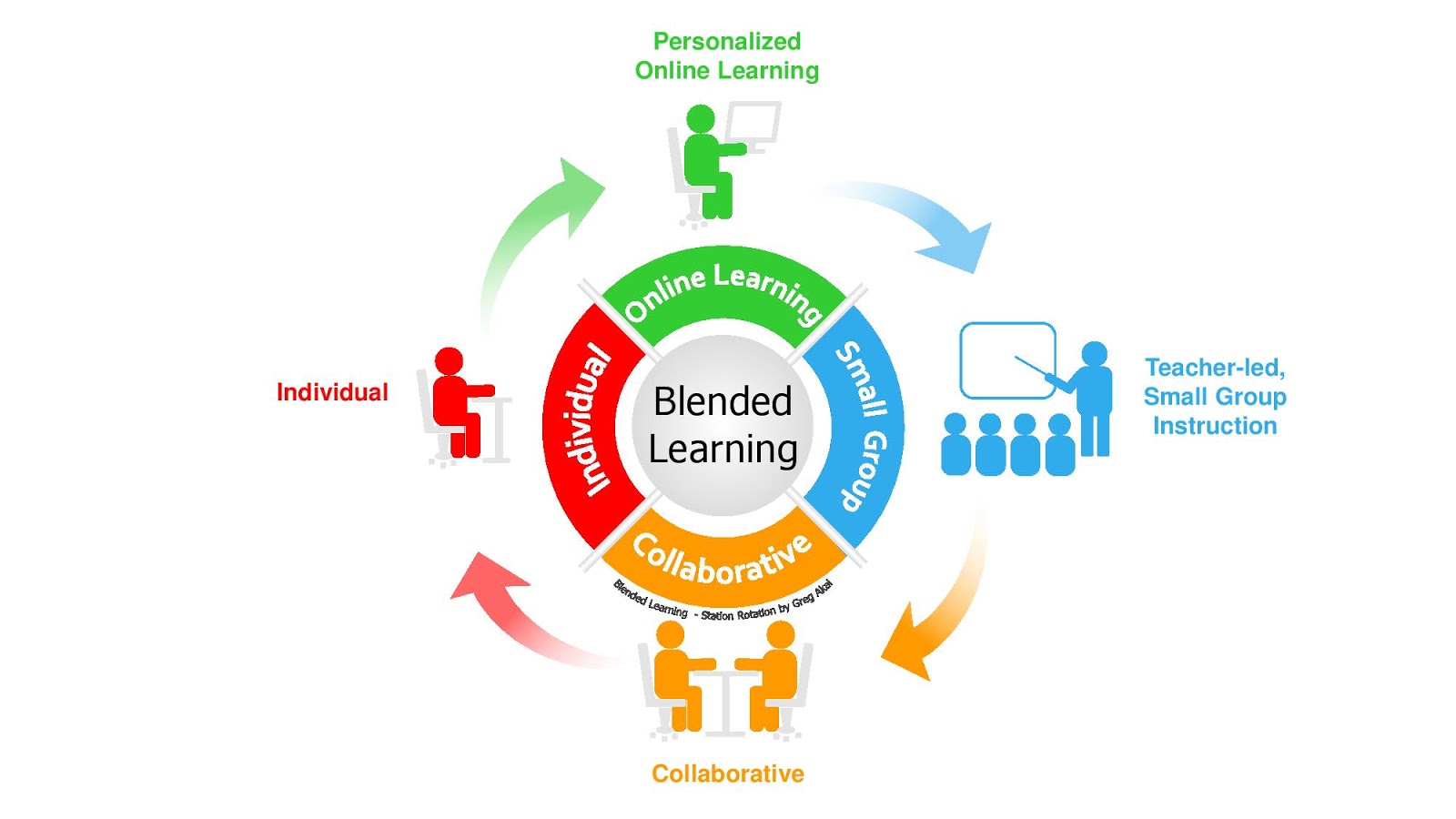 Image credit: http://www.staloysiusla.org
As I work with more and more schools on blended learning, there is always a focus first and foremost on ensuring that sound pedagogical design serves as a foundation. Herein lies the impetus of the work at Wells Elementary school the past two years. For the purposes of this post, I am going to highlight strategies, elements, models, and supports (tools). Please note that this list is by no means exhaustive or indicative of a be-all or end-all approach. Since my items are (or should) be common knowledge, there won’t be much elaboration. Hyperlinks will be used in the cases where I feel additional context and information is beneficial.
Strategies
Below I identify some strategies that are widely accepted when it comes to sound pedagogy. As you either create or evaluate blended activities are these included in some form or another? If not, think about where there is an opportunity for growth.
Small-group instruction while the rest of the class is engaged in other activitiesChecking for understandingDifferentiation Assessment (formative and summative)Feedback
Elements
The real power of pedagogically-sound blended activities is to empower kids to take more ownership over their learning while making the experience more personal in school. Many of these elements require increasing student agency, incorporating flexible learning spaces, and creating tasks that involve the purposeful use of technology to collaborate, communicate, and create. You will also notice that some are interchangeable. For example, many quality blended activities allow students a certain level of choice over their learning path. Keep in mind that one element might support or enhance another.
PathPacePlaceChoiceVoiceAdvocacy
Models
There are many mainstream models out there that can be used to blend effectively. HERE are a list and description of 12 that are very popular. In theory, these sound great but implementing them into practice is an entirely different animal. Below are some of the most popular models I see being actively utilized with a high level of efficacy in schools.
Station rotationChoice boardsPlaylistsFlipped classroomBelow are some images to provide more insight as to what each of these looks like in practice.
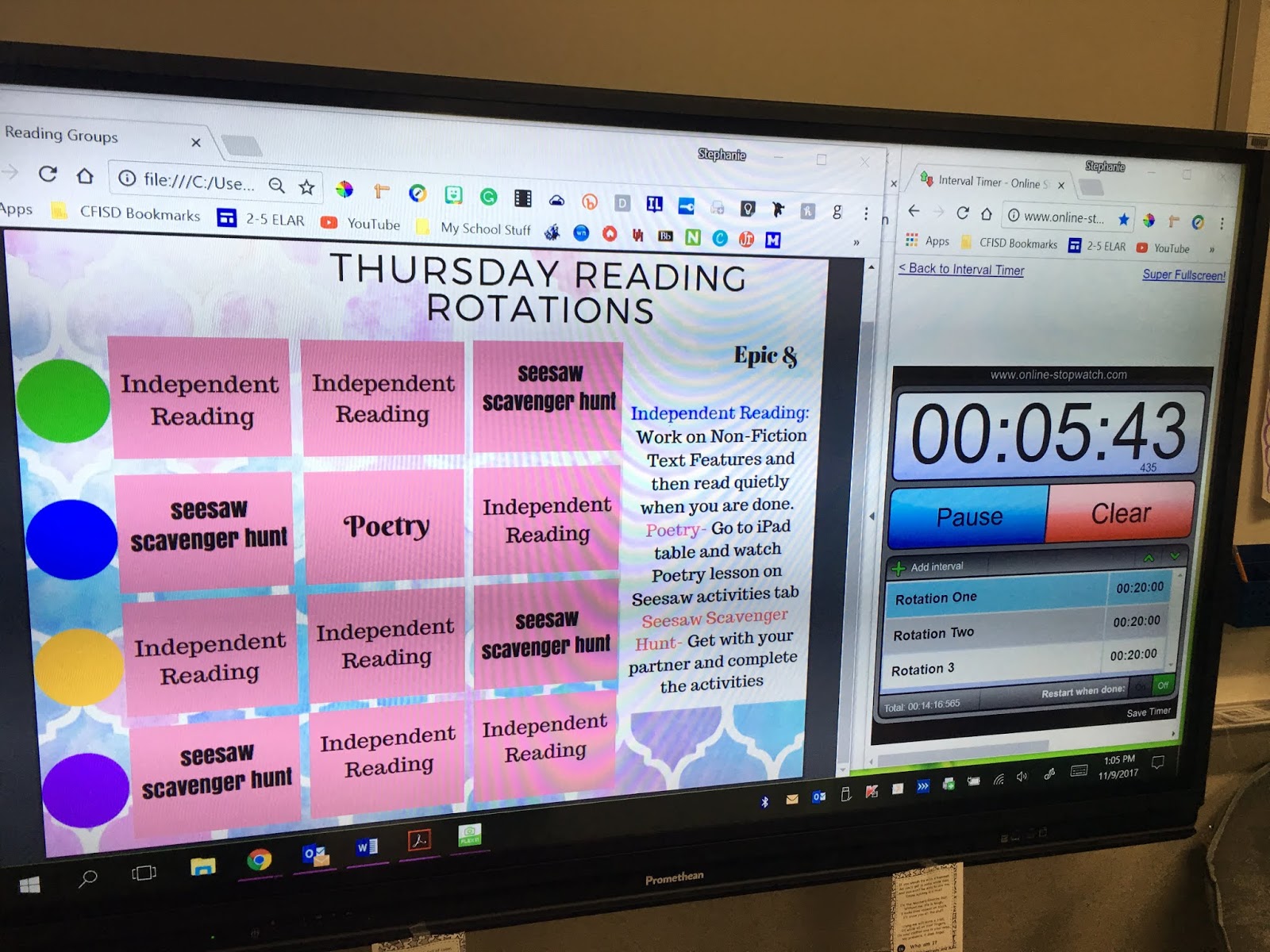 Station Rotation
 Choice Board w/ individual learning targets
 Playlist
Flipped classroom
Playlist
Flipped classroomSolutions
There is no shortage of tools available that can be used as part of the models listed above when a sound pedagogical foundation is in place. The key is not to get caught up in the blended instruction piece and move towards blended learning. Popular tools that I have seen effectively utilized by kids include Go Formative, Flipgrid, Edpuzzle, and PlayPosit. These are all fantastic options that can be aligned with the strategies listed above. If you are looking to spread your wings, check out this list crowdsourced by Tom Murray. When it comes to differentiation and summative assessment I recommend the integration of adaptive learning tools. Yes, there is a cost to these. However, learners can be pushed based on ability level and the data gleaned can be used during small group to provide targeted instruction.
It is important to remember that technology only has to be a small component of an effective blended learning activity when considering the strategies, elements, and models listed above. Autonomy is emphasized to better democratize the experience where learners explore and demonstrate high levels of understanding related to concepts and constructing new knowledge. As for the technology part, when it is all said and done it’s what the kids do with tech to learn in ways that they couldn’t without it. Blended makes this a reality.
March 10, 2019
12 Leadership Fundamentals
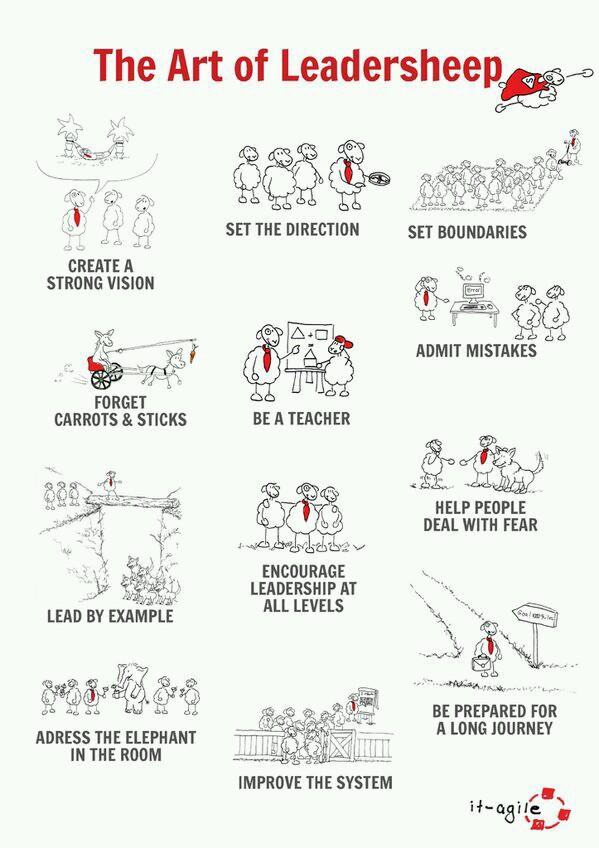
Leadership is leadership. The same essential qualities and characteristics that exemplify what great leaders do have pretty much stayed the same. What has changed are the tools, research, and societal shifts that impact the work. Leadership is both an art and a science with the goal of moving the masses towards achieving a common goal. Even though I have written extensively on the topic over the years, I am always on the lookout for more insight that can help others, including myself, excel in the role. Recently I came across the image below titled the Art of Leadersheep by it-agile. Not only does it align with what we know about effective leadership, but it also reminds us to keep our focus on the important stuff.
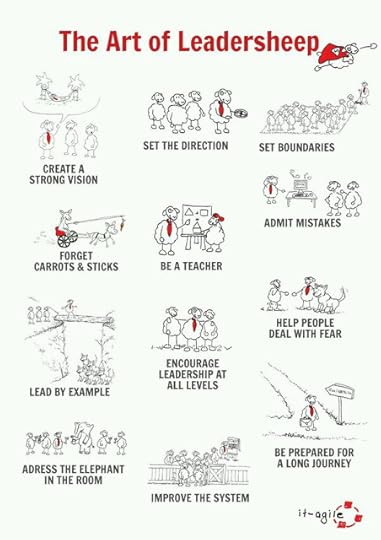
Using the image above as I springboard, I am going to try to add a little more context to the fundamentals highlighted.
Create a strong vision
A vision can undoubtedly change the culture of any organization if it is shared and co-created, but the real work and testament to great leadership is moving from the visioning process by developing a strategic plan to turn vision into reality. Whereas developing a shared vision is an attribute linked to all great leaders, the best leaders ensure that a strategic plan is formed and then meticulously implemented. A vision has to result in a plan, which provides a focus for the change initiative. The plan then has to be monitored and evaluated if the desired outcome is sustainable change that leads to transformation.
Set the direction
When a ship sets sail a course is plotted, and different elements are used to arrive at the desired destination. Leaders set the direction by developing achievable and practical goals that are clearly communicated. You will not find an effective leader who is not an effective communicator. If people are unclear where they are, or should be headed, the chances of success or limited.
Set boundaries
Leaders know that a free for all will not necessitate needed change. Boundaries need to be established to keep everyone in tune with the vision and agreed upon course of action. The best way to accomplish this is to set some norms and stick to them. Just make sure these are not too restrictive as you want your people to be open to taking risks. Boundaries are crucial to establishing and sustaining relationships. Without trust, there is no relationship. If there is no relationship, no real learning or change will occur.
Forget carrots & sticks
If you have not read Drive by Dan Pink, I suggest you do. The problem with extrinsic rewards is that people will always expect them, and they rarely result in sustained changes to culture. As Pink revealed, the keys unlocking and sustaining intrinsic motivation are autonomy, mastery, and purpose. Great leaders help others see the value in the work and change in terms of how it will help to improve their practice.
Be a teacher
The best leaders are the best teachers according to research by Sydney Finkelstein who spent ten years studying the difference between world-class and typical people in leadership positions. She found that the stars emphasized ongoing, intensive one-on-one tutoring of the people who worked for and with them, either in person or virtually, in the course of daily work. This personalized approach is what we see from highly effective teachers who work tirelessly to meet the needs of all their students. Finklestein shares the following, “The best leaders routinely spent time in the trenches with employees, passing on technical skills, general tactics, business principles, and life lessons. Their teaching was informal and organic, flowing out of the tasks at hand. And it had an unmistakable impact: Their teams and organizations were some of the highest-performing in their sectors.
Admit mistakes
Everyone makes mistakes. However, by not admitting or owning up to this fact, a culture of trust is hard to come by. Being human means that you will screw up once in a while. Own your mistakes, but don’t let them own you. One final thought. Don’t dwell on the mistake. Remember what you learned from it.
Lead by example
Don’t ask others to do what you are not willing to do or have not done yourself. Leadership is about action - not position, title or power. When it is all said and done effective leaders, don’t tell others what to do, but instead take them to where they need to be. You get what you model.
Encourage leadership at all levels
One woman or man does not sustain change. Think about this for a second. Have you ever seen a leader personally implement the vision or every idea he or she comes up with? Sure, an individual can begin the process, but it takes a collective effort to make change stick. Building capacity through delegation and trust empowers others to be an active part of the process. Leadership is a team sport.
Address the elephant in the room
The elephant can come in many shapes and sizes. In some cases, it is the 5% of the people in the system that give you 95% of the problems. In other situations, it can be an unpopular decision, lack of resources, or dwindling support. Regardless of what the issue is, the most effective leaders don’t shy away from addressing them. Leadership is not a popularity contest.
Improve the system
Leaders sink or swim based on how well they can help their organization find and sustain success. It is a calling and a responsibility to move a culture forward in a way that achieves better results. The best leaders are all about ensuring efficacy in any idea, strategy, decision, or program. They also embrace accountability as part of the process.
Be prepared for a long journey
Leadership is not a race or event. It is a process. Meaningful change rarely happens quickly. Transforming culture takes time, so patience is a virtue here. This is not to say that there shouldn’t be a sense of urgency with some aspects. The fact of the matter is that results and achievement success system-wide take time. Set expectations and goals knowing full well that they might not fully materialize for a few years.
What fundamentals would you add to this list?
Leading is not easy and being effective at it is easier said than done. You don’t have to be perfect nor always on your game. You do, however, have to help others achieve a common goal that gets results. Are you up for the challenge?
Using the image above as I springboard, I am going to try to add a little more context to the fundamentals highlighted.
Create a strong vision
A vision can undoubtedly change the culture of any organization if it is shared and co-created, but the real work and testament to great leadership is moving from the visioning process by developing a strategic plan to turn vision into reality. Whereas developing a shared vision is an attribute linked to all great leaders, the best leaders ensure that a strategic plan is formed and then meticulously implemented. A vision has to result in a plan, which provides a focus for the change initiative. The plan then has to be monitored and evaluated if the desired outcome is sustainable change that leads to transformation.
Set the direction
When a ship sets sail a course is plotted, and different elements are used to arrive at the desired destination. Leaders set the direction by developing achievable and practical goals that are clearly communicated. You will not find an effective leader who is not an effective communicator. If people are unclear where they are, or should be headed, the chances of success or limited.
Set boundaries
Leaders know that a free for all will not necessitate needed change. Boundaries need to be established to keep everyone in tune with the vision and agreed upon course of action. The best way to accomplish this is to set some norms and stick to them. Just make sure these are not too restrictive as you want your people to be open to taking risks. Boundaries are crucial to establishing and sustaining relationships. Without trust, there is no relationship. If there is no relationship, no real learning or change will occur.
Forget carrots & sticks
If you have not read Drive by Dan Pink, I suggest you do. The problem with extrinsic rewards is that people will always expect them, and they rarely result in sustained changes to culture. As Pink revealed, the keys unlocking and sustaining intrinsic motivation are autonomy, mastery, and purpose. Great leaders help others see the value in the work and change in terms of how it will help to improve their practice.
Be a teacher
The best leaders are the best teachers according to research by Sydney Finkelstein who spent ten years studying the difference between world-class and typical people in leadership positions. She found that the stars emphasized ongoing, intensive one-on-one tutoring of the people who worked for and with them, either in person or virtually, in the course of daily work. This personalized approach is what we see from highly effective teachers who work tirelessly to meet the needs of all their students. Finklestein shares the following, “The best leaders routinely spent time in the trenches with employees, passing on technical skills, general tactics, business principles, and life lessons. Their teaching was informal and organic, flowing out of the tasks at hand. And it had an unmistakable impact: Their teams and organizations were some of the highest-performing in their sectors.
Admit mistakes
Everyone makes mistakes. However, by not admitting or owning up to this fact, a culture of trust is hard to come by. Being human means that you will screw up once in a while. Own your mistakes, but don’t let them own you. One final thought. Don’t dwell on the mistake. Remember what you learned from it.
Lead by example
Don’t ask others to do what you are not willing to do or have not done yourself. Leadership is about action - not position, title or power. When it is all said and done effective leaders, don’t tell others what to do, but instead take them to where they need to be. You get what you model.
Encourage leadership at all levels
One woman or man does not sustain change. Think about this for a second. Have you ever seen a leader personally implement the vision or every idea he or she comes up with? Sure, an individual can begin the process, but it takes a collective effort to make change stick. Building capacity through delegation and trust empowers others to be an active part of the process. Leadership is a team sport.
Address the elephant in the room
The elephant can come in many shapes and sizes. In some cases, it is the 5% of the people in the system that give you 95% of the problems. In other situations, it can be an unpopular decision, lack of resources, or dwindling support. Regardless of what the issue is, the most effective leaders don’t shy away from addressing them. Leadership is not a popularity contest.
Improve the system
Leaders sink or swim based on how well they can help their organization find and sustain success. It is a calling and a responsibility to move a culture forward in a way that achieves better results. The best leaders are all about ensuring efficacy in any idea, strategy, decision, or program. They also embrace accountability as part of the process.
Be prepared for a long journey
Leadership is not a race or event. It is a process. Meaningful change rarely happens quickly. Transforming culture takes time, so patience is a virtue here. This is not to say that there shouldn’t be a sense of urgency with some aspects. The fact of the matter is that results and achievement success system-wide take time. Set expectations and goals knowing full well that they might not fully materialize for a few years.
What fundamentals would you add to this list?
Leading is not easy and being effective at it is easier said than done. You don’t have to be perfect nor always on your game. You do, however, have to help others achieve a common goal that gets results. Are you up for the challenge?
March 3, 2019
Innovation is More Than an Idea or Tool
What makes something innovative? There is no shortage of debate on this topic in the least bit. From articles to blog posts to books, that subject has been covered in great detail. One can look at numerous companies and develop his or her conclusions. Take Uber and Airbnb for example. Each in their own right came up with a new and different idea aligned to technology with the goal of creating something that consumers would embrace while making money in the process. Not only did both of these companies disrupt their respective industries, but both have evidence in the form of users and revenue to validate that their solutions were genuinely innovative. The convergence of an idea, tool and strategy have led to ultimate success for both Uber and Airbnb.
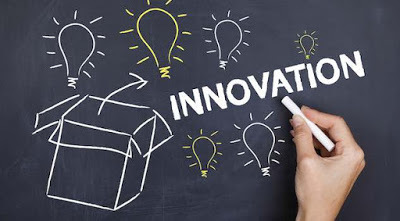
In education, there is always an affinity to jump on board the latest tool or idea and automatically stamp the word innovation on it. Now, this isn’t to say that everything in both of these categories is representative of a better means to accomplish a task or to improve professional practice. The key is the criteria that are used to make such a determination or claim. Let’s first begin by evaluating the efficacy of both using the following questions:
How are kids learning with technology in ways that they couldn’t without it?What observable evidence is there that an idea or strategy represents a fundamental improvement over what has been done traditionally in the past?
I, for one, don’t shy away from the fact that both research and evidence should be part of the conversation. A mix of qualitative and quantitative measures goes a long way to validating whether or not something is actually innovative. A push for efficacy benefits everyone who is championing better approaches to improve student learning and professional practice. Whether to innovate or not should be driven by a challenge or problem that can be overcome in a way that leads to a better outcome. Achievement can undoubtedly fall into one of these categories, but there is so much more to learning and kids than a score. When it comes to innovation, I see digital leadership and blended learning as two of many ideas, concepts, or strategies where there is research and evidence to support these innovative practices.
Recently during a coaching visit at Sandshore Elementary School, a part of the Mt. Olive Township School District in NJ, I saw one of the best examples of innovation in practice. As I was in a second-grade classroom, I saw an odd-looking contraption that I had never seen in a school before, but I also heard a voice coming from it. When I inquired as to what it was, Nicole Musarra, the principal, told me that it was a VGo robotic telepresence for a student who was unable to attend school for health reasons. Below is a description of the device from the company:
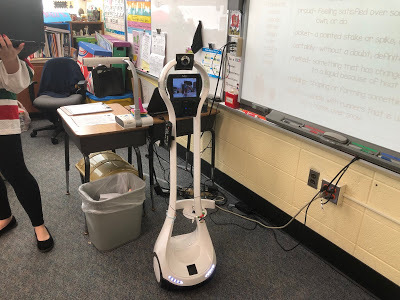
It was purely amazing to see and hear this student be part of the class even though she wasn’t there physically. As the kids in class rotated from small group to stations so did the student who was at home. In addition to full participation during the lesson, the VGo device was able to move throughout the building so the student could go to gym, lunch, and move about the hallway with her peers. I learned that the kids in school would often dress up the robotic device to add a more humanistic element to it. The only limitation was that the VGo was limited in movement and functionality based on an available WiFi signal. This meant that the homebound student couldn’t go outside to recess. However, I suggested to the principal that hotspots be installed on the outside of the building to solve this challenge in the future.
The VGo device is a prime example of what innovation really looks like in terms of how it improves what the student is to do. Without the device, the learning experience, and more importantly the relationships it helps to create, would not be possible. The example above checks all the boxes when it comes to the two questions I posed earlier in the post as well as a fundamental improvement in terms of outcomes. Innovation should not be a buzz word nor something that is thrown around in an attempt to add credence to an idea or strategy. In addition to the most commonly associated words “new” and “better,” a third term should always follow – RESULT. The key to scaling innovation, in my opinion, is not just to tell how we are, or that we should be, pursuing innovative methods, but actually show the impact in terms of improvements to learning outcomes and professional practice.
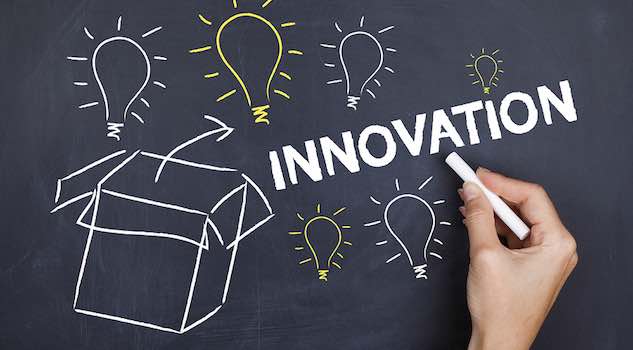
In education, there is always an affinity to jump on board the latest tool or idea and automatically stamp the word innovation on it. Now, this isn’t to say that everything in both of these categories is representative of a better means to accomplish a task or to improve professional practice. The key is the criteria that are used to make such a determination or claim. Let’s first begin by evaluating the efficacy of both using the following questions:
How are kids learning with technology in ways that they couldn’t without it?What observable evidence is there that an idea or strategy represents a fundamental improvement over what has been done traditionally in the past?
I, for one, don’t shy away from the fact that both research and evidence should be part of the conversation. A mix of qualitative and quantitative measures goes a long way to validating whether or not something is actually innovative. A push for efficacy benefits everyone who is championing better approaches to improve student learning and professional practice. Whether to innovate or not should be driven by a challenge or problem that can be overcome in a way that leads to a better outcome. Achievement can undoubtedly fall into one of these categories, but there is so much more to learning and kids than a score. When it comes to innovation, I see digital leadership and blended learning as two of many ideas, concepts, or strategies where there is research and evidence to support these innovative practices.
Recently during a coaching visit at Sandshore Elementary School, a part of the Mt. Olive Township School District in NJ, I saw one of the best examples of innovation in practice. As I was in a second-grade classroom, I saw an odd-looking contraption that I had never seen in a school before, but I also heard a voice coming from it. When I inquired as to what it was, Nicole Musarra, the principal, told me that it was a VGo robotic telepresence for a student who was unable to attend school for health reasons. Below is a description of the device from the company:
For some students, attending school isn’t possible.
Injuries, extended illnesses, immune deficiencies, and other physical challenges prevent a student from physically being able to attend school. School districts try to accommodate these special needs by working providing online courses, in-home tutors, special busing, video conferencing and more. But these are expensive and very limiting since students miss out on the classroom experience and social life that comes with attending school. Now, they can participate in classroom discussions and share in the social aspects of locker-side chats, lunch period and moving from class to class. VGo gets the student back to the traditional schooling environment by providing a physical device that replicates the student while away from school. It is operated in real-time by the student (not the teacher or an aid), so they feel empowered with their independence. VGo enables students to:
Receive the same instruction as their peers Move around/between classrooms independently Socialize with friends in the hallways and at lunch Participate in a full school day with their classmates

It was purely amazing to see and hear this student be part of the class even though she wasn’t there physically. As the kids in class rotated from small group to stations so did the student who was at home. In addition to full participation during the lesson, the VGo device was able to move throughout the building so the student could go to gym, lunch, and move about the hallway with her peers. I learned that the kids in school would often dress up the robotic device to add a more humanistic element to it. The only limitation was that the VGo was limited in movement and functionality based on an available WiFi signal. This meant that the homebound student couldn’t go outside to recess. However, I suggested to the principal that hotspots be installed on the outside of the building to solve this challenge in the future.
The VGo device is a prime example of what innovation really looks like in terms of how it improves what the student is to do. Without the device, the learning experience, and more importantly the relationships it helps to create, would not be possible. The example above checks all the boxes when it comes to the two questions I posed earlier in the post as well as a fundamental improvement in terms of outcomes. Innovation should not be a buzz word nor something that is thrown around in an attempt to add credence to an idea or strategy. In addition to the most commonly associated words “new” and “better,” a third term should always follow – RESULT. The key to scaling innovation, in my opinion, is not just to tell how we are, or that we should be, pursuing innovative methods, but actually show the impact in terms of improvements to learning outcomes and professional practice.
February 24, 2019
Utilizing Augmented Reality as an Impetus for Learning
Technology continues to make inroads in classrooms across the world at a dizzying pace. This makes complete sense as every learner in our classrooms at this point have known nothing but a digital world. In many cases, they’ve grown up with access to incredibly immersive technology practically since birth. As a result, it can be difficult at times to compete for attention using traditional teaching methods like whiteboards, worksheets, and extended direct instruction. When the experience is mostly passive relying on strategies that might have worked well in the past, it’s no surprise that classroom engagement learning to meaningful learning has been negatively impacted. In Learning Transformed, Tom Murray and I showcased some compelling data from Gallop that emphasizes this point.
As I have written extensively in the past the digital world that we are now all apart of provides so much promise with paired with sound pedagogy. Instead of fighting the use of tech in the classroom and schools’ educators should not only embrace it embrace but look to expand their toolbox to better empower learners. With so many options to choose from it can be both exhilarating and frustrating at the same time. It seems that every day I’m introduced to a new tech tool that promises to change education. While the premise of many possesses potential, the challenge is to determine which tools are or will have a real impact on education. Research has shown that educational technology has the most effect on learners when it is part of an interactive experience, uses to explore and create as opposed to drill and kill, and consists of the right blend of teachers and technology.
To improve outcomes student agency has to be at the forefront. I’ve always preferred tools that let students take control of their learning by turning passive consumers into creators because it allows them to tap into their imagination, while the learning happens naturally. I was blown away when I discovered Metaverse and seeing it utilized in a classroom during a recent coaching visit. It is a platform that makes it easy for anyone to create augmented reality experiences without having to code. I have not seen any other tools come close when it comes to ease of use and student engagement.

So, what is augmented reality (AR)? Using the camera on a mobile device (phone, tablet) AR overlays images/media over the real world. It is a social experience, as opposed to virtual reality (VR) where a single student would wear goggles that would obstruct them from their surroundings. AR might have started out as a novelty but has now become a fantastic way to engage students through authentic learning experiences. There are many reasons to incorporate AR in the classroom. A short list includes letting students experience characters/imagery that would not otherwise be accessible (historical figures), new places (enhanced field trips), added interactivity to classroom materials, gamified learning, and more immersive opportunities aligned to the curriculum.
As mentioned previously, I was first introduced to Metaverse during a coaching visit where students were creating AR projects for their peers to review ELA concepts. Since then it’s been fascinating to see Metaverse being embraced by educators in large numbers. What sets Metaverse apart from other AR tools is that anyone can create their own experiences quickly and easily. Metaverse consists of two components; Metaverse Studio where experiences are built in and the Metaverse app (iOS, Android and Chromebooks) where the can be subsequently viewed. Experiences are created by combining components on a storyboard (think digital Lego’s). Building your first AR Experience takes minutes. Here’s a quick tutorial.
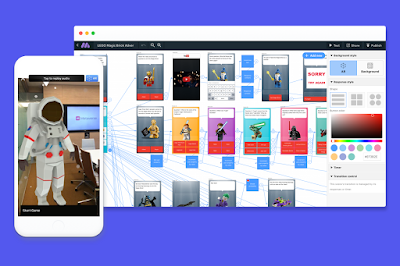
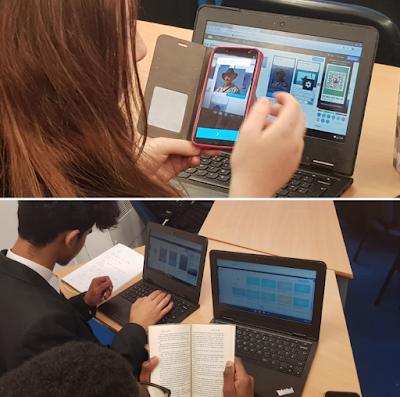
Whether you are an educator or a student there are so many tasks you can create in Metaverse including:
AR quizzesGamesChoose your own adventureField tripsDigital breakout puzzles (AR Breakout EDU)Scavenger hunts/tours (experiences can be placed at GPS locations, similar to Pokemon GO)Audio gamesInteractive stories
Metaverse is free for anyone to create and view AR Experiences (you can create as many as you like). The collections feature is a premium addition to Metaverse Studio that is geared towards teachers who have students creating their own experiences. For more information check out the Metaverse blog to see what teachers are creating and check them out on Twitter.
As I have written extensively in the past the digital world that we are now all apart of provides so much promise with paired with sound pedagogy. Instead of fighting the use of tech in the classroom and schools’ educators should not only embrace it embrace but look to expand their toolbox to better empower learners. With so many options to choose from it can be both exhilarating and frustrating at the same time. It seems that every day I’m introduced to a new tech tool that promises to change education. While the premise of many possesses potential, the challenge is to determine which tools are or will have a real impact on education. Research has shown that educational technology has the most effect on learners when it is part of an interactive experience, uses to explore and create as opposed to drill and kill, and consists of the right blend of teachers and technology.
To improve outcomes student agency has to be at the forefront. I’ve always preferred tools that let students take control of their learning by turning passive consumers into creators because it allows them to tap into their imagination, while the learning happens naturally. I was blown away when I discovered Metaverse and seeing it utilized in a classroom during a recent coaching visit. It is a platform that makes it easy for anyone to create augmented reality experiences without having to code. I have not seen any other tools come close when it comes to ease of use and student engagement.

So, what is augmented reality (AR)? Using the camera on a mobile device (phone, tablet) AR overlays images/media over the real world. It is a social experience, as opposed to virtual reality (VR) where a single student would wear goggles that would obstruct them from their surroundings. AR might have started out as a novelty but has now become a fantastic way to engage students through authentic learning experiences. There are many reasons to incorporate AR in the classroom. A short list includes letting students experience characters/imagery that would not otherwise be accessible (historical figures), new places (enhanced field trips), added interactivity to classroom materials, gamified learning, and more immersive opportunities aligned to the curriculum.
As mentioned previously, I was first introduced to Metaverse during a coaching visit where students were creating AR projects for their peers to review ELA concepts. Since then it’s been fascinating to see Metaverse being embraced by educators in large numbers. What sets Metaverse apart from other AR tools is that anyone can create their own experiences quickly and easily. Metaverse consists of two components; Metaverse Studio where experiences are built in and the Metaverse app (iOS, Android and Chromebooks) where the can be subsequently viewed. Experiences are created by combining components on a storyboard (think digital Lego’s). Building your first AR Experience takes minutes. Here’s a quick tutorial.


Whether you are an educator or a student there are so many tasks you can create in Metaverse including:
AR quizzesGamesChoose your own adventureField tripsDigital breakout puzzles (AR Breakout EDU)Scavenger hunts/tours (experiences can be placed at GPS locations, similar to Pokemon GO)Audio gamesInteractive stories
Metaverse is free for anyone to create and view AR Experiences (you can create as many as you like). The collections feature is a premium addition to Metaverse Studio that is geared towards teachers who have students creating their own experiences. For more information check out the Metaverse blog to see what teachers are creating and check them out on Twitter.