
Pamela D. Toler's Blog, page 41
March 10, 2022
Talking About Women’s History: Three Questions and an Answer with Kim Taylor Blakemore
Kim Taylor Blakemore is the author of the bestselling historical thriller AFTER ALICE FELL and THE COMPANION, lauded by Publisher’s Weekly as “a captivating tale of psychological suspense.” She is also the author of BOWERY GIRL and WILLA Literary Award from Women Writing the West* for Best Young Adult novel, CISSY FUNK. Her upcoming historical suspense, THE DECEPTION, is due out Fall 2022 from Lake Union Publishing.
She is the founder of Novelitics, providing developmental editing, writing workshops, master classes and community to writers from around the US and Canada.
Outside of writing and teaching, she is a history nerd and gothic novel lover. She lives with her family in the Pacific Northwest and loves the rain. Truly.
Take it away, Kim!
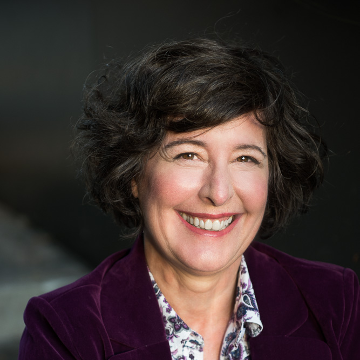
Unlike many historical novelists, you focus on non-elite, and even criminal, women of the past, what you describe as “the thieves and servants, murderesses and mediums, grifters and frauds.” What types of sources do you rely on to create rich fictional characters drawn from social classes that are even less well documented than historical women in general?
I love writing about the outsiders, about women who live by their wits and ingenuity, whether criminal or not. I am obsessed with learning how common people lived, how the big and small events affected their daily lives. What they ate, how they farmed, what they bought versus made from scratch – and most particularly how a woman without means made her way in the 19th century world that I write about. So, research comes down to putting together a mosaic – mill records with the mill girls’ wages and hours put together with the bill from the dry goods store. A random news article of a crime matched with a map of the alleys and saloons and tenements.
For The Companion I needed to know where women prisoners were housed in New Hampshire in 1855 – and found both the Warden’s Reports in the NH State Library and actual trial records in the NH State Archive. For After Alice Fell, I needed the 1865 Director’s Report for the New Hampshire Asylum for the Insane. For my upcoming book The Deception, I located spiritualist newspapers such as Banner of Light, and read autobiographies of 19th century clairvoyants and those who exposed them as frauds.
A big trick is to get the archivists and historians involved. I will tell them the basic plot of the story, what I’m looking for specifically, say railroad routes, and then say “And anything else you think might be important or interesting.” The material that these professionals come up with is a gold mine – newspapers, diaries, letters, tintypes, poems. Incredible stuff. Detail by detail, I build a world for the women’s story.
The question every writer hates: what inspires your stories? Do you begin with a real-life incident or piece of historical data ?
I love this question! I have too many ideas, so it’s hard to narrow down and settle on what I want to write.
For inspiration, sometimes it’s a character I see or hear first, and I’ll free write a bit on that and see who they are. I write historical mystery/thrillers so there’s a crime, of course. And that can come from reading old newspapers from the period and my eye catches on some small, odd three-line article or a series of articles on a sensational “Trial of the Century” (there were many of those in the 19th century). Sometimes it’s while I’m driving along through the woods or along an isolated road and ask, what the heck would happen if…
Then I think through the what ifs and who and hows and eventually the whys. Though it’s in the writing of the novel that the why is most often revealed. Every character has a reason to do what they do – and the antagonist plays as much cat and mouse with me as they do with the heroine.
My current work in progress, Fragile Things, is inspired by a real event, the murder of a young woman in Connecticut in 1877 and the preacher who was accused of her killing and then acquitted. I say inspired because, as I work through the novel’s beats in my head, it has moved outside the lines of the real crime to become fully fiction. I am still heading back to Connecticut to research the original crime, the area, and get a sense of what happened to this poor girl. It’s very important for me to physically visit locations: walking the streets and woods, smelling the air, feeling the atmosphere, the give of earth beneath my feet, the time it takes to run or ride a horse from one place to another. I’m so glad the world is opening up again and I can replace Google maps and website searches with visits to historical societies and tour historical homes.
How do you walk the line between historical fact and fiction in a novel?
I write fictional characters, so the facts are generally kept to what is going on in their environment, some of which affects them and some which is just a passing article in the morning paper that will bring color and atmosphere and authenticity to the period. I was told once by Ron Hansen, who wrote the Assassination of Jesse James by the Coward Robert Ford (and other amazing historical novels) that you cannot change a fact, no matter the inconvenience to your story. So you can’t move the date of an event to suit, nor put a real life character in a place they were not. Although…there are gray areas, places not written of, and spans of time unaccounted for. And there’s a lot of creative things that can occur during those times.
Another novel I’m working on, The Good Time Girls, features Pearl Hart, an infamous stage robber from 1890s Arizona. Who only robbed one stage and tended to make up her own life story from whole cloth and a more than a few stitches of lies. So, to me, she’s fair game for filling in those gray areas. She dropped off the record at the turn of the last century, so there’s a lot of leeway as to her actions, say, in 1905 Kansas. She was there then. But heck if anyone can determine what she was up to. Thus, the gray area and creative space for fiction. And then again, we write historical fiction, not biographies and textbooks.
Question for Pamela: What historical woman would you like to meet?
No one came to mind immediately. Partly because this isn’t the way I think. And partly because many of the historical women I most admire were prickly at best and absolutely difficult at worst. (Not surprising. As Jane Goodall is often reported to have said: “It actually doesn’t take much to be considered a difficult woman. That’s why there are so many of us.”) Sometimes it’s better to keep your heroes at a distance.
But there are a couple of novelists whose writings shaped my vision of what my life could be like: Dorothy Sayers and Mary Stewart. In some ways I’ve been in conversation with them for a long, long time.
* * *
* In case you haven’t noticed, women writing about the west seems to be an unofficial theme of this year’s Women History Month series. And we have more to come. Here’s a hint:
[If you’re reading this via email, you will need to click through to your browser to see the clip.]
* * *
Want to know more about Kim Taylor Blakemore and her work?
Check out her website: www.kimtaylorblakemore.com
Follow her on Instagram: @kimtaylorblakemorebooks
* * *
Tomorrow it will be business as usual here on the Margins with a women’s-history- relatedblog post from me. But we’ve still got more people talking about women’s history from a lot of different angles next week. Don’t touch that dial!


March 9, 2022
Talking About Women’s History: Three Questions and an Answer with Patti Loughlin
Patti Loughlin is Professor of History at the University of Central Oklahoma. She specializes in the history of the American West, American Indian history, and women’s and gender history. Patti serves on the Oklahoma Historical Society board of directors, the editorial board of The Chronicles of Oklahoma, the Dale Society board at the Western History Collections, and remains active in the Coalition for Western Women’s History and the Western History Association. Her book, Hidden Treasures of the American West: Muriel H. Wright, Angie Debo and Alice Marriott (University of New Mexico Press, 2005), received the Outstanding Book on Oklahoma History from the Oklahoma Historical Society and the Director’s Award and Finalist in Nonfiction from the Oklahoma Center for the Book in 2006. She coauthored Building Traditions, Educating Generations: A History of the University of Central Oklahoma (Oklahoma Heritage Association, 2007) with Bob Burke and co-edited Main Street Oklahoma: An American Story (University of Oklahoma Press, 2013) with Linda Reese. Her latest book Angie Debo, Daughter of the Prairie (Oklahoma Hall of Fame, 2017), received the 2018 Oklahoma Book Award for children/young adult. She co-edited This Land Is Herland: Gendered Activism in Oklahoma from the 1870s to the 2010s with Sarah Eppler Janda (University of Oklahoma Press, 2021) and is currently working with Janda to co-author a high school Oklahoma history textbook. Loughlin’s latest project is a biography of Elizabeth Shepley Sergeant, a journalist and Pueblo sovereignty advocate, and her work with Willa Cather, John Collier, and Edward Dozier.
Take it away, Patti!
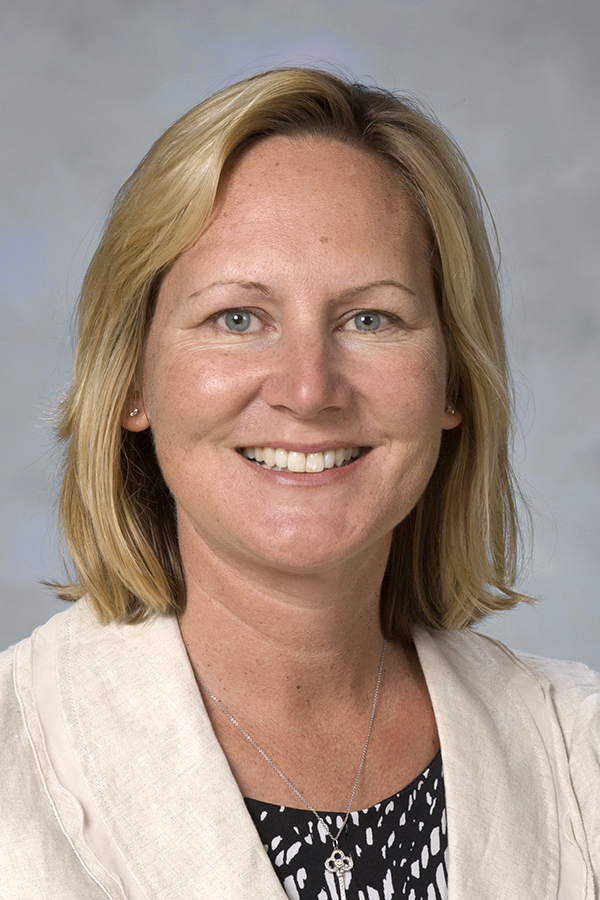
You teach a variety of women’s history courses, and many of them include semester-long research projects. How do you help students connect to women’s history narratives?
Thank you so much, Pamela, for the opportunity to talk about women’s history, particularly western women’s history, suffrage, and activism. I am fortunate to teach courses in the history of the American West, Native American and Indigenous Studies, and women’s, gender, and sexuality studies at the University of Central Oklahoma. My work with graduate and undergraduate students informs my research and writing. For example, students in my Women in the American West course worked with curators at the National Cowboy & Western Heritage Museum in Oklahoma City to conduct research for women’s and gender exhibitions to commemorate women’s suffrage in the American West. The special exhibitions, Blazing a Trail and Find Her West were on view at the museum last year.
What are you working on now?
Recently I coedited a contributed volume on women’s activism titled This Land is Herland: Gendered Activism in Oklahoma from the 1870s to the 2010s (University of Oklahoma Press, 2021), with Sarah Eppler Janda. The book features thirteen profiles of women activists written by thirteen women scholars. In anticipation of the book, in partnership with the Oklahoma Historical Society, the Cherokee Strip Regional Heritage Center, and Oklahoma Humanities, we offered a series of virtual programs in 2020 to recognize the 100th anniversary of the 19th Amendment extending voting rights to women and women’s activism more broadly.
Sarah Eppler Janda and I are writing an Oklahoma history textbook for high school students for statewide adoption. This is a challenging project, but we are committed to connecting today’s students to the complexities of Oklahoma’s past and to share these histories in meaningful ways that encourage students to think critically.
What path led you to Elizabeth Shepley Sergeant? And why do you think it is important to tell her story today?
My current project “Elizabeth Shepley Sergeant’s Modern American West” is the first biography to situate journalist Elizabeth Shepley Sergeant, a Bryn Mawr graduate and a war correspondent for the New Republic during the First World War, in conversation with her network of reformers including writers Willa Cather, Mary Austin and Mabel Dodge Luhan, Commissioner of Indian Affairs John Collier, and anthropologist Edward Dozier of Santa Clara Pueblo.
In many ways, this project is an extension of my earlier work looking at the collaboration between anthropologist Alice Marriott and artist Maria Martinez in the publication of Maria, The Potter of San Ildefonso (1948). Marriott conducted daily interviews with Maria Martinez, and through this research, I learned that Elizabeth Shepley Sergeant was one of four founders in the early 1920s of the Indian Arts Fund, today’s Indian Arts Research Center’s collection housed at the School for Advanced Research in Santa Fe.
For fifteen years, I have taken college students to northern New Mexico for a field study course. We visit Marvin and Frances Martinez at the portal of the Palace of the Governors in Santa Fe and observe a traditional firing of black-on-black pottery at their home in San Ildefonso Pueblo. Marvin Martinez has childhood memories of living with his great-grandmother Maria Martinez and learning about pottery making from her. As I learn more about black-on-black pottery and the history of San Ildefonso Pueblo, I am struck by a network of non-Native reformers during the early 1920s such as Elizabeth Shepley Sergeant – journalists, writers, artists, policymakers – who wanted to start the Indian Arts Fund to retain a pottery collection in Santa Fe and share older pottery and designs with Native artists. We must acknowledge, however, that the formation of the Indian Arts Fund by white reformers such as Sergeant and others meant that the collection had been created and managed by non-Native people for decades. In recent years, however, the Indian Arts Research Center at the School for Advanced Research in Santa Fe has been working to build trust and meaningful collaborations with Tribal communities.
By telling Elizabeth Shepley Sergeant’s story in an accessible biography, I am at once recognizing the often overlooked or underreported service of women in the First World War, the network of women writers critical to Willa Cather’s success, and the unsung women researchers and sovereignty rights activists who participated in John Collier’s reform work with Tribal nations during the 1920s and 1930.

Questions for Pamela:
I know you have recently returned from a research trip. What are your essential tools for a day in the archives?
I depend on a combination of my laptop and a scanner. I now have two portable scanners for use in different situations, but the archive I visited most recently wouldn’t let me use either one. Which turned out to be great because they had a fabulous scanner that was faster than either of mine, and took higher quality pictures.
I realize that using a scanner isn’t romantic. But there is something to be said for being able to do the job efficiently and accurately. (For the record, I also have no nostalgia for the typewriter as opposed to a word processing program on my computer. I remember the days when “cut and paste “ were not metaphors. They were brutal.)
Also, fingerless gloves and computer glasses.
Where are your preferred places to write?
I’m lucky enough to have a wonderful home study and most days I’m more than happy to write there. Occasionally, though, I need to print out some pages and go somewhere else just to kickstart my brain.
* * *
Interested in learning more about Patti Loughlin and her work?
Check out her website
Follow her on Twitter: @LoughlinPatti
* * *
Come back tomorrow for three questions and an answer with novelist Kim Taylor Blakemore.
March 8, 2022
Talking About Women’s History: Three Questions and an Answer from the Working Women’s History Project
The Working Women’s History Project (WWHP) preserves and promotes the stories of historical and living Chicago women who have made contributions toward achieving justice and equality in the areas of labor, women’s, human and civil rights.
WWHP was born at a workshop on Women and Labor History in Chicago chaired by Yolanda “Bobby” Hall at the Fourth Annual Teaching Women’s History Conference for K-12 Teachers. Kathlyn Miles, an actor, had the idea of creating theatrical vignettes that would tell the story of one or more women who had been active in labor history and presenting these vignettes to the public. The first project was “Come Along and Join,” a play written by Miles about union women. A curriculum was also developed around the play for use in schools. The play was shown with great success to the general public, to unions, and to schools and colleges.
Since then, WWHP had researched, written, and produced dramas about historical Chicago women who had made significant contributions on behalf of working people. Created workshops to teach union women to write their own stories, participated in conferences for teachers to bring women’s history into the classroom, and collaborated in holding roundtable discussions on issues affecting working women.
WWHP board member Amy Laiken agreed to answer some questions about the project.
Take it away, Amy:

WWHP focuses on women who are not generally included in the history of feminism or the history of the civil rights movement. How does the addition of women of color and working class women change our understanding of the feminist movement?
For too long the mainstream media, when it covered the women’s movement at all, showed images of primarily white women. Many feminist groups had mainly white leadership. That gave the false impression that women of color and working class women were not involved in the feminist movement. Research has taught us that that was (and is) far from the truth. Going back more than a century, for example, there was Frances Ellen Watkins Harper, a Black woman who was an abolitionist and who also fought for women’s suffrage. She died in 1911, 9 years before the 19th Amendment was ratified. In 1913 Ida B. Wells-Barnett, among her other activities, founded the Alpha Suffrage Club, the first Black women’s suffrage club in Chicago. Immigrant garment worker Hannah Shapiro Glick inspired a walkout at a Chicago shop, Hart, Schaffner & Marx in 1910 to protest a pay cut for piece work. A month later, 40,000 garment workers were out on strike. Olgha Sierra Sandman, now retired, came to Chicago from Mexico and worked to help improve wages for farm workers in central Illinois. She was inducted in the Union Hall of Honor by the Illinois Labor History Society in 2015. When the struggles and achievements of women of color and working class women are elevated, our understanding of feminism is broadened to include issues that do not always get widespread coverage, such as the way the lack of equity in public transportation can have a negative effect on women’s job opportunities. Their stories also expand our knowledge of history so that it is more widely known that women of color and working class women have been and are leaders in movements to expand rights for all women.
In addition to promoting the stories of women who have made contributions in the areas of labor, women’s rights and civil rights, you also actively preserve those stories for future generations. What are some of the ways the organization does this?
Our website has the transcripts of interviews WWHP board members conducted with the late Rev. Addie Wyatt, and with one of the founding members of WWHP, the late Yolanda (Bobby) Hall. We also have several years of newsletters on the site, some of which contain interviews with women who are currently making contributions in those arenas. Many of our programs have been video recorded, and links are available on our website. We also have a collection of video tapes of many of our plays. In addition, in 2017, we donated 20 years of our papers to Special Collections at the Richard J. Daley Library of the University of Illinois at Chicago, where researchers can access them.
How can people help if they want to support the Working Women’s History Project?
Check out our website at www.wwhpchicago.org We’re always interested in ideas for stories, or if you’d like to tell a story about a woman or women working for rights on the job or other arenas, please contact us. We currently have someone working with us on social media, but are interested in having more people adept at using it. During this past year, we had to schedule events virtually, and we could use the help of someone who knows how to use the technology to effectively present programs that way. And, of course, for those who are able to donate, we would appreciate contributions. More info on how to volunteer/donate is on this page of our website https://wwhpchicago.org/contact-us.html . WWHP is a 501 (c)(3) tax deductible organization.
My question for you: I read that you received your PhD in South Asian history. Are you still doing research in that area, and if so, on which countries are you concentrating your research?
I’m still fascinated by South Asia, and occasionally I write pieces about its history. But today my goal is to write books about important historical topics that will engage history buffs and nerdy kids and the intelligent general reader. Accessible doesn’t mean easy. The history I write often turns what we think we know about history inside out, or at least looks at the familiar from an unfamiliar angle. In doing so, I ask us to look at the world today from a slightly different angle as well. The impact of this can be profound. If you are able to look at history from someone else’s perspective for even a short time, you are more apt to see her as a person rather than “the other.” When we re-introduce overlooked populations into the story, the historical framework gets a little bigger, a little more complex.
* * *
Interested in learning more about the Working Women’s History Project?
In addition to checking out their website, you can:
Sign up for their free newsletter https://conta.cc/3trqzlm
Visit their Facebook page: Working Women’s History Project
Be one of the first to follow their brand new Twitter account: @WorkingWomensH1
* * *
Check back tomorrow for three questions and an answer with historian Patti Loughlin, who specializes in the history of the American West, American Indian history, and women’s and gender history.
March 7, 2022
Talking About Women’s History: Three Questions and An Answer with Andrea Friederici Ross
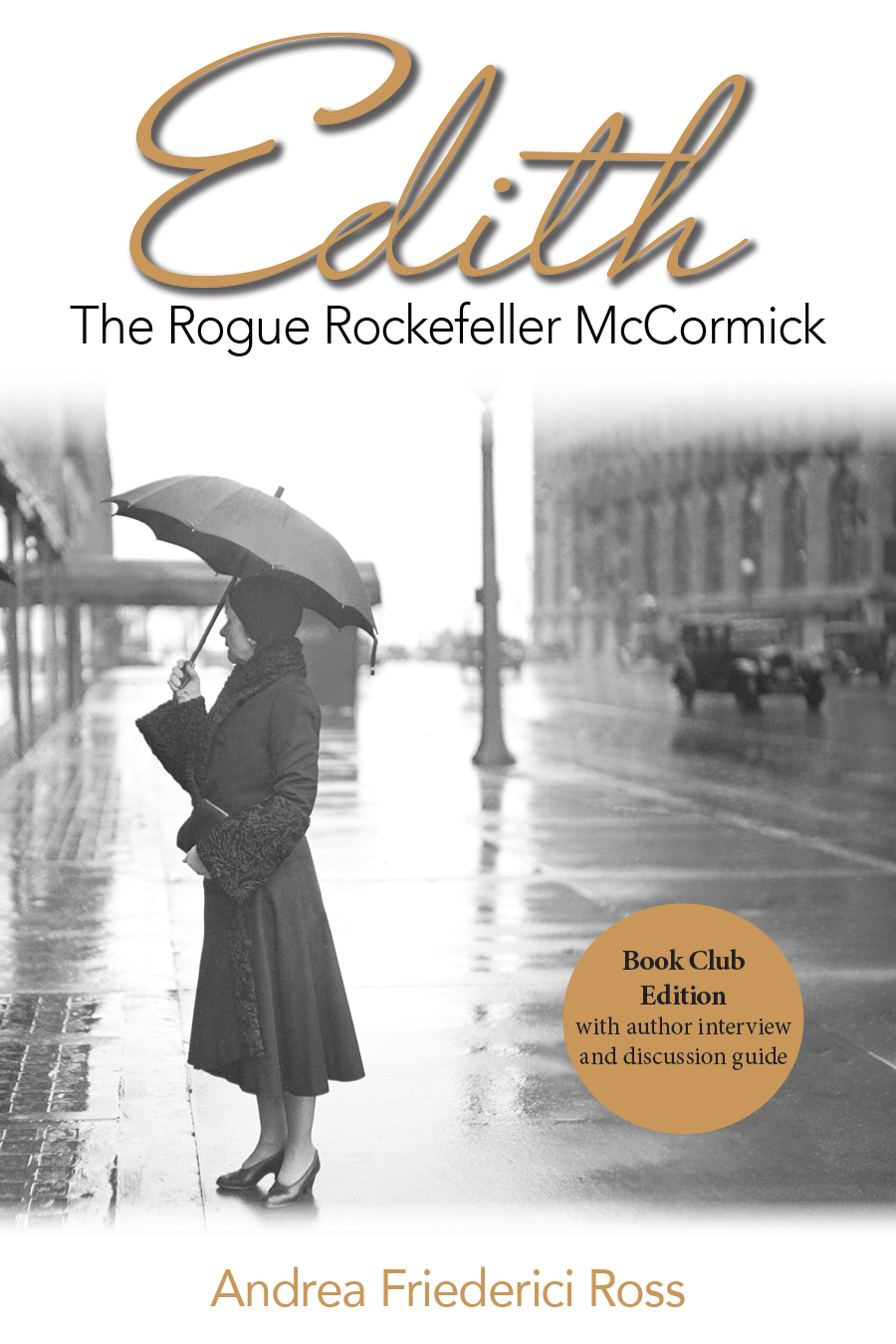
Andrea Friederici Ross is the author of Edith: The Rogue Rockefeller McCormick and Let the Lions Roar! The Evolution of Brookfield Zoo. Bearing a degree in German Language and Literature from Northwestern University, Andrea put that knowledge to unconventional use in her zig-zag career path ranging from the administration of the Chicago Symphony Orchestra, to working for the director of Brookfield Zoo, and working with young children at her neighborhood public school library. Published by Southern Illinois University Press, Edith was selected as the 2021 Book of the Year (Traditional Nonfiction) by the Chicago Writers Association.
Take it away, Andrea!
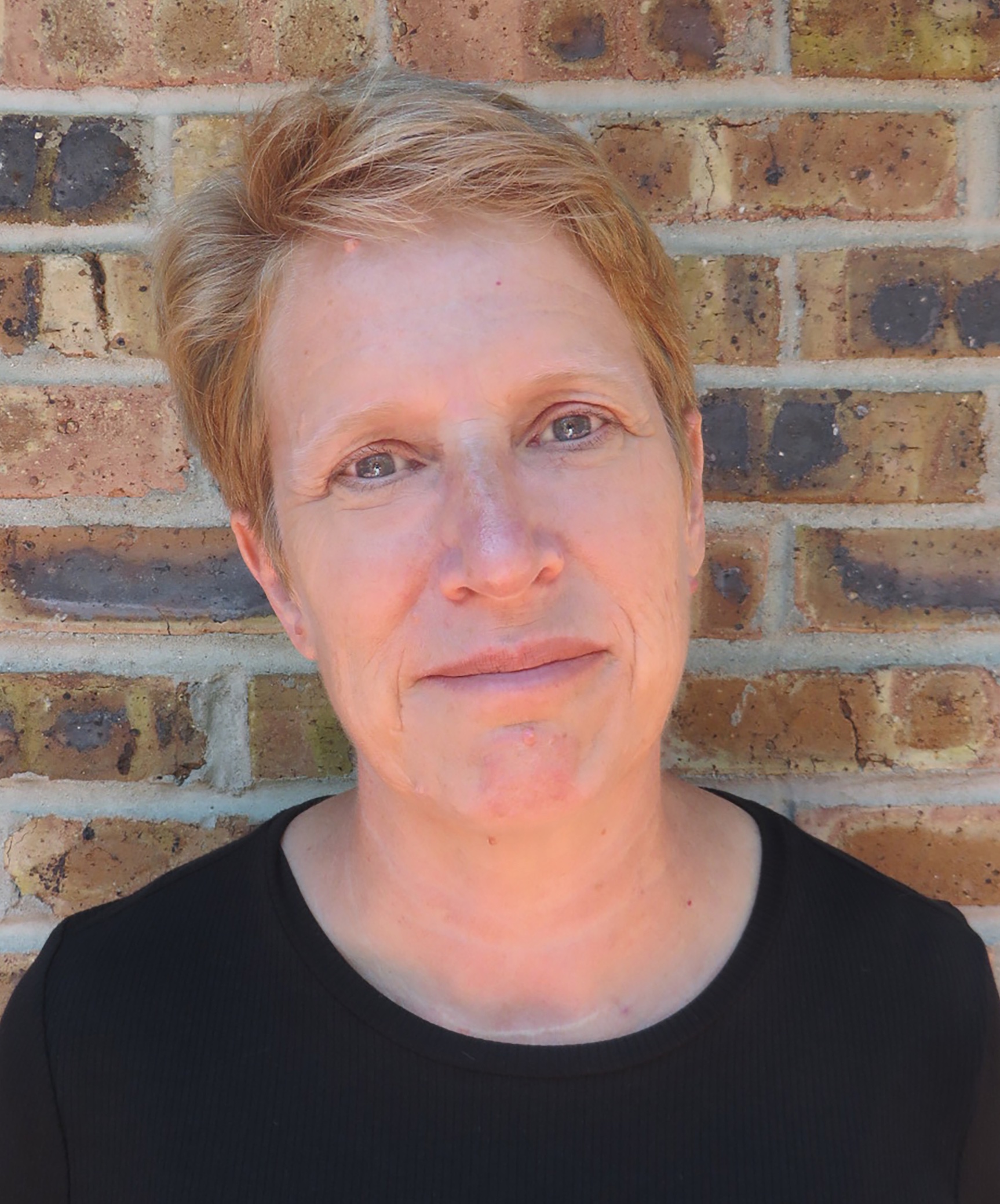
What path led you to Edith Rockefeller McCormick? And why do you think it is important to tell her story today?
I first learned about Edith Rockefeller McCormick while doing the research for my first book, Let the Lions Roar! The Evolution of Brookfield Zoo, because Edith gave the land that founded the zoo. I actually set out to write historical fiction, because I thought she was a quirky character and would make for fascinating fiction (spendthrift! scandals! reincarnation!). But somewhere along the way I came to realize that she’d been shortchanged in history. Most of what you read about her today is the family scandals, her unusual beliefs, and her outlandish spending. What’s missing from the historical record is the tremendous amount of good work she did in promoting the arts and culture in Chicago and supporting young intellectuals such as Carl Jung and James Joyce. Also usually absent is any mention of her own incredible intellect.
I came to understand that Edith had been crammed into an uncomfortable woman-shaped box for most of her life and that it took tremendous courage for her to break out of that limited role, despite considerable recriminations from her powerful male family members (her father was John D. Rockefeller and her husband was Harold McCormick, the harvester heir). I ended up writing the biography in large part to set the record straight.
Edith Rockefeller McCormick was a cultural powerhouse in her time. What important legacies did she leave that we don’t give her credit for today?
Ah, that’s just it! Edith did so much for the Chicago area (and beyond), yet few people know her name. She was a driving force behind the establishment of Chicago Grand Opera, founded Brookfield Zoo, and started a real estate firm that sold properties to over 16,000 Chicagoans. In addition, she supported many young composers, artists, and writers, including James Joyce as he wrote Ulysses and a yet little-known Carl Jung. Together with her husband Harold, she founded an infectious diseases institute that helped curb scarlet fever and they endowed the Journal for Infectious Diseases. But it seemed like no-one knew these things.
It is suspected that Edith’s papers were destroyed after her death. I can’t prove this but, given the paucity of materials on her compared to other members of the family, it seems likely. It almost seems as if there was a concerted effort to erase her from history. Edith: The Rogue Rockefeller McCormick was my attempt to hopefully give her some acknowledgement for what she accomplished as well as for her ill-fated but well-intended projects. It helps that, along the way, there are plenty of quirks and scandals to keep the reader interested!
Writing about a historical figure like Edith Rockefeller McCormick requires living with her over a period of years. What was it like to have her as your constant companions?
I’m pretty sure my son and daughter came to feel there was a third, very demanding child in my life! While attending soccer and basketball games, selling Girl Scout cookies and Boy Scout popcorn, my mind was constantly processing my latest archival finds and trying to figure out who this enigmatic woman was. It was strange to be in such a different headspace (and century) than most of the people around me. I had many, many dreams about Edith and actually came to feel somewhat haunted by her. It took me ten years to research and write about her, including numerous trips out of state to visit archives and other sites of interest. That’s a long time to feel haunted, a long time to be working solo on a project. Now that I’ve put it all on paper and the book is out, I no longer feel that she is with me. Not sure if I’ve set her free or vice versa!
Question for Pamela: What advice do you have for writers just starting out who might be frustrated by the difficulties inherent in breaking into publication?
Obviously the first step is writing a good book. After that, I think the most important thing is to learn as much as you can about the industry and the process. Too many people skip that step, and make the process harder than it is already.
Two resources I recommend when people ask me for a place to start:
The #AmWriting podcast It’s hosted by three women who are successful writers with three very different career paths. They offer lots of nuts and bolts advice, with a healthy shot of inspiration.Almost anything by Jane Friedman, including her books Publishing 101 and The Business of Being a Writer. She knows her stuff.* * *
Interested in learning more about Andrea Friederici Ross and Edith: The Rogue Rockefeller McCormick ?
Check out her website: www.friedericiross.com
Follow her on Twitter: @friedericiross
* * *
Check back tomorrow for three questions and an answer with Amy Laiken, a representative of the Working Women’s History Project, an organization which explores the point where women’s history and labor history meet.
March 4, 2022
Speaking While Female
In October, 2018, The Economist ran an opinion piece titled “Women’s Voices Are Judged More Harshly Than Men’s.” Considering the issue in the context of Christine Blasey Ford’s testimony to the Senate Judiciary Committee, the author reaches the conclusion that “Women seem to be damned whatever they do. Speak loudly and they are deemed shrill; speak softly and they are meek. A high voice is unserious.”
It seems like a small point at first. A pinprick in the universe of insults and glass ceilings. But in fact, voice is not a neutral issue. Historically, the voice of authority has been male, literally and figuratively.
Consultant and speaker Dana Rubin is the creator of a resource committed to showcasing women’s voices. The Speaking While Female Speech Bank showcases historic women’s speeches, from different times, places and ethnicities. It took me a while to realize that there are two sets of links in the database. If you click on a woman’s name, it will send you to a resources about the woman. (Often a wikipedia page.) If you click on the title of the speech, it will send you to the speech itself, in the form of a transcript, a recording, or a video. Once I figured it out, I found it to be a seductive little rabbit hole. Be warned.
If this is a subject you’re interested in, Dana has just begun a kickstarter campaign for a book titled Speaking While Female: 50 Extraordinary Speeches by American Women. Here’s the link if you’d like to know more: https://www.kickstarter.com/projects/speakingwhilefemale/celebrating-womens-speech

* * *
Check back on Monday for three questions and an answer with Andrea Friederici Ross, the author of Edith: The Rogue Rockefeller McCormick.
March 3, 2022
Talking About Women’s History: Three Questions and an Answer with Kathryn Atwood
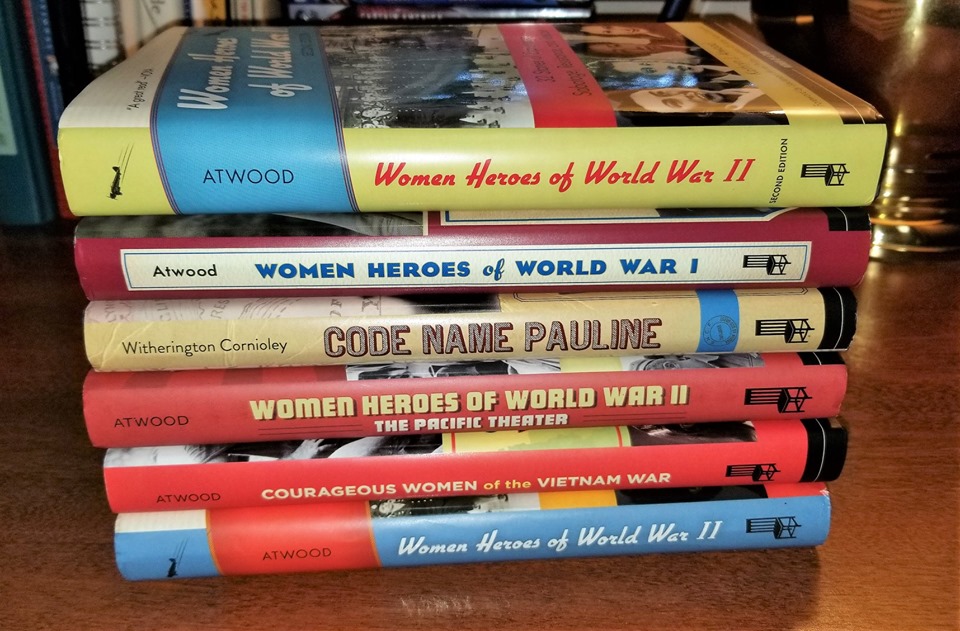
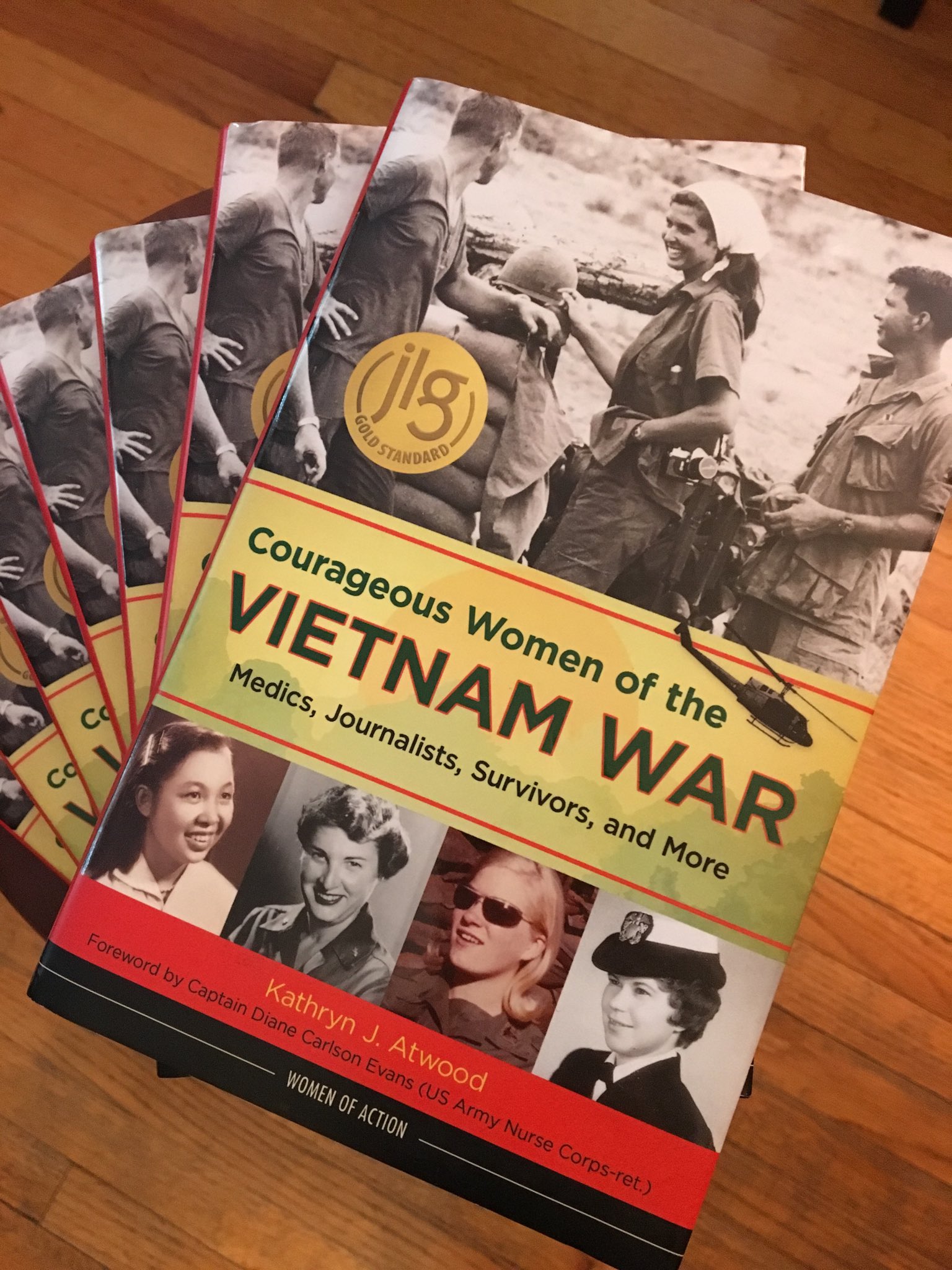
Kathryn J. Attwood has written multiple young adult collective biographies on women and war for the Chicago Review Press, and edited Code Name Pauline, the memoirs of WWII SOE agent Pearl Witherington. Her first book, Women Heroes of World War II, gets all the attention, but her fifth, Courageous Women of the Vietnam War, was honored with an award that resembles the Newbery Medal if you don’t look too closely.
She has been seen on America: Facts vs. Fiction; heard on BBC America; published in the Historian and War, Literature & the Arts; and featured as a guest speaker at the Harold Washington Library in Chicago, the First Division Museum at Cantigny Park, and the Atlanta History Center. In addition to writing, she is part of the musical duo, The History Singers, who combine their passions for music and history in programs that use music to both entertain and educate.
Take it away, Kathryn!
How do you choose which women to include in your books?
The easiest women to locate were those who were already famous prior to whichever war I was writing about at the time, or those who became so because of their war work. But what simultaneously fascinates and saddens me are the thousands of ordinary women who acted on their conviction and then disappeared post-war, their stories lost to history. To represent a few of them, at least, I searched through collective biographies, small publishers and indie book reviewing sites.
In addition to writing women’s history, you give musical lecture programs that place classic American folk, pop, and war-related songs within their historical context. (Which sound fascinating, by the way.) Is there any imaginative cross-over between your two projects? What can we learn when we use music as a historical source?
Some of my most precious childhood memories involve music: sitting at the piano with my dad as he taught me how to harmonize or singing second soprano with my mom in a small women’s church ensemble. I think the WWII generation must have been filled with music lovers, like my parents, or at least that’s the impression I got during the 2010s when my husband and I sang WWII songs for an organization called Pillars of Honor, run by some founding members of Honor Flight. The vets at these events would always sit in the front rows, most of them beaming and singing with us on every song: “We Did it Before and We Can Do it Again”, “I’ll be Seeing You”, “Praise the Lord and Pass the Ammunition”, “Any Bonds Today?”, “This is the Army Mr. Jones”, “I’ll Walk Alone,” “Don’t Sit Under the Apple Tree”, “It’s Been a Long, Long Time”, and the “Star Spangled Banner.”
Multiple radio stations use the tagline “The Soundtrack of our Lives” which is exactly what we try to accomplish when we present our programs: singing the soundtrack of people’s lives from different historical eras. In the case of the WWII vets, we were bringing them—and ourselves! –back to the days when they were saving the world from fascism. Heady stuff!
What work of women’s history have you read lately that you loved? (Or for that matter, what work of women’s history have you loved in any format? )
Fire Road: The Napalm Girl’s Journey through the Horrors of War to Faith, Forgiveness, and Peace by Kim Phuc Phan Thi. This memoir came out while I was turning in the manuscript for my Vietnam War collective biography, but Kim still took time away from promoting her book to write a glowing endorsement for mine. My chapter on Kim was based on the Denise Chong biography—it was too late to utilize the memoir at that point–but I recently suggested it for one of my book clubs and they all went wild over it. War stories have the potential to inspire because of the heroism they often illuminate, but war is always a destructive force that creates far too many victims. Kim’s story is, sadly, in this category, but the way she eventually triumphed makes her memoir a phenomenal inspiration.
Question for Pamela: You’ve written many books but only the last two feature women’s history. What caused the switch? And do you have more women’s stories on the back (or front) burner?
You could argue that I returned to my first historical love when I wrote my book on Civil War nurses, Heroines of Mercy Street. As a child I read every book I could find about notable women in history, because we just didn’t show up in history as it was taught in the public school system. Even the big names like Joan of Arc or Queen Elizabeth I, were relegated to sidebars.
As those of you who have been reading History on the Margins for a while know, I have lots of historical interests. That said, for the foreseeable future, I will be writing about women in history. Because we were always there.
* * *
Interested in learning more about Kathryn Atwood and her work?
Check out her websites: www.kathrynatwood.com and www.historysingers.com
Follow her on Instagram: Kathryn Atwood
Follow her on Goodreads: Kathryn J. Atwood
* * *
Come back tomorrow for more juicy Women’s History Month content!
March 2, 2022
Talking About Women’s History: Three Questions and an Answer with Eve M. Kahn
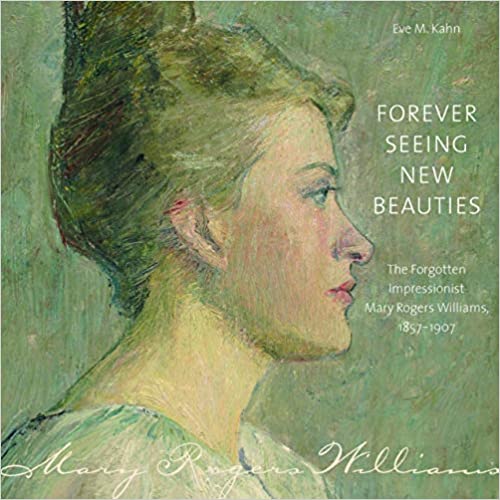
Independent scholar Eve M. Kahn is the former Antiques columnist for The New York Times. Forever Seeing New Beauties: The Forgotten Impressionist Mary Rogers Williams, 1857-1907 (Wesleyan University Press, 2019) won prizes from organizations including the Connecticut League of History Organizations and the Connecticut Center for the Book. Kahn contributes regularly to the Times, The Magazine Antiques, Apollo magazine and Atlas Obscura. Her book in progress is provisionally titled Queen of Bohemia Predicts Own Death: The Forgotten Journalist Zoe Anderson Norris, 1860-1914.
Take it away, Eve!
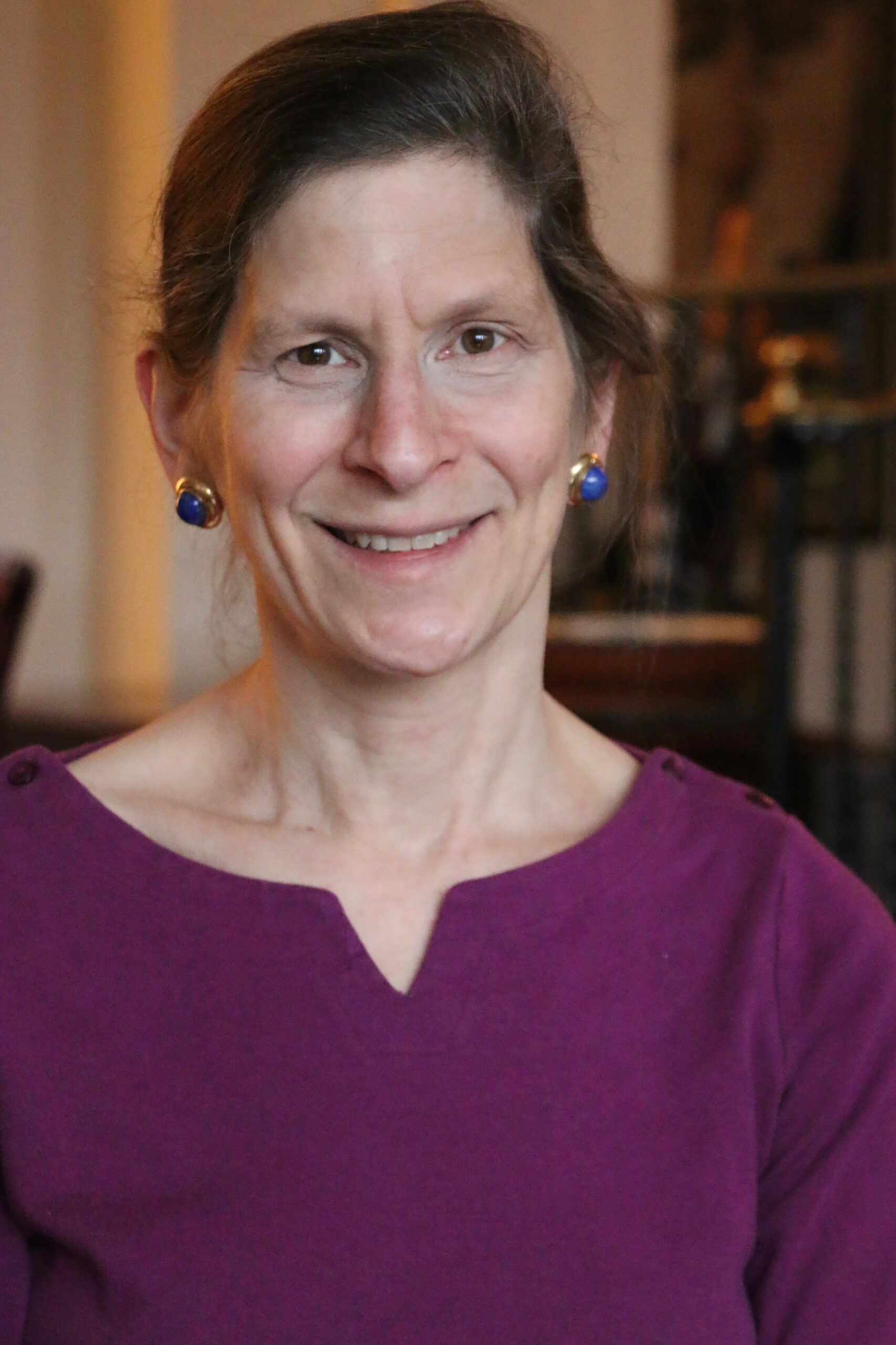
Photograph by Katherine Lanza
Q: Writing about a historical figure like Mary Rogers Williams requires living with them over a period of years. What was it like to have her as your constant companion?
A: One of the funniest moments came right after the book was published—when I first had it hand, with Mary’s luminous painting on the cover and the wonderful heft of the high-quality paper. I vividly dreamed that I was having lunch with Mary. It was just the two of us, outdoors, on some kind of restaurant terrace in Italy, overlooking a flowered hillside. I handed her the book and, blushing a little, told her that I hoped she’d like it. Then I felt my face drain of color: oh no, it tells her she’s going to die young. I started to apologize, stammering, almost rising up in my seat. But she took it all in stride: “Oh, don’t worry; knowing that helped me get a lot done in the short time I had.” Of course it makes no sense—how would my book published 112 years after her death have forewarned her? But I grew to care so much about her feelings, while living amid and poring over her handwritten letters for so many years. And I’ve also had nightmares, while traveling, that some part of her archive has gone missing—I wake up jetlaggedly convinced a sketchbook is gone, a box has been accidentally thrown out. Her papers, just to be clear, are well stewarded. They’re in neat chronological order, boxed on shelves in my bedroom, they’ve been transcribed in backed-up files, and they’re a promised gift to Smith College.
Q: One of the questions I’m fascinated with right now is how biographers name their subjects, particularly when writing about a woman. Did you choose to use Mary or Williams (or something else) in your book, and why?
A: I call her Mary. I alerted readers, however, that her family called her Polly, although I have never dared call her that even after a decade in her company. Even to her closest friends she was Mary or Miss Mary. Polly only appears in my quotes from her family letters, which sometimes give such an intimate look at how a baker’s daughter felt far from home. At one point Mary wrote to her sisters from Paris that she was mastering French: “Si vous pouvez voir votre soeur Polly, la prosaique dans la belle Paris, what would you say?” And “Polly” appears in her sisters’ funny quotes from their travels with her. Mary often longed to wear men’s clothing, especially military uniforms, and during one of her trips, her sister Laura tattled in a letter home: “Polly is again struck by the stunning appearance of the German officers.” For my book’s whole large cast of characters, to make them as vivid as possible to modern readers, I mostly used the first names of people in Mary’s inner circle and sometimes nicknames. Her baby-faced architect friend Alfred Gumaer was known as Gummy. The college professor and administrator Marie Elizabeth Josephine Czarnomska, the imperious daughter of a Polish aristocrat, was nicknamed “the Czar” and sometimes “Czarina.” I’ve tried to capture how much of Mary’s inner life, the casual expressions of her observations and affections, are documented in letters scrawled at a fast pace.
Q: You describe Williams as “the Mary Cassatt you’ve never heard of”. Why was her story and her art forgotten, and what can that tell us about how women artists are erased from history?
A: A Gilded Age woman artist could far more easily make a name for herself if, like Mary Cassatt, she had family money, no need for a day job, a network of wealthy patrons, and a long life with time to try to get her paintings in the hands of institutions and prominent collectors. The more productive a woman artist had time and resources to be, the more she could exhibit, the more reviews appeared in her lifetime, the more of her works survive, the more collectors, curators and dealers now know of her, the higher the prices—it all snowballs. It accounts for the fact that today, Mary Cassatt is one of few women artists people outside the art world can name, along with Georgia O’Keeffe and Frida Kahlo. And there was subtle and unsubtle entrenched misogyny everywhere in the art world that “my” Mary writes about: sneering male critics, exhibitions that women could only attend on “ladies’ days,” male art dealers who publicly praised but privately mocked mediocre paintings by famous men—Mary quotes some great gossip she heard at New York galleries. Mary’s letters also reveal the small dreary demands that reduced women’s productivity. She describes hours spent waxing her floors and getting custom clothes made—ready-to-wear didn’t exist in her day. And after her sudden death, her surviving sisters, one of them a retired teacher and the other a homemaker, with no expertise in maneuvering in the art world, could not do much more for Mary’s legacy than to make sure her letters and paintings were safe and dry. Which is how they were, slumbering away in the hands of a Williams family friend’s descendants, when I stumbled upon them in a funny way in 2012.
Question for Pamela: My current biography subject, the writer and reformer Zoe Anderson Norris (1860-1914), heroically documented desperate immigrant poverty on the Lower East Side. But she also said about a dozen prejudiced things that I for one wish she hadn’t—and which, had she lived longer, she might have regretted as times changed around her and not wanted in her biography. How do you deal with some really unfortunate words or actions in the life of a deeply interesting person you admire enough to write about? How do you ask for some kind of forgiveness and perspective from the reader, without downplaying the missteps too much, what’s the right balance?
I think novelist Hilary Mantel said it best in a talk she gave to the Royal Society of Literature in 2010: ”Learn to tolerate strange worldviews. Don’t pervert the values of the past. Women in former eras were downtrodden and frequently assented to it. Generally speaking, our ancestors were not tolerant, liberal or democratic. Your characters probably did not read The Guardian, and very likely believed in hellfire, beating children and hanging malefactors. Can you live with that?”
As a biographer or a history, I think the most useful thing we can do is state clearly that our subjects held ideas that are troubling from a modern perspective, and often stated them in ways that we find offensive. And then to place those ideas within their historical context—not in an attempt to excuse them, or downplay them, but to explain them.
* * *
Want to know more about Eve Kahn and her work?
Check out her website: Evekahn.com
Read this interview in Vogue: American Impressionist Mary Rogers Williams Is Finally Getting the Recognition She Deserves
* * *
Come back tomorrow for three questions and an answer with author and musician Kathryn Atwood, who writes collective biographies about women in war for younger readers.
March 1, 2022
Talking About Women’s History: Three Questions and an Answer with Shelley Puhak
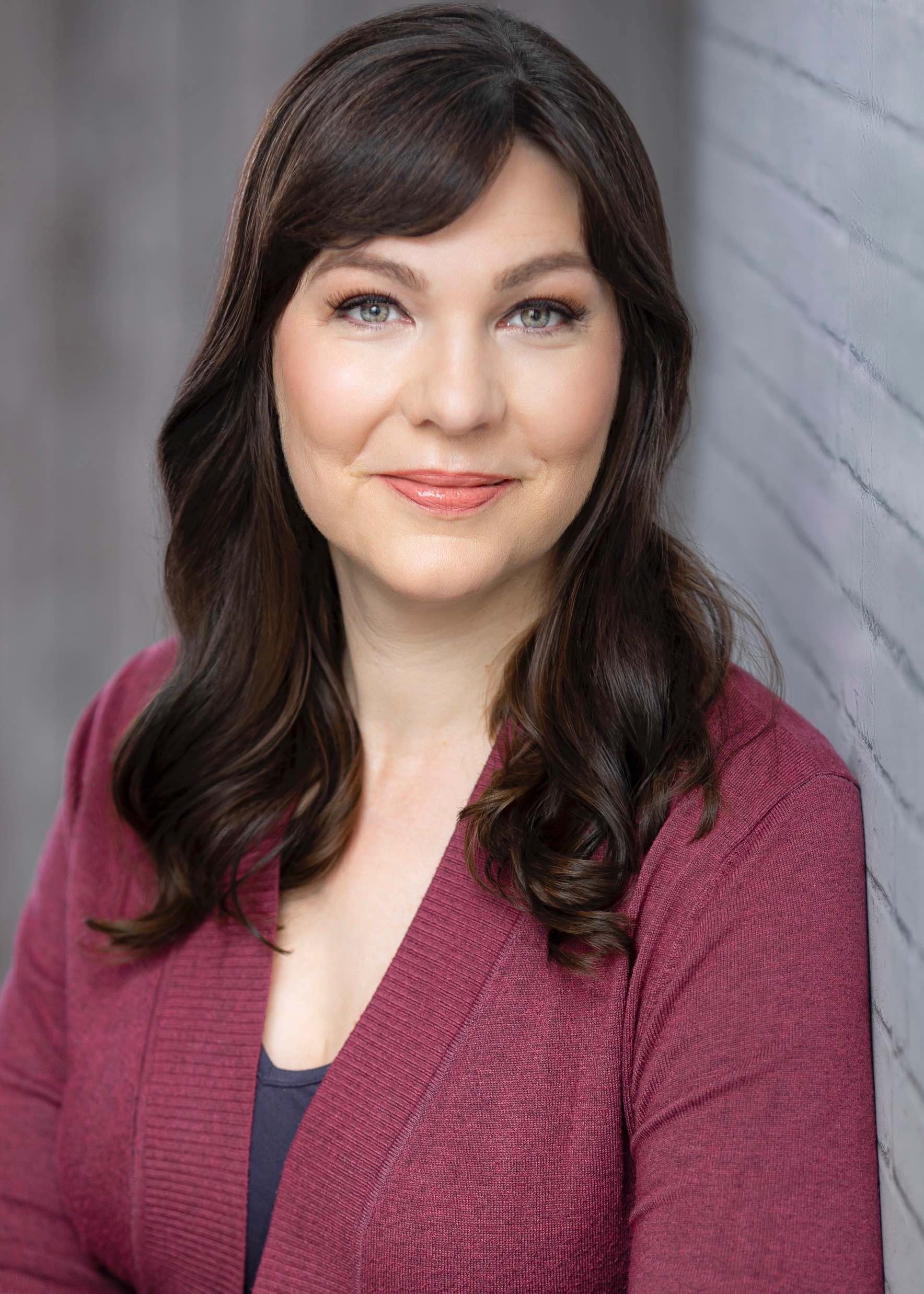
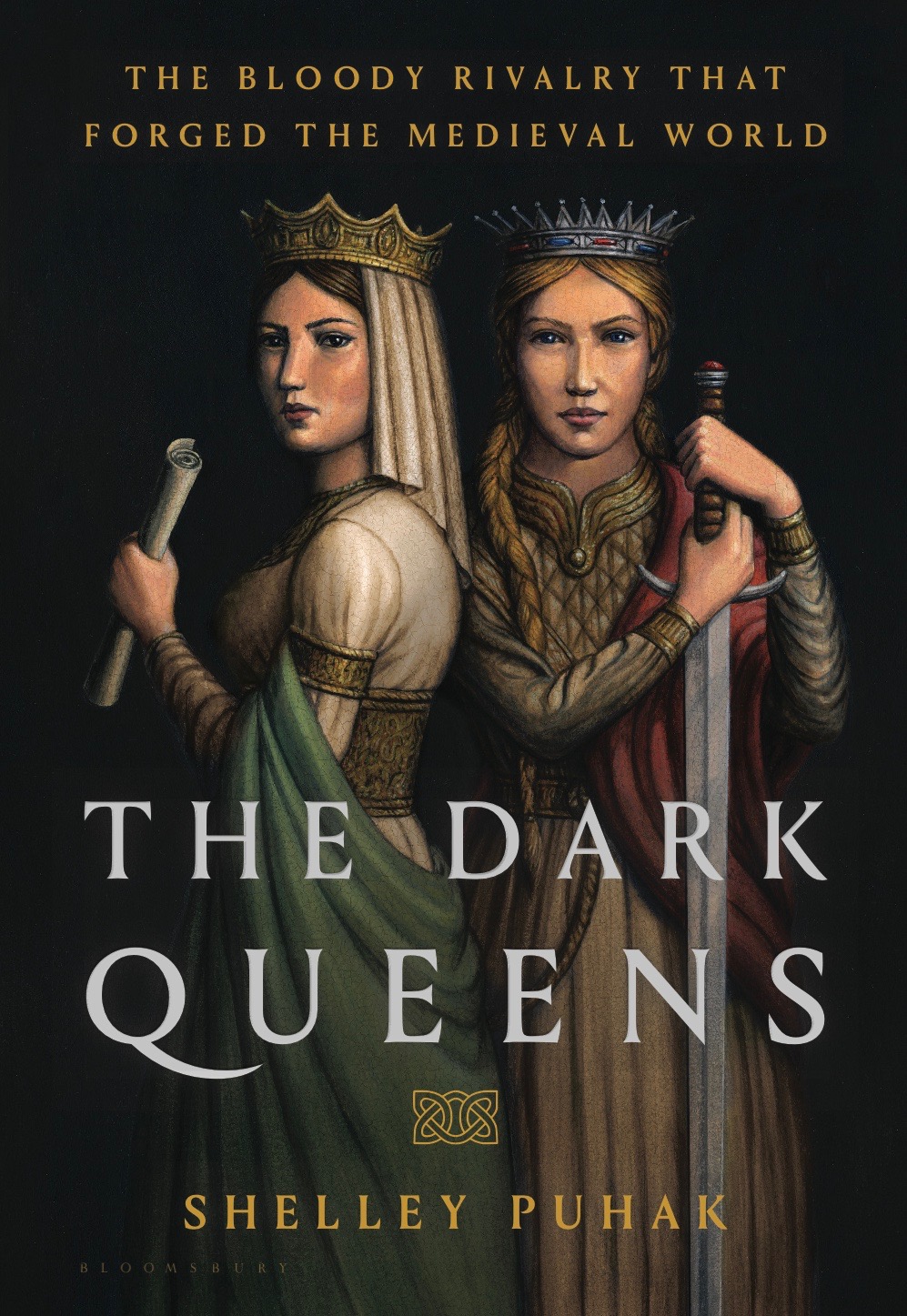
Shelley Puhak is the author of the newly-released The Dark Queens: The Bloody Rivalry that Forged the Medieval World, a dual biography of the early medieval queens Brunhild and Fredegund. Shelley is also a former literature and creative writing professor and the author of three books of poetry, the most recent of which is Harbinger, a National Poetry Series selection.
I met Shelley (only virtually alas) back in September, courtesy of Nancy Marie Brown, who thought we would like each other’s books. As indeed we did. (Actually, I loved her book. Great story-telling, solid research and a significant amount of attitude at the way the two women at the center of her book were intentionally denigrated and effectively erased by their immediate successors and later chroniclers. Good stuff.) I immediately asked her to be part of this year’s Women’s History Month extravaganza here on the Margins.
Take it away, Shelley!
© 2019 | Kristina Sherk Photography | www.Kristinasherk.com
You are an award-winning poet. What inspired you to make the leap to writing a work of historical non-fiction?
You know, I think of it less as a leap and more as a lateral move. My previous books of poetry focused on lesser-known women’s lives and involved considerable research. For my book Stalin in Aruba, for example, I had to read diaries and memoirs and visit archives to be able to write in the voices of the women in Stalin’s inner circle, women like his daughter, sisters-in-law, and the wives of his close advisors.
I also write nonfiction, but prior to this just essays and articles. When I stumbled across the story of Brunhild and Fredegund, I first wrote an article about them for Lapham’s Quarterly. But I felt like the queens weren’t done with me yet. After all, we have yet to have a female head of state. Didn’t people deserve to know that during a time we think of as so much less sophisticated, women were ruling? In an attempt to get these two queens in front of as big an audience as possible, my project morphed into a book.
Brunhild and Fredegund are typically vilified in histories of the Merovingian period. You have turned them into rounded figures who were power players in the, admittedly blood-stained, politics of their times. Were there special challenges in bringing these women out of the historical shadows?
There are always challenges when trying to write about any women, and then there is the additional challenge of trying to write about anyone who lived 1,400 years ago. A major difficulty is the general lack of sources for the era. Some scholars estimate that what survives represents less than 1% of what was produced during that time period– loss on that sort of scale is staggering!
Some works were purposefully suppressed, but most vanished due to plain old bad luck. The Merovingians primarily used papyrus, and while that writing material can survive for tens of thousands of years in a dry climate like Egypt, it doesn’t make it more than a few centuries in the cold and damp of Europe. The sources that do survive are (surprise!) quite misogynist, and then each of these writers had his own individual biases and blindspots that I had to navigate. The research process was a lot like looking through a kaleidoscope— everything was scrambled, fractured, and distorted.
What are the most surprising things you’ve found doing historical research for The Dark Queens?
I was really surprised to discover how many women wielded power in the sixth century. I initially assumed that Brunhild and Fredegund were exceptions to the rule, but there were quite a few female political leaders. There were also women exerting power as abbesses and business owners and healers. We have wives walking out on their husbands, common women engineering political plots, and even nuns participating in armed rebellions. And given how many sources were lost, it is safe to say we don’t even know the half of it.
I was also startled to see how methodically Brunhild and Fredegund were silenced. It is one thing to know that women are often erased from history, and it is another thing altogether to see exactly how that happens. I had a really visceral reaction to reading, side-by-side, successive versions of a chronicle and seeing a few lines inserted here, a slur inserted there, something else conveniently trimmed out, over and over, until the original narrative was completely transformed. As chilling as that experience was, the flip side is a sort of awe at how women have, against the odds, managed to save some of their stories. Here’s one example: a very admiring account of Queen Fredegund’s military prowess survives in one anonymous chronicle. There are all sorts of theories about this chronicler’s identity, but it seems that Anonymous was (once again) a woman: circumstantial evidence links these tales to a nun at a local convent. I love to imagine that nun in her quiet cloister painstakingly preserving the battlefield exploits of a fierce queen. In other cases, these narratives might not have been written down right away but were instead told slant— embedded in a myth or a legend, for example. People will always find ways to resist.
A question for Pamela: Do you see your project about Sigrid Schultz of the Chicago Tribune as more of a continuation of your previous book (warrior to war reporter?) or a complete departure from it? Can you talk about how this research is similar to and different from your previous work?
I definitely see it as a continuation of my last three books, though Sigrid Schultz was a war correspondent for only a small part of her career. In Heroines of Mercy Street, I wrote about women in the American Civil War. In Women Warriors, I wrote about women in many different times and places who actually fought. Across the Minefields tells the story of a woman driver attached to the Free French in World War II. In When I began to look for a new subject, I was worried about pigeon-holing myself as someone who wrote only about women and war. In fact, I was deep in the initial research about a woman who had nothing to do with warfare when Sigrid Schultz elbowed her out of the way.
As far as the research goes, the current book is very different from my previous books. Both Heroines of Mercy Street and Across the Minefields rested heavily on the printed memoirs of a single character. (And both had seriously short deadlines, which made archival research impossible.) Women Warriors by its very nature meant I was dependent on secondary sources and translations of primary sources in languages I can’t read. Often the primary sources available in any language were sparse, not to mention heavily slanted. In the case of Sigrid Schultz, there is substantial archival material, with substantial gaps in the record. It’s been an adventure.
* * *
Want to know more about Shelly Puhak and The Dark Queens?
Check out her website: https://www.shelleypuhak.com/
Read her article in Smithsonian: The Medieval Queens Whose Daring Murderous Reigns Were Quickly Forgotten
* * *
Come back tomorrow for three questions and an answer with independent scholar and art historian Eve Kahn, talking about forgotten American Impressionist Mary Rogers Williams.
February 25, 2022
Finding the Narrative Thread in History. A Guest Post by Kathleen Stone
Last year, as part of my annual Women’s History Month series, I interviewed Kathleen Stone about her forthcoming book They Called Us Girls: Stories of Female Ambition from Suffrage to Mad Men, which is due out on March 1st. (You can read the interview here.) This year I asked her to lead us into March with an essay about writing the book and what drew her to professional women before “second wave” feminism.
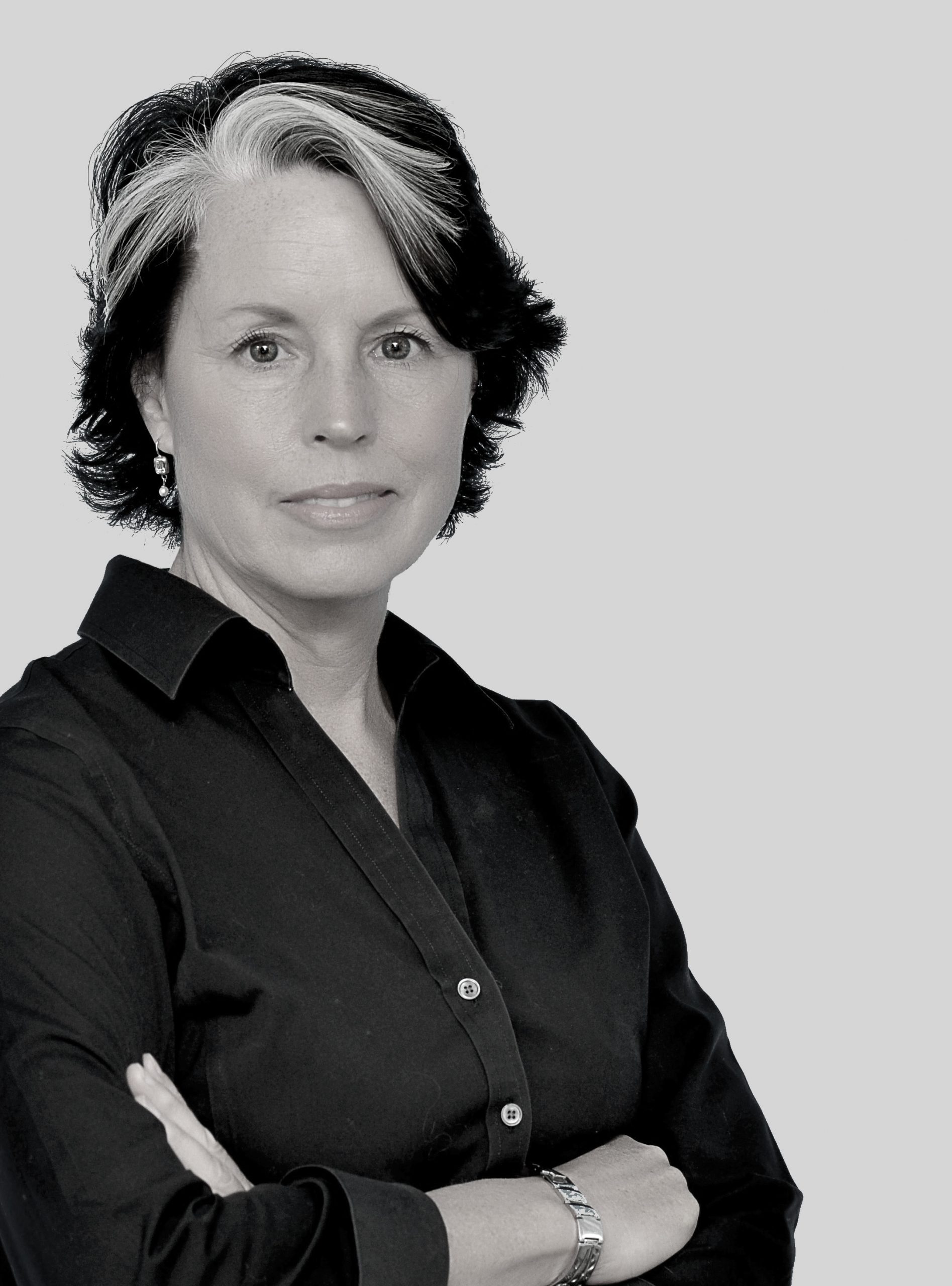
Kathleen Stone knows something about female ambition. As a lawyer, she was a law clerk to a federal judge, a litigation partner in a law firm, and senior counsel at a financial institution. She also taught seminars on American law in six foreign countries, including as a Fulbright Senior Specialist. Her work has appeared in Ploughshares, Arts Fuse, Los Angeles Review of Books, Timberline Review, and The Writer’s Chronicle. She holds graduate degrees from Boston University School of Law and the Bennington Writing Seminars, and lives in Boston.
Take it away, Kathleen!
Don’t you love it when a sudden insight gives fresh perspective to your research? For a long time, you’ve been thinking about a topic, digging for facts and spinning theories, all while not really knowing where you’re headed. Your research is solid, but the individual points don’t hang together. Then, voilà! A newly discovered fact pulls everything together. You have a narrative thread.
That describes my experience of researching and writing my book, They Called Us Girls. My book is about women of my mother’s generation who had careers in male-dominated professions. These women came of age in the mid-20th century, when most women didn’t work outside the home or, if they did, had jobs deemed “appropriate” for them. But these women ignored convention and headed for careers in science, medicine, law and other fields where they would be in a tiny minority and face big hurdles.
I didn’t know it then, but my book journey began when I was a young girl. I’m a baby boomer and grew up in a suburban town west of Boston. My father worked as a lawyer and my mother stayed at home with three children and housework. This arrangement of male breadwinner and female home worker was typical in our neighborhood. Really, it’s all I knew, but I wondered if other paths were possible. My mother had worked at IBM before I was born, training customers on office equipment, but retired when she was pregnant with me. I used to wonder whether a woman could have a job like the one she had had and be a mother too. I knew a small handful of women had been in law school with my father and I was curious about them too. What made them believe they should have a “man’s” jobs?
Fast forward to 2010. I was a lawyer, nearly 30 years into my career, and I still wanted to find out about women like those I had wondered about as a girl. I wasn’t sure I would write a book, but I was determined to talk to some older women. I began to dig into books on women’s history. Some were filled with data and analysis. Others were stories of women who broke barriers in unconventional venues such as the theater and labor unions; still others were oral histories of women who followed Rosie the Riveter into factory jobs during World War II. At the public library, I took notes on census data.
One book that stood out was The Grounding of Modern Feminism by Nancy Cott. One of Cott’s insights into women professionals of the 20th century became my voilà moment. She pointed out that “. . . the high point in women’s share of professional employment (and attainment of advanced degrees) overall occurred by the late 1920s and was followed by stasis and/or decline not reversed to any extent until the 1960s and 1970s.”[1]
This statement struck me in a visceral way. Progress for women in the professions was in “stasis and/or decline” during the very years that interested me. Nevertheless, I was going to talk to women who found opportunities in that negative environment. I would find out why and how they did it. My quest could be more than a personal obsession. It could be an historical exploration of those who swam upstream against what I now knew were stagnant and reversing currents.
And swim upstream they did. There was Cordelia Hood who joined OSS but only after being made to prove she could type, a requirement for women in the intelligence service but not for men. She rose above the clerical ranks, one of the few women to do so, and then she did it again post-war, in the CIA. There was Muriel Petioni, the only woman to graduate from Howard University’s medical school in 1937. She worked at several historically black colleges in the South when Jim Crow segregation was enforced by law. After that she returned home to Harlem where she became an outspoken advocate of change. When Mildred Dresselhaus was hired for her first job, she was one of just two women on a staff of one thousand scientists. Eventually she became the first woman to be a full tenured professor at MIT. When Frieda Garcia moved to Boston, she encountered a city suspicious of Latina women’s abilities. With her talents, she became an executive leader and community activist, inspired cross-cultural connections throughout the city, and advised mayors and governors. Martha Lepow applied to medical school knowing she faced a quota on the number of women students. After working on the polio vaccine, she became one of the country’s leading authorities on pediatric infectious disease. Dahlov Ipcar grew up in Greenwich Village, enmeshed in her parents’ world of early modern art, where she learned that women struggled far more than men to obtain gallery representation and critical acceptance. In rural Maine, she created her own path to critical and commercial success. When Rya Zobel graduated from Harvard Law School in 1956, she could not get a job with a law firm. Twenty years later, she became the first woman judge on the federal court in Massachusetts.
The book tells seven women’s stories. Each is unique, but they do share some characteristics. When they were girls, someone inspired them – parent, teacher, family friend. They loved the work they did, enough to stick with it even when others wanted them to give up. They were intrepid. From them, we learn that “widespread stasis and/or decline” was no excuse to surrender a dream. And that’s how a sentence in a scholarly book helped shape a narrative thread.
[1] Nancy F. Cott, The Grounding of Modern Feminism (New Haven, Conn.: Yale University Press, 1987), 220.

They Called Us Girls: Stories of Female Ambition from Suffrage to Mad Men is a collective biography of women who had “men’s” jobs in the mid-20th century, when sex discrimination was legal and women were expected to stay home. Kathleen meets seven of these unconventional women and renders insightful, personalized portraits that span a half century, uncovering the families, teachers, mentors and historical events that inspired their ambition. Good stuff!
* * *
March 1st is right around the corner and I’ve got a lot of great Women’s History Month interviews lined up for you. First up, Shelley Puhak, author of The Dark Queens, talking about powerful medieval women. Good stuff!
February 22, 2022
What Do You Get When You Cross a Boy Scout with a Hippie?
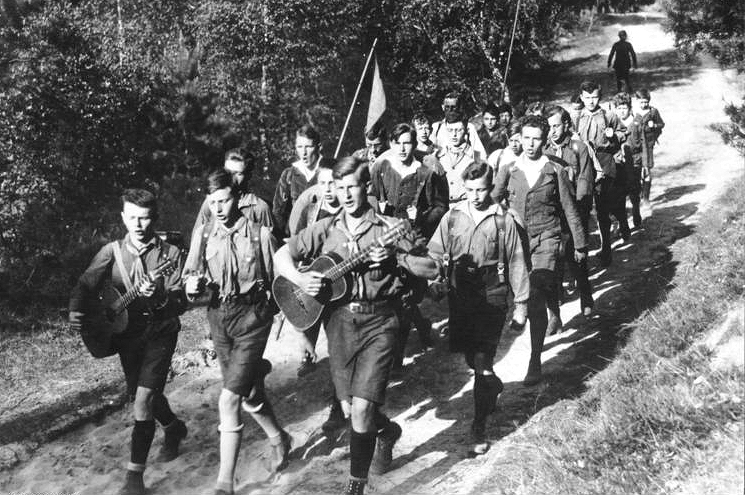
Image courtesy of the Bundesarchiv, picture #183-R24553
In the 1890s, a grass-roots movement of young men came into existence in Germany. A cross between Boy Scouts and hippies,* they called themselves the Wandervögel, literally the “wandering birds.”** They rejected the strict class system, materialism, and urban life of Germany under the Kaiser and embraced a romanticized ideal of a simpler time when people were in tune with the land—an ethos that will sound familiar to those of us who remember the late 1960s and early 1970s. They adopted a “uniform” of shorts and hiking boots–in itself a rejection of middle class German mores. They hiked through the German forests, slept under the stars, and sang old German folk songs around the campfire. They also adopted the habit of greeting each other by saying “Heil”, or hail. (Can you see where this is going?)
The Wandervögel saw itself as a Jugendkultur—a youth movement led by youth for youth. Not a Scoutmaster in sight. But as the movement grew in popularity between 1900 and 1914, a number of mainstream political, religious, and even sports groups organized youth groups that borrowed the outdoor activities and the shorts but not the distinctive ethos of the Wandervögel.
With the beginning of the First World War, in 1914, most members of the Wandervögel were swept into the German army. The movement as such was broken, but the idea of youth groups remained. After the war, organizations on all sides of the German political spectrum, including the nascent Nazi party, organized youth groups with a paramilitary flavor. Folk songs were no longer part of the program but the greeting “Heil” remained part of the culture.
*Both of which they predated, though in the case of the Boy Scouts not by much
**A name which always makes me think of the children’s song “Here we sit like birds in the wilderness.”


