Colleen Anderson's Blog, page 19
July 1, 2013
Movie Review: Man of Steel Nothing More Than a Hard Body

Superman is really nothing but a hard body.
I had the misfortune of wasting time watching Man of Steel. I don’t know if the producers and director thought they were being edgy by having dark and tornadoey vignettes of Clark’s childhood but seriously, it made little difference. Of course, before we get to those little blips of what is a condensed first five seasons of Smallville, we see a woman in birth sounding more like she’s being tortured than popping out a baby (and yes, I have attended live births and unless they’re doing a C-section without any anesthetic, no one sounds like that). And there is concerned dad Russel Crowe watching over the first natural birth in centuries, little Kal El. And then along comes Zod.
Damn that Zod, he’s just a megalomaniac out to destroy. except, yep, Krypton is already dying. But Russell, or should I say Jor El, dies first at Zod’s hand. Though considering the wooden dialogue it was probably a mercy killing and I’m not sure why an actor of Crowe’s caliber got caught in the trap. We have to suffer Zod a while longer, of course. Sound familiar? I’m sure most people born in North America in the last 40 years or more have read the comics or seen one of umpteen Superman spinoffs, such as the above mentioned Smallville, Clark and Lois, or one of the many movies.
When we drop onto an ocean trawler, the “greenhorn” is getting in the way, until they see an oil rig going down and he saves the day. Tender short moments of Mom Kent and Pa, before he dies are shown. In this case Kevin Costner has few lines and gives the adages of truth and justice but is afraid Earth ain’t ready for a mighty alien. Lois Lane comes along as well and a few of the other tried and trues.
Clark or Kal El spends half the movie finding himself…again. Good god, is there no original material out there? Sure,they updated Supes’ outfit but they did that in Smallville too. Played by Henry Cavill, who definitely has the Superman body of steel to drool over, Clark is big on fighting naughty Zod. And that’s all this film is; massive fight scenes with Zod and his crew, who of course, coming from Krypton, have the same powers. I gotta say, I like their armor and the air filter masks they wear. Lois Lane is a damsel as usual, albeit she’s always been played with brains, and she helps solve how to get rid of those bad Kryptonians who want to terraform Earth. (It’s a good thing the nerdy scientist explains to us dumb viewers what terraform means…duh!) She also tracks Clark down like any good stalker or reporter, and convinces him to do good. Etc. When Zod asks fro Kal El to give himself up, Clark does, to save Earth. But Zod also asks for Lois, for no apparent reason but to add some meat to a worn-out plot and have the damsel on hand for threats and rescues.

Henry Cavill is pretty yummy under the new outfit. Too bad they didn’t lose the dorky cape. DC Comics
There is no great dialogue in this movie, and while Clark battles his own people there’s a touching scene of Perry rescuing a co-worker, just so you know that humans can be all helpful and caring as well. But having seen this just two nights ago I’m already forgetting most of it because it was indeed Smallville all over again (and actually not as good) but condensed into one movie with a massive budget for special effects and smashing up all, and I mean all, of Metropolis. It’s always interesting how these movies never mention all the people that get killed and while Clark saves Lois several times there are countless others who no doubt die, but like any good military tactical double-speak, the collateral damage is never mentioned.
Considering how many Superman movies there have been and the fact that everyone knows the story and genesis of Clark’s powers, I wonder why director Zack Snyder even bothered to go there yet again, ad nauseum. The movie was so boring, and so much smash em up fighting just went on and on, to the point that I was falling asleep. Save yourself from being weakened by the green kryptonite and give this one a miss. The Man of Steel is as interesting as watching lead melt.
Filed under: entertainment, movies, science fiction Tagged: Clark Kent, DC comics, film review, General Zod, Henry Cavill, Lois Lane, Man of Steel, movies, Superman, Zack Snyder


June 11, 2013
Writing: Tesseracts 17 Unveiled

This is a tesseract that’s hard to wrap your mind around. From: http://en.wikipedia.org/wiki/Image:Tesseract.gif
We are pleased to announce the official Table of Contents for Tesseracts 17: Speculating Canada from Coast to Coast to Coast.
This anthology of speculative Canadian writing will be out this fall from Edge Publications. It was no easy task choosing from the over 450 submissions and we had to turn away many a good tale. In the end, we have a representation of Canada that spans all provinces and territories (with the exception, alas, of Nunavut). The tales themselves reach far into the past and much farther into the future.

Creative Commons: thisfragiletent.wordpress.com
Including Steve Vernon and myself, we had 16 men and 15 women in this anthology. The gender balance worked out without much issue. Of the 29 pieces we have 4 poems (can you spot them by the titles). There are two Daves, two Catherines and a wide range of other names, with people who were born in Canada and those who moved here. I will be giving a full demographic breakdown of all the submissions over the next few weeks. And while this anthology has more fantasy than SF, a good third fall comfortably into the science fiction model with only a few being horror or weird, as in bizarro fiction.
TESSERACTS 17: SPECULATING CANADA FROM COAST TO COAST TO COAST
Introduction: What is a Tesseract? Colleen Anderson
Vermilion Wine: Claude Lalumière
Night Journey: West Coast: Eileen Kernaghan
The Wall: Rhea Rose
2020 Vision: Lisa Smedman
Why Pete?: Timothy Reynolds
Bird Bones: Megan Fennell
Bedtime Story: Rhonda Parrish
Graveyard Shift: Holly Schofield
Path of Souls: Edward Willett
Sin A Squay: David Jón Fuller
Hereinafter Referred to as the Ghost: Mark Leslie
Anywhere: Alyxandra Harvey
Secret Recipes: Costi Gurgu
Star Severer: Ben Godby
The Lighthouse Keeper’s Wife: Dave Beynon
Graffiti Borealis: Lisa Poh
My Child Has Winter in His Bones: Dominik Parisien
Team Leader 2040: Catherine Austen
Sand Hill: Elise Moser
The Ripping: Vincent Grant Perkins
Unwilling to Turn Around: J.J. Steinfield
Pique Assiette: Catherine MacLeod
Leaving Cape Roseway: John Bell
Everybody Wins: Rachel Cooper
In the Bubble: William Meikle
Hermione and Me: Dwain Campbell
Blizzard Warning: Jason Barrett
M.E.L.: Dianne Homan
The Calligrapher’s Daughter: Patricia Robertson
Afterword: Editing Anthologies Made Easy: Steve Vernon

Nova Scotian Steve Vernon co-edited Tesseracts 17, a collection of Canadian speculative fiction.
Filed under: entertainment, fantasy, horror, news, people, poetry, Publishing, science fiction, Writing Tagged: Claude Lalumiere, Edge publications, Eileen Kernaghan, Lisa Smedman, literature, Patricia Robertson, Rachel Cooper, Steve Vernon, Tesseract, Tesseracts 17


June 3, 2013
The Devil Reads Prada

This is a tarot card, but maybe the devil is saying, if you don’t wear Prada, you wear nothing.
You know the movie, the one where sweet Anne Hathaway is sucked into the world of high snobbery and is Meryl Streep’s minion at a fashion magazine. The world where it’s backstabbing and anorexia but somewhere in amongst the fashionistas true wuv takes root? Yeah that one.
Well, besides making clothing and creating a fashion magazine, it seems Prada really does want to lash out with that forked tail and snare artists of all flavors. They don’t just do magazines and sunglasses and backpacks and clothing and fragrances and boat races. No, they want to capture the creative essence of other artists. “Prada, in keeping with the brand’s innovative spirit, launches a literary contest in cooperation with Giangiacomo Feltrinelli Editore.” They have something called the journal project which includes a writing contest. The crucial statement when considering what to write is: “What are the realities that our eyes give back to us? And how are these realities filtered through lenses?” Obviously they would like to tie it into to their sunglasses line.www.prada.com/journal
As I read the rather long and convoluted contest rules (the English translation is a bit off), I thought €5,000! Well, yes, I will definitely enter that. Oh but wait, should you win the contest then you give up all moral rights, which means your name will stay with the piece but they own it in all forms and media, can print it on clothing or put in books or chop up the sentences and stick them wherever, in perpetuity. You lose all rights to read your story, put it in a collection of your writing or do anything else with it.

Get writing but don’t sell your soul.
That’s not the true deal with the devil though it gets close. As I read on it turns out that while there would only be one monetary winner Prada reserves the right to create other categories and choose winners on the spot. But those winners receive no prize and lose all rights to their stories as well. This pretty much amounts to theft even if they have you acknowledge you’re selling your soul to the devil but don’t get anything out of it except perhaps some bit of elusive fame. Or perhaps we should just call this exploitation. It’s not like Prada is hurting for money.
To make sure it just wasn’t some misinterpretation that happened in the translation, I wrote to Prada.
Dear Madam,
The winners of the Contest, if any, will receive the amount of Euro 5.000, while the winner of the thematic prizes, if established by Prada and Giangiacomo Feltrinelli (it is not sure that such thematic prizes will be established), will not receive this amount. But in both such events the authorship of the short stories will remain with the winners in accordance with the applicable law in the copyright field.
In fact, PRADA and Giangiacomo Feltrinelli shall have the right to use the short stories as per the provisions of the “T&C” of the Contest and on the basis of the rights granted by the winners to Prada and Feltrinelli as specified in such “T&C “: “(the Winner) he/she grants exclusively to PRADA and Feltrinelli any and all right to use, reproduce, publish, edit, distribute and divulge the selected Short Story(ies), on its(their) own, in full or in part, or in a collection book, at PRADA and Feltrinelli’s discretion in perpetuity and at a worldwide level for any uses either commercial or promotional, in any language or version, and in any print and/or digital and/or multimedia materials and media, including Internet, now known or hereafter invented. Moreover, You acknowledge and agree that PRADA and Feltrinelli will be entitled to edit and to adapt the Short Story(ies) at its(their) sole discretion and to reproduce the very same in its(their) edited and/or adapted version in any print and/or digital material and/or multimedia materials and media, including Internet, and for whatsoever purposes to the extend permitted by law”.
Should you have any further query, please do not hesitate to contact us.
My advice would be to save your soul, and your writing and not enter the contest on the off chance you’ll get the grand prize. The devil, you know, is in the details.
Filed under: art, Culture, fashion, Publishing, Writing Tagged: contest, Giangiacomo Feltrinelli, Meryl Streep, moral rights, Prada, Prada fiction contest, short story, writing contests


May 22, 2013
Supporting the Arts
I’m highlighting a few worthy causes today. One is local, taking place in Vancouver, and the other takes place somewhat virtually through Canada.
COLLABORATIVE ART
First is the Magpie’s Nest Community Art Space Events. This is a group of local artists who are trying to create pop-up art spaces for artists to come by and work in, and just spread the fun and love of art.
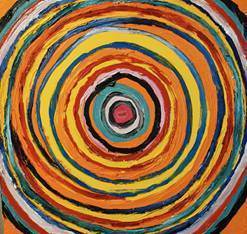
May 25 at Astorino’s
1739 Venables Street, Vancouver, BC
Magpie’s Nest Community Art Space invites you to create a patchwork of ideas and creativity with your neighbours, young and old.
The completed collaborative mural will be a tapestry of painted and embellished circles – each circle being made up of four quarters.
Each quarter completed by an individual will connect to the work of three others, creating a visual representation of continuity within and encircling our neighbourhood.
The Community Circles Collaborative Mural will be kept and put on display by Britannia Community Centre.
All supplies will be provided by Magpie’s Nest. We will provide paints and printing inks, objects to print with, and ephemera to embellish with: beads, buttons, ribbon, embroidery floss, yarn, and needles.


June 2: if you’re in Vancouver, come out and get good food and support the arts.
As well, they have a fundraising dinner for more of those community supplies. East Feast takes place on June 2 and for $20 you get a meal, entertainment and three artist presentations that you can vote on. I find I love public art, whether it’s a mural paint on the wall by the community (see my previous post on East Van wall art), the knitted cozies wrapped around trees and fences, people bursting into song in a mall, the zombie walk, the machine animals of Nantes (see previous post for this as well) or a myriad other things. These pieces are not done for more than surprising people and bringing smiles to our faces. We need more of this in our everyday lives and to recognize that we are community.
CROWDFUNDING AN ANTHOLOGY
Canadian award-winning author Ursula Pflug is editing an anthology called They Have to Let You In. It is due for a 2013/2014 release through Hidden Brook Press.
Details can be found at the site (by clicking the title above) but here are the basics:
“All happy families are alike; each unhappy family is unhappy in its own way.”
Whether or not we agree, we have probably heard Tolstoy’s famous quote. “What is unarguable is that our family shapes us as nothing else.” Family elicits our strongest emotional responses, whether joy and love, or rage and fear. For this anthology don’t feel you have to sugar coat your work—we aren’t timid and want to include stories and poems that explore the darker aspects of family life. After all, healing requires our truth as well as our forgiveness. But also—please don’t forget to include work that expresses the deep sustaining joy our families can provide. The love we give and receive within families is irreplaceable.
This month’s government cuts to CSUMB (the Community Start Up and Maintenance Benefit ) will put more families on the street. 100% of royalties from the sale of They Have To Take You In will benefit the shelter system in eastern Ontario.
This anthology will have poetry and fiction and is open to almost any genre. If you’re Canadian or expat you can enter. And instead of crowdfunding to buy a video from drug dealers on Toronto mayor Rob Ford’s alleged drug abuse, why not put the money to something that can doubly benefit people: both the family shelters in Ontario and to writers who submit? And, like all crowdfunding, by donating you’ll also get cool stuff. Go here to support and read more about it: http://www.indiegogo.com/projects/they-have-to-take-you-in/x/2238410
Filed under: art, Culture, entertainment, family, home, poetry, Publishing, Writing Tagged: anthologies, art, britannia community centre, Canadian writers, collaborative art, crowdfund, family, family abuse, group art, Magpies Nest, Public art, Rob Ford, shelters, They Have to Take You In, Ursula Pflug, Vancouver, Vancouver events, Visual Arts, Writing


May 17, 2013
Writing Update

Creative Commons: http://dancurtis.ca/2010/07/
It’s been a while since I posted about writing. The last few months I was caught up in co-editing, with Steve Vernon, the Tesseracts 17 anthology. I hope to be able to announce the table of contents soon. As well, I’ll be giving a demographic breakdown of the submissions once the details are revealed. Suffice to say, we had around 450 submissions. This was an open theme, which means there were more submissions.
I was so busy in fact, that I didn’t even mention the stories that have come out recently so here we go. Deep Cuts came out in February and my story “Red is the Color of My True Love’s Blood” has received one favorable review. There aren’t many reviews yet so if you are a review try contacting the editors (or me and I’ll let them know) and they might send you a copy to review.
“P is for Phartouche: The Blade” came out in Demonologia Biblica in March from Western Legends Publishing. It’s edited by Dean Drinkel of the UK, and is available at http://www.amazon.com/Demonologia-Biblica. Again, reviewers can contact the publisher.
And I’ve been told that imminently Bibliotheca Fantastica is about to be released from Dagan Books. My story “The Book With No End” deals with books as does every story, edited by editors Claude LaLumiere & Don Pizarro. Book covers have often been made of different types of leather and let’s say this is a book of leather of a different type.

Demonologia Biblica out through Western Legends Publishing, with “P is for Phartouche: The Blade”
Likewise, as imminent, and in this week, Irony of Survival is also about to be released from Zharmae Publishing. This is a very massive volume of stories and my alternate history “Tower of Strength” is one of the many tales.
Rumors were abounding that BullSpec had folded but they told me they were just behind and issues are coming out so I hope my poem (with them for two years) will be out this year. I’ve also just received the contract for “Gingerbread People” to be released in Chilling Tales 2 this fall by Edge Publishing: Michael Kelly is editor. And perhaps I’ve had the kiss of death with Fantastic Frontiers who paid me but seem to have folded before publishing my short piece and don’t answer emails.
While stories are coming out this year I haven’t yet sold a lot with this first part of the year being about editing. I’m now getting back into the writer’s seat and hoping to hit some deadlines before the end of May. So hopefully you’ll see a few more posts from me.
Filed under: Culture, entertainment, fantasy, horror, news, Publishing, science fiction, Writing Tagged: alternate history, anthologies, Bibliotheca, dark fiction, Dean Drinkel, demonologia, editing, fantasy, fiction, horror, Michael Kelly, short fiction, Tesseracts


May 10, 2013
Liz Strange Writes About the Strange
Hello, World. I’m back. Sorry about the absence but I’ve been swamped. I’m spotlighting Liz Strange today while I ease my brain back into writing. www.lizstrange.com

The Fair Folk in Knob’s end, released in March..
Fair Folk in Knob’s End is about a 16-year-old girl who moves in with her grandma after the death of her mom. At her new school she makes friends with a girl who turns out to be one of three magical sisters from the world of Annwn. She’s in hiding while the people of her land try to find the solution to a terrible curse that’s been placed upon them. Sophie (a human girl) gets swept up in the adventure after it’s discovered she has Tylwyth Teg blood in her ancestry, and in Annwn she has some magical affinity.
It’s a quest-adventure-mythology story, not bogged down by too much romanticism. It’s a fun story with a spunky heroine, and it’s not too preachy, with a unique take on the genre by using Welsh mythology as the foundation for the tale.
I’m often asked where the inspiration for my novels come from, and for the most part I don’t have a clear-cut answer. I’m a voracious reader, a pop culture junkie and a self-confessed nerd. I also have a deep love of horror/sci-fi/action movies and am fascinated with ancient history and world mythology, and I tend to absorb and store away juicy tidbits, images, and phrases from all these sources to drive and influence future writing. I will also freely admit that I tend to be drawn to the dark side—I love my vampires, ghosts, demons and even the occasional hit man.
So how did a fun, quirky tale about a teenage girl and her involvement with the Tylwyth Teg come about? Like most things it came from a variety of influences and interest; my (admittedly) fanatic devotion to Torchwood (British sci-fi cult fave TV show), my desires to travel through historic Great Britain, and the draw of the unique history/culture/folklore of the often disparaged and overlooked Wales.

Liz Strange
In this pursuit to find my own story with a Welsh mythological background I dove headfirst into reading about the Druids, the folk traditions of pre-Christain/pre- Roman Britain, the enduring Arthurian tales, Tristan and Isolde, and the Four Branches of the Mabinogi, historical accounts, archeological studies, you name it. In the process my curiosity became a passion. I fell in love with the stories, the language, the physical beauty of the land, and the gumption of the Welsh people in hanging on to their distinct identity.
Thus Fair Folk in Knob’s End (the Daughters of Annwn) was born. The first novel in this planned series was released in March by Featherweight Press, and I’d love for you to take the journey with me to this magical land.
I asked Liz a few questions about writing and her life: When you were a child what drew your attention? Was it trucks and dolls? Were you quirky or just a regular kid?
I did love my Barbies, I will admit, but I did not play with babies or with the beautiful doll house my mother had made for me. I loved to read, draw, write, listen to music and spending time with the hoard of animals we had.
I was definitely quirky. Quiet and introverted—a lot more went in than I shared. I had a huge imagination and my comprehension and reading level was always way above my peers. Even back then I was fascinated with learning about the past, other cultures, and “ghost stories.”
How did you view the world and what were you reading?
I viewed the world as an endless source of information and things to make me wonder, I still do. I read pretty much anything. Started with things like the Three Investigators series, Choose Your Own Adventure, Sweet Valley High and very quickly moved on to authors like Stephen King. Once I found horror and fantasy I was hooked.
When did you take that step from being a reader to wanting to write?
I started writing as a very young child. Even before I could physically write, I dictated stories to my mother. She still has this series about a bird family that I thought up at about three-four years old.
What was your first publication?
My Love Eternal, the first novel in my Dark Kiss Series.
Where do you live and do you find your surroundings influence your writing?
I live in Kingston, Ontario. In some ways I am very influenced by where I live, and in others ways not at all. My mind is often chewing on many different images-places, people, art- at once and I find that transports me beyond my physical place and time. There’s that crazy imagination again.
Twitter: www.twitter.com/LizStrangeVamp
Facebook: https://www.facebook.com/#!/pages/Liz-Strange-Fan-Page/112390728847718
Goodreads: http://www.goodreads.com/author/show/3360700.Liz_Strange
Amazon profile: http://www.amazon.com/Liz-Strange/e/B0032GCOO4/ref=sr_ntt_srch_lnk_1?qid=1363962324&sr=8-1
Filed under: Culture, entertainment, fantasy, myth, Publishing, Writing Tagged: Annwn, Canadian writers, fantasy, Four Branches of the Mabinogi, Liz Strange, speculative fiction, Tylwyth Teg, Welsh mythology


March 28, 2013
Writing: Chi Reading Series Vancouver

The Chiaroscuro Reading Series Vancouver launches April 10
Beginning April 10th we will launch the inaugural Vancouver Chiaroscuro Reading Series. The ChiSeries began in Toronto with Sandra Kasturi of Chizine Publications organizing the monthly event. Now we’re launching in Vancouver, Ottawa and Winnipeg, with Edmonton and Halifax later on. Vancouver’s launch will be quarterly to begin with. We feature published authors of speculative fiction. If you’re near or around Vancouver come by to this free event and participate in the no-cost raffle.
Here’s a little bit more on our first three authors.

Steven Erikson
Archaeologist and anthropologist STEVEN ERIKSON‘s debut fantasy novel, Gardens of the Moon, was short-listed for the World Fantasy Award and introduced fantasy readers to his epic ten-volume Malazan Book of the Fallen sequence, which has been hailed “a masterwork of the imagination.” His latest novel, Forge of Darkness begins a new trilogy. A graduate of the Iowa Writers’ Workshop, his novels and novellas are published in many languages, and his works have appeared on the New York Times Bestseller list. Find out more at: www.malazanempire.com and www.stevenerikson.com

Claude Lalumière
CLAUDE LALUMIÈRE (lostmyths.net/claude) is the author of two books from CZP, the collection Objects of Worship (2009) and the mosaic novella The Door to Lost Pages (2011). He has edited or co-edited twelve anthologies, including three being released in 2013: Bibliotheca Fantastica (co-edited with Don Pizarro, from Dagan Books), Masked Mosaic: Canadian Super Stories (co-edited with Camille Alexa, from Tyche Books), and Super Stories of Heroes & Villains (Tachyon Publications). With Rupert Bottenberg, Claude is the co-creator of the multimedia cryptomythology project Lost Myths (lostmyths.net). Originally from Montreal, Claude now spends most of his time on the West Coast.

Camille Alexa
CAMILLE ALEXA is a Canadian and US author currently splitting her time between Portland, Oregon, and Vancouver, BC, whose lyrical language and thoughtful prose soften the edges of strange fiction and sharpen the corners of the mundane. She co-edited the anthology MASKED MOSAIC: CANADIAN SUPER STORIES, and her own collection of short works, PUSH OF THE SKY, earned a starred review in Publishers Weekly, was nominated for the Endeavour Award, and was as an official reading selection of the Powell’s Books Portland SF Book Club. More at camillealexa.com.
Filed under: Culture, entertainment, fantasy, horror, people, science fiction, Writing Tagged: Camille Alexa, Canadian authors, Charoscuro Reading Series, ChiSeries Vancouver, Claude Lalumiere, literature, Malazan Book of the Fallen, readings in Vancouver, speculative fiction, STEVEN ERIKSON, Vancouver readings


March 15, 2013
Writing Update

Creative Commons: Drew Coffman, Flickr.
Why haven’t I been posting much this last month or two (with the exception of the Women in Horror interviews)? It’s because I’m consuming poetry and fiction, constantly. As Steve Vernon and I came down to the deadline of fiction stories, the submissions went up with over 100 coming in the last two days of the deadline. This if for Tesseracts 17: Speculating Canada from Coast to Coast to Coast coming from Edge Publishing. The final product will be a collection of stories and poetry by Canadians, expat Canadians and those now living in Canada. We will have horror, fantasy, SF, and many subgenres. Some of these might include such stories as those about zombies, fairies, vampires, ghosts, other or secret worlds, mythical beasts, mundane SF, space travel, invasion, possession, transformation, etc.
The deadline has now come and gone and we received over 450 submissions. When all is said and done I’ll do a demographic breakdown but I can say right now that we had at least one submission from every territory and province except Nunavut. And that is important because we are supposed to, if we can, have authors from every area. Now if someone was the only person submitting from their province it doesn’t mean they’ll automatically get in but if we feel the piece has a good kernel of a story we’ll be working with the author to bring it up to par.
Nova Scotian Steve Vernon is co-editor of Tesseract 17, a collection of Canadian speculative fiction.
The problem is that we’re on a tight schedule. We’ve sent out 300 rejections. That leaves 150 pieces to pare down to 25 because that’s about what will fit in the anthology. Where we have both said no to a piece made it easy for us to reject. But there were those where one of us liked the piece and the other didn’t. As Steve and I found in the past when we were co-judging the Rannu poetry competition, you might initially dislike a piece but after considering it in more detail and listening to the other person’s arguments you might change your mind.

Deep Cuts is published by Evil Jester Press
Now the other tough part is that we have to get our final selection, send out the emails and ask for any rewrites, get those back, sort and edit the anthology into the order we want and then submit it to the publisher. We’re supposed to present the manuscript at the end of April. And taxes are due. And I was going to have a rough draft of my novel done by then. And… Well, the only thing I’ve been doing almost every night is reading reading reading. And rereading of course.
One good thing is that the Deep Cuts anthology came out with my story “Red is the Color of My True Love’s Blood” and it’s now available. Other pieces will be coming out but I’ve been too busy to note when though I think many are soon.
Filed under: Culture, fantasy, horror, poetry, Publishing, science fiction, Writing Tagged: anthologies, Canadian writers, editing, editing an anthology, fantasy, Horror fiction, poetry, Publishing, SF, speculative fiction, Steve Vernon, Tesseracts 17


March 10, 2013
Women in Horror: Sandy Hunter
I’m still featuring Canadian women as they pop up. Today I have Sandy Hunter.

Sandy Hunter
In common with many, I’ve always written…however, I’m a late-bloomer as far as submitting for publication goes. I’ve had a short story published in On Spec and various poetry in Gaslight, Stygian Vortex, Women & Recovery and Lynx. My most definable as “horror” short story, “And the Coyotes Sang”, is in the Spinetinglers 2011 anthology currently available at Amazon.com/.uk. My first novel Elanraigh: The Vow, an epic fantasy, was released by Eternal Press in February, 2012. Currently, I’m working on a sequel to Elanraigh: The Vow and looking for a home for my latest short story “River Wraith,” a fantasy thriller with ecological overtones.
SANDY HUNTER
1. Why do you write dark fiction/horror? Some people consider it only a sensationalistic tableau. Why this genre over others or do you span the literary landscape?
Anything I write has a speculative element in it. Be it epic fantasy, magic realism or paranormal—I love to stretch boundaries that way—does that makes my darker pieces more “dark fantasy” than horror? That precise boundary is always blurred… My stories tend toward female protagonists struggling against the constraints or conditions around them, who become empowered by either the revelation of an alternate side of their psyche or an actual channeling of some potent force/ entity. The victims in these stories are usually characters that I, and I expect my readers also, will little mourn. There’s something cathartic about doing them in…who hasn’t imagined themselves strangling that obnoxious petty bureaucrat, or arrogant and insufferable boss?
2. What dark themes do you explore in your fiction?
I’ve toyed with the theme of possession more than once. The antagonist in my novel is a
mage who uses mind control for his own ends; my protagonist has some defenses against
this and is horrified that one would so abuse their power, their gift. She sees the evil that
can be done. The thought of being compelled/driven against one’s will (or possessed by
evil) horrifies me. There are types of imprisonment beyond physical confinement. Perhaps
that’s why I find circuses disturbing too…bears in tutus, etc.—the distortion of a creature’s
natural behavior.
3. Do you feel horror/dark fiction is an important genre and why; what does it bring to the table or allow you to explore? Who inspired you?

Sandy’s first novel Elanraigh is now available.
Stories that take us to scary places, be it physically or psychically, have been with us since the times of myths and legends. Through the ages it’s human nature to desire to shuffle forward and spit into the abyss, never knowing what we’ll arouse…all the better, though, if we can live the experience vicariously from our favorite reading chair.
In my early days I enjoyed Ray Bradbury (especially Something Wicked This Way Comes), Edgar Allan Poe, and Ann Rice’s lush prose, especially her novels The Vampire Lestat and The Mummy.
3. Do you feel women are under-represented in any way in the speculative arena or do you think there is more focus on them than on men?
A lot of us may remember how sf/fantasy of the 50’S, 60’s and 70’s was predominately male-centered. Even as a kid watching those terrible 50’s nuclear-mutant monster movies on TV, I’d get so annoyed at the scientist’s female assistant who when they’re fleeing the monster, would always trip and fall screaming shrilly and helplessly while he’s trying to haul her out of danger’s path. Why don’t the girls’ ever know what to do? I’d wonder. Of course today, we have a huge roster of established female writers of both sf and fantasy and we have kick-ass heroines like Ellen Ripley (Alien film series).

Spinetinglers anthology
4. Abuse against women is worldwide: the gang rape of the Indian woman, women assaulted in various terrorist attacks or protests against regimes (Egypt, Syria, etc. throughout time), domestic violence and murder at the hands of boyfriends, father, families and husbands, sexist representation, being treated as second class citizens or possessions and made to dress in a particular way, etc. With all that’s going on, what do you want to say about where women are or what we can do to stem the tide?
It’s a sad commentary on society today and throughout history that women are controlled and suppressed by male members of their family unit. In medieval times we had the witch trials and the Malleus Maleficarum (the Hammer of Witches) sanctioned by church authorities. As long as men fear female “power,” as they perceive it (and on some deep level many do still equate it with evil) women will continue to suffer violence. I’m no sociologist, and I don’t know the global cure—certainly equal education for men and women, and efforts by society to move beyond despotic regimes whether in the state or the household.
Thanks again, Colleen, for the opportunity to ponder out-loud your great questions. I enjoyed reading these blogs and spending time with “Canadian Women of Horror.”
http://www.facebook.com/pages/S-A-Hunter/
http://www.amazon.com/Elanraigh-The-Vow-ebbook/dp/B0075XGQSU/
Filed under: Culture, horror, people, Publishing, Writing Tagged: Canadian authors, dark fantasy, fantasy, fantasy thriller, female protagonists, magic realism, Malleus Maleficarum, Sandy Hunter, Spec, speculative fiction, women in horror


March 1, 2013
Women in Horror: Sandra Wickham
Women in Horror Month is over but I’m still featuring Canadian writers. Today’s author is Sandra Wickham whose short stories have appeared in Evolve: Vampires of the New Undead, Evolve: Vampires of the Future Undead, Chronicles of the Order, Crossed Genres magazine and in the upcoming Urban Green Man anthology. She blogs about writing with the Inkpunks, is the Fitness Nerd columnist for the Functional Nerds and reads slush for Lightspeed Magazine. Her friends call her a needle crafting aficionado, health guru and ninja-in-training.

Sandra Wickham likes her dark fiction with bite.
SANDRA WICKHAM
1. Why do you write dark fiction/horror? Some people consider it only a sensationalistic tableau. Why this genre over others or do you span the literary landscape?
I didn’t set out to write horror but for some reason the best things I write come out as dark and often horrible. Even with all of our knowledge and technology there are still many things we fear, including the darkness that resides within all of us and I can’t help wanting to explore those shadowy places. I also write fantasy and often go to the other end of the spectrum with light, humourous stories.
2. What dark themes do you explore?
Fear of the unknown, including things we can’t explain, as well as the loss of loved ones. I tend to write the underdog, perhaps stemming from being a petite woman in a world that still favors aggression and strength.
3. Do you feel horror/dark fiction is an important genre and why; what does it bring to the table or allow you to explore? Who inspired you?
It is an important genre for us as writers and readers to deal with the things that frighten us. We know a lot about our world these days, but there are still things that are unknown or unexplainable that we are afraid of and they’re worth exploring. (not to mention loads of fun)
Early on I was heavily inspired by Ray Bradbury’s short stories and of course, Stephen King. More recently, I’m inspired by the darker urban fantasy writers who manage to combine frightening gore with humor. There’s nothing like being scared out of our wits while laughing hysterically.
4. Do you feel women are under-represented in any way in the speculative arena or do you think there is more focus on them than on men? (or examples of how there is a balance)
Women are underrepresented across the genres of fantasy, science fiction and horror. The old school boys club still rules the roost. I have to believe that with so many talented female writers currently producing amazing work, this will begin to shift.
5. Abuse against women is worldwide: the gang rape of the Indian woman, women assaulted in various terrorist attacks or protests against regimes (Egypt, Syria, etc. throughout time), domestic violence and murder at the hands of boyfriends, fathers, families and husbands, sexist representation, being treated as second class citizens or possessions and made to dress in a particular way, etc. With all that’s going on, what do you want to say about where women are or what we can do to stem the tide?
 I think the internet has been a useful tool in bringing these issues to light, in bringing awareness to the plight of women all over the world. We’re no longer in an era of hiding these awful things in the dark or turning a blind eye to it. It’s going to take more women and men standing up for those who can’t stand up for themselves to make a significant change.
6. Lastly, this is your space to add anything else you would want to say.
Thank you for highlighting Women in Horror and giving us a chance to spread the fear, I mean, love. 
Filed under: Culture, horror, people, Publishing, Writing Tagged: Canadian authors, dark fantasy, dark fiction, horror, Horror fiction, Lightspeed Magazine, literature, Ray Bradbury, Sandra Wickham, short story, women writers