Colleen Anderson's Blog, page 21
February 16, 2013
Women in Horror: Liz Strange

Liz Strange likes to explore the vampire myth.
February is Women in Horror Month, sponsored by the Viscera Organization. Its purpose is to highlight women who are under-represented in the artistic field. Today’s Canadian woman in horror is Liz Strange. What a great name for writing speculative fiction, don’t you think? Liz has published the following novels: Love Eternal, A Second Chance at Forever, and Born of Blood and Retribution (The Dark Kiss Trilogy), a paranormal/horror series. She also has the following short stories: “Night of Stolen Dreams” (Bonded By Blood II: A Romance in Red), “The Memory Thief” (Unspeakable), and forthcoming, “Riel’s Last Stand” (Dark Harvest). www.twitter.com/LizStrangeVamp
1. Why do you write dark fiction/horror? Some people consider it only a sensationalistic tableau. Why this genre over others or do you span the literary landscape?
I am fascinated with world mythology, folklore, urban legends, all of it, and the idea that all people contain some level of “darkness.” The medium can be sensational and even exploitative, but it can also be a beautiful, gut-wrenching metaphor about human nature, fate, and triumph. In particular I am drawn to the vampire legend, in its many guises throughout history and cultural presentations.
I also write in fantasy and mystery genres, with a dash of romance/eroticism, but I find that all my works have a darker edge to them. I enjoy the freedom to let my mind take the story where it will, and to push the envelope a bit, make people react and think.

Women in Horror Month, sponsored by the Viscera Organization
2. What dark themes do you explore in your fiction?
I like to explore what it is that draws people to darkness, madness and violence, what are the triggers that make people step over the line. I think there is a “breaking point” in all of us, it just takes the right circumstances or even just the right combinations of personalities to bring our hidden monsters to light.
I’m also interested in the shared fascination with dying, death, the afterlife and the chance of immortality. Folklore and religion have delved into and speculated about this since the dawn of humanity.
3. Do you feel horror/dark fiction is an important genre and why; what does it bring to the table or allow you to explore? Who inspired you?
I do feel it’s an important genre, and one that is often overlooked and/or de-valued over other genres, as though horror writers are somehow less talented or legitimate. I think it gives writers the opportunity to get right to the core of what makes us human, or inhuman as the case may be. There is an opportunity to delve into our baser instincts: fear, lust, rage.
Authors that have inspires me are: Stephen King, Dean Koontz, Anne Rice, H.P. Lovecraft, Michael Slade, Clive Barker, Richard Matheson and many others!

Born of Blood and Retribution, by Liz Strange
4. Do you feel women are under-represented in any way in the speculative arena or do you think there is more focus on them than on men? (or examples of how there is a balance).
Like many of the creative/artistic mediums I do feel woman are under-represented. Whether the focus is on men, or simply that not as many woman write/work in darker genres I can’t say, but suspect it’s a bit of both. Maybe it’s a bit of a hold on the traditional view that women are the “fairer sex,” and therefore not of the capacity to write stories to scare, repulse, and titillate?
I also dabble in screenwriting and see an even bigger discrepancy there.
5. Abuse against women is worldwide: the gang rape of the Indian woman, women assaulted in various terrorist attacks or protests against regimes (Egypt, Syria, etc. throughout time), domestic violence and murder at the hands of boyfriends, fathers, families and husbands, sexist representation, being treated as second class citizens or possessions and made to dress in a particular way, etc. With all that’s going on, what do you want to say about where women are what we can do to stem the tide?
I would like to see women own their place in society, be proud and true to themselves. Don’t accept second-class status, or abuse, speak up for yourself.
And most importantly, never be afraid to try.
6. Lastly, this is your space to add anything else you would want to say.
I’d just like to say thank-you for including me in such great company, and for taking the time to highlight the many wonderful, talented Canadian ladies we have writing in the horror genre.
Filed under: Culture, erotica, horror, myth, people, Publishing, Writing Tagged: Canadian horror, dark ficiton, horror, literature, Richard Matheson, Stephen King, Viscera organization, women writers, women's rights


February 15, 2013
Women in Horror Month: Lorina Stephens
Women in Horror Month, sponsored by the Viscera Organization
February is Women in Horror Month, sponsored by the Viscera Organization. Its purpose is to highlight women who are under-represented in the artistic field. You can find their vision and mission statements at the end of this article. Today’s Canadian woman in horror is Lorina Stephens, publisher of 5 Rivers Chapmanry and writer.
LORINA STEPHENS
And the Angels Sang, collection of short fiction, some of which is horror. From Mountains of Ice, dark fantasy novel, Shadow Song, historical tragedy fantasy. Forthcoming: Caliban, dark speculative fiction The Rose Guardian, dark speculative fiction
1. Why do you write dark fiction/horror? Some people consider it only a sensationalistic tableau. Why this genre over others or do you span the literary landscape?
Dark fiction draws me because of the complexity of ordinary human life. It often seems to be the joys and triumphs of life, and thereby stories, are only made remarkable by the inevitable accompanying counterpoint of darkness and tragedy. This balance, this Yin Yang, resonates with me as a writer, because there is such a range of emotion, action and experience to bring to that stage.

Lorina Stephens is publisher of 5 Rivers Chapmanry
2. What dark themes do you explore in your fiction?
The dark themes I explore in my fiction are those of relationships, I suppose. I’m always fascinated by the great good and great evil we can dispense with equal measure. I also have a tendency to explore isolation and the effects that has upon human development, upon the psyche, upon societies.
3. Do you feel horror/dark fiction is an important genre and why; what does it bring to the table or allow you to explore? Who inspired you?
Of course I feel horror and dark fiction is an important genre. Some of the world’s greatest literature has drawn upon our primal fears and monumental tragedies. One need only look to much of Hardy’s work for dark fiction. Isn’t a happy ending in the lot, to my knowledge. In fact, most of it is downright wrist-slitting depressing. Look at Mary Shelley’s Frankenstein, which is an examination of the beast in humanity. Go back farther and look at the dark tragedies of Shakespeare, in particular Titus, which could be categorized a catastrophe rather than a tragedy, and draws upon utterly horrific human nature. Or look at some of the ancient Greek classics such as Oedipus Rex. Dark, tragic tale that has ended up forming the foundation of some of our psychological profiling.

And the Angels Sang, by Lorina Stephens
In more modern literature, I’d point to female writers like Caitlin Sweet and her dark, poignant tale, The Pattern Scars, which examines boundaries which, once crossed, never allow return. Or Candas Jane Dorsey’s Black Wine, which is a relentless tragedy of epic proportions, beautiful in its rare halcyon moments, devastating in its conclusion.
For me, as a writer, delving into humanity’s heart of darkness allows me to examine human nature free of the restrictions of genre. These stories transcend, if they’re done well.
4. Do you feel women are under-represented in any way in the speculative arena or do you think there is more focus on them than on men? (or examples of how there is a balance).
My response to this will be purely empiric, without substantive evidence; however, I do feel women are under-represented, or perhaps I should say under-showcased. Why this is so, is probably part of the eternal struggle women have for recognition. Equally, I do think some of the finest dark fiction and even horror comes out of the female psyche. Why is this? I think we’re just better at screwing with people’s heads.

From Mountains of Ice
Now, that’s not something as a woman I’m particularly proud of. But it doesn’t surprise me in the least. When I hear women bleating on about how the world would be a better place if women ran it, I smile and shake my head. Just as in a good work of dark fiction, life needs that balance, that Yin and Yang.
So, yeah, I think women are better at writing dark fiction, because I think our minds are generally more subtle, even sneaky.
5. Abuse against women is worldwide: the gang rape of the Indian woman, women assaulted in various terrorist attacks or protests against regimes (Egypt, Syria, etc. throughout time), domestic violence and murder at the hands of boyfriends, fathers, families and husbands, sexist representation, being treated as second class citizens or possessions and made to dress in a particular way, etc. With all that’s going on, what do you want to say about where women are what we can do to stem the tide?

Shadow Song by Lorina Stephens
Stem the tide? Really? I think statements like that are looking to create an impossible utopia. (Heretical statement from me which will no doubt bring down hellfire.) Remove all the rhetoric, and what you witness when you see violence against women is base,
biological instinct. Control the breeding females. It’s the herd instinct. And the way you control them is through violence, whether it’s physical or emotional.
Violence against women will never go away. We may try to legislate against it, as we should. A man should not be allowed to beat a woman, rape a woman, kill a woman with impunity. Just as a man should not be subject to any of those brutalities. Women should be given equal pay for equal work, equal recognition, equal representation. But although we will and should legislate for a woman’s right to live in peace and without fear, we will never completely eradicate base biological instinct. We may modify it, learn to control it.
But even in our most intimate sexual relationships, that instinct will be there.
6. Lastly, this is your space to add anything else you would want to say.
And because of all that I’ve revealed above, of the complexities of human relationships and human nature, I write dark fiction. How could I not? It is the most fascinating of all wells from which to draw, because it so illuminates, even in a fantastical setting, our everyday lives.
THE MISSION
Women in Horror Recognition Month (WiHM) assists underrepresented female genre artists in gaining opportunities, exposure, and education through altruistic events, printed material, articles, interviews, and online support. WiHM seeks to expose and break down social constructs and miscommunication between female professionals while simultaneously educating the public about discrimination and how they can assist the female gender in reaching equality.
THE VISION
A world wherein all individuals are equally given the opportunity to create, share, and exploit their concept of life, pain, and freedom of expression.
Filed under: Culture, horror, people, Publishing, Writing Tagged: Black Wine, Caitlin Sweet, Canadian authors, dark fantasy, dark fiction, dark themes, fiction, horror, LORINA STEPHENS, speculative fiction, Viscera organization, women in horror, women's rights


February 14, 2013
Women in Horror Month: E.M. MacCallum
Women in Horror? It’s not always what you think it is and we don’t always do it for what seems obvious. Today’s Canadian woman in horror is E.M. MacCallum. Women in Horror is sponsored by the Viscera Organization. www.facebook.com/WomenInHorrorMonth
E.M. MacCALLUM

My most recent publications are the short stories “Sti’yaha” in the Bigfoot Terrors Volume 1 and “Tainted” in the Return of the Dead Men (and Women) Walking anthologies. Also, I’m the author of novella, “Zombie-Killer Bill,” which is about to be re-released in March of 2013. I have been published eight times through various indie press anthologies since 2009, all of which were in the horror genre.
1. Why do you write dark fiction/horror? Some people consider it only a sensationalistic tableau. Why this genre over others or do you span the literary landscape?
There’s a thrill to horror. For centuries scary stories have been told and we love them.
In this day and age I think it’s a way to test whether I can still shock people (and myself) in our somewhat desensitized world. Also, I find there are no limits to the imagination and you’ll find horror in practically every genre, even if just for a second.
2. Do you feel horror/dark fiction is an important genre and why; what does it bring to the table or allow you to explore? Who
Women in Horror Month, sponsored by the Viscera Organization
inspired you?
Like all genres, it has something different to offer. It allows me to explore what most people won’t or can’t. I was lucky to grow up in the 80′s where horror hit a type of boom. R.L. Stine was the first to make me love dark fiction. Horror brings something unexpected to the table. It’s a thrill ride and if done well, it can leave a reader/viewer breathless.
A recent study through the University of Westminister showed that horror movies burned more calories than any other genre. Who wouldn’t want that?
3. Do you feel women are under represented in any way in the speculative arena or do you think there is more focus on them than on men? (or examples of how there is a balance).
Under represented, no. The speculative arena is pretty vast. Though I’ll admit you’ll find more men in certain areas like horror, but in my mind it doesn’t reveal a bias. I’m starting to see more and more women getting into horror but I know far more who will devour a romance long before they touch a thriller or dark fiction. There’s just not as many women who love the genre. I think that’s what makes us so unique.
4. Abuse against women is worldwide: the gang rape of the Indian woman, women assaulted in various terrorist attacks or protests against regimes (Egypt, Syria, etc. throughout time), domestic violence and murder at the hands of boyfriends, fathers, families and husbands, sexist representation, being treated as second class citizens or possessions and made to dress in a particular way, etc. With all that’s going on, what do you want to say about where women are or what we can do to stem the tide?
When it comes to fiction and horror itself, I think it can offer a bit of imaginary justice or cast a light on some of the horrific things that we tend to ignore. No one wants to think about rape and the trauma that comes with it. But, in fiction, it can be brought to light and shown to readers that this type of horror is real and shouldn’t happen. It can also act as a release for some of that anger with a bit of vigilante justice in fiction. It’s not perfect, but all fiction touches on reality.
Filed under: Culture, entertainment, horror, people, Publishing, Writing Tagged: bards and sages, dark fiction, E.M. MacCallum, equality, horror, women in horror, Women in Horror Month, women's issue, Writing


February 13, 2013
Women in Horror Month: Nancy Kilpatrick
Continuing to highlight Canadian fiction writers for Women in Horror Month I have Canada’s grande dame of vampires and all things dark, Nancy Kilpatrick. Originally I was going to do two women a day but right now I have enough to spread the love. Women in Horror Month is sponsored by the Viscera organization. www.facebook.com/WomenInHorrorMonth
Without further ado, here is: NANCY KILPATRICK

Nancy Kilpatrick, queen of vampire fiction
Award-winning author with 18 novels, 1 non-fiction book, over 200 short stories and 6 collections of stories, and 13 edited anthologies to her credit. Currently working on short fiction, another anthology, and a 7-novel series. Updates at nancykilpatrick.com and on Facebook.
1. Why do you write dark fiction/horror? Some people consider it only a sensationalistic tableau. Why this genre over others or do you span the literary landscape?
I’ve also written some fantasy, mystery and erotica and like to think I would write anything that appealed to me. I prefer horror and dark fantasy writing because it suits my nature. If there’s ever anything negative from anyone it’s this comment accompanied by a scowl: “Oh, like all those slasher movies.” I explain (briefly) what horror is about, from Stoker, Shelley, Stevenson and writers of other classic literature into the present. Education is everything.

Vampyric Variations, by Edge Publishing is a collection of Nancy’s fiction.
2. Do you feel horror/dark fiction is an important genre and why; what does it bring to the table or allow you to explore? Who inspired you?
This is THE most important genre because it’s the only one that looks at the dark side of life by confrontation: “We humans don’t know everything.” It’s rife with undercurrents and always controversial. The network of people who read and write in this realm are, like me, interested in the dark side, and that always flies in the face of the mainstream’s preference for happiness, as if happiness is a goal, rather than an occasional state of being. Reality is more than the sun. The moon is equally important and some of us prefer it.
Everything and everyone inspires me.
3. Do you feel women are under represented in any way in the speculative arena or do you think there is more focus on them than on men? (or examples of how there is a balance).

Danse Macabre, published by Edge Publications and edited by Nancy Kilpatrick.
Women in this realm are both underrepresented and undervalued. I guess you could say that about a lot of areas. Women still have a difficult time getting into major anthologies and magazines in this field–check most of these types of publications in this genre and you’ll see few contributors are women. If a woman writes what’s deemed “women’s horror,” which is generally paranormal, supernatural and/or gothic romance, and/or YA, it’s much easier to get published.
4. Abuse against women is worldwide: the gang rape of the Indian woman, women assaulted in various terrorist attacks or protests against regimes (Egypt, Syria, etc. throughout time), domestic violence and murder at the hands of boyfriends, fathers, families and husbands, sexist representation, being treated as second class citizens or possessions and made to dress in a particular way, etc. With all that’s going on, what do you want to say about where women are what we can do to stem the tide?
I have no answer for this.
5. Lastly, this is your space to add anything else you would want to say.
Women in Horror Month, sponsored by the Viscera Organization
Most horror was, in the past, written by men, and that’s still the case today. Many women write with a unique voice; female concerns naturally filter into our work. We face more real-life horror–if we didn’t there wouldn’t be so many women’s shelters, or high statistics of rape and murder of women.
Horror is a difficult genre for women to move forward in (unlike, say, the mystery or romance genres, both of which feature large numbers of A-list women writers). In horror literature, women are not taken seriously because some of what we face is not faced by men, who do not menstruate, give birth, or go through menopause. Women have enough testosterone floating through their systems that it seems we can relate more to male situations than men can relate to female situations. I’d like to see that aspect of publishing change, but that involves readers changing and maybe society changing. In my years in this business, there have been several attempts at broadening the base of best-selling women writers in this genre and with each attempt women lurch forward a notch (mostly in paranormal and YA), but there’s still a very long way to go.
Tomorrow I bring you E.M. MacCallum.
THE MISSION
Women in Horror Recognition Month (WiHM) assists underrepresented female genre artists in gaining opportunities, exposure, and education through altruistic events, printed material, articles, interviews, and online support. WiHM seeks to expose and break down social constructs and miscommunication between female professionals while simultaneously educating the public about discrimination and how they can assist the female gender in reaching equality.
THE VISION
A world wherein all individuals are equally given the opportunity to create, share, and exploit their concept of life, pain, and freedom of expression.
Filed under: art, Culture, horror, myth, people, Publishing, Writing Tagged: authors, Canadian writers, dark fantasy, dark fiction, Edge Publishing, Horror fiction, Nancy Kilpatrick, vampires, Vampyric Variations, Viscera organization, women, women in horror, women's rights


February 12, 2013
Women in Horror Month: Suzanne Church
Women in Horror Month, sponsored by the Viscera Organization
I bet you didn’t know it was Women in Horror Month and neither did I, that is until I stumbled upon it last week. This is sponsored by the US based Viscera organization, which is “expanding opportunities for contemporary female genre filmmakers and artists by raising awareness about the changing roles for women in the film industry.” But it does include the other arts as well. I’ll have more on the organization at the end of the month but suffice to say it’s about equality and I’m big on that. Here is the mission and vision for Women in Horror.
THE MISSION
Women in Horror Recognition Month (WiHM) assists underrepresented female genre artists in gaining opportunities, exposure, and education through altruistic events, printed material, articles, interviews, and online support. WiHM seeks to expose and break down social constructs and miscommunication between female professionals while simultaneously educating the public about discrimination and how they can assist the female gender in reaching equality.
THE VISION
A world wherein all individuals are equally given the opportunity to create, share, and exploit their concept of life, pain, and freedom of expression.
After I read this, I found that I had a great idea for participating. Not only would I talk about women in horror on this blog, but about Canadian women in horror. There are many of us and I don’t even know them all. For now, I will feature one to two women each day (but it may not be every day) throughout the rest of February. Should I have more people than time in the month, you will see them featured after the month ends. I have not determined who truly is a woman in horror. If the authors believe that she writes horror or dark fiction of any sort, then I’m including her here. Because, as I told them, my normal might be your dark. So, to start the Women in Horror blogs, I have Suzanne Church, winner of last year’s Aurora Award in short fiction for a horror story.

Suzanne Church, winner of the 2012 Aurora Award for short fiction.
SUZANNE CHURCH: 2012 was a great year for me, winning the Aurora Award for short fiction for my horror story, “The Needle’s Eye” in Chilling Tales: Evil Did I Dwell; Lewd I Did Live. Then my first appearance in Clarkesworld in May followed by my appearance in Danse Macabre: Close Encounters With the Reaper with my story, “Death Over Easy.”
1. Why do you write dark fiction/horror? Some people consider it only a sensationalistic tableau. Why this genre over others or do you span the literary landscape?
I probably love to write horror because I love to read horror. Delving into the darker side of humanity is a great way to explore human nature.
2. Do you feel horror/dark fiction is an important genre and why; what does it bring to the table or allow you to explore? Who inspired you?
Stephen King is a huge inspiration for me. I remember reading Carrie growing up. Horror is important because it resonates with us on a fundamental level. Many of us tend to make decisions in our daily lives based to some extent on fear.
3. Do you feel women are under represented in any way in the speculative arena or do you think there is more focus on them
Danse Macabre, published by Edge Publications and edited by Nancy Kilpatrick.
than on men? (or examples of how there is a balance).
I try not to spend too much time counting the numbers either way. But I must say that when I meet new people and tell them that I write horror, they often give me “that funny look,” if you know what I mean.
4. Abuse against women is worldwide: the gang rape of the Indian woman, women assaulted in various terrorist attacks or protests against regimes (Egypt, Syria, etc. throughout time), domestic violence and murder at the hands of boyfriends, fathers, families and husbands, sexist representation, being treated as second class citizens or possessions and made to dress in a particular way, etc. With all that’s going on, what do you want to say about where women are what we can do to stem the tide?
I think many of us, at one time or another, have faced these issues head on, from feeling unsafe walking down a street at night to getting passed over on the promotion at work in favor of a man with lesser qualifications. I have been known to write stories with
protagonists who are less than savory, maybe as my way of evening the score, perhaps. I don’t know for sure, but I do know that women tend to take on greater pressures in the world, on the home front, in the workplace, and out on the streets.
5. Lastly, this is your space to add anything else you would want to say.
I’m always delighted to connect with readers. Feel free to check out my website, follow me via social media, and peruse my blogs. You can find links to all of them at www.suzannechurch.com.
Stay tuned tomorrow, when I have two more authors: Nancy Kilpatrick and E.M. MacCallum.
Filed under: Culture, horror, people, Publishing, Writing Tagged: Danse Macabre, dark fiction, horror, Horror fiction, speculative fiction, Stephen King, Suzanne Church, women in horror, women's issue, women's rights, Writing


February 4, 2013
Women Were Meant to be Victims

Did you tell your woman that god would disrespect her if she shows her face? Did she believe you? Creative Commons: lakerae, flickr
Did that get your attention? If it did, then what happens every day in the world around you and probably in your city should also get your attention. Unfortunately, it sometimes seems people don’t care to read about such things unless they’re titillating and sexy. As a woman, and a human being, I can do no less than talk about this.
Recently the sexual assaults (which covers everything from rude and suggestive language to groping to rape) in Egypt was highlighted on the news. Some women have created harassmap site to alert others to areas where women have been abused. But this isn’t new. We have heard of numerous nations, groups, and forces who, as part of their terror, overthrowing or rebellion, rape women and girls as part of their undermining of the other side. It’s horrible and we know it’s horrible. Or at least everyone says that until they’re involved, so in fact there are some (and I mean ONLY SOME) men who do not feel it’s too horrible to be a perpetrator in such times of violence.

If you’re not a virgin, you must be a slut, and maybe, like this cover, you’ll be both.
How long have women been made victims in one way or another? I don’t know but we know one aspect begins with the Bible when Eve was blamed for taking the forbidden fruit and giving it to Adam. As if he couldn’t make up his own mind. As if he were a child. As if she used coercion that was more than handing it to him. Myth for some, apocryphal for others, yet truth for yet another group, this motif has flavored treatment of women for many ages. Yet Christianity is by far not the only religion to blame. While religion may or may not be the reason women are treated as lesser beings, it also goes to cultures that decided to make cultural rights and practices part of their religion. (the veil is not part of the Quran). Ownership and a man’s superior physical strength made women chattels, or possession or slaves. So yes, there is a long history of women being victimized.

Was Adam too stupid to get the fruit for himself, or was he just making Eve do all the work? Lucas Cranach 1538
There are those who, for whatever misguided reason, believe that women belong in these categories. Are you one of them? Should a woman walk behind a man, answer only to him, be kept housed or hidden for only his desires, be blamed for all the faults of humankind? Think about it. Most women are not the perpetrators of war and violence. It is mostly men who go to war.
Let’s take religion out of it for a minute. Yes, women are still victimized. Raped because a criminal won’t control his urges. Beaten because a man is angered. Killed because she leaves her abusive partner or mars something as ephemeral and subjective as honor, in the eyes of a father or brother or husband. She’s the sex kitten who is of course a slut and good for one thing. She is a prude who won’t let a man control her, she is a virgin to be idolized by men because when they get her she hasn’t been tainted by other men, as if she’s a holy relic, as if it’s okay that they have been with other women. She is raped by a gang of men and yet she is charged with adultery or another crime. Look at that poor woman in India. Look at your own city and see how many women and girls have been raped or beaten or murdered or just hit upon. The news doesn’t report even half of them. George sleeps with a different woman every night and he’s just sowing his oats while those women are all sluts. That’s fair, isn’t it?

Ask yourself, why isn’t it a man’s body for a man’s shoe?
A police officer recently told women to not dress provocatively if they wanted to avoid being sexually assaulted. In some Middle Eastern countries anything less than covered in the burqa is considered provocative. In other countries you can be in a loincloth and nothing more and that’s not provocative. Whether a person’s dress is considered to be salacious or not, that is no reason for sexual abuse of any sort. They’re not “asking for it.” If you think your god will disapprove, let him or her decide, not you. If you are afraid it will incite a man to his base desires, then what are you saying about men, that they are only beasts and uncontrollable? And if that’s the case, then it’s they who should be caged. I like to afford everyone the same right. The right to be free, think for themselves and have an equal chance at jobs and life. Men and women. No one group gets painted with a big brush.
That means whether they’re of one religion or none, any color or ethnicity, any gender or gender preference. Unfortunately the world is not fair nor equal but we, you and me, could all do better at ethically getting rid of stereotypes and not feeding into this view. Scoffing and continuing in the vain of labeling women sluts, whores, tramps and seductresses only leads to more women being subjugated, raped, owned or downtrodden as lesser beings because of someone’s beliefs. The only belief that should really matter is that you can do what you want, as long as you do not hurt or subjugate anyone else. Let’s try living like that for awhile.

The slut walk came about because men’s attitudes mean women ask for or deserve whatever they get. Creative Commons: Spanginator
Filed under: crime, Culture, history, life, people Tagged: Adam & Eve, burqa, equality, harassmap, human rights, rape, religion, seductress, Sexual assault, sexual ethics, sexual harassment, slaves, slutwalk, victimization, violence against women, women's rights


January 28, 2013
Writing: Sexist SF Covers

This made me laugh but it outlines the extreme of the difference between the way women are portrayed to men in comics and SF covers. Read this article for more insight.
I’ve talked about this before, the blatant objectification of women on book covers or in comic books. In my distant past I worked at (and edited a newsletter) a comic book and science fiction bookstore. There have always been comments in the comic book industry of the scantily clad women or those in skintight outfits, revealing every curve, indentation and nipple though they were supposedly wearing a costume that wasn’t painted on. In those days I made several relevant comments that while there was sexism of the women, there was also sexism of the men.
Superheros are made of heroic or amazonian proportions in almost all cases and all you have to do is talk to any professional comic artist to confirm this. A man or woman is more than you or me. They are perfectly built, well-muscled, super agile, larger than life. While the man package may not be emphasized as much in those tights because its considered too in-your-face (and indeed the ancient Greeks thought the small penis was the modicum of civilized decorum), a woman with larger than life, gravity-defying boobs (I use “boobs” intentionally here) is the norm. Most comic books are still geared toward the adolescent boy who is preoccupied with his growing awareness of the other (or same) sex, and of games. (Or so I’m told.)
I read a lot of comics and I always sneered at the improbable poses of women in stilettos with gaping holes in their costumes and nipples ready to tear through the fabric but who could still perform death-defying feats. You can find other posts on my site about superhero costumes.

Jim Hines makes fun of SF covers that objectify women but he does it for a good cause.
But as we go on to book covers, I remember good old Red Sonja. She was Conan’s female counterpart, wore a chainmail bikini and carried a sword. Now I want to point out that Conan wore little more than a fur loincloth himself so they were equally unarmored and nearly nekkid.
But this title transitions us to book covers, where Conan books and comic books existed. There were the infamous Gor books in the 70s an 80s and after awhile I refused to bring them into the bookstore because not only did they objectify women on the cover, the stories were also all about slave women victims.
Whereas comic books have their heroes of each gender portrayed in their form revealing outfits, and women jutting out body parts that would kill their backs, SF covers tend to have a still larger imbalance with more women depicted as sexy whatevers than men. Writer Jim Hines has tried to point this out by doing poses as seen on SF covers. They’re hilarious but he’s proving a point. While many SF covers now portray other things, creatures or events, women are still disproportionately exemplified as sexy, sexy and a victim, sexy and deadly. Female warriors still get to wear less armor than males.

I cannot do better than just showing what Hines is doing. Go read his blog.
Jim Hines has pointed out that even something as innocuous (we think) as a woman just standing and facing the viewer on a cover can still be sexist. And indeed, every pose has a chest thrust out or a hip cocked with a hand on it. Basically all women must be vixens who can seduce you to death or maintain sexy while maiming you. This includes pop tops, midriffs, short skirts, high heels and cleavage.
While there is some improvement since the early days of SF, there is also some regression with Hollywood’s and advertising’s attempt to sexualize everything! Pulp covers are one thing, but there is still room for a lot of improvement in today’s fiction covers. Next time you pick up a fantasy or SF book see if you can spot the sexploitation.
Filed under: art, Culture, entertainment, sex, Writing Tagged: book covers, Comic book, comics, Conan, fantasy, Jim Hines, objectification of women, objectifying women, Red Sonja, science fiction, sexist book covers, sexploitation, Sexual objectification, sexualized covers, sexy book covers, SF, SF covers, superhero costumes


January 25, 2013
Hawksely Workman: The God That Comes

Hawksley Workman. Photo from his site.
I meant to write about this right away but I’ve been busy. Last week, I got to see Hawksley Workman in The God That Comes, part of Vancouver’s PuSh Festival. It took place at Performance Works on Granville Island. When I bought the (very reasonable) tickets all I knew was that I liked Hawksley Workman’s music. I have two of his albums (For Him and the Girls, Between the Beautifuls). But I didn’t know if the piece at the festival was music, or a play or both. And in a way, it was indeed both, a work in progress.
I was surprised to see how intimate the performance space was, set up like a lounge or cabaret. The venue also doubled as Club PuSh where you could hang after, drink and dance to DJ tunes. The show was introduced by a drag queen, who I believe called herself the Queen of East Van. She was done up with a wild black mop of hair and a slinky, leopard print shiny, long gown. As the show began I knew exactly why a drag queen opened this show and why she was dressed as she was.
Workman’s show is described as:
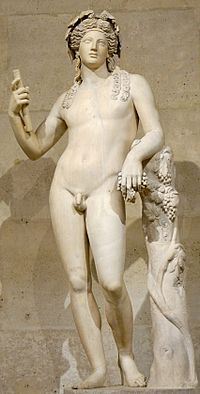
Dionysus was the Greek god of wine, theatre and madness.
It tells the story of a king whose subjects revolt against his oppressive rule to worship the Greco-Roman god of wine Bacchus (aka Dionysus) in a hedonistic spiritual revolution. This concept album for the stage, created with 2b Theatre Company’s Christian Barry is a work-in-progress that fuses the chaotic revelry of a rock concert with the intimacy of theatrical storytelling.

Hawksley Workman began by coming out on a stage festooned drums, a keyboard, various stringed and other instruments and three sytrofoam wig heads on stands. One wore an ash-blonde flip-style wig, one a red boa, and one a military hat. There was also a white, headless mannequin in a red strapless dress. Hawksley was wearing a jacket with military style in its lines.
He first read a story, with a glass of wine in hand, about a king who is suspicious of his people frolicking in the hills with a new god. Even his mother is going, so he dresses up as a woman and, unrecognized, is torn apart. This is the short version of The Bacchae, an ancient Greek play by Eurpides, about the mythological King Pentheus who meets the new god Dionysus and his followers, the women who become maenads.
Maenads were to be feared. These followers of Dionysus embraced his divine madness and were rumored to tear apart animals and mortals in their ecstatic, wine-induced frenzy. While there is no evidence of the dismembering of humans or animals ever happening the maenadic and Dionysian rituals did indeed take place.
Workman’s one-man show included songs that covered the king’s feelings, his military might, his curiosity and fear, his demise. It also covers the ecstasy of Dionysus and how Dionysus was viewed. Unlike the twelve Olympian gods or the Titans before them, Dionysus was originally a foreign god, chthonic and believed to have come from another culture. He was depicted with ivy and grapes wound in his black hair, often wearing women’s dress, which, in ancient Greece, meant a different cut of chiton to the men’s chiton, and effeminate of feature. He was the androgyne that women followed. For a culture that constrained women, this appealed to their wild side and they were allowed to indulge it during his festival. Dionysus’ myth includes being torn apart himself by the Titans and ingested and reborn. In fact, he is one of a long string of dying and reborn gods and precedes Jesus. Now it begins to make sense why the drag queen was perfect for introducing the show.

Maenads were female followers of Dionysus who celebrated in ecstatic frenzy.
Hawksley Workman’s songs ranged from impassioned and tragic to hysterically funny as when he sang Ukelele Boy, about Dionysus. For another piece he picks up the top half of the dressed torso and then plays a harmonica positioned beneath the dress so that it looks very sexual to the audience who see’s his head at the level of the genitals. When Pentheus discovers the maenadic orgy, Workman takes a well-known line “my eyes have seen the glory of the coming of the lord” and tosses it on its side, giving more meanings to what type of coming is happening.
For the ecstatic ritual he sings, “Won’t your ride with me…our feet pound the earth with pleasure so deep…won’t your ride with me.” This lead into Workman stomping out a staccato rhythm with his feet and two poles in his hands. Very deep, very visceral. After the maenads realize they have torn apart the king, Hawksley’s lines include “Can you believe that his blood came out red?” and “salt in his tears.” Note that I was mesmerized and writing notes in the dark so these lines could be off a bit.
Hawksley Workman used the heads as props, sometimes wearing the boa or the hat, sometimes talking to the head. Under his modern vest he wore a purple shirt and one of his instruments had a leopard skin patterned strap. All of these small details, including that glass of wine, were significant as they are symbols of Dionysus; red, purple, leopards (Dionysus is almost always shown with a leopard skin across his shoulder), wine.
The performance was wacky, invigorating, funny, sad, and extremely original. I’ve liked Workman’s music before because of the originality of the tunes and the lyrics. The God That Comes blended this well, and showed his creative genius. He definitely researched Dionysus and the Maenads and embraced them to write such a powerful show. This touched me on several levels. I intimately know the tale of Dionysus and the maenads. I do hope this comes out as an album, but I wished I could have seen the show again. I’ve already told several friends to watch for Workman if he’s come to their city. He’s worth seeing and I very much appreciated being close enough to feel part of the show. I raise ten glasses of wine to Hawksley Workman. And I can say that I may have been the only person sitting there that night who has been a maenad. Io Dionysus.
Filed under: art, Culture, entertainment, music, myth, religion Tagged: Dionysus, divine ecstasy, ecstatic ritual, god of theatre, god of wine, Greek, Hawksley Workman, Maenad, Pentheus, PuSh Festival, reborn god


January 21, 2013
WordPress Bushwhacked Me

Creative commons: http://www.primpedandpainted.com
The other day, as I was inserting images into my posts, I noticed I had multiples of the same image. You know, the books, the quills, and all those specific images for my posts over the years.
And I saw, with the new way WordPress brings up media files that I can now click and insert an image from a previous post, hence I only needed one version of the quill or the book. So I had a cleanup day, and I deleted and deleted and deleted. I won’t need that picture of the food from the Apocalypse Diet again, so away it goes. I won’t need the image of the genital bleaching graphic, so it went too. Wholesale purge of the image files, because, you know, there is only limited space that WordPress gives you for those images.
Today, I was writing a comment onto another list and wanted to include a link to a previous post. I googled my post and it came up, but no pictures. What? Is the internet acting up? Is there a wordpress glitch? Search back and forth and then the horrible realization hits. I wasn’t just deleting multiple images from my media files; I was deleting the links to the images. WAH!
Dear WordPress, why not have a warning for those of us that don’t understand that we must always always always keep the image in our files or it goes bye-bye from our posts? Why not have something so that when I click “Delete Image” a little note comes up and says, “Deleting this image will remove it from your blog post. Are you sure you want to continue?” Sob* I’m really cranky now and will possibly replace some of the images. But… Geeze. The grief. So I’m sorry if you find a post of mine and it’s blah with missing pictures. Send me a message and I’ll try to erect another image or a big sad face because it’s gone forever.
Grrrr.
I should add, that if this happens to you, you can get some of them back. The pictures won’t show in your post but if you happened to put a caption and alternate text tag words, you can highlight the spot in the post, copy it and do a google search for your caption. Add in the name of your blog and you can narrow down the images. Your image will show in Google. You can then upload it again to the blog. Paste in your copied caption and you won’t have to rewrite it. Still a pain but it’s not completely lost. I’m going to slowly put the pics back, when my posts come up on the stats pages as the most look at. So Starbucks and the Censored Mermaid, and How to Wear Skirts and Manskirts now have their pictures back.
Filed under: life, Writing Tagged: adding pictures to blogs, blog posts, bloggin, blogging, graphics for blogs, image files, internet, linking images, linking pictures to blog, picture files, technology, Wordpress


January 16, 2013
Writing: Romances, the Pride and the Shame
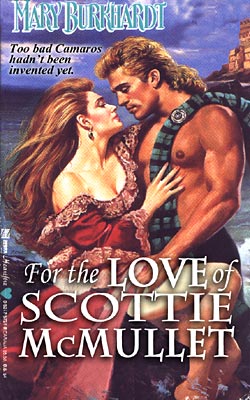
Making fun of Harlequin covers is a favorite past time of some, and could be one reason my friend doesn’t want it known she wrote romance novels.
I’ve was talking to a friend of mine who in the distant past wrote and sold several novels to Harlequin. She did this at a time in her life when she was a single mother of two and was trying to support them while putting herself through school. She is an artist who does beautiful paintings now.
Now the interesting thing is that Harlequin is viewed by some as low brow and by others as prestige. Low brow because we’re just reading those trashy romances and if you write a trashy romance, well, you’re not a real writer. Prestige because Harlequin pays quite well, is a successful publisher and you’ve written for Harlequin. Perspective, you see. I have another friend writing and trying to sell romances right now and she thinks it’s a great thing to do.
Harlequin as a publisher is one of North Americas more stable publishing houses. Writers tend to be paid fairly well because Harlequin has a high sell-through. Although the stories might be a paper chick flick and perhaps formulaic in the guy and gal always get each other in the end, there is a lot of range in their romance novels these days from mildly titillating to downright penetrative, in all senses of the term. Harlequin has been branching out as well into fantasy and other genres, whether werewolves, vampires or some other creature that goes bump in the night and indeed they still must go bump. I did sell one story to a Harlequin fairy tale anthology and of course it was romantic and/or erotic.
The Romance Writers of America is not only a well-attended association of writers and would-be writers but also brings in top agents and writers to local conferences. I know several people who have joined the RWA just for these aspects, even if they do not write romance. Basically romance today is not your mother’s romance.
So, this conversation with my friend was quite interesting. I present it here, edited because she does not want her name revealed. In fact I have never ever been able to find out what name she wrote under and I’m only one of a few people who even know she wrote romances.
No, I don’t care if folks think of me as what I am. ;D ….. I mean that’s how I caught my beloved D by being wild and lascivious, isn’t it?
Well that’s a lie…at least the part about me not being embarrassed about people really knowing who I am. Just so you know…I do not tell anyone the name I wrote under because I did it for the money…and only the money for my girls. When I do speak of my writing it is mostly because I really want the person I’m talking to , to understand that I really do understand the pressures of creating something salable, like a story or a book…for a paycheck.
My writing was an act of desperation. I wrote like an East End drug addicted prostitute whores herself. I
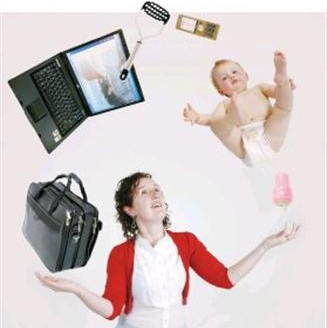
My friend juggled a job, going to school, raising two girls and writing romance novels. Creative Commons: Misty de Vries, Mercator
had two kids to feed and I needed to earn more money. I had no child support and a barely above min. wage job. I started writing after work when the girls were in bed, I wrote on the bus going to work, lunch breaks at the store, I wrote on a scribbler, took it home and then wrote it up of the typewriter later that night (yes, she did all this before computers). Being dyslexic, it was like slavery. I had to concentrate so hard even when I was utterly bagged. I had no grace, no time to muck about and, God help me, if I screwed it up because then my children would go without. So I wrote what I knew would sell and did it as quickly as I could type up the pages. I could not think of another way to earn enough money to look after T and K. I was so tired all the time my writing could not be the least jot original. I was caught between the rock and the hard place with no help. My family would not help me. I had shamed them with my divorces. My mother cut me off, not that she had ever supported me but she made it clear, as she said, I had made my bed …. If I was broke, it was my fault. As a solution I turned to writing because it was something I could crank out while being at home with my children.
My writing is not something of which, I was ever proud. That is not to say I am not proud of the accomplishment of using my wits to take care of the girls.
I am.
But I was not nor ever will be, a writer. I was, by some miracle and a short period of time, an adequate hack, which is something else entirely.
Also It was not a happy time for me. And the whole writing thing is forever tainted in my mind with all of that desperate hungry unhappiness.
A few years ago when my health took a little turn I tried writing again; but this time I tried to write stories I might want to read. I tried a lot, then some more… I tried and tried.
I went back to drawing.
So at last, I will get to the point, I will enthusiastically pass on my recommendations. And for your piece of mind. I will also run them through the spell checker… so they won’t think an idiot wrote them. Don’t you love computers!
Talk about stress! A part of me wishes I had never said anything or agreed to your request.
So… to the issue at hand. There were 5 in all.

She has her reasons for not feeling she was a writer, and she feels her novels were not very good. I’ve never read them (or any Harlequin) for that matter, so I don’t know the quality. However, I told her that she was an inspiration…because she wrote, and finished several novels and sold them. That in itself is a great accomplishment. I know because I’ve been working on my second novel for ten years! I plan on finishing it by April because it’s getting ridiculous. So while my friend feels she was a hack who wrote to survive, I wish I could write as a full-time job. These days it’s even harder to sell something because there are so many more people writing and computers and the internet made it easier. But I’ll still hold my friend in high regard, even if I never find out what she wrote or what name she wrote under.
Filed under: Culture, entertainment, life, Publishing, Writing Tagged: books, chick flick, Harlequin, juggling work and writing, Publishing, Romance novel, romance novels, Romance Writers of America, saran wrap, shame, Writers Resources, Writing