Michelle Ule's Blog, page 99
December 27, 2012
7 Entertainment Ideas for Bored Kids After Christmas
 Now that the Christmas hoopla is over, vacation may be stretching before you with kids in the house claiming to be bored.
Don’t believe them. They’re just baiting you.
As the creator of Mrs. Ule’s Mean and Cruel Summer School, I have ideas for children who claim to need entertaining.
1.Teach them to cook.
I don’t mean brownies out or even the alleged macaroni and cheese that comes in a box. I mean honest to goodness, get out a knife and learn how to make something everyone will like to eat.
What’s their favorite home made meal? My kids like Enchilada Pie, which involves browning ground beef, mixing in refried beans and a host of other spices. It’s then layered between grated cheese, chopped onions and tortillas. Not difficult, but it can be time consuming.
But isn’t that the point? Consume some time?
Why not oversee them cooking dinner every night during vacation?
2. Read aloud something wonderful they probably wouldn’t choose.
Here are several suggestions:
 Farley Mowat’s The Dog That Wouldn’t Be or Owls in the Family. I read both aloud to my children on a Hawai’ian afternoon, so you know they’ve got to be good! (one book per afternoon.)
How about Laura Ingalls Wilder’s The Long Winter? I read the whole book one afternoon to my young children in snowy Connecticut.
Any of the “magic” books by Edward Eager. Short, clever, funny and with one terrific line drawing per chapter, these books grabbed my imagination as a kid. My kids found them engaging and sometimes thought provoking. My personal favorite is Knight’s Castle.
3. Do a movie marathon.
Watch something they might not envision as entertaining.
Laurel and Hardy movies, Shirley Temple, Anne of Green Gables. With older kids you might try old silly classics: The Great Race, October Sky, Apollo 13, The Princess Bride.  My kids liked The Great Escape and Good Neighbor Sam.
Make popcorn on the stove for extra points!
4. Work a jigsaw puzzle.
We usually did that while watching movies or listening to me read. You can run competitions–who can put in the most pieces in a given amount of time? Or run two puzzles and see who can finish first. My kids got so good at the US map puzzle, they’d time themselves putting it together upside down!
The important thing is to participate with the kids!
5. Play Monopoly.
Yep, from the beginning, by the directions, all the way through. Your kids will learn about base 10 and how to manage money. It’s training as well as play. Let one of them be the banker.
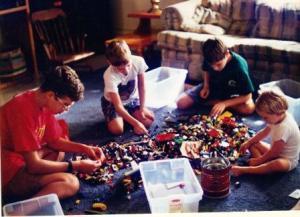
6. Sort the Lego.
You heard me.
Dump it all out and have them sort it into appropriate containers.
We only did this once and that day became a family legend . . .
7. Make a memory day.
Hand over the digital camera and send them out to record the day from their perspective.
Have them document that particular day of their life, or turn it into a theme: dogs, strange triangles in our town, kids at play, mean adults.
At the end of the day (or an hour or two depending on your time constraint), print the photos and put together a memory of that one day in your child’s life.
It’s fascinating to see what and how, they see their lives.
Are we done yet?
Have fun.
Any other ideas? What’s worked well for you?



December 24, 2012
A Christmas Celebration in Kiwi Land
 After my father’s death in 2002, we honored my parents’ memory by spending inheritance money on a family trip. My husband longed to visit Middle Earth, so once the college kids got out of school in December, we packed up and headed to New Zealand.
We camped in an RV and traveled from Auckland on the north island all the way to Milford Sound on the south island. We reveled in a land of rock-floating lakes, geysers, straight-as-arrow planted forests, dolphin-friendly swims and the hint of hobbits at every turn. (We were there for the release of The Two Towers, but that’s another story).
Arriving the week before Christmas, we enjoyed not being inundated with ads for Christmas events. We saw Christmas lights decorating houses in only a few locations. Stores didn’t seem too concerned with the holiday, and we saw few mentions of Father Christmas or even toys for children. We liked it.
Christmas Eve found us at a bridge watching folks in Father Christmas hats bungee jumping. One woman had to be pushed off but came up screaming in ecstasy. I later saw her in a Queenstown church, no doubt thanking God she survived!
We had dinner that night in the only restaurant open: the Queenstown Hard Rock Cafe. As we ate hamburgers and listened to a group of drunken kimono-clad Japanese businessmen sing, we felt very far from home.
That night most of us slept on a yacht owned by Winston Churchhill during World War II . Early Christmas morning we took a short cruise along Lake Wakatipu with our personal Commander (my former submarine commander husband) giving the yacht owner tips on craft. We exchanged presents–Kiwi items small enough to fit in our stockings brought from home.
Still not feeling very Christmasy, we finally found what we needed: the 10 o’clock service at St. Peter’s Church in downtown Queenstown.
Standing shoulder-to-shoulder in the back row of the standing-room-only crowd, we sang Christmas carols with gusto, delighting in the clever differences in songs from down under.
Here are the first two verses of “An Upside-down Christmas:”
Carol our Christmas, an upside down Christmas;
The snow is not falling and trees are not bare.
Carol the summer, and welcome the Christ Child,
Warm in our sunshine and sweetness of air.
Sing of the gold and the green and the sparkle,
Water and river and lure of the beach.
Sing in the happiness of open spaces,
Sing a nativity summer can reach!
Following the service in The Book of Common Prayer, we relaxed into a liturgical worship service we well knew. Communion felt comforting and holy among the people of Otago Shire. The Christ-child is the same down under
The service finished with happy New Zealand carols. “The Southern Cross Looks Down,” (sung to the tune of “O, Little Town of Bethlehem”) made us laugh:
O little town of Bethlehem, the Southern Cross looks down,
As once a star shone bright and clear above an Eastern town,
The hearts of Bethlehem are cold, the streets are hushed with snow,
The doors are locked, there is no room, dear Lord, where will you go?
Oh, come sweet Jesus, come to us, New Zealand’s shores are warm,
And here are loving hearts enough To shield you from the storm.
Come we will give you all we have, Each bird and flower and tree
The breeze that stirs the mountain tops The music of the sea.
Our family loved New Zealand, a land filled with happy people and stunning scenery. We would love to visit again, but that trip convinced us we would rather be home on Christmas.
(This post originally appeared on Books & Such’s blog)
Have you experienced Christmas far from home?


A Christmas Celebrating in Kiwi Land
After my father’s death in 2002, we honored my parents’ memory by spending inheritance money on a family trip. My husband longed to visit Middle Earth, so once the college kids got out of school in December, we packed up and headed to New Zealand.
We camped in an RV and traveled from Auckland on the north island all the way to Milford Sound on the south island. We reveled in a land of rock-floating lakes, geysers, straight-as-arrow planted forests, dolphin-friendly swims and the hint of hobbits at every turn. (We were there for the release of The Two Towers, but that’s another story).
Arriving the week before Christmas, we enjoyed not being inundated with ads for Christmas events. We saw Christmas lights decorating houses in only a few locations. Stores didn’t seem too concerned with the holiday, and we saw few mentions of Father Christmas or even toys for children. We liked it.
Christmas Eve found us at a bridge watching folks in Father Christmas hats bungee jumping. One woman had to be pushed off but came up screaming in ecstasy. I later saw her in a Queenstown church, no doubt thanking God she survived!
We had dinner that night in the only restaurant open: the Queenstown Hard Rock Cafe. As we ate hamburgers and listened to a group of drunken kimono-clad Japanese businessmen sing, we felt very far from home.
That night most of us slept on a yacht owned by Winston Churchhill during World War II . Early Christmas morning we took a short cruise along Lake Wakatipu with our personal Commander (my former submarine commander husband) giving the yacht owner tips on craft. We exchanged presents–Kiwi items small enough to fit in our stockings brought from home.
Still not feeling very Christmasy, we finally found what we needed: the 10 o’clock service at St. Peter’s Church in downtown Queenstown.
Standing shoulder-to-shoulder in the back row of the standing-room-only crowd, we sang Christmas carols with gusto, delighting in the clever differences in songs from down under.
Here are the first two verses of “An Upside-down Christmas:”
Carol our Christmas, an upside down Christmas;
The snow is not falling and trees are not bare.
Carol the summer, and welcome the Christ Child,
Warm in our sunshine and sweetness of air.
Sing of the gold and the green and the sparkle,
Water and river and lure of the beach.
Sing in the happiness of open spaces,
Sing a nativity summer can reach!
Following the service in The Book of Common Prayer, we relaxed into a liturgical worship service we well knew. Communion felt comforting and holy among the people of Otago Shire. The Christ-child is the same down under
The service finished with happy New Zealand carols. “The Southern Cross Looks Down,” (sung to the tune of “O, Little Town of Bethlehem”) made us laugh:
O little town of Bethlehem, the Southern Cross looks down,
As once a star shone bright and clear above an Eastern town,
The hearts of Bethlehem are cold, the streets are hushed with snow,
The doors are locked, there is no room, dear Lord, where will you go?
Oh, come sweet Jesus, come to us, New Zealand’s shores are warm,
And here are loving hearts enough To shield you from the storm.
Come we will give you all we have, Each bird and flower and tree
The breeze that stirs the mountain tops The music of the sea.
Our family loved New Zealand, a land filled with happy people and stunning scenery. We would love to visit again, but that trip convinced us we would rather be home on Christmas.
(This post originally appeared on Books & Such’s blog)
Have you experienced Christmas far from home?
December 20, 2012
The Totem Christmas: Or More Research Serendipity

David K. Fison’s Christmas Totem Pole, Anchorage, AK
I’ve just finished writing my Christmas novella for next year: The Gold Rush Christmas, and it includes a Christmas-themed totem pole.
It’s the story of young adult twins who journey to Alaska in search of their missionary father during the 1897 Gold Rush. The boy next door, a seminary student, joins them in an attempt to woo the heart of the female twin and to claim his manhood.
The story ends at Christmas, since this is part of A Pioneer Christmas Collection (Barbour, September 2013). The twins finally find their father on December 24, living with a Tlingit tribe along the eastern shore of the Lynn Canal.
He’s just finished carving a totem pole that tells the story of Christmas.
While I thought I could probably figure out a totem pole that tells the Christmas story, Google led me to Rev. David K. Fison , who is generously allowing me to share his.
The Tlingits carved totem poles to help them remember their stories as they had no written language. According to Rev. Fison, “the characters and symbols on a pole provided an outline to help them remember stories, legends and events so they could be retold to future generations.”
Rev. Fison has lived and ministered in Alaska since 1961, begining as pastor of the First United Methodist Church in Ketchikan. While serving as an interim pastor at the nearby Tsimshian village of Metlakatla, he decided to translate the Christmas story into the native language.
But traditional Christmas characters such as shepherds and angels were unknown to the Tsimshian people.
Rev. Fison’s further research at the University of Alaska in Fairbanks revealed the cultural equivalents. Shepherds, for example, would be keepers of the village fish traps. Rev. Fison felt the common character Raven could serve as an angel.
In 1987, he completed a twelve-foot tall yellow cedar totem, which you can see in the photo.
He also sells twelve-inch replicas of the totem and I bought one for Christmas this year.
I’m fascinated by stories that show us Christianity through the eyes of a different culture. In my first novella, The Dogtrot Christmas, the couple realized that a dogtrot cabin symbolizes how Jesus can bridge cultural difference.
In a post I wrote nearly two years ago, “Slash Marks the Very Good Trail,” I discussed how the Aucas explained who Jesus is, according to the movie End of the Spear.
I love to remember Jesus was not an American. His story is accessible to anyone who wants to understand the son of God come into the world to redeem sinners.
Thanks be to God.
I’m grateful Rev. Fison took the native traditions and devised a colorful version to remember the good news of the Christ child come to earth. He also provided me a key to the totem. Reading down, the characters are as follows:
 Raven (angel) An emissary of “the great Chief of the Heavens” who holds the star of Bethlehem
Joseph is a woodcarver, represented by a man holding a canoe paddle (for the journey to Bethlehem)

Mother and Child, of course, are Jesus and Mary. Rev. Fison notes “the village is filled with visitors to the Potlatch,” the gathering called by a powerful chief to display his wealth and power!
The Bear is the closest he could come to a domestic animal representing Jesus was born in a manger.
 The Keepers of the Village Fishtraps, of course, are the equivalent of shepherds.
The Chief is one of the wise men.
The Frog serves as the angel who appeared to Joseph in his dream.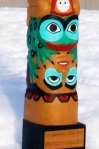
Potlatch Chief represents King Herod. You’ll note he’s upside down and in Frog’s clutches–symbolizing he was outwitted by Frog!
Thank you, Rev. Fison!
(And if you would like a totem yourself, you can reach him at totem@alaska.net)
Merry Christmas!


December 18, 2012
Blog Hopping at Christmas
Like many of you, my last 18 hours has been filled with work, Christmas shopping, Christmas cards, holiday merriment, cookie baking (burned them), shipping packages (had to wait in line twice) and pouring water into the Christmas tree base (must do that again).
I’m taking a break from Christmas today, however, to participate in a “blog hop” with some of my writer friends. Come back on Friday and Christmas Day for some fun reflections of Christmas from different cultures (A Totem for Christmas and Christmas Down Under).
 A blog hop is a tour through various writers’ websites as they discuss their latest creative work. I was “nominated” by Kay Strom (who is featured in my best-of-all-time blog post Tattoing Your Soul) who last week discussed her latest book The Love of Divena.
Other friends who’ve participated include Julie Carobini, Sherry Kyle, B.J. Taylor and Linda Clare.
I’m the last hop and I’ll be talking about my first only-my-name-as-author book, Bridging Two Hearts, due out in Feburary, 2013.
The idea for my inspirational romance Bridging Two Hearts came while we visited Navy friends on Coronado, including one who worked at the Hotel del Coronado. From the Navy Captain, we learned about the adventures Navy SEALs had in San Diego bay off their backyard. I thought about what it would be like to work at the Hotel del Coronado and with the proximity to the SEAL training area, it was possible a romance could bloom.
The cover gives you an idea of the type of people I envisioned while writing the story, but when my hopping pals asked which actors would I choose to play them in a movie, I was a little stumped. Two different generations read my books, so how about two different parings? Amanda Seyfried would make an excellent Amy and Channing Tatum would do handsomely for Josh. For older readers, think young Reese Witherspoon and Josh Lucas.
I did a lot of research on Navy SEALs as I wrote and read numerous memoirs written by Navy SEALs. I spoke with a Navy Public Affairs Officer about life within the SEALs, and he provided several surprising and one shocking tidbit that made it into the story.
As I researched the very difficult life of Navy SEALs, I was inspired by both the men who serve and the women they leave behind. It’s one of the toughest jobs out there and I wanted to give a peek into the domestic life and concerns of men continually putting their lives on the line.
It took me about a month to write the first draft of the story, followed by several weeks of revising. I visited Coronado and learned a lot while on location.
Life on Coronado, including actual places we visited, plays a part in this story along with the wisdom of an elderly World War II Navy widow and the interesting ways people have of dealing with fear. In addition to what the young couple use to work through Amy’s fears, Josh encounters the very important clinical work being done by an actual clinic in San Diego that helps military members and civilians handle phobias—including crossing the Coronado Bridge!
Bridging Two Hearts will be released by Harlequin’s Heartsong line in mid-February, 2013. For more information about the book, see my webpage devoted to Bridging Two Hearts.
Meanwhile, what books are you looking forward to reading or receiving this Christmas? Got any great suggestions for those still looking for the perfect Christmas gift book?


December 13, 2012
Death at Christmas: Six Ways to Cope
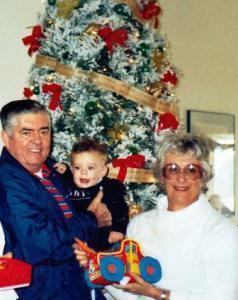 On December 22, I signed the paperwork to remove my mother from life support systems.
We buried her on December 26.
That was the worst Christmas of my entire life.
I’ve never felt the same way about the holiday since.
Oh, yes, I know it celebrates the Savior’s birth. I know it’s a festive time of gaity, lights, parties and gifts.
I love the Christmas carols, Handel’s Messiah and other musical treats. I sing in the choir and play in a woodwind quintet.
I adore writing and receiving Christmas letters.
But I hate how I feel this time of year. Rejoicing makes me feel guilty. I remember Mom, and I feel sad.
My father never recovered, emotionally, from my mother’s sudden collapse while teeing off at the golf course. He had a crisis at Christmas for the next (and last) seven years of his life.
I spent too many “holiday seasons” discussing end of life issues with hollow doctor’s voices over the phone. Nurses called with requests for DNRs while I watched the lights flicker on the tree and listened to the rum-pa-pa-pum of the drummer boy.
Excruciating.
My children were in elementary school when my mother died. I had a little girl who loved the idea of nutcrackers and baking Christmas cookies. She savored the excitement of holiday parties and wondering about mysterious packages. She begged to celebrate the season with every gusto in her body.
And my body? A dragging weighty horror that I had to relive this season one more time without my mother.
Intellectually, I understood. This was my daughter’s only childhood. Was it fair to her that for me every activity bore the shadow of my missing mother?
Of course not.
But it was just. so. hard.
How to get through it.
Seventeen years have passed. It’s still hard, but it’s better.
1. Recognize how emotionally vulnerable you are and enlist help. My wonderful, logical husband didn’t understand how hard everything about Christmas had become for me until I told, oh, about year eight. Once he knew, he could help me. But if all I did was moan about how I hated Christmas, I didn’t provide him with any insight he could use to ease my grief. My prayer partner, too, began praying with me starting in November!
2. Focus on things you CAN do with joy. As I’ve posted before, I love to write and receive Christmas cards and letters. This I could do with joy and I focused there. I also could bake cookies with my daughter and create the annual pun, the Yule log, to serve on Christmas Eve. Of course I can sing in the choir and, sometimes, lose myself in that long ago joy of understanding, for the first time, how crucial the babe in the manger is for our salvation.
3. Consider who else is involved. I lost a mother, but so did my brothers. My children lost a grandmother and my poor father . . . I needed to think of ways to make “the season” better for them. My children could acknowledge the loss of Grammy, but did they deserve a mother who wouldn’t buy presents, wouldn’t cook a meal, wouldn’t attend a band concert, wouldn’t play Handel’s Messiah and answered every breathless request with “no?” I needed to be selfless for their sake, but I also needed to
4. Remember to grieve. I remember my mother every December 22. I pull out one of her nutcrackers every year and think of her while I set it up. I cry when I hang the ornaments she purchased from all over the world. I tell stories about her, funny stories about her foibles, and sometimes we even remember to toast her at Christmas dinner.
5. Invent new traditions. I didn’t realize we had done this until my daughter-in-law asked “Where are you going for Christmas this year?” We started traveling the Christmas after my father died, not because of his death but because that was the only time our college students were guaranteed available. Or so I thought.
6. Celebrate the true meaning of Christmas. It’s about Jesus, God with us, not every other Americanized holiday tradition. We still are very busy at Christmas, but if I take my aching heart to the babe in the manger, I can put December 22 and 26 into perspective.
Jesus is the reason for the season, but I still miss my mother.
If you struggle at Christmas, how have you dealt with your situation? Did I miss anything?


December 10, 2012
O Christmas Tree–and Other Disasters
 We lived in Hawai’i for four years in the mid-1990s and got to experience Christmas in a different climate and culture.
That meant holiday-themed t-shirts and the exciting arrival of the Christmas trees the day after Thanksgiving.
In those years, the arrival was a banner headline across the front page of the newspaper. Only one ship full of trees came and it came on the same weekend every year–which usually was a month before Christmas day.
There was no point in waiting until closer to Christmas in hopes of purchasing a fresher tree–no more trees were coming and the traditional evergreens were not grown in the islands. So, we bought our tree early and sought ways to keep the needles on until Jesus’ actual birthday celebration.
You’ll remember Oah’u is only ten degrees above the equator. Most of the time we luxuriated in a balmy 72 degrees, pretty much year round.
Pine needles tend to fall off trees when the weather is warm. We combated the drying out of the tree by consistently pouring cool water into the reservoir at its base. By the time Christmas finally arrived, we usually had a few needles left on the tree and a pile covering our gifts like scented confetti.
Fortunately the needles were easy to sweep up from the tile floor.
My neighbor, however, was more enterprising, and one year she invested in an irrigation system–basically a Christmas tree IV line. She kept the bottle filled (it was a two-liter plastic bottle in our day) and tested the needles for moisture every morning.
 It was quite a contraption and required special rigging as I recall. Water frequently spilled on the tile floor and she had to be careful not to get the packages wet.
The needles still fell off the tree.
Another neighbor didn’t even bother. They hauled a small potted palm tree into the house and hung their ornaments on it.
Worked just fine and no clean up.
Those exercises reminded me of an earlier Christmas tree back in our Connecticut years where Douglas firs grew in our yard. We even had snow on the ground.
This particular Christmas one of my sons was three and very excited about having a tree his father cut down actually inside his house. We’d learned our lessons the year before and knew to hang the precious ornaments high and leave the soft, non-breakable ones on the lower limbs.
Our son had free reign to move those lower ornaments around the tree wherever he liked. He spent a lot of time rearranging the tree, careful to avoid the lights. I left him to his pleasure.
A tree is supposed to be fun, right?
A salute to the joyous season and cause for enjoyment, right?
He thought so too until the day I heard a crash in the living room
I dashed in to find the tree had fallen over
onto my son
whose arms and legs were waving wildly under the tree.
He was screaming.
I had to bite my lip, hard, not to laugh out loud.
I wish, now, I had run for the camera.
Instead, like a good mother I pulled the tree off the little boy–who could not believe what had just happened!
Hhis father tethered it tot he wall when he got home, but my son didn’t touch the tree the rest of that holiday season.
The next year we set it up in the play pen.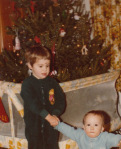
Oh, our diasters were never as good as in the movies, but they’ve made for gentle and fond stories.
Even the one about the frog who lived in the tree one entire Christmas. What did he eat? Why couldn’t we find him? Why did he croak all night?
How about you? Any Christmas tree disasters at your house?


December 7, 2012
Pearl Harbor and Me

U.S. Navy photo by Mass Communication Specialist 1st Class James E. Foehl
“It’s time,” Rose called from the driveway where her toddler sat in his stroller.
I latched my daughter into her stroller and we took off down the street to pay our respects to the dead.
We spent every December 7 for four years together, perched on McGrew Point to await the salute and fly by.
When you live on Pearl Harbor, the events of 71 years ago are the backdrop of your life. I glanced at the Arizona Memorial out my kitchen window every single day. My children played on a grassy knoll across the water from the memorial. They sailed tiny boats past the memorial and more than once rode the launch over in silence.
But on December 7, they attended school, so Rose and I were left with the little ones. Only once in those four years did anyone else join us to watch the Navy remember their dead.
All four years, the morning stretched bright and beautiful, eerily quiet. The occasional call of a bird, the stars and stripes at half-mast on the memorial, an enormous Navy ship gliding silent through the water around Ford Island. The deck was always lined with sailors dressed in white, right arms up in salute.

US Navy photo 2011
It’s the silence that rests in my mind.Broken only by Taps, poignant and true echoing across the water.
No one spoke a word. Not even us.
Just as the ship reached the memorial each year, we’d hear a low rumble from the south. The air almost seemed to boil with emotion and we looked at each other.
To the far north, the notch in the mountains above Mililani and Schofield Barracks, may have been the direction the Japanese air wave came from, but on memorial day, the planes came from the south.
At 7:55, marking the exact time, the planes arrived.
Five of them, flying low and fast. When they reached the memorial, four continued forward and one turned straight up to the sky going up and up, to signify the dead.
Chilling.
Every time.
We walked home in silence. Remembering.
In 1995, after the ”ceremony” we drove our toddlers to Waikiki Beach, where we witnessed an extraordinary parade.
In remembrance of the 50th anniversary of the end of World War II, the US military put on a series of events. On that day, the four of us sat in the sand and watched an armada parade sail the horizon. It was like the old photo of the landing at Normandy, as far as you could see, ships filled the ocean.
They paraded from the east, sailed past a decked out aircraft carrier anchored off shore and we cheered. Destroyers, battleships, cruisers, ships of every type. Allies from that war had sent ships–including the Soviet’s most advanced ship. It must have taken an hour for them to sail past us, and at the very end–our personal favorites–two US submarines.
Chilling.
Exhilirating.
Sobering.
Rose’s father Chet served on a submarine out of Pearl Harbor all through the war. He’s one of the lucky ones. 60% of the subs that deployed out of Pearl never came back. The chapel on the Pearl Harbor Submarine Base remembers a submarine every Sunday, noting the boats are still serving because they never returned.
Chet visited often while we lived in Hawai’i. A strong man who never lost his erect bearing, Chet’s memories were fascinating. Sobering. Chilling.
Just like war.
Only less messy.
That December 7, 1995, we watched President Clinton stand on an aircraft carrier in our backyard and toss a lei of remembrance into Pearl Harbor’s waters. That night my husband put on a dress uniform and we attended the Navy’s ceremony on board the ship. We admired vintage planes, modern planes, elderly sailors, modern sailors and heard music from the 1940s through 1995.
It was an honor to attend and celebrate the”war to end all wars.”
I hope I never have to do anything like that ever again.
Remembering all who lost their lives, this day, and every other day, of World War II.


December 4, 2012
Tips for Writing an Authentic Christmas Letter
 I love Christmas letters. Tell me all your great news, brag about your kids, allow me to rejoice with you! I want to hear what my friends are thankful for as they look back over the past year and anticipate the next.
I also love to write my family’s Christmas letter. It’s an opportunity to crystalize my family’s year in two sides of a piece of paper.
It’s important to recognize not every year is full of triumphants. More than a dozen of our friends have lost loved ones in the last twelve months. How can I write a cheery note without acknowledging the holes in their lives this Christmas? This is how I phrased it, three paragraphs into my letter:
“Our family feels very blessed this year in the wake of so much loss for people we love. We’re focused on being thankful because we recognize how quickly things can change. For those of you struggling this Christmas, we’re thinking of you.”
Then, of course, there are the horrible years we’ve endured when nothing seemed to go well. One year I started with the truth:
“This has been the worse year of my life. My mother died three days before Christmas last year. My father had a stroke six weeks later. My father-in-law had a stroke several weeks after that. R and I tag teamed across the Pacific Ocean for months trying to meet the needs of our parents on the mainland and our children and Navy career in Hawai’i.
“Things have calmed down now as we reach the one year point. For that reason, I’m going to focus this letter on what we’ve have chosen to be thankful for this year.”
That became the theme of the letter. With each paragraph devoted to a family member, I briefly described their current status and explained what they were thankful for.
That took a grim year–which could have made for a miserable Christmas letter– and provided context. Yes, the year was hard. Yes, we missed my mother. Yes, our fathers were disabled but there was good in the year and we wanted to recognize it.
Share things you’re proud of without overdoing it, can be tricky. You’re writing to people you care about, they want to know your good news. But there’s a way of writing that puts off your readers, and a way that draws them in.
Try to put it in a gently humorous context. I can write, “Our youngest son made Eagle scout this year. What a relief! Now when all three boys are home, I don’t have to worry about being prepared for anything!”
“All that Lego has finally paid off–our son is a three-dimensional mechanic with astounding skills!”
Find something positive to say about every family member. No one says you have to explain everything, nor do you have to tell everything. “This has been a challenging year with my daughter, but we’ve found going to the movies or reading Harry Potter has helped us connect in a fun way.”
If you cannot find something positive to say, go back to the drawing board and find something. And no backhand compliments are allowed when describing someone you love.
Use a theme. The year our first grandchild was born, he appeared in every picture–individual family members held him– and they commented about him in their paragraphs.
One year I began the letter with Webster’s definition for change (noting you would see our family’s photo as a definition). In each family member’s paragraph I described something about their life that had changed.
Another year I simply told how tall we were–and that included my husband and me!
Remember the reason for the season. Christmas celebrates God appearing in the flesh, Jesus the Christ child. His birth, life, teaching and resurrection are causes to rejoice.
Come, Emmanuel! God is with us!
Why yes, send me your letter. I’d love to hear about your year!
How do you make Christmas letters authentic? What do you like best about them?


November 29, 2012
Who Deserves Mercy Most?
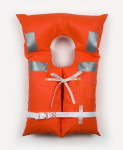 A ship capsized off the northern California coast last week and the Coast Guard arrived in time to save all seven people–which included three children under ten. It was a miracle in our frigid waters, because no one wore a life jacket.
Like many writers to the editor of the paper, I was indignant. What were those parents thinking not putting the children into life jackets? Were they fools?
A thought flit through my mind: Did I have any business asking that question?
Who deserved God’s mercy most? Them or me?
Well, neither.
In my own case, it was a clear, frigid New Year’s Eve afternoon in 1985 Connecticut. My husband had been out to sea for far too long. His mother had come for Christmas; a disappointed holiday wherein she asked too many times, “won’t he at least call on Christmas day?”
He was on the bottom of the Atlantic Ocean in a submarine. No.
The poor woman fell ill and by New Year’s Eve needed a doctor. I farmed out the boys–ages two and four–to a friend and took her. She had pneumonia.
What an awful day, and when I retrieved the children, they were in bad moods. I had lonely boat wives coming for dinner, I needed to hurry home.
The two-year-old refused to be buckled into his car seat, which was behind the passenger in our two-door Toyota Celica.
It was only a mile home. The weather was clear. “Fine,” I shouted. “Forget your buckles. We’ll be home soon.”
I shoved him into the unbuckled seat, climbed over the four-year-old, stepped into the driver’s seat, slammed the door, fastened my seatbelt and turned the ignition.
A little ribbon of voice went in one ear and out the other. “But you always buckle them into their seat belts.”
I felt exasperated. I blew out my breath. Undid my seat belt, opened the door, stepped over the four-year-old, slammed the two-year-old back into his seat, tightened the belts as tight as possible, climbed back out over the four-year-old, flung my body into the driver’s seat, slammed the door as hard as I could, buckled my belt, turned on the ignition and waved goodbye to my friend.
Seething, I drove the mile home.
Except, we never made it.
On a clear stretch of highway, while the left hand turn blinker flashed, I waited for traffic to clear so we could go up our driveway on the other side of the road.
A car ran into us at what I later learned was 50 mph, striking hard just behind where my two-year-old sat.
I saw the horror on the Volkwagen Rabbit’s driver’s face as our car was hurled into his. I remembered a bumper car outing at the Prater amusement park in Vienna, Austria, sixteen years before. All I could think was, “don’t hit him head on!”
I stood on the brakes and wrenched the steering wheel to the left, just as the other driver turned his to the right. My right front fender and his left struck each other and we came to a halt at my mailbox.
That stretch of the country highway had no sidewalks, but a man in white clothes stood beside my door when I looked up. “You have to get the children out of the car,” he said. “There’s gas all over the road and it could blow.”
Once upon a time I had wondered what to do if I were ever in an accident. Which child would I get out of the car first?
The answer: the one closest to me.
The driver’s seat had collapsed, striking my four-year-old’s jaw. He was crying. I could hear the sound of an ambulance on the way.
I knew it was coming for my children.
My two-year-old stared with enormous eyes. His upright car seat had broken on inpact.
I yanked the buckles I had pulled so tight not five minutes before. The man in white seized the child when I handed him out.
I don’t remember how we got my mother-in-law out of the car.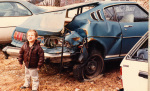
Across the street, I saw the smashed sedan that had hit us. An ambulance was over there, too.
An EMT grabbed my arm. “Ma’am, we need you over here. We’re losing the little one.”
They’d strapped my two-year-old son to a backboard. He stared at me with his brown eyes wide.
“He won’t say answer any questions. We don’t know how badly he’s hurt,” the EMT said.
“Jonathan, are you okay?” I begged.
He nodded.
“Why won’t you talk to them?”
He’s always been a matter-of-fact child: “Strangers.”
I laughed in relief. We’d been reading a picture book, Never Talk to Strangers. “You can talk to the policeman or an ambulance driver.”
“Okay,” he said.
Both boys enjoyed the thrilling ride to the hospital with sirens sounding. They were fine.
The woman who hit us went through the windshield; she never knew where she was and must bear scars to this day. My mother-in-law had pain for the rest of her life.
And me?
Had my child died because of my negligence, my life for all purposes would have been over.
God is merciful.