Michelle Ule's Blog, page 98
January 28, 2013
8 Places to Get Plot Ideas-Bridging Two Hearts
Where do you get your story ideas? Are they based on real people and real events?
In my latest book, Bridging Two Hearts, the answer, like always, is “sort of.”
 1. From real people’s characters
This is Ben. He’s in the Navy and his experience trying to become a SEAL prompted me to think about the difficulties of being a special forces member. He is NOT the hero, but the Josh is like him in a few strategic ways: fun-loving, loyal, determined and brave.
I take those kernels–attributes of people I know–mix them in with others and my imagination comes up with a unique character. Sometimes I’m surprised, though, when they talk like their inspiration. 
2. By extrapolating from people’s situations.
This is my friend Rose. We visited her family in Coronado and she told us about being awakened at night by Navy SEAL trainees paddling in San Diego Bay. Why would they do that?
It’s part of Hell Week.
Rose worked at the Hotel del Coronado–which she loved for its friendliness and historical environment. She, like me, had a bunch of kids in college.
3. Work together with friends to brainstorm ideas.
The genesis of Bridging Two Hearts was a four-novella series I put together with three friends that centered on the Hotel del Coronado’s spa. When that project was not selected, I took my story, enlarged and altered it and submitted a proposal based on a tweaked idea. But it originated with Julie Carobini, Sherry Kyle and Karen O’Connor. Thank you, ladies.
 4. Find an exotic location people would be interested in visiting, or that they know about.
The Hotel del Coronado is a well known romantic spot and the site of one of the funniest movies ever made: Some Like It Hot. Even if you don’t know the name, you might recognize the location!
5. Take personal circumstances and questions and put them into an unusual situation.
Wouldn’t the Hotel del Coronado be a great place to work for the summer while you’re earning money for college?
What kind of job would work well there?
Their spa is world famous . . .
6. Consider local spots that might impact the story.
How about a church? Or a gelato stand? The beach? How can they add to the story and make it more real?
 7. Think about what else you know about your location.
I first heard of Coronado–other than Some Like It Hot–from reading Admiral James and Sybil Stockdale’s book In Love and War. What did I learn from their terrific book?
That heroes still live in Coronado and, as Josh says in Bridging Two Hearts: ”It’s always good to acknowledge the good guys.”
8. What do your life experiences bring to mind and how do they inform your point of view?
Where have you spent a lot of your life? What experts can you call on for help?
For me, 20 years as a Navy wife. There’s really only one real hero in all my stories:

Where do you find inspiration and ideas for creative projects in your life?


January 25, 2013
The Kindness of Navy Seals–Somalia

US Navy photo
It’s tricky to get first-hand information about Navy SEALs, so I read everything about them I could find while writing my novel Bridging Two Hearts. I examined histories, novels and memoirs, as well as The Official United States Navy Seal Workout, revised edition. (I couldn’t do anything in it except the stretches . . . )
The best book by far was Chuck Pfarrar’s Warrier Soul, a beautifully written memoir of a very difficult life.But the most poignant story was told in Howard Wasdin and Stephen Templin’s controversial Seal Team Six: Memoirs of an Elite Navy Seal Sniper.
Wasdin was involved in the infamous Black Hawk Down tragedy in Mogadishu, Somalia. Prior to that firefight, he spent several months in Somalia and part of his job involved patrolling the roof of their safe house with his partner. The first night, a wretched scent filled the air. They pulled kerchiefs over their noses and tried to find what had died and left such a stench.
They found it: a teenaged boy with an amputated leg and missing a foot, full of gangrene and left to sleep on the rooftop of a hovel not far away.
The kindness of Navy SEALs–while they were there on a deadly mission, they couldn’t stand by while a kid suffered within eyesight. Howard and his partner approached the command: could they take medical supplies and clean up the kid’s wounds?
No. Doing so would compromise the mission.
Every night they pulled something over their noses. Every night the teenager got worse.
A week into this, they took matters into their own hands. Wasdin, his partner and a sympathetic medic dressed in black put on their balaclavas, picked up their machine guns and skulked into the night.
They did a “hard entry” –kicked in the front door, flexicuffed the boy’s family and forced them, gently, against a back wall in the house. While the family watched with eyes round as saucers, one of SEALs climbed on the roof and retrieved the boy.
Laying him on the floor so the parents could see what they were doing, they scrubbed the boy’s wounds with betadine. They had to put their hands over the kid’s mouth so his screams wouldn’t alert the neighborhood. They gave him IV antibiotics, bandaged his wounds, and gave him injections to stop the infection.
“Then we vanished.”
They did the same a week later. The family put out their hands to be handcuffed as soon as the men entered. An elderly woman brought tea in gratitude and then held out her hands. This time the Americans brought an interpreter to explain how to care for the boy, who was much improved. They left the family with amoxicillin for ten days, but the medic also noticed the boy had scurvy. The next day Wasdin brought a bag of oranges.
Eventually, their CO told the CIA that the boy was related to one of the local “assets,” even though the family had nothing to do with the Americans. They got him a pair of crutches and Howard requested a wheelchair.
The family was beyond grateful.
Wasdin ended his story this way: “It was my most successful op in Somalia, and I had to disobey direct orders to get it done. Better to ask forgiveness than permission.”
They may have to act as steely-eyed killers, but the kindness of Navy SEALs can also be an extraordinary gift.
What do you make of this story?


January 23, 2013
The Kindness of Navy Seals
 My daughter had the good fortune to spend her pre-school years living on the shores of Pearl Harbor in Hawaii. She grew brown and healthy in the warm island sun; knew the sweetness of plumeria on the breeze and the joy of an unexpected rainbow.
She learned to ride a bike at age four and one day, she and I took off on an outing. I rode the Mom bike with a basket full of snacks and water, and C pedaling happily on her pink bike– training wheels giving her balance and handlebar streamers bringing joy.
We rode the bike trail near our house down to the Ford Island ferry, which in those days was the only way out to the island in the middle of Pearl Harbor–the island most people know as the backdrop to the Arizona Memorial and where the USS Missouri is currently docked. A causeway goes out there now, but in the mid-1990s, you had to take the ferry.
It was a typical balmy sun-kissed day and with her bulky styrofoam helmet keeping her flowing pig tails at bay, C was a cheerful rider. After the ten-minute ferry cruise, we biked around the island, happily passing Hawaiian bungalows housing friends, the Admiral’s golf course where the kids like to putt, and the low barracks where the Navy seals trained.
You know the Navy seals, the steely-eyed killers of the Pacific?
We didn’t see any as we rode by, my daughter’s face a wide grin of delight. When the ferry returned, we walked our bikes on board, leaned them against the side wall and watched several cars join us. Just before the ship pushed off, a shout rang out and we saw a half dozen men vigorously riding their bikes in our direction. They laughed as the petty officer waited to let them board, then joined us at the side.
Handsome gladiators without an ounce of body fat, they moved with a supple ease that was hard to ignore, even for a long-happily-married Navy wife.
“Hey,” one of them said as he removed his aerodynamic helmet and a pair of Ray-bans. “Whose bike is this?”
 “Mine,” C said.
“Look at this.” Another Apollo-guy joined him. “It’s got streamers and everything.”
“I rode it myself,” she said with pride.
“All over our island?”
She nodded.
“That’s some bike.” All six gathered around her and asked her questions. She ate it up.
I couldn’t help think that any of them could kill her with the flick of–something–but instead they pumped up that little girl with friendly words of admiration only a mother could love.
The ferry docked, the cars left and the gods themselves boarded their glamorous sleek bicycles. They probably were going to take a spin around O’ahu before dinner.
As we pedaled our bikes toward home, C beamed. “Those guys were nice. They liked me, Mom. They loved my bike.”
“That they did,” I said and laughed at the kindness of Navy seals.
My innocent daughter had no idea what she had just charmed.


January 22, 2013
A Prolifer’s Crisis Pregnancy
 I filled out the form in block letters and wrote about my situation several times, but the Navy surgeon didn’t see my words. He pushed back his spectacles and frowned after the breast exam. “There’s something there all right, but have you ever been pregnant?”
“I’m seventeen weeks pregnant now,” I said.
His face changed and he stepped back. He cleared his voice several times. “That makes everything different. You have a lump that needs to be investigated.”
“Right.”
“The first thing you need to know is we’re not going to ask you to abort the baby.”
That’s when I knew I was in trouble.
I was pretty ambivalent about this fourth child anyway. I already felt like God had tricked me into the pregnancy. But I now was looking at the possibility of breast cancer and that changed everything.
I raged at God. “What’s going on here? Did you get me pregnant so I could become a pro-life martyr?”
It seemed so unfair. I didn’t have to be pregnant. I’d been happy with three boys, but we felt God had led us to get pregnant.
How could He do this to me?
Was I going to give birth and die?
How would my husband manage? And what would this do to my children, to grow up without a mother?
I was a hotline volunteer at the Bremerton Pregnancy Counseling Center. I’d been a lay counselor in pro-life ministries ever since I saw Francis Schaeffer and C. Everett Koop present Whatever Happened to the Human Race? years before.
I’d discussed carrying an unplanned child to term many times over the years. I’d counseled against abortion in a lot of different scenarios.
And now it was me in a crisis pregnancy.
Did I have any choice?
I’m a researcher. I went right to work, even in those days long before the Internet. I must have read two dozen books from Nancy Reagan’s book (which I remember as saying, “do anything the doctors tell you,”) to Our Bodies Ourselves (“don’t let a male doctor touch you.”)
I took consolation that I could call my dear friend Gina, a breast cancer survivor nurse, and she would tell me what to do.
Except, Gina went into hospice to die–of breast cancer–the next week.
“You’re really young for breast cancer,” the doctor said, “but we have to run the tests. I can’t do another mammogram until you’re six months pregnant. Let’s hope for the best.”
I was the same age as his wife. He shared my husband’s rank. The doctor was nearly distraught about the possible diagnosis as well.
I continued to read, to angrily demand answers of God–all the while conscious the child I carried could be killing me.
I watched my boys play. I cried. I researched. I hated the widow in our couples’ Bible study because common sense said when I died my husband should marry her.
I repented of that sin.
Many people prayed for me.
Another nurse friend recommended Dr. Susan Love’s Breast Book.
It was Easter time and I was worn out from worry and research. I had reasoned and prayed my way to a relative peace: if it was God’s will my children should grow up without a mother, I didn’t understand it but I would bow to His wisdom. I didn’t know what the future held for my family, I didn’t know how God could use my death to his glory.
But years of walking with God had taught me I could trust him–even with my life.
Dr. Love is very thorough and reassuring. Hers was the last book I read and then I halted the frantic research, worry and terror.
The baby kicked up a storm during the biopsy.
And when it was over, the doctor ran upstairs to the recovery room, joy all over his face: “I don’t think it’s cancer.”
I looked up from my book with calm assurance. “I don’t think so either.”
She’s twenty years old now, starting to apply to medical school.

My life has never been the same for a thousand different ways.
When I tell a woman I understand why she fears the child she carries could ruin her life, I do.
Abortion is NOT an unpardonable sin. Thinking and researching about abortion is NOT an unpardonable sin.
Peace, forgiveness and healing can come to anyone who searches for it. If you need answers to a crisis pregnancy, or for forgiveness, contact your local pregnancy counseling center. 800-712-HELP can direct you to the closest one.
And always understand, no matter the situation, you don’t have to be alone.
May God have mercy on us all.


January 17, 2013
A Passport and Hope for a New Life
 My mother got her first passport as a newborn and left her homeland at six-weeks old.
Her father was a “swallow,” a Sicilian man who left his family behind while he went to the new world to earn money for what they hoped would be a better future.
Antonio first came to America in 1908 to lay the brick streets of New York City. He lived with a gaggle of male relatives in a crowded appartment in “Little Italy,” where they desperately saved every penny and sent most of it home. Eventually, they headed west to Chicago for more construction projects. While there, Antonio visited Chicago’s Field Museum where he saw his first airplane: the Wright brother’s original plane on display.
He returned to the homeland in 1920 to find a bride, father a little girl, and look for work. His nest egg was good-sized by Italian standards and he looked forward to a comfortable life in the homeland.
Alas, it was not to be. No jobs were available to a smart uneducated engineer. So he returned to the United States (he had become a citizen in 1918) and worked feverishly to save more cash.
Again, he returned to the lovely city on the Mediterranean Sea and hoped for the best.
No work.
He fathered my uncle Frank and then, leaving my pregnant grandmother behind with two small children, headed back to North America, this time for good. Once the baby was born, Fortunata would get passports (at the US embassay in Messina) and head to America–which is where she wanted to be anyway.
Prohibition was in full effect when Fortunata set out. She was ill all the way across the ocean, barely able to care for her infant while nine-year-old Rosie tended the mischievous toddler. They landed in Philadelphia, where they went through immigration and then were released to a relieved Antonio.
Who was shocked to discover a bottle of champagne in the baby’s diaper.
“If they had found this, they would have returned you and the children to Italy. What were you thinking?”
It was a farewell gift from the family. Obviously, the overwhelmed Fortunata wasn’t thinking at all.
They rode the train across the country to a chicken farm in southern California where my mother grew up.
They were not wealthy, but full of dreams. For Fortunata, one of the biggest dreams was a future for her children–particularly an education that would open the world to them.
All three children fulfilled Fortunata and Antonio’s hopes for a new life in a new world. My Mom graduated from UCLA, married my father, and became a teacher.
At the age of 40, she got her second passport–which she used to take her children back to Sicily to see her birthplace.
 She returned to that warm town beside the sea fifteen years later with her siblings.
And when she died at the age of 64, she and my father had visited more than 100 countries.
The beginning of Mom’s future came from her parent’s hopes for a new life and their determination to give that opportunity to their children. The 1931 passport was only the first key.
Happy birthday, Mom.
Where did your first passport take you?


January 15, 2013
Traveler’s Tales: Italian Passion in Rome and Florence
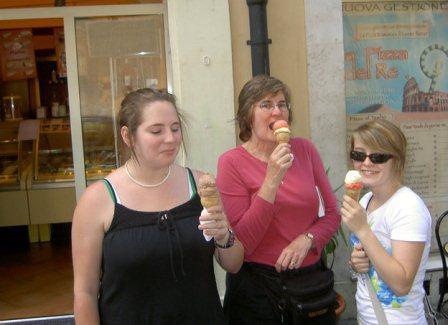 While visiting our godson in Rome, we were treated to the “best gelateria” in the Eternal City. Located just a couple blocks north of the Pantheon, Giolitti sold gelato, candy and other Italian treats.
Devin, who works for the UN, waved to a bank of gelato flavors–more than 100–and advised us to select two or three for our cones.
I chose three flavors: stacking up raspberry, lemon and passion fruit sounded good to me.
It was.
Particularly the passion fruit.
A cool mixture of sweet and tart swirled together into yellow creaminess: the tangy delicious flavor on our tongue forced our eyes wide with delight.
Molte bene!
We liked it so much, we returned to Giolitti and savored it all over again!
Two days later we were in Florence and needed to kill some time before a concert. “Let’s find passion fruit gelato!” my daughter said.
I practiced the words: “Hanno gelato frutta di passionata?” and we entered the first store.
A stone-faced young woman curled her lip. “I have no passion.”
Okay. We excused ourselves.
The next gelateria featured a florid young man with black curls, red lips and dancing eyes. “I,” he announced with a thump on his chest, “am the source of all passion.”
Oh. Well, we were looking for gelato–and so we scampered out the door.
At ice cream shop number three, a middle-aged woman slumped over the counter. “Alas, there is no passion in my life.”
Was passion fruit gelato really so rare? Is it only served at Giolitti?
A shake of the head at gelateria number four and with our time running out and our tongues wondering if we’d have have such a pleasure again, we entered the last store.
A wizened old man listened to my request without emotion and went right to the point. “I only have passion on a stick.”
We were traveling with two eighteen-year-old girls. I glanced at my husband. “Do you think he means a popsicle?”
He did.
It was cool, tart-sweet and delicious, though not as good as gelato.
“Which just goes to show,” my husband said, “it takes an old man to provide true passion.”
Maybe in Firenze . . .
We have never found it since, except, last year while visiting Coronado Island, we wandered into Bottega Italiana. “Go ahead,” my husband said. “See if they’ve got it.”
The woman behind the counter brightened. “What does he want?”
I laughed. “A dream. We ask everywhere and have never found it except in Rome. Hanno gelato frutta di passionate? Do you have passion fruit gelato?
“Of course.”
We ate it on a cone, two scoops of passion fruit alone.
Va bene.
Che sono molte delicioza!
What lengths would you go to for a taste you truly love?


January 11, 2013
A Contrarian’s Overview of Les Miz
 “People are ignorant of things they ought to know, and know things of which they ought to be ignorant. They are crude and impious.” ~Victor Hugo, Les Miserables
What to make of the stage and film productions of Les Miserables?
I’ve pondered that question ever since I first saw the musical in 1992 Seattle. It was a big hit by then and we had blown our entertainment budget for the quarter purchasing tickets. People I liked loved it. I knew nothing else of the story. So I bought the audio tape (the waning audio technology that year) and listened.
I’m a musician. I loved the music.
I’m a trained musician. I heard how the composer used his skill to manipulate emotions.
That’s what composers do and I relished the whole experience until I stopped to consider the words.
The most “fun” songs were about prostitutes and the bawdy master of the house.
Hey, I swung my hips and sang along. I understand the power of the songs–but as I repeated the lyrics and burned them into my mind, well, I’m not sure how healthy that was for me.
“Certain thoughts are prayers. There are moments when, whatever be the attitude of the body, the soul is on its knees.” ~ Victor Hugo, Les Miserables
Several years later my son’s classmate left Hawai’i to spend six months in New York City to play Gavroche on Broadway. When the production came to Honolulu, I hestitated–the humorous glory of those prostitutes and the innkeepers–but then decided “art” and “culture” trumped mother unease.
We blew the entertainment budget for six months and took the olders boys to see it–Jay wanted to know what his friend had been doing.
“What was the message you took from the show?” I asked.
They shrugged. They loved the spectacle of the fighting and music on the barricades. Is there a more stirring anthem than “Do You Hear the People Sing?”
“People are ignorant of things they ought to know, and know things of which they ought to be ignorant.” ~ Victor Hugo, Les Miserables.
We’d spent four days in Paris visiting the Musée de L’Armée at Les Invalides, touring Isle de France and some of the sites of the French Revolution and finished with a trip to Normandy. We rode through the chunnel and hurried to the London theater the next night to see Les Miserables. This time we took young adults fresh from trying to make sense of French history.
This production was geared to the tourist–we attended with many Japanese school girls dressed in uniforms–and was very hurried. But while the music continued its swelling pathos, the speedy rendition and two sopranos who couldn’t hit their notes, made us reconsider the message.
Somehow, the truly redemptive power of Jean Valjean’s repentence and acts of grace went missing in London. Javert, of course, growled his way through rigid legality and frigid anger before breaking–everyone knew to hate him. But the true heart of this story–grace–was easy to overlook and disappointing.
“Those who weep do not see.” ~Victor Hugo, Les Miserables.
The opening scenes of the film last week stunned me as we moved from underwater to God’s view above and then honed down to focus on one individual man. Prisoners dragging a ship into drydock astonished me, and set what should be the spiritual tone of the film.
Then Russell Crowe began to sing.
The poignant songs are beautiful, but Fantine’s elegy of her lost youth, “I Dreamed a Dream,” (magestically sung by Anne Hathaway in the movie–give that woman an Oscar) as well as Eponine’s “On My Own,” underscores what this tale is all about: grief, pain, heartbreak, violence, revenge.
While savoring Hathaway’s performance, I realized I had paid to watch people in torment. The entire film is a glorious orgy of horror–from the beaten prisoners, the gaudy prostitutes, the toothless peasants, to the bloody death of young men at the barricade.
I sat in a comfortable seat to watch people suffer. Beautifully, of course.
Did that make me the moral equivalent of the wealthy Parisians who walked past people living tortured lives in the streets? Can I be sanctified by just observing poverty and grief? Should I better use my time and talents to fight against slavery and the type of misery these people experienced?
“Love is the foolishness of men, and the wisdom of God.” Victor Hugo, Les Miserables
Ultimately, the story of Les Miserables is the contrast been grace and law as seen in the lives of Valjean and Javert. These are the biblical ideas Hugo demonstrated in Les Miserables. From the priest who bestowed the candlestick on Valjean to Eponine’s sacrificial decision to thwart her miserable parents, grace and love abound. Fantine gave up her life for her child, which underscores the power of love to redeem at personal sacrifice. (Just like Jesus?)
”Even the darkest night will end and the sun will rise.” Victor Hugo, Les Miserables
Bodies litter the path of our heroes by the end of Les Miserables, but the writers do not leave us in misery. The final scene is a blessings as Valjean makes his confession and leaves this life to be embraced by God–forgiven, justified, loved.
“A faith is a necessity to a man. Woe to him who believes in nothing.” Victor Hugo, Les Miserables
What to make of it all? Faith is the center of Hugo’s work–that’s where the focus needs to be: redemption, forgiveness, love. That’s the truth, the strength, the beauty of all life–on stage or off.
In my opinion, where Les Miz focuses on that truth, this is a powerful work. Maybe the bawdy, fun music is needed, however, to slip truth into the hearts and minds of those not looking for it?
What do you think?
For more insight into Victor Hugo, see The Writing Sister’s posts 10 Powerful Quotes from Victor Hugo and 10 More Powerful Quotes from Victor Hugo.


January 8, 2013
Six Things to Pray About in the Middle of the Night

Project Guttenberg
“Well, friends,” said the Scarecrow, “we mustn’t stay here in the meadows all night, so let us find a pleasant place to sleep. Not that it matters to me, in the least, for I never sleep; but I know that meat people like to shut their eyes and lie still during the dark hours.” –The Scarecrow of Oz.
I’ve just had another bad night of not sleeping well.
It seems to come with my personal territory, and so I’ve come up with a suitable “activity” for the middle of a cold dark night.
You know.
Prayer.
If you’re lying awake at night with nothing better to do, consider turning your heart, mind, soul and (weary) body over to the Creator of the Universe. Here are six things to pray about:
1. The state of your own heart.
It’s often during those late night reviews of my life, that I recognize where I have offended someone or behaved poorly. Sometimes words I’ve spoken have eaten at my soul and the corrosion in my heart causes me to toss and turn. It’s then I need to take the time to review my life, confess my sins, ask forgiveness and release it all to God.
On good nights, confession of sin is all it takes for me to fall back asleep.
I recommend it.
2. Whomever is lying heavy on your heart.
A friend’s mother is in the ICU; things don’t look good. Maybe I’m the only person awake or available to pray at two o’clock in the morning. I’ve been drafted and I embrace the opportunity.
We’ve got a couple moms getting ready to deliver–babies like to come in the middle of the night– why not include them on the list?
A family member goes into a tricky surgery soon. That’s a given–particularly for the child’s mother.
You probably were awaken for some reason; examine the needs you’ve already been praying about during daylight and hand them over to God.
3. Your family.
Another obvious choice, sometimes sleeplessness comes from worry. Maybe someone you love needs to be forgiven. Or worse, perhaps you need to ask forgiveness of someone. (Don’t wake them up, but discuss it with the Lord and make your confession to the offended person in the morning).
Perhaps you have a wayward child? Maybe your marriage has hit a glitch? Has your father grown impossible? Have you avoided dealing with a family issue?
The Lords speaks to us when we’re available. Maybe the best time to get your attention is when nothing else is clamoring.
4. Those in authority over you.
You know: your parents, your boss, the president of the United States. We’re called to pray for those in authority and the middle of the night is as good a time as any.
5. Things you’re thankful for.
I love the song from “White Christmas” and often sing the lyrics before launching into my list:
“When you’re worried and you can’t sleep, just count your blessings instead of sheep.
And you’ll fall asleep, counting your blessings.”
6. That however much sleep you’ll get, when you wake up in the morning you will be sufficiently rested for the day.
Author Karen Whiting gave me this advice 25 years ago when we were young sleepless moms in a Bible study. I often will say, “Karen’s prayer, please.”
In another Oz book, the Scarecrow and the Sawhorse settled down for the night in corner where they waited for the living creatures to wake up. I often think of those two when I’m lying in bed waiting for the humans in my house, too, to awaken to a brand new dawn.
That assumes, of course, I’m done praying!
Got any tricks to help me fall asleep?


January 3, 2013
Fear as a Catalyst for Prayer
 My son was slated to leave at 6 the next January morning to drive from Seattle to Jackson Hole, Wyoming. In my northern California home, I could not sleep.
I kept thinking about the frigid conditions in eastern Washington and Montana he’d drive through: projected high four degrees, possible snow.
He wasn’t used to driving in those conditions and it would take a good twelve hours, maybe longer, in good weather.
A college graduate, he was determined.
And traveling alone.
“Call me every three hours, or whenever you stop,” I begged.
He laughed off my fears. “No problem.”
I could not sleep and so I prayed.
And prayed.
And prayed: for the weather, for wisdom, for protection for him. I asked God to keep him alert, conscious of the other drivers, and careful.
I put him into God’s hands and left him there.
For an hour or two until I woke up again and prayed once more.
At seven o’clock I got up, checked the weather and considered a different route through Idaho. It would take longer, but my son was more used to driving in rain than snow.
The first call came at eight o’clock. He was twenty miles past the turn off south to Idaho and wouldn’t backtrack. “I’ll be fine.”
I couldn’t plant any seed of my fear in him–he needed to be confidant and alert–so I assured him I was confidant he’d do fine.
I lied.
What to do with my fear?
What would you do?
1 John 4:18 tells us “There is no fear in love; but perfect love casts out fear, because fear involves torment.”
I certainly was in torment, but wasn’t sure how love figured in this instance. Was my fear an indication I didn’t love God enough? Didn’t trust him enough?
I prayed some more, but still wasn’t finding respite. So I put him down our church’s prayer line. I asked my friends on Facebook to pray for him. I appealed to friends on World Magazine’s (now defunct) blog.
My Christian friends tried to reason with me–some of them had children in far more potentially serious situations than my son. Intellectually, I agreed with them completely. Yet the fear clutched at me.
So I prayed for his safety, more.
He called at lunch time, perfectly fine. I relaxed a little, but still . . . I prayed.
Snow and black ice in Montana.
He missed the three hour call-in.
I prayed more.
At four hours, I called him. “Where are you?” I put gaiety in my voice.
“A couple miles outside of Missoula,” he said.
“How are things going?”
“I just totalled my car.”
His tone sounded so matter-of-fact, I nearly missed what he said. When he told the story, I felt terrified and then relieved.
The prayer worked.
“I was driving with a pack of cars, the way you do on an Interstate. I had just passed a large truck and gone into the lead. As I moved from the fast lane on the left into the slower on the right, I hit black ice. My jeep starting spinning across the road. Everyone slowed down.”
He went across the road, not hitting the truck he had just passed. The jeep slid off into a barbed wire fence, it rolled three times coming to a rest on its wheels facing backwards. Before he really knew what had happened, the “pack” stopped and people ran to him.
“What did you do next?” I asked, my gut roiling.
“I unclicked the seat belt and climbed out the back of the jeep. I’m waiting for the highway patrol now.”
I’m thankful to report that while his car was totalled, he was healthy. EMTs checked him out at the scene and released him to deal with the wreckage.
If I have asked you to pray and you did so, thanks. If someone else asks you to pray–even about something which seems trivial–please do so.
You never know how God will use your petitions.
Thanks, St. Mark Prayer chain, Facebook friends and World Magazine bloggers.
What do you do with your fears?


January 1, 2013
A New Year and Four Thoughts on Character
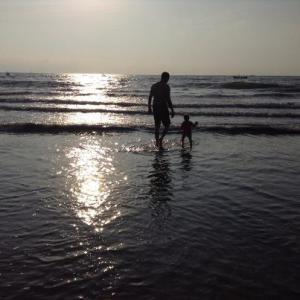 I’m just in from a destination wedding in Puerto Vallarta, Mexico, where we played on the beach, ate like there was no 2013, and celebrated a delightful family occasion.
Welcome to the family, Jennie!
Sunday morning, however, was a quiet time and while my daughter and husband played tennis, I went in search of church. My first thought was the Catholic Church directly across the street from our Hard Rock resort.
I’ve done pretty well over the years attending church in foreign lands by going to Mass. I usually can follow what is happening and enjoy hearing the singing and praise to God in known and unknown tongues.
On Sunday, the Catholic crowd overflowed the church into plastic chairs outside. A notice on the wall mentioned a non-denominational Christian service two resorts further south at Paradise Cove, convention center 2. I decided to go there and wandered through a warm morning framed by flowering plants to a secruity kiosk.
“I’d like to go to church?”
The man pointed behind the thatched booth to a large building where people were climbing three shallow steps to enter. “That’s the church right there. But say, why not come back afterwards and we’ll treat you to breakfast and information about our time share?”
I laughed. “I need to get back for a wedding, but thanks for the invitation.”
We began with praise music, a show of nationalities and then heard a presentation by a local charity supported by Paradise Cove’s owners: Families at the Dump.
Unfortunately, I did not write down the name of the Canadian pastor (from Winnipeg), because he gave a fine sermon for the new year.
He assigned homework and the questions are good ones for all of us.
1. Who or what is the center of my life?
2. What is my character like at the present time?
3. What am I contributing to life and/or my church body?
4. What does my life communicate about God?
I returned to the Hard Rock resort full of swirling thoughts and ideas. My answers came pretty easy, but number three has sparked an idea.
I’m doing some recalibration for 2013. How about you?