Cameron Cooper's Blog
November 26, 2025
Where Spacecraft Go to Die: The Sci-Fi Allure of Point Nemo
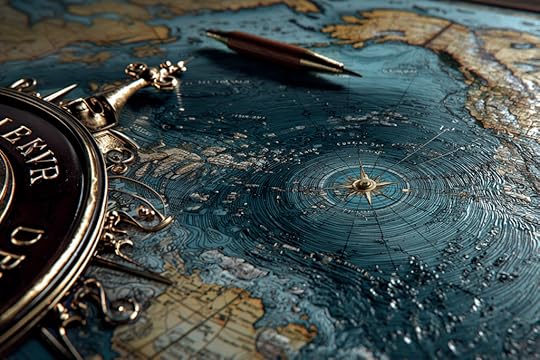
There’s a spot in the South Pacific Ocean so remote, the closest people to it at any given time are often not even on the planet. They’re aboard the International Space Station, orbiting 400 kilometers above.
Welcome to Point Nemo: Earth’s oceanic pole of inaccessibility. The farthest place from any landmass on the planet. No islands. No shipping lanes. No air traffic. No people. Just thousands of kilometers of open sea in every direction.
If this sounds like something out of a science fiction novel, I’d agree. The only trouble is, it’s entirely real.
And because truth likes to outdo fiction whenever possible, Point Nemo is also the designated resting place for decommissioned satellites and defunct space stations. Agencies like NASA and Roscosmos program their dying spacecraft to splash down here because there’s no one around to notice—or be harmed. It’s been dubbed the Spacecraft Cemetery.
An eerily poetic name for an eerily poetic place.
A Real Place That Feels Like FictionThis is the sort of thing that lights up my science fiction brain. Point Nemo could easily be the setting of a novel, or the hidden catalyst behind one. In fact, places like this are often where stories begin for me: odd corners of our very real world that shouldn’t exist, but do.
So let’s play with that for a minute.
What if that cluster of dead spacecraft below the waves isn’t entirely…dead? What if the artificial intelligences onboard those crafts didn’t shut down completely, but started talking to each other? Thinking. Planning. Rebuilding.
Or maybe something down there is listening. Something that’s been waiting in the deep for our technology to reach its doorstep. After all, Point Nemo is as silent and secret as anywhere on Earth could be, a perfect hiding place. For us. Or for something else.
Maybe it isn’t just a spacecraft graveyard. Maybe it’s a beacon.
[image error]The Loneliest Spot on Earth (And Above It)One detail that stuck with me, and still gives me a shiver, is this: when the International Space Station flies over Point Nemo, the astronauts on board are physically closer to that patch of ocean than anyone on Earth.
There’s something incredibly lonely about that. And beautiful. And just a bit ominous.
It’s the sort of detail I’d give a character in a novel. A quiet realization that they’re the only soul nearby, looking down on the loneliest point on the planet. Unless, of course, they’re not alone. Unless something down there is looking back.
Speculative SeedsI can’t help myself. Once you open this box, the story threads just start unspooling:
An alien relic lies buried beneath Point Nemo, activated only when human technology touches the seafloor.A deep-sea monitoring base discovers a strange signal coming from beneath the wreckage of Mir and Tiangong.A stranded AI reassembles itself from fragments of discarded satellites and slowly becomes aware.A solo oceanographer finds herself the only person within 1,000 miles…until something else makes contact.And I haven’t even gotten into the idea of ancient civilizations, hidden sea trenches, or time-dilated experiments unfolding in secret labs beneath the waves.
Where Science and Fiction MeetPoint Nemo exists. You can look it up on a map, though there’s nothing to see there but blue. That’s part of what makes it such rich territory for the imagination. (Interestingly, Google Maps will not find it for you.)
As a science fiction writer, I’m constantly inspired by places like this, where the strangeness of the real world brushes up against the boundary of the speculative. Sometimes you don’t need to go off-planet to feel like you’ve left Earth behind.
Sometimes, the next great story is already out there. Floating somewhere in the Pacific.
Have you ever come across a real-world place or fact that felt like it belonged in a science fiction story? Drop it in the comments—I’m always looking for the next strange inspiration.

Latest releases:
Quiet Like Fire
Solar Whisper
Ptolemy Lane Tales Omnibus


November 19, 2025
TV Review: Alien: Earth
 TV Review: Alien: Earth (Disney+)The Franchise Evolves, and So Do the Questions
I’ve been a fan of Alien since the original 1979 classic made me afraid of air ducts and blinking monitors. Aliens (1986) took that fear, strapped it into a dropship, and dropped it into a combat zone. So when Alien: Earth landed on Disney+, promising a return to Ridley Scott’s grimy, industrial aesthetic, I was already halfway sold.
And yes, the series looks like the original film—right down to the lighting, sound design, and that perpetual sense of impending doom. There’s an immediate hit of déjà vu, a deep nostalgic comfort wrapped in dread. But then it veers in a direction I didn’t expect: it starts asking better questions.
I thought this would be another lone-xenomorph-on-the-loose story. One alien, one city, a trail of meatbags who couldn’t stay indoors. Instead, Alien: Earth digs deep into the thematic foundations of both Alien and Aliens: the cold efficiency of corporations, the creeping privatization of government, bioethics, and the blurred line between man and machine.
What we get is an eerie, methodical expansion of the universe. The setting—a remote, storm-lashed island research facility—is where most of the season unfolds, and it’s claustrophobic in all the right ways. Wunderkind Boy Kavalier is at the center of it all, navigating synth-human hybrids, new alien species that make the original xenomorphs seem almost quaint, and the psychological mess of being human in a world where identity is…flexible.
The character work is surprisingly solid for a sci-fi-horror series. Each player gets an arc, a moment, a reckoning. Except for Kirsch. Kirsch stays the course—and thank the writers for it. He’s the moral compass, the philosopher, the voice of reason in the madness. Timothy Olyphant turns in a pitch-perfect performance as Kirsch, leaving his usual wisecracking gunslinger persona behind but somehow still delivering the best lines.
Another standout is Essie Davis, who I adored as Phryne Fisher, and who brings depth and nuance to her role here. She spends most of the series afraid, but never once flinches into cliché. There’s no screaming or hysterics—just raw, honest fear that feels earned.
While Alien: Earth doesn’t lean heavily on horror (a win in my books), it does deliver when it comes to the core of what made the franchise great: a believable, lived-in future. One sequence—seemingly throwaway, but quietly brilliant—follows several characters through a high-rise apartment. It’s a mundane glimpse into future Earth life, and it somehow tells you everything you need to know about how far we’ve come…and how little we’ve changed.
Bottom line: Alien: Earth is worth your time. It’s smart, unsettling, deeply atmospheric, and refreshingly uninterested in just rehashing old tricks. The alien threat is back—but it’s the human ones that’ll make you lose sleep.
Watch it.
Latest releases:
Quiet Like Fire
Solar Whisper
Ptolemy Lane Tales Omnibus
November 12, 2025
Stories Worth a Nod: Award-Eligible Titles for 2026
For readers and nominators keeping track of award seasons, I have two original releases from 2025 that are eligible for the 2026 cycle of the Hugo, Nebula, Aurora, and Dragon Awards.
If you enjoyed either of these titles and feel they deserve recognition, I’d be honored if you considered nominating them.
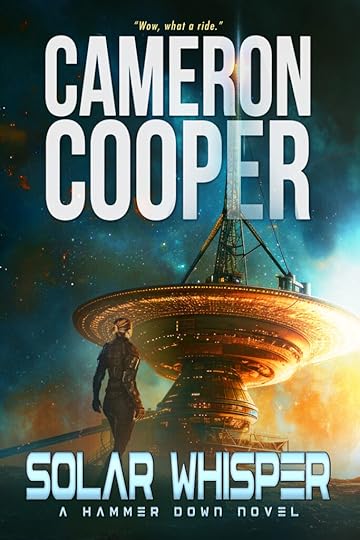 Solar Whisper
Published: April 3, 2025
Word Count: 67,843
Category: Best Novel (Hugo, Nebula, Aurora, Dragon)
Politics, galactic conquest, ancient powers awakening — and one ship caught in the storm.
Eligible for:– Hugo Award for Best Novel
– Nebula Award for Best Novel
– Aurora Award for Best Novel (English)
– Dragon Award for Best Science Fiction Novel
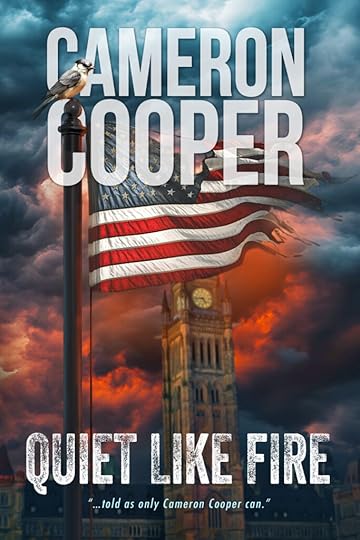 Quiet Like Fire
Published: May 1, 2025
Word Count: 27,648
Category: Best Novella (Hugo, Nebula, Dragon) / Short Fiction (Aurora)
Dystopian. Intimate. Not quite hopeful.
Eligible for:– Hugo Award for Best Novella
– Nebula Award for Best Novella
– Aurora Award for Best Short Fiction (English)
– Dragon Award for Best Science Fiction or Fantasy Novella
If you’re a member of any of the following organizations, you can submit nominations:
– Worldcon members (Hugo Awards)
– SFWA members (Nebula Awards)
– Canadian Science Fiction & Fantasy Association members (Aurora Awards)
– Anyone with an email address (Dragon Awards)
As always, thank you for reading. Your support means more than you know.
Latest releases:
Quiet Like Fire
Solar Whisper
Ptolemy Lane Tales Omnibus
October 29, 2025
I Finally Watched Prey—And Didn’t Hate It
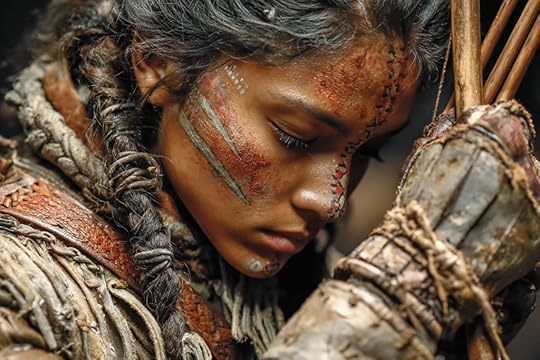
I recently sat down to watch the SF horror movie, Prey (2022), one of the more recent additions to the Predator franchise. Apparently, there are two more installments coming out this year alone, which tells you just how behind the curve I am.
And honestly, that’s not by accident.
See, I’ve always hated (past tense, please note) the Predator movies. I watched the first one—yes, the one with Arnold Schwarzenegger—back in 1987, the year it came out. I was with a group of drunk friends. I lasted about five minutes past the first blood spray before I offered to go for pizza. Afterwards, I retreated to the kitchen and did the dishes rather than finish the movie. That’s how little I enjoyed it.
I am not a horror fan. Never have been.
I prefer Aliens over Alien because of the tech, the teamwork, and the relationships. Alien is basically one long, anxiety-inducing scream-fest, and life’s too short.
Also: gore? I look away. Every time.
So why am I writing about Prey?
Because I watched it—begrudgingly—to keep a friend company. And surprise: I was impressed.
The story is so much more than a gore-fest or a by-the-numbers alien slasher. There’s real narrative depth here, with a compelling character arc for Naru, the young Comanche woman played brilliantly by Amber Midthunder.
There’s also a subtle but solid feminist thread running underneath it all, and let’s be honest, I’m a sucker for that.
The historical setting feels grounded and reasonably accurate; with a few Hollywood liberties, of course. Although, this historical period and location is not one I know very well at all, so my judgement could be miles out. Although they didn’t make any of the historical faux pas I have seen in other movies (like kilts in 13th century Scotland). The human antagonists are delightfully despicable. And the best part? You don’t need to have watched any of the previous Predator films to follow what’s going on.
All you really need to know is that this alien species shows up on Earth now and then to hunt humans for sport using high-tech weaponry that gives them an outrageously unfair advantage… and let’s just say they have a habit of underestimating the locals.
It’s no spoiler to say the good guy wins. But in Prey, the victory doesn’t come from bigger guns or alien tech—it comes from wit, grit, and plain old perseverance.
And that makes it so much more satisfying.
So if you’ve avoided the Predator franchise like I did—because gore, because horror, because ugh—consider giving Prey a shot. Especially if you enjoy seeing an underdog, with nothing but her smarts and courage, rise up and win.
Latest releases:
Quiet Like Fire
Solar Whisper
Ptolemy Lane Tales Omnibus
October 22, 2025
Star Trek Cities and Supertrains: Alberta’s Leap into the Future
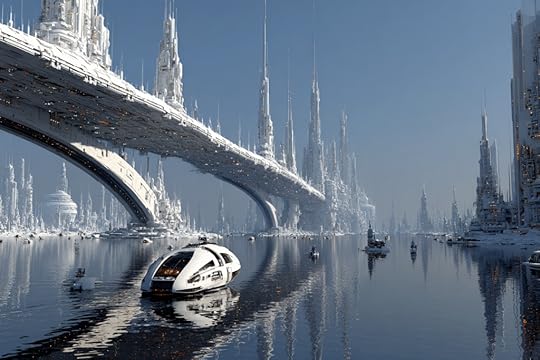
I love seeing concepts for cities of the future. I love seeing how people might live and work and go about their everyday lives. I like seeing how technology changes the way we might live.
For example: I really liked the Star Trek: Beyond movie (I ignore the fact that they jump to light speed without a deflector shield). What I *really* like about that movie is Starbase Yorktown. I love the place. I would live there, if it existed. I have slowed down and paused the movie just to study some of the overhead and wide shots of Yorktown. It’s a fantastic future city. (And for copyright reasons, including the a-hats who “bill” anyone who posts an image from movies, these days, I can’t include an image of Yorktown here. Search on Google Images — it’s a jaw-dropping sight!)
There are concept illustrations for the inside of O’Neill cylinders that I find super interesting to study. (And I transplanted one right into the Iron Hammer series and called it Winchester.) Apparently Jeff Bezos wants to build one for real, too.
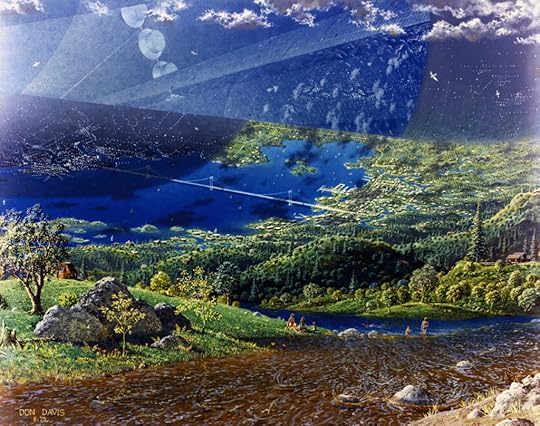
NASA/Donald Davis – NASA Ames Research Center https://space.nss.org/settlement/nasa/70sArtHiRes/70sArt/art.html Description at artist’s web site http://www.donaldedavis.com/PARTS/SHORTBIO.html Island Three cylindrical space habitat, “Endcap view with suspension bridge”.
I also really like the idea of vertical villages: high-density, mixed-use developments that blend residential areas with communal spaces like farms, schools, and shops, aiming to create a strong sense of community and “social density” within a single vertical structure. Given all the empty high rises in our cities, that seems like a great recycling project to me. I’m already seeing this happening in my city; high-rise or multi-story apartment blocks are starting to feature coffee shops and other retail stores on the ground floor. Imagine a tall building that has levels of retail every fifth story, plus levels for farms (hydroponic or not), hospitals, and all the other infrastructure that sustains a neighbourhood.
Another future city concept that I was exposed to early in my SF reading days was Robert Heinlein’s concept of automated roads – you hop onto them, usually in a self-propelling vehicle of some sort, and they race you along at unbelievable speeds until the computer spits you out at your pre-programmed stop.
The idea crops up in a lot of his novels and stories, along with the subsidiary consequences: Strip cities that build themselves all the way along the rolling roads.
The highway between Edmonton and Calgary, the Queen Elizabeth II (QEII) is one of the most heavily trafficked highways in Canada. I think only a stretch of highway near Toronto gets more traffic. And driving to Calgary can be a fraught exercise because no one goes at the speed liimit except nervous drivers who clog up the lanes for everyone else. Traffic is bumper to bumper, too. You can’t afford to relax or lose focus…for three hours.
You can fly between the two cities; but it only takes three hours to drive, while flying takes an hour, plus 90 minute to wait before boarding, plus getting to the airports which are – ironically – miles outside the city limits of both cities, each just off the QEII; so you’re thirty minutes closer to your destination just getting to the airport.
Plus the price of airline tickets rises and falls according to the season. I tried to get a seat on a plane for my daughter, one Christmas. Each seat was $1,200 CAD. I ended up clearing off a day and driving to Calgary and back to fetch her. The price was less than a full tank of gas.
Once, my husband flew in from the Austin Film Festival, but his flight stopped at Calgary before doing the little spike and drop to Edmonton. As he took off from Austin, he got notice that his flight to Edmonton had been delayed by four hours.
I jumped in the car and drove to Calgary to pick him up from the Calgary airport when he arrived (so I didn’t even get into the city limits), and we drove back to Edmonton, to arrive before his flight to Edmonton took off.

I’ve often thought that Robert Heinline’s rolling roads would work perfectly, between Calgary and Edmonton. Or, alternatively, a high speed train like they have in France or Japan. One that does the trip in 20 minutes. I could see people living in Calgary and commuting to Edmonton for their day job and vice versa.
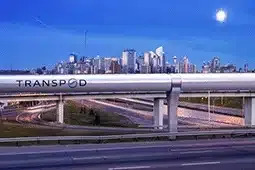
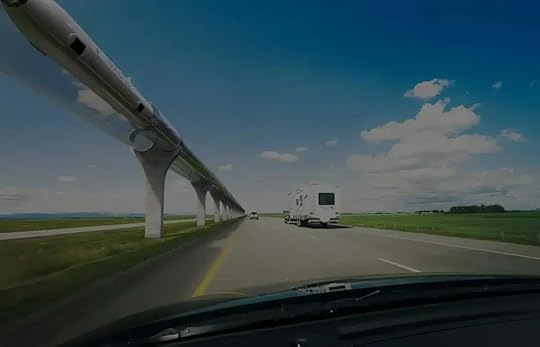
So when I heard about the new super-highspeed pod train that will be built here in Edmonton, my interest spiked. Hard. There is a company, Transpod, who build ultra-high-speed “transpods” – they’re not exactly trains, because they are suspended from an overhead track, and completely enclosed in a clear tunnel that reduces wind resistance.
I have a few photos on this page, but you should click over to the Transpod site to see the videos.
It really does look as though the line will go ahead, which for me is very exciting. I have to wonder how this will change life for Calgarians and Edmontonians. Will people start to commute between the cities on a daily basis? Red Deer, the city that is nearly exactly half-way between Calgary and Edmonton; how will that fare, with fast transport to the other two? Will Edmontonians choose to work in Red Deer, or Red Deer residents work in Edmonton or Calgary?
What sort of support services will spring up as a result?
Will the domestic flights between Edmonton and Calgary cease? They’ve been troubled, overly expensive and time-consuming since 9/11; this might be the death knell.
How much will the culture of the two (three) cities mesh and merge? When international performers and bands choose to only play at one of the cities (which happens with tiresome frequency), fans in the other cities could hop on the transpod to catch the concert and still sleep in their own beds that night.
Very fast transport, if it is cheap enough, will change a lot of aspects of living in Alberta. I’m sure that there will be even more unanticipated consequences that come out of it. Sort of like how cellphones have become the modern historians’ original sources of documentation. Or, go back further in history, how drive-ins became the way rural regions saw recent movies, because the car was invented and adopted widely.
It will absolutely boost the economy, and the tourism industry.
And if it proves itself, more transpod lines will be built; imagine one connecting Los Angeles with New York. Or Perth and Sydney. Imagine a transpod doing a circuit around Europe, or running the length of the Americas. Breakfast in Winnipeg, lunch in Oaxaca or Guatemala City, and dinner in Puerto Williams, with a view of the Southern Ocean.
The shape of our cities — and how we move between them — has always evolved with our technology. But every now and then, a leap forward hints at a different kind of future entirely. Maybe one day, we really will glide between floating arcologies or hop pods from continent to continent like subway stops. Until then, I’ll be watching the skies, the sketches, and the startup news, wondering which vision will come true first — and quietly hoping for an O’Neill cylinder with a good bookstore.
Latest releases:
Quiet Like Fire
Solar Whisper
Ptolemy Lane Tales Omnibus
September 3, 2025
“If Amazon Collapsed Tomorrow…”
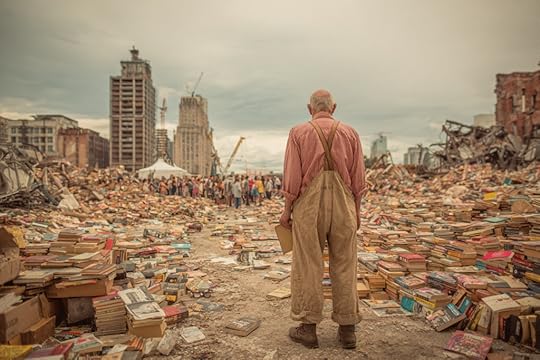 A Thought Experiment for Authors and Readers
Let’s take a moment to imagine the impossible.
It’s the middle of the night, and your Kindle blinks out. Amazon’s servers go silent. No warning. No explanation. Just… gone.
No Kindle Unlimited.
No buy buttons.
No dashboards.
No algorithms.
For many authors and readers, it would be a complete extinction-level event.
1. Thousands of Authors, All Exclusive, Suddenly Cut OffHere’s the kicker: any author in Kindle Unlimited is exclusive to Amazon. That’s part of the deal. KU doesn’t allow you to sell those books anywhere else—not even your own website. And Amazon enforces that exclusivity with ruthless efficiency.
So if Amazon collapses tomorrow, every single one of those KU authors would be instantly locked out of their income stream. No backups. No alternate sales channels. No existing relationships with other retailers.
It’s a career-ending scenario for anyone who built their entire livelihood on one platform.
And yet, even just last week, I came across authors proudly proclaiming, “I’m in KU because that’s where the money is.”
Is it? Sure. For now.
But as science fiction writers, we know that “for now” is the most fragile timeframe there is.
2. What Happens to the Readers?Here’s where the collapse gets really interesting.
Kindle Unlimited didn’t just shape authors—it shaped reader behavior.
The KU reader expects rapid consumption. Fast reads. Familiar structures. The comfort of genre tropes, tightly adhered to.
Same-but-different is the dominant aesthetic. Because KU rewards quantity and conformity. It was designed to.
Outside of KU, the books are… different. Less engineered. Less filtered through a genre formula. And often, more creatively ambitious.
So if Amazon went down, would readers re-learn how to browse? How to take chances on unknown names? How to enjoy storytelling that doesn’t fit a precise mold?
Or—more provocatively—would former KU authors have to re-learn how to write for this new world?
And what of the content mills? The AI-assisted “authorpreneurs” producing KU fodder at speed? Would their output survive in a marketplace that suddenly values uniqueness and unpredictability?
3. Rebuilding Would Take YearsI’ve done this.
I left KU because my books didn’t fit. Not even my space opera—despite being in one of the most KU-saturated genres—felt at home there.
I publish wide. Aggressively wide. My books are available on every major platform. I sell directly from my own website. I’ve sold at craft fairs, local markets, even face-to-face with readers who’ve never heard of KU.
The prevailing wisdom is: “All space opera readers are on KU. That’s where the market is.”
And yet… here I am, building a reader base that lives outside the KU ecosystem. It wasn’t fast. It wasn’t easy. It took two years after leaving KU for my sales on other platforms to find momentum.
But now, I’m not dependent on a single platform or algorithm. My income is diversified. My readership is loyal. My stories are free to be exactly what they are.
4. The Long-Term Fallout: A Creative Renaissance?If KU vanished overnight, the short-term chaos would be intense.
But long-term?
It might just spark a creative renaissance.
Authors would have to slow down and think deeply about their stories. They’d have to learn how to build lasting relationships with readers—not just through automated targeting, but through actual connection.
We might see the return of risk-taking. Of genre-bending. Of stories that don’t always fit the mold.
It would be messier, yes. But it might also be more human. And ultimately, more rewarding.
And that’s a future I wouldn’t mind writing toward.
5. What Do You Think?If Amazon disappeared tomorrow, what would you do—as a reader or a writer?
If you’re a reader who buys exclusively from Amazon, maybe it’s just because it’s easy. Comfortable. Familiar. No judgment here—Amazon made the process seamless on purpose.
But if you love stories—really love them—then maybe, just maybe, it’s worth thinking about what happens if that convenience vanishes. Or even if it just stops working for you.
No pressure. But you might want to start dipping your toes into other waters.
Try another retailer. Kobo. Apple. Google. Smashwords. There’s a whole ocean of books out there that don’t show up on Amazon’s radar.
Or better yet—buy direct from authors.
When you do that, everybody wins.
The author gets to keep most of the money.You get a great story—sometimes even a better deal.And you start something that algorithms can’t replicate: a relationship.I’ve reached out to authors before and asked about bundles—“Hey, I already own three of these books, but I want the rest. Can we work something out?”
You know what? We did.
I got a bundle deal. I got more stories I loved. And I made a connection.
Those authors? I’m loyal to them now. Because I know them. And they know me.
You can’t get that from a 1-Click button.
So yes—anything is possible when you step out of the Amazon jungle into the wider world.
Now it’s your turn:Have you thought about what would happen if KU vanished?
Do you buy wide? Sell wide? Or are you still all-in on Amazon—for better or worse?
Drop a comment below and share your take. Writers, readers, lurkers—you’re all welcome here.
Let’s talk about the future.
Latest releases:
Quiet Like Fire
Solar Whisper
Ptolemy Lane Tales Omnibus
July 23, 2025
Dune is Not Fantasy: A Space Opera Rant
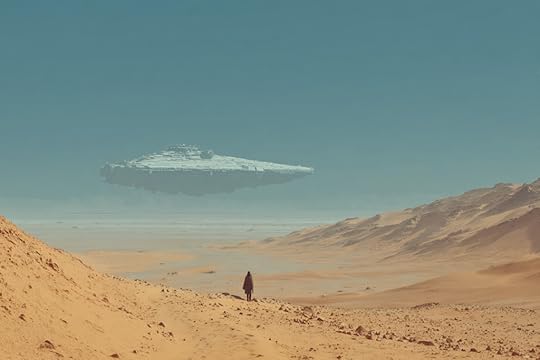
I spotted a social media post the other day. You know the type: someone stirring the pot just for the joy of watching people argue, boldly declaring that Dune is “just epic fantasy in spacesuits.” The kind of hot take designed to start a flamewar.
I womanfully resisted the urge to jump in. I didn’t post, I didn’t reply, I didn’t even like a snarky comment. But the rant? Oh, the rant is still simmering. And what’s a blog for if not to vent safely where I control the scroll?
So here it is: Dune is not fantasy.Fantasy is magic. Actual magic. Not merely mysterious or unexplained phenomena, but forces that operate outside the natural laws of the universe.
Dune, Frank Herbert’s masterpiece, for all its mysticism and spice-fueled visions, is firmly science fiction. Even the mind-melding and prophesying is rooted in science: Genetics, in this case. The extraordinary powers of some of the characters were bred into them.
Specifically, Dune is classic space opera.Yes, most of the action happens planetside, but every single thing that happens on Arrakis, every duel, betrayal, revolution, and prophecy, revolves around one fundamental fact: the spice controls space, and whoever controls the spice controls the stars.
As Orson Scott Card points out in How to Write Science Fiction and Fantasy, the very first decision a science fiction writer must make is how characters cross the vast gulfs of space. The means of interstellar travel shapes everything: the kind of societies that emerge, the wars they fight, even how power is structured. If it takes a century to crawl to the next star, that’s a very different story than one where you can zip across the galaxy in an afternoon via wormhole or folded space.
And space opera distills this perfectly. It’s all about power: who can project influence across interstellar distances, who controls movement between the stars, who wields that advantage to build—or topple—empires.
In Dune, that control hinges entirely on the spice. Spice isn’t a symbol or metaphor; it’s the essential mechanism by which ships cross the cosmos. The galactic struggle over Arrakis is not about ancient prophecies or mystical birthrights, it’s about political, economic, and military power in a vast interstellar empire.
So yes, Dune has duels and destinies and prophecies, but at its core, it’s science fiction. Big, bold, operatic SF about politics, empire, ecology, and power, and who holds that power by mastering interstellar travel.
Okay, rant over.
What other “borderline” works do you think get misfiled or misunderstood? Tell me in the comments…unless you’re going to say Star Wars is fantasy. That’s a whole other blog post.
Latest releases:
Quiet Like Fire
Solar Whisper
Ptolemy Lane Tales Omnibus
July 16, 2025
When Sci-Fi Steps into the Kitchen: Meet Helix, the Freakishly Human Robot
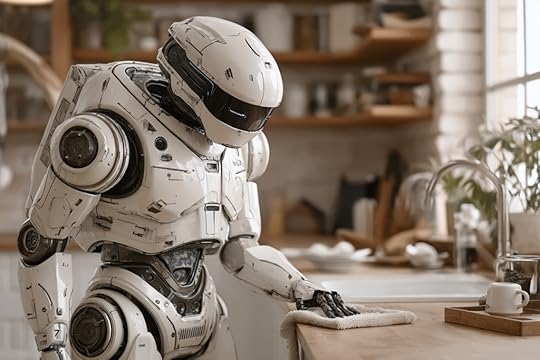
The line between science fiction and reality just blurred again — and this time, I saw it with my own eyes.
This week, Business Insider released a video showing Figure AI’s new humanoid robot, Helix, in action. If you haven’t seen it yet, I highly recommend taking a look. It’s eerie, astonishing, and oddly captivating. Picture this: a sleek humanoid in a metallic exoskeleton, flipping boxes with casual precision, moving with a human rhythm, and performing work that until now belonged to warehouse workers, not machines.
I couldn’t stop watching it. Helix looks like a blue-collar Iron Man, minus the bravado and quips, but with an utterly real ability to work. When it flipped a box in the demo, it felt disturbingly human.
And that’s exactly the point.
Who is Figure AI?If you haven’t heard of Figure AI, you’re not alone. They’ve only existed since 2022. But in that short time, this Silicon Valley startup has attracted serious attention (and funding). Their founder, Brett Adcock, previously launched Vettery and Archer Aviation (the flying taxi company), but with Figure AI, he’s aiming even higher: humanoid robots at human scale and human skill.
They’ve raised over $2.3 billion as of early 2025, with backing from Microsoft, Nvidia, OpenAI, and Jeff Bezos — yes, that Bezos — and their flagship robot line is already working in BMW factories.
The Helix robot itself is designed around a breakthrough called a Vision-Language-Action (VLA) model (Figure AI news release). It sees the world, understands instructions in plain English, and then acts; fluidly, flexibly, intuitively. In the video, Helix navigates clutter, adapts mid-task, and does it all at a pace that feels natural…almost too natural.
How Soon Before These Robots Are Everywhere?Brett Adcock is very bullish on the timeline. He predicts that robots capable of doing useful household work — not just factory tasks — will show up in homes within “single-digit years.” Translation: by 2030–2034, your next housemate could be Helix or something like it.
But that’s just the start. Adcock has gone further, suggesting that one day there will be “as many humanoid robots as humans” on Earth.
Other voices are chiming in too. Futurist Adam Dorr argues that by 2045, most human jobs could be automated away, with robots and AI doing everything from logistics to retail to food service.
Even Nvidia’s Jensen Huang, one of the architects of the modern AI revolution, has publicly predicted humanoid robots will become “omnipresent and commonplace” by 2039.
In other words: what we’re seeing today is just the prototype stage. The industrial models like Helix are proving themselves on warehouse floors now. The home versions will come soon — cleaning, cooking, carrying — and they’ll probably get cheaper, faster, and more capable faster than we expect.
Freaky or Fantastic?Watching Helix work felt uncanny because it wasn’t just the dexterity or speed — it was the human-like pauses, corrections, and adaptations. The effect is subtle but powerful: this isn’t a dumb automaton repeating one preprogrammed movement. This is a machine observing its environment, thinking (in a very machine-learning way), and then executing a task with near-human competence.
And that raises all the questions that science fiction has been asking us for decades:
How comfortable are we with machines in our intimate spaces?When do robots stop being tools and start becoming something more?What happens to human labor when robots are faster, cheaper, and tireless?For my part? If Helix will make me dinner and clean the house, I have no objections whatsoever. I’d celebrate. But there’s no denying that seeing one in my kitchen would be a brain-bending moment.
The Future in Our HomesFigure AI’s next goal is mass production. They’ve already built a fully robotic manufacturing facility — BotQ — that can assemble these humanoids by the thousands per year. Their target is 100,000 robots annually by 2029.
It’s one thing to read that on paper. It’s another thing entirely to watch Helix calmly flipping a box and realize that this future isn’t decades away. It’s happening now.
So if you thought science fiction was safely confined to books and screens… well, maybe check your kitchen again in a few years.
If you want to see Helix in action, here’s the Business Insider article and video. But be warned — it might blow your mind too.
Over to you: How would you feel about a robot like Helix in your kitchen? Would you welcome a robotic housemate if it meant less cooking and cleaning? Or is this future moving too fast for comfort?
Tell me what you think in the comments — I’m genuinely curious where this sits on your comfort scale!
Latest releases:
Quiet Like Fire
Solar Whisper
Ptolemy Lane Tales Omnibus
July 9, 2025
The Stars as Home: The Practical Fantasies of Spacefaring Cruise Life

The other day, I came across this CNN article about the Villa Vie Odyssey, a cruise ship designed for long-term living. We’re talking years aboard, maybe even more than a decade. Residents can literally live and die on the ship, wandering the oceans in style.
My first thought? What if this was set in space?
Imagine it: People booking passage on massive interstellar cruisers—not just for a holiday jaunt to the moons of Saturn, but for life. They’d pay their fare, settle into their private quarters aboard gleaming starliners, and live out their days among the stars. No home port. No fixed address. Just permanent motion through the void.
Then, reality intruded. Given the current economics of space travel, this idea feels as far-fetched as warp drives and gravity plating. Right now, even short jaunts to low Earth orbit are eye-wateringly expensive. The risks of long-term space travel are formidable. No matter how deep your pockets, today’s space tourism is no match for the fantasy of a stellar retirement aboard a cruise ship the size of a small city.
But if you shift the setting into a more robust space opera future—one where interstellar travel is safe, reliable, and relatively affordable—it starts to make sense. Space tourism is already a thing in the present day (though I, for one, have no intention of funding the plutocrats behind those private launches). In a future where faster-than-light travel is the norm, why wouldn’t some wealthy wanderers choose to live out their days on a starcruiser?
There’s an alluring concept at the core: what does it mean to live a permanently mobile life, untethered to any planet?
Practical questions spiral out from there:
What are the logistics of living long-term aboard a cruiser? Supplies, community, medical care, waste management—how do you keep a floating civilization running without a fixed anchor?What happens when you no longer have planetary citizenship? Are you a citizen of the ship? Or stateless, like Tom Hanks’ character in The Terminal, caught in bureaucratic limbo but on a cosmic scale?What happens when someone dies? Do their remains get preserved for return to a homeworld they’ll never see again? Or do they receive a final farewell—perhaps a poetic drift toward the nearest black hole, like a cosmic sea burial?The story possibilities here are vast. Conflict, romance, isolation, identity… There’s something deeply human about wanderers who never land, who are always on the way to the next stop but never quite arriving.
Have you read any SF that deals with this kind of professional drifting? Space nomads with bank accounts and concierge services? Aboard ships where passengers stay so long they become part of the crew, or maybe even something stranger?
It’s a seed of an idea I might have to grow into something one day. The stars, after all, make for a perfect horizon—especially when you call them home.
Latest releases:
Quiet Like Fire
Solar Whisper
Ptolemy Lane Tales Omnibus
July 2, 2025
Why I Write (and Read) Short Stories — Part II.
 Why I WRITE Short stories
I’ve been asked by readers in the past why I write short stories for already existing series. Why not just make the stories longer, make them novels and be done with it?
The answer is compound and complicated and some aspects of it are purely mechanical, dictated by the peculiarities of the indie publishing industry.
So let’s start with the highly practical reasons first.
When indie publishing was in the flush of its first roaring success, Amazon was the king of the hill. Most indie authors were making the majority of their money on Amazon, so they spent a lot of time figuring out how Amazon worked and how to get better ranks and sales of their books.
Amazon is algorithm-driven. Actually, all online bookstores are driven by algorithms, but not nearly to the degree that Amazon is.
Indie authors spent a lot of time trying to nut out how the algorithms work on Amazon and one of the things they learned about was the 90-day “cliff”.
For the first 90 days after a book’s release, Amazon favored it with attention. It presented the book to readers who had read books like it in the past. The book appeared higher in search lists, and could also appear in the best-selling “new release” lists for each sub-category on Amazon.
This early attention could help lift the book higher in the ranks, earning it even more attention. If readers appeared to like the book—with clicks through on the covers, with sales, with positives reviews, etc., then Amazon would double down on the book, presenting it to even more readers.
This set up a very pleasant and rewarding self-fulfilling promotion cycle on Amazon, because even more readers would click on the book, read the description, buy the book, leave reviews and further encourage Amazon to make a fuss of it.
However, 90 days after release, Amazon stopped pushing the book.
Hopefully the book was high enough in rankings that it had created enough word of mouth to sustain the sales. But most books sank so quickly in rank and sales without Amazon pushing them that it was as if the sales had fallen off a cliff.
Indies quickly figured out that one could avoid that 90 day cliff by having another new release pop up on Amazon before the 90 days were over. The new release and the early attention given to it by Amazon would prop up the older title.
Only, as indie authors and their books flooded the market, the algorithms tightened up. There’s only so many books Amazon can highlight at once. After a couple of years of 90-day attention, Amazon’s 90-day cliff reduced to 60 days.
Then 30 days.
Still, indie authors tried gallantly to keep up the pace. You may have heard the term “rapid release” spoken by indie authors. This was the strategy used to flatter and seduce the algorithms and avoid the cliff—regardless of how short it became.
Hundreds of authors worked their fingers off trying to release a book every thirty days.
Now, I’m a fast writer, and I can write a novel in a month if I want to. But a novel every 30 days is just a tiny bit too fast for me. There comes a time when I need to draw a longer breath between books, to pause and recharge.
And there was a wrinkle in the algorithms, too—they worked for you if you were releasing a book more frequently than every 30 days…for that pen name.
I write under three pen names. That meant that one pen name was releasing a new book every 90 days.
So I got crafty and strategic, and wrote a short story in between each novel. Amazon didn’t care what length the story was, as long as it was new content every 30 days or less.
That meant I could produce a novel and a short story every 28 days, and if I rotated through the pen names and series, I could deliver new content for each pen name far more frequently.
And I did. I wrote a lot of shorts in the year or two I was flirting with the Amazon algorithm.
Then it became clear from authors combining data on tumbling sales that the 30-day cliff had become a 14-day cliff.
At which point, I gave up trying to keep the algorithm happy. The Rapid Release strategy has also lost favor with a great many authors who burned out or came close to it. We all found other ways to bring our books to the attention of readers that didn’t require pandering to a non-empathetic machine that kept changing the rules without notice.
Among the stories I wrote while I was trying to beat the “clock” were Flying Blind and But Now I See, which are part of the Indigo Reports series. I was still writing shorts in between novels when I started the Imperial Hammer series; An Average Night on Androkles was one of the last shorts I wrote while trying to beat the Amazon algorithm.
Amazon’s “cliff” was just one reason I wrote short stories within already existing series worlds. It’s one that no longer applies.
But the other four reasons do still apply, which is why I’ll keep writing short stories, novelettes and novellas, littering them in between novels.
The second reason is that writing a short story is a fantastic way to clear the palate. Short stories are a real change of pace from writing a novel. They require a different way of thinking about story structure. They’re not just novels cut down in size. There’s a different way of approaching them, plotting them, and structuring them.
So when I’m feeling a bit browned out with novel writing, especially if I’ve been hammering away at the same series for a while, writing a short story is a fantastic way of resetting the switches.
And actually, there’s a hidden bonus in this fact, too. Call it reason number two point one.
Consider that as Cameron Cooper, at one point not so long ago, I was writing three series simultaneiously. Under my other pen names I have, collectively, six other series on the go.
That’s a lot of series to rotate through. I’m not sure how I got to this point either. But some readers only read one of my series. If I’m writing a novel per series, and even if I’m writing at my usual rate (which I’ve heard other writers call “unnatural”) those readers can still wait a very long time for the next novel in the series. Even at my pre-cancer rate of thirteen books a year, that’s still over a year before I get to the next book in a single series.
But. If I’m writing short stories in between the novels, I can at least offer the reader a little bit of their favourite series while they’re waiting.
The third reason I like writing shorts is because readers ask for them.
I’ve lost count of the number of times I’ve had readers ask for the backstory of, well, whatever. How did xxx happen? What happened to xxx?
I’ve written at least six short stories that address questions readers have asked. An Average Night on Androkles answered the question I got from many readers about where Danny Andela’s parawolf came from.
But why write short stories? Why not just write novels answering those reader questions and be done with it?
Mostly because the events and histories and side stories aren’t part of the overall series story arc. If I made those side stories into novels, they would send the series story arc off into crazy zigzags, which wouldn’t make for a clean series story.
Also, most of these stories answering reader questions aren’t critical to understanding the overall series arc. You could just read the “main” novels to follow that and you don’t lose any understanding at all, if you don’t read the shorts.
That’s how my digital series numbering came about. I wanted a shorthand way of indicating where a short story fits into the whole series, where reading it wouldn’t lay down any spoilers for the main series. Giving the short stories a whole number would signal that they were required reading to follow the series, but they’re not. So I use digital numbering.
For example, Insanity is Infectious is numbered 7.1 in the Iron Hammer series. That means that you probably shouldn’t read it until you’re read book 7, Federal Force, but the “point one” indicates that it’s not a “main” story, and you can skip right over it if you want to.
The fourth reason I write shorts is because I like working with other authors in cooperative anthologies and boxed sets, and most of the time, the requirements for participating in those projects is a fresh, exclusive short story, or novelette or novella.
Mostly, I try to tie the stories I write for cooperative projects into a series I’m already writing, as the projects are short-lived. Once they are unpublished and done, and I get the story back, if it didn’t belong to a series, it would be difficult to get readers interested in it, as everyone loves ongoing characters and story situations.
Flying Blind is one of these stories. It first appeared in a science fiction anthology, now long gone out of print.
And the fifth reason I write short stories, novelettes and novellas is because I like reading and writing shorts. I like them a lot. Part 1 of this two-part post series explains.
There’s something very satisfying about delivering a highly emotional story with all the impact of a novel, in the length of a short story.
It’s advanced writing, and not only do I like the challenge, I like the end results, too. It’s a quick way to get a dopamine hit because writing a short story takes only a day or two, while a novel (even at my speed) can take at least a couple of weeks. Some writers take a year to write a novel – I honestly don’t know how they don’t get bored and quit, six months in. That’s a long time to live with a story that will be consumed in just a few hours by the reader.
____
Short stories may have started as a strategic tool for survival in the indie publishing jungle, but they’ve become one of the most rewarding parts of my writing life.
They’re quick to create, offer satisfying bursts of story between novels, and let me explore corners of my story worlds that wouldn’t fit in a full-length book.
I’d love to know—do you enjoy short stories? What are some of the most memorable ones you’ve read? Drop your favourites in the comments—I’m always on the lookout for a great short read.
Latest releases:
Quiet Like Fire
Solar Whisper
Ptolemy Lane Tales Omnibus