Cameron Cooper's Blog, page 5
May 22, 2024
Three Body Problem has problems. Or does it?
I’ve had the English translation of Liu Cixin’s science fiction novel, The Three Body Problem, sitting in my TBR pile for a couple of years. It won the Hugo. I figured that made it a must-read.
But I never cracked it open.
Why? Because I kept hearing rumours:
The dialog was stiltedThe characters are woodenIt reads like early Asimov.As much as I love Asimov, his very early writing is often superficial and school-boyish. He was far too in love with ideas, and his characters and dialogue often got hammered and warped in favour of showcasing the idea.
So calling another author’s style “Asimovian” isn’t a compliment.
Apparently, these issues with The Three Body Problem are not a translation issue, either. On r/books, a Chinese speaker who read the original Chinese novel, said that the issues are in the original, that the translation was faithful to the style of the author.
If you scratch the surface of the social webs, you find a lot of disparagement for the novel, from it being unrealistic, and “scientist porn,” and much more.
So when the TV series turned up [named Three Body Problem because TV always edits down wherever possible], I watched it because I thought that the show writers would possibly avoid all the issues in the novel.
Yes and no.
The characters are still very two-dimensional, although the dialogue wasn’t bad. But character arcs are set by the original story, so I suspect the writers did what they could while trying to remain faithful to the novel for the sake of its many fans. After all, it won a Hugo.
But watching the TV series let me absorb the concepts and plot of the novel in an entertaining few hours, instead of slogging through a book with bad prose.
And the concept at the base of the story is great. Liu Cixin took a , unsolvable physics problem, and ran with it.
Unfortunately, everything else layered on top of that basic premise moved what could have been an absorbing, hard science fiction story into a lit fest of fantastical and highly improbable situations (including, at the end, giving three people complete control over the entire world, including the ability to ask for anything at all, and have it delivered immediately).
It wasn’t science fiction. It was science fantasy.
And if you approach the TV series with that qualification in mind, it’s glorious. There’s mind-boggling, massively scaled ideas that are wonderous to behold, including watching Ghenghis Khan’s army use black + white placards to respond to computer programming, and run a digital sequence for time travelling scientists.
And I really enjoyed seeing the Cultural Revolution from an intimate insider’s perspective.
It’s enormous fun, but you just can’t watch the show and expect a decent SF story, because it doesn’t exist. Netflix went for sensational, not sensible, or even thoughtful.
It is pure entertainment.
And there’s nothing wrong with entertainment for the sake of it. I consider my novels to be entertainment first, and any other value extracted from them is purely a bonus for readers who demand more from their reading.
I’m not sure I’ll ever read The Three Body Problem, now. The bad reviews and plethora of bad-mouthing about it have made me gun-shy. I can put up with bad writing if the plot or the characters make up for it, but it sounds as though both the plot and the characters are at the same level as the prose. If the issues with the TV series are a result of the weaknesses in the book, then I really don’t want to read it.
The TV series is fun, and I never object to being entertained, so I will likely watch the second season.
You?

The last Ptolemy Lane tale, The Return of the Peacemaker, now out!


May 15, 2024
Giving Worldbuilding a Human Touch
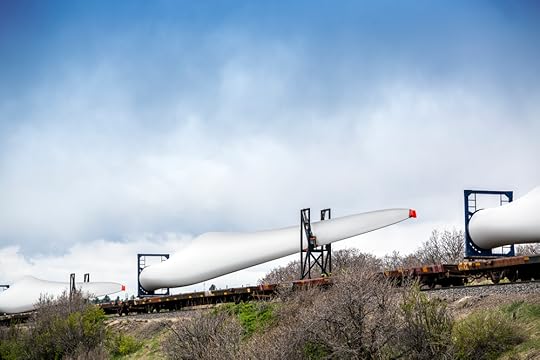
In the last few days The Economist ran a story reporting that wind turbines keep getting bigger, which causes all sorts of interesting transport issues.
Even if you’re not subscribed to The Economist, you should click through to the story using the link above, just to check out the image of the huge turbine blade the poor truck is hauling. It puts the monster in my image, above, to shame. I couldn’t copy the image here, as it’s under copyright.
You don’t need to read the article to get the gist of the story; the bigger things get, the more difficult the logistics become, which seems to catch people by surprise.
It reminds me of a scene from the very last season of West Wing, when CJ was asked by a fictional Bill Gates-type billionaire, Frank Hollis, how she would solve the many complex problems in the world. Her answer was “highways” — a not-sexy, basic engineering and logistics problem.
The unsexy logistics and fundamental engineering underlying most of what modern man gets up to these days always limits what we can do.
We want bigger windmills driving larger turbines to create more energy. But we’re limited by the size of blade that we can actually haul to the site.
That is, until someone figures out a way to make a reliable, useable blade made up of components, or a way to extrude the blades on site, the way they build tailored guttering for houses now, and install it on the spot (it took three hours for one guy to do our entire house — it might have taken him less time except I kept hovering and watching, which I think put him off his best pace a little).
This is an aspect of technological development that I’ve never seen in science fiction worldbuilding. By the time we get to read about a fictional world, all the basic issues have been solved. The technology itself might glitch, or have limitations of its own, but getting the stuff to where it is supposed to be used is never revealed.
Which is actually unrealistic. The logistics for that piece of technology over there might be resolved, but there is surely newer technology over here that is in the final stages of development that needs to be taken somewhere, too. Not all technology is developed at the same time.
I will for sure be considering this factor in the next book!
Have you read science fiction that deals with fundamental problems like this? Space opera seems ideal for this type of issue, with its multitude of planets and space ships everywhere. Share in comments, if you have. I’d be curious to read it.
The last Ptolemy Lane tale, The Return of the Peacemaker, now out!
May 8, 2024
Spock Reads Asimov
Short and quick, today.
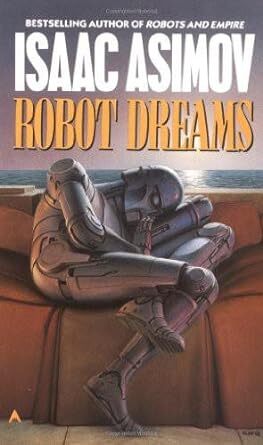
One of Isaac Asimov’s classic and most well-known short stories is “The Last Question,” which can be found in multiple anthologies, including Robot Dreams and Nine Tomorrows, two collections of Asimov’s.
If you like listening to audio, you can hear this story read by Leonard Nimoy. 
I found a recording of Nimoy reading “The Last Question” on YouTube and had to share.
Enjoy!
May 4, 2024
The Quiet Acts of Small Individuals
The first really effective dystopian setting I saw in movies was Ridley Scott’s 1982 Bladerunner, which both made me a fan of anything Ridley Scott made (and I am still a diehard fan), and made me aware that there was no guarantee that humanity’s actual future would be rosy, the way the Star Trek franchise liked to portray.
I’m not a huge fan of dystopias. They’re often so bleak that they end up being depressing. I like my fiction to be hopeful.
But Bladerunner—the movie, not the short story by Philip K. Dick that the movie was based upon—fascinated me because the setting seemed realistic. The grittiness was appropriate.
In particular, it seemed reasonable to me that if you did a straight extrapolation from the state of human culture in 1982 to 2019 (when the film was set), there would be advertising everywhere.
Forty years later, advertising is everywhere. Not much else about Scott’s vision of the future was accurate. There are no off-world colonies, we don’t have androids running amok, entire cities are not made of towering buildings. But the advertising is even more invasive than Scott anticipated.
These days, even my laptop pops up with advertising. I get advertising on the TV streaming service that I pay for.
I long ago unhappily adjusted to any site I visit carrying so much advertising, that the content is masked and unreadable.
And it has been suggested to me that in the very near future, novels will carry paid advertising at the front and back of the book, to offset printing costs, or, in the case of ebooks, to offset the effects of pirate sites and readers who can no longer afford to pay for books—they’re too busy paying taxes.
And, as the market adapts (that is, readers tire of protesting), the advertising will start to pop up between chapters.
Weekly, I get email from people and organizations that will pay me to post articles on my blog that promote their products. I assiduously mark them all as junk, so each new email that lands in my inbox is a new source angling to plant their faux advertising. How many are there?
When I’m not writing fiction, I am the editor of a city magazine and its site. I was the editor of the previous iteration of this magazine in 2002, and the differences between now and then are fascinating.
The first time I was editing the magazine, I would have been horrified if the marketing department had suggested I write about one of their advertisers or promote them in any way. I went out of my way to avoid that influence, maintaining the “integrity of neutrality” of the editorial department.
Now, it is common practice to check with the marketing department before adding a story to the pagination. I’ve been told to de-emphasize focus upon one or other destination or attraction, and been asked by salesmen to mention potential advertisers in site posts, to butter them up.
I’m horrified, now, that this doesn’t horrify me anymore. Twenty years of increasing exposure to advertising has made me cynical.
An idea from another SF story, for which I can’t recall the title or author, sorry, has me just waiting for advertising to be printed on my toothbrush. (Actually…I think it was mine! New Star Rising.  )
)
How long before toilet paper is one long sheet of multiple adverts? How long before food packaging carries advertising?
I’ve been reading a lot of John Michael Greer’s brain-inflaming predictions about the future, lately. Cory Doctorow, too. Doctorow’s relentless reporting upon the enshittification of capitalist societies, coupled with Greer’s rolling-tank thesis that not only is the world going to hell in a handbasket, we’re already seventeen years along that one-way, no-detours, path, tends to make anyone a pessimist.
But it’s hard to look away.
There are a lot of futurists out there. I really like reading Kevin Kelly’s peerings into the future, but he does it so rarely, that he’s shouted down by the more prolific.
Bruce Sterling is very noirish in his ideas of what the future will look like. Dr. Michio Kaku often imparts a sense of hope but only puts books out every few years and blog posts months apart.
So the message coming through these days is that society as we know it is doomed. We’re not going to get hit by an asteroid, or EMP. It won’t be a quick resolution. We’ll instead drown in the consequences of an increasingly stratified society, the overwhelming effects of capitalism gone wild and economic weaknesses exponentially inflated.
Advertising, along with junk fees and taxes, according to Greer, is just one method used to “prop up a vast hyperleveraged structure of investment and debt which gives the privileged classes of the modern industrial world their wealth and their influence.” That vast, hyperleveraged structure will implode sooner or later, Greer adds, and provides suggestions for how individuals—us—can weather the fallout.
It’s gloomy. Apparently, I’m already living in one of the dystopias I don’t like reading about.
So I sat up straight and grinned widely when I saw this amazing statement from Doctorow, of all people, in his April 22 post:
More than 50% of all web users have installed an ad-blocker, the largest boycott in the history of civilization.
That’s something that all these futurists, with their bleak outlooks, have failed to consider: The quiet acts of small individuals, that add up to silent, but wholesale adjustments of society.
So yeah, there’s hope.
Yay!
Available on pre-order: Ptolemy Lane Tales Omnibus
Latest releases:
Galactic Reflections
The Return of the Peacemaker
He Really Meant It
May 1, 2024
The Quiet Acts of Small Individuals
The first really effective dystopian setting I saw in movies was Ridley Scott’s 1982 Bladerunner, which both made me a fan of anything Ridley Scott made (and I am still a diehard fan), and made me aware that there was no guarantee that humanity’s actual future would be rosy, the way the Star Trek franchise liked to portray.
I’m not a huge fan of dystopias. They’re often so bleak that they end up being depressing. I like my fiction to be hopeful.
But Bladerunner—the movie, not the short story by Philip K. Dick that the movie was based upon—fascinated me because the setting seemed realistic. The grittiness was appropriate.
In particular, it seemed reasonable to me that if you did a straight extrapolation from the state of human culture in 1982 to 2019 (when the film was set), there would be advertising everywhere.
Forty years later, advertising is everywhere. Not much else about Scott’s vision of the future was accurate. There are no off-world colonies, we don’t have androids running amok, entire cities are not made of towering buildings. But the advertising is even more invasive than Scott anticipated.
These days, even my laptop pops up with advertising. I get advertising on the TV streaming service that I pay for.
I long ago unhappily adjusted to any site I visit carrying so much advertising, that the content is masked and unreadable.
And it has been suggested to me that in the very near future, novels will carry paid advertising at the front and back of the book, to offset printing costs, or, in the case of ebooks, to offset the effects of pirate sites and readers who can no longer afford to pay for books—they’re too busy paying taxes.
And, as the market adapts (that is, readers tire of protesting), the advertising will start to pop up between chapters.
Weekly, I get email from people and organizations that will pay me to post articles on my blog that promote their products. I assiduously mark them all as junk, so each new email that lands in my inbox is a new source angling to plant their faux advertising. How many are there?
When I’m not writing fiction, I am the editor of a city magazine and its site. I was the editor of the previous iteration of this magazine in 2002, and the differences between now and then are fascinating.
The first time I was editing the magazine, I would have been horrified if the marketing department had suggested I write about one of their advertisers or promote them in any way. I went out of my way to avoid that influence, maintaining the “integrity of neutrality” of the editorial department.
Now, it is common practice to check with the marketing department before adding a story to the pagination. I’ve been told to de-emphasize focus upon one or other destination or attraction, and been asked by salesmen to mention potential advertisers in site posts, to butter them up.
I’m horrified, now, that this doesn’t horrify me anymore. Twenty years of increasing exposure to advertising has made me cynical.
An idea from another SF story, for which I can’t recall the title or author, sorry, has me just waiting for advertising to be printed on my toothbrush. (Actually…I think it was mine! New Star Rising. )
How long before toilet paper is one long sheet of multiple adverts? How long before food packaging carries advertising?
I’ve been reading a lot of John Michael Greer’s brain-inflaming predictions about the future, lately. Cory Doctorow, too. Doctorow’s relentless reporting upon the enshittification of capitalist societies, coupled with Greer’s rolling-tank thesis that not only is the world going to hell in a handbasket, we’re already seventeen years along that one-way, no-detours, path, tends to make anyone a pessimist.
But it’s hard to look away.
There are a lot of futurists out there. I really like reading Kevin Kelly’s peerings into the future, but he does it so rarely, that he’s shouted down by the more prolific.
Bruce Sterling is very noirish in his ideas of what the future will look like. Dr. Michio Kaku often imparts a sense of hope but only puts books out every few years and blog posts months apart.
So the message coming through these days is that society as we know it is doomed. We’re not going to get hit by an asteroid, or EMP. It won’t be a quick resolution. We’ll instead drown in the consequences of an increasingly stratified society, the overwhelming effects of capitalism gone wild and economic weaknesses exponentially inflated.
Advertising, along with junk fees and taxes, according to Greer, is just one method used to “prop up a vast hyperleveraged structure of investment and debt which gives the privileged classes of the modern industrial world their wealth and their influence.” That vast, hyperleveraged structure will implode sooner or later, Greer adds, and provides suggestions for how individuals—us—can weather the fallout.
It’s gloomy. Apparently, I’m already living in one of the dystopias I don’t like reading about.
So I sat up straight and grinned widely when I saw this amazing statement from Doctorow, of all people, in his April 22 post:
More than 50% of all web users have installed an ad-blocker, the largest boycott in the history of civilization.
That’s something that all these futurists, with their bleak outlooks, have failed to consider: The quiet acts of small individuals, that add up to silent, but wholesale adjustments of society.
So yeah, there’s hope.
Yay!
April 24, 2024
Solar Power from Space Isn’t Going Away
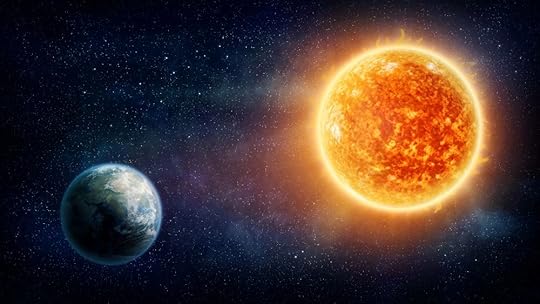
My post earlier this month, “A Step Closer to Unlimited Power“, got a strong reaction from you. Lots of comments that pointed out that solar power beamed from space was a stupid idea, that it was essentially a weapon and no one would put a weapon like that in space, where it could attack any point on Earth.
Idealism really isn’t practical, it seems.
So I was startled to see that the Japanese are going ahead with their own test, next year. Reported by Space.com, the Japanese will demonstrate the process of beaming solar power to the Earth’s surface, although this demonstration involves only 1 kilowatt of power — about enough to run a dishwasher for an hour.
But it seems the idea of solar power harvested in space isn’t going away.
April 17, 2024
We Don’t Need Spaceships to Find Strange New Worlds.
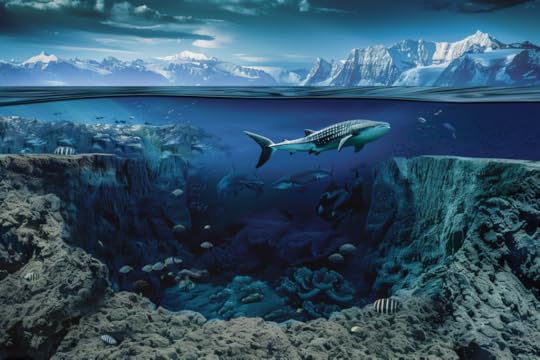
A couple of years ago, I watched a short video on YouTube that compared the depths of the oceans. I found it again today. It’s quite mind-blowing seeing how puny human efforts are to reach the greater depths. And it’s equally as jaw-dropping to see how truly deep the oceans run.
Both times I’ve watched the video, I’ve been reminded of science fiction stories that feature the ocean and what might lie in the depths that we can’t (easily) reach.
The first one is James Cameron’s The Abyss.
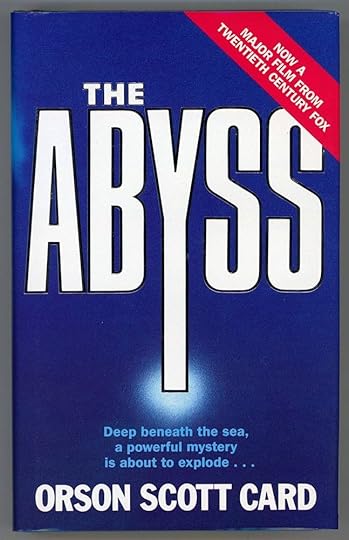
Orson Scott Card transformed Cameron’s screenplay into a massive book that I used to love reading. It took me nearly twenty years to replace the book that I left behind in Australia, as it is only available in print (alas). It took me a long time to give up my search for an ebook version, and buy the print edition once more.
When I did finally get to read it again, I was disappointed. Between readings I have written over two hundred books of my own, and have a much keener appreciation for writing techniques.
But my disappointment was only for the prose itself. The story, from a character and adventure perspective (which was all Cameron’s), is a humdinger.
However, you have to suspend a fair degree of disbelief in the central concept that the whole story depends upon: That it really would be more economical to submerse drilling platforms on the ocean floor, and keep drilling crews down there running them, when it takes three weeks to decompress on the way back up.
That’s three weeks of dead time, when the crew can do nothing at all. The oil company would have to pay them for those three weeks, or else compensate them so richly for their time on the ocean floor that three weeks without income is worth it.
Once you get past that near-indigestible lump, the story runs at mach speeds, using the fact that we simply do not know what might be down in the far depths of the oceans to deliver some amazing twists and surprises.
You also have to ignore that, at the depths that Cameron was suggesting the oil platform was operating, the nitrogen in the air mix needed to support human life would be high enough that everyone would talk in squeaky high voices. The movie conveniently overlooked that bit of science.
When you watch the YouTube video about ocean depths, watch for the deepest drilling operation, and then consider how much more depth exists that remains almost completely unexplored.
The second novel that springs to mind, watching this video, is John Wyndham’s The Kraken Wakes.
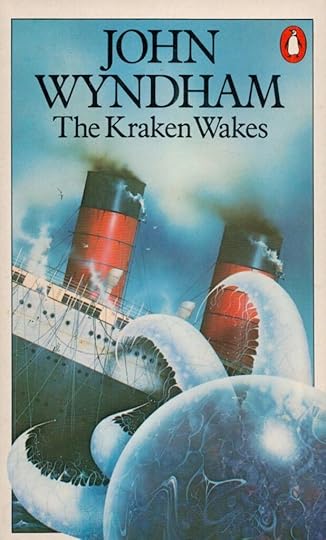
This is an older, classic SF novel. Wyndham was British. Very British. His sensibilities and his style of writing have aged a bit. The pacing is slow and leisurely. However, this is one of my favourite novels from one of my favourite authors, primarly because of the idea that lies behind the story itself.
It’s a different idea from James’ Cameron’s, but related.
[Spoiler alert]
Wyndham suggests that the huge pressures that exist at the bottom of the oceans that make them so inhospitable to man, actually match the conditions found on other planets. What if aliens from one of those heavy gravity worlds came to Earth? They would have to head for the bottom of the oceans. But that would limit the amount of real estate they could use.
But what if they “terraformed” the rest of Earth to match their ideal conditions?
[End of spoiler]
The rest of Wyndham’s book shows how that concept would look from a very human perspective.
And, for a book written in the early 1950s, the wife of the main character has a surprising amount of agency. But Wyndham’s women often do, which is why he remains one of my favourite authors, quite apart from him being the reason I discovered science fiction as a new teenager.
The concept behind The Kraken Wakes is a lot easier to swallow than James Cameron’s.
In fact, it makes more sense than the frequently found science fiction conceit that any aliens we meet will prefer the same gravity and air mix as us, when our ideal conditions (the Goldilocks criteria) are so rare among the stars.
It is more likely that any aliens we find will live in conditions completely hostile to human life, like those found at the bottom of the Marianis Trench.
Do you have a favorite SF tale that features deep oceans? Recommend the title in the comments section.
April 10, 2024
Why Utopias Don’t Work…anywhere!
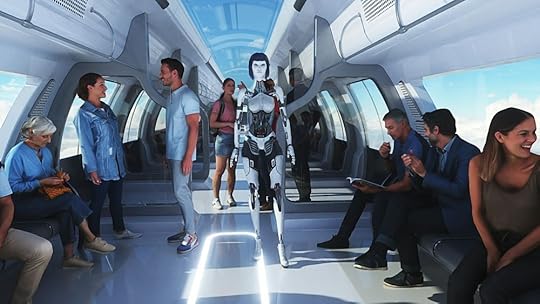
Farnam Street recently posted one of the clearest explanations for why utopias can’t work in real life.
Apart from being super interesting reading, the post also made me reflect on utopias in fiction.
I don’t like utopian fiction and tend to avoid it. Even before I read the Farnam Street post, I thought most of the utopian novels and stories I’ve read were unrealistic.
The problem with a utopian setting in fiction is that everything is perfect. While fiction that doesn’t put you to sleep is filled with conflict. How can there be a conflict in a perfect world?
Therefore, most utopian fiction deals with the breakdown of that world, or slowly reveals the dark underbelly where things aren’t as pretty.
That can make for interesting fiction, but for me, even having the world start off as “perfect” makes my eyes roll.
So, to find what fiction is out there that is set in a Utopia, I checked on Wikipedia and there is a list there (which is probably not complete, but looked like it was covering the well-known books.) I spotted Robert A. Heinlein’s posthumously published For Us, The Living: A Comedy of Customs, which I recently acquired a copy of. I’ll be moving that up closer to the top of my TBR pile.
There was a link on the Wikipedia page to another page listing Dystopian fiction. That list is a lot longer! Dystopias are inherently more interesting because the conflict is built into the world setting. And the horrors that authors can dream up are astonishingly gruesome.
When it comes to dystopias, I always think of Soylent Green, the 1973 movie with Charlton Heston, which was based upon Harry Harrison’s Make Room! Make Room!, as a prime example of the genre that is genuinely horrifying. There are many others, of course.
Have you a favourite utopia-set book or story? Share your recommendations in the comments, below.
Because I always need more books to read.
April 3, 2024
A Step Closer to Unlimited Power
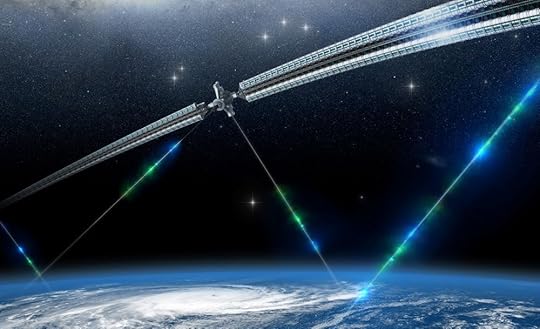
The article is a bit old, now, but the breakthrough it reports on is a highly positive one. Perhaps that was why it didn’t get more coverage than it did. (Yes, I’m a bit cynical!)
Space.com reported back in June that, “Scientists beam solar power to Earth from space for 1st time ever.”
The article reports on the successful experiment. What baffles me is why this wasn’t jumped upon by everyone. Why wasn’t a huge fuss made of this? It is, after all, a critical step in the harvest of solar power from space, which is in itself a major development in the progress of humankind.
Harvesting solar power in space, instead of relying upon panels upon the roofs of individual residences, is a vastly superior and more efficient process. As in, exponentially better.
In space, the sun’s output isn’t masked by bad weather, clouds or other interference, including being on the wrong side of the planet every 12 hours. The sun is always “on” in space.
Collecting the energy was never a technological issue. We’ve had efficient solar panels for a very long time. Getting that energy down to the surface has just been solved. The only thing left to resolve (apart from administrative BS like distribution and billing) is the efficient storage of that power, once it’s on the surface, so that power isn’t interrupted once the globe revolves away from the sun and the collectors beaming the power downstairs.
But we already have batteries, and the technology surrounding batteries is getting better every year.
That leaves just politics to get in the way. Power companies wedded to their coal-powered and nuclear-powered generators will fight the change and use their billion-dollar profits to trip up the adoption of space solar collecting. Unless they can get in on it themselves in the very early stages. But that requires vision and the spending of profits.
Harvesting solar power in space would radically change our economy, our way of life. No more fossil-fuel generators to infuse carbon into the air. No more carbon taxes! (I don’t know about you, but I seethe every time I pay my gas bill. The carbon tax is more than the gas itself!). The sun is an essentially limitless supply of energy that could drive the entire planet, resolving all our energy issues forever, and making a huge difference in the amount of carbon we’re putting into the atmosphere, too.
And we’re now one step closer to that reality. That’s why we should make a big fuss about it.
March 27, 2024
Only Book Readers Spotted It
 The library at Trinity College, Dublin University
A few weeks ago, I gave my very personal take (it wasn’t structured enough to be called a review) on Apple TV’s Foundation series versus the books by Isaac Asimov.
What I forgot to mention was that in the first few episodes of the TV series, when Harry Seldon was still on Trantor, the ecumenopolis seat of the galactic empire, there were scenes showing the university establishment where he worked.
My jaw dropped when I saw the scenes because that fabulous place is right here on Earth. The library at Trinity College, Dublin University, has long been one of my bucket list destinations.
Some libraries are workmanlike. Others, like the Trinity library, are inspiring. This long shot, above, makes you want to read every book in existence, right there among the awesome stacks.
Did you spot it in the show?