
Josh McDowell's Blog, page 24
September 24, 2019
Josh’s 4 Tips for Resolving Conflict

Photo by Helena Lopes from Pexels
Important Life Lessons
If it were up to me, by the time students exit elementary school they would be intentional in reflecting good citizenship via their words and actions. Think how great junior high and high school would be without the unnecessary drama!
I’d also make sure that teens learn critical financial basics: that they can balance a checkbook, and they understand that financial freedom follows saving and not misusing credit cards. (And that developing a daily $5 latte habit ain’t smart.) And that they realize the snare of instant gratification, and that every choice and action (and inaction) adds up to shape the path of their life.
Man, I’d want them to *get* that life is supposed to be hard, in order to develop their inner strength and confidence and resourcefulness. And that it doesn’t serve them to walk around continually offended and in conflict with others. Don’t we tell our kids not to bully each other? But they watch as we “adults” then viciously denigrate each other, particularly online. Where’s the disconnect? My thought is stored up hurts and anger.
So many people are at full rage because they don’t know how to productively let off steam. They lack the tools for peaceful co-existence; they haven’t been taught how to show respect for the differing opinions around them.
The Pesky Ego
Exploding at someone temporarily feels powerful, but in the end accomplishes very little. God designed us to to live in community, but we stall any chance of that when we “do” life in conflict. “Community” demands good citizenship: healthy boundaries, safe ways to express needs and feelings, and humble hearts.
Yet isn’t the overall message we get from society to live preoccupied with self?
If we are encouraged to be self-absorbed, society fails to hold us to an acceptable standard of community. We can’t, for example, toss mean words at someone and not expect them to boomerang. We can’t toss a punch and not expect to also gain bruises. We can’t seek revenge and not expect an escalated response. Unless we’re taught to live to a higher standard that says, I will treat others with goodness, because everyone is a highly valued child of God.
Somehow we’ve allowed society to “Go for the gusto!” in the wrong direction. How desperately we need a course adjustment to again commit to the selfless values of kindness, honesty, civility, etc. Mr. Rodgers, come back! We need your humble influence!
“We live in a self-centered culture. Society’s emphasis is clearly on pleasing ourselves, not on nurturing our relationships. So we must rise above our culture and resolve our conflicts — not dissolve our relationships — if we truly want to experience intimate, fulfilling relationships.” ~Josh #conflict
Josh’s 4 Tips for Navigating Conflict
Despite what our media glorifies, we’re not too cool for school when we’re buttheads to other people. Not even when we’re reacting to a butthead who snubbed us first. We must remember that our response is completely independent of how we are treated.
The root cause of much of the conflict in our world today is our unwillingness to forgive. As Josh notes, “Forgiveness is the oil of relationships.” God calls us to forgive. Not to excuse the other person’s action(s), but to FREE ourselves. Jesus tells us to forgive so we don’t walk around just waiting for an excuse to unload our stored up reservoirs of anger and hurt.
Sometimes conflict comes to us. But sometimes we bring it. Let’s look at Josh’s 4 conflict assessment tips:
Tip 1: Assess Your Attitude. As Aretha Franklin famously crooned, at issue is your R-E-S-P-E-C-T for others.
Are you speaking respectfully to others? Are you respectfully listening to others? Are you respectfully looking at others — or flashing them looks that communicate “You’re stupid!”? Are you acting respectfully? The truth: If we’re disrespectful to others, we’re also disrespecting ourselves.
>>>>>>>>>>>>>>>>>>>
Tip 2: Assess Your Emotional Base. Do you resemble a prickly cactus?
There’s a reason why, in Ephesians 4:26, the Bible reminds us to unload our anger daily before the sun sets. Our anger is like cement boots. When we refuse to take off the boots, we walk around cranky. I used to think I couldn’t release anger because the person who offended me might get the wrong message that I was okay with what they had done. I thought I would show up as a pushover. But releasing a grudge actually demonstrates our strength. Eventually we learn that forgiveness is for our benefit, not another. We hold the power!
>>>>>>>>>>>>>>>>>>>
Tip 3: Assess How You React: Are people responding to you negatively because of your behavior patterns?
So, here’s the thing: until we learn better, we tend to echo the bad patterns we learn at home. When you have conflict, have you learned to give people the silent treatment, freezing them out until you decide to thaw? Or perhaps your default is to draw blood with sarcasm. Or maybe you start crying to diffuse conflict. Or you plaster a smile on your face, acting like nothing is wrong. I had a college roommate who deflected any conversation she didn’t want to have. If I said, for example, “I’d like to know why you leave dishes in the sink instead of putting them into the dishwasher,” she’d respond with something like, “When you’re perfect, we can talk.” Yowza! It’s tough dealing with a narcissist.
>>>>>>>>>>>>>>>>>>>
Tip 4: Assess If You’re Reactive: Do you wait to see how people treat you before you decide how to treat them?
I’ve heard people say, “I only give respect to people who give it to me.” That might sound logical, but it’s an immature stance. And it lacks grace, which we ALL need on the days we don’t bring our best. Our being respectful should be entirely based on our choosing to be like Jesus. He had compassion and grace for even the rudest of people. Perhaps this analogy helps: Picture yourself as a bright, shinny quarter. You don’t become a penny just because you’re tossed into a jar full of pennies. Right?
The famous prayer of St. Francis of Assisi includes this line: “Lord, make me an instrument of Thy peace.” Image what our relationships would look like if we, too, fervently committed to this prayer. #noconflictzone #goodrelationships #healthycommunity
In our next blog post, let’s look more at relationship dynamics.
Catch up: The introductory post to this series.
The post Josh’s 4 Tips for Resolving Conflict appeared first on Josh.org.


September 17, 2019
Parents: 7 Tips for Great Parenting
The “7 A’s” include Affirmation, Acceptance, Appreciation, Availability, Affection, Approach Their World, and Accountability. If we parents focus on these areas, we’ll significantly improve our family relationships. To watch Josh’s videos on this topic click here. This is good stuff. Let’s dive in!

Photo by Emma Bauso from Pexels
The #1 Thing Kids Want From Parents
Is it an iPhone? A car? Their own TV? While high on the list, these wants don’t claim the #1 spot. What kids want most from their parent(s) is a happy home life. So not things, but relationship.
Kids want the security of a home life that shelters, supports, encourages, and guides them. A home life that affirms their value. Kids want caregivers — parent(s), grandparents, others — who believe in them and enjoy having them around. In one survey alone, teens overwhelmingly said a happy home life is way more important than being rich.
From the get-go, we crave relationship with our parents. Not gaining that solid connection can have a lasting, negative impact. As an adult, for example, music legend Michael Jackson admitted, “I just wanted a dad. I wanted a father to show me love. But I never once heard my father say, ‘Michael, I love you.’” Clearly, Michael was still hurting from that loss.
If you want to become a better parent, read on! Josh’s 7 relationship tips will help you move from baby steps to confident strides.
Josh’s “7 A’s” for Parents
Affirmation
One of the most effective ways to build relationship with your child is to affirm his or her feelings. To affirm means to “validate or confirm.” What might affirmation look like? It might be telling your kids that you see how hard they are working at developing a new skill. It might be complimenting them on their test grade, or acknowledging how well they handled a tough situation. It might be pointing out areas where they stepped up, without being asked, to do a household task. It might be simply telling them that you’re proud of them.
Tip: Assess if you’re quick to point out when your children mess up, but fail to consistently recognize when they do well.
Our kids want to know that we notice their efforts. But they also need us to affirm their worth when they mess up. Otherwise, we tie their “who” (their person) to their “do” (their actions). That’s not how God sees us! Behaving badly at times doesn’t make us bad people. Behaving selfishly at times don’t make us selfish. It makes us human. Our goal should be to better reflect Jesus — though it might take us a lifetime of small steps to get there.
September 10, 2019
Love Is…
From movies to music to everyday conversation, we sure do use this word a lot. “I luv me some pickle juice!” … “I love this movie!” …. “Baby, I love you!” Really? How much?
The word itself doesn’t convey depth, does it? It’s why we gals love to ask, “On a scale of 1 to 10, how much do you love me?” Of course, the bigger question is whether two people share the same definition.
Most definitions of “love” make for catchy song lyrics or quotable movie lines. But do they hold up in real life? One definition that definitely doesn’t ring true: “Love means never having to say you’re sorry.” Say, what?!! #hogwash

Photo by Artem Beliaikin from Pexels
“It’s Sex!”
If you and I don’t correctly define love, how will we know if we are in love? If we don’t use the correct definition, how will we know when others are giving us a shallow imitation? If we don’t apply the correct definition to life, we won’t be able to establish healthy boundaries that keep us out of harm’s way. Ugh: “I love you” is too often uttered by one person to manipulate another.
“If you love me, you’ll … (x, y, z).” Has anyone used this line on you? Worse, have you used it on someone yourself?
Girls too often hear this line from guys wanting sex. As if it’s okay to view gals as objects to be used for their pleasure. I hate sharing these stats, because they’re just so sad, but here’s a hard truth: In the U.S., young people (age 15-24) have five times the reported rate of chlamydia of the total population, four times the rate of gonorrhea and three times the rate of syphilis. Why? Because our kids have bought into society’s lie that “love” equals casual sex.

Source: http://www.iwannaknow.org/statistics/
When I was in high school, sleeping around wasn’t the accepted norm that it is today. Sure, some of the guys I went out with tried to talk me into it. But I didn’t have to deal with the daily societal pressure that young girls now face. While it did sting to be called a “goodie two-shoes” because I wouldn’t “put out,” I actually didn’t mind the reputation. Because it showed that I knew my worth. Now, as a dating adult, I am not in the least surprised when even Christian men tell me that I am being “totally unrealistic” to expect any man to delay sex until marriage. My response: “Buh-bye!”
When temptation beckons, it can feel hard to live within God’s parameters. But God set His guidelines to help us avoid unnecessary drama and pain (like the above sexual diseases). And He promises us that if we are faithful to His standards, He will bless us with our best life. (Gals, listen up: a man who isn’t seeking after God’s standard in this area probably isn’t aiming for it in other areas of his life, either. Why settle for that?)
“It’s a Feeling!”
Actually, it’s so much more. Sure, we experience warm and fuzzy affection for people we like and want to be around. But feelings aren’t trustworthy because they’re based entirely on our selfish nature. We love someone one day, and the next we don’t. We decide to help someone one day, but opt out on other days because we’re not “feeling it.” Some of us have the wrong idea that we get to withhold love if we don’t think someone “deserves” it. Not if we define “love” the way God defines it.
In this 1959 interview, “intellectual” Ayn Rand, the author of a widely circulated novel called Atlas Shrugged, shared the basic tenets of a new philosophy she labeled “objectivism.” Rand put forth that our morality must be based entirely on reason and logic, not on “faith or whim.” Man’s highest moral purpose, she asserted, was his own selfish happiness — that it’s not our personal responsibility to care about or “love” anyone we don’t deem “worthy.”
“Man is entitled to his own happiness and he must achieve it himself, but he cannot demand that others give up their lives to make him happy. Nor should he wish to sacrifice himself for the happiness of others,” added Rand. “If a man wants love, he should correct his weaknesses and flaws and he may deserve it, but he cannot expect the unearned. Neither in love or money.” Rand’s kicker: that so very few people are “worthy” of love (whatever she means by the word), “but they can work to deserve it, and that is all my morality allows.”
YOWZA! What a tit-for-tat, self-focused, calculated world Rand suggests we live in. Oh, wait. Aren’t we already feeling the effects of her philosophy in our modern world?
Jesus Proved Otherwise
Aren’t you and I so very, very fortunate that God doesn’t hold a similar view of our worthiness? That we don’t have to let others determine it, because God demonstrated how much value He sees in us when He came to earth in human form to serve and die for all of mankind?
God repeatedly tells us to have love — not our personal “happiness,” as Rand suggests — be our aim. To love Him, and then our neighbor as ourself. Yup: we are to give to the high standard we’d like to receive. Loving ourselves is key; we can’t give what we don’t have. Not with a narcissistic kind of love, mind you, but the healthy love that says, “Because I am so freely loved by the Creator, despite my flaws and weaknesses, I can freely share it!”
Rand’s website uses the spin that “selfishness” is a grand thing, as it frees us from constraints that hinder our achieving greatness. But God says that selfless love is the benchmark of greatness. Want to feel great? Go do something nice for someone, no strings attached!
We are to care about — within healthy, appropriate boundaries — the wants and needs of others, and not just those we expect to return the favor. God asks us to be willing to be used by Him. In Rand’s words, to serve as an “sacrificial animal” — which Rand asserts is beneath our dignity.
The Bible tells us that love is patient, love is kind. It does not envy, it does not boast, it is not proud. It does not dishonor others, it is not self-seeking, it is not easily angered, it keeps no record of wrongs. Love does not delight in evil but rejoices with the truth. It always protects, always trusts, always hopes, always perseveres.
True love’s motivation is always to protect and provide for another. Love is not a feeling, but an action. It is not a gaining, but a giving. Once we correctly define what real love really looks like, we can appropriately give — and receive — it.
In our next blog post, let’s look at Josh’s 4 practical parenting principals to build strong relationships with your kids.
Catch up: The introductory post to this series.
September 3, 2019
Josh’s Special Message to Grandparents!

Click to watch video
Grandparents, your role is super special! God has given YOU have the unique privilege of having a deep and lasting impact on your grandkids!
JOSH: People ask me, “Why do you have an emphasis on grandparents?”
Well, I’ve learned over the years that some of the most powerful people in a child’s life are Grandma and Grandpa. Why? Because when Grandma and Grandpa come over, they spend time with their grandkids, and often spend even more time with their grandkids than the parents do. Because of that, they’re a very powerful influence.
I believe that for grandparents to impact their grandchildren, they need to build strong relationships. The grandkids need to know that “Grandma and Grandpa really love me!” You build that trust that by listening to them, by encouraging them, by sharing God’s love with them, and by demonstrating your love for them.
Grandparents: As you build relationships with your grandkids, you should pass on God’s truth. But if you’re not grounded in God’s truth yourselves, you won’t be able to do that!
Some important questions you need to be able to answer:
~ Why do you believe the Bible is true?
~ How do you know Christ is the Messiah, the Son of God?
~ Can you share why the resurrection is true, or that Christ is the Messiah, the Son of God?
Have these answers at the ready, because your grandchildren will ask them of you!
 If you can’t give intelligent, biblically-based, historically accurate answers, your grandkids will
 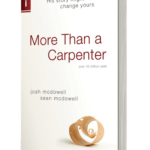 eventually stop coming to you with these important questions. To gain these answers, you can read two of my bestselling books, Evidence That Demands a Verdict and More Than a Carpenter.
I also encourage you to check out these free parenting videos! I cover the topics of Affirmation, Acceptance, Appreciation, Availability, Affection, Approach Their World, and Accountability.
Grandparents: Build loving relationships, be able to share truth within that context, and you will have a deep and lasting impact on your grandchildren! Go, YOU! You were made for this!
Josh
In our next Journey Together blog post, let’s look at what real love looks like. It’s certainly not the version that Hollywood tries to sell us as the real deal.
Catch up: The introductory post to this series.
The post Josh’s Special Message to Grandparents! appeared first on Josh.org.
August 13, 2019
Cultural Tolerance Fails Us
Tolerance, traditionally, is defined as respectfully acknowledging another’s subjective beliefs and opinions — without endorsing or accepting them. As Josh McDowell puts it, “…loving someone with whom you may totally disagree.”
Today, however, society is pressuring us to accept a new meaning: one that says to be “tolerant” of another is to accept all subjective beliefs as valid. That each person’s dignity and self-worth actually depends on everyone else endorsing their personal “truth.” That each person has the right to a moral code so subjective that no one else can judge it, regardless of its effect on themselves or society. And that those who “judge” it, must be shouted down and silenced.
As Wendy Kaminar, a lawyer and writer put it nearly a decade ago, contemporary liberalism involves a virtual embrace of censorship; a therapeutic approach to rights; very expansive definitions of ‘harm’; and hostility to freedom of speech, conscience, and belief. We are being sold the notion that “tolerance” must protect all persons from feeling “emotionally harmed.”
Thus, adds, Kaminar, the rise of advocates of “equality” and “diversity” who believe society must sacrifice First Amendment rights to guarantee a truly tolerant society. “How long,” she asks, “have we heard… ‘I don’t believe in censorship, but free speech doesn’t include the right to offend.'” This is most evident on college campuses, she adds, “where students are regularly punished for jokes, satire, insults, and political speech that is considered demeaning to some presumably vulnerable group.”
The result? Society is priming us to live in a constant state of offense. Where’s the tolerance in that? People, we’re being played!

Tolerance and Love
I try to picture Jesus standing before an engaged crowd with a big smile on His face as He says, “You do you, and I’ll do me. Anything and everything goes!”
But I can’t. Because that’s not the message of truth that God took on human form to teach. Yes, Jesus affirmed the inherent value of the every person as God’s created children. But He also always directed people to live to God’s standard, that they (we) might grow into their (our) best selves and honor God.
The Bible clearly shows us that love trumps all. We are to 1) love God, and 2) love our neighbor as ourselves. We are to live in peace with one another (Hebrews 12:14), and we are to quickly forgive one another (Ephesians 4:32). But we also are to help each other live within God’s establish boundaries. Because God hates sin. We are to offer one another grace (tolerance), as God “cleans up the junk in our trunk.”
As Dr. Henry Cloud, the co-author of the New York Times bestselling book, Boundaries, puts it: “Truth without grace is judgement, and it can kill someone’s spirit. True love is grace and truth together. Show up with both at all times.” Just as Jesus did.
Addressing Christianity’s Intolerance
One reason the world views Christianity to be so intolerant is that too many of us make it our default to lead with judgement. And we don’t just reserve our criticism for those outside the church. Some of us think it our job to crush our Christian brothers and sisters with condemnation.
“Anyone who has been in the church for very long has been hurt by people in the church,” notes Dr. Cloud. “For in the body of Christ, we find some harsh realities: judgment, pride, self-centeredness, manipulation, abandonment, abuse, control, perfectionism, domination, and every kind of relational sin known to humankind. The walls of the church do not make it safe from sin. In fact, the church by definition is composed of sinners.”
But condemnation never leads anyone to rise to a higher standard. Our own hearts must first be tender, to effect softening the hearts of others. That’s why Jesus first showed that He cared about people’s hurts and needs before He talked about their sin. His tolerance of their humanity led them to being open to admitting the sin that was destroying their lives.
I know one Christian woman who spends most of her time pointing out how others are sinning (she even writes caustic letters to well-known pastors to tell them how they’re missing the mark). She truly is one of the unhappiest people I have known, in part because she lives in a constant state of offense, for even her own screw-ups. Grace and tolerance are, to her, foreign concepts. She has accepted only part of the Gospel message.
August 5, 2019
Showing Christ Relevant to Our Whatever Culture
We can’t just claim, “Christ is truth” anymore, says Josh. We must provide historical evidence for the truthfulness of the Bible, but also share the deep and personal convictions we’ve gained through our committed walk with Christ.

Is Christ’s Truth Still Relevant? Yes!
Sadly, even inside the Church, most young people have bought into the secular idea that there is no absolute truth. But God’s standard of truth has not changed. What has changed is our tolerance for “situational” truth.
Yet when “truth” is based on situation, is it really truth? Vegetarians, for example, believe their “truth” that it’s wrong to kill animals for food. Nudists believe their “truth” that clothes are a hindrance. And scammers believe their “truth” that it’s perfectly acceptable to steal what belongs to another. Each defend their position, based on the “truth” of their subjective value system.
Tolerance used to mean respectfully acknowledging other viewpoints while not endorsing them. Now tolerance is defined as needing to respect all values, beliefs, and lifestyles as equal and valid — supposedly because there’s no “intelligent” way to discern which option is the best.
We conveniently push God’s absolute truth aside, viewing it to be old-fashioned and not applicable to a modern world. Or we decide there is no God.
But if there is no set truth, Josh reminds us, there are no answers. And if there are no answers, there are only questions. “People say, ‘I’m smart enough to create my own moral code,” says Josh. “But if we accept that norm, we justify even the actions of mass murderers.” Josh wisely notes that “truth” is not truth just because we believe it is.
Christians today are tasked with showing Christ relevant to a world that views Him as just one more option. How can we do so? Let’s look at Josh’s 9-step action plan.
Josh’s Nine Steps for Showing Christ Relevant to the World
Step 1: Create Community
Our society is full of broken people from broken homes suffering the fallout of dysfunctional relationships. How do today’s youth view success? One of the top rankings is a happy home life. People want to experience real love. You and I are to commit to loving so fiercely that people take note and wonder, “How is this possible?” We will sometimes fail — but even in messy brokenness we can point to our source: Christ. Invite people into your life. See them as God sees them: as worthy and loved and cherished.
Step 2: Demonstrate Christ-like Compassion
Josh reminds us that it is only when we are convinced that another cares about us that we allow them to have influence in our life. Our churches should be known for their outreach ministries — but you and I need to be the ones signing up to participate to give these ministries life. We also need to minister in our personal lives. Are we good neighbors? Are we good friends? Are we willing to help a stranger, just for the opportunity to be like Christ? Ask God to help you live selflessly like Jesus.
Step 3: Context Truth Relationally
Bottom line: we must live out the truth of Christ through loving relationships. Do we allow others to take up our time when they need a helping hand or shoulder to cry on? Or do we live conditionally, only “serving” when we feel like it or because we think we’ll benefit? If you and I are to have the honor of showing Christ relevant in other people’s lives, we must do from a position of authentic relationship. We can build trust with people through grand gestures, but we build real intimacy by showing up, again and again, over time.
Step 4: Creatively Communicate Your Personal Testimony
Nothing will have more impact on showing Christ relevant to others than our effectively sharing our testimony. Can you confidently share ways that Christ has/is making a difference in your life? “Some people try to tell me they don’t have a testimony,” says Josh, “but I say, ‘Yes you do! You’re just being lazy. Set aside time to identify how your life was before Christ, how you came to know Christ, and how He’s changed your life.'”
It is because Josh has put in so many hours thinking about concrete examples to answer these questions that his personal testimony rings with authenticity and power. Because Josh KNOWS how Christ is relevant in his life, he is ever ready to share his testimony when asked. You and I should be just as prepared and hopeful at getting the chance to share ours. Start with this post about answering questions about Jesus.
Step 5: Demonstrate Caring Relationships
In our high-tech world, people crave caring relationships. As Josh puts it, “High tech calls for high touch.” The Church has the unique opportunity to meet this craving through loving community. But, again, entering a church can be an intimidating experience — especially for a non-believer who assumes s/he will be outed for not know when to sit, stand, pass the offering bucket, or even which book in the pew is the Bible.
People! We need to make sure we’re making it easy and comfortable for anyone to kick the tires of a church. That doesn’t mean we soften the message of our need for a Savior. It means we lead with caring. So the next time you go to church, don’t just say hi to the people you already know. Say hi to at least five people — especially those who look a bit anxious. Your friendly gesture of inclusion may be the single reason they decide to come back.
Step 6: Be Christ’s Love
It’s no big deal to love the lovable. But we enter a whole different ballgame when we show grace and patience and kindness to people who aren’t. The world is watching how you and I respond to the rude grocery cashier or jerky driver who just cut us off. The world is watching how we treat the homeless, convicts, and the adulterer next door that the neighborhood is having a field day gossiping about. “It’s loving the unlovable that will reach people’s hearts and minds to consider Jesus as the source of true love,” says Josh. “That’s the supernatural truth about the Christian faith.”
Beth Moore’s story about brushing a stranger’s hair in the airport always strikes me as the perfect example of showing Christ’s love. As Beth says, “When we are filled to the measure with the fullness of Christ, you cannot believe the needs we can meet. We can do what we know we can’t.” When we allow Him to, God can do through us what we simply can’t do on our own.
Step 7: Conspicuous Christ-like Marriage and Family
There can be no argument that America’s acceptance of easy divorce has severely handicapped the stability of the family unit. Why work hard on something that is just so much easier to leave behind? Kids suffer from the decisions of their parents on so many levels.
Today, most kids truly don’t know what the word “committed” really means. They throw away their water bottles, their barely used clothing, their gadgets — and their friends, when convenient. Because it’s the model they’ve been shown to follow. But you and I can make a difference by giving power and purpose to the word “committed.” We can demonstrate humility and selflessness and generosity. We can demonstrate sticking to hard stuff because it’s the right thing to do. We can demonstrate love. We can demonstrate the joy of living within God’s boundaries. “What has opened more doors for me to impact culture,” shares Josh, “has to do with the love I demonstrate for my wife and children.”
Step 8: Develop Credible Convictions
Before you and I can share our faith or testimony, we have to put in the work of growing the convictions we hold. As Josh mentioned above, some Christians have gotten lazy. To them, Christianity is a passive relationship, not an active, living/breathing relationship that gives their life peace and clarity and power. Some Christians have never even read the Bible!! People, how can we get in the game, if we don’t know the coach or the play book??
Here Josh gets very direct: If someone asks you why you take the truth of Christ at His word, and your reply is, “Because that’s what I was taught,” you prove the weakness of the foundation for your faith. Two other “dumb answers,” says Josh, are “Because I believe it” and “Because I have faith.” Ouch. But he’s right. Muslims have belief and faith. So do Mormons and Hindus and Buddhists and the New Age crowd. So how is your faith in Christ any different? “Faith,” says Josh, “doesn’t make something true.”
It’s a problem when the Church teaches a belief system without conviction. A conviction, explains Josh, is not just what you believe, but why you believe it, and how you’ve experienced it in your own life. Take the phrase, “Jesus saves.” In your own life, what does that mean? How has God showed you that 1) you matter to Him, that 2) He is changing you, and 3) That you can trust Him. Are you convinced, for example, that God is good, even when you don’t get what you want? The conviction that God is good, all the time, can only take root in our lives when we let go of how we think God should show up, and take Him at His word that He has a good plan for our life.
Step 9: Congregate Where People Are
Jesus didn’t check into a hotel in each town and tell the crowds to grab a number to visit with Him. What Jesus did do was make Himself accessible. He risked hanging with people that the religious leaders viewed so beneath them that interacting with them would soil both their fine clothing and their souls. But what they should have done, says Josh, is “throw the pearls, and let God decide who is swine.”
The point is to not set ourselves up as better than others, and to seek to create relationship with anyone needing God — even those that society disrespects or ridicules. Do you volunteer at church as a teacher or greeter? Have you served at a homeless shelter or food bank? Have you delivered meals to a shut-in? Have you participated in a prison ministry or a home for unwed mothers? Jesus loved loving on “sinners” because He felt compassion for the hurting. He was always on mission to draw them into loving relationship wth God.
Christ is extraordinarily relevant. We just have to get out there and show this truth to the world. God, alone, does the drawing of people to Him, so don’t feel like you have to carry the weight of the world on your shoulders. Just keep to your lane — being a conduit He can use — and God will do what only God can do.
July 24, 2019
Choosing God’s Boundaries Because We Trust Him
As we mentioned in a recent post, it’s not enough to base our morality on the Ten Commandments or other boundaries mentioned in the Bible. That’s because it’s not the rules themselves that create lasting change in us, but our relationship with their source, God.
Josh McDowell has recorded many videos on the topic of making right moral choices, which you can watch here. In this post, let’s look at two analogies Josh mentions in those videos, to better understand that God’s boundaries are good, not punitive.

The Source of the Precepts and Principles
As Josh reminds us, biblical boundaries are ONLY important because of the source of their moral authority. Skeptics argue that the Bible is “man-made,” but they’re wrong. The Bible is “God-breathed,” dictating a high ethical standard that humanity struggles to mirror. Even on our best days we screw up. A little gossip here, a little envy there, a slip of judgment here, a whole lot of unloving everywhere.
God’s boundaries aren’t about His ego, but our best life. As Josh masterfully explains in his videos, within every biblical precept — every “Thou Shalt Not!!” — is a moral principle based on the person and character and nature of God. Let’s look at two examples, so we understand what Josh means.
Example #1: The moral principal of honesty undergirds the precept “Thou Shalt Not Lie.” But the reason that lying is morally wrong is because God and Jesus are TRUTH.
Example #2: The moral principal of respecting the sanctity of life undergirds the precept “Thou Shalt Not Kill.” But the reason that killing is morally wrong is because God and Jesus are LIFE.
Likewise, we are to seek justice because God and Jesus are JUST. We are to seek purity because God and Jesus are PURE. We are to reject hate because God and Jesus are LOVE.
In a nutshell, any choice we can make that is contrary to God’s nature is morally wrong. God doesn’t tell us how to think and act to bend us to His will. Rather, He lovingly created guidelines for our protection and provision.
Let’s use the umbrella in the photo above to symbolize the protection of God’s guidelines.
When we follow God’s rules, we stay dry. But when we willfully choose to walk — or run! — into the rain, we wind up with wet clothes, if not pneumonia. “It’s always an act of love on God’s part to protect us and provide for us,” says Josh. “But when, through an act of disobedience by a decision of our own will we ignore God’s precepts, we remove ourselves from the very protection and provision of those precepts.”
An analogy Josh shares further drives this point home:
Two teenagers, bored on a hot, summer night, remember that a neighbor has a backyard pool. They also remember that the neighbors are on vacation. They decide to sneak over to enjoy a refreshing swim. They giggle as they clammer over the tall backyard fence, willfully ignoring the posted “No Trespassing!” and “No swimming!” signs.
The girl cautiously makes her way across the unlit backyard as her boyfriend races to the diving board. With one hard bounce, he catapults his body high into the air. The girl’s laugh turns to a shriek as she reaches the pool’s edge and realizes there is no water in the pool. The impact of the boy’s dive snaps his neck, instantly paralyzing him.
The homeowners didn’t post the warnings to take fun from the boy’s life, but to protect him. In choosing to disregard the posted warnings, he moved himself into danger.
God’s Tall Ladder Perspective
Like this young man, we often don’t see the looming dangers. Or we minimize the consequences of stepping into sin. “How much can it hurt?” we ask ourselves. Unfortunately, you and I have a very limited perspective. God, on the other hand, sees every possible scenario — and their resulting joys and sorrows.
Have you ever entered one of those corn mazes? (The kind that stresses me out because I’m claustrophobic AND a control freak?!) At every junction you ask, “Should I turn right? Or left, perhaps?” And with every wrong turn and dead-end, you get more confused about where you are in the maze, and the location of the correct path leading to the exit. If you only had a birds-eye view!
If you had a guide — a trustworthy source — perched atop a really high ladder, you’d have help in making the right choices to successfully navigate the maze. In life we can consistently make right choices, and enjoy much good in life, by following God’s guidelines and boundaries.
God: “Do you believe that I love you and want to bless you with provision and protection? Then commit to my boundaries. They are for your good, because I am good.”
From His eternal perspective, God does life with us, asking, “Want to avoid heartache? Follow my precepts; don’t deviate. Want to avoid that addiction? Follow my precepts; don’t deviate. Want to be successful in business? Follow my precepts; don’t deviate. Want to experience true, meaningful love? Follow my precepts; don’t deviate.”
But sometimes we get it into our heads that we know better than God. So we make willful choices outside of His boundaries, and must then suffer the consequences.
Spend some time reflecting on your life, and how choosing to live within God’s boundaries has protected you. But also look at the times you willfully stepped beyond His umbrella of protection and had to endure the fallout. Here’s the thing about sin: the repercussions aren’t always immediately evident. Sometimes we think we’ve gotten away with it. But sin eventually demands our payment.
“Unless we each come to understand that ‘God loves me’ and ‘I can trust Him,'” adds Josh, “we will never, ever walk through life dependent on the character of God to make right choices.”
In our next blog post, let’s look further at the topic of real truth, and how to identify it.
Catch up: The introductory post to this series.
The post Choosing God’s Boundaries Because We Trust Him appeared first on Josh.org.
July 15, 2019
Why We Need to Trust God’s Goodness
I don’t know about you, but I find myself cringing when people post on Facebook about their new house or car or health recovery with the joyous declaration, “God is GOOD!” This bothers me mostly, I think, because I rarely see these same people assert God’s goodness when life dumps crud on them.
Friends, as Christ-followers, God asks us to be all-in with trusting Him. All the time. Even in the crud. Hard to do, but imagine the freedom in doing so! Let’s look at why our trusting God’s love and goodness is critical.

Questioning God’s Goodness
Deep down, don’t most of us wonder if God really is good, all the time, as His Word teaches us. (I mean, look what He did to Adam and Eve! Egads!)
As writer Jennifer E. Jones asks, “If one person is hearing wedding bells and another is served with divorce papers, has God’s goodness changed somehow?”
Here’s the truth: Our self-absorbed perspective is puny. So to judge God is kinda ridiculous and arrogant. And if we’re continually judging God for how He shows up in the world — and in our lives in particular — we’ll find it impossible to humbly submit to Him and His standards. We’ll have one foot in Christ, and one foot in the world, hopping around on the foot that feels better in the moment.
Either God interacts with us from a good and holy and loving nature, or He doesn’t. His Word promises us that He DOES, but then we read stories about Adam and Eve…the flood…Jonah…etc., and we begin to doubt. Especially if it feels like our personal prayers are going unanswered. #hello?
As Pastor Jason Helveston notes, we continually question God because we are hardwired to crave explanation. “We cannot help but search for meaning in the face of tragedy and pain,” he writes. “When we can’t find answers we often come up with our own. And, if you’re like me, your answer is often not a good one.”
To our logic-seeking human brains, a loving and good creator — our “Heavenly Father” — wouldn’t allow such misery. And yet, don’t we see bad things happen to “good” people all the time? Is God asleep at the wheel? Or is He standing right there, in the midst of the suffering, working for our good? The Bible says so.
Affirming God’s Goodness
The Lord is good, a refuge in times of trouble. He cares for those who trust in His name. ~Nahum 1:7
The Bible showcases many spiritual superstars, but the poster child, hands down, for trusting God’s goodness has to be Job. The poor guy was stripped of his health, his wealth, and his stable of children after God allowed Satan to take all but Job’s life.
Even as Job, weary of the anguish and wracking pain, finally questions God, He doesn’t disavow God’s goodness. (AMAZING, right?!) Christians appreciate that Job’s faith deepened even more after this horrific trial, but what we really like about the story is how God sticks it to Satan — and rewards Job double for his trouble with new kids, new crops, new livestock, and envious wealth.
Can you and I get so cemented in our trust in God that we, like Job, refuse to question God’s character? (Even if restorative blessings don’t follow?)
In her article “So is God really good?” Jennifer writes,
“Well, let’s rethink the question. First and foremost, let’s take it out of the context of getting our wishes granted. It is always wonderful when our prayers are answered; however, His goodness doesn’t start and end there.”
Perhaps Charles Sturgeon, the famous Victorian pastor, had Job in mind when he wrote these words more than a century ago:
“The worldling blesses God while He gives him plenty, but the Christian blesses Him when He smites him: he believes Him to be too wise to err and too good to be unkind; he trusts Him where he cannot trace Him, looks up to Him in the darkest hour, and believes that all is well.”
Trusting God’s Goodness
Can we really trust God fully? I mean, I try. But sometimes I just FREAK OUT.
It’s not hard to see God as good when life feels good. But what if God wants to know if we, like Job, will trust Him through mind-blowing suffering? I continually pray for ease and health and blessings on myself and others. Because pain hurts and, frankly, I’d rather avoid it. But as I overheard someone say, “You never find out what you’re made of until you find yourself in boiling water.”
And we don’t know we really can trust God until we do it. Trust is an action word. It requires an active step. So sometimes God hands us hard moments to build our trust and reliance on Him.
Like, maybe, when I had TWO cars totaled, in the space of two years, first by a texting teen and then a hellacious hail storm. And when I wasn’t sure I’d survive the pain of my miscarriage, imploding marriage, and finally divorce. I had to CHOSE to believe that God allowed these hurts not because He’s capricious or malevolent or tuned out. God proved His love for me on the cross, but then in a thousand small ways as I rebuilt my life.
Despite His track record, I still have to make the daily choice to trust that God sees me, hears me, and cares. Cuz God is holding out on some things I want. Things I think I need that He hasn’t provided yet.
But I will tell you that I am TIRED of worrying if God’s “got this.” I want to leap, arms wide, resolute in my belief that He’ll show up, at the right time, with the right safety net. Wanna take that leap with me? Let this be our battle cry: “God is good! All the time!”
In our next blog post, let’s look further at why we need to trust God’s love for us so that we trust Him. Because if we don’t trust Him, we can’t set His boundaries of blessing and protection as our standard. We NEED firm boundaries to push against the low standard the world encourages us to live by. See you next week!
Catch up: The introductory post to this series.
The post Why We Need to Trust God’s Goodness appeared first on Josh.org.
July 10, 2019
Can We Know Absolute Right From Wrong?
Let’s discuss whether it is possible to know, and look at the 4-point checklist Josh McDowell uses for making sound moral choices.

Yay Or Nay, What Say You?
If you were to vote on whether absolute right is knowable, would you cast your vote as yay or nay?
Chances are high you’d vote nay, as our increasingly secular society has been quite successful in selling us on the fallacy that truth is entirely subjective. “My truth is my truth, and your truth is your truth.”
But can you and I really base truth on subjective preference? Can our society, as a whole, do so and manage to survive?
Just as an interesting side-note, when I looked up the word “truth” in dictionary.com, it offered the word to me in this sentence: In truth, moral decay hastened the decline of the Roman Empire. (Can I get an AMEN?)
In the 1970s Charles Colson founded the non-profit organization, Prison Fellowship after serving time for his involvement in Watergate. By the grace of God, he came out a changed man. After reflecting on his former life, Colson had this to say about subjective morality:
“When a society abandons its transcendent values, each individual’s moral vision becomes purely personal and finally equal. Society becomes merely the sum total of individual preferences, and since no preference is morally preferable, anything that can be dared will be permitted.”
Fifty years later, as we view America’s declining morality, we can see the truth of his statement.
Colson was punished because he broke the law. But does legality determine morality?
If It’s Legal, It’s Moral…Right?
Some suggest that morality is determined by what is legal. But if morality is determined by what it legal, does that mean that when the law changes, morality changes with it? Does that mean revolutionaries like Martin Luther King Jr., Gandhi, or Mandela were automatically morally wrong for opposing corrupt governments? Come to think of it, if morality is determined by law, does that mean there is no such thing as “morally corrupt government?”
In an interesting 2007 online article titled “Is God really good?” the writer notes, “God is the author of logic and truth, so God’s Word should be high on the priority list when analyzing anything critically. In fact, without the biblical God, there is no logical basis for using the laws of logic, which flow from His nature.”
He adds, “…imagine a world in which there was no god who had given us an idea of what justice is. Everyone would do what his own collection of atoms in his brain told him to do—be it murdering someone who got in his way, or taking food from someone who had more than he did. And why would the collection of atoms that compose my brain be any better at determining what is ‘right’ than the next person’s?”
Excellent question.
In his video on discerning right from wrong, Josh reiterates, “Legality has nothing to do with morality.” Is oppression of women, for example, morally right because some countries legalize it? Nope.
Pastor Bob Russell asks an important question:
“Who decides what is right and wrong in the world? Who has the authority to define morality for all of creation? It is not the courts, congress, the media, public opinion, the ‘politically correct’ police, the ‘tolerance’ brigade or even the church. The only answer has been, is and always will be Jesus Christ. You can find His opinion on a great variety of subjects in His best seller…The Bible.”
Do you agree with his viewpoint—or does it offend you? If so, figure out why.
Aligning Our Morals With God
As Christ-followers, we should align our moral choices with God’s standard of absolute right.
Our moral code isn’t correct simply because it reflects our family values. It’s not correct because it “feels” right. It’s not correct because it follows the majority view. And definitely NOT because a powerful authority figure endorses it or forces it. Our moral code is correct only when it aligns with God’s person and character.
God determines absolute right. Josh notes that God is just, righteous, and pure—because each reflects who He is. We can know, beyond a shadow of doubt, that injustice, unrighteousness, and impurity are wrong because God is none of those things. Note: God’s moral standard is designed to free us from the harm we would do to ourselves and others.
God IS inclusive. All are invited into intimate relationship with Him.
God IS forgiving. He takes us just as we are.
God IS all-loving. He died on the cross via Jesus to show us just how far He’s willing to go to prove His love.
Yet some judge God to be unkind, unloving, vengeful, and an abysmal creator, because He doesn’t operate in the world like they think He should. They’re forgetting or ignoring that God is holy, and He gets to call the shots. Yet because He is GOOD, and promises to continually work for our good, we should trust that God and His ways are good and right.
Josh’s Four Steps For Making Right Moral Choices
Josh’s four steps for making correct moral choices:
~ Consider the choice: What determines whether an option is morally right or wrong?
~ Compare it to God: What does God say about the option we’re considering?
~ Commit to God’s way: Accept that only God has the authority to define absolute right and wrong.
~ Count on His blessings for choosing His righteousness: The immediate return on our doing right may lead to negative consequences (losing friends, family, or even facing jail time). But in the long run, doing right always wins. God promises to draw near us with His grace, protection, and provision during our trials.
If we profess to follow Jesus, our personal moral code should be in step with His. To pin our moral code on what our college professors think, what our friends think, what our parents think, or even what our pastors think, doesn’t cut the mustard.
When our secular world pushes us to justify a moral standard that falls short of God’s standard, we’re not being “progressive.“ We’re choosing wrong.
In our next blog post, let’s look further at why God should be our standard.
Catch up: The introductory post to this series.
The post Can We Know Absolute Right From Wrong? appeared first on Josh.org.
June 26, 2019
Connections: Build and Improve Relationships
As a kid, I had the rare privilege to grow up next door to my best friend. Laura was there when I was born, and she’s been in my life ever since. But our connection didn’t start with us. Our dads also grew up across the street from each other and were best friends. So, my connection with Laura was sort of built in for me from day one. That’s why I describe her as more my sister than just my friend.
I joke that I have two sets of parents, though no one is divorced. Laura’s parents have played a valuable, enduring role in my life. As Laura and I were growing up, our families were together so much that we literally wore a path in our yards from walking to each other’s houses. Holidays, vacations, birthdays, slumber parties, random Tuesday nights, grandparent visits, weddings, and funerals: we’ve done it all together. Our doors were always open, which gave me strong connections in my life.
This view expanded to others in my life. My friends knew they were welcome at our house any time and they knew that when they came over, the smell of freshly baked homemade cookies would soon fill the air. It wasn’t that my parents and I always had people over or that we had no boundaries, but we created a sense of openness and acceptance in our home.
Growing up, I took my authentic relationships for granted. Now, as an adult, I realize just how rare it is for us to have deep, solid connections with others.

The Struggle to Connect is Real
Now that I have my own house, I see such a shift in the environment around me. Aside from the occasional hello to our neighbors, most of us quickly retreat behind closed doors. Perhaps because of social media, our addiction to screen time, or the fact that we’re all insanely busy. For some of us, it is driven by a fear of being truly known and seen by others.
Whatever the reason, the isolation from deep, meaningful connections leaves most of us feeling lonely – even when we’re in a crowded room.
Authentic connection takes focused effort and vulnerability. Families struggle to spend quality time together. Friends don’t have time for coffee, dinner, or even a walk around the block together with the dog. Many neighbors don’t know who lives beside them, and church attendance and even small groups become a checklist item added to an already jam-packed “to-do” list. At the end of the day, how many of us are lulled to a restless sleep only after checking our phones to see who liked our most recent, filtered, edited post on Instagram or Facebook?
If we’re honest, most of us would probably admit that we’re going through our days with little to no significant connection. No honest conversations. No authentic, vulnerable, genuine relationships. No real community.
We might build this isolation to protect ourselves. Having been hurt in the past, we come to believe that it’s not safe to open up. Our fear of being known, being seen, and being rejected drives us to close off from others. Some of us even grow up with the pressure of keeping a perfect outside appearance while everything is falling apart on the inside. All of these things keep us from having the deep relationships we need…the connection we were designed for.
This is not how God intends us to live.
We are hard-wired for authentic connection.
We are made for deep, meaningful relationships.
We are made to be there to help each other.
We are made to be family. We were created to walk through life together.
In Genesis 2:22, God says, “It’s not good for man to be alone.”
In the Old Testament, we learn that the Jewish people are God’s “Chosen ones.” But in the New Testament, when Jesus enters the scene, He expands the definition of “family” to all of us. We become partakers of the promises and inheritance of God when we accept Jesus as Savior, and in becoming part of God’s family, we gain full access to a personal, sacred relationship with God.
Jesus demonstrated God’s extended view of “family” and His design for connection during His ministry. Jesus could have done ministry solo, but He chose to do it with others.
When He asked 12 men to lay down their work, leave their homes, and follow Him, Jesus wasn’t just asking for 20 minutes. He asked them for a lifetime. Over the next three years, Jesus and His disciples did life together in authentic community. They lived together, traveled together, and ministered to others together. We also see in the Bible that they were able to freely wrestle with questions and struggles together because of their genuine connections to each other and Jesus.
Jesus desired us to walk together so much that He told John to take care of Mary as his own mother as he died on the cross. He did not desire that they should live life alone.
How Can We Offer Real Connections to Others?
What if you and I decided to be as welcoming to others as God is with us?
What if we commit to daily risk opening our hearts—and our doors—to those around us? What if others knew they could walk into our home and feel welcomed to come as they are? What if we risked it all to be fully known by others?
How would it change the way we live and function in this world?
It might mean that you and I choose to sit on our front porch instead of in our backyards. It might mean our going out of our way to check on a neighbor, when we notice we haven’t seen them in a while. It could also mean cutting something out of our hectic schedules to gain the time and space to have coffee or quality time with a friend.
It might mean shifting our priority from tasks and to-do lists to people.
When my closest friends and I realize that our schedules don’t line up like they used to, we make time for each other. We might meet and go for a long walk. Or do our grocery shopping together.
My childhood instilled in me a desire for connection and authenticity. That strong foundation has made it easy for me to be comfortable living a transparent life—and to welcome others to do the same.
The sweetest memories in my life involve moments of being with people who have truly seen me in the good, the bad, the ugly and most vulnerable, and chosen to stick around. The memories we have when we’re off to the store, laughing about our day or crying through a hard moment together are the moments that I love and cherish. More than completing a check list or using the perfect filter on a social media post.
Your Takeaway From This Post
When you choose to live life with authentic connections, you will indeed experience more beauty and more of God in every day moments of your life. Deepen your life through connecting with God and others. Build authentic relationships with others—allow safe, healthy people to become so near and dear that they become family.
Find a way this week that you can connect with others! Put your phone down, invite a neighbor over for dinner or grab coffee with a friend. Have an authentic and meaningful conversation.
In our next blog post, let’s look at why God is so serious about right and wrong. He doesn’t budge in His boundaries. So why do we think we can?
Catch up: The introductory post to this series.
The post Connections: Build and Improve Relationships appeared first on Josh.org.
Josh McDowell's Blog

- Josh McDowell's profile
- 644 followers

