Rachel Maddow's Blog, page 3363
July 26, 2013
Filner: 'I must become a better person'
As the number of prominent, credible women accusing San Diego Mayor Bob Filner (D) of unwanted sexual advances continues to grow, the flailing mayor delivered a statement this afternoon, announcing his new plan.
In front of a reporters and cameras, Filner announced "words are not enough" before a microphone failure interrupted the long-awaited statement.
"It is simply not acceptable for me to try and explain away my conduct as the product of standards of a different generation," Filner said adding that he has apologized to his staff and citizens who have supported him. "Most of all I apologize to the women I have offended," he said.
"Offended" almost certainly isn't the right word, and reinforces the perception that this guy doesn't fully understand what he's alleged to have done.
As the calls for Filner to resign grow louder -- the chorus now includes Democratic National Committee Chair Debbie Wasserman Schultz -- the mayor continues to insist he won't give up his office, despite the seriousness of the allegations. Instead, Filner plans to take two weeks off for "intensive therapy" sessions at a behavioral counseling clinic.
"I must become a better person," he said, apparently convinced two weeks of therapy will make that happen.
Watching this afternoon, I got the impression the mayor thinks he's solving the problem by apologizing and seeking professional help. What Filner doesn't appear to realize is that anything short of resignation will probably be insufficient.


In the race for the future, some will tolerate defeat

Associated Press
There's been a fair amount of talk on Capitol Hill recently about student loans and interest rates, which led to an unsatisfying compromise in the Senate. But as part of the larger discussion, a notable lawmaker said something interesting that stood out for me.
Getting American kids into college without saddling them with massive debt shouldn't be the government's job, according to a prominent House Republican and possible 2014 Senate candidate. "It is not the role of the Congress to make college affordable and accessible," Rep. Virginia Foxx (R-NC) said Wednesday morning during a committee markup of legislation that would halt federal officials from regulating for-profit educational institutions.
Foxx likened federal standards for things like the definition of a credit-hour to totalitarianism.
Well, sure, of course she did. She's Virginia Foxx.
But it's worth noting that there's nothing inherently incorrect about her views on the federal role in higher education. It's an inherently subjective question -- some people believe federal policymakers have a role in making college affordable and accessible, some don't. Foxx has her opinions on the matter, I have mine.
I've long hoped, however, that this generates a larger conversation about the future of the United States as a global superpower. There's a spirited competition underway, and we have real rivals who'd be delighted to see us settle for second place. To remain on top, we're going to need an educated workforce and electorate, and with this in mind, it makes sense if Americans were represented by a Congress that prioritized access to affordable higher-ed.
Or perhaps the nation prefers Foxx's vision: some states will help young people get degrees; some won't; Congress doesn't care. Under this approach, education is of relative importance, but it's just not a national priority.
Long-time readers have no doubt seen me mention this before, but I often think about some specific remarks President Obama made in 2009. He'd just returned from a trip to East Asia, and Obama shared an anecdote about a luncheon he attended with the then-president of South Korea.
"I was interested in education policy -- they've grown enormously over the last 40 years. And I asked him, what are the biggest challenges in your education policy? He said, 'The biggest challenge that I have is that my parents are too demanding.' He said, 'Even if somebody is dirt poor, they are insisting that their kids are getting the best education.' He said, 'I've had to import thousands of foreign teachers because they're all insisting that Korean children have to learn English in elementary school.' That was the biggest education challenge that he had, was an insistence, a demand from parents for excellence in the schools.
"And the same thing was true when I went to China. I was talking to the mayor of Shanghai, and I asked him about how he was doing recruiting teachers, given that they've got 25 million people in this one city. He said, 'We don't have problems recruiting teachers because teaching is so revered and the pay scales for teachers are actually comparable to doctors and other professions.'
"That gives you a sense of what's happening around the world. There is a hunger for knowledge, an insistence on excellence, a reverence for science and math and technology and learning. That used to be what we were about."
Right. The United States used to be about a lot of things.
But as we discussed in April, many American policymakers have shifted their focus away from insisting on excellence and towards, well, a Virginia Foxx-like attitude. Countries like South Korea and China can have their hunger for knowledge; we'll just keep cutting education spending and hope for the best.
We're the wealthiest country on the planet by an order of magnitude, so maybe we can just coast for a while, neglecting key priorities. Maybe we can stop looking at areas like education, energy, health care, and transportation as national problems -- the way our competitors do -- and can instead hope states figure something out. Someday. With some elusive resources.
Put it this way: while some countries are insisting on excellence in education, our country shrugs its shoulders while kids get thrown out of pre-schools because of budget cuts and young adults get priced out of college. Which side of the ocean is preparing for the future?
The kind of logic only Rubio could love
Associated Press
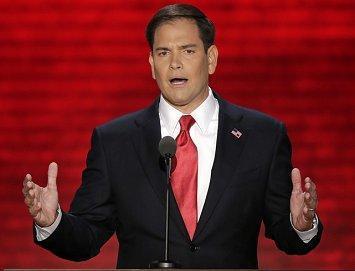
Sen. Marco Rubio (R-Fla.) is one of the ringleaders of a fairly radical move: he and his allies are demanding that Democrats take away health care benefits from millions of families by defunding the Affordable Care Act. If Dems balk, Rubio wants to shut down the federal government until the far-right gets its way.
Yesterday, the Florida Republican offered his own unique spin 0on his threats.
"The president and his allies -- and even some Republicans -- will accuse us of threatening to shut down the government. In fact, it is President Obama who insists on shutting down the government unless it funds his failed ObamaCare experiment."
From time to time, the Beltway establishment and Republican Party leaders argue, sincerely and with a straight face, that Marco Rubio is a serious person. So serious, in fact, that when they talk about Rubio running for president sometime soon, they consider it inappropriate for folks like me to ask, "President of what?"
But take another look at that quote and tell me why in the world anyone should perceive the right-wing senator as a credible voice on public policy. Rubio seriously believes that if President Obama expects to provide the resources needed to implement current law, then the president is "insisting on shutting down the government." Rubio is threatening to shut down the government unless he gets his way, but he doesn't want to be blamed if he feels compelled to follow through on this own threats.
If a child made this argument, it'd be laughable. When an ambitious U.S. senator makes this argument, it's just sad.
Also note, Rubio didn't just get tripped up during an interview, clumsily saying something he didn't really mean -- this quote was in a written piece Rubio published on Fox News' website. He had time to think of exactly the point he wanted to make, and this is what he came up with.
As for the law being a "failed experiment," the Affordable Care Act hasn't been fully implemented yet, so it's tough for something to fail if it hasn't been tried, though the parts that have been implemented are working quite well so far. (U.S. senators should probably be aware of this by now.)
That said, this same experiment has been tried before -- Mitt Romney gave it a try in Massachusetts and it works just fine.
Rubio added that it's time to "replace" the reform law "with market-based reforms that will give people more health insurance choices and options."
If the unaccomplished senator wants to prepare a reform plan of his own, and explain how these "market-based reforms" would work, he's welcome to present his alternative and subject it to public scrutiny. But until then, it's awfully difficult to see Rubio as someone who knows what he's talking about.
The bid to turn the tables on the 'war on women'
Getty Images
In 2012, the Republican Party's "war on women" became a major focal point of the election year and very likely exacerbated the existing gender gap. With 2013 half-over, GOP policymakers appear to have learned very little, and have been just as aggressive in pursuing the same policies.
But McKay Coppins reports that the Republican National Committee believes it has an opportunity to turn the tables.
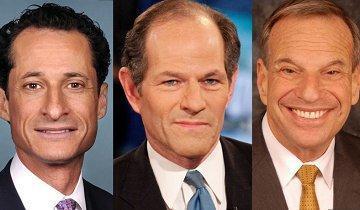
Republicans are hoping the latest picture of Anthony Weiner's genitals -- along with his confession this week that he continued his online sex chat habit well after he was first caught in 2011 -- will give momentum to their effort to throw the "war on women" attack line back in the Democrats' faces. [...]
With a flurry of public memos, tweets, and op-eds, the RNC is working to make the Democratic Party take ownership of Eliot Spitzer, who resigned the New York governorship after a prostitution scandal and is now running for city comptroller; San Diego Mayor Bob Filner, now facing allegations of sexual harassment; and Weiner, whose online sexual dalliances have driven the political news cycle all week, and given RNC communications director Sean Spicer some irresistible ammunition.
This is, of course, Political Strategy 101 -- take your rivals' isolated troubles, tie them together, and try to apply the condemnation as broadly as possible. To this extent, the RNC's plan certainly makes sense, and the Democrats in question -- two candidates and one office holder -- appear to have given Republicans plenty to work with.
But the RNC strategy only works on the most superficial of levels, and requires the audience to lose sight of what makes the "war on women" important as a matter of public policy.
If, for example, the allegations against Bob Filner have merit, there is no defense for his disgusting misconduct. Likewise, Weiner's personal judgment appears bizarre, and Spitzer's recklessness was an obvious mistake.
When we talk about a "war on women," however, we're talking less about Republican misdeeds towards specific individuals and more about a systemic issue of GOP policymakers pursuing a radical agenda that affects all American women.
When the RNC is comfortable with this or not, at issue here are efforts to restrict reproductive rights, scrap Planned Parenthood, close health clinics that provide important services to women, force medical professionals to lie to women, and force women to undergo medically unnecessary exams for political reasons. In recent years, as Republican politics has become more radicalized, the party has also used inexplicable rhetoric on rape, opposed pay equity laws, and pushed antiquated views on gender roles.
That's a war on women.
What's more, note that Filner, Weiner, and Spitzer have drawn considerable criticisms from other Democrats, while the vast majority of the Republican Party still believes this radical policy agenda targeting women's rights is worthwhile and something to be proud of.
That said, if Republicans want to make the case that the Filner, Weiner, and Spitzer controversies are comparable, they're certainly welcome to make their case. Maybe Sen. David Vitter (R-La.) can lead the charge?
Friday's campaign round-up
Today's installment of campaign-related news items that won't necessarily generate a post of their own, but may be of interest to political observers:
* Kentucky Secretary of State Alison Lundergan Grimes' U.S. Senate bid is getting underway in earnest, and her campaign rolled out his pretty impressive introductory video yesterday. Grimes expects to take on Senate Minority Leader Mitch McConnell (R) next year.
Watch on YouTube* Speaking of Kentucky, McConnell's primary challenger, Matt Bevin, has launched his first 30-second ad, suggesting the incumbent isn't conservative enough.
* For his part, McConnell has asked that Bevin's ad be pulled from the air because it runs afoul of federal campaign finance law.
* In New York City, former Rep. Anthony Weiner (D), struggling in his mayoral campaign, admitted yesterday that he had three sexting relationships with women after different sexting relationships ended his congressional career in 2011.
* A Marist poll conducted for the NBC affiliate in New York City found the scandal has cost Weiner his lead in the race.
* In Virginia, what is gubernatorial hopeful Ken Cuccinelli's (R) position on immigration reform? It apparently depends in part on the day and the audience.
* And Rep. Scott DesJarlais (R-Tenn.), whose personal scandals have taken a severe toll on his political prospects, raised just $39,000 in the second quarter, which is abysmal for a credible congressional incumbent who hopes to win another term.
ACA gets AOK from CVS

Associated Press
The Obama administration is looking for allies when it comes to implementing the Affordable Care Act, and yesterday, it picked up a pretty important one. It's not a sports league or a celebrity, but it is a powerhouse retailer.
CVS Caremark is joining the effort to encourage Americans to sign up for Obamacare insurance programs, company executives announced Thursday.
CVS officials told POLITICO that they're planning to use pharmacies at their 7,400 North American stores as a gateway for the uninsured to learn about new coverage options -- especially subsidized insurance coverage available to low-income people on state-based insurance exchanges.
Helena Foulkes, chief health care strategy and marketing officer at CVS Caremark, told Politico, "Half of people who are eligible for a subsidy don't know they're eligible." And with that in mind, CVS pharmacies intend to help customers navigate the available benefits and enroll eligible people in exchanges.
When it comes to raising public awareness, this is an important step for the national system. When it comes to politics, it's a reminder of just how strange some political players can be -- Fox News' Erick Erickson said yesterday CVS Caremark's "support" for "Obamacare" means he intends to shop at Walgreens.
Except, when Erickson probably doesn't know is that Walgreens recently announced a partnership with the Blue Cross Blue Shield Association to promote the health law, too.
In fact, I'll be eager to see how the right deals with this trouble in the coming months -- because their hysterical opposition to the law may make their lives a little ... tricky.
Private businesses like CVS and Walgreen want to make money, of course, and see a growing pool of customers who'll be eligible for new benefits. To that end, they want to help those customers, probably because it'll help their bottom line.
For folks like Erickson, the proper response is to launch an informal boycott, which is certainly his right. But exactly how far will far-right activists go in this endeavor? Drugstores that want more customers are apparently going to make conservatives' do-not-shop-there list, but what about doctors' offices who see patients who take advantage of Affordable Care Act benefits? Or hospitals? Or private insurers? Or manufacturers of medical equipment?
For Erickson and those who share his odd worldview, how far are they prepared to retreat from the nation's health care marketplace because their contempt for the new federal law has spiraled well past the point of reason?
Getting 'court packing' wrong
Associated Press
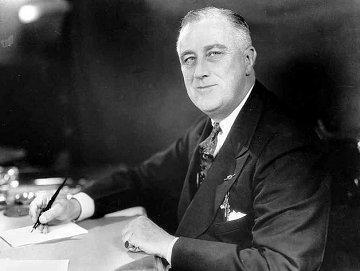
FDR pursued court packing; Obama has not.
We talked back in May about Sen. Chuck Grassley's unnerving confusion about the federal judiciary. The Iowa Republican -- who, as the ranking Republican on the Senate Judiciary Committee, is expected to know the basics of this stuff -- complained the Obama administration was pushing a "court-packing" strategy in which the president would nominate judges to fill existing vacancies. It was left to Sen. Sheldon Whitehouse (D-R.I.) to gently explain that Grassley had no idea what he was talking about.
I hoped at the time that this was an amusing-but-isolated misstep involving a Republican senator who routinely gets baffled by details. But Grassley has apparently convinced his friends.
It may not be factually accurate, but some Republican senators just can't resist accusing President Barack Obama of "court-packing" as he tries to fill empty seats on the D.C. Circuit Court of Appeals.
During a Wednesday hearing on one of Obama's key judicial nominees, Nina Pillard for the D.C. Circuit, Republicans on the Senate Judiciary Committee resurrected the claim that the president's effort to fill three vacancies on the court amounts to "court-packing."
A wide variety of GOP senators are now pushing the claim, and this includes Sen. Ted Cruz (R-Texas), a graduate of Harvard Law School, who whined this week about the Obama administration's efforts to "pack the court."
Part of this is annoying because folks who should clearly know what court-packing is have either (a) forgotten the definition of the term; or (b) decided Americans are easily fooled into believing nonsense. For the record, in the interest of informing Republican senators (or folks who may be misled by Republican senators), "court packing" was an FDR-era idea in which the executive branch would expand the number of seats on a bench in order to tilt the judiciary in the president's favor. The idea was floated in the 1930s, but not seriously pursued.
It's not at all what the Obama White House in mind now.
And that leads us to other reason this is annoying: the right is trying to turn routine American governance into something controversial.
The U.S. Court of Appeals for the District of Columbia Circuit, widely seen as the nation's second most important federal bench, has three vacancies. President Obama has selected three non-controversial nominees to fill those vacancies. Republicans perceive this as outrageous, but it's really just Civics 101. That the GOP wants to characterize the basics of our constitutional system as shocking and offensive is more than a little bizarre.
Indeed, as we discussed in May, when this argument first came up, during Reagan's two terms, he named nine judges to the D.C. Circuit. Was this "court packing"? No, it was a president sending judicial nominees to the Senate, which then confirmed those nominees. It's the way the system is supposed to work, whether you like the president at the time or not.
Senate Republicans would have us believe that judicial nominations -- not the individual nominees, but the existence of the nominations themselves -- are now so controversial that they must resist. Election results don't matter; the constitutional process doesn't matter; the merit of the nominees doesn't matter.
This isn't just twisted, it requires the GOP to make up entirely new definitions to terms we're already familiar with. If we're going to have a debate about the judiciary, fine. But can we at least avoid the temptation to make stuff up?
Either job creation is the top priority or it isn't
Associated Press
I'd very nearly given up trying to convince the political world that sequestration cuts still matter. But then yesterday, something changed my mind.
For those who still care about the policy that was designed to hurt the country on purpose, there's been quite a bit of news lately, all of it showing the sequester doing what it was intended to do. In addition to the voluminous list of documented problems, just over the last few days we've gotten a better sense of the ways in which the policy is hurting the military, public schools, parks, and the justice system. The poor and minorities are disproportionately suffering.
Did the political world care about these stories? Not really. Generally speaking, the slow-motion disaster on auto-pilot just keeps plodding along, with little more than indifference from the Beltway.
So what made yesterday different? This did.
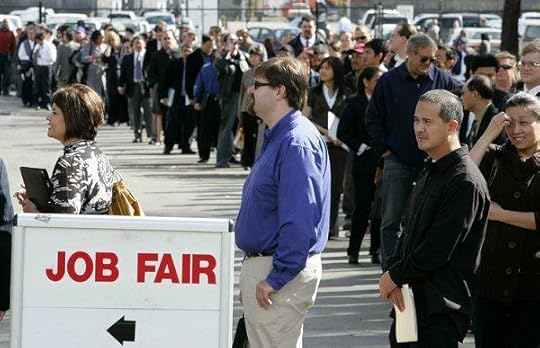
The nonpartisan Congressional Budget Office on Thursday estimated that keeping the spending cuts from sequestration in place through fiscal 2014 would cost up to 1.6 million jobs.
Canceling the cuts, on the other hand, would yield between 300,000 to 1.6 million new jobs, with the most likely outcome being the addition of 900,000, the CBO said.
The full CBO report, requested by Rep. Chris Van Hollen (D-Md.), is online here.
And why might this part of the sequestration story matter, even after the other elements of the story were largely ignored? Because it offers the political world an important test.
A month ago, several congressional Republican leaders, including House Speaker John Boehner (R-Ohio), insisted publicly that job creation is their "number one priority." If those claims were true, I have good news -- now they can prove they meant it.
After all, we now have independent confirmation that this one policy, if it remains in place, will cost the nation about 1.6 million jobs through next year. End the policy, on the other hand, and the U.S. economy adds 900,000 jobs.
For those who say the job market is their "number one priority," this is what's commonly known as a "no-brainer."
Let's make this incredibly simple for Congress: either job creation is your top priority or it isn't. If it is, then the House and Senate could take five minutes, scrap the sequester, and help the U.S. job market. A lot.
Is it really that simple? Well, yes, actually it is that simple.
But won't that mean slightly higher spending levels? And won't that mean slightly less deficit reduction?
Perhaps, but either job creation is your top priority or it isn't. If someone says, "I'd like to end the sequester, but not if it means increased spending and higher deficits," then we know, in a very literal sense, that the jobs are not their "number one priority."
It's a straightforward, binary choice. Your call, Republicans.
Senate GOPer calls shutdown threat 'the dumbest idea I've ever heard'

Getty Images
Sen. Richard Burr (R-N.C.)
The idea was first pushed by one guy. It was Sen. Marco Rubio (R-Fla.) who said two weeks ago that he and his party should shut down the entire federal government unless Democrats agree to block all funding of the Affordable Care Act, even if that denies health care coverage to millions of American families.
Then Rubio picked up some friends. The number of Republican senators endorsing this tactic grew, just over the course of two weeks, to 17 -- roughly a third of the Senate GOP caucus -- including members of the Republican leadership. Before long, Club for Growth, Heritage Action, and the Senate Conservatives Fund were all on board, too.
But a funny thing happened on the way to the shutdown: all of a sudden, a fair number of Republicans, including Sen. Richard Burr (R-N.C.), started to realize their party's idea was blisteringly stupid.
"I think it's the dumbest idea I've ever heard of," Burr said. "Listen, as long as Barack Obama is president, the Affordable Care Act is going to be law."
The North Carolina senator pointed out that he was around when Republicans were held accountable for shutting down the government in 1995.
"I think some of these guys need to understand that if you shut down the federal government, you better have a specific reason to do it that's achievable," he said. "Defunding the Affordable Care Act is not achievable through shutting down the federal government. At some point you're going to open the federal government back up, and Barack Obama's going to be president, and he won't have signed this illusion of the Affordable Care Act."
As it happens, Burr's not alone. Sen. Roy Blunt (R-Mo.) opposes his party's plan, as does Sen. John McCain (R-Ariz.). Over in the House, Rep. Tom Cole (R-Okla.), a deputy majority whip and close ally to Speaker Boehner, told Fox News, "Seems to me there's appropriate ways to deal with the law, but shutting down the government to get your way over an unrelated piece of legislation is political equivalent of throwing a temper tantrum. It's just not helpful. And it is the sort of thing that creates a backlash and could cost the Republicans the majority in the House."
As these remarks ricocheted around Capitol Hill, a funny thing happened in the Senate.
On Wednesday, the number of Republican senators on record with the government-shutdown threat was 17. Yesterday, while the right tried to find new signatories, the number of backers actually dropped to 12 -- Sens. Ayotte, Boozman, Cornyn, Kirk, and Wicker all pulled their support without explanation.
It's like watching a balloon deflate, quietly and slowly.
A brewing Republican versus Republican fight over whether to use a government funding measure to choke off Obamacare is splitting the party ahead of this fall's budget battles.
A growing number of Republicans are rejecting calls from leading conservatives, including Sens. Marco Rubio, Ted Cruz and Rand Paul, to defund the president's health care law in the resolution to keep the government running past Sept. 30. The rift exposes an emerging divide over how the GOP can best achieve its No. 1 goal -- to repeal Obamacare -- while highlighting the spreading fears that Republicans would lose a public relations war if the dispute leads to a government shutdown in the fall.
The divisions matter for a couple of reasons. First, unlike many recent fights in which GOP lawmakers march in lock-step, if the party isn't unified behind their own government-shutdown strategy, it's simply not going to happen. For Republicans, it's been difficult enough to sustain party unity on routine, everyday issues -- to pull off this kind of hostage/extortion strategy when the GOP is already splintering is impossible.
Second, if this plan implodes, and I suspect it will, it's going to make Sens. Rubio, Ted Cruz (R-Texas), and Mike Lee (R-Utah) -- the ringleaders of the gambit -- look awfully foolish. They pushed a ridiculous idea, got the base all worked up, received assistance from prominent right-wing activist groups, and even had Rush Limbaugh rallying support for the cause.
If, after all of this, the scheme falls apart, and even gets mocked by their own allies, it will reinforce the impression that these far-right senators are inept show-horses who aren't serious about governing and can't even execute their own bad ideas.
What 'conservatives gone wild' looks like in North Carolina
Associated Press
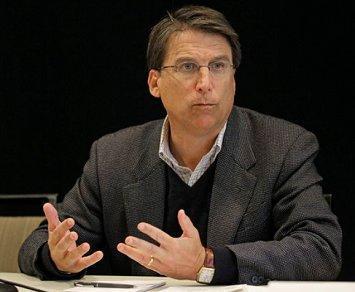
North Carolina Gov. Pat McCrory (R)
Guest host Ezra Klein noted on the show last night that some key legislative fights were "down to the wire" in North Carolina, as the state legislative session neared its adjournment. After the show aired, there were some important developments, so let's take a moment to recap -- and explain why this matters in the larger context.
First up are the most sweeping voter-suppression efforts seen anywhere in the United States in generations, which, much to the disappointment of voting-rights advocates, garnered the support of literally every member of the Republican majority in both chambers, who voted to keep more North Carolinians from being able to participate in their own democracy.
As lawmakers rushed to adjourn for the summer, lawmakers gave final approval Thursday to drastic changes in how voting will be conducted in future elections in North Carolina.
After more than two-and-a-half hours of debate, the House voted 73-41 on party lines late Thursday to agree with dozens of changes made by Senate Republicans to a bill that originally simply required voters to show photo identification at the polls. It was approved by the Senate earlier Thursday, 33-14, also on party lines.
As we've discussed, the proposal is remarkable in its scope, including a needlessly discriminatory voter-ID provision, new limits on early voting, blocks on voter-registration drive, restrictions on extended voting times to ease long lines, an end to same-day registration, new efforts to discourage youth voting, and expanded opportunities for "vigilante poll-watchers to challenge eligible voters."
How many North Carolina Republican lawmakers supported these suppression tactics for no apparent reason? Each and every one of them.
State Rep. Mickey Michaux (D-N.C.), who fought for voting rights in the 1960s, told the GOP majority, "I want you to understand what this bill means to people. We have fought for, died for and struggled for our right to vote. You can take these 57 pages of abomination and confine them to the streets of hell for all eternity."
And then, of course, there are the new limits on reproductive rights.
Late last night, they were approved, too.
The state Senate has given final legislative approval to a bill that imposes new regulations and restrictions on abortion providers.
Senators voted 32-13 Thursday evening, sending the measure to Gov. Pat McCrory, a Republican who has said he will sign the measure as it was passed.
For his part, the Republican governor, just six months into his first term, promised voters as a candidate last year that he would oppose any new restrictions on women's reproductive rights in the state. Now, however, McCrory is prepared to sign this bill anyway -- his public vow apparently came with fine print that voters might have missed
The result is a new regulatory measure, known as a TRAP law, that will likely close 15 of the 16 clinics where abortion services are provided.
Let's also not lose sight of the context for this radicalism. For the first time since the Reconstruction era, Republicans control the state House, state Senate, and governor's office, and as we recently talked about, GOP officials had an opportunity to govern modestly and responsibly, making incremental changes with an eye on the political mainstream.
What the state has instead seen is what Rachel described as "conservatives gone wild." North Carolina Republicans gutted unemployment benefits despite a weak economy; they imposed the most sweeping voting restrictions anywhere in the United States; they cut funding for struggling public schools; they blocked Medicaid expansion despite the toll it will take on the state hospitals and poor families, they repealed the Racial Justice Act; and then they closed nearly every women's health clinic in the state.
And really, that's just a partial list.
It's a microcosm of a national political crisis of sorts -- North Carolina, a competitive state perceived as a burgeoning powerhouse with some of the nation's finest universities, became frustrated with a struggling economy, so it took a chance on Republican rule. The consequences of this gamble are proving to be a frightening step backward for the state.